Loading summary
Transcript415 lines
- [00:07]
Mark
We're gonna have a real good time together we're gonna have a real good time together we're gonna laugh and dance and shout together we're gonna have a real good time together Nah, nah, nah.
- [00:32]
John
Nana.
- [00:48]
Mark
We'Re going to have a real good time together Hangover.
- [01:10]
Matt
Well, welcome back. Welcome back to the the Jokerman fall episodes that we do. It's a special one because this is a hybrid episode. This is. We're going to be talking about the fall's most obvious album. I think it's the most obvious for like Heads. People who are like, I love the Fall. This is like what. Maybe this is number. It's. It's like in that top, right?
- [01:42]
John
What would be in that top? You put Hex Induction on Nation Saving Grace. Perverted by Language. And this perhaps. I think this would be a bit lower than those other three, actually.
- [01:51]
Matt
I guess. I guess. Well, that's grotesque. I feel like this one is. Well, it's 1980. It's. It's not the earliest one we've talked about.
- [02:04]
John
No, we did the very first one live at the witch trials.
- [02:09]
Matt
So the.
- [02:10]
John
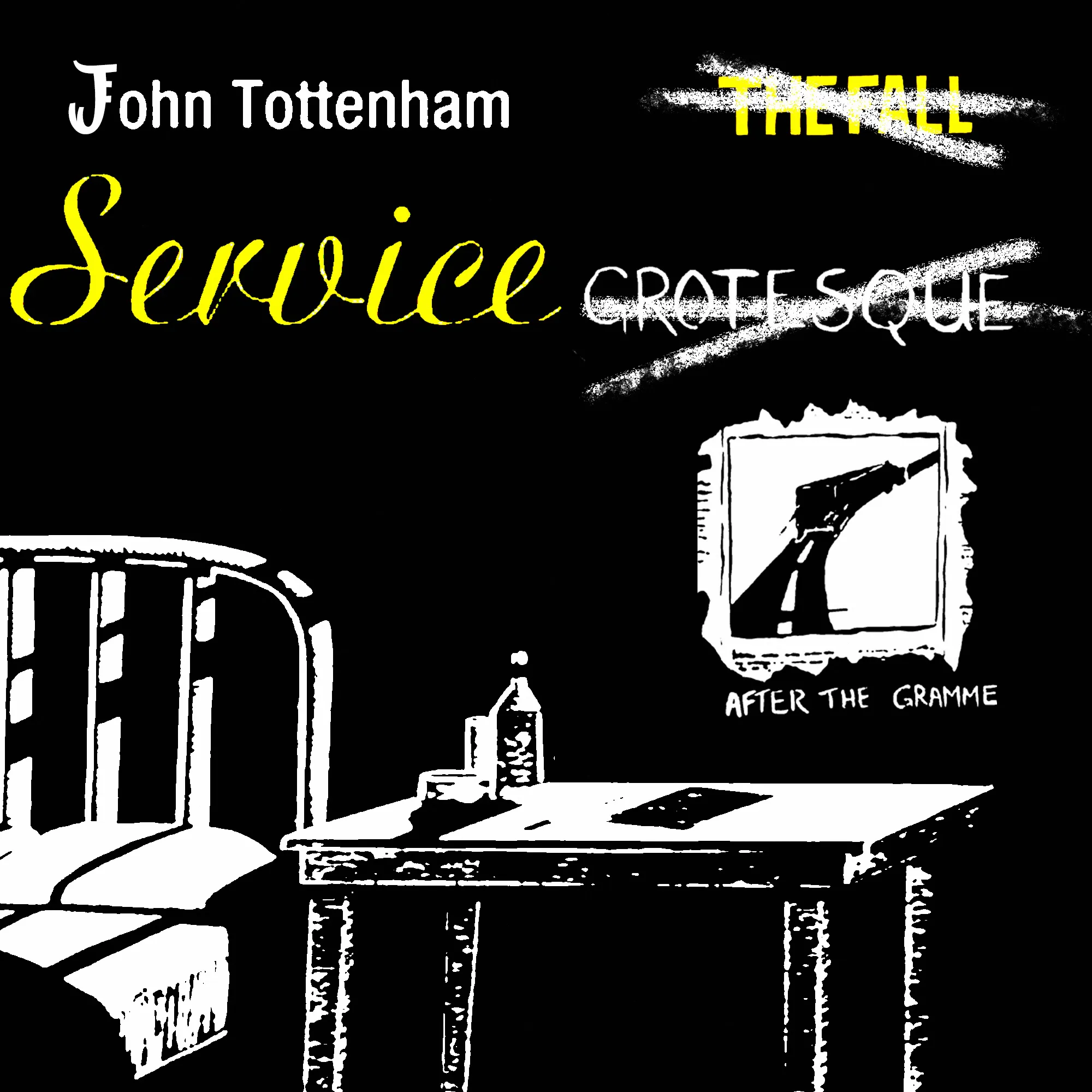
It's their third album. It's the first one with a color sleeve in a very beautiful sleeve by one of Mark Smith's sisters. Yeah, yeah. Perfectly captures the title. Yeah. Contents too.
- [02:25]
Matt
What's that little thing that. It's like a.
- [02:27]
John
It's a truck. It's like the container drivers. That's a truck in the top, left in a frame and then a little cassette tape.
- [02:36]
Matt
The creeping nobody 10 a famous pipe. This is what it says on there. And then the back you've got like just kind of very intimate photographs.
- [02:53]
John
Yeah. Of a bunch of ruddy face northerners sitting in the corner of a pub probably.
- [02:58]
Matt
Yeah.
- [03:00]
John
And the usual dilapidated Victorian architecture that's subsequently been raised as has every building that ever appeared on a four record sleeve. They're all gone apparently, all the early ones.
- [03:14]
Matt
That's tragic.
- [03:16]
John
Well, there's been a lot of progress in Manchester since 1980 redevelopment.
- [03:26]
Matt
Well, that's happening here too in Echo park and Silver Lake. Have you noticed?
- [03:32]
John
Yes, it's one of the main topics in my book, actually.
- [03:36]
Matt
That's true. John wrote a book, a novel. A book. It's called Service and it's. It's about someone's life who works at a bookstore in. In this area. In the Echo park area of Los Angeles.
- [03:54]
John
Yeah.
- [03:55]
Matt
And it has no relation to events, real or imagine.
- [04:05]
John
95% of it is invented. Look at it. Look. It says here, and I quote, page 98. You give it one last push. But of what? And on to what? To write in a thinly disguised autobiographical manner and document the life of a middle aged bookseller with frustrated artistic aspirations. No, I could never stoop that, love. If I must insist on going through with this, at least address something relevant and contemporary. Write a novel about the fallout from gentrification. That will give it some credibility. The disturbing reflection on the empty screen must somehow be covered with words. So, yeah, gentrification was a topic.
- [04:57]
Matt
I don't know about you, but, like, I'm. I'm surprised at how things can become more gentrified.
- [05:04]
John
The gentrifiers are gentrifying. The gentrifies.
- [05:07]
Matt
It's like what is being done is kind of endless. It seems like. I don't know where it all is leading, but.
- [05:19]
John
Well, it's leading to that. The destruction of terrible state. A lot of neighborhoods in the city are now in like Witness. Culver City, for example.
- [05:30]
Matt
Oh, Culver City.
- [05:30]
John
Which is rather a quaint old downtown, terrible place now. Yeah. And. Or everything's turning into Westwood.
- [05:40]
Matt
Culver City is worse than what's going on here even. It's like if Disneyland had a sweetgreen themed town.
- [05:54]
John
Yes, the digitally induced homogenization life should.
- [06:01]
Matt
Be full of strangeness, like a rich painting. But it gets worse day by day. What is the next line? That's from How I wrote Elastic Man.
- [06:15]
John
Right. Well, that single came out directly before this album, actually. It's not on the record, though.
- [06:20]
Matt
We cut. Matt and I covered that song.
- [06:23]
John
Oh, did you?
- [06:23]
Matt
Yeah, we did. We did do a cover of it, which is funny because of the subject matter. There's also a song called How I wrote How I Wrote Elastic Man. I think I forget who did that.
- [06:39]
John
How I wrote How I wrote Elastic Man.
- [06:41]
Matt
Yeah, I think that somebody made it.
- [06:43]
John
Yeah. And there's a fat white families.
- [06:45]
Matt
I am.
- [06:46]
John
No, they did one called I Am Marcus.
- [06:48]
Matt
Maybe that's what I'm thinking.
- [06:51]
John
After I am to.
- [06:52]
Matt
Oh, you know who it is. How I wrote How I wrote How I wrote Elastic man is on the last. The final Shellac album. Yeah.
- [07:06]
John
I forgot that he was dead.
- [07:08]
Matt
Yeah.
- [07:09]
John
Forgot about him entirely, actually.
- [07:11]
Matt
Yeah. Well, that was a major moment when Matt told me that, like. Oh, my God. How I wrote How I wrote Elastic man is the name of the track on the final Shellac album. Because, like, that's Matt's two favorite things is that song and Steve Albini.
- [07:29]
John
We're gonna discuss this record.
- [07:30]
Matt
Yeah. So where does it rank for you? I mean, just mentally like not, not. Not any sort of number system. Not one to three stars. Just what do you. Well, maybe one to three stars.
- [07:44]
John
It's always going to be three stars.
- [07:45]
Matt
All of them are. So. Yeah, that's not really a good question.
- [07:49]
John
But if it was a five star record, I'll give it five stars. Also it has one of my very favorite. Some of my very favorite four songs on. I think New Face in Hell might actually be. I want that song played at my funeral. It might be my favorite song ever.
- [08:02]
Matt
That's a good one.
- [08:03]
John
And I love Container Drivers. English scheme, Grand Friday.
- [08:08]
Matt
I feel like this is a record that's kind of impenetrable to people who aren't British or have experience of living there in the 70s. Like specifically. I mean this is 1980. So it is about like the end of the 70s which I did some reading up on, you know, brushing up on. I know basically that Britain in the end of the seventies was terrible.
- [08:37]
John
Yes.
- [08:37]
Matt
And oppressively bleak in especially up north. Why is. Oh well, because of the IRA and stuff.
- [08:48]
John
Oh, the minus strikes. That is a kind of the troubles. What do you call it?
- [08:57]
Matt
I was just like taking a bath earlier watching a video of like five minute history. Like what was the ira? And I. I. It's one of those things that I know what it is basically, but I always find myself forgetting when I need to know what it is, which is not that often. And it's pretty complex. It's like it's several different things. Like by the end of that five minute video we're talking about like the official IRA splintering off from the Provisional IRA and then the Catholics and the. Then the. There was a. Bloody Sunday was like the U2 song.
- [09:48]
John
There was also a John Schlesinger film starring the inimitable Glenda Jackson which had absolutely nothing to do with.
- [09:57]
Matt
With the massacre of. What was it? It was basically a bunch of Sunday, Bloody Sunday IRA guys just shot up the. Just a bunch of people like killed what, like 13 people.
- [10:11]
John
But there's that Smith line from another song. They are part Irish. They have no conscience.
- [10:17]
Matt
Well, what's the one on this? The north will rise again.
- [10:20]
John
That's the north will rise again.
- [10:21]
Matt
Is that about that about.
- [10:23]
John
No, it's nothing to do with it. It's about Northern England. Yeah, it's about a f upright war between the north and the South.
- [10:32]
Matt
Okay.
- [10:33]
John
I guess.
- [10:35]
Matt
I mean see, this is where you have to like know about what's fictional and what's not. That's another good theme to. To address here. Like.
- [10:48]
John
Yeah, what is right, what is.
- [10:50]
Matt
Fictional and what is not in. In terms of your novel? I do feel like I actually talked about this on a recent episode with this guy, Dan Riggins from a. He has a band called Friendship and he writes in a very like granular, sort of daily life way. Like the subject matter of the songs, it tends to have a lot of like, what, you know, prosaic detail. But we were talking about that and he was, you know, saying like, yeah, it's not. I don't know, I. He asked what autofiction was because I brought it up.
- [11:30]
John
I'm glad. That's impressive that he doesn't know.
- [11:33]
Matt
I think he was maybe being coy, but he. Because he did do an MFA in poetry, but I think, you know, basically, yeah, he was like, I don't know what that means. And I just said, I think it means that at any given point you can go, that part's fiction. You can just go, that part's fake. And then you can use as much as you want from your life. But if any part of it is fake, it's like, you know, if it were a report, but on like a news report, you would be fired if any part of it was like just made up. So you can't. Yeah, but we ought to live in a world where that's like.
- [12:15]
John
But this is acknowledged as a. Auto fiction presents itself as fiction.
- [12:21]
Matt
Right, that's what I'm saying. So it avoids that. But people are desperate to treat auto fiction. They're like trying to find the truth in it all the time. Like they're.
- [12:30]
John
Well, it's not very difficult in most cases because actually most people who write so called auto fiction and basically just writing autobiographically, there's very little fiction involved. Whereas this, my book is 95% fiction. It's a work of what's left of my imagination, which isn't much.
- [12:58]
Matt
How long did it take you to write this book?
- [13:02]
John
The funny thing was I finished it five years ago. I finished it during COVID At the beginning of COVID actually. Obviously I pissed around with it since then, but not much. I just spent a lot of time sitting on it. I didn't even try to get it published, despite my exaggerated moaning about it in that 10 part artillery article, Publication Age of Negation.
- [13:28]
Matt
Yeah, that was like a serial, like a companion piece to. I mean, are you going to put that out?
- [13:35]
John
Yeah, well, I could use that as sort of skeletal. Yeah, possibly. Maybe I should do something completely different.
- [13:44]
Matt
Could you?
- [13:45]
John
No, I don't have an ounce of Spontaneity. My imagination dried up years ago and my memory's shot, and I don't have an ounce of spontaneity. That wasn't spontaneous either.
- [13:56]
Matt
No, it wasn't. I heard you. You almost said it twice, though. That's. That's not necessarily a problem. No, there's plenty of things that aren't spontaneous that are like. That's not a measure of if something's good or not.
- [14:11]
John
Well, no, of course.
- [14:12]
Matt
And imaginative is not a measure of if something's good or not because there's so much science fiction and, like, young adult novels and just, you know, it's like, what is. What is it to be like to come up with, like, world building and, like, elves and.
- [14:27]
John
Well, yeah, but I often think the most impressive sort of literature is the sort of work, you know, Cathedral Building a la Flaubert or something that is purely a work of the imagination. Yeah. You know, invented.
- [14:49]
Matt
There's, like, what's his. Invisible Cities.
- [14:53]
John
Oh, you know, that's. They call that magical realism. What I write is magical cynicism.
- [14:59]
Matt
I don't take that one to have been spontaneous, but that is good.
- [15:02]
John
I don't have an answer. Spontaneity. Somebody called it that once, and I've run with it.
- [15:07]
Matt
But you might have honesty on your side. The ecstatic truth, as, you know, Werner Herzog says. Although I don't agree with. I think Werner Herzog is, like, kind of all over the place, like, what he believes.
- [15:20]
John
Yes. And he recently said that he. You wouldn't agree with this at all. Maybe you would. Dining out in a restaurant is a bourgeois indulgence that he does not partake of.
- [15:33]
Matt
Well, he was, like, born to him, Hear him tell it. Like, he was raised in, like, a desolate mountain landscape during World War II where they had to, like, eat shoe leather to survive. So probably I get what he's. Yeah. I mean, it's a good example of how you don't really need to relate to an artist at all to appreciate them. In fact, like, the more you relate.
- [16:03]
John
To an artist as a person.
- [16:05]
Matt
Yeah. I mean, it's just like. Well, I don't know. Do I really want to. I feel like the inspiring thing about art artists. He uses the term art hero in this. In that interview attached to, like, the bonus of this album.
- [16:22]
John
Oh, yeah. Oh, I've seen that. I didn't listen to it, though. It's fascinating. Self interview, right?
- [16:27]
Matt
Yeah, it's great. It's basically just a podcast. But anyway, where was I?
- [16:32]
John
But he uses the word. Yeah.
- [16:35]
Matt
He says art hero. He's like talking, you know, sarcastically about himself. I just feel like when it comes to artists, like you kind of want to not relate to them, but then notice things that you do relate to in the midst of like a worldview that is completely different from your own. Like that's, that's what keeps something compelling as an artist, like for. I don't relate to Markie Smith as like a person. I don't think in a lot of ways. Probably like.
- [17:10]
John
No, I don't.
- [17:11]
Matt
He has like all kind like who knows what he's talking about toward the end of his life most of the time.
- [17:18]
John
Well, I mean there are people who one relates to as a person more than as an artist. Another man soon, you know. I think Morrissey's a stand up guy, but I don't listen to his music.
- [17:35]
Matt
That's. Yeah, yeah. I think a lot of people would agree with you on that.
- [17:43]
John
I think they might feel the opposite.
- [17:44]
Matt
Yeah. No, I'm kidding.
- [17:46]
John
I don't mind his music. I never listen to it voluntarily. Almost never.
- [17:50]
Matt
I don't really listen to him either. And I actually, I'm a little bit like. I tend to be on the side of like people who really are vocally in love with Morrissey. Yeah, I feel like they like talking about that more than they like listening to that band. Like they just love being known as someone who loves Morrissey.
- [18:12]
John
I think he's a brilliant lyricist, actually.
- [18:14]
Matt
He has great lyrics. But I feel like there's people who just like his antics and like general sort of you attitude more than they even care about his lyricism or have ever thought about it. That's just the impression I get. But again, I don't really know. I. I think. Did we talk about before like Markie Smith sort of being like generally lukewarm to positive on Morrissey.
- [18:40]
John
I'm not sure what his attitude was. I mean there was some speculation, I don't put much credence in it, that the Smiths named themselves after Mark.
- [18:48]
Matt
Oh, wow.
- [18:49]
John
But I don't believe that's the case.
- [18:51]
Matt
Probably not. It sounds like something that Mark E. Smith would have liked to have people believe.
- [18:58]
John
Well, I mean, he generally was not very tolerant of his disciples. A classic case being that band Pavement who completely ripped off the song from this record, New Face in Hell. It's almost identical on that song. Conduit for sale.
- [19:15]
Matt
Is it?
- [19:16]
John
Yeah.
- [19:17]
Matt
I've never really. I'm. I'm not like the biggest Pavement.
- [19:22]
John
I mean again, I have a few good songs though.
- [19:25]
Matt
I Just don't think of them in, in the same category. Like it's like, it's funny like Pavement for as. As great as they can be and as they are in some very obvious ways. I feel like lyrically it's like you would never call Pavement like the jocks of music, but like compared to the Fall, Pavement are jocks. It's like a yassified like himbo version of the Fall. Like I don't even think that it. Nothing can really even compete with the Fall. And I don't think they really try to lyrically. They just kind of.
- [20:05]
John
Pete, they just rip them off. They ripped off their record sleeve designs.
- [20:09]
Matt
And that's true, I guess, but they're American. I mean there's so much distance between them.
- [20:17]
John
Well, I think they felt they're from Stockton of all places.
- [20:22]
Matt
They're from Stockton. I didn't realize.
- [20:23]
John
Well, a couple of them are. The main guy, Stephen Malcolm.
- [20:27]
Matt
Yeah, he seems like just sort of like regular guy.
- [20:31]
John
Well, he lives in fucking Portland. I mean he chose to live in Portland. That's.
- [20:38]
Matt
What do you feel about Portland?
- [20:39]
John
Well, I had the great misfortune of living there for two years in the 90s. And I spent the first year just wandering around in a complete days wondering what the hell I'd done to deserve such a cruel fate.
- [20:52]
Matt
What had you done?
- [20:56]
John
Well, no, the funny thing is I went straight there from New Orleans and so it was going out of the frying pan into the.
- [21:04]
Matt
Yeah, what's the deal?
- [21:05]
John
I went for only living in a seven room house, two story house in New Orleans for 150amonth to a place the size of a broom closet. I paid twice as much for not knowing anybody and actually being a bit of a pariah. People didn't take very kindly to me up there.
- [21:21]
Matt
What do they take kindly to up there?
- [21:23]
John
I mean they're all about. They love diversity. Despite the fact that it's the least diverse city in the country, that everyone drives around the bumper sticker saying embrace diversity. You know, as people. Even though they all fled cities that actually are diverse.
- [21:38]
Matt
So why don't you just live. Why didn't you end up in New Orleans?
- [21:43]
John
Why didn't I stay there? Yeah, well, I did live there for three years. A woman drove me out of town.
- [21:49]
Matt
You mean you were driven?
- [21:50]
John
No, she drove me in her car to the outskirts of town. I stuck my thumb out and somehow ended up in Portland.
- [21:57]
Matt
She drove you? You carpooled out of town? Well, I think a lot of people would like to know why you chose Los Angeles.
- [22:08]
John
It shows me.
- [22:10]
Matt
Okay.
- [22:13]
John
Well, you know, I. Well, I don't know when I romanticized it from an early age, actually. I mean, I. I weaned myself on Southern Californian culture. This sort of senior aspects of it.
- [22:35]
Matt
What, like the, the. What do you think of Bukowski?
- [22:40]
John
Oh, let's not go there.
- [22:42]
Matt
But we have to, I guess, put it back here.
- [22:46]
John
You might want more Bukowski. I corresponded with Bukowski when I was a teenager living in London, and I will only drop the converse correspondence. I should have kept it going.
- [22:55]
Matt
So you were romanticizing?
- [22:57]
John
Oh, absolutely, yeah. When I was 18. 19. Very much so. I mean, I listened to Tom Waits and Red Bukowski and what have you.
- [23:04]
Matt
What did he. What did he talk to you about?
- [23:07]
John
Well, I had a fan scene at the time and I told him about it and he offered encouragement.
- [23:13]
Matt
What was the fan scene?
- [23:15]
John
I can't go into that. Let's not dig that up, okay? It's pretty embarrassing.
- [23:19]
Matt
I mean, I doubt that it's going to be easy for anyone to find.
- [23:22]
John
Well, you'd be surprised, actually. People have contacted me recently about it and I'm. I'm not responding to them.
- [23:30]
Matt
Well, what. When was this?
- [23:33]
John
That he was way back when, but. Well, yeah, so Bukowski. I love Bukowski. The early stuff is great. The early poems before he just started tossing off, you know, 20 a night. The early stuff's amazing. Crucifix and a death end and that. Burning in water, drowning in flame. Those books just became very lazy.
- [23:56]
Matt
Yeah, well, I guess that's. That's the thing about poems that I'm kind of. I wonder about. I'm supposed to have a poem out this week that's just a one off, short, short poem. It's like a one liner, joke type poem. I was kind of thinking like, okay, I guess I could. Yeah, I could have that be a poem that gets published, you know?
- [24:21]
John
Where is it published?
- [24:23]
Matt
It's just a small. It's a. It's the high horse. It's a small. Believe it or not, it's a small poetry press that I don't even know if they press anything, but.
- [24:33]
John
Hang on, is it online?
- [24:35]
Matt
Yeah, he said he was going to post it today, but he hasn't. But. Yeah, I mean, I'd be fine if it didn't get posted just because it's. It's the type of thing where I. I wondered like, I didn't labor over this and it was like just kind of a.
- [24:52]
John
If you feel. It's not. If you don't labor over it. It's not as worthy or something.
- [24:59]
Matt
Well, I feel like sometimes like the laboring over is just like. It's. The odds go up that you'll discover something. Like a better way to say something. Like, it's not like with poetry. I feel like it's kind of. It just takes. It can take months after you write down the initial thing to then just, like, rediscover it and realize how to finish the thought.
- [25:22]
John
Yeah. I mean, I don't believe in writing. Just sitting down and writing a poem. I write, I write, I carve them out, I come, I return to them every time I sit down at my desk and add to them.
- [25:35]
Matt
Which isn't the same as being lazy. Like, there's. It's funny. It's not like laboring. It's not like laboring means you're sitting there. But when you talk about Bukowski being lazy and just, like, rattling off poems, it's like the laziness is. It comes from maybe a fear of lack of time or like, I'm. I don't have the time to like.
- [25:55]
John
No, I don't know about that. Because he'd already produced a great deal when he started getting lazy. But it's like Samuel Johnson said, that which is written without effort is generally read without pleasure. You can see the care that goes into writing something, and it makes it much richer. And by the same token, when someone writes really quick, just tosses them off, there's not enough to.
- [26:22]
Matt
Which is why I don't really care about Pavements lyrics. Because they just feel like. I mean, even intentionally, I feel like they are meant to feel, like, lighter than air. Like, toss off, which has. Like, there's something to be admired there on its own. But I don't know if that's like. It's more about athleticism than it is like, writing, at least. Like, sometimes I feel like writing is. I don't know. They write perfect lyrics for their music. But the lyrics, for example, on this record are, like, incredibly dense to the degree that, like, I've listened and re. Listened to it. And I don't know exactly what's being said in a lot of these songs. Like, there are ideas upon ideas. I mean, not all of them are like containers. Drivers Is, like, obvious what it's.
- [27:15]
John
Well, most of them are English scheme.
- [27:18]
Matt
English scheme. What's that one about, though? It's like it's about several things at once.
- [27:21]
John
Well, it's about the state of England at that time and.
- [27:25]
Matt
But it's like, kind of about, like, a person Personifying, like, it focuses on like a character or like a type of person that exemplifies, like.
- [27:35]
John
Well, he lists all of these English characteristics traits and these, you know, Peter. Peter Cook's jokes Bad. Dope.
- [27:46]
Matt
Who's Peter Cook?
- [27:48]
John
Yeah, I was wondering if you're going to ask that. He's a comedian who some people think is the funniest Englishman ever.
- [27:54]
Matt
Was he.
- [27:55]
John
No, I don't think so. I never really understood his appeal. You know, he. It was Peter Cook and Dudley Moore. They did that Derek and Clive Live thing.
- [28:03]
Matt
Derek and Clyde.
- [28:04]
John
Yeah, that was Peter Cook was. And I've heard of that. No, he was funny enough, but I feel he's a little bit overrated.
- [28:12]
Matt
I like Dudley Moore.
- [28:13]
John
Well, I mean, he's.
- [28:15]
Matt
He's great in.
- [28:16]
John
I'm sure Peter Cook was a great guy. I saw him riding the escalator up the tube station at Cheltenham Court Road once.
- [28:21]
Matt
So he must have been great.
- [28:25]
John
He was in that film. It was in a lot of films, actually. Did that Bedazzled. Or was that just. I can't remember.
- [28:34]
Matt
Anyway, I like Dudley Moore and Arthur, but I don't know Peter Cook.
- [28:38]
John
He's not. He didn't make it across the pond. Really.
- [28:42]
Matt
Peter Cook jokes bad. Top 25 quotes by Peter Cook. How about. I have learned from my mistakes and I am sure I can repeat them exactly. That's pretty good. Life is a matter of passing the time enjoyably. There may be other things in life, but I've been too busy passing my time enjoyably to think very deeply about that's.
- [29:06]
John
Yeah, maybe it's.
- [29:07]
Matt
Look, you're laughing.
- [29:08]
John
Yeah, they're great. Well, these are his 20 greatest quotes.
- [29:11]
Matt
Yeah, that's true.
- [29:13]
John
Well, he was part of that scene that came up in Cambridge, I think him and. Yeah. Who's that brilliant diarist? I can't remember anything anymore. The guy is always in a London. What's his name? He's gay. He's great.
- [29:30]
Matt
Gay Talis.
- [29:32]
John
No, he's American. He's American.
- [29:33]
Matt
But I was making a gay.
- [29:36]
John
I can't remember. Well, this is pathetic. It's the name.
- [29:41]
Matt
The diaries.
- [29:42]
John
Look, it doesn't matter. I'm just trying to remember a name. It's bugging me. There's no excuse for this.
- [29:51]
Matt
You wrote something on this Doily. Okay, Someone wrote something on this.
- [29:56]
John
Yes, they did.
- [29:57]
Matt
Doily. But I've. I've kind of mussed it up with my cold beverage.
- [30:04]
John
I can tell you what it says if you really want to know. It's not that interesting.
- [30:08]
Matt
Is the second word anhedonia?
- [30:10]
John
No. Oh, maybe it is.
- [30:12]
Matt
What does that mean?
- [30:13]
John
It's the opposite of hedonism. Anhedonia. It's so.
- [30:19]
Matt
It's like not having.
- [30:20]
John
Yeah. Not having fun. Yeah. The anahedonia makes the poker face easy. We were playing cards at the time.
- [30:28]
Matt
The lack of having. Yeah, well that's good.
- [30:31]
John
Yeah.
- [30:32]
Matt
I'm not having fun and so it's very easy to seem like I'm not. What are. What's like your favorite song on this record?
- [30:41]
John
New Face in Hell.
- [30:42]
Matt
Right. What's that song about?
- [30:44]
John
I mean it's a story song, isn't it?
- [30:47]
Matt
It is.
- [30:48]
John
I mean the great version of that song is the one on the Chaos tape. So. You know the legendary Chaos when they have that mind blowing, really brutal kazoo solo.
- [31:00]
Matt
See, I gotta listen to that.
- [31:01]
John
That's so good.
- [31:02]
Matt
When was that from? Is that like around the same era?
- [31:05]
John
Yeah, it was the Acknowledge hall in London.
- [31:08]
Matt
Chaos tapes.
- [31:10]
John
Legendary Chaos. Yeah. What's it about? You? It's, you know, what is it? Wireless enthusiast picks up local deceitful type proportions.
- [31:24]
Matt
Yeah.
- [31:25]
John
Secretly next door as I've mentioned was a hunter. He says aforementioned was a hunter. Actually was not mentioned that he was a hunter in the first place.
- [31:33]
Matt
I guess goes next door to his. Yeah. As aforementioned was a hunter. He doesn't mention whom radio enthusiasts wanted friendship in favor of. Is it literally about hell? A muscular thick skinned slit eyed neighbor is at the table poisoned 30 seconds before. Poisoned just 30 seconds before by parties who knew of wireless operators forthcoming revelation A prickly line of sweat covers enthusiasts forehead as the realization hits them that the same government him and his new dead neighbor voted for are backed and talked of on cream porches and have tricked him into their war against people who enthusiast and hunter would have wished torture on. The dead cannot contradict something the living cannot.
- [32:18]
John
Yeah, the. The Chaos tapes version has different loops. Everybody hates what he has to deny. Especially I.
- [32:27]
Matt
That's good.
- [32:28]
John
Yeah, it is good. It's not in the grotesque version though. And then you have. Yeah, this CNS mithering. You know, mithering is northern lingo for whining, whinging, complaining.
- [32:45]
Matt
Where's that?
- [32:46]
John
Yeah, there's several mithering songs on four records and this one is an account of the trip to the US to Los Angeles in particular. Actually meeting Herbal but at a m. Her Bell. But you know Californians always think about sex and death, etc. Which.
- [33:11]
Matt
Yeah, you read the section on Los Angeles.
- [33:15]
John
Well, there's quite a few sections on.
- [33:17]
Matt
Los Angeles, but there's that one?
- [33:19]
John
Yeah, yeah, the one.
- [33:20]
Matt
It's quite close to the beginning of the book.
- [33:23]
John
Yeah. About the protagonist's early days in the city and what drew him there, I suppose.
- [33:32]
Matt
Whenever I run into or hear, even just overhear, an obviously British person in Los Angeles, I want to know why. Why are you here?
- [33:42]
John
Well, this might help you. You don't need to have a death wish to live in Los Angeles, but it helps. When I first arrived here many years ago, it was autumn and I lay on the roof of an apartment building, slowly moving into a diminishing puddle of late afternoon sunlight, luxuriating in the subsiding rays until they were completely consumed by shadow. The sun was sacred in those days, hailing from an older culture fraught with ancestral disquietude, where the emotional sense, severity cuts into one's bones. One craves the numbing quality that can be found here in Southern California. It lures those of us whose nerves have crumbled in older, harsher places. It's a good place to close yourself down. There is safety in numbness, in so denatured a place. A beguiling and alluding illusory softness, a magical numbness, the exchange of grim reality. Perfect heliolatry is initially refreshing, but the sun is vampiric. It sucks the life out of things and stifles significance. And in this seasonless time warp, we don't notice that we are slowly dying.
- [35:19]
Matt
There's something about the. The seasonlessness that is like.
- [35:23]
John
It does make time pass more quickly.
- [35:25]
Matt
I think, because there's less memorable markers like landmarks of texture.
- [35:34]
John
Even the meanest drizzle here is a source of revelation. Witness yesterday, women had the unseasonable June rain. Everybody was aggressive gust.
- [35:44]
Matt
I thought I was going crazy for a second. Hearing thunder.
- [35:47]
John
Yeah.
- [35:47]
Matt
In the middle of the day and then. No, it actually was, but it only lasted like probably 40 minutes total.
- [35:55]
John
That's longer than I would. One might have expected, actually.
- [36:00]
Matt
I mean, from the first thunder to the end of the rain, it was like.
- [36:03]
John
Some of those summer brains films can be very brief indeed.
- [36:07]
Matt
We have June gloom going on. I guess that's what it is.
- [36:10]
John
Well, it doesn't usually. There's not usually any precipitation.
- [36:15]
Matt
Yeah, it's just gloom.
- [36:17]
John
Rarely, almost never does it rain after May, except for that one freak tropical rainstorm two years ago, which caused my ceiling, which we are now sitting under, to collapse and almost drenched. 30 years worth of notebooks had I not been there to make, move them.
- [36:36]
Matt
Out of the way, which you still don't have. Any kind of tarp over, I would think.
- [36:40]
John
Oh, no, no, no. The ceiling's been replaced. I mean, the roof has been replaced. Well, the roof is all fine now, thankfully, finally. And now. Well, that's another story. Read it on substack.
- [36:57]
Matt
Yeah, I mean, Los Angeles, I. I've gone back and forth from New York to Los Angeles a bunch of times since. In my adulthood. But I'm basically here for good now. You think so unless I get like a job that tells me they will pay for me to live in New York. Probably. That's the.
- [37:22]
John
You think you could hack New York again?
- [37:25]
Matt
Well, you know the quote about New York?
- [37:27]
John
You're always too late when you get there.
- [37:29]
Matt
Yeah. It's not a place to return to and defeat. You have to give up and then go back to Iowa or whatever it was. But same Los Angeles is different because it. It has that too. Like you could not make it in Hollywood, so to speak. And then. And then just sort of still be here.
- [37:56]
John
Yes. Go to Trader Joe's and Silver Lake if you want to witness that.
- [38:00]
Matt
Well, also Hollywood, I mean, I don't. It's true that Hollywood, like all the news is about how Hollywood is just absolutely vaporized now. Like there is no industry here anymore when it comes to making movies or even anything related to them. It's like completely atomized. It's just still known as that. But it's. There's. I don't know, it kind of makes sense that it wouldn't last.
- [38:31]
John
Film is a 20th century art.
- [38:35]
Matt
Reading is not even. So reading is like what a 19th century art writing.
- [38:43]
John
Well, you listen to books on tape, don't you?
- [38:46]
Matt
Yeah.
- [38:46]
John
Did you finish my novel?
- [38:48]
Matt
I would finish it faster if it was on tape. Which you should do, by the way.
- [38:52]
John
Yeah, I should do, by the way.
- [38:53]
Matt
You really should.
- [38:55]
John
There's a lot of things I should do. I need a bit of a put. I need help. I can't make it on my own.
- [38:59]
Matt
Well, I'm telling you right now, you should do it on tape. This is like an obvious thing. Like, I mean, you could take as long as you wanted to do it. You could just do it independently. I bet you could. You could make it happen. You have a, you know, a pretty good voice for the material, I would say.
- [39:18]
John
There's a lot of dialogue in it. I'm not good with dialogue.
- [39:20]
Matt
We'll have Sean Penn do it.
- [39:22]
John
Well, it's funny you mention him, actually.
- [39:25]
Matt
Why?
- [39:25]
John
Well, it's been coming up a lot. I was reading about him just before you showed up.
- [39:29]
Matt
But he's kind of around now.
- [39:31]
John
I mean, I was watching an interview with him on tv or that thing.
- [39:36]
Matt
Where he's smoking a cig with who's. He was on John Mulaney's show.
- [39:40]
John
Yeah. Maybe that was it. And he was talking about how. Well, anyway, I was really impressed by how he's let himself go. He looks great.
- [39:48]
Matt
No, he looks good.
- [39:48]
John
He's all gray and he's.
- [39:51]
Matt
But he looks really. He's never looked better, though.
- [39:54]
John
Yeah, he looks. It's really impressive. I just let himself go. I thought. I didn't realize it was him, and I tuned in. He looked like a street person.
- [40:02]
Matt
Yeah, but he's. He's stylish. He was just, like, ripping a cig on. On tv. I mean, on Netflix, but I mean.
- [40:11]
John
Well, he was just giving shit to who that. You know, they try to strip the Harvey Milk name from a. You probably noticed it in the news. They named a battleship after Harvey Milk, right?
- [40:25]
Matt
Yeah.
- [40:25]
John
And now the current Chief of Ministry of Defense, or whatever, he is trying to undo. No, they're stripping it because it doesn't jive with their notions of, you know, the warrior class, that they're removing the name of Harvey Milk from the ship.
- [40:41]
Matt
I'll be the first.
- [40:41]
John
Sean Penn wasn't happy about that.
- [40:43]
Matt
It's crazy to think that Harvey Milk's name should be on a warship.
- [40:48]
John
Well, no, he was in the Navy.
- [40:49]
Matt
Okay?
- [40:50]
John
He was. He was a. He. He fought.
- [40:54]
Matt
Okay, well, then never mind.
- [40:55]
John
I guess he was a war hero in that case, before he became the mayor of.
- [40:59]
Matt
Before he was gay before. Long before he became gay in the Navy.
- [41:08]
John
I knew Doris Day before she was a virgin.
- [41:15]
Matt
That's the thing, though, is everything is being undone in this country right now. It's like, whatever was starting to fade slowly or even relatively quickly. It's just like somebody finally comes in and just. Is like, all right, I'm buying up this land. I'm gutting this building. I'm tearing it down. I'm building something else. I'm just, like, gonna go into this neighborhood and change it because I have the ability to do it. And that is just what history is like, you know? I was talking about this with a friend the other day. It was just like, talking about the way that certain great establishments are taken away from us. And then it's just like. It's almost like beautiful things don't last forever, you know? It's almost like that's the case.
- [42:10]
John
Well. And some places, beautiful things last longer. Like Europe, for example, or Even San Francisco down here, they just get, you know, the Pacific dining car, Cliftons, the pantry. Just over the last few years, everything.
- [42:23]
Matt
Just goes pig and whistle.
- [42:24]
John
No one gives a fuck.
- [42:26]
Matt
Michelli's and Musso and Frank are still in operation. And we are having an event at Michelli's very soon, actually. You're reading at it. Michelli's, the oldest Italian restaurant in Hollywood.
- [42:42]
John
Is it really?
- [42:43]
Matt
Yeah, it is. What else about this record can we say?
- [42:49]
John
Well, we can say a lot of stuff.
- [42:50]
Matt
I was introduced to it because I had that box set or the. The compilation 50,000 Fall Fans.
- [42:59]
John
That how you started?
- [43:01]
Matt
Yeah. And so I didn't know when the songs on that, like, the time between them. And so I just had this idea of Marky Smith as like, a circus, like, carnival barker character who just like, does all these different voices and acts.
- [43:22]
John
I think more than any other four, eight from this era, there's more, what you might call spoken word poetry, whatever, in it. It just sounds like he's reciting poetry a lot of the time of some of these songs, like the CNS mither and of course, the NWRA, which lasts, you know, 10 minutes or something. There's extraordinary lyrics, you know, this might be the first full record with one of the, you know, hard mode full songs on it. The blob thing, what is that? It's just the usual crap, you know, Tape distortion in a car or something.
- [43:59]
Matt
What's Gram Graeme, I can explain that for you, please.
- [44:03]
John
Grand Friday is a sort of. It's a pay into the pleasures of methamphetamine or crystal sulfate, as it was called at the time in England. Gram as in a gram of speed. Taking on Friday by the weekend. Throughout the weekend.
- [44:22]
Matt
I did not know that. Grotesque after the gram is like the.
- [44:27]
John
Yeah, speed. Yeah, Grotesque off the ground. That's what people look like after you've been speeding all weekend.
- [44:33]
Matt
I guess it's what you look like, probably.
- [44:36]
John
Sorry.
- [44:37]
Matt
It's like. It's like what someone who does that looks like, but they think, oh, everyone looks up. Meanwhile, they're like, yeah, worse.
- [44:48]
John
Yeah.
- [44:48]
Matt
Does it have totally. You know, there's like, totally.
- [44:51]
John
White was from that era. It was just before.
- [44:53]
Matt
That's why I'm confused, because I was listening to a version that had the various.
- [45:00]
John
That would be one of the tracks on the cd, as is Elastic Man.
- [45:05]
Matt
Elastic Man.
- [45:06]
John
Yeah.
- [45:08]
Matt
Yeah. I guess I was a little bit, like, confused. Like, what is the last track?
- [45:13]
John
Because of those bonus tracks, the North Will Rise Again.
- [45:18]
Matt
Yeah, Totally wired. It's just like this is the. We're. We don't have another time to talk about Totally Wired, but Totally Wired is great. My heart. And I agree. It's almost quaint, though. It's like listening to that is like. It's like the most vulnerable he gets at this point is just like these kind of earnest peons. Yeah. Like these odes to something. Completely unwholesome. But.
- [45:47]
John
Well, I mean, the whole career started with one of those.
- [45:51]
Matt
And frightened, which is about doing mushrooms.
- [45:58]
John
I don't know. I. If it's about doing anything. I think it was about doing speed again.
- [46:03]
Matt
We talked about what's. Isn't. We said underground medicine is probably about.
- [46:07]
John
Well, that. Yeah. Underground. That's another drug song. Of course. I mean, there are many. There are many. But Totally White is definitely a celebration of speed.
- [46:16]
Matt
I wonder what he would have thought of Ketamine. I don't think. Well, no, he.
- [46:19]
John
Ketamine sun.
- [46:20]
Matt
Ketamine sun.
- [46:21]
John
Yeah.
- [46:22]
Matt
He did a ketamine song. Maybe he got into cat. That explains a lot. Because you can't really do ketamine and drink without just becoming completely stupefied.
- [46:33]
John
And those are the only two times I've done it.
- [46:36]
Matt
Yeah.
- [46:36]
John
Which did result in stupefaction.
- [46:39]
Matt
You really can't. But, like, then you. You think about Markey Smith and, like, the way that he conducts himself in later interviews. And I wonder if he's like, on K and drinking heavily.
- [46:50]
John
He was still doing speed.
- [46:52]
Matt
Okay. Balancing it out.
- [46:54]
John
He never stopped drinking and speeding.
- [46:56]
Matt
So drinking speed and the ketamine is.
- [46:59]
John
I don't know whether it did ketamine or not. He probably tried it.
- [47:02]
Matt
Probably tried it.
- [47:03]
John
I mean, he wrote about a lot of drugs. He meant, do you take mdma? Whatever it's called the pre MDMA years.
- [47:11]
Matt
We haven't really gotten that many records into the. The 90s. But on. It's funny, I think of the 90s fall records now as being kind of like the brunt of the fall.
- [47:26]
John
What do you mean, the brunt?
- [47:27]
Matt
Like a lot of it. Like, they made their. It was very prolific. A prolific time. The 90s. Like, I think there's more records in the 90s, maybe more songs in the 90s than they were in the 80s or 70s.
- [47:40]
John
No. It's certainly putting out at least one a year. But they always did that, even in the notes or whatever.
- [47:45]
Matt
There's just so much.
- [47:47]
John
Yeah.
- [47:49]
Matt
So what else about your book?
- [47:50]
John
Yeah, what else about it?
- [47:53]
Matt
It's admirable how much the novel doesn't do anything to curry favor with the emotional side of things in, like, any sort of traditional way. Like, there are moments where it's emotionally poignant, but it's. It's relative to a kind of caustic negativity that is. Becomes natural as you read. So like, when you're then confronted with something that's even slightly normal to positive, it's like, oh my God. It's like. It's like the end of It's a Wonderful Life. Like when you're just sort of toward the end of the book just sort of talking about, well, maybe it's not so terrible, but I feel like that is a great place to have started with your first novel. It's like.
- [48:53]
John
And last novel.
- [48:55]
Matt
Well, I hope not.
- [48:56]
John
We shall see.
- [48:58]
Matt
To start from a negative is.
- [49:03]
John
Is.
- [49:03]
Matt
Is a great move because it means you have only you can. You can just claw your way up through several books and then reach just below the surface. But the things in the book also that I want to point out that are. That aren't negative are about art. And I feel like the same thing is true of Markey Smith.
- [49:29]
John
Like, he's.
- [49:31]
Matt
It's not like he's just automatically hateful of everything. That is just. That's a mischaracterization of the. The narrator in this book and also Markey Smith as a public and art artist Persona. He's definitely committed to beauty above all. If he weren't committed to beauty, why would he have to call the album grotesque.
- [50:00]
John
After the gram?
- [50:01]
Matt
When he says after the gram, do you. Do you think he means after, like people say, like after this or that painting?
- [50:09]
John
No, no, he means everything's grotesque after you've taken a gram of speed and you've been up for two days. I think.
- [50:16]
Matt
I think he's probably using it as a double entendre.
- [50:20]
John
No, I don't think so. Not the after the gram. Safe.
- [50:22]
Matt
Okay. They've got not.
- [50:25]
John
I mean, not.
- [50:26]
Matt
I've never been up for two days on speed.
- [50:29]
John
I have.
- [50:32]
Matt
What happens after that?
- [50:34]
John
It's awful. You lie in bed, jacking off with a limp for hours on end. Okay, so check this out on the subject of that here I have something in common with the narrator here. Actually, I'll do now in that frequently people do accuse me of hating everything, which I hate because it's absolute garbage. And there's a passage in the novel where a woman, an attractive young girl actually accuses that, who doesn't know any better, accuses the protagonist of hating everything. And this is how he responds to her. Nothing burns me up more than that shallow, erroneous, unfounded, insupportable and ignorant observation. You can't have any idea of the vast sweeping range of my erudition. I have consumed entire genres and studied every root and branch of subjects that you're not even aware of. It's inexcusably rude to make such facile assumptions about somebody you barely know. It's particularly irritating to be insulted in this flippant manner because I would have achieved a lot more myself if I hadn't been so. So busy absorbing other people's work as a result of liking something so intensely. There are other things I dislike intensely. It's called discrimination. Good taste.
- [51:59]
Matt
The artists that are worthwhile are the ones that you recognize as having. They hate things. They seem to hate things. They seem to. If an artist doesn't seem to hate something, then, like, what are they doing? Like, what is the worth of what they're doing? If they're just like, oh, that's great, that's cool, that's awesome. That's really neat. Then either they're lying and they do secretly hate. Like, Bob Dylan probably is the type to be, like, you know, giving, like, quality, sort of just unqualified praise that he doesn't mean so much liberally. Like, he's like. Writes an entire book about, like, songs that he says are important, but it's probably just because he doesn't see them as a threat.
- [52:50]
John
Right.
- [52:50]
Matt
You don't want to get mixed up with being interested in an artist who just likes everything because what is their perspective? Right. In that interview, that self interview, he says something about how the Fall is like Russia. He's like. He was talking about, like. Well, in like, world politics terms, the Fall would be like Russia because they're. They're honest about things that they do that they get chastised and called out for. But it's stuff that every other nation does just that doesn't advertise, you know, they don't. They're not upfront about it.
- [53:37]
John
This song about sex on this record too.
- [53:40]
Matt
There is.
- [53:40]
John
Yeah. Rare one. A rare foray into it.
- [53:43]
Matt
What song?
- [53:44]
John
In the Park. In the park is about outdoor sex. Shagging.
- [53:51]
Matt
What's the.
- [53:51]
John
The lyrics, you know, A good mind is not a good fuck, mate.
- [53:56]
Matt
A good mind.
- [53:57]
John
A good mind does not a good fuck make. I'm sure you've heard that one before.
- [54:03]
Matt
Yeah. I do not sleep I dream of the park up the road I open the bushes A couple of lovers trying to be. And although my spouse is in the other room I think we can do it here. He says shagged out. There's no hard ons it's just come.
- [54:21]
John
And it's gone yeah, after lying after coming down from speed I'm becoming everything.
- [54:27]
Matt
I used to hate But I can't go back there not back there I can't go back there not back to the park the brown monk ghosts will catch us and make us lust rockers make us wear Huckleberry masks.
- [54:40]
John
Yeah, the Huckleberry mask is a weird one, isn't it?
- [54:43]
Matt
You sing, you don't believe in couples, but I can't believe that. Especially that crap about the huckleberry mass. He was just like, referencing his own lyric a few lyrics later in the park. Annotating the Fall. What did they say about it?
- [55:03]
John
They don't, because the comments section has been deleted, annoyingly.
- [55:07]
Matt
Well, they must have their own annotation.
- [55:09]
John
No, they don't. There's no analysis anymore. Wait, what are we supposed to do?
- [55:15]
Matt
What happened?
- [55:16]
John
I know, it's bizarre. What was the point deleting all the analysis and commentary from the fool's Lyric Trove online?
- [55:24]
Matt
The Annotated Fall. I mean, annotating the fall. Annotated Fall.
- [55:28]
John
Okay, so there's no annotation anymore.
- [55:31]
Matt
What, are you kidding me?
- [55:32]
John
No, I was shocked. I went there yesterday.
- [55:35]
Matt
Does this have something to do with what we've noticed recently of these. The is going on here? There's like an AI illustration. Yeah, they gentrified the annotated.
- [55:51]
John
Yeah, they gentrified the full website.
- [55:54]
Matt
This is so fucked up. Well, that just means that what we're doing is now the best you have. So. Buy John's book. Yeah, listen to Grotesque after the Gram, which is its official title. On the spine.
- [56:15]
John
Yeah. Yeah. And what's the title on the spine of that which you haven't mentioned?
- [56:20]
Matt
Service John. Tottenham Semio Text.
- [56:22]
John
Right on.
- [56:23]
Matt
I did mention. I mentioned what it's called. I didn't mention that. It was probably inspired by the. Some say it was inspired by the fall song of the same name.
- [56:33]
John
The title. The. Well, the title pertains to a number of different themes that run throughout the book, but it is also the title of one of my favorite Fall songs too.
- [56:44]
Matt
That song is. Is great.
- [56:48]
John
It really.
- [57:09]
Mark
After the Rising, things got a lot.
- [57:11]
John
Worse than you would have thought.