Loading summary
Transcript21 lines
- [00:10]
A
Welcome to the Journal of Special Operations Medicine. I'm your co host Alex Merkel. And I'm Josh Randalls.
- [00:16]
B
And this is where evidence based medicine meets unconventional warfare.
- [00:23]
C
The views and opinions you are about to hear are the Speaker's own and nothing contained herein is to be considered the official opinion of the Journal of Special Operations Medicine or the US Government, including the Defense Health Agency, Department of Defense, Department of the Army, Navy or Air Force.
- [00:41]
A
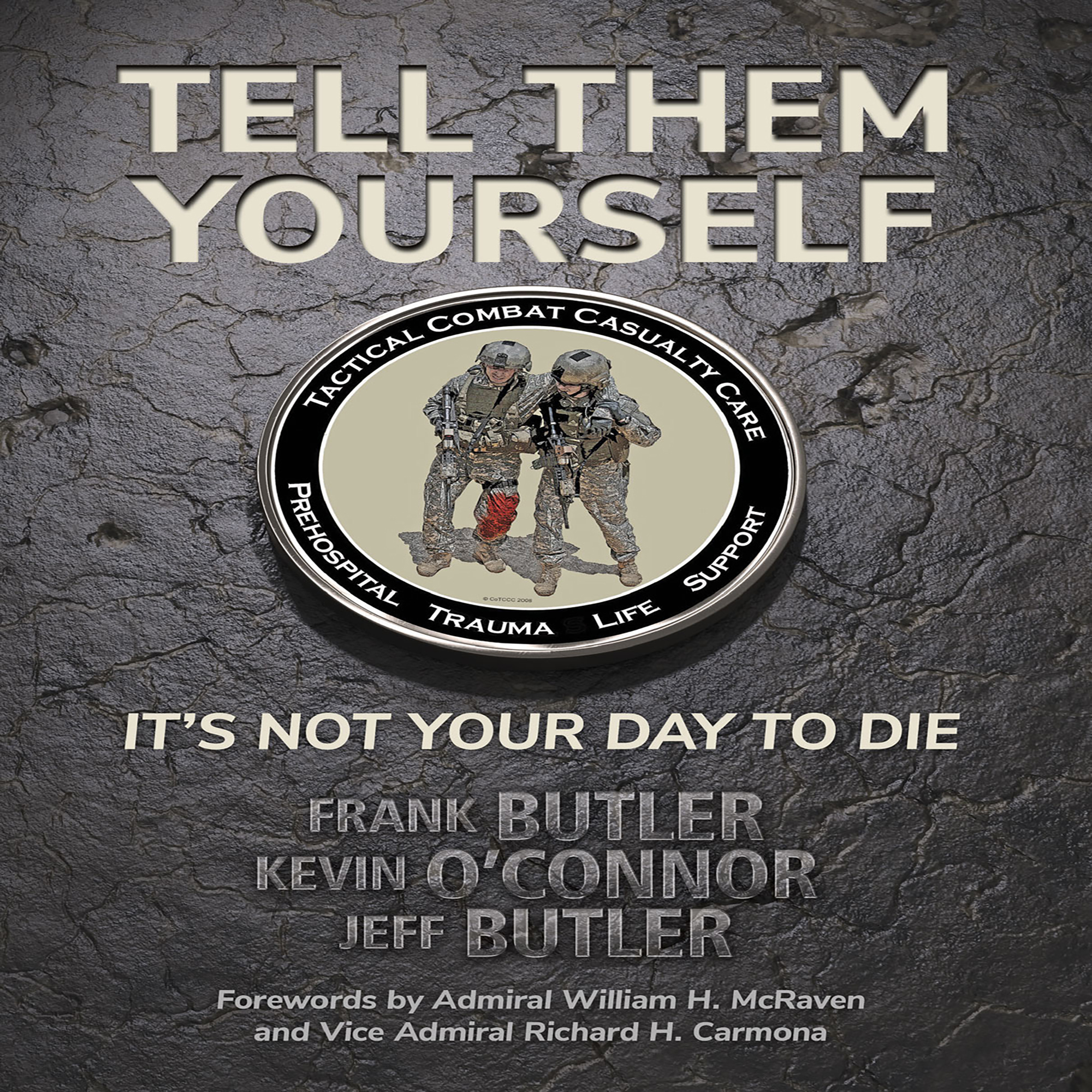
Well, thank you for joining us for a very special interview from the publishers of the Journal Special Operations Medicine, Breakaway Media and very excited to chat a little bit about their new book tell them it's not your day to die from an illustrious group of authors within the community. And for those who were at SOMA, there was Dr. Frank Butler who was signing some copies himself. And we are excited to be joined by a part of his larger community joined today by Jeff Butler. Thank you so much for sitting with us and telling us about the book. Maybe we could start by learning a little bit about you and your background.
- [01:20]
B
Yeah, sure. Thanks very much for having me. As you said, you didn't say, but I'm the son of Frank Butler, so I'll clear that up from the get go. I was commissioned in the US Navy back in 1999 after graduating from Georgetown University on a ROTC scholarship. I then went straight into SEAL training that same summer and graduated with Bud's class. 227 was assigned to an East Coast SEAL team where I deployed overseas. After 911 I served four years in the Navy and then shortly after leaving joined the Directorate of Operations at the CIA. That's the clandestine service of the CIA. I was assigned to the Counterterrorism center there after I completed the farm, which is their basic tradecraft training program. Then I deployed to Afghanistan as an operations officer in the hunt for Al Qaeda hvts high value targets, among other assignments both at our headquarters and then overseas for the CIA. I left there after seven years of service and moved to Missouri with my pretty young family. At the time I earned a master's degree in American History and then joined the Springfield Fire Department as a full time paid firefighter. 2012, which is where I've been ever since. Since then I've kind of promoted up from the bottom of the chain there, which is a firefighter rank up to a rescue specialist, a lieutenant captain and now battalion chief. I served on our water rescue team as a member and a team leader and I now serve as an operations battalion chief which means I oversee our fire operations and 35 fire personnel in my battalion across and nine fire apparatus across the city on our sea shift. I've served over 12 years and the city of ours is about 170,000 people. So it's a medium sized city here in Missouri.
- [03:05]
A
Well, what an interesting triad of background and operational experience that you've got. And I'd be curious to know if there was a common thread you saw through TC3 throughout year three. Very different professional endeavors.
- [03:21]
B
Yeah, there absolutely has been. TCCC has absolutely followed me throughout all three of my careers. As a young SEAL Officer Back in 2000, I was introduced to it when it was at that time taught to the deploying SEAL platoons at my SEAL team. We deployed in October of 2001. So we got that T triple C course, such as it was at the time, right before we left. That was really kind of early days of TCCC making it out to the SOF community, special operations community community and kind of long before it had migrated to the wider US military. And in fact it was my dad, Dr. Butler, one of my, one of the co authors that came out to teach us that at SEAL teammates. So that was kind of my, my first professional experience with it. After I left the SEAL teams and joined the CIA and before I deployed in to Afghanistan in 2006, I received my kind of my second dose of TCCC. By then it had made its way to the agency, to the CIA and was delivered by CIA medical instructors to all those officers kind of deploying to war zones at the time. And then I got to the fire service in 2012 and TCCC kind of followed me there and was just making its way to the civilian ems world around 2017 or 18. I can't remember the exact year I had been promoted to rescue specialists and was assigned to teach the course to our entire fire department as part of our creation of a rescue task force capability, which is a way that fire departments across America treat mass casualty events. And so in that process I completed naemt, the national association of emt, their TCCC provider course, and then certifies an instructor through NAEMT and taught the course to about 220 people. So I've kind of been there since its creation, being around my dad when he was creating it and then at every level of user almost at this point.
- [05:14]
A
Well, and so that leads to a great follow on question which is we all know that the wheels of government move very slowly. So how did TC3 evolve from being a good idea to actually being standard practice for combat medics and how long do you think that took to implement?
- [05:33]
B
Yeah, you know, I kind of had a backstage view of that as like I said, from being in the family with Dr. Butler, my dad, I had a backstage view of the genesis of TCCC back in the mid-90s. I was a teenager and my dad kind of was midwifing the idea into the world right around that time when he was doing biomedical research for the Naval Special Warfare Command. So in the book we mentioned the Tybee Island Summit, which is kind of the name we gave it, where a big part of the significant part of the original military medicine article was written that introduced tccc. That was at a beach house on Tybee Island, Georgia and we were there for family vacation. So that was the good idea you mentioned in your question is that's where kind of the genesis of it was. But after 96, it really took about two decades before TCCC kind of spread from the small SOF community, the special operations community, to the wider US military and beyond. And in those 20 years, it took really kind of dogged effort on the part of not just my dad, but many military and later civilian physicians, medics, nurses, researchers, and then kind of the inspired leadership of good number of kind of forward thinking combat commanders who really sort of forced the US military to adopt it. They were able to do it because they all really believed in it, its efficacy and they were, they knew it was all underpinned by extensive academic and clinical research and you know, the input of medical and operational personnel from, you know, all the way at the enlisted ranks to the top, you know, four star commanders. So the buy in and belief were always there and that kind of led to the perseverance and the determination to really make it, to make it happen. So it just was a lot of hard work on their part.
- [07:17]
A
And what do you think were some of the specific major challenges to implementing this as standard practice and how were they overcome?
- [07:26]
B
I think the co authors, my dad, Captain Butler and then Dr. Kevin O', Connor, they were both directly involved in kind of fighting the good fight to get it implemented. I think they would say the single biggest challenge they faced was, was bureaucratic inertia. Really in military medicine, it's kind of that, that all too human tendency we all have to kind of stick with the way things have always been done. You know, in that case, pre trip T, triple C because it, because it was the way things had always been done. You know, it's hard to make change. That's a really hard sentiment to overcome in humans. And they accomplished it by, you know, just presenting the data, presenting the research to just one unit at a time in the military, you know, starting in the soft community, because that's where the idea grew out of. Dr. Butler literally sat down with Seal and Ranger medics, you know, one unit at a time, and then just kind of heard them out, addressed their concerns, followed up on their concerns, and in that way he was able to get their, you know, eventual buy in. And that really made all the difference. And then that, you know, that especially once that led to senior commanders coming on board because they weren't going to come on board without the buy in of their medics at their units. So it's, it really started it that way.
- [08:34]
A
Was there any point in time when it seemed that a specific procedure would not be implemented as a standard? And if so, what would be an example of that procedure?
- [08:44]
B
Yeah, tourniquets are really always our go to example when it comes to the difficulty in trying to change people's minds and change medical protocols in the US Military. My dad always uses the example and talks about the Vietnam War where US Medics were still not regularly using tourniquets when they were, they were using, you know, these tourniquets that were essentially designed in the 18th century, or they were using field expedient materials like literal sticks and kind of torn T shirts to make them. And it's, it's sort of madness to look back on now, but that, that's how it was. We, we lost over 3,000American service members in that war because they just did not have effective tourniquets applied to extremity bleeding. Changing the mindset, changing that mindset, really, ensuring that tourniquet use became an accepted and recommended standard. That's, that was a really painful and lengthy process and I think is the one at least Dr. Butler routinely points to in terms of the difficulty we faced in terms of how it got implemented. It was the determination of certain physicians and other medical personnel who took the time to do the research and actually study the literature and carry out clinical tests that made the difference and convincing the established medical people at that time to change their ways. I mean, it was just presenting data over and over again and studies. There was no great secret to changing the protocols beyond sheer force of will, you know, evidence based arguments and hard work of convincing medical professionals across the military literally, you know, one at a time sometimes.
- [10:16]
A
And thank goodness Dr. Butler and the rest of the posse did we know TC3 encompasses many changes in battlefield care from the use and evolution of tourniquets to the paradigm shift in priorities of care, to the use of TXA and even far forward fresh whole blood. In your opinion, what was the most important initiative that the Committee on Tactical Combat Casualty Care has undertaken?
- [10:41]
B
Yeah, that's a great question in my own opinion and my co authors, you know, might have differing opinions from mine, but it really was the fact that TCCC recognized and even addressed the tactical combat aspect of tactical combat casualty care that was a big shift in thinking. In that TCCC incorporated the idea that battlefield medics would, wouldn't be performing their duties in well lit emergency departments, you know, with well staffed medical teams, using all the tools and equipment available on a standard or really even a field hospital, and incorporated the reality that a determined enemy would likely continue to shoot at medics while they worked, and emphasized the tactical imperative of both surviving and then accomplishing the mission. And then, you know, secondly, I'd say that TCCC used as its starting point the fact that some deaths in combat are preventable. That's a really important point. TCCC identified what the causes of those preventable deaths were and it was, it was exsanguination, tension, pneumothorax, these identifiable causes, things we know we can fix in the field. And then it came up with the best possible ways to prevent those deaths with the resources on hand. So to me, that way of thinking, a change in the thinking about battlefield medicine, was really the most important initiative. It wasn't each individual protocol, it was the thinking that framed it all.
- [12:03]
A
Fair point. And speaking of thinking about changes to the practice of pre hospital operational medicine, there's certainly some overlap between battlefield care and civilian ems, both of which you've got a fair amount of expertise in. So both, I think we all know, can find themselves facing hostile fire while caring for casualties. What are some of the similarities and some of the differences between the military model of TC3 and the civilian EMS implementation of those practice patterns?
- [12:33]
B
Yeah, I mean, in the military, you know, the mission objective is always paramount or should be, and by definition there's generally always an enemy out there trying to prevent you from accomplishing that mission. In the civilian EMS world, you know, patient care really is the mission so that the, you know, the exigencies of accomplishing some overarching tactical objective beyond that, patient care doesn't really exist for civilian EMs. It's also not always, and really not even usually the case in civilian EMS that, you know, someone's actively trying to kill you while you treat a patient. I mean, it does happen, you know, active shooter events Are obviously the exception there, but they're, they're statistically rare. And, you know, despite them seeming to happen all the time here In America, civilian EMTs don't face that, you know, nearly as much as combat medics might. A civilian EMT just doesn't go to work every day expecting a shooter to be targeting them, though. They prepare for it. Of course, while, you know, a SEAL medic going on an operation fully expects to be engaged by an enemy, you know, while they take care of a patient and plans that way. In terms of similarities, you know, both sets of medics have to operate in really austere environments at times, whether it be, you know, in the desert or mountains at night in Afghanistan or Syria, or, you know, even in a mud soaked backyard on a rainy night here in Springfield, Missouri. You know, those are difficult conditions to try to practice medicine in, and they both have to make do with, you know, what they carry on their back or in their med bags or, you know, maybe in the case of EMTs, they can go back to the ambulance if they need additional equipment, but they're limited. You know, I'd say another big difference between two is probably transport times. Civilian EMTs generally have faster transport times or almost always have faster transport transport times to a hospital than military medics could ever hope for. You know, in the field, an ambulance in a city might have a five minute transport time, or even up to two hours if they're out in a rural area. But a military medic, you know, can face transport times of up to many hours or even longer, depending on terrain and available medical assets and theater and things like that. They would almost never be blessed with, you know, a five to ten minute transport time. So in that way, the, the tactical evacuation care phase of TCCC is very different for the two sets of medics. And, you know, finally, there's the big differences just between the two is that civilian EMS personnel are just that, they're civilians. So, you know, they're. They're not expected or generally even allowed really in most systems to carry and use firearms to engage an enemy. So obviously, most military medics are expected to do just that and treat patients. So there are significant differences as well as similarities between the two.
- [15:10]
A
It seems that much of TC3 is care that has been relearned over time from previous conflicts. And we all hear about the walker dip, where a process is implemented, and then over time, there's a tendency to revert to the old ways of doing things. How does the committee on tactical combat Casualty care cement these Protocols and practices as standard practice to ensure any changes are a progression in care and not a regression to a lower standard of care.
- [15:41]
B
Yeah, you know, that. That walker dip was probably the primary driver for my. For my dad, Dr. Butler, specifically, in wanting to write the book. You know, he just had this fear that things were going to regress. And so Having spent over 25 years trying to develop and then implement tactical combat casualty care throughout military medicine, he really has an acute understanding of the need to cement it, to cement tccc. Not just the protocols and the guidelines themselves, which, you know, can and should change over time, but the. The methodology cemented in the. In the Committee on Tactical Combat Casualty Care. So the walker can't knock it off its bureaucratically precarious perch as the authoritative combat casualty care program. That was really what drove him to want to put it into book form and make sure that, you know, these lessons can't be forgotten. The committee's. It's set up so that, you know, potentially good ideas are evaluated no matter where they come from. It includes not just physicians, but, you know, physician assistants, medics had some who are outstanding researchers, others with extensive combat deployment experience. All of them have a say in the deliberations and in the adoption of new protocols and guidelines. So it's the process that's really the key. It's a collaborative and it's at times contentious by design to ensure that only the best care is ultimately provided to combat casualties. Analyzing the causes of and then eliminating those preventable death causes is always the overriding principle. And as long as that kind of remains the case, the committee's going to continue to make teacher pull. See an ever changing and adapting sort of living set of guidelines and principles. That's the goal. That's kind of how they'll hope to, you know, overcome that walker dip.
- [17:17]
A
Well, Mr. Butler, thank you so much for sharing your time and insight. This is really fascinating peek behind the curtain at a wonderful book and really interesting process that is the history and implementation of TC3 through the eyes of you and your co authors. As we wrap up our interview here today, do you have any closing thoughts for our audience and community members?
- [17:41]
B
Yeah, I'd like to thank you for having me to talk about the book. You know, the goal for us, the authors, is ultimately to get the word out there for posterity, you know, about the overall methodology and framework that is tccc. You know, it really boils down to analyzing, identifying, ultimately eliminating preventable death on the battlefield and in civilian EMS and keeping that front of mind should, you know, always be the goal so we can save as many lives as possible. So, you know, I'm. That's the goal with the book, and that's really what we're aiming to do. So, again, thanks for having me on and talk about it.