Podcast
Journal of Special Operations Medicine - Podcasts
Hosted by Journal of Special Operations Medicine · EN
This Podcast introduces and discusses the important topics in each issues of the Journal of Special Operations Medicine RSSVERIFY
12episodes
Episodes
Newest firstAll episodes
JSOM Summer Podcast
Jun 3000:31:58Summary readyMedical Editor's IntroductionHighlights two additional articles not covered in the podcast:"Expeditionary Point of Care Ultrasound for Combat in Austere Environments" — discusses challenges of forward-deployed POCUS (environmental extremes, limited power, skill sustainment) and proposes a structured framework."The Use of Trauma Gel for Hemorrhage Control and Tourniquet Removal" — a case series on traumatic extremity injuries; trauma gels show promise for a difficult clinical problem in SOF medicine.Article 1 — Presented by Sydney Duke"Telemedicine Consultation: Lessons Learned from the Pararescue Experience" (Gottschuk, Oeding, Blacker, DeSoucy, Rush)Retrospective review of 13 telemedicine consultations / 28 patients over 10 years (2010–2020)Use cases: cave entrapment, trauma, burns, medical illness; consultations between PJs and flight surgeons ± specialistsNotable case: 2018 Thai cave rescue — telemedicine guided pediatric sedation during extractionBiggest challenges were communicative, not technological (e.g., "patient is urinating okay" ≠ measured urine output)3 key lessons: shared communication framework; simple voice calls often work best; rehearse telemedicine before deploymentDiscussion touched on the need for dedicated telemedicine providers in operational settingsArticle 2 — Presented by Paul Rajan"One IFAK Isn't Enough: Rethinking Individual Medical Loadouts for Modern War" (Beerbaum & Henderson)Uses a firsthand account from a trench fight in Ukraine to challenge the traditional IFAK model (1 casualty → 1 injury → stabilize → evacuate)Key findings: modern drone warfare creates multisystem trauma patterns that overwhelm IFAK supplies; IFAKs can be physically destroyed by the same blast/shrapnel that caused the casualties; rapid evacuation is no longer guaranteedTakeaway: training scenarios must reflect Ukraine-era wound patterns; individual loadouts need to be rethought for large-scale combat operationsArticle 3 — Presented by Matt Faranella"Prediction Factors Associated with Success in Military Special Operations Courses: A Systematic Review" (Tourinho, de Souza, Filho, Miranda, Viana, Alves, & Bunn)Screened down to 23 studies (1990–2022) across ~10 countries; selections included SFAS, BUDS, AFSOC, Italian Rangers, and othersTop predictors of success:Aerobic fitness (VO2 max, run/ruck times) — most predictiveMuscular endurance — pull-ups, push-ups, loaded marchesPsychological resilience — stress tolerance, mindfulness, lower dissociative symptoms under stressPrior selection experience — recycles had higher subsequent success ratesBody composition less predictive than expected — the "6'3" and 6% body fat" operator image doesn't hold up statisticallyLively discussion on mindfulness in both special operations and medical training, and how grit/resilience transcends both domainsDisclaimer: Views are the speakers' own and do not represent the official position of JSOM, the Defense Health Agency, or any branch of the US government.
Summary
Spring 2026 JSOM Podcast
May 900:33:33Summary readyEpisode Description:In this spring edition of the Journal of Special Operations Medicine Podcast, the team examines evolving challenges at the intersection of behavioral health, combat trauma care, and medical technology in austere environments. Drawing from recent JSOM publications, the discussion highlights how modern warfare—characterized by remote engagement, prolonged care timelines, and rapid technological integration—is reshaping both injury patterns and treatment strategies across the continuum of care.The episode reviews three featured articles. First, a case report explores the augmentation of cognitive processing therapy (CPT) with spiritual counseling in a Special Operations Forces (SOF) operator experiencing PTSD and moral injury following indirect trauma exposure via drone surveillance. Second, a systematic review of orthopedic trauma in the Russia–Ukraine conflict outlines current injury patterns dominated by blast and high-velocity mechanisms, along with implications for surgical management and long-term rehabilitation. Third, a pilot study evaluates AI-assisted lung ultrasound interpretation by novice medics, demonstrating improved diagnostic accuracy and confidence in identifying pneumothorax in resource-limited settings.Together, these discussions underscore the increasing complexity of operational medicine, where providers must integrate psychological, surgical, and technological considerations to optimize outcomes in dynamic and constrained environments.Guests / Hosts:- Jessica Rodriguez — Medical student, incoming surgical resident; co-host- Sydney Duke — Medical student; co-host- Matthew Faranella — Medical student with operational perspective; co-host- Dan Godbee — Medical Editor, JSOM (introductory commentary)Key Topics Covered:- PTSD and moral injury, including indirect trauma exposure in modern warfare- Integration of spiritual counseling with evidence-based psychotherapy (CPT)- Role of military chaplains in operational and clinical settings- Orthopedic trauma patterns from near-peer conflict (blast, drone, and high-velocity injuries)- Damage control orthopedics, infection mitigation, and rehabilitation strategies- AI-assisted point-of-care ultrasound (POCUS) for pneumothorax detection- Operational considerations for deploying AI and ultrasound across echelons of care- Triage and decision-making in mass casualty (MASCAL) scenariosOperational Relevance:This episode highlights the expanding scope of operational medicine, emphasizing the need for adaptable, multidisciplinary approaches that address both physical and psychological injury. It also critically examines how emerging technologies can enhance frontline capability while reinforcing the importance of context-appropriate application in austere and combat environments.Major Takeaways:- Indirect exposure to trauma is an increasing driver of PTSD and moral injury- Spiritual counseling may enhance engagement and outcomes in select patient populations- Blast and drone-related injuries continue to define modern combat trauma- Early stabilization and infection control remain essential to survivability- AI-assisted diagnostics improve medic performance but require careful operational integration- POCUS is most impactful in triage and higher echelons of care rather than point of injury
Summary
JSOM Conversations with Sam Patrick | Dr. Frank Butler on Tactical Combat Casualty Care
Mar 200:31:43Summary readyThirty years after the emergence of Tactical Combat Casualty Care (TCCC), this inaugural episode brings together two voices deeply connected to its legacy. Host Sam Patrick sits down with Dr. Frank Butler, the architect of modern TCCC, for a focused conversation on the lessons that shaped the framework—and the challenges now facing its future. Drawing from operational experience and contemporary observations, including tourniquet misuse seen in Ukraine, the discussion examines how hard-won medical knowledge evolves, adapts, and risks being forgotten when training and doctrine drift from first principles. This episode is a reflection on where TCCC began, what it has become, and why its core ideas must continue to be taught, questioned, and reinforced for the next generation. This episode is sponsored by The Honor Foundation.
Summary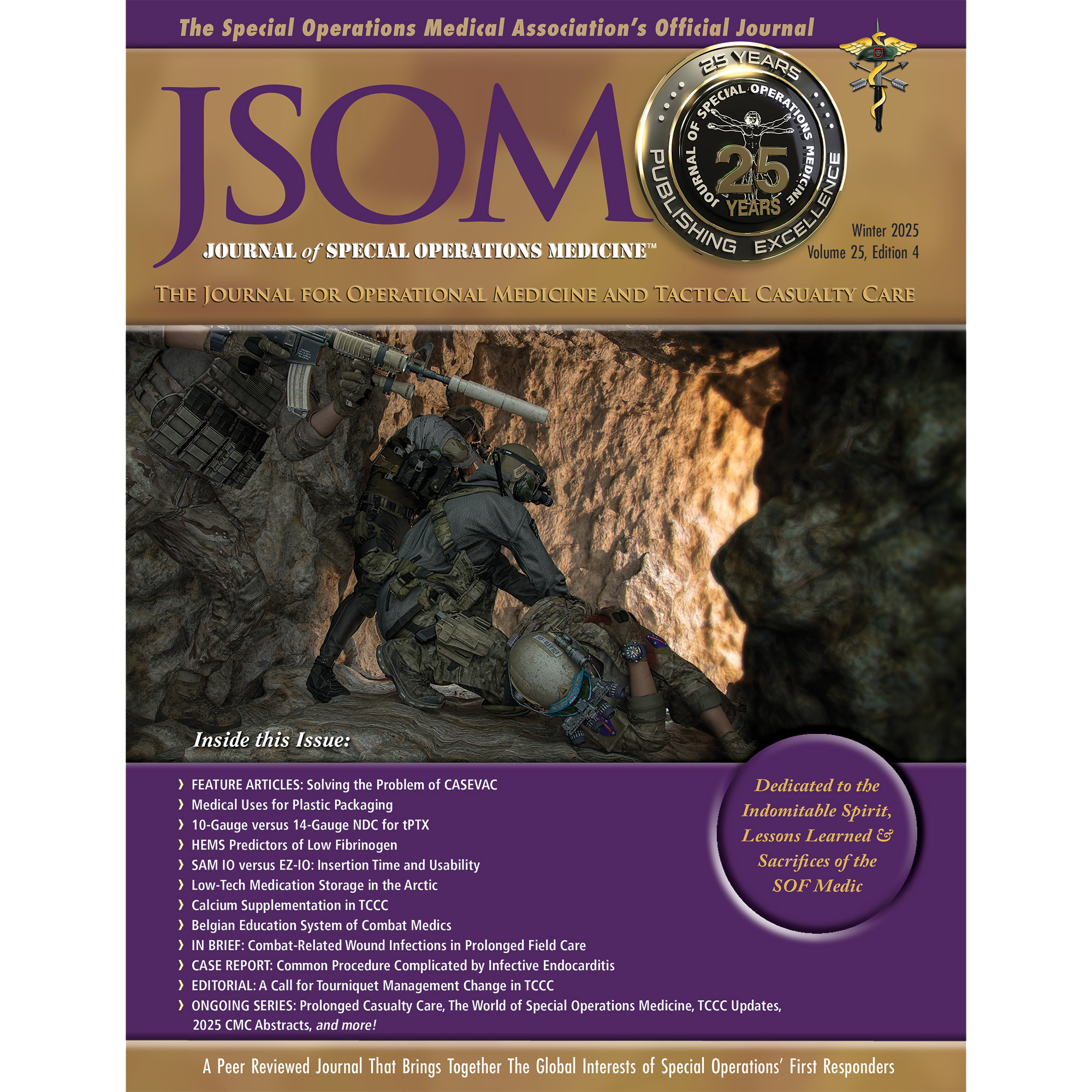
Winter 2025 JSOM Podcast
Jan 2700:38:38Summary readyThe Winter 2026 edition of the Journal of Special Operations Medicine Podcast brings together hosts Jessica Rodriguez, Sydney Duke, and Matthew Farinella for a lively, insightful discussion that blends medical education, operational readiness, and the evolving demands of military medicine.🎙️ Episode HighlightsTeam Updates & Military Match: The hosts share personal updates on rotations, match results, and the unique rhythm of the military medical training pipeline—from audition rotations to the fast-paced final months of medical school.Leadership & Combat Medic Training: Sydney reviews a Belgian Defense study evaluating whether prior EMT experience predicts success in combat medic training. The surprising takeaway: Intrinsic leadership, situational awareness, and tactical decision‑making—not prior clinical experience—were the strongest predictors of performance. Matt adds perspective from his time as an Army Ranger medic, underscoring the real‑world importance of tactical awareness over résumé bullet points.https://jsomonline.org/product/implementing-operational-skills-in-the-education-of-combat-medics-at-the-belgian-defense-an-integrative-model/SAM IO vs. EZ‑IO in Austere Environments: Jessica breaks down a comparative study of two intraosseous access devices. While the EZ‑IO was slightly faster, both devices had 100% success rates. The SAM IO’s lighter weight, lower cost, and lack of battery dependence make it a compelling choice for prolonged field care and dismounted operations.https://jsomonline.org/product/a-prospective-comparison-of-sam-io-versus-ez-io-insertion-time-and-usability-during-simulated-vascular-access/Lead Article: Rethinking CASEVAC for Near‑Peer Conflict: Matt dives into the edition’s lead article, exploring how the U.S. military must adapt casualty evacuation doctrine for large-scale combat operations. Key themes include:Moving from MEDEVAC-centric thinking to flexible CASEVAC modelsIntegrating evacuation planning under the Army Maneuver Center of ExcellenceTraining challenges for mass‑casualty, multi-branch, multi‑domain operationsLessons from historical conflicts and modern precision‑strike capabilitieshttps://jsomonline.org/product/the-chicken-fox-and-grain-solving-the-problem-of-casevac/🧭 Why This Edition MattersThis winter installment bridges the gap between academic insight and operational reality. Whether discussing leadership development, medical device selection, or the future of battlefield evacuation, the hosts highlight the evolving demands placed on today’s military medical professionals.📡 Stay ConnectedFollow the Journal of Special Operations Medicine across social platforms at @JSOMonline, and subscribe to the biweekly newsletter for updates, research highlights, and community insights.
Summary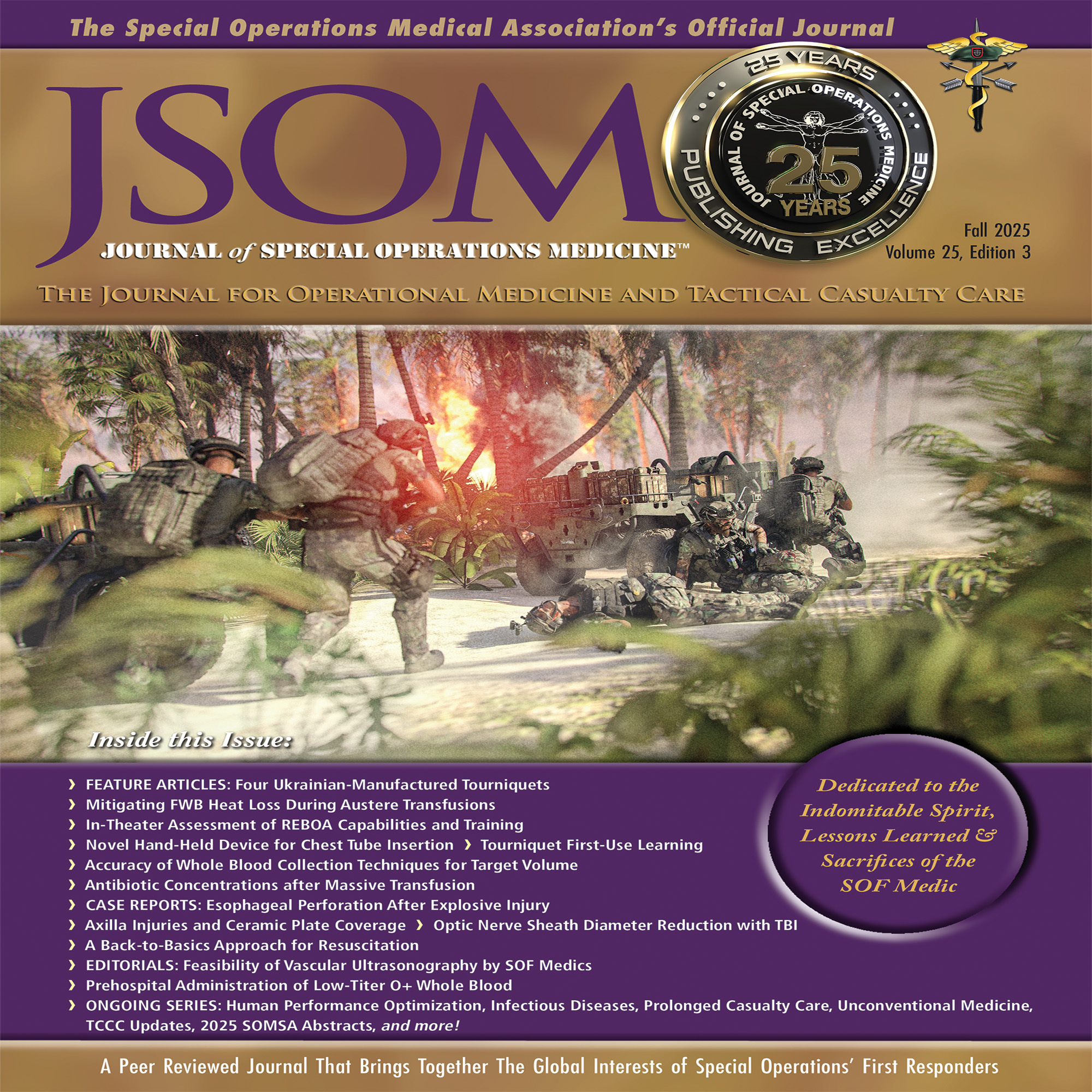
Fall 2025 JSOM Podcast
Nov 600:42:36Summary ready🎙️ Fall 2025 JSOM Podcast In this edition of the Journal of Special Operations Medicine (JSOM) Podcast, hosts Jessica, Sydney, and Matthew explore three cutting-edge articles shaping the future of operational medicine: 🛡️ Penetrating Axilla Injuries in Ceramic Plate Coverage: Matthew unpacks a compelling case series on the effectiveness of four-plate body armor systems in protecting vital axillary structures, drawing from his own experience as a Ranger medic. https://jsomonline.org/product/penetrating-axilla-injuries-and-ceramic-plate-coverage-a-special-operations-case-series/ ❄️ Mitigating Heat Loss in IV Tubing During Austere Blood Transfusions: Sydney reviews a West Point study quantifying how cold environments impact transfusion safety—and what innovations might help preserve blood temperature in the field. https://jsomonline.org/product/mitigating-heat-loss-in-iv-tubing-during-austere-blood-transfusions/ 🩸 Lab Evaluation of Four Ukrainian-Manufactured Tourniquets: Jessica breaks down a comparative study assessing the performance, durability, and design of Ukrainian tourniquets under simulated battlefield conditions. https://jsomonline.org/product/lab-evaluation-of-four-ukrainian-manufactured-tourniquets/ Plus, Dr. Dan Godbee highlights two additional must-read articles on prehospital blood use and JSOM’s ongoing commitment to mentoring medics through the publishing process. https://jsomonline.org/product/a-back-to-basics-approach-for-resuscitation-storage-and-transportation-of-whole-blood-in-chest-harness/ https://jsomonline.org/product/advocating-for-the-prehospital-administration-of-low-titer-o-whole-blood-dispelling-myths-and-misinformation/ Subscribe, rate, and review—inform your thinking with the latest in SOF medical science. Follow our Social Media - Instagram, Facebook, X, and LinkedIn @JSOMOnline. podcast@jsomonline.org
Summary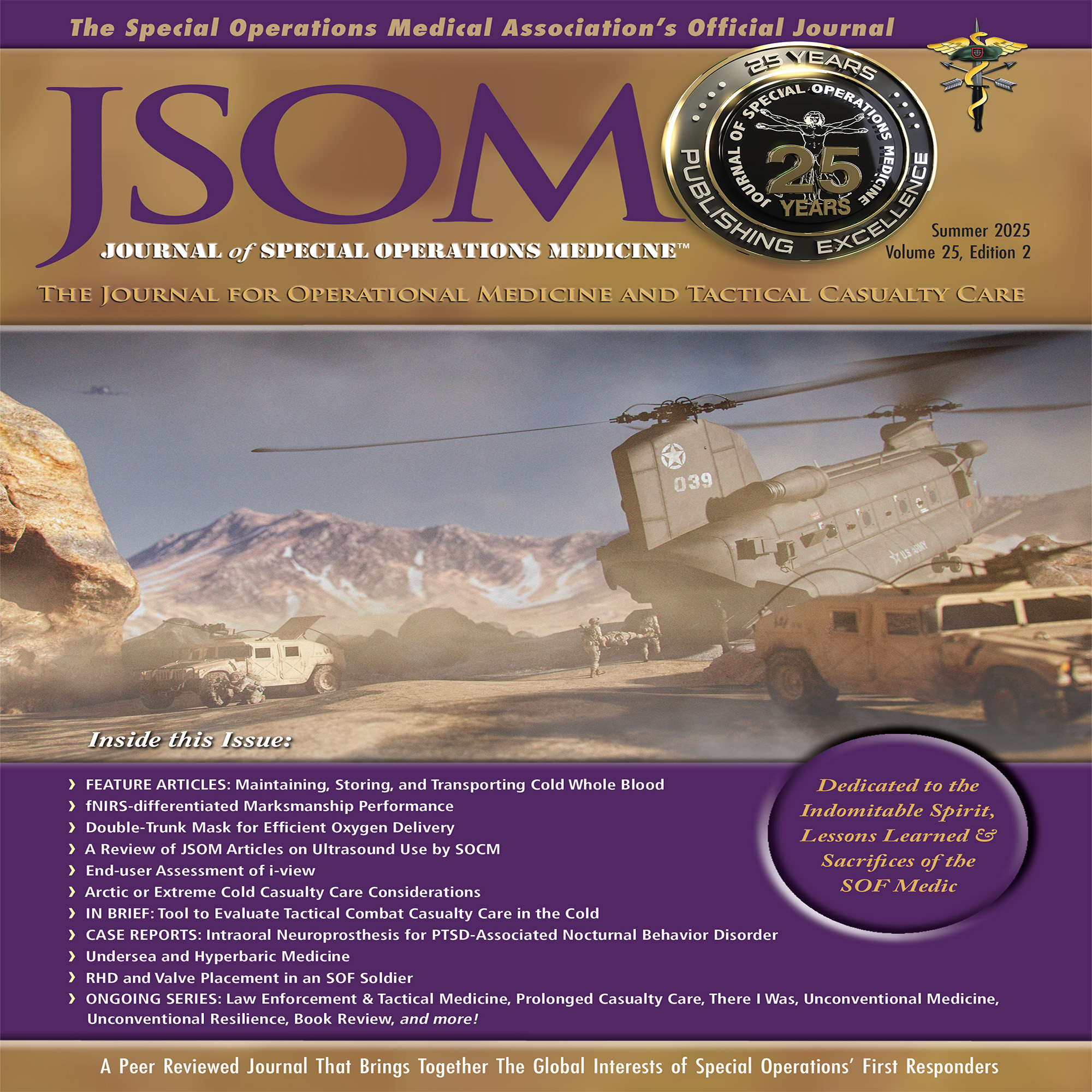
Summer 2025 JSOM Podcast
Aug 2, 202500:39:15Summary readyThis summer, Jessica will review “Ultrasound Use by Special Operations Combat Medics: A Narrative Review Limited to the JSOM” by Dr. Jonathan Curley. (https://jsomonline.org/product/ultrasound-use-by-special-operations-combat-medics-a-narrative-review-limited-to-the-jsom/) The heart of this article provides an overview of how Special Operations Combat Medics (SOCMs) use ultrasound in clinical practice and proposes future applications. Sydney is reviewing “Injuries in Specialist Police Officers: A Scoping Review” by Dr. Kate Lyons et al (https://jsomonline.org/product/injuries-in-specialist-police-officers-a-scoping-review/). This article identifies, collects, and synthesizes evidence on injuries sustained by specialist police and compares those injuries with those of other law enforcement officers and wider Special Forces populations. Matthew is reviewing “Proof of Concept: Is Small-scale Production of Diethyl Ether for Anesthetic Use Possible?” by Dr. Sandeep Dhanjal et al. (https://jsomonline.org/product/proof-of-concept-is-small-scale-production-of-diethyl-ether-for-anesthetic-use-possible/) In this manuscript, the authors explore the use of diether ether as a stopgap solution to anesthetic supply limitations in humanitarian crises or armed conflicts. Be sure to subscribe to the JSOM podcast on Spotify. You can also find it at https://jsom.us/Podcast. Follow us on Social Media @jsomonline or on our website https://www.jsomonline.org
Summary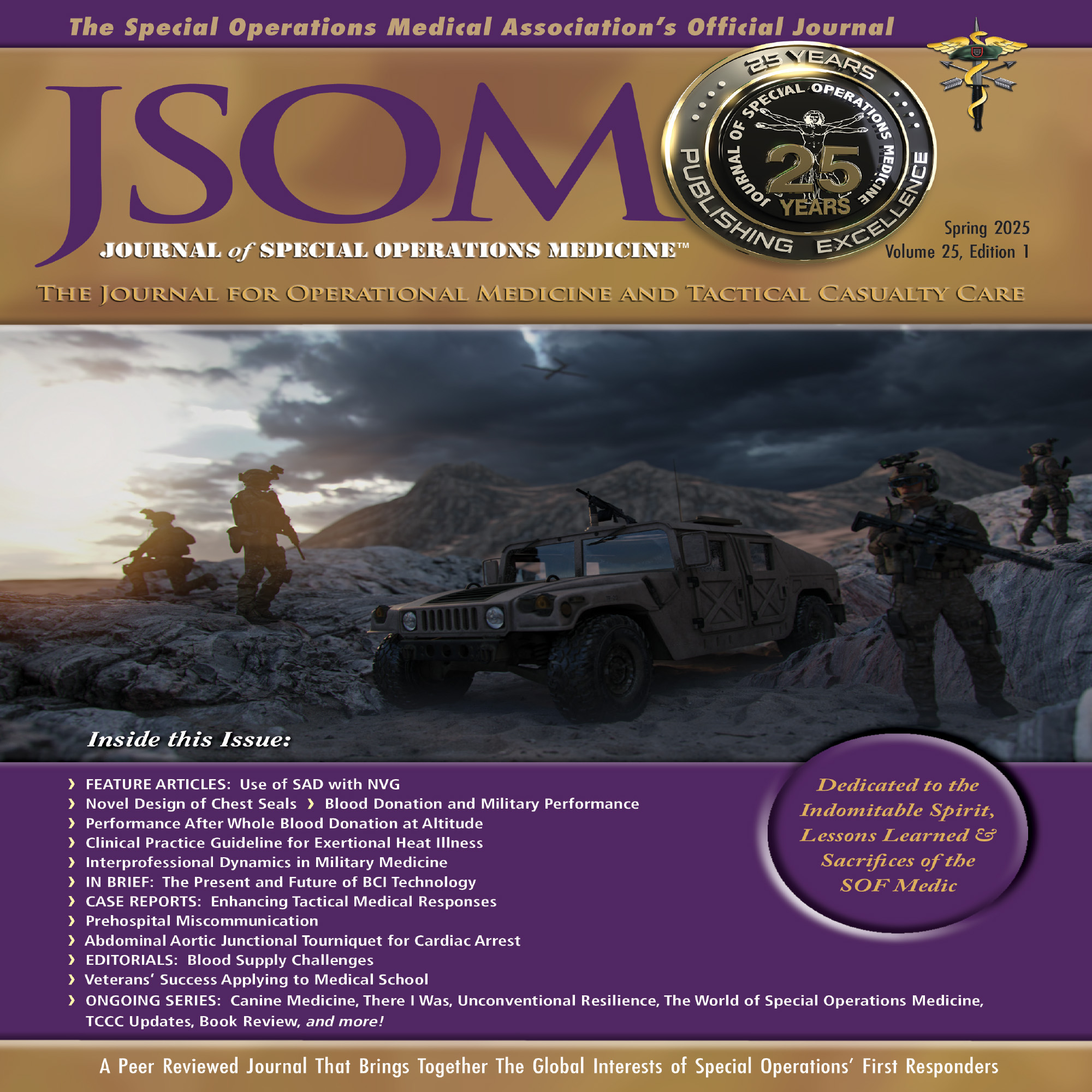
Spring 2025 JSOM Podcast
Apr 21, 202500:38:24Summary readyWe welcome our new podcasters, 2d Lt Jessica Rodriguez, USAF, 2LT Matthew Farinella, USA, and ENS Sydney Duke USNR to our podcast team. We thank and appreciate Alex Merkle and Josh Randles for all their hard work giving great reviews of our articles each quarter. Jessica, Matthew, and Sydney will review the following articles: The Use of Different Types of Supraglottic Airway Devices by Medics on a Manikin with Night Vision Goggles: A Pilot Study by Christoph Janig, Thomas Hummel, Manfred Berres, Arnulf Willms, and Tim Piepho (https://jsomonline.org/product/the-use-of-different-types-of-supraglottic-airway-devices-by-medics-on-a-manikin-with-night-vision-goggles-a-pilot-study/) Beyond Command: Exploring the Dynamics of the Military Medical Officer and Non-Commissioned Officer Relationship in Military Medicine by Kiia Crawford, Makinna Farrell, Ariana Barilla, Amy Hildreth, and Kebekah Cole (https://jsomonline.org/product/beyond-command-exploring-the-dynamics-of-the-military-medical-officer-and-non-commissioned-officer-relationship-in-military-medicine/) Successful Management of Battlefield Traumatic Cardiac Arrest Using the Abdominal Aortic and Junctional Tourniquet (AAJT): A Case Series by Dmytro Androshchuk and Andriy Verba (https://jsomonline.org/product/successful-management-of-battlefield-traumatic-cardiac-arrest-using-the-abdominal-aortic-and-junctional-tourniquet-aajt-a-case-series/) We Would Love Your Feedback Please email Podcast@JSOMonline.org. Follow us on Social Media @jsomonline or on our website https://www.jsomonline.org
Summary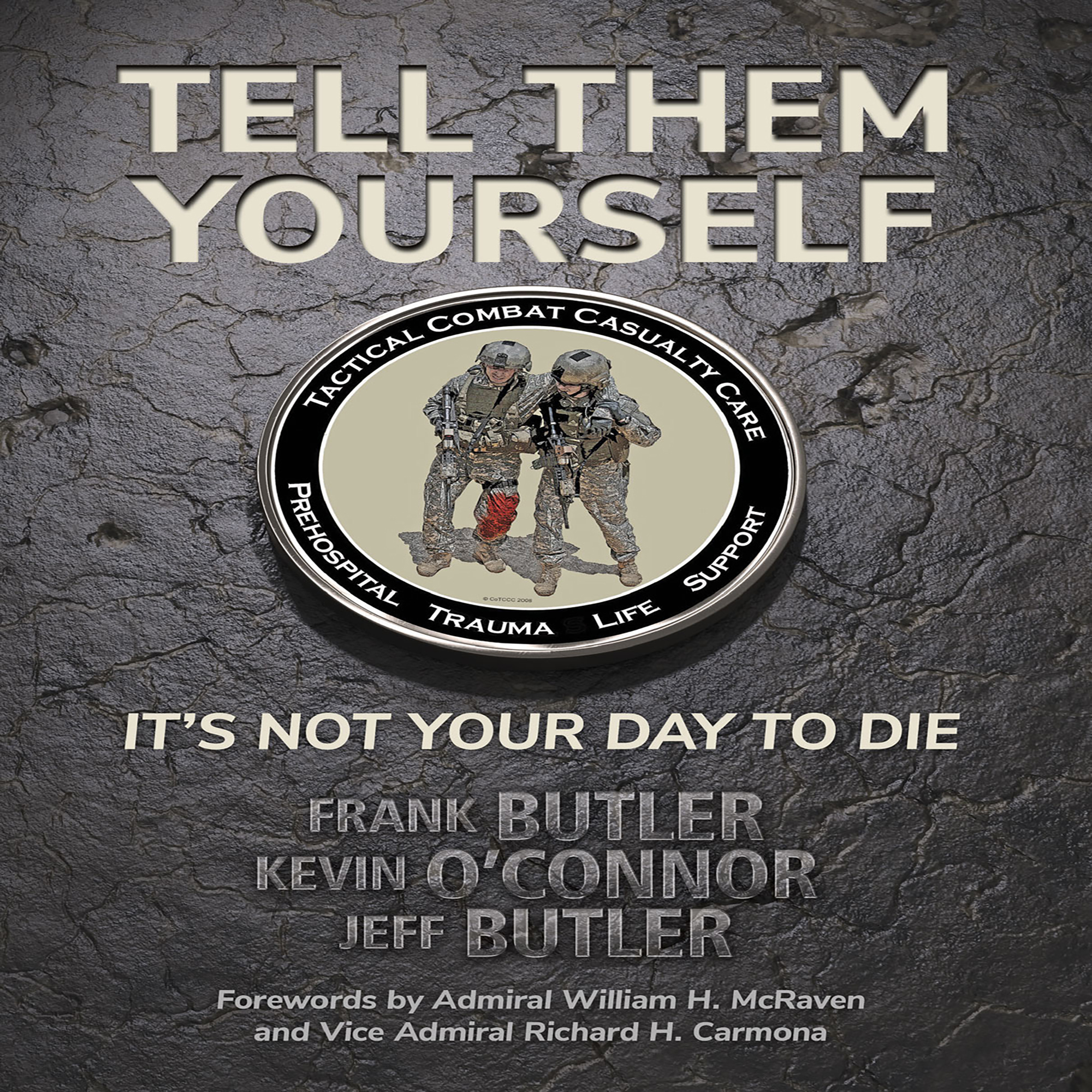
Special Interview with Jeff Butler
Sep 26, 202400:18:30Summary readyA U.S. Soldier on a night patrol hears a gunshot, feels a sharp pain in the right side, and yells, “I’m hit.” The unit medic quickly moves to the casualty’s side. The wounded Soldier thinks of the family waiting at home and says to the medic: “Doc—will you please tell my family that I love them.” The medic responds, “Hey—shut up! I got this. You’re gonna be fine, and you’re going home to your family—you can tell them yourself. It’s not your day to die.” Far beyond any other battlefield trauma care program in history, Tactical Combat Casualty Care has enabled America’s combat medics to make good on that promise. Josh and Alex sit down with coauthor Jeff Butler to discuss the motivation and inspiration for the book, "Tell Them Yourself: It's Not Your Day to Die." Tell Them Yourself is the extraordinary account of how a small group of world class trauma experts joined forces with America’s best combat medics to rewrite the rule book in battlefield medicine - and then to sell these revolutionary new concepts to a disbelieving medical world. Thousands of Americans wounded in combat died in Vietnam - when they could easily have been saved. More deaths than in the Twin Towers on 9/11. More deaths than Pearl Harbor. In 1990, there had been very little progress made in battlefield trauma care since the Civil War. But the revolutionary new concepts embodied in Tactical Combat Casualty Care (TCCC) have changed that landscape dramatically. Against great odds, TCCC has reduced the incidence of preventable deaths among combat casualties to the lowest level in history and has been credited with saving the lives of thousands of our nation’s wounded Servicemembers in the recent conflicts in Iraq and Afghanistan. TCCC is now mandated by the U.S. Department of Defense as the nation’s standard for battlefield trauma care. TCCC has forever changed the way care will be provided to America’s combat wounded and is now being used by militaries around the world and in civilian prehospital trauma care as well. This is a medical book like no other because it is a combat medical story like no other. Published by Breakaway Media, this book is available at https://jsom.us/TTY We Would Love Your Feedback Please email Podcast@JSOMonline.org. Follow us on Social Media @jsomonline or on our website https://www.jsomonline.org
Summary
Summer 2024 JSOM Podcast
Sep 26, 202400:42:22Summary readyOur JSOM Podcast team of Alex Merkle and Josh Randles will be reviewing the following articles for our Summer podcast: Advancing Combat Casualty Care Statistics and Other Battlefield Care Metrics by Jud C. Janak, Russ S. Kotwal, Jeffrey T. Howard, Jennifer M. Gurney, Brian J. Eastridge, John B. Holcomb, Stacy S. Shackelford, Robert A. De Lorenzo, Ian J. Stewart, and Edward L. Mazuchowsk (https://jsomonline.org/product/advancing-combat-casualty-care-statistics-and-other-battlefield-care-metrics/) Evaluation of a Rebreathing System for use with Portable Mechanical Ventilators by Thomas Blakeman, Maia Smith, and Richard Branson (https://jsomonline.org/product/evaluation-of-a-rebreathing-system-for-use-with-portable-mechanical-ventilators/) The Effect of Critical Task Auto-failure Criteria on Medical Evaluation Methods in the Pararescue Schoolhouse by Ian Richardson, Michael Lauria, Brian Gravano, Jeffrey Swenson, and Stephen Rush (https://jsomonline.org/product/the-effect-of-critical-task-auto-failure-criteria-on-medical-evaluation-methods-in-the-pararescue-schoolhouse/) JSOM Guest Author Advancing Combat Casualty Care Statistics and Other Battlefield Care Metrics author Jud C. Janak will be interviewed by our podcaster team about the article. Jud C. Janak, PhD, has over 10 years of experience as an epidemiologist and applied biostatistician in the private sector, public sector, and academia. He has published over 50 peer-reviewed studies on topics related to traumatic injury, accelerated aging, chronic disease, and real-world pharmacoepidemiology. He completed a post-doctoral fellowship at the U.S. Army Institute for Surgical Research where he focused on traumatic brain and genitourinary injuries. He was Director of Epidemiology and Biostatistics for the Department of Defense Joint Trauma System from 2017 to 2020. He also served as the lead epidemiologist for the Military Trauma Preventable Death Working Group. He was an Associate Director of Epidemiology at CorEvitas from 2020 to 2023. His current responsibilities focus on leveraging real-world patient and clinical registry data to study the safety and effectiveness of FDA-approved therapies as a Principal Epidemiologist in the Real-World Data Research and Analytics group at Merative. Dr. Janak received his master’s and doctoral degrees in Epidemiology from the University of Texas Health Science Center School of Public Health. We Would Love Your Feedback Please email Podcast@JSOMonline.org. Follow us on Social Media @jsomonline or on our website https://www.jsomonline.org
Summary
Spring 2024 JSOM Podcast
Jun 26, 202400:24:07Tap to summarizeOur JSOM Podcast team of Alex Merkle and Josh Randles will be reviewing the following articles for our Spring podcast: Our JSOM Podcast team of Alex Merkle and Josh Randles will review the following articles for our Spring podcast: Development and Implementation of a Standard Operating Procedure for Military Working Dog Blood Collection, Storage, and Transport by Elizabeth L. Evernham, Benjamin T. Fedeles, and Kayla M. Knuf (https://jsomonline.org/product/development-and-implementation-of-a-standard-operating-procedure-for-military-working-dog-blood-collection-storage-and-transport/) Emergency Fresh Whole Blood Transfusion Training for Ukrainian Health Professionals in Austere Environments by Zachery L. Brown, Joshua P. Cuestas, Kevin J. Matthews, Jonathan T. Shumaker, Durwood W. Moore, and Rebekah Cole (https://jsomonline.org/product/emergency-fresh-whole-blood-transfusion-training-for-ukrainian-health-professionals-in-austere-environments/) JSOM Guest Editor Captain Cam Strawn reviews Development and Implementation of a Standard Operating Procedure for Military Working Dog Blood Collection, Storage, and Transport. Capt Strawn serves as an Air Force Combat Rescue Officer and combat veteran who teaches leadership as an Assistant Professor of Aerospace Studies at Brigham Young University, where he is also completing a premedical post-baccalaureate program. He is a SOFtoSOM Scholar applying to medical school this year. JSOM Guest Authors Emergency Fresh Whole Blood Transfusion Training for Ukrainian Health Professionals in Austere Environments authors SFC Zachery Brown and HM1 Kevin John Matthews are interviewed by our podcaster team about their article. SFC Zachery Brown enlisted in the Army on 15 September 2009. He has served with the 75th Ranger Regiment for the past 13 years: 7 years in the 1st Ranger Battalion and 6 years in the Regimental Reconnaissance Company (RRC). He served as a Ranger Squad Leader, Regimental Reconnaissance Team (RRT) Medical Sergeant, RRT Assistant Team Sergeant, and RRC Operations NCOIC and has nine combat deployments to Afghanistan, Iraq, and Syria, amounting to over 500 Special Operations Raids. In 2021, the Uniformed Services University of Health Services (USUHS) selected him for one of seven Army slots for the 24-month Cohort 9, Enlisted to Medical Degree Preparatory Program (EMDP2). This program prepares top-performing enlisted Servicemembers to apply to medical school. He is currently enrolled as a graduate student and aims to continue serving our nation and global community as a military physician and medical officer in the United States Army. SFC Brown earned a BS in Biology, Bio-Engineering Concentration, from the University of Arkansas in 2008, an MS in Strategic Leadership from the University of Charleston, and is currently working towards completing an MS in Biology at George Mason University. Hospital Corpsman First Class, HM1 (FMF/ SW) Kevin John Matthews enlisted in the Navy in 2016. Operationally, HM1 Matthews served as the Senior Line Corpsman, Scout Sniper Platoon, Weapons Company, 1st Battalion, 4th Marines, deploying to Africa and the Middle East aboard the 15th Marine Expeditionary Unit (MEU) in 2021. Upon returning from deployment, the Navy Education and Training Office (NETO) selected HM1 Matthews as a Combat Trauma Management and Valkyrie Emergency Fresh Whole Blood Transfusion training instructor. He oversees the training of all medical personnel attached to Marine Corps expeditionary ground forces at 1st Marine Division, Camp Pendleton, CA. Hand-selected by the Division Surgeon, he was appointed the founding Course Manager for the inaugural Prolonged Casualty Care Course, prepa
Transcribe →