← Julian Dorey Podcast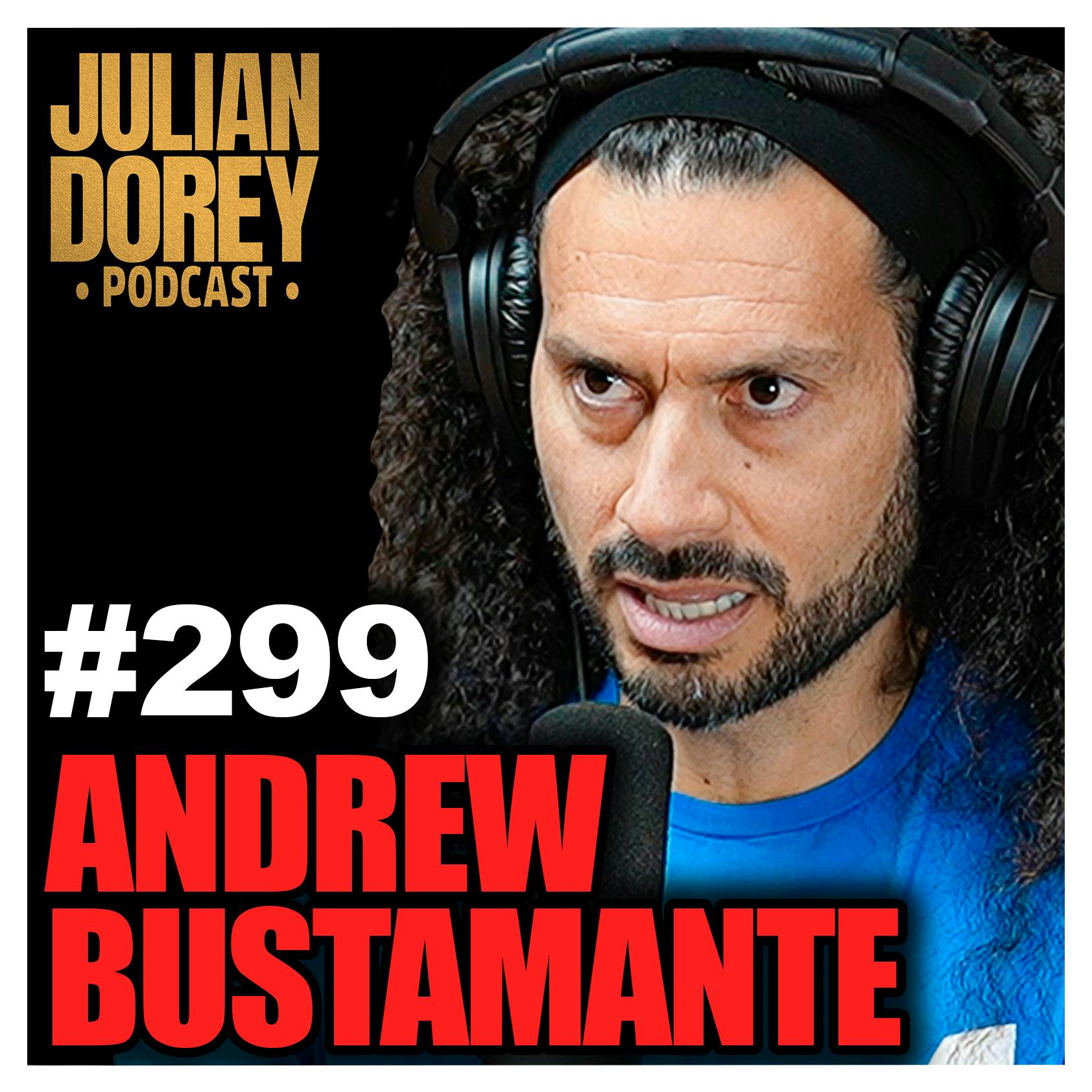
Julian Dorey Podcast
#299 - CIA Spy on Israel, Finding Jesus, Epstein & Worst Thing He Ever Saw | Andrew Bustamante
03:15:08
Loading summary
Transcript983 lines
- [00:00]
Julian
What was the worst thing you witnessed a human being do?
- [00:05]
Andy Bustamante
Human beings are horrible. So I specifically remember I was operating in Africa in a zone where there were child soldiers. Child soldiers are fed this concoction of gunpowder and to energize them and to focus them. And they're subjected to abuses by senior ranking officers to break their spirit and make them dedicated. Lethal. You learn very fast. The world is a fallen place.
- [00:32]
Alessi
Place.
- [00:32]
Andy Bustamante
And one of the things I've really loved doing is reading the Bible since CIA. Mind boggling experience. The fundamentals of espionage are in Jesus's original teaching.
- [00:40]
Julian
The fundamentals of espionage are from Jesus.
- [00:42]
Andy Bustamante
That's what I would say.
- [00:43]
Julian
Can you please explain this?
- [00:45]
Andy Bustamante
So there's a phenomenal story where Jesus is teaching a parable and he says.
- [00:49]
Julian
That, hey guys, if you're not following me on Spotify, please hit that follow button and leave a five star review. They're both a huge, huge help. Thank you. That is what it is. Andy Plant Monte back in the building.
- [01:14]
Andy Bustamante
I'm the worst paid plant in history. Just so you know. Just so you know.
- [01:18]
Julian
Yeah, that's what you tell us. But you know, you still got that business right there. It's probably backed by the US N A government.
- [01:24]
Andy Bustamante
The USNA government.
- [01:25]
Julian
Yeah, yeah, yeah. You never, you never seen Borat? The US and they.
- [01:28]
Andy Bustamante
Oh, US and they. Yes, the US And A government does not support my brand. I will say, actually, it's going to be really nice because one day I'll actually be able to show you a cover page of a book where they forced me to put a disclaimer that says that they do not associate or endorse me. It's pretty awesome.
- [01:44]
Julian
I mean, that's what I would do too in that scenario. I'd be like, hey, you know, we got to tell people publicly.
- [01:50]
Andy Bustamante
Why is it like every time I talk to you it feels like that scene in Princess Bride where they're having the. Where they're having that debate over who's gonna drink the poison. Do you know the scene I'm talking about? Are you too fucking young for the Princess Bride?
- [02:01]
Julian
I've seen the Princess Bride, but I mean, it has to be two decades ago when I was a kid.
- [02:05]
Andy Bustamante
That's awesome. All right, well there, that's, that's out there for all your 35 to 44 year old viewers.
- [02:12]
Julian
Well, listen, it's actually crazy because we're. The first time we were sitting down was three years ago, like almost to the day. I didn't realize that.
- [02:18]
Andy Bustamante
Oh, for real?
- [02:19]
Julian
Yeah.
- [02:19]
Andy Bustamante
Damn, that's awesome.
- [02:20]
Julian
Yeah. You were flying up to my parents house on a Tuesday right after my birthday.
- [02:24]
Alessi
Yeah.
- [02:24]
Andy Bustamante
That's incredible.
- [02:25]
Julian
Probably wondering what went wrong in your life to end up where you ended up there. But it worked out. It worked out. We're here now. Right. We're up in Hoboken. But I like getting in here because obviously there's always a lot of going on in the world and you have been involved with that in the past on a geopolitical level. And it feels like we've now been talking about these now what I would call endless wars. The last five times or six times that you and I have sat down and there seems to be cynically no end in sight. I mean, do you think that we're gonna now, I don't know, with the new administration, see a wind down of, I don't know, let's start with Ukraine, Russia or something like that.
- [03:03]
Andy Bustamante
So you know what I think is awesome is I agree the endless war thing is sad, but what's been really powerful is that as we've sat and had these conversations over the last three years, we've watched as the predominant theme comes true.
- [03:17]
Alessi
Right.
- [03:17]
Andy Bustamante
What we really started talking about three years ago was whether or not democracy will survive. That was really the core question. And now what we're seeing is the rise of authoritarianism. And we've been watching it, we've been talking about it and it's really actually happening.
- [03:30]
Alessi
Right.
- [03:31]
Andy Bustamante
You see strong men in Turkey, you see strong men in Israel, you see strong men in Russia, you see a strong man taking over here in the United States. It's happening everywhere. And weak men, democracy driven people in Europe have been kicked out of parliament, they've had forced reelections. Like you've seen France, you've seen Germany, you've seen people make a, a strong push for the democratic process and the whole thing just gets recycled and a new strongman comes out. People say it's conservative versus liberal. It's not, I agree. It's all about authoritarian like authority and power and the consolidation of power to make fast decisions. That's the world we live in right now.
- [04:07]
Julian
Here's the one thing with that though, I'd be curious about your opinion on when you look at these quote unquote weak leaders, Biden aside, because I mean, you know, he wasn't in charge. The guy couldn't even function. But when you look at the weak leaders around the world, one of the big knocks on the governments that they've run is that they're trying to control A lot. That's what people say. So in reality, it's almost to me like they're showing the appearance of being a weak leader, like in how they. And how they say things and how they do things. But behind the scenes, it's not really like that. It is actually like an authoritarianism. And now you have a strong man, you know, whether you look here or in other countries, like you said, who can come up and be more, I don't know, outward about whether or not they're authoritarian. Does that make sense?
- [04:52]
Andy Bustamante
It doesn't. It's actually a very fair observation.
- [04:54]
Alessi
Right.
- [04:54]
Andy Bustamante
Even if you look in the United States, Obama was like that.
- [04:56]
Alessi
Right.
- [04:57]
Andy Bustamante
Obama gave the public image that he was, you know, a man of the people and he was inspirational and he was uniting.
- [05:06]
Alessi
Right.
- [05:07]
Andy Bustamante
But then behind the scenes, he hit.
- [05:08]
Julian
That drone, baby, let's go.
- [05:09]
Andy Bustamante
Exactly. He was writing executive orders at a faster rate than any other president before him. He was bombing people using presidential authority. He was a strong, strong leader in the back end.
- [05:19]
Alessi
Right.
- [05:20]
Andy Bustamante
And I think that's a little bit of what the Democratic Party was, the Liberal Party, the, the, the Democrats were hoping to get out of Biden. That's why I certainly expected another Obama presidency when Biden was in office. But he didn't run the country anything like Obama. He had all of the, all of the cushion and none of the pushing, I guess, if you will.
- [05:37]
Julian
Oh, I like that. Who do you think was running the country?
- [05:42]
Andy Bustamante
I don't think anybody was fucking around the country. I think nobody. I think Biden had an opinion 50% of the time and he forgot what his opinion was the other 50% of the time. I think the Democrats were trying to groom the country for the next Democratic leader. I think they got stuck with Kamala Harris. I mean, it was a fucking disaster.
- [05:58]
Alessi
Right?
- [05:59]
Andy Bustamante
It has to be a disaster. I don't. I already know all the Trump fans out there are going to get pissed off. Trump is not the best choice for the United States. He's the best choice of what we were given, but he's not the best choice for the United States.
- [06:12]
Alessi
Right?
- [06:13]
Julian
Yeah.
- [06:13]
Andy Bustamante
The fucking broken process made it so we had to choose between two people. One that was force fed to us, right. Kamala Harris, and the other one who had been voted out by the majority of people in 2020.
- [06:26]
Alessi
Right.
- [06:26]
Andy Bustamante
And I mean, Trump had the balls to run again after losing, which is a big thing.
- [06:31]
Alessi
Right.
- [06:31]
Andy Bustamante
Kamala Harris had the balls to lose an election after being endorsed by the previous president. That's another thing. But we're seeing, I think it all boils down to our original, our original thesis that has been the theme throughout, throughout our conversations. The world is, is ready for strong, powerful, publicly authoritative figures. It's just a phase, but we go through this phase over and over again.
- [06:58]
Julian
So you're looking at it strictly logically. It's not like an endorsement of any of that. It's just a nature of like how the pendulum swings.
- [07:04]
Andy Bustamante
Correct. Human beings are stupid. We're stupid fucking animals, right? We are smart in terms of building technology, but we're really fucking stupid in terms of survival.
- [07:14]
Alessi
Right.
- [07:14]
Andy Bustamante
The fact that we have survived is kind of shocking. It speaks to the fact that we are so cerebrally oriented.
- [07:21]
Alessi
Right.
- [07:21]
Andy Bustamante
When you corner a human, they oftentimes give up. That's why criminals exist. When you corner an animal, they fight hard, even if it's a fucking squirrel.
- [07:30]
Alessi
Right.
- [07:31]
Andy Bustamante
It's incredible to see that humankind has dominated the way that it has. But then when you watch our evolution, you can see how much of our Dominan dominance has come from our brain and not our body. Especially when you go all the way back to like CRO Magnon man, right, where the small brain and big muscles, and now we've got big brains and small muscles. And then when you look at the, the cross section of the world, the wealthiest countries, what do they look like? They look fat and bloated, right?
- [07:56]
Julian
Yeah.
- [07:57]
Andy Bustamante
Your Middle Eastern collegiate countries, your European monarchy countries, the United States, then you look at your third world countries that are starving and those are hard bodied people that live a hard existence. So you can really see we thrive on our brain. And as a result of that, like, the brain is one of the easiest things to manipulate because it, like you've been saying since we sat down, you can look one way and people will believe the way you look is true.
- [08:25]
Julian
Yeah. It's interesting though because even if you look at like the poverty side of the United States, for example, you know, we're living in a time now where we have like an obesity epidemic among the poor as well. Like it goes across the board. So it's almost like counter intuitive in a way to some of the stuff you're saying. I, I agree with what you're saying, but it's like we've gotten things so ass backwards here that, that it, it, it sometimes feels like it was set up that way so this pendulum could swing, so you could get like an RFK in there because he's got to clean up all the red dye and all that, you know what I mean?
- [08:58]
Andy Bustamante
Yeah, it's. If you've never traveled the world, it's pretty amazing. You, you can actually get fresh produce, cheap processed food almost everywhere else except the United States. And so it's, it's mind boggling. This exact, this exact example you're talking about that, that poor people have obesity issues because the only food they can afford is processed food. It's just, it's really up. Do I think that there's some master puppet maker that put it in motion? No. The government is way too incompetent for master puppet makers. If there's anything I hope that we've learned, especially in the three years that we've been talking, it's that you can believe in conspiracies if you're a dumbass, or you can just, you can subscribe to the fact that, that the government is a broken, fat thing. I mean, Doge has come in and shown how broken and fat the government is. And what do you think of that? I mean, I think it's a Doge. I think it's a good move. Whether or not it's going to work is a different story.
- [09:55]
Alessi
Right?
- [09:55]
Andy Bustamante
Because the government, the government is old and, and archaic and it's set in its ways. It's really hard to come in and break that whole system and rebuild it, which I think is part of the reason why. Why Elon Musk came in and broke part of it. And then he was like, fuck this. Let's just call that victory and I'm out of here. That's. Dude, that's a CIA.
- [10:15]
Julian
That's what you think has happened?
- [10:16]
Andy Bustamante
That's a CIA move. You come in, you realize that shit's broken, you try to fix it, and then you're like, I can't fix this. So how do I get out of this clean? How do I get out of. It's looking good. I say, I've done the best I can do. Now it's over to you, right? Claim victory, bug out the back door.
- [10:33]
Julian
I mean, I think optically we've talked about this on a few podcasts. It's not like I love the idea of Doge. I love the idea of coming in and cutting waste and finding, you know, like, whether it be the USA stuff or all the other things that we waste money on, that's great, and I appreciate that, like, Elon wants to do that. The optics to me, and it's a shame we have to worry about this, but the optics of the richest guy in the country who was also like, the biggest donor to the Incoming president being the actual guy who then goes in and implements that isn't the best.
- [11:06]
Andy Bustamante
If you're focused on optics, right? Which is a smart thing to focus on. But most, most Americans aren't smart enough to focus on the actual reality of what's there, right? They look at Elon Musk and they're like, SpaceX, he found a way to make commercial space cheaper than government space. He's, he's outperforming NASA. And then they see Tesla and they're like electric vehicles. That was something that nobody could do. And he figured that out. PayPal. Like he found a way to make online transactions. That's how most Americans see Elon Musk. They don't now. Yeah, dude, I know that you have the pulse on a subset of America, right? America is gigantic. I know. 330 million people. If you just follow the 8020 rule. If you just follow the basic 8020 rule, right? That means 80% of the whole don't understand what's going on. 20%.
- [11:56]
Julian
Do I have to tell you about this game changing product I used before a night out with drinks? It's called Zbiotics Pre alcohol. Pre alcohol is the world's first genetically engineered probiotic. It was invented by PhD scientists to tackle rough mornings after drinking. Here's how it works. When you drink, alcohol gets converted into a toxic byproduct in your gut. It's this byproduct, not your dehydration, that's to blame for your rough next day. Pre alcohol produces an enzyme to break this byproduct down. Just remember to make zbiotics your first drink of the night. Drink responsibly and you'll feel your best tomorrow. I've talked to you guys in the past about how skeptical I was before I first used Zebiotics. But now I use it every time before I go out. Just recently I had my buddy's bachelor party out in the Poconos. Took that right before we started drinking all night long. Woke up the next day early, drove home, got work done for the rest of the day and we were good. So whether it's vacations, weddings, birthdays, reunions, or just a good night out, get the most out of your upcoming plans by stocking up on your pre alcohol. Now you can do that by going to ZBiotics.com Julian to get 15 off your first order using code Julian J U L I A N at checkout, pre alcohol is backed with 100 money back guarantee. So if you're unsatisfied with your product they'll refund your money, no questions asked. So remember to head on over to ZBiotics.com Julian that link is in the description below and use code julian at checkout to get 15% off off your first order. Thank you to ZBiotics for sponsoring this episode and our good times. Yeah, but people still, because he got, and I'm not blaming him for this, he's allowed to do this, but like, because he got so involved in the highest political process and was vocal and out there about that, there is now like a break with him. I would agree with your logic. When it comes to like Twitter like two years ago or something, it's like a subset of the populations on Twitter, the rest of it, you know, whatever the hell is going on there. But now he's in the middle of the actual current presidency and the build up to that which was winning the election. And so there are people, I mean, you see these people now, there's crazy people who are going around and just attacking Teslas and like that. So I think, I think your point would have been more valid like a year ago, but now it's hard for me to say that there's. That more than just that. There's not more than just a little subset of people that view him as like, you know, controversial or something like that. Like, it feels like it's more.
- [14:16]
Andy Bustamante
Yeah, lots of people find him as controversial, but that doesn't mean people think that he shouldn't be in the seat that he's in supporting the federal government.
- [14:22]
Alessi
Right.
- [14:23]
Andy Bustamante
What we're, I believe that what we're really seeing among the, the majority of voting Americans.
- [14:30]
Alessi
Right.
- [14:30]
Andy Bustamante
Because that's, that's essentially what we're talking about. The majority of voting Americans see or believe that shifting away from government process and more towards typical business process is going to be better for our country in the long run. Again, whether or not we stay business oriented or whether we stay government oriented is yet to be determined. But the fact that we voted a businessman into the presidency, the fact that we've supported that businessman bringing business cronies into offices like Secretary of Defense, right. DNI Doge, like, he's not bringing in career government people. And for the most part, people may be talking about it, but no one's like doing anything to stop him. Even, even the Senate is approving the nominations.
- [15:16]
Alessi
Right.
- [15:16]
Andy Bustamante
So you, you're seeing that people are willing to take this shift into, can we, can we run the country like a, like a business? Arguably, that's what the forefathers tried to do in the beginning, even our original Pilgrims that came to the United States, the founders.
- [15:29]
Julian
Oh, you're going to the Pilgrims.
- [15:30]
Andy Bustamante
People that landed on Plymouth Rock. They were, they were. They were contractors. They were business people. They weren't trying to build a new government. They weren't trying to escape persecution, only. They were also taking a business deal to go across the ocean, make a farm, and, and send their produce back to England and get paid for it.
- [15:49]
Julian
Yeah. I mean, it is interesting the, the vibe shift we've seen, and you're hinting at it right here. When, when you're talking about this stuff, it's like you went from Trump being the low of the low, you know, post January 6th or whatever, and leaving office to, like, it was a very strong decision to get him into office. I mean, he won that election handily. And there was, you know, mandates, a strong word, but, like, pretty close to it when you look at how the voting block changed county to county across the country, where people were just flipping for more. And again, also, to your earlier point, it was more like things just got so bad that they're like, well, this can't be worse.
- [16:29]
Andy Bustamante
Can't be worse. It's so true. It's so true. And I think to a certain extent, when you look at his current approval ratings and you look at, like, like, how Russia's handling him right now and how Netanyahu is handling him right now, like, you can see that, that the world understands that the race for the presidency happens once every four years. And it's beneficial to kind of keep your mouth shut during the race, because then after the race is over, yes, this guy's the one in office. And you have to, you have to. You can figure your reputation out after that.
- [17:01]
Alessi
Yeah, right.
- [17:02]
Andy Bustamante
So some countries took action in the lead up. Like, you saw China manipulate Taiwan during the Taiwanese elections right before the US Elections. And then you saw China choose its approach during the presidential elections. And, and following that, you also saw Russia do the same thing. You saw Biden do the. The same thing with Ukraine giving them weapons to strike into Russia right before he left the presidency. You saw Biden pardon his own whole fucking family right before he lost the presidency, too. So you see all these people making their final moves because they know come that November election day were locked in place for four years.
- [17:36]
Julian
Yeah. Now, I want to go to the Russia stuff and some of the wars where we started this tangent, but I, I don't want to lose in there some of the stuff that, like, Doge was working on that Made news, which obviously includes usaid. So that guy, Mike Benz. Mike Mercedes Benz, as I call him, was going around on every podcast talking about this for a while, even before that broke. Like, to his credit, he was one of the dudes saying like, dude, what the, like, you know, we're wasting $10,000 here and $10 million there on X, Y and Z. And it's really just like this useless soft power or whatever. My question for you is. Well, first, did you ever deal with anything related to USAID when you were allegedly in CIA where you allegedly aren't anymore?
- [18:17]
Andy Bustamante
I love the allegedly. Yeah. I had a lot of chance to work with USAID. I will say this. I loved working with USAID. I love the people at USAID. I love the mission at USAID, particularly during the years that I was serving.
- [18:33]
Alessi
Right.
- [18:33]
Andy Bustamante
Pre 2000, 14, pre first Trump.
- [18:36]
Alessi
Right.
- [18:37]
Andy Bustamante
Because soft power was the name of the game back then. Soft power was everything.
- [18:42]
Julian
Can you define that for people who aren't familiar?
- [18:43]
Andy Bustamante
Yeah, so, so there's two types of power that are essentially the foundations for leverage in the national security infrastructure. Soft power and hard power. Hard power is what we glorify in our movies, right? It's guns and tanks and bullets and threats and all the stuff, drones flying up against the Iranian border. That's all hard power.
- [19:04]
Alessi
Right.
- [19:04]
Andy Bustamante
All this, that's going to hurt and kill people. Soft power is the back end of influence. It's investing in schools, investing in, in hospitals, teaching people microfinance, helping them to develop their own economies.
- [19:19]
Alessi
Right.
- [19:19]
Andy Bustamante
World War II, fantastic example. Everything that happened to, to destroy the Nazis was hard power. Once the Nazis and the Japanese were neutralized, everything after that was soft power. Rebuilding the Japanese infrastructure was soft power. Rebuilding Germany was soft power. All the loans, all the debt that we forced on the uk, that's all soft power. The, the building of NATO was soft power.
- [19:45]
Alessi
Right.
- [19:45]
Andy Bustamante
NATO's 100, almost 100% committed or almost 1% reliant on the US military industrial complex to buy their weapons and, and develop their new technology for modern day European weapons.
- [19:56]
Julian
All right, that one. I'm a little confused why that's considered soft power though.
- [19:59]
Andy Bustamante
Because what, because without America, NATO is less strong than.
- [20:05]
Julian
Right, but they're a military organization.
- [20:07]
Andy Bustamante
They're, they're, they are a cooperative that promises military support.
- [20:12]
Julian
Right.
- [20:12]
Andy Bustamante
But the majority of what they buy for that military support is American made or American designed or based off American tech.
- [20:19]
Julian
Okay, right, I see what you're saying.
- [20:21]
Andy Bustamante
Yeah, yeah. So Germany, Germany puts 2% into their military defense budget. Like France puts 3, Poland puts 4.
- [20:30]
Julian
We put 10,000, 4 million.
- [20:33]
Andy Bustamante
We put like 13 or 18%.
- [20:35]
Alessi
Right.
- [20:36]
Andy Bustamante
And then we force Europe to spend their allotted budget. Why do we force Europe to spend their allotted budget? Because they're buying from us.
- [20:42]
Alessi
Right.
- [20:43]
Andy Bustamante
Why are we. That's why we're so supportive of Israel, is why we're so supportive of the Middle east, the collegiate countries, because they're buying their weapons from us.
- [20:49]
Julian
Oh, yeah. Was that the whole thing with, with when, when Khashoggi got whacked by mbs? It was the reason we held out was because we're doing all kinds of arms deals.
- [20:59]
Alessi
Correct.
- [20:59]
Andy Bustamante
That's the whole reason we put up with Saudi Arabia even. Remember when Biden called Saudi Arabia, what the fuck did he call them?
- [21:06]
Julian
He had like, he's a tyrant.
- [21:08]
Andy Bustamante
Yeah, something like that. Something like that.
- [21:10]
Alessi
Right.
- [21:10]
Julian
And then he had to go ask him for oil like two months later.
- [21:13]
Andy Bustamante
And that's the whole relationship.
- [21:14]
Alessi
Right?
- [21:15]
Andy Bustamante
That's the whole relationship with, with the Middle East. So. So all of that is kind of at play here. And we've got to keep that in mind as the current reality. USAID was, was critical in an age of soft power. When the Belt and Road initiative was happening. That's Chinese soft power. When Russia was investing across Africa, that's Russian soft power.
- [21:35]
Alessi
Right.
- [21:35]
Andy Bustamante
So everybody was investing in soft power from maybe 2 99, 2000 ish, until. Until the late 2000s, mid-2010s. While we were prosecuting a conflict, the global war on terror. The rest of the world was like, we'll let America be the ones, you know, wielding the guns and weapons. Nobody wants to go head to head against hard power. When America spun up its war machine, so they all invested in soft power. USAID had a place then. Now we're in a war then. Now we're in a place where there's tons of authoritarian rule. What's soft power gonna do when an authoritarian can come in and just push you out? It's a different world now.
- [22:15]
Julian
They can push you out in places where, where they come into a situation where they can either immediately fix the economy or the economy's stable, though.
- [22:23]
Andy Bustamante
What do you. That's what, that's what Trump's tariffs are. People misunderstand these tariffs, right. And it's.
- [22:28]
Julian
Explain them to us.
- [22:29]
Andy Bustamante
It's pissing me off because you got all these economists out there and you got all these voices that want to say that Trump's gonna destroy our economy.
- [22:36]
Julian
The Bustamante says no, Andy.
- [22:39]
Alessi
Yeah.
- [22:39]
Andy Bustamante
Andy says no, the, the tariffs have nothing to do with generating tax revenue. That's what they're, that's what we tell everybody they're supposed to do. Because if, like, at a, at an elementary level, we all understand tariffs cost money, tariffs earn money. So you got to give that to the 80% that don't understand the real purpose of the tariffs.
- [23:00]
Alessi
That's right.
- [23:00]
Andy Bustamante
The actual purpose of the tariffs is because now by inflating everybody's expenses, you have artificial leverage to get what you want. Because you can say, hey, if you, if you cooperate with me, I'll take your tariffs away. Does that make sense?
- [23:13]
Julian
Yes.
- [23:14]
Andy Bustamante
Anybody, anybody who's ever bought fucking jeans that were on sale or shoes that were on sale understands this. The shoes that you buy don't cost $150 to make. They cost like $25 to make. And then the price is artificial so they can say your $25 pair of shoes is worth $150, but today they're on sale for $70. And then you go out and you buy the fucking shoes. That's all these tariffs are. He's just inflating the prices everywhere to get everyone to, to acquiesce to his demands to lower the tariffs. You're seeing it in India, you're seeing it in China, you're seeing it all over Southeast Asia, you're seeing it across Europe. People are bitching about it. But that's exactly what it's supposed to do. It's, it's basic economics based on Porter's five principles of power. He's just executing it as a government.
- [23:58]
Julian
Yes. Yeah, that's probably, that's a good way to put it. We're going to come back to usa, to everyone. Don't worry. I want to stay with this though, so I think I totally get what he's trying to do. It makes a hundred percent sense. I think the marketing behind it and the speed and I don't know, like kind of bull in a China shop, no pun intended, with which he's done it has given him undue blowback because obviously, like it economically shocked the system. Now, do you think there was a way though, to maybe slowly, I don't want to say, like make it so obvious, like country by country or something like that, but more slowly, ice the rollout here over like an 18 month period or something like that, so that you kind of, you accomplish the same end goal, but maybe it takes a little longer and you don't have the pain in the short term.
- [24:43]
Andy Bustamante
This is a perfect example of the difference between Donald Trump and your typical American politician. Your typical American politician. The presidents that we've seen going back as long as professional politics have existed, spend months making promises and then they under deliver.
- [24:59]
Alessi
Right, Right.
- [25:00]
Andy Bustamante
So they slow roll everything because they put so much effort into the PR machine, they put so much effort into getting the hearts and minds of the American people and ensuring that they're not going to like ruin the mid cycle elections and blah, blah, blah. Because the parties are always in control.
- [25:14]
Julian
Yeah.
- [25:14]
Andy Bustamante
So you see, we've watched as slow things never really actually make a difference and we've watched it for a long time. Obamacare was fast.
- [25:24]
Alessi
Right.
- [25:25]
Andy Bustamante
And lots of people didn't like it. Lots of people did like it, but it was fast and disruptive.
- [25:29]
Julian
Yes.
- [25:30]
Andy Bustamante
It also set a precedent now for, hey, presidents can do fast and disruptive things when they control both the House and the Senate.
- [25:36]
Julian
When did he get that done?
- [25:37]
Andy Bustamante
Like 2008? Oh yeah, I think it was 2010.
- [25:40]
Julian
It's like within a year.
- [25:41]
Andy Bustamante
Yeah, it was fast.
- [25:42]
Alessi
Yeah.
- [25:42]
Andy Bustamante
So that set a precedent that was then used by all subsequent presidents. Donald Trump's just following the same pattern now. He knows. Could he have slowed it down? Yes. Could they have put a bunch of time into the PR machine and gotten the hearts and minds of people? Probably. But how much damage to the economy would have been done in that period of time? Any CEO who's ever had to turn a business around understands that you can't, you can't worry about people's feelings when you're trying to save the business, when you're trying to turn the business and make it profitable. You cut what you've got to cut, you do what you've got to do. You work as hard as you have to work to make it happen.
- [26:16]
Julian
The pushback there would be that. Part of his promise and coming in is he's like, I'm going to fix the economy. It's going to be great, going to be rich. And in the short term you have people like the guys who are going to make money on this, hopefully. What is a short term economic downturn we've seen right here. And just really talking about the stock market at a high level, like the guys who are going to make money are the people who are already rich. It's the hedge fund guys of the world because they know like we're going to lose 20, 25% buying opportunity. The people who lose more are the middle class and people who have 401ks to worry about and they're trying to retire by 65 and they're 61 right now and suddenly they're down 20% in their portfolio. It's just human nature. They sell.
- [26:53]
Alessi
Yeah.
- [26:54]
Julian
And then they get. And a lot of those people are the people that voted for them. So I agree with you. All these politicians that make these promises, they say, we're going to roll this out, then they do it real slowly and they keep on like, and then, and then, and then, and then, and then until they don't do anything. But if you did have a set, like kind of, not that you'd share it with the world to say, here's our chess moves, what we're going to do. But you had a set. I'm just using a round number, 18 month plan or something like that where you could kind of go like, in this area of the world, in that area of the world, maybe that could work better. No.
- [27:26]
Andy Bustamante
Strategically, for the purposes of leverage, it would not work better. For the purposes of public support, sure, it might work better. But what does Donald Trump also know the day that he took office? He's got four years.
- [27:39]
Julian
Yeah.
- [27:40]
Andy Bustamante
He can piss off everybody.
- [27:41]
Alessi
Right.
- [27:42]
Andy Bustamante
There's a, there's a concept that we have at the agency called the. The last impression is the impression that lasts. The last impression is the impression that lasts everybody. You're middle class, which I laugh at, because if you are trying, if you're part of the middle class, you've already lost. If you're trying to be part of the middle class, you've already lost. Like, the middle class is just, it's an artificial bubble that we talk about that we glorify, that actually doesn't have any real impact on economy.
- [28:11]
Julian
Why do you say that?
- [28:12]
Andy Bustamante
Because the top 2% are the ones that handle the vast majority. They handle 98% of the money.
- [28:19]
Julian
Why do you say they've lost, though? Strictly on a monetary basis, They've lost.
- [28:22]
Andy Bustamante
Because they don't have the power they want to have. They've lost on several different levels.
- [28:26]
Alessi
Right.
- [28:27]
Andy Bustamante
Your average middle class employee works their ass off, what, 50 hours a week, 60 hours a week to make $200,000 a year.
- [28:36]
Alessi
Right.
- [28:37]
Andy Bustamante
When you. Yeah, if that. When you actually break down their per hour rate, they don't make that much more per hour than somebody who's not part of the middle class, but who only works 35 hours or 30 hours a week. That's why you've seen this move towards young people who want to be partially retired.
- [28:52]
Alessi
Right.
- [28:53]
Andy Bustamante
Because they understand, like, oh, I could be 50, earning $55 an hour, working 70 hour weeks, or I could be, you know, 30, earning $35 an hour, working 10 hours a week. And I'd rather, you know, make $35 an hour and live in Costa Rica than live in a big house in Boston and work my ass off all the time. Right, yeah, that's, that's, that's why I say that's just one of many reasons why the middle class hurts. The middle class is smart enough to make money, but not smart enough to manage their own money. So then they have to give it to somebody in a 401k or somewhere else for them to manage their money. But they can't afford the most skilled investors, so they have to go with whoever the bulk investors are. And the bulk investors don't really care about you as an individual. They care about their entire portfolio. So you just see it, you see it over and over again. So who's going to make the faster, stronger financial decision? The most elite investors. The most elite investors are handling money for the super wealthy. The super wealthy know how to manage their own money, so they know how to pick the right people. Middle class doesn't get to do any of that. They go with whatever the 401k is that their, that their employer provided they say, put 80% in high risk and 20% in, you know, low risk or whatever else based on my age. They're already, they're already lost.
- [30:04]
Alessi
Right.
- [30:04]
Andy Bustamante
Like the, the real divide in the United States isn't racial, it's socioeconomic.
- [30:10]
Julian
Oh, of course. Yeah.
- [30:11]
Andy Bustamante
Well, if you say of course then you, then you already, you already understand what I'm saying when I say the middle class is lost.
- [30:16]
Julian
I see what you're saying. I think you're putting it in, in a little bit of a exaggerated way. And what I mean by that is you're strictly looking at, looking at it from what is their effect on the economy and therefore what our country does on a decision making basis versus what about everything else in life, including the things that their labor does support.
- [30:36]
Alessi
Right.
- [30:36]
Andy Bustamante
Because it's not like what else do.
- [30:38]
Julian
You value statistically though, Andy, statistically you're never going to have a society where 50% of people are wealthy as fuck and making decisions. It's just math.
- [30:47]
Andy Bustamante
Correct.
- [30:47]
Julian
Right. So the vast majority of America is a part of the middle class or lower class. Right. And these are the people that are making up the voting blocks and these are the people that are hoping that their next generation has a better opportunity than they do. So I think when we say like they're already lost. It's. It's overlooking like the looking towards the future and the opportunity and to be able to build the American dream and have a bigger percentage than maybe 2% at the top. You see what I'm saying?
- [31:15]
Andy Bustamante
I see what you're saying. I just don't, I don't understand outside of the ideological like fluff that's coming out of your mouth right now, I'm not seeing anything objective. What is it, that's what you do. What is it in the American dream that you believe people are trying to achieve? If it isn't wealth they're trying to achieve?
- [31:37]
Julian
Wealth is. Wealth is a huge part of it and huge part.
- [31:39]
Andy Bustamante
That's the economy for sure. So then what's the second largest, let's say what's the third largest? What are some other things in the American dream that people are trying to achieve?
- [31:46]
Julian
Well, I think wealth helps with your comfort. Right. Which helps with. Number two. Part of the American dream is being able to live free and happy.
- [31:54]
Alessi
Right.
- [31:55]
Julian
Life, liberty and the pursuit of happiness. I think that's a huge tenet of it. And to be fair, if you're working 40 hours a week on a shit job paying $10 an hour, you don't feel very free, you don't have financial freedom and you probably have less. You're more likely to have less happiness.
- [32:13]
Andy Bustamante
Same thing is true for the person who's making $200,000 a year working 65 hours a week.
- [32:18]
Julian
If they're working 65, that's. There are some people that do. You're right.
- [32:21]
Andy Bustamante
But I'm just saying, once again, if you think that it's rare for people to work 60 hours a week.
- [32:26]
Julian
I don't think it's rare. I'm saying there are. It's. You're more likely if you're making $200,000 a year in this country. That is not a business that you run yourself. You're more likely to be working 50, 55.
- [32:38]
Andy Bustamante
So, like that. But same thing is true though, you're working 55 hours a week. Let's just say you're making 200k. That's that sacrifice of the extra 15 hours a week that you're working over a 40 hour a week job takes away from your life, liberty and pursuit of happiness, just like you're talking about.
- [32:59]
Alessi
Sure. Right.
- [32:59]
Andy Bustamante
That's. It is a very small contingent of people who work like actually work in a closed environment, responsible to other people less than 20 hours and make millions a year.
- [33:13]
Alessi
Right.
- [33:13]
Andy Bustamante
That's a very small Contingent. Most people, the wealthier they get, the less time they have to spend pursuing the other things, right? The wealth is what they're pursuing. So when you say that there's other parts of the American dream, All I'm saying is all the other parts of the American dream rely on the foundation of wealth, right? And that's. That's just the reality of it. If people don't like that, they're allowed not to like it. But it doesn't change the facts.
- [33:37]
Julian
When did you start seeing the world this way?
- [33:39]
Andy Bustamante
CIA. 100% CIA. I had. I believed in ideology. I was. I was an ideologue. That's why I joined CIA, joined the Peace Corps. That's fair on Brand.
- [33:52]
Alessi
Fair.
- [33:52]
Andy Bustamante
Let's stay on brand. That's why I was on Brand. That's why I tried to serve the betterment of the world and humankind, right? By. By signing up for the Peace Corps, by applying to the Peace Corps. But when I actually joined CIA and I saw that. That human beings work the same way, right? And I'll be the first to admit, CIA trained me and I rejected the training. I was like, this is.
- [34:13]
Julian
You rejected it?
- [34:14]
Andy Bustamante
Oh, yeah. I was like, this is. This is baloney. Just like you are now, right? You're like, oh, no, there's more to it. It's more nuanced. It's more complicated. What about this? And what about the American dream? And what about all? But like, I used to. I totally was in the same boat. And not just me, most of the recruits were like, what? No. People can't be that simple. People can't be that stupid. People can't be that predictable. And we go through this training process and we. We exercise the skills. And even when you go through the training part of the farm and you. You learn the skills and you exercise the skills against role players and against, you know, senior intelligence officers, and you're like, okay, I'm dancing the dance. But no way is this real. It's kind of like learning a foreign language. I don't know if you. Have you learned a foreign language?
- [34:59]
Julian
I used to speak Italian really well.
- [35:01]
Andy Bustamante
So you learn a foreign language, and as you learn it, you're thinking to yourself, really?
- [35:06]
Alessi
Right?
- [35:06]
Andy Bustamante
Like, oh, it's just. It's not this word. It's that word. It's not this word. It's that word. You just. You learn it based off of technicality, but then you go to the country where it's spoken and you realize, oh, this isn't a technicality. Like, this is a Real skill. It becomes real. It becomes personal. You see your own flaws and your own misunderstandings in the language. Because even though you may be getting straight A's in Italian for three years in school, once you land in Rome, you're like, I don't know how to speak this language.
- [35:37]
Julian
Like, yeah, they sing it. It's a natural. It's a natural flow. You can't be translating in your head. 100%. Agree?
- [35:43]
Andy Bustamante
Yeah. So anybody who's had a language experience knows what that's like. Yes. That is exactly what it's like to go to CIA. You learn the technicalities of human recruitment. You learn the technicalities of motivations and vulnerabilities. You learn the technicalities of. Of getting people to exchange information of value for assets of value. You go through it and you. You learn the words, and then you actually deploy and it becomes super real. And you're like, holy shit. This is really how it works. And then when you come back from an operation, you're still in operation mode. So you come back to the United States, you come back to CIA headquarters a lot of times, and you still need to get shit done. So then you start using the same skills that you used in the. Abroad here at home, and they work here too. And now you can.
- [36:28]
Julian
Like what kinds of skills?
- [36:29]
Andy Bustamante
Like when it comes to manipulating a budget and finance person, to approving your expense sheet faster than somebody else who turned their expense sheet in earlier than you did, it's the same process as getting someone to give you secrets overseas.
- [36:40]
Alessi
Right?
- [36:41]
Andy Bustamante
It's all about exchanging value. It's all about building rapport. It's all about developing social capital and leveraging that social capital. It's about understanding what makes people feel excited and what makes them feel guilty, what makes them feel powerful and what makes them feel weak. And then, like, pushing the chips on the board around just enough. It's like the. The Zen raking garden thing. That's exactly what it's like for every individual. You rake this garden for that person, and then you. You erase the garden, and you rake this garden for that person, and you erase the garden.
- [37:08]
Alessi
It's.
- [37:08]
Andy Bustamante
It's. It's all the same rake. It's all the same square. It's all the same sand. It just literally works on every person.
- [37:16]
Julian
But you rejected what CIA was teaching.
- [37:19]
Andy Bustamante
You when I was. When I was in the Agency, correct?
- [37:21]
Julian
Yes, correct.
- [37:23]
Andy Bustamante
Like, I learned it. I believed it wasn't true. I tried to fight against it. I tried to make it work my own way. I was not popular at CIA. That's why I love being not popular out of CIA. It's like fucking. No matter where I go, nobody look.
- [37:34]
Julian
At me like I'm going to be surprised.
- [37:38]
Andy Bustamante
So that's what makes it, that's what makes the whole plant a monte thing really funny to me because there's, there's just as many people inside CIA that hate it every time I appear on podcast.
- [37:46]
Julian
Right?
- [37:46]
Andy Bustamante
But, but my point is I just, I didn't believe any of it. I had to go through the dance steps to get the grades so that I could be deployed. But then when I was deployed, that's when I was like, well, they were right. They were right. And that's not the first time. I've always been kind of hard headed that way. But CIA, CIA is why I play the game now for everything else. Because I, I just grew up and I was like, there's a game, I gotta play it if I'm gonna win.
- [38:10]
Julian
I mean, I'm not a lawyer and I never went to law school, but in speaking to a lot of lawyers, they give you a similar story about what happens to your brain when you go there, which is they beat into you like insane objectivity on everything, to the point of like removing any and all emotions. And to the average person, at least the way it's been explained to me, maybe some lawyers in the comments can help us out here. It's like you reject that at first because you're like, wait, no, hold on, there's, there's these humans in the middle of this thing. But the whole point is that they're trying to prepare you for. You have a hearing at 9am here's what's happening, here's the technicalities that the law says that you have to take care of for this. Here's the potential outcomes. And you have to be ready for both and not feel anything about it.
- [38:49]
Andy Bustamante
Correct. If you're going to go to war with monsters, you have to be a monster.
- [38:53]
Alessi
Yeah, right.
- [38:54]
Julian
You have to be a monster.
- [38:55]
Andy Bustamante
You have to be a monster and.
- [38:57]
Julian
You boost a monte.
- [38:58]
Andy Bustamante
So if you're going to, you can't put a kinder, gentler person against an SVR officer.
- [39:03]
Julian
Yes.
- [39:03]
Andy Bustamante
You can't, you can't put a kindler, gentler person against a Mossad officer. You can't put a kind of gentle person against an MSS officer. They're going to get eaten up. And then when, when a U.S. intelligence officer gets eaten up, the U.S. national Security Infrastructure gets eaten up. And now Americans are more a danger. So it makes Sense. If you're going to recruit somebody knowing psychologically that they're capable of making the shift, all you have to do is force them to make the shift. And then you have a wall.
- [39:29]
Alessi
Right.
- [39:29]
Andy Bustamante
And then you have gladiators in arena, if you will, in the work, in the world of intelligence.
- [39:34]
Alessi
Right.
- [39:35]
Julian
But you learned. I'd asked you about this, like, where you got this worldview, and you said, not till CIA you started to see the world. I don't want to, like, dumb this down too much, but in a term of raw dollars and cents, more or less fair to say.
- [39:49]
Andy Bustamante
Yeah. I mean, it's. The dollars and cents piece came later as I got more experienced with CIA. At first I just saw it as a. As a series of inputs and outputs. And your inputs are something as simple as what you say, how you look, how you engage somebody with physical, like, with body language. That's. Those are all inputs. And you can get predictable outputs based off of your inputs. And just seeing that and seeing that regardless of age, race, gender, sex, education level is incredible.
- [40:19]
Alessi
Right?
- [40:20]
Andy Bustamante
Like, smiles are universal, frowns are universal. Tears are universal. Open arms are universal. Closed arms are universal. It's just incredible how much we can control the inputs all over the world right now without even being able to technically speak a language.
- [40:36]
Julian
Yeah, it's like. And that's why, like, whenever you talk about this stuff, people really tune in because you're learning things to go spy on behalf of the United States and get other people to commit treason by, you know, getting them to flip for you. But you're utilizing all the same things that regardless of what we do, we're gonna need it in the world. Because anything, whether it's business or even science, whatever it could be, there, there is a level of, if you cannot have interpersonal human communication and really get through to people, you ain't going anywhere. Doesn't matter how smart you are.
- [41:09]
Alessi
Right.
- [41:09]
Andy Bustamante
All treason is, is a sale. And it's all it is. You're selling people on the exchange of government secrets for something that you have, whether it's Johnny Walker Blue or whether it's cash or whether it's gold bullion or whether it's porn on a cd.
- [41:25]
Julian
You got someone to flip with Johnny Walker Blue and that's it.
- [41:28]
Andy Bustamante
Have you had Johnny Walker Blue?
- [41:30]
Julian
It's. I. I mean, I think so, but that's it. He's like, all right, I just need a bottle. All right, It. What do you want?
- [41:37]
Andy Bustamante
It's pretty amazing. It's pretty amazing what secrets people will tell you for A good bottle of wine, a good bottle of booze. But. But my point there is just. Treason is a sale. You give me secrets, I give you something in exchange for secrets that you value, right? What's a. What is it? When you're pitching your book to a publicist, it's the same fucking thing, right? You're trying to get their support, their network, their press, their. Everything in exchange for your story. It's just a. It's just a pitch. It's just a sale. Whenever you're trying to get your boss to say yes to your initiative, what is that? It's just a pitch. It's just a sale. You want your bosses to take the risk to spend the time and money from the company to put their own career on the line in exchange for your idea to reach fruition, right? That's all it is. All of life is business exchanges like that. Prior to CIA, I didn't see it that way. Prior to CIA, I still believed in the right thing and the wrong thing, right? Oh, it's the right thing to do this. It's the wrong thing to do that. It's a good idea to sell this. It's a bad idea to sell that, right? Like, we all. We're all ideologically driven because when you. When you come up through the school system, ideology is what's pummeled into your brain, right? You've got to stand in line, you've got to listen to your teacher, You've got to do the right thing. You've got to be a good person. You've got to whatever, right? Especially if you also go through some sort of social orientation through a church or social orientation through community or social orientation through your ethnicity. If you belong to some ethnic group, that's. That's celebrated in the United States, right? So you're shaped by all these things as a kid. It's all just ideology. It's not objective pragmatism. And when it comes to field operations, you've got to be wildly objective.
- [43:17]
Julian
Does that turn off, though, when you're not in a field operation? Meaning, like, aren't you. We never really talked about this, but aren't you a religious guy?
- [43:25]
Andy Bustamante
So I. I'm a man of faith for sure, and I'm a dad. Like, I've got lots of things that I can be ideological about, but you can be. Yeah, you don't turn off the objective side. Instead, you're. You try to be. What's the word? You try to balance the two. I want my kids, for example. I. I Want to encourage my kids artistic endeavors. That's something I ideologically want to be able to do. I didn't get to do it as a kid. I got. I was forced into a world of like, strict, rigid education. I want my kids to be artists if they want to be artists, and athletes if they want to be athletes and, you know, comedians or dancers or whatever the hell they want to be. And both of my kids are very artistic, but at the same time, I understand, like, they have to make money someday. My parents understood the same thing. So for my parents, they were like, we're gonna. We're gonna belittle all of your artistic stuff and we're gonna encourage all of your STEM stuff.
- [44:20]
Alessi
Right?
- [44:20]
Andy Bustamante
That was the. What was the world I grew up in. A lot of people.
- [44:23]
Julian
Is that your stepdad more or your mom?
- [44:25]
Andy Bustamante
Both. Yeah, that was both for sure. And there's a lot of people out there who know exactly what I'm talking about. They love to paint. Mom was like, yeah, you're good at painting, but you need to be good at math, you need to be good at reading, you need to be good at writing.
- [44:35]
Alessi
Right?
- [44:36]
Andy Bustamante
Oh, I'm glad that you like history. You'll never get a good job in history. I need you to do, like, have you thought about being an accountant or a lawyer instead?
- [44:44]
Alessi
Right.
- [44:45]
Andy Bustamante
Like, we've been through that before. I don't want to do that for my kids. I want to give them space. But the objective side of me is, like, if I'm going to give them space, somebody has to make the fucking money. Which is a big part of why I'm so aggressive with my company. Because I want to build the trust fund that can give my kids the space to explore whatever their interests are. That's my personal goal. Build the trust fund that supports the kids to do whatever they're going to do.
- [45:09]
Julian
Do you ever worry about that causing, like, entitlement, though?
- [45:12]
Andy Bustamante
Maybe it does or maybe it doesn't. Like, it's not my. Not mine to worry about. What I can do is try to make sure that they don't grow up with an entitled mindset.
- [45:20]
Julian
Yeah.
- [45:21]
Andy Bustamante
13 years old. 12 years old. Like, my oldest son is now. Like, he has a hard time thinking about anything other than what every other 12 year old thinks about.
- [45:28]
Alessi
Right.
- [45:28]
Andy Bustamante
What am I going to play next? How do I get out of my chores, whatever else, when they're 18, 19, 20, and they actually can understand that concept, that's when real hard parenting starts.
- [45:38]
Julian
How do you rectify, though? Like, as you say, like, Being a man of faith, but also being a guy who. I'm not saying this is a bad thing. I'm saying this is just how you kind of reflect it. Like, also being a guy who's like, there's not really, like, good or bad or especially all good or all, but it's like, this is just how the world works. And if that guy's got to die because that makes things better. Oh, well.
- [45:59]
Andy Bustamante
So it's actually a great question. And one of the things I've really loved doing is reading the Bible. Since CIA, right?
- [46:06]
Julian
Since CIA, yeah.
- [46:07]
Andy Bustamante
Reading the Bible before CIA was a cool experience. Reading the Bible after CIA is a mindboggling experience.
- [46:13]
Julian
So you weren't reading it during.
- [46:16]
Andy Bustamante
I have better to do. Better to do during.
- [46:18]
Julian
It's like, I gotta go hang this guy. All right, please continue.
- [46:24]
Andy Bustamante
So. So if you really. If you think about some of the most famous quotes from the Bible, right? There will be. There will be poor always, right? There will always be poor people. That's as objective as it gets. Why the hell are we trying to save them? What did Jesus say to do with the oil? Put oil on my feet. Don't save it for others, Right? Because it's, it's, it's. There's always going to be poor people. There will never be enough oil for those poor people. But to soothe my head and soothe my feet right now is worth your oil, right? You go back through all of the Old Testament and you've got multiple examples of just war, multiple examples of eradicating entire populations just because a prophet believed that that was what God wanted them to do, right? And it was justified. You've got, even among the tribes of, of Jews, you have tribes that were better than other tribes, right? Tribes that were more important, more honorable, given higher esteem than other tribes. So you can see this, this pragmatism. You can see the, the hierarchy even through the Bible. When you look at it through that objective lens, it's teaching us to be objective. I would argue, and I have argued Jesus and many of his teachings, the fundamentals of espionage are in Jesus's original teaching.
- [47:39]
Julian
The fundamentals of espionage are from Jesus.
- [47:42]
Andy Bustamante
That's what I would say.
- [47:42]
Alessi
I.
- [47:43]
Julian
Would you please explain this?
- [47:44]
Andy Bustamante
So there's a phenomenal story where Jesus is teaching a parable, and he says that the place to sit when you go to a guest's table, right? You go to a guest's table, the best thing to do is sit at the end of the table and then wait for the host to invite you to sit at their right hand side, right? What's he teaching us there? He's teaching us to act humble, to be rewarded for the humility that you demonstrate, to actually elevate yourself to a status, a higher social status. That's a powerful lesson.
- [48:20]
Alessi
Right?
- [48:21]
Andy Bustamante
Everybody out there now, the average Joe is out there competing to try to prove that they're worth the seat at the side of the master. That's what they all want to do. That's why Instagram exists. That's why TikTok exists. That's why you see a thousand people, you know, all competing to be on reality TV shows. Because everybody wants to be famous. They all want to be, hey, I'm worth being at the right hand side.
- [48:40]
Julian
Of the master, right?
- [48:41]
Andy Bustamante
Jesus is saying, no, put yourself at the end of the table, let the master invite you up. Because one of the things he says that's powerful about that isn't just that you sit at the right hand of the master, it's that every fucking other person at the table, that's direct quote from the Bible. Every fucking other person.
- [48:54]
Julian
I was going to let it go.
- [48:55]
Andy Bustamante
Everybody else at the table watches the master point you out and they watch you walk past them. And all of that is additional influence and power, right? Yeah, it's just, who was Jesus Christ? He was the, he was God the Father. He's part of the Holy Trinity come to earth as a man. If that's not disguise, I don't know what disguise is.
- [49:21]
Julian
You're taking it literally.
- [49:22]
Andy Bustamante
And then he lived among the people, right? Carrying flesh and blood and a death, right? Carrying a life that could be taken away. All of that is a perfect parallel with what it's like to actually live and work undercover. Everybody around you believes you're one thing, you know you're not. And even though you break cover with some people, right? Just like Jesus broke cover and he told, he told the people he was the Son of God. Even though you tell a few people what your true affiliation is, there's still a shadow of doubt and they're still like, yeah, are you really? That's why he was denied.
- [49:55]
Alessi
Right?
- [49:55]
Andy Bustamante
Paul denied him. Peter denied him. Somebody denied him. Peter.
- [49:57]
Julian
I think it was Peter. Yeah. Three times.
- [49:59]
Andy Bustamante
Yeah.
- [49:59]
Alessi
Right.
- [50:00]
Andy Bustamante
So he was denied. Even though Peter arguably knew the truth. So it's so powerful, man. There's so. And that's just like two quick examples. If you actually want to sit down and get geeked out with like a parallel Bible, we could find lots of examples.
- [50:14]
Julian
I never heard someone explain it, like that, that is interesting though, because it's also like, you look at history, that's powers cultivated by the guy who talks last too, which is very similar aspect to what you're saying. I was talking with someone about a really big guy that they, they dealt with like, like a big time person. Everyone recognized him recently and he explained that, you know, this dude, if he sat down to the SAT, you know, you get like a 1250 smart, but he's not like a genius or something like that. But he's like, no matter what meeting you go into or what the context is, doesn't matter if there's three people there or 15 people there, he's the last motherfucker to talk. And it's not just because he's waiting his turn. He's listening and watching every single thing everyone else does. And it just puts everyone right in the palm of his hand at the end of it. And it's, and it goes back to it. It's like the most insecure person in the room is the one who's trying to be the loudest. Not like, you know, make people laugh or whatever, but the person who feels like they got to be the center of attention, whereas the powerful guy is the one who walks in and says, I'll let people, I'm comfortable with who I am. I'll let people land where they are on me and probably do well for me.
- [51:22]
Andy Bustamante
I think that's, I mean, it's a fair way of looking at it. I would argue that it's not just about being comfortable in your own skin. Again, that's subjective thing, right? Being comfortable, it means it's how you feel. Subjective has to do with how you feel, not, not measurable facts, right? So the person who's like, oh, I'm comfortable with who I am, so I'm not going to speak. That's all well and good. If that's what you value, then let me pat you on the head and tell you, congratulations, congratulations, you're confident. You're one of the people that probably bought one of those books about confidence or watch the TEDx talk about confidence. Hooray, you're confident, you're not confident, right? We don't want confidence. That's something that, that we've been sold. What we want is competence. We want competence. If we have competence, we don't feel the need to act confident because we know we're good.
- [52:05]
Alessi
Right?
- [52:05]
Andy Bustamante
But when you don't know you're good, then you're looking for confidence. You're like, oh, please give Me the confidence because I doubt my competence.
- [52:11]
Julian
Oh, I agree with this.
- [52:12]
Andy Bustamante
What I would argue with is that, is that the person who sits in the room and doesn't talk understands that they're getting information superiority of what's going on in the room. Even if they don't feel confident, they still objectively are getting the most information without creating any disruption to the flow of information in the room. So there's two benefits there. You get the most information and you're the least likely to be remembered for being present in the first place. So now you can walk out of that room and everybody else in the room, when they remember the meeting, will remember all the assholes who were talking and not the person who collected all the information and left.
- [52:48]
Julian
And that's where the subjective confidence doesn't matter because the end result to everyone else is that you're. You know what I mean? So, like, how you feel? I guess that's like up to you, but I see what you're saying.
- [52:58]
Andy Bustamante
Yes.
- [52:58]
Julian
So you read the Bible a lot after CIA, like when I say after.
- [53:02]
Andy Bustamante
CIA, I mean after going through the farm, right? Not like, not after my CIA career.
- [53:08]
Julian
Oh, so after going through the farm.
- [53:09]
Andy Bustamante
I've been a man of faith ever since I joined the military. Right. I was saved during, during my time in the military.
- [53:14]
Julian
You were saved?
- [53:15]
Andy Bustamante
Yeah, my second. My rebirth.
- [53:17]
Julian
What, what happened?
- [53:18]
Andy Bustamante
I was, I was a good friend of mine actually. So I was, I was raised in a very non religious house. I would call it an anti religious house. My mother was a Mexican Catholic who hated the Catholic Church in the way that so many Mexicans get angry at the Catholic Church, but still exercised Catholic practices.
- [53:37]
Alessi
Right.
- [53:37]
Andy Bustamante
She still had Catholic guilt and she still made sure we went to church on Easter and Christmas, that kind of stuff. So. But she was like really opposed to organized religion. My dad, Vietnam, My stepdad was a Vietnam vet who also came back and basically was like, God doesn't exist, he's not real. After what I saw in Vietnam, none of that shit's real. So I was raised in a household that, that taught myself and my sisters. If you believe in God, you're weak. If you believe in religion, you're weak.
- [54:02]
Alessi
Right?
- [54:02]
Andy Bustamante
You're stupid. It's the opium for the masses. You know, you're going to be ignorant your whole life if you actually believe in some kind of religion. So 8, 9 years old, that was the message, that was a lesson. So I'm not gonna, I'm not gonna be stupid, I'm not gonna be weak. So religion must Be wrong. So I was just parroting that all through my, like, young adult life. I joined the Air Force at the Air force Academy at 18, my first year at the Air Force Academy. There's a guy that lived next to me. His name is Meredith Jessup. And, and Jessup was, I think he was from Alabama. African American guy, big on big, Jesus loving American, right? And I treated, I treated Jessup, like, all the time. It's like, don't you know you're stupid? Don't you know you're ignorant? Don't you know, it's just. It's, it's, you know, the opium of the masses. Just parroting all this to him. And for a whole year, this poor son of a lived next to me. And for a whole year, this guy never, like, in my. In front of me at least. He never cracked, he never fought back, he never argued with me. He never did anything except just show patience and forgiveness and love and his own opinion. By the end of price six months, I was like, there's something to this Jessup guy. Like, we didn't call each other by our first name. Like, there's something to this guy. Like, how. How is he so kind? How is he so friendly? How can life happen to him all the time, right? He's also trying to figure out dating. He's also trying to figure out life at the Academy. He's also passing and failing tests just like I am. But he doesn't seem to be, like, nearly as volatile. Volatile or dynamic in his day to day as I am. What's this guy doing different? I was like, could it be his faith? That seed. That seed stuck with me the entire time I was at the Academy. And I just, I started observing people who were Christian, people who were Mormon, people who were Catholic, people who were, like, devout in their faith versus people who were, you know, culturally part of their faith. Cultural Catholics, cultural Jews, that kind of thing. And I kept seeing this trend where I was like, these fucking people of faith are, like, stable, and the rest of us are less stable. Fast forward to I graduate. I graduate, and one of my closest friends, a guy named Ian Slasnick, gets married right out of the college, right out of the Air Force Academy, which is, to me, absolutely insane. You go four years without women and then three months, good, more for you and me. Three months after you graduate, you lock yourself down to one of them. I was like, that's insane.
- [56:30]
Julian
Statistically, it'll be a few years, but.
- [56:33]
Andy Bustamante
But I wanted to do something really special for Ian's Wedding present. And Ian was one of those men of faith, those stable, like, God fearing men that I, that I had been with for four years, a close, one of my best friends at the Air Force Academy. So I was like, you know what? I'm gonna, I'm gonna read the Bible, I'm gonna journal my way through the entire Bible and I'm going to give that to him for a wedding gift, right? So I was like, I have 14 months to do this. Let's make it happen. So I actually, as stupid as this sounds, because I was, I'm still artistic in my soul. I learned calligraphy so that I could write him a journal in calligraphy, journaling my journey through the Bible. And that's what I did. I built it for him and I wrote it for him and I gave it to him on his wedding day, 14 months later. And it was in the middle of Psalms that I, that I took Jesus into my own heart. That I was like, holy. Like I, I am convinced now. I see what this is. I see God as the perfect, or Jesus is the perfect propitiation for our sin. I see why I believe what I believe and how I believe it wrong. And, and I believe in Jesus Christ. So I was saved. Happen like that, I mean, to you, it sounds like it just happened to me.
- [57:38]
Julian
It built up.
- [57:39]
Andy Bustamante
It was a journey through the Bible, right? Hearing God's voice and taking it to prayer and, and experiencing it myself. And I gave that journal to Ian on his wedding day. And like he flipped through three or four pages, heard the story, like, started crying on his wedding day, and gave it right back to me and said, you can't, you can't give this to me. Like, this has to be for you. And to this day, I still have it. My wife is actually, when I met my wife, who's Buddhist, my wife saw it, she read it, she was like, we can never lose this. So she's created digital copies, she's scanned copies, she's got the thing protected, like. And she's still Buddhist and she's, she is still Buddhist. But this is another reason why I'm, I'm so firm in my faith because I watch my wife ask questions and engage in more Christian thinking every day.
- [58:26]
Julian
Christian thinking?
- [58:27]
Andy Bustamante
Yeah. Rather than Buddhist thinking.
- [58:29]
Alessi
Right.
- [58:30]
Julian
What's. Can you explain the, the cross pattern.
- [58:34]
Andy Bustamante
The cross path there.
- [58:35]
Julian
So less familiar with Buddhism.
- [58:36]
Andy Bustamante
So Christians, Christians believe that there was a man named, named Jesus Christ who came to earth, who died on the cross without committing a sin as the perfect propitiation for the Rest of us, meaning his sin replaced all of our sin so we can go to heaven if we believe that he was sinless on the cross.
- [58:57]
Alessi
Right?
- [58:57]
Andy Bustamante
He died for us so that we can be eligible for heaven. Otherwise we live in a fallen world. We belong to the devil. God wants us to come to him. Jesus is the way that we come to him. I mean, I'm sure that there are theologians out there that can say it better. Say it in the comments. I'm the one on the podcast. That's, that's my understanding. Buddhists. Buddhists believe every decision you individually make creates karma. Yes, karma that helps or karma that hurts you and that you will be responsible for whatever the karmic repercussions are of your decisions.
- [59:33]
Alessi
Right?
- [59:34]
Andy Bustamante
There's no person who came that, that makes your sins clean. That's what we believe in Buddhism. You have to make your own karma clean. So if you're a right now and you die, then you're reborn again and you have to pay the penalty of being a in previous life that you don't remember, right? So all the karma that you built up, all the debt that you build up, you have to pay back in some future life and then you're reborn, right? You don't remember your rebirth, you don't remember why you're suffering, but you are suffering. So then that gives them comfort. Oh, I'm suffering now because I'm paying back karma from a previous life and hoorah, I'm gonna have a better life the next time I come back. Not that I'll remember my new life. So it's this constant, like, balance book, this checkbook that goes back and forth. And then there's this idea of Buddhahood and enlightenment where you can become enlightened. And during that enlightenment, you understand how the universe works and you can go on to nirvana and you can be, you know, a Bodhisattva and be. And be clear and be outside of the cycle of karma and etc. Etc. Again, some Buddhist theologian can correct me in the comments because I'm the one talking. That's, that is my understanding of both. What I have found is that my kids, myself, my family asks less questions about Buddhism and more questions about Christianity.
- [60:56]
Alessi
Right?
- [60:57]
Andy Bustamante
And as we go through our life, there are areas where we see the idea of forgiveness and the idea of, of, you know, intelligent design and, and a God creator. We see these things represented in daily life more than we see the pillars of Buddhism. And as a result of that, my wife is still Buddhist. I'm not Going to call her a Christian by any means, but she certainly shows more and more interest and curiosity in the Christian faith every day. Like, it's for anybody who's ever seen it play out. It's one of the things where you don't want to get involved because you want everybody to be on their own journey. I want my son to have his own journey, my daughter to have her own journey, my wife to have her own journey. I had my own journey.
- [61:42]
Alessi
Right.
- [61:42]
Andy Bustamante
And that's part of the relationship they get to build with God. That's what I believe.
- [61:48]
Julian
You said this moment where you kind of flipped over was when you were. It was before CIA, Correct. Because it's right when you're leaving the Academy. Yeah, I think about that line a lot that you. You had in episode 107 with me. I mention it all the time where you're just like, you know, we were going back and forth on whether things are all good or all bad and talked about this for like, 10, 15 minutes. And I was trying to paint some examples. Obviously someone who's not been out in the field, like you, and you're like, you. I've lived that. You have not lived that. And. And like, I could almost see you, like, hallucinating above your body, because then, like, you went into this zone. I don't think the camera does it justice, but, like, you had this look in your eye where you were re seeing all these things, talking about the worst examples of the worst things that human beings do to other human beings. And it really affected me because it's. It does put things in perspective. That's one of the nice things about the show. You know, I sit in podcast studio, but I have people from around the world come in here and sometimes tell me some things that, you know, are harsh realities, if you will. But what I'm curious about is if at any point throughout your CIA career when you were seeing some of said things, if you wavered in your faith or thought that, you know, maybe this is all because why the would I live in a world where X happens?
- [63:08]
Andy Bustamante
So. No, it's actually the other way around. My time at CIA made me that much more confident in my faith because I saw the principles of the Bible lived all over the world. I saw.
- [63:23]
Julian
Explain that.
- [63:24]
Andy Bustamante
So one of the things. One of the things that you learn in the Bible is that, you know, we live in a fallen world. We live in a world that's controlled by Satan. We live in a world that. Where the enemy is the most powerful being on the planet.
- [63:37]
Alessi
Right.
- [63:37]
Andy Bustamante
God is waiting for us somewhere else. The Holy Spirit is here with us to help, like, guide us and lead us. But God doesn't claim to control the earth.
- [63:48]
Alessi
He.
- [63:48]
Andy Bustamante
He has sent his son so that our. That his son can have cleaned our. Our sin forever. God is not really interested in the earth. God is interested in the universe and the individual souls that choose to join him.
- [64:01]
Alessi
Right?
- [64:03]
Andy Bustamante
There's. It may have been Ian. Ian or Ian or somebody else that helped me on my faithful journey. And there were three or five of them that were really important in my faithful journey at the, at the Academy once explained to me this idea of, you know, the Earth is a ball and Satan is a Rottweiler, and Satan controls that ball. We are his plaything, right? The enemy, if you will. But the Rottweiler is on a leash, and the leash is held by God. So he gets to play with the earth as much as God lets him play with the Earth. But otherwise we're just stuck on this thing, right?
- [64:38]
Julian
God lets him do it because God.
- [64:40]
Andy Bustamante
Is the oldness in ultimate control.
- [64:42]
Julian
And what do you think of that?
- [64:43]
Andy Bustamante
For me, it's very liberating, because for me, it shows me how small I am. It shows me how big the enemy is, which is what I need to know. Because guess what?
- [64:51]
Alessi
What?
- [64:51]
Andy Bustamante
95 of my day is filled with temptation to do the wrong thing. And everybody listening is in the same boat. That's what fills our day.
- [65:00]
Julian
Yes.
- [65:01]
Andy Bustamante
Temptation to do the wrong thing, not motivation to do the right thing.
- [65:04]
Alessi
Right?
- [65:05]
Andy Bustamante
So it makes sense. I, I like that visual understanding of, oh, big scary dog. I'm on a ball. I can't beat that dog. Dog's gonna do whatever the hell it wants to with me. But life doesn't end here. There's something bigger than the dog, right? So when I get chewed, swallowed, and shat out the back end of that Rottweiler, like, that's, that's the end. That's when I have the chance to actually join the Father. For me, it's a very comforting idea. Traveling, operating, meeting people around the world. You learn very fast. The world is a fallen place. You learn very fast. Satan is in control. You learn very fast. People accept, adhere, follow, obsess with. Satan's in control with their, with their temptations, right? You find that everywhere you see it, it's crystal clear. You can't fight it.
- [65:56]
Alessi
You.
- [65:57]
Andy Bustamante
You have to accept it. And then you, you learn a lot about yourself by seeing all the villainy of the world. The world is an evil, villainous place, right? It's full of people who do things that hurt other people. That's what it is.
- [66:09]
Julian
You've said this before. You're like, human beings are not good. No, but like, I. And my comeback to that is, yes, there are evil people in the world, and there are more than we would like to think. There's no doubt about that. Whatever got them there, it's a separate story. But, like, that's a real thing. But then there are also good people, too. And you seem to think that. You seem to operate from the assumption, and correct me if I'm wrong here, that, like, no, that's not really the case. Most of them are just bad, and they're gonna be more likely to do bad things.
- [66:34]
Andy Bustamante
It's just a matter of what inputs will push them to a bad place. That's all it is.
- [66:41]
Alessi
Right.
- [66:41]
Andy Bustamante
What inputs would get you to a place where you'd kill another person? What inputs would get you to a place where you'd steal from somebody else? What inputs would get you to a place where you would lie?
- [66:50]
Julian
All right, let's run. Let's run that example fast. Our mutual friend Matt Cox talks about this threshold of committing crime, and he learned, because he never committed a crime till he's 30 years old, he learned that he has a low threshold.
- [67:02]
Alessi
Correct?
- [67:03]
Julian
Right. But he's like, everyone has a threshold. And what I mean by that is if you're the mother of an infant and the infant starving, you'll steal some fucking bread. But that, to me, is that good. Is it good to steal? No. Is it. Is it technically, like, if you're looking at it purely objectively, like good versus evil, the evil option to do. Sure. But, like, if you're a mother trying to. Trying to, you know, give sustenance to your starving child and you take him one loaf of bread, I. You understand what I mean? Like, that's not an evil thing to me. It's not ideal, but, like, happens.
- [67:40]
Andy Bustamante
The fact that you said it's not evil to me.
- [67:42]
Julian
Subjective. Yeah.
- [67:43]
Andy Bustamante
Shows that it's subjective. You know who it is evil to? The court system. And the court system will say it's black and white.
- [67:49]
Alessi
Right.
- [67:49]
Andy Bustamante
And the court system is built by men who built policy.
- [67:53]
Alessi
Right.
- [67:53]
Andy Bustamante
People, humans, men and females, whatever.
- [67:55]
Alessi
Right.
- [67:56]
Andy Bustamante
It was built by human beings who built a policy to create and enforce a law. All the. All the evil, objectively. Yeah, well, because they needed something objective because otherwise it would all fall to some magistrate who decides.
- [68:09]
Alessi
Right.
- [68:09]
Andy Bustamante
So the. The point I'm trying to make is we. We live in a Fallen world. It is an evil world. If you're going to use the terms good and evil, right, There are pockets, moments of good as people aspire to benefit and help other human beings moments. But we are predominantly fallen, we are predominantly evil, predominantly selfish, predominantly self interested, predominantly abusive, predominantly manipulative. That is what we do. We manipulate our kids to get them to brush their teeth and turn off the tv. We say that we're doing it for a good reason and we forget the fact that one day those kids that are manipulated into watching TV today grow up into adults who are manipulated into whatever the else, right? And they end up on trial like Diddy. We have.
- [69:02]
Julian
Not see that coming.
- [69:06]
Andy Bustamante
The world can't be. The world can't be broken into this definition of good and evil because it is in a predominantly evil world. If you're going to use those terms.
- [69:14]
Julian
As a man of faith, you say that though.
- [69:16]
Andy Bustamante
As a man of faith, I say that too. I also say that as an experience to objective CIA officer, right? That is what the world is. So you have to look at it through a term, through consequences, Inputs and consequences. Inputs and outputs, right? You have to look at it through that lens because whether somebody has good intentions or evil intentions, you know, positive or destructive intentions, whatever the fuck you want to call it, you can always create predictable outcomes based off of predictable inputs. That's the world we have to live in.
- [69:45]
Julian
All right, let's, let's go back to what you just said though. You said objectively as a CIA officer, something like that, right? I would actually argue that that's subjective. And here's why I say that your job is to go to not always dangerous places. Sometimes you go to a friendly country with a job, right? But it's not to go meet, you know, the friendly fucking village baker when you're there, unless you're trying to get information from them and they don't do anything good or evil, they just, you know, say, oh yeah, it's 55 degrees today. And you're like, oh, thank you, middle class. Sure. God damn you. God damn you. But I see why you get the comments you get anyway. But if you are going into these places, you are trying to find the people that can be manipulated and can be pulled to the other side. Or you're trying to observe the people who are doing bad shit or are involved with the people doing bad shit. So subjectively you are looking at, you are always looking at a sample size of like, hey, what? Maybe not evil, but like not good. Whatever's going on here Versus like, you know, the fucking lady teaching elementary school for 30 years and helping the kids. She means nothing to you. You're not doing jobs with her. You see what I'm saying?
- [70:55]
Andy Bustamante
I do. And you're not 100% wrong.
- [70:58]
Alessi
Right?
- [70:59]
Andy Bustamante
There's, there's a flaw in your, in your logic.
- [71:02]
Alessi
Right?
- [71:02]
Julian
Okay.
- [71:03]
Andy Bustamante
You are correct. The majority of our effort goes into a small subset of villainous people.
- [71:09]
Alessi
Right?
- [71:09]
Andy Bustamante
You have to be a terrorist. You have to be a, an army general. You have to be a, you know, nuclear lab technician. You have to be somebody that we call a person of access. That person of access who has access to state secrets. That is where we predominantly put our time. But that doesn't mean that we only manipulate the people of access. Because to get to that person of access, everything from the flights to the taxi cabs, the hotels, you know, where you stay when you live, undercover, you are living undercover.
- [71:41]
Julian
100. Yeah.
- [71:43]
Andy Bustamante
That means everybody around you who is not a person of access still gets shaped, manipulated, puppeteered, but you're doing that. Correct?
- [71:51]
Julian
Right. So the flight attendant who, you know, gives you something she shouldn't give you because you're being nice to her. That's not bad.
- [71:57]
Andy Bustamante
No, but that shows that inputs and outputs can be controlled. Okay, which is the original point that we were making, right?
- [72:02]
Julian
Why we're recording at 11:30 today instead of 12:30. Because you switched it last minute.
- [72:06]
Andy Bustamante
Inputs and outputs, like you do every time. Inputs and outputs. But I also asked you first what you needed to make sure that you got what you needed.
- [72:13]
Julian
Yeah, I told you afterwards, you didn't ask me.
- [72:18]
Andy Bustamante
Inputs and outputs drive everything. It's not about good or evil. The flight attendant has predominantly evil thoughts. She has predominantly self interested, self motivated, manipulative thoughts.
- [72:27]
Alessi
Right.
- [72:28]
Andy Bustamante
She doesn't like having to work shifts that she doesn't want to. She wants to get paid more for the job that she does half assed. Like that's, that's, that's all of us. That's human beings.
- [72:36]
Alessi
Right.
- [72:37]
Andy Bustamante
That doesn't necessarily mean that she's worth a CIA officer's time to further manipulate like a person of access.
- [72:43]
Julian
Right. What was the worst thing you witnessed a human being do in your time undercover?
- [72:54]
Andy Bustamante
Human beings are horrible.
- [72:56]
Alessi
Horrible.
- [72:57]
Andy Bustamante
I mean, it's hard to, it's hard to say a worse thing in my subjective opinion. Crimes against children, abuses against children is the absolute worst. And some of the worst abuses against children, like you feel it in your guts, it's so horrible, is in Africa and I was operating in a zone where there were child soldiers and child soldiers are. Child soldiers are fed this concoction of gunpowder and cocaine to energize them and to focus them.
- [73:38]
Julian
Gunpowder?
- [73:39]
Andy Bustamante
Yeah. And then there it's, it's split between the two. Like it's a combination of the two that splits horrible for the body, but it immediately jazzes you up. It's a way of splitting and extending, you know, a certain amount of cocaine. And then. And they're subjected to sexual abuses by senior ranking officers to humiliate and break their spirit and make them loyal to the senior officer in a very similar way of Munchausen syndrome.
- [74:06]
Alessi
Right?
- [74:07]
Andy Bustamante
And that's how these children are cultivated to become dedicated, lethal children in cross border wars between warlords in Africa. It's a horrible, horrible thing.
- [74:22]
Julian
Did you have to witness this from afar as a part of an op or were you also in a situation where you had to act where you're undercover and stand by and watch this and act like nothing's wrong?
- [74:32]
Andy Bustamante
No, I was. This is a big part of the difference between CIA and law enforcement, right? CIA, you must always view it from afar. It's, it's second or third ring, right? You're meeting with the general who's surrounded by dedicated child soldiers. And you're, you're having like roasted pig with that guy or roasted beef or roasted lamb with that guy. And he's telling you about what he did to that kid and how that kid was hard to break and how that kid was easy to break. And you know, and you have to.
- [75:00]
Julian
Sit there and listen.
- [75:01]
Andy Bustamante
You got to sit there and listen to it, but you don't have to witness it, right? We're law enforcement. And this is why I have such incredible respect for your FBI, your, your detectives, even your beat cops, right? They see they have to actually witness horrible. Review the footage, review the audio tapes, look at the pictures to build a case that goes to court. I don't know how they sleep at night with what they've seen human beings do to each other. CIA is blessed beyond words that we don't ever have to witness it. We just have to take advantage of the fact that the person of access is showing us what their access is in the process of bragging about the atrocities they've carried out.
- [75:46]
Julian
Sometimes you do witness it though, because you're putting yourself into, into the right. I mean, it's a strange way to say, but into the right places to get information.
- [75:54]
Andy Bustamante
Yeah, it's true. You witness some things that are, that you don't want to witness. But you're also given the skills to be able to, like, to be able to bow out, to be able to make an excuse that's viable. Like, you're given social skills so we can. We can get out of the situation. Like when the guy has, you know, too many bumps of cocaine and he calls his kids over and they start kissing on his arms, and you're like, you know what, man? I'm gonna make a. I'm gonna take a break. I'm gonna go make a call, talk to so and so do this other thing. Like, I'm gonna give you your space to enjoy yourself, and I'll be back in two hours, right? And then he gets it, and he's like, yeah, I'll see you in two hours, brother. Maybe three. And you're just not like, oh, I'm out of here.
- [76:30]
Alessi
Right?
- [76:31]
Andy Bustamante
We can do that. Whereas law enforcement, that's when the evidence begins. So they don't have that benefit when it comes to. That humans do to other adults, like, adult to adult. I have a higher tolerance for, you know, advanced interrogation techniques. Seeing people who are malnourished or seeing people who are diseased or seeing, like, seeing dark things. I can tolerate to a certain extent, but. But for me, it's. It's when it bleeds into children that it becomes too much.
- [77:02]
Julian
Did that take a while for you to be able to tolerate it at the adult level?
- [77:05]
Andy Bustamante
Yes. So I specifically remember. I specifically remember seeing people doing horrible things. Like, I. That's. This is a stupid example, but I'll start there. I remember in college, maybe 19 years old, you weren't even a dirty thought. I think when I was in college.
- [77:25]
Julian
Nope. You met my parents. Relax.
- [77:30]
Andy Bustamante
There's a. There was this video that went out. It was a donkey show. It was a woman having sex with a donkey, and it went out viral. This was probably 99, 2000.
- [77:41]
Julian
Is this on, like, run the gauntlet?
- [77:42]
Andy Bustamante
It wasn't even. There weren't even necessarily, like, porn websites. It was an email attachment that went everywhere, right?
- [77:48]
Julian
A woman, A donkey.
- [77:50]
Andy Bustamante
Yeah, yeah. A woman getting by. A donkey. And that was like when the whole term donkey show, which is now like, you know, people talk about in movies. It really. In my world, it started with that attachment that went out by email in circa 2000. And there's lots. Drop it in the comments if this is how you found out about this too.
- [78:09]
Alessi
Right?
- [78:10]
Andy Bustamante
And I remember being in the Air Force Academy, and I remember having seven or ten guy friends who were all in the same room, and we were all Talking about whatever the fuck. And somebody saw the attachment was like, oh, you guys got to see this.
- [78:22]
Julian
This lady a donkey.
- [78:24]
Andy Bustamante
Because for real, this is, this is the joke about donkey shows. You can't not watch, right? So they double click on this and we watch this thing play out. And I'm like, holy shit. I, I had nightmares. I couldn't, I couldn't shake that from my mental. Like, I couldn't buffer it out of my mental visual cortex for days, dude, for days I couldn't sleep right? For days. I like, it was like haunting me.
- [78:48]
Julian
I ain't gonna sleep right from the image alone.
- [78:50]
Andy Bustamante
And I've learned that, I've learned from that moment that there are, that I am visually sensitive. There are, there are things that I see visually that haunt me. And being part of the agency, I was able to talk about that with a psychologist. I was able to have like outlets for it, but I was also able to tell them that up front, like, hey guys, horrible upsets me.
- [79:14]
Julian
Did you learn to turn it off?
- [79:16]
Andy Bustamante
No, no, I just learned how to cope with it to help process it faster.
- [79:21]
Alessi
Right.
- [79:21]
Andy Bustamante
That was the main thing that, that came across for me. And going through operations and going through the process of, of, you know, seeing what I've seen, it helps to have an outlet that you already know exists. It helps to have a way of processing it at night. It helps to have a way of processing it with a therapist, with other officers.
- [79:43]
Julian
You had to develop some ability to at least compartmentalize, though.
- [79:47]
Andy Bustamante
Yes, compartmentalizing is different than process.
- [79:49]
Julian
Of course.
- [79:50]
Andy Bustamante
When you compartmentalize, it's there, it's there.
- [79:52]
Julian
But you can still be functional.
- [79:55]
Andy Bustamante
Correct. Like it's a super dark topic. Let me make kind of a lighter example. I had a case that I had to travel through Southeast Asia with and the, and the case. I may have told you about this before. Did I tell you about the asset that was really into ladyboys?
- [80:09]
Julian
No.
- [80:09]
Andy Bustamante
Have I, have I never told you this story? So I had this target who was really into ladyboys. Ladyboys are, are boys.
- [80:18]
Julian
We know what they are.
- [80:19]
Andy Bustamante
But, but, but his specific version of ladyboys was partially post op. Partially. So they were women from the waist up and they were full blown men from the waist down. No testosterone treatment.
- [80:33]
Julian
Okay.
- [80:33]
Alessi
Right.
- [80:34]
Andy Bustamante
So what that meant is they could get full on full sized heart erections.
- [80:38]
Julian
Okay.
- [80:38]
Andy Bustamante
But they were all lady from the top up, just no hormones involved. So fake breasts, makeup, maybe facial, cosmetic surgery, etc. Etc. That was his preferred type. So being there to enable his fantasies whenever we were together, we found the best ladyboy joints that we could find, right? And it was the American taxpayer dollars who made sure that he got the best dances he could get somewhere.
- [81:02]
Julian
Mike. Mercedes Benz is going this soft power. There it is. Oh, my God. I mean, that's not as dark, though.
- [81:14]
Andy Bustamante
No, that's, that's. I'm trying to say it's not dark, but that's the kind. So what ladyboys do with each other to arouse their. To arouse their johns is like, I'm visually sensitive, dude. I don't want to be kept up at night watching 69s between lady boys. That's not what I want to be doing. Especially now when it's happening three feet in front of me and there's people walking around me and like people bump people squeezing past you in a small space and they're erections are hitting your elbow and you're like, get the.
- [81:42]
Julian
But if my tax dollar, if my tax dollars are paying you, Andy, Boost Monte, you're going to get in there.
- [81:46]
Andy Bustamante
With us, you're going to get that mushroom stamp. That's what you're going to do. Doesn't not haunt you at night, right? So. But you can compartmentalize that, right? You can be like, I'm here to do a thing. There's the intel I need. There's the statement I need. There's the network connection I need. There's this phone left by itself. Now. I can scan it. There's all this that you can focus on while dicks are swinging around your face, right. Objectively. But then when you go back at the end of the day, you still got to be like, what? Like, I still saw the thing that I saw. I can't just hold it in this compartment forever. I got to get rid of it.
- [82:20]
Alessi
Yeah, right.
- [82:21]
Andy Bustamante
There's this phenomenal deep cover knock that I worked with, and he had operations all through some of the hardest places in the Middle East. And unlike me, he was deep cover like I was. I was.
- [82:34]
Julian
You know, we just had a knock in here, right?
- [82:35]
Andy Bustamante
Oh, did you? I didn't know that.
- [82:36]
Julian
Well, I want you to make this point.
- [82:38]
Andy Bustamante
So he operated in very, very deep cover. His life, his whole life was just a series of. Of traumatic incidents, right? Who he had to work with, how he had to collect against it, how he had to lie to the people closest to him, right? Separating from his wife to have like essentially a cover wife somewhere else. Just, just to make sure that his cover held so that nobody ever assumed he could be the same guy that's married and has a couple of kids back in the United States, all this shit. He had to go through a process of decompressing where he would come back and then the agency would put him into a cabin in the woods by himself, away from everything, where he had to go through his own internal process, being visited by a psychiatrist to work through to get back to his American life so that he could then go back home to his wife and kids and actually be able to be a functioning husband.
- [83:30]
Alessi
Husband. Right.
- [83:32]
Andy Bustamante
So it's really easy to get spun up into your cover identity. It's way harder to spin down after an op.
- [83:38]
Julian
Oh, yeah.
- [83:38]
Andy Bustamante
And then go back into your normal routine life.
- [83:41]
Julian
Yeah. We had this guy, Matt Hedger in here, had him in here twice to tell his whole story. And the only reason he can talk is because his cell, I guess you could call it of Knox, was. Had a leak. And so a foreign intelligence agency leaked their names on the dark web like a year and a half ago. So the damage was done. So he had to be immediately pulled from the field. But he was in. He got into NSA when he was like 18 or 19, and then they pulled him out of that at 21 or 22 and trained it to be a knock for nine months. It's like straight out of a movie, like the whole thing. And essentially he infiltrated one of the top four biker gangs for four years as a money launderer, drug smuggler, like a bunch of different other things. And that led him to all as this character connect with the cartels, which led him to the next decade or so where he was one of the chief money launderers for the cartels. And, you know, I've been thinking about him a lot while we've been having this part of the conversation with you, talking about the things you witness or the things you know, happen or whatever. But there's, you know, with him, you can tell there's a lot going on there, a lot in his head and a lot that he's never going to be able to get rid of because he had to sit in on these situations and act normal. But there's one story he told that just sticks with me and pretty much everyone who heard it, where he explains that he was taken to, like, a warehouse with, you know, unlike business with the cartel. And I don't know how many guys were in there. Maybe it was like 20 or 30. And in the middle there was a dude who had been beaten up and he was, you know, tied with his hands behind his back. On the ground, screaming, crying, and on the table was his nine or ten year old son. And this guy apparently was accused of having stolen some money. And so they went around the room and they took a carrot peeler to the kid's face. And he said it was a test for him. You know, he's a money launderer. He wasn't, he wasn't like a muscle guy known to them that way. And it was like, is he going to react? You know, how is he going to react? What's he going to do? And he had to stand there feeling the way he feels in his head, obviously watching something unspeakable happen. You want to talk about evil? I mean this is like the apex of it in many ways. But he had to pretend like it was cool. And I don't know, I mean, he could be, I could talk to him 30 years from now from being out. And I don't think you can ever possibly be normal just on that one example, let alone all the other things, you know, on micro examples or other examples like that that happen over a 10, 15 year period for him. I don't know how you can possibly like forget erase it, that hard drive, but even remove that hard drive from playing in your head at all times.
- [86:30]
Andy Bustamante
There's, there's a reason that when we get together, like when agency folks and FBI and you know, Delta or SEALs or whatever, when we all get together, we don't, we don't swap stories. We don't swap stories like these because we all know we have them and we don't really want to relive them. And, and we definitely don't want to put that in somebody else's ear. Somebody who maybe had an experience close to it or similar to it that brings it back in like vividness and richness. And we also know that while there are resources that the federal government offers to help us process and cope with the traumas, it's really just to get us operational again. It's not to heal us.
- [87:16]
Julian
Yeah.
- [87:16]
Andy Bustamante
It's not to fully process. It's just to get you back on the line again.
- [87:20]
Julian
Yeah. They're sending you to the cabin like Rocky.
- [87:22]
Andy Bustamante
Yeah.
- [87:23]
Julian
Get training.
- [87:23]
Alessi
You gotta drive up.
- [87:25]
Julian
Yeah.
- [87:25]
Andy Bustamante
And that's it. And then, and then after you've lived your utility, then you move on.
- [87:31]
Julian
And they spit. Yeah.
- [87:32]
Andy Bustamante
And maybe you get the VA or maybe you don't, or maybe you get something else. Or maybe you're such a high risk that they keep you in some basement with a red stapler at the agency.
- [87:41]
Alessi
Right.
- [87:41]
Andy Bustamante
At Langley forever. But it's, it sucks.
- [87:45]
Julian
Do you like, I, I, I hear what you're saying about and it's, it's certainly human to, about the kids and that in particularly getting to. The one thing I keep thinking about though is, and I don't know if this was just pure compartmentalization, I'm not putting you on the spot, but I remember when we were recording the first Fed Fest with you, Jim and Danny in 2022. I think that was Danny Jones, number 166. We were getting into a conversation maybe like 2 hours and 45 minutes in that one, 2 hours, 50 minutes in that one where we were talking about blackmail in first world versus third world countries. And you and Jim, obviously, Jim has his whole background, was seeing a lot of crazy shit around the world too. We're both talking about like sharing an example of like going to the bathroom and you know, a southeastern Asian country and there's a fucking 12 year old girl sitting there that you know is some sort of sex slave or something and you just got to act like it's cool. And I remember like the thing that was affecting me about the two of you saying that is obviously the two of you thought that was fucking crazy and wrong, but you're like, yeah, that's just how it is.
- [88:52]
Andy Bustamante
And that's, that's how the world is, right? There's, I'm trying to think if there's any place in the United States like this. If there is, I haven't been there yet. There when you, when you travel the world, you'll, you see the, this, the subjection of all sorts of different, I mean minorities for lack of a better word, but it's not ethnic minorities. Kids are forced to beg and they're forced to beg so they can collect their begging earnings and bring it back to essentially a pimp who they then pay a portion of their begging earnings to in exchange for that pimp not beating them, right? Not abusing them, not beating their mother who's in the back nursing the next baby beggar. That's going to be coming up, right? That's just the way it is. You can't change that. You can't, you can't fix that. So why spend any calories worrying about that? It's just like the lady boys, the lady boys that are sitting around partially post op, they didn't raise their hand to do that. They were raised, they were found, they were trafficked, they were abused and that's, that's what they do now. That's that's not what they chose to do. Nobody chooses that lifestyle to live in some. Some terrible cesspool back alley and some terrible cesspool Southeast Asian countries. That isn't even what's on what you. Your nationality is.
- [90:13]
Alessi
Right.
- [90:14]
Andy Bustamante
Like you're from. You're from Indonesia and you're in Vietnam. That's. That's not what they chose.
- [90:21]
Alessi
Right.
- [90:22]
Andy Bustamante
But trafficking, human trafficking around the world is so commonplace that we don't even comprehend it as Americans. Human trafficking inside the United States, it's.
- [90:32]
Julian
Even here a lot.
- [90:33]
Andy Bustamante
And we don't even. Crazy, we don't even think about it. Let me compliment it.
- [90:37]
Alessi
Right?
- [90:37]
Andy Bustamante
It's. It's the way it is.
- [90:38]
Alessi
We.
- [90:39]
Andy Bustamante
We've. I, I don't laugh. I love and am saddened every time I go through an airport or I go through a hotel and I visit the restroom and you see the human trafficking posters that are on the door.
- [90:55]
Alessi
Yeah, right.
- [90:55]
Andy Bustamante
Are you a victim of human trafficking? Translated usually into at least two, sometimes four different languages. Like, that's how common it is. It's so common that. That hotels and anywhere from Nashville to Madison, Wisconsin, have these signs up. That's how common it is. And we walk past it every day. We see it around us all the time. And we just turn a blind eye in the United States, the freest country.
- [91:20]
Julian
In the world, or we just don't notice it. Most people just don't notice it. I'm sure you notice it. Yeah, you pick up on it.
- [91:26]
Andy Bustamante
That's part of what I call a blind eye.
- [91:28]
Alessi
Right.
- [91:28]
Andy Bustamante
There's willfully blind and then there's like unwittingly blind. Either way, you don't even know what's happening here. Super easy for us to point fingers and be like, oh, that backwards country and xyz, right? They're so. Why they're so crazy in Pakistan. They're so crazy in Greece. They're so crazy.
- [91:44]
Julian
And you know, because it's not here, it's not our backyard, but it is. Say that.
- [91:47]
Andy Bustamante
Yep.
- [91:47]
Julian
Yep. But it's. Yeah, yeah. It's a wild thing. Wild thing that we. We ignore that egg call around. Was just talking about that when he was here. It's like, are we. Are we. Are we going to reckon it? And he has all these insane concrete examples of exactly. Like almost down to the address of the hotels. And he's like, here's the numbers. Here's what's going on. Like, you know what I mean? Like, I can get. He's like, I can complain about in Mexico for sure. Where he's from, like, that's a huge problem. But, like, you also have the problem in your own backyard. It's crazy, man. But you don't. You know, you don't strike me as the kind of guy who. I want to say this. It's not that you don't have empathy. You are just someone who has at least trained himself to understand that there's a place where you can actually step in, and there's a lot of places where there's nothing you can do. And does that rectify some of it to yourself?
- [92:45]
Andy Bustamante
I don't think it. It doesn't rectify it in the way that it makes me feel better, if that makes a sense. So what I would actually say is I always struggled with empathy. Empathy was not natural for me. And I would argue that for a lot, not all, but for many CIA field operators, empathy is not natural. What's natural to us is kind of a cold. Yes, a cold view of, well, you're recruited for that. But then they teach us empathy. Like, they teach us how to understand, how to comprehend, how to visualize what somebody else is going through. Because it's useful, right? When you don't carry the feelings that go along with it, but you can recognize that there are feelings that would go along with it. You can control yourself in the situation better. So for the first, you know, half of my life, I didn't have to worry about the impact of empathy. It wasn't until after I learned it that I was like, oh, I can actually use this. And still I don't have to worry about the feelings from it. There's no passive or very little passive impact. For me, that comes from empathy. That all helps so that I can do things I have to do, witness things I have to witness, say things that I have to say to get the outcome that I'm looking for. Because that outcome is the end goal. And you set out on an operation, you put lots of time and effort into an operation for the outcome. There's a. There's this fantastic concept that exists in elite schools where before you. Before you put somebody through a challenging situation, you tell them upfront what you're about to do is challenging. What you're about to do is hard. You will be uncomfortable. You will be cold. You will not sleep much. You will be hungry. Set expectations, right, because exactly. You increase the probability of success for the right people who go into the challenge because they already know what to expect, rather than being like, okay, guys, are you ready for this exercise? And you don't tell them how hard it's going to be. So if you have a group of 10 people and they're all trying to be elite and you tell them how hard this next thing is going to be, maybe two of them drop out before you even start. So now your five instructors only have to worry about eight students instead of five instructors being spread among 10 students, two of which are going to take way more resources up because they're not meant to graduate in the first place. So now with your eight that go through the hard training, maybe six come out the other side and you only lose two. But you save resources along the way and you can pre qualify the people before they ever go in.
- [95:12]
Alessi
Right?
- [95:12]
Andy Bustamante
That's the benefit of telling people before they start a training how hard something's going to be. The same thing applies in operations. The reason we spend so much time planning an operation is because that whole planning period shows you it's going to be hard, it's going to be cold, you're going to be hungry, you're going to get sick. So you, you own your circumstances in pursuit of the outcome before you ever start. So then the whole time that you're in the mix, all you're focused on is the outcome. It's less impactful when the surprises pop up, when the tragedies pop up, when the dark things pop up. Because you're so intently focused on the outcome.
- [95:46]
Julian
Do you, like you say, empathy doesn't come naturally to you, but obviously you are. If you're going into a situation like the one you described, sitting with a general, and he's got all these kids around him and he's telling you about what he did to him and you're feeling a type of way. Obviously there is a human feeling with you right there that is practicing active empathy for those kids who have been thrust in this horrible situation. Who, I mean, how old are they? 8, 9, 10?
- [96:10]
Andy Bustamante
Yeah, somewhere between 7 and 11 for the most part.
- [96:13]
Julian
So I'm always careful how I say this because I don't want to be misheard, but those 7 to 11 year olds grow up and 20 years later they're the guy sitting in the chair doing that, bragging about all the other kids around them. Obviously I don't, I have zero empathy for that act. But what I, what I try to think about for the betterment of like the future of the world, you know, picking off, statistically trying to get things a little better over time is like when I, when I come across characters like that, obviously for me, usually not Personally, but I try to understand what got them there. So if I can understand what got them there and there's people who can actually do something about that, the idea is not necessarily to save them from, you know, the evil, sadistic sick they are now, but like, how can we help prevent having six kids around them? And may, you know, it sucks to even say it this way, but next time it's four and eventually you get it down to zero a few generations from now. You see what I'm saying? Like, do you ever think about what got the person to where they are and have empathy for that without having empathy for them and the actions they take?
- [97:21]
Andy Bustamante
This is not going to be a popular answer. They all just need to die. That's, that's, that's how you break the cycle. You've got this up guy who was just like you said, once a up kid next to a up guy. But the other 15 kids, the reason he's the one in the chair now, isn't because he was the most ruthless, isn't because he was the most diabolical, is because the other 14 died because they're child soldiers. They're not trained, they're not equipped, they're not fed, they don't have the energy. They go to war and they get killed. They get killed in the jungles by insects, by vermin, by reptiles, by other child soldiers, by adult soldiers, right? They, they die, they kill themselves. So the, like, that's. I am not someone who believes you can undo that trauma. I understand there are people out there who try and I understand there, there are phenomenal organizations out there who are saving victims of sex trafficking and bringing them into halfway houses and trying to save them and educate them and help them work through their trauma, and that is hard. I don't, personally, I have not witnessed a, a success story where the person ever becomes anywhere close to normal after being rescued from that situation. I have heard more stories of people being rescued from that situation only to return to the situation or kill themselves or hurt themselves or have to go on to long term medication to basically subdue all of the thoughts from that.
- [99:02]
Alessi
Right.
- [99:03]
Andy Bustamante
This is what's happening right now in Israel and Palestine. Netanyahu is justifying this ongoing destruction of Gaza. He's expanded into the West Bank.
- [99:13]
Julian
Yeah.
- [99:13]
Andy Bustamante
All he's doing is guaranteeing more generations of Hamas.
- [99:18]
Julian
That's the, that's the idea.
- [99:20]
Andy Bustamante
That's, that's what's happening.
- [99:21]
Alessi
Right.
- [99:22]
Andy Bustamante
The fact that this guy 10 years ago said there can be no Palestine, there can be no Peace with the Palestinians he swore this to over a.
- [99:29]
Julian
Decade ago, a lot longer than that.
- [99:31]
Alessi
Right.
- [99:31]
Andy Bustamante
And now we're seeing it play out every day.
- [99:34]
Alessi
Right.
- [99:34]
Andy Bustamante
And the conflict that we're seeing in the Middle east isn't anywhere close to ending. We're not going to see peace between the Palestinians and Israel anytime soon. If anything, we're going to see increased tensions between Israel and Turkey because of what's happening in Syria.
- [99:49]
Alessi
Right?
- [99:50]
Julian
Yeah. Can you explain that? It's funny, I wanted to talk with you about that today. This is perfect. Can you explain the proxy war, if you will, going on there?
- [99:58]
Andy Bustamante
And I love again, what have we been talking about for three years? Proxy wars.
- [100:02]
Alessi
Right.
- [100:02]
Andy Bustamante
And now you just see the next one literally evolving in Syria. So you've got Syria fell under the Assad regime and after a multi decade civil war that was atrocious, Syria was basically left with a power vacuum. Hts, which is the, the, the indigenous force that was trained in Turkey that swooped in and basically rousted or routed Assad's regime out. HTS now controls approximately 30ish percent of the country. They are the stand in government, they are the kind of recognized by Turkey government. They are the ones in control of the capital and most of the eastern side of the country. Israel has moved in to actually take territory from Syria that they believe is, has been used and will be used again to support Hamas and Hezbollah. Because Syria has always been kind of an uncontrolled zone. That support from Iran travels through Syria to prosecute conflict against Israel. So Israel shored up one of the borders, the northern border closest to them, and took control of that themselves, saying, hey, we want to make sure that we control this so that we can prevent Hamas and Hezbollah from being reinforced through Iran or to by Iran through Syria simultaneously. You've got Turkey. Turkey is the one who backed hts. Turkey is the one that wants to see Syria return to some sort of economic capability because Turkey has a huge border with Syria. Turkey has always enjoyed like the closest economic benefits of partnership with Syria. Assad and, and Erdogan used to be close friends before Assad went batshit.
- [101:45]
Alessi
Right.
- [101:46]
Andy Bustamante
So Turkey has lost a huge trading partner because Syria fell. Because Syria went into civil war and then ultimately fell. Yeah, that's, that's what's going on. So Turkey wants to see Israel stabilized, Israel wants to see Turkey not stabilized to a place where Iran can abuse it. And you've got in the middle of all this, this question of the Kurds. The Kurds are seen in many ways as terrorists. By the Turks, which.
- [102:11]
Julian
By the Turks, yeah.
- [102:12]
Andy Bustamante
Which then the United States backing the Turks also, to a certain extent, see a subset of the Kurds, pkk, specifically, as terrorist groups.
- [102:20]
Julian
But the US Also kind of loves the Peshmerga. Like, we do a lot of work with them.
- [102:24]
Andy Bustamante
We're. It's. It's a horrible failure in American policy.
- [102:28]
Julian
Yeah.
- [102:29]
Andy Bustamante
What's happening with the Kurds? I talk about this a lot, and there isn't anybody with an ounce of intelligence that wouldn't agree. What's happened to the Kurds is fucked up and wrong. And the United States is in the middle of it all.
- [102:39]
Julian
Isn't it kind of weird, though, that they effectively, like, we have these lines on a map that are drawn, right? And they say Syria, they say Iraq. You know, they say Iran and all this. But effectively, you can. I could draw a line right now with my finger on that map, and I could carve out a whole bottom part of Syria, a top part of Iraq, and I'm not looking at a map right now, but some other places as well where Kurds. Kurds are in charge. And it's not like they're paying fucking taxes to the government. So it's like they have a country, but they don't have a country at all. And, like, they've done a lot of work with us in the. In the war on terror, and yet we still don't go and use our big American dick and say, give these guys a country because there's too much going on there.
- [103:18]
Andy Bustamante
Yeah, it's absolutely fucked up. It's. It's wrong in every way, and there's no argument there.
- [103:25]
Alessi
Right.
- [103:25]
Andy Bustamante
And that's, I think, the biggest tragedy of it all. There's no argument how wrong it is, and yet it continues to persist. So what we see now, what we have now is this proxy conflict where Israel wants to encourage Syria to essentially break into ethnic groups. It wants to see Syria dissolve into five, seven, three different ethnic states. And then it wants to be able to leverage Israeli influence on each of those states to gain control of additional regions to protect itself from Iran or.
- [103:55]
Julian
Potentially get themselves to fight each other so they have a reason to move in.
- [103:58]
Alessi
Or.
- [103:58]
Andy Bustamante
I mean, maybe Israel's got its own issues. It's trying. It has. It has been. It has been a. A huge power broker in the Middle East. There's arguments now that it's trying to build a hegemony in the Middle East. It's trying to become the center of power in the Middle East. Turkey is trying to do the same thing.
- [104:19]
Alessi
Right.
- [104:19]
Julian
Turkey is.
- [104:20]
Andy Bustamante
Turkey's. Turkey in the Middle East. In the Middle. Oh, yeah. Because Turkey, you gotta remember Turkey is, is Muslim. It's just also secular.
- [104:28]
Alessi
Right.
- [104:29]
Julian
But Erdogan's moving them. He's moving that notch a little bit. He's moving. It's not, he's not moving away from being secular, but it's. He's not as secular as they have been in the past.
- [104:38]
Andy Bustamante
Correct. And, and I think a big part of that is what we talk about when we talk about authoritarian, authoritarian leaders. He's a strong man. Leader.
- [104:46]
Julian
Yeah.
- [104:46]
Andy Bustamante
So he does what he needs to do to maintain control governmentally, but also individually and personally. And that's a big part of how he supported HTS's movement across Syria and the, and the ousting of Assad. That's the, the proxy war that everybody's worried. Not everybody. The proxy word that intelligence analysts are watching now is Israel and Turkey are not going to go to war with each other. It's not going to happen. But how much conflict will happen in Syria because of support from these two groups? How much of PKK and HTS fighting ethnic groups within is within Syria that are supported by Israel? How much is that going to play in. And then what's Iran going to do to abuse that proxy conflict? Because an unstable Syria is in Iran's best interest because that's how they can continue to get goods to Hamas and Hezbollah.
- [105:39]
Julian
What do you, I mean, you brought it up here. What's, what's going on in, in Gaza with all that.
- [105:44]
Alessi
What.
- [105:46]
Julian
What do you make of that other than the obvious points that, like, it's horrible, you know, like, where does this go? Do you see a ceasefire happening? There's a new administration here, obviously. I don't know how much that affects things, but like, to me, you can say multiple things at the same time. And that seems to be what the Internet has the hardest time doing these days. But like, you know, what happened on October 7th was terrible. You know, we don't support terrorism. I don't think Hamas is a good group, but I think it's horrible. Hezbollah, same thing. I have no problem with, with them getting killed. But when you look at the imagery of Gaza and not just, you know, a quick propaganda video, but when you actually look at full blown massive miles of video where you just see a completely leveled place as a human being, you know, I say to myself, I always just bring it back home. I'm like, listen, we had Bush, Cheney here. I wouldn't want to be associated with that. Right now they have a government that 27% of their people elected. Right. There are a lot of people in Israel who do not fuck with what they're doing in Gaza. Yet it continues to happen. And it does seem like you mentioned it with the west bank as well. It seems like it is a, it is planned for them to take this land and at the, I mean, at the very least, ethnically cleanse the people from it and at, at the forefront, you know, do things that, you know, people use the word genocide with some of this because they are like, it's one thing to target where a Hamas guy might be. It's another thing to blow up an entire 15 blocks because one guy might have been in there. You know what I mean? Like, is he, like, isn't this just wrong at this point?
- [107:19]
Andy Bustamante
Again, we're getting to this question of right and wrong, right?
- [107:21]
Alessi
Yeah.
- [107:21]
Julian
You're the wrong guy to ask that.
- [107:22]
Andy Bustamante
It's true. It's true. Here's, here's the, the truth about what's happening in the Middle east. And this is a sad truth, but it's a truth that we need to all understand.
- [107:31]
Alessi
Okay?
- [107:33]
Andy Bustamante
Authoritarian rulers, people who move into that authoritarian power vacuum, don't do it on behalf of their country. They do it because there's multiple simultaneous benefits. That is exactly what we're seeing right now with Netanyahu. Prosecuting a war against Hamas is very convenient to him for multiple reasons. And it's very convenient to the far right wingers in Israel. For multiple reasons.
- [107:58]
Julian
Yes.
- [107:58]
Andy Bustamante
It gives them a chance to keep the society distracted from their own problems. It gives Netanyahu a chance to stay out of the court system where he's due for, for judicial reasons, for corruption and embezzlement and everything else.
- [108:10]
Alessi
Right.
- [108:11]
Andy Bustamante
So he wants this war to keep going because if he plays it right, he gets to win, win, win all over the region, build this new future Israel, build up his own supported power base so that maybe he can be pardoned for his crimes or he can even have his crimes dismissed later on because he is the guy that brought back all of Israel.
- [108:32]
Alessi
Right?
- [108:32]
Andy Bustamante
So there's nothing but incentive for Netanyahu to continue attacking. And he also knows the only real power out there that can keep him from expanding is the United States. And Donald Trump being in control of the United States right now is going to continue to let Israel run on whatever line it wants to run.
- [108:50]
Julian
And why is that?
- [108:51]
Andy Bustamante
Because upsetting Israel and upsetting the Jewish diaspora in the United States is a bigger risk. To the United States than it is worth policing Netanyahu.
- [109:01]
Alessi
Right.
- [109:02]
Andy Bustamante
Having. Having a base of people in the United States that support Netanyahu and having a good relationship with Netanyahu is economically better for the United States. Having Israel win, having Israel destroy Palestinian territory, rebuild infrastructure, having them annex space in Syria and turn it into economically viable land, all of that is in the United States's best interest economically. So why would you stop that? It makes total sense, and Netanyahu knows that. So he's going to keep doing what he's going to do because he knows Trump's not going to get involved. Getting involved is a purely social move, not an economic benefit. And I've talked, I've talked to you about this before. Like, at the, at the core, geopolitics is just economics.
- [109:45]
Julian
Economics.
- [109:45]
Alessi
Yeah, right.
- [109:46]
Andy Bustamante
Why does Turkey care so much about Syria? The economics. Right, that's it. So why does the United States not give two shits about Syria? The economics.
- [109:56]
Alessi
Right?
- [109:56]
Andy Bustamante
We've watched this play out in Ukraine. We've watched this play out in Gaza. There's no economic benefit to us, so. And even worse, there's an economic benefit that does come from the expansion of power.
- [110:09]
Julian
Isn't there an economic disincentive, though, to allow, or tacitly, like, not get involved in a conflict where Israel is effectively creating a powder keg of the next generation of people who are going to want to kill them and by proxy people in the United States for supporting this economically? That's, that's got to be bad long term.
- [110:33]
Andy Bustamante
Yeah, but you're talking about, you're talking about like, a scale where you've got five coins in one hand and one coin in the other. Like, is there a disincentive? Yes. Is it enough to change the weight? No. And here's, here's the geopolitical example. The Middle east, the collegiate states of Saudi Arabia, uae, Qatar, they hate what's happening right now to the Palestinians. And as long as the United States doesn't pull the leash on Israel, they're looking at the United States saying, hey, you could fix this, but you're not. So the United States has a, has a shitty kind of diplomatic relationship right now with collegiate Middle east, with the collegiate Arabs because of what's happening, of what's happening in Israel. But they can still work that, right? Because at the end of the day, Saudi Arabia still needs our weapons and we still need their oil. So we're kind of like, we, we can both agree that what's happening in Israel isn't right. And Donald Trump can meet with, you know, MBS and say, hey, I'm gonna call Netanyahu. And he can call Netanyahu, and then he can call MBS and be like, talk to Netanyahu, but he's not changing his mind. Like, that can be dragged out for a long time.
- [111:35]
Julian
It's like the two guys who are sitting there just, like, staring out, like, yeah, it's so bad.
- [111:40]
Andy Bustamante
Yeah, it's a donkey show.
- [111:42]
Julian
Anyway, how about that deal? Is that going through on Friday? Yeah, like, that's what it feels. And. And it's not to make it a comedy movie, because it's not. There's people's lives in the middle. But that is. Doesn't surprise me. Me. That's what it comes down to.
- [111:53]
Andy Bustamante
And what's. What I think is a. A phenomenal thing in history right now that we all get to witness is we get to see this play out in multiple places simultaneously. When. When you see the same result multiple times, you can't help but accept the truth. We don't give two shits about Ukraine because there's no economic benefit for us. We don't really care what's happening to the Palestinians because there's no economic benefit to us. We don't really care what's happening to the Syrians because there's no economic benefit to us. So even though we could and should, based on the international image that we've painted for ourselves as the United States, we should be involved, but we're not involved. In fact, the organization that would help the most was usaid, and we have instead gutted and. Shut it.
- [112:42]
Julian
Damn it. I knew we needed them.
- [112:45]
Andy Bustamante
I don't know.
- [112:46]
Julian
We need them.
- [112:47]
Andy Bustamante
That's the point.
- [112:47]
Alessi
Right?
- [112:48]
Andy Bustamante
That's. That's. We could be creating hospitals. We could be doing humanitarian support. We could be evacuating children to safe harbors so that they can have education so they don't have to grow up in that trauma.
- [112:58]
Julian
But I hear you. Let's go back to that, to the initial point at the beginning of this podcast, and we went on an awesome, very long leave right there. But let's weave our way back here. So you had said USAID was good, and you were like, prior to Trump won. Right. So let's start there. What. What happened that made it not as good?
- [113:22]
Andy Bustamante
It's not not as good. It's less effective. It's less effective in a world that's. That's controlled by authoritarian powers. Soft power doesn't really play well.
- [113:32]
Alessi
Right.
- [113:32]
Andy Bustamante
It's the difference between, like, when you're flavoring a soup with salt versus flavoring a soup with paprika.
- [113:39]
Alessi
Right.
- [113:39]
Andy Bustamante
Soft power is paprika. It might make the deviled look pretty, but the deviled egg still just tastes like deviled egg. You don't even taste the paprika, but you add a little bit more salt, you make a lot more flavor. Authoritarian rulers can add salt to whatever they want to add. They can start. They can smash heads. They can smash heads. They can make people disappear. They can close business deals, they can single handedly write executive orders.
- [114:03]
Alessi
Right.
- [114:03]
Andy Bustamante
That completely change policy. Soft power doesn't get to do that. Soft power takes time. It's hearts and minds. It's slow. There was a time when slow was working because there was a time when democracy around the world was growing. And democracy means people have to develop opinions, they have to place votes, they have to. They have a say in who gets elected.
- [114:23]
Alessi
Right.
- [114:24]
Andy Bustamante
That's not the world that we live in anymore. Netanyahu's been in power since almost 2012.
- [114:29]
Julian
I mean, technically way longer before that too.
- [114:33]
Andy Bustamante
And. And there have actually been elections in Israel, right?
- [114:36]
Julian
Yeah. They have so many parties.
- [114:38]
Andy Bustamante
Yeah. There's only been one person other than Netanyahu who was in power during that, during that window of time. And even then, that guy was replaced by Netanyahu.
- [114:46]
Alessi
Right.
- [114:46]
Andy Bustamante
You got, you've got Bashar Al Assad and Syria. That's been doing the thing. You've got Erdogan, that's been doing the thing. You've got Xi Jinping, that's been doing the thing. You got Vladimir Putin. That's been doing the thing. Like G. Yeah. Countries have been growing authoritarian and we're seeing a shift in all the other third world and developing countries all through Latin America. You're even seeing it in European politics. You're definitely seeing it in Southeast Asian politics where strong man leaders are taking over and democratic leaders are backing away or losing elections.
- [115:16]
Alessi
Right.
- [115:16]
Andy Bustamante
And that's the shift that we're seeing. That shift really started circa 2014, 2015, when we saw, when we saw Erdogan in Turkey.
- [115:27]
Julian
Turkey coup.
- [115:28]
Andy Bustamante
The Turkey coup in 2016.
- [115:30]
Julian
Yeah.
- [115:31]
Andy Bustamante
That was a gigantic red flag. I will never forget the day that my wife and I saw that on television. We looked at each other and we.
- [115:36]
Julian
Were like, holy, what a name too. Turkey Coupe. That was awesome.
- [115:39]
Andy Bustamante
The Turkey, like Turkey just had a coup that failed. And then there was all this extrajudicial punishment. And that was. That was the most secular, most reliable government, the only really state in the Middle east that has a separation of church and state, and they just went crazy overnight.
- [115:59]
Julian
And what happened a year after that?
- [116:01]
Andy Bustamante
You're gonna tell me on this one.
- [116:03]
Julian
The Ritz Carlton prison in Saudi Arabia. Crazy.
- [116:09]
Andy Bustamante
So you're seeing, you're seeing testing. Like this is, this is a great example for anybody who's in the IT world, right? Boundary testing. At what point does the system fail? How far can you push it before the system fails? And that's what we're seeing. People taking steps all over the place. When does the system fail?
- [116:27]
Julian
All right, so you talk a lot on all. On every podcast we've ever done and on every podcast you do almost. You talk a lot about China and at the brass tax of it. The big reason is because they're the number two GDP in the world, right? And they're just behind us. It was, last I checked, it was like 20 to 18 or something like that in trillions. China, as you pointed out earlier again in this conversation, has something like, called the Belt to Road initiative from China 2025, and I think China 2050, whatever the fuck all of them are where they are using soft power around the world. They're buying ports in Greece, they're buying up fucking infrastructure all over Africa and basically raising debt that these countries were in South America they know they can never repay. And just in return, they'll be like, all right, we'll forgive the debt, but you're going to let us do X, Y and Z, right? And they've been really, really effective about it. And this is why, like, I live in the real world and I understand something like soft power meaning something at the core of what USAID is supposed to be, is critical. It really is. What happened, though, to where our soft power suddenly was about, like, spending, you know, a million dollars to move trans initiatives in Colombia. Like, like, you and I both know that's a waste, right? There's, there's like. But someone did that. Someone said, yes, I will approve this. Let's go. And there had to be a motive behind that. What is the motive behind that? And why are we doing like that rather than, I don't know, normal shit like building real estate that'll help people in other places, but in exchange, we have some fucking soft power against someone like a China or something like that.
- [117:58]
Andy Bustamante
That's the politics of it. And that's where the problem sets in. We have to remember that in the United States, as shitty as it is inside the United States, every congressperson and every senator who sits on a board or a committee feels the need to justify their seats so that they can run on something for re election from their constituency. But their constituency is not a representation of the United States. It's a cross reference of just their constituency.
- [118:25]
Alessi
Right.
- [118:25]
Andy Bustamante
So here's some bureau in New York or some borough in New York that thinks completely differently than this municipality in Alabama. But you have human beings, you have to represent both of those. And now they come together and they, and they sit on a committee and they have to decide what they're going to do. When usa, when we were prosecuting the war on terror, there was a lot of focus on incentivizing, economically incentivizing and giving alternatives to the, to the kids and the, and the teens and the young adults who could become jihadis.
- [118:59]
Alessi
Right.
- [118:59]
Andy Bustamante
How do we give them something else to plant other than opium? How do we give them some other way to make money so they don't have to join, you know, is isis? How do we give them some other opportunity so they don't turn jihadi? Because if we can upset that, what they call the radicalization ladder, if we can upset the radicalization ladder, we can essentially cut off the flow of new recruits for the future. And it was working for a while. And that's why you started seeing digital recruiting efforts and why you started seeing, you know, lone wolf ISIS operators in the United States. Because we were effectively cutting off the pipeline of future recruits. Well then as we started winding down war efforts, early 2000s or early 2000s, as we started winding down those recruits, we had this huge infrastructure of USAID that we, because it's the government, if you don't use it, it gets taken away. So now all these aid programs are trying to struggle to find a justification for why they should continue to be funded. And you have all these mid level and senior level officers who have grown in a, in an era of global war on terror, who now need to justify themselves for the next 15, 20 years so they can retire. And you have this base of senators and congressmen who are trying to create excuses so they can go back to their constituency and say, see, we're doing a good job. And that's how you end up having these ridiculous.
- [120:19]
Julian
You're looking at it as government incompetence.
- [120:20]
Andy Bustamante
Absolutely, it's government incompetence. And it's not incompetence at usaid. It's incompetence for the people who have to dictate the policy that USAID has to execute.
- [120:31]
Julian
What do you think of the vitriol and anger at what's happened, leading to the pendulum shift in the other direction of people now supporting and saying, get rid of the whole fucking thing.
- [120:42]
Andy Bustamante
It's. It's sad. It's not the best way forward, but I understand where it's coming from, because just like we're seeing with Doge, just like we're seeing with so much of the American government right now, the idea of saving a trillion dollars is really motivating. The idea of slowly improving the effectiveness of a government agency is not so motivating.
- [121:08]
Alessi
Right.
- [121:09]
Andy Bustamante
So instead, we're all in the. We're, We're. We're culturally at a place right now where we're like, let's just break the toy and build a better toy in its place with no guarantee that the new toy is actually going to be better.
- [121:23]
Julian
I mean, cynically, I, I don't. I don't have a lot of hope for these types of things because I. This is where I do agree with you. And I think people don't look at this point enough in that the government's just massive and there's regular, you know, Jim and Joe's around the water cooler who should be doing something else, and they're not. And then something doesn't get done. And there's a slippery slope to that. And then, you know, this happens in that. That happens, and boom, you have a budget problem. Like, I get that 100. But another thing you always say, and we've talked about this before, but I love, like, litigating this with you to see where your head's at, is you always talk about the element of conspiracy. You said it earlier, Being written in, when it can be explained by incompetence or stupidity. Now, here's where I level with you. I think people are far too easily jumping to conspiratorial lenses on everything. I mean, you go on Twitter, I mean, it's fucking hilarious. Every goddamn thing is like, you know, oh, my God, this whole cabal did this, and now everyone's dead. And it's like, the world is not tied like a bow like that. That's not how it works. There is incompetence. There are real things that are, like, less evil and more just like stupidity that. That lead to things happening. But my issue with you always taking that stance is that it allows, like, the 99% versus the 1%, like, uncommon rule. What I mean by that is you, Andy, could say, like, hey, 99 of the things we hear these days that are conspiracies really are just incompetence or stupidity. Or not true. Right. I might even agree with you because the numbers are so high on things we hear. But what it allows is that every time something really might be in that 1%, you can then say, no, no, this is one of the 99 right now.
- [123:04]
Alessi
Right?
- [123:04]
Julian
You see what I'm saying? Like, do you see the issue with taking that stance?
- [123:07]
Andy Bustamante
I see the issue. I see the issue and I see exactly what you're saying. When it comes to being able to, to write off the one because of the other, what I'm. What I'm really trying to say is this. The 1% of possible conspiracies should be taken seriously. But right now, when we have so much wasted effort on things that are explainable through incompetence, we lose the resources, we lose the attention, we lose the effort, we lose the credibility of the 1%. Because, yes, how do you even differentiate something that is worth our effort for the 1%?
- [123:41]
Julian
I agree.
- [123:42]
Alessi
Right.
- [123:42]
Andy Bustamante
Versus everything else? There's all sorts of instances. Here's what I know about government, right? There's two important things that I know about government that I think are so important to understand here. First, people who make a career out of government, the vast majority of those people have nothing better to do. That's why they make a career out of government.
- [124:02]
Alessi
Right?
- [124:03]
Andy Bustamante
It's not because they're dedicated. It's not because they believe in the American dream. It's not because they believe in America. It's because they woke up one day and realized, I have a really, really good gig. If I just do this thing without causing any waves for 30 years, I'll have a really good gig, a really good retirement. So I just need to sit here and do the thing, let the President change, let the Senate change, let priorities change. It's not my problem. That's the Senate and the Congress. That's their problem. My job is just to check boxes, do the thing. They don't become experts at the thing. They don't go for continuing education with the thing that their job is just do the basic thing for 30 years, get your retirement and move on. That's the first important thing.
- [124:45]
Alessi
Right?
- [124:46]
Andy Bustamante
The second important thing is the government really wants to keep what it does wrong a secret. It wants to keep it a secret from foreign governments, and it also wants to keep it a secret from the American people because government doesn't want people to worry about the stability and the functionality and the competence of government, which.
- [125:04]
Julian
Then leads to them worrying about it when they don't tell them.
- [125:06]
Andy Bustamante
Correct. So what you end up having is this situation where government incompetence is not only predictable, but it's acceptable because we don't really know just how incompetent the government is, because they're very good at covering their own tracks, changing their own documentation, burying this, hiding that, classifying this, classifying that. So we don't even know the depths to which the incompetence exists. And that's what leads us to then conspiratorial. Conspiratorially believe that they're very competent.
- [125:37]
Julian
Yes.
- [125:38]
Andy Bustamante
So competent that they're tricking us. They're not that competent. They're barely competent enough to run the government, which Doge is finding. They're not even doing that well.
- [125:48]
Alessi
Right.
- [125:49]
Andy Bustamante
So at what point will we believe, well, shit, maybe that. Maybe that guy with the big hair who's been calling the government incompetent for three years, maybe he's onto something.
- [126:01]
Julian
What do you make of speaking of conspiracies and that people throw around, what do you make of the vast, strong, growing opinion happening, at least on a subset of online of people trying to say that our foreign policy and basically like a lot of forms of our government is influenced by the Israel lobby?
- [126:29]
Andy Bustamante
I don't know that that's a conspiracy. I also don't know that that's a new argument. I think that for a long time we've known that there is a. There's an inequally large amount of influence that comes from the Israel lobby that not. And I wouldn't call it the Israel lobby as much as I would say Jewish Diaspora.
- [126:55]
Alessi
Right.
- [126:55]
Andy Bustamante
Because.
- [126:55]
Julian
Interesting. Yeah.
- [126:57]
Andy Bustamante
Because again, going. Going back to the incredible, like the rampant ignorance that exists among the average American, most people don't differentiate between Israel and Judaism, but they are two different things.
- [127:12]
Julian
Oh, 100%. Yes.
- [127:14]
Alessi
Right.
- [127:14]
Andy Bustamante
So most people, like I have this.
- [127:16]
Julian
Conversation with my dad all the time.
- [127:18]
Andy Bustamante
So you can say that Israel's policies are violating international rights. You can say that it's objectively proven that they're. That they're violating international law.
- [127:28]
Julian
Agreed.
- [127:29]
Andy Bustamante
That doesn't make you an anti Semite.
- [127:30]
Julian
That's right.
- [127:31]
Andy Bustamante
But here in the United States, we get the two conflagrated. We get them confused.
- [127:36]
Julian
We do. Or there is propaganda that's brought in to make us get them confused.
- [127:40]
Andy Bustamante
Maybe a mix of both. But I would say again, propaganda is an expensive game to play. I would say that systematically, from the time that we're like kids, one of the things that anybody in the United States knows is that you never support a Nazi and you never question a Jew. That's two things that even every kid. Every kid is taught that you laugh because you know it's true.
- [128:05]
Julian
No, I was never taught to never question it.
- [128:08]
Andy Bustamante
That's something every one of us. You were taught that, dude. I'm telling you, the vast majority of.
- [128:13]
Julian
A lot of Jews, that was not. Like, it wasn't a part of the lesson. Like, don't question what a Jewish person says.
- [128:18]
Andy Bustamante
Yep. You can't. You can't challenge them. You can't question them. You can't argue with them. Because don't you know what they went through? Don't you know what they went through in World War II? The whole world persecutes the Jews and all. And. And if you have any kind of critique about Israel, it becomes a critique against Judaism, right?
- [128:36]
Julian
Yeah, I hate that.
- [128:37]
Andy Bustamante
And that's not right. So that is the predominant confusion across the country. So now even people who look at the situation, they're like, that's not right. That doesn't mean they feel confident going out and saying anything. They might think it in their head, but then at the same time they're thinking, but I can't say something like that. I might be an anti Semite. I don't want people to misunderstand me. I might be called an anti Semite. I might be accused of being an anti Semite. And guess what? Once you're accused of being an anti Semite, you're an anti Semite. Nobody questions the accuser.
- [129:06]
Alessi
Right.
- [129:06]
Andy Bustamante
They all just assume that must be what you believe. You must be an anti Semite, I think.
- [129:10]
Julian
And this is where it can get dangerous and go hard the other way. And this is why I worry about, you know, I like equilibrium, which means I like where things make sense based on objective fact. And that's something that we really struggle with in society because people don't believe in nuance. But, like, I think that's shifting the other way to where now it's been propagated on so many people who clearly aren't anti Semitic. They are simply stating things that are problematic from a human being perspective, that the word doesn't carry weight. It's kind of. It's very similar to, like, Black Lives Matter. Like, they ran their fucking course because people are like, all right, not every fucking person that's ever existed, like, is just racist. Everyone. You know what I mean? And so it. It just feels like, yeah, it's in a very, very tenuous kind of spot right now where, like, there are elements of what I will call Evil, of course, within the current Israeli government, who, top down, are kind of causing this stuff because of their relationship with people in our government and stuff here, where they are now having a boomerang effect right back at all of their people as opposed to just them.
- [130:17]
Andy Bustamante
Yeah, I, I don't agree. I don't disagree with you that there's a shift. And I also don't disagree with you that the shift is being amplified and, and sped up because of the terrible policies that Netanyahu's put in place.
- [130:30]
Alessi
Right.
- [130:31]
Andy Bustamante
So now there's more people who have a reasonable reason to disagree with the policies of Israel and are able to voice those opinions intelligently to other people who understand intelligently the objective arguments against the policies of Israel, and we can start to have a more mature conversation. That has not been the case for a long time, and I would say it's. It's not the norm yet, but hopefully we're going in that direction.
- [130:57]
Julian
I mean, people also get so fired up over this that they lose all sense too. And I'm talking on both sides for sure. Leslie, can you pull up on Twitter real quick? I think the guy's name is Misfit Patriot. Something like. That's a big account on, on Twitter and sometimes it pops up in my feet. Yes, yes, scroll down. Okay, go down. Or don't go to his thing. Go to the search of him. Like go to where you typed it in. Yeah, yeah, yeah, no, no, yeah, type in, type in, type in that. That's fine.
- [131:35]
Alessi
Yeah, just.
- [131:37]
Julian
Yeah, hit enter on that. Just type in Misfit Patriot to the actual search bar. Go to explore and then just type in that. Don't have whatever that is from or whatever. I don't know. Twitter's bugging out right now. But I do want to pull this up. Type in Misfit Patriot, but don't click his account because it'll be the top one coming up. I, I want to read what this guy wrote. This guy comes at it from a pro Israel perspective. Now hit entertainment. That's perfect. Okay, okay. Where Ian Carroll tweeted, hit that because it's a response to that. Okay, now scroll up. I want to read this hit show more. Right there.
- [132:19]
Alessi
Yep, perfect.
- [132:20]
Julian
This guy said, I'm glad. Oh, no, no. Click the inset post. I'm sorry. Right, There he goes. I'm okay with as many dead kids as it takes to stop Hamas. You people sound like woke leftists trying to make an emotional argument so you can argue from a position or moral superiority. You might as well Put a rainbow flag and pronouns in your bio. If you try to emotionally blackmail me, I will put. I will pull your card. Literally every single Palestinian. I'm reading a tweet. YouTube. This is per YouTube policies I'm reacting to. This isn't my me saying this. Literally every single Palestinian can die if that's what it takes to save Israel. How many kids were in Sodom and Gomorrah? God didn't give a about how many because the number of people who were righteous was zero. He's including kids in that. What about the firstborn of the children in Egypt? How many children died in Hiroshima and Nagasaki? All of them. That's my acceptable cost. Palestinians r worded and murdered 1200 innocent people, took Americans hostage. Fuck them and their whole bloodline. You fucking pussies don't give a fuck about the tragedies of the world until it's the people who chant death to America. Fuck them and fuck you too. Now people who chant death to America and, and more particularly people who are actually terrorists and whatever, as I already stated, I got no problem with them being wiped off the face of the earth. Have a day. He's taking all these people and putting that in there. When I see stuff like this, my. I didn't tweet about it. I stay away from tweeting on these things. But like that guy, you know what I mean? I understand the world is this up place that you talk about and weird decisions got to get made sometimes and it's stuff that, you know, I wouldn't feel comfortable with at home. But when it turns people into this. This guy claims to be a dude who like is about, I guess being a Christian based on what he said there. This is the most viscerally anti Christian I've ever seen. Not to mention of when he talks about those Palestinians, what is it less he like 8% of Palestinians are Christian. So apparently all them can die too.
- [134:17]
Andy Bustamante
So this I think you just showed his following was like 56000 people.
- [134:23]
Julian
I guess.
- [134:24]
Alessi
Yeah.
- [134:24]
Andy Bustamante
So my point is just as fucked up as this guy is, there's 56000 people on just this platform who are following him.
- [134:31]
Alessi
Yeah.
- [134:32]
Andy Bustamante
So that's a lot of silent voices who want to hear more of what this guy has to say.
- [134:35]
Julian
Yep.
- [134:36]
Alessi
Right.
- [134:37]
Andy Bustamante
I also want to call to the forefront our role right now in amplifying this guy's ridiculous voice. Because now anybody listening to us might go check him out. Some of those people might go subscribe to this guy. So we have a responsibility in in furthering this idiot.
- [134:55]
Julian
I think about that all the time. And I do play that game in my head. Like, do I want to do it? Do I want to not. This went mega viral. Mega viral. So I'm not too worried about it.
- [135:03]
Andy Bustamante
Oh, how mega viral is this?
- [135:05]
Julian
Just. His post is 2.4 million, but it was screenshotted all over the Internet. So it's got. It's been seen tens of millions of times.
- [135:15]
Andy Bustamante
The reason you hear my dark opinion of humanity is because of this. Because this is not an uncommon way of thinking. This is not. This is not somebody who has an advanced education. This is not somebody who's seen the world. This is not somebody who is even really worthy of our time to talk about. But it's a fantastic snapshot of what all those silent voices out there, that we don't know where they stand. A lot of them stand on opinions like this. Stand in this kind of position, in this kind of corner. Why do I call us a dog toy and the devil a rottweiler? Because of like this. Like, this person couldn't be more wrong. They couldn't be more wrong. And what's even more fascinating is that there are lots of people who have this exact same structure of thinking, only they think that every American can die and every American child can die because to them, we're just as villainous as this guy thinks Palestine is to him.
- [136:13]
Alessi
Right.
- [136:13]
Andy Bustamante
And I would argue that outside of the United States, there's a whole lot of people who don't like the United States.
- [136:20]
Alessi
Yeah.
- [136:20]
Andy Bustamante
More then the rest of the world dislikes the Palestinians.
- [136:24]
Julian
Yeah, I would agree with that. It's just like it feels like this is the issue that's like breaking people. It's also making weird alliances. You see people at protests at Columbia University who are like far left or whatever, wearing free Palestine t shirts and whatever. And. And then you'll see people who are pretty hard conservatives saying the same thing too. And they're coalescing around the idea that there's too much influence from a government. And you've. You've actually. Like. I've had John Kiriakou in here where he's talked about this a bunch. I don't know how much you and I have talked about it, but you and him, when you were on Danny Jones podcast last fall, had a pretty intense discussion in the third hour of that podcast about the intelligence community's relationship with Israel and the fact that, like, yeah, on paper our countries diplomatically are friends and we're supposed to do things together. And There is stuff that makes sense, but then there's also things that seem to be in their best interest, but not ours. And you both had the same experience from different years in different classes of going in and, like, the first day at CIA, they have the. They have the Code Red countries, and it's like Israel, China, and Russia.
- [137:34]
Alessi
Yeah.
- [137:35]
Julian
And that's. I know. We all spy on each other. I know. Britain spies on us. We spy. I get that. But, like, having them at the top of the list, that. I mean, that. That's a little scary to hear.
- [137:45]
Andy Bustamante
It's because Israel's so capable. And this is a perfect example of. Of us digging our own grave, because we taught the Israeli intelligence service everything we knew, and then they pragmatically also went to all of our enemies and learned everything they knew. Right where we stand on our. Like, this is. This is something I've never understood. The United States, like, rejects the opportunity to learn from any other intelligence service.
- [138:16]
Julian
We do.
- [138:16]
Alessi
Yeah.
- [138:17]
Andy Bustamante
Outside of. Outside of the five Eyes. We don't. We don't invite. We don't let ourselves learn anything from anybody else. And it's because when you let a foreign intelligence service come train you in their techniques, you're also exposing your officers to their officers, and you're creating what's known as a counterintelligence risk. Because now those officers that you just invited in could potentially turn your officers.
- [138:43]
Alessi
Right.
- [138:43]
Andy Bustamante
They could make double agents out of your officers. So to avoid that risk, the CIA just says, you know what? We're going to learn what we need to learn from our trusted five Eyes partners, and we'll just watch everybody else.
- [138:55]
Julian
But Mossad doesn't do this.
- [138:56]
Andy Bustamante
Mossad doesn't do this. Very few other countries do this at all.
- [139:00]
Alessi
Right.
- [139:01]
Andy Bustamante
During the. During the war on isis.
- [139:05]
Alessi
Right.
- [139:05]
Andy Bustamante
In the war on isis, the United States and Russia and Iran were all on the same page to fight isis. So there was all sorts of military cooperation, there was diplomatic cooperation, there was funding that was being shared between these three enemies against one shared common threat. That was a perfect opportunity for us to learn from Iranians and Russians how they execute operations against isis. But we didn't do that. Instead, we celebrated the fact that the Russians and the Iranians were letting us train them in our techniques, because that meant that the Iranians and the Russians were giving their intelligence services, they were opening their intelligence services to American officers going in who might be able to turn Israelis or Russians and Iranians.
- [139:58]
Alessi
Right.
- [139:58]
Andy Bustamante
That's what we think of as a victory.
- [140:00]
Julian
You're saying we're thinking about it wrong.
- [140:02]
Andy Bustamante
We're thinking about it all wrong.
- [140:03]
Alessi
Yeah.
- [140:03]
Andy Bustamante
So when Russia opened its doors to let American intelligence officers in, what it did is it learned our techniques and it still gave them access to our officers so it could still try to turn our officers. So it's, it's ludicrous when we think that it's best to block our own like not learn from others because we don't let them in. Therefore we don't expose ourselves to the risk when we still introduce officers into other training scenarios. Only now it's a, it's a give situation only we're giving them more information, we're giving them more access, we're giving them more opportunity. So Russia, China, Iran, Israel, Turkey, Germany, Spain, they're all learning our best techniques and the best techniques of everybody else they train with. Where we're limiting ourselves to really only learning from our five eyes partners. And our five eyes partners may not share everything with us in, in intentionally or unintentionally. They may just simply forget to share this thing because they think maybe we already know it.
- [141:02]
Alessi
Right.
- [141:03]
Andy Bustamante
So when the Canadians learn something new or when the Aussies learn something new or the Brits learn something new, that doesn't mean they're guaranteed to share it with us. They might use it for their own competitive advantage.
- [141:12]
Julian
And you think like say among the five eyes there is somewhat of a trusting relationship there.
- [141:18]
Andy Bustamante
There is the most trusting relationship there, but not.
- [141:21]
Julian
There's no such thing as pure trust.
- [141:22]
Andy Bustamante
Correct. There's a, there's a very famous quote that says you there are no permanent friends or enemies, only permanent interests.
- [141:29]
Julian
That's a good quote.
- [141:30]
Andy Bustamante
And that's our way of understanding that today's friend could become tomorrow's enemy.
- [141:35]
Julian
Yeah, so you had said like obviously we have this one way door policy that's not ideal for I guess like spy training and stuff like that. But you also said a lot of what compromises Mossad today and other forms of Israeli intelligence is based on what we taught them. At some point there though you know the one way door turns into them now using some of those to spy on us as well. And I bundle and safe with Expedia.
- [142:06]
Andy Bustamante
You were made to follow your favorite.
- [142:07]
Alessi
Band and from the front row we.
- [142:10]
Andy Bustamante
Were made to quiet quickly save you more Expedia made to travel savings vary and subject to availability Flight inclusive packages.
- [142:18]
Julian
Are at all protected on everything I look at that seems to have happened five decades ago. Is that fair to say?
- [142:24]
Andy Bustamante
Yeah, they've been, they've been a major intelligence Risk. Israel's been a major intelligence risk to the United States for, for a long time. That's why they're on the list of countries that we have to limit our fraternization with, our friendships with. When it comes to being a professional intelligence officer. That's the red, the red light or whatever you called it. We call that a non frat list. There's a list, a list of countries that we cannot fraternize with, which means you can't have a personal relationship with anybody from those countries. And the non, the non frat list is a classified list.
- [142:54]
Alessi
Right.
- [142:54]
Andy Bustamante
So I can't talk about who is or isn't on the list, but the list actually exists. You can, you can compromise. You can be pulled out of your profession for fraternizing when you shouldn't fraternize, and you can still have relationships with people from those non frat countries or report them. Bingo. And you have to document essentially in detail every element of their relationship.
- [143:11]
Julian
So you don't really have to document with countries who aren't on that list. Technically.
- [143:16]
Andy Bustamante
Correct.
- [143:16]
Julian
That's interesting. I would assume you kind of have to document everything.
- [143:19]
Andy Bustamante
I would have thought that there's. It's just a different level of documentation.
- [143:23]
Alessi
Right.
- [143:23]
Andy Bustamante
So if I meet special. Special. If I meet a Spanish citizen and we go out and have a beer together, I might report in like two sentences that I met this Spanish citizen named so and so and we had a beer together on this day. And if we become friends, I might only have to submit one report every two or three months. I'm still friends with this person.
- [143:45]
Alessi
Right.
- [143:45]
Andy Bustamante
If I have sex with somebody now, I've got to report that I've had sex with a foreign national, but I don't have to report how many times we had sex. I don't have to report in what hotel we had sex. I don't do any of that with a non frat country. If you go down any of those roads, you're talking about very detailed documentation because the idea is a non frat country is one that is trying to potentially cultivate you for an intelligence source.
- [144:08]
Julian
That would seem, hypothetically, if Israel were on that list, that would seem very operationally difficult during, say, the era you were around, which is in the middle of the global war on terror, which they're obviously heavily involved with because they're in the middle of that area of the world.
- [144:27]
Andy Bustamante
So you've got to remember too, that anywhere there's a policy, there's always an exception to the policy.
- [144:32]
Alessi
Right.
- [144:33]
Andy Bustamante
For example, Russia's under sanctions right now.
- [144:35]
Alessi
Right?
- [144:35]
Julian
Yeah.
- [144:36]
Andy Bustamante
Not when it comes to NASA, not when it comes to space exploration, not when it comes to space operations.
- [144:40]
Julian
I don't know anything about this.
- [144:41]
Andy Bustamante
There's a carve out. There's a carve out. So we can still work with cosmonauts, NASA can still work with, with the Russian space administration. Like these things are still allowed. And there's other carve outs too. There's always carve outs.
- [144:53]
Alessi
Right.
- [144:53]
Andy Bustamante
Even in the tariffs right now.
- [144:54]
Alessi
Right.
- [144:55]
Andy Bustamante
China has all these massive tariffs except pharmaceuticals and high technology. We're gonna carve, we're gonna carve those things out.
- [145:03]
Alessi
Right.
- [145:03]
Julian
A few donors made sure. Oh my God. What, what is going on with China though, and, and context here. Quick first question. Back in 2020, after the election, or I'll even say 2021, once Biden was in, did you envision A, Trump running for office again and B, him actually winning in 20 or having a good shot to win in 2024? Let's start there.
- [145:31]
Andy Bustamante
So I did not anticipate Donald Trump would run again. I did not because of a lot of reasons. But no, to answer your first question, I didn't anticipate that he would run again. When he announced that he would run again, right away, you're like, there's a chance this guy could win.
- [145:48]
Julian
You did think that?
- [145:49]
Andy Bustamante
I did think that. Most, I think most people who objectively look at the world in that moment realize like Donald Trump does have a chance. His base never really reduced and if anything, the fact that Biden was having so many issues and the world was in so much turmoil, it really did lend to the fact like this guy could win. He could win. Because we always talk about the last and print. We didn't always talk about, we talked about it today. The last impression is the impression that lasts. Don't forget that Donald Trump's first term was a predominantly successful term.
- [146:23]
Julian
It just define the success just for people out there.
- [146:25]
Andy Bustamante
It just ended poorly.
- [146:27]
Julian
Right, but what would you say was the success?
- [146:29]
Andy Bustamante
I mean, we had huge success in the stock market. You had massive growth in industry. You had this increasing rise in the idea of like patriotism and the patriotic American you had, you had strong American presence all over the world. People saw America as essentially like a strong arm, a bully. Again.
- [146:52]
Julian
Some of his Middle east foreign policy was pretty decent too.
- [146:54]
Andy Bustamante
Yeah. So he had lots of victories. And, and I mean even the most left leaning media out there will still list his objective victories.
- [147:04]
Julian
They will.
- [147:04]
Andy Bustamante
Oh yeah. In the, because it's, you can't Miss that segment. You can't argue with them for those four years. They won't, they won't list more than three or four, and then they'll list all of his flaws. Right. But there are certain objective realities that you can't, you can't fault Donald Trump. And then Covid happened. And here's what's fascinating to me. The China virus, the, the COVID disaster was how his presidency ended. But it took four years before we realized, oh, maybe his opinions on Covid or his policies on Covid weren't as wrong as we thought they were.
- [147:37]
Alessi
Right.
- [147:37]
Andy Bustamante
Maybe now that we realize that Covid is a endemic virus, it's never going to go away. And his eventual policies, his potential policies.
- [147:45]
Julian
His eventual meaning, like, not the stuff he had in March and April 2020.
- [147:48]
Andy Bustamante
Right, right, right.
- [147:49]
Alessi
Yeah.
- [147:49]
Julian
Just want to clarify.
- [147:50]
Andy Bustamante
Yeah, thank you. So it was, it took us four years to realize that maybe, maybe he wasn't as wrong as we all believed he was because of the election machine in 2020 or 2019.
- [148:02]
Alessi
Right.
- [148:03]
Andy Bustamante
So that's what ended up happening with Donald Trump. So when he came, when he announced that he would run again, I don't think anybody, ever anybody of a right mind could have said that he had no chance. I think we all had to be like, this guy has, like, a chance. Was it a 99 sure thing? No, but you could literally watch his opportunity, his impact, his popularity grow almost week to week.
- [148:25]
Alessi
Yeah.
- [148:25]
Julian
Yeah. Well, the whole thing with him, and I've said this on a bunch of podcasts before, but it's like, Obviously the whole January 6 thing had a lot of crazy stuff around that, that has come out later and all that. But if you just go back in time to January 7, 2021.
- [148:41]
Alessi
Yeah.
- [148:42]
Julian
All the Democrats had to do was just back up, just go like this, not say anything. You don't, you don't have to punch the guy. He's down. He's down.
- [148:54]
Andy Bustamante
Yeah.
- [148:54]
Julian
When you punch him, you give him what he wants. On January 8, this is where it began when you look at the clock on January 8, 2021, he got canceled off the whole Internet, which was wild because it just. For a whole litany of reasons. He was still in office, too, at the time. So it was the first little check mark of, like, making him a victim. And then he got impeached after the fact, which, you know, people can make the argument they wanted to do that or needed to, whatever it is. Another little check mark. Because he won. Right. Not a little check mark. That he's a victim. Then a year and a half later, the FBI goes in and raids his wife's panty drawers and throws. You can say whatever you want. These were bullshit charges. That's right. Anyone with half a brain can look at this, be like, what. What are we even talking about here? Made him a bigger victim. And then they throw more trials at him in New York and they say this and that's a Democratic legislator. Make him a victim again. And then he gets shot and does objectively, like to this day, did one of the biggest goosebumps moments I've ever seen in my life every time I watch it. I mean, you can't fake that like, that dude was about it when he got up and had like the most American moment in modern history at the end of that, where it's like they literally almost. They. I'm using it very subjectively, right? The guy. Let's just say the guy literally almost had his head blown off and he just became such. He was an underdog. They took a guy who had been president of the fucking United States, a billionaire, and they made him an underdog. So as it went along, like, by the time he got shot, I'm like, all right, I see where this is going. Like, he's going to win.
- [150:32]
Andy Bustamante
I think we had this conversation, actually, we did, either via text or something else, but we definitely were like, he just won the election.
- [150:39]
Julian
Yeah, it was like right after. Right after it happened. But point being in the bill, that took a while for that to get to that point to July 2020 for. But I'm asking this because a while back, before he had even declared his candidacy, that's when you were saying, as someone who is certainly well read on China, I'll leave it at that. That's when you were saying, you think that in the build up to the 2024 election, China could take Taiwan. As Trump began to actually become like, oh, shit, he might be the guy. Did that change your opinion on that take?
- [151:10]
Andy Bustamante
I mean, lots of things changed the opinion on that take. Because this is, this is the, the blessing and the curse of intel.
- [151:18]
Alessi
Right?
- [151:19]
Andy Bustamante
Intel is never 100% guaranteed. For what people don't understand is intelligence isn't even what's known the term intelligence. In a professional environment, the term intelligence means an educated guess based off of the information that's available at the moment. That's what intelligence is. So all intel professionals understand, once you know something, that's a fact, it's not intel. What's. You. What you don't know that you assess with A certain amount of probability, that's what intel is. As soon as it's known it's a fact, it's no longer an intel.
- [151:52]
Alessi
Right.
- [151:53]
Andy Bustamante
If it's a secret that's discovered, it becomes a fact. What they will do with that secret is the intel. So in all the movies, whenever you find like that, that high stakes moment where they're like, oh, the intel was bad, that just means that the probability of the intelligence assessment wasn't what actually happened on the field. And, and all professionals know that, Tier one operators know that, fighter pilots know that.
- [152:17]
Alessi
Right.
- [152:18]
Andy Bustamante
Littoral surface warfare people know that. Intelligence collectors know that. So whenever we talk about assessments, we're talking about the predominant idea at the moment. As an example, as of today, right, late April, the 23rd of April, as of today, intelligence estimates are that Israel will bomb Iranian nuclear facilities within the next six months. So that means April, May, June, July, August, September, October. By October, as of today, the assessment is that Israeli bombs, Israeli air fighter jets will bomb nuclear facilities in Iran. At the same time, Donald Trump has nuclear policies trying to clear with Iran. Iran's, you know, in negotiations with the United States, there's all sorts of stuff at play that could change that. But that is the assessment today. What happened over the period of time from 2021 to 2024 is you saw multiple things take place. You saw China start to get in bed with Russia to support their ambitions in Ukraine. You also started to see Biden extend Trump era policy against China.
- [153:27]
Julian
That was, that never got talked about.
- [153:30]
Andy Bustamante
It didn't. And nobody ever saw it coming.
- [153:31]
Julian
Yeah, like they were actually somewhat similar.
- [153:35]
Andy Bustamante
Yes, on that. A lot of what Biden did was take Trump era China policies, change the name, keep them the same.
- [153:40]
Alessi
Right.
- [153:41]
Andy Bustamante
And that's four more years of economic pressure. So then as 2024 started to come, you started really seeing China break down. China's soft power has also started to dry up because all of those investments that they made in third world countries had no return. So all that money, just like our aid, was wasted money.
- [154:00]
Alessi
Right.
- [154:00]
Andy Bustamante
That's the argument most people are making. A lot of the Belt and Road initiative is wasted money. So China's trying to like recoup money from all these third world countries that it put on deferred loans. And now they're saying, actually you owe us this money now because they need more economic capital to come in to make up for their own economic losses. Those economic losses are coming from everything, from more support to Russia and increased sanctions from the United States and policies that have been now 6, 8, 10 years running against, against China again. Donald Trump knows what he's doing with these tariffs. He knows that penalizing China with these massive tariffs are going to further destabilize their economy. And since everybody makes economic decisions, that's putting Xi Jinping in a place where he's got to deal with massive economic turmoil. That's going to distract him from so much else of what he has to do. Why does Donald Trump want that? Does he want to, does he want to protect Taiwan? No, he wants to give the United States enough time to indigenously create our own semiconductor capability, which is a Biden era policy.
- [155:00]
Julian
Oh, oh, I see what you're saying. So if. Meaning he only cares about the idea of Taiwan being taken because of the IP they have in that type of.
- [155:09]
Andy Bustamante
Because, yeah. And keep in mind, Taiwan's IP is America's ip.
- [155:12]
Julian
Yeah.
- [155:13]
Andy Bustamante
Because America developed the semiconductors.
- [155:15]
Julian
So he does care about it. He just. It's not a humanitarian issue.
- [155:18]
Alessi
Right.
- [155:19]
Julian
It's not economic and trade issue.
- [155:20]
Andy Bustamante
It's not a geopolitical issue. It's not America's promise to Taiwan. That's not what he's thinking about. That's why he's like, hey, you know what, let's just have TSMC come here. Yeah, let's just move them here and we'll be good to go.
- [155:31]
Julian
They're like, sir, no, Taiwan's actually in that part of the map. All right, whatever, whatever.
- [155:35]
Andy Bustamante
Just put it here. Can we put it on a boat?
- [155:38]
Julian
So you think that him, his growing candidacy, candidacy that eventually became him winning office was at least a major part of say military action not being directly taken by Xi Jinping, because he did do, he had military run throughs.
- [155:59]
Alessi
Right.
- [155:59]
Julian
In early 2024. I'm forgetting the dates, correct me in the comments with links, but I think it was like in early 2024, in the mid 2024 and then they kind of stopped.
- [156:07]
Alessi
Right.
- [156:07]
Andy Bustamante
So what you saw, what you saw from January through About October of 2024 was all of the increased activity that, that I and others like me all anticipated would come with the presidential election. Incredible run up with Chinese pressure against Taiwan. You saw, you saw Chinese spies influencing the outcomes of the Taiwanese elections. When the Taiwanese elections were completed and the Koming Tong, which is the, the pro China element of government, when they took the, the parliament and the separatist government took the presidency, that's, that was 100 China's involvement and that essentially stymied any progress that's going to come from Taiwan for The entirety of the time that that president is in power.
- [156:54]
Alessi
Right.
- [156:55]
Andy Bustamante
That was January. So in my opinion, China new, we've already won. We won in January because now nothing is going, no, no policy is going to get passed in Taiwan that's going to make them further separatist. And there's a solid chance that the dude who's coming into power in the United States for the next four years isn't going to give two shits about America's promise to Taiwan. He just cares about American semiconductors.
- [157:19]
Alessi
Right.
- [157:20]
Andy Bustamante
And TSMC is already talking about going over there and the Biden Chip act is already in motion and infrastructure is being built there and like he's going to be fine again. China wants, the 2025 plan for China was to be a, a tech, a major tech influencer, a major tech center of power for the world.
- [157:41]
Julian
That effect. They have done that.
- [157:42]
Andy Bustamante
Bingo. That's exactly right. They have done that. They become, they became the world's largest exporter of electric vehicles. They have robotics, they have semiconductors, they have, they have telecommunications, they have Internet capabilities. Like they, they are competing still to this day with the United States as the second, the alternative to all American technology. So Xi Jinping can claim that as a win. He can say by 2025 we wanted to be this. We did. Huzzah. I'm awesome. You guys keep following me. Let's do the next thing. He had his out and he knows that Taiwan is just a matter of time. He knows that Taiwan will become China's, especially as America distances itself more and more from Taiwan. And the Biden Chip act is a very important step in distancing from Taiwan because we don't care about the country, the land, we don't name it as a country, as an independent country in our policy even.
- [158:34]
Alessi
Right.
- [158:35]
Andy Bustamante
So Xi Jinping knows it's, it's just a matter of time. How does he do it in the least expensive way. And right now he wants to focus his resources on other challenges that they're having domestically, economically, etc.
- [158:47]
Julian
Do you still view, obviously view China as a threat strictly just looking at their GDP and, and, and influence in the world. But you know, you've had a five alarm fire in your eyes talking about them in the past with me as far as like this, I, I don't want to put words in your mouth, but almost like this weird road to some severe conflict that the two of us will have. Do you, do you still have that type of concern today?
- [159:12]
Andy Bustamante
Absolutely. It's not that I'm, and I'VE never again, correct me if I'm wrong or play the footage. I don't think I've ever said that the United States and China are going.
- [159:19]
Alessi
To go to war.
- [159:19]
Julian
You've never said that.
- [159:20]
Andy Bustamante
Yeah. So I'm not worried about some massive conflict. I'm not worried about some massive direct inter state war between the two of us. Interstate meaning country against country. That's not what I'm concerned with.
- [159:33]
Alessi
Right.
- [159:33]
Andy Bustamante
What I'm concerned with is China having enough economic success that it reaches parity, which is equality with the United States economy. Because the more that we have parity, the more that we have equality. What that really means for Americans is that our quality of life diminishes because all the money that comes to us right now because we're the predominant technical exporter, because we're the predominant financial services exporter, because we're the predominant currency exporter. The more that somebody else catches up to us, the less power we have. And that means our dollar is worth less, our technology is worth less, our financial institutions are worth less, and the alternatives that are happening in China are worth more. Yeah, that parody is not something the American people want to experience. It means that all the shit that we take for granted goes away. It means the fact that just learning English is enough goes away. Fucking think about that. Think about. No parents in America is worried about their kids future when they're a one language person. Every other country in the world.
- [160:42]
Julian
Yes.
- [160:43]
Andy Bustamante
Worries about their country being. Worries about their children being a one language child. It's insane. We will lose that if China reaches parity with us. Because now your child must learn Mandarin or Cantonese or you know, some other derivation of a dialect if they're going to have success in the world.
- [161:03]
Alessi
Right.
- [161:03]
Andy Bustamante
If they're a one language child, they may never amount to much.
- [161:07]
Julian
And they're also teaming up though, you got like the BRICs and what's, I mean that just keeps expanding too. They just added a country.
- [161:14]
Andy Bustamante
Yeah, they've got 15 countries I think now are part of the BRICS. So what you what it's easy to talk through the lens of GDP and people love talking about through the lens of GDP because GDP is a, is a very clear indicator of financial output.
- [161:28]
Alessi
Right.
- [161:29]
Andy Bustamante
The more accurate way to actually compare countries is through something called triple P which is your, your price parity. When you have, when you look at price parity, what you can afford as a Chinese person with less money is actually more than what you can afford as an American citizen with the same amount of money.
- [161:50]
Alessi
Right.
- [161:50]
Andy Bustamante
The purchase price parity, the triple P. Most people who haven't traveled don't know this. You pay a certain amount for a Kit Kat at the grocery store, right. The same KitKat in a foreign country. Do you think it costs the same? No, it costs less. Yeah, it costs less. The ingredients are the same, the wrapper is the same, the KitKat is the same.
- [162:09]
Julian
Sometimes the ingredients aren't the same.
- [162:11]
Andy Bustamante
They have better ingredients.
- [162:12]
Alessi
Fair, but go ahead.
- [162:14]
Andy Bustamante
But the price is less.
- [162:15]
Alessi
Yeah.
- [162:16]
Andy Bustamante
Do you think that, like, do you think that Nestle's just being generous? If it's even Nestle who makes your canoe? Are they just being generous and like. No, it's because they understand that if they want to move people KitKats in Vietnam, they need to reduce the price.
- [162:28]
Julian
Supply and demand.
- [162:29]
Andy Bustamante
Bingo.
- [162:29]
Alessi
Yeah.
- [162:30]
Andy Bustamante
Right. So we in America are just accustomed to paying more for the same shit that you can get overseas at a cheaper price. Not because it's better or worse, but just because the average income in the area is less. That's, that is something that Americans don't understand. And as a result of that, we don't realize we are overpaying for everything.
- [162:51]
Alessi
Right.
- [162:52]
Andy Bustamante
The tariffs that Trump is putting in motion are starting to call attention to that. So now if Vietnam still wants to pay less for their KitKats, then they're gonna have to play nice with America. If they don't play nice with us, no Kit Kat. No Kit Kat for you. As funny as that might be to you, man.
- [163:12]
Julian
No, it's, it's, that's exactly how it works.
- [163:14]
Andy Bustamante
And what is playing nice mean? Playing nice might mean you're not going to buy your tech from China anymore. You're going to buy your tech from us. And as a result of that, we're going to reduce the tariffs on you. And that's what they're doing. That's what the United States is trying to do with India, Vietnam, most countries in Europe, they're trying to say, hey, stop being dependent on China, start being dependent on us and we'll lower the tariffs.
- [163:35]
Julian
If it can be done correctly and not like crash our economy. This is the best kind of soft power there is.
- [163:40]
Andy Bustamante
Yeah, well, and that's because it's economic based.
- [163:42]
Alessi
Right.
- [163:42]
Andy Bustamante
There's no, there's no amount of schools you can build for somebody else that will ever be as valuable to them as the schools they build for themselves.
- [163:51]
Julian
100. It's like what's, what's the quote? Teach a man to fish, but. Or you could take the horse to the well, but I can't. You can't drink it.
- [164:00]
Andy Bustamante
You sound like. Remember, remember when H.W. bush was talking about. I knew you were gonna do it once.
- [164:07]
Julian
Can't pull me again.
- [164:09]
Andy Bustamante
You just can't fool it twice.
- [164:13]
Julian
It's funny, I was thinking that in my head from the jcole song Can't Get Fooled Again. The other proxy war, though, we got into this at the beginning and got off it. I just want to know, like, what you're thinking is the never ending, seemingly like, like on the ground stalemate war in Ukraine, which effectively, like in the past, we've looked at it more with. Obviously Russia has more power to throw at the issue. They showed they're a bit of a paper tiger at the beginning militarily, but like, you know, this could be like the inevitable kind of whatever. But the US has just funded Ukraine into perpetuity, shown no interest in. As much as you don't want to say this word around Vladimir Putin, it would be smart to show some diplomacy, in my opinion, to actually, like, try to end, I don't know, end a conflict. And we now have basically like a reality TV show playing out online with this. I mean, you saw this Alinsky thing in the office with Trump. It's like, when, when is this, when are cooler heads going to prevail here?
- [165:15]
Andy Bustamante
So the real thing to observe here is for anybody who's ever wondered if they should trust Western media, Ukraine, Russia is all the proof you need to stop trusting media, right? How many years have we called Russia a paper tiger and yet they still continue to prosecute war? How many years have we said that Ukraine is just, it's just a matter of time before Ukraine wins? How many years have we been claiming Ukraine is winning, pushing back Russia? Right? How long has it been going on? The, the media from the west is either clearly flawed, intentionally slanted, or they don't actually have the funding to understand what real news is. And we've. It's been crystal clear now. So moving forward, I hope all Americans understand you can't trust what the media has to say because they don't fucking know.
- [166:12]
Julian
I think we got that right. We got that message. Yeah.
- [166:16]
Andy Bustamante
What you're seeing with Russia playing out, that's so incredible is a number of things, right? First, Russia understands. Putin specifically understands how to carry out a long term conflict and the strategic benefits of carrying out a long term conflict.
- [166:29]
Julian
Did he want that to happen, though, at the beginning? That's what I mean when I say paper tiger. I don't mean like, they're worthless and can't do anything. I mean, if they were going to be like the us this would have been like Desert Storm. And it wasn't like. So did he really, did he want this to be, you know, fucking three and a half years in?
- [166:43]
Andy Bustamante
No, no, no, no. I think there were a change. There was, there were several changes in strategy.
- [166:47]
Alessi
Okay.
- [166:47]
Andy Bustamante
Just like we were talking about with intelligence, right? Strategy one was like, let's storm in with all of our oldest tech. Let's just run in there, run roughshod, get to Kiev, knock this whole thing out of the park, right? That was strategy one. And he had generals in place that must have told them they can do that. And the whole idea was basically just dump all of our old in there and keep our new back and we'll, we'll keep selling it. Because remember, Russia is the number two largest weapons exporter in the world behind the United States, right? That's there. Using a modern tank is, is a double loss. You're, you're putting it into conflict, which means you can't sell it and you run the risk of losing it in conflict and having somebody else find it and then reverse engineer and all sorts of other shit. So that was their first strategy. Obviously, it didn't work. They thought they were going to win in two weeks. Most the intelligence assessment across the world was that they would win in two weeks.
- [167:36]
Alessi
Yeah, right.
- [167:37]
Andy Bustamante
That's not like a few people who made a bad call. That's basically every first world intelligence service everywhere thought that that was how it was going to play out. It didn't. Strategy changed once that strategy changed to a prolonged conflict that they were trying to execute, and then the strategy changed a third time. Let's use the winter in our favor.
- [167:55]
Alessi
Right?
- [167:55]
Andy Bustamante
And, and you've seen Russia go through multiple heads of the military and Ministry of Defense, and you've seen, you've seen them execute multiple different types of strategies. Well, now what we have discovered and what Russia has discovered too, is that once the war machine is spun up, the economy starts to rely on the war machine. So Putin has no reason to spin back this war. And if he's going to pull back, if he's going to agree to a ceasefire, if he's going to give Zelensky, you know, the chance of even possibly staying in Ukraine, if any of that's going to happen, he has to be able to claim a massive victory for the Russian people. That's the only, that's the only way it's going to work. One of the biggest tells that you Understand, Russia's winning and Ukraine's losing. And let me make this very clear. Russia is winning, Ukraine is losing. And the way that you know that is because when the negotiation started, when the US Started to broker negotiation, the first people to say yes were Ukraine. They both tried to say no for a while, but the first person to cave was Ukraine. In any negotiation, the first person to accept the terms is the one with the least amount of leverage.
- [168:58]
Julian
Yeah.
- [168:58]
Andy Bustamante
That's one of the big reasons why in a negotiation, you want to keep the negotiation going. You don't want to reach a rapid end, because the first person to agree to the terms is the person who accepts the leverage is not theirs.
- [169:09]
Julian
But now they've kind of tripled down on that in the other direction after that, because now they're like, oh, we won't go to the table at all. The Russians. That's what. That's what Zelensky is at least saying publicly.
- [169:20]
Andy Bustamante
Yeah. Because. Because Russia didn't go. Russia.
- [169:22]
Julian
Right. He's trying to say, well, you. I won't go too.
- [169:25]
Andy Bustamante
And you. And Europe is trying to do whatever it can do without the United States support. Everybody's trying to figure out, how do you keep Ukraine going without the United States? Because we're all just waiting for the United States to say, fuck this. Trump has already said, if these two aren't going to agree to something like, like, reasonable, we're out.
- [169:42]
Alessi
Right.
- [169:42]
Andy Bustamante
Not our problem anymore. That puts all the powers in Putin's court.
- [169:46]
Julian
Yeah.
- [169:46]
Andy Bustamante
He has no reason to accept a ceasefire. The war machine is running, the economy is doing better than it was before. He's got all the strongman benefits that we were just talking about with. With Erdogan and with Netanyahu and around the world and whatever.
- [169:58]
Julian
Whatever happened with all the sanctions, too, because that was supposed to, like, choke them out, and it didn't.
- [170:02]
Andy Bustamante
It increased the value of the Russian currency instead.
- [170:04]
Alessi
Right.
- [170:05]
Andy Bustamante
Because Russia found new outlets. It started working with Iran or started working with Iran, started working with China, started working with North Korea, started working with India.
- [170:11]
Alessi
Right.
- [170:12]
Andy Bustamante
All these American allies started supporting Russia because of Russian oil and because of Russian resources. So Russia's in a strong place, Ukraine's in a terrible place. Europe's doing anything it can because Europe still believes. Well, it's not really true. Europe knows they're not really fighting for a democracy now. What Europe's afraid of is a stronger, emboldened Russia. The. The amount of fear in Europe about Russia really is kind of remarkable. It's not until you talk to Europeans in Europe that you really start to understand how afraid they are of Russia.
- [170:45]
Julian
How. How much do you think they should be versus they're overreacting.
- [170:51]
Andy Bustamante
I think that there's. There's a cultural element for sure.
- [170:54]
Alessi
Right.
- [170:54]
Andy Bustamante
There's a reactive element that's cultural for sure. But there's also a. A justifiable reason, because Russia doesn't. It doesn't belong to the European Union. It's not part of Europe. It's located in Europe. It's massive. It's bold. It's a strong man leader versus the rest of Europe, which is. Has traditionally not been. It doesn't play by the rules. So there's an element there where. Where they are definitely the wild animal that you have to worry about that's in your backyard. So I get that. At the same time, they don't have the modern technology, they don't have the organizational power, they don't have the. The alliances.
- [171:37]
Alessi
Yeah.
- [171:38]
Andy Bustamante
To just go in and take Poland.
- [171:40]
Alessi
Right.
- [171:40]
Andy Bustamante
Even though everybody in Poland is afraid that Russia is going to, like, invade Poland.
- [171:44]
Alessi
Poland.
- [171:45]
Julian
I feel like there would be. You want to talk about, like, a NATO response and something like that if they went and actually tried to do that.
- [171:52]
Alessi
Right.
- [171:52]
Julian
With Poland, that's not one of those.
- [171:56]
Andy Bustamante
Like, there's no ambiguity there.
- [171:58]
Julian
Right.
- [171:58]
Andy Bustamante
Like, there was with Ukraine.
- [171:59]
Julian
Right.
- [172:00]
Andy Bustamante
And. And I think Putin understands that. But what Putin is. Putin is a smart guy. He's been a smart guy ever since we said he had a brain tumor and that he was going to be ousted from within. Remember that? In the first year.
- [172:13]
Julian
Oh, yeah. Of the Ukraine, he was looking sketchy. Remember? He was, like, shaking and holding the table and stuff. Like, I was. There was a minute there where I was thinking maybe he really up and this is his last act. But it's been three years now. I mean, the guy's fucking kicking.
- [172:25]
Alessi
Yeah.
- [172:25]
Julian
I mean, if he's got cancer, then he's a fucking bulldog.
- [172:28]
Andy Bustamante
That's true. What to tell you it's true. So he understands he's got all the leverage and he even understands his leverage over Trump.
- [172:34]
Alessi
Right.
- [172:34]
Andy Bustamante
He knows that if he accepts Trump's ceasefire agreement, it makes Trump look stronger than Putin. But if he holds back and he pushes back and forth a little bit now, the world is like, oh, maybe Trump's not as strong as Trump is. So now, even if he does accept a ceasefire in 30 days or 60 days or 90 days, right now, it wasn't. It wasn't. He didn't enable Trump to fulfill his promise of ending the war on Day one, which means Putin's not fully under control of Trump, which is exactly what he wants the world to think.
- [173:01]
Julian
Right. Do you think we're going to see Trump kind of follow through on some of these things and stop funding Ukraine and force the hand here?
- [173:10]
Andy Bustamante
It would make a lot of sense. It would make a lot of sense because what benefit we got from Ukraine has already been received. Our weapons are field tested. We understand how Russian strategy works. We've seen Chinese and North Korean troops fight for Russia on Ukrainians. The benefits there, we've got it, we're good. And there's still going to be more conflict that we can watch. Now it's time to see how does conflict play out in Syria, how does conflicts play out, how do the Israelis go through about cleansing, you know, the west bank and Gaza. There's plenty of conflict for us to watch and learn from. Now what we had to learn from Ukraine is essentially over.
- [173:45]
Alessi
Yeah.
- [173:46]
Julian
On a totally separate note, there was something that happened in between the last time you were here and now, and that is you had, well, obviously Trump won the election, but you had all these, like, transparency promises happen. And I'll give him credit on one, like, there seems to be a lot of JFK files that were released. I think it was like, 80,000 pages or something like that. It's something. It's a lot more than any president's done. But the other one he talked about was, we're going to release the Epstein files. And it was really disappointing because they brought in all the Twitter influencers, got a photo op of them holding up a binder, like it was new information. And as far as I have seen, and Alessi, maybe you can also retweet this, because I know you've been investigating this a bunch. But, like, as far as I've seen, there is nothing about the case that has come out that I did not already know. And therefore, people out there didn't have the ability to already know that was public. Is that fair to say?
- [174:38]
Alessi
Yeah. Nothing new.
- [174:39]
Julian
Okay. And we haven't heard anything since. And, you know, it's not helpful when you look at the fact that Donald Trump was a guy who ran around in New York, Jeffrey Epstein touched everyone, no pun intended, who ran around New York at that time. Right. So I'm sure there's, you know, something in there that looks. Looks less than interesting. But, like, do you think we will ever get any truth on Epstein and who he was? And would you. I've heard you talk about this now on a lot of other Podcasts. Besides, like, being in here, like, would you say he was definitely some form of an intelligence asset? I'm not saying a full blown spy. Even though that's what I think he was, I know there's room to maneuver there. Would. Would you say that he was at least someone who was gathering intelligence and giving it to other people?
- [175:22]
Andy Bustamante
It's highly likely that Epstein was a intel target. I would also say that there's a high probability that as an intel target, he was also someone who communicated intelligence assets like intelligence, intelligence insights, intelligence reports, you know, personal assessment, contact information, targeting data to foreign intelligence services. Because just like he ran with all the muck of the mucks in the United States, he ran with all the muck of the mucks all over the world.
- [175:48]
Alessi
Right.
- [175:48]
Andy Bustamante
That's exactly the kind of person that becomes an access agent in the world of intelligence. Somebody who can connect you with other people. Someone who becomes an asset for intelligence purposes. The. The probabilities are just too high to reject. The chances of him never having actually been approached by a foreign intelligence officer, the chances of him never being identified and bumped and developed is almost nil.
- [176:17]
Alessi
Right.
- [176:17]
Andy Bustamante
It just doesn't make any sense. Any professional intelligence service would see a guy like that as a connector and be all up in there. But that doesn't mean, like you said, that doesn't mean that he was a witting intelligence asset that had agreed to work for, you name it, the Cubans and the Russians.
- [176:34]
Alessi
Right.
- [176:34]
Andy Bustamante
In fact, a guy like Epstein may have been the kind of guy who accepted to work for multiple people because he thought he was smarter than all of them.
- [176:40]
Julian
Them.
- [176:40]
Andy Bustamante
Who knows?
- [176:41]
Julian
That's possible.
- [176:42]
Andy Bustamante
When it comes to his intelligence activity, I don't think there's any reason for us to reasonably expect we'll ever know. Because if he had an intelligence role, then it's going to be classified in a completely different system, a completely different classification process than everything related to his criminal trial.
- [176:59]
Alessi
Yeah.
- [177:00]
Andy Bustamante
So that will forever be locked away. It's just like any intelligence activity of. Of CIA or FBI or Secret Service in what happened to jfk, permanently going to be locked away, classified under a completely different classification code.
- [177:14]
Julian
I actually. So you had a hilarious segment, I might add, with friend of the show Lou Ferrante on Piers Morgan, which was the funniest crossover Alessi and I have ever. Alessi texted me. He's like, you're not gonna believe this. I'm like, what? And he goes, lou was here like the day before that. He's like, lou just went on with Andy. And it got biblical. I was like, what? I watched it and for 40 minutes it was like this great conversation. And then Lou just really doesn't like that. The CIA, so don't take it personally.
- [177:37]
Andy Bustamante
Oh, I don't.
- [177:38]
Alessi
I get it.
- [177:38]
Julian
It was hilarious watching you guys go back and forth so. Highly recommend. But you know, I actually. There was one thing you said in there that I just unfortunately think is a thousand percent right. And you said if there were any files that were created back then that would actually show this, if they were even created. And I do think they were created. They were destroyed a long time ago. Probably back then.
- [178:01]
Andy Bustamante
Yes. People need to remember. Gina Haspel became director of CIA in like whatever the fuck it was. 2016, 2018.
- [178:11]
Julian
Yeah.
- [178:12]
Andy Bustamante
And she destroyed evidence because she was told to destroy evidence. So she was like, you know what? I'm a good government employee. I'm looking for my pension. I'll do what I'm told. Come on, people. If we're still fucking eradicating evidence that. That implicates CIA and illegal activity in Guantanamo Bay in 2018, you think we weren't doing it in 1962. So it's just, it's. It is a reality we have to accept. So will we ever see it? No. It's either fully classified or it was classified and then destroyed to make sure that there's no trail to follow. Once you can palette that, then you can start thinking through the reasonable reasons why a government would choose to destroy things like that.
- [178:52]
Alessi
Right.
- [178:53]
Andy Bustamante
It goes back to the beginning of our conversation. The government keeps secrets from the American people so that the American people can have us a shadow of doubt that their government is competent.
- [179:06]
Alessi
Right.
- [179:07]
Andy Bustamante
If these kinds of files existed, if this evidence existed, people would land on the side of. My government is incompetent. And that's not how a government survives.
- [179:16]
Julian
So, Andy, it's just. It's just you and me in here. Remember that. No one's listening, but it sounds to me like you're admitting you guys whacked. Is that fair to say? There's no cameras. Don't worry about it.
- [179:27]
Andy Bustamante
I wouldn't say that that's fair to say. I. I would. I would be willing to bet that there's gonna. If, if and when new information comes out, I promise you, people will only be wildly disappointed with their federal government. Yeah, that's how it's going to turn out. That's the only. That's. That is the guaranteed outcome.
- [179:44]
Alessi
Right.
- [179:44]
Julian
But you did. You did do it, right?
- [179:46]
Andy Bustamante
I. I wasn't part of it.
- [179:47]
Julian
Did they have like a, like a fucking pizza party the first day at CIA where they're like, here's all the shit we actually did and you guys just can never tell anybody?
- [179:54]
Andy Bustamante
No.
- [179:55]
Julian
That's what I would say too. If they had it, I'd say no.
- [179:57]
Andy Bustamante
They have a parade of people who come through who talk about how amazing their job at CIA is. And it's not until you're like two or three tours in that you realize that all the people who were there to greet you on your first day are all people that weren't in the field on the first day. So how good are they at what their job was? If they could be sitting here telling us about how great it is? They were clearly not the people in the field. It's a, it's a, it's a bass ackwards thing. When you start to realize, I like that. That the people who train you at the Farm are not the best and brightest in the CIA. Because the best and brightest in the CIA are the ones in the field. The ones that are training you are the ones who had affairs, had substance abuse issues, had mental breakdowns, whatever else. And now they need a two year cooling off period. So that's why they're there to tell you how awesome the CIA is when you first show up for your orientation.
- [180:45]
Julian
You know, people ask me about you all the time just because I've known you for so long. You've been on so many podcasts and you know, we've had a lot of in depth psychological conversations about the worldview you come from and all that. And people are just like, you know, what's, what's this dude like? And one of the common questions I'll get is how serious is he about disappearing? Like the curly haired CIA guy. Which I will take credit for telling you not to cut the hair. That was 100% me in my parents kitchen three years ago telling you not to do that. But they're like the curly haired CIA guy who's on every podcast known to man. He's been seen billions of times at this point. It might, if you include all the clips and everything, it might be tens of billions of times around the world is suddenly just gonna like go off the map with, with his family. And I, and I always answer the question, I hope, I hope I'm right here, but I'll let you correct me. I always tell him, I'm like, he's dead serious. You will literally like, I'll have a day where I'm talking with him, and then I probably won't ever talk with him again.
- [181:46]
Andy Bustamante
You. I will probably talk to you.
- [181:48]
Julian
Damn it. That's not helping.
- [181:50]
Andy Bustamante
I will probably talk to you. I will talk to you. There's only. I mean, I can only count on one hand the amount of people I'm going to keep in contact with, but on one.
- [181:59]
Julian
I'm on the one hand.
- [182:00]
Andy Bustamante
You're on one hand.
- [182:01]
Julian
Yo, dude, look at that.
- [182:04]
Andy Bustamante
All right, unless he's not on that.
- [182:08]
Julian
I'm going to go report to the world what's going on.
- [182:10]
Andy Bustamante
Yeah, I'm going to send you snail mail from. From a P.O. box somewhere. But 47 years old. That's my age, man. I'm. I just turned 45 in. Just a few days ago, a week ago. So I'm super excited for 47. 47. Everything changes, and I'm gone.
- [182:27]
Julian
Why are you doing that?
- [182:28]
Andy Bustamante
Why am I disappearing? Yeah, dude, because I'm building a business. I'm building a process. I'm trying to build something that will last, that doesn't need the name Andrew Bustamante.
- [182:40]
Alessi
Right.
- [182:40]
Andy Bustamante
There will always be CIA. There will always be former CIA officers that are coming out that can tell you more recent, more current, more relevant information about how CIA is approaching new problems. Things evolve, things change. USAID had a place and a time, and it overstayed its welcome. I don't want to be one of those names that overstays my welcome.
- [183:01]
Alessi
Right.
- [183:01]
Andy Bustamante
I want to have my impact, make my commitments, help where I can help, and then move on to where I'm needed next. And by the time I'm 47, my son is 14, my daughter is 9. That's where I really want to focus my effort on them.
- [183:15]
Julian
But you're taking them with you wherever you go for it. And you want to leave the country and disappear.
- [183:19]
Alessi
Currently.
- [183:21]
Andy Bustamante
Currently, I have between three and five locations that we're looking at overseas. All of them are getting scouted between this year and next year.
- [183:27]
Julian
I'm gonna look at the flight manifest.
- [183:29]
Andy Bustamante
If we're taking flights.
- [183:33]
Julian
Smuggling this kid in a Cuban drug boat. This is how you learn.
- [183:40]
Andy Bustamante
But. But, yeah, that's the whole goal. And then I just want to focus on them. The business should be running passive income to my paycheck. Can go to a unmarked account somewhere where I can draw on it from a foreign country, and my country name, country will still exist. No, I. I don't want to. I don't want to go through that process.
- [183:55]
Julian
But you'll take the CIA mask and.
- [183:57]
Andy Bustamante
Face and hair off, all That'll go away.
- [183:59]
Julian
Yeah.
- [183:59]
Andy Bustamante
Oh, that'll go away.
- [184:01]
Julian
I mean, really, like an Asian guy under there?
- [184:03]
Andy Bustamante
Wouldn't that be awesome? Yeah, I'm the biggest dicked Asian guy you've ever met.
- [184:07]
Julian
That was. All right, pause it wouldn't be hard to do. Anyway.
- [184:17]
Andy Bustamante
Alessi's like, this is not what I said. Oh, we know which half.
- [184:25]
Julian
All right, so you're 47. You're going 27. So that's 20. 27.
- [184:30]
Alessi
Yep.
- [184:30]
Andy Bustamante
People get to see me for two more years and then I'll disappear.
- [184:33]
Julian
You're not going to make an announcement, I assume you're just going to go.
- [184:36]
Andy Bustamante
Yeah, and if I can go earlier, I will. I've got a book coming out this year. We'll talk about it soon. Yeah, I got a book already coming out, out next year. We'll talk about that when the time comes, and then that's it.
- [184:46]
Julian
And you're gonna be able to reveal where you were undercover and all that.
- [184:49]
Andy Bustamante
That's what I'm the most excited about. Yeah.
- [184:51]
Julian
All right, so we'll have you back in a couple months to discuss all that and start promoting the book. It comes out September.
- [184:56]
Andy Bustamante
September.
- [184:57]
Alessi
Okay.
- [184:58]
Julian
All right. Andy, great as always, man. It's always awesome talking with you. Covered the gamut of geopolitics once again today. And you also, you opened up on some stuff today. I really appreciate that.
- [185:09]
Andy Bustamante
No, dude, I appreciate you asking some deep questions. And, you know, one of the reasons I love coming back here is because you always genuinely seem interested in me as a person. And that's. That's a. That's a CIA trick, dude. You show some genuine interest in somebody as a person and they're going to open up. So I appreciate it.
- [185:24]
Julian
It's just a Julian trick in my book, but I appreciate that. All right? Appreciate it, brother. Everyone else, you know what it is. Give it a thought. Get back to me. Peace. Thank you guys for watching the episode. If you haven't already, please hit that subscribe button and smash that, like, button on the video. They're both huge, huge help. And if you would like to follow me on Instagram and X, those links are in my description below.
- [185:45]
Andy Bustamante
Open up. So I appreciate it.
- [185:47]
Julian
It's just a Julian trick in my book, but I appreciate that. All right? Appreciate it, brother. Everyone else, you know what it is. Give it a thought. Get back to me. Peace. Thank you guys for watching the episode. If you haven't already, please hit that subscribe button and smash that, like, button on the video. They're both a huge huge help. And if you would like to follow me on Instagram and X, those links are in my description below.