← Julian Dorey Podcast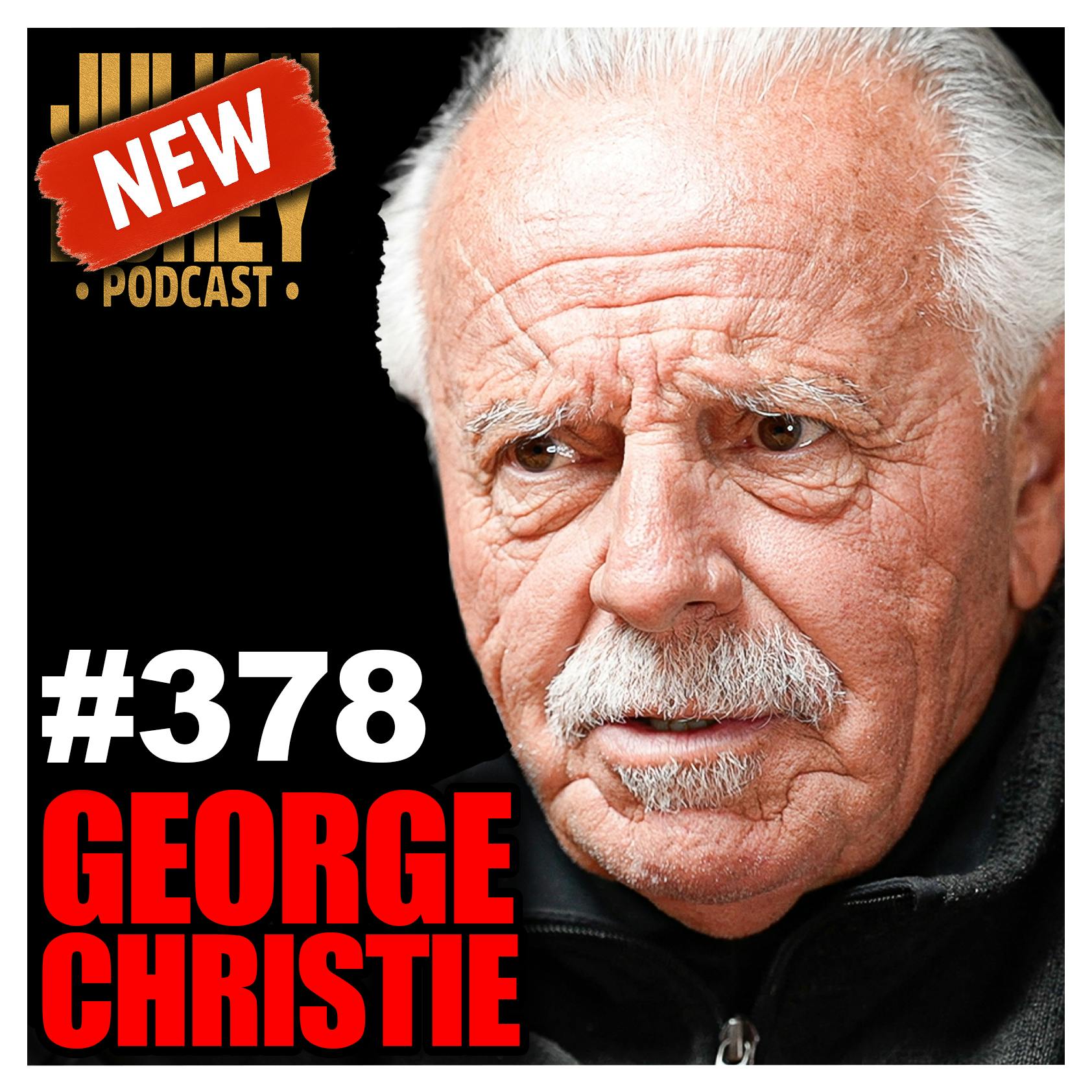
Julian Dorey Podcast
#378 - “Satan’s Slaves!” - Hells Angels Boss on ATF Coverup, his Top Secret DoD Job & FEAR | George Christie
03:40:54
Loading summary
Transcript1,354 lines
- [00:00]
A
Would I do it again In a minute. In 1978, I was leader of the Los Angeles hello, angels. I was 100% committed. I was ready to give my life. More than once it was on the line. I thought it was riding and partying and brotherhood. Now I'm going to tell you a story. So listen. There's a drunk dealer in Los Angeles and he's got a fake Hell's angel patch. We're going to get this guy and we're going to stop him. He's in a bar. I break into the car and I've got a gun with a silence. He gets in. But to my surprise, there's two guys. And I said, I know you've got the patch, man. He goes, I don't know what you're talking about, man. I go, start driving. We're going out Highway 14. We go out to the desert. The sun's going down. We're all going to watch the sunset. Probably going to be your last one. And I get the shovel out. I tell him, start digging, make it wide enough for two. He starts babbling like a baby. What if I had to patch?
- [00:44]
B
Were you prepared to kill him? Hey, guys, if you're not following me on Spotify, please hit that follow button and leave a five star review. They're both a huge, huge help. Thank you, George. You got one of those lives that if they wrote it in a movie script, I don't know that anyone would even believe it.
- [01:13]
A
Well, you know, sometimes I tell these stories and people call on me, but I'm telling you, everything I tell you is how I remember it.
- [01:22]
B
I believe you. There's a long track record of that as well, because people were investigating you for so many years and they couldn't even believe who you were and how much you. How much influence you had and how likable you were at the same time, you know.
- [01:34]
A
Well, you know, decade after decade after decade of investigations and, you know, I don't know if it all came tumbling down in 2011. That was my last indictment, and I hope that's my last hurrah with the federal government. But they started investigating me on a 2007 firebombing. Said I ordered a firebombing of a tattoo shop competition.
- [02:01]
B
Did you do it?
- [02:02]
A
No, I did not. But somebody came to me and told me they were going to do it. Oh, I said, I think that's a bad idea.
- [02:11]
B
Right?
- [02:11]
A
And, you know, I said, you're not even the tattoo business, man. He goes, I just don't like these guys. Disrespecting us. They came into our town, opened a tattoo shop. It was kind of unwritten rule, you know, Ventura was Ventura, Hell's Angels tattoo territory, if you will. The ironic thing is, ultimately he became the informant on me. Said I sent him to blow the places up with the firebomb. And, you know, it's ironic. Starts in 2007. I get indicted in 2011, my daughter takes it to 2013. My daughter's an attorney. She starts representing me and.
- [02:52]
B
Oh, your daughter's an attorney.
- [02:53]
A
My daughter's a criminal attorney, and it's very nice. And 2011, she kept chipping away at it from 2011 to 2013, and reached a point in time. Finally, the Judge Wu, federal judge in Los Angeles, he said. He looked at the. He looked at the U.S. attorney, said, this case is not what you want it to be, because I know you want this to be your career case, but it's this, isn't it? And so I'm sitting over at the defense table, really smug like. Yeah. And then he looks at me and points his finger. He goes, and you, Mr. Christie, God only knows what you've gotten away with. He goes, so what I want you to do, I want you to go down to Judge Walters off courtroom, and I want you guys to come back with a deal. Make a deal. He goes, this. I don't want to take this case any further. So my daughter went down there in with me in tow. And the whole conference started out brilliant because Judge Walters looks at me and he said, do you want these guys out of here? They were two FBI agents and a US United States prosecutor attorney. I said, yeah, yeah, I want them out.
- [04:13]
B
Get the whole other team off.
- [04:15]
A
So he kicked him out. And so he starts talking to me like he's my buddy, you know? And he goes, look, George, he goes, we. We all understand here what mandatory minimums mean, right? And I go, yes. And he goes, you know, you have three mandatory minimums of life on the end of this indictment. You've got count six, seven, and eight. They're all mandatory minimums of life. And he goes, you get found guilty, Judge Wu is going to be compelled to sentence you. He goes, how about we drop all accounts except count one? He goes, you make a open plea, zero to five years. He goes, judge Wu can give you whatever he wants in between that, because would you be willing to do that? And I said, I looked at my daughter, and my daughter went, man, I thought I could beat it, you know, make that deal. Yeah, I know. So she. She Just. She kind of, like, kicked me, like, you stupid? You know? So we take the deal. They bring the feds back in. He basically tells them, this is what we want to do. This is what I think we should do. And we went back down. We walked into Judge wu's courtroom, and Judge Wu stopped. He was doing another proceeding. And he goes, oh, he goes, looks like we got a deal. Both clients look pissed off. And that was the deal. You know, we walked back into the courtroom, he changed my plea to guilty. And, you know, about three, four months later, he sentenced me. And he gave me the luxury of I could let one of my other lawyers drive me to Texas and I could submit to. I could turn myself in at the federal prison. Latina federal prison. So nice place. Oh, just, you know, good amenities. Yeah. Oh, my God, it was great. You know, it's. It's funny. Are you familiar with the band X?
- [06:08]
B
With the what?
- [06:09]
A
The band X?
- [06:11]
B
Like the. The music band X?
- [06:13]
A
Yeah.
- [06:13]
B
I don't think so.
- [06:14]
A
Xena and John Doe and.
- [06:17]
B
I don't think so, no.
- [06:17]
A
Well, Exen and I are friends. She's a singer in X. And she was writing me every week on the road. And when I first got there, I was getting these postcards from her, and her name is, you know, Exena Cervenka. Yeah, there she is right there.
- [06:34]
B
Right there.
- [06:36]
A
Exena Sirenka. And they thought she was some sort of Russian revolutionist, and she was hiding. She was changing town to town each week, you know, So I got these intelligence guys. Who is this person, and why are they in a different location every week? I said, well, because I go, you guys are investigators. And they go, yeah. And I go, okay, well, she's a rock star and she's on the road, man. I go, come on, put some work.
- [06:59]
B
In, you know, Working for Putin on the road. And she knows, though, you know?
- [07:03]
A
Yeah, I hear you. You've got some pool, man.
- [07:05]
B
Yeah.
- [07:06]
A
She may be the one that ends this war in the Ukraine. Who knows?
- [07:10]
B
God only knows. How much, how many billions have we sent over there?
- [07:13]
A
God only knows.
- [07:14]
B
It's like 150. I lost count at this point.
- [07:17]
A
Adam, you know, I don't know.
- [07:19]
B
We got Adam off camera, by the.
- [07:20]
A
Way, today, and he's. He's the shadow.
- [07:24]
B
That's right.
- [07:25]
A
Yeah.
- [07:25]
B
He made it happen last minute.
- [07:26]
A
Yeah, he does, man. He makes that happen, you know, I hate to answer the phone when he calls sometimes. I gotta go to work.
- [07:32]
B
Yeah. This was. By the way, this was just so people have some context here, I guess. You Were trying to get in touch with me for a while. Adam. My bad. Did not see that. But thanks for texting me today through our friend Dave Schratwiser. But it was like 3:15. It's. It's December 30th, so I'm like, wrapping up the year. And you guys are like, hey, we're in town. We can do a podcast. I'm like, great. I'm like, when are you leaving? You're like, tomorrow morning. I'm like, shit, we're doing it tonight. So I appreciate you lasting.
- [07:58]
A
And you know what? I appreciate taking the time to. Of your schedule as well.
- [08:01]
B
Of course. You know, this is the job, man.
- [08:03]
A
You know, I hear you, man. That's being on the road, you know, at 80s almost. I'm almost. I'm hooking up to 80, man. It's tough.
- [08:10]
B
You look good.
- [08:11]
A
I'm feeling good.
- [08:12]
B
You look good. You look buff, too.
- [08:13]
A
I am. I've been working out. I'm going to 100. That's my goal.
- [08:16]
B
You going to 100?
- [08:17]
A
Yeah, I'm going for 100.
- [08:18]
B
Why not 110?
- [08:19]
A
Well, you know, I'm going to start out small. Okay, 100 and then set a 20. You know, if I'm feeling good, I might add five on it. Then another. I'm gonna do it portion at a time.
- [08:30]
B
You look like you're still putting up two plates.
- [08:32]
A
Well, you know, I don't want to brag, but I will.
- [08:36]
B
He's gonna go to the combine next year. But sorry I cut you off from when you were talking about. We kind of, like, skipped to some here. But we're gonna get to the whole story, everyone, so don't worry about that. It's. It's certainly a wild long tail, but when you. When you ended up checking into prison in Texas, this was 2013 at this point.
- [08:53]
A
20. Yeah, 2013.
- [08:55]
B
Okay. So that 2011 indictment took a couple years. You make the deal. How long did he sentence you to?
- [09:00]
A
A year and a day, so I would get good time.
- [09:04]
B
Right.
- [09:04]
A
He goes, I'm going to send you a year and a day. And he goes, I'm not. I don't want you to think that's punishment. He goes, I'm going to give you a day over a year, over 365, so you get your good time. So, you know, I got out. I got a little time off for good behavior.
- [09:19]
B
Like 250 to 70, something like that.
- [09:21]
A
I don't know what it was. I. Who's counting? You know? Yeah, yeah, just do a Lot of.
- [09:26]
B
Pull ups in prison.
- [09:27]
A
It's just time, you know, I heard.
- [09:29]
B
Feds a lot better than state. All my guys always tell me, see.
- [09:32]
A
I've got two fed stories. You want to hear about the feds in 86?
- [09:36]
B
Yes.
- [09:37]
A
Or you want to hear about the feds in 2013?
- [09:40]
B
Yes.
- [09:40]
A
Okay, so first time I get indicted, I've never been, never had a pair of handcuffs on in my life. And 1986, I become the target of FBI and I go big. I get murder for hire, conspiracy, life on one count, 20 years on the other. I'm arrested, no bail.
- [10:04]
B
Allegedly.
- [10:05]
A
Allegedly, right? Yeah, but I was arrested, right? So I decided I'm going to fight it. You know, it's. It's a murder hoax. There was never anybody hurt, never anybody murdered. I never reached out to the individuals that confronted me. They came to me. They came to the Ventura clubhouse, introduced themselves under false pretenses, and came back a couple of weeks later and said, the reason I'm here is because we want to do you a favor. We want to show you some respect. And in the interim, I found out this guy's a high ranking Mexican mafia member.
- [10:47]
B
And for people out there, just so they have context, when you say Mexican mafia, you're not referring to the cartel, you're referring to something else.
- [10:53]
A
I'm referring to the ma, the Mexican mafia that runs the California prison system and runs Southern California. They run all the gangs in Southern California. Got it. They have a very unique system. You have to pay homage to them. You got to pay a tax. If you're a street gang in Los Angeles, if you're a sereno as they identify with, if you're a surrender and you're not paying street tax through the ma, you can have a problem regardless.
- [11:23]
B
Of race or just like Latino gangs.
- [11:25]
A
Have to pay to them Latino gangs.
- [11:27]
B
Okay, all right, so you weren't paying a tax at all?
- [11:29]
A
No, no, I didn't have to pay a tax. But they said, they came to me and said an associate, a former associate of mine, had a $10,000 drug bill that he kind of rung up and they were going to kill him. Unless, of course, I wanted to pay the bill. And, you know, I said, no, I don't think I want to invest $10,000 in that gentleman. And they go, well, you know, we're going to kill him. And over the course of the following three weeks, I probably 19 conversations with them. They had two of the conversations, tape. They said the tape machine wasn't working on the other tape conversations. They thought they were taping them, but they weren't. I mean I, that's total bullshit, right? But I, I wound up getting indicted by the FBI. Went to, this is before they had the center, you know, the Metropolitan Holding Center. I went to Terminal Island. It was actual prison. And if you had a beef in Southern California, in Los Angeles area, you went to the Terminal island prison and they house you there. You did your case there, you drove into court every day. Then however your case was resolved, either went home or you, they sent you on your way down the line. Yeah, in the old gray goose I guess they called it.
- [12:52]
B
Yeah, we've all been there. Winter rolls around and you start digging through your closet for warmer clothes. But nothing feels quite right anymore. Those beat up pants from college, probably time to retire them. Which means it's also time for you to upgrade to Rag and Bones infused denim. You can do that today and get 20% off your entire order with code Julian at rag mid dash bo. That link is in my description below. You used to have to choose between jeans that looked great and jeans that actually lasted. With Rag and Bone you finally get both jeans built to move with you, hold their shape and keep their character over time with multiple fits from slim and straight to relaxed or athletic. There's a style for every preference and occasion. These aren't your average jeans. Rag and Bone overdoes it by design with premium denim and construction that make them stand out while still feeling effortless. And the wash is where the infused denim really shines. Each pair goes through an eight step over die process, giving rich layered tones and deep dimensional shades that look polished yet effortless. Over time, the color and texture evolve, adding even more character with an authentic lived in touch. This is Rag and Bone at their best. Two decades of denim expertise packed into a pair of jeans you'll reach for every day. I wore Rag and Bone every single day when we were in Paris and Rome. We walked those cities inside and out all day every day. Right thief? Oh yeah. Most comfortable pair of jeans you're going to wear. So upgrade your denim just like I did with Rag and Bone. Today for a limited time our listeners are going to get 20% off their their entire order with code julian@ragmid-bone.com that link is in my description below. That's 20 off at rag mid-bone.com with promo code Julian. When they ask you where you heard about them, please support our show and let them know I sent you.
- [14:33]
A
Have you been on the Great Goose?
- [14:34]
B
I have not.
- [14:35]
A
Never had the Pleasure.
- [14:36]
B
No, no, I don't think I want the pleasure.
- [14:38]
A
Yeah, you probably. That's probably a good choice.
- [14:41]
B
Yeah. I'm avoiding asking some questions on this, too, because I want to leave people hanging so that they understand the context.
- [14:47]
A
Okay.
- [14:48]
B
Of the story as we go along. Obviously, this was a big. In 86, like you said, first time. And it's. And it's.
- [14:54]
A
It was all over the papers. It was on cnn. It was in the paper. CNN was a fledgling station and, you know, I'll tell you an interesting story I don't think I've told before on the air. CNN did a big story with the thought I was going to get convicted. And when I got found not guilty, they scrubbed the story. And, you know, they had interviewed all these people and they had the story all set to go. You know, Hell's Angel Leader guilty of Murder for Hire. And it was Hell's angel leader not guilty. Hell's Angel Leader Framed by United States Government. That wasn't quite the headline they wanted. So I came home feeling. Feeling kind of bulletproof. You know, I'm, you know, my 30s. I may have just turned 40. I'm feeling pretty strong, feeling pretty powerful.
- [15:51]
B
This is right in the John Gotti era, too.
- [15:52]
A
I just.
- [15:53]
B
You're the Teflon of the West Coast.
- [15:54]
A
I just beat the federal government, man. I'm bulletproof and. But there was another informant waiting for me. I guess it was a backup idea they had. They. And this gentleman was a Hell's angel from Alaska. Are you familiar with the name Anthony Tate? Tony Tate? I don't.
- [16:16]
B
I know Andrew Tate.
- [16:17]
A
No, different guy. Tony Tate was a Hells angel from Alaska, and he decided to entrap his brothers in several of these criminal acts. And I was one of the targets. So I had just beat the case. I came home, and when I was in federal prison fighting my case for the year, Tony Tate kind of rose up through the ranks. And my position was at that time was west coast chairman. I was kind of like a de facto leader. You know, the Hell's Angels don't have an official voted in leader. I don't know if you're aware of that.
- [16:55]
B
I'm not.
- [16:56]
A
A lot of people don't know that each charter is autonomous. That's why the feds have never been successful with a racketeering charge against the Hell's Angels, because not structured that way. We're autonomous. Autonomous to ourselves. In each charter, we certainly have a code of conduct, if you will, and some rules and regulations. And for years, Sonny Barger I don't know if you're familiar with Sonny. Sonny was a top dog, right? Yeah. He was a de facto leader for the Hell's Angels. I return. Tony Tate has risen through the ranks, but unbeknownst to his brothers, he's cut a deal with the feds. He didn't even have a beef. He just wanted to write a book and get a movie made about him and set up the Hell's Angels.
- [17:45]
B
Oh, he sang just for money. For money.
- [17:48]
A
Well, you know, I probably got a half a million bucks, maybe more, I don't know.
- [17:53]
B
But couldn't make that the Hell's Angels.
- [17:55]
A
Well, I don't know. You know, I thought he could have. But, you know, maybe he wasn't as enterprising as he pretended to be.
- [18:02]
B
I guess not. People are getting a lot of previews here, but let's go back to the beginning, George, because, like, your life, the way it got here is quite unique. It's not like the. You grew up in it. When you were five, your dad was in it, and then you got initiated into it and became the whole thing, like you asked me. Yeah. Yeah. You had a long journey.
- [18:21]
A
I did have a long journey.
- [18:22]
B
You grew up in California, though, is that right?
- [18:24]
A
California? I was born in Ventura, California. My grandparents all came in from Greece, both sides. They were all. And are. You know. You speak Greek?
- [18:41]
B
No. My best friend from all my life is a dual citizen, so I know about seven words. They're mostly all bad, but I got a good accent.
- [18:47]
A
I know. I. I was thinking that that wasn't the kindest things you were saying.
- [18:51]
B
Yeah, no, no, that means, I think, like, what face or something.
- [18:55]
A
Yeah, something like that. Yeah. I wasn't calling you, but I was a Taylor person.
- [18:57]
B
Ye.
- [18:59]
A
So, you know, my family was very traditional. I came from a small family. I was the firstborn, and then my mom had some complications and. And, you know, back in those days, you know, your parents didn't discuss with you, well, mommy can't have any more babies because of this. You know, it was. You know, I have no brothers and sisters, Right. And that's basically how I was brought up. You know, my mother tried to have another child, and it didn't happen. And. And I wasn't going to have any brothers and sisters. So it was. For a Greek family, it was relatively small. But, you know, I had a lot of cousins, a lot of aunts, a lot of uncles. I got my first taste of motorcycle in probably 1955, 56. I was in the San Fernando Valley with my Father. And there was a motorcycle coming up the street. And when it got to the stoplight, he stopped. And he immediately caught my attention. And it was the first really outlaw I'd ever saw. This guy had a cutoff on, big black boots with a big buckle on it, black hair pulled back, sunglasses pushed up on his head. And everybody, you know, it almost seemed like time sort of stood still and everybody was watching him. Everybody seemed fearful of him. My father seemed a little uncomfortable. And then suddenly the light changed. He dropped his glasses, threw it in gear, bam, he was gone. And the man talking to my father through a tirade, he was a. He had a thick Italian accent. Accent. And he looked at me and he said, look at him. He's a God damn animal. And then he spit on the ground. He looked at me. That's your America. And I thought, yeah, that's my America, man. And metaphorically, I jumped on the. I don't even know if metaphorically is a word, but it is, but it is. Thank you. I jumped on the back of that motorcycle and I was gone. It. You know, it wasn't another 10 years. So I got a bite. But that image never left me. That outlaw spirit somehow captured me that day. And I just. I liked. I don't know, maybe I've. You know, I was rebellious. I liked how people responded to him. I thought, this guy is controlling the whole narrative here. And he's not even doing anything, man. He's just being himself. He didn't look at anybody. He was. In a sense, he was passive except for the loud motorcycle. And, you know, like I said, he was gone in an instant.
- [21:35]
B
Quiet power, in a way.
- [21:36]
A
Yeah.
- [21:37]
B
Loud presence.
- [21:38]
A
Loud presence. Quiet power. Unassuming power. But you knew he had power of some sort of. And, you know, shortly after that, I discovered that I came from a poor family. I wanted to remember Bob's Big Boys. Do you even know that you might be familiar.
- [22:01]
B
I do know that term, actually.
- [22:05]
A
Bob's Big Boy had just opened, and we lived in Anaheim at the time. And there were Bob's Big Boys everywhere.
- [22:12]
B
These are the burgers, right?
- [22:13]
A
Yeah, yeah. Bob's big boy, man. 19 cents. Yeah.
- [22:17]
B
You get a burger a few more cents now.
- [22:19]
A
Yeah, a few more. So I kept telling my dad, I gotta have one of them burgers. Dad, I gotta have one of them burgers. And my mom and dad, you know, they're talking in Greek. I don't speak fluent, but I understand, you know, they're. They're thinking of a way for us to get the burger And I'm not thinking about the money. I'm thinking about the burger, you know? And so my dad. I see the burger stand. My dad pulls in, and he did something we never did before. He opens all the doors of the car, and he takes the seats out, and he starts rifling through the dust balls and stuff under the seat. And they're looking for money, and I'm tripping out, and I'm thinking, wow, this is really cool. You know, not only am I going to get a burger, run a treasure hunt, and then people were stopping and they were. They were looking at us and they were laughing. I thought I was laughing. I thought they were laughing with us, man. And my mom. Dad started talking Greek. And I looked at my mom. My mom was staring at those people. And if death, you know. Yeah, Death ray, man. Oh, yeah. And. And I. All of a sudden, it just. It was like an epiphany. I'd realized, man, we were poor. We were scraping the bottom of the seat for money.
- [23:30]
B
What did your parents do?
- [23:32]
A
My dad. My mom didn't work. My dad was either a truck driver, a bartender, or a chef. And I think he walked off more jobs than he ever held. You know, he's one of them guys. You piss him off, he just walk off the job.
- [23:48]
B
There's the rebel streak.
- [23:50]
A
Perhaps I. The rebel streak I got from my dad, but the main streak I think I got from my mom.
- [23:58]
B
That would make sense.
- [23:59]
A
Yeah.
- [23:59]
B
It's very Greek.
- [24:00]
A
Yeah, it is very Greek, isn't it?
- [24:01]
B
Yeah.
- [24:02]
A
So, you know, I realized we were poor, and I referenced back to that outlaw, and I thought about him on that street corner. I thought about the way people acted, and I thought, you know what? I'm not gonna let people laugh at me, man.
- [24:19]
B
And did you juxtapose him with, like, your dad and kind of look at him as a powerful figure and maybe.
- [24:28]
A
Look at your dad as lesser, you know? And I'm ashamed to say that, but I understand you absolutely hit it on Ed. And I was thinking, you know, why can't you be like that? Why can't you assert yourself? Why can't we have money? Why do we have to take the seats out of the car and look for money and have people laugh at us?
- [24:44]
B
Right?
- [24:44]
A
And so, you know, that's that story. I wrote a stage play. Are you familiar with Outlaw Chronicles?
- [24:53]
B
You wrote a stage play, too?
- [24:55]
A
Yeah, I did.
- [24:56]
B
You've done a lot in your life.
- [24:57]
A
I did a stage play. I went across country.
- [24:59]
B
No.
- [25:00]
A
And if you look it up, the Outlaw George Christie, Outlaw, stage play. The reviews are killer, man. And I got voted one of the top five shows in Las Vegas the week we were there. And that's.
- [25:20]
B
Yeah, here it is, 2018, riding into the limelight. Former Hell's Angel George Christie hits the stage with Outlaw. And then here's the full article. This is on vcreporter.com people can google this right there.
- [25:36]
A
Very cool. Yeah. And so, you know, one man show. One man show, two hours. I. Stellar reviews. I don't think it was managed properly. We didn't lose any money, didn't really make any money, you know, made enough money to go across country, and I think maybe that was good enough, right. Stage play. But I. One of the lines in the stage plays, I. I describe that, you know, and I. I get very animated up on the stage and I describe it and. And then I. I look at the audience and I tell them, you know, that day I decided I was never going to scrape for money again, right? And I, you know, for a while, long time there until the cops took it all, I ran around with four or five thousand dollars in my pocket at a time, you know, and everybody on my crew had money, you know, nobody was broke, including my parents. I made sure that they got taken care of. And later that came back to bite me in 2001 when my mom took the stand in one of my trials. It's a very funny, unique story. I don't know if you want to tell it in chronological order, if you'd like me to.
- [26:52]
B
We can skip around real fast on. So was your mom, like, subpoenaed to testify? I guess by the state.
- [26:58]
A
This is what we were going to do. We were going to use equity in her house and her bank money to bail me out. My bail was a million dollars, and we were trying to put it together. So my mother. My mother's house had been raided, and they were looking for ways to tie us in together. So my mom gets up on the stand, and the prosecutor tells her. He goes, so, Georgie, a good boy? She goes, he's a very good boy. And he goes, oh, really? And how's he good? She goes, he takes care of his mother. Oh, he does. Does he give you money? Of course he gives me money. Has he ever made your house payment? Of course he paid money. I exactly heard him in the back going like this. He goes, she goes, of course he makes my house payment. I told you, he's a good boy. And so the. The prosecutor looks at the judge and says, your Honor, the money's commingled. The money's no good. You know, we cannot use Mrs. Christie's money to help her son, either in bail or with payment to the lawyers. It's tainted. And my mother figures out, and she's looking at me, she figures out what's going on. So she looks at the prosecutor, she looks at the judge, and she looks at the prosecutor because you think it's funny to fool an old lady? She goes, you know what? You're not very nice. You know, my son's nice, but you're not very nice. And so she looks at the judge. Now, what you have to remember is when they raided my mom's house, she had $15,000 hidden under the mattress. It was her gambling money. Oh. Oh, she's a gambler? Yeah, it was her gambler and money. So she told the judge, and she goes, I'll tell you another thing, your honor. She goes, I want my goddamn gambling money back. I want it fair and square. And you know what? The judge gave it back to her. He ordered it back to her.
- [28:54]
B
No one wants a. A Greek lady.
- [28:57]
A
And you know what was unique about it? The Judge says, Look, Ms. Christie, we're not going to be able to use your money to help your son, but we're going to give you your 15,000 back.
- [29:07]
B
Goddamn right.
- [29:08]
A
She goes, how's that stand? She goes, it sounds goddamn good. That's exactly what she said. You've been around Greek ladies, huh? And so my mom, we were trying to put this bail together, so we had to change course and we wound up. Are you familiar with what a property bond is?
- [29:27]
B
Remind me.
- [29:28]
A
In the state of California, you can use equity in property. So if your bail's a million dollars, you have to give 2 million in equity, you have to double it. So what we did is we put up $2.4 million in equity and property, and I bailed out. But it took me a year to get out. It was a long journey, long process. Unfortunately, I was in solitary confinement the whole time. Isolated from everybody, Had a protective order.
- [30:00]
B
What's that like?
- [30:01]
A
Well, you can't talk to anybody.
- [30:02]
B
Yeah.
- [30:03]
A
So there was nobody I could talk to, talk to my lawyer, talk to my bail bondsman. But my wife and I were estranged at the time, but they arrested her, they arrested my son, because they were holding my family hostage. They wanted me, and they were trying to get me to make a deal. And ultimately, you know, I made a deal. But the case, they had a 59 count state racketeering charge. It collapsed under its own weight 59. 59 counts of state racketeering.
- [30:32]
B
That's a few counts.
- [30:34]
A
It is a few counts and you can count on me.
- [30:39]
B
Wow.
- [30:39]
A
So I probably shouldn't be cavalier and laugh about it. There's probably.
- [30:43]
B
Yeah.
- [30:43]
A
Some investigator out there going, he has not learned his lesson.
- [30:48]
B
You seem like you learned your lesson to me.
- [30:50]
A
Yeah. You know, you seem at peace with things. I am at peace with things.
- [30:53]
B
You know, lay off this guy.
- [30:55]
A
You know, look, this is the deal. Those guys are cops, right? Hell's Angels are outlaws. They're supposed to come after us.
- [31:03]
B
Stop needs a criminal.
- [31:04]
A
So I have no animosity towards them and I have no hard feelings. And you know, it is what it is. And you know, I was on the History Channel, Outlaw Chronicles. Are you familiar with that?
- [31:15]
B
I think I have heard.
- [31:16]
A
I had a six episode series on the Outlaw Chronicles. And just to show there was no hard feelings, the Bradbury, the Ventura prosecutor, the head attorney, I invited him to come on the History Channel and debate me, but he declined.
- [31:33]
B
So he's still not willing to be total friends with you?
- [31:36]
A
No. But, you know, we had coffee together and I said, look, this is an opportunity for you to tell your story and it's the opportunity for me to tell the truth.
- [31:45]
B
I've had two different kinds of people in here who have had run ins with the law over the years. Because I've had many. Over the many episodes we've done, that's one subcategory we've done. But there's some guys who, and I would characterize you as one of them who kind of got it like you understood this is the way things are. This is the life you chose, and this is the game you play. And it's funny, like, my one friend, Luis Navia was the chief international smuggler for the cartels for like 25 years. And he got caught. And all the, you know, it was like 15 different countries catching him in this sting in Venezuela in like 2000. They called him the Greek. He wasn't Greek.
- [32:25]
A
But, you know, I, I think I, I've heard that reference to the Greek before.
- [32:29]
B
Probably. It was in the Wire.
- [32:31]
A
What year was. Okay, that's.
- [32:32]
B
So it was that.
- [32:33]
A
That's. That's where I know it. That's probably because I remember the. That whole little Greek crew. Yep. We're down. And they were doing all this stuff. Yeah. And I. Did they get away in the Wire?
- [32:43]
B
That was season two, I think. So. I haven't watched the Wire in a while.
- [32:46]
A
It's one of the best shows I'm thinking that they. I think they kind of somehow got away with it. Something happened and. And that's the way police happens. Yeah. Some people walk. Sometimes the people that go down aren't that complicit and.
- [33:00]
B
All right, I want to talk about something most guys don't think about until it starts to actually become a problem. I may not be old, but even I've learned over the years that the things that quietly shape your health are usually the ones you don't really notice until they start to decline. Circulation is one of those things. What's interesting, though, is that literally everything in your body depends on blood flow. Energy focus, recovery, even how resilient you feel day to day. And one of the key drivers of healthy circulation is nitric oxide. And this is where my friends at Juvenon come in with their supplement, Blood Flow 7, which you can get today for 30% off with a money back guarantee by going to bloodflow7.com Julian. That link is in my description below. Now, just what is nitric oxide? Nitric oxide is the molecule that tells your blood vessels to relax and widen so oxygen and nutrients can flow freely. But nitric oxide production naturally declines with age. It's just biology. And when it drops, you feel it. Not just cold hands or feet, but less stamina, slower recovery, potentially. Also bedroom struggles, which, yeah, even healthy men in their 30s and 40s can experience. Juvedon supplement. I mentioned. Blood Flow 7 has a unique formula that focuses specifically on this pathway. You can take the Blood Flow seven capsules in the morning or before you work out. No stimulants necessary, just natural support for something foundational. So, once again, the link to get this product is bloodflow7.com Julian linked in my description below, where you are going to get a generous 30% off and a money back back guarantee, which I don't think you're gonna need. Again, that's blood flow7.com Julian. Give it a shot. I think you'll notice a difference almost immediately.
- [34:40]
A
You know, it was funny when the day I got sentenced, Judge Clark, who I always thought didn't like me, he scolded the district attorney publicly. He. He said, I don't understand. He goes, why are you coming after Mr. Christie? He goes, I don't see any complicity at all. I mean, he said this in open court. He goes, but yet you indict him. And he goes, you're holding his family hostage. What's going on here? And they. My. My son, who I didn't know somehow had this desire to be a pharmacist. Brought a million Vicodin into town.
- [35:18]
B
Pharmacist.
- [35:19]
A
Yeah.
- [35:19]
B
I like how you put that.
- [35:20]
A
Yeah, he brought a million Vicodin into town. His friend, Joshua Adams, who was a Air Force airman, was head of the pharmaceuticals in the sick bay for the Air Force at the. At the. I forget what Navy air force base it was. And he was in charge of the Vikings, so he was, you know, a hundred thousand for The Air Force, 100,000 for. Yeah.
- [35:48]
B
You had no knowledge of this?
- [35:49]
A
No, I have no knowledge. Yeah. Suspicions. Okay. You know, but, you know, I don't like to butt another people's business.
- [35:57]
B
Going back to seeing the outlaw, though, when you were 10, prior to that day, did you have heroes or people you looked up to? And even your parents, too?
- [36:06]
A
My grandfather.
- [36:07]
B
Your grandfather.
- [36:07]
A
My grandfather, Harry. I'll tell you a story about Harry. You want to know about Harry? We call him the Governor. He sat at the head of the table when we ate, and you didn't touch a utensil until he literally broke or cut the bread. And then that started the meal. He would break the bread or cut the bread, and depending on what type of bread was out, and that's how the meal started. And of course, my cousin Johnny and I talked about him earlier off camera. The piano player.
- [36:37]
B
Oh, yeah.
- [36:38]
A
We would try to sneak a piece of food, and then Yaya would, you know, she'd smack us because we're trying to get some food just to get over, you know. And you know what? They started at a young age. My grandmother used to always tell me, you know, you're a very bad boy, Georgie, but Yaya loves you, you know? And so I always figured, hell, I can get away with this and they'll still love me, you know? And that was the wrong message to send to me. But anyways, all joking aside, I'm not joking. I go into the. He's a shoe cobbler, and he came over from Greece at the same time. Yeah, yeah.
- [37:16]
B
But did he come at the same time?
- [37:18]
A
No, my. I'll tell you the story. My grandfather came first, okay? He was 25 or 26. My grandmother got on the boat. Now, they were betrothed to each other. They hardly knew each other, but they were betrothed in. In Greece. She was 12 when she got on the boat. When she arrived here, she was 13. And they got married and they lived together for 70 years. Just, you know, old school, man.
- [37:48]
B
Different time.
- [37:49]
A
Yeah, different time. Old school. So he's out there cobbling in the shoe Repair shop every day, making shoes, repairing shoes. Real smart guy. And in fact, I'll tell you some insight he had. I went out to him one day and I said, papu, this is. I'm grown up. And I said, you got to teach me how to be a. A shoe repairman and a shoe maker. And he looked at me and at the time I thought, this is the stupidest thing I've ever heard. I said, teach me, Papu. Come on. He goes, georgie. He goes, in the future, people won't fix shoes. They'll just throw them away. People will wear shoes and they'll make so many shoes, they'll just toss them. And I thought, I go, they'll never do that. And, you know, here we are. Right.
- [38:32]
B
He was right.
- [38:32]
A
Yeah, he was right, man. And this is a guy that never, ever went to school. I mean, he didn't have one day of formal education, that he was a smart man. So my cousin Johnny and I, we used to borrow like 20 cents from him. There was a pharmacy on the corner of where we lived or he lived. I lived with him. Sometimes, just for the summer, we go down there and get a Coke and they give you a shot of cherry juice in it. And. And we were making cherry Cokes back in the 50s. Yeah.
- [39:06]
B
Yeah.
- [39:07]
A
So I go, you. You ask him, Johnny. No, you ask him, Georgie. So I finally. I think I asked him. So I went to him. I go, papu, Papu. I go, we want to borrow 25 cents. We want to go to the pharmacy and get a Coke. He stops. He's working on the shoes. He stops, picks up a rag, and he's wiping his hands off, and he's staring at us, and he's scaring the. Out of me. And I'm thinking, why is he looking at me like that? He goes, 25 cents, huh? We go, yeah, Papu, he has a little book he carries in his front pocket. You know, with the old school, with the. The plastic pocket protector. Yeah. He pulls out the book. He's looking at me and he's flipping the pages. He looks at Johnny, looks at me and goes, I can't do it. It. What do you mean? He goes, you still owe 20 cents. And he's. You know, he said. I said, but, Papu. And he goes, no, no. He says, you told me you pay me back because you didn't ask for the money. You asked for a loan. I gave you a loan and you didn't pay me back. Of course, you know, we went into the house crying. The yaya she Gave us the money, you know, around them. Yeah. Oh, yeah. You know, we learned how to do that real quick. Went down, got her cherry Coke, but, you know, that's the governor, man. You know, it's kind of. Kind of very stoic. He worked till he was 85. He was. Had cataracts on his IG. Do you. Are you familiar with cataracts?
- [40:34]
B
Just had in a. Eye doctor expert, Joseph Allen, and he was explaining the entire thing, all that. Yeah.
- [40:41]
A
Now when you get old, you're gonna get cataracts, man. And I guess everybody gets.
- [40:46]
B
I drive a Rankin.
- [40:47]
A
Yeah, I know you do, but you're gonna get a cataract at some point.
- [40:51]
B
It.
- [40:52]
A
Yeah, I know. I. I got it, too. Adam, you know, he's back. He's kind of like, you know, he's my straight man.
- [40:58]
B
That's right.
- [40:59]
A
Yeah.
- [40:59]
B
You need one of those.
- [41:00]
A
Yeah, you do. You know, and you should see our comedy act. It's just amazing.
- [41:04]
B
Oh, you guys got a two, man.
- [41:05]
A
Well, we're. We're working it together. You know, we're not ready to go on the road, but at some point in time.
- [41:09]
B
Okay.
- [41:10]
A
The only problem is I can't get into Canada still, so.
- [41:13]
B
Oh, they don't let you out there?
- [41:14]
A
They don't let me out there.
- [41:16]
B
We could work on that. I know a couple guys.
- [41:17]
A
No Canada, no New Zealand, no Australia.
- [41:21]
B
No New Zealand. That's such a random one.
- [41:23]
A
I know, man. You know.
- [41:26]
B
Oh, that's right. I keep forgetting the goddamn crown.
- [41:29]
A
My. My passport's flagged. And the last time I went to.
- [41:34]
B
What about the fake one?
- [41:36]
A
Well, the fake one, I mean, you know, I don't want to talk about that. You said we wouldn't talk about that. So, you know, he worked.
- [41:49]
B
He had cataracts.
- [41:50]
A
He could hardly see. I mean, he's feeling. He's. I'm watching. I'm going, papu, can you. This is. I'm growing up now. Papu, can you see? You know, and this is right before he retired. And he couldn't see and remember going. I remember going to the rest home where we had to put him at home. He couldn't, you know, something I'm hoping I don't have to look forward to, but. And he was starting to get kind of dementia, and he thought. He thought the Bolsheviks were coming. Something to do with the Russian revolution, you know, because the goddamn Volksovich are everywhere. I was like.
- [42:33]
B
Go to sleep, Grandpa.
- [42:34]
A
Yeah, so, you know, I mean, that's. There's a guy I respected. I respected him. And there's a little fear there, you know, as well.
- [42:42]
B
You know, again, I think there's a theme there. You know, obviously he's different from the outlaw biker, but you talk about the guy that you knew him as a young kid is sitting at the head of the table. He cuts the bread first.
- [42:53]
A
Right.
- [42:54]
B
He. You said stoic. So quiet. Power in that way. Right. Very real. About the world. Gave advice to you as well. I see where that's coming from.
- [43:03]
A
Yeah. Yeah. I mean, I, I. Very traditional morals foundation. I mean, it's great. You know, from there, I. I go into the Marine Corps and.
- [43:15]
B
Did you always want to be in the Marines or how.
- [43:17]
A
No, I. I got pissed off at my high school principal.
- [43:22]
B
Why?
- [43:22]
A
He accused me of cheating on an IQ test. And, you know, it was, you know, stop and think about this. You're bringing a kid in that finally gets bad grades. He's dyslexic. They don't know.
- [43:37]
B
Dyslexic?
- [43:37]
A
Yeah. They don't know what. They don't even know what. Dyslexia. There's not even a, you know, a title for it. Yeah, they don't know what it is. You know, I'm. I. You know, I can't focus. I can't read the pages. You know, the numbers are jumping around, the letters are jumping around. You know, I spend my time looking out the window because it's just a white roar, like the teacher's up there talking. And it's just like, I. I'm just not getting it, man. It's just like white noise, you know? So take this test. I ace it. Somehow I don't know what the score was. They don't tell you the score. And I don't know how they grade it, but they call me in the office and they accused me of cheating. And I said, I'm not. And he goes, you're cheating, man. He goes, your grades suck. He goes, your grades suck. And he goes, you're scoring high on here because you got the book. I know you have the answer book, and we want you to give it to us. And I thought to myself, you know, not only are they accusing me of cheating, I left that office. The vice principal, Mr. Killingsworth, I still remember him. I can't. I can see him right now sitting across from me. I'm not going to lunge at you, even though I can see his image right now, but I can see him. And I thought to myself, I'm going to leave this office and nothing has been achieved. He's calling me a thief. And I'm telling him I didn't do it. He can't prove I stole it. I can't prove I didn't have it. We're in a stalemate. And I thought, if this is polite society, you know what, you guys? I don't want nothing to do with it. And that night, I told my dad I was going to join in the Marines, man. I'm out of here. I'm going to quit school. And he goes, no, no, no, you're not going to quit school. And you have to understand, like, not a lot of education in my family for me. Graduating from high school. My dad quit school in sixth grade. My mom finished. My grandfather never went to school. None of my grandparents went to school. Getting a high school diploma was like a college diploma, you know, it was a graduation because you got to graduate. And I said, no, I want to join the Marines. And I made a deal with them. They said, you finish high school and graduate. Your mom and I will sign up. There was a Marine reserve unit right in town, and all my buddies were joining. And so I was this.
- [46:11]
B
Right when Vietnam was breaking.
- [46:12]
A
Yeah. So I was 17. They signed. Both parents signed for me. You had to get both signatures from the parents when you were 17? In 1966, man, I took the oath to join the Marines in February of 1965. I took the oath. February 66, I left on the bus. And let me tell you the kind of humor my family has. My father was a CB, World War II.
- [46:38]
B
Oh, wow.
- [46:39]
A
My mother was a Marine.
- [46:41]
B
Your mom was a.
- [46:42]
A
Mother was a Marine. World War.
- [46:44]
B
Mom was a savage.
- [46:45]
A
Yeah, she was a savage, man. So check it out. What does my dad do? He thinks it's really funny. He calls the newspaper and said, my son's going in the Marines. He's following in his mother's footsteps. And the headline in the newspaper, the day I left for boot camp, everybody's sitting on the bus and they all had a copy of the paper.
- [47:07]
B
Oh, my God.
- [47:09]
A
You know, I walk on the bus and everybody starts clowning me. And I'm going, what the hell's going on, man? And it's. I look at the. They show me the paper. Son follows in mother's footsteps. Leaving for us, you know. You know, for the Marine Corps Recruit Depot, San Diego. And I'm just, like, fuming, man. My dad thought that was the funniest goddamn thing he ever did.
- [47:29]
B
It is kind of funny.
- [47:30]
A
It is funny. Now that I reflect back, imagine being 18.
- [47:33]
B
Yeah, not great.
- [47:34]
A
Not great. Yeah.
- [47:35]
B
I wasn't Happy did you have when you know there's something else that happened in my life unrelated when I was younger as well, where, like impacted you? Yes.
- [47:45]
A
Positively or negatively?
- [47:47]
B
Where I was accused by a principal of doing something I didn't do. You know what I mean? And, and you know that feeling like when you actually did something wrong.
- [47:56]
A
Yeah. You got caught.
- [47:57]
B
Yeah. But like when you're like, no, like I didn't do this and you're dead serious and they're like, no, you did. You.
- [48:03]
A
Exactly.
- [48:04]
B
It's the worst feeling ever.
- [48:06]
A
And you know what's really for me? I don't know for you. I want to hear you tell me. Get. But getting up and walking out and I'm looking over my shoulder and there's killings where it's mad dogging me like, I know you stole that answer.
- [48:20]
B
Exactly. I know. Exactly.
- [48:21]
A
They wouldn't, they wouldn't concede.
- [48:23]
B
They. Yeah, they're. They're dug in. They're like, you did it.
- [48:26]
A
And what was the incident?
- [48:28]
B
For me? It what? Yeah, it was, it was when I was 11. There was a dodgeball game that happened at recess and a bunch of kids on one side were throat were like launching Nerf balls at the kid who was like, kind of the, you know, like a little bit of the runt of the class and whatever and was always picked on and stuff like that. So he was getting balls launched at him. And to this day, I don't think those guys were like trying to bully him or anything, but because they were all launching the balls at him and then he was crying afterwards like, oh my God, this was an attack. And bullying. Meanwhile, there were a bunch of people actually getting around him and like defending him.
- [49:04]
A
Oh, really?
- [49:05]
B
And I was actually one of those people defending it. Yeah, yeah, yeah. But it all happened so fast.
- [49:09]
A
You got accused of aggressing.
- [49:10]
B
I was accused of aggressing. A teacher who previously didn't like me walked up to me after they pulled the whole class aside and said, people are going down for this. She walked up to me after that and said, I know you had something to do with this.
- [49:24]
A
You're going down conspiracy.
- [49:26]
B
Yeah, yeah. Basically I was like, what the. And I was, I was the farthest thing from like the cool kid or anything like that.
- [49:31]
A
What year was this?
- [49:33]
B
I was in fifth grade. Year 2005. Yeah, yeah.
- [49:38]
A
I'm old man.
- [49:40]
B
Hey, listen, you told me to give the year.
- [49:42]
A
Yeah, I know. And you know, I was wish now I had.
- [49:45]
B
Yeah. But it, you know, it's a scary thing because then they Call you into the office. You got the principal in there, you got. And, and, and I'm like, my mom was a school teacher, so I'm like, oh, she's going to take their side. She's going to assume the teacher's not lying, you know. Yes. And I at first was like, no, I had nothing to do with this. And then they like the next Monday or two, it was a Friday. And then Monday or Tuesday, they had us all going like the auditorium for reason for recess. And they had, they're like, we know there's more of you out there. We know exactly who did it. If you don't turn yourself in by 3 o', clock, you're getting expelled. And I sat there as like a scared little kid, only child as well. I relate to you. And I, and I was like, they're just gonna say I did this and would I rather just like go down and get in a lot of trouble? And you know, maybe my dad beat the out of me for this and just take it on the chin or would I want to get expelled and have it way worse? So I went in there and, and said, and said I did the whole thing. None of the other guys did anything. I went, I was like a legend. Yeah, yeah, they still, a bunch of them went down, but they were like, we were like getting punished for it in detention for weeks after that. And they're like, why, God damn. You know, good for you. But why are you here?
- [51:00]
A
Did you ever tell your mom and dad?
- [51:02]
B
I did. I told her four years later and she felt so bad. She was like, I would have believed you.
- [51:06]
A
You.
- [51:06]
B
I. And, and in hindsight, did you feel good?
- [51:08]
A
You made her feel bad?
- [51:09]
B
No, no. Cuz I think I was just, I think I was at the age where I was just like, again, like, I wasn't like the cool kid or anything. I, I was just like a little scared. And I was like, you know what?
- [51:21]
A
You see, you, you and I have a similar story. You know, like when I pled guilty in 2013 to, to the, the, the you know what my count, My final count was? My daughter was Hammond and Han and working. And they dropped count eight, you know, the mandatory minimum of life for the arson and use of control.
- [51:42]
B
I was facing two major detentions.
- [51:44]
A
Just. I know you compare these, you know. Yeah, I, I want this all to be relative. She. You know what my final charge was?
- [51:52]
B
What was that?
- [51:53]
A
Interfering in interstate transportation. What the is transportation? Yeah.
- [51:59]
B
Of what?
- [52:00]
A
And I don't know. He's like, oh, I, you know, you know, you know, I had a somebody write me or I can't remember where I was. I was somewhere and somebody asked me, I was on doing the show and they asked me, well, when did you finally plead guilty of? And I go, I don't know, guilty of interstate transportation or something. And I didn't, I said, I said, you don't understand. I go, go, he, because he accused me of lying, he goes, you know, you know what? You got found guilty. Would you really get. I go, look, man, it's a felony. I go, does it matter what it is? You know, as long as it's not something that's forbidden within the prison system where you get stabbed when you go in there? I go, what do I care what I'm found guilty of?
- [52:45]
B
You never went to an island in, in the Caribbean, right?
- [52:48]
A
No, I did not. There's no picture anyways.
- [52:51]
B
That's good because there's pictures of everybody. I saw a picture of Adam down there. No, Adam's like freaking.
- [52:59]
A
It's okay, man, you can bring it out. You know, we've already been told we got a phone call.
- [53:05]
B
Someone was saying like, you know, because obviously Jeffrey Epstein is like one of the most sadistic, evil people to ever walk this earth. But like, as a side note, looking at all these pictures, they're like, this guy networked with everyone. Like, why did he have to be a pedophile? Why not just like write a book on how to network, right? I mean, he knew.
- [53:25]
A
So who? No, like I haven't been keeping up on the news the last couple. They've been busy. So who's the latest revelation who's been revealed?
- [53:35]
B
I know he had a picture with Walter fucking Cronkite. I have a picture of Walter up there. Yeah, I like, like, like I love Walter. He had a picture of Walter Cronkite, like sitting there on a couch talking with like, you know, an 85 year old Walter Cronite guy.
- [53:48]
A
Really?
- [53:48]
B
I'm like, there's no, like, you just see person after person. We've heard people over the years and everything, but it's like he just, he was a sick, sick man who just found a way to schmooze everyone. I mean, I had people sitting in.
- [54:02]
A
That seat and you know, look, this is the deal. How much complicity did the government have it in Florida when they, they made that initial bargain?
- [54:17]
B
Oh, yeah, yeah.
- [54:18]
A
I mean, you know, they knew what he did and you know, he was going home every day. Crazy, you know. Yeah, I, I couldn't even get bail. This guy's going home every day, massage nuts and, you know, I should make fun because now I know someone's gonna go, there were victims.
- [54:38]
B
Oh, no, no, we know.
- [54:39]
A
Know that.
- [54:39]
B
Anyone.
- [54:40]
A
Yeah, I know that. You know, there were.
- [54:42]
B
We all know what a sick guy he was. It's just like, it's, it's sickly comical how in your face it is. And how in your face he was the whole time.
- [54:52]
A
Right.
- [54:53]
B
And it took that long for people to say anything. And now they're like, nothing to see here.
- [54:57]
A
Right.
- [54:58]
B
Don't worry about it. It's crazy to me.
- [54:59]
A
Yeah, I, I, I, I get it. You know, I, I'll reserve my comment.
- [55:08]
B
I hear you on that. But you.
- [55:10]
A
So even though I didn't say it, you hear me? Yeah, yeah.
- [55:13]
B
So you. Did you, like, have a lot. I think I started to ask you this, but we got off. Did you have a lot of friends in high school as well?
- [55:20]
A
I had a little crew I ran with and I was a kind of a outlaw surfer guy. Oh, you like surfing? Oh, man, yeah. And then a lot of the guys that I, that little crew that I worked surfed with, they started drifting off to motorcycles. You know, Stevie Binger got a motorcycle. My buddy, he wasn't a surfer. David Brown got a motorcycle. We all started getting motorcycles. Paul Hibbetts, who became the. Have you seen Altamont? The movie Give Me Shelter? No, Paul Animal Hibbets is the guy at Altamont that's running around with the fox head hat on him. And I went to elementary school together and then high school. Put Paul Animal Hibbets and.
- [56:14]
B
Yeah, because I was gonna say Gimme Shelter is one of my favorite songs of all time.
- [56:17]
A
Yeah.
- [56:19]
B
What's his name?
- [56:20]
A
Paul Animal Hibbets.
- [56:22]
B
Hibbets.
- [56:23]
A
Hell's Angels. There he is right there. Well, no, that's not. Yeah, yeah.
- [56:27]
B
Biker subculture, famous for his distinction fur, had an association.
- [56:31]
A
If we go scroll down, okay. And you see Animal and I.
- [56:36]
B
Animal Hibbits right there. Ultimate star.
- [56:38]
A
See, me and Animal together.
- [56:40]
B
Oh, wow. There you are.
- [56:41]
A
Yeah, that's Animal and myself.
- [56:43]
B
No Santa Claus looking guy.
- [56:45]
A
He is, but Animal put on that hat, that coyote hat or wolf hat.
- [56:52]
B
Whatever it is like the Davy Crockett kind of thing.
- [56:55]
A
Yeah, but it's a big long. You should ask for a picture of it up there. But he, he put it on and he found out the Maisley brothers were going to be filming at Altamont and he didn't want to be recognized, so he wore this hat thinking that he would just be some obscure Person. And everybody wanted to know who the guy was in the Animal hat. Let me see. I don't.
- [57:26]
B
You see one up there? Adam, third from the right.
- [57:29]
A
Yep. There he is. Oh, yeah, he's talking to the Stones manager there.
- [57:32]
B
Wow.
- [57:33]
A
Sam Cutler.
- [57:34]
B
That is a hell of a hat.
- [57:35]
A
So he wrote, he wore that hat thinking no one would recognize him. And, you know, he becomes the star of Altamont, the un. You know, winning the unknown star. And we laugh for years about that. I go, animal, you want to stay undercover and put a hat on today?
- [57:52]
B
Yeah. No notice. Yeah, but he gets a motorcycle. All these guys get motorcycles.
- [57:57]
A
Yeah. And we, you know, we start. He. I become a Los Angeles Hells Angel. He becomes a. A Oakland Hells Angel.
- [58:06]
B
Now, is this after the Marines at this point? Where are we on your timeline?
- [58:11]
A
Okay. We're all hanging out with the question marks. We're like getting out of high school. I'm getting ready to go in the Marines. But these. This is the crew. These are the people I'm hanging with. And then I go away to the Marines, and then I come back. A little side note. Animal is the guy that knocked Marty Ballen from the Jefferson Airplane. Do you remember in the movie when Grace goes, well, Hell's Angels just knocked out Marty Ballins. Do you remember that?
- [58:40]
B
I don't remember that.
- [58:41]
A
Oh, you gotta remember, man.
- [58:42]
B
Come on, Grace, you're killing me on some references.
- [58:47]
A
Great. I'm the trivia king, man.
- [58:48]
B
Yeah.
- [58:49]
A
Grace Slick gets mad, and she's talking shit. The Hell's Angels just knocked out our singer. And so Sweet William grabs a microphone from Grace Slick and he starts talking shit back to her. And Marty Ballon got smart with the Animal. And there's Gracie.
- [59:10]
B
Yeah, there it is. The phrase is. Is a lyric, a story about Jefferson Airplane singer Marty Balling getting punched by a Hell's Angel.
- [59:17]
A
Yeah, that was Animal. Animal.
- [59:18]
B
Wow.
- [59:19]
A
He knocked him out, and they were friends. And Animal told him, marty, don't tell me to get in. There's two things you don't do to Hell's Angel. You don't tell him to get. And you don't call him a punk. And other than that, you know, you're probably going to be okay.
- [59:36]
B
I won't do either.
- [59:37]
A
Okay, great. So Marty says to Animal, you know, you guys got to quit beating people up. And Animal says, they're pushing the bikes, Marty. And he goes, you know what, Animal? You go.
- [59:48]
B
An.
- [59:49]
A
Animal goes, marty, what did you just say? And he goes, you Animal. And. And Animal said, I'm gonna. You need to apologize. And Marty said, you. You. And on the third, you. Animal knocked him out.
- [60:04]
B
And man of his word.
- [60:05]
A
Yeah.
- [60:05]
B
Yeah.
- [60:06]
A
He had to.
- [60:06]
B
You get your warning.
- [60:07]
A
You got to do it. Yeah. Especially on the third warning. You know, the third, you. You let him have it. But animal, he knocked Marty out, ruined our relationship. We were friends with the airplane before that.
- [60:23]
B
And that was that.
- [60:24]
A
That was it, man. We tried to reconstruct it in the early 80s, and, you know, it was just a big mess. You know that Rolling stones owed us $50,000 because Alan Pizarro killed Meredith Hunter there. Remember? Meredith Hunter was killed?
- [60:38]
B
Yeah. Wait, that was. You guys had something to do with that?
- [60:41]
A
Well, Alan Bizarro, Hell's angel from San Jose, Meredith Hunter pointed a gun at the stage, and Allen stabbed him.
- [60:50]
B
I mean, all right, so he was standing his ground.
- [60:52]
A
Yeah.
- [60:53]
B
Right.
- [60:53]
A
Yeah. You know, legal defense. Allen or Meredith?
- [60:58]
B
Both.
- [60:58]
A
Both.
- [60:59]
B
Yeah.
- [61:00]
A
Well, Allen was found not guilty, justifiable homicide because of the gun. And the Rolling Stones had promised to pay the legal fees if anybody got in trouble at the event because we were doing, like, free. We said we'd take care of the people, keep them away from the stage.
- [61:19]
B
Oh, you're doing security for free? Well, someone died.
- [61:22]
A
Yeah, well, you know, we try to contribute when we can not. Well, well, you know, things got out of hand, you know, but. So Meredith got killed, Alan got arrested. There was a subsequent trial, got found not guilty. Justifiable homicide. But the bill was $50,000. So when we went to the Stones, you got to pay the 50 grand. Jagger didn't want to pay it.
- [61:47]
B
Yeah.
- [61:47]
A
And when after he found out that we had sent a team to blow up his yacht.
- [61:56]
B
Allegedly.
- [61:57]
A
No, we had somebody actually testified in the Senate subcommittee here. It's on the. It's all right.
- [62:03]
B
I was just trying to help you.
- [62:04]
A
It was on the Internet. Well, I want to be honest here. I don't want to. This. You know, we didn't color this in. In any way. You know, just nothing but the truth, so help me God. But now people are probably laughing. Yeah, but. So the Stones finally gave us the $50,000.
- [62:23]
B
That's nice.
- [62:23]
A
Yeah, it was. It was.
- [62:25]
B
But you don't. You don't text with them today, I assume.
- [62:28]
A
Well, you know, invited Keith Richards on my podcast a couple times, but I haven't heard back from know. We'll make it happen. Make it happen. You know, I don't know. You know what? Get him here. I'll come here, and Keith and I will hash it out.
- [62:41]
B
I will do that podcast In a second.
- [62:44]
A
Okay. Well, let's do it.
- [62:45]
B
You know, I got mushrooms in there for Keith, too. We'll.
- [62:48]
A
We'll have a good time. You know who gave me my first batch of mushrooms?
- [62:51]
B
Jefferson Airplane.
- [62:52]
A
Jerry Garcia from the Grateful. No, Jerry and I were good friends.
- [62:57]
B
You were friends with Jerry Garcia from the Grateful Dead?
- [63:00]
A
Yeah, I used to pick him up at the airport when he flew into town in the 70s. It was a whole different ballgame back then. There was no security.
- [63:08]
B
When did you join Hell's Angels?
- [63:09]
A
Officially? I. Officially. I started writing in 1966. Yeah, I officially came around in the mid-70s, so I had, like, 10 years.
- [63:18]
B
You were even making connections long before you were technically in the Hells Angels.
- [63:22]
A
Yes, I was.
- [63:23]
B
Just because you were a writer, don't.
- [63:24]
A
Compare me to Jeffrey.
- [63:26]
B
That's right. That's right. You're networking without the.
- [63:28]
A
Yeah.
- [63:29]
B
With rapey stuff stuff.
- [63:30]
A
Without the massage.
- [63:31]
B
That's right. Exactly. Just let's be very clear on that. You don't want to be misheard. So you're. You're just into biking. And because of that and because of some of the people you run, you.
- [63:40]
A
Opened a lot of doors for.
- [63:41]
B
Yeah. Sex, drugs, and rock and roll kind of type deal.
- [63:44]
A
That's why I joined.
- [63:45]
B
Yeah.
- [63:46]
A
You know, I mean, who wouldn't?
- [63:48]
B
Yeah. How long were you in the Marines?
- [63:51]
A
From 66. So 70. I can't remember. 70 or 71. I was in a Marine reserve rifle unit, and then I got in trouble and I left the Marines. I went to work for the Department of Defense and.
- [64:10]
B
Wait, you got in trouble and graduated up to the Department of Defense?
- [64:13]
A
Well, I had a pretty good record with the Marines until the end. Until the. Had a problem with a gun resurgent and.
- [64:23]
B
What kind of problem?
- [64:24]
A
Well, he kept harassing me, and I challenged him to a duel.
- [64:31]
B
And under, like, the penal code of the state kind of thing, or.
- [64:34]
A
No, like, gentleman. A duel. A gentleman.
- [64:37]
B
Yeah, but aren't there states that allow that? Like, Texas allows that, Right?
- [64:40]
A
I think they do, but if they did, I should have took him to Texas. Yeah, but he didn't want to. He de. Declined the challenge and turned me in.
- [64:49]
B
And just for challenging them, though.
- [64:52]
A
Yeah.
- [64:52]
B
You didn't, like, whip out a gun, did you?
- [64:54]
A
Well, I had a rifle. We were on the rifle range.
- [64:55]
B
Yeah, but did you whip it out and hold it to it him?
- [64:57]
A
Well, I held it to my side. I said draw. So I don't know if that could.
- [65:02]
B
So it didn't come like. It didn't point direction. I'm Trying to help you.
- [65:06]
A
I know you are, and I appreciate that. You know, where were you all my life, you know, when I was getting indicted?
- [65:12]
B
Yeah. So they. So you leave the Marines because.
- [65:16]
A
I read the Marines. I go to work for the Department of Defense.
- [65:18]
B
How do you end up working for the Department of Defense after, like, leaving the Marines under those circumstances?
- [65:23]
A
Had some pretty high scores, pretty good training, you know, did fairly well.
- [65:30]
B
What did they want you to do at Department of Defense?
- [65:32]
A
I had a top secret security clearance. I worked. It's a downrange missile. Missile range. But in the midst of everything, on Santa Cruz island was a submarine surveillance system. We were in a cold war with Russia at the time. And my job was to maintain, keep the phone service up so if the Russian sub showed up, we would have a direct line to Washington so we could get the okay for the commander to launch an attack. Serious stuff. Whoa. Yeah. And there was one in Santa Cruz island, and there was one in Northern California. And I was kind of. Took over the one in Santa Cruz. I kept that maintained. And it was classified at the time. It's now declassified. You may be able to look it up. I don't know.
- [66:25]
B
How did you get recruited to that? Did someone call you and say, meet me at a hotel?
- [66:29]
A
No.
- [66:30]
B
What kind of deal was it?
- [66:31]
A
Well, after I got court martialed, the Navy intelligence guy showed up, said, would you be interested in working for the Department of Defense?
- [66:40]
B
Lieutenant Aldo Raines. Like, I respect your work.
- [66:43]
A
Work.
- [66:43]
B
That's right.
- [66:43]
A
Yeah. One of those kind of deals.
- [66:45]
B
Yeah.
- [66:45]
A
So. And then later in 1978, they found out I was leader of the Los Angeles Hells Angels. And they called me in the office, and they said, no. They said, look, are you really in the Hell's Angels? And I said, yes, I am. They go, we thought you were joking about all that stuff. And I go, no, I'm in the Hell's Angels. And they said, we're going to take your security clearance away because Hell's Angels can't have a security clearance. And they said, you got to either quit the Hell's Angels or you're done here. And so I. I left. I quit.
- [67:19]
B
All right, I have a thought, but I want to wait on it because I want to clear this up. So you. How many years were you doing your classified work there?
- [67:27]
A
Eight years.
- [67:27]
B
Eight years? Yeah.
- [67:29]
A
1978 was my last year.
- [67:31]
B
But in the midst of it, you join a Hell's Angels?
- [67:34]
A
Yeah, we don't call them a gang, like a club. Thank you very much.
- [67:39]
B
Okay.
- [67:40]
A
And your Audience thanks you. At least the motorcycle part of it. Contingency we've got.
- [67:46]
B
Again, I'm holding the thought here, but.
- [67:47]
A
Okay, I know, I know you are, and I'm going to remind you that you're holding the thought.
- [67:50]
B
All right, so what? Obviously you love motorcycles, you love riding. You like the rebel aspect of that. We talked about the guy that you kind of respected, like when you were 10 years old and you kind of wanted to be that. That all makes sense. But like, did you know what the Hell's Angels fully was when you went to join? Meaning, like, did you look at this.
- [68:13]
A
And go, I thought it was riding and partying and brotherhood.
- [68:18]
B
Did you? And it turned out there a sea there though, too. Like criminals. Did you know they were criminals, you.
- [68:23]
A
Know, don't confuse outlaws with criminals or criminals without loss.
- [68:29]
B
That sounds like. Don't confuse like water and wetness. Like, you know.
- [68:33]
A
You know, look, but sometimes criminals, you know, are originally started out as outlaws and they become criminals. You know, I can always consider myself an outlaw. I had no interest in, you know, it's. Would you be surprised if I told you I never voted? No, I never voted, you know, you're a rebel.
- [68:54]
B
That surprised me.
- [68:56]
A
They even wrote a song about me.
- [69:00]
B
So. So I'm not trying to get, like, too technical.
- [69:02]
A
No, go ahead and get technical. But like, and be candid. Just say what you want.
- [69:06]
B
The definition full of. George, there's a part of me going, you, you kind of are with that definition. Because the literal definition, a person who has broken the law, especially one who remains at large or is a fugitive.
- [69:19]
A
Right.
- [69:21]
B
Isn't that.
- [69:22]
A
Well, I mean, you know, little here, a little there. I mean, that's my interpretation. I mean, I'm an outlaw. I can interpret it any way I want. Right, right.
- [69:30]
B
So outlaws go to prison, do you think?
- [69:34]
A
Well, yeah, they can, you know, don't confuse the, you know, criminal and the outlaw. There's a difference. But sometimes outlaws are pushed to criminal behavior. They've got to survive. Do you think Einstein was an outlaw? A lot of people sure thought he was. Was a wing nut.
- [69:57]
B
I would have never. I, I'm. I'm like kind of wondering if that's a trick question.
- [70:00]
A
No, it's not a trick question. I would have never asking you in earnest.
- [70:03]
B
Yeah, I. I mean, personally, no. Maybe I'd have to like, think about his life more. I don't think he was an outlaw. I think he was a. I do think he was a scientific rebel for sure. I think a lot of the great scientists are scientific rebels. But I think there's a difference. Like, I'm a rebel.
- [70:21]
A
I, I, you know, look, I'll concede. I know, I know what you're saying. There's, there's really validity. And I know there's a lot of people out there going, this guy full of, you know what? That's the way I lived my life. I live my life, live and let live type of situation. I worked for the government, had a good job, interesting. I, when I lost my job at the government, I put food on my family, on my table, for my family, any way I could. And my thought was, hey, you know what? I was here. I was doing a job. I didn't have one write up. In all those years I worked for the Feds, never got in trouble, never got reprimanded for anything you did. Yeah, I was good at it. Never got accused of anything. And they want to cast me out, hey, that's cool. But don't judge me for how I take care of my family. I wasn't going to be like my father digging through dust balls on the floorboard of my car. And I got it, okay? You know, and if I had to break the law doing it, I'm not conceding that I ever did. Hey, you know what? Cops investigated me inside and out. And I'll tell you, I can honestly tell you, I can look you in the eye and say they never got me for anything I ever did. I went to jail three times for things I didn't do. But what happened was I got put in the situation by people that were trying to extract themselves from the problems they created for themselves. You know, I never asked anybody, hey, go firebomb that tattoo shop. In fact, I told them, you're smiling now.
- [72:02]
B
You suggested it.
- [72:03]
A
Yeah. No, I did not suggest it. I told them, do not do it. And they, Some of the informants even said, Christy said, don't. You know, I said it in a meeting. I go, I think you guys should leave those tattoo shops alone. There were two tattoo shops in town that kind of just sprung up and basically said, the Hell's Angels, we're going to do what we want. And when I got arrested in 1986, you know, I didn't go to anybody. The feds came to me. They came to my clubhouse.
- [72:35]
B
Yeah, he tried to entrap and tried to entrap me.
- [72:37]
A
Yeah.
- [72:38]
B
And, and you're right about the, about the recorded calls and shit, the games they play with. That is insane.
- [72:45]
A
It is insane saying. And you know, look, do I think there's good cops out there. Absolutely. Do I. When I was in Spain, I was living in Spain when I heard this big defund the police. That was the most ludicrous thing I ever heard in my life. You know, I'm in Spain. The people in Spain are going, what's going on over there? I go, I don't know. I don't live there anymore.
- [73:08]
B
They're like, we need more cops.
- [73:10]
A
And, you know, Well, I. I mean, come on. Can you imagine a society with no structured law enforcement?
- [73:17]
B
It's crazy.
- [73:18]
A
It'd be chaos, you know?
- [73:20]
B
Yeah.
- [73:20]
A
I mean, unless you had a Hell's angel charter in that town to take care of everything.
- [73:25]
B
Right.
- [73:26]
A
Yeah. You're with me on that.
- [73:28]
B
Maybe. I don't know.
- [73:29]
A
Convince me. We'll see. Think about it.
- [73:31]
B
Yeah. Were you, as someone who was in the Marines, though, and then years in the Department of Defense, doing things at a high level in the midst, like you said, of the Cold War? Like, what was your relationship with your idea of America? You were. Your parents had immigrated here. You got to grow up here. You got to make some opportunities for yourself here, and then you paid it forward. Like, you joined the Marines. You know, you served in the military. You serve in the Department of Defense. Would you describe yourself as someone who was, like, patriotic?
- [74:04]
A
Yeah, absolutely. I feel I'm a patriot. It. I think for my encounters with law enforcement, for the things that transpired, I think I could be a lot more jaded and be. And have a position. Yeah. Of course, this happened to me, and that happened to me, but I don't do that. I don't cry about anything that happened. There's a guy that infiltrated the Hell's Angels, Jay Dobbins. Have you ever heard of him?
- [74:38]
B
I have heard.
- [74:39]
A
Did.
- [74:40]
B
Trying to think about Lessi. One of my guys talked to him one time.
- [74:43]
A
We haven't had him. He really made the circuit for a while. He had a book. No Angel. And look, that was his job. His job was to come and infiltrate the Hell's Angels.
- [74:59]
B
Did he do. Am I mixing this up? Did he do something with Fast and Furious, too? Like the. Like operation. What was it called? The gun running operation.
- [75:09]
A
Yeah, he was. Well, he. Yeah, he was with that. He's a gun runner. That's how he started out. Yeah, look. Yeah, look, look. Jay Dobbins up. And. And I'll tell you what put me off to Jay Dobbins is he went undercover of. And the thing that put me off to Jay Dobbins is he had his Together too good. He just. He just had his. Together too good. He was too tight. You know, a lot of guys come around the Hells Angels, you know, they don't unless they have a military background. You know, you have to kind of control them. You have to push them, you have to stay on them, you know, keep your bike running. Do you know they're outlaw type guys? They're guys that don't want responsibility. You know, they'd rather chase women, snort drugs, get high and not work. You know, they're not motivated in that sense. The guys that come around, like Jay Dobbins. Jay Dobbins made some major mistakes. Jay Dobbins was trying to get in the Hells Angels in Arizona. He staged a murder. You familiar with that? Took pictures of it?
- [76:24]
B
I don't think so, no.
- [76:25]
A
Took pictures of a murdered enemy of the Hell's Angels. He created it. Jay Dobbins put. Maybe put murder picture in there or something. And he was passing that picture around, and they brought the picture to me. As soon as I saw the picture, I go, this guy's no good, man. Who kills somebody and takes a picture of it?
- [76:46]
B
Yeah.
- [76:46]
A
Nobody. Do you find anything?
- [76:49]
B
I. I haven't found that yet, but that's. I see what you're saying. There's just something. There was something that was off there. Were you. Were you always looking for people? Always.
- [77:00]
A
Constantly. Over the years, been approached by several informants. And I wrote a book, and recently I just released it, Crossing a Rubicon. And in it, as I go through the chapters, one of the chapters entitled Informant Number One, Informant Number Two, Informant Number Three, these guys came like. Like in a flood, you know, it was the. The feds, man. They, you know, they had their sights on me. When the feds get their sights on you and they don't like you, you know, they get you. You know?
- [77:38]
B
Now, there are other organizations. Think of like the really bad ones, right, like the cartels or the mafia or something like that, where if they catch an informant, you never see them again.
- [77:51]
A
Yeah. They get rid of them.
- [77:52]
B
Yeah. Yeah. Now, what was your plan if you catch an informant, Just kick him out?
- [77:56]
A
I. I have a. I play off of their energy. I'm a martial artist, so.
- [78:03]
B
Okay, can you explain that?
- [78:05]
A
Well, you know, if you attack me, I'm not going to come with a specific attack. What I'm going to do is I'm going to respond to how you attack me. Right.
- [78:18]
B
But keep them alive in the process.
- [78:20]
A
Well, you know, I'm not saying that I. Look, I know you Want a provocative answer, but I don't. You don't?
- [78:26]
B
I'm not looking for anything.
- [78:27]
A
Okay, look, what happens to these guys happens to these guys. You know, he's a police officer. He took an oath. He came. He came after the Hell's Angels. He went undercover. He knew the risk, but he got away with it. He was good enough to get away with it. Yeah, but has anybody in law enforcement tried to infiltrate the outlaw motorcycle club and wound up dead? No. You know, did he.
- [78:54]
B
So with Jay Dobbins, though, Because you kind of knew.
- [78:57]
A
Well, I had a feeling. I mean, who takes a picture of somebody they said they killed?
- [79:01]
B
So.
- [79:01]
A
Meaning I'm taking this picture to verify I killed this guy.
- [79:05]
B
So you kept him at a distance.
- [79:06]
A
Wait a minute. Jay, you didn't sign it.
- [79:07]
B
You know, you kept him at a distance.
- [79:09]
A
Absolutely.
- [79:11]
B
And then when it was later revealed because he left on his own accord.
- [79:14]
A
Right.
- [79:14]
B
Got out, you're like.
- [79:15]
A
Yeah, well, they pulled him out.
- [79:16]
B
Right, Exactly.
- [79:17]
A
And you happen. Well, no, you don't know what happened. They started having inner conflicts within the atf. There was jealousies and this going on and that going on. I think. I'll tell you what I think happened. I think one of the superiors got jealous of Jay's involvement, and so he was so deep, he, he didn't want to come out. He was on the cusp of getting voted in the club, and, you know, there's controversy within the club even. Did he get voted in? Did he not get voted in? In. They pulled him out. And I think there was some jealousy going on within the organization of the atf. Personally, he's, he's, he's an outcast now with. He has. He's like a man with no island.
- [80:01]
B
Yeah, I don't. So I don't know him personally. Like I said, we haven't had him on. I'm not familiar with his entire story, like, all the details, but I, I, I know the basics.
- [80:10]
A
He believes, you know, and now Jay and I are friends, but he believes everything he says and everything he says. The Hell's Angels are all about crime. The hell's. No, the Hells Angels is not a criminal organization. Hells Angels is an organization with criminals in it.
- [80:29]
B
With criminals in it.
- [80:31]
A
Yeah. That's how I describe the Hell's Angels when I got.
- [80:33]
B
You don't describe yourself as a criminal.
- [80:34]
A
No, I'm an outlaw.
- [80:35]
B
You're an outlaw?
- [80:36]
A
Yes. So when you. The criminal record. I'm being honest with you.
- [80:42]
B
No, no, I appreciate. But, like, when you would see, because you have all these different guys joining, and maybe let's say 10 guys are joining, and you're like, okay, outlaw, outlaw, outlaw, criminal, outlaw. Out. You don't go, like, all right, leave. You're like, well, he can come in too.
- [80:57]
A
He can come in. Just don't get us involved in your.
- [80:59]
B
Don't get us involved in your. And so keep that separate.
- [81:02]
A
If you get in trouble, don't ask us for money.
- [81:06]
B
So you're like Brando and the Godfather, where he's like. Like, no drugs.
- [81:10]
A
Well, yeah, but I think his cheeks were wider than mine.
- [81:13]
B
They were definitely. He had.
- [81:15]
A
Yeah, he had implants in him.
- [81:16]
B
Some implants in there, but same deal. You're like, it's an inf.
- [81:20]
A
Yeah, exactly.
- [81:22]
B
Okay, so was there. Would it be fair to say, though, if you knew, like, some criminals are coming?
- [81:27]
A
See, now you sound like a U.S. attorney. Would it be fair to say a little bit?
- [81:31]
B
Yeah, yeah, yeah. I mean, it was there a time. I'm trying not to, but I'm also.
- [81:38]
A
Trying to, like, come on, let me have it, man. I could. I was on the stand six days in my first try.
- [81:43]
B
Listen, when I do podcasts like this with someone, like, after the fact, this ain't a journalistic capacity. This is a fan fun capacity.
- [81:50]
A
Let me tell you something. What. What am I gonna. I already did my time.
- [81:55]
B
Right, Exactly.
- [81:55]
A
That's what I'm saying. The judicial system in the United States is weights and measures. Measures, right. I paid my fee, man.
- [82:03]
B
Exactly.
- [82:03]
A
I mean, you know, I went and did a lecture one time for a corporation, and there were some people in there looking down their nose at me, you know, this guy's a felon. This guy's been to prison. And I. I said, you believe in America. If you believe in America, the judicial system. And now I sound like the Godfather. I believe in America, you know, I said, the judicial system is weights and measures. And I said, and I'm even, man.
- [82:26]
B
You're right.
- [82:27]
A
I don't owe nobody nothing, any debts.
- [82:29]
B
You had.
- [82:29]
A
Judge Wu, you said, this is what you owe, George. And I not only gave my time. You know something about this 2007, that's crime takes place, then an investigation takes place. 2007. So we go to 2011. I get indicted in 2011 for a 2007 crime. Statute of limitations just about to blow out of it. Okay, okay. Now in 2013, I go to prison. 2000, late 2014, I come back, and now I'm on parole or probation, whatever you want to call it, till 2018.
- [83:10]
B
Oh, that's a long one. Yeah.
- [83:12]
A
What's that, 11 year span?
- [83:14]
B
Yeah.
- [83:15]
A
I mean, so you know, they come after you. Yeah. You know, and I paid my price. I didn't whine about it. I may have complained to myself at night before I fell asleep, you know, bastards, you know, but I never publicly will cry about it, never whine about it. You know, that's the game. Yeah, exactly. And they. I know the game and they came after me. And hey, I. Judge Wu said it all. God only knows what you got away with. George.
- [83:43]
B
Point. When I was making the point, though, about like, outlaw, outlaw, outlaw.
- [83:47]
A
I know what you were doing. What I'm saying is, and that's a valid point. That's a good argument. You're a good debater.
- [83:52]
B
Well, no, no.
- [83:52]
A
If we were debating, but I. I'm not debating.
- [83:54]
B
I'm not even debating. And I'm saying if you let them in knowing they're a criminal, you. I think you said it yourself, you're like, just don't bring it here.
- [84:02]
A
Don't bring us. Don't bring it up in the meeting. If you bring up criminal activity in a meeting, there's a possibility to get your ass kicked and throw it out on the street, you know?
- [84:09]
B
Right. So that's what I'm saying. So there was. There was some. There was a separation of things there that the general public or, you know, through what they hear from prosecutors and stuff like that would have associated with Hell's Angels.
- [84:21]
A
They.
- [84:21]
B
That in your mind, you're like, we never did that. If we had Tommy over there, who was dealing blow in a club, like, that's his problem, it's not mine. I'm not making money on what he's doing.
- [84:31]
A
Essentially. Got it.
- [84:33]
B
What, what is the money structure, though, with Hell's Angels? Like, how do you pay dues? We're chapter leaders.
- [84:37]
A
You pay dues. The chapter leaders do not get anything. You don't make any money.
- [84:41]
B
You don't make any money.
- [84:41]
A
Nothing. No, you. It's the, you know, because you had.
- [84:46]
B
A bunch of businesses, too.
- [84:47]
A
Yeah, yeah. I had a bail bonds company, had a concert promotion business, had a T shirt business, had a martial art school. I tattoo shop. I had a tattoo shop. I had a martial arts store. I. Let me see, what else did I have? I was administrator for my daughter's law office.
- [85:06]
B
You were an administrator?
- [85:07]
A
I was the administrator of my daughter's.
- [85:09]
B
Law office at the criminal defense law.
- [85:11]
A
Yeah, I. And I used to love it because I would call cops up and go, yeah, yeah, I'm George Christie from Christine Associates. We need the police paperwork on this.
- [85:21]
B
You know, I need discovery on my murder.
- [85:24]
A
Exactly. And, you know, they took exception to that. They. They raided the law office.
- [85:31]
B
Oh, my God.
- [85:33]
A
So I do have a sense of humor. Yes.
- [85:35]
B
No, you got a great sense of humor.
- [85:36]
A
I appreciate it.
- [85:37]
B
And.
- [85:37]
A
And, you know, look, you were asking about what. What do people do in the club? You know, everybody's got a different variety. Now, Tony Tate wants to set up. I remember I mentioned him earlier, the.
- [85:57]
B
Guy in Alaska who turned for money, right?
- [86:00]
A
Okay, so he comes into a meeting, and he's recording the meeting. He's got a cast on. He's got a bug in the cast, and he's. He's sitting on my right side, and he's got the cast, and I'm looking at the cast, and. Yeah, so he's got it. He's got it over. So I. I said, what happened, Tony? Because I got a bike wreck, and I looked at him, and I go, man, you're a lucky guy. And he goes, I'm with him, you know? He goes, what do you mean I'm a lucky guy? And I go, you don't have any road ratch. You got. You went down on your bike, and you have no road rash. I go, you're. You're extremely lucky, man. And, you know, I'm being facetious and sarcastic. He's picking up on it, and, you know, he's trying to get me to give him the green light in a meeting with, like, 14 or 15 Hell's angel presidents in there to go blow up the Outlaws motorcycle club members in Kentucky because they killed a member named Webb. They killed one of our guys. So it's retaliation.
- [87:02]
B
Killed one of your guys.
- [87:03]
A
One of our guys, yeah. They killed Hell's Angel. I can't think of his first name. His last name was Webb. They killed him in Kentucky. So Tony Tate takes that opportunity, and the FBI takes that opportunity. So they go, let's go to Sonny Barger, let's go to Irish o', Farrell, and let's go to George Christie, and let's get permission to blow up the Outlaws. Now, you might mind you, the investigation that Tony Tate's conducting, this is the tail end of the investigation. Tony Tate has already set up. Kenny Owens, Chico Minestrone. I can't remember how to pronounce his name. And a couple other members. Kenny Owens and Chico are heavy players in the drug business. They're cookers, you know? Know, like when they.
- [87:57]
B
Oh, like meth?
- [87:58]
A
Yeah, they're cookers. Now, I was on 60 Minutes with Mike Wallace, and Mike Wallace's exact words were, I know you guys, Fed said you're knee deep in the narcotics business. You know, if that was true, Tony Tate's undercover. He can only. The Hells Angels allegedly control the methamphetamine market across the United States. So he can find. He gets, all he can catch are two guys out of the whole club, Chico and Kenny.
- [88:34]
B
Yeah. How many people do you have in the club in the US at the time?
- [88:36]
A
Well, thousands. Yeah, well, hundreds. I wouldn't say thousands. Maybe over a thousand. And that's what he comes up with. So that's the tail end of the narcotics, end of the investigation. So then they go, okay, now we're going to get these guys, going to get them to conspire to murder the Outlaws. So, you know, I said, look, man, and I'm gonna tell you a little morality story here as well, okay? So I'm thinking, I'm 100 Hell's Angel. I'm ready to do whatever it takes, rise to any occasion that I think is necessary. Tony Tate could have went to the Outlaws and blew him up if he really wanted to. We're already at war with the Outlaws. Why does he need permission from somebody to go fight the Outlaws, to go blow up the Outlaws? If this guy Webb and him were so tight and they were such close club brothers and he wants to take revenge, why didn't he just go blow the Outlaws up? He doesn't need my permission.
- [89:41]
B
Yeah, he doesn't need to go to you or something?
- [89:43]
A
No, he doesn't need to go to Sonny and get ready at war. We've been at war with these guys since 1974. It's now 1977, 1988, I think. 89, almost. He could have went on his own and blew those guys up. So he comes to me, I shoot him down, shut him down. I said, I don't want to send any more people to a graveyard. I don't want to send any more people to prison. And I said, said I don't want to fight with the Outlaws. I want to mend the fence with the Outlaws. My. My goal is to get an amnesty with the Outlaws, the Bandidos and the Mongols. I don't want to fight these guys no more. So what does he do? He packs up. He goes out of the meeting. He goes out to the car with the FBI agents and they. They cut the cast off, take the bug out of the cast. And it's going to give you a time frame. Him they insert the bug in a new device that's just come out on the market called a beeper. This is. I'm giving you some time frame here. So he goes over to Sonny's house, and he's got this beeper. And, you know, of course he tells Sonny it's. This stuff's all on tape. Tells Sonny, yeah, this is my beeper for work. You know, I'm on call. You know, they need me to explain to them, him. So he's talking to Sunny. The feds are listening. They're out in a van down the street. Sonny's not saying what he needs to say. So Tony gets a page. Who's the page for him? It's from his FBI handlers. They're saying, you got to get Sonny to say this. And he goes, okay, okay. And, you know, hangs up the phone and tells Sonny, I really want to blow these guys up. I want to use a lot of explosives. I'm worried there's going to be innocent bystanders hurt. And, you know, Sonny goes, them, you know, they shouldn't hang around with the outlaws. And Sonny gets beef, does five years for that conversation. So you've got. You got one conversation with two outcomes. The same conversation he has with me and Sonny. Sonny goes to prison for five years. You know, I stay back, and basically I build my power base while Sonny's in prison. And Sonny also refers publicly to Tony Tate as everyone I want people. Sonny had a. By then, Sonny and I were at odds with each other, and he was jealous, and he was. Didn't like that I didn't agree with him on things. And he introduced Tony Tate to the club when he made west coast chair, when he made West Coast Sergeant at Arms. Tony Tate is the future of the Hell's Angels. This is the future member of the.
- [92:24]
B
Guy who was a rat.
- [92:25]
A
Yeah.
- [92:26]
B
That's not a great look.
- [92:27]
A
No, it's not a great look for Sonny as a leader, you know, and that's something for the club to brew about for the next five years till Sonny comes back and explains himself.
- [92:38]
B
So there's such an interesting, like, moral quandary with something like that. And this isn't you. This is Sonny saying these things. So let's. Let's point that out. But how do I explain this when I have someone sitting across from me like I have in the past, who was, like, in the Mafia, Right.
- [92:59]
A
Are they admitted murderers, killers?
- [93:03]
B
Admitted is a strong word, but let's just say that they've been on that end of things.
- [93:08]
A
You suspected for sure, for sure.
- [93:12]
B
I. Murder is all bad. Said to be very clear. I don't want to be misheard here, but I'd be lying to you if I told you I viewed them the same as I view a guy who killed his wife. And what I mean by that is they knew the life they signed up for. The other people who are in that life.
- [93:32]
A
There it is, right there.
- [93:34]
B
Signed up for it as well. Again, it's against the law and everything, but, like, when they do it to each other, not condoning it, not saying it's. It's good, it is what it is, it's different. Yeah, it is different.
- [93:45]
A
Yeah, I agree.
- [93:49]
B
When Sonny says as a leader, he was the number one. When Sonny says something, though, like. And again, he's, like, getting entrapped here. So that. That. That's not great. But nonetheless, he says something like, all right, yeah, if you're gonna hit the outlaws who are in this life, cool. And then when he's asked about innocent bystanders or something like that, he's like, well, fuck them. If they're around them, then that's their problem. Doesn't that kind of step over the bound of, like, who's in this life and who's not?
- [94:18]
A
Well, I think that's an argument you could have. Of course you could also, you know, I had a situation with two bike clubs hanging out with each other. We were at war with one club, and the other club was hanging out with them. And I, you know, I went to them as a friendly reminder. We're at war with these guys, and if you guys are there and there's any collateral issues, you're just gonna have to eat it, man.
- [94:46]
B
Yeah, I also think that's a little different, though, too.
- [94:49]
A
Yeah, and you're right, it is. But, I mean, look, it wasn't a secret. That the hell's ain't. And I'm. I think Sonny was wrong. I always thought a lot of things Sonny did was wrong. And ironic, I'm sitting here, I'm going to defend him now. But, you know, people knew about the war with the Outlaws. I mean, it was all. I mean, the stuff was so publicized. You know, there was a outlaw that was given a gift motorcycle tank. You know, it had a beautiful Sportster tank with outlaw emblem on it. And he saw it outside, he thought it was a birthday gift. He picked it up and it blew his arms off, man. You know, it was a. Do you know that story?
- [95:29]
B
I knew where it was going.
- [95:31]
A
Yeah. It was a bomb, you know, so it was. You Know, some terrible mistakes were made in that war. You know, we've got a member that, that went to kill somebody, killed the wrong guy. I mean, this is the. That happens when, you know, this is one of the reasons. I don't know if you know my. I don't know how well you know my history. I petitioned for peace for over a decade.
- [96:05]
B
What do you mean, petition for peace?
- [96:06]
A
With other bike clubs. I met on my own, unannounced. I went to the Outlaws. You know, I could have got guilt, perhaps. You know, I was a young man. I felt invincible. You know, I went there and I said, hey, man, we got to end this thing. And, you know, Taco Bowman was their boss. And, you know, Taco and I developed a friendship, you know, reserve friendship. Later, he had an assassination hit team come to Ventura to kill me, which he was unsuccessful, But. And that's if people look up United USA versus Harry Taco Bowman. You'll see in there he had two individuals he targeted. He was either going to kill Sonny Barger or George Christie. And what happened was they sent the. They finally decided they'd kill me. I don't know if that was because they thought I was more powerful than Sonny or if they thought I was less powerful than Sonny. I, I. There was never an explanation, but psychologically.
- [97:09]
B
It'S just so interesting. Like how you, you want to hear the ironic thing? What's the ironic thing?
- [97:16]
A
Okay. He got convicted for racketeering. He was on the FBI's 10 most wanted list. If you look him up, look Harry Taco Bowman. His pictures on. Yeah, FBI Most Wanted list. He was on the run. You see it?
- [97:33]
B
Yeah, he died in 2019. That sound right?
- [97:36]
A
That's him.
- [97:36]
B
Here he is.
- [97:37]
A
There's Harry Taco Bom.
- [97:38]
B
Looks like a real straight shooter.
- [97:39]
A
Yeah, he's quite a guy. The.
- [97:44]
B
Yeah, he died at Federal Butner.
- [97:47]
A
Yeah, they. Isn't that where Scarfo was he? Yeah, probably. He tried to get a compassionate leave. You know, he had cancer. They, they said, you, you're gonna die in prison. But anyways, in 2002, he's watching my case out in my racketeering case. And because he had a racketeering case, his was federal, mine was state. But he calls me on the phone one afternoon and get a collect call from Harry Bowman in a, you know, United States Penitentiary. So I accept the call, and Taco and I are talking. He goes, yeah, how you doing, George? I go home doing better than you, man. And, you know, we're kind of going back and forth, and he Goes, you know, I just wanted you to know, you know, that wasn't personal, that was just business, you know. And I said, well, I know that, you know, and, you know, what prompted him to do it was there was an up and coming guy in the Outlaws named Spike that was challenging Taco for his position. So, you know, know, Taco had to prove that he still had it, so he was going to kill his friend George Christie. I guess it's. But I'm not done yet. But go ahead, let me have your question. And then it just pick it up.
- [98:57]
B
What's striking me the whole way I've been holding this one in throughout the way you're explaining your throat story. No, it's. It's just like you're interesting in that you come from this, you know, kind of go make it Greek family, you're a rebel, but you go into the Marines, you're working the dod, everybody likes you, you're a likable guy, you're nice to other people, you just enjoy biking and you enjoy that kind of culture. So you join the Hell's Angels. And a lot of the time you're trying to make peace with these other gangs. You're like, let's just go ride bikes and have fun.
- [99:34]
A
Because that's what it was all about.
- [99:35]
B
I think that's awesome.
- [99:36]
A
Yeah.
- [99:38]
B
But you're faced with all these other people still participating. Well, not even if you're participating, you're faced with all these other people who are objectively doing shit like this, including guys trying to send you hit teams after.
- [99:51]
A
The position of peace is very unpopular in the outlaw bike culture.
- [99:56]
B
I can imagine. That's what I'm getting at.
- [99:58]
A
They take that, they see that and they take it as a sign of weakness. Just before Taco was arrested, him and I were talking on the phone one time. Him and I had a lot of two in person meetings, a lot of phone calls. A lot of phone calls. And I. He said to me, hey, George, what do you think about this peace thing? And I said, I think it's very unpopular. And he goes, jesus Christ. He goes, I'm getting so much heat, man. And I said, peace is not a popular position in the culture we're in. I go, we just got to stand strong, man. And, you know, for whatever reason, he decided, you know, I'm gonna have to kill George. Even though I like the guy, maybe I don't know what his thoughts were. I'm being facetious now, but.
- [100:41]
B
No, I understand, but.
- [100:43]
A
So he said it wasn't personal and I knew it wasn't personal. I knew that Spike o' Neill had pushed him to the point. Spike o' Neill is also doing life in prison. I don't think he'll ever get out. So Taco said, it wasn't personal, George. And he goes, I want to ask a favor of you. And I'm kind of thinking to myself, oh, a felony favor. And he goes, I know you beat that case. He goes, I know you beat that case in the 80s and then you beat this one. He goes, would your daughter help my lawyer with my appeal? And I said, well, who's your lawyer? He says, henry Gonzalez. He's a famous lawyer in Florida at the time. I don't even know if he's practicing now. And I said, sure, why not? And so we chatted up for a little bit, and he's getting ready to hang up, you know, we're ending the call, and I said, taco, I gotta ask you, man. I go, you're doing life on the racketeering, right? He goes, yeah. And I go, and you're doing 10 years trying to have me killed, right? He goes, yeah. And I go, what are you gonna do first? You know. You know what he told me? He told me, get fucked. Go fuck yourself, George. And he laughed, Laughed, you know, it was. And I laughed. And that's the last time I talked to Taco. I'm in Spain. I, you know, I get a phone call, hey, Taco died, man. And would I have gone to his funeral if I would have been in the United States? I may have, you know, I may have asked permission to go to his funeral.
- [102:14]
B
This is what I mean, this is what I'm getting at. You're the guy who wanted peace, right? Provably throughout.
- [102:21]
A
Yeah, absolutely. Absolutely. The police will tell you this guy wanted piece. I risk my ass more than once.
- [102:28]
B
And you would repeatedly be faced with some people in there who would want to do. Or sometimes my own people. Yeah, your own people do some unsavory things and be against it.
- [102:39]
A
Yeah. And it.
- [102:40]
B
What it feels like to me is that you kind of had. And I. I don't know if I'm on to something at all here, but, like, going back to seeing that guy at 10 years old, you created this idyllic. This idyllic version of what a biker rebel was.
- [102:57]
A
A romantic version.
- [102:58]
B
Yes, that's the word.
- [103:00]
A
Yeah.
- [103:00]
B
And so then when you were actually in it, you. And I mean, I don't mean this is like a shot. I mean, this just like how it was. You like Almost delusionally. Wanted to believe you could turn everyone to see it the same way you did.
- [103:16]
A
You know? Well, that's a very profound word, delusionally, because you're probably right.
- [103:21]
B
Yeah.
- [103:21]
A
I was blinded by my own. Maybe my own ego, my own. My thoughts. I can do this, man. I can make this. You know, I was a Marine, you know, you improvise. Yeah. You know, they drill it in your head. You can do anything you put your mind to. And I thought. I really thought this, that I would have the ability to reach these other bike club leaders. And, you know, the first time I met. I'll tell you, the first time I met Taco, I'm with Stairway Harry. He's the former international leader of the Outlaws. He mentored Taco. Taco. Stairway Harry, he's gone now, too. So Stairway Harry and I are at Terre Hut Bike Prison visiting Hell's Angels. I mean, at Terre Hut Prison, there's a bike show there. We're visiting Hell's Angels and Outlaws. So at the end of the day, like, I'm there with Jim Nolan, an outlaw leader that's doing 50 years for starting the war. I'm there talking to him about the war and where it's going and what I'd like to do. There's other Hells Angels in there. There's outlaws in there. You can look it up. Terre Hut Bike show, Hell's Angels, Outlaws was. And you probably see some pictures. And so Stairway says this really interesting thing to me. You know, he said this, you know, are you familiar with Sturgis?
- [104:56]
B
Sturgis?
- [104:57]
A
Sturgis Motorcycle Rally?
- [104:58]
B
No.
- [104:59]
A
Probably one of the biggest rallies in the United states. Well, the 50th anniversary was coming up in 91 or. Or early 90s. So Stairway said to me, he goes, hey, George. He goes, how would you feel about the Outlaws coming to Sturgis and celebrating the 50th? And I go, oh, that's an interesting request. And because we're fighting these guys, we're killing each other. And he goes, you know, tacos right down the road, man. And I felt like that was a oblique invitation to go see Taco if I had the balls. So I felt compelled to go down there by myself, because I was by myself. And I went down there and I started walking up to where the Outlaws are. There's probably 20 outlaws out front. And then.
- [105:52]
B
Do you feel any fear?
- [105:53]
A
No, I have no fear. No fear. No fear. But I walk up there and they. I think they think I'm another outlaw initially, because I got the vest on, and I'm far away, away. And then they get up and they see I've got death head pins on. We have our own pins that signify who we are. And they all start coming towards me and they circle me and they surround me. And the. The guy that's probably the boss, lower level boss than Taco, said, what are you doing here?
- [106:22]
B
My.
- [106:23]
A
I said, I come to see Taco. And he goes, does he know you're coming? And I go, I don't think so. And he crazy, man. Really. And he goes, wait. He go, go get Taco. So they go, get Taco. I'm watching the corner and this guy's just going, jesus Christ, George. I mean, we're killing each other. So Taco comes around the corner and. And this guy's got unbelievable control of these guys. The circle opens up and there's still like a half circle. I'm here and I'm still surrounded, but the circle opens up so Taco can see me. So I think I got to get some sort of control back. So I step out of the circle and I go greet Taco. And I shake hands with him. And he goes, what the fuck are you doing here? I go, I came to talk to you. And he said, what do you want? I go, I want to end this thing. I go, do you? And he goes, well, I said, look, Taco, let me tell you something. I said, you and I are cast from the same mold in a sense. I go, if you were born in California, you'd have a Hell's angel patch on your back. And I said, if I was born in Detroit or Chicago, I'd have an outlaw patch on my back. I go, you know, that's just the way. It's geographical, man. It's not about outlaws. It's not about Hell's Angels. It's all geographical weeks. And I said, look, I think I'm the in the best club in the world. And I go, you know what? I go, I know you think you're in the best club in the world. I go, so what's the fucking problem? I go, I'm not telling you that I'm better than you. And will you concede that? He goes. I go, do you think you're the best club in the world? He goes, yeah. I go, well, I think I'm the best club in the world, but it doesn't affect you, man. This is my thought for me as a person. I said, but, man, it'd be cool to ride back to Chicago or Detroit and Hang out with you guys, man. I got to see where you're coming from, you know? Now let me tell you something. I think I hit a note with him, and I think I really made an impact on him because I want to tell you something. In the old days, there wasn't. It was this very small culture, and you didn't see people and you. If you saw somebody on riding another chopper like you, you wanted to go talk to him. Now, this is a time when you couldn't buy. You couldn't go to a parts house and open the book. If you were riding the chopper, it's because you built that chopper and you made that chopper. And that's what I was all about. I was all about building them, riding them, and having a good time. It was a live and let live society. That's what it was all about. And I said, man, let's get back to the roots, you know? I said, I know that's what you got guys were doing and. Have you seen the movie the Bike Riders?
- [109:07]
B
No, I've seen Wild One, Brando one.
- [109:10]
A
Watch the Bike Riders with Tom Hardy.
- [109:14]
B
Wait, that's a Tom. I love Tom Hardy.
- [109:15]
A
Yeah, he.
- [109:16]
B
How do I not know that movie?
- [109:17]
A
I don't know. You should. You should be ashamed of yourself.
- [109:19]
B
I should be ashamed. I love Tom Hardy.
- [109:22]
A
You'll probably get indicted over this.
- [109:23]
B
Probably. You're killing today. You're killing me. Wait, this has Austin Butler and Tom Hardy.
- [109:29]
A
Yes.
- [109:29]
B
Oh, it's from 2023. That's why.
- [109:31]
A
Yeah. And who's the director? This guy.
- [109:35]
B
Jeff Nichols.
- [109:36]
A
Yeah, this guy captured the essence. And I'll tell you what he really captured was the transition when the club went from a bunch of guys riding motorcycles for an organization that was going outside the parameters of what it was initially meant to be.
- [109:55]
B
That's it.
- [109:56]
A
And that, with this movie just captures it. Like, people go, oh, that movie's slow, man. It sucked. No, that movie nailed it. And you know why the people didn't get it? Because they weren't there when it happened. They weren't part of that outlaw culture. They didn't see the transition. I saw the transition.
- [110:13]
B
So you feel like when you joined, it was bikers.
- [110:15]
A
It was all bikers.
- [110:16]
B
And there were just transitions that happened.
- [110:18]
A
Yes, and transitions happened and power struggles happened.
- [110:21]
B
You know, even though a guy like Sonny had been in trouble before you joined it.
- [110:25]
A
Do you know who Terry the Tramp is?
- [110:27]
B
No.
- [110:28]
A
Terry the Tramp. You ever seen Hell's Angel 69?
- [110:31]
B
No.
- [110:32]
A
Terry the Tramp kind of stole the show. From Sonny and Hell's Angel. 69. Terry the Tramp died from a hot shot. Somebody gave him a hot shot. He got a little bit too popular. So that's the 70s. Read about the 70s. I write about the 70s in my new book. It's. It was treacherous, man. You know, I can start naming people Stork, Terry the Tramp, Gary Robles, Snake, Harry the Horse, Jesse Coon, Ray Glower. I mean, these are all murders unsolved, suspected to be in house killings is how law enforcement labels them. So. So I'm ashamed to say, looks like, you know, we were doing the work for other people as well. And. And how does something get convoluted like that, you know? Yeah, you know, I. I don't know. How do you lose sight of a vision? That's why I left, man. That's why I quit. You know, I finally.
- [111:36]
B
2011.
- [111:37]
A
2011, I finally reached. It took me two years to quit. And you know why it took me two years to quit?
- [111:43]
B
Why?
- [111:43]
A
Because I didn't want to. I didn't want to burst my bubble in my ego. It was all about my ego. I would no longer be George Christie, leader of the Hell's Angels, man.
- [111:53]
B
Is that when you.
- [111:54]
A
And I'm being honest.
- [111:55]
B
No. When you quit, are you viewed as, like, an outcast?
- [111:58]
A
Yeah, yeah, yeah. Sonny Barnes are right away saying, I know. I knew that guy was never no good.
- [112:03]
B
He's only here 43 years.
- [112:05]
A
Yeah. You know. You know what I mean? So. So what do you do? But it took me two years to do it. Took me two years to build up the nerve to do it. And I'll tell you, I'm sitting in my chair, I tell everybody I'm out. I take my patch out, fold it up, I put it on the table, and I get up, I stand up to walk to the threshold of that door. And I know once I cross that threshold, my life will never be the same. But I didn't know Sonny was going to be so vicious. I figured, you know, he'd talk a little shit about me, but I didn't think, you know, they feds told me there was a murder contract on me from the. With the. With my own club. Whether that's true or not, I don't know. You know, of course they tell you that.
- [112:45]
B
You know, what does that feel like, though? Like the literal physical walking out of a place that you've called home for decades that you were the leader of, and, you know, for all the complications and everything within there, like something that you loved and it was a challenge. Yeah. Out of nowhere, it was a challenge.
- [113:03]
A
I tell you, walking out that door and I'm thinking, can I make it on my own? How tough am I really? Can I. Can I really do it on my own? You know, I mean, you know, people that are down on motorcycle clubs, they're always talking, oh, you know, you guys gotta, you know, you gotta make wolfpack mentality. You guys gotta hang together because you're afraid. No, I've never been afraid of anything. You know, I used to run the streets in Los Angeles as a loner, man. I wasn't even in a club. I was hanging out with Hell's Angels, Satan Slayer, Question Marks, hanging out with the losers in Monterey. You know, these were all outlaw bike clubs from that era, from the 60s and 70s. But it was a whole new experience for me. And is there life after the Hells Angels? You know, my answer is yes. You know, there is. You know, like, I know there's a lot of other Hells Angels. I was banished from the club. The club was given strict orders, do not interact with this guy because the punishment could be as much as being expelled from the club just for texting.
- [114:10]
B
With you or something.
- [114:10]
A
Yeah. Talking to me, texting with me, calling me.
- [114:14]
B
That strike you as a little odd?
- [114:17]
A
It strike me as juvenile.
- [114:20]
B
Right.
- [114:20]
A
You know, I mean, if somebody wants to talk to me, let you know, why can't. What. What did you know was my question to Sonny was, what are you afraid of, man? What are you scared of?
- [114:28]
B
Yeah, it's like, what do you have to hide? Yeah, that's where it gets to.
- [114:31]
A
All right.
- [114:32]
B
Who you want me to.
- [114:33]
A
You want me to tell you something else, something that's really ironic? In 2002, when I was getting sentenced for that 59 count, you know, they dropped all the charges. They dropped 57 counts. I pled guilty to taxes and a conspiracy charge. The. The Michael Bradbury wanted a three year gag order on me that I couldn't talk to the media for three years. So Judge Clark, you know, he looked at Bradbury, said, are Mr. Christie's words so powerful you have to silence them? And, you know, he said, no, I'm not going to do that, man. I'm not taking away his First Amendment right. Mr. Christie got something to say way he can say it and he can deal with the consequences.
- [115:23]
B
I under it. That's. That's not surprising, though. I understand why the guy, as a prosecutor would have, like, tried to ask. Sure, though, just because, like, do I.
- [115:32]
A
Do I blame him?
- [115:33]
B
Yeah.
- [115:33]
A
No, I don't blame him. Do I find it foolish? I mean, I think he made a fool of himself, and I think the.
- [115:40]
B
Judge wasn't going to let it happen.
- [115:41]
A
No, and the judge. I mean, the judge said, or Mr. Christie's words, so powerful, you have to silence him. I mean, I thought that was a really profound statement.
- [115:49]
B
But you can't deny you were very powerful at being an incredible player in the media. After the 86 case, I learned how.
- [115:57]
A
To control the narrative.
- [115:58]
B
Yeah.
- [115:59]
A
Yeah. I was on the trademark board. I helped establish the trademark board in the Hell's Angels, along with a gentleman named Flash, who. Him and I are at odds. He's still alive. He talks shit about me and I talk about him, but, you know, he did a lot for the club over the years. I can't take that away from. I'd be Long Lion. There's another gentleman, Irish o', Farrell. He's. He got murdered. He was part of the trademark board. We had Limbach, Limbach and Sutton, some of the best trademark lawyers on the West Coast. Their clients were Levi Strauss, MasterCard, Coca Cola, and the Hell's Angels. So now it's. It's humorous, but that's awesome. But listen, Mr. Sutton calls me up on the phone, says, george, I got to talk to you. And I said, okay, let's talk. And he goes, no, I need you to come up here, man. Or down. You know, I'm in Southern California. I need you to come up. I want to tell you face to face. It's really important. And so I take a plane. I go up there. He's telling me that Levi Strauss, Coca Cola and these other brands have found out they are now representing the Hells Angels. And they were given an ultimatum by the These ban. They didn't want their brands brushing up against our brand. And he says, we've got to let you go. And what he did was, you know, he knows. He goes, I know you're a businessman, so I want to show you something. And he showed me the bill from Coca Cola. Levi Strauss, Yeah. And then he showed me the bill for the Hell's Angels, which he was hardly charging us anything. He was doing it as kind of a gag, you know, we thought it was cool school. And he goes, I can't let these guys go, man. He goes, I gotta let the Hell's Angels go. And I said. And I understand. I said, okay, Mr. Sutton, I get it. And some of his parting words were, remember, George, always control the narrative. That's how you control and compete your brand it's like, look on the cusp of ad be and I've jumped into this world that you've probably been in a while. You know, the YouTube and you know, I'm having a ball, man. I feel like I'm back doing it again.
- [118:18]
B
Yeah, I think you're a veteran of this and the Juice, doing it in a different medium.
- [118:22]
A
Yeah, and the Juice I get off of it, man. It's like what, you know, people would say, what do you miss the most? Miss the Juice, man. I miss the excitement. Yeah, the excitement, man.
- [118:31]
B
You know, so you're sitting with Mike Wallace, you know, he's trying all this on you.
- [118:35]
A
I mean, I'm with him. I, so I go, I do my homework on Mike Wallace. So I go to do the 60 minute interview and so I do some research. Now back in those days was hard to do some research, no friggin computers around. So I find out Mike Wallace has just made a trip to Cuba. Well, I happen to know a lot about the Cuban revolution solution. I'm fascinated by the Castro, Che Guevara, Raul Castro. I'm like, so I know all about this. So I go down there and we're getting ready to start filming. We're gonna do like half hour. You wind up on 60 minutes, like four minutes or five minutes. But you know what it's like, you do a half hour. It's all these hard questions and tries to confuse you and you know the Mike Wallace stuff. And so we're waiting around and so we just got back from Cuba, Mike. And he, he goes, yeah, I did. And I go, I go, what was it like? I go, what's Castro like, man? He was like, oh, you want to know about Castro? And I go, yeah. And he starts, I go, come on man. I go, anybody that thumbs their nose at the US for 30 years, man. I go, you, you got to respect him, you know. And he goes, yeah, I do respect him. And we start talking and then I, I saving this little tidbit. It's my ammunition, how I'm going to control the narrative. I think I'm going to control the nerve till I get on the air with him. But anyways, I've got this little ammunition. I'm going to throw this little lob, this grenade in there. So I said, so did he take you to see the hands?
- [120:11]
B
The hands?
- [120:11]
A
Yeah. When the CIA killed Che Guevara, they cut off his hands and they sent him to Castro. And Castro had the hands in a monument. Monument in a park. And so I said, did he Take you to see the hands. And he looked at me. He goes, how do you know about the hands? And I go, oh, I know about the hands. I said, I know the whole story. I said, I know how Raul explored the Communist Party and became a communist so he could get weaponized from the Russians. And I. You know, I go way off into this. So we go into the. I'm thinking, I got him, and I want him on my side, you know? And I'm thinking, I'm going into this, and I'm in a better position now. And you know what? I think I. I was in a better position. So. So, you know, we. He gets on there and just brutalizes us. You know, it's me and Cisco Valderrama. And I had told Cisco, I go, I don't think you should go on this interview, man. I go, you've never done interview for the TV or anything before. This is a different medium back then. I go, I don't. I don't think you're ready for it. I go, no disrespect, brother. I said, but, you know, I did all that torch stuff. And I. I said, it's hard to navigate through these questions. And he goes, you know what, man? I guess I've been through tougher than that. He goes, mike Wallace. And I go, okay, man. You know, so we go on the show, and Adam saw the saw yesterday. He just creamed him, man. I mean, he come after me, too, but, you know, I did. I fared fairly well, so.
- [121:43]
B
He's also likable, though, too. Like, you have a very. You're the kind of guy, you start talking with, you.
- [121:49]
A
You hate to kill me. Yeah, that's kind of great. Come on. I don't want to kill the guy. So I'm in the. I'm in the bathroom, and I'm sitting on the toilet. I'm not going to. I'm sitting on the toilet snorting coke. And Mike Wallace and the producer. I remember the producer's name, only he was. Tony was his name. And I remember he. He. He come. They come into the bathroom. Like, I pull my legs up, you know, and I'm in their sorting coat. And so Tony says to Michael, he goes, what do you think, Mike? He what? I think he said, I'll tell you what I think. I think the feds, the informant, and the Hell's Angels are all full of all of them. He goes, but I tell you, I like the Hell's Angels the best. And I'm like, yeah, got him. And he. It's interesting. So the 60 Minutes episode shows here on the East coast first. So I started getting the phone calls, and everybody's. Everybody's clowning Cisco. So that Tony, the producer calls me. He says, a segment just aired, and I go, how did it go, man? He goes, well, George, he goes, you look great. He goes, it's going out so good, man. And, you know, Cisco wouldn't talk to me for six months. He blamed me, even though, for his failure on the show, man. You know, that's the kind of. Cisco's an old school biker, man. It was George's fault for not stopping him. I go, cisco, I tried to stop you, man. Yeah, but you could have, you know, that was. He wouldn't talk to me six months. What.
- [123:24]
B
What did he really get, like, hit on, like, the gotcha kind of stuff?
- [123:28]
A
I don't know.
- [123:29]
B
There's a lot in there. There.
- [123:30]
A
Oh, man.
- [123:31]
B
Okay.
- [123:33]
A
He just, like, day for him. It was a tough day for. Oh, man, he nailed his ass. But, you know, the lawyers started clowning Cisco and I, you know, I told the lawyers, you guys got to knock this off. I go, cisco, will you guys up? You know, he's a big dude, man. He's a scary, big, scary dude. Up. The lawyer and they said. They go, why didn't you use the stage hook on him, George? I go, man, I go, don't. Don't say that to him. I go, he will. He'll. You guys up. Because these were the lawyers. I thought it was really funny, man, you know, because the lawyers. It was. It was. You're damned if you do, damned if you don't. 60 minute invitation. You don't go on the show. Mike Wallace gets on the hide. Yeah. George Christie was asked to come on the show, and he refused. But here's the show, right? The Hell's Angels, control of methamphetamine market. And I, you know, I. I had some good arguments, you know. You know, he goes, well, I think one of my. The better arguments, I'm not sure people picked it up, but Mike Wallace says, well, you know, they're not investigating the Kiwanis or the men's club. And all I said, well, how do we know, you know, we don't know. They could be investigating anybody. And they had. They had some rules. They claimed rules were club rules, and they were actually club rules, but they didn't define it. And what it said was, no drug burns. And what the guys were doing was they were riding over to Haight Ashbury and putting oregano in joints and Selling joints to the hippies. That was oregano for two bucks or whatever at the time. And so the hippies. Yeah, so the hippies started complaining. The Grateful Dead and the Grateful Dead complained us. And we made a rule. You. You can't sell bum joints.
- [125:24]
B
No oregano.
- [125:25]
A
Yeah, no oregano to the hippies. But that's good.
- [125:28]
B
You got some morals.
- [125:30]
A
You know, we try to fairness in business. Yeah, fairness and business.
- [125:33]
B
What, you joined in 70? Did you say 75?
- [125:36]
A
70. About 75 is when I really started coming around. I got officially voted in. In 76.
- [125:41]
B
How does it work? Because you said you were running with them for a while before you officially joined. But, like, is it like the Mafia where they're like, we're going to make you?
- [125:49]
A
Yeah, basically. Old man John says, go in there.
- [125:52]
B
And cut your hand and say I burn.
- [125:54]
A
Well, I'd have to kill you if I told you that. Okay. No, they don't do it like that, but. Want me to tell you my experience?
- [126:00]
B
Please.
- [126:01]
A
Yeah, I. I'm standing outside with all other prospects, and old man John, you know, opens the door of the clubhouse. The light, you know, it's dark. The light shines out through the light. I mean, through the door. John steps into the doorway and the, you know, the light vanishes. That's how big he is, you know, Old man John. Old man John always had a cigar, like, half smoked in his mouth. Even smoked it when he was riding the bike. He'd blow ashes in her eyes and. But he. He says, christy, get your ass in here, man. I know it's my time. I know I'm getting voted in the club. And I go in the. In there, and there's probably, you know, I don't know, 20 hell's angels lying in the room. Everybody's watching me. And John just goes, so you want to be part of this? You know, at first I was so excited, I couldn't even get it out to say yes. And I finally kind of broke in. Yes, you know, and he goes, are you sure? And I said, yeah. He was, you know, from this point on, we will come first. First will come before your wife, before your children, before your mother, before your father. We call you. You come drop everything else.
- [127:17]
B
And you didn't have any hesitation on.
- [127:18]
A
This, man, I was so, you know, I was like the spider to the. Or the. What is the moth of the flame, man? I. I had to have that patch, you know, I could taste it, you.
- [127:30]
B
Know, that's such a wild request, though, for any organization. Don't care what it is we come before your wife and your kids. How long you been married at that point?
- [127:40]
A
Yeah, but 10 years. But coming from the Marines. Marines ask you the same thing, right?
- [127:48]
B
Do they ask at that point like.
- [127:49]
A
Well, they don't do it like that, but what the hell you doing, right? Hey, here's your orders. You're going to Okanawa tomorrow, right? I don't want to go. I got a date with my wife. Wife? What do you think they're going to say?
- [128:01]
B
Bring her?
- [128:04]
A
I don't think so, but anyways, good try. You know, you're pretty good yourself, you know, and thinking on your feet. But I'm saying no banana on that one. You know, they're not going to let her go. You know, it's basically the same thing. It's, it's a little bit more defined, it's a little more refined mind. You're doing it for God and country, you know, here you're doing it for self serving reason. You're doing it for the Hell's Angels organization which you're about to dedicate your life to. Reflecting back. If I could go back to that moment in time, would I do it again in a minute? I was in, I was in love with that culture, in that lifestyle, man. I, I'm not embarrassed to say it, but I know there's some people out there going, guy, man, you know, but it's the truth, man. I'm being honest with you. I, I wanted it so bad. I lived on my motorcycle. When I wasn't at work, I was on my motorcycle. I was out roaming the streets with Satan slaves. Question marks, whoever they may be. I, I've got a. In, in my book, I've. There's a. What comes around, goes around. That's the name of the. I'm not going to tell you what it's about, but it's about the question marks. And question marks were kind of a real down outlaw, kind of a. They were an organization that was kind of on their last leg. Dick woods, their leader, had got stabbed in a fight with the Hessians and was partially paralyzed. And you know, they were, they were, they were like, the posse was right behind him, man. You know, it was like this. They were, they were getting ready to get caught and hung and you know, they ultimately eliminated themselves. But I write this, I go back in time. I. As I'm going through the story, there's. I go back in time and I start with a phone call. Hey, Sonny's gonna die by morning or the next day. I Get a phone call from one of the guys on the club and say, if you're gonna rectify this issue with son Sonny, you got to do it now because he's not going to last much longer. And so the book starts out with me getting up from bed, making a cup of coffee, drinking the coffee and deciding, am I going to call Sonny or not? And that's the premise of how the book starts out.
- [130:28]
B
Did you.
- [130:29]
A
No, I did not. And I'll tell you, I'm not going to tell you why. At the end of the book, I make a decision. It's very specific. I lay it out just like I'm getting ready to go to court. I'm going to give my closing argument to the jury. And that's what it is. But in the. In the book, I reflect back and I think about. I talk about. Imagine going to a party. Satan slaves are. Their clubhouse is going to be no more. It's the early 70s. I go to. To the Satan Slaves party. I ride down there with this guy Bandit, who later becomes a Hell's angel with me. We go down to the Satan Slaves party. And it's just the Satan slaves are like the sultans of San Fernando Valley, man. They control the valley. And people can say, oh, no, they didn't. Yes, they did. And anybody that says it's a goddamn liar. Or they weren't there because I was there and I went watched. And I was a kid, you know, I was in my early 20s, 22 maybe. I don't know what I was. So I'm at this party and the helicopters are buzzing the party. The LAPD has shown up. And so what do the Satan Slaves do? They get Coke bottles and they file bottle rockets at the helicopter. And I'm not going to get too descriptive in it, but that's one of. For me, that was one of the highlights that people say, what's the best party ever went to?
- [132:03]
B
That was a bottle rockets at the helicopter.
- [132:06]
A
Helicopters, yeah. And the most prudent thing. Perhaps not, you know, but we're outlaws, man.
- [132:13]
B
Outlaws, yeah.
- [132:14]
A
Not criminals. Not criminals. Well, we could have been. If we would have hit the helicopter, we would have.
- [132:18]
B
Oh, so they missed. They had really bad aim.
- [132:20]
A
Yeah, yeah. I mean, how far is a bottle?
- [132:23]
B
The law, like criminal intent.
- [132:25]
A
Yeah, it could be criminal intent, but you know, back then, laws were different, man. You know, we had one of the guys, you know, we got caught with 2,000 pounds of dynamite in a garage. Anti British anti tank weapon.
- [132:43]
B
Real airtime International over here.
- [132:45]
A
Oh, yeah, Everybody got A fair share. Machine guns, handguns with silencers. We had a lathe in there, and it was. We called it the Armory. We would go in there and work and build bombs and. And whatnot. You know, just for fun. Yeah, for fun.
- [133:01]
B
Go blow them up in an open field.
- [133:03]
A
But. But let me. Mostly. Yeah, but. But listen to this. So one of the guys in the club becomes an informant, gets busted. He knows about the armory. Now he tells the guys, hey, I got word cops are getting onto the armory. You need to go down there, unload it, and take it to a new place. I don't care where you take it. Just take it to a new place, get it out of there. Just even a temporary place. So they go down to the armory, they stick the lock in the. The key in the lock block, and the cops just swarm everybody. But there's an interesting dilemma for law enforcement. What do you think that is?
- [133:51]
B
I don't know.
- [133:52]
A
They emptied the garage for public safety. So the guys entered an empty garage.
- [134:00]
B
Oh, my God.
- [134:01]
A
So we got this hotshot young lawyer goes, there's nothing in there. So you know what happens? They drop all the charges on everybody. One guy pleads to possession of a machine gun and gets probation. Yeah, yeah, it's not too bad. No, it's not bad. You know, 202,000 pounds of dynamite, man.
- [134:22]
B
Yeah, down to a probation for a gun.
- [134:24]
A
Yeah, and that deal. And you know what happens to the. To the guy that sent the guys down there and gets murdered, man, Somebody shoots him in the head. You know who shoots him in the head? It's unsolved. Nobody knows who shot him in the.
- [134:41]
B
Head, but maybe you'll crack the case someday.
- [134:45]
A
Well, it's. It is a cold case.
- [134:49]
B
I don't put a detective.
- [134:51]
A
Yeah, well, I'm, you know, I'm more of a storyteller than a detective, but I. You know, in my book, I do a lot of speculation on some of the things, like, I was just murder. Terry the.
- [135:04]
B
The names are awesome.
- [135:05]
A
Yeah, the names are awesome.
- [135:07]
B
You got to take Terry the Tramp.
- [135:08]
A
You got to look at Terry. Look up Terry, man.
- [135:10]
B
Terry the.
- [135:11]
A
You know, you look at Terry, man. Hunter Thompson loved him, man. Terry the Tramp, man.
- [135:18]
B
He looks like a good time.
- [135:20]
A
There's Terry.
- [135:21]
B
I feel like. I feel like he's owning the stage.
- [135:24]
A
Yeah, Terry the trim man. Now, see. See the guy to the right with the girl. Terry the. See the. The guy to the right with. Right there. Okay.
- [135:34]
B
John Terence Tracy.
- [135:35]
A
That's junk. That's Terry the tramp. John Terence T.R. that's Junkie George. Did you read Hunter Thompson's book Hell's Angels?
- [135:42]
B
No, but I'm familiar with the book.
- [135:43]
A
There's tr.
- [135:43]
B
I actually just talked to someone today who read it.
- [135:45]
A
There's trim. Now. Sonny took exception that he was getting all the publicity. They were going, who's this Terry, the TR. Ramp guy? You know, he's pretty cool. That's Terry, man.
- [135:59]
B
He does look like the life of the party.
- [136:01]
A
He. He is a party.
- [136:04]
B
Wow.
- [136:05]
A
So the. The other guy that I showed you a picture of, that guy to the right, that's Junkie George. Junkie George at the end of Hunter Thompson's book. And I think Hunter Thompson set us up as a club.
- [136:20]
B
Set you up.
- [136:21]
A
And I'll tell you how he needed an ending for his book. He's got a book. You ever read Hell's Angels?
- [136:26]
B
No. I. Literally, one of my friends today texted me because I said you were coming in. And he was like, dude, I just read Hunter S. Thompson's book, Hell's Angels.
- [136:34]
A
What do you say about it?
- [136:34]
B
He's like, it's awesome.
- [136:36]
A
Yeah, it's unbelievable. It's. You know, Sunny and I used to fight about that. Sunny said it was a piece of. You know. And I go, no, it's a work of art, man. And I go, you. You got duped. I go, you thought Hunter was coming around to join the club. Hunter came around to write a book, and he told you Sonny in the beginning. And I goes, how can you be mad at him? You can't be mad at him, man. But that guy, Junkie George and that woman were at Bass Lake, and they were arguing, and of Junkie George backhanded her. Her dog attacked Junkie George.
- [137:14]
B
Karma.
- [137:15]
A
Junkie George kicked the dog. Hunter Thompson looks at Junkie George and says, you know, only punks and hit women and kick dogs. And Junkie George says, you want some of this, motherfucker? And Hunter says, yeah, or whatever. And Junkie George kicks his ass pieces up, and Sunny stops it. They. Hunter goes over to his car and jumps in his car now and takes off. Who's in the back of his car sleeping? I can't remember. It's either Terry the Tramp or Magoo. I think it's Terry the Tramp in the back sleeping. And that's how the book ends. Terry the Tramp wakes up and goes, where the are you? What happened, man? And he goes, I got jumped. And he goes, let me out, man. Let me at him. And. And he. He. Terry the Tramp jumps out of the car. And Hunter drives off into the night. And now the whole book, he's talking about misunderstood patriots, just guys looking for a good time. At the end of the book, it's these. The citizens are right. These guys are animals. You know, they all should be locked up. It's just. It's a satire, man. And he create. And he's brilliant because he created the ending. Yeah, he had no ending. He had a great book, but he had no ending. How do you end the book like that?
- [138:46]
B
He get part of the story.
- [138:47]
A
You get the kicked out of you. And then you realize these guys are no good. They're animals. And that's how the book ends. But your friend liked it, John.
- [138:57]
B
He loved it.
- [138:57]
A
Yeah. It's one of my favorite books, man.
- [138:59]
B
Yeah, he was like, really? Just. I invited him to come over tonight. He's like, oh, he had a. He had a real estate. Chinese real estate agent say to showing at like 7:30.
- [139:07]
A
But he could. He should have showed. I perhaps would have bought that house with my 35 million. I have.
- [139:13]
B
I told you you should have shown up. Is that 35 million buried in the backyard?
- [139:17]
A
That's what the law enforcement says. And you know that you definitely.
- [139:21]
B
You buried some.
- [139:23]
A
Well, you know, I. I may have, but I don't remember.
- [139:26]
B
It's Patagonians. Not sure.
- [139:29]
A
Yeah, well, they're from Ventura. You know that's right.
- [139:32]
B
I didn't know that.
- [139:33]
A
You didn't. You know, he just gave away his fortune.
- [139:36]
B
The, The. The founder. Patagon. Yeah, yeah. No, he's cool. That guy's really.
- [139:40]
A
He lives in Ventura. I tried to get him to come on my YouTube channel and we got.
- [139:45]
B
To get him on.
- [139:46]
A
Come on. Yeah, I'm trying.
- [139:47]
B
He's talk with a Hell's Angel.
- [139:49]
A
He's not doing any interviews right now. You ever heard of Black Flies? Black Flies? They were sunglasses and snowboard equipment.
- [139:56]
B
No, I'm not. I'm not like a big snowboarder.
- [139:59]
A
Okay. Well, I. I started wearing this stuff because, you know, leather ain't worth the. On a motorcycle.
- [140:04]
B
Oh, yeah?
- [140:05]
A
Yeah, it's cold. Yeah, leather's cold. So I get a phone call from the Wall Street Journal and they say we're doing a story on motorcycle leather and riding and. And, you know, want your input. What do you think about it? I go letters for squares, man. And he.
- [140:24]
B
What?
- [140:24]
A
What are you talking about? And I go, I wear Patagonia and black fly snowboard. And I go, yeah, I wear mountain climbing. I layer, man. You got a layer.
- [140:32]
B
You got A layer.
- [140:34]
A
And he was, like, totally tripped out. So they did a story, a big story in the Wall Street Journal, and they got me in there talking about Patagonia and Black Flies snowboard. So the Black Fly guys, they're, like, rolling it. This is in the late 80s, early. No, mid-90s. They're rolling, man.
- [140:53]
B
Oh, this was a while ago.
- [140:55]
A
Yeah. You did that?
- [140:56]
B
Wow.
- [140:56]
A
Yeah, that's when I started wearing this stuff, when he. He came to town.
- [140:59]
B
That's cool.
- [141:00]
A
So I get my first Patagonia vest, like this, Hell's Angels approved. So I wear it probably 10 years, and the zipper breaks. They have a lifetime guarantee. So I take it back to Patagonia, and they send it to the factory, put a new zipper in, and send it back to me, man.
- [141:20]
B
Oh, that's so cool.
- [141:21]
A
Is that.
- [141:21]
B
But, yeah, I remember he did a. Yeah.
- [141:24]
A
Like, check this out, man. I mean, this is probably not. But you put these on. You ever seen these on a shirt?
- [141:32]
B
Oh, yeah. With the. With the thumb. Yeah.
- [141:34]
A
So you're riding your bike? Yeah.
- [141:35]
B
Yep. Doesn't it all.
- [141:38]
A
You put your gloves over it. In the old days, I used to wear gloves, like, up to here.
- [141:42]
B
Yeah.
- [141:42]
A
Gauntlet gloves. You know, I don't do it anymore. Yeah.
- [141:46]
B
What's that guy's name again? Patagonia founder.
- [141:48]
A
I can't think of his name. It's a very odd name.
- [141:50]
B
Yeah, it's a. It's a Yvon Chouinard. Yeah.
- [141:53]
A
And he gave his fortune away.
- [141:54]
B
Yeah.
- [141:55]
A
Pretty.
- [141:55]
B
I. I think.
- [141:56]
A
Did he save any?
- [141:57]
B
I think I heard him.
- [141:58]
A
Or did he bury it next to my fortune?
- [142:00]
B
He might have buried it next year. Fortune, but I think I heard him back in the day on a podcast. Guy Raz's podcast. I think it was called, like, How I Built this or something like that. I'm pretty sure it was one of those podcasts or something. But really amazing.
- [142:13]
A
He's pretty smart guy.
- [142:15]
B
Definitely built an amazing, amazing company.
- [142:18]
A
So when you come to Ventura, I'm going to take you over to Patagonia Ironworks, and they've got a whole store there, and you walk through.
- [142:24]
B
Sounds good to me.
- [142:25]
A
You pick out. And they usually always give me a discount.
- [142:29]
B
And they give you a discount?
- [142:31]
A
Yeah.
- [142:32]
B
They're like, oh, he's coming in.
- [142:34]
A
What do we got to give him.
- [142:35]
B
This walk in with your brass knuckles.
- [142:38]
A
Well, the guy behind me has the brass knuckles, you know.
- [142:42]
B
Good work, Adam.
- [142:43]
A
Yeah. So, you know, it's. It's like, so, you know, it's on the Internet. I got $35 million hidden somewhere, they seemed, it's hard to find now. I don't know what happened. Now they say I only have 2 million hidden. But my ex wife called me when she read it on the Internet.
- [143:03]
B
Cash. She can't, you know, she goes, I.
- [143:05]
A
Want to talk to you about the 35 million. Is there any truth to it? And I said, I thought we weren't talking.
- [143:11]
B
Oh my God. Do you have a good relationship with her today? No, not at all.
- [143:15]
A
No, not at all.
- [143:16]
B
Still not?
- [143:17]
A
No, no. And I'm. She, my 22 year old son, she's. She quit talking to him, man. She. He got a motorcycle. She got all upset about the motorcycle. She blamed me for the motorcycle. I told him not to get a motorcycle. You know, he's like going to be a scientist. He's a mathematician. He.
- [143:38]
B
So what's the issue with just having a motorcycle?
- [143:40]
A
I don't know, man. You know, what was the issue with me?
- [143:43]
B
I mean, you joined the Hell's Angels, but, you know, if he's a scientist, mathematician, he just wants a motorcycle.
- [143:49]
A
Well, he could probably make a hell of a chemist.
- [143:53]
B
Oh, right.
- [143:55]
A
Oh, I didn't, Did I say that?
- [143:57]
B
I'm just saying. I wasn't saying he was going to go Walter White with it.
- [144:00]
A
You know, he. One of his favorite shows, Breaking Bad. I'm hoping he, I'm hoping at some.
- [144:07]
B
Point, not imitating art, not imitating life as we strike.
- [144:11]
A
Say, you know what's funny is there was a crew of people in Southern California that had one of those vans. Oh yeah, they used to go out to the desert, man. Make meth.
- [144:21]
B
Yeah, Cash machines.
- [144:23]
A
Yeah. So I'm going to get back to the story now. So when they busted, when Tony Tate busted Kenny Owens and Chico, I had been in prison and I got the bust in 86. So I went to Kenny and I go, hey, Kenny, can you give me ten grand? Can you loan me ten grand? He goes, God damn it, George. I wish I had the money. I don't. When he got busted, he had $3 million in his wall and 30 pounds of crank. So when I see him 25 years later, I go, so you, you can explain the, the 30, you know, the 30 pounds of crank and the $3 million in the wall. He goes, you know, George, I just couldn't get to it. That's what he told me. Because I couldn't get to it, George. And you know, we laughed it. I mean, this guy Tony Tate set him up. This guy went through, did his time, comes home home, gets cancer and Dies within a couple years, man. I mean it just. And I'm going to tell you something. You know, Tony Tate fancies himself a cop. And if Tony Tate, if you're out there and you're watching this, man, if you're watching this Tony, you're a no good piece of. You're not a cop. You never were a cop. You set up your brothers and you betrayed them. Them you trusted. You depended on their trust in you. And you took advantage of it, man, because you didn't do anything to help society. It was a drop in the bucket anyways. I always give him a message.
- [146:09]
B
I. I understand. I want to give you that platform.
- [146:12]
A
I appreciate it. Be able to do that. If I would have known that was the camera I even look at.
- [146:15]
B
Hey, I'm directing over here, you know.
- [146:17]
A
You'Re hell of a director. Producer. No. You're doing a lot of stuff, man. I. I'm trying. I'm impressed, you know, and I'm trying not to look at you as you're.
- [146:24]
B
No, no, it's.
- [146:25]
A
Am I doing okay?
- [146:26]
B
You're doing great. I did this. I did it for like 170 episodes where it was just me in here. So. So throwback. When I do it, you're not thinking.
- [146:34]
A
About the stage hook for me like I should have done Cisco.
- [146:37]
B
Okay, now we do this.
- [146:38]
A
Are you going to watch the 60 minute thing?
- [146:40]
B
I'm definitely watching that. I'm getting that link as soon as we get out of here. But what's, you know, know, like this is. As you can see, this is just like. I like. Yeah, we're just with people having a good time. Exactly.
- [146:52]
A
It's just free, you know, I'm. I'm gagging around a little bit. But you know what? I took my life very seriously as a Hell's angel. I was 100, committed. I was ready to give my life and my. My freedom for it. And more than once it was on the line.
- [147:05]
B
Yeah.
- [147:06]
A
And, you know, I think I proved myself and, you know, the ultimate outcome is you dedicate 43 years to an organization and then they ostracize you just because you don't agree with them anymore. You know, I never went on a. I've still been an advocate for him.
- [147:22]
B
You know, let me ask about that, though. Like, what do you. Because at the time you left also, you left under the circumstances of. It was your final indictment and you were. This is 2011 when you left. So you're going through that. You already laid out earlier what happened there. It took a couple years and all that. So you got a lot going on. You've put a lot of years in and you're like, this is a headache for me.
- [147:42]
A
Yeah.
- [147:42]
B
At this point.
- [147:43]
A
And there's some people no longer shared my vision as a leader.
- [147:46]
B
Right.
- [147:46]
A
Going, those guys, let's fight them. All right? And that's what the new guys were saying.
- [147:51]
B
So you're kind of looking at the young turks, if you will, and going, all right, this isn't really what I joined. So have at it. Fell.
- [147:57]
A
I tried my best. I tried to resolve all these issues. You know, you guys are picking on. Now they're picking on a. We're fighting the Bandidos, we're fighting the Mongols, we're fighting the Outlaws, we're fighting the Pagans. And now they want to pick a fight with the Vagos. The Vagos call me on the phone and go, what the fuck's up, George? Why? Why these guys leaning on us? And I knew the Vagos would not take it. I've known the Vagos, I've known them since the 60s. You know, they're not gonna. They're not the organization that's gonna take any off anybody. But if somebody doesn't want to fight you, you, and you continue to push them.
- [148:35]
B
Right.
- [148:35]
A
What does that make you?
- [148:36]
B
You're the aggressor.
- [148:37]
A
You're a bully.
- [148:38]
B
Yeah, exactly.
- [148:39]
A
You know what? I knew the Vagus would not be bullied. And you know what? I gave this speech and I also said in. In parting, I said, and you know, if you look at your history, what happens to cultures in their decline, they start turning on themselves.
- [148:55]
B
Yes. Every time.
- [148:57]
A
And I said, look, eventually we're running out of people to fight. We're going to be fighting ourselves. They can I leave. I'm no longer in the club. I'm out bad. You know, people are talking about me behind my back, to my face, not to my face, because I'm not seeing anybody. But, you know, they're putting it out there on this new social media, you know, and.
- [149:18]
B
Oh, the social media was now in part of the wars.
- [149:21]
A
Yeah.
- [149:21]
B
They're like posting on Facebook.
- [149:22]
A
Oh, yeah, yeah. It's just. Now I'm going to tell you a story when I get done telling you this and then we can conclude, if you want. No, no, no.
- [149:31]
B
This is. I am thoroughly entertained. You're not going anywhere.
- [149:33]
A
So. So listen, probably three or four weeks after I leave, they push on the Vagos one too many times and they kill my friend Jeff Pettigrew, president of San Jose. They shoot him in a casino up in Reno, and he's dead. Now they go to the funeral. Two hell's angels get in an argument at the funeral. One is accusing the other one of being responsible for Jethro's murder. You weren't watching his back. So what happens? Steve Tossen, probably one of the toughest guys in the club at that particular point in time. His reputation catches up to him. He's Steve Tossen has. If you look up the pink poodle murder. Steve Tossen knocked a guy out with one punch and killed him at the pink poodle in San Jose. So Steve Tossen has this fierce, fierce reputation. And this guy. That's the guy that killed him on. On the right. I don't see Steve up there anywhere.
- [150:52]
B
Steve Toss.
- [150:53]
A
Yeah, put Steve Tossing on there.
- [150:57]
B
Well, that's definitely not.
- [150:58]
A
I don't see him. It's got to be up there somewhere.
- [151:06]
B
Steve. Yeah, they're trying to give me Steve Lawson talk.
- [151:11]
A
I don't know how to spell it exactly. Tossing hell. I always put hell's angel, and it'll go right to him.
- [151:16]
B
Hell's angel.
- [151:18]
A
There we go. Pink poodle. Did you mean the pink poodle?
- [151:23]
B
Let me take out pink poodle and just do Steve Toss and those angels. Well, that's you.
- [151:28]
A
Well, there's George.
- [151:30]
B
Okay. That's not him. No, that's Chuck.
- [151:33]
A
That's Chuck.
- [151:35]
B
All right.
- [151:37]
A
Anyways, yeah, let's get this fierce reputation. So he hits Steve Ruiz. Steve Tossen hits Steve Ruiz. Steve ruins, falls on his back. He doesn't want to get his ass kicked in front of 7,000 people. Or he's just fearful of Steve Dawson. He pulls his gun out and shoots Steve.
- [151:55]
B
Oh, no.
- [151:55]
A
And kills him. At the funeral. He kills him. So it's chaos. You can imagine. Yeah. So they go ahead and they. They. They bury Jethro. They cover him up. What happens a couple days later? They exhume the body because they think Steve Ruis is underneath the coffin. They think they killed him after he killed Steve Toss. And they think the Hell's angels killed. Yeah. So it's just a mess. There's nothing there.
- [152:24]
B
Yeah.
- [152:24]
A
Yeah. You know, Ruis is on the run. He's hiding. You know, he's got a pack of Hell's Angels that back Steve Dawson after him. So within a matter of weeks after I left, everything I said was going to happen, happened, you know, And I'm not happy that it did. I wish it never would have happened, but it's just an unfortunate circumstance, you know?
- [152:48]
B
Well, I was going to ask you before you started telling the story. I think you kind of answered the question for me. I was going ask to ask you if, like when you talk about these different gangs even today, like in this is 2011, like being at clubs, sorry, clubs, being at war. You know, if it's literally like the mafia going to the mattresses thing, where everywhere you go you're in danger and then you talk about a guy being gunned down at a casino. It sounds like pretty much if you step outside while these gangs, clubs are having their disagreements, you could get get gunned down regardless of where you are, even if you're with family or something like that.
- [153:24]
A
Absolutely.
- [153:25]
B
Wow.
- [153:25]
A
And you know, I mean, these guys came to Ventura not once, but twice to kill me. And maybe they never would have found out. The one guy wound up ratting Taco out and he said, yeah, Taco sent me to Ventura to, to. To kill George. They found maps. They had maps. They had.
- [153:46]
B
Oh, they had maps.
- [153:47]
A
Oh yeah, they had a maps. They had pictures of maps. Me. Which weren't hard to get, but they had a silenced, you know, pistol equipped pistol. I mean, they were there to take care of business. But we, we talked about the social media for a couple of minutes. So have you seen Peewee? Have you seen Big Peewee? Like he, he's been making the rounds on the podcast. He was a president in Las Vegas. Had a falling out with a club.
- [154:15]
B
I don't think so.
- [154:16]
A
A couple, a couple years before I left three.
- [154:18]
B
Hell's Angels is a new territory for me. There's one. Remember I said we were going to bookmark something? I'll come back to that later. There's one big thing where I really started looking at a little bit. But I'm getting an education today, so it's.
- [154:30]
A
Peewee's now kicked out of the club. It's the end, end of the first decade of the new century. It's like maybe 2008, 2009, peewee's out of the club. So. So I'm still friends with Pee Wee on Facebook. So Flash comes into a meeting. He doesn't usually attend the meetings, but he shows up at a meeting. I'm at the meeting just by coincidence, and he raises his hand to be recognized and. Yeah. What's on your mind? I want to know why George Christie is still friends with Pee Wee on Facebook. And I stood up in the meeting, meeting and I said, you know, I said, I can't believe what I just heard. I go, we're supposed to be the most fearful Powerful motorcycle club in the world and we're talking about defriending somebody. I said, I'm not gonna defriend Peewee. He told me, he said, if you don't defend him, I'm gonna make a push to get you out of the club. And he, you can't be friends with him on social media. I go, social media is. It's a make believe world kind of man.
- [155:37]
B
Oh my God.
- [155:37]
A
And I had to defend him.
- [155:40]
B
That's like straight out of a comedy movie.
- [155:42]
A
Yeah, I had to defend him.
- [155:43]
B
You had to go home and hit the button?
- [155:44]
A
I had to go home and do it.
- [155:45]
B
What that feel like?
- [155:46]
A
Well, I had. First I had to call and tell Peewee. Oh, you called, you called him and then I'm defending you, man. Don't take it personal. So maybe I'm just as bad as Flash now. If I'd been a hardcore 60s hells angel, I just would have hit the defriend button. Right. And not even worried about it.
- [156:04]
B
I feel like they would had frowned upon people having Facebook if they had it back then in the 60s.
- [156:08]
A
Yeah, I think they would have too.
- [156:10]
B
Right. You know, culture change like you said.
- [156:12]
A
Yeah. You know, it's like. I don't know, man. You know, it's like I just remember, you know, partying with guys and you know, there's a guy in the club, Jim Passmore, he'd fight you at the drop of a hat, then pick you up and dust you off because he thinks he might get a free drink out of it.
- [156:36]
B
How many, how many kids do you have by the way?
- [156:37]
A
Four.
- [156:39]
B
How old are they?
- [156:40]
A
53, something like that. My son, he would be 50 now. No, how old would he be? Yeah, he'd be close to 50 now. He passed away? Yeah, in 20. 15. 33 year old and a 22 year old.
- [157:02]
B
The 33 year old's the lawyer?
- [157:04]
A
No, the 53 year old.
- [157:06]
B
The 53 year old, she's. That would make more sense.
- [157:08]
A
She was opening up back then. Yeah.
- [157:10]
B
Okay. Was your son who passed away?
- [157:12]
A
He was a member.
- [157:12]
B
He was a member, yeah.
- [157:13]
A
He was also a pharmacist. Remember I told you?
- [157:16]
B
Right.
- [157:17]
A
I'm being facetious. I mean a smart ass now. So I still joke about him because I feel like he's here with me.
- [157:22]
B
You know, I mean my question was going to be talking with you off camera and then like a little bit when it's come up on camera, it's. See it seems like the kid. Your kids are kind of like the apple of your eye.
- [157:34]
A
Like you I love them.
- [157:35]
B
You love, but you. So how do you reconcile, how do you reconcile the fact that you were a part of a club that asked you to put all that before your wife and your kids, especially your kids.
- [157:49]
A
Came very easy from being a Marine.
- [157:52]
B
That's, that's, it's just a transfer, in a way.
- [157:56]
A
Yeah. So, you know, know, I changed from one uniform to another and that's how I saw it. And that's, you know, a lot of people thinking this guy's crazy. But I'll tell you, I, I, I've got real close with somebody that he's in this podcast world and I don't want to identify him. I don't, it's, it was a private conversation on the phone after, you know, several months afterwards, but he told me, he goes, you know, I figured out I've interviewed a lot of people, you know, and he goes, guys like you are wired different.
- [158:27]
B
Yes.
- [158:27]
A
And I, I never really thought about it until he said it and never, no, I never really thought about me being wired different. I just thought, you know, I'm just George, you know, and I, I don't know, I, I, I'm reluctant to say this, but have you, I don't take it you've read my book, Any of my books. I haven't. So in my first book, Exile on Front street, we, we get word there's a drug dealer. I'm a brand new member in the Hell's Angels. We get word there's a drug dealer in Los Angeles who's selling cocaine and he's got a fake Hell's angel patch. Soul man. John says you and Jesse are gonna work, we're gonna bring a couple of guys down from the Bay Area and you guys are gonna have a four man team. There's gonna be two of you and together and two more guys together. You guys will work together. So we're gonna get this guy and we're gonna stop him. So what do you think would be a reasonable punishment for somebody impersonating a Hell's angel, selling narcotics to people and reaping all the wards? What do you think? A couple broken legs? A couple of broken legs.
- [159:56]
B
You know, maybe see, see if he can fly.
- [159:58]
A
Okay. Okay. I, I just, I wanted to establish that first. So we located. Okay. He's in a bar in Southern California. So I go, I take a slim gym, I break into the car, I get on the, in the back seat, I lay on the floor and I'm, I've, I've got a blanket over me and all Of a sudden, I hear the rocks crackling. He's walking on the rocks. He's coming to the car. The door opens, he gets in. But to my surprise, the driver's door opens too. So there's two guys. The one guy gets in the driver, that's the guy with the fake patch. And the other guy gets in the club. So they're just cutting it up. They shut the door. As soon as they shut the doors, I pop up and I've got a gun with a silence silencer on it. I stick it behind. The guy's driving his ear. And I tell the other guy, put your hands on the dash. And he puts his hands on the dash. And I tell him, a guy, keep your hands on the wheel. And I said, I come for the patch. And he goes, I don't have a patch, man. I go, I know you've got the patch, man. And I said, I'm not leaving without it. I'm not leaving you until I get the patch. And he goes, I don't know what you're talking about, man. I swear to God. And the other guy's going. And he's, can I, can I get out of the car? And I go, no, you can't get out of the car. I go, that's as stupid as question I've heard all day, you know. And so I go start driving. And they start the car up. And so we've got, we get out of town a little bit and we've got three Hells Angels in one car. They're following me and the driver and the passenger in, in the lead car. And we get out in the desert and we stop top and it's winter time and we're going up in the mountains. It's getting. Its freezing like, and telling, okay, man, you got, you got to give us that patch. He goes, I don't have the patch. He goes, I swear to God, I don't know anything about it. And the. What's funny is I don't. I. I don't know if the guy thought it was going to be cool, but the other guy, we find out he's in a motorcycle club. And I recognize him and he recognizes me, me. And he goes, hey, man, can't you just let me go? You know? And I go, no, you're not going. You're going with me. He goes, well, let me ask you this. Can I come back? And I go, yeah, you're coming back. And I go, just relax. And I go, this. I don't, I don't know about him. So we. We switch cars. We put Jesse driving in the lead car, and we've got the one guy with the patch in the front seat. Seat of the lead car. And then the other guys over here, and then the other guys in the back with the gun. I had. Now he has that gun. And we've. I've changed positions. I'm in the back car. We're following these guys. We're going out Highway 14. And Highway 14 takes you out to the desert in Southern California. And it's getting colder and colder. And highway patrol goes the opposite way and then turns around and comes back. Highway patrol pulls us over, and I don't get pulled over. Me and the lead car, a weird car. We got to keep going. We can't stop.
- [163:26]
B
Yeah.
- [163:27]
A
And we're going, what the. And of course, I didn't find this. All this stuff out that transpired. So the guy in the back, a real serious guy, and he tells the guy. Guy in the front with handcuffs, he goes, if you. Either one of you say anything, he goes, I tell you what I'm gonna do. He goes, I'm gonna shoot the cop. And he goes, I'm gonna shoot both of you. And he goes, I got five gallons of gas in the back of the car. I'm gonna light the car on fire. I'm gonna go back to town with the other car. And so they get pulled over. The highway patrolman walks up to the car, and the highway patrolman has to know he must smell a rat, man. Man, and this guy's got four guys in a car. And these are outlaw bikers from the 70s, man. They look like outlaw bikers. And he just. He tells him, just go, man, it's.
- [164:19]
B
Like the scene in the town where the cop sees everyone in the mass. And they look at him.
- [164:22]
A
Yeah.
- [164:23]
B
And then he's like, yeah, yeah, that's.
- [164:26]
A
Exactly what he did. He told everybody to go, I need a problem. And. And we. We. You know, we. We hooked up again. The car caught up with us. We hooked up again. We go out to the desert, and. So I open the trunk up, and I get the shovel out. So I'm. I tell the guy, go and cuff him. You know, we take the cuffs off the. The guy with the patch, and I tell him, start digging. And I got him drinking his own grave. And. And he gets. He's starting to get pretty deep. And I go. And I go. I go, make it wide enough for two. And the other guy's, like, freaking out. He goes, you said I could Come back. I go, yeah. I go, sorry about that, man. And I go, you know, happens. And I go, if your friend here is ready to explain everything, we'll all go back to town. So the guy's digging now. He's crying, you know, starting to cry, and the sun's going down. So I tell him, I go, come on up here, man. We're all going to watch the sunset. I go, it's probably going to be your last one. And he starts babbling like a baby. And he goes, what if I had to patch and we went back to town? What would happen? I go, you'd give us a patch? We would tax you.
- [165:44]
B
Tax him.
- [165:46]
A
We would tax you, and we'll all go our separate ways. And he goes, okay, I've got the patch, man. So, you know, we all get back in the cars.
- [165:56]
B
Were you prepared to kill him?
- [166:00]
A
I don't know. You know, that's. That's a bridge I didn't cross, man. You know, so, you know, I can sit here and sound like a, you know, gangster. Yeah, that. You know, I mean, I. I was looking for a way out, man. I don't want to kill my guy guy, but, you know, business is business. I'm not going to go back and tell old man John, you know, he's back at his house. But I don't have the patch, you know, you think I'm going to tell John that and that a happen? So we go back to town, and so now he's got four Hell's Angels in his house. We let the other guy. I tell the guy, give me your wallet. The guy gives me his wallet. I take his license. I out, I shake it at him and I put it in my pocket. I go, I got your address. I go, if I hear one word of this floating around the Valley, I'm gonna go come looking for you or somebody else will. He goes, you never hear a word. And I never heard a word from this guy. He was in a bike club called the Devil's Disciples, and they were out in the East Valley and never saw the guy again.
- [167:01]
B
I bet you didn't.
- [167:02]
A
Yeah, I never saw the guy. But. So we get to the guy's house, and. Maybe we were criminals. So we get to the guy.
- [167:14]
B
I'm just having two hours and 45 minutes.
- [167:16]
A
You broke me, man. You didn't even have a rubber hose or anything. So I just thought of another thing that's. I gotta. I gotta tell you to continue in story, please. So we go into the house.
- [167:31]
B
House.
- [167:31]
A
And, you know, we Got the gun on the guy. We're, you know, we're not taking any chances, right? He goes in a closet, comes out shooting, man. So he brings the patch out. He holds the patch up. And the guy standing next to me gets so mad, he's got a taser in his hand. And he shoots him with the taser with the hooks. And this guy's like, wait, you let.
- [167:53]
B
This guy have a taser in his hand? Wasn't he your hostage?
- [167:56]
A
No, no, my guy has a taser.
- [167:58]
B
Oh, you're a guy. Okay, sorry, I misunderstood.
- [168:02]
A
So he tases this guy, and this guy's flopping around. This guy's big. He's like 250 pounds. And I don't mean in shape, right? And he's flopping around everywhere, and he's crying and probably pissed his pants. And so I take the hooks out. God damn it, knock it off. You know, we just come here, we got what we wanted, you know, so we said, open your safe. You know, he opens his safe, you know, and, you know, he's got, like, I think he had 2, 2 or 3 pounds of coke in there. Cash. We wound up about a hundred thousand dollars. A whole bunch of gold jewelry that. I don't wear jewelry. So I, you know, we took it back to the clubhouse and I don't have it on.
- [168:43]
B
Yeah, I see it.
- [168:44]
A
You don't see it and you won't. It's a good day, though. It's melted down. Part of my 35 million that I've stashed.
- [168:51]
B
That's right. You and I are going to go there after.
- [168:54]
A
Yeah, we are. Yeah.
- [168:55]
B
No one else is here.
- [168:55]
A
No one else.
- [168:56]
B
That's right.
- [168:58]
A
I'm either coming back or you're leaving.
- [169:00]
B
I could be a wealthy man with some of the guys I've had on this podcast with some buried cash.
- [169:05]
A
I bet you could so like a little taste. So, you know, we. We t tax this guy, and.
- [169:13]
B
That'S the end of it.
- [169:14]
A
Never, Never saw him.
- [169:14]
B
Never saw him again.
- [169:15]
A
Never heard from him. Never saw him again. Told him to get lost. And he was kind of prominent on the whole biker scene down there. Disappeared. Now the individual with the taser. Okay, let's move ahead, like, to probably 15 years.
- [169:36]
B
So where are we at now?
- [169:38]
A
He's coming out of Missouri.
- [169:39]
B
Yeah, but what year Approximately?
- [169:41]
A
You know, 15 years and 1978-77. So what's 15?
- [169:47]
B
So you're in the 90s now?
- [169:48]
A
Yeah, we're in the early 90s. He's coming out of Missouri with 30 pounds of. Of crank. And he gets pulled over, gets arrested, and goes on the run. And they're. They're looking for him. He goes on the run. This guy's on the run for, like, they're trying to find him for, like, a couple years. He's hiding. You never guess how they found him. He's. He's hiding. He's going here, he's going there. He's staying at a motel where the lead FBI agent. His daughter's getting married.
- [170:28]
B
At a motel?
- [170:29]
A
No, at a hotel. Hotel. Motel. Hotel. And. And he's coming down the stairs, and the agent's going, up, up. And there they are face to face. And he gets arrested, man.
- [170:42]
B
At the wedding.
- [170:43]
A
At the wedding. Yeah.
- [170:44]
B
That's a tough way to go.
- [170:45]
A
Yeah, man. And, you know, I wonder what the bride was thinking. Dad couldn't let him go.
- [170:50]
B
The job.
- [170:51]
A
Yeah.
- [170:52]
B
That's a Super Bowl.
- [170:53]
A
He was on the. He was on the job. Yeah.
- [170:55]
B
He's like, honey, and that wedding's delayed.
- [170:58]
A
Yeah. Crazy.
- [171:02]
B
It's a crazy story call, man.
- [171:04]
A
Yeah. He got caught at a wedding, but he had a successful run, you know.
- [171:09]
B
But how did you. I forgot to ask this earlier, but how did you, like, become the leader of the Ventura chapter so quickly?
- [171:16]
A
Well, like, within a few years, I became the leader of the Los Angeles chapter.
- [171:20]
B
That was the first one in 78.
- [171:22]
A
Yeah. And then I took in 77. And then I took the I H. I kicked out a bunch of people with John's permission. I was looking for the weakest link in the chain, and I found about five or six. Six of them.
- [171:33]
B
So what made them weak?
- [171:35]
A
I didn't think that they could hold up under questioning, so I didn't want nothing to do with it.
- [171:41]
B
Can't have your outlaws not holding up under question.
- [171:44]
A
That's correct. Right. Especially if they turn into criminals.
- [171:47]
B
Right. Can't have that.
- [171:49]
A
No, you can't have that at all. So I asked John, I said, hey, John, I go looking at some of these people, and I'm not trusting them, man. And I go, you know, we need to cut out these weak links in this chain. How do you feel about it? You know? And John goes, well, you go around and take Jesse with you, and you guys go handle it. And that's what we did. We went around and wound up kicking a lot of guys out of the club that night and just make him.
- [172:17]
B
Hand in the passion.
- [172:18]
A
Yeah, we took their. You know, and a lot of them were relieved. I don't think they, you know, they got in over their Heads, man. Suddenly, we're in the war with them Mongols. You know, four people, five people had been killed already. President of the. The new president of the Los Angeles charter, he had been murdered. There's a lot of happening, and it wasn't positive things. It was a lot of negative.
- [172:43]
B
So you taking leadership in a situation like this and helping to restore order, they go, okay, this guy's a leader, and you take control of that chapter.
- [172:54]
A
And after like a few months, old man John, he was just sitting there one day in the meeting, and he goes, you know, I realized this is a young man's game. And he goes, I'm stepping down. I'll be in the club. I'm turning everything over to you. But I think John knew he had cancer. He died of cancer about the mid-90s. You know, he was like a while later. Yeah, he was fighting it. Yeah, okay. Yeah, but he had cancer.
- [173:19]
B
Got it. So then you come in, you're in control of that chapter, and then you.
- [173:22]
A
Open up the Venture chapter already up to Ventura.
- [173:25]
B
Okay.
- [173:26]
A
I do it without permission.
- [173:28]
B
Without permission.
- [173:28]
A
I just do it, you know, And I found the best.
- [173:32]
B
Didn't you say earlier that the Hell's Angels technically doesn't have a centralized command structure, though?
- [173:37]
A
No, they don't, but you got to get approval. You want to start a new charter, you'd have to have a vote on it. Each charter would give you one vote, and they give you a yes vote or no vote.
- [173:47]
B
That's kind. All right, I see what you're saying. So it's not like, Like. Yeah, it's not like the commission in a way, but like, if you're going to literally place. Got it.
- [173:56]
A
Yeah. You know, it's just like sitting there. I'm. I'm the chairman of the west coast now. A hot shot U.S. attorney could argue. Well, you know, he's a. He's a leader in a de facto sense. You know, nobody wanted to do that. And you know who prosecuted us the first time in the Bay Area in the late 70s? The prose US Attorney.
- [174:17]
B
Manson guy.
- [174:19]
A
No, it was Mueller. No way.
- [174:23]
B
Yeah, it was Robert Mueller.
- [174:24]
A
Robert Mueller was. Was the lead prosecutor on that case.
- [174:29]
B
And you were the original Mueller report.
- [174:31]
A
We were.
- [174:32]
B
Wow.
- [174:32]
A
And we may be in the report that's out there now. And you know, look, this is the deal. I've got four Germany felonies. Do I got. I got four or five felonies, you know, after one. I mean, who counts? But look, no, this is. This is serious. We have a president that has 34 felonies. Is he an outlaw or is he a criminal?
- [175:01]
B
Again, definitions are awfully similar.
- [175:05]
A
Yeah, I mean, you know, but he's, you know, as he, has he served, as they say. Yeah.
- [175:12]
B
If he served his time, I mean.
- [175:13]
A
Yeah. I mean, I guess I could. The red guy could run for president.
- [175:18]
B
Can you run it? Oh, yeah. You can run as a convicted felon. That's correct.
- [175:22]
A
I mean, he's a convicted.
- [175:23]
B
Yeah, yeah, yeah. Trump's technically a convicted felon. That's crazy.
- [175:27]
A
I wonder if he will pardon himself.
- [175:29]
B
When he goes out of office, honestly, for this. They actually got him on. That's.
- [175:34]
A
It was, you know, I, I agree. I'm not a Trump guy, but I'm not any politician guy.
- [175:38]
B
Yeah, good for you. I like that.
- [175:40]
A
I, I, look, this is the problem. Trump inflated his value of his property for a loan, Right?
- [175:50]
B
You're talking about the indictments.
- [175:51]
A
Yeah, yeah, yeah. Okay.
- [175:52]
B
Yeah.
- [175:53]
A
Hey, I was going to use my house for bail for guy in San Diego. Go the bail appraiser. I asked him to inflate.
- [176:05]
B
Yeah.
- [176:06]
A
You know, I go inflate this so I can use this for bail for my brother. He inflates the value of the home. Now Trump borrowed the money. Trump also paid the money back.
- [176:18]
B
Right.
- [176:18]
A
What's the problem?
- [176:19]
B
Yeah, I don't understand. And they were trying, I, I forget the numbers now, but, like, what they were trying to say the property was worth. Like, they were talking about Mar a Lago in one of the cases. I think it was.
- [176:28]
A
Yeah, I remember that.
- [176:29]
B
I haven't looked at it in a while. And they're like, yeah, it's worth. Like it was something. I don't want to say the number because I'll get it wrong. People yell at me. But it was something so ridiculous. And it's like anyone could look at that and know that it's worth 40 times that. Relax. So if it's like, it's almost like jaywalking in real estate when people inflate a little bit. You know what I mean?
- [176:49]
A
I got to tell you my jaywalking story.
- [176:51]
B
You have a jaywalking.
- [176:52]
A
I have a jaywalking story story. So we're, we're in front of the ink house across the street is. It used to be the Daily Grind, but now Starbucks has taken it up, man. And we always go over there and we get espressos and coffee and whatnot. So we, we go to the corner to the meter. I walk across the meter with four or five of the guys. One of the guys just always getting in Trouble. Hey, guys, wait for me. He runs across the street, jaywalks, and there's a cop there. So the cop pulls him over and gives him a ticket for jaywalking. And we're all. Cat calling the cop, you know, we're all standing on the corner. No, he gives him a ticket for jaywalking. So my daughter takes it to trial, And she tells the prosecutor before he goes in there, you know, she knows all the prosecutors, and she goes, man, don't embarrass yourself. She goes, I'm going to kick the. Out of you in there. And the judge. The judge is going to look at you like you're an idiot. He goes, don't prose. You're prosecuting this. And he goes, well, he pled not guilty, and we think he's guilty.
- [178:10]
B
Oh, my God. God.
- [178:11]
A
So they go in there and they argue their cases, and the judge goes, it's not a metered. You can. In California, if it's metered and it says don't go. You can't cross any. Anything else. You can walk anywhere you want. And if there's no meter there, you can just go there. It's. You can jaywalk. It's legal to jaywalk in California. And the judge just was like, what a wasted taxpayer. Yeah, the judge was pissed, man. And because they both put on these big arguments and, you know, we have. We've got like 15 Hell's Angels in there with their patches on in court. We're seeking justice, your honor.
- [178:50]
B
Oh, my God.
- [178:51]
A
You know, my daughter's going, you know, this is ridiculous. You know, he just should have paid the goddamn fine. You know, she's. She's chastising me. I go, yeah, but think of the reputation you're creating for yourself, you know, Mariah. For the defense.
- [179:06]
B
For the defense, yeah. And for jaywalking, she.
- [179:08]
A
And she won.
- [179:10]
B
Of course she did.
- [179:10]
A
Yeah.
- [179:11]
B
It's legal to do it out there.
- [179:12]
A
Yeah. You're expected to do it.
- [179:14]
B
Yeah. Do you. You haven't told the story, by the way. You. You carried the Olympic torch.
- [179:20]
A
I did carry in 84.
- [179:22]
B
For the LA Olympics?
- [179:24]
A
Yes.
- [179:25]
B
For the Hell's Angels?
- [179:27]
A
Yes. Hamkus.
- [179:29]
B
Hamkus.
- [179:29]
A
H A M C U S. They.
- [179:33]
B
Didn'T check what it meant.
- [179:34]
A
They didn't know what it meant. Right, Hamka? So Claire Spiegel.
- [179:37]
B
Check.
- [179:38]
A
Clar Spiegel goes into the trade, the torch relay committee, and says, so you. You're going to allow Hamkus to carry the torch? And they go, why not? Now she's a LA Times reporter and you'll probably find her story in the Los Angeles Times. She was a Times reporter, her. So she. She goes, well, you know who Hamkus is? And they go, no corporation. She goes, well, not quite. And they go, who. Who are they? And she goes, hell's Angels Motorcycle Club, United States. So they close the. The. The building and they have emergency meeting, and they don't know what to do.
- [180:33]
B
Do.
- [180:34]
A
They've got the Hell's Angels out front waiting for the decision. They've got Clarice Beagle, the star reporter from the Los Angeles Times, on the steps of the Torch Relay Committee building. And so they, after bantering back and forth, I mean, God only knows what went on in there. They opened the doors up, they tell Claire to come back in, and they announced Hamkus will be allowed to participate. Clara comes out, you've been accepted, you know, and they've got the photographer there, and we're doing this. And, you know, I asked Claire, I go, what's the. What's the big deal, man? And they said, it's. It's the kind of story reporters are always looking for. And she had a term for it. Man bites dog stories.
- [181:28]
B
Man bites dog story.
- [181:30]
A
This is a man bites dog. How often does a man bite a dog? Right. The simplicity of it is it doesn't even register because when she told me that I was going.
- [181:43]
B
I had a little dyslexia on that one. I was thinking, dog bites man.
- [181:47]
A
Yeah. So here we are now.
- [181:52]
B
Carry a torch.
- [181:53]
A
And what am I doing doing the. The Alcohol, Tobacco and Firearms. Are you familiar with the Greensboro crew of the atf? Are you familiar with the socialist shootout at the. In Greensboro, North Carolina?
- [182:11]
B
No, I'm thinking of another one.
- [182:12]
A
Well, this was in Greensboro.
- [182:15]
B
Shootout with atf.
- [182:16]
A
Yeah, yeah. In the Nazis and the socialists and the American Nazi Party and the American.
- [182:22]
B
Queensborough massacre in 1979.
- [182:23]
A
That's it. That, that, that crew, those ATF agents, they pulled him off that and they brought him to Ventura to start watching us because they thought, and they said, and they alleged we were going to supply weapons to terrorists at the lake events. The Lake Acedas was 15 minutes from the Ventura Hell's Angels clubhouse. They said that the terrorists were going to store their weapons at the clubhouse and we were going to supply their weapons to attack here, to attack athletes. You know, it was going to be, I mean, just ludicrous. Yeah, that's insane. So they had no idea that I was really integrated within the community of Ventura by 1984. We'd been there since 78. I knew everybody, man. I knew all the city fathers. I knew the politicians. I knew all the cops. I knew the chief of police. So I get a phone call with. From one of the merchants, and he goes, hey, George, you need to come down here and talk to me. And so I come down there and he. Because I got a card for it. And he puts a card up and it's agent Dicky, you know, from the atf. And he's one of these guys. He's one of these guys.
- [183:38]
B
Wow.
- [183:38]
A
And it's the whole crew. So these guys. Guys are just coming out of one scandal and now they're creating another one. Man. Now six people got killed. They, they, they. They killed all the socialists that were marching.
- [183:53]
B
Yeah. This was November 3, 1979.
- [183:56]
A
Right.
- [183:56]
B
When members of the Ku Klux Klan and the National Socialist party of America shot and killed five participants in a death to the Klan march which was organized by the communist workers Party. A lot going on here. The event had been preceded by inflammatory rhetoric. The Greensboro city police department had an informant inside the kkk. And agent.
- [184:16]
A
Look for agent Buckvic.
- [184:17]
B
Okay. The agent Buck. Fledge.
- [184:20]
A
Buck Vovich. Z. In there. Go. Go back up to the top.
- [184:27]
B
You. I'm gonna do a quick find. Next. Do you know how to spell his name?
- [184:31]
A
No, no, I'm not. I'm a terrible speller, man. I'm just Lexi. All right.
- [184:37]
B
I got bu. If that's what. Yeah. Bernard Butkovich.
- [184:41]
A
There it is. Yeah.
- [184:42]
B
The Federal bureau of Alcohol, Tobacco and Firearms also had an agent, Bernard Butkovich, who had embedded in the Nazis organization three months earlier. The morning of the shooting, the klan informant Dawson notified the police that the clan was prepared for armed violence and that a caravan of nine cars of klan and Nazis with firearms were approached approaching the marchers gathering at the corner of Everton Carver street and Morningside Homes, a public housing project. The people killed included four members of the CWP and one supporter. Three were Greensboro residents and two lived in Durham nc. The victims were activists involved in racial justice efforts and unionizing textile industry and hospital workers in the area. In addition to the five deaths, nine demonstrators, two crew members, and a Klansman.
- [185:22]
A
It's a wild thing.
- [185:23]
B
So that sounds like Quentin Tarantino needs to. To make.
- [185:26]
A
He does need to make that movie. Now, let me tell you.
- [185:28]
B
Got him written.
- [185:29]
A
And this is the. This is the deal in the. In the Ventura clubhouse. After this started, I started doing research on. On these guys. I have a picture. Well, I don't have it anymore. I had a picture of agent Buckovich in his Nazi uniform with the swastika. We had it framed and hanging in the clubhouse. And, like, these guys were going around telling people we were going to supply weapons to terrorists.
- [185:55]
B
But then. Then the happy ending happens.
- [185:57]
A
Yeah.
- [185:58]
B
And you literally are carrying the torch.
- [186:00]
A
Carry the torch. I. So I told. I get on the meeting. I said, well, we've been accepted in the torch relay. Hamkus is now officially a bearer of the torch relay. And I said, not only do we support the Olympics, we're being all dramatic with the people, the media. I go, I'm doing, like, a little press conference. Not only are we supporting the Olympics. Olympics. We are now participating in the Olympics. And the cops are like, this guy, you know, and what's that like you.
- [186:31]
B
What'd you carry for like a mile, Something like that?
- [186:33]
A
Kilometer.
- [186:34]
B
What's that like? That's got to be a pretty surreal feeling.
- [186:38]
A
Yeah, it was pretty wild, right? Yeah.
- [186:40]
B
Huge crowds of people watching you. Who are you handing it off to at the end?
- [186:43]
A
Well, you're gonna love this. I initially was supposed to hand it off to a woman. Woman. And then somebody started a rumor. The Hell's Angels will not hand the torch to a woman. We have to switch places. We have to bring a man in, and we'll have to move the woman down one, like, and. Because we're my old chauvinist pigs. And, you know, I was on a television show one time, and the guy was being a jackass. He said, I want to ask you a question. He goes, are you a sexist? And I said. I said, absolutely. I love sex. The guy thought I was serious, man. And I just like. I mean, what do you do with people? What do you do with somebody to ask you a question like that? Tell me you love sex.
- [187:28]
B
Yeah, it's a gotcha question. You handled it the right way. That's what you do. You turn it around.
- [187:33]
A
Yeah. So. So these guys, they're pissed off.
- [187:39]
B
They're angry.
- [187:42]
A
George Christie's a dirty sort of the Ventura Hells Angels. So about three weeks after the torch relay, do you know what happens?
- [187:51]
B
Well, this is before 86. You don't have the entrapment yet, right?
- [187:55]
A
No, this is in 1984.
- [187:57]
B
Yeah. So what. What happens three weeks after somebody throws.
- [188:01]
A
A hand grenade into the clubhouse?
- [188:04]
B
Yours in Ventura?
- [188:05]
A
Yeah, in the Ventura clubhouse.
- [188:06]
B
Who's through it?
- [188:07]
A
Well, I'm going to tell you. On the archway, I get a phone call. George. Somebody just threw a bomb in here, man. Get down there as fast as you can. I live about 10 minutes from the clubhouse. At the time I jump on my bike, I'm haul ass down. Or I get to just cops everywhere. The smoke's still coming out of the clubhouse from the explosion. David Ortega is in really bad shape and he's got shrapnel all over room guy upstairs. The shrapnel goes up through the roof. And, excuse me, the guy up there goes up, gets wounded in the neck. The shrapnel goes up. So I'm there, I'm pissed. I get in a fight with one of the cops, like a verbal argument because we know you guys were making a bomb in there. And I said, if we were making a bomb, I go, we wouldn't make it here and David Ortega wouldn't be the guy making it. And so we're going back and forth. So one of the cool cops I know, I see him there and I go, and he comes over and I. The grenade spoon is laying in the archway of the clubhouse where they throw the grenade in. Yeah. And the spoon pops off. You're familiar with how a grenade works, right? So he gets me the numbers off the spoon. I hire a private investigator who's a former FBI agent. He's now in the private sector. And I said, trace this spoon, locate this spoon. Where did it come from? You never guess where it came from. Came from Akron, Ohio Military Armory. And you know who else lives in the Akron, Ohio area?
- [189:48]
B
Who?
- [189:50]
A
The Greensboro Massacre Squad. What?
- [189:52]
B
Oh, my God. You think they did it?
- [189:54]
A
Yeah. And I got on the news and. And they said I did another. I got pretty good at these press conferences, so.
- [190:03]
B
Real truck Schumer over here.
- [190:05]
A
Do you going, do you have any suspects? I go, I have a long list. And the ATF's right at the top. I couldn't resist, you know, I. I just had to do it. And so now in my new book, identify the police officer that told me the ATF threw the bomb in there. And it's in my book.
- [190:31]
B
Oh, you got a police officer tell you that?
- [190:33]
A
Yeah.
- [190:33]
B
And they had proof?
- [190:35]
A
Yeah. Well, I mean, it's pretty evident, you know.
- [190:39]
B
Right, right.
- [190:39]
A
You got that squad in town. You got a grenade in the clubhouse. You got a spoon laying in the archway of the clubhouse door. The numbers on the spoon trace back to the armory where the ATF unit is stationed.
- [190:54]
B
And this is where it comes around to the age old question of like.
- [190:57]
A
At what point was it the chicken or the egg?
- [190:59]
B
Yeah. Who's the cop and who's the criminal? Or what's the difference?
- [191:02]
A
The outlaws. They're not outlaws. Those are criminals.
- [191:06]
B
You know what I mean?
- [191:07]
A
I know I'm being a smart ass, but, you know, I can be. I have the love luxury of being a smart ass now.
- [191:12]
B
Yeah.
- [191:12]
A
Because it's. What is it? 40 years later?
- [191:14]
B
Yeah.
- [191:15]
A
Yeah. I'm still here. And those guys, Most of these guys are dead, you know.
- [191:19]
B
Right.
- [191:20]
A
And I, I'm still here. You know, I heard and I don't know if it's true or not. And this is something I've tried to research and I've never had much luck. I understood that Bukovich like to fly his plane and Bookovich went up in his plane and there was a fuel problem and he crashed. Whether that's true or not, I never could confirm if it was true or just.
- [191:44]
B
Oh, you don't even know if he died in a plane crash?
- [191:46]
A
No, I don't know. I, I, I, I know they, they considered him a provocateur. You, you. There was lawsuits. Buckovich name nobody got. No, none of those names up there, those agents ever got prosecuted, but they were identified as a pro, a provocateer.
- [192:05]
B
This, this is, this is a rabbit hole in the house. Half.
- [192:07]
A
Oh.
- [192:08]
B
It's just I feel like I'm going to be reading some books on this afterwards.
- [192:11]
A
You should be doing a show on it.
- [192:12]
B
Yeah, no, I, I think that might happen. This is one of the craziest thing. Just the first three paragraphs of that Wikipedia article are one of the most insane things I've ever read in my life. That's nuts.
- [192:24]
A
Yeah.
- [192:25]
B
Well, there was one thing I was.
- [192:26]
A
Maybe I wonder if there's a picture of Bookovich with his Nazi uniform.
- [192:29]
B
Bernard Bukovich.
- [192:30]
A
Nazi uniform.
- [192:32]
B
Bernard. How did that get spelled? Butkovich.
- [192:35]
A
Yeah, Butkovich.
- [192:36]
B
Atf.
- [192:37]
A
Atf Put images.
- [192:40]
B
Let's start with this. All right. That's not him. That's not him in Nazi uniform. Are you hiding? No. If anyone can find that online, toss in the YouTube comments and don't write the word Nazi because YouTube will probably hide the comment. But Crate, that's nuts. Now, there was one thing I said I was gonna bookmark, and there's a lot more on the bone here. So I'm probably gonna have to have you on the podcast again to go through some more stories. You can definitely do that.
- [193:16]
A
We're always available, but we work 24 hours a day.
- [193:20]
B
Clearly your last minute said night too. I love it. This is great.
- [193:23]
A
This is my of problem past my bedtime right now.
- [193:26]
B
Really, for you. I feel like you don't have one.
- [193:28]
A
No.
- [193:28]
B
Well, you know, you're Like Brad Pitton and glorious bastard. She's like the whole time.
- [193:33]
A
Yeah.
- [193:33]
B
You still do that?
- [193:35]
A
Nah, but I, I, I'm, I'm reluctant. Few years ago I did some coke and it didn't seem that good, man.
- [193:42]
B
It's not as good these days, you.
- [193:44]
A
Know, like guys like Pablo get killed, man. The quality goes down. You know, there was a point in time I, I was up for honorary citizenship of Colombia. I had so much Colombian blow up my nose. You know, if anybody should have been an honorary citizen, it should have been me. In the 80s.
- [194:04]
B
That's right, in the 80s, was a hell of a time.
- [194:06]
A
So I, what can I say?
- [194:08]
B
Yeah, yeah. I mean, Olympic torches all the way. Nose torches.
- [194:12]
A
Mickey Rourke was the hottest sex symbol.
- [194:15]
B
Oh my God. The Pope of Greenwich Village. Yeah, yeah.
- [194:17]
A
Ninerr and a half weeks. Kim Basinger.
- [194:21]
B
Mickey and I, she's still a dime.
- [194:22]
A
Yeah, we were running around, Mickey and I were running around Hollywood at the time.
- [194:28]
B
You and Mickey?
- [194:29]
A
Yeah.
- [194:30]
B
All right, we, I, I, I, I have to get to this last thing. We're going to be here all night.
- [194:33]
A
Okay, do that.
- [194:34]
B
That's for the next podcast you're running around with. All right, bookmark that everyone. The one thing I promised you I was going to bring up though, was a very interesting person I had sitting in that seat.
- [194:44]
A
One of them.
- [194:44]
B
Most interesting people I've ever had. You ever hear of a guy, Matthew Hedger?
- [194:50]
A
Sounds familiar.
- [194:51]
B
Okay, you wouldn't have known him under that name and I don't know if you did know him.
- [194:54]
A
What name?
- [194:56]
B
I don't know what the name was, but I'll tell you, I'll tell you.
- [194:58]
A
His production name or.
- [195:00]
B
No, he's, he's CIA. So he was a knock. You familiar with that term?
- [195:07]
A
No.
- [195:08]
B
A knock NOC is non official cover. It is the deepest level spy the CIA has.
- [195:13]
A
Now I know what you're talking about.
- [195:14]
B
They're totally off books. They're. Every CIA spy is supposedly deniable, but these guys are actually literally deniable. It's straight out of a movie. There's no record of them. Whatever. The only reason I could get Matt on the podcast is because after a long career of doing this, a foreign intelligence service got a leak in CIA and leaked five knock names, real names on the Dark Web, which, you know, know, most people don't see that, but it's at least like public in some way. So they all had to be pulled from the field. Matthew was one of them. So there's a lot of countries he can't go to. But Matthew, as a knock, What CIA wants these guys to do is to be criminals. They don't want to go stop criminal organizations or outlaw organizations. They want you to be a part of them. So.
- [196:04]
A
And what do they want you to do?
- [196:06]
B
All different things with Matthew, he was sent to a mansion of a guy who was a very legitimate businessman who you would never know was actually a knock. He, like, he said people in the public might know who this guy is, and the guy trained him straight out of a movie for, like, I think it was 11 months. The CIA would bring in people to do stuff with him, and he was trained in a lot of different things. But the thing that he was made to be an expert in was money laundering. And so what they wanted him to do was start making friends in the underworld and find his way into organizations that had international ties guys.
- [196:40]
A
So what was the purpose? What were they trying to achieve?
- [196:43]
B
I'm going to explain. So he starts off through the earliest connections and finds his way into one of the top four biker gangs of which biker clubs.
- [196:52]
A
Thank you.
- [196:53]
B
Of which Hell's Angels is one of them. Now, he would not tell me which of the four it was. I don't know if it. It could have been the Pagans, could have been someone else, but it was one of the four. And the reason that they were useful is because, yes, there was outlaw activity happening within said club. And they're international clubs in some cases at least. So he would. Or they would have some sort of international presence or reason to go internationally. So he would be a member of this club. He. In his case, he would do drug trafficking and some things like that and help with money laundering, and then they might go to Hungary for a trip. So when they're going to Hungary, the Hungarian FBI, whatever it is, flags that these biker club guys are coming in, and they're like, okay, that's ours.
- [197:44]
A
All right.
- [197:45]
B
Yeah, yeah. We'll just watch them for, like, drugs or crime or something like that. They're not flagging the fact that one of these guys is a CIA spy who just needs 15 minutes at one point to basically take off his mask and go meet some guy with some nuclear codes involving Russia. Russia. And walk back and use the criminal organization, quote unquote, for his cover. As a cover.
- [198:07]
A
Okay.
- [198:07]
B
So he did that and had a lot of success in the. In the biker club for, I think it was about four years. And through the club, made connections to the Mexican cartel, long story short, ended up being one of the chief money launderers for the cartel. And was responsible. He told a story about how he flipped a T top 10 banker at a top 10 bank to launder money for the cartels. And I'm. I'm just. The reason I bring it up is because I wanted to ask you, did you, as someone who also was always trying to, like, rat out and you know, not rat out, find informants who were trying to rat you guys out and stuff like that for regular, you know, things that could happen where you get pulled into criminal court or something like that? Were you ever looking for guys that you think might be working for the government to take. Take advantage of you guys? Like a CIA? Was that ever a thought?
- [199:00]
A
Let me tell you what happened when the war broke out in the Scandinavian. Are you familiar with the Nordic Bike War?
- [199:08]
B
No.
- [199:08]
A
Okay, Nordic Bike War. You can look it up. The Nordic Bike War was between the Hells Angels and the Bandido, and it.
- [199:16]
B
Took place in the Scandinavian countries, January 1994-97. Yes, that sounds right.
- [199:24]
A
Okay, Okay. I was at the peace talks to end that war. Now this. What's really interesting is Jim Tineman. I think that's how you pronounce. He's. He's a. He's a convicted felon. He was a representative of the blonde of the. The bandidos. They wanted to bring him to the United States. The representative from the Hells Angels was. His name was Blondie. I don't know his real name. I just know him by Blondie. He was a convicted double murderer. He killed a couple of guys during the first Nordic Bike War. So he had come home now he'd done his time. They can't get in the United States. They're murderers. So what does the Scandinavian government do? They call the United States government and they say George Christie from the Hell's Angels and George Wegers are trying to end this war here in Scandinavia. We need you guys to give Blondie and Jim a special visa to allow them to come into the United States. Meet with George Wegers and George Christ to resolve this war. Too many people are getting killed. So they fly into the country and what do the cops give us? They give us a phone number. It's a stand down number. They said during the peace negotiations, as you're negotiating, if any law enforcement personnel interfere, you give them this number and you tell them to call it. And. And, I mean, that's pretty heavy.
- [201:13]
B
That's pretty heavy.
- [201:14]
A
Yeah.
- [201:15]
B
I wonder if there's something. So that's what I'm saying.
- [201:17]
A
Yeah. So you know, there's something going on there. And ultimately what happens is we resolve the peace issue here, but they don't want to announce it in the United States. And I don't care. My. My end goal was to end the war. War. So George Wegers, who's. He's now dead. George Weggers. And I wound up becoming really close friends. I'll tell you a little story about him in a minute. So Blondie and Jim decide, okay, we're going to end the war. We're going to end it, but we're going to announce it in Finland because they. They actually get on TV and they announce the end of the Scandinavian biker war on television with the politicians standing.
- [202:10]
B
Oh, my God.
- [202:11]
A
It's a goddamn media event.
- [202:14]
B
And it's like the Oslo, of course.
- [202:17]
A
Yeah, it's, it's, it's, it's, you know, So I tell you what I'm upset about. You know, Trump thinks he's upset. Where the hell's my Nobel Peace Prize? So I. I'll end the story with one story about George Weggers. The first time I meet George Wegers, I go to the bandidos. I go to the international leader, guy named Sprocket. Sprocket's getting ready to go to prison for racketeering. And he says to me, because I'm turning everything over to George Wegers. And he goes, and you're gonna like him, you know, I go, okay, so the Eagles owned a house of the rock band the Eagles. They owned a house in Malibu Canyon where they used to rehearse. Richard Lester is a very rich, prominent lawyer in the motorcycle culture. He bought the house after the Eagles, you know, left or whatever. So the first peace talks we have with the Banditos, it's at this place that used to be the Eagles rehearsal place.
- [203:18]
B
Place.
- [203:19]
A
And Richard Lester hosts the meeting. These guys drive in. We know they got guns because they're driving in from Texas. They're in a car, you know, they're in a van. There's six of them. We. We said, you come, I come. We each bring five people, and that's it. Nobody else. And of course, you know, we say, and no guns, but we got guns. And I know they got guns. Guns. So we have this meeting and open the door and, you know, we're negotiating and nobody else is talking. Just me and George were going back and forth, and I'm going, this guy's okay, man. I like him, you know. So then we have another meeting, and we have another meeting. And every time we have a meeting, we've got to Bring five or six guys that are carrying guns in case the shit breaks out. So, so we're trying to bring Canada in on the meeting. I can't get into Canada, right?
- [204:16]
B
Yeah.
- [204:17]
A
So we meet at Peace park in Billingham, Washington, and the Hells Angels from Canada come down and we all meet on the border and there's a bench in the middle of the park and one side's Canada and one side's oh my God. So we meet there and they're up there with the, with the, the parabolic mics trying to listen to what we're saying and all this. And you know, we're making peace, man. And so after that meeting, I said to Wegers, I go, look man, I go, this is getting expensive coming up here. All these guys, all this security. I go, let's meet in the airport. I'll fly into Washington. Let's meet in the area, in the ticketed area where you have to go through security. I said, I'll get off my plane. I'll never go out of the ticketed area. You come in with a ticket, you know, buy a one way ticket somewhere. Cheapest thing you can get. Get into security. Security. And we can have our meetings at one of these little bars or restaurants in here. And we don't have to have any security. No, because you don't have a gun and I don't have a gun. And so we start meeting like that and then finally, I don't know if George said it or I said it, you know what this, let's just. I'll meet you, man. And I start going up to his pad and we become like good friends and you know, I leave the club and he leaves the club and we remain friends. Yeah. Look at that.
- [206:00]
B
Happy ending.
- [206:01]
A
Yeah. Can you, can you believe that? He passed away, man. But his. I just talked to his son. I always wish his family merry Christmas and stuff, but that was kind of a unique way to use the security system to our benefit.
- [206:14]
B
Yeah, very creative.
- [206:15]
A
Yeah. So more creative with where I hid my money though.
- [206:21]
B
Like I said, we're gonna find that 35, you and me.
- [206:24]
A
The part two.
- [206:25]
B
That's right.
- [206:26]
A
Part two is the quest for adults for the 35.
- [206:29]
B
Yeah. Fun. This podcast. But you said you, you would do it all again in a second.
- [206:34]
A
In a second, man.
- [206:35]
B
Are you happy today, now that you're 14, 15 years out?
- [206:38]
A
I'm very happy, man. You know, I've life. I married my childhood sweetheart, so my first marriage ends, My wife and I separate. She dies, God rest her soul. Good Woman, my second wife. Marriage didn't turn out too good.
- [206:58]
B
That's the one you don't talk with.
- [206:59]
A
Yes. And my advice, don't MARRY A woman 30 years younger than you. It's, you know, it's, you know, my mom warned me, you know, the old Greek woman, the former marine.
- [207:13]
B
Yep. You know, good advice.
- [207:15]
A
You know, she yelled at me like I was in boot camp. You really think this is going to work?
- [207:20]
B
Seems like 5 to 10 is the sweet spot on the Gap.
- [207:23]
A
Yeah. Yeah. So anyways, I'm the last couple. I'm going to Spain. My book has been optioned by a production company in Spain. They're going to make a episodic TV series for my book, Marked. So they pay all my expenses. Everything's first class. I'm in, you know, living high on the horse. I'm in Spain, living. Before I leave for Spain, I meet with Bob and Beverly Gianli. Beverly I've known since I was 12. Bob I've known since I'm probably 15 or 16. Lifelong friends. The meal. As I'm getting ready to leave the country, I figured I'm never going to see anybody again. I'm not coming back. I'm going to stay there, man. I'm going to make $20 million. I'm going to stay in Spain, man. So at the dinner, he. He takes me aside, he goes, I got cancer, man. And he goes, I'm going to beat it, you know. And I go, good for you, Bob. And Bob's a big football player, tough guy, you know, not a Hell's angel guy. He's a businessman, ran a beer distributing company. He was a very successful guy. So I go to Spain, him and Beverly go back to Hawaii. That's. That's where they're living. They're from Ventur, but they're living in Hawaii now, in Kauai. Why? And Bob and I are communicating and communication quits. And I get a call from Beverly about six months later, you know, she goes, you know, Bob died. And so somehow the stars align and Beverly and I start talking about, what are we going to do, man? We're both, both at the last quarter of our lives, man. And now Beverly is. Her husband's dead, her 57 year companion of marriage is gone. She's drifting, I'm drifting aloft, and the rest is history. We wind up together, come back to California. She meets me in California. We're together a few weeks and I go, you know what, let's go to Vegas and elope. Let's not even Tell anybody, buddy.
- [209:35]
B
You went to Vegas.
- [209:36]
A
We went to Vegas.
- [209:37]
B
And he straight up hangover. Love it.
- [209:38]
A
Straight up hangover is right. So where did we get married? At the Elvis Drive in chapel, man. You gotta love it, man.
- [209:47]
B
Pictures of that.
- [209:49]
A
Yeah, but you really, you know. Yeah, I got some pictures.
- [209:51]
B
You had to be there.
- [209:52]
A
Yeah. You had to be there, right? You know, and good for you. So we've been married now three years.
- [210:00]
B
You know, know, working out well.
- [210:02]
A
Oh, man, it's just. I'm just like. Like a kid, man. That's awesome. I'm so happy that her family's happy, because she's a lot to. She's a lot of woman, man. And, you know, figure, let George do it, man. And, you know, it's. We talk about. Talk about Cheryl. We talk about her husband a lot. You know, my first wife and Beverly were good friends, and, you know, we were all buddies, you know, so that's where I'm at with my life, man. I'm very happy. I'm getting on the plane tomorrow. I'm going home. I'm spending New Year's Eve with her and my dog, Fonzie. I got a Jack Russell named Fonzie, man. Rides in my sidecar, wears goggles, gets in the sidecar, man.
- [210:53]
B
Oh, my God. You are a documentary in a movie all in one.
- [210:56]
A
Well, you know, this is great. We get in here last minute.
- [211:01]
B
Thank you so much for doing it. Well, you can not disappoint. I mean, you are. You are something else. Thanks for putting it together as well, Adam.
- [211:07]
A
Yeah. You know, and I. I dug the little thing you sent, and I. I put it up on my. See, I'm learning all about this social media. I put it up on the real.
- [211:16]
B
Oh, oh, the story I put out.
- [211:18]
A
Yeah, yeah, yeah.
- [211:20]
B
People. What's going on?
- [211:21]
A
People are writing me, and, you know, you're doing it, man. And, you know, I love the haters. You'll do anything for a dollar, man. And you know what I told him? I have a thing I do with my haters that follow me, you know, I said, your mom's very expensive. Everything's referenced back to their mothers. And good for you. And I, you know, I've had people go, my mother was a saint. How can you talk to her like that?
- [211:46]
B
I've done the same thing. I know exactly what you're talking about. Sometimes they'll be like, oh, she died 10 years ago. I'm like, all right, that's your fault for, you know, coming at us. What are you going to do?
- [211:55]
A
Yeah, that's what I said. I go, you. You're right in the exhales. Angel, you're talking to me, and what do you think I'm going to do? Lay down?
- [212:02]
B
Yeah.
- [212:03]
A
You know, and, you know, it's like, I answer all mail. I even answer my hate mail. If it's creative, if it's. If it's not good, I. You know, I said, this guy's got no. You know, if it's good, good, I take them on. Good for you.
- [212:17]
B
Good for you. All right, we're gonna have to do this again. This is awesome.
- [212:19]
A
Let's do it.
- [212:20]
B
Thank. Thank you so much. What was that? Taylor Sheridan. He's got to give us a call.
- [212:24]
A
We got something for him.
- [212:25]
B
Oh, yeah, no, I. I think this. I. Yeah, Tarantino. There's a lot of people that could.
- [212:30]
A
Give you a call.
- [212:32]
B
You got. There's a lot of stories on the bone that we didn't get to today.
- [212:35]
A
You know, I just. I just ran into Tarantino and Sean Penn. I was at Michael Matt's and.
- [212:40]
B
All right, step. Please stop talking.
- [212:41]
A
Okay?
- [212:43]
B
This is just gonna be all night. If we do this, we have to.
- [212:45]
A
We have stories that.
- [212:47]
B
I know we gotta leave people wanting part two, though, George.
- [212:50]
A
All right, well, in part two, I would. I was one of the people at Michael's memorial that I gave a speech to the. To the audience. Tarantino did. And then I got up there.
- [213:02]
B
Oh, wow.
- [213:02]
A
And I was good friends with Michael Matson, you know who? Michael.
- [213:05]
B
Oh, yeah, yeah. Amazing actor.
- [213:07]
A
Unbelievable.
- [213:07]
B
Yeah.
- [213:08]
A
And, you know, he passed away last year. And so you know what I'm gonna do tomorrow? I'm gonna post a picture of me and Michael from, like, 10 years ago. And standing by this cool Thunderbird car. You know, he was thinking about buying, but I just. I just thought about that.
- [213:26]
B
Yeah, he was a great actor.
- [213:27]
A
Yeah, unbelievable, man. You know, all this stuff he was good in, I really liked him in Donnie Brasco. My man.
- [213:33]
B
Donnie Brasco is one of the most underrated movies ever made.
- [213:36]
A
I'm telling you, man.
- [213:37]
B
Sonny Black.
- [213:38]
A
Oh, man. You know, and anyways, I'll shut up, man. You know, Can I go? You asked me if I could go another couple hours.
- [213:45]
B
Oh, I know you could, man. I know you could, but we got to leave people wanting a part two.
- [213:49]
A
We'll give it to him, man.
- [213:50]
B
We'll do it for sure. Thank you so much for.
- [213:52]
A
Thank you, man. I really mean that.
- [213:53]
B
Everybody else, you know what it is. Give it a thought. Get back to me.
- [213:56]
A
Peace.
- [213:57]
B
Thank you guys for watching the episode. If you haven't already, please hit that subscribe button and smash that like button on the video. They're both a huge, huge help and if would like to follow me on Instagram and X, those links are in my description below.