← Julian Dorey Podcast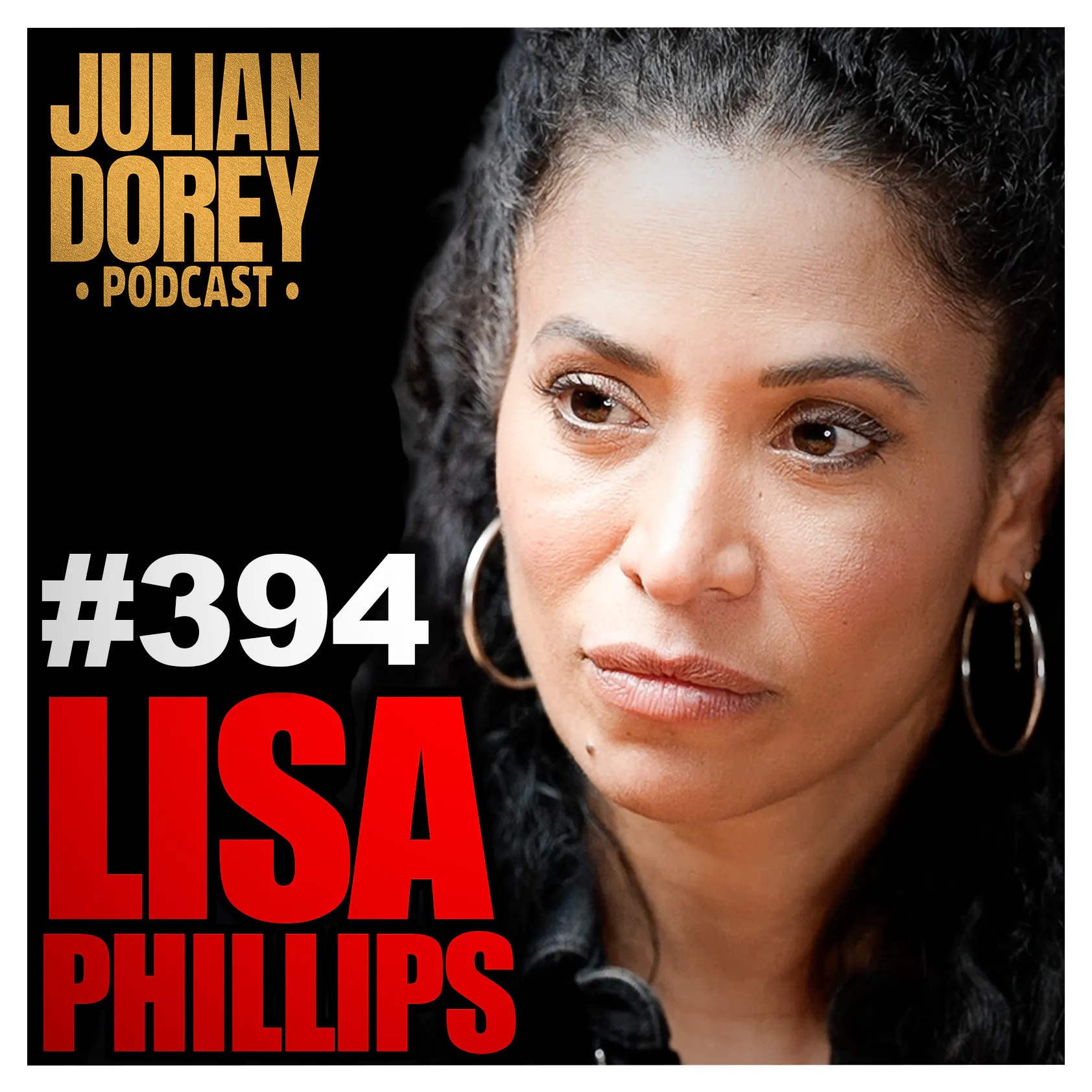
Julian Dorey Podcast
#394 - "Satanic!" - Epstein Survivor TELLS ALL on Epstein Island & Disturbing Links | Lisa Phillips
02:08:46
Loading summary
Transcript557 lines
- [00:02]
Julian
Lisa, it's great to finally meet you. Thank you for coming out to Jersey for this.
- [00:06]
Lisa
Thank you for having me. I'm super, super excited to be here.
- [00:09]
Julian
Well, it's been a very interesting ride for you and particularly the last three weeks. And I've seen you also out there doing the damn thing with other brave survivors as well, advocating. You've done this for a while, to be clear, but now it's like. Because everything's out there for people watching this, by the way, maybe you're watching this five years from now, ten years from now. We're going to respond to some of the recent news at the beginning, and then we're going to get to Lisa's story as well. So if the news is old stuff, you can skip ahead to that. But what's it. What's it been like to now see? And we'll get to all the problems with this release, but what's it been like to now see? So much of the things that you have been pounding the table telling people it was this bad, now actually be visible to the public to be like, holy shit, it's this bad.
- [00:55]
Lisa
Well, it's funny you say that, because I've always known it's been really bad, you know, but I had no idea it was this bad. Really. Every year, I found out more and more information that corroborates my story and many of the other survivor stories we had, like, cross reference, connect the dots. But in the last couple years, everything is making a lot more sense, which is why we've come together to really bring it to the attention and awareness of, you know, the American people and, well, basically the world now. The world, yeah. Yeah. So now it just always was so important. But I mean, this last drop a few weeks ago really is where people are really getting what's the major cover up really is.
- [01:43]
Julian
Yeah. I mean, I've looked at this case a lot for the last seven years.
- [01:49]
Lisa
Oh, seven years.
- [01:50]
Julian
Yeah. I mean, when it came out in 2019, I remember there were like a few articles about him in 2015, 20. I probably read some in 2017. Like, I remember Politico, I want to say, did a piece. It's like, huh, that's kind of interesting.
- [02:02]
Lisa
Yeah.
- [02:02]
Julian
Never went all the way there. And then he got arrested. And I'm like, all right, this feels off. And then you start looking and you're like, what?
- [02:10]
Lisa
Yeah. No one really paid attention until he died. Yeah, 2019, I was. Same for me. That's when everything turned for me. Right.
- [02:16]
Julian
And we'll. We'll talk about that for sure. But when this latest tranche came out on January 30th of emails and files, the darkness in there and just the things they would so flippantly talk about.
- [02:35]
Lisa
Nothing.
- [02:36]
Julian
The code words, I mean, it's like if you're a hardcore conspiracy theorist, you are taking a very not happy victory lap right now because you're like, told you.
- [02:46]
Lisa
Yep, yep.
- [02:47]
Julian
Right.
- [02:48]
Lisa
Yeah. Those conspiracy theorists, we're finding out we're right.
- [02:53]
Julian
Yeah.
- [02:53]
Lisa
On a lot of things.
- [02:54]
Julian
Yeah. Now you didn't. Some of the other victims that you've connected with that you've had a chance to talk with since this latest round came out, have they. Were some of them involved in any of the really, really bad stuff we've seen in the files and.
- [03:12]
Lisa
No, nothing, nothing that we know of. I mean, maybe, maybe they had something to do with that. But I just feel like that was a different layer that most people didn't know about. I actually think that's the layer that they never wanted anyone to know about because, I mean, everyone knew about, you know, if you're 18 and over. And then we knew about the underage girls, you know. But when it came to what we're seeing, the really dark and depraved interactions in the way they're talking about children, that was, that was harder. I always knew it was probably there just because I've heard things over the years, but I, I had no idea until you actually like read it and see the pictures and, and to read how it was just tossed around. Like it was nothing. Like it was just another day of like bring over, you know, the pizza and beer. It was just like talking like they weren't actually talking about real human beings or somebody's kid. You know, it's. I've actually been really sickened. Like I feel sick.
- [04:16]
Julian
Yeah.
- [04:16]
Lisa
Physically, I'm more emotional about it just because dealing with the underage girls was hard for me because I have a 14 year old boy. So when I met the survivors and they were 14 years old when they were abused and he took their virginity, things like that, I just, I had a hard time accepting it and, and understanding it. So, I mean, this goes to a whole nother level now.
- [04:44]
Julian
Yeah. And it's, it's also like you talk about the ones that, with the really dark stuff that you haven't been able to see come forward. Unfortunately, you have to wonder if from that stuff if anyone's even alive. Because it showed. No, really, like it shows in the files. I mean, what was he buying these like 330 gallons of sulfuric acid. Yeah, it's like you never know. That's what I'm saying.
- [05:10]
Lisa
Well, I mean most of the survivors that have come forward are 14 to 24.
- [05:14]
Julian
Yeah.
- [05:15]
Lisa
When the abuse happened, 1200 or something. The FBI says 1200 plus added a
- [05:21]
Julian
couple zeros to that, but yeah.
- [05:23]
Lisa
Yeah. Well, I don't know. Accounting, I don't think they were accounting the, that young.
- [05:29]
Julian
So I remember when they did the, when the case from 05 when they were first bringing it word and ended up being covered up. Obviously got covered. One of the things that they would find out is, is that Guy Len would refer to the girls. I mean these were 12, 13 year old, 14 year old girls that she would go recruit as I think it was the word was new biles, which so therefore we've known for a while like Jeffrey and Guy Lynn.
- [05:56]
Lisa
Yeah.
- [05:56]
Julian
Looked at other humans like total trash. Killed children, no less.
- [06:00]
Lisa
Oh, she said that.
- [06:01]
Julian
Right. So to see now though that all the people that he associated with, no matter how smart, rich or connected or whatever they were, so many of them, I'll say, looked at it the same way. It's like, well, how, how widespread is a problem like this?
- [06:21]
Lisa
Not only do they look at other people's kids that way, they looked at their own kids that way. They would say, oh, we're bringing our kids, you know, 11 year old, 14 year old, 9 year old, you know, they didn't even have names. And if I'm going to meet you, I'm, I would say I'm bringing my kids, you know, Tom, Dick and Harry. Like, I wouldn't say like the ages. It's, it was really, it's really creepy the way they talked about their own children. But a lot of the men in the files talked about their kids like that.
- [06:49]
Julian
Yeah, that went. That email in particular, you're, you're referring to the Howard Ludnick one really set me off.
- [06:54]
Lisa
Oh shoot. Yeah. And I mean even just, even just, even just saying like, you know, I'm coming to the island and I'm bringing my kids and my nanny and people were like, oh, nothing happened because I brought my kids and my nanny. It's like that's the whole thing right there. It's like the COVID up of no, my wife was there, my kids were there, my nanny was there. Well, that's why they were there. You know.
- [07:16]
Julian
How about the fact that he goes in front of Congress, has to admit that that concocted dramatic story that he told on public camera four months before was A complete fabrication of his imagination.
- [07:31]
Lisa
Yeah. He irritates me.
- [07:33]
Julian
His eye contact during that. And I decided that I would never associate with that disgusting individual ever again.
- [07:40]
Lisa
Ever again. And he's like, gross. Yeah, he's gross. So you know what? He was. He was right when he said that he knew he was a disgusting individual. That's the truth. And that he's gross and that I've never had anything to do with him. That's a normal thing that a lot of these men have said over the years that I have nothing to do with him. Gates as well. Nothing to do with that guy. And then it comes out. They've kept in touch with him for years and years. And really on a really depraved scale.
- [08:07]
Julian
Yes.
- [08:07]
Lisa
You know, that's. That's the. That's the craziness. That's the thing. Whereas you're like, wait a second, shouldn't that be investigated? Yes, like, why isn't that investigated? I have nothing to do with that man. And then it finds out. Years, you know, you were visiting this guy. Why were you. Why were you hiding it?
- [08:25]
Julian
Right? And sociopaths, if. If you want to go straight to that term, and I would, with many of the people in these files, you know, they have no ability to feel empathy. Right? And so when a guy like that then gets up in front of Congress and with a dead straight face, admits that that was all a lie, and then says, yeah, you know, I did meet with him and we did go to the island, but it was only for an hour. I'll get back to that in a second. And by the way, when I leave here, I'm going to continue doing my job advising the President every single day. And what the are you going to do about it? The hubris you have to have to be like, that is insane. But you bring it up. I. I love that you brought up the details of how he talks. How about him saying during the hearing, I was there for an hour? Which. Who goes to an island for an hour? Thief was saying that. Right. You couldn't say the afternoon? Right. That's number one. Number two, he had. It was just very strange to me. And I don't know if I'm reading into it too much, but the way he said it, he's like, and we left with my wife, with my children, as well as our nannies. And it was almost like, so there was an option that you were gonna leave them behind there. You know what I mean? Like, the way he said it. And I am on ed edge, listening But I was looking at that like, you just gonna leave him with Jeff on his island?
- [09:40]
Lisa
Well, they kind of tell on themselves because what a sociopath does is like they're trying to lead you in a certain way to think.
- [09:47]
Julian
Yes.
- [09:48]
Lisa
Something by telling you these details, overly, you know, stated details, but in the details. Doesn't make any sense at all. It actually makes you look more guilty.
- [09:56]
Julian
That's right.
- [09:57]
Lisa
I mean, he's, he's, he's completely guilty, as we know. I mean, this is not me speculating or you speculating. It's in the files.
- [10:04]
Julian
Yeah.
- [10:04]
Lisa
You know, so. And he, in his own admission, covered it up for whatever reason. He could have said from the start, yeah, I was there, it was just business. But he was saying, I was never there. Yeah. You know, so I have seen that with quite a few of those men saying that they weren't there, they had nothing to do with him, and they had no financial dealings. And then it comes out later, they're, you know, emailing, oh, that little seven year old was naughty.
- [10:31]
Julian
Right.
- [10:32]
Lisa
You know, little things like that. And who writes like that?
- [10:35]
Julian
Sick, depraved people who writes like that? I, I would like to think I don't know anyone like that. But very sadly, when you look at stuff like this, you wonder if there's like someone you know who's secretly like that.
- [10:46]
Lisa
Of course.
- [10:47]
Julian
You really do. Because like the. I know a lot of people. Right. I do. I do a job where I connect with people all the time. The percentages say I know someone.
- [10:53]
Lisa
Like, I know. Of course. We all do.
- [10:55]
Julian
You know, which we all do.
- [10:56]
Lisa
We'll just, we'll never, we never really know.
- [10:58]
Julian
Yeah.
- [10:59]
Lisa
You know, until they're exposed. Then it's like, oh, well, then here comes all the excuses of why you were friends with him.
- [11:05]
Julian
That's right.
- [11:06]
Lisa
The thing about Epstein is that all the survivors know, or anyone who's ever been around him, he was perversion written all over him. He never hit it. You knew exactly the type of man that he was. And also, I mean, to go a little deeper, you know, having to be around these people to just get something on them or to blackmail them. He made it known very quickly what he was into just to see how much that person would be into. Because a little bit here, oh, here's a, you know, 19 year old and then, you know, here's a 15 year old, and then to see if they can push anybody younger to get anything on them. And when you have that type of leverage on someone, there's many, many things you can do with that when someone's that powerful.
- [11:51]
Julian
Yes.
- [11:52]
Lisa
So that was like the basis of who Epstein was with everyone in those files. If you read on any political or powerful person, it was all, if you look at the way they spoke to each other was on more of a little bit of a sadistic or sinister level.
- [12:10]
Julian
Yes, that's crystal clear. There's a legal psychoactive mushroom that a lot of people are quietly using as an alcohol alternative. I looked into it last year because I was curious. Then I tried it, then I ordered more. The mushroom is called Amanita Muscaria. You've heard me talk about it many times before. It's legal, psychoactive, and completely different from psilocybin or magic mushrooms. It doesn't give you a trip, it doesn't make you see things, doesn't push you into an altered state. What it actually does is modulate your GABA receptors. The same system the alcohol hits, which is why the effect feels familiar, that warm, relaxed, the day is done kind of feeling. But unlike alcohol, you're not going to get the calories. You're not going to get the dehydration, the sleep disruption, or the morning after fog. People even commonly use Amanita before social events, on planes, at concerts, on a Tuesday night when they just want to decompress without paying for it the next day. When it comes to Amanita, the brand I trust is Amantara. And they're the only one I recommend because they're legitimate about how they source and extract this stuff. No shady conversion compounds, no mystery ingredients. Clean, legal, and actually effective. Last week we did a double header on camera where we had a guest during the day and then Thief and I did the solo episode at night. I was absolutely wired and needed to wind down because, you know, I like to keep my schedule tight. And with Blue Lotus, I got exactly what I was looking for. Just a relaxed, calming feeling that put me right to sleep and had me ready to go when I woke up the next morning. So you can join me and get your own Amanita Muscaria products by going to amantara.com go Julian. That link is in my description below. Once you're there, you can use code JD22 to get 22% off your first order. That's amantara.com go Julian. Link in my description below JD22 at checkout. And I. I heard Andrew Schultz say he made a really good point here. Obviously, we've always heard about the famous flight in O2 when infamous flight when Jeffrey Took Bill Clinton and Kevin Spacey and Chris Tucker on over to Africa. What was it, like the African AIDS conference or something? So that's where. That's an example where there were, you know, some entertainers there as well. But what Andrew pointed out that he's very, in my opinion, right about is that, yes, Jeffrey sometimes would be seen with entertainers and some famous people like that. But when we're reading the email files and going through the people who are clearly in on it, pretty much everyone you see is wealthy, powerful, but like a nerd, you know, like, they're. They're scientists, they're business guys, they're nerds. Where it's like, you know, you know how it is. The entertainers, they don't have any problem getting their own kind of date, but these guys, they're nerds. And then you. Obviously, they're. They've pushed themselves to a whole nother level where they then, I guess, like, take out their own insecurities in the worst way.
- [15:01]
Lisa
Well, yeah, of course. I mean, men love to be around beautiful women. I mean, we get that. But a lot of these nerds, they're really busy. They're businessmen. You know, some of them are billionaires. They got really packed schedules. They can't really fit in. And a lot of them are married, you know, to fit in. To fit in, you know, you know, to fit in, you know, you know, having some young girl by their side or whatever. So, you know, you do some business with Epstein, and then he has these young girls always around them, always around, always around him. He didn't travel without them. So let's just stick to some facts. So when he went to South Africa, to Cape Town, Jeffrey set up, like, a modeling. Cape Town's a big modeling market where girls travel to. To work. I did right after high school, 1998, in 2003, I went there for six months and I worked as a model there. You do mat magazines and catalogs and TV commercials, and you really build your book so that you're worth more when you come back to New York to work as a model. So Epstein, as a fact, set up with his secretaries and his assistants, older assistants that were there modeling casting, where girls would show up and, you know, if he liked a particular one, you know, he got their information. And then later on, he flew them from Cape Town to New York. So. And I knew. I know some girls that were involved in that, who were. Who were abused on that trip. So let's just say this is a fact that happened. How. How much of those other men know what was going on? Did he do that in secrecy? And the other men don't really know what's going on around him. So I just find it, my whole point is I just find it odd that anyone would say I have no idea what he was doing when this was. He didn't mention the casting, he didn't mention the, the beautiful young girls that he was meeting there who later were shipped from Cape Town to New York City, shipped to the island, shipped to different places. You know, so this is just the way that he operated.
- [17:04]
Julian
Sex trafficking 101, basically right there.
- [17:07]
Lisa
Well, there you go.
- [17:08]
Julian
Yeah.
- [17:08]
Lisa
That is sex trafficking. You put someone on a plane and ship them somewhere else and then that's it. They get trapped on the island, their passports are taken away, and then next minute you're like told to go into this room to have sex with this person.
- [17:20]
Julian
Yeah. I mean, you mentioned you have a 14 year old son. You know, he's still not 17 or 18 or older, like, you know, but it's, it's your son. How do you talk with him about this?
- [17:35]
Lisa
Well, my boys know about, you know, what I've gone through. I've always been honest with them from the start. I mean, a lot of the survivors are mothers of girls, but I have boys and they're always like, oh, I do this for my, for my girls, you know, because of the world we're in. We. They need to be educated. They need to know what's going on. But so do boys.
- [17:57]
Julian
Absolutely.
- [17:58]
Lisa
Yeah. Boys need to know what's going on too. And just to navigate this whole world, it's just, it's very different from, you know, from when I grew up. Nobody talked about these kinds of things, you know. You know. You know, after I spoke out in Capitol Hill, I had thousands and thousands of emails and DMs and text messages coming in from so many people around the world who have been abused and mostly from childhood. And they had never told anyone in 20, 30, 40, 50 years. And for some reason, because I spoke out, you know, they, they felt like they could just reach out to me just to get it off their chest, just to say, you know, this, what, this is what happened to me. Do you know that an overwhelming amount of them were men?
- [18:44]
Julian
Hmm.
- [18:46]
Lisa
You know, there's so many men out there who are suffering through this and so many men out there who support. There's so many men out there who support the survivors. It's not just a women's problem. Right. And so when we survivors, we stand up there. We're not just standing up there for Epstein survivors, the 1200 or maybe many more, but all survivors of sexual abuse.
- [19:12]
Julian
Yeah.
- [19:12]
Lisa
Because it's a, a major problem if
- [19:15]
Julian
you, if this case were just alone, the sex trafficking and sexual abuse. It's one of. If not, I, I, I can't think of anything bigger. The largest known case in modern and maybe human history of this being brought to light in, you know, decent human society. Then when you think about all the other things that that was used for and all the other cr. Like, like the scope of it, you can't even fathom I, who was it Tucker Carlson was saying? It's like a supra government or something. Steve, I don't want to get that wrong, but it was a fair point. He was talking about reading all these emails and then seeing all the people that Jeffrey's talking with about literal pedophile. It was. Okay, it was literal pedophilia, literal sex trafficking and all that. And then he's like, and then you got arms dealing and government contracts and money laundering and all these other things.
- [20:11]
Lisa
And it's like financial institutions, universities, it's
- [20:15]
Julian
like, are these people seem to be talking like all the people that we elect work for the people who work for them.
- [20:24]
Lisa
Oh, yeah.
- [20:24]
Julian
And then they use this kind of stuff, discarding human lives, essentially.
- [20:31]
Lisa
Yeah.
- [20:32]
Julian
To advance those means. I, I can't, I'm still trying to wrap my, Obviously, like everyone else out there, it makes me angry, but like, I'm still trying to wrap my head around that reality because we've heard these terms for years where people talk about like the world order and stuff. And you're like, well, here it is on jeevacationmail.com.
- [20:52]
Lisa
yeah. Yeah. I actually think that the whole thing with the babies and the young girls and stuff is just like a hobby or something they do for fun.
- [21:02]
Julian
A hobby.
- [21:03]
Lisa
This is something they do for fun. It's just another thing that I'm a billionaire and these kids are, you know, just like you said, there's no value to them and they're just discarded. You know, we have 300, 400,000 kids that go missing in the United States. And then you just said it's like the biggest sex trafficking ring. But I don't know, I mean, we have the boy scouts, which was tens of thousands. We have the Catholic church. Tens and tens of tens of thousands. I mean, the juvenile detention center in Los Angeles came out billion dollar settlements, over 10,000 kids. You know, so people need to like, understand. Yeah. This is massive and this expands to over governments and all over the world. It's a global thing. But this is a massive problem we have all over the world that's been covered up for many, many years.
- [21:57]
Julian
You know, it's way bigger than any of us would have liked to imagine. Like, there are far more people like this. And one of the things I struggle with is like, do you think some people are just, like, born with some kind of deranged gene? Whereas they grow up, they're like, oh, that's what I need, deranged gene.
- [22:21]
Lisa
Well, I think having the financial means to do what you want to do amplifies that. So maybe there's a little bit of. Let's say they weren't a billionaire. How would they have access to do all this stuff? Maybe they would be an abuser. Maybe they want to just, you know, have sex with a young girl. I don't know. But who has access to that? To actually make that step and do those things is pretty darn difficult. Yes. You know what I mean? You're. I mean, there's a lot of. There's a law you have to answer to, so you have to be pretty clever to try to get around all this stuff and. But look at all the pedophiles out there. I mean, it's a system that we could easily shut down. But, you know, there's so many different access to children, you know, Roblox and, you know, Instagram, Snapchat. I mean, they could shut that down so easily. The porn industry, you know, those girls. Those girls are trafficked in, you know, so, I mean, this is some. This is a major, major issue in our society that it's going to take a long time to, you know, to make a difference here. But I think for the first time, people are seeing, with the Epstein survivors, these brave, brave women that are coming forward that aren't giving up. And for the first time ever, because usually you're just like, okay, yeah, yeah, we hear your story. You're out of here. But this is the first time ever that people worldwide are behind us. Right. When we spoke out at Capitol Hill, there was a total global shift in the way people thought around survivors. And Congress got behind us. We met with representatives. We're still meeting with representatives. We were at the Pam Bondi hearing right behind her. Who do you think is working or helping us out here? This is the people at that hearing. People were right in her face asking these tough questions, you know, and she deflected, and she looked through her notebook.
- [24:12]
Julian
The Dow. The Dow's at 50,000.
- [24:17]
Lisa
That was so frustrating.
- [24:18]
Julian
Oh, God.
- [24:19]
Lisa
I mean, we could joke about it now, but I was the brightest bulb.
- [24:22]
Julian
I can't imagine how frustrating that is, though, for you sitting there.
- [24:26]
Lisa
It just didn't make any sense. It was like, are you kidding me?
- [24:28]
Julian
Yeah.
- [24:28]
Lisa
This is so important that we're here. We're standing here, we're representing 1200 victims here. And they're asking her to just, like, hey, look behind you. Acknowledge them. And she couldn't even. Her face didn't even move this bit.
- [24:43]
Julian
It was like a. So there's images of it that look haunting. But I would encourage people to go watch the video of when you and the other survivors stood up. Cause it was for, like, a good minute or two, right?
- [24:55]
Lisa
Yeah.
- [24:55]
Julian
And just watch Bondi, because the video in that case can't be taken out of context. She never turns. And it's. It had the same vibes to me as, like, when a serial killer's at their sentencing hearing.
- [25:07]
Lisa
Oh, yeah.
- [25:07]
Julian
And won't face the victim's families.
- [25:09]
Lisa
Oh, my God. I didn't think about that. That's exactly how it felt.
- [25:12]
Julian
She was so cold.
- [25:14]
Lisa
It was. It was cold, and it was just disgusting. Like, I really was, like, shaking, you know, because I just couldn't understand. When you take the time to go there and you're doing the right thing. Massey. And, you know, Korea, like, all these people were speaking out and saying, you know, do the right thing here and just answer these questions. And she couldn't even do it right. She couldn't even answer a question. She didn't even answer one question right. And then that moment, I think it was three different times, they were like, can you turn around and just say you're sorry or explain something? And it wasn't even. She could have just been like, hey, you know, said anything, but it was just, like, the total feeling of being dismissed, that you don't matter, you're unworthy, like, you're nothing to us. We're up here, and you're just little pieces of shits over here that are in. That are giving us so many problems and we can't stand you. It was more like that feeling of, like, Ghislaine. How Ghislaine said about these girls, they're nothing. They're worthless, you know? Yeah, it was that same type of feeling, you know, But I think they need to stop doing that, because the more they treat us like that, the more angry we get and the more Congress gets behind us, and the more we're going to be in their face.
- [26:28]
Julian
So, hey, guys, three quick things. Number one, if you haven't subscribed, please subscribe. It's a huge, huge help. Number two, if you'd like to join my Patreon for early uncensored releases of the full episodes, you can join via the link in my description or in the PIN comment below. And number three, if you'd like to join my clipping community for a chance to make content from the show and make money, you can join via the Discord link in my description below. Yeah, and this is the. The wild thing about this story. We've lived in such divided times, and it just pisses me off. So. But with this story now being something that has happened that we cannot change, that we can now learn as much as we can about it and try to. Right. I mean, you can't write the wrongs that happen, but make things right moving forward. You know, this is everybody.
- [27:14]
Lisa
Yeah.
- [27:14]
Julian
Every administration left and right has covered this up. Every Congress to this point, left and right has covered this up. And you finally have some people on both sides of the aisle pushing it. There's still not enough. Like, they're. I appreciate the people that are doing it, but I wish it was unanimous, all 535 of them between Congress and Senate doing this. But, you know, I've never seen, like, Ro Khanna and Thomas Massie both have a very similar disposition. They're very right here at all times. And Roe has maintained that and Massey's maintained that very well throughout this whole process. I have never in my life seen Thomas Massie lose his mind, though, like he did on Pam Bondi. Like that was.
- [27:56]
Lisa
You know, he lost his mind with facts.
- [27:59]
Julian
Yeah, exactly.
- [28:00]
Lisa
And upset about what he was showing. He had the printouts right there. Like, explain this.
- [28:05]
Julian
That's right.
- [28:06]
Lisa
And he. He kept it together in that way. She lost her mind by insulting him.
- [28:10]
Julian
That's right.
- [28:12]
Lisa
It was like, why do you have to go to. When you have nothing left, you go to insults. Right. It was like, out of, like, her playbook of what to say to him and what to say to this one and what to say to this one. You know, it was out of. Whose playbook do you think that was out of?
- [28:26]
Julian
It's all. It's all political, for sure. Yeah. Deflect, name call, do whatever. That's. That's what politics is. And like, in my lifetime, pro. At least since John Ashcroft, who was the AG under George Bush, there's been this thing that has very clearly happened where attorney generals have gone from Supposed to be separate, running the DOJ as like their own ivory tower in that way. I don't mean that in a bad way. Right to now, they are a legitimate political arm. We've seen that in every single administration. Guys like Eric Holder, Bill Barr. These guys belong in prison for the things that they did provably, you know, but they're not because they're serving their administration for political means. And we just saw a verbal example of that the other day that unfortunately also you as a victim and other victims have to stand there and be like, what the fuck are we even. Like, this isn't hard.
- [29:19]
Lisa
Yeah.
- [29:20]
Julian
You know, now do you think. Do you think anyone. I'm going to get to Europe because you and I got to talk about that, but do you think anyone in the United States is going to go to jail for this?
- [29:36]
Lisa
Probably not. Probably not. And regardless if they're willing to actually do a thorough investigation, a lot of the victims don't want to come forward. So without the victims, you know, actually speaking out and having that, you know, bravery to do so, it's. It's not going to happen. I mean, most of them that I talk to don't want to talk. So.
- [30:03]
Julian
Okay, wait a second. So like the ones who have been standing with you and speaking for a while now, not just recently, but who have been speaking out against that, you're not referring to those ones you're referring to, if I'm correct here, other victims that maybe you have spoken with off the record, who just don't want to. And I understand this, you know, I'm not judging at all. But, like, who. Who are afraid to come forward.
- [30:27]
Lisa
Yeah, I think most are afraid to come forward.
- [30:31]
Julian
Wow. Even now.
- [30:35]
Lisa
Yeah. Because when, I mean, look what happened to Virginia.
- [30:39]
Julian
Yeah.
- [30:39]
Lisa
I mean, they literally took out pictures of her kids, you know, to make her, intimidate her, to back down. Look what she went through. I mean, nobody wants to go through that. I mean, I think people just want to get accountability, like answers out, Em. You know, you know, put it out there so that the public is aware of what's going on, like we're seeing now, and hopefully we'll continue to see. But actual justice, like being deposed for a case and going up against these types of people who have endless funds, that's going to be very difficult. I mean, that's what they have working on their side is they know who obviously they abused and they've already, probably have NDA with them. They probably already silenced them. So if someone has already come forward, they've they have already said, well, here's some money, and you be quiet. And they've signed an NDA, so they can't speak out. Got to remember, a lot of them cannot speak out. And then half of the ones are Eastern European, are from other countries, you know, who got their visa to work in the US who may still live here. And they also were introduced to their husbands, probably through Epstein, through that network. You know what I mean? So they maybe got their jobs, or they have means of not wanting to ruin their lives right now, and they're embarrassed, they're shameful, they don't want to come forward. And even to understand the part that they may have had in it, I think they would rather just. I mean, sometimes I question why I speak out. It would have been much nicer if I had stayed quiet. You know, probably I would. It's been a lot over the last few years.
- [32:18]
Julian
It's a very brave thing, though. And it's, you know.
- [32:22]
Lisa
Well, I realize that now because now we're getting. We're more in the political, you know, field of everything, where people are behind us. But in the beginning, I'm always like, why am I speaking out? Like, this is. Why am I going through therapy, you know, and dealing with this. It was a lot of shame. And I lost, you know, best friends, partner, you know, parents. You know, through all of this, I've lost a lot of people who don't even support me, you know, and that has happened to a lot of survivors a lot of times.
- [32:51]
Julian
Your parents through this?
- [32:52]
Lisa
Well, I don't. I don't have, like, the support of my family. Yeah.
- [32:56]
Julian
Why not?
- [32:59]
Lisa
I don't know. I mean, they knew. They knew that I knew Epstein during those years. He would send flowers to my house. They. Their. Their address and number was in the little black book reporters used to call them all the time. My parents lived less than an hour away from Zorro Ranch in New Mexico. You know, they were aware of who this man was. I don't know. I think when it just comes to sexual abuse, a lot of people are just like, I don't want to deal with that. Maybe they have their own, you know, issues around it and things they have to work out on their own. I'm not quite sure, but I have lost a lot of people, a lot of friends through this process, which is the reason. Which is the whole reason why Julian is why I found the survivor sisters to begin with. Because when I started speaking out in 2020, after I started losing family and friends, I was like, well, who understands me then if my own family and friends don't want to? So I started reaching out to Virginia Giuffre and the other survivors who spoke out in 2019. And before that, those became my really good friends. Those became my rock, you know, so that's the reason why it's every year I've built on every year it's built on like this, you know, bravery is built on every year. Just didn't happen like that.
- [34:20]
Julian
You know, that is very hard for me to process though, because I'm not a parent yet. I look forward to being one. I can't possibly understand what that's like until that happens. But obviously I have friends and family where they've experienced that and like, I see through them what that is. And like, once you bring that child into the world, if you were even a half decent parent, you would lay down your life for them. And so, you know, this is just me thinking about this, but if my kid came to me and I'm always hesitant to say, if I were blank, then I would blank. Because in a lot of these situations you don't know. Yeah, and I'm gonna be a bit of a hypocrite here because I feel like in this one I know if my kid came to me and said, I don't care who it was, insert person here abused me, not only am I going to support them, they're going to have to drag my cold, dead hands off of their cold, dead body.
- [35:15]
Lisa
Yeah, yeah, yeah.
- [35:16]
Julian
Like, I don't, it doesn't process to me that you would, your family would know that you knew this guy and were around him and you had, as you said, discuss some of this stuff with them before and then you're brave enough to come forward and now they run away from it. Like, were you, were you not close with your parents or something? It's, that's not registering for me.
- [35:42]
Lisa
Well, I, I for sure believe you, if anything happened to your child, you would definitely stand up for them. I'm the same way with my kids. Anybody screws with my kids, those are my heart. Those are my hearts right there. Nobody's messing with them. And they know my kids will tell you. Like, I stand up for them in so many different ways when they're just like, mom, back down. But I always stick up for them. I think we come from maybe a different generation than like parents or grandparents. They just were quiet about everything and I think kids weren't supposed to speak up. You know, kids weren't, didn't feel comfortable to Speak up. I saw this Mel Robbins podcast where she's.
- [36:21]
Julian
Mel's great.
- [36:22]
Lisa
Yeah. Isn't she great? I just love her. But she was talking about when she went through a sexual assault when she was young. And you know the psychologist Gabor. Mate, his name is. Yeah. He was telling her, it's not really what happened to you, of course. You know, it's awful what happened to you, but it's because you had no one to talk to when it happened. You couldn't go to your parents and tell them, you know. And when that was happening to me in the early 2000s, I didn't have anyone. I didn't have anyone that I felt comfortable enough or safe enough to call up or go to and say, you know what? This person is doing things to me that I don't think is right and I don't understand it, but I need to talk to someone. I didn't have that. And I feel like in that generation, especially in the early 2000s, I mean, this is not even that long ago. I know that I couldn't speak out to people about it. I didn't feel comfortable because we just didn't talk about it. So I think things are changing now. We got TikTok now. I mean, if anything happens to anybody now who's like under 25, they're on tick Tock, spilling the beans. You know, in 2000, there wasn't tick Tock, so. Or there wasn't even, like, any way that I could be, like, getting pictures, you know, or, you know, a selfie here to get. To get incriminating evidence. I didn't. We didn't have that.
- [37:43]
Julian
This is actually a really important, greater point too you're making, because the prime time of all these crimes and we can even look at Diddy and stuff like that.
- [37:55]
Lisa
Oh, yeah.
- [37:55]
Julian
It was happening during the 90s and 2000s, and it's pre social media for the most part. Pre. Like widespread Internet 2.0.
- [38:05]
Lisa
Oh, yeah.
- [38:06]
Julian
And it was a time where people were still separated from this.
- [38:09]
Lisa
Yep.
- [38:10]
Julian
Right. People didn't start mainstreaming this till, like, 2010. It came out in 2007. But people. Everyone started getting in 2010, 2011. So these people got used to a world where all they had to do was make sure they had their guy at Page Six on their side. And they were good.
- [38:27]
Lisa
Oh, yeah, yeah. They had control over the media and every. Every outlet, every. Everything that they didn't have to worry about. I don't think they thought that. I don't think they're smart enough to think that far ahead, to know social media is what really ruined it for all of them. It's all the people like you, podcasters, or just any. Anybody at home who's just on their phone just reporting everything they see, copying the files, putting it all out there. Now that we have that, that is what. Why everyone is like, knows what's going on.
- [38:59]
Julian
That's right.
- [38:59]
Lisa
That's the only reason why, if this was literally 2010, not much.
- [39:04]
Julian
That's right. It's like I have always looked at it this way. If we discount MySpace for a second, which was like the pre bootloader to the bootloader.
- [39:12]
Lisa
Yeah.
- [39:13]
Julian
Facebook went. Started to go mainstream me in like 2007. It was around in 04,0506, but it started to open up to the world in 2007. We're sitting here in 2026, which means that think about a kid that was born in 2007, they're 19, and then think about your grandma who's on Facebook, who's 84. They're the same age when it comes to the Internet. They're both 19 years old.
- [39:40]
Lisa
Yeah.
- [39:40]
Julian
So there's no one in society that is a senior citizen or a. Having lived the life and understood and seen the ups and downs, the mistakes, the good, the flaws and everything of the Internet who exists.
- [39:51]
Lisa
Yeah. But even like 2006-2017, for you to, for you to put this type of information out there on YouTube or Facebook, you have to still be like a creator to do that. Of course, it's not even like today where anybody can just pick up there and pick up their phone and just give their opinions on things.
- [40:07]
Julian
Makes the point even stronger.
- [40:08]
Lisa
Yeah, even stronger. Yeah. You'd have to be like a YouTuber right. Back in 2015. And, and most people weren't.
- [40:15]
Julian
You know, it's, it, it's, it's funny too though, because you talk about these guys couldn't see ahead to this. And I agree with you. It's so clear that they couldn't. And yet, like a lot, a lot of the worlds that these guys come from, they, in everything else they did in their life, they thought three, four decades ahead.
- [40:33]
Lisa
Oh, sure, yeah.
- [40:33]
Julian
You know, my guy, Alessi Alaman, who works has been with me forever, he has his own channel on YouTube. He did an amazing documentary like tying together Epstein to Leon Black to Steve Bannon and everything. And if you look at like Cambridge Analytica and like the left, right, Fear politics machines that came up online in 15, 16, 17, the money for that started in as far back as we can see 1991 or 1992, which means it was probably before that. So they're thinking 25 years ahead on that. But they can't think about the dude who goes like this. It goes, yo, fam, look at what I just saw out of this.
- [41:10]
Lisa
Totally, right? Oh, yeah. They didn't account for that happening.
- [41:14]
Julian
No, they didn't.
- [41:15]
Lisa
And that's really what exploded these files.
- [41:17]
Julian
That's right.
- [41:18]
Lisa
Yeah.
- [41:18]
Julian
Now, you just got back from Dublin, Right. And I don't know a lot about this yet. I told you we talked yesterday, and I was like, all right, let's save this for the podcast. But apparently, at least there, and maybe some other places in Europe, there is some accountability that's being taken. What's. What do you know about that?
- [41:38]
Lisa
Well, because I lived my first few years in England and then graduated high school in Belgium and spent half my life in Europe, I've done a lot more European press than most of survivors, I think, do a lot of American press, but I do a lot of international press just because I know that a lot of the after. After I was a model, I had a. Sorry. After I was a model, I was a scout, international scout for big agencies. And so I would travel a lot to Eastern European countries like Bratislava or Lithuania and Poland. And so I was still absorbed in this world. So I was seeing what was going on and happening. So I have, like, an understanding of Jeffrey's ties to that part of the world in the malling industry. And so whenever. And then also my story started on the island, seeing Prince Andrew there. And my story ended in 2004 with a girlfriend that had a story about Prince Andrew. So, you know, I do a lot of press over there because of, you know, what I know. And so, yeah, I went to Dublin and did the Late Late show and had a really great conversation, you know, about over there, and met with some people in England and have been doing some press just to bring awareness and try to corroborate the stories of others over there, mainly Virginia Giuffre.
- [43:04]
Julian
Yes.
- [43:05]
Lisa
Yeah.
- [43:05]
Julian
Rest in peace, by the way. That's tragic. She was very brave. I mean, she was really out there pushing it for years and years and years.
- [43:14]
Lisa
Yeah, she wasn't very brave.
- [43:15]
Julian
Definitely. Definitely did some amazing things for representing the victims. But there were. Who was a thief there? There's like a. Was it someone in Norway has already been arrested? And then my question for you was, are you hearing about, like, them doing investigations now in England and in Ireland on some of the People that they have tied there.
- [43:36]
Lisa
Well, I mean, the Justice Departments in these countries in Europe and Scandinavia are very different from the United States. As we know, in the US they haven't done anything. But, but in, in Europe, they're, they're investigating. Yeah. They're looking into whoever was in the files for their country. Their asking for the files to do a further investigation. And I know they are in Ireland, I think Lithuania and Norway.
- [43:59]
Julian
Good.
- [44:00]
Lisa
Yeah. So all these, these people that were mentioned, the files, maybe they're innocent, maybe they're not, but at least look into it.
- [44:07]
Julian
Yes.
- [44:08]
Lisa
Right. At least take that next step and, and, and call for the files for their country or flight logs or whatever, and, and do your, and do your research. So I don't know, I love to see that these nations are doing what, what they should be doing.
- [44:22]
Julian
If enough of them do it, maybe it puts some pressure even on the big dog in the United States. If enough of them do it and then see results and their people, like the people of those countries, then get the press of it and they're like this. What?
- [44:37]
Lisa
Yeah, it's so crazy because in the US There isn't really the empathy. I don't know why we're lacking, we're lacking so much empathy here, even when I do media that I don't know if they're just told to be stone cold and have no feelings, but I just hate doing media in the US And I've done quite a few of the major, you know, broadcast networks and things, and I just don't enjoy doing it. But when I go abroad, Ireland, the uk, Germany, Australia, you know, they're.
- [45:06]
Julian
They've been going in on this.
- [45:07]
Lisa
No, they just, they go in, they care, they want to get the answers, and then they also want to do something about it.
- [45:13]
Julian
Right.
- [45:13]
Lisa
So it's totally different. Like, what's your story? And they have to have empathy for your story and what you've gone through. And then that empathy, then that empathy feeds into, you know, connecting the dots and looking into who even it's in, in their prime ministers or people that are really important, you know, they will do the right thing and they either resign or, you know, take further measures, but at least they do something. It's always to do something in the U.S. it's just like, oh, yeah, let's hear your story. Oh, that's good. Okay. Or that's, or that's great, you know, and. But what else happened? What else happens after that?
- [45:51]
Julian
You know, like, oh, my God, what about off camera? Are they like, once the cameras go off. Are they, like a real human?
- [45:57]
Lisa
No. Yeah, they just always have an agenda. So they ask you questions, and then you say one thing about Trump that's leading you to say something, then the headline is about that. It's like, I didn't even talk about Trump. They, like, make you just. Just to have a headline. And I've always said, you know, not to say that he's guilty or not guilty. It's just. That's not my agenda, because I know there's all. There's so many other men that are involved that were abused. I know of many, many girls who have gone to that island and that are forced to have sex. Passport taken away and forced to have sex with somebody they do not want to have sex with.
- [46:29]
Julian
Passport taken away.
- [46:30]
Lisa
They take your passport away. There are girls that have tried to swim off that island. Where do they think they're going? I have no idea. But they're scared, you know? Yeah, I'll bet they're scared. That's not what they were thinking of when they were naively going to an island. But I have girlfriends that were made to go into a room and. Or. Or in the middle of the night, somebody comes in and. And just has sex with them and leaves. It's. It's really gross, to be honest with you. It's really gross. But, I mean, I've seen some of those names in the files, but until a survivor comes forward and says, you know, we're gonna rally behind this and, and come forward, most likely those men will just get away with it. So
- [47:17]
Julian
I. I mean, I. I think sometimes, like, when you look at, like, content creators, there's people take themselves way too seriously and think it's way bigger than it is. It's like, dude, you're talking to a camera. It's not that big a deal. What I will say when it comes to a story like this, that has released so much investigative files publicly for us to review, is that when you look at all these shows put together and there's literally millions, if people can keep their eye on the ball with this and all review the same evidence that we all have a chance to review and do each of our little parts to keep it on the front burner, if you will, maybe. Maybe we can get 10% of what we deserve to get, I'd like 100, but you know what I mean, it's. It's hard not to be sin. I mean, you know better than anyone what I mean. It's hard not to be cynical.
- [48:10]
Lisa
Yeah. I mean, if the DOJ had just done their job, the FBI, the DOJ had just done their job and taken the people out of the files and investigated them, the survivors and the people would know you're doing something because we would see actual action happening. Then they wouldn't have had to release the millions of files to the public.
- [48:35]
Julian
Right.
- [48:35]
Lisa
But you have to remember they don't care that the public sees all that. They know they're going to be like, oh, I'm disgusted by it for a few months and then it's going to go away. You know that that's the least of their worries is giving that to the American people because they know nothing's going to happen from that. What should have happened was when they had it for 15 years before they released it to us, or 20 years, how long has it been? 25 years before they released it to us, they should have done something about it. Of course, you know, these calls have been coming in since the 90s and the files only start from the early 2000s. They don't even go back to the 90s when the most depraved was happening.
- [49:15]
Julian
Yeah, I don't know. This is where it gets into speculation. I have to say that, because we'll never know. I mean, you, you didn't even come into contact with them until oh one, so I guess you don't even know 2000. You know, you talk about the 90s and stuff. Jeffrey Epstein in the 90s especially. You go back to the 80s with this for sure, but especially the 90s once he's like the man money wise. Yeah, he was very well known in the high level New York socialite circles. But he was not known publicly at all.
- [49:50]
Lisa
No, nobody knew him.
- [49:51]
Julian
When Page Six did the story in September 2002 about him taking Bill Clinton on his jet, then suddenly, who's this Jeffrey Epstein guy? Then he brings in Vicky Ward in March 2003 to do this whole, like he liked the attention and then he got known. So it's like when I see these files begin, then I do wonder what kind of incompetence within every law enforcement agency and espionage agency we have known to man here in America might have occurred at many levels, at least prior to that time. And now that you start to make that case, what, And I'm sure you ask yourself this a lot more than I do, but like, why do you let them cop to a plea of soliciting a prostitute? I think it was like a barely underage, like 17 year old. And then, you know, he basically had A house arrest, for all intents and purposes. Why? There were. We had the whole. They had the whole case.
- [50:50]
Lisa
Well, there were 43 accounts.
- [50:52]
Julian
That's right.
- [50:52]
Lisa
Of young girls who came forward, had the same exact stories of what was going on. Yeah, that sweetheart deal of just saying they were a prostitute. They weren't a prostitute, you know, so. Well, I don't know. I. What I know of Jeffrey Epstein from back then is he did not want anyone knowing about what was going on. He was not public, nobody knew about him, and that's the way that he liked it. I think he was furious when in 2002, page six did a story about him. He did not want his name out there because he wanted to be able to be incognito and nobody really know what he was doing. And I think the more known he got, the more scared he was, because he was supposed to be under the radar. That's interesting. Yeah, yeah, he was always under the radar. Any event you would ever see him at, he'd pop in and pop out. He was not a playboy. He was not in the limelight. You never saw pictures of him, of him. You never really saw girls around. I mean, around him like that. So he didn't. He didn't like that. That Vanity Fair did that article about him. He was furious about that as well.
- [51:59]
Julian
Furious after it came out. But he agreed to do it. He brought her over and did. That's. That's what. I wonder if there's like a.
- [52:05]
Lisa
Well, he had to do it.
- [52:05]
Julian
Yeah, he had to do it. Why do you say he had to do it?
- [52:08]
Lisa
Well, because people are starting to understand about, you know, who he was, and so he felt like he had to, you know, just put out. Put it out there of what he was doing and more like a philanthropist and like, you know. You know, just. Just trying to clear the air of who he was without saying what he was really doing, you know, and his. And his ties, you know, to people. So it was kind of on. On the surface. It wasn't like what we knew, what we know now about him.
- [52:32]
Julian
Of course. Yeah, I never thought of it that way.
- [52:34]
Lisa
Yeah, no, he didn't. He did not want his name and who he was out there. Yeah, because he would call a lot of us and been like, are you talking to them? To the media? You're talking to the reporters calling you don't say anything. Don't say anything.
- [52:45]
Julian
Oh, he would.
- [52:46]
Lisa
Oh, yeah, yeah. And I would. I would never have said anything back then. I mean, I only started speaking out because he Died.
- [52:54]
Julian
Right.
- [52:54]
Lisa
I would never. If he was alive today, I wouldn't be here.
- [52:58]
Julian
Did you? And I want to get to your story in a second. And we could do that linearly, but. But in the years between 04 and when you last saw him in 2019, when he died, obviously, you know, you were abused, so there was compartmentalization of that that went on and everything. But did you live in a constant or more like subconscious fear of him?
- [53:30]
Lisa
Maybe subconscious, but I think after I left New York and moved to Los Angeles in 2004, I didn't have any contact with him. He was starting to be like, found out, you know, the articles that were coming out and he was being investigated. So I think he slowed down a little bit. I think from 2004 to 2006, I think those were the years he slowed down because he definitely picked it back up later. But I just went on with my life. You know, I was married by 2006, you know, was pregnant by 2006. I just literally did not think about that man again. And the stuff that I heard, like in the news, I just. I just didn't read the news and. And I kind of just didn't even want to go there. Like, kind of in my heart that he was involved with, like, underage girls, you know, someone who, who has put their hands on you. And trying to think of him as a pedophile and stuff, it just really grossed me out, so. And they have to understand, nobody really gave a shit back then. It wasn't like big news like it is now. So I just kind of went on with my life for the next 15 years and didn't really think that much of it. Yeah.
- [54:40]
Julian
Now you said you were born in England and you were. I think you were telling me off cam that your father was in the military. So you traveled around Europe a lot as a kid.
- [54:48]
Lisa
Yeah, my father was a navigator in the Air Force. He went to Columbia and he studied electronic warfare. You know, he was in electronic warfare and airplane in the Air Force. And, you know, he was stationed at the Pentagon and then we moved to Belgium where he worked at NATO. So, yeah, my dad worked on quite a resume. Yeah, he worked on really important, you know, high profile things I would always ask him about. He'd say, well, I'd tell you, but I'd have to kill you. So, like, I didn't really know so much about what was going on. My dad was, you know, he was a great father. You know, he. He taught me a lot about life and gave me a lot of really good morals. And I did, you know, I had everything I ever wanted growing up, you know. You know, and then, you know, graduate high school in Belgium and then started modeling.
- [55:35]
Julian
So you were never in America really?
- [55:37]
Lisa
No, I was in America, yeah.
- [55:39]
Julian
How long were you in America?
- [55:40]
Lisa
Half my young child life. So, you know, I lived in Virginia when my dad was at the Pentagon, so.
- [55:46]
Julian
Right, that would make sense. 1 so, but either way, like, was it hard for you constantly having to pick up and go somewhere new and have all new friends and I mean, you're clearly a very friendly person, but still, like you have relationships with a ton of people and then suddenly it's like, oh, we're going somewhere new again. Was that difficult?
- [56:04]
Lisa
Well, I hated it growing up. Every like 2, 3, 4 years we'd move somewhere different. But you know, in hindsight, it was like the best thing that could happen to me, you know, because you just get adjusted. You go here, this new state in the US and then you go to this country in Europe and then you're back in, you know, they're back in Europe and you know, I have so many different friends in different places and just adapting to different types of people. And I've always had a very outgoing personality. I'm a definite extrovert, even though I have introvert, introverted moments where I definitely spend a long, a lot of time by myself. I do a lot of self care by myself, go to the movies or have dinner by myself a lot, you know, but I, I'm an extrovert at heart and I've always wanted to be in like the modeling and entertainment world. That was a big drive for me
- [56:52]
Julian
even as a little girl.
- [56:53]
Lisa
Oh yeah, I was a huge, I was always that one in front of the camera, you know, doing, doing all that stuff. So my, my father and my mother and father supported that. My mom put me in beauty pageants. You know, they took me to New York City at 16, 15, 16 years old to meet with the agencies. Went into Ford Models and Elite Models, you know, and, and then I, I was in a contest at 16 years old and flew to New York at 16 years old. I went up to the top of the Trump Tower when I was 16, which is so crazy. That one at Columbia, Columbia, Columbus Circle, you know, and I was, I was at the top of that, looking down. Was it there in New York City? I was looking on.
- [57:29]
Julian
Yeah, it's just off.
- [57:30]
Lisa
Yeah, right.
- [57:31]
Julian
Just off the wall here. You can't see it, but it's 57th street up on 5th Avenue.
- [57:36]
Lisa
Yeah, exactly. Yeah, 57th. 5th. No, not 5th on the west side.
- [57:40]
Julian
Trump.
- [57:40]
Lisa
Yeah, yeah, down the west side fifth, too.
- [57:43]
Julian
Which. Yeah, that's where he lives. The Columbus.
- [57:46]
Lisa
Columbus Circle. Yeah, yeah, right off the park.
- [57:49]
Julian
Oh, okay.
- [57:49]
Lisa
Yeah. I remember going up there and met, like, some country movie, country music star that. I can't remember his name, but I remember looking out over New York, like, oh, I'm gonna live here one day, you know, So I was always really into just kind of like manifesting whatever I wanted, so kind of put it out there. And then, you know, was in Belgium, graduate high school there, and I was working, like, in Brussels, Amsterdam, and went to London and then moved to Miami in the late 90s.
- [58:16]
Julian
That's a. That's a switch up.
- [58:17]
Lisa
It was awesome.
- [58:19]
Julian
I'll bet it was Miami's. I like Miami for four days. It's a great town. But I feel like if I don't leave after four days, bad things will happen.
- [58:27]
Lisa
Yeah, yeah, yeah. Now. But in the 90s, when you probably weren't even born yet, but like, in the. In the. In the night in the late 90s, it was like the heyday. All the. All the stars were there, and it was like all the modeling agencies were there, there. It was really, really fun.
- [58:39]
Julian
Now, what was it like when you're 15, 16? Because now, like, you can look back on it as an adult having way more understanding of the world. Was it a. Would you describe it as somewhat of a normal experience dealing with the modeling agencies, or was there anything that now you're like, well, that's kind of weird that they did it this way or that way?
- [58:58]
Lisa
Are you kidding me? Like, everything is kind of weird now when I look back on it.
- [59:02]
Julian
Yeah, Joe worked in it as well. He knows what you're talking about.
- [59:05]
Lisa
Yeah, yeah. I mean, it was just accepted the way that people were back then. And you have to understand the malling industry back then was you had to be a certain height and weight and look, you had to be kind of special in a way. It's just different now. Now it's like all different types and anyone can model, but, like, back then it was very serious, so you had to take it, you know, it was a career and you had to travel around the world. I went to Greece, I went to Cape Town and like, build your book for three or four months, you know. But yeah, in the States, you definitely notice that there were older agents that would take you to parties and you would be around, you know, younger girls, older men. That was so normal. You know, maybe they would give you drugs and alcohol. It was very normal.
- [59:48]
Julian
Even at 15, 16.
- [59:50]
Lisa
Oh, yeah, yeah. I mean, you can get in the clubs.
- [59:53]
Julian
Well, that's great.
- [59:54]
Lisa
Yeah.
- [59:55]
Julian
Crazy.
- [59:55]
Lisa
It was just. It was just the way it was, you know? So when I finally met Epstein, it was like, oh, this is, this is kind of how it is. I mean, the women agents would do the same thing, would take you to these dinner parties with old men all the time. Like, don't you have anybody?
- [60:08]
Julian
Or like 15, 16 is crazy.
- [60:11]
Lisa
Well, the models back then started around 13, 14, 15.
- [60:14]
Julian
Oh, my God.
- [60:15]
Lisa
Oh, we all started really young. Where nowadays they don't start until maybe 17, 18, 19, 20. It's older now still.
- [60:21]
Julian
Like, it's weird no matter what, but like the blatancy. I don't think that's a word, but you know what I mean, of having a 14, 15 year old at dinner with. With old rich dudes or whatever because they're the new model. And then you wonder how something like Epstein happens. Like.
- [60:40]
Lisa
Yeah, exactly. It was just the time.
- [60:42]
Julian
Did your parents know that was happening?
- [60:47]
Lisa
No, probably not.
- [60:48]
Julian
They never asked me and they never asked you about.
- [60:51]
Lisa
No, I think everyone, all the parents, I mean, didn't know. I mean, I know of many parents that would line up their girls to meet with John Casablanca at Elite Models and when they go into the room, they were sexually assaulted before they came out, you know, to go back with their parents. John Casablanca, who was tall and good looking and charming and everybody loved him. Yeah. Gerald Marie, Jean Luc Renel, you know, all these big agents who, you know, we're. They were assaulting a lot of girls. I mean, this is a known fact.
- [61:21]
Julian
Oh, yeah, yeah, yeah. And it, it's amazing that it took until like Harvey Weinstein in 2017 for people to realize, oh, there's a casting couch in all these industry. Like, it just.
- [61:34]
Lisa
Yeah. Unfortunately, when you have that power, someone like Harvey, it's like, oh, you really want this movie role? Show me how bad you want it.
- [61:40]
Julian
Right.
- [61:40]
Lisa
Like, this whole thing is just. That's why I got out of the acting world. I just, I couldn't even handle it how bad it was.
- [61:46]
Julian
When did you get into that?
- [61:48]
Lisa
Well, I was always like a young actress doing acting classes since I was like, you know, 19 or so. Okay. My. I mean, my first film was with Oliver Stone. I booked a role.
- [61:59]
Julian
No kidding.
- [62:00]
Lisa
98, 99.
- [62:01]
Julian
What movie?
- [62:02]
Lisa
Right out of high school, I started auditioning in Miami Any Given Sunday. Oh, you were in Any Given Sunday? I was opposite Jamie Foxx. Fox. No, yeah, yeah, it's a great movie. Yeah, it was a great movie. Really great.
- [62:14]
Julian
Six inches in front of your face. Wow.
- [62:19]
Lisa
Yeah, you're good. And then I was like, that would suck.
- [62:23]
Julian
Don't ever do that.
- [62:23]
Lisa
It was a good movie, but it was a great cast, you know. But I started realizing right off the bat, oh, shoot, this is how it works, you know? Yes. I mean Jeffrey would send. Send us on auditions with, with big, big movies.
- [62:35]
Julian
Yeah. And we're seeing that. And we're seeing even darker stuff than that in the emails. Just sending gynecologists, skincare people. Oh, she doesn't get out of high school till 4pm or something.
- [62:48]
Lisa
But that's.
- [62:49]
Julian
So do you looking back on it, when you were 15, 16. So when you come to New York for the first time, how long it sounds like you were alone when you went there. You stay there alone at 15. 16.
- [63:00]
Lisa
16.
- [63:00]
Julian
So they put you up at a hotel.
- [63:02]
Lisa
Yeah.
- [63:02]
Julian
You have your own room. How long. What was the longest time you were there by yourself?
- [63:06]
Lisa
Well, that time I was just there for a week. So you should go for a week or two at a time. Yeah, that's like a week or two. I know.
- [63:12]
Julian
In New York City without your parents and everything. Do you remember looking back on it, were there things that happened there too?
- [63:21]
Lisa
Well, that's normal for. To bring a 16 year old. 15. 16, 17 year old. Yeah. To New York City by yourself. They put you in a mall apartment and then you go out with the promoters and you go to the nightclubs and you get the VIP room and you're around all these celebrities. That's. That was pretty normal. Yeah. I mean you were there hanging out with Leo next to you and all sorts of celebrities and things. Since we were really young, did you
- [63:46]
Julian
ever say, I'm 15?
- [63:48]
Lisa
I mean I don't think anybody really cared like that we were. That girls were underage or. I don't think people really cared. I think it was just kind of accepted. Yeah. Yeah.
- [64:02]
Julian
That's hard to pry. Like, that's really hard for me to process. I mean, I know this stuff happens.
- [64:07]
Lisa
Yeah.
- [64:08]
Julian
But the normalcy with which you're talking about. Oh yeah, they all did it. 13, 14, 15. Yeah. You know, you come for a week, you stay without your parents, they take you to clubs and promote it. It's like.
- [64:19]
Lisa
Yeah, but you're supposed to be protected. Like who's protecting you?
- [64:23]
Julian
Right.
- [64:23]
Lisa
You know what I mean? And so you feel like you're protected. I'm in a mall apartment. Okay. Okay. I go out to these clubs, they want you to socialize. Your agent is usually with you, you know what I mean? I mean, agents would give you some coke or something in the bathroom like agents would give you. During that time, not now, but during that time, you know, it was, it was definitely. Things were more accepted then you would go to your agency and you would get your castings for the day and you'd run around to castings, literally to hotel rooms where there's photographers. Like you would go to hotels and meet with photographers at hotels. It was the strangest thing. And then they would book you on jobs where you're flying to Hawaii or the Caribbean, you know, for a few days, shooting with these people, you know, and I mean there's a lot of women there and most of the time nothing really happened. But every now and then you were with a photographer who wouldn't leave you alone, you know, so there was a lot of these things going on.
- [65:13]
Julian
Did you ever feel pressured to have to hook up with somebody?
- [65:18]
Lisa
I mean, I guess I would say yes. I mean, I think I felt pressured quite a few times. Yeah, I would say yeah, definitely yes. I think any model would say yes on many occasions. Probably happened to most models and actresses. And then you would go back to your agency and tell them, you know, so and so this French photographer wouldn't keep his hands off me. He was touching my nipples or like, you know, you know, putting his hand by my private, like things just, you know, little things like that, you know, little. Well, I mean I would say something like that to an agent and they were just like, oh, it's just how he is, you know, things like that, you know, so things were just kind of accepted. Yeah. And then when I became a Ford model, I mean Katie Ford used to take us to these parties and these charity events where you're all these girls at a table and then all the rich older men would sit next to you and you'd have to have a conversation with them. You know, she would tell you how to like, yeah, use your knife. I already knew how to do this, but like use your knife and fork. You know, elbows on the table. Like they would want you to be like a little lady, you know, while you're just having conversation with like a six year old man. It's like, I don't know if they ever stop to think that that's probably not what young girls really want to do is hang out with these old guys.
- [66:34]
Julian
But you're useful to them to do that. That's how they look at It.
- [66:38]
Lisa
Yeah, that's how. Because they're. They're friends. They're just, you know, you're just like pawns for them. You don't really matter to them.
- [66:45]
Julian
Yeah. There's a couple things clocking for me. Number one, what you're describing right here, I'll be conservative and say it's not much different from some form of sex trafficking. And if I want to be really just off the cuff with this, it sounds like sex trafficking to me. I'll let people in the comments decide that on their own, I guess. But the second thing is the years where this is happening to you psychologically. 15, 16, 17, 18. You're getting desensitized to all of it. It's be. It is being ingrained in you as a young girl that this is normal, this is how things work. Oh, you want to have this career and whatever. You have talent, Lisa, you'll be great at this, but you got to do these things.
- [67:27]
Lisa
And that's what I.
- [67:27]
Julian
Look, everyone else is doing it, too.
- [67:30]
Lisa
Yeah. I guess in a way, it's kind of like that. I mean, it's. No one really says it like that, but I think you kind of have to play along a little bit. You learn pretty, pretty quickly when you speak out or you. That nobody really cares or you should be quiet. Yeah.
- [67:48]
Julian
Did your parents ask you about anything that ever happened when you were away from them for a week at a time in New York ever?
- [67:57]
Lisa
No. After I left home, I was by myself living in countries for three to four or five months by myself in countries. I lived in Greece by myself for three months. I lived in South Africa for six months by myself. So I was traveling and it was pretty normal up until maybe like five or ten years ago to travel at a teenager to these countries by yourself. I mean, I saw crazy happening, like in Greece and other places, you know. Yeah. Just weird, weird, weird stuff. And usually involved like drugs or alcohol or, you know, photographers or, you know, clients accrue, you know, just expecting girls to do certain things. I mean, you would push back as much as you can, but I think you. You could find pretty quickly that the more you push back on things, the more you're not really accepted or your career doesn't advance. I think that's the reason why so many people leave the mauling business and especially the acting business.
- [68:57]
Julian
Yeah, yeah, yeah. And it's. And it does seem you see it all the time. And like you were saying earlier, it's, you know, we're talking about abuse of girls and Boys and everything.
- [69:08]
Lisa
Yeah. Don't get me started on the boys.
- [69:11]
Julian
It's pretty bad within Hollywood that you've
- [69:13]
Lisa
seen in the modeling business.
- [69:16]
Julian
In the modeling business, sure. I've heard a lot about that too.
- [69:19]
Lisa
Yeah. Abercrombie boys. Yeah.
- [69:23]
Julian
And they gotta. You put someone who's got like a dream to be able to get to this point or do this thing, and then they're young and they get sent somewhere far away to do it, and then. And it's like, well, you just gotta do this thing and you'll get it. And their mind is groomed to be like, well, I guess I just gotta.
- [69:43]
Lisa
Yeah, it's a really sad business in that way. You know, I knew a lot of male models who went for, like, big, big castings with huge photographers and were assaulted, you know, and like, if you didn't do something, then you don't get the job. And I knew, I knew boys that walked away from it. I was like, f you. I'm not doing that. And would walk away and just give up on their careers, you know. And then I knew some who, you know, had a lot of shame around, you know, things that they did or didn't say no to or. Yeah, yeah. That's what, that's why I've always told you, when I speak out, it's always, always for the men too. It's not just for women.
- [70:20]
Julian
Right.
- [70:20]
Lisa
Yeah.
- [70:22]
Julian
What was. Now you wanted to become a model, so you put yourself in a position to do it. But then once you were in it, you're around all these people from the business, the masters of the universe, if you will.
- [70:33]
Lisa
Yeah.
- [70:33]
Julian
What was modeling scouting like back then? That's always a term, like you said you did as well. We can get to that. But like, whenever I hear that, I'm like, do you just like, walk on the street and watch people pass by and go, she's good looking. Ah, he's good looking. Let's talk to him. Like, is that. Was that what it was back then?
- [70:49]
Lisa
I mean, back then, not really you. I mean, you do some street scouting. Obviously if you see someone who has potential, you go up to them and, you know, you hand them your card and you always tell them for their mother or father to contact you. And then you say, you know, then they come into the agency with a mother or father. That's how I've always operated. I mean, obviously there's scouts out there who don't operate like that. I mean, for me, I loved it. I really loved it. I would travel to all these countries And I would actually meet with agencies. So in each country of the world, let's say Sao Paulo, Warsaw, you know, I went to Bratislava, like Croatia. I mean, China. No. No matter what country. Yeah, no matter what country you go to, there's many agencies within those countries. And so you go as a scout, you meet with that agency, and one by one the models come in. And I'm a woman and a mom now, but I think I was a mom then, when I was a scout. Yeah. So when I would sit, when I would sit there with the models, you'd evaluate them, take their photos and videos, and then you send it to the New York agency and whoever they like, you know, they organize the visas and they come work in the US that's how it works. Now. How these men were doing, it was a little different. They would have a casting probably at the hotel, you know, and, you know, if you want to model, maybe the ones that probably didn't have potential, maybe they would do certain things. So there was, there was this underground of abuse and assaults that were happening just right at that level, even before they even got to New York, you know, and then they were sending them to the people in New York, like MC Squared, Jean Luc Bernal's agency, you know, that was. Epstein was funding that agency, you know, and bringing them there. And poor things, you know, having to do things like live in the mall apartments or have to go see Epstein or others. And they were getting assaulted left and right. You know, I mean, I mean, this is the higher level of modeling. I mean, even like our biggest agencies in New York, the. Even the women that own these agencies and that were the director of these agencies, in the files, there's emails of them sending their girls to Epstein. I mean, in Paris, there was an agency that just came out too that was also saying, oh, I got a nice 16 year old Brazilian, can I send her over to you? You know, I'm sending him over to Jeffrey. I'm like, why are these women sending young girls to Epstein? Do they not know why? Like, why. Why would this older man want to see these girls? Like, did they not even think about it? Or is it their relationship with them too important or the money that he gives their agencies or whatever it is, the cloud. I don't know. Why is it so important that these older women are sending young women and teenagers to Epstein? They don't. Do they even know that Epstein is now taking these girls, putting them in his orbit, and then trafficking them out?
- [73:43]
Julian
I. The term that keeps coming to mind as I Read these files and reading the same things that you're describing right now, of which there are that I know of hundreds of examples like this, which means there's probably thousands. I just think the term vampire, it's like this. The people who do these types of things to young girls, young boys you name or, or just, just take advantage of anyone sexually, regardless of age, period. There's a, there's a shame that with their power they put into that act that is symbolically to me the same thing as vampires biting someone's neck in any, you know, fictional fantasy story you've read. And the idea is like, it's the ultimate
- [74:38]
Lisa
control.
- [74:39]
Julian
Control. And I own a piece of your soul.
- [74:41]
Lisa
Exactly right. I own you. Yeah.
- [74:45]
Julian
So when they send what did you say example was a 16 year old. I have a 16 year old Brazilian for you. No name, just the age and the ethnicity. Go take a piece of her soul, then she'll do whatever we want. That's how it reads to me.
- [75:02]
Lisa
Yeah. Isn't it funny that you have these Epstein files and it's like you're expecting to see, you know, these men who are abusing young women and teenagers. Let's say we've kind of all known about that for a long time now. I just find it really kind of peculiar that now we're seeing emails between men of talking about like a seven year old, like why would you not think just from seeing emails that have to do with a child, why would you not investigate that? Would that not tell you that there's something really, really, really wrong in the minds of some of these men?
- [75:40]
Julian
Well, look, you're seven.
- [75:42]
Lisa
Do you know what a seven year old looks like?
- [75:44]
Julian
You're talking about the most obvious example in the world, but go all the way to the top of the pyramid here. How about the fact that the man who owns the company that among his holding companies has the biggest female lingerie brand in the world, who gave all the wealth that we know of, I shouldn't say all, a large portion of the wealth that we know of personally to Jeffrey Epstein and gave him power of attorney and shared businesses and trust with him that sold houses to Howard Lutnicks of the world, by the way, you know, fuck you, Howard. But you know, how about the fact that that guy was still covered up in these documents until Ro Khanna came out and said his name. He was still never arrested, he was never interviewed to this day. They're about to go depose him at his mansion, by the way, on his turf and some congressmen in Ohio. But he was never even questioned by the doj. And yet in the documents themselves was listed back when Jeffrey was arrested as a co conspirator. So you talk about, of course, the obvious examples. Oh, they're talking about a seven year old right here. Yeah, I think we should investigate that. But the dude at the top of it with him, or that we know of as the top, gets to live in America on with all his billions of dollars, run all his companies for free, no problem, and doesn't even get questioned. Meaning what? The point I'm getting at, Lisa, is it is much deeper than just all the horrible individual examples we see. It's like if you go to dig a hole and your goal is to dig a 30 foot hole. Well, if you don't dig the first foot, you're never going to go to 30ft. We're talking about things where we should be going to 30ft. They haven't gone to the first foot.
- [77:41]
Lisa
Oh, I agree. You dig really, really deep, right? Yeah.
- [77:47]
Julian
But you cynically seem to share my opinion that someone like that probably won't end up in prison.
- [77:54]
Lisa
Yeah. Too much money.
- [77:58]
Julian
Is that all it is?
- [77:59]
Lisa
Well, how do you know that they haven't called him in and said, showed him all the unredactive files? I mean, like this is what we got on you and it's pretty, pretty depraved, you know, and maybe he just paid them off. I mean, there's got to be some type of leverage here. I don't, I just don't believe for a second that you have that much information on an individual and they haven't tried to do something.
- [78:25]
Julian
I agree with you, but not on the method. As much money. Can we look up Les Wexner's net worth?
- [78:31]
Lisa
So not on the money, but maybe some other leverage.
- [78:34]
Julian
Yeah.
- [78:34]
Lisa
What do you think it is?
- [78:35]
Julian
Yeah, to make the point.
- [78:36]
Lisa
I always think it's about money. But what do you think it's about? About?
- [78:37]
Julian
I mean, there's money in all this. To be clear, I shouldn't. That's unfair me to dismiss that. I'm not trying to do that. But what's he worth? Ballpark, 9.1 billion. All due respect to his 9.1 billion, that's a stain. Ashtray money. When you're talking about the United States government, which in debt alone has. What is it that I don't know, 38 trillion. Whatever it is. Guys like that. Guys like Jeffrey Epstein, who gets a sweetheart deal like he did in 2008 after you said it was known he abused 43 women on. Not women, girls underage, 12, 13, 14 year old girls on record and gets basically nothing for it. Their leverage goes well beyond money. Yeah, it's information, it's dirt, and it's on people. Like there are. He had. I don't know if you ever had a chance to like look and see this in, in the years that you were around him, but. Because, I mean, the whole point was it was hidden, but he would have 80 cameras in one room. Like this thing right here. If this were sitting on his table, it would have like a hidden camera in it.
- [79:45]
Lisa
I know. I knew we had cameras everywhere and
- [79:50]
Julian
you could see some of them.
- [79:51]
Lisa
No, no.
- [79:53]
Julian
But you knew it.
- [79:53]
Lisa
No, I never saw them. I. He had showed me the room once with all, with all the monitor in New York.
- [80:04]
Julian
What was the context that you see in that room? Was he like, I want to, I just want to show you something?
- [80:08]
Lisa
Well, that was the thing about Epstein. He was very much like very cheeky about things. He would, he, he liked to show these things off.
- [80:14]
Julian
Yeah.
- [80:14]
Lisa
He'd like to let you know on his famous friends, billionaires friends, little secrets about them. He would tell you little things. He would laugh about things. Yeah, he always had this little, this little grin on his face. I think that was after he got. He, he. I don't know if he. To say the word, trusted me, but these were the conversations I would have with him. I mean, because I was very curious. I've always been really curious about things, so I would always ask. But yeah, no, he had showed it to me once. I knew, I knew, but I don't, I don't think he hid that from a lot of people, except for maybe the powerful men that were coming over.
- [80:51]
Julian
Like, how big is this room that you're talking about?
- [80:54]
Lisa
Up a little smaller than this room.
- [80:58]
Julian
All right, this is a big room. This is 18 by 14 and a half. So maybe like a 15 by 12 kind of deal.
- [81:06]
Lisa
I don't know.
- [81:06]
Julian
Something like that.
- [81:07]
Lisa
Just the. Yeah. Where you. Someone who sits at these desks around it and then all these screens.
- [81:12]
Julian
So someone's in there sitting at the desk, watching. And would you see like, are we talking like 60 screens?
- [81:21]
Lisa
Gosh, I don't know how many.
- [81:22]
Julian
I'm sorry, that's really specific.
- [81:25]
Lisa
30 or less.
- [81:26]
Julian
Okay.
- [81:29]
Lisa
Half of that or less. Yeah.
- [81:30]
Julian
And then there's all kinds of mobile cameras and stuff that he has that you don't see in there.
- [81:34]
Lisa
Oh, this is the best technology. So people aren't coming in thinking you're Coming over for business with Epstein. I'm sure he has a really good business. You know, they're fascinated by him. He's really intelligent. He's, he's, he's fun to be around. I'm sure all these people really liked hanging around him, you know, Then he says, surprise, you know, I have like a little, you know, 15 year old here, you know, and maybe some say, no, no, I'm married, or no, that's gross, I don't know. But then some are like, what? Just what, I can just go and. Yeah, they go into a room and then the 15 year old goes in there and does whatever and then they leave. Then he has that on a camera. You know, he can blackmail you very easily with that. I mean, that's what Virginia was doing. Underage with many, many men.
- [82:20]
Julian
Yeah, that's, that's the thing about him that he was unfortunately well aware of and very good at. It's even a layer below that what you just talked about is when he really gets someone. But he knew because of how dirty and radioactive he was because of the. He was around that. Oh, and Ghislaine knew this too. All they had to do was just get in a picture with you somewhere, something that's not public. Right. Someone's got it on their camera, roll somewhere, just you with a picture with them, and forever you're gonna be like, how well did you know that guy if you're someone else? Right, yeah.
- [83:04]
Lisa
Because if Epstein's protecting these people, he would never have let Virginia take that picture with her camera, have her with Prince Andrew. I mean, Ghislaine is standing just right there. It's almost just like, like sinister picture. Yeah, I know, but I mean, if he was really protecting Prince Andrew, former Prince Andrew, he would have said no picture.
- [83:24]
Julian
Right. But that wasn't the point. He was a target.
- [83:29]
Lisa
Exactly.
- [83:30]
Julian
Everybody was a target. And now you can see that in the emails. Like, I just.
- [83:33]
Lisa
Oh, you can see in the emails, for sure.
- [83:34]
Julian
I. And, and there was a difference, different tone with. At least from the emails I've reviewed with Elon Musk. When you see those emails that he would send to Elon, they were very obsequious.
- [83:49]
Lisa
Yeah, yeah. He was just like, kind of like playing around with him. What's going to be there, like trying to find out information.
- [83:54]
Julian
No, no, no, I'm, I'm sorry, I should explain that. Oh, Jeffrey. That's what Elon was doing. Oh, Jeffrey was very like trying to get him.
- [84:03]
Lisa
Yeah, that would have been a good one for him to Get. But he never got Elon.
- [84:09]
Julian
He never got him. Which.
- [84:11]
Lisa
Well, Elon. Do you know that he recently just said that any survivor that wants to name a name of their abuser, if. If the abuser comes forward and tries to do a defamation lawsuit, that he'll pay for it. He'll pay for their lofties.
- [84:26]
Julian
Good for him. I. And I hope to see that.
- [84:29]
Lisa
I do hope to see that's good.
- [84:31]
Julian
Good for him, because it means he's
- [84:33]
Lisa
not on their side.
- [84:34]
Julian
Again, if you have nothing to hide, then you should act like that. And you should. And. Because that was the thing. Like, when they came out, he'd always said, like, release the files. I never knew this guy. Never anything to do with him. It's like, well, you were emailing with him. That's what I had to say was sketchy because Elon is personally answering these emails. It wasn't even like, an assistant or something. It would be like, same day. And it's like, well, you. You probably should have told us you were doing that. But it does appear, from what we can see, that he never got him to the island. He did meet him a couple times, but.
- [85:03]
Lisa
And trust me, if he wanted to go to that island and yeah, if he really wanted to be around all that, he would have went, but he didn't go, for whatever reason.
- [85:12]
Julian
Yeah. And. And I. That would be. That's the kind of thing you need, though. Someone extreme, unfortunately. You got to fight fire with fire. And just the reality. Someone with extreme power like that saying to the people that are supposed to be powerless, like, hey, yeah, you can be on my team for this.
- [85:27]
Lisa
Yeah.
- [85:28]
Julian
You have legal problems. I got you. Les Wexner has no money compared to me.
- [85:32]
Lisa
Yeah.
- [85:32]
Julian
Right. That's good. But, you know, you mentioned, like, Jeffrey being affable to be around or whatever. It was like, he's, like, kind of friendly and charming in that way.
- [85:43]
Lisa
Yeah. I think most people wanted to be around him.
- [85:45]
Julian
Right. It's also, he was almost born with a little smirk on his face. Right.
- [85:53]
Lisa
My stomach just turns just thinking about it.
- [85:55]
Julian
And now you also have a guy who's like, there were people. There's so many people who are just quick to say, oh, this guy was really dumb, and whatever. And when I hear him talk about science on the limited tapes we have, I think he is out kicking his coverage on that and being a little Charlotte listening for sure.
- [86:15]
Lisa
Right.
- [86:15]
Julian
But when I hear him talk about finance, he bumbles around, but, like, it's. It's clocking. He knows. He knows what's going on there. He's not dumb. And the thing is, when you kind of have that Coney island accent, people underestimate you. They're like, ah, this is the fun guy. And then they don't. They don't realize, like, oh, just do a shark.
- [86:37]
Lisa
Yeah.
- [86:38]
Julian
You know what I mean?
- [86:39]
Lisa
Oh, yeah.
- [86:39]
Julian
Like, he had that.
- [86:41]
Lisa
Yeah.
- [86:42]
Julian
Package. To be able to make you feel
- [86:45]
Lisa
like, to me, there has to be some sort of extreme intelligence to pull all this off.
- [86:50]
Julian
Right.
- [86:51]
Lisa
That people pick up on.
- [86:52]
Julian
Right.
- [86:53]
Lisa
I mean, why would those types of men want to be around him if he wasn't brilliant in some way? Yes.
- [87:00]
Julian
You know, because they didn't even know that before they'd meet with him, before they'd get to know him. A lot of them didn't know that, you know.
- [87:06]
Lisa
No. Because Jeffrey's not going to put that out there until he knows who's going to. To, you know, be playing.
- [87:10]
Julian
Yep. Yep. That's why when I hear a lot of these guys, in the years since it's come out, be like, I knew he was a charlatan right away. I'm like, you don't need to say that. It's okay if you do. I know you're a smart guy. It's okay if you didn't think that.
- [87:22]
Lisa
Yeah.
- [87:22]
Julian
Like, not clearly, you. You and all these people went in there with him before there were women around in some cases, like, you must have thought there was a there there. And. And that's. Oh, that part is okay to admit.
- [87:35]
Lisa
Yeah.
- [87:35]
Julian
But, like, just be frank about it. Don't try to act like, oh, I knew it the whole time. Well, then why did you meet with them 40 times?
- [87:42]
Lisa
Yeah, exactly. Yeah.
- [87:45]
Julian
It's frustrating. It's frustrating. But let's get to it because we. We haven't gone there yet. We've been talking about him. Obviously, you. You spent some time around him. But what was the context of you first meeting Jeffrey? And it was in 2000, you said,
- [88:02]
Lisa
I was a young model, had, like, worked my way around, you know, European countries in South Africa, Miami. And then I found myself, you know, moving to New York City. And, you know, I was working with this model agency called Q Models. They're still around. Great agency. And booked a job for a cover of a magazine and a spread and booked it with this Easter European model. And so we flew to Tortola. It's in the British West Indies. It's next to Little St. James, St. John's in that area. And, you know, did the photo shoot for a few days, and then the clients were like, you got a day off. You know, you guys can do whatever you want to do. And we were on this little, tiny island. So, you know, the girl that I was booked with, she was like, you know, I have a friend who owns an island nearby. His name is Jeffrey, and he helped me to get my visa to work in the U.S. he's. He's been really great. He's like a mentor to me. But anyway, you know, he said that we can go to his island. You know, just hang out there for the day. And so the client said we could go. This is really strange. British clients. And so a boat was sent for us. We just got on that boat, and we went over to, you know, little St. James.
- [89:15]
Julian
What kind of boat?
- [89:16]
Lisa
It was just a little boat. It wasn't anything fancy because it was not that far away, you know, So, I mean, it was not that far away. So we got on this little boat, we went over to Little St. James, and then we just hung out there for the day. Like she said, we were just gonna hang out. Didn't see or meet Epstein, you know, for a while, I just hung out with the other girls. Now, I always remember there was two other girls there, but since the girls have spoken out and are connecting, that they were also on the island, I. I've understood. Now there was other girls there, but I only remember two of them. So, like, we were playing in the pool, Myself, the Eastern European girl, and two other girls. They were all blonde. And there was an older man in the pool, too, and he was just, like, hanging out with us, but he was really just, like, kind of frolicking and canoodling with one of the other young girls. And so I just observed that.
- [90:12]
Julian
How old are we talking?
- [90:13]
Lisa
I don't know. I mean, I don't know. When you're in your early 20s, everybody looks old. I would think 40s. Okay, late 40s, maybe at that time, I just knew he was, like, my dad's age. Yeah, yeah.
- [90:24]
Julian
If we take one step back for a sec, just when you first got onto the island, you dock, you get off. Like, do you see the temple first? Do you see what? What? Do you see the temple, whatever that thing was?
- [90:38]
Lisa
No, I didn't see the temple or anything like that first. No, I think it was farther back.
- [90:42]
Julian
Could.
- [90:42]
Lisa
And I think going up to the island, I could see, like, the structures and stuff, and I thought, wow, it was really beautiful. Gotta remember, we're not thinking too hard about everything back then. So it just saw a beautiful island, and definitely Saw there wasn't too many structures on the island, you know, just some buildings. And, you know, it was really. I just remember it was like a really exotic, gorgeous island. And the pool was really pretty.
- [91:11]
Julian
And who took you back to the pool? Like, when you get onto the island, who receives you?
- [91:17]
Lisa
Oh, that's a good question. I don't know who receives us. I'm guessing it had to been the other young girls. I think it was the other young girls. There was always young girls on the island. So, like, there was a couple girls that greeted us and brought us in. All I saw were young girls that I was hanging out with while I was there. I only observed an older man who was in the pool for a little while, but he wasn't with us for most of the day. He just was in the pool for a little while. Then he left. And then we were all just hanging out around the pool. Then we went into the room just to get dressed for dinner that evening. And then we went to this really long table on the main house and sat down at the table with the other girls there. And that's when I met Epstein. And he walked in and said hello and sat down right next to me. And he just started asking me a bunch of questions, you know, about, like, my dreams and ambitions and, like, what I was doing and where I traveled. And I was just telling him, you know, about, you know, my life and what I was really into and things like that. And we talked a bit and. And I had. The one thing that really sticks out to me is I had lived in England growing up, and so I was telling him about living in Oxford, and, you know, he had said he'd been there and knew a lot about Oxford. So we talked about that. And he had asked me if I wanted to meet a prince. And so I was looking at the other girls like, what a prince? And in that moment, the gentleman from the pool walked up and he was dressed like he was leaving. So he said goodbye to everyone, and he said hello to me. Me. And then he. It was brief, and then he just left. So after that, I was like. I was like, oh, that's kind of cool. I met a prince.
- [93:07]
Julian
That was Prince Andrews in the pool.
- [93:10]
Lisa
Former Prince Andrew.
- [93:11]
Julian
Former Prince Andrew.
- [93:12]
Lisa
Then he was. Yes. So I. You know, I definitely seen a prince on the island. Didn't really think that much of it. And then we were trying to leave, you know, to go on the boat to go back to the other island, because we were supposed to get back because we had work, you know, but then it was getting dark, and Jeffrey said, oh, you can't leave. You have to stay on the island. You have to stay here tonight. And so how did he say it? Well, he just was like, oh, well, it's getting dark. You guys can't leave yet. We can't send the boat back. So he couldn't send the boat back for us to leave on. So I didn't. I didn't really think anything of it. I just thought, okay, well, I guess we'll just stay here. So we went to that room. I remember there was, like, an outdoor shower, and we got ready for bed, and. And I was just hanging out with the other girl in the bed, and we were just, like, chatting and stuff. And. And I had known her, like, from my agency, you know, I'd seen her around and stuff, so I felt really comfortable with her and safe with her. And then one of the other girls knocked on the door and was like, you know, Jeffrey's ready for his massage. Let's go. And I was just like, huh? What do you mean, a massage? And she's just like, oh, well, you know, Jeffrey likes massages. And then the Polish girl that brought me was like, oh, yeah, well, sorry, Lisa, I didn't think that he was going to want to do a massage with you, but, you know, he likes to do these massages. You know, she was like, you can just follow what I do. And then we kind of argued a little bit, like, you go do the massage. And then I turned to the girl who knocked on the door and was like, do I have to? And she was like, yeah, you have to. He said, you have to, have to. So I was just like, okay. So I just went with the other girls and walked across the island to his bedroom area where, you know, we walked in and there was a real massage table. And he was laying on the massage table naked. There was, like, a towel.
- [95:10]
Julian
No towel?
- [95:11]
Lisa
Well, there was kind of a towel on him, but you can see he was naked.
- [95:14]
Julian
He's just lying there.
- [95:15]
Lisa
Yeah, he's lying there. And then how.
- [95:16]
Julian
How long was the walk between where you were and. Because you're outside?
- [95:20]
Lisa
I don't know. It felt like forever, right? Because at that point, things had taken a different turn because I just thought we were there to hang out on the island and we were going to go back to the clients and to. Back to our safe job. But I didn't expect to do a massage. I mean, first of all, I don't even know how to do a massage. So the whole thing Just seemed really weird. And I could see on the look on their faces that was probably wasn't a good thing. So I just was in the room and so it turned out to be a real massage where I remember learning real massage techniques, like how to like massage the back.
- [96:01]
Julian
They're teaching you.
- [96:02]
Lisa
He is teaching me and how to close my eyes and give the massage. I remembered all that because he definitely directed us through. He definitely likes massages. You know, he hired masseuses and all that stuff. So he's probably trying to see if I could be a really good massage masseuse, you know, maybe to hire me later, I don't know. But he definitely wanted me to do a real massage. And the other girl. So we did a real massage like on his back and shoulders. But then that's when everything was done. The massage was done and that's when he flipped over and that's when he wanted to play with himself and look at our bodies and take our shirts off and. And I just looked at the other girl and we kind of just had this thing where we were just like frozen like this and we just kind of just did what, what he said and he was touching us kind of aggressively and it turned into a. It turned into an assault between her and I and that was just, just ended. It just ended after that pretty quickly. And we just kind of ran out
- [97:11]
Julian
of there when that. When he first turns over and. Any questions you don't want to answer here, you don't have to answer. We can get off this, but. And like you realize this is taking a very, very dark turn. Did you. You said you looked at the other girl like did, did time stop and did you freeze at all or was it you went into some form of like autopilot, like just get through this.
- [97:41]
Lisa
Well, in hindsight, she knew him and obviously since she got her visa through him, she probably has done these massages before. So it was a thing where I was looking at her and she kind of held my hand in a way of like, like, don't leave. Like if I was like deterrent to run out of there, she was like holding my hand too and like helping me just like to get through it. And so I just kind of looked at her and just relied on her just to, you know, massage this dude and get. And get out of there. But his, his demeanor changed. He wasn't like this friendly, mentor y type person anymore. Now he was a little dark and he just like kind of got off on us young girls, you know, so it was kind of, like, that nasty grin he had, that sinister little grin he had of just trying to get off and do what he. I mean, he was literally getting off. So we just had to just deal with it until, like, he was done, and then we just literally ran out of there.
- [98:39]
Julian
Did he look you in the eyes at all? What did you see when he. When you make eye contact with him?
- [98:47]
Lisa
Well, I know that look with him. So it was a darker. It was definitely a dark look. He was. Definitely wasn't the same person as before. It's definitely a shift in his personality,
- [99:01]
Julian
form of ownership kind of thing.
- [99:03]
Lisa
Yeah. And a form of, like, getting off on your fear.
- [99:07]
Julian
I kind. I've. I've. I've heard a lot of these accounts from victims who've been brave enough to speak out over the years, and, you know, even young girls who have talked about it. And, I don't know. Like, I always. I. You can't understand it at all if you're not there. Like, you get it, but I get it now. You get it now.
- [99:32]
Lisa
Well, because it's never just about a sexual assault. It's not really about sex. It's really about controlling me. So what I saw earlier was a very powerful figure, royalty on his island. And if he had just let me go without assaulting me, I can go run my mouth to whoever. But controlling me in that way of a sexual assault is like, no, you're gonna shut up. You're not gonna say anything, because now you have a secret, and now you did something bad, you know, so it's in a way of making me feel like I did something wrong. So now I have to deal with shame and not the fact that I saw. So if I tell people, then it might be like, oh, then I have to tell what else happened on that island. So now when I left the island, I didn't want to tell anybody about anything to do with the island. So it was. The salts are usually to keep your mouth shut.
- [100:18]
Julian
Right.
- [100:19]
Lisa
People have to understand that the. The salts that he was doing to all the young girls was to keep you quiet. It wasn't to just get off on you.
- [100:27]
Julian
You know, our secret. You're not allowed to say anything.
- [100:30]
Lisa
Yeah, yeah. Because, I mean, I didn't see it like that. Then when, I mean, dawn broke and we got on that boat, I never went back to the island again. I got as clear as way as I could. But also, something bad had happened on the island. That. Now that's what was in my mind. I didn't give a rat's Ass about seeing a prince on the island. I never really thought about that until a couple years later when another incident happened, you know, so I didn't really think so much. Honestly, when I started telling my story, at first, I didn't even really. Even a lot of times even bring up the fact that I saw him on the island because it wasn't the most important thing that happened to me. You know, it was only another girlfriend was like, you know, he. That prince was on the island. And I'm like, yeah. But she was like, that's really important that that prince was on the island. And to me, it never was any importance really until 2019 when Virginia Giuffre spoke out.
- [101:22]
Julian
Right. I. Obvious. I mean, yeah, because your experience is. Is on a awful personal level. I just. That, that. That seizing of power exchange is just so dark to think about because it's like the way you describe it, it's almost like this telepathic messaging that happens. That. That's like. I got you.
- [101:50]
Lisa
Yeah, that's a good way of describing it. Yeah. That telepathic thing of just like. Yeah, I mean, I think that's like that with most serial predators and abusers is that sexual exchange really isn't about sex. It's really just about this control they have over you, you know, because it's filled with the shame. They know they put that shame on you.
- [102:11]
Julian
Yeah. You know, and you said it was relatively quickly you use that word. But is that just you thinking it sped up or was. Might you have been in there for a while?
- [102:27]
Lisa
No, I don't think it was that long. I don't think it was long. Well, the massage was longer, I think, than the assault, but the assault was very aggressive. And. And he uses tools.
- [102:39]
Julian
He uses tools.
- [102:42]
Lisa
A lot of. A lot of his assault on this is the same MO he uses as he uses like vibrators and things. So.
- [102:51]
Julian
Were you ever in pain? Like. Yeah, very physical pain?
- [102:55]
Lisa
Yeah, I didn't feel good.
- [102:56]
Julian
Yeah.
- [102:57]
Lisa
I had never used something like that before. I mean, I have a lot of trauma about those things.
- [103:03]
Julian
Yeah.
- [103:03]
Lisa
You know, so now, even so, that's not my. My thing.
- [103:08]
Julian
Do you remember when. When. When he. When it was. That part was over, did he like,
- [103:17]
Lisa
discards you?
- [103:17]
Julian
Yeah. Did he say, you can go, it's discarding?
- [103:20]
Lisa
Yeah.
- [103:21]
Julian
Or did he not even say anything?
- [103:23]
Lisa
Well, there's no romanticizing anything, so it's definitely discarding. Okay. Like, done. Bye.
- [103:30]
Julian
That's what he said.
- [103:30]
Lisa
I don't know if that. I can't remember exactly what he Said.
- [103:32]
Julian
Right.
- [103:33]
Lisa
But I know that's how he was.
- [103:37]
Julian
Do you remember the walk back to your room?
- [103:39]
Lisa
The walk? You mean the run?
- [103:41]
Julian
The run.
- [103:42]
Lisa
The run. Yeah. It was kind of like a run back. Yeah. What I remember most was staying up all night and staring at the ceiling and like, literally in fear of he was gonna come back or there was gonna be another knock on the door, or there's gonna be another request for massage, or there was gonna be a flat out assault and just jump in the bed. I don't know what was gonna happen. It was just scary. It was just scary. Just to think that I was like, trapped on an island. Like, how the fuck did I even get on this island? What am I even doing here? You know, and not even being able to really talk about it with the girl, you know, the girl who brought me.
- [104:22]
Julian
There was no discussion at all.
- [104:23]
Lisa
Not really. Not really. Just more of an apology, like, I'm sorry she said that. Well, I think. I think she thought because her knowing of Epstein, you have to understand the. The type of people that he's around and that type of purity they love and the type of blue blood they love is very white skinned, blue eyed, and blonde hair. And all the girls look like that. And I'm like this exotic girl, you know, Even though I'd grown up like in Europe and things, you know, my mother is like Indian background, I'm Italian, and like Scottish and West Indian. I'm like this multicultural girl. That's how I saw myself. And so I saw myself as kind of being a little bit different than these other girls. Like, I looked a little bit different. So I started thinking in my mind, well. Well, maybe he just wanted to do that to me because I was different. I don't know. And maybe she brought me thinking that he wasn't gonna do anything to me. Why would he. Why would he do anything to her? Because he likes this type. So I think she thought I was safe and maybe she would have to do a massage, you know, not me. I don't think they thought that he would want me. Because when he asked me to go do it, when the girls came, it was like they were like, you have to go do it. He said, you know,
- [105:38]
Julian
I want to come back to that girl specifically in a second. But I'm thinking of a more extreme example that was around Jeffrey that I would love your analysis on. What do you think of someone like Sarah Kellen Vickers, who, at least from what I'm able to see, was someone who seemed to have been abused by him. And brought in and groomed and then eventually becomes order follower who is bringing in other women, allegedly, I guess I have to say, publicly, but you know, you know what I mean, Bringing in other women for him to abuse. What do you think of someone like that who started on the one side and ended up on the other? Do you have any empathy for them whatsoever?
- [106:26]
Lisa
Absolutely.
- [106:27]
Julian
You do?
- [106:28]
Lisa
Absolutely. 100. I do. If she was assaulted and groomed, then she was still being groomed by him. I mean, the love hate relationship, that trauma bond that you have with your abuser, and that's how Jeffrey operated. Every girl was made to bring in other girls. Like if you were brought to him and he didn't like you or whatever, then he made you bring in another girl or at least introduce you to your best friends or friends. I believe that the secretaries that were never abused, I believe they're 100% at fault and they knew what they were doing. The ones who used to hound you
- [107:07]
Julian
to go meet, like Leslie Groff and
- [107:09]
Lisa
all that, she was the one who used to call me all the time. I believe, unless I'm told differently, that they should have known better. But I think someone like Sarah Kellen, even if they got a little older and brought people in, I think that's just the grooming that he had, that attachment that he had over you. I know a lot of survivors may not feel this way, but I really believe sometimes you have. That's just what Jeffrey did, was have that kind of girl that Jeffrey. That's what Jeffrey did, was have that type of grasp over you. I don't know what he was holding over her head to make her bring in other girls, but there was 14, 15, 16 year olds that brought other girls and lots of them too.
- [107:48]
Julian
Yes. I have a ton of empathy for the really young girls like you heard about in the cases in West Palm beach where he just made this, this pyramid scheme with here's a couple hundred dollars.
- [108:01]
Lisa
Yeah.
- [108:02]
Julian
Or whatever.
- [108:02]
Lisa
Bring your friends, go to high school, bring more friends.
- [108:05]
Julian
It's. I just wonder where the cutoff point of empathy goes because it's tough when I. You can see pictures from the, from the press of like Sarah at age 28, hugging him on the street seven years, eight years after his conviction, working for him. And you know, I'll get. This is another example here.
- [108:29]
Lisa
But that's why it's so complicated, right?
- [108:31]
Julian
It's very complicated. But here's a tough one. There is, it's not guaranteed, but there is some serious evidence that Ghislaine Maxwell was Sadistically abused by her father, who was a very. Robert Maxwell was an evil, evil man.
- [108:49]
Lisa
I can believe that. That.
- [108:50]
Julian
Does that make what she did empathetic?
- [108:55]
Lisa
No, because most abusers were abused, and you have the choice, and you have that choice to make a. A right decision in your life, you know, to do right by people. And then. And I do know that a lot of people were. I would definitely would believe that she was abused to become an abuser of that massive scale. But that doesn't give them the right to do that. Of course, to be a grown woman in your 30s, 40s, jumping out of a car, running after a child to bring them back when she knows that what they're doing is abusing because she was in on the abuse. I think a lot of the victims who were bringing other girls may not have known so much of how much they were being abused. Unless they were. Unless Sarah Kellen was participating. I don't know if she was or wasn't. I don't really know her full story, but I do think that he groomed you so much to believe that he was doing right. Like, he's helps out people. I always thought he helped out people. I've had friends that have met him through me and that gotten jobs through him, you know, and gotten. Went through four years of college, university through him, met their husbands through him. And that will say to this day, oh, nothing was wrong. Everything's fine. Like, I. I'll never speak out bad about him. You know, there's. There's so many layers to it. Yeah, there's so many layers to it. So, I mean, to answer your question about people like Sarah Cullen, I just think there's a big difference with someone who was abused by him, you know, I understand. And then he. He grooms you later on. Because I was. I was really groomed by him, too.
- [110:35]
Julian
Yeah. And that's. That's the. That's the thing about the power abusers like that hold, because you feel awful about it when it's happening. You run out of there when it's done. You don't sleep that whole night. The other girl, who's obviously been abused a bunch herself, is like, sorry, but doesn't want to talk about it. So you just don't talk about it. And then somewhere in there, that power that they have makes you. Well, you tell me, does it make you, like, kind of turn on yourself?
- [111:13]
Lisa
Like. Well, you know, because it's not about me, and it's just. It's just not me. So when I spoke out recently, the agent that booked us on that job, the Polish girl and I were at the same modeling agency. The agent that booked us on that job. After we got back home, she said to me, I'm sorry that I didn't protect you, because Leslie and those secretaries called the model agency over and over again looking for me.
- [111:40]
Julian
And this woman knew what this guy does.
- [111:42]
Lisa
I'm telling you, that's not just like, oh, I go to island. I'm bus. Oh, it's all my fault. I was so stupid. I shouldn't have gone to an island. This guy was hounding my model agency to look for me, to bring me back over there. And they knew. And she said to me, I'm sorry that I didn't protect you. I should have known better right away. But she didn't know. I mean, she just recently told me as I've been speaking out and more people, you know, the agent who booked me on the job, I mean, she had nothing to do with the abuse. But Jeffrey Epstein's secretaries were calling my model agency after I left the island for months, trying to get me back over to meet with him. And even after I became a Ford model, even after Jeffrey Epstein introduced me, after he finally got me back back on a phone conversation to go meet with the Ford Modeling Agency, I went to go meet with that agency when he called me because I felt like he owed me something. Like, you took something from me on that island. Okay, well, maybe you feel bad, and I'm gonna go meet with that Ford model agency. Even after I became a Ford model, when I had to go meet with Epstein for the second time, it was written in my schedule in my modeling calendar for the day. So it wasn't me just like, oh, I'm gonna go back and see Epstein. It was actually written through my booker at my model agency.
- [113:02]
Julian
Who was the booker?
- [113:05]
Lisa
Well, I'm not saying. Her name wasn't Katie Ford. That was the owner and director. I mean, she may not even known what was going on. You know, I'm not, like, holding her, okay? Like, I haven't heard from her.
- [113:16]
Julian
But they wrote that so they would schedule out your days, and it would
- [113:19]
Lisa
be like, two o'.
- [113:19]
Julian
Clock. Jeffrey Epstein.
- [113:20]
Lisa
Why am I seeing Jeffrey Epstein through a modeling agent agency? That's the hold and the grasp he had on. On people and institutions, agencies, universities, everything.
- [113:32]
Julian
All right, if you don't mind, I do want to back up for one second to the first day there. You didn't sleep the whole night. Do you leave the island in the morning? Like, Right away.
- [113:44]
Lisa
Dawn breaks. Yeah.
- [113:45]
Julian
Okay, so dawn breaks. Does someone come get you and say there's a boat?
- [113:49]
Lisa
Boat, probably. Yeah. We just ran and got on the boat and just left.
- [113:54]
Julian
Okay. And you go and you do your job. You're supposed to do that day back. Where was that again?
- [113:59]
Lisa
Tortola.
- [114:00]
Julian
Tortola.
- [114:02]
Lisa
Yeah. We finish up the job, then we leave and go back to New York.
- [114:05]
Julian
Okay. And then you said that you found out that he was calling right away, the modeling agency, saying, we want to get her back, whether it be to the island or at my New York place or whatever.
- [114:19]
Lisa
Make an appointment for me to go see with him.
- [114:20]
Julian
Okay.
- [114:21]
Lisa
To go see him. I know he. All the. The separate. The secretaries also called me over and over and over again. So they called me. They called my model agency.
- [114:33]
Julian
Did you tell anyone else about this? Like a friend or anybody?
- [114:37]
Lisa
Well, I went to like, some. What are they called, those group centers where you go and you sit and you talk to people.
- [114:45]
Julian
Oh, you did?
- [114:46]
Lisa
Yeah, I didn't. I went. I went to that. I had told one girlfriend about it, and she went with me to this counseling thing. But it was traumatizing hearing about all the brute because they were more like brutal. And mine was kind of confusing, and I felt like if I told my story, like I would look like I did something wrong. Really? Yeah. I don't know. I just.
- [115:08]
Julian
You didn't find.
- [115:09]
Lisa
I didn't feel as comfortable telling my story because it was so confusing what happened.
- [115:13]
Julian
But you didn't think your own was pretty. The way you describe it, that. I mean, any is brutal, but that. That. That seems pretty brutal to me.
- [115:21]
Lisa
Well, because maybe because it's digital. You know what I mean? That uses fingers and tools and things.
- [115:26]
Julian
Yeah.
- [115:26]
Lisa
Is very different than the other rapes I was hearing were like, you know, like. How do you say? Like?
- [115:33]
Julian
Like. Yeah, being overpowered. I see what you're saying.
- [115:36]
Lisa
Yeah. Yeah. I mean, I was overpowered, but they were, you know, I'm talking about like, you know, penile. I don't know I like the term for it, but it. But Epstein's were digital, so, you know, I didn't really know how to, like, understand it.
- [115:53]
Julian
So you only went to one of those?
- [115:55]
Lisa
I went to a couple of them, but I just never really felt comfortable with that. Those. Those types of therapy sessions. Months. Yeah.
- [116:02]
Julian
How long was it between leaving the island and having that first meeting with him?
- [116:09]
Lisa
Approximately four months.
- [116:10]
Julian
Four months?
- [116:11]
Lisa
Oh, yeah, it was months.
- [116:12]
Julian
So you have. You have time. You're trying to process it on your own. Was there a point in those four months where you kind of like, I don't know, trauma compartmentalized it and one about your life?
- [116:27]
Lisa
Oh, yeah, of course. I had a complete personality shift after that. It was like I was kind of damaged, so I didn't really feel good about myself. I know that I started drinking and like doing some drugs and like partying and being out on the scene and, you know, now I identify with all the people who hang out and party. I felt like, like them where before, I don't think I really understood them so much. I think I was like a little more that goody, goody, like, you know, you know, like, ew, you're doing that, you know, that kind of stuff. I think after that it was just like, oh, let's hang out, let's party. And it, and it works because it suppressed those memories really, really good that I didn't really even think about it so much.
- [117:12]
Julian
Did it change how you looked at men, though?
- [117:17]
Lisa
Yeah.
- [117:19]
Julian
How so?
- [117:20]
Lisa
Well, I just kind of didn't trust men in that way, you know, I just didn't want to be around them and didn't really have boyfriends as much or never really took them seriously and kind of just focused on myself and my career and work and stuff like that and didn't really focus so much on. On men. Didn't really want to be like, in a long term relationship or get married. I just thought, you know, you know, that probably wasn't right for me. I think I was just dealing with a lot of shame, for sure. Yeah.
- [117:51]
Julian
And that's, you know, you hear the common story, like people turn to alcohol or drugs to just try to get rid of that feeling, you know, obviously it's not a positive thing, but like, I fully understand why that would be, like, logically, like, all right, let me just get rid of this. Like numb the pain. And then you want to. It affects how you look at the opposite sex and what their motives might be and anyone, including people obviously who are normal, who would never do those kinds of things. Like, that's a really difficult shift. And you said your personality changes as well with that. Like a little, maybe a little colder in a way. Because you mentioned you're very around going,
- [118:29]
Lisa
yeah, maybe around men a little bit. I just remember having to like drink or party to have a good time, you know, and I never, I didn't need it before.
- [118:39]
Julian
Right, right.
- [118:40]
Lisa
And now it's just like I. I definitely started drinking and partying and just. It wasn't really into it as much. Yeah.
- [118:46]
Julian
Did you have any siblings growing up?
- [118:48]
Lisa
I have an older brother, younger sister, yeah.
- [118:50]
Julian
Were you ever close with them?
- [118:52]
Lisa
Not really, no.
- [118:55]
Julian
So you. As for at that time, your older brother and younger sister and your parents, you're not. You obviously are not discussing any of this with them.
- [119:03]
Lisa
Well, my family lived in Germany at the time, because after Belgium, they moved to Germany. My sister lived in Germany. It wasn't really. We were never really super close family. No.
- [119:15]
Julian
Why do you think you were never close with your siblings? What was it?
- [119:18]
Lisa
I don't know. I think my. I think sometimes that comes from the parents, Right. That keeps the siblings close, making sure that, you know, you support each other and you keep that conversation going. But I think my. My mother kind of, like, played us against each other a lot. You know, I just remember being very alone in my early 20s when I was navigating life by myself. I didn't really have them to call on, or I didn't really have really that close family bond growing up. So that was kind of missing. And I think that's what Epstein picked up on me, too. You know, he would ask me lots of questions. Are you close with your father? And I would say, you know, I traveled all around the world growing up, had everything I wanted. I played a lot, all the sports, you know, and. But he would say, oh, how often does he call you? And I'm like, doesn't really ever call me.
- [120:08]
Julian
Oh, boy.
- [120:08]
Lisa
You know, never ever called me to check up on me and stuff. So I didn't have that, you know, emotional bond with my father. I never had that. So I think he definitely stepped right into that role because he was definitely a mentor role to me, and I really looked up to him a lot after I got to know him more. I really looked up to him in that way,
- [120:29]
Julian
you know, ultra predators like him, unfortunately, you see the profile at least. Like, I've seen it when people have talked about it. Like, sometimes they are psychologically Gene. Evil geniuses.
- [120:43]
Lisa
Oh, he's an evil genius. Brilliant master manipulator.
- [120:46]
Julian
Yes.
- [120:47]
Lisa
Yeah. He knew exactly how to get into my psyche, and he knew what worked. He probably saw it on the island, you know, and that's why four months later, when he called me up and he was like, I remember what you said on the island, that you wanted to be a Ford male. He knew exactly how to reel me in. Probably took him a while to get to it, because four months, it didn't work. And he was like, oh, what did she say to me? That I can make work because he had already spoken to Katie Ford and already gotten me in there by the time he called me up, was like, go over there.
- [121:12]
Julian
You know, you said when he came into the room that first time on the island, when he sat down, he started talking about asking about your dreams, your family and all that. Now you're literally recounting exact examples.
- [121:24]
Lisa
But he remembered it.
- [121:26]
Julian
Yeah.
- [121:27]
Lisa
What men remember is what girls are talking about their dreams and ambitions. Like, none of them, you know, have
- [121:33]
Julian
ulterior motives for sure. Or on the other end, ones that really do care can go either way. Obviously, he wasn't that, but he pretended
- [121:42]
Lisa
like he really, really.
- [121:43]
Julian
That's right.
- [121:44]
Lisa
I definitely thought after I got to know him that he really cared about me. How stupid was that? But that's what I thought.
- [121:49]
Julian
It's not stupid, but that's what I thought. It's. I totally. Again, evil sociopathic genius who, like, that's the thing. Like so many smart people I talk to, you know, from the psychiatrist and psychologist side will tell you like, they're the best sociopaths are the one who know how to make it look like they're in no way that until it matters, until they.
- [122:13]
Lisa
And every decision that I made was. Was because I wanted to make it, not because of. He was manipulating me to make. Right. No, he was brilliant about it. Yeah.
- [122:23]
Julian
So you, four months later, after all this, this was the one where you. It got put on the schedule that you were going to meet with him. Okay. And you were already at Ford at this point.
- [122:34]
Lisa
Yeah. No, it was a Ford model.
- [122:35]
Julian
Now you're at Ford. So he had made that call. So you. You see his name on the schedule, you know, you're like, well, I guess I got to go. What's your. What's your initial reaction, though? Like, oh. Or like, hey, guys, there is a second episode with Lisa that is going to be coming out next week. We recorded too long for it to be one episode, so I'll see you for that one.