Podcast
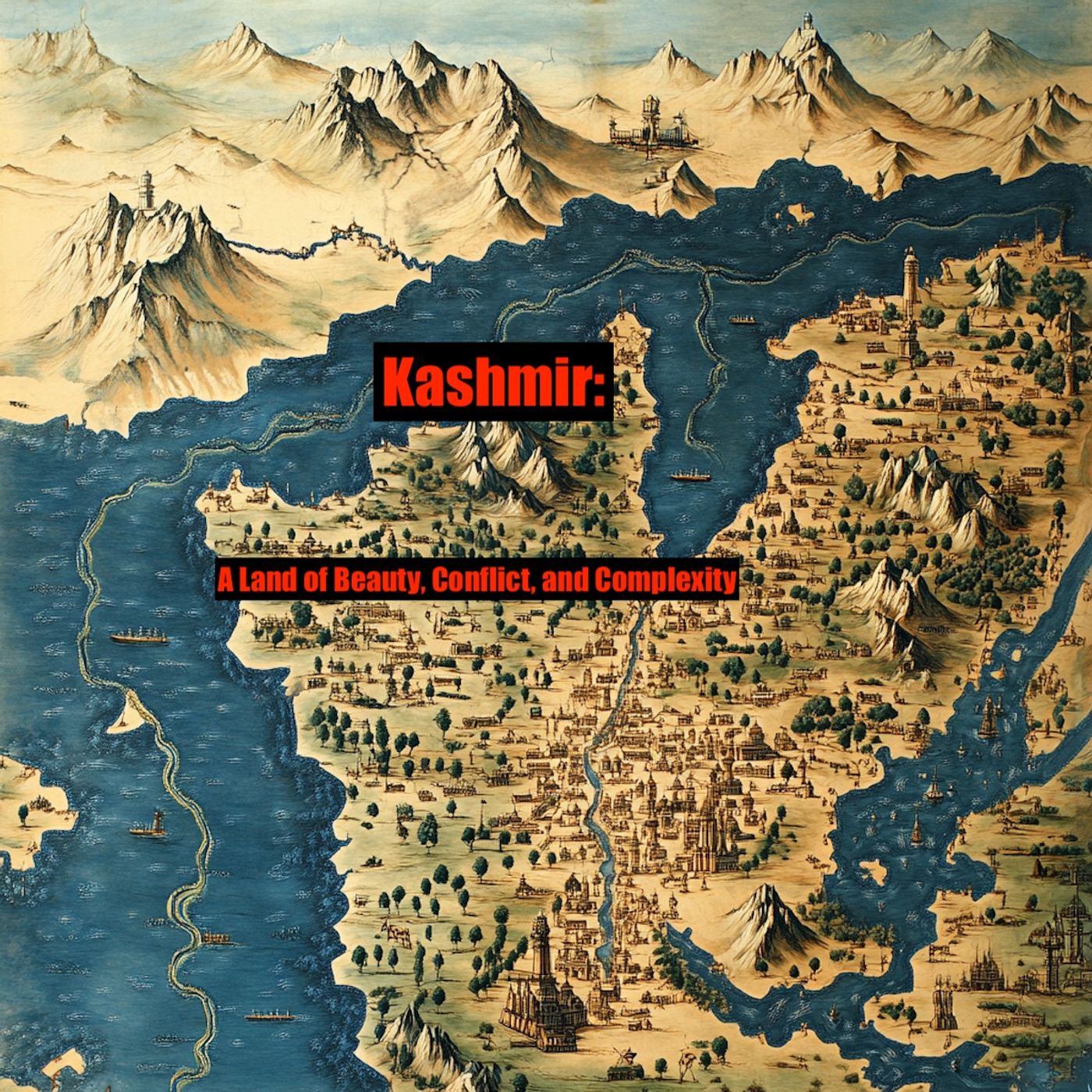
Kashmir:
Hosted by Quiet.Please · EN
Kashmir: A Land of Beauty, Conflict, and Complexity
Kashmir, a region of breathtaking beauty and complex geopolitical significance, has long captivated the imagination of travelers, politicians, and scholars alike. Nestled in the northern part of the Indian subcontinent, Kashmir's story is one of natural splendor intertwined with centuries of political strife. Known for its lush valleys, snow-capped mountains, and crystal-clear lakes, Kashmir is not only a prized geographical jewel but also the center of a prolonged political struggle that involves India, Pakistan, and to some extent, China.
In this comprehensive exploration, we will delve deep into Kashmir's geography, rich history, and the long-standing political troubles that have shaped the region. We'll examine the most recent developments and consider the impact on the lives of millions who call this contested land home.
Geography of Kashmir: A Tapestry of Natural Wonders
Kashmir sits at the northernmost tip of the Indian subcontinent, bordered by India to the south, Pakistan to the west, and China to the east. The region is an integral part of the larger territory known as Jammu and Kashmir, which includes three main divisions: Jammu, the Kashmir Valley, and Ladakh. Each of these areas possesses unique geographical features that contribute to the region's diversity and strategic importance.
The Kashmir Valley: The Heart of Paradise
Perhaps the most famous part of the region, the Kashmir Valley is renowned for its verdant landscapes and mild climate. Nestled between the Pir Panjal Range and the mighty Himalayas, the valley stretches over 135 kilometers in length and 32 kilometers in width, forming a bowl-shaped terrain that has earned it the moniker "Paradise on Earth."
The Jhelum River, originating from Verinag Spring in the southeastern part of the valley, serves as the lifeline of this region. As it meanders through the valley, the Jhelum creates a network of tributaries and lakes, including the famous Dal Lake and Wular Lake, the largest freshwater lake in India. These water bodies not only provide scenic beauty but also play a crucial role in the region's ecology and economy, supporting agriculture, fishing, and tourism.
The valley floor, situated at an average elevation of 1,850 meters above sea level, is blanketed with saffron fields, apple orchards, and coniferous forests. The surrounding mountains, reaching heights of over 5,000 meters, create a natural fortress that has shaped the region's history and culture.
Srinagar, the summer capital of Jammu and Kashmir, lies at the heart of the valley. This city, with its distinctive houseboats, intricate Mughal gardens, and bustling markets, serves as a cultural and economic hub for the entire region.
Jammu: The City of Temples
To the south of the Kashmir Valley lies the Jammu region, which presents a stark contrast in both geography and culture. Unlike the valley, Jammu...
Kashmir, a region of breathtaking beauty and complex geopolitical significance, has long captivated the imagination of travelers, politicians, and scholars alike. Nestled in the northern part of the Indian subcontinent, Kashmir's story is one of natural splendor intertwined with centuries of political strife. Known for its lush valleys, snow-capped mountains, and crystal-clear lakes, Kashmir is not only a prized geographical jewel but also the center of a prolonged political struggle that involves India, Pakistan, and to some extent, China.
In this comprehensive exploration, we will delve deep into Kashmir's geography, rich history, and the long-standing political troubles that have shaped the region. We'll examine the most recent developments and consider the impact on the lives of millions who call this contested land home.
Geography of Kashmir: A Tapestry of Natural Wonders
Kashmir sits at the northernmost tip of the Indian subcontinent, bordered by India to the south, Pakistan to the west, and China to the east. The region is an integral part of the larger territory known as Jammu and Kashmir, which includes three main divisions: Jammu, the Kashmir Valley, and Ladakh. Each of these areas possesses unique geographical features that contribute to the region's diversity and strategic importance.
The Kashmir Valley: The Heart of Paradise
Perhaps the most famous part of the region, the Kashmir Valley is renowned for its verdant landscapes and mild climate. Nestled between the Pir Panjal Range and the mighty Himalayas, the valley stretches over 135 kilometers in length and 32 kilometers in width, forming a bowl-shaped terrain that has earned it the moniker "Paradise on Earth."
The Jhelum River, originating from Verinag Spring in the southeastern part of the valley, serves as the lifeline of this region. As it meanders through the valley, the Jhelum creates a network of tributaries and lakes, including the famous Dal Lake and Wular Lake, the largest freshwater lake in India. These water bodies not only provide scenic beauty but also play a crucial role in the region's ecology and economy, supporting agriculture, fishing, and tourism.
The valley floor, situated at an average elevation of 1,850 meters above sea level, is blanketed with saffron fields, apple orchards, and coniferous forests. The surrounding mountains, reaching heights of over 5,000 meters, create a natural fortress that has shaped the region's history and culture.
Srinagar, the summer capital of Jammu and Kashmir, lies at the heart of the valley. This city, with its distinctive houseboats, intricate Mughal gardens, and bustling markets, serves as a cultural and economic hub for the entire region.
Jammu: The City of Temples
To the south of the Kashmir Valley lies the Jammu region, which presents a stark contrast in both geography and culture. Unlike the valley, Jammu...
1episodes
Episodes
Newest first