Loading summary
Transcript147 lines
- [00:01]
A
Guys, thanks for helping me carry my Christmas tree.
- [00:03]
B
Zoe, this thing weighs a ton. Drew Ski, lift with your legs, man. Santa. Santa, did you get my letter? He's talking to you britches. I'm not.
- [00:10]
A
Of course he did.
- [00:12]
B
Right, Santa, you know my elf Drew Ski here. He handles the nice list. And elf, I'm six' three. What everyone wants is iPhone 17 and at T Mobile. You can get it on them. That center stage front camera is amazing for group selfies, right? Mrs. Claus.
- [00:26]
A
Hi Mrs. Claude Claus, much younger sister. And AT T Mobile, there's no trade in needed when you switch, so you can keep your old phone or give.
- [00:33]
B
It as a gift.
- [00:33]
A
And the best part, you can make the switch to T mobile from your phone in just 15 minutes.
- [00:37]
B
Nice. My side of the tree is slipping. Kimber, the holidays are better. AT T Mobile, switch in just 15 minutes and get iPhone 17 on us with no trade in needed. And now T Mobile is available in U.S. cellular stores with sweet monthly bill credits for well qualified customers plus tax and $35 device connection charge credits and imbalance due if you pay off earlier. Cancel financing agreement. 256 gigs, $830 eligible for it in a new line. $100 plus a month plan with auto fees required. Check out 15 minutes or less per line.
- [01:00]
A
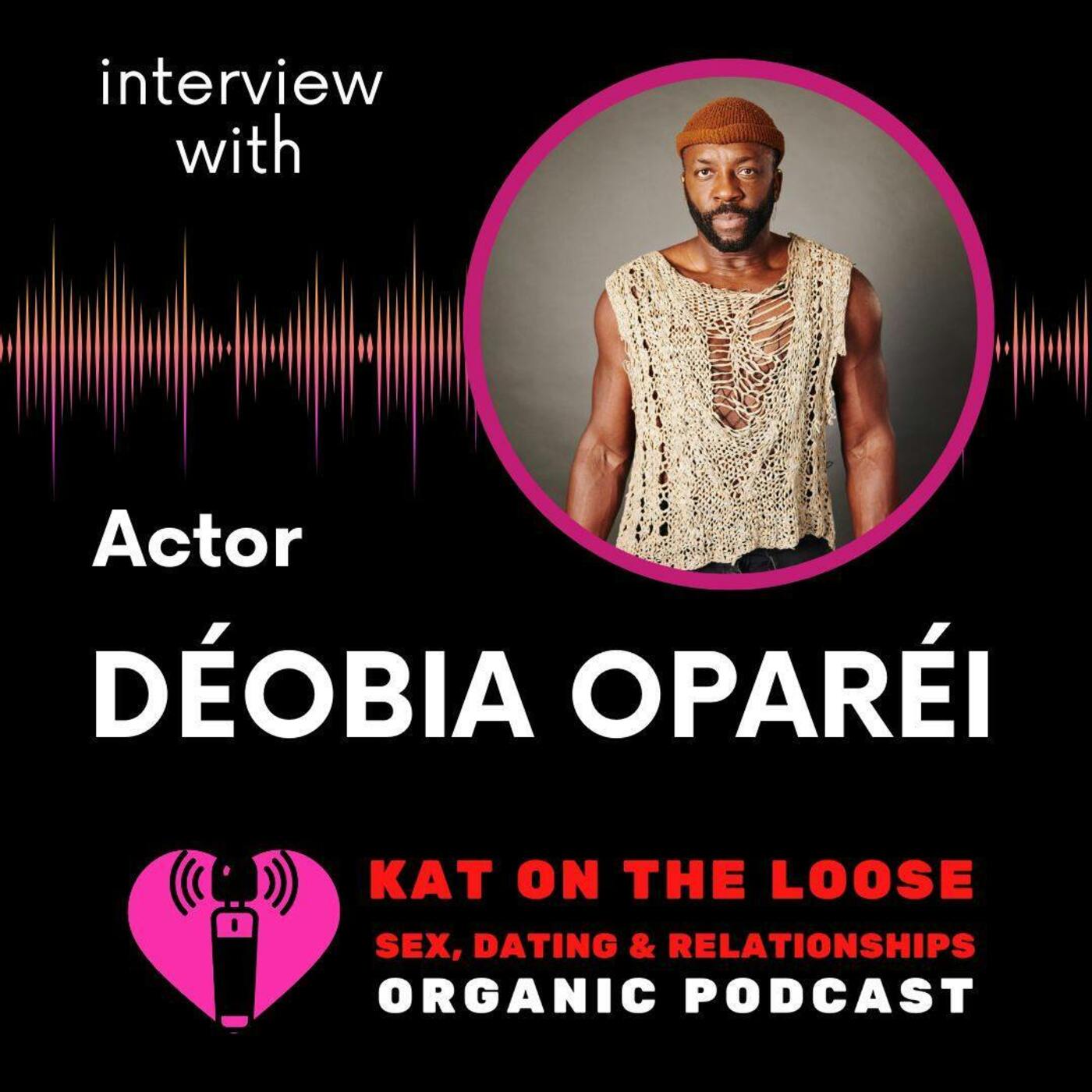
Visit t mobile.com My guest this week, British born Nigerian actor the Obia Opari has starred in some iconic shows such as HBO's Game of Thrones, Netflix, Sex Education and Marvel's Loki and also some cinematic blockbusters such as Pirates of the Caribbean drama Joe Mangi and Guy Rich's thriller Wrath of Men. Diobia began his career in theater at the Royal Shakespeare Company and is a published Royal Court Theater playwright. I met him a few years ago at the Soho House when I was doing an actor's workshop and I fell in love with his work and his energy and I was trying to get him on the show for the past two, three years and I am so, so happy that he was visiting la. Cuz he goes back and forth between London and LA and he was in LA and he finally said yes and found a little time in his schedule and we had such an incredibly fun, nice conversation. Diobia is absolutely amazing and whether you're an actor or not, whether you're interested in becoming an actor or not, this is a really fun, very informative, very very, very, very nice conversation with the super talented actor D. Obia. I am so honored and so grateful that he came to do this interview. I hope you guys really, really Enjoy it. Today's episode of Cat on the Loose is made possible thanks to a fantastic local family owned business here in Los Angeles. Gold Standard Builders. A licensed general contractor design and construction company with a passionate team delivering great service, quality results and very fair pricing. They pay great attention to detail. The owner, Adam, is super hands on in all the projects they make and this is why their clients keep coming back for more. So if you have a home in the greater Los Angeles area, you're thinking about doing some remodeling, maybe your kitchen, maybe a bathroom. Now summer is coming. A lot of people want to have their backyards looking amazing for the summer. They do it all. Even. Even if you had some damage from all the crazy rains we've had. These are the guys you can completely, completely trust. And they offer free consultations and free estimates and I absolutely love that. No catches. Give them a call 1-800-469-9189 or an email infooldstandardbuilders.com check out the beautiful work they do on the website gold standardbuilders.com this is a really great one for my New York audience. So guys, listen up and write it down. New York City Wellness. The very best place in New York for physical therapy, chiropractic services and beyond. They have an incredible team of experienced physical therapists, acupuncturists, chiropractors, podiatrists, sports medicine specialists and internal medicine specialists who are dedicated to helping you recover from any pain, injury or discomfort. Find high level of success in their treatment services, advanced technology and methods. Two fantastic locations, one in Midtown on Madison Avenue and one in Downtown on Greenwich Street. Check out their website nyc/wellness.com and make your appointments today. There is no reason to be in pain. Right? I'm gonna even gonna give you guys the phone number to make this easier. 212-682-6620. For Madison and for Greenwich, 212-374-0150. The OBIA welcome to Cat on the Loose. It's such an honor to have you on the show.
- [05:17]
B
Thank you.
- [05:17]
A
As you know, I've been trying to get you here for a few, a few years now. I think it's been three years because time goes by so fast. I'm not sure but I think it's been three years. I did a we were saying off camera, I went to one of your acting workshops at the Soho House about three years ago and I fell in love. Even more than I already loved your work. I fell in love with your workshop.
- [05:44]
B
Thank you.
- [05:45]
A
Because you're just really, really fantastic at what you do other than being a great actor. I don't want to call you you an acting coach because you're so much more than a coach, but I fell in love with your acting workshop. It was a life changing experience to me.
- [06:00]
B
Oh, wow. Thank you.
- [06:01]
A
Really was.
- [06:02]
B
And I see that world. I mean, that's why I don't call myself an acting coach. And for me, I come from at a very different paradigmatic direction, journey. I think that the way that we've built the pedagogy or the teaching of acting in the west is very. It's never agreed with me and I never went to drama school. And so for me, I come from a tradition of storytellers. In ancient Africa, those were called griots. And the griots would be the storytellers of the clan. And they would remember the lineage of everybody in the Klan going back hundreds of years. And they would tell the stories, the biggest stories. Who was the greatest wrestler, who was the most amazing farmer, who, you know, was the wealthy. All of these great stories of the wars and the battles and, you know, in a very kind of Homer. Is it home erotic as in Homer or homoerotic, but as like epic poetry in terms of Homer, you know, way back before, way before the Greeks, there were these wonderful stories. And I come out of that tradition. And the way that I work is as somebody who is. I have a good eye and a good ear and I don't believe acting can be taught because I didn't go to school, but I do have a good eye. And I know how to open someone's gate. I know how to jailbreak through to that space where they feel a sense of, oh my God, oh, wow, I'm somewhere else, you know, and it also frees me. And so for me, I mean, whether you call that a creative doula, like a creative midwife or something, I'm not sure. But it's definitely not a coach. Also, when I say it's not coach because I'm in the game. I have skin in the game. And skin in the game for me means I'm also growing, I'm also evolving. I also have to come to the mat, as it were, you know, and submit and surrender. And so I'm not coming from a place in my workshops of I'm somebody who knows it all, that it can pass through me to liberate others. And that liberation liberates me.
- [08:17]
A
I love that. And I completely agree with you. I personally don't think acting Is something that you teach someone. You either have that bug and that thing within you, the flame. But yeah, once, at least for me and all of my friends that I took, they all agree there were actors there, all kinds of levels. And they all say like once they get in touch with, with you, like, yes, you open the gates of wanting to act and put the emotions out there. It is definitely a life changing experience. But let's start from the beginning for people that don't know you. Yeah, but I know a lot of. We're going to talk about your fantastic body of work, but let's start from the beginning of your career. It was acting something that you always wanted to do from the get go. Did you always feel like that's it, that's my calling?
- [09:03]
B
I don't know if I knew then at such a young age that it was something that could be a calling, but I think it was something that I always felt did something for me that nothing else did. Like, I loved words and I always found it, my facility for words just came quite easily and I took it for granted. And you know, my mom was incredibly perceptive. And so from a very young age, from 5, 6, she was actually enrolling me in acting classes when I was about 6, 7. And there was a place, there is a place in London called Drury Lane and there was a kind of famous. I don't know if she probably still is around, but her name was Anna Sher and my mom used to take me to her classes. And it turned out that a lot of those people who would go to those classes ended up being in movies like all these years later. So she was quite reputable. And I just, I just. Something about it was very freeing. And then when I got into school again, I attracted a really great, I'm gonna say attracted because I wonder if these things are about attraction, you know. And this, this teacher in my drama school. Hi Mrs. Brett, I hope she's still around, or Ms. Brett there. But she was great. She just like took a hold of me and under her tutelage, whenever it was drama, I was the one who was helping her produce the shows, direct them. If I wasn't the lead, then I was, you know, a great role in them. And so straight away I was given this. And then she said, look across the street, there's a. There's a youth theater. And. And I think you should go. I was about 13 and I went and I ended up going almost every night till I was 16. It was. Changed my life. And then from that I Just felt straight away, I was about 14, I said, this is what I'm going to do. But this was. It was all exceptional moments in my life. Exceptional people as well who came in and said, take this direction. And I took that direction. And I was touring with this youth theatre company. We were touring the Czech Republic with plays at like 15 years old, touring Eastern Europe. And I was. I'm from this very working class place in London, and I was going on tour with and being introduced to these Great writers at 13, 14, Chekhov. And I'd already been in, quite into Shakespeare at school, but also African writers. Growing up in the uk as a black person, it was great finding out. And it was there that I found out by people like James Baldwin, Wallace Shoyenko, really great playwrights. And that all changed my life. So by the time I was like 16, I dropped out of school and went, okay, I'm ready to become an actor. Yeah, I just saw myself as that.
- [11:49]
A
That's amazing. And you worked in some incredible franchises. Very, very, very famous, worldwide successful box office franchises. For people that don't know, maybe now they're listening, you guys can go and Google his name and look, you're gonna see his face. You're gonna be like, oh, yeah, I've seen him. And it's interesting because you look so, so different in each character.
- [12:18]
B
Yes.
- [12:19]
A
You are a chameleon. It's incredible. You did Jumanji, you did Pirates of the Caribbean, you did Alien, and of course we're gonna talk about one of the most famous of them all, Game of Thrones.
- [12:34]
B
Okay. Right, Yeah.
- [12:35]
A
I mean, you did all this fantastic franchises. Can you tell us a little bit? How did you get into all of that? From theater, jumping into all of these.
- [12:47]
B
Fantastic movies, really auditioning. Really?
- [12:50]
A
It starts by, like, just auditioning.
- [12:52]
B
Well, it starts. No, it starts by doing all the things I said before, which I think is really, for me, accrued that kind of. What do you call it? I'm not sure what that word is. I had all of this stuff in escrow because I could walk out in the world and know that I was an actor. I didn't go to drama school and I didn't go to university and I didn't go to college. And I really credit those youth theaters that I went to that were in rundown areas, you know, poor areas run by really dedicated theater practitioners. Then instilling in me this. This. Even though I had a lot of fear, you know, it wasn't like I was walking around going, ah, because I was, you Know, auditioning with people who'd gone to the Royal Academy of Germanic Art, Juilliard, who come out of Cambridge, you know, who had been fast tracked through private schools and all these things. But I always knew that I was. That I. That I had a right to be there. So when I. When I left.
- [13:54]
A
Wait, you said something so important. I'm gonna interrupt you. I love that you said, I always knew I had the right to be there. Yes, I love that. So you always had this confidence.
- [14:08]
B
I don't know if it. It didn't feel to me like confidence because I had a lot of fear. I remember when I got into the Royal Shakespeare Company and that was a big thing because I had been doing theatre, I'd been doing professional theater, and I'd got. It's called the SAG card here. Screen Actors Guild was very similar to the Equity card. Then I got into the union when I was like, 18, quite early, and. And then I got into the Royal Shakespeare Company and that was like, everybody who was. Everybody that you see on TV now was there and. And I just felt like a fish out of war. I felt so scared. But something in me just knew that even as scared as I was, you know, I'd never studied Shakespeare, but I knew I could do it right. Just knew it and. Because I had a feel for it. But I. But I knew, even though everybody was there and I felt, you know, I was absolutely fearful, something in me just said, just stick it out. It's hard, but stick it out. And in terms of. Stick out the fear. And. Yeah, so I started doing. In that world of getting into theater, and it was from that theater that I. You know, casting directors come to shows and so they see you and then they ask, could, you know, like, him to audition for this or stuff like that. And so I would audition for, you know. And I also think in London at the time, in the uk, at the time, you know, a lot of American shows would come out. Movies and stuff would come out to the UK to cast.
- [15:45]
A
Oh, yeah.
- [15:46]
B
Oh, yeah. Because one they. I think they see British actors as children. Cheaper.
- [15:50]
A
Oh, really?
- [15:51]
B
It's different union, you know, like Screen Actors Guild, you've got to pay more. You've got to pay into their health. You've got to pay Equity. Sorry, they're not so good. Not such a good union, you know. But. But. But also, I think that when you're kind of aligned in that space, then you kind of do attract those things. And. But I. To be honest, I mean, listen, I love all that Stuff, I loved doing it and, you know, to work with people like Baz Luhrmann and Tim Burton, you know, the Russo brothers and really great directors, David Fincher. But I never felt, for me that I have really started working yet. For me, I haven't felt that. It's only as I'm starting to create my work and write and also, in a way, step out of plain, just archetypes. A lot of that work for me, I feel, isn't very hard for me, you know, and I understand what the commercial market is, but I also felt that I gave myself because, you know, it's like climbing the ladder in one's career. But also I. It cost me at the time because I don't want to play archetypes anymore. I know I can play archetypes, you know, and most of those shows, I'm playing an archetype.
- [17:08]
A
So if you got offered similar roles today.
- [17:12]
B
Yeah.
- [17:12]
A
Would you decline them?
- [17:14]
B
I think. I think where I am now is understanding that, because then, you know, it was like, oh, my God, yeah, great. I'm doing Game of Thrones. My God, I'm doing.
- [17:26]
A
Like you said, let's be honest. That's very prestigious.
- [17:28]
B
Of course. Yeah.
- [17:29]
A
It's very commercial.
- [17:30]
B
Yeah.
- [17:30]
A
Maybe it's not like a dream role in terms of the acting, the. But I mean, like, for a resume that's, like, insanely prestigious. It is.
- [17:40]
B
It is. And so there's the. Obviously, yes, there is, but. But I also think it's. I feel we're living a different. Very different world now, you know, And I feel that, you know, my parents, they came from Nigeria to London to the uk they came out of the Biafran War. There was a. There was a war in Nigeria in the 60s, and it was pretty horrendous. And my family are Igbo, and the Igbos wanted to cede from Nigeria and create their own state called Biafra, and that caused just a horrible civil war. So my parents came out of this kind of situation, and their mind was just, you know, just wanting to do well, wanting their children to do well. So I grew up with that. I grew up with the sense of be grateful for what you get and just go like that. And I think the world's changed now, and the world's changed a lot. Where one understands that. Well, certainly for me, I should say, I understand that not just I have every right to be here, but I have every right to create my own stories. I didn't have that when I was coming out the gate, you know, I felt I had to fit into the stories of the status quo. I had to fit into those commercial stories. Not that I don't have stories that are not commercial, but I felt like I had to fit into a certain mold. Now I understand. Oh, oh, you mean I can, I can write my own stories. I can, I can, I can tell that I can talk about the world from my point of view. I didn't have that then and I have that now. And so in having that now, I think it's incumbent upon me to not play archetypes. You know, it's very easy, you know, and I think that's across the board in the industry. It's like your type of big black male presenting. Here you are, you're the general, you're the monosyllabic, monotone, you know, blonde, big boobs. You're the cute, dumb blonde, whatever that is. All those, you know, that's what the business is until you get to be a name. And I realize, oh, no, I got to start saying no. I have to learn to start saying no and to create the yes.
- [19:49]
A
I love that no. And I hear you because I think stereotypes happen to, on so many different people. Like, even for me, ever since I've been a little girl, people say to me, you don't look Latin, you don't look Latin, you don't look Latin, you don't look Latin. And I said, what do you mean? You know, how are, what are we supposed to look like? Oh, you don't have black hair, you're not dark, you don't have a big ass. I've lost so many roles. To this day. I lose roles because I'm not a brunette and I'm just as Latin as any Latin actress. So I same. I keep fighting the stereotypes because it's not about like, what we look like.
- [20:30]
B
Yes.
- [20:30]
A
So I completely understand how you feel. And I see that happening to so many different people from so many different backgrounds. And I, I love that you're saying that because I think as storytellers, and we are other than actors, we love writing and we love telling. So we gotta keep fighting for it as much as, of course, let's be honest, sometimes we take commercial jobs because they pay really well, of course, and it gives you like fantastic credit or I on IMDb and, and blah, blah, blah, blah. But when we are telling stories, we also gotta fight for, you know, just to play something that we want to play for whatever reasons that it doesn't have to be the stereotype of what people want you to look like, you know, So I love that you're saying that. And I want to talk about. You do have a project that you wrote.
- [21:19]
B
Oh, yes, I did write a play. Yes, I did. I wrote a play. Yes. For a theater called the Royal Court in London. And. Yeah, well, I wrote that play. And so when I said that, I didn't know I could do that. I did know I could do that, but I wrote a play a little while ago now, and it got put on. It got produced. Really great theater, and I love that experience. And what I did was I was quite spoiled. You know, the play got on very quickly. I wrote it. The Roll Call is a prestigious theater, and I was a very sport. I was kind of like, well, why isn't this play transferring to the West End? The West End is like the British version of Broadway. And I was impatient, and I was, like, talking to the. The artistic director at the time. Why isn't my play transferring? And I literally. I got him to get me a meeting with a guy called George C. Wolf, who actually directed. I think George Seawolf directed American Fiction and a bunch of things. And he was running a theater in. I forgot the theatre he was running in New York. But I met him, and I was. Because I was like, I wanted to get my play on, and he met me, you know, and he was like, yeah, yeah, but I think your play is very London, and I don't think we can, you know. You know, it was very encouraging, but I. But when I look back on all that now, I just go, God, she was just so spoiled. Because I'd come out the gate as an actor, and then, you know, my first movie was Alien 3. And then it was this. And then it was. It was always projects that were quite, you know, really good TV stuff. And so I just thought, you know, like, I'm not waiting another seven, eight years as a writer to get my. And so what I did was I ran back to acting. You know, I ran back to movies. I think I did that. And then I ran back and did some schlock movie with Wesley Snipes. You know, I ran back to do. I know it was. I think it's called Seven. It's on DVD now. Straight to dvd.
- [23:17]
A
Guys, I never thought I would say this, but this Black Friday. Instead of buying more stuff I don't need, I decided to invest in my sex life instead. We all know Black Friday is about deals, but what would you rather do? Spend hundreds of dollars in stuff you don't need or 69 bucks on improving your sex life. Yes. @beducated.com Real Talk no one ever really teaches us how to be amazing in bed. We're just supposed to figure it out somehow, right? Well, that's exactly what I thought until I found Educated. I started exploring their courses because I wanted to understand not just pleasure, but connection. And it completely changed how I see intimacy. I learned simple, real techniques that make you more confident, more in tune with your partner and honestly more empowered in your own body. Beducated is a safe space for all. And that's my favorite part. No matter relationship status, sexual orientation or gender. So if you're ready to level up your love and sex life solo or with a partner, go to beducate.me/cat69. That's my code, Cat K A T69 to get 65 off the yearly pass. That's their biggest discount of the year and it's completely risk free. 14 day money back guarantee. So go to bedjukait me Kat69 and give yourself a gift that will last.
- [24:39]
B
But that's kind of where, you know, and I forgive myself for it. But now I realize, you know, I kind of. And people then at the time was like, do you know how big it is to have a play on the royal court? This is huge. Your first play. It's getting produced, it's getting published. But in some ways I didn't kind of know. Not that if things had come to me easily, that come quickly, they came very fast. Very, very fast. And so it's only now that now I'm. That I'm writing and I'm writing a lot now that I understand, you know, because I did, I did, I had my glut, you know, I did the movies and still am, you know, but you know, I've been working with big names, so called big, you know, I can't stand that term big name. You know, it's like we're all big names, right? But, but in terms of, in the industry and realizing, oh, to be honest with you, is that all there is? Is that. And often when you're working at the highest level, it's those people who are, I wouldn't say the most humble, but the most focused on the work, not the ego, you know, so it's projects like Game of Thrones and stuff where you're working with real artisans. You know, everyone's brilliant, everyone's really great at what they do, the costume, the props, you know, it's not, it's not, it's not about this. It's Just about creating something, really. And that's where I went, oh, but that's who I am.
- [26:00]
A
Teamwork.
- [26:00]
B
Right, Teamwork. But also it's, it's, it's not just about delivering something to get a paycheck or to get your. Like you're really connected to it. And, and, and it's coming from somewhere, you know, you want to tell stories. And I realized, oh, my God, that's who I am, so why aren't I telling my own stories? And then I had to get over the fact of going, it doesn't matter what platform it's on. It doesn't matter if, if it's not at the most prestigious theater or it's not the biggest budget, you know, if it's just 200 and if it's just a million or whatever, it doesn't matter. It's like, what stories have you got to tell? Because you have to tell them. And that really got me back writing. That really got me to start pedestalizing. Probably not the right word. It's not. Probably not a word. But putting on a pedestal the kind of big projects that I'd done because I saw that, that at the heart of it, it's all about telling stories.
- [26:55]
A
Let's take a really quick break and talk about very easy, quick fix for a problem that a lot of us have. Super tired eyes. If you're crazy busy like me, some days, there's no amount of makeup in the world that can hide your tired eyes. And this is why I partnered with Mare Marine Collagen eye gels and collagen facial masks. Dermatologist recommended with hyaluronic acid and pearl extract. A professional treatment for puffy eyes, dark circles and eye bags. Mare M ae eye gels are a fast and delicate fix for tired eyes. I love them. They're suitable for all skin types and also exfoliate tired skin. This is why I like them. Because some days, especially after long, long, long hectic work schedules, right, I wake up and my eyes are so puffy. I look at myself in the mirror like, oh my God, what I'm gonna do? You put them on for a few minutes and they depuff your skin so fast. You can get yours right now on Amazon or right on their website, iMarie.com I am, as in Mary A R E E.com Professional treatment for dark circles bags under your eyes. Super fast. Dermatologist tested for all skin types. I absolutely love them. And in the name of self love first, I invite you guys to check out one of my favorite Small business brands Soap Transform your bath rituals with A Rica, a line of luxurious organic soaps, essential oils and bath salts handcrafted in Los Angeles, California with the finest Moroccan ingredients. I love their tagline. Self care is not self indulgence, it is self self preservation. And this is what Orica is all about. Taking time for ourselves, reconnecting with bath rituals and staying at home. Treatments that make us feel amazing. I fell in love with their products when I met Sophie, the owner and she gave me a self care package last year when I met her at an event and I have been using their products ever since. Orica is named after the Eureka Valley in the High Atlas Mountains of Morocco where Sophie is from. Check out the website or I k a soap.com same name on Instagram Orica Soap and everything smells insanely delicious by the way. You guys are definitely going to love everything she makes. This is a really good one. For everyone that loves to play poker and everyone that is probably planning a trip to Las Vegas, I invite you to come check out the most fun private game in the city, held right inside Aria's VIP poker room. Even if you're not that into poker or new to the game, this is a great opportunity to network with businessmen, athletes and celebrities in a super exclusive environment. Mr. Beast and then Bizarian have played in it. Golf ball pros have played there. It's like an elite, exclusive social club, but also a really fun environment to play. Texas no limit. Hold them. It's blowing up. Definitely one of the hottest places in Las Vegas right now. But your name needs to be on the list in order for you to gain access. So make sure you send me a message through Instagram at Real Cat on the Loose or text me or Send me a WhatsApp at 1-310-692-0578 and I will put your name on the list. They also offer incredibly special comps that are available only to my guests. They will reimburse Aria hotel fees for up to $350 in case you decide to stay at the Aria Hotel. They will give you private transportation from the airport to your hotel and to the game. And they will give you access to to airfare deals for business and first class. I mean they will totally roll out the red carpet for you and you're going to have so much fun. Table 1 is the place to play poker in Las Vegas. Why do you think it's called Table one? Because it's the number one game in town, baby. I love that and I completely agree. Especially when it comes to theater, because theater is, like, so tough. It's a million times harder than. Than making movies. So congratulations. I think that's fantastic. But I gotta ask you, because when I told, you know, my audience and so many of my friends that I was gonna interview, people want to know, how was your experience working on Game of Thrones? Did you have fun?
- [31:57]
B
I did.
- [31:58]
A
You did two seasons, right?
- [32:00]
B
Yeah, two seasons. I mean, again, for me, it was just checking in, checking out, you know? You know. But I did have fun. I did have fun.
- [32:08]
A
Where did you guys show shoot in Europe, right?
- [32:10]
B
Yeah, Croatia. Spain, which was amazing.
- [32:15]
A
Pretty nice places.
- [32:16]
B
Oh, yeah, beautiful, beautiful. There was a beautiful castle somewhere in Spain, I think. Seville. Just stunning, just magical. And, yeah, it was. It was. It was a. It was a really fun experience. But, you know, it also kind of. I mean, I don't, like. I don't want to burst people's bubbles, but you see. You see things as well, which are like, really, like. I remember being with a couple of actors and, you know, it was just weird. Suddenly you go into a hotel and everyone's screaming. And I was like, but I've walked into hotels before. Suddenly everyone's just screaming at you, but they're screaming at you because of what they project onto you.
- [32:54]
A
You mean fans?
- [32:54]
B
Well, like, yeah, A day before, nobody was screaming at me when I was, and suddenly it got announced or something, and then everyone started screaming. And then I. I found that weird. I did.
- [33:03]
A
Really?
- [33:03]
B
I did. Yeah, I did, because I just felt like it. That's. It's. That's all about projection. Because I'm the same person, of course.
- [33:11]
A
I mean, if the the series, they have, like, yes, so many fans, and they see that you're, you know, shooting there and everything, they fall in love with you and they fall in love with the character. Of course.
- [33:23]
B
Yeah. Yeah. But fame. A lot. A lot of it is. A lot of it is projection, I felt.
- [33:28]
A
Oh, for sure. But you never had this happen to you ever before in anything else that you worked on.
- [33:33]
B
I think that was. That was another level. I think that was another level. That was. Yeah, I think because the show was such a juggernaut.
- [33:42]
A
Yeah.
- [33:43]
B
And. And that was like another level of walking to places and seeing people staked out. I mean, I did do a film. I did a Guy Ritchie movie a few years ago, and I got papped. And then I saw myself in the Daily Mail, and that was really weird. That was like. I was just walking into a trailer and it was like, Daobia Opera walks Into his. Like, I was just like.
- [34:06]
A
They took a picture of you? Yeah.
- [34:07]
B
And then it was like a. A whole page or half a page.
- [34:11]
A
And how do you feel about that? Doesn't. It doesn't affect you.
- [34:15]
B
Smoke and mirrors. It's the emperor with no clothes.
- [34:17]
A
I agree.
- [34:18]
B
You know, it's not. It's. It has. For me, the value that it has is attention. Yeah, that's the value it has, and that's where it's great when attention, that attention meets opportunity and there's something to say and a story to tell or something to offer. I think that's wonderful. And it's a beautiful confluence of fame or name, acclaim and, and the work. So in that sense, it does. It has great value. And, And I do think that there is something to do with cultivating. Even though we live in a24.7 media, social media world, there is something interesting about cultivating a sense of enigma and mystery about oneself. But whether. Whether who you are, I don't think you have to tell everything, and I don't think everything has to be known. And, you know, there is something attractive about, you know.
- [35:17]
A
Oh, yeah, I completely agree with you. I think it's a big part of our jobs that we have to use social media and be in the media. And like you said, usually the more attention you get, you get a bigger audience and it could lead to jobs, and that's our job as communicators. But, yeah, you can always keep something private and still have a private life. And it's a game. Right. We have to juggle and try to figure out how to.
- [35:48]
B
Yeah, but, but it's also not just about keeping a private and private life. For me, it's also about that, the, the, the embers, the, the, the ingredients of a story. It's important sometimes to keep things in the dark because things grow very powerfully in the dark. And this. And as much as I. And you know, it's a paradox too, because I think transparency is wonderful and I think that, you know, the transparency that I've seen online has been very liberating because you can find your community and your community can grow you. You know, when it, especially when it comes to the LGBTQ community, you can, you can find people go, oh, okay, great. And, and, and we are aligned politically and we. Oh, because that was very hard pre social media. So transparency and that stuff is great. But also the other is true too, is that you can grow things very powerfully in the dark. And the darkness is important. And this I, like, I read on Sometimes online, you know, there's this whole thing about, oh, that's so wholesome, that's so wholesome. But that's the whole thing is that, is that for me, stories and making great stories. You don't want it to be wholesome because it's not about being wholesome. Right. It's about everything. It's about the things that we turn bad, things that we term ugly. It's about nuance, it's about subtlety. And sometimes all of that gets lost when everything is here I am, you know, every day. And sometimes it's like the nuance, the quiet kind of multi dimensionality of what it means to be a being, a living being in the world doesn't mean that you can paint everything by colors and say, this is this emotion and that's. That there's contradiction, there's things that will not agree with you. Do you understand? There's madness, there's depression, there's anger, you know, there's joy, there's sex, there's. Do you get what I'm saying?
- [37:54]
A
Oh my God. Yeah.
- [37:55]
B
And I feel like social media, it's all about defanging that.
- [37:58]
A
Yeah.
- [37:58]
B
Let me defang. Let me wrap everything up into this kind of hygienic, bleached, sterile kind of. It's like that's, that's. Oh, yeah, I can't live in that world.
- [38:10]
A
I love that. I want to touch on a subject that is a lot more personal to you, but it's also something that I love that, that you put out there during your workshop. And I think it's so important.
- [38:24]
B
Yeah.
- [38:25]
A
We were. Obviously was an acting workshop, but you mentioned and you told your story, which is very public, that many years ago, I forgot the year you came out and you, you told the world that you're a very proud gay man and you told the story and that's the part of the story. Story that really touched me because I love people that are. I think it's one of the biggest lessons that we all learn is like to be our authentic selves.
- [38:53]
B
Yeah.
- [38:54]
A
Because so many times it's hard. Like say, this is who I am, this is what makes me happy. And, and when you do that, like it's a whole other world. Right. And you told the story in the class and it made me very emotional that one day. And of course I don't want to put words in your mouth any. You can tell the story again if you feel like it because it's such a beautiful story. How you decided, like, you know what? I'm and you're. By the way, guys, if you don't know him, please go to his social media. Go to my social media channels, look at the videos, because you're a very handsome man. You're huge. You're 6 foot 6, 6 foot 5. Right. You're very tall, very good looking, a very impressive image when you walk by and one day you decide, you said, you know what? I'm gonna wear a skirt, because that's what I love. I'm gonna wear whatever makes me happy.
- [39:42]
B
Yeah, I've changed a lot and evolved a lot since then and are constantly evolving. And I think sometimes, when not sometimes, I think that that's what being alive is. And often that's what opening oneself up is. And as I am continually opening myself up, I identify as non binary. I don't identify as a gay man because. And that was the George Floyd kind of time when that happened and those race riots, what was the catalyst for me was walking on the street in Los Angeles saying, black lives matter. And then as I said it, I could feel, oh, yes, but your life doesn't matter because you're here hiding and you're here not being honest about who you are. And then for me, that meant coming out as a gay man, because that was what was available to me. And as I've stood more and more in the river, because I wouldn't for me anymore call it about authenticity, but for the river, of being alive, of being a living being and understanding that we live in a culture, we live in a paradigm where we have to be identified by the physical. The physical identifies you, that makes you white, that makes you black, that makes you gay. And to me, I understand how that is just. Is just a construction and that my identity isn't within me. That for me, identity is out there and it's constantly changing. And in that, I also understood, as I've become so much more open, that for me, gender is a construct. It's constructed. And so for me also, as I've delved more into who I am in terms of ancestrally or where I've come from ancestrally, you know, in terms of indigeneity. And I don't mean for me, because if you know about Africa, it's incredibly. Especially Ghana, Nigeria, and those countries that have criminalized LGBTQ rights, it's incredibly patriarchal. But I mean, post colonial, pre colonial Africa, certainly my mother's people, in their culture, the Igbos, there was no word for gender. My mom constantly used to. I have three brothers. She constantly would Move between he and she constantly. Where is she? Where is she? Tell her dinner's ready. There was no. Because, you know, firstly, the language that Igbo speak was rewritten by a missionary. So the language that they speak has actually been Anglicized, the Igbo language. But pre that, I think Igbo and Yoruba, two different kind of ethnicities, had no word for gender, and gender wasn't chosen at birth. It was something that happened in your maturity, in your adolescence. This is pre colonial. And so that's all in me, but also an understanding that when I was coming out as an actor, I knew that this was racial capital. I knew that I could walk into a room and blow people away with yo, motherfucker. You know, I knew I could do all those voices. I knew I could do that. I knew I could play that. And so I thought, oh, if I'm myself, because I live in a very. I didn't have these words, but I understand it now because I feel like we live in a very mediocre culture. We look at people and go, oh, you're this. And we call you flamboyant. And there. Therefore, you can only play that role, which is bullshit. Right. Or, oh, you. You know, you sleep with men. Therefore, you could never be convincing enough on a. All that crap. And so I played that. I was playing that role in my life, you know, not to my friends, but when it came to casting directors, and I had certain agents at the time, he would say, take off this when you go. And in the room. Really? Yeah. Who would go. Make sure you.
- [44:04]
A
They would try to control you. And I understand the way you dressed and the way you portrayed yourself.
- [44:10]
B
I understood it because in a way, you do have to cut the garment according to the cloth, you know, not that you would walk. I would walk into the room completely wearing. If I'm going for a certain role. But. But. So I understood that. But also, it kind of bled into an understanding for the actor. You know, a lot of actors are in the closet. Not just, you know, a lot of actors.
- [44:28]
A
Oh, my God.
- [44:29]
B
I know, and I understand it because. Because.
- [44:31]
A
Because there's so much more than anybody, and it kills me, like this. This culture of hiding behind, like, not being able to be yourself. Yeah.
- [44:43]
B
Can I just finish off a point? That. That. That, for me, that was the stepping stone to be able to say, I don't want to play who I am in these movies or on TV in life. I've paid my dues. Right. I can transform into. You know, I have as it's called range. Right. I can, I, I can play. That's not a problem for me. So if I show up like this, that's. That's down for me. It was me telling. That's down to them. That's down to that culture. And. But, but, but also the reason why I did and have stopped calling myself a gamer, even though I love the gay community and you know, because I also found that it was very much not aligned with. With who I am. Gay. The kind of. For me, gay and heterosexual, they're both sides of the same coin. Of the same coin. And there's a kind of. Whether it's heteronormative or homo normativity, there's this alliance between the two that is that play kind of. I'm not sure what I'm trying to say, but. But I didn't find freedom in that. I didn't find freedom in that. And I think there's something more bold and something more not as. It's certainly not for me. Where I stand now is, is I'm. I, I'm walking into a space in a place where I get to be in the world and I get to discover this being that yes, someone may turn me. Whatever gender doesn't. Doesn't worry me. I can use every single kind of pronoun. I prefer cupcake, I prefer. I prefer beautiful, gorgeous, all those things. Right. Don't call me man, don't call me bro. But I just think that the world. World is changing because we're all waking up.
- [46:39]
A
Yeah.
- [46:40]
B
And realizing there are so many. You know, we, we live in this world where everything is called, with a heterosexual name, your uncle, your aunt. And it's. And everything's on this linear timeline. And I disagree with that. You know, I disagree with that.
- [46:54]
A
I do too. But I always feel. No, but I always feel every time I see you and every time on your workshops, you always read something really beautiful. Like you pick something like a poem or you say something out of your mind that I, you always send a message of acceptance. And, and to me that's like the, like you have a. Such a beautiful soul. Like it doesn't matter. Like you said, it shouldn't matter what somebody, whatever people want to call themselves. But it's always about like accepting who you are and being your most authentic self. And I think this is why.
- [47:32]
B
But I feel. I actually feel we're more than oneself. I feel that we change.
- [47:35]
A
Yeah.
- [47:36]
B
And I think authenticity. I think there's authenticity, but there's also being alive and I think they're two different things. I think, I think, for instance, you know, I'm reading this great philosopher with great. I mean, he probably wouldn't call himself great. I think he's brilliant. His name's a Chile, Mbembe and Cameroonian. And he's brilliant. And he talks about. I forgot the book out of the Dark. Recommend that book, out of the Dark. And he talks about how the ancient Africans, they didn't seek identity in their physicality, they sought relationality, relationality to the world. Everything had consciousness. This is years before quantum physics. Everything had consciousness. So it was a conversation. You were in a conversation with the cosmos. Your being was ever changing. It was in a conversation with that rock, with that bark, with that tree. You know, they knew that everything. Now, now we know that trees are social. Now we know that the rhizomes, or rhizomes, R, H I Z O M E S, you know, the roots that go right down into the. Into the earth are communicating with their cousins, are communicating with other family trees, literally, and feeding certain trees water that are going thirsty, that of the same lineage. It's fascinating. But these ancient indigenous people knew all that. And so their sense of being in the world was about their relationality with the world. And I feel that we've reduced everything down to, oh, you're this. Oh, you're wearing a skirt, so you're this. These ridiculous, reductive, infantile terms to describe this incredibly mysterious, mysterious, enigmatic journey that we're on called life. We reduce it down to the most ridiculous, to get what I'm saying. Definitions. If you walk like this, if you move like this, if you stand like that, you're this.
- [49:28]
A
Yeah.
- [49:29]
B
And I. I really, really reject that.
- [49:31]
A
I love that. That's really nice. What's next for you?
- [49:36]
B
What's next for me?
- [49:38]
A
Are you here, Are you based here now? Are you based in London? Are you back and forth, back and forth?
- [49:43]
B
I mean, I'm. I, I am here. I've really. I love LA, you know, LA is really good.
- [49:48]
A
Louisiana loves you.
- [49:50]
B
Louisiana loves you too. You know, LA's been. Louisiana's great. I feel like, you know, there's a real sense here. I mean, people, people down la. But I find that California, there is an air where you get to really explore and open your mind, you know, California is really open to that. And, And I've loved that. And the sun.
- [50:11]
A
Yes, the sun. Yes. Can't beat this weather.
- [50:15]
B
The weather, the weather. Are we lucky? I guess. Well, when I go, I'm not going.
- [50:20]
A
To Say anything about the weather in London, I promise.
- [50:25]
B
Where are you, babe?
- [50:26]
A
Here.
- [50:27]
B
Okay.
- [50:27]
A
Yeah, I live right here. Beverly Hills. I'm on la. I'm in California, girl. Yes.
- [50:32]
B
Okay. Do you love it?
- [50:33]
A
I love it. Yes. I cannot. Yeah, that's home. I love traveling, but, yeah, this is home.
- [50:40]
B
Wow.
- [50:40]
A
So you're hanging out. So if somebody wants to know, because, like I said, I'm a huge, huge, huge fan of your workshops. I think if anybody is in the la, because that's where you do the workshops.
- [50:52]
B
Well, I'm kind of also mobile, so I'll be spending some time in London.
- [50:56]
A
I'm.
- [50:57]
B
I'm getting. I've got some funding and I'm getting more for a film project. As you can tell, I'm tentative because I prefer to announce it in the. Right.
- [51:08]
A
Yeah, yeah.
- [51:09]
B
But, yeah, that's. Yes, that's. That's. That's happening. And so, yeah, London, Los Angeles.
- [51:17]
A
So if people want to find you and figure out, like, if you have any workshops coming up, how do they find you?
- [51:24]
B
Instagram.
- [51:25]
A
Instagram.
- [51:25]
B
Instagram, right now.
- [51:26]
A
Okay. I'm gonna put his links.
- [51:28]
B
Okay.
- [51:29]
A
On the link of this episode and also on my website, catonthelose.com so you guys can find him. And if you happen to be lucky enough to be in LA or London, I highly, highly recommend you go do one of his workshops. Because, like I said, to me, it was like just your energy and your message and just being around you, it's like, to me, was life changing. I love you. I adore you. It's such an honor to have you. Thank you so much for doing this, and I wish you all the success in the world. Congratulations on everything you do. You are absolutely incredible.
- [52:09]
B
Thank you.
- [52:10]
A
We did this finally, right? It only took me or three years to activate.
- [52:15]
B
Get you here, I think.
- [52:17]
A
So, like, with this Covid chaos, like time flies by. It was we. I remember. No, it was literally like the Soul House had just reopened. So.
- [52:28]
B
Yeah.
- [52:29]
A
I don't even know. It was like. I think it was like, almost. It was like, just about. I think it was the first workshop you did just, like, when they reopened. So I'm gonna. I'm gonna guess, like around three years.
- [52:40]
B
Wow.
- [52:41]
A
So I hope it doesn't take another three years to get you back. Thank you so much. Was such an honor. You are incredible.
- [52:49]
B
Thank you.
- [52:50]
A
I like. You know how they say in Hollywood, I'll see you at the Oscars? I'm sure one of these days you're gonna win one.
- [52:57]
B
I feel that.
- [52:58]
A
Yeah, I feel it. I feel it. I think it's in your destiny.
- [53:01]
B
Thank you.
- [53:02]
A
Thank you so much. You're incredible.
- [53:03]
B
Thank you so much.
- [53:04]
A
And I'll see you guys very soon. The Obia operation.
- [53:07]
B
Great.
- [53:07]
A
Take care. And before I let you go, you guys that know me know that I am a huge supporter of small businesses and small brands and I absolutely love Girly Alamode. Building a community for body positivity, self love and inclusion with very cozy, casual pieces that everybody can wear. Hashtag everybody's beautiful. They have the cutest hoodies. The Love Collection is out now with positive phrases such as love yourself, give me love, spread some love. Adorable, adorable T shirts, workout tank tops, very affordable gifts for you and for everyone that you love without breaking the bank. Check out Girly G I R L I e a la mode.shopping girlamode.com and on Instagram, Girly a la mode. Let's spread some love. Last but not least, before I let you go, those of you that know Cat on the loose know that one of my favorite places to shop for casual, cozy everyday wear is Girly a la mode. Building a worldwide community for body positivity, self love and inclusion. Everybodyisbeautiful. The Love Collection out now with a bunch of cozy sweatshirts, hoodies, beanies. One of my favorite pieces is the organic reusable tote. So many nice gifts for you, for everyone you love. And the name of the collection is the Love Collection. So many beautiful, adorable things. Go check it out. Girlyalamode shopping girlyalamode.com on Instagram girlyalamode G I R L I E a la mode and let's spread some love. Big shout out to the Burrata House. One of my favorite casual dining places in the heart of West Hollywood. They make authentic, delicious, fresh Italian food, sandwiches, pasta, salads with the delicious, delicious, fresh burrata on top. On one side, 61 South Crescent Heights. So if you're looking for a place that you can have a quick bite for lunch, dinner, takeout for your family, this is it. And I love, of course, supporting local businesses. So if you guys are in the Los Angeles area, West Hollywood, go check out the Burata house. If you guys want to see pictures, batah house.com on Instagram Bata House. I love, love, love their food so much. Everything is really, really yummy.