← Kat on the Loose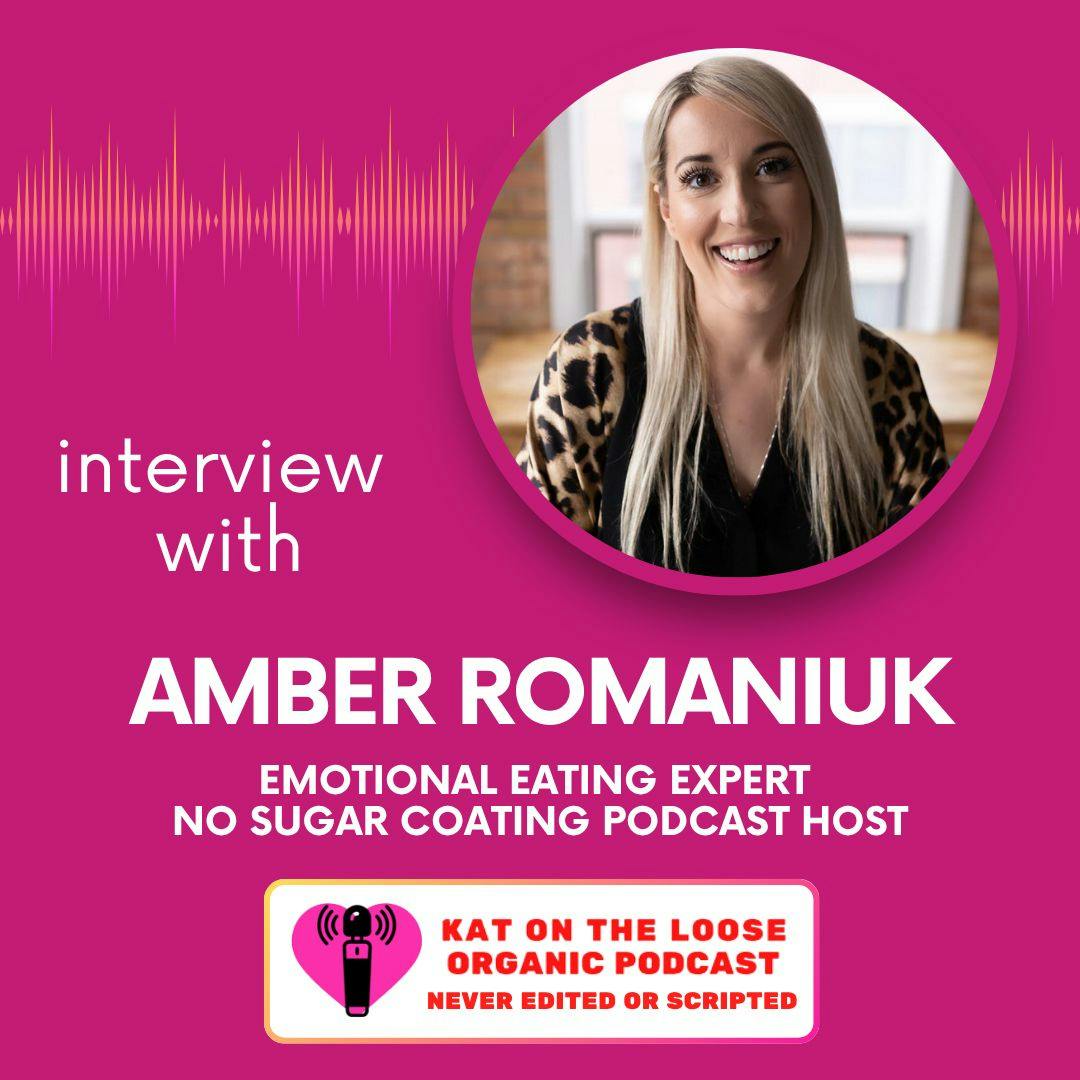
Kat on the Loose
BINGE, SHAME, REPEAT - BREAKING THE CYCLE OF FOOD ADDICTION WITH EMOTIONAL EATING EXPERT AMBER ROMANIUK
00:53:04
Loading summary
Transcript96 lines
- [00:01]
A
This is the way it feels to move through summer in Lululemon iconic aligned softness without the front seam for our smoothest look and feel ever, summer won't know what hit it. Stretch your limits in the non stop flexibility of the new Lululemon Align no line pant in select stores and@lululemon.com savor every last drop of summer with Starbucks. From bold refreshers to rich cold brews, the sunniest season only gets better with a handcrafted ice beverage in your hand. Available for a limited time. Your summer favorites are ready at Starbucks.
- [00:43]
B
I had been wanting to do an episode about eating disorders for the longest time because I think millions of people out there, men and women, have a very difficult relationship with food. And it's actually the first time I talk about my personal journey with binge eating, which was becoming a really bad problem in my life, especially during my very, very abusive marriage of 15 years. It took me a really long time to get over it to develop a good healthy relationship with food and feel better about it. And I brought an incredible woman, she's a major expert on the subject to help us with very practical ideas on how to get over food addictions. Amber Romaniuk is an emotional eating, digestive and hormone expert with 12 years of experience helping high achieving women create a level of body confidence, intuition and optimal health through powerful mindset, healing self care and overcoming self sabotage with food. So if this is something you are going through or you know, anyone that's going through, and I know the subject is always, always comes with a lot of shame, I know I was always very embarrassed to talk about it. So if that's your case, here it is. There is lots and lots and lots of help for you guys so you can overcome whatever food addiction you're going through and develop a healthy happy relationship with food. But before anything else, let's talk about sleep. Do you ever toss and turn because you're too hot, too cold, or just can't get comfortable? I used to, but now I have the perfect solution and you won't believe it. It's so amazing. Sleeping Dove is this new luxury comforter invented by an adorable real life couple who had the exact same problem. One of them was too hot at night and the other one wasn't as hot. But they wanted to continue sleeping together and they wanted a tech free solution so they came up with this ingenious patent pending design. Each sleeper has their own windows, one at the midsection and one at the feet so you can open or close it to keep Cool or cozy. Just where you need it. The comforters are made from luxurious 100% cotton that feel incredible on your skin. I'm super picky with my linens, and I absolutely love the way the Sleeping Dove comforter feels. These are all luxury materials. It's on my bed right now, and you know my dog is asleep right next to me. Right. I stay cozy all night, and when I get too hot, I just open a window. It's so easy. You can choose down or down alternative. Both are cozy, breathable, and naturally smart. It's perfect for couples, hot sleepers, expecting moms, and, yes, people that sleep with their pets. Right now, Sleeping Dove is offering a special discount for the month of June just for new customers. You get an extra 15% off your first order. Go to sleepingdove.com Treat yourself to the comforter everyone's talking about. You're gonna love it and change the way you sleep forever. Amber, welcome to Cat on the Loose. Such an honor having you here.
- [04:07]
A
Thank you for having me. I'm super happy to be with you today.
- [04:09]
B
I am, too. Because as we were saying on your fabulous podcast, no sugar coating, which I'm obsessed. I told you, I've binging, healthy binging on the podcast. This is such an important subject, and my team and I, we've been thinking about doing an episode about it. I never spoke about it publicly, and then when the universe connected us, I was like, oh, my God. You know, there is a reason for that. Let's talk about it.
- [04:36]
A
Yeah, definitely. It's a very important conversation that we should be having.
- [04:41]
B
Oh, my goodness. Yeah. So your podcast has been around way longer than Cat on the Loose. I think you said, what, seven years? Nine years.
- [04:49]
A
Nine years.
- [04:50]
B
Nine years. I don't know how you do it, but congratulations, because we know how much work it is, and like we were saying, it's no sugarcoating. You constantly talk about, how do you recover from binge eating? How did you do it? And you help lots and lots of women out there, because I guess that's the first question I want to ask you about your personal journey, because we talked about a little bit about my personal journey on yours. So for my audience, in case. I mean, I don't know if your episode is going to be before mine or not. Is the first time I actually said it publicly that I battled a major binge or I don't know if you call it eating disorder or, like, binge eating for many, many years during my super, super tough marriage to an alcoholic. And it took Me a long time to get over it and be healthy. And now, finally, it's way behind me. I feel strong enough to talk about it. Can you tell us? Journey from having an issue to actually becoming an expert and being able to help so many people out there get over it. Not get over it, but recover from it, I guess is the right word.
- [06:00]
A
Yeah. When they really break free and it's totally possible. So, yeah. So there's a couple key things that happened to me growing up that really shaped my relationship with food and my body. And the first one was when I was five. It was my first day taking the bus, and I get on the bus and all the older boys start calling me fat and ugly, and then the whole bus makes fun of me. So that was a very traumatic and hurtful moment that I, of course, stored in my nervous system. And I took that identity on for the next 20 years of my life. The second being. My mom was diagnosed with multiple sclerosis before I was born. And so I think part of her coping was using food. And then all the food in the world was always in the house, so I could eat whatever I wanted, whenever I wanted. So food quickly became an unconscious comfort coping strategy. And I think she compensated with a lot of the things she wasn't able to do with me due to her symptoms with food. And I think there was a lot of guilt there. And then I grew up very much like the only child who was like, I don't want to burden anyone with my struggles because my mom is struggling enough, and my mom and dad have enough on their plate. So I internalized everything. And then you hit your teens and you start, like, music and movies and celebrities, and you're like, why don't I look like that? What's wrong with me? There's something wrong with my body. So the body image trigger stuff starts, and then you find the diet, which is the fake solution they're trying to sell you, right? The lies and the diets. Once you lose weight, you'll finally be happy. And so then you're trying all these weird diets. And then my binge eating got very serious. In my early 20s, I had my first serious breakup. I couldn't eat. I lost weight really quickly, added two hours of exercise in a day, reached my quote unquote goal, weight that would fix everything. Nothing changed. Now my period is disappearing. I'm like, obsessed with looking at myself in the mirror for two hours a day, picking myself apart, and it was unattainable. And it was like this switch flipped. One day, so I went to a barbecue, I took an ice cream cake, but I was like, I'm not gonna have any. I'm just gonna have salad, because I was so restrictive. And then I ate ice cream cake. And then that triggered this, like, screw it. I messed up. I might as well eat whatever I want. So I had your ice cream cake, I had a burger. I stole the chocolate off the counter and went to the bathroom and ate the whole bar. And everyone's like, where'd the chocolate go? We wanted that for s' mores.
- [08:02]
B
It's literally what I used to do. Yeah, you have like a bite of something, and I used to be like, it. I might as well just eat everything that I enjoy because it was what made me so happy. Right?
- [08:13]
A
Yeah, yeah, yeah. That's that big dopamine, Hein? And that's the thing is diets teach perfection and an all or nothing mentality. And then when you can't be perfect, which isn't attainable, we do go into that fucking mentality. I don't care. I'm gonna eat whatever I want. I've had a bad day. I've had a good day. I deserve reward, whatever the triggers are. And so that catapulted me into a deep level of binge eating. Binging and purging and restriction. So it was like I would binge, like, a whole table full of food I was eating until I was so full I was sick. And for the most part, I was going to the organic store, trying to justify that that was a healthier choice. It's not a healthier choice when you're eating a volume of food most nights of the week.
- [08:51]
B
For me, it was kind of like just, Sorry to interrupt, but I remember, like, I would go to, let's say, McDonald's, right? Or taco Bell, and then I would get, whatever, three burgers. And then I would, oh, give me the Diet Coke, you know? Okay. Try to justify.
- [09:08]
A
I know, it's so silly what we'll justify to convince ourselves that it's not a big deal. Right? Right.
- [09:13]
B
Yeah. But how did you. How were you able to. So you were purging as well?
- [09:18]
A
Yeah. So I gained 80 pounds in four months. And then I started to purge because I was like, maybe this will help me not gain weight, even though it's very destructive. And it was just making everything worse. The purge is really the lack of ownership and responsibility, the ultimate lack of ownership and responsibility because you think, I'll just get rid of it if I binge. And so I Stopped doing that after some time of breaking that pattern down. And then what really catapulted me onto my healing journey was I started to become aware that I was binge eating and I've thrown the food in my garbage. And that particular night, you know, I'd always say I'm never going to eat out of the garbage. Like that's a low blow move. And that night I had some room in my stomach and I was laying there crying in pain. And I'm just like, I don't think I'm going to make 30 if I keep in these behaviors because I was very destructive with my body. And I'm like, well, if this is the last time I'm going to do this. How many times did you say that to yourself? This is the last time I'm going to do this. I might as well eat the cookies. So I went into my kitchen, pulled up my garbage, done through, ate the cookies, threw them out in the dumpster, and then went out into my back alley and dung through the dumpster to eat the cookies. And when that happened, I was like, who am I? Why is this happening? How did my life turn into this hellhole? I'm broke, alone, I have a crappy job. I don't understand why any of this is going on. And I'm just like crying in deep shame and embarrassment on my kitchen floor. But I needed that to happen because one of the reasons we stay stuck in these cycles is because we fear change, we fear unknown, we fear getting uncomfortable, and we sit in a state of denial. Denial that what we're doing isn't a big deal.
- [10:47]
B
Yeah.
- [10:47]
A
And we want the high, the dopamine reward from food. And so that really catapulted me onto the healing journey, which is a very physical, mental, emotional, energetic and spiritual healing journey. And there was many layers to that of, you know, we can get into all of that. But that's what catapulted me into healing, which then made me realize this is my purpose. This is why I came to this planet and went through this struggle. Because I'm here to help serve and help assist many women on this planet heal this and break free of it. And that's what prompted me to do the work that I'm doing to this day.
- [11:18]
B
Yeah. And I love that because I think the fact that we have these platforms right. And women all over the world listen to us and I know there's a lot of shame surrounding the subject because I was so embarrassed to talk about, I mean, I was embarrassed to tell people that my husband was abusing me because nobody would believe me. Like, what do you mean? He's this multimillionaire. You're living in these mansions, you fly private planes, you fly first class. You're buying this Birkins. Everybody thought like your life is perfect. Shut the F up. So I was so ashamed. Like if I tell people that and I'm thin, I was always thin, even when I was binging because I was super healthy. The rest of the healthy, if I can say that I would eat healthy the rest of the time. But I thought nobody's going to believe me. They're going to think I'm crazy. So I kept doing it. And tell me if you agree or in your case, but I think most people, and hopefully the girls out there listening to us, it will encourage them to get help. Because I think a huge part of binge eating or whatever behavior that you're self inflicting damage to your health and your body, it's a form of hurting ourselves. I don't know if it's punishment or I don't like me or I don't like my life. It's. That's something that. Because otherwise why would we do that to ourselves?
- [12:37]
A
Yeah, it is definitely a form of self loathing, self punishment and self hatred. That is literally the emotional connection to binge emotional eating, food addiction and binge and purge cycle. And there's this void, this lack of self love that we're trying to fill with food. And when we're feeling so much guilt, shame and embarrassment, whether it's the abuse that no one would believe you about or for me, like hating my body and not feeling good enough, those are really low frequency dense emotions that are heavy for us to feel and we don't want to feel that it's uncomfortable. So then we go to the food to get a temporary little pleasure euphoric response. We start thinking about eating the food and eating those first few bites and we produce so much dopamine that floods out of our brain and makes us feel good and gives us a break from the shame. Right. All of that. We've been through the trauma and in that moment it's like nothing matters but getting that little dopamine hit. But then that crashes right away. And then we have to still deal with all that shame, the guilt, you know, the bloating, the weight gain, like all of it. And then we have to also live life while we're trying to like struggle through this experience. So it's very exhausting and it's very Emotional. And I think that. Yeah, you're not alone if you're listening to this and you've been struggling to any level. But getting help, to me, is one of the most powerful things we can do, because this is a very complex, multilayered behavior, and it's not as cut and dry as having willpower or trying to do better on a diet. It's got nothing to do with any of that.
- [14:04]
B
Yeah, no, I totally agree. And I think each journey is very individual. Right. And like we were saying on your podcast, in my case, I would binge on two things. Like, for me, it was always carbs. Like, I love bread because it's a big part of my culture. So I would binge on so much bread and butter and sandwiches and sugar, which is something I never eat. Like, you talk about your. Your. The. The chocolate from those mornings. I would literally eat so much sugar. Yeah. It would make me sick. So sick. I would feel nauseous for, like, five days. And sugar is highly addictive. Right. I think I mentioned that on your podcast. I. I remember I used to work for a doctor, and I don't know if it's true or not, because I'm not a doctor, but one time, you see, said to me, sugar is almost as addictive as cocaine.
- [14:50]
A
Yeah, it is.
- [14:51]
B
So. So maybe somebody out there listening, they're like, oh, yeah, you girls are talking about. But how do you get over it if it's a di. It's not easy getting over an addiction.
- [15:01]
A
Yeah. And there's different levels of that because. And you're right, sugar is 10 times more addictive than cocaine and often will reach for sugar, because as soon as you start eating it, you want more. You're making your blood sugar spike and crash. It feeds the. The wrong bacteria in the gut, which makes you crave it even more. And then often women have a multitude of hormone imbalances that will make you crave sugar even more. And all this becomes emotional eating triggers. And then the emotional connection to sugar cravings is lack of joy and sweetness in life. And so we're literally reaching for it because we're lacking internally. And then the carbs are really a comfort thing. So I'm lacking comfort, and that's why I'm reaching for them. And so I think, you know, one of the things we need to start understanding as we start wanting to heal this is, why am I craving what I am? And understanding the emotional and physical and psychological reasons for our cravings. And that food has literally been designed to be addictive. So that we can't stop eating it, we lose control, we keep buying it, and then eventually we end up unwell, and then we need medication. And it's like pharma and food are really in bed together with all of this. Right. So it's a very deep, like, kind of fabrication that really contributes to these behaviors.
- [16:07]
B
Oh, my God. Yeah, totally. And I remember the other day last weekend, I said, don't watch tv, which is something I rarely, rarely do. And remember that movie Legally Blonde? Right. It's one of our favorites. When the guy breaks her heart. In the beginning of the movie, she's sitting. No, like, whatever. She finds out he's engaged, she's at Harvard, and she's sitting there. Whatever she is. I forgot, like, eating ice cream. Like, she has a huge box of bonbon. Whatever it is she's eating. And this is like the stereotype we have in our heads. Like, if something goes wrong, I'm gonna go for the pint of Ben and Jerry. I'm gonna get a box of chocolate, because that's going to heal my pain for now. But actually, if you think about it, it just makes things worse because now you' heart's still broken and you're causing horrible damage to your body, and very likely you're going to wake up feeling, like, after the sugar rush. But it's perpetuated in movies, in culture, and everything that we watch 100%.
- [17:06]
A
It's really programmed into our brains. And it's so funny. I recorded my podcast earlier and I literally talked about that, and I'm like, what's the movie where she gets broken up with and then she's eating on her bed the chocolate and ice cream, like, oh, yeah, Legally Blonde. And then, I mean, girls, how they, like, try and fatten the one up, and then she can't fit into her dress. And then we. Sorry, try Sears. Like, they're so belittling to her because she doesn't like. There's so many messages and programs that are planted into our subconscious mind. And then we wonder why we have body image issues and we don't like ourselves. And we're using food as a coping mechanism because it's literally encouraged. But then also, the diet. Diet and weight loss industry is then programming you that you have to, like, cut a bunch of stuff out and cut calories and eat less and exercise more and try these diets and try these injections and all these things to lose weight and look good, but it's actually amplifying your binge and emotionally eating behaviors and Making them worse, making your hormones worse, your mood, all of it. And then you end up, like, beating yourself up going, there's something wrong with me. I can't attain success with this diet or this protocol. But it's actually not you. You're not crazy. It's that these extreme external practices like counting calories, weighing and measuring your food, all that kind of stuff, it doesn't work. And it's not going to address the roots of why are you triggered to binge and emotionally eat? What are your actual list of triggers? Why do you not love yourself? What have your traumas and stressors been? Are you a people pleaser, a perfectionist? Are you last on your list? These are the kinds of questions we need to be asking ourselves. What are your food rules and food fears? Are there any foods you can't keep in your house? Because you know if they're there, you're going to lose control. For me, at first that was sugar, wheat, and dairy, and then it was, I couldn't even have nuts or fruit in my house because I would just eat it all.
- [18:49]
B
But I'm the same. I'm the same. Like, I know, and I admit it. Like, nowadays, if you walk in my house right now, I don't have a pantry. You know how people store all kinds of crap. I just don't do that because I know even if it's a healthy snack, like you said, if I have a thing of nuts there or whatever it is, I know, like 3pm when my energy crashes, I'm going to go there and I'm going to eat the whole thing. So I don't leave. Like, the only snack I live around, honestly, is blueberries. You know, yogurt, strawberries. Then I'll make, like, a protein shake. Because I had to be honest with myself and I know my limitations. I know if it's around me, I'm going to go and I'm going to grab it and I'm going to eat the whole thing in one sitting. Especially midday when I'm, like, stressed out and tired. So it's a really simple solution that worked for me. Like you said, I don't have it around because the likelihood that I'm gonna stop my work and get in my car and go to the store and get something that I'm gonna overeat is way smaller than if I just leave it around my house, you know?
- [19:52]
A
Right. And I. Yeah. And I think, you know, we all go through that phase where if that's what helps us feel safe and empowered, I think that's important. But to me, I'm like, I want to be to the point where I can have that stuff in my house and be so detached from it, because if I have a crash, I want to go, why am I crashing? Is my cortisol high? Is my blood sugar off? And I'm having an afternoon crash? What's going on hormonally that is contributing to that and then triggering me to want to go and do that? And why do I want to go eat the whole thing of nuts? Why do I want to do that? What is still there for me to get curious about and explore? And that's what I really had to work on, because I'm like, I want to be able to have those things in the house. And that's where it really came down to getting to the roots of the triggers and really understanding the depth of exactly what that was. And I had horrible hormone issues. Like, I was plugging postmenopausal at 24 because of all the stress that I put my body through. My cortisol is through the roof. It's your stress hormone. My thyroid was underactive. I had no progesterone. Oh, right. Like, so it really matters, your body, Right? Yeah, it really does. It does a number on your body. Even if you're just minimally emotionally eating, it has a significant impact. And so to me, that full freedom is you can have things in your house and you don't feel any call to losing control, but there's a safety zone.
- [21:06]
B
Yeah.
- [21:06]
A
And we all do the thing that feels good for us, but, yeah, I want you to be able to have that in the house and just be like, it's there. I'm gonna eat for nourishment. Otherwise, I'm detached from it. And that's what, like, why I call it food and body freedom. Because it really is about freeing yourself and having peace of mind so that you're not thinking about it all the time or worrying that you're gonna lose control, or I'm gonna go somewhere and they're gonna have a food that tempts me, and then I'm gonna lose control. Like, that is not living in your most empowered self.
- [21:33]
B
Look, I would love to get to that stage, like I said, to have stuff at my house that. But to me, to this day, I. And I think we're all humans, right? We can be having the most amazing day in the world, but, like, we're living busy lives. I mean, I run a company. I run a party law. My life is insanely stressful. I'm not kidding. I work any day between 15 and 18 hours a day, seven days a week, which I love. But of course, there are some days that something goes really wrong, and I'm kind of like, pardon my French, this shit. And then I know, like, I run into the kitchen. I'm like, okay, I'm gonna have a cup of coffee. Oh, maybe I should have a biscotti. Or maybe I should, you know, And I know that at that moment, I become a monster.
- [22:17]
A
Yeah. So there's that desire for the day.
- [22:19]
B
Yeah. So for me, the only thing now what I do is, like, I have frozen banana chunks, frozen strawberry chunks, frozen papaya chunks, and I just grab all that crap and I put in a bowl or I blend it in a protein shake, and it calms me down.
- [22:35]
A
Yeah.
- [22:35]
B
But I definitely would love to get to this healthy point that you said, like, you know, just. Just have a pantry like a normal adult. But I admit I'm not there yet, and that's okay.
- [22:44]
A
Like, everyone's on their journey, and it's just building awareness of, like, yeah, you're in a much better place now, and it gets to get even better. And I'd be so curious to see your hormones right now and see where they're at.
- [22:55]
B
They're per, you know, schedule. Yeah, I do. I did all of that, you know, and I even did. I forgot the name. My God. You know the company that tests the biological age?
- [23:07]
A
Yeah.
- [23:07]
B
I just did it. I did it in. You know, they send in the mail, you give down a little blood cell, and everything came back completely normal. Like, my health is. Because now I have an insanely healthy lifestyle. You know, I walk any day, like, between six and seven miles a day. I eat insanely clean. I started biohacking my life, which is something that. That I love doing because I was learning more and more about it.
- [23:32]
A
Yeah.
- [23:33]
B
So, you know, eat organic. La la la. I'm, like, the most boring person in the world. Like, you know, if I go out with you, like, because I just want to eat clean. I don't drink. I cut alcohol for my life, because I think I told you on your podcast that was a huge trigger for me to overeat. Right. Because alcohol makes you. I don't know if that was for you when you were binging, but I would drink, especially with an alcoholic husband. And then I would spend the next 48 hours eating everything in sight.
- [23:59]
A
Yeah, totally. And that's partially like we said before, alcohol and sugar, only one molecule different. When you start drinking, it impairs your judgment and puts you into more rebellious state, which increases your chance to want to binge or emotionally eat. And then you throw your blood sugar way off and you increase your cravings and appetite levels. And that's why for the next day or two, you want to keep gorging. And even if you don't drink and you do binge or overeat, your desire to keep overeating ramps up because your body's actually design to think, oh, she's eating a lot, maybe there's a famine coming. Let's increase her Appetite up to 40% more for the next day so she can store as much as possible to survive the famine that isn't usually coming for us. And so that is an actual, like, primal response in the body. Because I have a lot of women that are like, how come after I binge or emotionally eat, I want to eat more the next meal or the next day, my cravings are worse. And that is part of it. And it takes a week or two for these chemicals and these things to get out of the body. And so your cravings are going to be the most heightened. And I do often see, like, every woman I've ever worked with has had a hormone issue. It's thousands of women. Every woman I've ever worked with has had a blood sugar issue. Because if we're in these behaviors, it's stressing out our stress hormones and it's stressing out our blood sugar. So that's great that you've tested everything and it looks normal. And this is a note I want to share with your listeners because I think it's very valid. The normal ranges for testing are far too big. And there's very much smaller functional ranges that are actually normal. There's a lot of female health practitioners in different fields that are mutually agreeing. The ranges are way too big. And most women are having hormone imbalances, nutrient deficiencies, inflammatory deficiencies in the normal ranges. And I am one of those people that, like, my thyroid's always in the normal range, but my normal is a lot different than what this, like, over encompassing range is reading. And so I think for women who are like, oh my gosh, I've been being told everything's normal, but I feel like I can't lose weight, my hair's falling out, I'm moody, right? Like you talk about the relationship piece, some women all of a sudden feel flatlined in their relationship and disconnected from their partner, and they don't even know why. And it could be low progesterone or hormone issue and maybe emotional eating is amplifying that. So never take like, oh, it's all normal, everything's fine, it's just in your head as an answer because likely there's something going on, but you need to find someone who. My day kicks off with a refreshing Celsius energy drink. Then straight to the gym, pre K pickup up back home to meal prep. Time for my fire station shift. One more Celsius.
- [26:26]
B
Gotta keep the lights on when the three alarm hits.
- [26:28]
A
I'm ready. Celsius live fit. Go grab a cold refreshing Celsius at your local retailer or locate now@celsius.com who takes a more holistic read and is gonna like dig with you until the answers are all found.
- [26:44]
B
Yeah, I love that. And if you guys love taking care of your bodies and health as much as I do, I invite you to check out this brand that I love so much. Nutra Harmony. Look well, feel well, be well, stay beautiful on the outside with care and health from the inside. Nutra Harmony is your daily dose of perfection, confidence, health and beauty. Each supplement is made for you with love and care. Made in the USA with globally sourced all natural ingredients. I love their biotin with collagen. I am obsessed with their hair mask. They have so many incredible products. I invite you to check out their website and shop now nutra harmony.com or you can go directly on their Amazon store. You will absolutely love the quality of their products. I am completely hooked and I highly recommend them. I know I'm gonna say something kind of controversial, but that's how I feel. Unfortunately, a lot of doctors out there, like when somebody goes to the doctor and they're overweight or they're binge eating and they say, you know, hi, I have this problem, they just, they're just gonna mask it or make money off of it. Like with this Ozempic craze.
- [28:03]
A
Yes.
- [28:04]
B
Because the doctors get paid cash from Ozempic. I'm not kidding you. I. When I worked with, I worked with this doctor that I told you about just before COVID right. I was doing all his pr, his mar, his social media. Nobody had heard of Ozemp back then. And every lady that walked into his clinic, like, I want to lose weight, he would go and, oh, here, take this, it's for diabetes. But you're gonna lose so much weight. And I remember, and, and by the way, the Ozempic representative would show up in the office every week and give free samples for the doctor and all kinds of incentives for the doctor if they prescribe it. And I remember one time I asked this doctor, like, like, why are you prescribing this Ozempic to these women? He was like, oh, you know, because it's cash in my pocket. It's a. I think at the time, I don't know nowadays, but it was something like 800 bucks or something. Something crazy like that. And he was like, oh, it's a lot of cash in my pocket. The insurance doesn't cover it. He didn't give a fuck. Sorry. And this was a very, very successful famous doctor. I'm not even gonna say where people can look at my first episodes. His name, the episode about him is there, but I was shocked. But I know a lot of doctors do that to women, right? Because you go there, like you just said, instead of saying, let's analyze your case, what you need. They just want to make money from this crazy, like Ozempic. And it's not going to change how you feel about yourself if you just keep giving yourself medication. No.
- [29:37]
A
And there's serious risks with Ozempic. It is a blood sugar medication for type 2 diabetics. So I recorded a podcast on this a while ago, but I'll give you the brief summary. The risks of Ozempic are paralyzed digestive system, slower gastric emptying. That does not improve. It suppresses and shuts off your ability to be hungry.
- [29:58]
B
Wow.
- [29:59]
A
So when you come off of it, anything you suppress is gonna, like, blow up. So all of a sudden it's amplifying binge eating and emotional eating and overeating in women. It flatlines your dopamine and serotonin so you don't feel. Feel. So some women are becoming depressed and suicidal. That's scary. Thyroid issues, serious hormone issues, osteoporosis and osteopenia.
- [30:19]
B
Okay.
- [30:20]
A
And then as soon as you stop it, you gain all the weight back and more because you've significantly stressed out and starved your system. So I agree with you. I don't think it's controversial at all. I think it's such a cash cow and all the marketing and then women's friends are doing it and they're seeing results and like, oh, I should do it too. And so it's like this bandwagon, but it's so risky. And I just really encourage you, like, even if you're doing it right now, no shame in the game. But are you willing to do a deeper approach? Like, I've had women come to me that have done Ozempic and they come off that and we Actually heal all this stuff. And they're like, wow, I wish I would have actually done this sooner because that just like drug out my suffering and caused all these other issues that now I have to fix. So I agree. It just is causing more issues and there is a lot of risk. Increased cancer, like, increase. It's not worth playing with fire. You can't mess with nature.
- [31:08]
B
No. And I like that you said that. We're not. I'm not trying to shame anybody that's taking us. And it's none of my business, but what I'm saying is I think it's putting a band aid on the Hoover Dam. Like, it's masking whatever is going on. Like you said, if it's helping you lose weight, great. But I think, at least for me, what worked is when I started asking myself, what's going on in your head? That you are hurting your body. And when I started learning about self love. And I always say that it's the biggest lesson, in my opinion, it's because we talk about self love. But do you really, really, really look in the mirror and you're like, I love myself. When I learned how to love myself, when I agreed that I don't deserve to be abused, that I'm a wonderful human being, that's when my something triggered in my head that I'm like, why am I hurting my body like this? You know, if I want to live.
- [32:03]
A
A long, healthy life, 100% self love is a root healer of this. And I had a lady say to me one day when I was struggling, she's like, would you ever kick a puppy? And I'm like, no. And she's like, why are you kicking yourself over and over again? And it's one of the biggest reasons we stay stuck in this behavior is because we have what's called the inner critic, which I call the ego mind. It is the negative voice that tells you no matter what you do, you're not good enough. You have to people, please, you have to put yourself last. You're in a lax state. You're belittling yourself. Your weight isn't good enough. Your clothing size isn't small enough. You're stupid, you're ugly. Like all the negative, be in fear, be in worry, be more insecure. This is the ego mind. And women are letting the ego run the show. And they don't even realize that's not the real them. And the real them that lives in their power, lives in the heart, loves herself, claims her worth, claims her security, and takes her power Back and is willing to set boundaries, say no, ask for help. Right. Do the deeper work. But it's terrifying when you're used to this program and this voice running the show to want to change it because again, you can't go to the store and buy a bottle of self love and like taking my power back. You've got to be willing to go within. But it is worth it because as you heal and you love yourself, no one can take that away from you. Never. And when you love yourself and you feel worthy and you feel that void, you do not want to self sabotage with food. And then your every area of your life significantly improves because you are no longer intolerant letting people walk all over you or treat you poorly. You're like, I call the shocks in my life. I'm a powerful woman. Right. And you get to really step fully into the woman you've always dreamed of being. Because when you're struggling in these behaviors, it's having the negative impact on every area.
- [33:40]
B
Oh my God.
- [33:41]
A
It is all consuming, right?
- [33:43]
B
Oh yeah. And I think if we. If in my case, right. For 15 years I was being called names, I'm not kidding. Every horrible name in the book, piece of shit, useless asshole, cunt it, etc. Etc. Etc. So my brain was like, yeah, I'm a piece of shit. So I would eat, eat and hurt my body. Because obviously in my mind I thought, who cares if I was able to switch that and get out of that and understand that nobody deserves to be abused, Nobody deserves to be called. And when somebody criticize you on social media, wherever it is, or like in your case, like, obviously teenagers and kids are horrible, bullying each other, you know, you just have to dismiss it because who I. At least that's what I think today. Whoever criticizes you, it's a problem they have with themselves. You're never gonna see a happy, amazing person spending time on social media like, oh, Amber, you're such a fat cow. Because happy people, they're gonna say, wow, amazing, I love it. Or they're gonna move on. Right. So it's like more like something to do with them than anything with you.
- [34:49]
A
Yeah. And that's one of the powerful things you learn as you heal your relationship with food and you take your power back from this inner critic is, yeah, when someone criticizes me or I set a boundary and say, no, I'm not available. And if they get upset, that's their stuff. And I don't need to take that on. That's not my responsibility. But I find as Women, we're all nurturers, and we're very much empaths. We're very intuitive. We have very powerful intuitive gifts. And so if we don't know how to manage our energy, we can take on everyone else's crap. And then that makes you want to emotionally eat. So that's a huge trigger. I see a lot of women dealing with is, like, they hung out with their friend, and their friend shared all their struggles, and now they're in a bad mood and they're going home, like, feeling angry and frustrated inside, and they're like, well, might as well go eat, because that's too uncomfortable to process through. So as you heal and you learn to love yourself and do what I call take your power back, you don't have to take on the world and everyone else's stuff either. And you do, you start to detach and go. Other people's opinions of me, their projections, that is their stuff. And you stop taking it personally, which to me is such a gift. Yes.
- [35:51]
B
Right. It sets you free. The day I realized that I really, really don't care what anybody says about me, some people are going to like me, some people don't like me. Some people are supportive of my work, but I'm like, I honestly don't care. It's so freeing, because then it's really about you doing the best for you. Right. I always say that, like, I am my own competition. I just want to be the best version of myself for me. And if women realize that, like, this huge weight gets lifted off of your shoulders, because instead of caring about the critics, you're going to figure out the best path for you.
- [36:27]
A
Yes. And that's the key. We need to become comfortable and confident and safe, focusing more on what we need, our needs.
- [36:35]
B
Totally.
- [36:35]
A
Because it's you and yourself. You have to go to bed with yourself at the end of the night. How do you want to feel about yourself? How do you want to feel in your body?
- [36:41]
B
Yeah. Oh, my God. And I want to mention, I have so many things I want to talk about. My God. But I want to mention, you said in the beginning that everything triggered you ever since your mom was sick.
- [36:53]
A
Right.
- [36:53]
B
And you grew up and she was making food. It's funny, because it was kind of like, the same with me. I know a lot of people, these issues. And this trauma starts with childhood, because my mom was a chef. She loved to cook, but she was an alcoholic as well. She would literally be cooking lunch for the whole family. And she had these little shot glasses of vodka and she always had a vodka bottle in the freezer, and she would go and take a little shot and go and take a. And she thought nobody noticed that she was, you know, this closet alcoholic, so to speak. And then it got worse and worse and worse. So same. I grew up a family that was always drinking, eating, eating, eating, eating. Because her way of showing love was. Was, you know, just stuffing everybody with food. And I guess she was hoping nobody would realize that she was getting drunk at the same time. So for me, when I. Obviously, I ended up marrying an alcoholic, right. Because I didn't even understand that behavior was bad. And when I started hurting myself with food, I guess I was mimicking something that.
- [37:53]
A
Yes.
- [37:54]
B
Was always around me. And I know so many women out there kind of are like, on the same boat.
- [38:00]
A
Yeah. Yeah. I was attracting guys with drinking problems and alcoholics when I was struggling with binge eating because we're a mirror, and we attract what we are. And if you're into some kind of addictive or compulsive behavior, there's just a higher likelihood that you could have people around you doing the same thing, and those behaviors could look different for everybody. But as I healed, I started attracting more friendships and relationships that were much healthier. And that's why it's like a game. We got to do the inner work, claiming our worth, healing our habits and behaviors that don't serve us, because otherwise we can just end up in a group. And this happened to me for a while. Me and my friends would go and buy all the food and go gorge, and I was justifying, well, it's okay that I'm overeating because I'm doing it with my friends, and that's it. It's okay. And it's like, it's not okay when we're all unconsciously enabling each other.
- [38:46]
B
Right?
- [38:47]
A
So it's sneaky. Binge, emotional eating are sneaky. And that's why I said in the beginning, it's complex. So if you're like, how come I haven't healed this yet? I'm an intelligent woman. I can't get rid of this. Like, it's nothing to do with your intelligence. There's just deeper mastery that you haven't gotten into yet.
- [39:06]
B
So let's say let's be practical, because I love practical ideas. Because somebody out there could be listening to us anywhere in the world, and she's like, oh, my God, I'm still. I can't control it. Like, I. For example, the sugar. They're like, oh, the craving is Much stronger than me. My boyfriend broke up with me. I'm broke. I don't have any money. I just. It's my only thing that makes me happy. I want my potato chips on the couch. I want the ice cream. Is there a practical first step, let's say like one baby step that this person can take right now, tonight, when they listen to this episode, to turn the game around and get over binge eating?
- [39:46]
A
Yes. So a first step would be what is something that actually brings you joy and makes you feel comforted? And instead of just food, how can you reward yourself in non food ways? So get outside and get into nature, get some sunshine, get your feet, you know, in the sand, in the beach, take a bath with Epsom salts, journal about how you're feeling, take some deep breaths, put on your favorite music, call a friend. But it's starting to actually go. Like what actually brings me joy or calm or grounding that is actually going to support me and feeling better. Because this is not. This is just a temporary little masking and suppression and it's not gonna help me feel better. I think another important question that women should start asking themselves before they go to food is, is this physical hunger? Do I actually need to nourish my body for vitality and health? Or is this emotional hunger, which is like every other reason for needing to go and eat because usually it's emotional.
- [40:38]
B
So how can you fix the emotional craving if it's not with food?
- [40:43]
A
Yeah, so there's. This is where we get into the multitude of layers. So first we have to understand what are the roots of your cravings? What are you craving sugar? Is it carbs? Is it salt? Is it crunchy foods? Because there's different connection to all those cravings. But if we look at sugar particularly, some women are so addicted to sugar that what's going to really help them over the hump is to actually swap it for natural sweeteners so that they don't get such a big dopamine high because it's like their drugs. So if they keep consuming it at the level they are, it's going to be really hard to start overcoming emotional eating. And we have to look at that. This is the substance you're choosing to consume. So the whole other piece we have to explore is what is your key set of emotional and binge eating triggers? Most women have at least 15 to 25. So we have to identify what your triggers are. What are your physical, emotional eating triggers, including what hormone issues, blood sugar issues, gut issues, Are you meeting your Basic needs. Are you getting two liters of water a day? Are you getting eight hours of sleep? Do you have some downtime, self care time, rest time? Right. We've got to look at basic needs and we have to look at what are your emotional, emotional eating triggers, what are your energetic emotional eating triggers, your environmental, emotional eating triggers, what's going on around you that triggers you? There's many potential things. So understanding what kind of cravings you have and what is amplifying them, plus starting to build awareness around what your triggers are, are truly the first steps. Because most women keep struggling with this because they don't know all of their triggers. They may know some, like overwhelm, boredom, loneliness to get on the scale, don't like the number that they see. But I've never met a woman to this day that knows every single trigger or how to manage. What if 10 triggers come up in the same day? It's pretty likely that you're probably gonna give into food. So how do we manage that as they come up?
- [42:28]
B
So in other words, Amber, I think everything starts in your brain, right? Until you decide, I'm gonna face this elephant in the room, I'm going to face this battle and I'm going to figure out, why am I doing this? It's not gonna stop, right? Yeah, that's how it worked for me. Like, until I admit it. Okay, this is a problem. It's making me sick. Why am I doing it? I think you have to face the. That's the first step, right? Admit it's an issue, and then, like you said, start figuring out what triggers you, what makes you feel like that. And from there, I think it's the first step in towards healing 100%.
- [43:08]
A
Yeah. Because you can't, like you said, you cannot quick fix your way out of binge and emotional eating. You cannot supplement your way out of a hormone issue. You've got to be willing to address the roots of what's fueling it. And that's why when I work with my clients, we don't just work on the triggers. We do with very thorough hormone panel tests. It's like 25 tests. Because a lot of women don't realize hormone imbalances become emotional eating triggers. An example is cortisol, which is your stress hormone. So when that's high, which I see in most of my clients, they have increased appetite levels. That's an emotional eating trigger. They have heightened sugar, carb and salt cravings. That's a trigger. They are in the I'm tired, I'm Exhausted, I don't care mentality, I'm going to eat whatever I want. They're having afternoon crashes, I'm tired, I want sugar and caffeine. So even just that trigger, which is also causing them brain fog, fertility issues, cycle issues, pms, they're like going into menopause early. They're gaining weight in the abdomen and they can't lose. And then they're like, I need to eat less and exercise more. All that's making the hormones worse and making the appetite even, you know, you're more ravenous. You're just like, I want what I want and it makes everything worse. And so if we don't support your hormones, your gut and your blood sugar gently and one step at a time while we're dealing with the triggers, that's why it can feel so impossible to overcome this, because your cravings are never just physical or emotional. It's always bringing it all together. And so we can support those things as we go along and see that shift completely happen. But the hormones are the overlooked piece that are very much contributing to your binge and emotional eating behaviors that we need to address along with the emotional triggers.
- [44:41]
B
Oh, my God. So, yeah, I guess, get help, right? Get help. Don't suffer alone. I always hope no women in the world spends 15 years of their lives like I did 15 freaking years suffering alone. You know, because I was so embarrassed. I was embarrassed, I was ashamed. I didn't want to admit it. I hope everybody gets help sooner. So whatever it is that you're going through, if it's abuse, if it's a shitty relationship, if your pants suck, I don't know if you're broke, get help. Because the sooner you get help, the sooner everything starts tipping in your favor. And I'm, I'm a leading example that you can transform your life. And you are another one. So I think that's the very, very first step. Right? How do people find you? If someone is listening, they're like, okay, I want to reach out. I. I wanna. Do you do one on ones, right?
- [45:31]
A
Yeah, yeah, I do. So the website is AmberApproved CA and I do have the opportunity to book a complimentary 30 minute consultation where we can connect on zoom. Doesn't matter where you are in the world. Most of my clients are in the States. Oh, amazing. Yeah. So we can connect and talk about what's going on and see if it would be appropriate to work together on all of these things. And then I have the podcast, it's called the no Sugar coding podcast. Yeah. Thank you. So there's like almost 600 episodes now, so it's a great place to dive in and learn. And then there's some other resources on the website that I think are really valuable. But I agree with you. If you've been struggling with this for years or decades, like, it's time to get help, like, celebrate being the independent woman. But, like, independence is not going to help you. You heal your relationship with food. Taking the steps and getting the help to understand what's going on is truly what's going to be the trick for you.
- [46:20]
B
Oh, my God. And I love that you offer 30 minutes complimentary consultation because not everybody can afford, like, you know, major therapy. But it's a first step. If you guys are listening to the audio episode, the link to her website is here. If you're watching the video episode on YouTube, say it one more time. Amber.
- [46:36]
A
Yeah, so it's Amber Approved. CA is the website and the podcast is the no Sugar Coating Podcast.
- [46:42]
B
The no Sugar Coating podcast. And I have to say something. You know, I. I don't know if you get these messages too, but I am all about women empowering women. Because I always say that together we are so much stronger. I don't believe in competition. I love when I meet crazy successful chicks or girls with amazing podcasts and I'm like, there is space for everybody. Each person does their own thing. It breaks my heart when I see women tearing each other down on social media or something. Oh, that bitch. So when I found out about it, like, oh, my God, I can't wait to talk to her. I have to say congratulations on your podcast. I cannot, Like, I'm on episode, I think 220something. I'm like, I don't know if I'm gonna get to 600, but congratulations and thank you for helping so many people out there and thank you for getting me to talk about the subjoy. Because if we can help other girls out there, other women out there turn their lives around, I feel like we're doing our job. Jobs.
- [47:39]
A
I agree. And thank you for holding the space for me to come on and share. And I'm honored that I you opened up with me. This is what this is all about, like, normalizing, talking about this so that women know they're not alone and that help is available and that we're proof that you can heal like you said, and transform your life. Every woman deserves to heal and transform her life.
- [47:58]
B
Yes, 1 million percent. And let me tell you, when we, we what we post on social media, it's to promote our work. So of course we post the good parts, the amazing parts. But yeah, many, many women have their own personal struggles. In my case, like I'm, I share with you guys, binge eating was one of them. So when you see somebody on social media and you think they have this perfect life, nobody's perfect. We're all trying. We're all learning together. We want to have better lives together. So the more resources we have to do that, the better. Right?
- [48:31]
A
Agreed. Yeah. That's. It is about women working together and empowering each other. There's no need for competition, and we're here to help the world heal. We need that.
- [48:38]
B
Yeah. And your podcast, no sugarcoating. When do you drop new episodes and where can people find it?
- [48:44]
A
Yeah. So Sundays and then Wednesdays are little mini episodes and it's available on all podcast apps and my website as well.
- [48:52]
B
Fantastic. Thank you so much, Amber.
- [48:54]
A
I'm very grateful.
- [48:54]
B
It's such an honor having you here.
- [48:57]
A
Thank you for having me. I appreciate you.
- [48:59]
B
And guys, be safe out there. Go get help if you need it. Love you. And this one is for everyone that loves to play poker and is planning a trip to Las Vegas. I just came back from Las Vegas. I found out about this and I want to share with you guys because I had so much fun. I'm inviting you to go check out the most fun, most private poker game in town, held right inside Arias Resort VIP poker room. It's called Table one and I love the name. And it's very fitting because this is the most exclusive, hottest poker table in town right now. Even if you're not that into poker or new to the game and want to try it out, this is a great opportunity to network with businessmen, athletes and celebrities in a certain super exclusive environment. Mr. Beast has played there. Dan Bilzerian has played there. Golf pros have played in it. It's like an elite, exclusive social club, but also a really, really fun, cool environment. And you're gonna play Texas no Limit Hold' Em and you're gonna have so much fun. It's blowing up. Definitely one of the hottest places in all of Las Vegas right now. However, your name needs to be on the list in order for you to gain access. So make sure you send me a message if you want to do it through Instagram. Cat Zamuto Z A M M U T O DM there or text me or WhatsApp on 1310-692-0578 to reserve your seat for priority access. And I am going to give you some incredible special comps that are only available to my guests. You guys gotta listen to this. They will reimburse your Aria hotel fee for up to $350 for each day you play the game. They will give you private transportation from the airport to the hotel. And they will give you access to special airfare deals for business and first class tickets. I mean, these guys will totally roll out the red carpet for you. And you're going to have have so much fun. So if you're planning a trip to Las Vegas, let me hook you up with table one. And you are going to love it. Don't forget, send me a message. Hey, this is Chess from the Wandering Hearts. And this is our house from our.
- [51:29]
A
New album, Deja Vu. We have all been here before. There's a very, very, very fine house with two cats in the yard. Life used to be so hard. It's all the classics, you know, including.
- [51:49]
B
Teach youh Children, Teach your Children.
- [51:53]
A
Well, their father's help did slowly go.
- [51:59]
B
By and carry on.
- [52:03]
A
Rejoice, rejoice.
- [52:12]
B
Be sure to check out Deja Vu by the Wandering Hearts wherever you stream your music.