Loading summary
Transcript217 lines
- [00:01]
A
Guys, thanks for helping me carry my Christmas tree. Zoe, this thing weighs a ton. Drew Ski, lift with your legs, man.
- [00:06]
B
Santa.
- [00:07]
A
Santa, did you get my letter? He's talking to you britches.
- [00:09]
B
I'm not.
- [00:10]
A
Of course he did. Right, Santa, you know my elf, Drew Ski here. He handles the nice list. And elf, I'm six' three. What everyone wants is iPhone 17 and at T Mobile, you can get it on them. That center stage front camera is amazing for group selfies, right, Mrs. Claus? I'm Mrs. Claus much younger sister. And AT T Mobile, there's no trade in needed when you switch, so you can keep your old phone or give it as a gift. And the best part, you can make the switch to T mobile from your phone in just 15 minutes. Nice. My side of the tree is slipping.
- [00:39]
B
Kimber, the holidays are better.
- [00:41]
A
AT T Mobile, switch in just 15.
- [00:43]
B
Minutes and get iPhone 17 on us with no trade in needed. And now T mobile is available in US cellular stores with 24 monthly bill credits for well qualified customers plus tax and $35 device connection charge credits and imbalance due if you pay off earlier accounts. Financing agreement, 256 gigs, $830 eligible board in a new line, $100 plus a month plan without our PayPal taxes and fees required. Check out 15 minutes or less per line.
- [01:00]
A
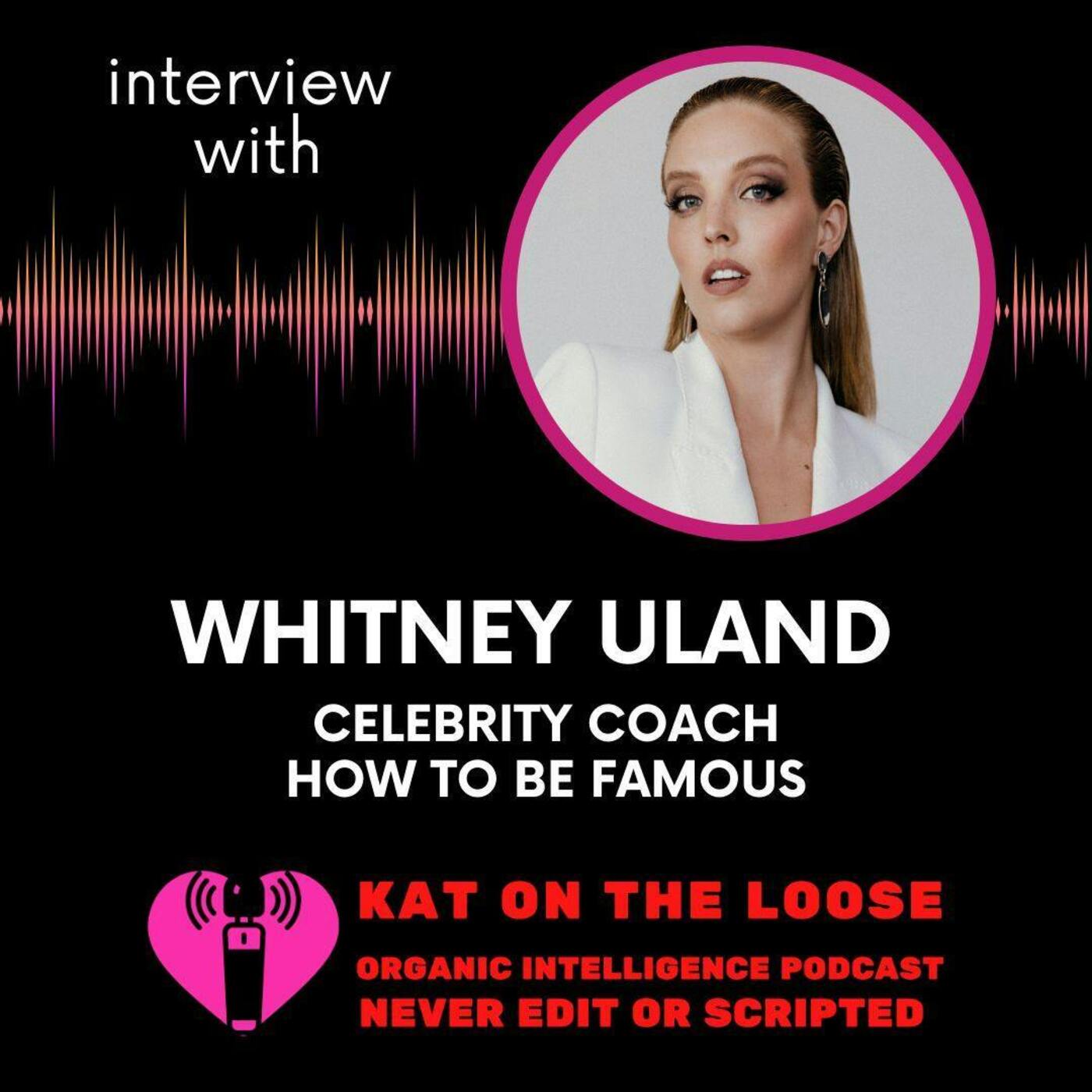
Visit t mobile.com my guest today, Whitney Uland, is a celebrity life coach and course creator and former actor. In her signature mentorship program, the Self Made Celebrity, she teaches clients around the world how to tap into their celebrity energy so they can create the life and careers that they know they're meant for. So if you ever wondered, can I be famous? Well, according to Whitney, you yes, you can. She has a really fun podcast herself called how to be Famous. I absolutely love her videos. I adore her energy, and I hope you guys really enjoyed this super fun, high energy conversation with Whitney. And I am so happy and honored to present to you guys the latest partner of Cat on the Loose, a new brand of mocktails owned by another Latina woman. And the brand is named C so S a o son comes from the famous Latin phrase which I love so much, men's sana incorporis. Sano in English means a healthy mind in a healthy body. It was created by entrepreneur Tatiana dupont to inspire us all to decompress and distress in a healthy, conscious way. Instead of going for the famous alcohol during happy hour, let's go for some delicious mocktails with adaptogens, which natural substances that help our bodies manage stress and restore Balance after stressful situations without the harmful effects of alcohol. Plus nootropics, which are great for brain health, herbs and monk fruit instead of sugar. Check out the delicious flavors on some mocktails on Instagram, SAO mocktails and drink.sun mocktails.com online. For more information and to order yours now. I'm absolutely obsessed Test. A lot of you guys know I was married to an alcoholic for a really long time. He lost his life to this horrible disease. So I'm all about fighting alcohol abuse. And whenever I find amazing alternatives for us to fight stress, but not with alcohol, I'm right on board. So I'm insanely, insanely happy to be partnering with this incredible brand. And I know they're gonna go to the moon and back. Very well deserved. Incredible work, some mocktails. Check it out guys. Whitney, welcome to Cat and the Loose. It's such an honor to have you.
- [03:38]
B
Thank you so much for having me. I'm so excited to be here.
- [03:40]
A
I'm very excited to have you. I know how busy you are and I told you off camera I'm a huge fan of your work because I found you on Insta. I love your energy and I love your videos. I think you're awesome.
- [03:50]
B
Oh, thank you so much. That means a lot to me.
- [03:52]
A
So we're going to do this fast and furious because I told you I have 10 million questions because your work is so rich. But before we start, I want to mention something. Today would have been Matthew Parry's birthday. I think he would be turning, I think 55 if I'm not wrong. Wow. And it's coincidentally we're gonna talk about fame, about celebrity, about how to become. If you're interested in becoming famous, you're a fabulous coach. And it's interesting how I think if you don't have a great head on your shoulders, it can affect you so negatively as unfortunately it did with him. So first of all, I wanna dedicate this episode to him because I did know him personally. We had friends in common. I saw him a few months before, died on his book signing and I was shocked because he was not well. He was obviously drugged and he made me so sad because I actually did a video about on my Instagram like it's a dog and pony show cuz they obviously his handlers can see like that he's not well and he's like, he could barely, you know, sign the books and say hello. So my heart goes out to his friends and family today and to everybody fighting for addiction. So that being said, I think this would be the first question for you before we dive more into what you do. How do you think, like, like I said, some people have a great head on their shoulders, but a lot of people don't. And fame, celebrity changes your life, like upside down.
- [05:17]
B
Oh, my God, yes.
- [05:18]
A
So would you have a tip or anything to somebody out there listening that is interested in becoming a celebrity, that is interested in becoming famous, that are afraid of this side. Bad side effects?
- [05:29]
B
Yes. So, yeah, and I think that's such a huge part of my mission is because, as you mentioned, you know, fame creates a quantum leap in your life. Everything changes all at once. Right. And not just in terms of like money and visibility, but your friends start treating you differently, your family starts treating you differently. You're just kind of under a microscope. I don't think that fame in and of itself changes people, but it changes your life. And that can. And if you don't have, you know, a good head on your shoulders, you don't have the good community, you don't have a good support system, that is really damaging. And I work with clients kind of all over, from people who are just starting out to those like red carpet slubs. And it's a lot of the people who are at the top of their game. They unfortunately have chased fame, hoping that it would fill a void for them. Right. And thinking like, oh, once I get to this result, then I'll be happy. And then they're even more depressed because they got, they. It's like they achieved all of their goals and, and now what, you don't get that? Yeah, yeah. And so the work that I do and, and what I would recommend to anyone who wants to live life, and I always say, you know, fame is just the resource of having people's attention. And now we can have this, you know, self made celebrity and what, whatever that looks like for you. Right? Not, not everyone wants to be on the red carpet. Some people just want an Instagram following for their business or whatever, but really building that really solid mental foundation and that emotional foundation because at the end of the day, that's really all that you have to lean on. And we're really just not equipped to be able to handle that much attention right at once.
- [06:59]
A
Yeah, the scrutiny. And I can speak for me and I think for you as well, we are not like major celebrities, but we are very public. Right. We do 10 million videos on social media, the podcast, and I went back to acting after not being able to do it for 14 years during my very abusive marriage. Now I'm doing what I love, which is indie movies, but just my work alone. Yeah, we get backlash. Like you said, people change the way they treat you. Some people take the time to write nasty comments, which always blows my mind. Like, really don't have anything better to do. Your life, if you don't like it, go follow somebody else. It amazes me the same. Right. But I can imagine, like, you do a project that actually becomes huge and famous, then the scrutiny is multiplied by millions.
- [07:47]
B
Yes.
- [07:48]
A
And if you don't know how to deal with that, you can be in a lot of trouble.
- [07:50]
B
Yes. And I think it's also, you know, if we kind of think of like that more traditional, like old Hollywood fame, there almost is a level of being able to hide behind. You know, there's a production company putting your work out. There's companies, there's, you know, there's ad revenue, there's. There's a. You'll have a team. And I think a lot of my, like, social media clients almost see the backlash a lot more because it's so close. Right.
- [08:15]
A
It's.
- [08:16]
B
It's right. And you have to continue. You know, it's not like people are coming on set and telling you terrible things, but they are coming to your social media and telling you.
- [08:26]
A
Yeah. It's like they feel they know us.
- [08:28]
B
Right.
- [08:28]
A
Which is something we have to do. Like, I always say that we have to open the window into our lives a little bit and show our work and the. Because that's how our work grows. That's how we promote it. But at the same time, people out there that know nothing about our personal lives, our struggles while we go through the behind the scenes of our work, they feel like, you know, it's their job or whatever you call it, to criticize.
- [08:53]
B
Yes.
- [08:54]
A
And it can be really tough.
- [08:55]
B
It can be really tough. And, you know, I grew up with a dad who was. He was very. I believe he died with a pretty significant amount of depression. And it was interesting because he was a troll. And so he was someone who. He consumed the news all day. And then he had his own Twitter following where he would go and attack the people that had come on, whatever. And so I think in that sense, even it doesn't always make it harder when I receive it myself. But having seen kind of this behind the scenes look, it's like that is something that people are doing when they don't feel a sense of control in their own lives and they do feel. Feel entitled and it gives them this little power. Dopamine hit where they just feel like they're invincible for a second.
- [09:37]
A
I feel. Honestly. And I know a lot of people think I'm crazy when I say that. When I read something really nasty about my work or myself, I'm even nicer to that person. You know, some people get really bothered by. By trolls. They get, like, personally offended. I feel sorry for them. I'm like, oh, my God, I'm sending you so much love. Thank you for commenting.
- [09:57]
B
Thank you for the engagement.
- [09:59]
A
And then they're like, I don't need your life. I'm like, I need it even more because I feel it's something that they hate about their own lives.
- [10:07]
B
Exactly.
- [10:07]
A
And it's like an escape valve or something. Criticizing other people's work.
- [10:12]
B
Yeah. And people, you know, they get a rise out of that, and they don't, you know, it is. They're deeply unsettled when they're. When that's received with love and when it's received with kindness.
- [10:22]
A
That's my strategy.
- [10:24]
B
Yeah. And I have a lot of clients who actually use that strategy as well. And they've. Some of them have said that their trolls have become their biggest fans.
- [10:30]
A
Yeah. I'm like, hey, dude, there are maybe 4 billion account. I don't even know. Like, if you don't like mine, go. Go look at somebody. Yeah. I love you. Now let's dive into your work, because I have so many questions. We would need, like, three hours for this podcast. Let's talk about the it fact, because on your course, I was watching a lot of your videos. I was trying to learn and educate myself. Super interesting. You say, like, and you even created the. The Academy, the website. How to become a celebrity. I personally think. And I grew up in the entertainment industry. My dad was a producer. I worked on and off with something tv, commerc. La la la. On and off my whole life. I think some people have it.
- [11:11]
B
You do. Okay.
- [11:12]
A
Like, I think it's something in our blood. Like, for example, how you look great on video or how much you love the camera and the camera loves you back.
- [11:20]
B
Yeah.
- [11:20]
A
Or you. Or you want the attention. All of these things. I think you either have it or you don't. And I know you're gonna disagree with disagree. You're gonna tell me that you think you can tap that into someone. So tell me. Tell me.
- [11:34]
B
Yeah, so I think there's kind of, you know, the idea of, like, are you famil. Like the idea of Nepo babies.
- [11:39]
A
Yes, of course.
- [11:40]
B
So everyone right now specifically loves to hate on Nepo babies. And say, oh, they just had everything handed to them.
- [11:45]
A
Good for them, you know, good for them.
- [11:47]
B
Right. But what I think the real privilege of being a Nepo baby is something that I would say it sounds like you maybe got looked into, which is just seeing that having that being in this industry and having attention is something that's safe for you. So if it's something that you grew up around and you saw and maybe your family supported in some way, shape or form, then it just, you did just naturally feel safe being seen by map massive amounts of people. And so there definitely are people that just innately have that it wasn't, you know, pulled out of them or whatever. But essentially what I teach my clients is that it is a skill that you can learn. And it's kind of like, I like to like ascribe it to the mountains. And sometimes the mountains are covered by fog, but that doesn't mean that the mountains disappear when the. Just because we can't see them. Right. It's the same with our IT factors. Everyone has access to that, but sometimes it gets clouded by this fog and the fog is fear and specifically the fear of being seen. So, you know, our brains, we've evolved from the brains of cave men and women and their job was just to stay alive, right. Don't go out of the tribe, don't go out and upset anyone because then we would be susceptible. We'd have to find our own food, find our own shelter. We could be attacked by a bear. So we have these really strong primitive instincts to go with our community. Now, this is a problem for three reasons. If you do want to have the effect or if you do want to be a celebrity, because for one, our brains are going to avoid anything that feels confusing or anything that feels dangerous. Right? And being famous, being in the public eye, our brains can perceive as being dangerous, right?
- [13:15]
A
The scrutiny. The scrutiny, yeah, you better have thick skin.
- [13:19]
B
You have to have the thick skin. But also I think there's, you know, I grew up with the 24 hour news cycle on. I learned about stranger danger very early on, right. And being taught like, oh, the world is a scary place that's going to make me not feel like I'm safe being seen. The second reason is going to be if your family, your friends, your community don't understand what you're doing or they don't support you, then you know, you're, you are subconsciously not going to feel safe doing anything that's going to create separation between you and your community. Then the third is going to be past negative experiences. So maybe if someone's their first try, you know, public speaking, they got booed off the stage. They're subconsciously going to learn it's not safe for me to do this anymore. And a lot of these things happen in childhood. So the work that I do is helping people remove these blocks so that we can, you know, clear the fog, so that you can feel safe being seen.
- [14:03]
A
Yeah. So, but let's see. We live in la, right? Hollywood land. Thousands and thousands of people show up every day. And I think most of them have this illusion in their head, like, oh, oh, I'm gonna try it out for a year and I'm gonna be famous and that's it. And if it doesn't work out, I'm gonna go back. And it's not like that. You know, sometimes it takes a long time and a ton of work as, as we know. But out of these thousands of people, very few actually succeed in the business of being a celebrity or being famous or being an actor. La la. An entertainer. Don't you think so what, what, what would you say is the main reason? Don't you think it's because most of these people. People don't have it, what it takes?
- [14:45]
B
I think it's a combination. And I think, I mean, listen, let's just assume that all these people are talented, which we're, you know, that's kind of like beyond my purview.
- [14:52]
A
Right.
- [14:52]
B
Deciding whether or not someone's talented. But I do think that it's not always the most talented people who make.
- [14:58]
A
It that I agree.
- [14:59]
B
Yeah, it's like the people who have that it factor and also are willing to stick it out. Because I think, like, I remember there was this boy I had such a big crush on in college. So talented, so magnetic, but he just was kind of lazy.
- [15:12]
A
Right.
- [15:13]
B
And he really just wasn't willing to stick it out. But I, I do think that the reason that some people do make it is because they're magnetic and because they're unafraid of being seen and they know not only how to tap into that. So I'm just going to go a little bit of a dive. So the way that I like to define the it factor, which is what I call celebrity energy, is it's a hyper present state. It's a state where you are in your flow and where you are in your genius. That's a really magnetic scene thing to watch. I'm sure you know this as an actress, that when you're doing a scene with a dog, Or a baby. Everyone wants to watch the dog and everyone wants to watch the baby. Right. And it doesn't matter. You can be crying your eyes out, but they pull focus because they are so present. And so the work of, you know, even being an actor, I'm sure, like, you've experienced this. Your best scenes, it's like the camera cuts and they say, how was that scene? And you're like, I don't know. Right. It's like you're just in such a flow state. And so many artists, artists, creatives, influencers, they know how to do that during their talent while they're performing, but not when they're auditioning or not when they're marketing themselves or not when they're putting themselves out there. But it is that, you know, we all have been in a grocery store and you can just feel when there's a, like a celebrity there. That's because they have this magnetic pull. And so. But that is a skill that you can learn and, and being able to translate it not only in your work, but also while you're marketing yourself and making connections, that's what makes people sold on you. And they really want to be around you.
- [16:36]
A
I completely agree with. So you think somebody out there is listening and they want to be famous. They want to be a celebrity, let's say a singer. And she's like, okay, I want to work with you. Do you ever get meet someone and as you start working with them, you're like, dude, I'm really sorry to tell you, but you just don't have what it takes.
- [16:57]
B
Yeah. So here's what I would say. And it's, it's. It's very few. Right, Right. It happened very often, but typically what it hap. What happens. So it's that someone is in the wrong lane. What I mean by that is someone is saying, I want to be a singer. I want to be a singer. And when we get to the root of it, they actually have some subconscious belief that being a singer is going to make them feel loved and it's going to make them feel validated and it's going to make them feel successful. Right. It's kind of that idea with celebrities chasing fame to fill a void. So what? And then once we get down to that, and then they heal that part of themselves, they realize, I don't really want to be a singer. And I've had a. Most of the time, I mean, I can think of one client that we just were like, let's part ways. Like, this is mutually not a Good, good fit. But for the most part, what happens like all of the other times is that they realize once that they're. That hole is filled, they realize, oh, I'm actually really passionate about interior design, but I didn't realize that I could do that. Right. And then a lot of the time they still do want to be famous in that realm, right? Then they get a book and they get speaking gigs and they. All of that. But it's. But a lot of the time it's these fears of what will make them be accepted that leads them to kind of going down the wrong pat where they're never going to actually find success.
- [18:12]
A
Or somebody like the singer. Because I met a couple of really beautiful new up and coming talent. That's why I asked you specifically about the singers, because it was very interesting. I got a cast to do a music video for one and then to do a music video for the other. Fabulous songs. Insanely talented girls, but they're like really down on themselves. Like the first girl, she was like, oh, if somebody would have found me, they would have found me by now. No, no, you, exactly. But I was like, no, come on, what are you talking about? You're like 20 something years old. I was surprised how they were already like. I don't know if it's self sabotage or getting discouraged because I think if this is something that you really, really want, you really, really have to. To put all your blood, sweat and tears into it and, and not get. Because you're gonna go through so many roadblocks, right? You're gonna hear so many.
- [19:08]
B
No.
- [19:09]
A
And so much rejection. And I think you gotta keep going.
- [19:13]
B
Oh yeah, right.
- [19:14]
A
But if you think like, ah, I mean, yeah, you're not gonna make it in this industry.
- [19:18]
B
Right? And I think that was something super interesting. I feel like in my 20s when I was in New York, it was like just slowly kind of watching my friends fall off and decide to go a different path. Right? And I think it's like sometimes you do have to go down in a few years to realize that, you know, for a lot of those people, they actually find more fulfillment doing something else. But again, they feel like they have this desire for attention or they have this desire. And I think that that's really the difference between the people who make it and the people that don't are if you have a mission and if you have a purpose in what you're doing. Because if you do chase just the attention, then it's either not sustainable or you get there and then you end.
- [19:56]
A
Up with mental illness, you're still frustrated. I agree with you. I think for me, when I found you and I found out about your work, I'm like, wow, this is super interesting. Me as an example, I do the podcast, right? And now it's growing so nicely. We have audience of 55 countries. We're growing this worldwide community. I'm really proud of it because we're giving voice to women and uniting forces. So when I think about being famous or, or a celebrity or successful, it's with a purpose. It's like, I don't care. Like, oh, I want the paparazzi to take a picture of me. It's more like it will give impulse for my projects to reach an even bigger aud. So for me, I have to have a purpose for it.
- [20:38]
B
Yes. And I love what you said because I think that being famous has a bad reputation because we do see so many people going after it just for.
- [20:46]
A
The attention, the famous 15 minutes of.
- [20:48]
B
Fame want the 15 minutes of fame, want that attention and think that they're going to feel better, feel different about themselves once they have it. But the truth is fame is just again, it's the resource of having people's attention and it's leverage. It's something that once you have those eyeballs, you can point them towards something, something that's really important to you and be able to might make a massive impact.
- [21:08]
A
Yeah, I love that. I think if you decide that you're gonna use your fame for something positive, you're gonna get a lot better results. But a lot of people, especially now because of social media, the famous 15 minutes, they come like the now it's the hawk to a girl, right?
- [21:24]
B
Yes. I was just thinking of her when.
- [21:27]
A
I like, listen, no judgment. Good for her. She's making so much money, she's laughing all the way to the bank. But when I saw the Hawk to, I googled what it was and like, I, I wanted to vomit.
- [21:37]
B
Yeah, yeah.
- [21:37]
A
I'm like, you're kidding me. And now she's like one of the biggest right now celebrities, quote, unquote. There is, I, I, I was told she's making like $30,000 for appearances and all this stuff. So like, yeah, girl, make all the money you can while it's hot because you're gonna disappear. But when you listen to her interviews and everything, she didn't really expect any of that to happen.
- [22:01]
B
Right.
- [22:02]
A
So it's really just right now, the fame for the market.
- [22:05]
B
Yeah, yeah. And I think it'll be really interesting to see if she continues to leverage that, how she continues to leverage it. I've kind of heard that she has a really good team that's kind of said, this is how we're going to make this, make a lot of money. Which is interesting to me because I think that that's very reflective of kind of the old Hollywood business model where it was like, you know, the studios were saying, this is what we're going to do with our star. And I think for better. Like, that was probably great job stability for actors back in the day, but I think that now there's such a more empowering opportunity for artists to say, no, I'm the. I'm the one in charge. I. I was thinking about this the other day where I bought an apartment in New York City, and the realtor that I bought it from was terrible. It was like the quintessential New York City realtor. Like every bad, like, stereotype you've ever heard about a realtor was true. Right. But I wanted the apartment so bad and the apartment sold itself. So I was okay working with that, you know, with that, the broker. But. And that's, I think, a lot of the time, the way that we have to kind of, as artists, think about these gatekeepers and think about these people who are, quote, unquote, managing or our career, because it's. I do think that that's a little bit more of an outdated model, but ultimately, it's the product, it's the talent that is the thing that sells in spite of the agents, in spite of the managers. And so, and I just, I mentioned this because I think there are so many artists who are looking for a record lab, an agent, whatever. And at the end of the day, it's. It's. You got to flip the script and put yourself on that pedestal instead of putting these gatekeepers and really taking your time to find the right fit and find the people that are impacted by your mission and like to show up the way that you want to show up.
- [23:50]
A
Oh, my God, I love that I made a mistake in the past. Like, I was jumping the gun and I worked with certain people for the podcast and other things because they were offering me, you know, the world. And then, like, a few weeks into it, I'm like, oh, my God, this woman is so such a. She doesn't represent what I represent. I don't like people that mistreat and. And unfortunately, In Hollywood, yeah, PRs have that fame. A lot of them are like that.
- [24:15]
B
Yeah.
- [24:15]
A
Because I deal with them all the time to book guests. And you know, they're just, they're nasty. And I'm like, it's my biggest pet peeve in the world is like, when you start being mean and nasty to people, especially people try to work.
- [24:26]
B
Yes.
- [24:27]
A
You know, like, I'm all about, like, come on, be nice. Even if you say no, you can say no with kindness.
- [24:32]
B
Right.
- [24:33]
A
And I think it's so important that you said that because you gotta choose who you surround yourself with.
- [24:38]
B
And I think to your point, my experience in, you know, Hollywood and in the New York guys.
- [24:44]
A
I never thought I would say this, but this Black Friday, instead of buying more stuff I don't need, I decided to invest in my sex life instead. We all know Black Friday is about deals, but what would you rather do? Spend hundreds of dollars in stuff you don't need or 69 bucks on improving your sex life? Yes. @beducated.com mom, real talk. No one ever really teaches us how to be amazing in bed. We're just supposed to figure it out somehow, right? Well, that's exactly what I thought until I found Educated. I started exploring their courses because I wanted to understand not just pleasure, but connection. And it completely changed how I see intimacy. I learned simple, real techniques that make you more confident, more in tune with your partner, and honestly, more empowered in your own body. Beducated is a safe space for all. And that's my favorite part. No matter relationship status, sexual orientation or gender. So if you're ready to level up your love and sex life solo or with a partner, go to beducate.mecat69. That's my code. Cat K A T69 to get 65 off the yearly pass. That's their biggest discount of the year. And it's completely risk free. 14 day money back guarantee. So go to bed, youkate me cat 69 and give yourself a gift that will last.
- [26:05]
B
Art scene is that artists are the most loving people and the most kind people. And I think it's been interesting because I grew up in Texas and I just was taught and learned, you know, Hollywood, like every, they're so full of themselves and they have, you know, all these whatever. And I just, that just hasn't been my experience. I think that for me, artists, creatives, and we're healers.
- [26:24]
A
I agree with you.
- [26:25]
B
You know, the money, it's the people that are kind of like those vipers that want to like get in there and take it, take their 15%. I agree with that. Have kind of created that.
- [26:36]
A
Yeah, Usually when people ask me like, oh my God, you Live in LA and people are so superficial. I say it's actually the opposite. Most people here, they really just want to work.
- [26:45]
B
Yes.
- [26:46]
A
It's such a competitive industry. Everything is so fast paced when you get a job, like let's say you get cast for a commercial, get cast for a movie you don't have time for, you're really gonna show up and be there and be present. So I think it's the image that, that other people have or maybe frustrated people that are not doing what they love to do. But in general it's such a hard working and friendly community.
- [27:07]
B
I agree. And I'm also a believer, you know that what is it, Your vibe attracts your tribe. Right. And so because that's who you are, that's what's going to be reflected back to you.
- [27:15]
A
Yeah.
- [27:16]
B
Because I think there are, you know, I, I remember before I moved here I had a lot of friends that were like, oh, like LA is so lonely. It's so whatever. You know, everyone just wants something from you. And that just hasn't been my experience.
- [27:27]
A
No, same. I'm so glad you said that. Let's take a really quick break and talk about a problem that I know most of us have. Especially after super crazy long work days. Puffy eyes, dark circles, eye bags, tired looking skin. And this is why I partnered with Marie Marine. And now I am madly in love with this brand of collagen eye gels, collagen and hyaluronic acid face masks. They use ocean sourced natural ingredients such as pearl extract, algae extract, everything science backed, everything sustainably formulated which is so important, important, ethically and responsibly sourced, this USA brand really, really, really works. I use my face masks every Sunday and I have fantastic skin all week long. And when I come home super tired, I put the eye masks at night and I wake up with fantastic, fantastic skin. I invite you to check it out. You can buy all of their products right on Amazon. It is spelled Mary M A R R E E or right on their website. I am a R E e dot com. Check it out. I fell madly in love with everything they do. This is a really good one for everyone that loves to play poker and everyone that is planning a trip to Las Vegas. I invite you to come check out the most fun private game in the city. Held right inside Aria's VIP poker room. Even if you're not that into poke new to the game, this is a great opportunity to network with businessmen, athletes and celebrities in a super exclusive environment. Mr. Beast and then Bilzerian have played in it. Golf pros have played there. It's like an elite, exclusive social club, but also a really fun environment to play. Texas no Limit hold'.
- [29:29]
B
Em.
- [29:30]
A
It's blowing up. Definitely one of the hottest places in Las Vegas right now. But your name needs to be on the list in order for you to gain access. So make sure you send me a message through Instagram at Real Cat on the Loose or text me or Send me a WhatsApp at 1-310-692-0578, and I will put your name on the list. They also offer incredibly special comps that are available only to my guests. They will reimburse Aria hotel fees for up to $350 in case you decide to stay at the Aria Hotel. They will give you private transportation from the airport to your hotel and to the game. And they will give access to airfare, deals for business and first class. I mean, they will totally roll out the red carpet for you, and you're going to have so much fun. Table 1 is the place to play poker in Las Vegas. Why do you think it's called Table one? Because it's the number one game in town, baby. But let me ask about this. This one particular situation on tv, because I cringe when I watch. And that's related to being famous. Okay? The Hawk. To a girl, she was like, I guess, a nobody. She's super young. She wasn't making a lot of money. But let's for example, the Real Housewives, right? It became like this fever on tv. Fantastic show. I think it's the highest rated show on Bravo. Some of these women are rich already. Some of them are very successful.
- [30:59]
B
Yeah.
- [30:59]
A
And every once in a while, I go. Because I don't have time to watch this. But every once in a while, I go watch it because I think it's my job. I need to know what's going on. And I see certain scenes there that I want to cry. Like I cringe the way they treat each other, how rude they are to each other, like the screams and the calling out. And I'm thinking, I don't think any of that is necessary. But some of them, if you have so much money in the bank already, people already know who you are. You have 12 million followers. Why do you think they do it? Is it the attention? It's so weird, isn't it?
- [31:35]
B
You know, I can't speak for everybody, everyone. I've worked with a couple of housewives.
- [31:39]
A
Oh, yeah. I've had a couple yawn.
- [31:42]
B
Yeah, I would imagine. I think that they feel like they're entertainers and they have really thick skin. And I don't think that they, I think that it just kind of rolls off their back and they don't mind being perceived in a certain light because it's, it seems like a fun project for them. Right. Like, and I do think that's even kind of indicative. I, I mean, listen, I do think that there is something to be said for the reason. Part of the reason that Hollywood has a notoriously bad reputation is because people who are the most narcissistic are the most likely to say, oh, I want to be famous and to say I'm amazing and I should be in the spotlight. Right. Which is when it's like my mission is to help more good hearted evolve. People who are like, I don't know, maybe it shouldn't be me. And I'm like, it should be you. You're the one thinking that. Right. So I do think that there are. The stereotype comes from for a reason is people are just unashamed. And that's the thing. Fame really is captured when you're safe being seen for who you authentically are. So there are people that just authentically that's who they are and they don't mind being perceived that way. I like to use the example of Alec Baldwin. That man has been involved in so many scandals. I don't know him personally but I mean someone just died on his watch and he is continuing to get up and he was involved in that scene scam with bad vegan with. There was like the airline pilot. Like there just have been so many things and I'm like, the reason he hasn't been fully canceled is because I think that's just kind of.
- [33:18]
A
Yeah. And the movie by the way, because I know, I can't say who. I know someone that's highly involved in the movie. It's going to premiere finally at the Toronto Film Festival.
- [33:27]
B
Oh wow.
- [33:28]
A
And yeah, the. So yeah, they, they cut that scene. They repackaged the movie. They're very proud of the movie. They made an agreement with the husband of the lady that died. But anyway, yeah, I, I don't know, I have mixed feelings about it.
- [33:41]
B
Yeah.
- [33:41]
A
But without losing the train of thought. So talking about the housewives, would you. So if you meet somebody like that, like you said, oh my God, I want to be famous, this is for me. No, no, that is too eager for the wrong reasons. Do you decline clients sometimes or will you take everybody?
- [34:00]
B
You know, it's been an interesting thing because at the end of the day, I don't, I don't. I think that there are things that I would say no to. I haven't been encountered with them yet.
- [34:09]
A
Oh, so you're lucky.
- [34:10]
B
Yeah. I mean, if someone was like, I want to be famous for like murder, I'd be like, absolutely not, you know, or whatever it is. But as far as that, I guess it's not that I necessarily feel like it's like adding a ton of value to the world, but I also don't think it's like a huge net negative. And I think that, you know, I have a lot of friends who find a lot of community and joy and entertainment from watching the Housewives. And so even though I think there are different, you know, it's not a show that I watch.
- [34:36]
A
It's definitely entertainment, but it is entertainment. I cringe when I see women mistreating other women. I think that's the only problem that I have. You know, I think, like, I'm sure you could be on the show and figure out other storylines or things to say, like, without throwing trash at each.
- [34:51]
B
Other, but, you know, it's low hanging fruit. It's the easiest thing I find.
- [34:55]
A
You've been an actor as well. You've done many, many, many projects. I, in my experience, experience every single time in my life I've been on set. The bigger the star, the bigger the celebrity, the more humble and down to earth. They are 100. Always.
- [35:10]
B
Always.
- [35:11]
A
Like, I've seen the biggest celebrities in the world and they're like the, they're wearing jeans, T shirts, sweatshirts. They're the kindest. And usually the one that acts as a diva is more like the wannabe celebrity or they want to be bigger than she already is. Do you agree with that?
- [35:26]
B
Yeah, I agree with that.
- [35:27]
A
So if you mean like a diva, like, do you tone it down? Like, dude, you know, you need to.
- [35:33]
B
I don't think that divas usually come to me if I'm honest. Like, they're not.
- [35:37]
A
They're like, I don't need a coach.
- [35:39]
B
I know everything. Exactly. I do. And again, you know, your vibe attracts your tribe. And I do have like the best clients. I boast that I have, like the most kind hearted, loving people. But yeah, those people aren't coming to me.
- [35:50]
A
Okay, so, yeah, you're like, let's talk about imposter syndrome. Because I, I've done that to myself. I don't know if you ever done that to yourself, like, when I. Because I barely worked for 14 years. A lot of People that listen to the podcast know because I was in a very abusive, very controlling marriage. My husband canceled everything I love doing. And once I got out of it, I'm like, you know what? I'm going to do everything that I love to do. The podcast acting. Once my projects start taking off. I had. It took me a while, but I always had the tendency, like, oh, is this really me? Like, I pulled pullback. Even the it fact, like, I, I, I know, like, when I have it on and when I turn it off. And it took me a while, was a process to stop, you know, sabotaging myself and my work and feeling like, no, I'm deserving of my success. I'm deserving of everything that I'm building from scratch with so much work. But it's a process, and a lot of people have a hard time getting there. Like, even sometimes I put clients on camera. I. I own a PR marketing agency, and my clients are like, should I be on camera? Camera? I mean, I'm so bad. Do I deserve this?
- [36:57]
B
Right.
- [36:58]
A
A lot of people have a hard time going through that and say, you know what? I deserve this attention.
- [37:02]
B
Yeah.
- [37:03]
A
Do you have any tips for that?
- [37:05]
B
Totally. And I mean, listen, I think that it's. Imposter syndrome can kind of have a lot of different flavors. Right. Like, on the one hand, it sounds like maybe what you experienced was you had negative attention or negative experiences for 14 years that taught you, it's not safe for me to go after my dreams. It's not safe for me. So I think that, you know, that imposter syndrome is natural. I think there's also an element when doing something new that you've never done before. Right. I'm like, I. People always love to say. They're like, I've never heard of what you do. I'm like, yeah, because I'm the only person who does it, Right. Yeah.
- [37:36]
A
I honestly never seen anything similar before until I found you. That's why I thought it was so cool.
- [37:41]
B
Yeah. And I think for me, that brings a lot of imposter syndrome, because I don't have a blueprint to look at and say, what, you know, it's all coming. It's all channeled, it's all intuitive. It's all based on client experience and research and certifications. But I am. Am pulling a bunch of different things together to do what I do. And so all of this to say, I think that imposter syndrome, the first thing that you have to do is just make peace with it and make peace with the fact that it's here for a reason, and it's because you're doing something new, whether it's because it's new to you or new to, you know, you're in a new place of life or you're doing something completely revolutionary. It's. That's your brain's job. Your brain's job is literally to say, like, no, no, no, no, let's go back. Let's go do what everyone else is doing. Let's work. Let's do what worked. Let's, you know, our souls have these desires. Maybe it's to be on camera, to be a star, to be in your it factor. But your brain doesn't. Right. Your brain is like, no, no, no, no, no. Let's just go back and make sure that we're safe. So the first thing that I always just have my clients do is just give themselves compassion for, like, the fact that it's showing up and getting clear on, like, why it's showing up and what it's trying to protect you from. I think a lot of the time can bring a lot of peace.
- [38:51]
A
Yeah. There's a saying that when you're doing something and you start getting negative criticism, it's like, okay, you're doing something right.
- [38:58]
B
Totally.
- [38:58]
A
Like, in your case, you do something very, very different, very unusual. And by the way I looked. I'm not saying that, and I'm saying that with all my heart. It's not like you literally have a method like you. You guide people step by step by step. So it's not like. Because a lot of stuff out there is like, total crap, right? Like, everybody's trying to sell something. It's free, it's great, it's easy. And you actually say that. I was listening to your introduction video today, and you said, I'm talking about making you famous or celebrity. But it's just because I can do it doesn't mean it's easy.
- [39:30]
B
Right? It's simple. It's not easy.
- [39:31]
A
It's simple. I love that you said that because two words that always worry me. People say, it's easy. It's easy. I'm going to make $50,000. I'm going to show you how to. And I'm like, oh, my God, you know, let's be a little more truthful. I don't think anything that you need to put a lot of work into is something like overnight easy.
- [39:47]
B
No. And. And that's where anytime, time that you notice yourself. I mean, listen, I've been guilty of this. I was Just having a meeting today where anytime you feel like there's a shortcut. Yeah, that should. That should bring up some red flags of, like, and, you know, just checking in with yourself of why do I think I need a shortcut?
- [40:03]
A
I know.
- [40:03]
B
And why do I, you know, what am I hoping to get out of this? And a lot of the time, it's. It's just thinking, you know, that you. And for me, this has been outsourcing. I'm specifically talking about some of the operations in my team that I. Or in my business that I was like, oh. Like, you know, some. And I. I think this actually is very similar with people when they create fame in. In Hollywood is you start to create fame, and then people kind of come after you and they're like, hey, we can help. We can take you to the next level for a fee. Right.
- [40:32]
A
There are so many. So many crooks in. Pause. It breaks my heart because I know a lot of people fall for it.
- [40:41]
B
I did. Yeah. And I think that was like, it's.
- [40:43]
A
Been kind of this big up charge. Yeah. You. You talk about that in one of the videos that you paid crazy amounts of money.
- [40:49]
B
Crazy. Yeah. Paid. I paid one agency $24,000, another one $40,000.
- [40:56]
A
Oh, my God.
- [40:57]
B
And they both had come to me, of course, once I already had success. And then they're really good at sales, and they're really good. And, you know, this last year, like, I'm a single mom. Like, I'm my business revenue.
- [41:08]
A
Oh, my God, you look so young.
- [41:09]
B
Oh, thank you.
- [41:11]
A
You look like a baby.
- [41:12]
B
Thank you. But, you know, that it was something that, like, I. I've been just. I do think that, you know, I'm. I'm learning, and I have to give myself grace and compassion for that. But I also think I've been in kind of a vulnerable situation because I feel like for the first time, you know, my livelihood is really. I just. I feel a lot of pressure to maintain, you know, my teams, to pay my team and to make sure that, you know, I have enough money to keep my roof over my head for my baby and all of that. And so I do think I was in a very, really vulnerable position. And I think that there were some kind of predatory companies that came 1 million were like, well, you know, we'll take this to the next level. And they both were just complete waste of money.
- [41:54]
A
It's heartbreaking. I hear stories like that all the time. I was on the same boat as you when I started cattle, when I went back into the workplace, for that matter, because I barely worked for 14 years. My husband didn't let me. So when I went there, like, give me work, give me work. Everybody started like, instead of helping, people want to pray on you. And many times we fall from for it. Like, I'm just like, by nature, I believe people.
- [42:16]
B
Me too.
- [42:17]
A
Me too. I'm like the most gullible person. Same. Now I'm learning how to be like, okay, wait a minute. Because it is an industry that, you know, people have all these dreams, and you. You offer them the sun, the moon, and the stars, and it's just so heartbreaking. But I think before you part with your money, do your due diligence, I guess that's what I would say, right?
- [42:38]
B
Absolutely. And I think it's. For me, it's just really made me reflect on, you know, I was raised in a mind religion and where I was brainwashed, ostensibly. And that makes me more vulnerable to fall for other, you know, whether it's a pyramid scheme or, you know, a marketing, you know, or whatever. But I think it's really made me set really, really clear boundaries with myself as a business owner. I've had so many mentors say, oh, why don't you double your prices? Why don't you charge, you know, four times as much? Whatever. You could make so much more money if you just did that. And for me, that just doesn't feel authentic and it doesn't feel aligned. So just again, just to make sure.
- [43:17]
A
That I don't become that same, I have to do everything that I do. I have to feel good about it in my heart.
- [43:23]
B
Yes.
- [43:24]
A
It has to come from a place of goodness. I know in a lot of my projects I could be making so much more money, but I. I have to feel like I'm being fair. I don't want to treat anybody the way I've been treated.
- [43:35]
B
Exactly.
- [43:36]
A
You know?
- [43:36]
B
Exactly.
- [43:37]
A
I get messages from people that want to start podcasts. People write me from all over the world, like, I want to start a podcast. How do I get a sponsor? How do I make money? And the first thing I say is, like, don't part with me. Your money. Anybody that tells you you're going to have an overnight successful podcast is lying to you. It's such an appeal battle. Right. It's so much work. So I think that's the first thing I say, like, keep your. Anything you want to do. Social media, podcasting, acting classes. You know, now there's all these people that say, oh, I'll teach you how to put an online Class there and you're going to make 50,000. Nothing easy, not nothing worthwhile. That you're going to make a lot of money comes easy.
- [44:14]
B
No. Yeah, it's.
- [44:15]
A
It's so. I like that you say that to your. On your training.
- [44:19]
B
Yeah. And I think it's also, you know, we see the overnight success, but we see. What, what's that idea? It's like I was an overnight success. Like even with my business, you could look at it and say, oh, in the last year it's really exploded. But that was six years in the making. Right. And before that, you know, years before that, failing and failing and failing as an actor. That all led to, you know, this culmination.
- [44:41]
A
So it's so much blood, sweat and tears.
- [44:44]
B
Yeah.
- [44:44]
A
So much that it's impossible to explain. But before we run out of time, I want to talk about something. That interview that I thought was so interesting, maybe you can explain a little bit about that. You talk about tapping into the right energy. Like you were saying, you think everybody has that.
- [45:00]
B
I do.
- [45:01]
A
Okay, so I'm not sure, but I.
- [45:04]
B
Feel like I don't.
- [45:05]
A
No, but you're the expert. I'll believe you. No, I just. Honestly, I think some people I've done acting classes, for example, and I talk to. I don't think I. Classes if you're not an actor, like, if you don't have that in your blood, I don't think there's any acting class in the world that's gonna help you. And a lot of acting teachers agree with me. I just think some people, no matter what you try, they just don't have what it takes. You disagree? You think you can guide them?
- [45:32]
B
Well, I guess I would. I should maybe differentiate because I don't think everyone could be a famous actor.
- [45:37]
A
Right.
- [45:37]
B
That's not what I think. But I do think that everyone has the it factor, so. And can have the it factor, but in different industries.
- [45:44]
A
In different industries, yeah.
- [45:45]
B
So there might be some. And again, if there's someone who, you know, you see these people in acting class, you're like, they're never going to make it. They are living a very inauthentic life and they're lying to themselves, whether or not they know it, about where they are meant to be in their place in the world. And they're not ready to face that yet. But once they do, that's when they can find it.
- [46:06]
A
You got to find your calling. So how do you. Is there any practical way? Because I'm sure we're talking. Some people are Going to be like, well, what do you mean, tap into the it factor? What do you mean, tap into your celebrity energy? I know you're talking about because I know I have it. Like I said, sometimes I know it's on and it's out there and I can't explain it, how I do it, I just do it. And sometimes for some reason, either I'm self sabotaging or it's my private life and I want to like, hide it because I don't want my date to get scared away. You know, there's always some stupid reason. I like, I hide it. And then I listen to wonderful people like you. Like, come on, what are you waiting for? Just go for it. And I'm like, yeah, let's just, I mean, we only live this life. Let's go for it.
- [46:51]
B
For it.
- [46:51]
A
But is there any practical way to tap into that?
- [46:55]
B
Yeah. So again, it's, it's simple, not easy. Right? So. And I love that. So what you're describing, and you're someone. I had a friend who told me this once. You know that. That website Masterclass?
- [47:06]
A
Yes.
- [47:06]
B
So they were saying they're like, masterclass is such bullshit because they pick the people who are just naturally good at things and they can't explain it.
- [47:14]
A
Right, right.
- [47:15]
B
And so that's probably like kind of where you're at. This is just so natural.
- [47:18]
A
You're like, you just have that calling.
- [47:20]
B
Right. Whereas for me, I'm like, no, I had to figure. So I can give you the exact steps, which again are. But I think something that you, you tapped on really, really highlights it, which is that the work itself is actually going to be in your personal life. So that's where people get, you know, I think sometimes they probably come to me and they're like, oh, you're going to teach me how to meditate into this state where then I would have. No, no, no, no. You have to clean up the shit in your personal life. So there's four relationships that I've always take people through. These are the four quantum leap relationships. So that's going to be with your family, with, with your peers and your colleagues, your romantic partners and your money. So everyone has at least one of those things that they feel blocked and they don't want those people to see them. So you mentioned dating, right? That's where you're like, I don't want to outshine them. For some people it's, I don't want my family to see what I'm saying or whatever. And other people, it's their fear of money, their fear of receiving money. So what I unfortunately, I wish there was an easy hack for this, but it is doing the work on yourself personally. And so, you know, of course the, the foundation of that is therapy and, or doing, you know, I'm obviously a coach, that's what I help people do. Is that more like specialized work? But I would say like for anyone doing the work to, to, to come back into alignment with yourself is going to be the thing that, that makes you able to tap into it.
- [48:40]
A
I love that. For me, I tell you, my breaking point was, and I know it sounds so silly, but I think it's so important. You have to wake up one day, look at yourself in the mirror, look at your soul and say, I believe in myself. And a lot of people don't do that. Yeah, like you, like we were saying about the, the acting class. You go to the acting class but you don't really believe. You're not sure, you're not sure. And it doesn't even have to be. Acting can be anything. You want to be a singer, whatever, a teacher. A lot of people have this. We have self doubt, right. I had self doubt forever because I was married to someone that told me for 14 years that I was a useless piece of. No kidding.
- [49:20]
B
So of course you believed him.
- [49:21]
A
So yeah. So if somebody tells you over and over and over again that you don't have to work, that you're not good for anything, that you know, you believe it.
- [49:28]
B
And a lot of people are taught that by their parents.
- [49:30]
A
Yes, exactly. And yeah, and say my parents weren't like very, you know, encouraging or supporting either. Then I married. I talk about daddy, you should I marry a guy like that? Then I had a job. Fresh out of my marriage, I started working for a radio station. Before the party podcast was the biggest Brazilian radio station in the United States. And the one day during a meeting and my show was rated number one, by the way, 65,000 listeners, no joke. Every Tuesday we were having like a creative meeting and the owner looked at me and said, you know, you should shut up. You should be grateful that I'm give you this job because you're not good for shit. None of you girls here are good for shit. And that triggered me in my mind and I left and I said, you know what? Fuck you. I'm going to prove to you that I and I started my own show.
- [50:17]
B
I love that story.
- [50:17]
A
But, but, but I think you have to get to the point like I believe in myself. Do you agree that that's such an important step.
- [50:26]
B
Oh, yeah. And that's. And I think what's challenging is that I do think innately, you know, talk about the. The mountain kind of behind the fog. We do believe that, but then we're. It's these stories. It's these experiences that we've been taught. And so a lot of the work is, you know, again, if your soul has a desire for something, then there's a part of you that does believe in it. And we just have to like str. Stories that told you that you can't believe in it.
- [50:50]
A
I love it.
- [50:50]
B
And that's what helps you to believe in yourself.
- [50:53]
A
I love the. This analogy of the mountain and the fog because that's exactly how it is sometimes. You know, it's there. But yeah, it's so foggy and it's so full of noise. And I think criticism is that fog.
- [51:05]
B
Yes. The.
- [51:06]
A
The thro. The. The people that. That write nasty on social media. Even your friends. Frenemies. Right. Oh, my God. What are you doing?
- [51:15]
B
Yeah.
- [51:16]
A
Those are the first people that. I think they're frustrated with themselves because they're not going after their dreams, and they're the first ones to criticize you for what you do.
- [51:24]
B
Yeah. Of course they get really triggered because, you know when you're going after your dreams, you all of a sudden reflect back to people, your karmic mirror, and they're like, oh, I'm not doing that. And if they're not willing to look at themselves and they're just going to make fun of you.
- [51:36]
A
Yeah. Fantastic. It's such an honor having you. I think your work is so interesting. So if you guys are out there listening, and I agree many times it helps working with the coach that will guide you step by step by step through the fog so you can actually fulfill your mission. Right. Make your dreams come true. How can people find you, Whitney?
- [51:56]
B
Yeah. So I do have a. My own podcast. It's how to be Famous, and it's.
- [52:00]
A
So much fun, by the way. I loved it. I listened to a bunch of episodes this weekend, and it's really, really fun.
- [52:05]
B
Thank you. I appreciate that. And then I'm on.
- [52:08]
A
Do you drop episodes?
- [52:09]
B
So we're doing them every Thursday. We're about to do a hiatus. I'm not sure exactly when this episode's coming out, but coming back in the fall.
- [52:16]
A
Okay.
- [52:16]
B
And. But there's a bunch of stuff you can binge if you're just tuning in now and then. I'm on social media, Instagram, Tick tock.
- [52:23]
A
At Whitney Evelyn, you have a huge following. Your videos are so inspirational. If you guys are listening to the episode, make sure you go to our social media channel so you can see her face, her smile, our videos. And you publish videos every single day. You're always so encouraging, so open. And I think because the of lot of people, like, first of all, sometimes acting classes, like bigger coaches, they charge this ridiculous amount one and they're very intimidating, you know, because they're like, oh, I know some. And you are like, so open and kind and. And your smile is so welcoming.
- [52:54]
B
Thank you.
- [52:54]
A
And that's what I. I fell in love with your work. I'm following it for myself. I'm listening to all her tips like a sponge. And it's a huge pleasure and honor having you. And if you want to know how to be famous, I'm putting her link here on this episode. Whitney Yuland. And before I let you guys go, if you are suffering from addiction, in honor of Matthew Perry, please seek help. And if you are around someone that you see suffering from addiction, don't keep your mouth shut, because that, to me, that's what breaks my heart the most. Right?
- [53:24]
B
The.
- [53:24]
A
The psychophant.
- [53:25]
B
And I think also if that is something you struggle with, tell everyone you know.
- [53:29]
A
Yes.
- [53:30]
B
Tell every single person.
- [53:31]
A
Ask for help before it's too late. I lost a husband to alcoholism. And you know, we have so many friends. I mean, talk about celebr celebrities. How many celebrities end up, like, in so much trouble? So if you need help, ask for help. There are so many resources out there. And again, if you're a friend of someone that you see is struggling, don't keep your freaking mouth shut. Help them before it's too late. And I want to thank Crocs. You guys are gonna see the video for my fabulous sandals. Keeping my feet comfy, walking on clouds all summer. Thank you, Crocs, for being a huge sponsor cat on the lose. I love you guys. It was a huge honor having you. You are absolutely amazing.
- [54:07]
B
Thank you so much.
- [54:08]
A
Be safe out there, guys. And famous. Thank you.