Loading summary
Transcript278 lines
- [00:00]
A
Since 1927, Mountain Cement has been building careers in literally Wyoming. They're hiring electricians, mechanics, truck drivers, entry level employees and salary professionals to join their team. Employees enjoy year round work, opportunities to grow and unique perks like private elk hunting access and permits, a stocked fishing pond, Laramie river access, a shooting range and RV and tent sites. Competitive pay day one benefits and relocation packages are available for qualified candidates. Apply today@mountaincement.com or call 307-745-2620.
- [00:31]
B
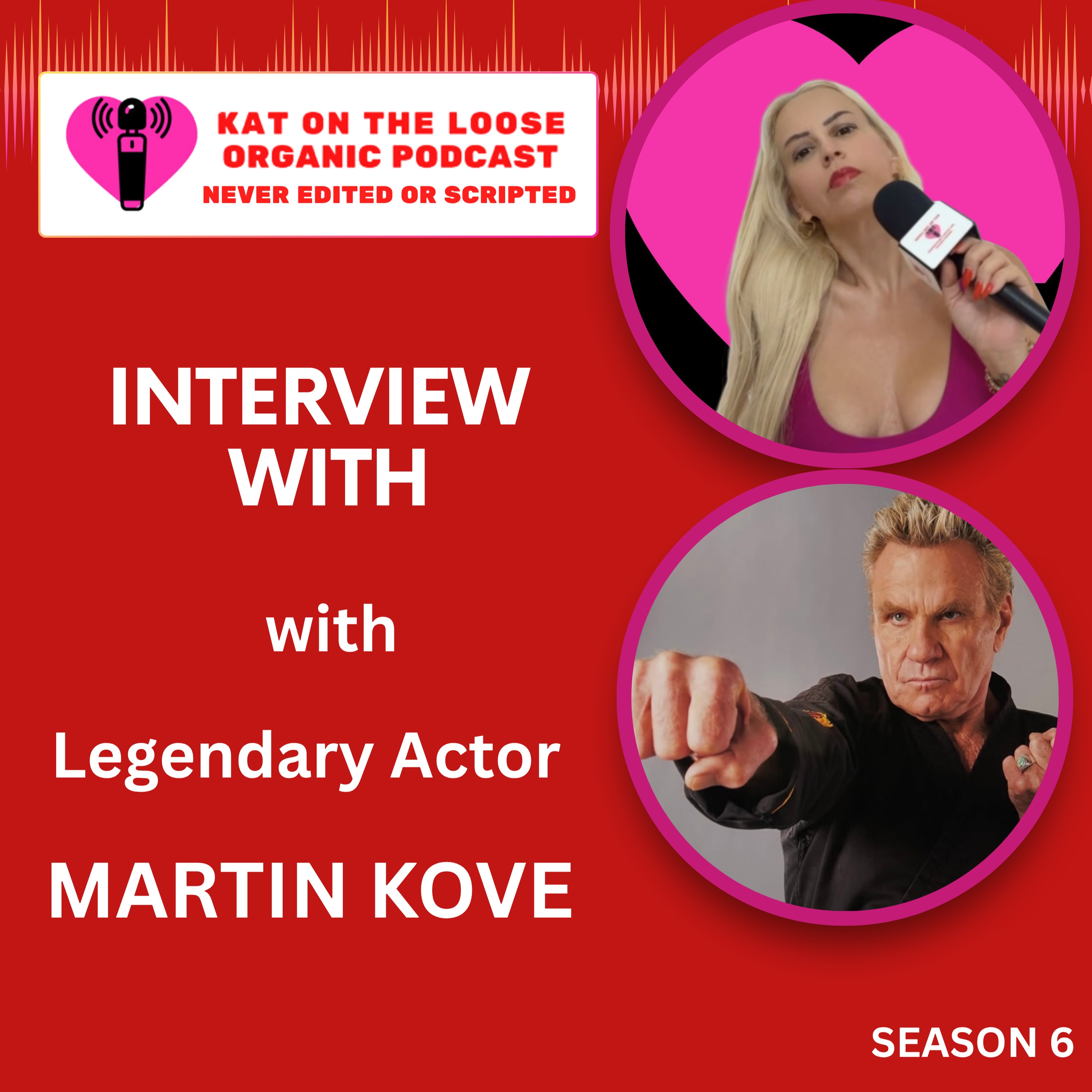
Martin Cove. Welcome to Cat on the Loose.
- [00:34]
A
Thank you.
- [00:35]
B
It's such an honor having you such a TV legend. I can't believe you're here. I'm very honored.
- [00:39]
A
Thank you.
- [00:40]
B
I have a million questions. So are you ready to do this?
- [00:43]
A
Give me up to 750,000. Amazing.
- [00:46]
B
Let's see if we can do that. But before I ask you a question, I want to tell you that you and I have a bond. A lifetime bond. I don't know if your son told you.
- [00:55]
A
No, tell me.
- [00:56]
B
Even before we met you, we have the same birth.
- [01:00]
A
You're kidding.
- [01:01]
B
I kid you not.
- [01:02]
A
My God.
- [01:03]
B
March 6th.
- [01:04]
A
The day. Did you know that that's the day the Alamo fell.
- [01:09]
B
It is. I did not know that.
- [01:11]
A
1836, the Alamo fell.
- [01:14]
B
Oh my goodness, how interesting.
- [01:16]
A
It's a great part of history, right?
- [01:19]
B
I know when your son Jesse came to the show after we wrapped, I, I was like, let me read because we talked about you. And I'm like, oh, you asked your dad to be on the show. So of course I started reading more about you. And when I saw that you're my birthday, I'm okay. It's the universe. You got to come do the show. And here you are.
- [01:34]
A
Ah, yes.
- [01:35]
B
Right. So we're birthday. We know. We're very special people.
- [01:38]
A
Yes, we are. We are. We, we. We're fish that swim in two directions.
- [01:42]
B
Yes.
- [01:44]
A
You know, but they have me a year older than I am.
- [01:48]
B
Oh, really?
- [01:49]
A
And on IMDb you can't change anything.
- [01:52]
B
You can't.
- [01:53]
A
My, my manager has put in, I've sent them passports, I sent them licenses. They don't change it. That's great. It's not like, you know, it makes a big difference. But you would like, as you're getting older anyway.
- [02:06]
B
Yeah.
- [02:06]
A
You'd like, you know, this town is based on youth. So, you know, you want people to think you're younger than you are normally, but when they make the mistake deliberately, you say, oh God, this is no good. I've got to get, you know that's
- [02:23]
B
crazy that they can get that fixed. But now, since you mentioned that, you said this town is based on youth, you're. And you've been an actor forever. You've lasted in this industry. I want to ask a bunch of questions about your career, but do you really think that's the way it is? And I'll tell you why I'm asking this question, because a lot of people say that, right? If you age, nobody wants you, Hollywood doesn't want you. But I'm not sure if I agree with that perspective, because not every role is for young people. Right there, you need actors of all ages. So I wonder if that's kind of something that, you know, maybe younger people or people that are aging that cannot outlast in Hollywood, say. Or do you really think that's the perspective in the industry?
- [03:06]
A
Well, I think when someone is getting older and say, use myself as an example when you do. We did Cobra Kai. It was different than most because it was a phenomenon 35 years later.
- [03:21]
B
Yeah.
- [03:22]
A
Doing the same role in the same project, kind of the same project with three people, two other people that you did that movie with 35 years ago. And we all look alike. We all look the same as we did. So that's one phenomenon. But in general, when I. My manager, the agent has me up for something interesting. And like, Mag, here is a good example. I wanted to do Magnificent Seven. So, okay, MGM plus was doing Magnificent Seven because I love Westerns. So I said, you know, find something in there for me because it'll be great to do a Western. And they're shooting it all in Canada, and there's only one part for an older guy and. And what's his name? Dylan. Matt Dillon is. Is not Matt Dylan. I forgot his first name. But in any case, he's in his 40s and I'm playing a little older than 40, you know, so I understood. But. But in a project like that, you really want it and you have to live with the fact that you are getting older. And it does hurt as an actor because.
- [04:40]
B
Hurts when you don't get the part that you really wanted. Right.
- [04:44]
A
Yeah. Or you don't get up for it at all. That's what hurts most is that, you know, you really, as an actor, I think, you know, your work gets more and more seasoned.
- [04:55]
B
Yeah.
- [04:55]
A
As you go get older. So as you get older, you want to show your wares. Yeah. You know, for sure. I mean, you know, I. I think years ago, I. I could never be charming like Mel Gibson. I always wanted to have that charm of Cary Grant and Mel Gibson. But there was a tension. There was a tension that set in. In my work. Even in Cagney and Lacey. There was a tension that I wasn't Could. I wasn't using the charm of Martin Cove or the sense of humor. Somehow that there was a. It was a toughness that popped in there, you know, and only recently, since I started Cobra Kai was I able to be very comfortable with my instrument and not be trying to do Steve McQueen. You know, I was always trying to do Steve McQueen. And then one day, I don't know it. I. I think, you know, being vulnerable and crying on camera, like in Season six, I love that people think I like to be the tough guy. I don't. I really love the vulnerable roles more than anything else.
- [06:05]
B
Oh, my God, I love that. So let's rewind the whole story, because your story is one of a kind. Super rare in Hollywood. And so interesting, right, because you did Karate Kid, like you were saying, and you were playing this character. And then, of course, Karate Kid is one of the most iconic. I grew up watching Karate Kid. I was like, even for us girls, right, we were watching and just obsessed with the message. And we all loved Ralph Machio. We were like, oh, my God, he's so cute. He looked so. He looked younger than his age, right? Because I think he's my age. I don't know. But then, like you said, the show ends, and decades later, they start another show and they bring you back, you guys, back. But when the show ended, did you think that that would possibly ever happen?
- [06:53]
A
No. The closest thing that would happen would be a sequel.
- [06:58]
B
Yeah.
- [06:58]
A
And then. Then the third season, the third Karate Kid 3, I mean, I was excited because it was written for me, and I couldn't do it because I got a TV series. So I was put on the periphery of Karate K and Vis a Vis, we introduce a character called Terry Silver. And Terry Silver took everything I was supposed to do in the show and I couldn't do it and became my character and puts me on vacation. And the rest of the story is that he does everything written for me. And it's kind of like, you know, it's. It's. It hurts. But yet you're doing your own series, so it's exciting. But you feel, you know, that I let down John Avilson, that you let down Jerry Weintraub. That you let them, you know, let them down because your agent said he can get you out of the series, and he couldn't. So you Know, I lived that Karate Kid syndrome to about 89, you know, and the movie came out in 84. And then with the sequels and. But to answer your question, I never thought it would become a series, but you never know when something's that popular because everybody's pitching a Karate Kid series yet probably five, whether they get picked up or not. You've got at least half a dozen people pitching some series like that, you know, and none of them ever worked. They just didn't work. There was something magical about the movie.
- [08:41]
B
Lightning in the bottle, right?
- [08:43]
A
Exactly. And so, you know, time went on, and I think William Zepkin and I were trying to create a very interesting version of a new movie of Karate Kid. And, you know, until the Hayden Schlossberg and John and Josh came along with a new take, seeing the show through the eyes of Johnny Lawrence, you know, nobody came up with that. They were always trying to do a new Karate Kid. Right, right. With Ralph. And it worked.
- [09:24]
B
So that was like 30 years after. Right, so 30 years.
- [09:27]
A
After 35 years.
- [09:29]
B
35 years. So for you guys that don't know, like, so he did Karate K, Karate kid. And so 35 years go by, and then here comes Cobra Kai.
- [09:40]
A
Yeah.
- [09:41]
B
And they. Cobra Kai brings all of you guys back. You. How do you pronounce his last name? Ma or Macho?
- [09:47]
A
Macho.
- [09:48]
B
Macho. Italian, right?
- [09:49]
A
Yeah.
- [09:50]
B
Ralph Macho. Another. Another.
- [09:52]
A
William Zapka.
- [09:53]
B
William Zapka. So all you guys come back as the same characters that you played 35 years before.
- [10:00]
A
Yeah.
- [10:01]
B
That's very rare. That's very. That's really cool. Right.
- [10:05]
A
When they in and we all. We met it. I remember me, it wasn't far from here. We had dinner at Dantana.
- [10:12]
B
Oh, I love to this day.
- [10:14]
A
So it's still there then?
- [10:16]
B
Of course.
- [10:17]
A
Good restaurant.
- [10:18]
B
Still there, still packed. It's still delicious food. Crazy busy bar. Yes.
- [10:23]
A
So we were there, and the writers sat me down and said, we want you to come do the series. This is what it's going to be about. And I said to them, I'm not interested in doing the tough guy that I did. Really? I said, I want you to write with arcs, right. With vulnerability. I want the character to have redemption at the end of the show. And he said, okay, because I just didn't want to play, you know, sweep the leg. No mercy. The tough guy, you know, Mercy is for the week. I didn't want to do that.
- [10:56]
B
Mercy, you know, mercy is for the week. What are you talking.
- [11:00]
A
It is for the week. I, I. You, I write that on 8 by tens all the time.
- [11:03]
B
No, I love that.
- [11:04]
A
You know, love that.
- [11:05]
B
I was looking through your Instagram, and you write, like, these really cool phrases from the.
- [11:09]
A
The people they want you.
- [11:11]
B
You go to do that is so cool.
- [11:12]
A
You want to do a comic Con. They, they. They usually. They'll have their own phrase, but most of the time, because this guy says so many things that have been utilizing T shirts and sweatshirts and, you know, so you write whatever, you know, mercies for the week. If I keep writing, no mercy or sweep the leg, I get bored. So I write mercies for the week, or I write cobra Kai never dies. I kind of keep myself interested.
- [11:41]
B
Yeah, I love that.
- [11:42]
A
But in essence, you know, they were concerned. Here's a great story they told me years later on a podcast that my kids, Rachel and Jesse had. And on this podcast, they interviewed all three actors from all three writers from Cobra Kai. And John, Josh and Hayden confessed that when they met me in Dantana's and they asked me to come in on episode 10, season one, and I wanted to come in earlier. I wanted to come in. Why can't I come in episode five, episode six, they say, no, you're setting up season two. That's why we want you on the final episode. And they were afraid, based on how tough this character was, they were afraid that I was going to kick their ass. They physically were afraid that I was going to get violent.
- [12:38]
B
Seriously in.
- [12:39]
A
Yeah, they told. They actually told us that on the podcast. We were afraid you were going to get physical when we offered you the part to be in episode 10 instead of earlier in the show. And I said to myself, you know, you talk. These guys are, you know, they're very articulate. I said, but the character is only acting. Right, right, right. But yet he was so convincing as. As a beast in Karate Kid 1. You know, people bought it, but now that's.
- [13:13]
B
I don't know if you guys have the same perception, but bringing the same actors and the same characters into a new show, like kind of a continuation of a story, it's a risk, right? Because you hope it's going to be lightning in a bot, but you don't know. The audience has changed. Everybody aged. Did you guys have the reservation, like, oh, my God, is this gonna flop? Or were you like, no, we know this is gonna. Because it ended up being this massive success again. But did you guys have a vibe about how it was gonna be if
- [13:46]
A
the writing is good? I think on any series, you know, the thing I'm developing Is Prodigal Son.
- [13:52]
B
Definitely want to talk about it?
- [13:54]
A
It's, you know, it's the writing. I met. I met the showrunner for the first time that day before yesterday. And it was fascinating how this is a woman who was weaned and just can't imagine. She has four children, and she lives in Studio City. She was weaned on the Good, the Bad and the Ugly. She was weaned on the Italian Western because her grandmother and her mother loved Clint Eastwood.
- [14:20]
B
Oh, wow.
- [14:21]
A
So her writing a Western, it took so much pressure off of me. But that's another story. We'll get to it.
- [14:28]
B
Yeah, we'll get to it. Wait. I mean, we could. We need two hours. Because your life is so rich.
- [14:33]
A
Okay.
- [14:33]
B
You're gonna have to come back.
- [14:34]
A
I will come back. I'll come back. But the bottom line is your question is a good question. Because what happened was that the writing was so good, and Billy, Ralph and I didn't want all these teenagers coming in. We just wanted the story about us, you know? And so, anyway, so the writing was so good that kids would watch the show, and then the parents would go up to the kids and say, do you want to see those three characters when I was your age and what they meant to me. You want to come and see the movie? And the kids would go, well, okay. They would watch the movie, and they'd love it.
- [15:16]
B
Yeah.
- [15:16]
A
And then the whole family, across the country, the whole family would get in and watch Cobra Kai, and it would become a family event. And I've always verified this. I always ask people, why'd you like Karate Kid? Why do you like Cobra Kai? And I'd get the same answer all the time. Cobra Kai became a family event. And Karate Kid we loved when we were 15, 18, one of three reasons why. One, they were bullied, or two, they had a romance that didn't work, or three, they were a fish out of water.
- [15:54]
B
Yeah.
- [15:55]
A
That parents kept moving, you know, And
- [15:58]
B
I think it gives. At least for me, it gives you hope that you can win and do something special, even if you're the underdog or if you're. Like I said, the fish out of Water is just such a heartwarming story. Right.
- [16:14]
A
I did a movie recently, and I think this is something that Teddy Roosevelt wrote. And it's. The director gave me this, and it was really interesting because Teddy Roosevelt wrote that as long it doesn't matter. It matters if you win or lose. You'd much rather win. But the bottom line is the winner is that person who Puts all the effort in.
- [16:45]
B
Yeah, I love that.
- [16:47]
A
It's whoever is putting the most effort in, he's the winner, whether it's an MMA fight, whether it's a boxing match or whether it's, you know, whether it's the Olympics you're jumping, you know, and it was very valid.
- [17:03]
B
I love that. And the show went on for. I forgot how many seasons. Six. Six seasons. How was it when it ended? Were you, like, super sad? Oh, my God. Did you want it to end? Did you think it was the right time to end it?
- [17:17]
A
Well, since I, you know, cried. Supermarket openings. I really, you know, I like the vulnerability of the last moments where Billy and I embrace and we cry in each other's arms. I love those moments. Those are my favorite moments in my career. And I would say that season six was my favorite part, has been the favorite part of my career because I was able to do what Marty Cove is really about. You know, it's not the tough guy. It's, you know, I love the heritage of making westerns, and I love westerns as a genre more than anything else, but it's not because it's about tough guys. It's about. It's about America. That's why I love it. It's the. It's the heritage of American cinema, the western. And yet I, you know, if I was thrown back in the days of being a gunfighter and you had and it was so tough to. To survive, there would still be a lot of vulnerability for me. You know, I would do what I. I think about that a lot. Would I do what all those people do on our TV shows? The toughness, the hardness, the cruelty. Unless you're faced with that in life every day or once a week or whatever, you don't really know what you do as a sensitive human being.
- [18:49]
B
True.
- [18:50]
A
In other words, you're a tough guy. You. You know what's going to do. You're a hunter. You know, it's going. What you're going to do when Jeopardy. Drops in. But I don't. I don't really know because I, you know, I. I'm. I'm very vulnerable.
- [19:07]
B
Yeah.
- [19:08]
A
Than the roles I play. You know, that's just how it is.
- [19:11]
B
Well, because. Yeah, I, I hear what you're saying, and I. I do agree with you. I think it's a lot harder to play a bad person as a character, so to speak.
- [19:22]
A
Right.
- [19:22]
B
I think you need to give a different part of yourself that doesn't exist in real life as an actor. I did that for the first time. Last year, I worked in a fantastic indie movie, and I played a horrible. For the first time in my life. And we are Pisces, and we're all about love, Right. We're sensitive, we're lovers. And I had to play this horrible, horrible character. She was a coyote that brings the illegals through the desert and kills them and everything. It's a fantastic movie about illegal immigration. Yeah. And I swear to God, I remember when I was filming was really taxing on me. Like, at the end of the day, I was exhausted, and I kept thinking, I can't believe that people are really like that in real life. I can't believe somebody's going through that. I can't believe somebody can be so horrible. You know, it really, like, during the filming of the movie, it took me a while, like, to decompress and get out of it. I can imagine for you, because you did that for so long with this character, and this character became so iconic. So do you think the audiences, sometimes they don't understand, like, they see you in. In real life, and they think there's a part of the character in you. Or maybe they don't see, like, the different. They see that they do.
- [20:36]
A
You know, how many times would they come up in a Comic Con where you meet fans somewhere and they say, I love to hate you. We love to hate you.
- [20:44]
B
Oh, my.
- [20:45]
A
And they say that straight up. When they said about the movies before Cobra Kai came up, it would be, you know, a little painful, I have to admit. You know, because it's not the kind of role.
- [20:57]
B
It's not who you are.
- [20:58]
A
Right? It's not who I am as Cobra Kai, You. You have to remember that you do a TV series, you have a lot more time to develop the character than in a movie.
- [21:10]
B
Movie.
- [21:10]
A
You got two hours, right? You do your backstory, you do what
- [21:13]
B
you can do, and then you're done. You're done. You're not going to go back to that character.
- [21:17]
A
You can't justify why you had that moment or had that emotion. I. I did something like you did. I did a movie that was a book. It was called the Price of Freedom. Very much like Schindler's List, about a dentist who. And it happened in real life, who got a lot of Jews out of Iran in 79.
- [21:38]
B
That's tough.
- [21:39]
A
And I had to play Ayatollah Kankali. Ayatollah Kankali was the second in command to Ayatollah Khomeini.
- [21:49]
B
Oh, my God.
- [21:50]
A
This guy. If you wore red, white, or blue, for any reason, he would condemn you, condemn your family, literally burn your home. Impossible. I said to myself, how do I identify with this? What part of Martin Cove feels this way? I don't have any values or any. Or anything. Any similar emotions to this beast.
- [22:17]
B
So you gotta be a hell of an actor.
- [22:20]
A
Well, what you do is. Yeah, you have. But you have to convince yourself. How.
- [22:25]
B
Yes.
- [22:26]
A
How can you do this?
- [22:27]
B
It's really hard.
- [22:28]
A
It is very hard. And what I did was I created in my head that I'm the hero to my people, that whatever I'm doing is benefiting the people. My people. And they have me as a judge taking care of their needs. And so I felt that he thought that he was doing a service to his people and it was okay to be that beastly and cruel. It's super tough, but I will never do that again.
- [23:00]
B
I know it's very taxing. I mean, people think, like, you know, especially the audience, because when they see the final product, of course, they think acting is all about the champagne and the premieres and the fun. Right. And the success. But it's a really tough profession in the sense of what you were just saying, preparing and getting into character and feeling the feelings. Because at the end of the day, we're humans, right. We. We still feel what's going on. So it's not as easy as you take it. You would think it is.
- [23:30]
A
Yeah.
- [23:30]
B
You take it home. Yes.
- [23:31]
A
I mean, I took.
- [23:32]
B
It really affected me.
- [23:34]
A
Oh, God.
- [23:35]
B
Especially because I'm an immigrant. So as I'm filming this film and I'm seeing these immigrants being killed and murdered and punched, I'm like, oh, my God. I can't believe there are people right there going through this in real life. It was really tough. Fantastic movie, but really tough to shoot. Really tough.
- [23:51]
A
What movie is this?
- [23:52]
B
It's called 40 days. 40 days was an indie movie, but it did incredibly well in the festivals. We went to Cannes last year. I'll send you the link if you want to see the trailer. Yeah. But now I read something about you that I thought was insanely interesting, that you are trained in real life in your black belt.
- [24:15]
A
Yeah.
- [24:15]
B
That's incredible. Tell me the. The story. Like, did you have to do all the. Because getting to black belt is super difficult. Right. It requires an enormous amount of training. Okay. Honestly, I had been putting off getting new glasses for way too long. I'm always dealing with scratches, constantly cleaning them and just telling myself they're fine, because replacing glasses always feels like such a hassle. Making appointments, spending A fortune waiting forever. That's why I was so excited to discover Zenni Optical. It's an online eyewear shop where you can get prescription glasses, sunglasses, even blue light lenses starting at under $30. You just go to zenny.com, choose your frames, upload your prescription and they ship them right to your door. No appointments, no stores, no pressure, and the price difference honestly shocked me. A similar pair at a traditional eyewear store easily cost me around 250, but with Zenny I paid under 30. I literally thought why have I been waiting so long? At this prices you don't have to overthink it. You can get a classic pair for every day, a fun pair, even sunglasses, and still spend less than what one pair would cost elsewhere. Zenny has more than 150,000 five star reviews. And if you're nervous about buying glasses online, they even have a virtual try on feature so you can see how the frames look on your face before you order. And once I started wearing my new pair, I just feels so good to finally have glasses I actually enjoy wearing. So if you've been putting off replacing your glasses like I was, check out zenny.com z n n I.com and see why so many people are making the switch. If your glasses are overdue for refresh, now is the time. Go to zenny.com podcast and use code podcast15 for 15% off your first order. The styles sell out, so don't sit on it. That's zenny.com Z-E-N-N-I.com podcast promo code podcast15 at Fred's Appliance we know that real life is piles of never ending laundry, especially during fourth of July. But relief can happen for those who shop at Fred's Appliance. We don't do gimmicks, just clean laundry and everyday low prices. Right now all laundry is on sale from ge, lg, Maytag and more. Save big on top load and front load washers and dryers plus save up to $800 in rebate when you buy more save more. Shop the largest supply of in stock get it today inventory in the region this fourth of July only at Fred's
- [26:43]
A
Appliance we when we started the movie nobody was a martial artist and I had a background in kendo because we were going to do a project months before called the lion of Ireland which is basically the story of Brian Beru, the first king of Ireland to defending all the tribes against the Vikings. And this was a book by Morgan Llewellyn and we Were going to do it in. In Ireland. And then the tax laws changed in London, Maggie Thatcher changed the laws. This is 1982.
- [27:17]
B
Wow.
- [27:18]
A
So right before. So I'm training every week with swords and, you know, with a foundation of karate. But primarily it was sword work. So we're working with katanas and wagashis, all this wagasashi is a small sword and katana is just standard sword. And we're doing all these moves and learning. And then the movie falls through. And then I get the Karate Kid meeting, and I just had a basic background, same as Ralph, same as Billy. You know, we really were not martial artists. Eventually, you know, when we got the parts, the partner of Chuck Norris, who worked with him in the 60s and 70s as his partner internationally, a man named Pat Johnson, trained us. Wow. Separately myself separately, Billy separately, the Cobra Kai separately, and Ralph and Miyagi separately. And you learned. For me it was attitude. I didn't have a lot of action in Karate Kid 1, but where I became a black belt was for a movie called Steel justice that I did. And I did it about two years later, three years later. And you trained every day and you learned the choreography of a black belt, but you're not going through yellow belt, brown belt, green belt. You're not doing that. You're just going through all the moves in becoming a black belt immediately, you know, after months and months of training prior to the movie. So it was an unorthodox way of doing it.
- [29:01]
B
So you can kick people's ass in real life.
- [29:04]
A
Yeah. But you choose not to because the key. The key have to. Well, someone bothering Christine, Someone bothered my
- [29:12]
B
beautiful behind the scenes there.
- [29:15]
A
You know, someone kicked their ass. Yeah.
- [29:18]
B
I always think of, you're in great hands, Christina.
- [29:22]
A
But, you know, you try and, you know, not use karate. You try, and because you are you. You are a lethal weapon even.
- [29:31]
B
Yeah.
- [29:31]
A
You have to get close. Someone starts with you and, you know, they've got a gun or a knife and they're 10ft away. It's tricky. So it's a. It's a very close. The formula is very close. And you have to be fast.
- [29:45]
B
Yeah.
- [29:46]
A
But you don't look for trouble, you know?
- [29:49]
B
No, of course. I mean, you never. You never look for trouble in real life. Right. But it's kind of functional that you're trained should trouble find you.
- [29:59]
A
Well, you know, that's why I probably like. Because my fantasy world, I've always loved westerns and, you know, I just that it was a very tough game. Yeah. And the more I look at history books. The more difficult it was in this country to survive. Yeah. People would knock on your door and if it was two characters that looked kind of odd, they could rape you.
- [30:30]
B
Yes.
- [30:30]
A
They would come. And you had to be afraid for your family. If you ever left to go to town to get supplies, you were leaving two kids and a wife alone in a cabin.
- [30:40]
B
Wild, wild west. It was very like LA right now, right?
- [30:45]
A
Very much like la. It's like LA traffic right now. Okay. I would like to sit on top of a roof with a 30 caliber and just watch Hit everybody that breaks the law because they all tailgate.
- [30:58]
B
They, oh, listen, they're horrible. But I hope when you're done recording, you're gonna tell Christine, you know what? She's so nice. It was worth, it was worth the deal.
- [31:06]
A
It's definitely. But it was all me because, you know, I'm in Nashville now and Nashville, you know, and I have, I have 11 acres and it's different.
- [31:15]
B
I know. It's a different life. It's a different vibe. Yeah, but you're. So I was saying before we started recording, your son Jesse came. I mean, his friends, he's. He does the wings of resc you with my friend David Chokachi from Baywatch, who's also coming back to Baywatch after 30. Similar story. Super cool. So David connected me with Jesse. They came, they did the show, they. I'm a huge animal rescuer, by the way. That's how we bonded. And he's your son now. You have this longevity in this business. You've been around for decades. When you found out, did you find out you wanted to act or you put him in acting? Because a lot of actors, they are terrified that their kids want to act because the industry is so tough stuff. Did you say anything to him? Did you warn him? Like, you know, this is not gonna be easy. How was that beginning for you guys, that relationship? Because you mentioned he acted with you 7. Several projects.
- [32:05]
A
He's acting several projects. And what was interesting was the first time they acted, they were four and
- [32:13]
B
someone wanted four years old.
- [32:15]
A
Four years old and someone wanted to make a movie. It was a, a very astute female director that was working in actor studio and she said, can I use your kids in a playground? I wrote a little, you know, four page playground film. And is it okay to use Rachel and Jesse? And I said, okay, sure.
- [32:41]
B
And by the way, for people that don't know they're twins.
- [32:44]
A
They're twins. And you know, I was living in, in town and As I watched them do and they were interacting and, you know, as I watched them, I started to cry because. Because I felt that the rejection that you deal with as an actor that we deal with, I, as I'm watching them act, and they would. They were fine. They were reacting off each other in this little playground scene. I did not want them to have to live a life that I have right there in the playground. I started to cry, and the director came up to me and she said, can we do another scene with them in summer? And I said, no. I said, I, I, I think this should end here. Because I did not want them to ultimately, even at 4, be part of that world. That is so difficult.
- [33:52]
B
Yeah.
- [33:53]
A
I've been in this business for 55 years. Since I was 23. I've never had to do anything else. And it. You're up and down, as in, you know, as you just. My definition of an actor is. An actor is a yo, yo on a golden string. It is, you know, and that was it. Forever talking about acting. Then the kids become 18, and Rachel loves it and Jesse loves it. Jesse gets a play about Columbine, the shooting in Columbine. He gets a play at the age of 18.
- [34:37]
B
Wow.
- [34:37]
A
Here on Melrose. And they take it to New York.
- [34:41]
B
Wow.
- [34:42]
A
Oh, my goodness. And I said to myself, wow, he's actually going to do what I did. Walk around with the portfolio up and down the streets of New York. Stallone and I used to do Stallone and I, we knew each other from the early 70s, and we had the same clock maker who was our personal manager. So in the early 70s, he got Sly a job as an usher and a baronet at the movie theater.
- [35:08]
B
Oh, my God. He got me a book.
- [35:10]
A
Oh, yeah. It's in the book. He got me a job as a Santa Claus in Abraham and Strauss.
- [35:18]
B
Oh, my God.
- [35:18]
A
This is the kind of stuff that you do.
- [35:20]
B
Yes. Hey, listen, I have a similar story to dress because my dad was a TV producer, so he put me, like, in TV commercials, all kinds of stuff when I was 4. But then he was like, don't act. You're gonna go to college. Go to college, get a business degree. This is a horrible. You know, so, yeah, similar. Seems I took a long break. But I think when you're an actor, it runs in your blood. I think it can't do anything longer than you. Right. Like, it's the love of telling stories.
- [35:51]
A
Of course.
- [35:52]
B
Right. So I think, I think the actor never really. You can try to do other things, but the actor is Always inside us.
- [35:59]
A
I still read. Read the Highwayman, a great poem that I did in the seventh grade. I still read it to Christine and she loves it. And I read this love poem. It's just a love poem based in, you know, in the late 1700s. And it's about Bess, the landlord's daughter, who this highwayman. This. And Christine is best, the landlord's daughter. And I read, you know, and I read this poetry to her. She loves, loves it.
- [36:29]
B
Oh, that's so nice. Pisces are very romantic. Christine, you're very lucky. Like now we see that. We see you, Martin, not the character. It's so dear. Because Pisces, like you say, you cry. Pisces are very sensitive, sentimental, big heart, right?
- [36:46]
A
Yes.
- [36:46]
B
I think we're like the nicest people in the world, basically.
- [36:50]
A
I think, you know, you always. It's like a cigar. When someone smokes a cigar, you create a camaraderie. Yeah. It's not like having a bourbon. It's not like having a cigarette. It's not like discussing the old neighborhood. It's not like that. What it is, there's a camaraderie that goes on. And it's a phenomenon too, when two people smoke a cigar. You could be on a park bench in Central park and not even know that person. But somehow, because he's smoking a cigar, there is a thing that happens. And that's what happens with Pisces. I think they start dreaming together.
- [37:27]
B
Yes. Before I met you, I told you, son, like Jesse, you gotta connect me with your dad. I know we're gonna like each other, but I have to meet him. We have the same birthday. It's the universe.
- [37:37]
A
Next time I come here, I'll come in a helicopter. Yay. So I won't have to deal with the traffic. I won't have to have an attitude.
- [37:43]
B
I will go to you if you want. I'll go to Nashville. We'll make it happen.
- [37:47]
A
Nashville's fun. You like Nashville?
- [37:49]
B
I love. I've only been there once, a long time ago, but I definitely want to. Gonna go back. But since you mentioned cigars, you brought a gorgeous cigar box. And it says prodigal son on it. Martin Cove. Tell me what that is, please. I don't smoke cigars, by the way, but I love the smell. So I actually love going, like you said, to a cigar bar every once in a while at first, because there are a lot of really nice looking men there. But like you said, people are just talking and. And you meet incredible people at cigar bars. Intelligent people, nice people.
- [38:21]
A
And you always strike up the. You have to remember that. I mean, I liked cigars only because it was elegant.
- [38:31]
B
I'm gonna move the box. If you guys are listening to the audio episode, make sure you go to the YouTube channel. Cut on the little show so you can see Martin and you can see the gorgeous cigar box that he brought. Let me move my mic here for a second. Let's get this here. I want to put it properly on camera. Explain to me what this is, Mark, please.
- [38:49]
A
So the Prodigal Son is a TV series that I've been developing and with my partner Jeff Frost, who ran the television department at Sony. And it go like this on camera. It's basically a graphic novel. And it's a beautiful, colorful graphic novel called the Prodigal Son. And it's really. These cigars are the closest thing to a Cuban cigar you'll ever smoke.
- [39:17]
B
Really? And where are they made? Can I see one?
- [39:20]
A
Yeah. There. I'm giving you one. You're gonna have one forever. So when you go. When you go to the next time. Next time.
- [39:27]
B
Oh, my God.
- [39:28]
A
I want you to be prepared.
- [39:30]
B
You gotta teach me how to smoke. I have no idea.
- [39:32]
A
She does smoke.
- [39:33]
B
I know. She told me girls talk fast.
- [39:38]
A
They did. Well, this. So it's. It's after.
- [39:43]
B
Can you find me a boyfriend that smokes cigar? Christine, please hook me up.
- [39:47]
A
Well, we. You know, I do these promotions, and I'll be back here again. You'll love it. So this. This is a. Is a. A graphic novel that you can get. It was four comic books that I wrote.
- [40:05]
B
Put your mic near.
- [40:06]
A
Oh, yes, people can hear you. It was four comic books that I wrote.
- [40:09]
B
Yeah.
- [40:09]
A
And then it became a graphic novel. And the artwork is. Is wonderful. And so someone came to me and said, why don't I do a cigar with the same name? So when the series comes out, the cigar will be popular already. So I said, people.
- [40:27]
B
So this is something that nobody can find anywhere right now?
- [40:30]
A
No, you can. So we can. We started about six months ago.
- [40:33]
B
Okay.
- [40:34]
A
And if you go to Casa. Casa de Grande in the. It's actually in the Bronx. That's where my. My partner, Paul Silvio is distributing cigars.
- [40:47]
B
Oh, okay.
- [40:48]
A
And so I'll put the information here
- [40:50]
B
on this episode so you guys can find.
- [40:52]
A
This is what it's called. And it's really an incredible cigar.
- [40:56]
B
And so when is this series? Are you in development?
- [40:59]
A
We're in development. So.
- [41:00]
B
Okay.
- [41:00]
A
We're actually on it. And it was really fun. I met my showrunner for the first time a couple days ago.
- [41:08]
B
Oh, my God.
- [41:09]
A
And she is a woman developing a western.
- [41:11]
B
That is so cool.
- [41:13]
A
Her ideas are really.
- [41:15]
B
If you guys need a day player, an extra, you know, a lot of saloon girls.
- [41:21]
A
You're perfect.
- [41:21]
B
Thank you. I. I work for free for you. I'm not kidding. I should be upset with you.
- [41:26]
A
Thank you.
- [41:27]
B
You are a legend. I am so honored that you came to my show. I hope you made the LA traffic a little less pa. Well, I shouldn't.
- [41:35]
A
I should sit in the back because I hated the traffic when I lived here. I should sit in the back and nod and just not even open my eyes.
- [41:45]
B
Yeah, she.
- [41:45]
A
Christine drives around and she is very patient and she has the navigation going and I know the area so well.
- [41:55]
B
When is your birthday, Christine? You are a Pisces too. When is your birthday? Okay, so you're close to us. I never dated a Pisces. Maybe I should try to date a Pisces, Right?
- [42:09]
A
Yeah, you can't go wrong.
- [42:11]
B
Never dated a Pisces. I know. Because you guys are both chill and loving and it's just our nature. We're lovers, right? We are lovers.
- [42:20]
A
Yeah. I mean, there's no question about it.
- [42:22]
B
Yeah. I tell you what, Next time, whatever, I'll send a car for you so you guys can sit in the back. Whatever it takes. So we can do parties part two. Because I had. I have 10 million more questions. But before I let you go. Okay, I just wanna. I wanna read this that you wrote on. On your Instagram really, really quickly. When I saw that Your birthday was March 6. On March 6, you did a post, and I thought it was so touching and so beautiful. Do you mind if I read it? I mean, it's on Insta, so it's public. You wrote. Turns out getting older isn't about slowing down, it's about sharpening the edge. Knowing who you are and enjoying a whole lot more. The miles had wisdom, the stories get better, and the adventures just getting started. No mercy. On my birthday, I thought it was so powerful and so touching and so true about aging.
- [43:18]
A
It's. You know, we never like to age because even if you look good, your body is different.
- [43:27]
B
Yeah, we think we are. We think we're 20, but our body's like. No, not really.
- [43:31]
A
Yeah, I mean, I can't. I used to love to throw the baseball or the softball.
- [43:35]
B
Yeah.
- [43:36]
A
And now I watched these college girls, like two weeks ago, they had the finals and they're fast pitching the ball and I can. I used to be able to Peg from the outfield all the way in. I mean, I was scouted by the by. By different scouts. Now one can't do it and you have to. And it was my favorite thing to throw the ball from center field into home. Home. But now you can't do it because the shoulders.
- [44:04]
B
Yeah.
- [44:04]
A
I mean, from. From diving and doing stunts. I'll go look at a movie and I'll watch. They've had this Martin cove. What do they call it? Retrospect. And they're retrospective. And they had a movie called White Line Fever. Now, White Line Fever I did in 1975. And it was just a tough guy, a heavy. I think I had eight lines. But, you know, you try to impress the director with physical things. So all these fights, falling down, falling off of truck, you know, trucks, all this. And I look at this stuff and I said, that's why my back hurts me. That's why my shoulder is trashed because of continually doing those kind of things in the early days.
- [44:52]
B
But listen, you are in great shape. You're fantastic shape. So obviously take really good care of yourself. So. So, no, I'm sure she has no complaints about that. You guys are beautiful couple. You look amazing.
- [45:03]
A
Thank you.
- [45:04]
B
Thank you so much for doing the show. And I mean, congratulations on such a long, fantastic career because this is so rare.
- [45:12]
A
It's. It goes back to what you just read. You know, I think. I think it isn't any easier as you get older. You know, people think unless you have a massively powerful movie that just came out.
- [45:26]
B
Yeah.
- [45:26]
A
But even then, you don't work for two years because people are afraid you're going to get too much money, that you require too much money. But the fact is, is that you're more seasoned. Yeah, the work is better, but no,
- [45:43]
B
it's better in general.
- [45:45]
A
Well, life gets. Yeah, it does get better. But you know, when you see so many people that you've worked with. Past. Past.
- [45:55]
B
Yeah.
- [45:55]
A
And in the Academy Award, does. In memorial.
- [45:58]
B
Oh, my God, that's so heartbreaking. Right?
- [46:00]
A
Oh, my God.
- [46:00]
B
That always makes me cry.
- [46:02]
A
And you work with these people. Yeah. You know, it's. It's like what you learn from that is to take every day as a gift.
- [46:12]
B
Yes.
- [46:12]
A
Every day is a gift. And as you get older, that's. That's the solace that you live with. That's the. That camaraderie to. Of you, to yourself.
- [46:24]
B
Yeah. One million percent. It's like, about appreciating every moment.
- [46:28]
A
And it's hard because you're driven to try to make things right. You're driven to make a projects. Things that you wanted to do forever, you're involved with. And you. You. You have to learn to go about it all slower because things don't happen as fast as you like, but they happen.
- [46:51]
B
Let me know when you're ready to shoot the Prodigal Son. And I would love to have you back so we can catch up again.
- [46:57]
A
Can you smoke that cigar?
- [46:58]
B
I. Maybe. I'm going to travel.
- [47:00]
A
You really like it? You really like it?
- [47:02]
B
Chat. GPT. Chat. Teach. Maybe. You know what I'm going to do in your honor, Both of you? I'm going to go to, like, a fancy cigar bar here in Beverly Hills. I'm going to ask somebody to teach me.
- [47:12]
A
Just go to the Grand Nevada. I think there's a Grand Havana Room. There's also a couple.
- [47:17]
B
There's like a really cool. I forgot the name. There's a really cool cigar bar here in Beverly Hills.
- [47:21]
A
Yeah, there is.
- [47:22]
B
Gonna figure out the name.
- [47:23]
A
So one is the Grand Havana Room. I'm not sure there's another one, too, but you can go there.
- [47:27]
B
But thank you. I'm so honored you gave me one. That's incredible. Thank you. I really appreciate it so much. And now you guys go enjoy your day. Go to the beach, relax. No more.
- [47:37]
A
I need. I don't see beach in Nashville. Yeah. So what, we're going to go? Yes. It doesn't matter if it's cloudy. It doesn't.
- [47:48]
B
Listen, the fog is going to dissipate. You guys are going to have a fabulous day on the beach. Go enjoy. I am insanely honored that you came to Canada.
- [47:56]
A
Oh, thank you.
- [47:56]
B
Thank you, thank you. Thank you so much.
- [47:58]
A
We'll do it again.
- [47:59]
B
Yes. Thank you, guys. Be safe out there. Go smoke a cigar and I'll see you again very soon. Thank you, birthday twin.
- [48:05]
A
Thank you, my darling.
- [48:06]
B
Thank you.
- [48:06]
A
Thank you, my darling.
- [48:07]
B
I'll see you guys soon.
- [48:09]
A
Bye.
- [48:10]
B
Okay, real talk. Shopping doesn't always boost your confidence. Sometimes you just want to put something on and think, yes, this is me. That's why Stitch Fix works. You take a quick style quiz, size, budget, what you're into, and a real human stylist sends pieces picked just for you. Try everything on at home. Keep what you love, send back the rest. Shipping's free. No subscription required. Get $20 off@stitchfix.com podcast.