← Kat on the Loose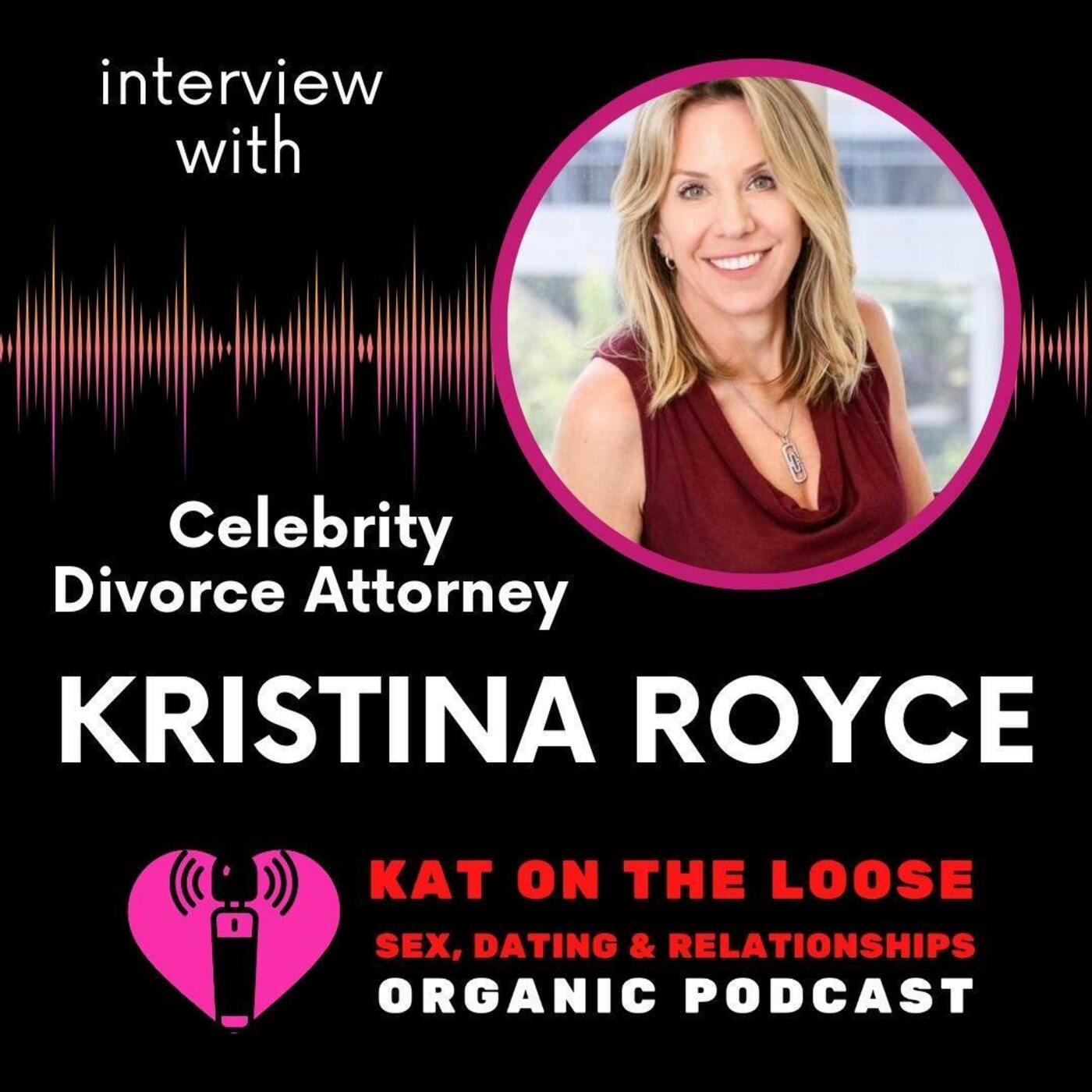
Kat on the Loose
Marriage Divorce & Prenups with Powerhouse Celeb Divorce Attorney Kristina Royce
00:59:23
Loading summary
Transcript161 lines
- [00:01]
A
Guys, thanks for helping me carry my Christmas tree.
- [00:03]
B
Zoe, this thing weighs a ton. Drew Ski, lift with your legs, man. Santa. Santa, did you get my letter? He's talking to you britches. I'm not.
- [00:10]
A
Of course he did.
- [00:12]
B
Right, Santa, you know my elf Drew Ski here. He handles the nice list. And elf. I'm six' three.
- [00:17]
A
What everyone wants is iPhone 17 and at T Mobile. You can get it on them. That center stage front camera is amazing.
- [00:23]
B
For group selfies, right?
- [00:24]
A
Mrs. Claus. Hi, Mrs. Claude Claus, much younger sister. And AT T Mobile, there's no trade in needed when you switch. So you can keep your old phone.
- [00:32]
B
Or give it as a gift.
- [00:33]
A
And the best part, you can make the switch to T mobile from your phone in just 15 minutes. Nice. My side of the tree is slipping.
- [00:39]
B
Kimber, the holidays are better.
- [00:41]
A
AT T Mobile switch in just 15.
- [00:43]
B
Minutes and get iPhone 17 on us with no trade in needed. And now T mobile is available in U.S. cellular stores with sweet monthly bill credits for well qualified customers plus tax and $35 vice connection charge credits and imbalance due if you pay off earlier. Cancel financing agreement. 256 gigs. $830. Eligible for it in a new line, $100 plus a month plan with auto fees required. Check out 15 minutes or less per line.
- [01:00]
A
Visit t mobile.com My guest today, Christina Royce is a powerhouse celebrity divorce attorney. Christina is one of Hollywood's go to divorce attorneys and has represented several very famous celebrities such as channel Tatum, Elizabeth Chambers and Arnold Schwarzenegger as well as many high profile female founders entrepreneurs. Christina is modern, very relatable, razor sharp wit and killer financial instincts. Despite bearing witness to some of the ugliest divorces imaginable, she still believes in love and marriage and above all transparency between partners which is something that I love. She's recently been featured in so many high end publications such as Insider, Forbes, the Cut, the Hollywood Reporter. She took time off of her very busy schedule to come all the way to West Hollywood, to our studios to have this super important conversation about marriage, about prenups. Should you sign one? The business of marriage. And I am so am so grateful because I truly believe this is an important conversation that all of us thinking about getting married should have. So I really really hope you guys enjoy this very very special with the adorable, incredibly talented, incredibly intelligent Christina Rice. And today's episode is made possible to a fantastic company here in Los Angeles. Gold standard builders. Licensed general contractor, design and construction, family owned business. A team of passionate professionals delivering great service, quality, fair pricing. They pay Great attention to detail, making sure everything they do will meet your expectations. They offer free consultations and free estimates. So if you're thinking about remodeling your home or redoing your kitchen, or if you're not even sure about what you want to do to your house, maybe redo your bathroom or let's say your backyard. You want to get it ready for the summer. I know. It's so hard to figure out who you can trust to do a project in your home. We've had pounding rains in la. So many homes are damaged. These are the guys for you. You can trust them 1 million percent. The owner, Adam, is such a nice guy. He's so hands on. And this is why everybody keeps going back to Gold Standard Builders. And this is why I partner with them and I recommend them to everybody I know in LA. Give them a call today, 1-800-46-9189. Check out their projects on their website, Gold Standard Builders. Same name on Instagram. Gold Standard Builders. And like I said, free estimates. No catches. I love that you can totally rely on these guys. They are really, really, really nice. This is a really great one for my New York audience. So guys, listen up and write it down. New York City Wellness, the very best place in New York for pH therapy, chiropractic services and beyond. They have an incredible team of experienced physical therapists, acupuncturists, chiropractors, podiatrists, sports medicine specialists and internal medicine specialists who are dedicated to helping you recover from any pain, injury or discomfort. Find high level of success in their treatment services, advanced technology and methods to fantastic locations. One in Midtown on Madison Avenue and one in downtown on Greenwich Street. Check out their website, NYC wellness.com and make your appointments today. There is no reason to be in pain. Right? I'm even going to give you guys the phone number to make this easier. 212-682-6620. For medicine and for Greenwich, 212-374-0150. Christina, welcome to Cat on the Loose. It's such an honor to have you on the show.
- [05:17]
B
Well, thank you for having me.
- [05:18]
A
I'm very happy because I think this is a super important conversation. So for everyone out there thinking about getting married, all the engaged people out there, listen up. I have a million questions, so let's jump right on it. You are a very famous, very successful divorce attorney. I saw online that the Hollywood Reporter called you a troubleshooter and who the stars call to put out fires and prevent future disasters. So first of all, congratulations on all your success.
- [05:53]
B
Well, thank you. I appreciate that.
- [05:55]
A
So the most common question for us to get started. What is in your opinion, or. I don't know if there is researches about that out there, the number one cause of divorce, because the divorce rate is really high right? In the United States right now.
- [06:09]
B
It's very high. I mean, in my experience, I think there are a lot of people who don't view marriage as a business. And in my opinion. And this goes back to the whole. You know, one of the things we've talked about before, the theory of marriage is I think the marriage is the biggest business decision that people enter into. And there's a lot of rights and obligations and responsibilities associated with that marriage. And one of the things that people don't do or they don't appreciate is all the communications that are required to have when you have a business of a marriage, right? So, like, if you and I were going into a business together, we would talk about what you're gonna bring to the business. We would talk about what I'm gonna bring to the business. We have, we're, you know, transparent with one another. And a lot of that becomes lacking sometimes in a marriage, and there doesn't feel like a level of partnership or equality or commun. And I think that's ultimately what causes the demise of a lot of marriages.
- [07:14]
A
Now, I'm sure a lot of people out there listening, especially girls, of course, because we have a tendency of being super romantic and we're waiting for our prince. So when we're thinking about getting married, you know, we're thinking about the fairy tale. So I know a lot of girls say, oh, my God, you know, we don't want to think of our marriage as a financial transaction. We don't want to think about it ending in divorce. So there's a lot of stigma when it comes to prenups and divorce and all that stuff, right? So what would you say to that if somebody comes and say, I don't want to look at my marriage, but I want to think about the. The wedding and the dress and all that beautiful stuff and till death do us part?
- [07:55]
B
Well, I very much believe in the institution of marriage. So I think there's a lot of amazing things about looking at it like the fairy tale. Like, you know, you want to have. Buy a home together and you want to go vacationing together, and you want to a life together and have children. I think that's all fabulous, but I also think it's very important that we look at it Thinking about the rights and obligations that come out of a marriage. Like for example, I'm going to give you a situation. So let's assume there's a 28 year old young woman who has the start of a career going and she marries someone who's maybe a little bit older, who has to travel the world for work. Like maybe he's a director, right? And he makes a lot more money than her. And he says to her, honey, give up your job, come get married. Let's go travel the world together. We're gonna have the best life ever. And you know, he makes enough money to cover both of their expenses, right? So that she doesn't have to work to pay their bills and she gives up her job for the next 10 years. They're married for 10 years and then they get divorced. He says, nope, I don't want to be married anymore. Where she says, I don't want to be married anymore. So here's the. What, what ultimately happens in the divorce case is if you're married only 10 years or less, you typically only get alimony for one half the length of the marriage, right?
- [09:18]
A
Well, if you don't have a prenup.
- [09:19]
B
Even without a prenup, you only get.
- [09:21]
A
And you're talking about California law, correct?
- [09:23]
B
I'm talking about California law.
- [09:25]
A
Because in a lot of states you don't even, you get nothing.
- [09:27]
B
That's very true. But in California you would get support for half the length of the marriage.
- [09:33]
A
Okay, but here's the issue.
- [09:35]
B
So here's a woman who was 27, 28 when she got married, had a career, maybe had a good trajectory in her career. She now is getting divorced at 38, 39 years old. She gets five years of support, right? And she has given up her entire career during her 30s, which is a huge, huge, you know, time in people's lives where they really can build their careers and build their success, and she's giving that up. And so to me, that's something important. If somebody was going to do that. One of the things that I think is really important is to have that conversation like, okay, well, what happens if I, if we get divorced and I give up my job? How is that going to hurt me? How is that going to, how am I going to be impacted? And those are things that I think people need to know before marriage so they understand what their rights and obligations are before they make big financial decisions like that.
- [10:32]
A
I totally agree. And that's similar to what happened to me because I got married super young and I had A college degree and I had a successful career fresh out of college. I owned my own business, I was making good money. And because my husband was so much more successful and so wealthy, he said exactly that. Oh, travel with me, let's have a great life, you don't need. And he obviously now I see it as kind of like abusive, controlling behavior. He used this phrase a lot like, oh, I make more in an hour in a day than you make in a month. This is so stupid. He basically convinced me to work less and less and less and less and just follow him around for a really long period of time for like well over 10 years. Like I was married for 14 and a half years, but we did sign a prenup. So it's a long story. But anyways, I do agree with you. At the end of a marriage, if you barely worked for 10 years, for 14 years, it's very, very, very difficult to get back in the workplace. Even if you have college degrees such as in my case, most people will not give you a chance.
- [11:44]
B
No, it's very hard. I mean, you were very fortunate because you're such a go getter and you were inspired and you did something during a horrible time where you had opportunities. But it's really hard for women who are now 40 or in their 40s getting divorced. You're not going to get life alimony. And all of a sudden they have to figure out, wait, I have to like start figuring out how to be self supporting. And I wish that the young women in their 20s before they get married learn and understand that and understand what it is like if they get married and give up their careers, you know, and I have a lot of my women clients who when they do get divorced, they'll say to me, I wish I never gave up my job. I wish I never gave up my job. You know, they did it for the family unit at the time, which is wonderful. But it does have consequences to it.
- [12:35]
A
Yeah. And it's sad that, you know, most, and we're saying women, women, women, because the truth is, most of the time it's the woman that suffers because most of the time it's the woman that gives up the career, the job, everything to stay home with the kids. And the guy has the money or the guy goes to work or the guy has the paycheck. Right.
- [12:57]
B
It is more. But there are a lot of women who are, do make more money than their husbands in today's world, but it is more so in that world. And also, you know, I also see, you know, so my point is, I think that if people really enter into a marriage and talk about this, right? And I call it financial intimacy, right? You know, I call it like, we need sexual intimacy in our marriage. We need emotional intimacy. We need to be connected to our spouse. But. But that connection also requires financial intimacy. And that means we're talking about conversations that are not easy to talk about. How much money do you make? How much money do I make? How much money do we need to pay our bills? Should we make this investment or not? Should we, you know, what would happen if I give up my job? How are we going to cover the expenses? What are we going to do if we inherit money? Those are really important conversations that people have and understand. And I think once people have those tougher conversations, they feel closer in the marriage, they feel more protected in the marriage, they feel more like partners with one another. And I think that makes for a much stronger marriage.
- [14:08]
A
I love that. And you were saying before we started the podcast that there are actually some women that get married and don't even know how much money their husbands make or they're embarrassed when it comes to asking the husband. I cannot imagine even not being married. Like, I cannot imagine, like, being on a committed relationship with someone if I didn't know where they stand financially. I mean, can you imagine living, like, in the same home and not knowing someone's financial situation? Isn't that, like, a little weird?
- [14:41]
B
It is very. It's contrary to the policy of the law. So the law says that a marriage is a form of a partnership, and it actually, this gets a little technical legal, but it brings in the partnership code to the family, right? So the family, the husband and wife marriage unit, is required to have the same fiduciary obligations that real partners would do, right? And I think that's a really important message for people because it means it looks at husbands and wives as the ultimate partners in life, right? Just like any business. And so when people don't communicate about how much we have or where our money is or what investments we have or what we're doing, doing in terms of our financial portfolio, it's contrary to the policy of the law, but it happens all the time. Different cultures, different ages. Sometimes there's different when there's somebody who feels more inferior than the other, and it really creates problems in the marriage. That's why I believe financial intimacy is so important now. I don't necessarily believe everything has to be equal. So, like, if you and I got married and I inherit $100 million that doesn't mean you get to share a million dollars.
- [15:59]
A
I completely agree with you, but I.
- [16:01]
B
Think it means that we have to be financially transparent about those situations.
- [16:05]
A
I agree. I completely agree. Yeah, I was telling you also off camera. And I want to share with everyone because I think this is a perfect example that actually happened in my family. I have a younger sister in Florida and she was married for 12 years and she has a 12 year old kid. So when her kid was born, she stopped working and her husband was the provider and he owned the real estate company, whatever, he was renting apart, selling parts. So for 12 years he's coming home, blah, blah, blah. She thought everything was normal, Right. He's paying the bills and she's being a stay home mom. And one beautiful day a few months ago, back last year in October, the kid is in school and she comes home, he wasn't answering the phone. He shot himself in the head, didn't leave a note, nothing. Killed himself. Turns out he was in severe debt. He was borrowing money up and right. Including from loan sharks. How dangerous is that? Using her name to, to also borrow money using her name, her Social Security. And she had no idea. She was completely in the dark because she wasn't asking any questions. She was completely trusting. Well, my husband pays all our bills, I'm taking care of my kid and that's it. So this is a perfect example why I think everybody should be more involved. Even if you depend on your husband, you should know what's going on. You should be a little more involved in the finances.
- [17:32]
B
Absolutely. And think about it like a business. If you're in a business together, you're going to know what's going on with the books and records of the business. Business, you're going to know, how much money are we making? How much can we distribute? How much do we have to. Do we have enough money to run the business? Do we have to take loans? You ask those questions, right? It's the same for a marriage. It is a business. It has the same right. It has huge rights and obligations. And so, you know, there's some people who just trust their husbands and don't ask the questions because they feel like sometimes they don't know the right questions to ask and they don't want to seem, you know, not smart about it. Right. There's other situations where women are fearful about asking because their husbands have made them feel that way. Right. Like, you know, that's not part of your job. You're not going to be knowing that, you know, I'LL handle these aspects. I, you know, you're not going to. And they give them allowance and they spend their allowance, and that's what they do. And there's other situations where maybe they just don't have the skill set to sit down and really have those conversations. Maybe the husband doesn't know that the wife is wanting to be involved. Maybe, you know, there's just the lack of the intimacy. And I think having that lack of financial intimacy also really makes the other important areas of intimacy lacking. Like if a man controls finances and he controls all the finances, oftentimes you see women not being open sexually and not wanting to be open sexually and having sex with their husbands. Right. And then that creates a demise in the relationship.
- [19:09]
A
I completely agree. But, you know, it's very hard. Like when you. When you're married to someone and that person is very powerful, very wealthy. I know, because that was my case. My husband was very, very rich. And so it's hard to pry because they feel like, let's say, if you say, oh, how much money do you have in the bank? How much money did your business make this month? They feel like, you know, oh, you're being greedy. You want more money, you know, even what you're there. Exactly. And I know because in la, there are a lot of these cases. I don't know if you want to comment on a really famous one that has been in the media now for a long time, the Ton Gerardi case with Erica. Right now he's in jail or being tried. Like, he was one of the most famous attorneys in la. And I don't know if she was involved or not, but I understand, as a wife, like she said, how is she going to ask questions? How is she going to ask questions? How is she going to ask questions? He kept coming home and saying, I'm making money, I'm making money, I'm making money. I don't know if she knew or not. I'm just saying that. I totally understand that many times when you're married to powerful men, you feel very intimidated when it comes to asking questions.
- [20:17]
B
It is. I mean, it's interesting because there's something in our world called domestic violence. Right. And we hope that people don't have to suffer through domestic violence. But, you know, typically people think domestic violence is, you know, physical abuse. Right. But the law has expanded to such a degree that the law now says that forms of domestic violence include coercive control and financial coercive control.
- [20:46]
A
Interesting.
- [20:47]
B
So that if I'm going to control you Financially, I'm going to limit you to what you can get. I'm not going to share, I'm not going to be transparent with you. I'm going to make you feel like you can't leave this marriage because of. You're going to be so scared what's going to happen to you financially. That's a form of domestic violence in our world today.
- [21:06]
A
That's very interesting. And probably a lot of people don't know that.
- [21:10]
B
Yeah, well, because you wouldn't think about it. People think of physical abuse, but it's far more than physical abuse abuse. The, the case law talks about domestic violence as being someone who's disturbing calm. If you're disturbing someone's calm.
- [21:24]
A
Right.
- [21:24]
B
And so when people feel like they don't have the right to, to take action. Right.
- [21:31]
A
Yeah. To me, when I think about domestic violence, I think verbal abuse, which is what happened to me for 15 years, and physical abuse. Yeah, I never would have thought. But financial control is definitely a form of abuse because it makes you feel like you're tied. And I know a lot of people that feel like stuck in sit, like, how am I gonna get the hell out of this if I depend on him, if I'm stuck and everything. Before we talk about prenups, because I think this is a very important conversation, let me ask you, because I know a lot of people want to know. Do you also think when it comes to celebrity divorces, and we are not going to talk about your clients at all because of client attorney privilege, but in general, do you think the rate of celebrity divorces is so high for the same reasons as mere mortals?
- [22:15]
B
I do. I mean, I'm sure it's harder in some ways to be in the public, you know, limelight and be scrutinized in that way. But I think, I think, I think being good communicators and being transparent about their assets and their liabilities and being and feeling like partners with one another transcends to lots of different marriages.
- [22:40]
A
Yeah. It's the same issues, right?
- [22:42]
B
Absolutely.
- [22:43]
A
I saw something online that you are known for. Are taking most of your cases to mediation, try to settle out of court as quickly as possible, hush, hush, without the media attention. And I definitely agree. I love that approach because sometimes when I see certain celebrity divorces being played out in the media, especially when there's kids involved, and they drag on and on and on for years and years and years, and they get really dirty and messy, I cringe. Especially when it comes to huge sums of money, like when you're talking about hundreds of millions of dollars. I'm not an attorney, I'm not an expert, but I always wonder, like, is this really necessary? Because it comes to the point, like, there is so much money that we know it's plenty for everybody else. It makes me wonder, why are they doing that? Like, why do they keep dragging it on and off? For example, a lot of people send me that question about Angelina Jolie and Brad Pitt. It, it's been dragging on for years and years and years. And they keep going back to court and they know it's going to be public, right? They know people are going to be.
- [23:49]
B
Able to read it.
- [23:50]
A
TMZ is going to read it, whatever. Their kids are going to know about it. And a lot of people send me these questions and I'm not an attorney, so this is why I'm putting it here today. Why do you feel like they don't have an attorney? Like I said, guys, come on, just let it go.
- [24:06]
B
Well, I mean, look, I think so. To me, I don't think there, I think there's nothing worse than going to court in a family law case. Right? I mean, it is, it is. You are giving up the most important decisions, whether they're financial or relating to your children to a complete stranger. Right? Some courts, some judges are exceptionally smart and some judges are very new and don't have the breadth or knowledge or experience of handling very high conflict, high level financial cases. So I do everything I can to try to keep it out of court. I think courts create delays. They're expense, they're unknowns now, you know, just like any negotiation, the personalities of the parties can take over. So sometimes you have people who are just, they have a hard time compromising. They have a hard time accepting that here's the law and here's how I think it should be. They have people who are very entitled and they think somehow they're going to get a better result going to court. So, you know, to me, I think there are some cases that have to go to court because there are some cases that just need a resolution. They're just too far apart. And sometimes going to court is going to get the case over with. But for the most part, I think most cases should be able to settle. We have huge, huge lots of resources now to help people. So in our world, we work with a lot of mediators who are retired judges and they have, they're stronger than sometimes just regular mediators because they've been on the bench for 30 years. So they have lots of good experience being on the bench, and they come now, help try to help us settle the cases. They're particularly helpful in, you know, celebrity cases because everything's very private and confidential. And so to me, I think that is a much better way of trying to navigate a resolution. But it takes. It takes, you know, sometimes, you know, sometimes when people just separate and they're so angry and they're so hurt, sometimes we just need to calm it down and get them to a place where they can now negotiate in their best self. Right. Like I tell a lot of my clients, put post its everywhere. Be your best self. Be your best self. Just to remind each other, like, you know, to try to keep it calm and keep it not so emotional. But it's hard when you're dealing with the emotions that you have.
- [26:40]
A
Oh, my God.
- [26:41]
B
And think about it. I give everybody bad news every single day. I'm like, you're gonna have to share your kids. We may have to sell your house. We may have to split the estate in half. We may have to sell assets. We may have to go back to work. I mean, I'm literally giving people bad.
- [26:56]
A
News to hear that stuff.
- [26:57]
B
No. And I'm giving people bad news all the time. And that's emotional. And they don't want to. They don't want to. It's hard to accept. Yeah, right.
- [27:06]
A
Yeah. And that, that. That's why you were saying it is a business, and a lot of people don't want to think about it when they get married. So let's talk about prenups. In my case, I dated my. My husband before I got married for six years. I. I didn't really care about getting married on paper, but for him, it was important. So when we decided we were going to get married on paper, he said, I want you to sign a prenup. And I said, said, great. For me, I had no problem signing it because I didn't care. You know, I didn't want his assets. I didn't feel offended by it because a lot of girls, funny enough, maybe you can explain, they feel offended. Like, if a guy says, sign a prenup.
- [27:46]
B
Why.
- [27:47]
A
Why am I gonna. I. I don't even. There was even an episode of Sex and the City. Remember when Charlotte was gonna marry Trey?
- [27:53]
B
She was like, should I do it?
- [27:54]
A
Oh, my God. I'm not gonna put a price on love. And I think it's fair. Like, if you're not after the. The person's money, sign the freaking prenup and make it fair for both of you. If I had a lot of money and I'm gonna marry somebody that has less than me. I wanna, I want them to sign a prenup. You know, I think it's. I, like you said, it's a business. Regardless the romantic part of it, it's. Marriage is a contract. So I completely agree. I think it's a great idea. So I signed it. Let's take a really quick break and talk about very easy, quick fix for a problem that a lot of us have super tired eyes. If you're crazy busy like me, some days there's no amount of makeup in the world that can hide your tired eyes. And this is why I partnered with Mare Marine Collagen eye gels and collagen facial masks. Dermatologist recommended with hyaluronic acid, acid and pearl extract. A professional treatment for puffy eyes, dark circles and eye bags. Mare M a R E e eye gels are a fast and delicate fix for tired eyes. I love them. They're suitable for all skin types and also exfoliate tired skin. This is why I like them. Because some days, especially after long, long, long hectic work schedules, right, I wake up and my eyes are so puffy, I look at myself in the mirror like, oh my God, what I'm gonna do? You put them on for a few minutes and they depuff your skin so fast. You can get yours right now on Amazon or right on their website, iMarie.com I am, as in Mary A R E E.com Professional treatment for dark circles. Those bags under your eyes. Super fast. Dermatologist tested for all skin types. I absolutely love them. And in the name of self love, first I invite you guys to check out one of my favorite small business brands, Orica Soap. Transform your bath rituals with Eureka, a line of luxurious organic soaps, essential oils and bath salts handcrafted in Los Angeles, California with the finest Moroccan ingredients. I love their tagline. Self care is not self indulgence, it is self preservation. And this is what Eureka is all about. Taking time for ourselves, reconnecting with bath rituals and staying at home. Treatments that make us feel amazing. I fell in love with their products when I met Sophie, the owner and she gave me a self care package last year when I met her at an event and I have been using their products ever since. Orica is named after the Ora Valley in the high Atlas Mountains of Morocco where Sophie is from. Check out the website or U R I k a soap.com same name on Instagram Orica Soap and everything smells insanely. Delicious, by the way. You guys are definitely gonna love everything she makes. Guys, I never thought I would say this, but this Black Friday. Instead of buying more stuff I don't need, I decided to invest in my sex life instead. We all know Black Friday is about deals, but what would you rather do do? Spend hundreds of dollars in stuff you don't need or 69 bucks on improving your sex life? Yes. @beducated.com Real Talk no one ever really teaches us how to be amazing in bed. We're just supposed to figure it out somehow, right? Well, that's exactly what I thought until I found Educated. I started exploring their courses because I wanted to understand not just pleasure, but connection. And it completely changed how I see intimacy. I learned and simple, real techniques that make you more confident, more in tune with your partner, and honestly, more empowered in your own body. Beducated is a safe space for all. And that's my favorite part. No matter relationship status, sexual orientation or gender. So if you're ready to level up your love and sex life solo or with a partner, go to beducate.me cat69. That's my code Kat K A T69. To get get 65 off the yearly pass. That's their biggest discount of the year and it's completely risk free. 14 day money back guarantee. So go to beducate me cat 69 and give yourself a gift that will last. And this one is for everyone that loves to play poker and is planning a trip to Las Vegas. I just came back from Las Vegas. I found out about this and I want to share with you guys because I have, I had so much fun. I'm inviting you to go check out the most fun, most private poker game in town. Held right inside Aria's resort VIP poker room. It's called table one and I love the name. And it's very fitting because this is the most exclusive, hottest poker table in town right now. Even if you're not that into poker or new to the game and want to try it out out. This is a great opportunity to network with businessmen, athletes and celebrities in a super exclusive environment. Mr. Beast has played there. Dan Bilzerian has played there. Golf pros have played in it. It's like an elite, exclusive social club, but also a really, really fun, cool environment. And you're gonna play Texas no limit, hold them and you're gonna have have so much fun. It's blowing up. Definitely one of the hottest places in all of Las Vegas right now. However, your name needs to be on the list in order for you to gain access. So make sure you send me a message if you want to do it through Instagram. Cat Zamuto z a m m u t o dm there or text me or WhatsApp on 1310-69-20578 to reserve your seat for priority access. And I am going to give you some incredible special comps that are only available to my guests. You guys gotta listen to this. They will reimburse your Aria Hotel fee for up to $350 for each day you play the game. They will give you private transportation from the airport to the hotel and they will give you access to special airfare deals for business and first class class tickets. I mean, these guys will totally roll out the red carpet for you and you're going to have so much fun. So if you're planning a trip to Las Vegas, let me hook you up with table one and you are going to love it. Don't forget, send me a message. Do you think everybody getting married should sign a prenup?
- [35:09]
B
No.
- [35:10]
A
No.
- [35:10]
B
No. So first of all, I. I wish the word prenup didn't exist. Exists.
- [35:14]
A
Because I love that you said that.
- [35:16]
B
It has such a bad connotation. I wish we would call them partnership agreements. Okay?
- [35:21]
A
Partnership agreements.
- [35:22]
B
Because that's. That goes right back to my theme about, you know, business is a marriage is a business.
- [35:27]
A
Maybe that would dismissify.
- [35:29]
B
Right? And it's less scary, right?
- [35:31]
A
Make less carry.
- [35:33]
B
So if someone comes to me and they said, let's assume they are young in the PR world, okay? And they're 27 years old and they're making $150,000 a year and they're really on the right trajectory. And the fiance comes in and says, well, I have more assets, I'm older, I've really built my estate. I'm worth $10 million and I make $5 million a year. And I want a prenup that says, mine is mine, yours is yours. We have no, no community property, no joint assets together. And I'd asked my client, well, are you going to continue to work? And she says, I don't know, I may want children, I may go. Like I said before, go travel the world with him. You know, like I may go, you know, devote my time to my children in my home. I would absolutely tell her not to sign a prenup because there would be, it would put her at huge financial risk. Risk under that kind of prenuptial situation. I believe in creating community together, creating joint assets together, creating financial security. If someone comes to me and says, okay, my fiance's worth $100 million, I. He wants me to give up my job, and he wants me to help build our estate together and help him manage the estate, but he's willing to put provisions for me in place that create, you know, me to have financial protection. Right. I'm completely open to that kind of agreement. Right. Because we are recognizing that someone's leaving their job to help build the community, and he wants to create community together and wants to provide financial security to my client, then I think it's a very acceptable agreement. There are situations where some people are getting married in their later in life. They've both been married, they both have kids from previous marriages. They both have financial security. I'm very okay with those kind of agreements because they're recognizing that they both came into the marriage with assets and want to protect it. So a lot of times what I worry about, and this is what's hard for some clients, is when they come in and they say, but I love him, and I'm gonna have to sign this and we're not gonna get divorced. And I'm not worried I'm the bearer of bad news and being like, well, what happens if you get divorced at 40 and he now has this many assets and you now haven't worked in 10 years and you only get this much in support? How is that gonna look for you?
- [38:14]
A
Right.
- [38:14]
B
And I have to be the one to look ahead and give them the scary scenarios and see if they're comfortable with it.
- [38:22]
A
Right. So it's on a case by case basis, but I think you can always negotiate, right? Like, you can always put on an agreement. Like I said, even if one person has a lot of money and the other person doesn't have a lot of money, you can always come up with an agreement that is fair for both parties. And that's the idea, Right. Technically, that's what should happen.
- [38:42]
B
That sounds like a partnership agreement to me.
- [38:45]
A
Right. I love that, and I like that name a million times better than. Than pre. Enough.
- [38:50]
B
Me too. Me too. You spread that word.
- [38:53]
A
I think we should, like, I don't know, how do we change the law?
- [38:56]
B
Well, you have the media platform. I don't.
- [38:58]
A
I don't know, maybe let's sign a. A petition or something. Now, some. But for the girls out there listening that, my God, that they have this. This feeling that they get offended if their fiance ask them to sign one, what would you say? Say, do you think that's a deal breaker? Like, if somebody Tells you sign a prenup and they say, I don't want to sign it.
- [39:23]
B
So sometimes, look, I, this goes back to exactly my whole theme about being transparent. I believe that people should have a conversation before marriage about what their respective assets are and how they envision their financial marriage to look. Right? Yeah. So let's assume. And the most common agreements I have, the, the, the most common are people just really want to protect what they're coming into the marriage with. There's many people who are like, I'm fine creating community together and creating joint assets. I just want to protect what I'm coming into the marriage with. And that's basically the law anyways. So we just want to codify the law and make it and memorialize it. But I believe that people should have a conversation saying, look, I think we should have conversation about entering into an agreement and to talk about what is important for me as to the finances in our marriage and what's important to you. My policy, and I've taught everybody in my, in my firm who does family law, I don't dress, draft agreements and hand the other side a 40 or 50 page document. I won't start drafting an agreement until we all have a meeting of the mind. The woman, the man or whoever, the two spouses are getting married and both lawyers, and we have an agreement as to what should the contract contain. And only once we have an agreement do I draft the agreement. So I won't draft a 40, 50 page document without a meeting of the minds on everything. So I believe in having these conversations. I believe in talking about what each party's goals are. I believe in saying what's going to happen when you're 45 years old and how is that going to look? What's going to happen if you have you decide to give up your job and have children? What happens if you want to be a worker but you have a child who has some special needs and you have to give up your job?
- [41:17]
A
Right, Exactly.
- [41:19]
B
So I have all of those conversations.
- [41:21]
A
And that day comes, ladies, because like I said, when you're engaged and you see the beautiful diamond and you're madly in love and you're buying the dress and the party, you're not thinking about 10, 14, 15 years from now, but the future comes. And I agree you should think about all of that. As much as it's not very romantic, it's a great idea because you don't want to make mistakes. You don't want to be in the situation that my sister is now like all alone with a 12 year old, you know, having to start over from scratch with all those issues or even what happened to me with all the chaos that happened, you know, after Anthony died. I definitely agree. This is why it's important to ask all those questions and come up instead of. I think this is what I say, if you're engaged to someone that is requiring you to sign a prenup, instead of feeling offended by it, think about what you would request on the agreement or what would work for you, what's.
- [42:19]
B
Important to you, but just because. And this is where I say the prenup word is so bad, they may, once you have those conversations, that person may be saying, I just want to make sure I protect what I came into the marriage with. And maybe it's not offensive and maybe it's not something that the other person who is. Is on the receiving end needs to be scared of, but it requires the conversation. Now, if the person says, hey, I want everything to be mine and I don't want to share anything and I'm never gonna pay you any alimony, well, then they need to think about if that's a real partnership that they want to enter into.
- [42:57]
A
Yeah, right, Exactly. I agree. Now, what do you think about when people do get married, do sign a prenup, and then when they go get divorced, they decide to contest the famous, like, oops, I didn't know what I was signing. I made a mistake. Like, as an attorney, when you see that situation, what is the vibe you get?
- [43:17]
B
So it is. Many people come to me and they said, I never read it, I didn't understand it. And I'll say, okay, well, did you have a lawyer? And then I said, yeah, but you.
- [43:27]
A
Have to have a lawyer, right, to sign a prenup. Right.
- [43:29]
B
You technically don't have to, but I never entered into it without a lawyer on the other side. I wouldn't sign a prenup without a lawyer on the other side, or I wouldn't have my client signing it without a lawyer on the other side. But so the law very much will support prenups because the goal is the public policy is to allow people to enter into contracts, and if it's easy to get out of it, then you're not really upholding the law that contracts should be binding. Right? So it's a very tough thing. The law now says you can't have a valid agreement unless the final draft of the agreement is done within seven days. To try to avoid this, like, duress arguments, Right? Like, I signed it the Night before the wedding. Now, the law tries to prevent that from happening, which I think is a really good thing. The law certainly encourages both people to have lawyers and full disclosures of assets before entering into it. But they're contracts, they're binding. It is really, really hard to get out of them.
- [44:32]
A
Yeah, I think I've heard many stories like that. My husband, when I met him, he had gone through a divorce before me, and she contested the prenup, and she created total chaos. So usually when I hear stories like that, I'm like, I mean, come on, you know, we're adults. You hire an attorney, you know what you're signing. I think it's about playing fair. Don't go 10 years down the line and. And decide to change your mind. I just think that's, like, it's really hard.
- [44:59]
B
I mean, I. Look, I do think the people who have signed the prenups that are there have many people who really didn't feel like they signed it, knowing all the different. What could happen. And I think they did feel duress us. But once you have a lawyer and you've negotiated it and you've negotiated changes, it is really, really hard to set it aside.
- [45:22]
A
Let's talk about bank accounts for a second, because this topic has been in the news a lot this past week because what's his name? From the shark tank? I love him. Kevin. Kevin o' Leary was giving financial advice, and he was telling couples that he thinks, in general, don't put all your money together, like, in one bank account. You know, keep your assets in separate bank accounts. What is your opinion on that?
- [45:50]
B
Well, it all depends. So just be. If. If you and I got married and I earn a dollar tomorrow, that dollar is community property, regardless of whether it went into my individual bank account or a jointed bank account.
- [46:04]
A
So that's important information. So wait, like, without a prenup?
- [46:09]
B
Correct.
- [46:10]
A
So, like, if we just go to Vegas, like, a lot of people go, like, la, la, la, la, and we.
- [46:14]
B
Get married, then every.
- [46:16]
A
If I make 500 bucks, 250 is yours.
- [46:20]
B
Correct. Well, you have to take off taxes and the living expenses.
- [46:22]
A
Guys, pay attention before you get married. See, this is a business transaction. You're giving up half of your stuff.
- [46:29]
B
You are. So. So the. The.
- [46:31]
A
I did not know that.
- [46:33]
B
So bank account. The title on the bank accounts don't make a difference.
- [46:37]
A
So it doesn't matter even if it's in my bank account.
- [46:39]
B
So the question is, what's the character of the money? If you have a prenup, the Character of that money is going to be determined by the prenup.
- [46:46]
A
So if the prenup says if you.
- [46:49]
B
Don'T, any income earned.
- [46:51]
A
Because most couples do not. Most couples in the United States do not.
- [46:55]
B
Right. So any income earned during the marriage in California or in community property state is what we call community property. It doesn't make a difference if it goes in my name or a joint account.
- [47:06]
A
Wow, I did not know that. So this story of having two bank accounts is all baloney.
- [47:12]
B
Unless you have a prenup that says your income is yours and my income is mine, then you want to try to avoid commingling because it just requires a lot of unraveling of everything. But if it's simply money that's earned during the marriage and it's community, it makes no difference between what, what title, bank account.
- [47:31]
A
How about if you buy an asset?
- [47:34]
B
So there's lots of different rules in California. Without a prenup. If you buy an asset like a, like a house, we buy a house and it's jointly titled. That house will be community property. If one person used money that they had before marriage or that they inherited. So we call that separate property. For the down payment or capital improvement, you get a reimbursement. Right. So an easy example is to say if you and I get married and we buy a five million dollar house, and I had a million dollars in my bank account before marriage, and I put a million dollars down on that house before, you know, during the marriage, the house is community, but I get a million dollars back for my reimbursement, and the rest would be shared equally between us.
- [48:19]
A
Oh, wow. So these things are like, you really gotta pay attention to what you're doing.
- [48:23]
B
Well, so what I give a lot of advice is, is even if people don't enter into a prenup or partnership agreement, I am a strong believer in talking to a family lawyer before you get married. So a lot of times I will have families come to me and they'll bring their kids because they'll say, oh, my kids are going about to get married. They're in their young 30s. Can you give them a tutorial about what happens during the marriage? And I'm like, of course. So I give a lot of people some advice about, here's what happens if you inherit money, here's what happens if you buy a house, here's what a prenup could do, here's what a prenup can't do. And at least they feel like they're more educated before they get married. So they understand. It's like, before I had children, I'd read what to expect when you're expecting. Right. Like I would want to know what am I supposed to expect?
- [49:13]
A
The problem is. And it's funny because I have girlfriends in their late twenties and in their late. Their late thirties, and all because they. They want to get married. They want to get married. Of course, they repeat every single day, I want to get married. I want to get married. I want to get married. They don't think. They're not thinking about anything else. So, like, you know, it's like the horses with the thing on the side of their eyes. So this is really important stuff. But, like, so. And I keep saying women because. I'm sorry, girls, it's women. Like, your heads are up in the clouds. You're thinking about the marriage and the prince and all this stuff and the babies. They're not thinking straight about, like, really important stuff like that that can severely affect your lives. And not even. I'm not saying 10 years from now. I'm saying, like six months down the road or a year down the road when you're thinking about buying a house or if your mom passes away or if you inherit something.
- [50:06]
B
Oh, I have people coming to me all the time, and they're like, oh, well, the house is jointly titled, so I own half. And I'll say, okay, well, how did the down payment get made? And they're like, well, he inherited $10 million and used that inheritance to pay for the house.
- [50:20]
A
Oops.
- [50:20]
B
And I'll say, well, when did you buy the house? They're like, oh, six months ago. And I'm like, well, there's no appreciation in the past six months, so the house will all be his. And they're just dumbfounded.
- [50:31]
A
Oh, yeah. So this is why it's so important to educate ourselves. And, you know, I'm a huge, huge advocate, as I was saying to you, for I don't care if you marry the richest man in the world. I think women should have their own money somewhere, I don't know, stashed away, put away, hide under the mattress. I don't know what you do, but I think get married, don't get married, do whatever you want, but you gotta figure out a way to have your own safety nest.
- [51:03]
B
Well, and I think, you know, you can certainly feel that way, but I think the biggest safety nest is being transparent with your partner and really entering into a marriage where your spouse treats you like a full partner.
- [51:16]
A
Oh, yeah. That's one of the hardest parts, right that's so crucial. But we're almost running out of time and I still have like 10 million questions. I know this is something else that people want to know that I get asked a lot and I keep saying I'm not an expert on attorney. So let's take advantage of you. How about. And there are millions of couples in the United States, people that are not married but live together. Are there any laws that protect that?
- [51:46]
B
Very little.
- [51:47]
A
So very little.
- [51:48]
B
It's very hard. So there's no, there's nothing in California called common law marriage. Just because your boyfriend, girlfriend for a long time. And even if you live together, even if you share a bank account, it doesn't mean that there's, you have the same rights as married couples do. Okay? So it's very important to understand that. And because the only thing that people can, can obtain in those kind of relationships are it's called, what's called a Marvin right? Okay. And a Marvin right is when people can sue on oral contracts. Like you and I have an oral contract. You say, christina, will you build me a deck on my house? I'll pay you 10,000 for building the deck. We don't have a, we don't have a written contract. I build the deck. You owe me now $10,000. Right? It's the same thing for two people living together. I promise you, if you give up your job, I'll take care of you for the rest of your life. I will provide for you. I will let you own this. Now the problem with that is how do you prove it right? So you don't go to the family court, you have to go to a civil court. And, and it's very hard to prove. It's very hard to establish those kind of rights. And so it puts people who are in these long term relationships who believe that there's like trust and we're going to share assets and they're going to provide for me. It puts them at huge disadvantages.
- [53:09]
A
So there is no law. Like you cannot go to court and say, oh, I've been living together with my boyfriend for five years and he's been paying my bills. And no, nobody's gonna. What's the palimony?
- [53:21]
B
That's the, the palimony is the, is like the Marvin claim.
- [53:24]
A
So, so you, but you have to.
- [53:26]
B
Sue on an oral contract. And it's really hard to prove because the other person's gonna say, I never promised to pay for her for the rest of her life. I was boyfriend, girlfriend. We're living here. I purposely didn't want to get married. That was not my intention to get married. And so I didn't. I made an intentional decision in that way. And they're going to be in a really tough situation.
- [53:49]
A
So you can be living together for a long time, like years, five, six, seven years. And if one person decides to get up and go, like, even if this person is paying for all the bills, they can leave and leave you hanging. And there is no law that protects you.
- [54:06]
B
Correct. And there's no law that even if someone passes away during that relationship that you get any rights.
- [54:11]
A
Wow. So it's probably not the best idea. She's shaking her head no. Do not move in with someone and be completely financial dependent on them.
- [54:23]
B
Right. Or you can create agreements, make it in writing, make it solidified. Right. So people can enter into what we call cohabitation agreements where we define the rights and obligations of, of one another. But, you know, and it's sad. It's sad. But being trustworthy can put you at a disadvantage. Right?
- [54:45]
A
Yeah.
- [54:45]
B
You know, there are many laws that happen with a marriage, and you don't get those same laws just because you're living with somebody. So you have to decide, look, do I think it's good to live with somebody before marriage? Probably. I think there's something good about that because you learn what it's like to actually live with somebody 24 7. But I don't think you, you should not rely on the fact that just living with somebody, you, you have rights and obligations. You have rights as a. So associated with that.
- [55:14]
A
Fantastic.
- [55:15]
B
But it's these kind of, it's these kind of podcasts that let people understand, oh, maybe I need to talk to a family lawyer or maybe I need to research in what my rights are so people don't just make assumptions. I think if people make assumptions, well, I'm on title, so I own half the house. Or we've lived together for 10 years. We have a joint bank account. Account. It doesn't mean anything.
- [55:36]
A
I love that. I think the most important thing is get educated.
- [55:40]
B
Correct.
- [55:40]
A
Get educated. If you have any questions, if you don't know what the right step to do is. Yes. Find an attorney, call an attorney, listen to a podcast. I don't know. There's so many resources out there. You even mentioned to me before we started the podcast that there are resources for abused victims, victims that are being abused financially. There are resources for all kinds of, of, of situations out there.
- [56:04]
B
There are. And you, there's Google, you know, you can Google stuff. But, but there are Situations like. Like, I'll give you an example. Like, I have people who. They say to me, they. They were living in California, and during the pandemic, a ton of people moved away, Right. They went to. To. To Texas, they went to Florida. They went to different locations. And I said to them, make sure you know what your rights are before you go to Texas. I mean, Texas has no alimony for a spouse.
- [56:33]
A
Oh, really?
- [56:34]
B
No. And child support's capped at, like.
- [56:36]
A
Oh, lovely.
- [56:37]
B
Yeah.
- [56:37]
A
And child support's a nice place.
- [56:39]
B
So it's like. It's like, before you go, move somewhere, figure it out. Figure it out. Or before you give up your job, figure it out. Figure out what your rights and obligations are. It's really important. We need to be financially savvy in our world. World.
- [56:53]
A
Totally. I completely agree. Christina. This was so fantastic. Before I let you go, one last question. So anybody out there listening, thinking about getting married? I mean, you've seen 10 billion divorces in your very long, fantastic, successful career. If you could give them one piece of advice. I don't know, anything that you want to say that you would suggest to try to make a marriage last and be successful, what would that be?
- [57:18]
B
I mean, I think it goes back to, like, communicate. And don't just put your head in the sand about it. You know, communicate, ask questions, be knowledgeable, treat each other like partners. You know, that doesn't mean everything has to be equal, but you have to feel that partnership level.
- [57:36]
A
I love that. I think communicating is key. And like you said, if your partner is not letting you find out about his finances, if you're embarrassed of asking questions, if you're afraid of asking questions, if that's a bear, that's a big red flag, right?
- [57:50]
B
I mean, look, you're all about relationships. You want to teach people about relationships, right?
- [57:54]
A
Oh, I don't know if I want to teach people. I'm learning with everyone else. Like, we're all learning together.
- [58:00]
B
Right. But you're open. You're trying to create a platform so people understand it. Right. You know, relationships require levels of respect and trust, and especially in marriage. Marriage, it's a. It's a business. So you've got to treat each other like partners.
- [58:15]
A
Yes. And I have to say one thing that I really love about you. You are a divorce attorney, one of the top divorce attorneys in the United States. Extremely successful. But you're happily married, by the way, she has a beautiful family, three kids. You've been married forever. So because a lot of people have this image. Oh, divorce attorneys Are these bitter, nasty bitches that want divorce, want everybody to get divorced. Divorced. Because that's how they. But that's not true.
- [58:42]
B
No. I strongly believe in marriage.
- [58:44]
A
Yeah. And that's the first thing you said to me when you got here today. And I love that because I do, too. I'm an eternal believer in marriage and love and long lasting relationships. So I think that's a very beautiful message, by the way.
- [58:57]
B
Right, I do. I just, I believe that it requires work and that work is getting over those big obstacles of fear and, and treating each other like partners. I think, look, you know, I think if there's going to be a situation where somebody's going to say, you don't get to know anything. I'm going to sign the tax returns for you. You don't get to know where the bank accounts are. Here's how much money you get to spend on a monthly basis. To me, I just don't think that marriage is going to be long lasting. And I think, unfortunately, the recipient of that is really going to lose his or her identity for sure.
- [59:31]
A
Yeah, it happened to me. Lesson learned. I think that's how life is. We move forward stronger and better. Don't let it happen to you. Let's educate ourselves. It was such a huge honor having you. Thank you for taking time from your busy schedule. And yeah, guys, educate yourselves before you make any decisions. Thank you so much, Christina. This was incredible. Be safe out there. Thank you, thank you, thank you, thank you. Last but not least, before I let you go, those of you that know Cat on the Loose know that one of my favorite places to shop for casual, cozy everyday wear is girly a la mode. Building a worldwide community for body positivity, self love and inclusion. Hashtag Everybody is beautiful. The Love Collection out now with a bunch of cozy sweatshirts, hoodies, beanies. One of my favorite pieces is the organic reusable tote. So many nice gifts for you, for everyone you love. Love. And the name of the collection is the love collection. So many beautiful, adorable things. Go check it out. Girlyallamode.shopping girlyalamode.com on Instagram Girlyalla Mode. G I R L I E a la mode. And let's spread some love. Big shout out to the Berata House House, one of my favorite casual dining places in the heart of West Hollywood. They make authentic, delicious, fresh Italian food, sandwiches, pasta, salads with the delicious, delicious, fresh burrata on Top on 161 South Crescent Heights. So if you're looking for a place that you can have a quick bite for lunch, dinner takeout for your family. Family. This is it. And I love, of course, supporting local businesses. So if you guys are in the Los Angeles area, West Hollywood, go check out the Burata House. If you guys want to see pictures, buratahouse.com on Instagram Burata House. I love, love, love their food so much. Everything is really, really yummy.