← Kat on the Loose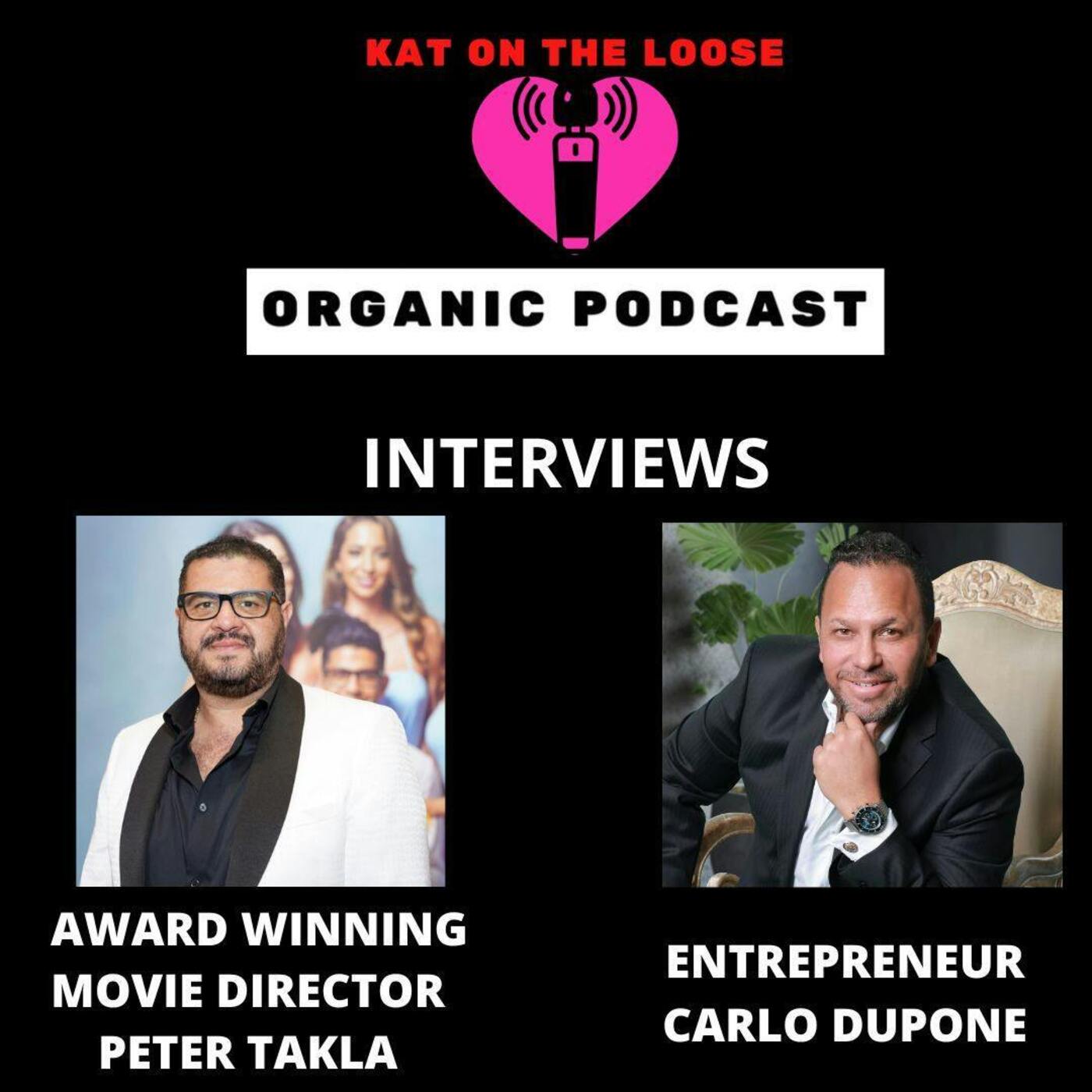
Kat on the Loose
MOVIE MAKING AND IMMIGRATION WITH AWARD WINNING MOVIE DIRECTOR PETER TAKLA AND ENTREPRENEUR CARLO DUPONE
00:48:43
Loading summary
Transcript209 lines
- [00:01]
Kat
Guys, thanks for helping me carry my Christmas tree.
- [00:03]
Drew Ski
Zoe, this thing weighs a ton. Drew Ski, lift with your legs, man.
- [00:06]
Peter Tekla
Santa.
- [00:07]
Carlo Dupont
Santa, did you get my letter?
- [00:08]
Drew Ski
He's talking to you britches. I'm not.
- [00:10]
Kat
Of course he did.
- [00:12]
Drew Ski
Right, Santa, you know my elf, Drew Ski here. He handles the nice list. And elf, I'm six' three. What everyone wants is iPhone 17 and at T Mobile, you can get it on them. That center stage front camera is amazing for group selfies, right, Mrs. Claus?
- [00:26]
Kat
I'm Mrs. Claus much younger sister. And AT T Mobile, there's no trade in needed when you switch. So you can keep your old phone.
- [00:32]
Drew Ski
Or give it as a gift.
- [00:33]
Kat
And the best part, you can make the switch to T Mobile from your phone in just 15 minutes.
- [00:37]
Carlo Dupont
Nice.
- [00:38]
Drew Ski
My side of the tree is slipping.
- [00:39]
Kimber
Kimber, the holidays are better. AT T Mobile, switch in just 15 minutes and get iPhone 17 on us with no trade in needed. And now T Mobile is available in US cellular stores with 24 month legal credits for well qualified customers plus tax and $35 device connection charge credits and imbalance due if you pay off earlier accounts. Financing agreement, 256 gigs, $830 eligible board in a new line, $100 plus a month plan without our PayPal taxes and fees required. Check out 15 minutes or less per line.
- [01:00]
Kat (Host)
Visit t mobile.com on this episode of Cat on the Loose, we are going to talk about the art of making.
- [01:06]
Peter Tekla
Indie movies with award winning director Peter Tekla.
- [01:10]
Kat (Host)
And we are also going to talk.
- [01:12]
Peter Tekla
About a subject that is so important to millions of us in this country. The American dream and immigration.
- [01:21]
Kat (Host)
And how thousands of people every single.
- [01:25]
Peter Tekla
Day risk their lives to cross the border through Mexico in search of this dream. Many of them not only risk their lives, but lose their lives.
- [01:36]
Kat (Host)
And this is the subject of Peter's.
- [01:38]
Peter Tekla
Next upcoming movie called 40 Days, which.
- [01:42]
Kat (Host)
I am very honored and proud to be a part of.
- [01:45]
Peter Tekla
My second guest is the very, very successful and incredibly nice entrepreneur, Carlo Dupont.
- [01:53]
Kat (Host)
Carlo comes from a Mexican family.
- [01:56]
Peter Tekla
He's a real estate developer in Mexico. He owns one of the most successful real estate agencies in Mexico called As Are, which is also kindly sponsoring this podcast. And although he's American and lives in.
- [02:11]
Kat (Host)
The United States, several of his relatives.
- [02:14]
Peter Tekla
Have risked their lives doing the crossing and now they're very, very successful business people living here. So very few people know stories so up close and personal like he does. And he was kind enough to drive all the way from San Diego to.
- [02:29]
Kat (Host)
My studio in in West Hollywood to share the stories with us.
- [02:32]
Peter Tekla
So I hope you guys enjoy this.
- [02:34]
Kat (Host)
Very powerful, very special epis of Cat on the Loose.
- [02:38]
Peter Tekla
Did you guys know that the Mexican Riviera is one of the most sought after vacation home destinations in the world? Known for its stunning beaches, vibrant culture and year round warm weather. With picturesque coastal towns like Cancun, Playa del Carmen, Tulum, it attracts tourists and investors making it an ideal location for vacation homes and of course investment properties. And at the forefront of this beautiful booming market is Asamar Realty, your trusted partner in navigating the real estate market in this paradise. They have a deep understanding of the local landscape and trends and loss. And their expert team is dedicated to guiding you through every step of the buying process. Whether you're looking for a serene beachfront retreat or lucrative investment opportunity, they are there to provide personalized support and insights. So reach out to the astamar.com a s t a m a r.com info@astamar.com in the US 1760-429-7689 tell them I send you discover the beauty and potential of the Mexican Riviera with Astomar Realty. And your dream property out there is just a conversation away.
- [04:01]
Kat (Host)
Oh my goodness, guys, I have major, major successful manpower on this week's episode of Canon Deleuze. To my left, Peter Tacla, successful award winning movie director. To my right, one of the men that I admire the most. I mean I consider you my mentor, business mentor, super successful business owner, entrepreneur. Carlo Dupone. I don't even know how to explain because you do so many things, Carlo. You own one of the top real estate companies in Mexico, Astamar. You are a real estate developer. You, you, I mean you're multi hyphenate, multi talented. Thank you for driving here all the way from San Diego.
- [04:38]
Carlo Dupont
Absolutely.
- [04:38]
Kat (Host)
Welcome to Cat on the Loose.
- [04:40]
Carlo Dupont
Thank you for having me.
- [04:41]
Kat (Host)
Welcome to Cat on the Loose.
- [04:42]
Peter Tekla
Peter. Thank you for having me, Kat. I'm so enjoying being with you guys and especially in here.
- [04:48]
Kat (Host)
I know and I'm very honored because both of you live super far away. So I know it was a really long drive and there is so much we have to talk about in 45 minutes. So let's do this fast and furious and I'm going to explain to everyone why both of you are here today. Peter, we filmed, we finished shooting a movie just like a few weeks ago that we were talking about that we're so proud of that you are directing and I am very, very honored to be a proud of part of called 40 Days it's a movie mostly about immigration. Right. Do you want to explain a little bit without telling too much about people? Because the movie is coming out really soon. But for the audience that doesn't know us, can you just give them, like, the. The short, short summary about the movie?
- [05:33]
Peter Tekla
Well, I'm not sure it's going to be short or not, because this, this movie, it has, like, a very good place in my heart. I worked on it, like, so, so much and so hard, and I was enjoying working with everyone in the crew. I'll try to be very short and direct to the point. So it's called 40 days, and it's about illegal immigrants who trying to make the hard way to the United States through South and Central America. And actually their point of start starts from their country of origin, way further than South America, and they travel through a tough journey all the way until they get to the US border and where the story happens. So we're trying to emphasize on how tough this journey is and how these people are victims of a lot of criminals that they face too. Sometimes they make it to the US and sometimes, unfortunately, they don't make it. It's tough. We're trying to say that, yes, America is land of, like a dreamland or land of dreams or the American dream, whatever you name it, but your life still worthy. Do not put it in danger. So this is basically what we were discussing in this movie. We've been working for about a year and a half now since we started the idea, writing, casting and crewing. And we just wrapped about like three weeks ago.
- [06:58]
Kat (Host)
Yeah, yeah, it was a very, definitely, very special project. Very tough shooting. Like we were telling Carlo before we started filming, shooting the podcast, we were literally filming out in the woods. But like you said, it's about people trying to get to the United States the hard way, the hard way, through Mexico, through the desert, and a lot of them end up dying in the process, falling in the hands of these coyote criminals. And this is why I decided I gotta invite Carlo to be a part of this episode, because all three of us are immigrants and come from. Well, Carlo, you come from a family of immigrants, and a lot of people from your family have actually gone through this in real life, correct?
- [07:41]
Carlo Dupont
Well, yes, that's correct. Kind of common concept is, I think that a lot of the people that come through my family came over through, and they just give some context during the 60s and 70s, and most of them came out here and they migrated towards the Bakersfield area where all. When you go down a grapevine you see all the agriculture and they worked in the fields there. They worked hard. None of them I can probably say were criminals. They all were hard working, grew up there. They had families of their own. Kids, which are my cousins now, the second generation, which would be considered myself as well, which are my cousins. Most of them are all successful now. College graduates have great jobs, some controllers. One of my cousins actually runs their whole agricultural company there now, where her parents worked.
- [08:41]
Kat (Host)
They came from Mexico.
- [08:42]
Carlo Dupont
From Mexico. And they came just exactly how the movie is going to depict. They came that way.
- [08:49]
Kat (Host)
They risked their lives because they were looking for a better future.
- [08:55]
Carlo Dupont
Better future for their family, a better place to live, opportunity. Also a lot of things we got to realize is it's difficult to make money in Mexico. So when they come here, they make more money. They send money back to their families, help support their families at home as well.
- [09:11]
Kat (Host)
But that's the interesting thing, right, Peter? I mean, you're from Egypt, I came from Brazil. You come from a family from Mexican immigrants. We are very lucky because we made it right. We live here. We all agree that our lives are very prosperous here. I think we all agree that we're very lucky. But that's not the case with everyone. A lot of people don't make it. A lot of people die trying to get here. A lot of people get in the hands of these coyotes. For people that don't know what the coyotes are, maybe you got. Maybe you can explain better what a coyote is.
- [09:47]
Peter Tekla
Well, absolutely. So it's not. We're not against immigration because we are immigrants. So a lot of immigrants are very successful in here. I would say most of them. And I totally agree with Carlos because media shows that some immigrants are like criminals. But no, no, we're not. We're very successful. We're trying to make our life better. And same thing with people trying to come from different parts of the world through the same journey. And most of them, they don't really realize or they don't really know how tough it is. Maybe they've been told that it's tough journey, but they didn't know that they are in hands of coyotes. It's a term maybe you call like smugglers or they're like a mafia or something. They're like very terrible people that taking advantage of people want to immigrate to the United States.
- [10:41]
Kat (Host)
You pay them and they say they will cross you here. Correct?
- [10:45]
Peter Tekla
Yes. Well, this is ideal. But you pay them and sometimes they ask for more and more and sometimes they kidnap people, ask for more Money. Sometimes they kill people if they don't.
- [10:54]
Kat (Host)
Pay them, because to them, these people are just merchandise.
- [10:59]
Peter Tekla
True, true. Actually, some stories that I was told, that they get dressed into Mexican police so people would feel like, okay, we're safe in police hands. But they're not actual police. They're fake.
- [11:11]
Kat (Host)
Oh, my God.
- [11:12]
Peter Tekla
So a lot of these terrible things that immigrants wouldn't know about, and the worst part is that they don't allow them to use their cell phones to make videos, so they can't, like, warn other people coming from different parts or taking the same journey. So most of the immigrants are, like, more into victims and more than being criminals. So they come here looking for better life, for opportunity. Yes, America has the land of opportunity, but they don't realize that they might not even make it to the U.S. right.
- [11:50]
Kat (Host)
I think many times they don't realize they're risking their lives. They might end up dying in the middle of the desert. And you were. We were having lunch before coming here to the podcasting studio, and you were saying something like that happened to one of your relatives that he was crossing and they asked for more money or something.
- [12:05]
Carlo Dupont
Yes, not too long ago. A few months ago.
- [12:08]
Kat (Host)
Oh, a few months ago. So this is fresh.
- [12:11]
Carlo Dupont
It was fresh, yeah.
- [12:12]
Kat (Host)
Oh, my God.
- [12:13]
Peter Tekla
Oh, that's sad. Yeah.
- [12:14]
Carlo Dupont
So he was traveling through the desert and oh, by the way, about cell phones you were mentioning, they made them take all the cell phones, go into one of the guys, takes all the cell phones and controls them all.
- [12:27]
Peter Tekla
So they don't even allow to hold.
- [12:28]
Carlo Dupont
No, they weren't even allowed to hold their phones.
- [12:30]
Kat (Host)
Oh, my God.
- [12:31]
Carlo Dupont
During that particular time, they didn't.
- [12:32]
Peter Tekla
Okay.
- [12:32]
Carlo Dupont
So. Yeah, and so they. They charged. I think it was about $10,000 to cross. And this is a common thing they do is they. Once you're in the middle of the desert, they'll make a phone call to the family members and say, if you don't, we. We need an additional $20,000 or what? Have whatever the XYZ amount is, and if you don't deliver, we're going to leave them here in the desert, and we're going to leave them here without any water, without any food, nothing. Just drop them off. Or. Or lots of times they'll just say, we're going to kill them, we're going to kill them, and we're going to leave them here. So, you know, these families don't have $20,000 just to, you know, just sit around like, you know, like anyone. So they have to call family members, borrow Money. Call friends, get all the money together, and then do a Western Union wire or their other forms of payment that they take and get the money wired over to them. So then in this situation, it ended up okay. He ended up in the city he was supposed to go to, which is Utah in the state. But it could have ended badly if they didn't have the money.
- [13:33]
Kat (Host)
Or you still don't know. Like, you could send the $20,000 that they're demanding, and you still don't know if he's gonna.
- [13:39]
Carlo Dupont
That's actually in a lot of cases where they do send the money. Still don't.
- [13:43]
Kat (Host)
They could still kill the person.
- [13:44]
Carlo Dupont
That still happens. You never know.
- [13:46]
Peter Tekla
Untrustworthy. So you cannot. You cannot trust them.
- [13:48]
Kat (Host)
Right? You cannot trust I. And actually, I. So a little background about the movie. When Peter invited me to be a part of the movie, I was so honored. And then. And I know this is an even bigger honor because you said to me, which role do you. I. I had two options between the roles. I could play one of the officers, right? The. The interview immigration officer, or I could play a coyote. And I said, I want the tough one. I want the really toug. I want to play the coyote. And he let me do it. And he was really, really tough because, you know, it's the opposite of my nature. I'm zero violent. I'm zero mean. It was a very difficult scene to shoot because I had to be nasty to those people and really mistreat them. And in my mind, I had to believe that. And I really. And. And it really shook me up thinking that, oh, my God, those people. And it's funny, because we were shooting in the elements. Like I was telling Carlo, we were literally up in the Tohanga Mo Mountains. It was cold. It was the end of the day after we were shooting for, like, 12 hours. And mentally, of course, we're actors. You know, we know it's fake. But, you know, mentally, we're living that for a long time. And we see those people with those faces, and we're getting tired, and you're being so mean to them. And I started thinking, oh, my God, I cannot believe people are actually. Right now. There are some people out there in the desert probably going through the same. Can you imagine the psychological abuse and fear that these people going through to get to the United States?
- [15:20]
Peter Tekla
Yeah, you're absolutely right. So, as you mentioned, you're an actor, so you feel like, okay, at the end of the day, I'm acting. I'm going back home. But imagine the Actual situation, which as much as acting, we do as much shooting or lighting or whatever, the actual location, but still the reality is worse. I've heard a lot of stories that kind of matched Carlo's stories. And some people actually paid money and they got killed because they don't really care about person's life. They have multiple people. They just need money. And imagine how people under this stressful situation that they don't know actually they are gonna make it, they're gonna be alive, what they should do at this moment. And also one more story. Speaking of money, I was wondering, I was asking people, like, if you have to pay like $10,000, sometimes more to go for a better life, you can spend this amount of money in your home country and do something for you. And this question just pop up to my mind, and I realized that actually they borrow this money. They don't own it, they don't have it. They just borrow it from their family, their friends, sometimes from. They sell whatever they have and just hoping to come to the US make more money and just pay this money back. So they're sacrificing their money, their positions, their. Even children, their life just for this tough journey. And from the other side, the coyote that you played, one of them taking advantage of this. So they taking their money, taking their life.
- [17:01]
Kat (Host)
It's really tough.
- [17:02]
Peter Tekla
Raping their women. This happened.
- [17:05]
Kat (Host)
Raping and killing and leaving them behind.
- [17:07]
Carlo Dupont
Actually, more often more common than not is. Yeah, is the women. This is not an actual family member. It's a friend. Because obviously I have a lot of friends as well in Mexico. And his daughter that came across, she was 22 years old and she disappeared. They don't know where she's at. They don't know if they got sold to sex trade or human trafficking or was killed in a desert.
- [17:34]
Peter Tekla
Imagine the parents, their parents feeling they don't know where she is right now. Is she alive? She's not. Is she suffering? Of course she is.
- [17:41]
Kat (Host)
Yeah.
- [17:42]
Peter Tekla
Will they ever see her again? I mean, it's very tough feeling, and it's mixed feelings. And at the end of the day, you ask yourself a question. Does it really worth it?
- [17:53]
Kat (Host)
Is it worth it? Right. Risking our. I don't think it's worth risking our life for anything. But this is a. I have a few tough questions for you guys. Obviously, election year, I think this movie could not be coming at a more appropriate time. It's such an important story to be told, and. And there's a major reason why I wanted to be a part of it. Number one, the honor of working with you again because you know I love your work. If you guys never watched his movies, please go to Google him. Peter Takla in. In a few years he made 10 movies. His movies are winning awards because we have the tendency to watch movies from American filmmakers which are fantastic, but we have so many fantastic international filmmakers. So here's a very well deserved plug. Go watch his movies. They're really fantastic. But this one coming in a perfect timing. I see these politicians on tv, right? They talk about the border, the wall, immigration. I do this, I do that, I do that. A lot of them don't have this close approach. Like Carlo is literally your family, it's your relatives. I don't know, doesn't matter who you want to vote for. But this is one question is this problem. I'll ask you first Peter, and then you, Carlo, do you think this problem is fixable? These people trying to cross the desert and being abused and this literally human trafficking?
- [19:13]
Peter Tekla
It is. Of course it is fixable. And regardless, my political views, because I do have some political views, but.
- [19:18]
Kat (Host)
Yeah, but I know, let's try to keep that. Yeah, I'm gonna keep a whole other episode.
- [19:23]
Peter Tekla
I'm gonna keep this to myself. But in this movie, we had zero politics. So we were talking about this issue from the humanity side. From do not risk your life. Yeah, from you are a victim. Just wake up. This is not something that you want to do for yourself or your children. Regardless of the political views, it is fixable. Any political party can fix it. And I think they can just make a better immigration way or immigration laws or make it look more controllable. And I really believe it's fixable. But maybe for political reasons, maybe they don't want to, or they want to, but they're waiting for some time. But definitely it is fixable.
- [20:19]
Carlo Dupont
Well, it's definitely fixable, but I think without getting political, obviously, but if you reach a bipartisan agreement between both sides of the political party here and work in conjunction with the Mexican government, if, if they can reach that kind of an agreement together, together they can make that area safe and make it safe for people to. To apply for immigration, apply come over legally, not have to do what they're doing. Yeah, I understand. You said, you know, you wouldn't risk your life for coming through, but stop and think about what kind of lives are they experiencing right now in South America and those areas, those impoverished countries. A lot of them are politically, they're put in jails, they have no choice. A lot of Them are threatened to do certain things that they don't want to by the local gangs or cartels in those countries. So they have to leave. They have to flee with their families and they have no choice. So they might as well risk. Risk going through the desert with their entire family to get through here because otherwise they're going to get killed anyway. And their countries are in.
- [21:21]
Kat (Host)
So in this case, that's a very good point and it's a very tough one. But in this case, and I don't know, maybe you know the answer. Can they. Could they file for, for, for example, political. Because, you know, like in. I know a lot of Russian people, they file for political asylum because they say, oh, I'm. I'm feeling afraid for my life. There could do, you know, if Mexicans, if they were afraid, afraid of the cartels or something like fearing for their lives, could they file for some kind of political asylum here? Probably not. Right.
- [21:52]
Carlo Dupont
There's avenues to that. But they.
- [21:53]
Kat (Host)
The kind takes forever, right?
- [21:55]
Carlo Dupont
Yeah, it takes a long time.
- [21:56]
Peter Tekla
Forever.
- [21:57]
Carlo Dupont
And the US takes, does take precedence towards countries or there are other countries.
- [22:01]
Kat (Host)
Yeah.
- [22:01]
Sponsor/Ad Voice
So, yeah, it's a, it's very complicated.
- [22:04]
Kat (Host)
Right. It's the same for Egypt, right. To immigrate legally. If you come, let's say you come legally, you take off a plane and you land here. Like if you, if you're not going through the desert, if you, I don't know, if you say, I'm gonna get on a tourist visa and come here and try to figure out a way to stay. Takes forever and ever and ever, right?
- [22:29]
Peter Tekla
Well, kinda. But what you said is legally, so they can just take a tourist visa and come here and there are multiple ways to change the visa, I think. I'm not an attorney, but based on my little experience, yes, there are multiple ways. But this is the way that we were asking people to do. Just try to come legally. Or at least if you exhaust legal resources, then you think about it. But the illegal resources, you. It's still, it's still the same thing. So what happens once you, you get you. You guys.
- [23:04]
Sponsor/Ad Voice
I never thought I would say this, but this Black Friday, instead of buying more stuff I don't need, I decided to invest in my sex life instead. We all know Black Friday is about deals, but what would you rather do? Spend hundreds of dollars in stuff you don't need or 69 bucks on improving your sex life? Sex life, yes. @beducated.com Real Talk. No one ever really teaches us how to be amazing in bed. We're Just supposed to figure it out somehow, right? Well, that's exactly what I thought until I found educated. I started exploring their courses because I wanted to understand not just pleasure, but connection. And it completely changed how I see intimacy. I learned simple, real techniques that make you more confident, more in tune with your partner and honestly more empowered in your own, your own body. Beducated is a safe space for all. And that's my favorite part. No matter relationship status, sexual orientation or gender. So if you're ready to level up your love and sex life solo or with a partner, go to beducate.me cat69. That's my code, cat K A T69 to get 65 off the yearly pass. That's their biggest discount of the year and it's completely risk free, 14 day money back guarantee. So go to beducate me cat 69 and give yourself a gift that will.
- [24:23]
Peter Tekla
Last successfully cross the border. It takes still some time to get a green card, maybe years, maybe, maybe whole life. So it's not even something that would be guaranteed. Of course they would be safer than what happened in their own country. And I totally agree with that. Some people, they don't have choice. But I don't think the millions out there at the border, they all have no choice.
- [24:51]
Carlo Dupont
No, I agree, that's true. Yeah.
- [24:53]
Sponsor/Ad Voice
Let's take a really quick break and talk about a problem that I know most of us have. Especially after super crazy long work days, puffy eyes, dark circles, eye bags, tired looking skin. And this is why I partnered with Marie Marine. And now I am madly in love with this brand of collagen eye gels, collagen and hyaluronic acid face masks. They use ocean sourced natural ingredients such as pearl extract, algae extract, everything science backed, everything sustainably formulated which is so important, ethically and responsibly sourced. This USA brand really really really works. I use my face masks every Sunday and I have fantastic skin all week long. And when I super tired I put the eye masks at night and I wake up with fantastic, fantastic skin. I invite you to check it out. You can buy all of their products right on Amazon. It is spelled Mar M A R E E or right on their website. I am a dot com. Check it out. I fell madly in love with everything they do. I truly believe one of the most important things we learn as we're getting older is how important it is to put ourselves first and really invest time in taking care of our bodies, mind, soul and of course our health, which is our most precious asset. So women Everywhere. This message is for you because my brand new sponsor, Winona W I n o N a is here to help all of us out there who are dealing with menopause and perimenopause. Wiona is a collection of obgyn and health professionals who believe that your symptoms are important, real and deserve to be taken seriously. Winona is the home for physician prescribed bioidentical hormone replacement therapy with an easy to use network of doctors based out of your state who can make getting started with hormonal replacement therapy a breeze. Wynonna's bioidentical hormone replacement therapy is made from plant based hormones rather than synthetic, which is something so important to me and I know to so many of you out there. So it aligns with your body's natural rhythm to offer relief from hot flashes, weight gain and other uncomfortable symptoms that so many of us have felt before. 80% of women who use WONA find relief within just 90 days. How great is that? Visit Buyynona.com today to start your free visit. With free US shipping and the ability to pause or or cancel anytime your path to wellness has zero obligations, make sure you use code kat k a t@byynona.com for 25% off your first order. Wiona Menopause and perimenopause Care made easy. We love that.
- [28:10]
Kat (Host)
But it's a very complicated problem because of the. Well, especially coming from Mexico because of the amount of people coming.
- [28:18]
Carlo Dupont
They come in droves. Yeah.
- [28:19]
Kat (Host)
Yeah.
- [28:20]
Carlo Dupont
It's not just a desert anymore. Now they're coming through boats and I mean boats have recently landed along the San Diego shores.
- [28:26]
Peter Tekla
Oh my God.
- [28:27]
Carlo Dupont
And they come running out. I don't know if you've seen those videos, but I haven't.
- [28:30]
Kat (Host)
Yeah, I have.
- [28:31]
Carlo Dupont
They come in the little, you know, little pine panica boats and just pull up right to the shore and they all run out. Like it's just happened in Carlsbad. And they all come around and spread out. There's cars there, SUV's waiting to pick.
- [28:40]
Kat (Host)
So it just gets worse and worse and worse. Your family, the ones that made it like you were saying, they build a great life for. Because it does happen. Thank God, right? There are some happy ending stories. Thank goodness. So these relatives, do you know what they say about it? Because you use the phrase that I hope people notice you said they're not criminals. Because a lot of Americans. And it's hurtful. I know. Because I'm an immigrant and I know. I mean, I suffer prejudice ever since I was a little kid. Just the fact that I'm from Latin America. They don't know a lot about us and they have this wrong image. And we see that a lot on TV and everything, especially in election year. They think everybody that comes here, especially illegally, are criminals. Criminals. And you use that phrase very delicate, delicately, in the beginning, said they're not criminals and they're productive and they do this and they do that and they do that.
- [29:35]
Carlo Dupont
Well, I mentioned that because it's the first. Right now when you.
- [29:37]
Kat (Host)
And it's so important.
- [29:38]
Carlo Dupont
All you hear in the news now is they just talk about this criminal. Criminal. That's what everyone just thinks.
- [29:42]
Kat (Host)
That's all that's going on. And it's not true.
- [29:43]
Carlo Dupont
No.
- [29:44]
Kat (Host)
So what do your relatives say about this whole situation? Have you ever asked them?
- [29:50]
Carlo Dupont
A sensitive subject. They're, you know, my uncles and aunts are now older and they don't really like to talk about that. No, you know, they, what I can say is they all worked towards getting either their U.S. citizenships or their visas and they've bought their homes, they have mortgages, they have credit card bills and they, you know, so they're doing great.
- [30:10]
Kat (Host)
They made it.
- [30:11]
Carlo Dupont
They made it.
- [30:11]
Kat (Host)
Yeah, they made it.
- [30:12]
Carlo Dupont
Have. Yeah.
- [30:13]
Kat (Host)
When we started filming, the first day we filmed the movie, not in order, but the first day we were filming in the office of an attorney. She's a real, very successful immigration attorney. Right.
- [30:27]
Peter Tekla
And she's immigrant too, by the way.
- [30:29]
Kat (Host)
Yeah, she's a very successful immigration attorney and she was consulting for Peter because Peter wanted to make the movie as realistic as possible. And she was talking about these detention centers and how people are treated when they come in and like. And it was to me, and I can never describe the way she described it. I wish she was here right now. But I was like really shocked because it's not like they get this one on one individual attention and the attorney and everything. They're literally thrown in a detention center officer.
- [31:04]
Peter Tekla
Yes, because as far as I know, as far as I was told, it's. They're not, they're not few, handful amount of people. They're like thousands.
- [31:12]
Kat (Host)
Yeah.
- [31:13]
Peter Tekla
Sometimes like hundreds of thousands. So there is no enough officer to do officers to decide whether they're allowed to get to the, to the S or not. So they throw them in detention center. Sometimes they spend month and month until they get a decision. I want to go back to the, the criminal thing that the media shows and I want.
- [31:34]
Kat (Host)
Oh, yeah, yeah.
- [31:35]
Peter Tekla
Because this is one of the movie messages. So we, we, we, we want to show that immigrants who decide to come illegally, obviously they had. They are. They exhausted their choices to. To come legally. And they're not. They're not criminals. They're not trying to come for criminal reasons. They're just victims. They don't know how tough the journey was. And they have dreams. They have American dream. They want to come here. We have this pregnant lady, she wants to give birth to her kid in the US and just raise him. And they have dreams to have their own house, their own nice job. And at some point they realize that they are victims. They are not. They're not criminals. So this is something that we want to emphasize with the movie. Going back to the detention center. It's again, it's a horrible place. Although it's safer than traveling to the US border, but it's still a horrible place. It's a prison, obviously. And actually we made it to shoot in an actual detention center. And it's a prison. It's a place that you just staying there, waiting for a decision, you don't know when you might.
- [32:50]
Kat (Host)
And a lot of them, by the way, get sent back after all this trouble. They cross the desert, okay? They don't get killed. They get a lot of money taken away from them.
- [33:00]
Sponsor/Ad Voice
Right?
- [33:01]
Kat (Host)
A lot of money. And then they make it here and then they get sent back.
- [33:09]
Peter Tekla
Absolutely.
- [33:10]
Kat (Host)
They're not allowed to stay. Can you imagine the frustration?
- [33:12]
Carlo Dupont
Or just imagine the women too, that get assaulted sexually? You know, they're raped in the desert. They make it through now under detention, and then all that they went through, and then they're sent back back.
- [33:23]
Kat (Host)
Oh, my God. I cannot. I cannot imagine.
- [33:26]
Peter Tekla
It's a case by case situation. I think it depends on the immigration officer or the immigration judge. Depends on what? What the laws. But not everyone make it to the detention center. Not necessarily to be admitted to the US Most of them actually send back. And I think they are signing a law or something that they want to send almost everyone back, even if they got to the.
- [33:47]
Kat (Host)
Because that's the thing. That's a question, right? And I don't want to get political, but it's a massive amount of people. It's so many. And I think they get desensitized, right? They are treating those people like numbers. Like even. I remember a scene that we were shooting this officer, like, when she goes interview the main character. They literally, they have to interview piles of people to decide what they're gonna do with them. So to them, if. If they get emotional with each person that comes there, they wouldn't Be able to do a job.
- [34:20]
Carlo Dupont
Right.
- [34:21]
Kat (Host)
Right. So we get emot. It's like, oh, my God, I could never do this job. I would be crying all day long. But they literally, like, okay, you go do the, like the way the girl. Right. They're very automatic.
- [34:32]
Carlo Dupont
Like, that's why you want to play the coyote in the movie. You couldn't play that.
- [34:36]
Kat (Host)
I wanted to play the coyote because I never played a bad guy, you know, because I'm cute and blonde and adorable. So usually that's the types I play so different.
- [34:47]
Peter Tekla
I know.
- [34:47]
Kat (Host)
And I told Peter, I said, give me. I promise you I'm going to show up looking like a nasty.
- [34:53]
Peter Tekla
You did it amazingly.
- [34:54]
Kat (Host)
Thank you. And I think I looked like really nasty. I was. I was. I would be afraid of me if I saw me if.
- [35:01]
Peter Tekla
If you guys are following cats. So you will see a very, very different cat.
- [35:05]
Kat (Host)
I started posting a little bit of the behind the scenes and it was so cool because one of the guys there, he was like. He had a lot of training and he would have loved. I should have forced you to go there, Carlo.
- [35:16]
Peter Tekla
This day.
- [35:17]
Kat (Host)
Because we had. What's his name? Oh, my God, I'm horrible with names. One of the actors, he had a lot of training with the props and martial arts and guns.
- [35:28]
Peter Tekla
I mean, Tito.
- [35:29]
Kat (Host)
No, no, not Tito. He was one of our actor. Oh, my God, I feel so bad that I forgot his name. And he was. We were literally doing before my scene. He was. Because I never did that. I never punched anybody in my life. So we were doing like all these lessons. Like, this is how you punch and this is how you go on somebody's face, and this is how, like, you hold a gun and move. So it was like, really fun, but really intense because you have to believe if you have a gun, you would shoot someone. If you're gonna punch someone that you really mean to punch them, to hurt them, because you hate them. Right. All these things that are not my nature. But if you're gonna do that scene, you have to believe you're gonna do it.
- [36:11]
Peter Tekla
That's true. So the reason a coyote that you played is punching someone, it's not because they hate them. It's because they are not allowed to talk.
- [36:19]
Kat (Host)
Right, Exactly.
- [36:21]
Carlo Dupont
Intimidation tactic.
- [36:22]
Kat (Host)
Exactly, exactly.
- [36:24]
Peter Tekla
It's just something to show them and to show everyone that, hey, you're. You're. You're just a number. You're. You're just a couple hundred dollars or whatever, a couple thousand dollars that you pay to us and that's it. Yeah, you're not allowed to object. You're not allowed to ask questions.
- [36:36]
Kat (Host)
Yeah.
- [36:37]
Peter Tekla
So this is basically.
- [36:38]
Kat (Host)
Yeah, it's literally like, shut up, shut up, Don't. And actually, that was the line. No, I'm not gonna. No, no, that I'm not. Don't. Don't let me talk too much.
- [36:46]
Peter Tekla
Let me tell you a story. It's. I'm not sure it's a. Should I call it like a funny story or a terrible story? But it was told to me by one of these immigrants. So, you know, there were some Egyptians. And Egyptians are like, kind of like Mexicans when they laugh and when they have jokes. Even in the best situations, they have some jokes because it's a long journey. So at some point, in one of the vehicles or staying, whatever, they were just making some jokes with a loud voice. Voice. And one of these characters were just, like, annoyed about their loud voice. So they just put the gun on. On top of one of their heads. And then, guys, if you don't make it down, I'm gonna kill your friend. Is it. Is it that cheap?
- [37:29]
Kat (Host)
I mean, I mean, but it happens.
- [37:32]
Peter Tekla
Yeah, it was like, surprisingly, it's not like asking them to lower their voice or whatever. It's just like, okay, I'm gonna kill this guy.
- [37:39]
Kat (Host)
I'm gonna shoot you.
- [37:40]
Peter Tekla
Yeah, that's it.
- [37:41]
That's.
- [37:41]
Carlo Dupont
No, that's the one thing. The majority of these coyotes are also majorly ran by cartels. And cartels don't have any care for life. They have zero care for life. It doesn't matter to them. You're just, like you said, you're a dollar figure and get you from point A to point B. Or it doesn't matter if you don't get to point B, they'll just leave you there and rot. So.
- [38:03]
Kat (Host)
And I guess the three of us are talking and of course I have all these memories of being a part of this movie, which was one of the most incredible experiences of my life. I get very emotional because I'm an immigrant, you know, I think you are. You are in many ways. And it's such a huge part of our stories, our history, and a huge part of this country. And I think it's so important to tell stories like this. But just the thought that so many people go through this, you know, without help, I don't think we're gonna see a solution in our lifetime. But we only hope we can because I would hope that everybody can come in a safe way. Way like you said I would. And I understand why you said that. That they're risking their lives there, a lot of them. The cartels put them against the wall and they say, give me money or I'm gonna kill your family. Especially in Mexico. Right. That's one thing I don't like about my school cartels, of course. But I would hope, somehow, I don't know how everybody would be able to come in a civilized, safe way, which I don't think we can. You know, we're. We are gonna see. But before we started recording the podcast, you mentioned that Peter and I didn't know about. About your friend that does this work? Can you mention his name? Because if anybody out there has a family member in this situation, anybody from Mexico or Egypt or any other country that is, you know, out there in the desert or thinking about immigrating illegally or anybody that thinks that they need help in the borders. Carl, can you share this information? Because I think that's really important.
- [39:34]
Carlo Dupont
Yes. A personal friend of mine, his name is Manuel Ramirez. He's an attorney in San Diego. He's a board member of organization. It's a nonprofit organization called Border Angels. You can go visit their website. It's borderangels.org and what they specialize is just advocate towards human rights. And that's their main focus. Assist everyone that's coming over that are looking for a better life and are struggling through that desert. Like you mentioned, they help provide assistance for them. And that's. So definitely visit their site, border angels.borderangels.org.
- [40:11]
Kat (Host)
I'm definitely going to try to invite him to be on the show because this is such important.
- [40:17]
Peter Tekla
It is so nice of him.
- [40:18]
Carlo Dupont
Yeah, It's a group of attorneys, too, so they focus on human immigration reform, you know, social justice, things like that. So that's what.
- [40:25]
Peter Tekla
And I would say these type of people, they're really in need of assistance because once they get to the US land, they're lost. Lost. They're still lost. They just feel safer, but they don't know what to do. They don't know what route they should take. They need legal assistance. They need, like, human rights assistance. So it's so nice of him doing that.
- [40:44]
Kat (Host)
They're lost during the journey because as they're coming, they don't know what's gonna happen. They keep being shuffled around like thrown between one coyote to the other, the other, the other. They don't know where they're gonna go. They're just basically in the dark. They're just hoping they're gonna survive. Right?
- [41:01]
Peter Tekla
Yeah.
- [41:01]
Kat (Host)
And then like you said, they get here, they're hoping they don't know what is going to happen. And this is really, really a very powerful, fantastic script. It's just a beautiful, beautiful story. I cannot wait for the movie to be out, for us to share it with the world.
- [41:18]
Carlo Dupont
I think with today's what's improved is obviously with social media. Everyone has cell phones now compared to the 70s and 80s when no one did. I think people now that are coming across know the dangers because they've seen like your movie, it's gonna be one that's gonna come out and everything that's on social media, people are aware of what's the dangers involved compared back in the 70s and 80s when they hope that they get through and everything's gonna be okay and they assume that. But even now, like you mentioned right now earlier at lunch, the process at the very beginning seems very calm and relaxed and you arrive and everything looks like it's gonna go normal and it slowly progresses to get to the worst case scenario. You mentioned that. I don't know if you want to touch on that too.
- [42:01]
Peter Tekla
Yeah, well, this is exactly the, the same story that I've been told from almost everyone. So the story, the journey starts very comfortable, just taking a plane with a visa, legal to one of these south or Central American countries, mainly I think Colombia or Panama. So everything is okay. Legal. They just go to the country, they have a room in a hotel, spend the night, take the journey to another country and so on. And then it gets worse and worse as they go, I think until they reach a certain point in Mexico then where all things bad start to happen, they're on their own, no guides, spending the night in the middle of nowhere, no vehicles, no hotels, nothing. Just, just going different routes away from the police, away from everywhere, everyone just to get to the border. But as you mentioned now when I was actually doing research about this story, first of all, I thought it just for the past few years because of social media and because it's like this is the focus on it right now. But I realized that no, it's been there for, for like almost like 100 years or so. Like too many years. A lot of people are taking the same route. But it, the focus on it right now because of politics, number one, and because of social media and because of the, the numbers are increasing. So of course the number of people are coming right now is not the same as like 10 or 20 years ago. But it's, it's an ongoing topic. That's why as you mentioned, and we hope to see a solution in our lifetime, which we still hope that there will be a solution. I think as Carlo mentioned, if there's like some type of agreement with the Mexican government and the US Government, this would be stoppable at some point.
- [44:03]
Kat (Host)
That would be incredible.
- [44:04]
Peter Tekla
Yeah. I think if we all work together as governments, not as individuals.
- [44:10]
Kat (Host)
Oh my gosh. In the meantime, I mean, from our.
- [44:15]
Peter Tekla
Side, we're talents, we're storytellers. We're using our. Yeah, we're using our storytelling talent too.
- [44:21]
Kat (Host)
Yeah.
- [44:22]
Peter Tekla
Just emphasize. Hey, there's an issue here.
- [44:24]
Kat (Host)
But yeah, I think. And, and I, I'm. I, I hope, I think you agree with me when you're making indie movies, especially in emphasize indie movies. We're not a huge year. We're not a huge studio. Small budget, tons of blood, sweat and tears goes into it. You guys have no idea. But it makes it even more special because it's so much harder than having like $50 million right. With working with Warner Brothers. And we tell stories. We put it out there for the passion and the love of telling stories. And I feel that that's the part we can make. And when somebody like you is willing to come and share as well, because it's such a huge part of your heritage, I think you're doing it for your relatives that, you know, that did it. You know, they did it and survived. And like you said, they're not criminals. They are a huge part of what build our country.
- [45:19]
Carlo Dupont
Well, let's face it too. I wanted to take a second to applaud you for making this film because let's face it, most of us are constantly just in our own little world. Our little bubble work. Right? It's true. We're all busy. We're working. We work 10 hour days, 12 hour days. I really don't know what's going on in the world. We don't listen to the news. I know a lot of people that way. They just don't have not a clue that what's going anywhere in the world. So. But they watch movies. So this is a great way, a powerful way for you to get your message across, to enlighten people and educate people what's actually happening there. So again, my hat off to you for making this film.
- [45:54]
Kat (Host)
Oh my God. And when you watch it, I promise you're gonna love it. It's coming soon, right? Next year? Beginning of next year.
- [46:01]
Peter Tekla
Yeah, we're planning to make it ready by 2025. By the beginning of 2025. Which is so close because time flies.
- [46:09]
Kat (Host)
Oh my God. Yes. Yes.
- [46:11]
Peter Tekla
Yeah. We're in post production now and we're working, like, very hard to make it.
- [46:15]
Kat (Host)
Yes, we are.
- [46:16]
Peter Tekla
As to the best that we can.
- [46:18]
Kat (Host)
Yeah. And of course, once it's out, I'm gonna. You're gonna come back and we're gonna scream it to the. From the top of our lungs. We want everybody to watch it. And I don't want to get into politics, but you asked me on the way here, am I gonna vote? And you know, I'm like, I always play. I always joke that I'm Switzerland because coming from Brazil, I'm so traumatized about politics. But I am gonna do my part and vote for vote. Are you gonna vote?
- [46:41]
Peter Tekla
Well, of course. Of course. Vote. So it's our duty to vote.
- [46:45]
Sponsor/Ad Voice
Yes.
- [46:46]
Kat (Host)
So I'm saying cat on the loose, cat kingdom, please, let's vote. I don't care who you vote for. Right. Let's vote.
- [46:54]
Peter Tekla
It's our part. It's our duty to the country to vote. So we all have to go to vote regardless. Maybe think about who you vote for, but vote. Yeah. Not for the person. Person. I don't want to go politics, but not for the person. Just go for the beliefs of the party, I think.
- [47:14]
Kat (Host)
Yes. Vote. Execute your right and yeah, make your voice heard. Gentlemen, I feel extremely honored because I truly, truly admire both of you. I'm so happy I connected both of you. I'm sure we will do amazing, wonderful projects in the future together. Peter, thank you for driving such a long distance. Thank you with all my heart for including me in your project. It's an honor. I cannot speak in words.
- [47:39]
Peter Tekla
I want to thank you for being part of this movie. So, Kat, you've been very helpful, very supportive. Not. Not only, like, I'm gonna start crying. No, I. I mean, I. I have to say it. So it's not only as an actress in the movie. So, Kat, you've been with me like, when. When we just started. When we just started pre production. She invited actually the team to her house and we had the first pre production meeting.
- [48:04]
Kat (Host)
Oh, wow, that's true.
- [48:05]
Peter Tekla
Yeah. So we. We was doing set design for us. She was doing, like, everything that she could do to help us making this film happen. So I want to thank you so much, Kat, for, For. For the. The big part that you've done for us. And thank you for having us here.
- [48:23]
Kat (Host)
If anybody has the luck, next time I invite you to come to a Peter Tekla set. Run, don't walk.
- [48:30]
Carlo Dupont
I will.
- [48:31]
Kat (Host)
It's a huge honor because. Because I'm sure one of these days. We're going to be there picking up your Oscar. And you know, I, I adore you. I love your work. You're one of my mentors. I know you drove a huge long distance to be here. Thank you so much. Carlo Dupone, owner of Asta Maralti, one of the top real estate companies in Mexico, in the Mexican Riviera. Huge part of your culture. Thank you for supporting the podcast. Thank you for driving here. Thank you for everything you do. You're super inspiring. One of these days, I want to do a new episode with you about Entra being an entrepreneur, being successful. How do you run all these businesses? Because you know what I get, I get messages from people from all over the world asking these questions like, how do you run a business? And I don't know how to answer. So I definitely want to invite you back.
- [49:15]
Carlo Dupont
I mean, be happy to.
- [49:16]
Kat (Host)
Thank you guys. This was such an honor. 40 days coming soon. So stay tuned. Be safe out there. Thank you guys.
- [49:24]
Sponsor/Ad Voice
This is a really good one. For everyone that loves to play poker and everyone that is planning a trip to Las Vegas, I invite you to come check out the most fun private game in the city, held right inside Aria's VIP poker room. Even if you're not that into poker or new to the game, this is a great opportunity to network with businessmen, athletes and celebrities in a super exclusive environment.
- [49:52]
Peter Tekla
Mr.
- [49:53]
Sponsor/Ad Voice
Beast and then Bilzerian have played in it. Golf pros have played there. It's like an elite, exclusive social club, but also a really fun environment to play. Texas no Limit hold'.
- [50:04]
Peter Tekla
Em.
- [50:04]
Sponsor/Ad Voice
It's blowing up. Definitely One of the hottest places is in Las Vegas right now. But your name needs to be on the list in order for you to gain access. So make sure you send me a message through Instagram at Real Cat on the Loose or text me or Send me a WhatsApp at 1-310-692-0578 and I will put your name on the list. They also offer incredibly special comps that are available only to my guests. They will reimburse Aria hotel fees for up to $350 in case decide to stay at the Aria Hotel. They will give you private transportation from the airport to your hotel and to the game. And they will give you access to airfare, deals for business and first class. I mean, they will totally roll out the red carpet for you and you're going to have so much fun. Table 1 is the place to play poker in Las Vegas. Why do you think it's called table one? Because it's the number one game in town, baby.