← KBKAST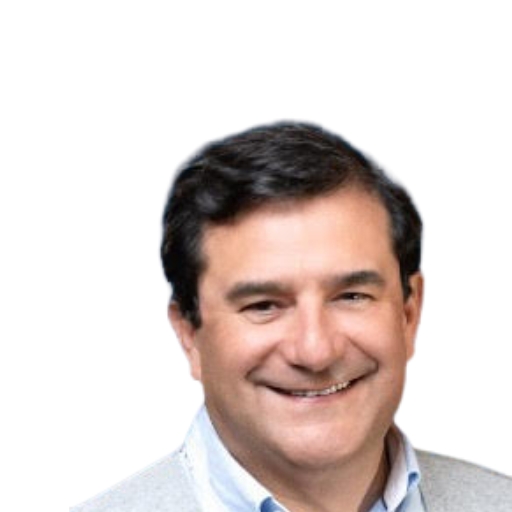
KBKAST
Episode 362 Deep Dive: César Cernuda | Trust, Trade & the New Data Diplomacy
00:38:35
In this episode, we sit down with César Cernuda, President at NetApp, as he explores the growing significance of data and the evolving role of trust, governance, and transparency in managing this strategic asset. César discusses how organizations and nations must build intelligent data infrastructures to enable AI and navigate complex regulatory landscapes, emphasizing the importance of cybersecurity, interoperability, and modernizing data lakes. We also examine the balance between protection and openness, the resurgence of sovereign cloud requirements, and the pressure for leaders to cultivate a data-first mindset to stay competitive. César Cernuda has led NetApp’s integrated go-to-market organization since July 2020, delivering on the company’s promise to meet customers wherever they are on their digital-transformation journeys by providing the superior products, specialist skills, and services they need to architect, build, and manage their data fabrics. César joined NetApp foll...
Loading summary
Transcript48 lines
- [00:00]
A
How do you build that intelligent infrastructure for the future? How do you ensure that you can connect unstructured data with a structured data in a way that has the right governance, in a way that you have the right security, you have the right manageability that you can interoperate? And that's a journey. It's a journey that is beyond trust.
- [00:24]
B
This is katycast as a primary target
- [00:28]
A
for ransomware campaigns, security and testing, and performance, risk and compliance.
- [00:33]
C
We can actually automate that, take that data and use it. Joining me now is Cesar sanuda, president at NetApp, and today we're discussing the rise of data diplomacy. So, Cesar, thanks for joining and welcome.
- [00:45]
A
Thank you, Karissa. Great to be here with you.
- [00:47]
C
Okay, so I'm quite curious about understanding lots of information that I've been seeing in a lot of your interviews that I've been watching. And I know I discussed this before we jumped on today, but I want to start perhaps with data diplomacy. What does this sort of mean for you, Cesar, and how do you interpret this?
- [01:06]
A
Sure. Well, there's no doubt that we live in the age of data. I think all of us know that. What is very interesting to see how data has evolved in a way. Companies used to, you know, use data basically to manage their operations or customer experiences. But today that had changed. Data has become really a strategic resource and I'll say not just for companies, but actually for nations. So the real discussion is how we managing the quality and the governance of data. How do we govern, protect and share our data? And nations and companies that can trust and prove the integrity of the data actually will be the ones that shape the next era of global trade and innovation. And I think it's very interesting if you allow me, let me share with you a customer case A and G Bank, for example, has publicly discussed how data integrity, availability and governance underpin real time global financial operations and regulatory trust, for example, across markets, making data a core part of an economic stability rather than just an internal IT asset. I think this is the big change that we're seeing, Carissa.
- [02:24]
C
Okay, I just want to quickly double down on like govern and protect. Right. So given your experience, your title, your background, what do you think people sort of overlook when it comes to this sort of stuff? And it's really important and I know we're going to get into a little bit more throughout the interview, but is there anything that comes to mind when I ask you that question? Sure.
- [02:43]
A
I mean, there's no doubt that, you know, in the age of data data, many people says a new Currency. So the first thing you want to do is you want to make sure that you protect it. You want to make sure that you govern your data. And one of the biggest concerns that any company has, right, is to fully understand it. Where's my data, how it's protected? How do we ensure that I have the right, you know, privacy around my data? How do I ensure that my data has, you know, the right, set up our environment? Because at the end of the day, what you want to make sure is that you trust your partner. You know, you trust the environment that you're building. That's why this is so critical.
- [03:21]
C
Okay, so talking about trusting of partners now, I've seen that a little bit. I think even with your interview, you had the CIO over NFL beside you. So what does this look like in your eyes? And I know it's a bit of a fluffy word sometimes, trust. What does that sort of mean to you, given you're the president of NetApp?
- [03:39]
A
Yeah, I think you said it very well. And you know, not just NFL, but many other of our customers or partners, at the end of the day, what they're trying to do is they're trying to build a platform they're trying to get ready for. And I'll say AI. Everybody talks about AI, right? And at the end of the day, what you're trying to do is building what we call an intelligent infrastructure. And that's what we're helping our customers to do, preparing the data for AI. And they know they cannot do it by themselves. We know that we cannot do everything by ourselves either. And that's why that technology partnership is so key. Because at the end of the day, what we're trying to do is enable our customers and our partners to build their own intelligent data infrastructure to prepare the data for the age of data, for the new era for AI. Those are the changes that we're seeing. And that's why partnerships are so critical. Protocol. And they're built on trust. You know, I think there's a great example, you know, Siemens Healthiness, right? It's very interesting. They highlight the importance of trust, data governance across global operations. They came with this as one of our customers. You know, they work with governments or enterprises that require transparency, compliance, accountability across borders. Because what they were trying to demonstrate was, hey, here's where the data is. This how we govern the data. So you build that trust so you can use their services and their system.
- [05:03]
C
And do you think it's one of those things that it's not sort of a one and Done sort of job, right? So it's one of those things you got to constantly build and constantly prove is not the right word. But things are going to change in terms of that trust and that relationship over time because of how the market's shifting and things that are happening in the world. So what does that sort of look like in your eyes, perhaps? Because again, I do think it's something that maybe people overlook in this space and then don't understand the importance of it.
- [05:32]
A
Well, you're making a great point. And we go back to that trust, right? Which is this is not a, you know, next three months project or next six months project. The reality is we're talking about many years, many, many years of history of data that I own, that I have. And I'm talking our customers own and have right, or nations. And how do you build that intelligent, that infrastructure for the future? How do you ensure that you can connect unstructured data with a structured data in a way that has the right governance, in a way that you have the right security, you have the right manageability that you can interoperate? And that's a journey. It's a journey that is beyond trust. As you know, Carissa, we've been in the market for what, 34 years now. We're the first company on the planet that basically was able to desegregate, you know, compute from storage with our network file storage. And then we brought Unifi Storage, the only company that actually truly brings Unifi Storage. And then all those customers, we made a commitment to bring them and team up with the hyperscaler so they could use their hyperscaler services in a data fabric pool where they can interoperate using our technology, regardless where the data is. That's a journey and that's beyond those 34 years. So the answer is, of course, you need to build that trust because they're expecting that you protect their investments and you help them to shape their future.
- [06:58]
C
And do you think as well, just on that note, respecting that, you know, you protect their investments, do you think now that it's being heavily more scrutinized because we're seeing more like breaches than ever, we're seeing more issues than ever. And so now, and maybe it's attributed to more media attention, etc. But do you think that there's more emphasis now on vendors like NetApp to really take that seriously than perhaps like historically speaking, historically meaning even 15 years ago?
- [07:25]
A
Well, I must say that we have always took very seriously our customer satisfaction, but more Important, protecting our customer life cycle. As I said, we are here for the long term and we have long standing customers for many years that have trust NetApp many times. The way I talk to them, right is this is not a vendor relation, this is a real partnership relation. They're trusting us in one of the most important, if not the most important asset that they have, which is our data, you know, protecting that data, making sure that the partner that they have that is running, you know, with our technology, that critical asset, you need to build that trust sometimes. You know, one of the biggest challenges that we all have is how do you manage? Which probably goes back to your question. In a world that has the speed that it has, how do you innovate at the speed needed? But at the same time, how do you make sure that you build trust? How do you make sure that speed is not an innovator for transformation? How do you have both things together? So I'll say there's no doubt that the speed had changed lately, but the fundamentals have not changed. For us at NetApp, protecting our customers in their entire life cycle has been critical for our success is one of the biggest differentiators that we have.
- [08:42]
C
Yeah, and that's a good point because what I'm writing about, hearing people talk about in the interviews, people like yourself, is that conundrum between customers gotta innovate to stay ahead or they're losing even to like small, like smaller players that are overturning them because they've gotta innovate. But then of course, keeping in mind the security then of that, where do you think that's sort of gonna go like with it? I know sometimes this pendulum slings one way, then the other way it'll come in the middle. But it does seem to be something that a lot of people that I'm speaking to on this show are quite worried about because whilst they do want to be innovative, they can't undo all the hard work like the 30 years of trust and everything you just discussed. How do you sort of see that playing out now given what's happening in the space at the moment?
- [09:32]
A
Earlier this week at a CEO roundtable, I was with several CEOs, we were having lunch and we were talking about AI and the CEOs of not on the IT industry, you know, financial services, health, manufacturing. And we're having a roundtable talking about the challenges, the opportunities. It was a fascinating conversation because probably out of those CEOs, I was the one that was closer to it, closer to the day to day around AI. And the data challenges and the way they were seeing all this discussion was the board investors are expecting me as a CEO to transform our organization, adopt AI in a speed that I'm not sure how can I do that, but I know that I need to do it. And what was fascinating for me was to see how they were thinking on the different type of workloads, which is the right thing. Say, how do I innovate with AI? Where can I go and gain productivity? What are the type of scenarios that I can take advantage of with AI? And then we talk about some failures that they have. I asked them a basic question. How is your IT and data team involved preparing you for those use cases or scenarios? And most of them recognized that was not really a place where they will have spent time. That's where we spend most of the time, to be honest. Right from a NetApp perspective, which is if you want to be successful on AI, you need to prepare your data for AI. So in a way, if you want to speed, you need to make sure that you do your homework, you need to do preparing your data for AI is how do I build that intelligent, that infrastructure for AI? How do I make sure that I'm able to catalog, be able to store, to find and understand where the data is? How do I build some governance, how do I build some privacy security, who has access or control for what? And then you want to make sure that the data they have that learns from the context is active and not passive. There's different steps. Then you bring audio, text, video, and you want to make sure that they become data that can be used on AI. So now you have the model, now you say, oh, I feel great because I built it, now I can run it. Well, yes and no, because every day you have new data and every day you need to start again the process. So at the end of the day, it's critical that you understand as a CEO of organization that in order to be successful in this age of data and with AI, you need to prepare your company, you need to prepare your data for AI. And that's why at NetApp we're helping our customers build they're intelligent, that infrastructure.
- [12:18]
C
Okay, this is interesting. So just going back for a moment with you said that some of these CEOs were saying like, we haven't spent time looking into this or doing this
- [12:28]
A
or on the technical side, there are more on the workload side, on the economics, on the business case, but in reality, say, hey, I guess my technical team, my IT team is taking care of how to prepare the data, by the way, why do you need to prepare the data? So, so guess what? AI is based on data. So if you want to rush and you have not done your homework preparing your data for AI, you might break everything. You might break the trust, the governance, you know, and you're dead. The outcomes of what you're looking for are going to be the wrong ones. And they recognize some failures on some of the projects where they were frustrated because it was not able to provide X, Y or Z. I said, well, you're trying to bring your company to AI and you need to do the opposite. You need to bring AI into your data. And that's why you need to prepare your data for AI.
- [13:13]
C
So just on that note, so. And I was. I've been to fair few of your conferences over the years and interviewed a fair few of your NetApp folks as well. Talk me through a little bit more about how do people prepare for that. Because you're right, a lot of, you know, especially in big enterprises, there's lots of stuff going on there. Coming from an enterprise background myself. So what do you think people perhaps don't know or they're trying to do? Like I'm just, I want to shed some light on this because I think that this definitely is something that people feel overwhelmed by. For what I'm hearing in the market from, from executives that I speak to.
- [13:51]
A
Yeah, look, there's no doubt that there's different ways to do it, right? Here's what we tell our customers. I recommend them, which is they have store over the years a lot of data, whatever type of data, and there's a lot of unstructured data as well in their systems and they have access to. So first thing that you want to go and do is say, how do I ensure that I build and create my intelli in that infrastructure? And I'm saying that again because that's critical. It's not any longer about, hey, I just want to make sure that I store data right? It's not any longer about, I want to make sure that I have some data management capabilities. The reality is by default we're storing data where you will need to go and manage and have the right data management capabilities where you want to make sure that you protect and secure the data. And that's what I'm saying. The first thing you want to do is organize your data. The way you organize your data is understanding, you know, what is it? How do you classify it? How do you connect the different data to different use cases? You're going to have. But once you've done that, the reality is you just started, you need to build the right governance mechanism. And that governance mechanism starts with the access control, security, privacy, I would even say regulations, it depends on the country that you are in to make sure that you are compliant with that infrastructure, to make it intelligent and to really take advantage of your data. And as I said before, that's when you start leveraging metadata, right? In a way that's where you're making sure that the data is not just passy, it really becomes active so it's able to enrich itself with the context and learn from the context. So you can really start scaling that model and you know, basically once you build that, you're starting to ensure that you're able to have efficiently processes and transform data, data like text or video or audio that can be part of the overall system and learn from each other. That's where you really are building that intelligence, that infrastructure that can be connected to a private cloud hyperscaler on prem and you can really take advantage of that. But even when you have done all that, as I was saying before, you need to manage your data and your model life cycle altogether because you're going to start having new data that we need to go through the entire process again. So that model that you have built is really intelligent. I can really serve you for the future and can really become your intelligent infrastructure. That's what we're talking about.
- [16:23]
C
So, Cesar, can I just ask a really rudimentary question because I'm quite interested in this from what you're saying. So I don't know, just say a big enterprise, let's use a bank. They've got 50, 100 years with the data records, all sorts of things. I don't know, maybe spreadsheets, who knows, how do people start organizing that? And my. How long does it sort of take? And I know it's a little bit like, oh, well, how long's a piece of string? But it's just more. So if these companies out there want to be competitive, they don't have data organized, but it's like, well, hey, it's going to take, you know, months and months and months because there's so many years of stuff and we need to find where it all is. You need a structure, unstructured, structured data. Like it's not as easy perhaps, but I'm just curious because that lends itself then for these companies to be competitive in the AI game.
- [17:07]
A
Yeah, great question. And this is many of the projects that we are working on with customers on the financial services sector and other sectors. What we do with them is when we talk about Intelli and data infrastructure, you don't want to go and do everything in one shot. What we do is basically modernize data lakes, right? So basically we say, let's go and build this modern data lake that will be your kernel and your core to still build your intelligent data infrastructure. And once you modernize that data lake, then you start filling it with some of that old data to really go through the process that I shared before. So it's a step by step. So that's why probably when you go and talk to the IT departments today, they're under huge pressure because there's a lot of push from their management team, right? And say, we want to go speed that we discussed before, we want to go fast, adopt AI. But they know that they need to do that in that trust environment that I was referring to. And that trust environment can only be built if you have that data management capabilities that you have your data protected, secure, but at the same time asexual to go and take advantage of AI. That's a real challenge that they're facing. But answering your question, we basically work with modernizing data lakes so they can start from there.
- [18:22]
C
And do you also think if AI wasn't where it is today, do you think there wouldn't be that impetus to perhaps modernize those data lakes? Or why didn't sort of people do this early? And that's a genuine question of. Or was it one of those things where it's like, well, if it, if it ain't broke, we're not going to fix it sort of thing.
- [18:40]
A
I think that's a super fair. And in all fairness, we have seen this for years, right? So it's not like, hey, only now we're seeing that customers have realized our companies, oh, I need to modernize manufacturer. I need to go and have a much structured data set up. You know, this has been a journey. The difference is the speed that we have seen the last five years. The real difference is organizations understand the importance of speed. I think in years before we're talking about scale. Today you need to talk about speed, scale and trust. And that's probably what has put more pressure on the system, if you see what I mean. Because in all fairness, there's many companies that have been working on this journey for years. I mean, AI is not new, as you know, and we've been for 34 years helping our customers. You know, at the beginning, probably on the storage side and lately building this intelligent data infrastructure where basically has data management capabilities, you know, server security, ransomware protection. So it's not just longer, any longer just storage, it's way more than storage. And the big difference is the speed, as I said, that is happening in the last years.
- [19:53]
C
When you're building a startup, every hour counts and so does trust. Whether you're chasing your first enterprise deal or just trying to stay ahead of the compliance curve. Vanta helps you prove your security posture fast by automating up to 90% of the work for SoC2, ISO 27001 GDPR and more. Vanta gets you audit ready without the late nights and spreadsheets. Visit vanta.com kbcas V-A-N t a.com kbcas to learn. So, Cesar, I want to switch gears now and talk about, obviously we're talking a lot about data here, but data is no longer really like an enterprise asset and it's a source of geopolitical power. And I think that this is something that we're seeing in the market today, given the current climate. Like, I really want to explore your view around this and what's going on in your mind.
- [20:47]
A
Well, there's no doubt, I think, you know, at the end of the day, nations, governments, they also understand that data is a critical asset for them. And they also recognize that they need to build those technology partnerships. And those technology partnerships are increasingly built around trust and data governance, security practices, you know, and something very important, transparency. I'll say countries, you know, that are forming technology partnerships not just based on innovation, but whether they can trust the data governance, security practices and accountability of the organizations that I work with. So I'll say trust is becoming the new currency in this digital economy. And that's no different for nations. In a way, those nations will ask and require that trust from the partnership that they're trying to build. And similarly, when you go and invest in a country or in a nation, you want to make sure that you trust the governance and what they're doing. And that's why transparency is so key nowadays.
- [21:44]
C
And so with transparency, what do you mean by that? And I ask that because sometimes people's version of transparency slightly differs on that. So I'm keen to understand your thoughts.
- [21:56]
A
Well, I mean, there's many ways to define transparency, but certainly as we talk about data customers and nations as well, they want to understand where my data is. I trust you, but I want to make sure that I understand where is my data? How are you governing my data? How are you operating with the data, by the way? That is mine, right? But I've decided to give it to you or actually that is mine, but I've decided to use your systems and I want to understand what is happening behind the scenes. I also want to make sure that you're accountable and that you bring the right resilience, protection and governance. So when you think about service providers and you know they can be public cloud vendors, private cloud vendors, service providers, managed service providers, more and more we see both nations governments, but also companies asking for that transparency. Nowadays you're seeing in many countries where they're requesting sovereign clouds because they want to make sure that the data, they have rights over the data. Some of them even ask you for data residency. So more and more is a combination of, you know, that trust based on transparency and then connected to the different points that I just shared, right, which is the governance of the data, the security of the data, the tools that you use, et cetera, et cetera. So you need to be way more open and transparent than you were before.
- [23:26]
C
So some of the residency slash sovereign piece. So as you know, I'm an Australian, but I live in the US now. A fair few years ago, or not a fair few, but enough years ago this was a huge thing for Australian businesses. Then it sort of dropped off. But now I see a bit more of a resurgence in the sovereign piece around the data. Are you seeing that across other regions and countries as well?
- [23:48]
A
I remember spending a lot of time years ago in Australia as well as you remember. Actually not just Australia, but Anz talk about sovereign cloud back then, right. Where they want to have make sure that the regions and data centers in a public cloud environment were based in Australia. New Zealand was open to have them in Australia back then. We have seen this for many years in many places. Depends on some regulated industries. Right. So you have different regulations in markets. There's countries that historically for federal government or for defense or some specific workloads or agencies at the government, they were asking for that sovereign cloud, making sure that data had a different type of security. You've seen that in some markets as well for financial services. So clearly we have seen this for many years. I must say that lately there's a bigger discussion, especially markets like Europe where you're starting to see some sovereign clouds projects. And nowadays there is discussions about some even gigafactories built in Europe for Europe that can go and have that sovereign cloud and data protection. So I think this is a journey, I believe we're going to See a combination in the world where you're going to see some, certainly public cloud environments that will not require that data sovereignty. You're going to see some specific industries that will require that data sovereignty. And you're going to see actually sovereign clouds working with hybrid clouds or public clouds in a hybrid cloud environment, which is what we live today.
- [25:16]
C
And so you sort of say, Cesar, as well, that leaders must strike the right balance between protection, openness, or as we spoke before, transparency. So would you say companies are currently doing this? And I know that's a bit of a broad general question, but I want to get a bit of a sense. Check for yourself.
- [25:35]
A
You're saying if companies are doing this, I'll say companies certainly are trying to do this more and more because customers, right, are asking more and more about that. Customers want to understand what is behind that service that you're providing me. Look, in the case of NetApp, it's a bit slightly different in a way. Why slightly different? Because historically what we have, you know, sold to our customers have been our assets. So they will have their, our assets, meaning their assets because they buy them in their data center. What they will care about is, hey, which is the operating system that you're using, which is the technology they're using in our case is on top of. We're very well known in the market. We're market leaders certainly for flash environments, right, High performance storage. And therefore they want to understand the different layers and levels on how my data is going to be protected. How do I ensure that While I use NetApp I have the right governance, how do I make sure that I have a single control pane, for example, to manage my data? All those things are things that we've been providing them the last years as we've evolved in our business where actually we provide, not just in their own data center, our services, our technology, but we do that through the hyperscalers, managed service providers, or when people use our technology called Keystone, which is basically storage as a service. Well, it's more than storage, a platform as a service, if you wish, they want to know more. Now in our case, as I said, that was business as usual for us. What we're seeing is customers asking those type of questions more and more to different managed service providers that in the past it was not a key component. Basically in the past there were those customers were just looking for the service. Hey, I'm looking for you to provide me this if you wish it service. Now I want to understand which type of technology you're using. How do I ensure that the service that you're providing me has the right accountability, has the right technology to make sure that my data is protected? And that's actually playing our strengths because more and more our partners serving customers basically need to share with those customers, hey, I'm using NetApp. This is the way we manage your data. This is the way we're protecting your data. This is the type of technology that we're using.
- [27:59]
C
Okay, so why do you sort of think, Cesar, that wasn't a key component as you mentioned before, like people weren't really asking this before. Obviously there wasn't as much scrutiny perhaps back in the day in inverted commas
- [28:11]
A
or we're a technology company and a company that for many years has been working with one of the most important assets the company has, which is data. What we have seen the last years has been the increased need for interoperability. And what I mean about interoperability is most of our customers live in a hybrid cloud environment. Those moments where everything was on prem then for, you know, for some years we thought where people talk about everything is moving to the cloud. Oh, hold on, it's going to be public and private cloud and everybody recognize, well, the world's going to be hybrid and by the way, hybrid and multi cloud. So what more and more customers require is I want to make sure that I take advantage of this hybrid cloud environment in a multi cloud environment. But I need a partner that can really help me interoperate. And I would love to have a single control pane where I have access and control of my data, regardless if the data is in the public cloud or with this public cloud vendor, or in my data center or in my service provider in a private cloud environment. I think that has been the biggest problem request that we have seen the last years. And we are actually the only company, as you probably know, have managed to build that partnership with hyperscalers, where each of the hyperscalers, or the largest three hyperscalers, Microsoft, AWS and Google, offer our technology as a service so our customers and their customers using our technology can have that interoperability. So that's a huge and key differentiator. And there's no doubt that we have seen more and more controls, more and more focus on cybersecurity. Right. There's more requests there because this has evolved. So from our side, this has been always a big area of differentiation as well. And we claim and we believe and actually we have all the arguments to say that we're the most secure, you know, storage vendor on the planet. So those things play in our favor and those are the things that we're seeing more and more pushing us.
- [30:13]
C
So what I'm hearing is perhaps that environments is a lot more complex nowadays than before. Right. And more requirements. And there's also more regulation in certain places like Europe, like GDPR and Australia, about the sovereign sort of piece now. So do you think that it's more that that people now need to ask more questions to their partners and their vendors and their service providers, et cetera, to make sure that they fully know at an acute level what's happening? Whereas in the past perhaps that wasn't as what was much of the thing, for sure.
- [30:44]
A
And that basically means companies like NetApp, we need to innovate and actually we need to make sure that in that customer life cycle, we are always protect the investment of our customers by ensuring that our technology and the products that we offer them comply with their local regulation policies, et cetera, et cetera. There's no doubt that this has been a journey and remains a journey is life. Right. So we're seeing that more and more. I think in the past, probably customers will say, okay, look, having a great storage technology is good enough. And today, as I said, it's no longer that you want to make sure that your storage is protected, is secure, that you have the right interoperability, that you have the right data management tools, that you have access to the data you know, on the speed that you need, that can you use all that to build your intelligent data infrastructure? So the answer absolutely is yes. Things have got more complex. It's true that technology has evolved and makes things easier, but that's the journey.
- [31:44]
C
Hypothetically, like if a company isn't as open, let's say, for example, given your background, caliber of person that you are, would you say that would do it like a bit of a disservice in terms of trust? I'm sort of bringing the interview sort of full circle, going back to the trust piece again, because I have seen people in the past, whether it's a vendor or even a customer, that sort of let them down a little bit because maybe not as open. And I think, I mean, I'm not Nostradamus, but maybe that is where the market is going, that people do expect that a little bit more from people nowadays, from companies.
- [32:20]
A
I think the answer, all people listening to us, watching us today, they will say, yes, of course, you know, if my company's not as open, you know, and others are open, right, to go and share some of these key things, will you trust them? More or less. I think, look, the biggest shift is adopting a data first mindset, right? And I'll say AI success starts with disciplined data management, governance and infrastructure that ensures the data is accurate, secure and accessible. And I'll say those organizations that treat data as a strategic advantage are really the ones that will see the most meaningful outcomes from AI. But that's why it goes back to saying you need to prepare your data for AI. And part of that is to make sure that you feel proud of what you're doing and that's why you can be more open. So the answer of absolutely is yes. You want to make sure that nobody's hiding anything from you and you need to explain your customers technology and how the data is protected and how do
- [33:17]
C
you sort of get a data first mindset. I know you were about preparing it, but you know, maybe people listening to this might be like, maybe I'm not quite there yet. Is there any sort of key characteristics that you would say, what makes people having that data first mindset?
- [33:32]
A
I think, you know, probably, if you will ask me this question 10 years ago, where data was already a big part of our discussions, every day the answer will be different than today. I think most of the business decision makers, CEOs, management teams of companies understand how critical data is for them. Not just to run their business, as I said before, as a critical asset to differentiate their company, among others. How do they access customers information, make decisions, anticipate a differentiate. The real challenge on that data first mindset is am I doing my homework to build my intelli in that infrastructure? Am I doing my homework to prepare data for AI? And I want to reinforce this because everybody's talking about AI. And one of my biggest concerns is I see companies or projects, they're spending millions trying to move all their data to AI, moving the company to AI. I see you shouldn't be doing that. What you need to do is bring AI into your data, AI into your company through your data. And that means preparing your company through your data for AI. And then you can go and decide these are the type of workloads, these are the type of, you know, actions that I'm going to take to take advantage of AI in this way or this other way. So I encourage all of us to challenge ourselves on saying, you know, am I a data first mindset person or not? How do I think about data on my decision making and do I have built the right infrastructure to make the right decisions? Do I have the right Partnerships to go and build my intelligent data infrastructure. I think that's a critical probably outcome. You allowed me of this conversation today.
- [35:18]
C
And then sort of lastly, Cesar, looking forward, what do you think for the year? I know we're early ish into the year, but and I know you've probably got more of a broader view on this space. What do you think we're going to start to see, you know, if I speak to you again next year this time, like what sort of reflections you think you may share with me?
- [35:38]
A
Yeah, we are finished in March, right? And you say we're early in the year. Look, I will have never predict all the things that have happened in the first three months of this calendar year that is happening, are happening so hard for me to go and tell you. Where do I see we're going to be in 12 months from now once I've said that there's no doubt that data, you know, as a critical asset for nations and companies is going to be there. And what we're seeing, if anything, is an acceleration of AI adoption. We're seeing an acceleration of saying, hey, how can I improve my overall productivity? How do I can take advantage in this environment to save cost, to be more productive and to be more efficient as an organization? But at the same time, we're seeing nations say I want to use data in a better way for my citizens, to protect myself and my defense departments from our own intelligence. So what we're seeing is a huge demand and a huge need in that speed that we're talking before for having those type of partnerships where nations and organizations can really take advantage of AI by building their intelligent data infrastructure.
- [36:48]
C
And then lastly, Cesar, do you have any final thoughts closing comments you'd like to leave our audience with today?
- [36:54]
A
Well, first of all, thank you so much for your time and congratulations for what you do. I'll say we live in the age of data. We all know that. And it's critical that we all take the accountability and the responsibility to understand what that means. How do we prepare ourselves for this age of data? How do we make sure that our organizations, our nations, right, are really ready to embrace AI in a responsible way? How do we build the right intelligent data infrastructure? And that requires partnerships, partnerships that you can trust because you can rely on them, because they have the right governance, security, reliability, interoperability, because your data is going to be working with them, you're going to be working with their technology. You need to protect, manage one of the most important assets that you have, which is data. So with that. Once again, thank you so much for your time. I hope that everyone has enjoyed our conversation today.
- [37:53]
B
This is KBCast, the voice of Cyber.
- [37:57]
C
Thanks for tuning in for more industry leading news and thought provoking articles. Visit KBI Media to get access today.
- [38:06]
B
This episode this episode is brought to you by MercSec. Your smarter route to security talent MercSec's executive search has helped enterprise organizations find the right people from around the world since 2012. Their on demand Talent acquisition team helps startups and mid sized businesses scale faster and more efficiently. Find out more@mercsec.com today.