← Keeping It Real: Conversations with Jillian Michaels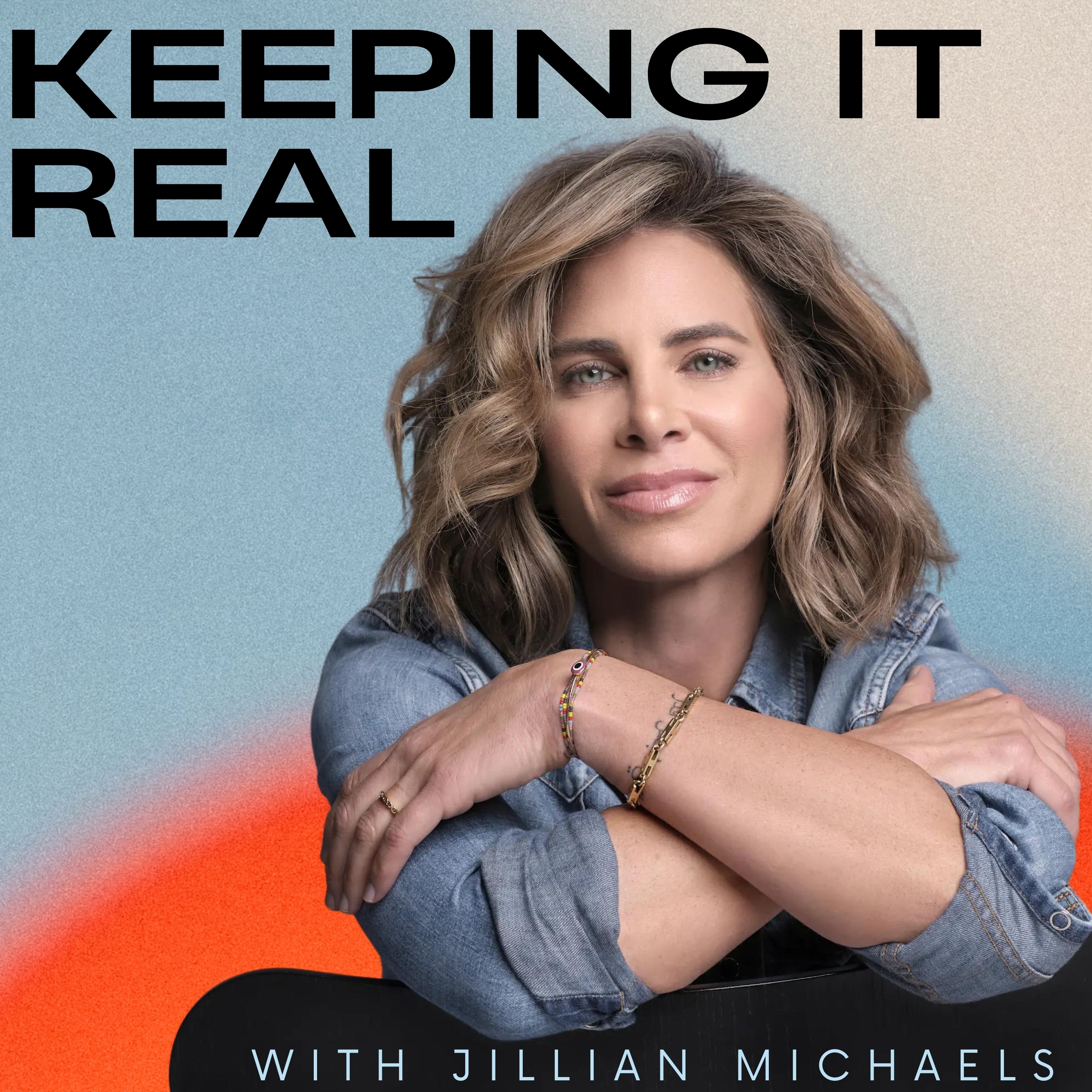
Keeping It Real: Conversations with Jillian Michaels
Bill O’Reilly REVEALS Trump’s Next Move in the Global Tariff War!
00:42:28
Loading summary
Transcript113 lines
- [00:00]
Jillian Michaels
When your metabolism is working properly, you're going to feel the benefits in literally every aspect of your life. I mean, I personally have found a valuable tool that gives me the insights to create healthy metabolism for my body, and I recommend it to everybody I work with. It's called Lumen. Lumen is the world's first handheld metabolic coach. It's a device that measures your metabolism through your breath. And on their app, you. It lets you know if you're burning fat or carbs, and it gives you tailored guidance to improve your nutrition, your workouts, your sleep, and even your stress management. All you got to do is breathe into it first thing in the morning, and you're going to know exactly what's going on with your metabolism, whether you're burning fat or carbs. And then Lumen is going to give you a personalized plan for that day based on your measurements. You can also breathe into it before and after workouts, before, before, and after meals, so you know exactly what's going on in real time. And as mentioned, Lumen gives you tips according to your personal data to help keep you on top of your health game. This is why I love it. I don't like to guess at things. Knowledge is power. Having concrete information allows you to take powerful action steps that go a really long, long way. Bottom line, it also tracks your cycle as well as the onset of menopause, and it adjusts your recommendations to keep your metabolism healthy through hormonal shifts. Guys, this way you keep your energy up, you stave off cravings, and on top of it, the warmer months are coming. So let's get summer ready and spring back into your health and fitness. Go to Lumen. Me, Jillian, to get 15% off your lumen. That's L U M E N me, Jillian. For 15% off your purchase. Keeping it real with Jillian Michaels. Jillian Michaels. Mr. O'Reilly.
- [01:55]
Bill O'Reilly
Ms. Michaels, how are you?
- [01:57]
Jillian Michaels
I'm good, sir. How are you?
- [02:00]
Bill O'Reilly
You know, I'm the same, which is tragic for everyone.
- [02:04]
Jillian Michaels
Well, I might have been lying to you. I may not be as good as I professed. I'll be honest. I'm. Yeah.
- [02:10]
Bill O'Reilly
What's going on?
- [02:11]
Jillian Michaels
A little shook up, sir. I've been nailed twice by these, this tariff, war with China, and two of my different businesses. I've watched my kids 5 to 9 be cut by 35%. Um, and I. I'm. I'm here for it. I think I understand why we're doing this, but it's a hell of a roller coaster ride, and I was hoping you Might shed some light on why. Why is Trump doing this? Maybe we should start there. Why are we in these tariff wars?
- [02:45]
Bill O'Reilly
Okay, so from the very beginning of Donald Trump's political career, and he always had in the back of his mind that he was going to run for president way back, I would say, more than a decade before 16, so, 2006, he felt that the politicians and the presidents were not representing the country well economically. And the big thing that he pointed to was that was more money going out of the United States to countries and coming in because of tariffs. So in China's case, for example, it's about five times as much money going from the United States to China as China to the usa Trump felt that was crooked, that was destructive to the working people. And he always had in his mind that he was going to stop that. So in his first term, he didn't quite stop it, but he did make some adjustments that were favorable to the economy. And then Covid hit, and that changed all economic agendas. So when he got reelected, he goes, now I'm going to come in hard, and I'm going to tell the countries around the world that it's not business as usual, that you're going to have to be fair or we're going to punish you. And that's what's happened. That's the history of it.
- [04:11]
Jillian Michaels
Why are we going after allies so aggressively? Like. Like, why are we going after Israel so aggressively? I've seen Ben Shapiro comment on that in particular, and he's like, what's the end game? Where's the end game here? And I have to. I have to wonder the same thing.
- [04:31]
Bill O'Reilly
Well, I think the Israeli thing is already resolved. All Trump wanted was a lower tariff rate for certain things going into Israel from the United States. And I think they came to an agreement already, so that's not even on the table anymore. But our allies in Europe, I mean, say Gillian Michaels moves to Munich, Germany, and they'd love you there, Gillian. And you might consider it not in the winter, but it's a beautiful, beautiful town. And Jillian Michaels wants to open a workout center. Okay. And she wants to buy American equipment because she's used to it and it's good equipment, right?
- [05:13]
Jillian Michaels
Yeah.
- [05:13]
Bill O'Reilly
So she orders gym equipment to stock up her new Munich facility. Well, there's a VAT tax, Value Added Tax in Germany. It's going to slap on 20% more than equipment costs in L. A. Therefore, when you buy it, you're going to pay a lot more. And if you wanted to resell it or Open franchises. You'd have to charge your customers more money to cover the 20% VAT tax. So Trump says that's not fair to American products because the Germans, Gillian will buy from Dusseldorf, she won't buy from LA anymore. You see what I'm talking about? The fix is in almost every country to keep American goods out. And that's what Trump wants to dissolve.
- [06:08]
Jillian Michaels
How did we get here, though? Because this didn't happen overnight. This has been decades in the making. Like, who dropped the ball in such a significant way? How do American companies allow this to happen? It certainly doesn't behoove them. And they're the most powerful companies in the world, I would imagine, alongside some in China, of course.
- [06:28]
Bill O'Reilly
Well, the American companies moved abroad, like Apple. Okay, okay. So they got around that by saying, hey, we'll build our stuff in Ireland or whatever country. China, Southeast Asia, India, we'll go over there. It happened because after World War II, and I don't want to bore your audience with a lot of pinheady stuff, but, you know, I've had 19 number one best selling books based upon a history of the United States and the world after World War II. The United States was the winner, the big winner. We were. And then we rebuilt Germany and Japan because we had to, and all of Europe along with Germany to get markets to build up civilization from that terribly destructive war that was called a Marshall Plan. So all this US Money went in and then every president from Truman to Biden said whatever they want to do, they can do that's okay. We're not going to ask for fair treatment and trade because we're doing fine by ourselves. We have so much money here in America. Our consumers live so well here that we don't really need to browbeat these other people into better deals. So no president took it on.
- [07:48]
Jillian Michaels
Okay. And obviously, seeing what's on unfolding now, you understand why. Because people are going after Trump and calling him insane, calling him deranged. And when I, I look at this and I listen to you, it's like, well, there were trade asymmetries. Okay, got it. We need to bring back manufacturing to the country that makes sense. What about the national security element of drugs being made overseas and technologies being made overseas? Do you think that's a valid concern as well? And arguably one of the reasons Trump is. Okay, so that is real then it's like we're vulnerable.
- [08:25]
Bill O'Reilly
Absolutely real. Trump just made a deal with a company in Taiwan to build a plant to make very sophisticated chips in the usa because Taiwan is not a secure place any longer. And the company is Nvidia. Yes. And a guy went to Mar a Lago from Taipei and Trump said, hey, you're going to build a plant here. And guy goes, okay, so we're making progress. But if you have medicine and you have chips and high tech built in countries that are unstable, that's a risk. But it's what the Trump administration did not anticipate and should have was the softness of the American psyche. So they rolled it out all at once. They dropped the bomb on Jillian Michaels Enterprises all at once. You didn't have to do that. You could have taken care of China, you could have taken care of Canada and Mexico first, then moved on over to the eu, then moved to China or any, you know, place you wanted to go that you felt you had an advantage, didn't have to do it all at once. The shock and awe doesn't work in worldwide financial markets. It's too. People don't understand tariffs anyway. If you go to the mall this afternoon and stop people and go, how about those tariffs? What kind of answer you think you're gonna get? All right, they don't know.
- [09:55]
Jillian Michaels
Right.
- [09:56]
Bill O'Reilly
And when you have invested your money like I have, and I'm assuming you have hard earned dollars, okay. Into certain companies and a company drops 50% in a day, you're not going to be happy.
- [10:11]
Jillian Michaels
Right.
- [10:12]
Bill O'Reilly
And that should have been anticipated. That's. You know, the word holistic is this is your people, they're all holistic, wind chimy. Well, there's a little bit of that that's good that you got to be holistic. When you make some dramatic moves, you got to kind of signal they're coming and maybe not do everything at once. And I think that's where the Trump administration made its mistake here.
- [10:37]
Jillian Michaels
But surely they could have anticipated that markets would crash and people would freak out a little bit. And I do understand the necessity, as we've discussed, but is there some truth, do you think, and I can't tell if this is like conspiracy theory, infringe or absolutely a possibility that Trump may have wanted to shake out the market, push people into bonds, treasury bonds, lower the yield and subsequently lower the interest rate because we have to refinance 7 trillion in debt. Is there some truth to that? Or do you think that's all tin hat kind of stuff?
- [11:18]
Bill O'Reilly
That's all. That's all. Nah, that's just way too mitish. Got it. That's not, that's not what these guys do. These guys abroad, Donald Trump is a broad thinker, not a micro thinker. That's why he overlooks some things, like I just said, about how the American consumer and investor is going to absorb all this, all this punishment. Now, I just talked to the President just a few hours before I came on with you. And I've known him 35 years. He's never misled me. He's iced me a number of times because I don't played a game. You know, I give honest analysis. But he's never misled me in 35 years that I've known him. And he says in the next few weeks, there are going to be some very, very good, strong achievements for the USA that should put the bond and stock market back to where it was. Now, beyond that, who knows? I mean, because it's so unstable with Russia and China. These are villains and they're terrible people and they could do anything. And Americans, as I said, are very jumpy and soft. We're not disciplined people here. We're like in the moment. And if the moment's bad, then we're weeping. Okay? We're not looking down the road. And a lot of us don't understand macroeconomics. And here's the worst part about it. Most of the people you see reporting on television and writing in the newspapers have no blanking clue what's going on.
- [12:53]
Jillian Michaels
Yep.
- [12:54]
Bill O'Reilly
And you know what? They don't care. They want to hurt Trump or help Trump. Most want to hurt him, but some want to help him. So they're not interested in really figuring out what's happening here. All they're going to do is attach themselves to the pro or con Trump to please their corporate masters and make money. Therefore, the American people, like, have a fog, a shroud over them. They don't really know what's happening, which is why I'm pleased to be talking to you today, because I'm not in those categories.
- [13:25]
Jillian Michaels
Of course not. In fact, I crowdsourced all of these questions because everybody I know can't really figure out what the hell is happening. On one hand, you've got one billionaire over here, you know, explaining like, well, this is good. And trying to, oh, the asymmetries in trade and this, that, the other, and we need this. And we don't have security bringing back manufacturing. You're like, okay. And then on the other hand, another billionaire over there is like, he's gonna drive us into, you know, it's Black Monday, it's gonna be worse than 2008. And I wanna understand, is that possible? Could this be A severe recession or worse. Are we playing around with those kind of stakes here?
- [14:09]
Bill O'Reilly
Sure, it could be. There's capitalism, okay? I mean, if you're going to be a capitalist and you invest your money, you got to know there's risk. You know, that's the difference of the systems socialism. That's the Bernie Sanders, Elizabeth Warren AOC crew. That's easy. The government just tells you what you can do and tells you what you can have and can't have. You're never going to make it big, okay? You go to Sweden and, you know, they work six hours a day. I said to one Swedish guy when he's in Stockholm, hey, why are you closing at three in the afternoon? He goes, because if I make any more money today, they take it all away from me, so why would I work anymore? That's socialism, okay? The government just regulates everything. Capitalism is a wild west. So you invest in a company, you hope the company goes up, but it might go down. You might lose every penny you have. Now, right now we have these fluctuations in the market that are bad. You don't want that. You want some commonality. You want some stability. But Trump and I watch him very closely, and I know him. I mean, I can tell different things about his demeanor, about how he presents himself. He's confident he's going to win here. If he doesn't win, he's done. And he knows that because the midterms, the Democrats will sweep right in and Trump will have no power whatsoever, and he'll go down as a failed president. And the most important thing for Donald Trump in his life now is to be go down in history as a successful president.
- [15:40]
Jillian Michaels
I remember you, that he was speaking to you about that. How do I become one of the greatest of all time in our first conversation with regard to these strategies, do you think that is part of the reason he's moving at this breakneck pace? Because in two years, he anticipates having this blue wave and losing the ability to make change. So it's like foot on the gas pedal. Like, why do all of this? All.
- [16:05]
Bill O'Reilly
That's it. If you read his books and you know how he deals, he likes to create confusion among his adversaries, and the shock and awe works a lot on that. So he, he likes to go in and just throw the hand grenade in the room. Boom. Like this. And then everybody's stunned. And then he goes in and calms everything down and makes the deal he wants. Because they don't want a secondhand grenade. That's what he that's how he deals. That's what his style. It's not a, it's not a very patient, methodical style that most politicians engage in, because that style doesn't lead to much. All right, doesn't lead to, you know, it's just a delay. The delay, delay, delay, delay. Trump doesn't want to do that. He wants to go in and go bang, okay, and now I'm going to get what I want. And there is a good chance he will get what he wants, even from China.
- [16:58]
Jillian Michaels
Well, ok, I want to get to China a second. I wanted to go with, where is he getting what he wants? So it's my understanding the EU said they'd negotiate. Canada, Mexico, Japan, everybody ally wise, unless I'm missing something broadly. Panama was even willing to start negotiating, I think, until the Chinese got involved. But are we seeing what we want out of the allies? Is that working? What are you seeing working so far? Have we brought some manufacturing back? You mentioned Nvidia. What's working? Let's, let's, let's look at that first.
- [17:32]
Bill O'Reilly
Okay, first of all, it's really too soon. You know, it's not even 100 days. Saturday night Live says on a couple of days ago, it seems like a decade. And then guy used a little swear word in front of that. Look, when I was in a meeting with Donald Trump and some of his advisors on January 2nd of this year, they were railing about Panama. And I looked at the president and I said, you see that paper in front of him? You write down everything you want from Panama right now. You give that paper to me, I'll go to Panama City and I'll get you everything you want in 48 hours. The room was stunned. He laughed, okay. But he knew what I was saying to him. He got everything that he wanted from Panama, 100% across the board. Okay, so that gives you one small example.
- [18:30]
Jillian Michaels
I thought that we were still negotiating Panama. We got what we wanted out of Panama.
- [18:35]
Bill O'Reilly
We got everything there. Chinese companies are out, tariffs to put our ships through or down. U.S. troops are there providing security for the canal. Now, 100% he got.
- [18:48]
Jillian Michaels
I didn't even know that.
- [18:49]
Bill O'Reilly
Now you didn't hear about it because.
- [18:51]
Jillian Michaels
No, I thought it was a standstill.
- [18:52]
Bill O'Reilly
Yeah. The press won't know it. He got everything and he got it in record time. And the press won't report it because it's a victory for Trump.
- [19:02]
Jillian Michaels
No shroud. That's incredible.
- [19:05]
Bill O'Reilly
So as far as the EU is concerned, Maloney's coming here on Thursday. She's Head of Italy. That deal's already done. I understand. A Japanese deal is already done. Okay. That these have been negotiated by the Trump economists before they come here so they can announce the deal while they're here.
- [19:28]
Jillian Michaels
Wow.
- [19:29]
Bill O'Reilly
But that could be wrong. Okay.
- [19:31]
Jillian Michaels
Okay.
- [19:31]
Bill O'Reilly
So he'll rack up. He wouldn't tell me, Gillian, because he knows me. He wouldn't deceive me. If he says he's going to have a bunch of really good stuff to say shortly, that's going to happen, I don't know what it is. It wasn't the right time to push him on it. It was a private conversation. I understand, but I'm confident that will happen. He'll get a deal with Iran.
- [19:58]
Jillian Michaels
No way. No way. No one's gotten a deal. Do you really believe that? Well, you would know. Okay.
- [20:06]
Bill O'Reilly
Iran has no choice. They have no choice.
- [20:08]
Jillian Michaels
They certainly thumbed their nose at us in a very considerable way throughout the entire Biden administration. I mean, I thought they basically told him, we're not going to de escalate and we're not going to give up our nukes.
- [20:20]
Bill O'Reilly
And, you know, because it was Biden.
- [20:23]
Jillian Michaels
I thought they, too.
- [20:24]
Bill O'Reilly
He's the weakest president since James Buchanan. I mean, Biden was such a disaster. Nobody paid attention to him. Nobody feared him. Nobody was going to do anything to help the USA while Biden was in there. That guy was such a disaster. I mean, people have no blanket idea. But Iran has no choice because the Israelis basically have said, look, if they continue with this nuke stuff, we're just going to bomb them out.
- [20:49]
Jillian Michaels
Okay?
- [20:50]
Bill O'Reilly
And they have four. They have four ports on a Persian Gulf. That's all. You can take those ports out. The Israeli Air Force can take them out in half a day, and that means nothing in, nothing out. And the Persian people starve because they don't grow food. They have to import all the food.
- [21:06]
Jillian Michaels
Right?
- [21:06]
Bill O'Reilly
Okay.
- [21:07]
Jillian Michaels
Yes.
- [21:07]
Bill O'Reilly
So Iran doesn't have any choice. They're up against Israel, which is bellicose, which understands that the mullahs over there want to kill them and want to want Israel wiped off the face of the earth. Now Trump backs Israel 100%. They got nowhere to go. Putin is preoccupied with his own problems. He can't really help them. Chinese don't want any part of it. So they're going to have to make a deal. And the deal will be UN Weapons inspectors go in, they'll stop their weapons program, and there'll be four times a year, inspections. And will the Iranians cheat? Yeah, but they'll tread Water until the next president. That's what they'll do, and that will happen.
- [21:51]
Jillian Michaels
I understand they'll buy time and play ball until they misbehave again, depending on who's in office in four more years. But it buys us four years without worrying that they have a nuclear warhead on their hands, essentially. Speaking of Russia.
- [22:05]
Bill O'Reilly
That's right.
- [22:06]
Jillian Michaels
I want to pivot for one second since you brought them up. I just read, obviously, Palm Sunday. Putin killed a bunch of families going to church in broad daylight. This guy is murdering women, children, families on a religious holiday. This doesn't seem to be de escalating, and I had high hopes that it would. What does Trump do here? Because he can't put more money with Ukraine. Nobody wants that. He can't escalate with regard to weaponry and warfare because that brings us to World War Three. So is it like a tariff game again? What are his options?
- [22:47]
Bill O'Reilly
Well, Trump has some options. You're talking about the drone attack in Ukraine on Palm Sunday that wiped out about 60 people. Yes. Putin's on a cover of my upcoming book will be out September 9th called Confronting Evil. He's there with the Ayatollah. He's there with Hitler. He's there with Mao Zedong and her eight others. Correspondingly bad. Inside the book, there are 12 of the worst individuals who've ever lived on this planet.
- [23:12]
Jillian Michaels
Wow.
- [23:13]
Bill O'Reilly
Putin has no morals. He is a sociopath. But he knows that his time on this planet will shrink if that Russian economy collapses. And it might. So what Putin is trying to do is elongate this conflict in Ukraine so he doesn't look weak. That's number one. Okay?
- [23:35]
Jillian Michaels
Yes.
- [23:36]
Bill O'Reilly
And number two, Trump still believes that Putin is going to buy into some kind of ceasefire. That's what Trump believes. But Trump has a plan B, and the plan B is the banks. He'll put sanctions against any banks that do business with Moscow. What does that mean? The ruble, which is the Russian currency, is worthless outside of Russia. So if you go to Russia, Gillian, and you bring back $8,000 worth of rubles, you change the dollars for rubles, and you cross over into Poland on the border, no Polish person gonna take a ruble.
- [24:19]
Jillian Michaels
Okay.
- [24:19]
Bill O'Reilly
Nobody wants the currency. All right?
- [24:22]
Jillian Michaels
Yeah.
- [24:22]
Bill O'Reilly
So what Trump does is go. If you Chase Manhattan, if you Citibank do any business with Russia at all, we're going to slap sanctions on you, and we're going to tell the American people, don't bank there and worldwide. Okay? So all the banks will go along and they'll dry up dollar flow into Moscow, say they won't be able to get dollars now. They'll go to China. Nobody wants a yuan. Who wants that? Nobody. Because the yuan is worth this much on Thursday and that much on Monday. Because the Chinese government tells the banks in Shanghai and Beijing, here's how much the yuan is worth. So it's worthless. It's worthless currency. They can pay their own people and the Russian people take rubles, but you can't take it out of the country. You can strangle people like this with banking. And the west has not done that to Putin yet, but they have it in reserve.
- [25:31]
Jillian Michaels
Okay, I see that. That makes me, to be honest, that makes me feel a little bit better because you sort of lay awake and think it's escalating. It's not de Escalating. He's seemingly growing bolder, but it sounds as though you're saying it's because he's actually becoming weaker. And there is a plan B, and he knows it as well, which is, which is encouraging. You know what no one talks about enough? How hard it is to find a push up bra that actually gives you a lift without making you feel like you're wearing body armor. For me, most push up bras have been bulky or stiff or honestly, just not flattering. But then I tried the Skims ultimate teardrop push up bra and I'm telling you, it completely changed the game for me. I have a smaller chest and instead of that overly padded, unnatural lift, this bra gives me the shape I wish I was born with. It lifts me up my mood the second I put it on. The technology is next level comfortable, smooth and supportive in all the right ways. Seriously, I've been reaching for it every single day. And the great news is that it comes in every shade from nude to black. So, guys, shop Skims Ultimate Bra Collection and more@skims.com and SKIMS LA flagship on Sunset Boulevard. After you place your order, please be sure to let them know I sent you. You just select the podcast in the survey and then select my show in the dropdown menu that follows. You bring up China. They don't seem to be bending a knee. And I can just tell you personally, two different businesses of mine have already been pretty significantly impacted and it's, it's worrisome. And they don't seem like they're going to bend a knee. I, I, I can't even anticipate that's a possibility. And they're telling us like, hey, be smart, stop this right now and be empathetic. Which seems mind boggling considering I believe that they had a 25% tariff on us and we had a 3% tariff on them. Even reciprocal tariffs would seemingly make sense. What are they going to do? What do you think the end game is? What does Trump actually want? Does he want us to get companies out of there for national security, or does he just want a more favorable trade deal? Or do we not even know? And what is China going to do? They're, they're not going to kowtow.
- [27:48]
Bill O'Reilly
Well, a lot.
- [27:50]
Jillian Michaels
Sorry, A lot. This one's, this one's stressing me out, sir.
- [27:53]
Bill O'Reilly
All right, number one, I'm very curious about what businesses of yours have gotten hurt by the Chinese.
- [27:59]
Jillian Michaels
Contrary. We just signed a deal with the company that makes large equipment. So treadmills, exercise bikes, row machines, saunas, cold plunges. So we just inked it. Super excited for the partnership. Jillian's gonna be working with this company. Yay. And then they're like, we need to put a pin in this for at least 90 days. We've gotta relocate all manufacturing over to Vietnam. And they're, they're significantly concerned, obviously, about the cost of goods and passing that on to the consumer. And that's like a chaos. Now then another company, a supplement company, just had an entire shipment returned. And it has to do, it has to do apparently, with the plastic bottles that are made over in China to hold the supplements. And it's like, I don't even, we don't even know why. I just heard this morning that a chipmate got sent back for packaging. And it's like, okay, so we're not going to hit the numbers this month because we're going to have to not run ads and we're going to have to only give the product to subscribers because we just, we lost all the packaging. And that's just two companies already. I don't even know why that happened, by the way. I just got that sort of like, hey, heads up, we're going to need to have a call about this this afternoon. So.
- [29:16]
Bill O'Reilly
Well, you can assume that anything coming in from China is going to be held up because it's economic war. It's a war. So Xi, the president of China, goes to Malaysia, Vietnam and Cambodia. He's there now as we speak. So the problem with that is that those people have no money in any of those countries. They can't buy any Chinese stuff. There's no Walmart in Ho Chi Minh City. Okay. Yeah, so he's doing it for show. He's going, going out yeah, we're going to sell our stuff. Other places the Trump people go. Go ahead, See how that works out. They're already closing plants in China, which you have to understand about The Chinese people. 1.5 billion of them. They don't have any money either, because the Communists don't allow you to have money.
- [30:05]
Jillian Michaels
Okay?
- [30:05]
Bill O'Reilly
Everything is collective. The government controls everything. So you can't have a Roth ira. Okay, Maybe you can have a little goal that your grandfather gave you, snuck in the wall, but that's it, right? You start to close down where people are making the yuan for making the shirts and the hats and the sneakers, start to close that down, and they're not making their money. They're gonna have a hard time eating, okay? So that place is very vulnerable. We can hold out over here, they can't over there. And they got nowhere to sell these trinkets because Australia ain't going to take it, EU is not going to take it. Because if they do take the Chinese stuff, who gets angry at them, Jillian?
- [30:53]
Jillian Michaels
Trump.
- [30:53]
Bill O'Reilly
Who?
- [30:54]
Jillian Michaels
Trump does. And he's punitive.
- [30:56]
Bill O'Reilly
Right, got it. Okay. You got it.
- [30:59]
Jillian Michaels
I see.
- [31:00]
Bill O'Reilly
So even India, all right, the most populated country in the world, huge consumer base, they're not going to take Chinese stuff. They're making their own T shirts and hats. They're not taking it. So China puffs up. They're very, very weak. So that's why I think there is going to be a summit and they'll come to a deal, and hopefully that'll calm down not only the trade tariff front, but everything else. And if that happens, part of that deal will be you don't help bad Vlad in Ukraine. That'll be part of that deal. You see the big macro picture going on. Trump is trying to reorder the world. He's trying to punish our enemies economically, which we have the power to do. But in the meantime, Americans are getting hurt.
- [31:55]
Jillian Michaels
I see. Yep, I got it. How much? I get no pain, no gain. How much pain is too much pain? What is the tipping point here? Because right now I feel great after talking to you, I feel confident. I'm not selling, I'm writing it out, so on and so forth. But you, you have warned that we could have done this at a slower pace, a bit more strategically, and that the worst could potentially happen. Is there a pain point for him or what is that pain point? Where do you see this going? Totally south, in other words?
- [32:33]
Bill O'Reilly
Well, he's already reached the pain point on the bond market, which was going south fast, and then he paused the tariffs for 90 days. That's why he paused.
- [32:42]
Jillian Michaels
I see. Okay.
- [32:43]
Bill O'Reilly
I thought, you know, once the bond market crashes and people lose confidence in investing in the United States, all right, then we go into a severe recession here.
- [32:55]
Jillian Michaels
Okay, I understand.
- [32:56]
Bill O'Reilly
And there's no. We can't avoid it. So Trump saw that it was presented to him by Bessemer, the Treasury Secretary, and said, look, you gotta pause it. And he did. So we're not dealing with somebody who's irrational. We're not dealing with Dr. Strangelove here, despite what the MSNBC's of the world tell you. He's. He's got the vision, but he wants to maximum pressure. He believes that the markets will come back. All right. I'm not selling. I'm not pleased about my portfolio going down. I mean, I worked hard. You work hard. Everybody honest people work hard. They don't want to lose money on paper. But if you don't sell, then you're likely the odds are in your favor that you will get that money back and maybe more. However, as I said, this is capitalism, and if it goes over the cliff by some unexpected occurrence, then we're hosed. But that's the country we live in. We are a capitalist country.
- [33:59]
Jillian Michaels
I get it. It's the pros with the cons. But the alternative is living in a place like China where you don't even have a retirement.
- [34:08]
Bill O'Reilly
Bernie Sanders is the alternative. And Bernie's going to come in and say, we're running everything from Washington. We're going to tell you what you do, what you're on. We're going to have a wealth tax. That means we're going to Jillian Michaels house, and we're going to take all the stuff we want out of her house that we want, okay? And she can't do anything about it. Now. That's what socialism, communism is. Bernie's a communist. He's not just a socialist, he's a hardcore commie. I've known him forever. He honeymooned in Moscow. Do you know anybody who honeymooned in Moscow, Gillian?
- [34:40]
Jillian Michaels
I do not. No.
- [34:41]
Bill O'Reilly
No. There's no Club Med there?
- [34:43]
Jillian Michaels
No, I'm not. So, no.
- [34:45]
Bill O'Reilly
Right. So the. Bernie's honeymooning in Moscow, all right? And this is when it was the Soviet Union, all right, when they were trying to conquer the world, it was Bernie honeymooning there. Okay? I've been to Russia. I've been to China. I've been to Cuba. I've been all over 86 countries. I know how it works, okay? Americans are not going to tolerate socialism, but It's a lot easier, okay, to live in that system where you are told what to do every second.
- [35:18]
Jillian Michaels
Of course. Is there anything about this that I should have asked you that I didn't? Any parting advice, tips, thoughts, anything I missed?
- [35:29]
Bill O'Reilly
Now, I don't do that. I don't give anybody financial advice because that's not my job. And I'm one of the last. In fact, I'm celebrating my 50 years in journalism. I can't even believe it. There's two guys that have been around as long as me, Brit Hume and me. That's it. All the others are gone. And the reason I think that I've stayed so long is because there are millions of people all over the world who know that I will never mislead them. I will never, ever tell them an untruth and I will not tell them anything that I can't back up. And that's comforting. But you ask very good questions. I'm sorry that your business is impacted.
- [36:23]
Jillian Michaels
If I were you, I'm gonna write it out.
- [36:25]
Bill O'Reilly
I'm just pleased. If you were buy me dinner tonight, which of course you should, I would tell you to get your containers in the usa.
- [36:34]
Jillian Michaels
Yep, we're working right away. We're working on shipping to Brazil.
- [36:37]
Bill O'Reilly
Do any, any more containers, packaging, any that abroad, because you can get it here, might be a little bit more money, but you know, you get it here. As far as the bigger picture is concerned, I do believe that it will tamp down because there is no upside for China, for Putin, for Trump to continue this chaos. There's no upside for any of those individuals. They're all ego crazed people, all of them, all right? They look out for themselves. They all have agendas of what they want. And Putin's the richest man in the world. And when you read Confronting Evil, you'll find out how he got all the money. It's really ghastly. He can't spend it. Putin can't go anywhere. He's a war criminal. All right? Now he'll get that lifted if he stops in Ukraine. But he can't spend his money. He can't even see his girlfriend who lives in Zurich. He can't go there. All right? So if they all would just calm it down and then be fair, then the world can get back to normal.
- [37:54]
Jillian Michaels
Sir, do you have time for one more question? Just one?
- [37:57]
Bill O'Reilly
Sure.
- [37:59]
Jillian Michaels
Putin. Why do you think that? There has been some rhetoric in new media in particular, that Putin isn't that bad of a guy. And I'm not going to name Names. But it's like, oh, and I do believe. Listen, I do believe that the United States government played a role and provoked the situation, for sure. I think there were off ramps along the way, from what I can tell and what I've gleaned. But the guy is a monster, and you've put him up there now alongside Hitler. And if anybody's going to know this, it's going to be you. As you mentioned, 19 bestsellers, bestselling nonfiction author of all time. And to just let you know, people do trust you that much. You are the top rated podcast I've ever had, and you cleared over a million views in two weeks. I mean, that's. That's unbelievable. Why are people softening the blow on what a monster this guy is, do you think?
- [39:01]
Bill O'Reilly
Number one, everybody's entitled their opinion, okay? So I never criticize anybody. If they believe something that I feel is erroneous, I put forth more powerful arguments to diminish their point of view. But I don't attack them personally. Of course, there's a very small segment that likes to get attention. And when you go in as a contrarian on the Internet, that's the whole game on the Internet. It's so crowded there. It's like the Long island Expressway meets i5. It's so crowded that in order to get people to look at you, listen to you, consider you, you got to say something outrageous, okay? And that's what this is all about. In the media, there are nuts who think that Putin is reasonable, which he isn't. He's a sadistic. I wouldn't say he's crazy, but I would say that his value of human life is zero and he had no conscience whatsoever. But if you go on the Internet and you say, oh, it's Ukraine's fault this war started, or the United States had provoked Putin, which we did not. It was never a movement.
- [40:26]
Jillian Michaels
We expanded NATO, we put it on the border, we nuked.
- [40:29]
Bill O'Reilly
But we never, ever encouraged Ukraine to go into NATO. That was never on the board.
- [40:34]
Jillian Michaels
I thought Kamala was like, we want you to join and all of that. I thought there was no.
- [40:38]
Bill O'Reilly
No, no, no. There was any. Any government official was not telling Ukraine that they were going to get entry into NATO because all of the eastern NATO countries, Poland and the Baltic countries, Finland, now, they knew that you can't do that because Putin's going to then lash out. So NATO knew that wasn't going to happen. And then Barack Obama allowed Putin to go in and take Crimea with no sanctions at all, nothing and that's what emboldened Vlad. So as soon as Biden came in, he went, oh, okay, now I got these guys back again. I can do pretty much what I want. What happened was Putin thought he was gonna knife right through the Ukrainians, and they fought for their freedom. And Putin's army is terrible, and that's a huge embarrassment. And he was mercenaries from North Korea. Are you kidding me? What's next, Sri Lanka? The Russian army can't beat the Ukrainians.
- [41:39]
Jillian Michaels
When you put it in perspective like that, it gives me a completely different point of view, because at first I was like, oh, my God. And now he's aligned with North Korea, which terrible. And we push them together, and we. Why are we doing that? But then when you. When you show how pathetic that is, it's fascinating. I instantaneously got refocused on it completely in this moment. It's pathetic.
- [42:05]
Bill O'Reilly
I see. Putin can't even recruit for his army. He's got to let the people out of prison. He's got to let the drug dealers and the drug addicts and the child molesters and everybody out of prison, put them in a uniform and throw them into Ukraine. I mean, it's insane. I mean, this war has devastated Putin, but you'd never know it. No, because the press is incapable of this kind of analysis. They're incapable of it. They're blinded by Trump hatred so badly that it's just staggering. And it hurts every single American.
- [42:40]
Jillian Michaels
It surely does, because we are utterly misinformed and running around like chickens with our head cut off, not knowing which way to turn or how to make powerful joy choices. Because they're informed, which is why you are an absolute national treasure, sir. When does the book come out? Where do we get more? Tell me about no Spin News.
- [43:01]
Bill O'Reilly
All right, so first of all, Confronting the Presence is still in play, and that's the best book you'll ever read on the presidents, and interestingly enough, on the no spin news, my TV broadcast. And you can just go to billorilly.com, but our distribution is now worldwide. But you should watch it. You know, this revenge play by Trump. Trump, if you. If you criticize Trump, he's not going to like you. And if you go over a certain line, he's going to try to hurt you. And it's a big thing in the press. Now. Trump is revenge, revenge, revenge. And there's truth to it, but it's not unusual. Okay, so Teddy Roosevelt, Franklin Roosevelt, jfk, lbj, Richard Nixon all did the same thing, and we documented. And that's Confronting the Presidents. And that book is on a New York Times bestseller list for six solid months. So that's worth checking out. Then September 9th, we got Confronting Evil, about the 12 most heinous individuals who ever lived. No women, Jillian. I couldn't find a woman to stack up against these dastardly men. I looked, but I couldn't find anybody that came close to what these guys did to the planet. But that'll be out. You can pre order it on Billorilly.com or Amazon or anything like that. So we're cooking here with the most independent, with the most successful independent news agency in the world as far as revenue is concerned. I run my own shop. I never work for a corporation again. I'm like you, and I'm. I'm an entrepreneur. And I wish I had started a lot earlier because I had a lot of time with those corporations. And I'll take years off your life, that's for sure.
- [44:45]
Jillian Michaels
Well, thank you so much. You are a fountain of knowledge. Absolutely brilliant. I am exceedingly grateful. And I will circle back, give you some time. I'll give you some time, but a couple more months for more great advice, if you'll allow me.
- [45:01]
Bill O'Reilly
All right. Anytime. Jillian, nice to talk to you.
- [45:03]
Jillian Michaels
Thank you. Right back at you. Thank you so much for watching. If you enjoyed the podcast, please, like, comment, subscribe and share. And make sure to let me know what guests you want to see on in the future.