← Keeping It Real: Conversations with Jillian Michaels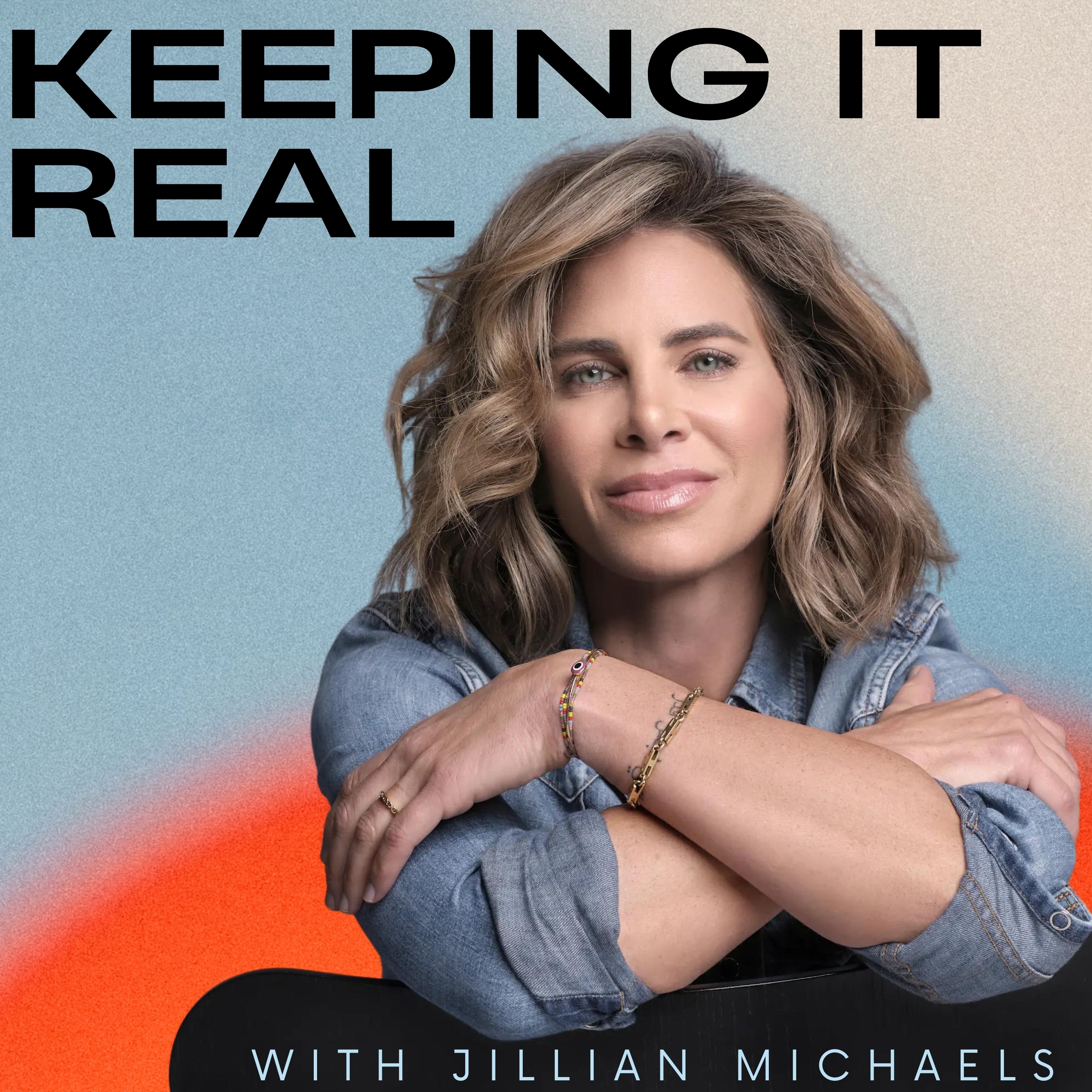
Keeping It Real: Conversations with Jillian Michaels
Leland Vittert on the Middle East War, legacy media corruption, and his journey with autism.
01:06:36
Loading summary
Transcript123 lines
- [00:02]
A
Today on Keeping It Real, I have a special guest, a dear friend of mine who's an author, a journalist, and a primetime News Nation anchor. Leland Vittert is going to be here. This is a man who's made a career out of running toward the fire, not away from it. From the streets of Jerusalem during the height of the Israeli Palestinian conflict to the front lines of America's media wars, Leland has never shied away from hard truths. And in his new book, Born Lucky, he opens up in a way we've never seen before. Not just about his years as a war correspondent or his mission to cut through the noise of polarized journalism, but about something deeply personal. Overcoming an autism diagnosis that many told him would define his life, and instead, he redefined it. We'll talk about resilience, the resilience it takes to rewrite your story. His unflinching take on the unfolding events in Israel and Palestine and why he believes journalism's real fight against is for clarity, not size. And without giving too much away, I'm also going to be asking him a bigger question. What if understanding the root of autism is closer than we think? It's a subject that Robert F. Kennedy Jr. Has made his mission, and one Leland has a very personal reason to confront. Keeping it real with Jillian Michaels. We're all right. We got a lot to cover today. We're talking about becoming hugely successful with autism. I also want to get into Kennedy's take on autism. Your thoughts on that? The Middle east, how you've overcome struggle and become an incredibly successful news anchor. You and I got a lot to dig in on.
- [01:44]
B
Yeah. And then the tables turn in about an hour and 45.
- [01:48]
A
Yeah, they do. We have a lot to talk about on your show. So let's start out with for anybody who doesn't know you, who are you? What do you do? Tell me the title of the book and why you wrote it.
- [02:02]
B
Okay. Leland Vittert. I am the chief Washington anchor for News Nation, which is a cable news startup. And boy, am I excited to be on with my friend Jillian Michaels, who is often on my show. And look, it takes a lot of faith and courage, I think, to allow someone to turn the tables, which is what makes it so fun to be on with you. The book is called Born Lucky, Dedicated Father, Grateful Son, My Journey with Autism. And it tells the story of my father who quit his job and dedicated himself to helping me overcome the really significant challenges that I had as a little boy. And I was diagnosed at about five years old with what we now know to be autism. And at the time, it was quite in vogue to get special accommodations and to try and sort of adapt the world to the kid.
- [02:58]
A
Still is New Zealand. Yeah.
- [03:00]
B
And he said that it's not gonna fly because if there's any hope of me lucky, which is my nickname, having a fulfilling life, I'm gonna have to learn how to adapt myself to the world. And this still is, you may call it controversial, different, whatever it is. But it was his feeling to really help teach me and mold me. And we go through a lot of stories in the books from, you know, him teaching me social cues by taking me to dinners and when I talk too much, tapping his watch, and that was my signal to stop talking. And then later, after dinner, we would post game and he would try to explain. Like, do you remember when Jillian was talking about whatever? Yeah, dad. Well, why did you interrupt her? Why'd you think what you were saying was more important than what she was saying? Why I thought this story was funny or whatever I would say. And you go, well, look at it her from her perspective. So it was teaching the social cues and the social interactions. Just one example that comes so naturally for so many people, but are so hard for people who have autism or on the spectrum, whatever.
- [04:08]
A
This makes such a huge statement about what's possible with regard to perceived limitations. And I want to get to that. But first, let's establish. This is probably very confusing for people. Can we talk about what a spectrum of autism looks like? Because when you first told me you were autistic, you're like, I wrote this book. I want to send it to you. It's about my journey with autism. I almost passed out. I had. I was from shock because I had absolutely no idea. I couldn't pick up any of the signs. You're so hugely successful and wildly intelligent. And, you know, I appreciate this illness illustrates my ignorance, and I'm taking responsibility for that. But for anybody who is willing to cop to that kind of ignorance with regard to autism, what is the spectrum, in your opinion of this, and where do you think you fall?
- [05:01]
B
Look, I am not an expert on autism. I'm not an expert on ADHD and developmental issues and anxiety and all the things that kids face today, I think what the book is is a message of hope to parents, that they really can make a difference. George Will, who I've gotten to know and has become a friend, wrote the foreword to it. And he said that this book is a testament to the mountain moving power of parental love. And I think there's so many parents who, they get a diagnosis for a kid, for their kid, and they are heartbroken and devastated. And what does this mean? And they're basically told by the establishment and by the experts and by teachers, look, your kid is who they are. Just accept who they are. You have to celebrate who they are. You can't try to change them. You can't try to make this different. And that's what my dad was basically told. We tell the story in the book where he's faced with the diagnosis and he says, is there anything I can do? Is there anything? And the woman says, no, not really. She said, I mean, you can sort of try, but there's two things. One is the kid has to be smart. We'll get to that in a minute. Because there was ways I was and ways I wasn't, but I saw that.
- [06:15]
A
In some ways you're, you're a genius. And in, in some way, yeah, I.
- [06:19]
B
Mean the, the, the testing they did with me showed me that on, on the two halves of the IQ test, I was mentally in some areas, to use the parlance of the day, and genius in others. So incredible. Learning disability is a 20 point spread. I had about an 80 point spread. It was the biggest spread they'd ever seen.
- [06:36]
A
Right.
- [06:37]
B
The woman said to my dad, it's very difficult to understand what's going on inside the kid's mind, meaning me. And that, that was true. But I never got extra time on a test, I never got special treatment in class. I never was given any kind of accommodation because my parents wouldn't allow it. They didn't tell anybody about my diagnosis. So I think I'm not qualified enough to say this is what autism is. At the time in 1986, autism diagnosis was basically reserved for people who have what they call now profound autism. So severely autistic, non verbal, sort of that, that area.
- [07:22]
A
And you were non verbal until you were three, you say, didn't speak at all.
- [07:26]
B
So I didn't talk at all until I was three. And clearly now I'm making up for lost time.
- [07:31]
A
You also were born cross eyed, didn't talk until you were three and had the cord wrapped around your neck and almost died in birth. Thank God for a C section that saved your life. So the chips were stacked against you here and your parents basically turn around and say, not gonna happen. Your dad in particular, you talk about. I wanna take a quick segue here because obviously this is a big topic today, in particular with regard to Maha and you and I have talked about on your show, many different maha topics, and Kennedy has taken a lot of. I just want your opinion. I appreciate, you know, neither of us are experts in autism and developmental issues and delays, but I want your opinion.
- [08:21]
B
When.
- [08:21]
A
When he says he wants to kind of get to the bottom. Not kind of, he wants to get to the bottom, arguably, of why we've seen this exponential explosion in autism diagnoses. What do you think about that? Are you. Do you agree with that?
- [08:37]
B
Hallelujah. And here's why. The idea, and I think this is part of what the book talks about, that, you know, oh, if your kid has autism, you should celebrate the kid and you should accept the kid and everything should be great, and you should never wish it to be different. Autism has a profoundly terrible effect on so many kids. Now, that doesn't mean that they're unable to function in society. I'm proof that you can. It doesn't mean that they should be institutionalized or anything like that, but it does mean that there's not a parent in the world that if given the chance before their baby was born, would your child have autism? Any parent would say, absolutely not. So why we would not spend an inordinate amount of time trying to understand why there is this exponential explosion in the number of cases is really important. And you can look at the data in all sorts of different ways, but there is no definitive conclusion as to why we are seeing as, yes, there's, you know, there's more prevalence, there's more surveillance. Yes, we understand it better. And, yes, we've gone from one in a thousand when I was diagnosed to one in 36 now on our way to one in 25 in California. Right.
- [09:52]
A
It's significantly lower. I can't remember the exact. I thought it was like one in 20 boys, maybe. I. Everybody fact checks.
- [09:58]
B
So why is it different in California than it is in Mississippi? Why is it different in the minority. In minority communities, there's all these different questions that do not.
- [10:05]
A
And in boys in particular, as well.
- [10:07]
B
That don't track with, oh, it's just because we're looking more. And I think I was always told and I. And I. One thing that guides my journalism and my show is it's not the questions that get you in trouble, it's the answers. And that was the line from Tom Brokaw when he signed off for his last broadcast. And I quoted him and I sort of tell the story of quoting him and how much it meant to me. I don't understand why everyone's so scared to ask the questions and it's kind of baffling to me. And I, and I really understand the anger by parents when you are told we don't know why, we're not sure what we can do to really help. You just sort of have to accept that your kid is the way it is and celebrate that. But by the way, if you ask why, we're gonna tell you we know it is not vaccines and you can't ask why, but we don't know why. Right after Covid and after what happened and how mental health and health professionals in general were so wrong, yet so sure, as my mother would say, seldom right, but never in doubt, that doesn't fly anymore. And I think that, I think that's what Robert Kennedy is, is picked up on and God bless him. And I, I heard Jay Bhattacharya, now the head of nih, basically say that the, the medical community needs to take a step back, stop demanding orthodoxy and adherence to the autism isn't caused by vaccines chant and take a step back and start with science. There's a problem. Let's figure out why this problem exists rather than telling everybody what we know it not to be.
- [11:52]
A
You know, that's what I find so interesting is it is in fact not settled science. And while I am not an anti vaxxer and I would hope that every parent could look at this with regard to their own child and each individual vaccine and a medical professional they trust to tell people it is settled science is absolutely not the truth. And I just interviewed a pediatrician with an Ms. In epidemiology and he wrote an entire book examining and exploring this and it's absolutely neutral and not political. And he's like, the reality is we really don't have the studies. This is not true. We don't know. And I would also argue, given how many different people in this field I've spoken with over the course of my career is they'll tell you we don't know. And they think it's arguably a myriad of factors, environmental, the food, the air, the water, so on and so forth. But you make the best point, which is why are we not allowed to ask the questions?
- [12:47]
B
Why aren't we allowed to ask? And I think what is most interesting to me about it is the lack of desire to find the answers. Right. It's peculiar to me. And if there's one thing I learned, and some of the stories in the book sort of take you through my early times in journalism, the one thing I was always taught in journalism is when Someone's trying to push you away from asking the question. There's something there you want to find.
- [13:18]
A
I want to jump ahead to that, actually. And we'll come back to your father and his parenting techniques and how personally I just practiced that with my son who does not have autism. So I'll circle back. But given everything that I'm personally going through at the moment, I find you to be one of the only. And there have been many journalists who've been very kind to me and very fair would be the right word, kind, probably the wrong word, very fair. But the vast majority have not. And you talk a little bit about it in the book. So here I am jumping ahead here about the risks of telling the truth in polarized media. Can we talk about that, please? Tell me. Tell me about that.
- [14:01]
B
Yeah. So it was a little bit like private school at Fox News. I was invited not to return.
- [14:07]
A
So.
- [14:10]
B
2020 comes along and I was a weekend anchor at Fox. And those who are interested in sort of the dynamics of cable news, we take you through kind of how I was sidelined because I was a journalist in the lead up to the 2020 election and how I sort of fell out of favor at Fox. But I was still anchoring the weekends. Trump declared. Trump declares victory. Biden is declared the winner. Biden wins the election. So now it is a couple of weeks after Biden's declared the winner, and there is the Stop the steal rallies in Washington. And I was a weekend anchor, so the stop of SEAL rallies were on the weekends. I'm covering. One guest comes on who is one of Trump's spokespeople. And I question her pretty aggressively on the claims of fraud. We now know that at that time, in real time, because of the Dominion lawsuit, Lachlan Murdoch was texting Suzanne Scott J. Wallace, the head of Fox News, get Leland off the air. He's so smug. They go back and forth about how terrible I am. And all I was doing was doing journalism, asking some tough questions about where are you going to find the votes. All of your claims have been debunked. Why are you still doing this when there's no path to 270 to 270 electoral college votes, on and on and on. And shortly after that, I was told I was not going to anchor again at Fox. We now I wasn't told why, obviously. And I had sort of there was this odd, you must respect the audience sort of edict that went out, but I wasn't told why. We now know through the text messages Tucker Carlson was quoted in a text message thread calling me Leland effing vittered to Sean Hannity and Laura Ingram and sort of saying I was. I was the problem asking questions and doing journalism was the problem. So, yeah, there is. There is a cost to doing the right thing. And thankfully, now I'm in a network and you're at a place where we can have honest conversations and do real journalism and be fair to both sides. So.
- [16:20]
A
All right, let's be real for a second. Bras and underwear have always been a pain point, right? I mean, they dig in, they don't stay put. They never feel as good as they look. And this is one of the reasons that I love Skims. I think the first piece that I fell in love with was the Fits Everybody T shirt bra. I mean, it's seamless, it's supportive without being restrictive. And honestly, it kind of feels like you're not wearing anything, but it still gives you the shape you want and the lift maybe you need. I'll speak for myself. I mean, I reach for it every single day because it just works with everything in my wardrobe. And then there are the Fits Everybody boy shorts. And I cannot tell you how many times I've dealt with underwear rolling into places I don't want it or showing lines under clothes I know you know what I'm talking about. These issues are completely solved. They're buttery, soft, they don't move around. They're so comfortable I forget I'm even wearing them. Skims nailed it, period. And it's the first brand that feels like it was designed for real bodies, real comfort, and real life. And I would recommend it to anyone, because once you try it, you're never gonna wanna go back. So shop my favorite bras and underwear@skims.com after you place your order, be sure to let them know that I sent ya. Select podcast in the survey and be sure to select my show in the dropdown menu that follows. When I started the fitnessapp.com I had a really clear vision. But what I didn't realize was how much goes into building and scaling a business. I mean, it's not just about having a great product or a great service. It's about reaching people, managing growth, and doing it all without burning out. That's why I use Shopify. Shopify gives me the tools to run my business seamlessly. Whether it's managing online sales, tracking inventory, connecting with customers in a way that feels personal. It's all in one place. And that's what makes it so. So powerful and even as an established business, Shopify continues to be the backbone that lets me focus on what I do best, creating products and offering services that actually help people. It takes the overwhelm out of the back end so I can put my energy into the front end. So whether you're just getting started or you're ready to scale, Shopify is the platform that makes it possible. Shopify is the commerce platform behind millions of businesses around the world and 10% of all e commerce in the U.S. now what if you can't design a website? Shopify's got you from the get go with beautiful ready to go templates that are ready to match your brand style. What if you need hands? You can get help with everyday tasks like enhancing product images, writing product descriptions, or generating discount codes with Shopify's AI tools that are created for commerce. What if people haven't heard about your brand? Shopify even helps you find your customers with easy to run email and social media campaigns. And if you get stuck, Shopify is always around to share advice with their award winning 24. 7 customer support. So turn those dreams into and give those dreams the best shot at success with Shopify. Sign up for your $1 per month trial and start selling today@shopify.com Jillian. Go to shopify.com Jillian. That's shopify.com Jillian. You know what I think is interesting about News Nation is you've got Cuomo who came from CNN and you who came from Fox. And I love that so much. And I know that feeling because when you're being completely ostracized by one side, which of course you know I am, the left absolutely hates me to the degree that they're like maga right wing. And there's nothing wrong. To be very clear, I have zero issues with anyone that's MAGA or anyone that's conservative. But the truth about me is I'm probably more of a centrist, more independent. I'll call Trump out on things I don't like. But when you're so hated by one side, it takes a huge, huge amount of courage to question the only side that really embraces you at all. And it's like, oh God, if I lose both sides, that's the end. I'm in huge trouble. You know, there's nobody that has my back. And you just, man, is it fearlessness? Is it a to be dead to.
- [20:33]
B
Ask you, what is it?
- [20:34]
A
Look, because I hold my breath, Leland, and every time I take that chance I'm like, dear God, please let them know this is coming From a good place.
- [20:43]
B
Well, look, I'm old school that I grew up doing journalism, and I think that means you're fair to both sides. I think that means you're tough on both sides. But I think that also means you're not afraid to say when one side's winning or one side's not winning. And you can't allow your own personal beliefs, as well intended as they may be, to get in the way. Now, people can, you know, take from my coverage what they will. I'm not a media critic. Journalists make lousy media critics. I, My job is to call balls and strikes as I see them and to aggressively question both sides. And I, you know, I think it's funny when people say, oh, you know, you're just another Trumper. I got fired because I questioned Trump and was the only Fox anchor to actively on air debunk his claims. Okay? And then people say, oh, well, you know, you're, you're a Trump hater. And on and on, and it's like, well, I've been giving him wins on the economy right now and on the Middle east and on and on. But to your point, you're not allowed now in American media to have a middle road. You're not allowed to call out both sides, which is what everyone says they want. And it's what we're doing at NewsNation.
- [22:09]
A
Let's talk about that. It's very difficult for me, and I've actually tried to get many people from the left on because I think it makes a more interesting conversation. Very few have been courageous enough to do it on the right. I've seen the exact opposite. I've had people who are, I don't just perceive as conservative, but arguably alt right come on and debate things with me, like gay marriage, but they'll show, show up for the argument. I find the audience in some instances, does have a hard time digesting that conversation. And, you know, I go to Turning Point, which is Charlie Kirk's event, and we have differences and we have similarities with regard to things we, we agree on, things we don't, obviously. But he allows me to show up and talk at Turning Point. I'm trying to tell everybody there, like, listen, don't, don't shut out the other side. If you want to accomplish anything, you got to work on bridging ideologies. And there was a little bit of, like, you know, the hackles came up a bit. You go do that on the left, and it's like, that's it. You're dead. We're going to bury you not six feet under, but all the way to the earth's core. And we hope that the heat of that incinerates you into, you know, ash like that's it, Art of War, Sun Tzu, chop you into a million pieces, light you on fire, burn every bridge back to the village. Why do you, am I, am I getting this wrong or are you perceiving similarities that they're. Although you experience the burn from the right, the left is less tolerant. Do you think I'm, you know, I'm, personally, I have a bias now?
- [23:44]
B
No, I think it's true. And there's evidence to back it up in that when you go and try to get guests on the left, when I do, when even Bill Maher, who was on a couple of days ago saying, I invite big name Democrats, Kamala Harris, Bill Clinton, Hillary Clinton, on and on and on to come on, they won't because they exist in a safe space. I think in, in, in I experienced the same thing asking big name Democrats to come on. It's much harder to book Democrats. There's very few who are willing to come on and be questioned and have, have a, a debate back and forth. And look, I really admire those who do. I mean, I think about Glenn Ivey, he's a congressman from Maryland who's a good friend of mine. I think about Seth Moulton, Congressman from Massachusetts, I think Senator Warner, Senator from Virginia on the Intel Committee, they're willing to have substantive but difficult conversations where everybody's not fawning all over each other. And I put it like this, that everyone accuses people in the media of having bias. Right? That's like bias is like, you know, the scarlet letter of journalism or whatever. Fine. Everybody has bias because we're humans. We all have opinions. And what I think you're getting at is those who claim they are unbiased, number one, they're lying, but number two, they're hiding something. And what you're seeing on the left and on left leaning media is exclusions of opinions. Right. If they do bring anybody from the right on, it's basically somebody from the right who will ridicule the right. And the same is true on the, on right leaning media. So having being fair isn't ex, you know, having an opinion, being unfair is excluding an opinion. Bias isn't having an opinion. We all have opinions. Bias is excluding an opinion or intentionally giving the other side their worst argument and just ridiculing them and making fun of them. And that's entertainment. That's not journalism. So I would say we're all biased. And I think what makes you different, I think what makes me different, Cuomo, whatever it is, is we're willing to tell you what we believe, what we're seeing, how we're viewing it, and then have smart people on from the other side to debate it. So we're not excluding opinions, and that's what makes us different.
- [26:07]
A
You know, Rogan has said the exact same things that the left won't come on. Jon Stewart has said the exact same things. And I have to give Hannity credit, who I also happen to love. And I'll never forget, when started appearing on Hannity, I was very far left and he still gave me a platform on his show and he was still willing to say, listen, I don't agree with you on these things, whether it was his podcast or his Fox show, but he was willing to have the conversation. And same with Megyn Kelly, who's been nothing but incredibly magnanimous and gracious and willing to debate the things we don't agree on as well as discuss the things we do. But I find it frustrating when you're getting accused of being MAGA or being biased and you're trying to platform the other side and the other opinion and they don't come on. And I'm actually wondering, what's interesting is that there's a shutout, right? The vast majority of media is left leaning. Legacy media, print and the CNNs and the MSNBCs and all of that stuff. HuffPo, New York Times, so far left, but they're excluding themselves from the places that the conversations are now happening, whether it's a news nation or whether it's new media, do you think that ends up really hurting them down the road in future elections?
- [27:31]
B
Look, I'm, I think there's two things to separate in your question. One is media from politics.
- [27:39]
A
Yeah, good point.
- [27:40]
B
I think that. Good point, being willing to go anywhere and talk to anyone and debate issues on the merits should be celebrated in America. That's just bar none. I think it's what makes America different and what is so important. It's why journalism, the freedom of the press, is the only industry enshrined in the First Amendment and protected in the First Amendment because the founders realized how important it is. I think when you have people and parties, if you will, who refuse to talk unless it's a safe space that sort of says all you need to know about them and what they think of the rest of America. And you make a really good point that there's very few on the left who will come and talk and have reasoned conversation without then, you're a racist, you're a bigot, you're a trumper, you're mag. Like, we can disagree on these two. Reasonable people can disagree here. And then I think there's a fear maybe of kind of allowing the rest of America, and we saw this during COVID especially, right. Is that you weren't allowed to question things you weren't allowed to talk about. Maybe this is different. You weren't allowed to say, well, why don't all lives matter when black lives matter? You weren't allowed to say, perfect example. You're not allowed to talk about, you know, the hundreds of thousands of Union soldiers who died in the name of pain, the original sin of slavery in America. Can't talk about that. You just have to say slavery is terrible and the people, you know, all whites are terrible for having enslaved a population.
- [29:23]
A
Right.
- [29:24]
B
I'm seeing you smile because this was a controversy you went through.
- [29:26]
A
Well, this is something that means so much to me and I want to talk about it on your show. Although on your show I don't, I don't get as much time. So maybe we can do it.
- [29:33]
B
This is happening in a month, so.
- [29:35]
A
Okay, fair. So maybe we can litigate a little bit of that here. The reason this bothers me, I was out of the country for almost a month and when I came home, I, you know, had to catch up on the news, right? It's like, okay, I gotta go to this part, gotta go to that. And I was like, oh my God, I gotta jump back into this. I've missed so much and I don't know if I really want to push this stuff into my brain. I've been looking at cheetahs and lions with my kids and I'm confronted with numerous stories of interracial aggression. You know, a white woman calling a five year old black kid who rifled through her bag the N word, and then raising hundreds of thousands of dollars online to relocate herself from people who you know, were honestly, like sympathetic to her. And then you've got, you know, a black mob who beat the crap out of this white couple who I think, or they weren't actually a couple, I guess, but two white people leaving a party. And I think the white guy called somebody the N word. And you're just, this goes Leland. Now we've got the one in the movie theater. Right? And again, this will be, this will air in a few weeks or a little bit a month, almost but you got the one in the movie theater where the Harvard professor goes to the movie theater and won't describe the teenagers that beat him up. And then everybody is making racial comments about that. And I'm just thinking we are devolving here. And my concern is not that Trump people love depended on Trump and Mog as racist. Right. I don't think that's what's happening at all. I think it is this anti woke narrative that an entire generation is choking on. And my deep concern is that if this continues and Kaizen Asiado, I don't know if you've ever had him on, he's absolutely brilliant. He said this before the CNN controversy and I reposted it cuz it moved me so much. He's like, when you make everything about white supremacy and you excuse any black degeneracy, it's gonna beget white hostility, which is going to beget white degeneracy. And the bottom line is this is going to go nowhere good fast. And that's my worry is if we don't have these conversations, where is this going to go?
- [31:57]
B
Well, I'll put it this way. I think what you're getting at is that there was an enormous amount of power derived and given, derived by and given to a group of people who were otherwise totally undeserving of it because they came up with this narrative that we can fit the world into a neo Marxist oppressor oppressed worldview. And suddenly the DEI officers at companies were more powerful than the CEOs. Yeah, just an example.
- [32:34]
A
Yes.
- [32:35]
B
And suddenly the, the sort of pejoratively say the, the, the woke. The woke, my thought leaders were the moral beacon of America. And that power is being taken away slowly and then very quickly. So you know, maybe it started with Dylan Mulvaney, you could say was the sort of the, the, the, the big thing. And then now you saw the Sydney Sweeney situation and my wife and I were talking, she goes, I don't understand why you keep talking about Sydney Sweeney. Who cares? And some, of course there's a hot girl selling jeans and my wife's in fashion. She goes, I don't get it. And I said it doesn't do a city Sweeney or jeans. It has to do with the acknowledgment of how the power structure in America is reverting. Right. And I think it's why you saw so much anger by the people who had derived so much power from being woken and DEI and making everything about race and on and on and on was because this was the death of their power. They could care less about what Jean Sydney Sweeney wears or whether she has good jeans or bad jeans. But they. She. They realized that if this became the norm and the world realized, once again, sexy girls selling jeans sells jeans rather than men in underwear tops, as Calvin Klein did, or bras. Fat men in underwear tops and bras. That doesn't sell jeans. And once the world sort of righted itself and was allowed to go back to normal, all those people who derived so much power were out of power, and that made them angry.
- [34:23]
A
What's extremely distressing to me, though, is that when you have great evils, right, something like slavery, you need great light and great goodness to combat that. We've seen that throughout history. I remember as a kid, when I was. I would fall into a very nihilistic headspace as a child, and I still can, which is unfortunate. And my mom would say to me, honey, and she would quote Mr. Rogers, wherever you see bad guys, look for the helpers. And when you look at. When we talk about america in the 1860s, there were bad guys. And, you know, people turn around and they're like, oh, you tried to trivialize racism with a statistic from the 1860 census. It's like, actually, I didn't at all. What I was trying to show you is there were very few white people that perpetrated this. And then it's. Well, the whole south did. It's like, yeah, but the whole north had already abolished it by then, despite the fact that it was so overwhelmingly profitable. Well, they went to war to preserve it. And yes, a lot of men went to war to end it. And for some reason, we're only. Well, you've just said the reason why. We're only allowed to tell one side of that story. But, you know, this power that they're so concerned with holding onto it bites back, and not in a good way.
- [35:44]
B
No, I agree.
- [35:45]
A
It doesn't go to the center. It goes all the way over again. And that's what I'm deeply worried about.
- [35:50]
B
The pendulum. Pendulum always swings. And look, one of the things I write about in the book is my sort of story of understanding America again after coming home from the Middle East. And I think what you're. This is the reverse, right, of what happened in 2014, 2015, that Barack Obama said, these are bitter people who cling to their guns and religion. If you, you know, if you don't want boys in girls locker rooms, you're a transpho. If you don't believe in teaching Homosexuality in sex ed classes in high school, then you're a bigot. If you, you know, dare say that people should be judged on their merits, not on their race or given accommodations for the race, well, then you're racist. On and on and on.
- [36:42]
A
Yeah.
- [36:42]
B
And people don't like being called that. They don't like being called garbage. They don't like being told that they're deplorables. On and on and on and on. And the backlash we saw in 2016, it was the same backlash. Trump comes in, then Democrats gain power again, they try to run as far as they can with that sort of, you know, that Obama mindset on steroids.
- [37:06]
A
Yes.
- [37:06]
B
And now we're seeing the backlash to it. And you're right, the pendulum in America, it doesn't just swing from here to here. It always swings more each time. And that's, it's really dangerous. And look, you know, my, my dad and I write a lot about this in the book. My dad, for him, it was always about values. And what he taught me was what matters about a man and how a man is measured, not their color of their skin, not their position in life, not how much money they have. Are you a good person and your values and, and that's what he rooted all of my early childhood in. And, you know, he would often tell me that the reason you're getting bullied in school and, boy, there was some awful bullying and even by the teachers was that the values that make you a target in, in middle school and high school are what's going to make you have great friends like Jillian Michaels when you grow up. And I would not have believed him back then. I didn't really believe him back then, but I didn't have a choice to kind of go along with it because he was my only friend. And now I do.
- [38:08]
A
You know, I actually have chills, Remy saying that last night I was sitting with my son and today was his first day of going back to school. And obviously, at the moment, I'm dealing with numerous news stories that are chaos. He already doesn't like school. He already doesn't really relate to the kids. He's not autistic, but he does have a learning disability. He's dyslexic, and so he feels kind of embarrassed in class. And I was trying to explain to him, I'm like, honey, this is such a tough age, especially for a boy. And we were talking about how maybe he could turn it around with this one teacher and what skills we could develop and how we could make her feel heard and so on and so forth and this and that. And like, if we can't turn it around, the world's not gonna end and we have nothing to lose. But a lot of the stuff that I had actually, I had actually just read in preparing for our interview that your father had done with you of, like, the eye contact and listening to people. And I was like, you know what? I'm gonna dig in on this one tonight before school starts. And I think it made a huge impact. I'm hoping so time will tell. But that said, I did say to him, I was like, babe, whatever right now is making you feel different is going to be your greatest strength down the road. And you're living proof of that.
- [39:24]
B
Yeah, I want. Look.
- [39:26]
A
Yeah, well, I don't want to cut you off here, but I would like to know how. Because you talk about how autism kind of led you into inherently journalism, which would seem counterintuitive for a kid that had trouble with social skills and didn't talk until he was three. So can you, as you say, connect those dots for me?
- [39:48]
B
Yeah, well, yeah, there's. There's a few. There's a few dots in between, but I was learning sort of coming of age things in high school and I. I wanted to get out of high school as quickly as possible and I wanted to get into the real world where my dad always told me that the skills and the values that you have are going to serve you well in, whereas when you're in, you know, high school, they're not. I always said I never liked anybody who liked high school because the values in high school are so screwed up that if anybody liked high school or calls those the best years of my. I inherently don't like you because it says so much about you as a person. I think more so for men than for women, but good, because my wife.
- [40:39]
A
Loved high school, but I hated it. And I think I relate more to men, so. Good.
- [40:44]
B
All right.
- [40:44]
A
We have this in common.
- [40:46]
B
So, yeah, I think it is different for women. And actually one of the I write about in the book, the one person who was really nice to me in high school was this wonderful girl. She was actually one of the most popular and beautiful girls in the school. But she was sort of the one person who kind of, I think, understood me a little bit and was. Was really kind to me. And you remember those people. You remember the goodness. It's pretty amazing that I thought I was going to get really emotional writing the book about all the bad times, like the teacher who in front of the entire class said to me, if my dog was as ugly as you, I would shave its ass and make it walk backwards.
- [41:21]
A
I remember you told me this.
- [41:22]
B
So it was like, okay. But what I really remember is the people being nice, which I think you would have been included in. But I really wanted to find purpose and find a job. So I, friend of a friend of a friend had offered me an internship in talk radio. And that sort of brought me into that. I'd always been interested in the political discussion. When I was like 5, 6, 7, 8. I could never relate to kids. I couldn't talk to kids about anything. You know, kids almost found me repellent in terms of a magnet. I just couldn't fit in in any way, shape or form. One gym teacher in fourth or fifth grade was being bullied so badly during gym, he put me with the girls. Oh my gosh. And my dad showed up one day and found that. So to tell this story about what's it like for a father to show up at school and hear that your fifth grade son has been put with the girls because kind of can't be with the boys.
- [42:16]
A
That couldn't have gone, right? That's in the book. But yeah, right.
- [42:21]
B
So by way of saying I wanted to get into something meaningful, I could always talk about politics. I always wanted to talk to adults about politics. I found it fascinating. So that was my entree to wanting to get into talk radio. And then sort of one thing led to another. And the one thing I think that's been, was really important for me as a very little kid was my dad was always huge about setting goals. And it didn't have to be about grades. It was, you know, at one point it was about doing push ups. Do five, do 200 pushups a day. I was like seven years old. Do 200 pushups a day, five days a week for four months and you and your mom get to go to Disney World. That's awesome. But it was a way of setting goals and achieving goals and then setting another goal. Same with me, learning how to fly. It was something I really wanted to do. And at a young age I realized that was something I could do that was outside of school and have achievements and have achievements that were my own. And as I started in high school, I had to play a sport. Didn't want to play a sport at high school because I didn't want to be around anybody there. So I got involved in rowing and again, goals, goals, goals, goals, and setting them, working hard and achieving Them was a big part of his lesson.
- [43:42]
A
I mean, that's absolutely brilliant. That's clearly worked unbelievably well. And I would like to stress the fact that if you have a child, whether they have developmental delays or not, the parenting skills that your father utilized with you are invaluable and will apply to any parent child dynamic. As mentioned, you know, I was using this skill set with my son last night. There is a strange segue here because it's a bit abrupt, but I want some time on this one, so I'm gonna jump to it. How do you end up doing journalism in war zones? So I want that. And then I want to actually get to your take on everything going on in the Middle east, because you are uniquely qualified to talk about this subject matter. So let's start with how do you end up there?
- [44:35]
B
Yeah, I get my first internship in TV after my freshman year of college. And this is 2002. So network television was still a huge deal. I think there was a. A very famous fitness trainer at the time who was like, on NBC and. But by way of saying network TV was still a huge deal, right. Tom Brokaw was still flying all over the world going, you know, with the troops in Afghanistan during the invasion, on and on and on. Peter Jennings, these huge figures. And once, you know, there's a little local TV station in St. Louis, they put up signs because of me that said interns should be seen, not heard, because they didn't like how energetic I was. If you're pissing people off, you're probably doing something right. But I write in the book about how there was this one reporter who said, you know what, kid? You're going to make it to the network someday. I didn't know what that meant, but that was sort of the pinnacle of TV journalism, was the network. And I kind of looked around and, you know, the Internet was a thing at that point. Google, you can kind of Google things. And what's the youngest anybody had ever made it to the network? 30. Well, life's all about goals. Set a goal. So I tell the story in the book about how I set a goal of I want to be a network correspondent by 30. Anything that got me there, I did. Anything that didn't get me there, I didn't do. I was in Denver. I heard that Fox News had an opening in Jerusalem, which nobody wanted because Obama had declared peace and given his speech in Cairo, and Hillary Clinton was going to negotiate an Israel Palestinian deal. And I just was a bulldog and would not stop Calling Fox and saying, I want to go, I want to go, I want to go. And they offered the job to, like, seven other people. And there's this moment in the book where I knew so little. I showed up in Jerusalem for my interview with the bureau chief, the Fox News bureau chief, great man, legendary journalist in the Middle East. I knew so little. I had drawn a crib sheet on my hand of the difference between the west bank and Gaza. And I'm in the interview with him, I'm writing the stories here. I write in the book, I'm in the interview with him and everything melts off my hand. All of the. So now I have an inky hand and I'm trying to explain to this bureau chief who had interviewed Gasser Arafat and run with the mujahideen in Afghanistan, why I was the guy to come to Jerusalem. And somehow, for some reason, they gave me the job, I think because they just wanted me to stop calling. And off I went.
- [47:08]
A
You know, you have this chapter, you quit, they win. I think about that all the time. And there were so many reasons for you to quit. Was there a point where you had internalized the lessons from your dad and you could just call upon them and dig in? Because having worked this hard to get to Fox and I think I identify with this feeling, tell me if I'm wrong, but having gone through all of this and worked this hard and getting to Fox and getting that gig and then getting not asked back, that would devastate the vast majority of people thinking I did all of this for nothing. And most people would tuck the tail and walk away.
- [47:50]
B
Yeah, well, I, look, I, I made the analogy in the book that at Fox I was like, you know, a second or third string quarterback who occasionally got to take some snaps on the Kansas City Chiefs, to use the sports analogy. And at a time it had been very clear that I was the next starting quarterback. That sort of, that had been promised to me by a guy who's my mentor and still dear, dear friend named Bill Shine. Shine was fired by the Murdochs really wrongly, because the Murdochs wouldn't take responsibility for what they did. So they needed a scapegoat. And Shine was it, one of the most honorable men I know and so grateful to him. But he had promised me sort of the starting quarterback job, a main anchor job during the day. And when he left, my, you know, my protector, my champions were gone. And I was sort of thrown to the wolves, which is every TV network, as you know, is. I've been there a viper pit.
- [48:48]
A
Yep, 100% had been there.
- [48:50]
B
So I, I get sort of asked not to come back to Fox or invited not to come back. I had a contract, so there wasn't much of a choice. But I'd almost died of COVID at the time and I'd broken up with my longtime girlfriend. So in the, in the span of a month, I didn't have a place to live because she kept the condo. I almost died of COVID and I got asked not to return to Fox. And I remember being like 38 and I'm sleeping on my parents couch in or guest bedroom in Florida, trying to sort of get my strength back from COVID And I remember my dad, you know, said to me, he's like, you've been here before?
- [49:32]
A
Yep.
- [49:33]
B
You know, you, you, you kept going back to high school. You know, you kept going back to crew practice and throwing up every day. When you were trying to make the varsity boat, you stayed in. These were all things that he pushed me to do. He never required me to do them, but he sort of, it was just expected. And I knew that he wanted me to. And I knew that that's how you achieved great things. You just didn't quit. And I tell the story that my dad's first business success was, came the night before he was going to shut down his first company in failure. He made 106 sales calls with no. It was the 107th that said yes. So I always had that in the back of my mind. And you know, he was just, he said, look at me, said, you've been here before. I thought to myself, I have. And I didn't quit then and not going to quit now. So, you know, is when should you know. It's very hard. There was one of the very few adults who was really nice to me, a guy named Tom Saynor who's in the book. And he has a line, it's very hard to quit a man who, very hard to beat a man who won't quit. And that's true.
- [50:42]
A
I often say success is a matter of attrition.
- [50:46]
B
Something to that we all have some version of the same quote. And I think that's not taught anymore in schools. Right. That's not celebrated anymore in life. It's like, you do what you can and if you can't do it, we'll change the standard so it looks like you won.
- [51:03]
A
I'm wondering how that plays out, Leland, because I thought the millennials were going to go through that and they didn't. And then I Thought, okay, well, Gen Z is going to have to, you know, if they're going to hit reality and they're going to have to kind of toughen up a bit and there's a lot to learn from this younger generation. Of course they're entrepreneurial, they're innovative, but they could use some toughening up. Without question, they could take that away from.
- [51:26]
B
Every generation says that about the generation before, but I think you're seeing it seeing now this generation of, you know, barista socialists who are in New York. They've gotten a. Yeah. Degree in comparative literature and then a master's in comparative poetry and they've taken out $200,000 in student loans and they're working at a coffee shop and they're socialists. It's so true that I don't think we have to see where it's going. We're, we're kind of there.
- [51:57]
A
You know, I always, I always say there's nobody meaner than a blue haired barista. It just, I literally will leave the coffee shop. I'm like, they're gonna hock a loogie in my latte. I think I better leave here. Oh my God.
- [52:10]
B
Yeah, I only drink, but I only drink black coffee. So I have it a little easier than those, than the latte crowd. But yes. Okay.
- [52:19]
A
Back to the Middle East. This is obviously an extremely complex situation that has gone on for thousands of years. Having been to the Middle east way back in the day when I was visiting the troops in Qatar and Abu Dhabi, took a little side trip and actually went to Israel and Palestine. And I remember thinking, wow, this is, this is, there's definitely two sides to this story. This is clearly very complex. I had, if you don't think's interesting, I had guides kind of on both sides. And when I asked them like what is, where is this coming? Leland? They went all the way back to the Bible, Ishmael and Israel and they did this and then they did that.
- [53:03]
B
This is what I learned.
- [53:04]
A
Where does this track when I was there? What is your take on all of this?
- [53:07]
B
So I think in the world there's good and evil and I learned that in the Middle east and I learned that by interviewing terrorists. I'll get to one of those stories in a minute, but it's pretty simple. And this is how the Middle east. This is when I sort of. It crystallized in my mind. If you want to just, just talk about the Israel Palestinian debate for a minute because that's sort of the, the topic du jour. The media, which is if the. Is. If the Palestinians laid down all their weapons tomorrow, they would have a state, it would be vibrant. They could turn Gaza into Singapore, and they would live in peace with the Israelis. They could have a bridge to the west bank, and you could have this enormous success story. If the Palestinians laid down all their weapons, if the Israelis laid down all their weapons tomorrow, they'd be killed by the end of the month.
- [54:06]
A
Right. I know this.
- [54:07]
B
It's. It is that simple. Okay, so with that in mind, you. You kind of have to look through all these stories and all these arguments over whose land it is and when was the land there, and who, you know, has this claim in the Bible and who has that claim after Constantine and on and on and on, and the Ottomans, and that's what this is, where we are today. And there's a complete misconception. I think Trump is actually the one person who figured this out and changed 50 years of American policy for the better, where he stopped believing the Muslim and Iranian propaganda, mainly Iranian propaganda, that the root of all evil and the root of all problems in the Middle east was the Arab, Israeli, the Palestinian, Israeli issue. And if you solve the Palestinian, Israeli issue, peace would flow from there into the Middle East.
- [54:58]
A
Right.
- [54:58]
B
The reality is the root of all evil in the Middle east comes from Iran and flows the other direction. And you solve the Iranian issue and you cut off the funding and the radicalization and the sort of force behind the terror, and then you can actually start having solutions. Right. So you think about the Abraham Accords. You think about what. What is coming now. The potential of a normalization between Israel and Saudi Arabia, the bombing of Iran and defanging of destruction of Iranians. Iran's proxies of Hamas and Hezbollah. Well, the Middle east looks a lot better now. We were told that, you know, Israel attacking Iran was going to be World War iii. No, that part, I guess. And I think that's. That change has really been significant and a great thing for American foreign policy.
- [55:57]
A
So I was. I was with you all the way for a very long time and have even espoused that exact narrative because I've. I've watched people like yourself, who I greatly respect, say things like that. The counterargument. You know, one of my co hosts on a show called Her Take, Anna Kasparian, is very vocal and passionate about the fact that she thinks. She says Israel, but she means Netanyahu and his party has gone far beyond that and committed insane, unnecessary, evil crimes against humanity. And of course, Dave Smith has, Has. Has made that argument very effectively.
- [56:43]
B
No, it's not effective at all. And here's why.
- [56:44]
A
Tell me.
- [56:45]
B
Because the only reason these people care that Israel is quote, unquote, committing these crimes against humanity is because they're the Jews and they're Israel. I have not heard Annex Casparian or Dave Smith or any of these people cry about the wholesale slaughter. Okay. Of Druze in southern Syria. I haven't. Didn't hear about them crying when the ISIS was slaughtering and enslaving the Yazidis. I don't hear them crying about what's happening to the pro Saudi tribes in Yemen in the famine and the slaughter and the rape and the pillage in Yemen. I could keep going on and on and on with other parts of the world or other parts of the Middle east, but we have a time limit here. The fact of the matter is, is that they only care when Israel's doing it, when Netanyahu is doing it. Israel is held to a completely different standard in war. There is no other army in the world that has ever been required to try and feed the people who are fighting against them. And Anna Kaspari and Dave Smith, none of these people talk about the other country bordering Gaza, which is Egypt.
- [57:56]
A
Okay? Their argument is going to be. Well, I'm sorry, I don't mean to cut you off. Finish that thought. And I know you can. I just for the sake of. For the sake of. Of. Of trying to play the other side, which is, you know, I. I make no bones. I am the farthest thing from an expert. And nor, by the way, Leland, do I want to be one in this area. Like, don't.
- [58:15]
B
Don't.
- [58:16]
A
This gives you a headache. But for people listening, I'd need to push back enough on you to try to get to elucidate the other side.
- [58:24]
B
Please do.
- [58:25]
A
Okay, so Netanyahu and his party has put in their charter that they believe in the Greater Israel Project, which means getting rid of Palestine. They have their own version of from the river to the Sea.
- [58:37]
B
Just.
- [58:38]
A
Just went through this with Anna. Historically, Netanyahu has lured America into war. You saw it with Iraq, and then you'll see footage of it, right? He's like, we need to go into Iraq. Hussein has weapons of mass destruction with Iran. They'll tell you, no real threat there. I actually don't agree with that. And I got in a disagreement with Anna about that and Dave, although Dave kind of beat my ass there because he just knows so much about it. Unfortunately, I wasn't capable enough like you are to hold up my side of, of that debate. Even though it was really more of an interview that said, you know, Tulsi Gabbard just came on and told the world you want wasn't really a threat. And then you've got that clip coming up, right? So Israel has a very powerful lobby. They've bought our politicians. And I even hate using the term Israel because I, I fear that it breeds huge amounts of anti Semitism and I, I, I've seen evidence of it. So I'll say Netanyahu. So that's, that's going to be the argument, right, is that he's, he's got this evil agenda, right, and he's, he's luring America into this fight. And, and I've heard also that they are really our only resource. I think Andrew Bustamante said this actually I think to PBD very recently. I don't know why I didn't get out of and out of him on my show, but he was saying, I think that they're really our only resource for intelligence outside of our own in that region. One would intimate from that, despite the fact that he did not say it, that we would be beholden even more so for those reasons.
- [60:11]
B
So there's a lot to unpack there.
- [60:14]
A
I know, Sorry.
- [60:15]
B
I'll start with, for those, for those that say there should be a Palestinian state, there already is one. It's called Jordan, 90% Palestinian. The Palestinians there are constitutionally second class citizens to the Hashemite regime. I don't see Anna Kasparian or Dave Smith or anybody crying about the Palestinians living as second class citizens in Jordan. I see them crying about the Palestinians living in Israel who have the exact same rights. And there is a Arab member of the Supreme Court in Israel and Arab doctors and Arab everything else Palestinian, all these things. So we'll start with that. There is a Palestinian state. I think a story in the book really illustrates my worldview and in all of the things you point out, I think are important until you step back and I think I'm willing and pro Israel people are willing to acknowledge where their worldview comes from. And I think Anna and Dave Smith are not. Which I think there's no way to support Hamas and to support the concept of a Palestinian state in another Arab state without being anti Israel. You can't say from the river to the sea or you can't say Palestine will be free without being anti Semitic. But when I was in the Middle east for a couple of years and to be fair, when I went to The Middle East, I had a lot of these same feelings. I thought there should be a two state solution. I thought the Israelis were the problem and if only the Israelis would make more concessions. Obviously we know what happened when the Israeli, when the Israelis gave the Gaza to the Palestinians and billions of dollars flowed in. They didn't build Singapore, they built an armed camp with tunnels to take people hostage and on and on. But I went to Gaza in 2012 to interview a failed suicide bomber. And this was a woman who in the early 2000s had pulled a pot of boiling water over herself as a little girl. She was like, like 5 or 6. She's medevacked to Israel, given free world class medical care that they didn't have in Gaza to treat her burns and save her life. And she has a pass because of her medical condition to go back and forth from Gaza to Israel. So after Gaza turned into a terrorist camp because the people there voted in Hamas, she still gets to go to Israel for her medical care and she gets recruited by one of the terror groups, the Oscar Martin Brigade, to become a suicide bomber. She's given three target choices. A bus, a cafe and the hospital that has treated her for free and saved her life and the doctors and nurses who were, were part of that effort. Those are the three choices she has. She chooses to go kill all the people who saved her and chooses the hospital. So she gets to the crossing and this is all on video. These facts are not in dispute. She gets to the crossing, the Eras crossing, where the Israelis have a security checkpoint. They somehow detect that she's wearing a suicide vest. She pulls the detonator and it doesn't go off. She's arrested, she's thrown in an Israeli jail, she's still treated for all of her burns and given world class medical care for free. She earns her degree on and on. The Galad Shalit deal happens, which was the deal for an Israeli soldier that had been kidnapped for about a thousand Palestinians. Couple notable people crossed into Gaza in this deal. One of them was her, Wafa, and the other is Yahya Sinwar. The guy who planned the October 7th attacks.
- [63:50]
A
Yes.
- [63:51]
B
So I go interview Wafa, thinking this is going to be a great story of redemption. This proves there's hope in the Middle east because she is changed in jail and realized I've been given a second chance at life and I'm not going to go be a suicide bomber, I'm going to be an advocate for peace. I show up in Gaza, go to Wafa's house, interview's been arranged. Sit down with her, start talking to her. And I said, I brought something for you. And the story's in the book. So this sort of gives your listeners insight into where this all comes from. So I write in the book that I'm there with my iPad, and we've got cameras looking at me with the video and looking at her and then looking at the three of the two of us in the video. And I play the video for her of her trying to blow herself up. She had never seen it before. And she gets this huge smile on her face. And I say, what are you thinking? And she says, I'm thinking that is the moment I tasted paradise.
- [64:53]
A
Oh, geez, Leland. Oh, my God.
- [64:54]
B
Oh, okay. So, I mean, would you do this again? Obvious question.
- [65:03]
A
Yeah.
- [65:05]
B
Her answer in a minute.
- [65:07]
A
Oh, my God.
- [65:08]
B
Like, I would love nothing more. My life's desire is to be a martyr. So now I ask Anna and Dave and these other people, how do you expect Israel to make peace with that?
- [65:24]
A
Can I. Can I ask you. This is completely off the cuff, but I would love it if. If I could get you on her take and we could ha. Because I can't. I can't defend the. I'm not even. I'm not educated enough on this subject matter. Love to answer. And I hate to put Anna.
- [65:39]
B
Because I never like being. I'm a journalist, and I don't ever. And I was a journalist in the Middle east, and I interviewed terrorists, and I ran with the rebels in Libya. And there's the stories about, you know, me, you know, going into Cairo as a foreign correspondent, my dad calling and saying, you can't go because it's so dangerous. The first time I ever went in.
- [65:59]
A
I was gonna say, that's probably the first time you're in the military. Like, not, by the way, to do something.
- [66:03]
B
Yeah. No, he said. He said, you can't go. And I said to him, I said, look, dad. And there's this moment in the book, I said, I can come home. This is my first big moment for the Egyptian revolution. I can come home. But if I come home, you know, if I. If I don't go and I don't go do my job, then I quit and I come home, and you taught me not to quit.
- [66:25]
A
Wow.
- [66:25]
B
This is what I signed up for. This is what I go do.
- [66:27]
A
Oh, you little. You turn the table on him.
- [66:29]
B
Yeah. I'm in the Athens airport, and he said. He called me back a few minutes later. He said, okay. Said, this is what you signed up for. This is what you do. And look, I mean, I had turned down, I tell the story in the book of getting an offer to work for the CIA's Director of Operations to go be a. An overseas spy. And I turned it down because of my dad's and my relationship and how I knew that if I was going to be grabbed overseas and held, he could never. Just would undo him. So I wasn't going to do that. And there's a. There's a sort of an emotional moment, a lot of emotional moments, but there's an emotional moment in the book of why I made that decision not to.
- [67:13]
A
I'm really glad you did. I. And I say this as. Again, as a. As a mother of a son, I once had a similar. Not about the CIA, obviously, but I had a similar conversation with my son when he had almost blown his face off in a barbecue trying to make a steak. And there'd been a series of unfortunate events where, you know, in a parallel universe, I had probably lost him. And I sat him down and I was like, dude, I'm gonna tell you right now, I've given up a lot for you. You know, I've given up motorcycles, I've given up this. I've given up that. I've given up this. And I was like, if. If you die, it's going to ruin my life. I'm like, I don't deserve it. Mommy doesn't deserve it. You know? And I like, I'm so glad. It's good to see that somewhere young boys are internalizing that, and it pays off down the road. I could literally sit here and talk to you about this forever. Obviously, there's so much in this book. It's a story of. I mean, there's so much to be informed about and learn about all the topics you and I talked about, but it's generally in my opinion and where I'm at so far, I'm about a third of the way through it. A story of inspiration overcoming adversity, parent and child dynamics set against such a fascinating backdrop of politics in America and politics in the Middle East. And I absolutely love it. Leland, where do we get more from you? Where and when can everyone buy the.
- [68:44]
B
Book so available September 30th. So when the podcast comes out, it's already available. We're recording this a couple of weeks before, but you can get it now. Amazon, Barnes and Noble, your local bookstore. Bornluckybook.com Lucky was my nickname since birth, as Gillian said, obviously. 9pm Eastern on news Nation, when Jillian is often my guest, and it's one of our favorite nights when that happens. And then you can see me on social media.
- [69:13]
A
Lelandvittard I love you, you know that? I just think you're fantastic. I appreciate your friendship. I appreciate what you do in the world. I'm absolutely loving the book and I look forward to being on your show in 43 minutes.
- [69:28]
B
Hey, you know, that's how this goes. Gillian, this was great. Thank you.
- [69:34]
A
Thank you so much for watching. If you enjoyed the podcast, please, like, comment, subscribe and share. And make sure to let me know what guests you want to see on in the future.