← Keeping It Real: Conversations with Jillian Michaels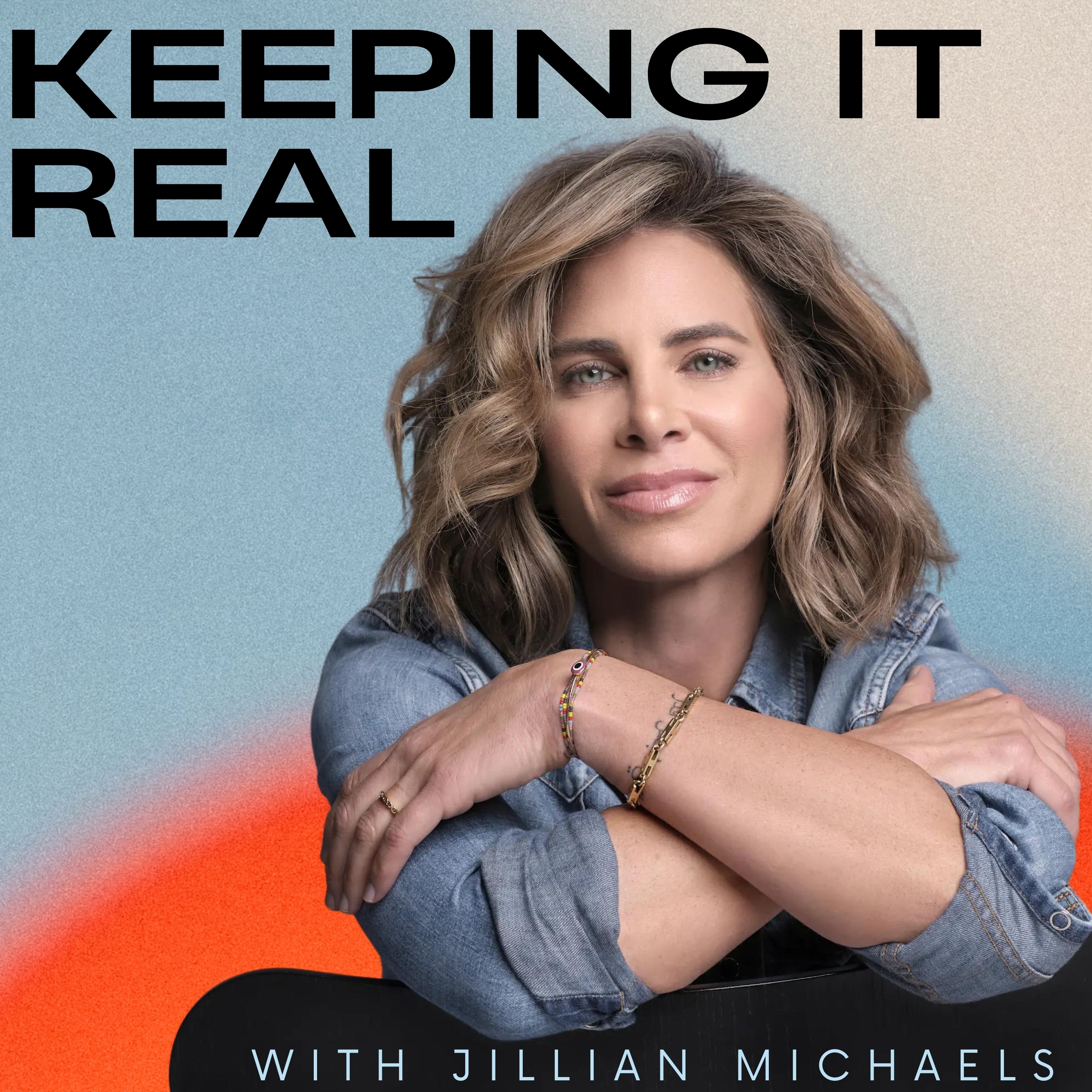
Keeping It Real: Conversations with Jillian Michaels
Trump’s Targets: Elites, Ivies, and the Illegals Replacing You with Batya Ungar-Sargon
01:02:15
Loading summary
Transcript86 lines
- [00:01]
Jillian Michaels
All right, tell me the truth. How many different beauty potions do you have sitting on your bathroom counter right now? Because if it's more than just Vibrance Super C Serum, you need to listen up because the ingredients in this one product can replace your day creams, eye creams, night creams, neck creams, wrinkle creams, and dark spot reducers. It's made in the USA with the highest quality ingredients including vitamin C, hyaluronic acid, vitamin B5 and vitamin E. Supersee Serum delivers noticeable results. So simplify your skincare routine, get a healthier complexion and minimize wrinkles and age spots with Vibriance. And if you don't find it better than your current skincare routine, you'll get a full refund. So just go to vibriance.com Jillian to save up to 37% off and you get free shipping. That's Vibrance V I B R I A N C E vibriance.com Jillian Once the temps started rising, I realized I was back in the same worn out rotation. Same tank tops, the same shorts, same everything. So I gave my daily uniform an upgrade with Quince. Their pieces are easy, they're elevated, and they make me feel more put together without even trying. I mean, they've got 100 European linen shorts and dresses for 30 bucks, luxe swimwear, Italian leather platform sandals, and so much more, guys. And the best part is that everything with quince is priced 50 to 80% less than what you'd find at similar brands. And they do this by working with top artisans and cutting out the middlemen. Quince gives you luxury without the luxury markup. And Quint only works with factories that use safe, ethical and responsible manufacturing practices and premium fabrics and finishes. So listen, for me, I got a bathing suit, I got a travel bag, I buy all kinds of stuff. I got shorts, my entire summer wardrobe practically. Because listen, there's just no need to spend that kind of money when you can get the same exact quality for significantly less. And I feel great about my purchases for all the reasons that I just mentioned. I can vote with my dollars at Quint. So treat your closet to a little summer glow up with Quint and just go to quince.com Jillian for free shipping on your order and 365 day returns. That's Q U I-n c e.com Jillian to get free shipping and 365 day returns. Quince.com Jillian she's the journalist and political pundit who's taken the media world by storm. Intellectually fearless, brutally honest, and never afraid to call out her own industry. Bhatia Angar Sargon is the opinion editor at Newsweek and the author of Not One, But Two. Two Essential Reads, Bad News, How Woke Media Is Undermining Democracy, and her latest, Second Class, a powerful expose on how America's elites abandoned the working class. Today, she joins us to break down the headlines, challenge the narratives, and deliver the kind of truth that makes powerful people squirm. Unfiltered, unapologetic, and absolutely necessary. We're tackling Trump's attack on the Ivies. The truth about what Constitutional rights, illegal migrants actually have, Trump's Middle east policies, both geopolitically and economically. She's going to break it all down, for better or for worse. Here we go. Keeping it Real. Keeping it Real with Jillian Michaels. I'm so excited to be talking to you. Welcome to the podcast.
- [03:36]
Bhatia Angar Sargon
I am so excited to be talking to you. I feel like you bring so much joy into this. This industry, much needed perspective, and just something that's, like, not very frequent in people who do what we do, which is a level of kindness and openness and curiosity. So I'm so honored to be here with you and excited and excited about what you're doing in this next chapter of your life. So thank you for having me.
- [04:06]
Jillian Michaels
You know, I don't do what you do. That's why I think I've actually been kind of successful in this space, because I. I'm like the viewer. I'm trying to follow it. I'm trying to stay educated. I'm trying to understand it. There's conflicting information. I'm trying to pursue truth so I can make the best choices for myself and my family. And it's deeply confusing. And then there are voices like yours that have spoken to me, a handful of voices, and you're one that when I watch you, it just feels like a breath of fresh air. I can understand what you're saying. It makes sense. It gives me perspective, and I'm so grateful to you for that. And I wanna start out with the big, beautiful Bill. I'm just gonna jump right in because I'm exceptionally confused here. And this is the reason. On one hand, I've heard, oh, no, no, no, no. It's gonna add trillions to our deficit. It doesn't. It's nothing but tax cuts for the rich. And I'll be honest, I've had Cenk Uygur on my show who went to Wharton. The guy is not an idiot. And he'll sit here and Tell me. Wait until you see this first budget. You're gonna see nothing but tax cuts for the rich. Okay. I do believe Cenk can call balls and strikes. I really do. And people get mad at me that I don't push back. I couldn't even begin to push back. That is why you're here. Is this wrong? I don't understand. And then real quick, just to read this to you, Stephen Miller, so for people who are like me, is the Deputy Chief of Staff for Policy and Homeland Security. He goes on X. I've seen a few claims making the rounds on the big, beautiful bill that require correction. The first is that it doesn't codify the Doge cuts. I have heard that a reconciliation bill, which is a budget bill that passes with 50 votes, is limited by Senate rules to mandatory spending only, eg, Medicaid and food stamps. The Senate. I've already. I think I've already lost the audience. That's how little I can follow what this guy's saying. So I'm actually done here. Is this good or bad? What? Is this? Because you're like a champion for the middle class, Good or bad?
- [06:15]
Bhatia Angar Sargon
It's a great question. The truth is, it's not anything because the Senate is now going to cut up the bill and have its way with it. So it's good for Trump and good for the agenda that he was able to corral the House and get it passed. But the document, as it exists right now, which is a thousand pages long, I certainly have not read the whole thing, is not actually the version of the bill that is going to get signed into law. So I can tell you what is in it, but it doesn't really matter very much because there are already two Senators who have said that. They are not two Republican Senators who have said that in its current form, they're not gonna pass it. What it does have is, it's interesting because let's take Medicaid, for example. So the Democrats are saying this is gonna kick millions of people off of the Medicaid rolls and basically give tax cuts to the rich. And so basically, you're stealing money from the poor and the working class to give to rich people. Now, there's a little bit of truth in that, but not a lot of truth in that. Some people will lose their Medicaid, but the people who are gonna lose their Medicaid are the bill says if you are a person who is able bodied, so you're not disabled, you are able to work, no dependents, meaning you don't have Any children, they are expecting you to either be getting an education or working 80 hours. I believe it is a month, which is about 20 hours a week now. So are some people going to lose their Medicaid? Sure. Is it a terrible thing that an able bodied man with no children in exchange for, you know, the gold standard of healthcare in this country, which I certainly don't have, that good health care, that they should be asked to either be educating themselves or working or looking for work and furthering themselves for 20 hours a week? I don't think that's that bad. I think most Americans would agree that that is not an unreasonable expectation. But by the time the Democrats get their hands on the criticism, they're saying single moms are going to be get lose their health care, children are going to lose their health care. And none of that is actually in the bill. But furthermore, it doesn't even really matter because Josh Hawley has said he will not. Josh Hawley, being a Republican senator, has said he will not sign off on a bill that has any cuts to Medicaid that does not raise taxes on the rich. Okay, so this bill is now going to get cut up in its current form. Now I agree with Josh Hawley. I think that the GOP under Trump has become the party of the working class and that that is not a slogan. That has to be policy. And the first policy agenda on that bill should be yes, if you are in the top 1% and you make over a billion dollars a year, you should be expected to pay. We're not even talking such a big tax cut. We're going from 37% to 39%. I think to the average working class person who we are asking for big sacrifices as a nation on the tariff front, for example, when you say to them, well, is that something you'd support? It's an obvious no brainer and it would force the Democrats to vote against a bill that includes tax hikes on the rich. Like I can't think of a better troll for the President to be pushing. Trump, I think feels that, you know, anyone who raises taxes, it's a losing proposition politically. I think he doesn't realize that the majority of Republican voters at this point support raising taxes on the rich. So we'll see where it ends up. We've got Josh Hawley on one side. Steve Bannon agrees with me on this. There's a lot of heavy hitters on the right right now who are pushing this, but in general, I think working class people. So when I was reporting my book Second class. I was traveling around the country interviewing working class people. They really don't like fraud in welfare. They all know people who they see as defrauding the system. So I think as long as Republicans can make it clear who is and who is not going to be losing their benefits, they should be safe here. And I don't think it's fair to say that this is, you know, that having a work requirement on able bodied, non disabled people who are not parents, it's a very minimum work requirement in order to get this amazing benefit, this amazing healthcare that a lot of us would love to be on and are not on. I don't think that that is, you know, the end of the world because I think that is very popular.
- [10:50]
Jillian Michaels
You've also been very vocal about not wanting any cuts to those kinds of entitlement programs. So if you're not up in arms about this, then that makes me feel a heck of a lot better. But I have seen all the things you're talking about, you know, who's on Medicaid, kids, you know, who's. It's like I've seen all of that and when I tried to figure out like, where are the cuts? It's exactly what you're saying, which I personally also agree with you. I have no problem with. So are you feeling like Elon Musk has taken a bit of a step back here? I feel like they've bullied this guy. I can't even believe I'm saying this out loud, but I do feel like he's been bullied into submission. And it says that this bill would codify the Doge cuts. Where are we at on the Doge thing? It feels like it was big and he was getting somewhere and then there was so much pushback with literally lighting Tesla fricking dealerships on fire and what happened to him in the media and his stock that he almost gave up. What is your thought there?
- [12:02]
Bhatia Angar Sargon
So I see a little differently. I think he made huge promises about the kinds of wastefront abuse they were gonna find. He promised there was gonna be a trillion dollars in cuts. Honestly, there's a lot of very good hearted, hard working people working in government. I think there was just a lot less waste than he was hoping to find.
- [12:24]
Jillian Michaels
Really?
- [12:24]
Bhatia Angar Sargon
They found, yeah, what they found was, you know, closer to, I think it was, you know, in the billions, but much, much less than he had promised. There were a lot of things that they, he made big announcements about on Twitter that were not actually like he had to walk back. It turned out they weren't really true. There's a really funny story about one of his, like, wrecking balls that he threw into Social Security and found that, you know, honestly, there really was very little waste, fraud, and abuse there. And as a result of the cuts, people were sort of waiting on the phone for six hours, seniors, desperate seniors, to find out if they were still getting. You know, the problem is, is that, like, the largest spending in this country is actually spending on vulnerable people that I think most Americans want to see getting that assistance, whether it's seniors or disabled people or. There just was a lot less than I think he had promised and was hoping to find. And so he was amplifying things, but I think he was sort of over amplifying things. And honestly, President Trump, I think, was very attuned to the ways in which Elon Musk has a lot of conflicts of interest when it comes to working with the government. He was charged with finding cuts to agencies that are investigating him for abuses and potential problems within his own companies. He is unbelievably close to the Chinese Communist Party because the entire supply chain of Tesla for Teslas that are not made in the US Is in Shanghai. And so his fortune basically exists at the largesse of Xi Jinping, the head of the ccp. So he is China's greatest cheerleader in the United States. States. And there was this really amazing story that came out where, because there was a leak to the New York Times, we were made aware before the fact that Elon Musk was planning to sit in on a meeting about our potential war plans with China, which, of course, would have been a huge, huge conflict of interest. President Trump found out about this and actually said, well, what the f. He used the real word. What the F is Elon doing there? He has business in China. Make sure he doesn't go. So I think the president, who sees Elon as a very good friend, is very grateful to him for the contributions to his campaign, is also very protective of the United States and our interests, and never for a moment lost sight of the potential conflicts of interest. And so I think he wanted to give Elon a sense of respect and gratitude, and so he gave him this position. But I think it's been made clear to him that the time for him to return to his businesses is probably now.
- [15:11]
Jillian Michaels
Interesting. Okay, I know you've got a million gazillion photos sitting on your phone right now. Don't just leave them there. Get them printed for free and delivered straight to your door with free prints. They have More than a million five star reviews. Free print is the world's famous favorite way to get premium quality photo prints. No subscriptions, no commitments, just a thousand free prints a year. So go to freeprints.com or download the Free Prints app directly from Google Play or the App Store. You know, you. You bring up China and Elon's business being in China. I gotta admit, I'm very. You're gonna hear this come outta my mouth a lot. I'm really confused. Uh, I was listening to you. I think it might have been on Abby Phillips, and I obviously listen to you all the time. And you were saying, listen, I don't like the plane. I see the guitar plane as a bribe. That said, I'm very happy that he's bringing trillions from the Middle east into the States and investing here. I think it's going to help the middle class. But if we look at, if we were to litigate just, you know, some of the things that some of these countries have supported. You know, we're lifting sanctions off of Syria. You know, we're trying to strike a deal with Iran. Like, there are civil rights abuses here that are extraordinary. There are terror groups. There's all kinds of atrocities that occur. Now on one hand, it's, hey, let's stop trying to push our American values in Iran and Afghanistan. They want Sharia law. Let's incentivize by offering, like, hey, we can all make money here. Let's not go to war. You can. I. Okay, I can follow that. But on the same token, we do or don't feel that way about China because we want to get iPhones out of there. So they're not spying on all of us. Right. Like, where is the line? How much unethical behavior are we willing to tolerate from another country for business sake? I don't. I cannot wrap my head around the discrepancies.
- [17:17]
Bhatia Angar Sargon
I think for me, the argument about getting out of China is more an economic one than a values one. Okay, Obviously, they're terrible actors. They're committing genocide against Uyghurs in the Xinjiang region, which is, by the way, where much of the cotton industry is right now. And the cotton, even in these big brands that pretend they're not getting cotton from there, they are. Marco Rubio actually passed a bill to forbid slave labor in the cotton that's produced and put into clothing. But there's. The Chinese are really good at getting around things like that. So they're really bad on that front. But that would not, I think, be an America first. Reason to decouple from China. The problem with China is that they're screwing over our workers. So for me, China is less about foreign policy and more about domestic economic policy. I see to where the corporations in this country have simply gotten addicted to the cheap labor in China. And the thing about China is it's an industrial economy, so they don't actually need to make a profit so much as they need to keep the people working in these factories that they built, these enormous factories, which is where Shine and Temu come in. Even in China, with their slave labor, it doesn't cost 50 cents to make a pair of plastic earrings. That stuff was produced to evade the tariffs we already had on them because there was a law that Trump got rid of called de minimis, which means. And I hope this isn't too much in the weeds.
- [18:49]
Jillian Michaels
No, no, I'll ask you for these. If I can't, if I can't follow you, I'll break it down more with questions. Go ahead. Sorry. De minimis.
- [18:55]
Bhatia Angar Sargon
De minimis meant that if the contents of a certain case was less than $800, it could skirt the tariffs that we had already on China. So they produced these entire industries, entire websites and apps and factories to produce cheap crap so that when the sensors would come and look at it, they'd say, oh, look, it's all a bunch of cheap crap. And they could evade the tariffs that way and keep the lights on, on in their factories. So this whole system, you know, we rely on them for a lot in terms of foreign policy, but even in terms of just this addiction we have to cheap stuff, people think that's good for the working class, it's not. It would be much better for the working class to themselves be employed in 21st century factories where they have great jobs that are powered by AI but require human effort, high standards skilled jobs where they would make much more money and then be able to afford, you know, one expensive doll for their daughter rather than, you know, 20 cheap pieces of from the dollar store that break immediately, which is all they can afford right now. And the thing that drives me the most crazy is the elites have already, by the way, made that decision for their children. Like you go to a rich person's house and their child has, you know, one or two or three very expensive dolls. There's no crap anywhere. There's no clutter. You know, in a rich person's house, it's all clutter free. But you go to a poor person's house and it's full of cheap crap because that's all they can afford. And what Trump is saying is that's because of China. And what I'm doing is I'm. I'm giving poor people jobs that will make them be able to make the same decisions that rich people are already making. So for me, China's not really about foreign policy. It's about social media saying we have to stop this addiction to cheap crap based on cheap labor because it has disinherited our working class neighbors to where they are poor and we are wealthy. And when I look at the Middle east, what he's trying to do is the exact same thing. He's saying, I don't care what you do in your own backyard. I only care if you are making the American dream more widely available for working class people. People invest in us. I want $8 trillion from you. You build factories here. And I don't care what you're doing in terms of rights. That's not my business anymore. I have an America to save. I think that's the logic behind it. Although I have to say, Saudi Arabia has really come a very long way in the last five, 10 years. This Vision 2030 that MBS has is really predicated on liberalizing. So they're really moving in the opposite direction of Sharia law and supporting terrorists. And one of the things Trump did ask of Saudi Arabia before he left was that they fight ISIS in Syria, that they take that on because again, not our business and not our problem.
- [21:58]
Jillian Michaels
You know, I was having this argument with Anna Kasparian and Ann Coulter with regard to strangling Iran or negotiating with Iran, and they end up at the conclusion that I believe you end up at, that it will become militaristic and you'll be feeding the children of the middle class into, if I could quote you, the MA of war. Do you think that that is inevitable because we've utilized sanctions successfully before? I just have a hard time differentiating human beings that are American versus human beings that are Iranian or Chinese. And while I, while I appreciate your son should not have to die to fight for the rates of somebody overseas in a war, they have nothing to do with my son, my daughter. I wouldn't want that either. I just wonder if there's another way. And I worry if we do have. To whom much is given, much is required, right? Do we have some responsibility to not do business with these people on an ethical level? Is that where America first and we become too isolationist? Or do you think I'm just being idealistic and stupid here?
- [23:09]
Bhatia Angar Sargon
I Definitely don't think that. I really appreciate the question because I think this is a really important one. And you framed it in a way that, like, forces me to handle the ethical and moral implications of it in a way that I often don't feel like I have to, because I feel like the people asking me that are not themselves moral or ethical. I think that there's this. I think if you're. If you're. If you're. I think the thing that distinguishes the people who feel we have a moral responsibility to the rest of the world and the people who don't feel that is how financially secure they feel right now. So in a universe in which we didn't have an economy that had resulted in the top 10% in America controlling over 60% of the GDP, in a universe in which the Democrats hadn't built an economy that was an upward funnel of wealth from the pockets of the working class into the pockets of the top 10%, we could all have that debate as equals and say, well, we're a very prosperous nation. We're the richest country on earth. Why don't we extend a helping hand to millions of migrants from around the world to, you know, Islamist countries that have Sharia law, to China? Why don't we extend ourselves to improve the world? But in this America where the elites are so wealthy and the working class class is struggling so much for the elites to say we are the richest country on earth, meaning we, the elites, are the richest country on earth because GDP is concentrated with them. For them to impose, as they have that ideology on a struggling working class, to me, that is the really immoral thing in this moment. I don't think you're doing that at all. But I think that's sort of where the elites of both parties have ended up.
- [25:03]
Jillian Michaels
Oxygen mask conversation. You're saying the vast majority of our country can't even put their own oxygen mask on, let alone worrying having to go put it on people in other parts of the world. I get that. I appreciate that. Thank you. That has brought a tremendous amount of clarity for me on that issue. Okay, let's talk Trump economy for a second. I have watched the clip of you with Bill Maher numerous times on Real Time, where he looks at you and he says, are you happy? Surely you've got a little buyer's remorse and you just go to town and it went everywhere, and you say all the reasons that you're quite happy and you're getting what you voted for. But yet I can sit, as mentioned, with a Jank Uygur who tells me, no, no, no, no, no, you're wrong. The tariffs are gonna cause inflation. You know who's paying for that? The middle class. And Cenk is a populist. He actually is a populist. I truly believe, when I listen to you and I listen to Cenk, that you guys actually want very similar things. You want tax cuts on the rich, you want a healthier middle class. But your opinion on how to get there is vastly divergent. So his argument is, as you know, like, wait till you see the budget. Tax cuts for the rich and the little man's going to get nothing. And these tariffs, this is a disaster. And it's going to cause inflation. You're looking at $5,000 iPhones. So you know, you're going to pass this cost of what was Chinese labor to American labor. It's extremely more costly and you're going to. That's going to be the price of your whatever, your computer, your frigging car. Where, where is he wrong here? Because I certainly don't have the acumen to debate this.
- [26:53]
Bhatia Angar Sargon
I love Shank, which gets me into a lot of trouble with my pro Israel family and friends. We have a wonderful relationship. I agree with you. I think he's genuine. I think he feels things genuinely and I think he admits things, like when he thinks the other side is doing a good thing, which is very, very rare. And I. So I. He is precious to me. I. Despite our many agreements. Here's where I would disagree with him. I think that, you know, it's not inflation when a brand new iPhone costs $3,000 instead of $1,500, because even though a lot of people have iPhones, it is only the elites who get a new one every year. So the idea that this is like, this is a luxury good, it's not inflation. You know, when luxury goods will cost what they actually should have been costing all along, but only didn't because we shipped the American dream off to China. They are artificially low, which has benefited the elite. So Shenk, who probably gets a new iPhone every year, has been able to pocket 1500 dollars that belonged in the pocket of a working class person who should have been working in that factory here. The only inflation that matters in terms of hurting the working class are for essentials like gas and groceries, both of which have come down quite a bit since Trump took office and which nobody seemed to care about when Joe Biden was driving the cost up. So, you know, the idea that somehow it's the same if a Brand new BMW costs more because of a tariff on Germany, you know, than my used 2009 Camry, you know, that I've been driving since the pandemic. Like that's not the same. And that conflation of a luxury item with the necessities that middle class families can't live without. Of course, who does it benefit? The elites. Because they don't want to pay $3,000 more for a brand new iPhone, they want to pay $1,500. And so they want to get keep doing the policy that put that money in their pocket when it belonged in the pocket of an American working class person.
- [29:13]
Jillian Michaels
Gosh, I have to be honest, I really didn't. I once again, I didn't see it from that perspective. And as much as I try, I am blessed enough to buy that iPhone every year. Now I will tell you that in my entire family, as a matter of principle, I have the oldest phone, mine is a 14, and, but now my kids have the newest phone, my wife has the newest phone, but I kept thinking like, I'm not doing it, it works fine. But then they make it not work fine because my battery doesn't last more than two friggin hours. And the cord, it's like the old cord so it doesn't plug into anything appropriately. And my daughter yesterday was like, I can't take it anymore, mom. Like I can't. Can you just get a new phone? And I finally was like, when the 17 comes out, I will get a new phone. But you're, you're absolutely right. It is like, well, gosh, Land Rovers are gonna cost like 25000 more now. But you're totally right. The average person is driving like a regular. I don't know what. It's hard to see the things though that don't impact you on it on a daily basis. Which is why, which is why I'm asking the questions. This podcast is sponsored by Active Skin Repair, a skin health company helping people heal with natural, non toxic medical grade ingredients. Active skin repair utilizes a molecule called hypochlorous acid. And when you apply the skin molecule, it works by mimicking the natural immune response to cleanse, soothe irritation, reduce inflammation and support healing. Active Skin Repair can be used to treat a wide range of skin issues, including cuts, scrapes, burns, sunburns, diaper rashes and other types of skin damage. This is invaluable for moms. Maybe you've noticed it is also safe and non toxic, making it suitable for use on all skin types, all parts of the body and it even helps with rosacea, eczema and acne prone skin. With over 500,000 happy customers, thousands of 5 star reviews, and ingredients so safe and so clean they can be used by the youngest member of the family up to the oldest. So now you have one simple solution for all of your family's skin health needs. Just visit activeskinrepair.com to learn more about active skin repair and to get 20% off your order, just use the code Jillian. All right, beauties, it's time for some real talk. How many hours have we spent perfecting our skincare routine for our face only to forget about our necks? I know I've been guilty of this, and I didn't realize how neglected my neck was until I tried Gopure's Tighten and lift neck cream. One use and I was like, wait a second. Why is my neck softer than my cheeks? I mean, I kept looking in the mirror like, is this real? I noticed a difference pretty much right away. And here's the bottom line. The skin on your neck is thinner, it's more delicate, and it ages faster. It needs its own kind of love. Gopure's firming complex is specifically made for your neck and chest, and it's designed to visibly smooth and tighten in as little as four to eight weeks. The stuff works. Its dermatologist recommended it's cruelty free. It doesn't have any of the nasty junk like parabens or sulfates. I mean, no wonder why they've sold over a million jars. So if you want to lift, tighten, and stop ignoring your neck, now is the time, team. Go to GoPureBeauty.com and use the code Jillian at checkout for 25% off. And when they ask where you heard about the product, please tell them I sent you. Push up bras. They get a bad rap, right? Because most of them suck. They dig in, they gap. Kind of feel like you're wearing medieval armor when you're in one. But the Skims ultimate push up bra, Game changer. The lift is real, the fit is flawless, and the support insane. I tried the ultimate teardrop push up and let me tell you, I've worn it every day since. It's got underwire, but it's somehow comfortable. And I mean, it had a full cup size, thank you very much, Skims. So if you're tired of bras that promise everything and deliver nothing, go shop the Skims ultimate bra collection@skims.com and after you check out, do me a favor, select podcast in the Survey and pick my show from. From the dropdown menu. You're going to thank me, I promise. And you know what? There's a ton of other awesome stuff at Skims, from sweatpants, T shirts, all different clothes that you can feel great and comfortable in. That's skims.com. i want to talk for a second about the Ivys. You have gone to town on this one. Now, here's what I perceive the criticism to be, that it's punitive, okay? So. So it seems to me, if I was to make this case from the other side, what I hear is the following. You can't selectively silence students, okay? And I, you know, I. I generally get along. I happen to love Anna Kasparian. And this is maybe the one time her and I really fundamentally disagreed was about Mahmoud Khalil. And she. Her argument was, if you silence Mahmoud Khalil, and I'll tie him back to the Harvards of the world in just a second. But if you silence him, where's the. You know, this is a slippery slope. Where does it end? Who's in power? Who are we silencing? My argument was, this is hate speech. Is it inciting violence? He's here on a student visa. Is he entitled to the same rights as a person who was born an American when he's been granted the right to be here specifically to study, not to be an activist? And they're harassing Jewish students? And then it's like, no, they weren't. They all had Shabbat together or whatever the hell. And I don't know. I'm not on the fricking campus, but there's that argument, right? So then the argument is, well, now he's silencing students selectively. He's compromising the First Amendment, and then he's being punitive with the Ivies, who are giving a voice to students to. To find their voice and. And to express themselves, and who say he's inciting violence. That's the argument. Now, for me personally, all I needed to see was that this guy was an active member of cuad, and I read their substack celebrating Yaya Sinwar. And I don't give what happens to Mahmoud Khalil. I don't want violence to come to him, but I certainly don't want him in this country. Now I can't say if I'm right or I'm wrong. I'm so emotionally connected to it, I don't care. I don't care. So what is the answer, though, is somebody who could argue they're right. Countering the case that I just made.
- [36:04]
Bhatia Angar Sargon
First of all, it's, it's so amazing to hear when my fellow Americans feel that deeply on behalf of the Jewish people. I think. Sorry.
- [36:24]
Jillian Michaels
No, I, I mean, my grand. Listen, I, I'm 33%. I've never grown up. I've been very clear about this. I did not even know that I had Jewish blood. I found out in a 23andMe test that my grandmother was, was an Ashkenazi. Was an Ashkenazi Jew who ran from the Nazis. But no one told me because my mom was told by her mother, like, don't tell anyone. And then I got the friggin thing. I'm like 30 something percent Ashkenazi Jew.
- [36:50]
Bhatia Angar Sargon
And I was like, that's amazing. How did.
- [36:52]
Jillian Michaels
But I don't have an attachment to it. I'm not horrified in the way you are. I'm not wearing a Jewish star. I've never been to temple. So it's like I have the bloodline.
- [37:01]
Bhatia Angar Sargon
I think that's how most Americans feel. Like they. I think the average American was so utterly disgusted with the campus protests. Like if I were a conspiratorial thinker, I would have thought it was a false flag operation because it so turned the American people against the cause. Because Americans are deeply attached to the Jewish people, especially to their Jewish neighbors.
- [37:28]
Jillian Michaels
Yeah.
- [37:29]
Bhatia Angar Sargon
So, you know, I think from a moral point of view, that feeling you had about Mahmoud Khalil is how most Americans feel. You distributed a piece of paper that praised the Al aqsa flood of October 7th. Get out. So that's the don, that's the moral question. Right?
- [37:47]
Jillian Michaels
Conversation's over for me.
- [37:48]
Bhatia Angar Sargon
Exactly. So I think that on that moral front, I'm totally with you. I think he's like the, you know, Marilyn man.
- [37:55]
Jillian Michaels
Uh huh.
- [37:56]
Bhatia Angar Sargon
Yes. Turned out to be like a wife beater and human trafficker and gay.
- [37:59]
Jillian Michaels
Perfect analogy. Thank you.
- [38:01]
Bhatia Angar Sargon
So on the moral front, I think you're totally right. There's also though, the legal front. Right. On the legal front, I think you're also completely right because this is not about free speech. If he had put on his visa application, I plan to be the spokesperson of an organization that distributes pro Hamas materials. He never would have gotten a visa. But even beyond that, he actually happened to have lied outright on his visa. He failed to put that he had worked for unrwa, which was the pro Palestinian branch of the un, which the Biden administration determined was so closely tied to Hamas that we defunded them in the Biden administration. So he worked for a terrorist organization. He then gave out propaganda for a terrorist organization and effectively lied on his visa. All of which makes it like an obvious legal slam dunk for the Trump administration because he completely violated the terms of his green card. So this is not a free speech issue at all. Now, the young woman, the two Turkish woman who wrote the op ed, her case is much harder to defend. In fact, I don't think it's defensible, which is why she was given bail and will probably be allowed to stay because all she did was write a pro BDS op ed. And that is like clearly just a free speech thing. And it wasn't even an anti Israel. I mean, I didn't even find it that.
- [39:30]
Jillian Michaels
Forgive me, what's pro. What's bds?
- [39:33]
Bhatia Angar Sargon
BDS is the boycott against Israel.
- [39:35]
Jillian Michaels
Got it. Sorry.
- [39:36]
Bhatia Angar Sargon
A lot of people consider. Consider the boycott against Israel to be in and of itself anti Semitic. I go back and forth on it. I think most people who support it, many people who support it are anti Semitic, but I still think it's protected free speech. Got it. And so in that sense, the Supreme Court has always upheld that immigrants, even if they are illegal, have the same free speech rights as citizens, but that does not mean that they have the same rights to due process in deportation hearings.
- [40:09]
Jillian Michaels
You've brought this up. I have this specifically down. This is the first time, forgive me, you're right in the middle of explaining, but when you were explaining this, the difference in constitutional rights, and you said, I believe, like, with regard to I can't. Criminality, they get the same rights versus, like, just explain it this just. Could you explain it to the audience, the difference. And I never heard anybody explain this the way you have before.
- [40:38]
Bhatia Angar Sargon
So immigrants, every person on United States soil, has the same due process rights if they are accused of a crime.
- [40:48]
Jillian Michaels
Got it.
- [40:49]
Bhatia Angar Sargon
They have a right to a jury of their peers and they have a right to representation. The thing is that immigration court is not a real court. It is an administrative hearing. Immigration judges work for the executive branch, which means that they don't answer to anybody except Donald Trump. He is their boss. And the Supreme Court has allowed the executive branch, the president, to fire people who he thinks are not executing immigration law correctly. Congress basically said that these immigration judges are in charge of adjudicating these hearings, not a trial, but a hearing. They are effectively administrators. And furthermore, the supreme court upheld in 2020 the right of the Trump administration at the time. Starting in 2017, they started doing this. And the Supreme Court backed them up their right to do expedited removals, which meant that illegal immigrants who had come within two years of crossing the border illegally were not even entitled to that hearing before a judge, that it was still due process, even if somebody who works for Border Patrol simply picked them up, arrested them, and shipped them back across the border. So the idea that they deserve a trial or a human hearing before being deported is just absolute nonsense. You know, this free speech thing is a liminal case because the Supreme Court has ruled both ways. But certainly in the case of somebody who has a deportation order, the only right they have is habeas corpus, which means the only right they have is to say, I'm not the person you have just identified here. That's it. And effectively, the fact that none of the gang bangers has made a hobbyist corpus petition suggests that none of them said, I'm not that person. That is the only right that they have. And they will always have that right, by the way. The Trump administration will never take that right away from them, because they can't.
- [42:58]
Jillian Michaels
Hold on. So why is the Supreme Court ordering Trump to bring back the Maryland man? I don't get it. I thought.
- [43:07]
Bhatia Angar Sargon
I got it.
- [43:07]
Jillian Michaels
I thought it's because he said, no, no, no, no, no. I need asylum. And they said, okay, no.
- [43:14]
Bhatia Angar Sargon
Oh. The reason they have to.
- [43:15]
Jillian Michaels
I'm sorry, I'm screaming. I like, I go, wow.
- [43:20]
Bhatia Angar Sargon
So what?
- [43:21]
Jillian Michaels
Not for a lack of trying to understand this, I want you to appreciate that I have probably watched 20 different conversations about this, and this is. It's like, if I can't get to the freaking channel. Okay, go.
- [43:35]
Bhatia Angar Sargon
So effectively, what happened was he. His wife accused him of hitting her.
- [43:40]
Jillian Michaels
Do you know that?
- [43:41]
Bhatia Angar Sargon
On multiple occasions. I don't know if it's as a result of that, but he got a deportation order. He was here illegally, and he got an order from a judge. After a lot of due process that you and I paid for again and again and again, he got an order of deportation. He then said if he gets deported to the country where he is a citizen, he will be at risk from a rival gang.
- [44:06]
Jillian Michaels
I got you so far. I'm still with you.
- [44:09]
Bhatia Angar Sargon
So the judge did what's called a stay of a stay, which means that he cannot be deported to El Salvador, but his order of deportation still held, which meant that the onus was on the United States government to find another country willing to take this gang banger, wife beater, human trafficker. But what happened was because the immigration system is so corrupted by liberals and Activists who spend all of their time trying to keep gang bangers in this country, nothing ever happened. And he was effectively allowed to roam the streets to beat his wife again. And that's where the Trump administration came in. They rounded him up and then instead of sending him to another country. Country. They sent him to the country where he is a citizen. So what the Supreme Court effectively then said is you now have to spend thousands and thousands and thousands of dollars to get him back here, only in order to send him to another country that is in El Salvador, which the Trump administration was basically like, no, that is stupid. And the Supreme Court said, well, you have to facilitate it. And they said, well, okay, El Salvador, do you want to send him back? And El Salvador was like, actually, no, we're not sending him back. He's a Salvadorian and we're going to keep him because he's a citizen of this country.
- [45:34]
Jillian Michaels
Yeah, he's a criminal.
- [45:35]
Bhatia Angar Sargon
Basically, what the Trump administration, their error was they just sent him to the wrong country. But the idea. So we talked about the moral implications of this, we talked about the legal implications. Let's now talk about the political implications of the Democrats white knighting for this gang banger or for Mahmoud Khalil, a person who avowedly supports Hamas. It is total political suicide. And that's why the Trump administration keeps doing this, because they know that the Democrats are going to keep white knighting for Harvard University's right to educate Xi Jinping's daughter. Did you know that? Did you know that Xi Jinping's daughter has a Harvard education that we paid for? It's appalling.
- [46:21]
Jillian Michaels
I do know that Bin Laden's family has an association, I think, with Harvard, that they.
- [46:29]
Bhatia Angar Sargon
What are we doing here?
- [46:31]
Jillian Michaels
I actually don't know. That's what I'm asking you. What I do know is that when I get into this argument with my friends on the left, they stop me dead in my tracks with the. I don't want him in the country either. Let's. Omar, the Maryland man. However, if Trump is disobeying the orders of the Supreme Court, chaos will rule. He's an authoritarian. I have been validated in my position that Hitler has been reborn in the form of an orange man. And it's tough because then I'm stuck with like, the. The Supreme Court situation and my hands are tied if he's avoiding a court order. And that is the case that they make, and that is what they're told. And I've had this conversation with very educated people, but they don't understand the nuance the way you do. And to be dead honest on either side, because I've not heard a person on the right articulate this the way that you and I really like Scott Jennings, and I don't think he's done as good of a job on this matter. I have heard the third country thing, but I still was struggling with the whole, like, why then is the Supreme Court bringing him back? And I do get the First Amendment piece of it, but when I was talking with Alan Dershowitz, he's like, this is very, very nuanced. And he brought up the fact that he's a student and he's here on this visa. And then you've elaborated and taken it one step further with regard to the fact that he didn't disclose this group that had been defunded that was pro Hamas. And so much of this detail is missing from these conversations, which is very unfortunate, because it does facilitate bad people being allowed to stay in this country. Why do you think the left is dying on this hill? I frickin don't get it. And I know you're a former liberal. I've heard you say it. So am I. So are most of the people that I relate to these days. But they've ejected all of this with this insanity. Why are they doubling down here?
- [48:37]
Bhatia Angar Sargon
They have nothing to offer the American people. They desperately want power back, but they only want it back because they think they deserve it. They don't want it the way Trump wanted it because he had a theory of the case, how to fix this country. He had a very clear idea of what he thought the problems were and how to fix them. The Democrats have no such theory of the case. They are the beneficiaries of everything that went wrong. The Democrats are now the party of the wealthy. So if you look at the data, 65% of Americans who make over $500,000 a year now are Democrats. Nine of the ten richest counties in America. Democrats, 75% of Silicon Valley donations, 75% of hedge fund donations, 95% of donations that come out of the top three management consulting firms. Democrats. Wall Street. Pick the Democrats over Donald Trump three election cycles in a row. And meanwhile, Donald Trump keeps increasing the share of the GOP that is represented by Hispanics, by black people. Trump won the majority of Americans who make under $100,000 a year. Now, when I said this was happening five years ago, they tried to cancel. And this week the New York Times had an article about it. You know, and there's this, like, odd feeling when all the journalists who tried to cancel you are retweeting an article saying what you said that was, like, considered to be criminal. But basically this is the problem is, like, the Democrats are now the party of the rich and the party of the elites. And so they like policy that puts money in the pockets of the elites, like an open border, because then they can hire, you know, all of these illegal immigrants to do jobs that they would have had to pay an American a better wage and health care to do, like watch their children or cook their food or do their landscaping or clean their toilets. So they have lined their pockets with the proceeds of their policy, and now they have to dig down and double down because they spent 10 years saying that the only achievement Donald Trump had was a tax cut for the rich, even as the rich kept voting for the Democrats. And all the working class, people of every race was flocking to the Republican Party because they saw not they hate Republicans. It's not about the Republicans. It was Trump. They saw that he had an agenda that was going to make the American dream once again achievable for the working class. And that agenda is very simple. If Democrats really want to find their way back, he literally stole the New Deal Democrat agenda out from under them. He's not a social conservative, he's a social moderate. So, for example, safe, legal, and rare for abortions. There's one politician in America who holds that view and his name is Donald Trump. So of course Americans are like, yeah, he thinks what I think. On abortion economics, we should have a tight labor market because it puts money in the pockets of workers. And we should have tariffs because it brings factories back. This used to be obvious to Democrats and now it is obvious to Trump. And then on foreign policy, it used to be the Democrats who are anti war. Now the Democrats want to fund this war in Iran forever and ever and ever. And it is Trump who is saying, not another war. Not on my watch.
- [51:53]
Jillian Michaels
Shopify is the commerce platform behind millions of businesses around the world. In fact, 10% of all E commerce in the United States runs through Shopify. Guys, you can get started today and you get so many different tools, it's staggering. From helping you build an online store, accelerating your content creation, AI tools that help with product descriptions, page headlines, and even enhance your product's photography. I mean, you can get out the word. Like you have a marketing team. You can easily create email and social media campaigns wherever your customers are scrolling and strolling. It's invaluable. They help with with honest to God everything. Like you have a commerce expert on your side with world class expertise for managing inventory, international shipping processing, returns and beyond. If you're ready to sell, you're ready for Shopify. So turn your big business idea into with Shopify on your side. Sign up for your $1 per month trial and start selling today@shopify.com Jillian go to shopify.com Jillian that's shopify.com Jillian. You know I, in my own line of work you talk about being canceled five years ago. I think I got nailed in 2019 right before COVID because everybody was saying you could be healthy at any size. And that was kind of my awakening. And I've watched narratives in my area of expertise. Flip the script, I just reposted something. Or is it the same journalist at CNN was attacking Trump on hydroxychloroquine and was like the studies don't bear out. This is moronic. This is anti science. This friggin journalist put out another article just a few years later about how there was a study that suggested hydroxychloroquine was a good therapeutic in treating Covid. The same fricking CNN journalist like on one hand we could be healthy in any size is being put out there by the media and then all of a sudden we've got GLP1 drugs and now obesity is a disease that we've got to treat. And I like, I'm like wait a minute and I'll do you one more. We're starting to see and I really, I do want to, I know I do need to touch on this, this Jake Tapper thing with you because I, you're the, you, me and Megyn Kelly are the only one that are firmly focused on Jake dapper unto himself because these cover ups wouldn't be allowed to happen if the media wasn't complicit. But what's so crazy is you'll see them going well you know these medications that Biden would have probably been on for prostate cancer, they whether he has Parkinson's or not, they can cause Parkinson's ism, Parkinson's, Parkinsonism, symptoms that are similar to Parkinson's. Now hold on. Gender affirming care puts children on the same frickin drugs, Lupron, like you can call them off label cancer drugs, you can call them chemical castration drugs but when it applies to kids it's gender affirming care. And no one sounds the alarm on the damage that these drugs do to a developing brain. So I just, I want to validate it from my wheelhouse. Same thing. And it's infinite. Infuriating. But I want to push back on a couple of things because I feel like I'd be irresponsible if I didn't. I'm. I personally feel I wish that abortion would be legal, safe, rare, and have a timeline. There's got, in my opinion, on this continuum of zero to birth, like, where there should be a cutoff date with. With that said, he did effectively put Supreme Court justices in place that rolled this back in certain states. States. So I can't, I can't fully exonerate him from that. I think he's responsible for that.
- [55:41]
Bhatia Angar Sargon
But that's, I mean, the, that is more democracy, not less democracy. Right? Because then in each state you can have a referendum, which they did, and they had a bunch of them were, were voted down. Right? So in, in Ohio and Kansas, which are both red states, like solidly red states, they put a referendum on some version of the heartbeat bill and they were voted down by Republicans who said, ah, we don't need this. You know, like, that's.
- [56:09]
Jillian Michaels
I know that's more democracy.
- [56:11]
Bhatia Angar Sargon
And I get.
- [56:12]
Jillian Michaels
And you know what? I hear you. I hear you.
- [56:15]
Bhatia Angar Sargon
Let me just make this point.
- [56:16]
Jillian Michaels
Roe v. Wade. Go ahead.
- [56:17]
Bhatia Angar Sargon
Was. Was far to the left of where 80% of Americans are at. So I agree with you. There should be a cutoff at some point. You know what I mean? Like, there's like, like a very obvious kind of like, civilized. It's probably like 12 to 15 weeks. Right. I mean, there's kind of like somewhere around there somewhere after that. I mean, when you read. Unless you're like, you have some sort of like, like medical, like necessity, obviously, like, you know, at some point, you know, like, you know, third trimester, it kind of starts to feel like murder. Right? Like, not in the beginning, but like, right at that. Right. So, like that. But that's where most Americans are. So 65% of Americans who call themselves pro choice think it should only be legal for the first trimester. And 92% of Americans who call themselves pro life think that there should be exceptions for. And the mother's health saying we're close to. So there's like a total overlap. There's 80% consensus on 80% of the issues. Trump personally is exactly there. But Roe v. Wade was way to the left of that. So, you know, I mean, I probably, I think honestly it really hurt Republicans more than helped them. I totally agree with you, but that was not a great law. That was not. It's not a constitutional right to have an abortion. It's something that state that should be decided at as local a level as possible because that is how democracy is supposed to work. That. That's sort of how I feel about it right now.
- [57:38]
Jillian Michaels
You know, my struggle with it personally is just that if I'm a woman in Florida and I've got two kids and I've actually had this happen to friends, let's just say the con. Because I would argue for agency too. Use birth control, be careful, whatever. I've seen the condom break. I've seen, you know, I've had friends who've gotten pregnant with an iud. If you are a woman working two jobs, you don't have a ton of money. You don't have the luxury. You don't catch it until week seven. You don't have the luxury of flying to another state. This is where, like, these extremes I struggle with. I wish there was some sort of common sense boundary around this, but at the same time, I would also argue to people who go all the way to the. The pendulum swings all the way to the other side. Like, hey, you know what, why don't you do a little research into how they abort a child after a certain period of time. It is gruesome and I will leave it at that. And I just wish people could. I love, though, the fact that you're pointing out how close we actually are versus how far apart.
- [58:43]
Bhatia Angar Sargon
And actually we're getting more conservative on abortion, not more liberal. It's very interesting. It's funny, when I was traveling the country, like, interviewing working class people for my book Second Class, the most common view I heard from women was, I am pro life. I would never get an abortion, but I would never take that choice away from another woman who I wouldn't judge what she's going through. That's where most Americans are for somewhere between 12 to 15 weeks. You know what I mean? And then after that, it's really.
- [59:16]
Jillian Michaels
Yeah, right, Exactly. Okay, I want to circle back to the. To the Ivies here for one more second. How in the world did they get all this money to begin with from the federal government? What is the history of this? Why hasn't this been evenly distributed to trade schools in the working class? Because there's obviously a historical point, precedent, which seems crazy to me now.
- [59:39]
Bhatia Angar Sargon
I don't know when they started getting $2 billion. It's obviously like despicable and unforgivable. Barack Obama defunded vocational training and put a lot of that money into pell. Grants on the idea that everyone should go to college because those jobs are not coming back, as he put it, which was effectively like to justify the dispossession of the working class and suggest, like, if you want the American, American dream, if you want a middle class style of living, you have to go to college. Because, of course, college is the number one predictor for whether somebody's a Democrat. Like, it was very smart, but it was also very evil, whether they can afford a home.
- [60:13]
Jillian Michaels
And I was like, you know, I was about to get into the whole AI conversation of what jobs are about to become obsolete, whether somebody becomes a Democrat. Son of a gun.
- [60:23]
Bhatia Angar Sargon
Yeah.
- [60:24]
Jillian Michaels
Wow. Is that indoctrination, do you think, due to higher education? Fascinating. You know, my little sister, significantly littler sister, age wise. I paid for her education to go to Sarah Lawrence and she studied also. She was a exchange student at Oxford. So my brother is an artist. He didn't go to college. I dropped out of College. My sister's 17 years younger, my brother's 15 years younger. And I'll never forget, I should have seen this one coming. It was probably 2018. And my little sister looks at us and, you know, we're all at the table with my son and daughter who were, oh my God, at that time, like 5 and 7 or 7 and 9. And she's like, guys, gender is a social construct. Oh, my gosh. We dined out on that. We thought it was the funniest thing. Little did we know what was coming. And I had no idea what that half a million dollar education had bought. And I.
- [61:28]
Bhatia Angar Sargon
What a story.
- [61:29]
Jillian Michaels
Oh, my gosh. And it continues. So I think as we're starting to wake up and more of this is starting to become transparent, you know, people ask me this, and I want to ask you this. Do you think the world is more corrupt or do you think there's just more transparency, like, over, like the media, for example? I had this debate with Joe Rogan because I was saying, you know, my, my parents have a very hard time believing that legacy media could, could have nefarious intentions or could be giving you false truths. And I said, well, you know, I think when they were growing up, it was different. And he's like, I don't agree. I think we just didn't know because there wasn't new media. What is your opinion on it?
- [62:14]
Bhatia Angar Sargon
The pressures were very different 50 years ago because the elites were very different. So it was before the great sorting. So people lived next door to people who voted differently from them. And it would have been considered declassee to read a newspaper that your neighbor, the Republican, couldn't possibly read because it would be too insulting to them the way the New York Times is today. Right? The New York Times, 91% of its readership, probably more by now, is Democrats because it's just so insulting to the intelligence of conservatives to see themselves portrayed in that light. Of course it's wrong and it gets a lot of stuff wrong, but it's too insulting. So that would have been considered like beneath an elite 50 years ago who goes to play squash with their Republican friend and they want to be able to talk about the news in a way that sounds intelligent or what have you. You had a lot of most journalism back then was local journalism, and local journalism existed in a context of you would have a town and they'd have one paper. So the guy who ran the paper owned the paper. He could let his journalists, you know, tack left following their natural inclinations to be, you know, activists, but he would lose 50% of the potential readers. Of course they weren't going to do that. They were like, no, you, you guys have to report the news straight and we have to have a balanced op ed page that has both sides so that I can get every single reader in this town to read my paper. And basically both of those things fell apart. The elites became very insular and much wealthier and much more diffuse in their wealth. So the professional class became rich and part of the top 10% and began to see their wealth as deserved because they had these fancy educations. So they developed a contempt for the other side, for Republicans and for working class people, which they used to justify policy that further enriched them. And meanwhile, the pressures of digital media meant that you were measuring success not in terms of getting the widest amount of people in your town to read your paper, but the most extreme people because they are the most engaged. And as you know from running a digital media shop, you know, you measure success based on engagement. So the New York Times and CNN want the most extreme lefties as their viewers, both because they're now the richest people in America and also because they're most engaged. That's how media makes its money now. So I think it has gotten much more extreme, but I'm glad that that's visible now. It used to be that corporate interest were very much at play, and now it's sort of like you have each interest group with its media outlets, although Qatar, like funds a lot of them, you know, and basically like everybody can find the media that speaks to them. And I think it's, you know, it's kind of working out, like, especially now with new media and podcasts, like people can really most. You don't really need to know that much about the news is the truth. And like, you just don't need that much information. I feel like we do.
- [65:18]
Jillian Michaels
I feel like we do. And that's why I treasure your voice so much. Because I feel like, you know, one of the reasons, and I'll wrap on this thought, one of the reasons that I personally am so enraged is really the right word about Jake Tapper in his book is because I don't think that he was negligent or incompetent, which by the way, is unacceptable. But nevertheless, I think he was ideologically gatekeeping. I think that he was putting out propaganda, not news. And I think that this is a huge part of the problem, why these conspiracies have been allowed to persist. Whether it was the COVID Lab leak or it was the friggin Hunter Biden laptop or it was Biden's mental acuity. Where does it stop? And my other huge concern is that when I see people fighting and divided, when we're not going after the real bad guys, you know, and the globalists and all of this, the people that are pulling the strings, and I'll give you this analogy, someone posted this and it was like, okay, you've got red ants in a jar and black ants in a jar and they're all getting along great until someone shakes the jar. I feel like the propaganda is shaking the jar and then the red ants and the black ants end up fighting. That is one of the reasons that I am so outraged about what Jake Tapper did. I think he has a sacred responsibility to give honest information so people can make powerful decisions and find common ground and to hold power accountable. As you, you have said so eloquently, which is why I think that having access to the news is so important and why I treasure your voice. So you get last thoughts on this one.
- [67:02]
Bhatia Angar Sargon
I'll punt on Jake Tapper because he booked me on his show today and then canceled me. So I feel like either if I say nice things or if I say bad things, either way it's going to reflect poorly and no one will take me seriously or believe me. Okay. But I will say this, Gillian, and thank you so much for having me. This has been an honor and a thrill.
- [67:20]
Jillian Michaels
Oh my gosh, thank you for being.
- [67:21]
Bhatia Angar Sargon
So grateful to you. We're not actually fighting. We're actually getting more and more unified as a nation. To me, the polarization narrative is just a myth. I think only the elites are polarized. But if you go out into the country, you will find in every city in America somebody working side by side, praying side by side, picking up children side by side with people they disagree with politically, and they just could not care less. And so I actually think that despite the best efforts of the media to polarize us, to put money in their own pockets, the American people are just too good and too smart and too moderate and too loving and caring and tolerant to believe it. And so I'm a real polarization skeptic. I just think that if you bet on the American people, you will always win, and if you bet against them, you will always lose. And that is what our elites have done, and now they're losing.
- [68:18]
Jillian Michaels
Thank you so much. You're wonderful. I have loved every second of this. Where can people get more from?
- [68:25]
Bhatia Angar Sargon
You're everywhere.
- [68:26]
Jillian Michaels
Where do we go to get more?
- [68:28]
Bhatia Angar Sargon
I'm on Twitter, although I don't spend a lot of time there. You know, people will tell me, like, oh, wow, you're really getting piled on. And I'll have no idea because I really don't read my mentions at all.
- [68:37]
Jillian Michaels
Don't worry.
- [68:39]
Bhatia Angar Sargon
I read my DMs. I read the messages on Instagram as well. People send me the most beautiful notes, and it means so much to me, and I wish I could write back to every single person, but I do try to read them all. And people write the to me from all over the country talking about, you know, just what their lives are like, and I'm unbelievably grateful. When I was defending the tariffs, like, I was one of the only people who's willing to defend them. I guess that sort of says something about me. But even people who are, like, pro Trump didn't like them, and I was like, no, these are great. And I would. People would write to me, people who really did not have two pennies to rub together and be like, I am willing to make this sacrifice for my nation and for my children and for the future of this country. People who are so patriotic and willing to sacrifice so much more than the people who have the most in this country and in this world will ever be asked to do so. I'm on instagram @batya us, and I'm on Twitter at Bunger Sargon, and I have a book coming out next year, and hopefully I'll come back and talk to you about it. I'm sure we'll oh, my God.
- [69:36]
Jillian Michaels
You have an open door like you are you. I hold you in as high of a regard and esteem. All right. Go and deal with Jake Tapper. I cannot wait to watch. Thank you for being here, sweetheart.
- [69:52]
Bhatia Angar Sargon
God bless you. Thank you for everything and we'll talk soon.