← Kermode on Film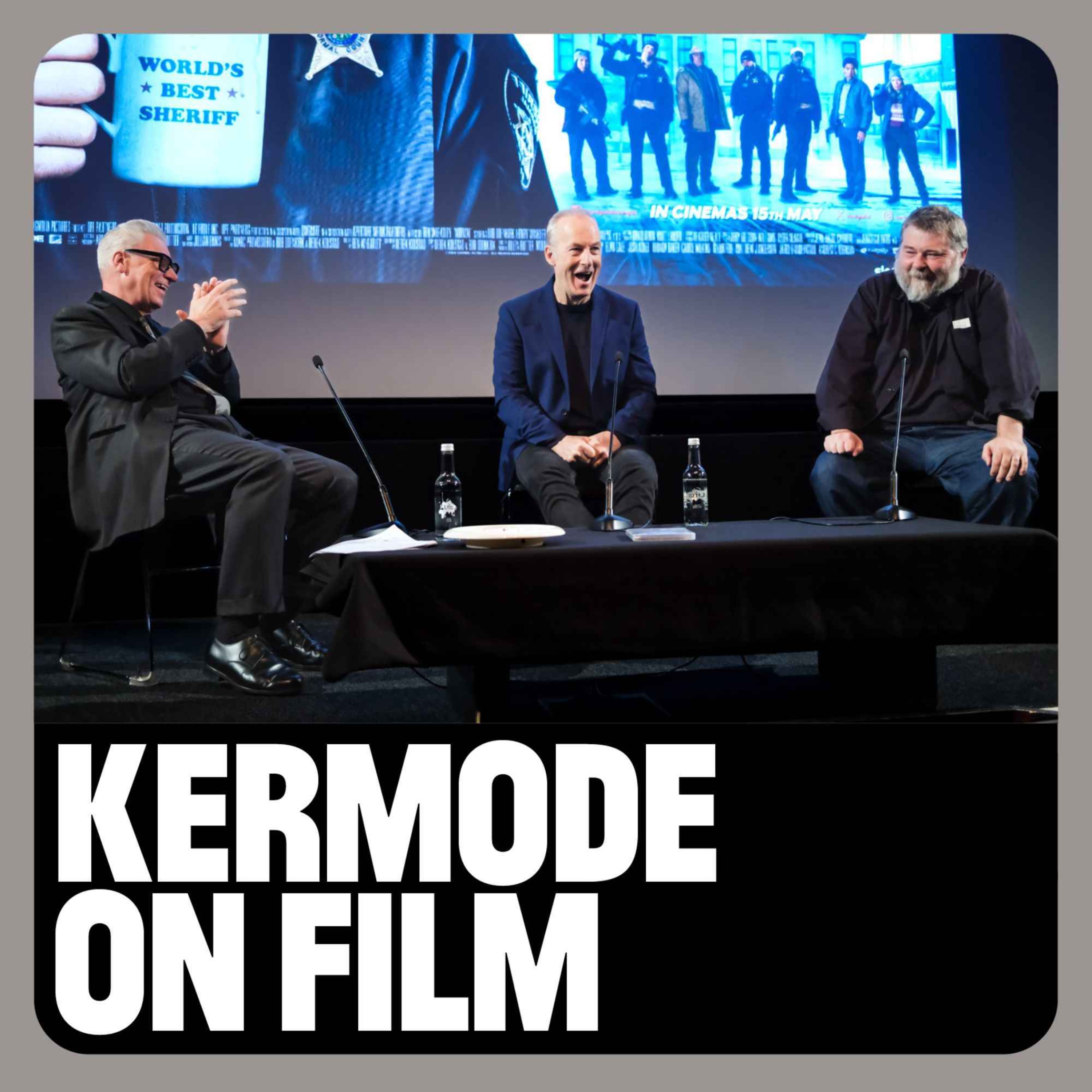
Kermode on Film
Bob Odenkirk and Ben Wheatley on NORMAL
00:35:23
Mark Kermode Live in 3D at the BFI Southbank, recorded 11 May 2026
Loading summary
Transcript188 lines
- [00:00]
Progressive Insurance Announcer
This episode is brought to you by Progressive Insurance. Do you ever think about switching insurance companies to see if you could save some cash? Progressive makes it easy to see if you could save when you bundle your home and auto policies. Try it@progressive.com Progressive Casualty Insurance Company and affiliates. Potential savings will vary. Not available in all states.
- [00:22]
Bob Odenkirk
In every job that must be done there is an element of fun. You find the fun and snap.
- [00:31]
Did you know that the very first
- [00:32]
Mark Kermode
assembly of photographs in sequential order to create a motion Picture was a 2 second clip of a black man on horse?
- [00:40]
Bob Odenkirk
We want the finest wines available to humanity. We want them here and we want them now. You really don't want me to play, huh?
- [00:48]
Ben Wheatley
No, I do.
- [00:50]
Bob Odenkirk
Captain Hardy said no.
- [00:51]
Mark Kermode
Captain who?
- [00:54]
Hi, this is Mark Kermode. Thanks for downloading this Kermode on Film podcast. This episode is the the second half of the May 2026 MK3D show, recorded live at the BFI South bank in London. I'm joined by Bob Odenkirk to talk about his illustrious career and about his new film Normal, which we're also joined by the film's director, Ben Wheatley. So sit back, relax and take a front row seat. MK3D recorded live at the BFI South bank in London.
- [01:19]
Bob Odenkirk
Enjoy.
- [01:25]
Mark Kermode
Now people do this thing. They go, oh, my next guest needs no introduction. Well, my next guest needs no introduction. Ladies and gentlemen, Bob Odenkirk. Such a pleasure to have you on the show. We have met before, but only virtually. So lovely to meet you in person. You have a new film coming out, which we'll talk about in just a little moment. But okay, so the progression is. So you come from comedy, from Stanley, from, you know, how, how man.
- [02:05]
Bob Odenkirk
So well, essentially the reason I was able to do what I've done is that nothing that I've done has been that popular and that has allowed me to have freedom to reinvent myself. Now, you could say some of those things are pretty huge, and they are. But certainly the way I spent the first 25 years in show business was as a writer and an actor in sketch comedy. And so that very silly stuff, the broader fun stuff that I love so much, that's really at the heart of who I am. I was very aware that it didn't really leave the cult realm of appreciation and knowing. And that gave me the freedom to go do other things and not feel like I had to work against something that everyone already knew me as, certainly action films and the way I wanted to try to approach them, which was without winking or you know, utterly earnest. Would have been harder to do, sell that or believe in it if my. All the many years that I spent doing very broad, silly sketch comedy was more widely known. And. But I was very aware that it wasn't, and that was great. That gave me freedom to try things. The question I had in my mind was, would anybody in the industry who would help finance a project like, nobody or those things later on, would they go, well, this could never work. But they heard me out when I said, look, you know, Better Call Saul, the show that played around the world, as big as anything I've done or bigger than anything I've done, that character is. He's funny at times, for sure, but the bulk of that show is drama, and he's a very earnest guy, and he never quits, and he often gets knocked down. And the only difference between that and an action sequence or film is the fighting. And I said, I'm willing to learn that, but I've got the relationship with a bigger audience that is on the level of an earnest, you know,
- [04:53]
Mark Kermode
performance
- [04:54]
Bob Odenkirk
that they could accept me maybe in this genre.
- [05:03]
Mark Kermode
So.
- [05:03]
Bob Odenkirk
Yeah, but it doesn't make any sense. And it's funny to me. And when I was doing. When I was doing the training for the action films, so. So Saul was this, like, half or, like a step over to the side? Because Saul was funny when he started, and he was kind of a broadly drawn character.
- [05:23]
Mark Kermode
Can I just pause you for a second? Because I'd like to show a clip from Better Calls. I had the experience of, you know, I watched Breaking Bad. And look, because my. I have two children who are grown up because I'm very, very old. And they said, oh, you know, you gotta watch Breaking Bad. I watched it. It's great. And then Better Call Saul. And many people have said this. I think Better Call Saul exceeded it. And all this stuff with Jimmy and his brother and the relationship, and it's all fantastic, this. And I said to my son, I said, I need to pick a scene from Better Call Saul. He went, this one.
- [05:52]
Bob Odenkirk
Oh, okay, cool. Is the person who robbed you present in the court today? Yes. And could you point him out to the court, please? Damn. Let the record show that the witness has identified the defendant, Mr. Saeki. Thank you, Mr. Harkness. Your witness. Mr. Goodman. Thank you for coming in today, Mr. Harkness, I just want to clarify a few things from your testimony, if that's okay.
- [06:18]
Ben Wheatley
Okay.
- [06:19]
Bob Odenkirk
So you were working at the Sandia Mart the night of the 30th, is that correct? Got in at noon, left at midnight. That's a long day. Good for you. Nothing wrong with a hard day's work. So you say a man came in and he reached across the counter and, quote, he grabbed up the money from my register and run off? Yeah. And there was no one else in the store? Not at that time, no. And since the camera system wasn't working at the time, you're the only one who saw the perpetrator? Yeah, I guess so. Yeah. So this person came in and they bought something. I think it was an Almond Joy. They bought an Almond Joy. And when you rang them up, that's when they snatched the cash from the register. Sounds like it happened pretty fast. But you say you got a good look at them, correct?
- [07:15]
Mark Kermode
Yes.
- [07:17]
Bob Odenkirk
You must drink stronger coffee than I do, because after 11 hours on the job, I can barely see straight and it was dark out. Well, he's the only guy that came in that night. It wasn't made up like a bat or a cat or whatever the hell those guys are. And he was right up in my face. Right in your face. And according to your testimony, you feel confident that you can identify this person? That's what you're saying? I can. Absolutely. It's him. Your client. Are you sure that's the person? There's no doubt in your mind? Take your time. I don't need time. That's him. Now, would you be surprised to learn, Mr. Harkness, that the person you just pointed to is not the defendant?
- [08:00]
What?
- [08:01]
My client is in the back of the courtroom. Mr. Sekey, would you please stand up? Objection. Now, the person you ID'd is named Hollis Early. He's a bartender down in Berlin. He has a very good alibi for the night in. Your Honor, objection. Oh, Mr. Goodman. Really? You didn't recognize him either, you, Honor.
- [08:19]
Mark Kermode
All right, settle down. Everybody.
- [08:20]
Bob Odenkirk
Settle.
- [08:21]
Mark Kermode
Settle.
- [08:26]
Bob Odenkirk
That's a fun scene. You can do that. That's legal. It's true.
- [08:34]
Mark Kermode
But. Okay, but everything about the timing of that, everything about the way in which, right down to that, you didn't recognize him either? Yeah, that is.
- [08:42]
Bob Odenkirk
Well, I would just point out that as funny as it is, it's a hilarious scenario and very well written. The guy is just. I mean, he's trying to pull that off, and he's playing it honestly and with. He's grounded. And so the movement from sketch comedy to that and then just moving over into this other place that I've gone to.
- [09:09]
Mark Kermode
So then. So you move from. You move from that toward action. And this happens, you know, partly as A result of the relationship with Derek Cole. Am I saying Cole? Stadt Colstadt. Yeah.
- [09:20]
Ben Wheatley
Who?
- [09:21]
Mark Kermode
Obviously John Wick and, you know, nobody.
- [09:24]
Bob Odenkirk
Yeah.
- [09:25]
Mark Kermode
And when you talk to him about it initially, how do you talk to him about. You said, the action the way I want to do it.
- [09:30]
Bob Odenkirk
I said, do it just the way I said it to you. I said, look at this character I've played for at that point, four years, I think, and look at how people know him around the world and look at these component parts. And I said, I just. I think that you could just move it, dig it a little bit deeper. And I had had these experiences in my own personal life with break ins in my home in Los Angeles that interfered with my family life. And I said, if you could write me a scene where I got a shot at the guy who broke into
- [10:11]
Mark Kermode
my house,
- [10:14]
Bob Odenkirk
I would love to do that.
- [10:16]
Mark Kermode
So it's personal revenge is driving this a little bit.
- [10:22]
Bob Odenkirk
But basically I was saying that I would like to play those feelings that are really not pleasant and not something you want to actually act out in real life. But that is one thing we can do in films is we can go into fantasy places and do fantastic and, you know, weird and crazy things that you wouldn't do in real life. And so I said, it's a. I had had two writing teams before Derek Kolstad, who wanted to write a film for me in the Action Gen. And both teams had written outlines that were essentially, I thought, Mark, they were what I would write, which is, I don't know anything about action. And they're kind of apologetic and they move in slowly and they don't go to a big broad place. Because I spent most of my life and career writing and making fun of conceptualized behavior, filmic, conceptualized behavior. In sketch comedy, you ridicule that. The enlargement and the cartoonizing of human feeling. You make fun of it and you point to it. And they had written two scripts or two outlines that acknowledged that Derek just loves action. He didn't try to explain it or apologize or take you by the hand or little ways or, you know, wink at the camera. He just wrote a straight on, dead on action movie that gets bigger and bigger and bigger. And that's what I wanted. I wanted to go all in and either embarrass the hell out of myself. I mean, honestly, could have been the biggest, you know, bad choice by any actor ever in the history of Hollywood. Why did he think he could pull this off? Look at. This is ridiculous. This doesn't work. Wanted to Go to that place. And. And essentially, with. If you think of the Nobody films the way I think of them in Normal, this new film is different. But the first two films are a regular guy. We ground him as much as we can. We. We almost try to make the first 15, 12, 15 minutes of the film feel like a, you know, could be an independent family drama about a guy with financial problems and, you know, who's distanced from his wife and kids. And then we amp it up, and then we amp it up, and so that by the end of the film, he's in a James Bond film. He's in a fantastic, completely invented world with a bad guy who is the devil himself, or in the case of Nobody 2, the devil herself. And he's just. We're taking a guy you can relate to whose tensions in life you can feel and connect with, and then we're landing him somehow, some way, and it's not easy, and it's to try to get. Elevate his world and him into a cartoon place, so you get to go on that journey. Now, Normal is the character who's most like me of any character I've played. And he also goes to a fantastic place by the end. But again, we start in a very. Outside of the opening little prologue. We go to just life.
- [14:03]
Mark Kermode
Okay. Should we take a look at the trailer for Normal?
- [14:06]
Bob Odenkirk
Sure.
- [14:06]
Mark Kermode
This opens on Friday, and believe me, you're gonna love it.
- [14:11]
Bob Odenkirk
Why are you here? I used to be a regular sheriff. I walked through life with my head held high. I kind of stopped trusting my instincts. Death comes for us all, don't it, law man? You've been listening to my internal monologue, haven't you? I took a sheriff job in a little town called Normal. Minnesota weather advisory. Winter storm threatening later this week reports two assholes screaming at each other. All right, separate. Separate people seem friendly enough. Whoa. 16.8 million. Where the hell did this town get that kind of money? Community really came together on that one. Yeah, I would say. Is that a police scanner you got? You keeping tabs on me? Yes, sir. This is a hell of an armory. Did you catch that? Yeah, it's my one trick.
- [15:10]
What do you think of our little town?
- [15:12]
It's charming.
- [15:15]
Oh, shit.
- [15:19]
Keep your hands where I can see them. If you don't play this right, we're gonna have a massacre in there. I say we play the hand that's been dealt to all of us, and maybe you get to keep the rest of your goddamn fingers.
- [15:37]
You could build a whole new life here in Normal. We really celebrate the community.
- [15:51]
What is wrong with you people? Nothing to see here. You got the Yakuza. I dig it. I dig it in that mix.
- [16:38]
Mark Kermode
I enjoyed the hell out of it. It's funny because I had. I interviewed you before, as I said, virtually, when Nobody 2 came out. And it was funny because I said that when I knew that we're making Nobody the two, the first thing I thought was, please don't mess it up. And you went, oh, there you go. British cynicism. But I said, but you didn't. I thought it worked really well. Thank you. And I liked it very much. I really enjoyed this. And I enjoyed it for a couple of reasons. One of them is I think that the way in which the character art works is really engrossing. The second thing is that it has a really visceral sense of action to it, a lot of which is down to the direction which we'll come onto it in a little way. But I was really intrigued when you said, this is closest to me.
- [17:19]
Bob Odenkirk
Yeah.
- [17:19]
Mark Kermode
Tell me why.
- [17:22]
Bob Odenkirk
Well, I've been asked mostly in the films and everything I've done for the last 20 years to play someone younger than me by often times, a lot of years. I mean, Saul Goodman was. You know, sometimes he was. There were scenes that were. He was like, 30.
- [17:40]
Mark Kermode
Yeah.
- [17:40]
Bob Odenkirk
Yeah.
- [17:41]
And I started. I was 51 when I started playing him. They had to CGI the lines out for me.
- [17:47]
Mark Kermode
And you look fabulous.
- [17:49]
Bob Odenkirk
But. But the looking. The looking.
- [17:50]
Mark Kermode
You missed that. You looked fabulous.
- [17:52]
Bob Odenkirk
Yeah, The. The, you know, hair dye and all that stuff is what it is. And the audience is great. Very generous to accept me doing that. But the hardest part is that the choices the character makes and the way he walks through the world, especially Saul, you know, his problem is. He needs to live the life that you see him live in that story to get to know himself. And that's. And so for me, as an older guy playing a younger guy, it's like, this guy's an idiot. He's not an idiot. He's just a person who hasn't made his mistakes yet. And we get to see him make his mistakes in the course of this series. And it's hard sometimes. You're supposed to play the dignity of your character and the intelligence of your character and believe in what the character believes in, and you can do it, and you can do it with almost anybody. But sometimes playing Saul was hard because I felt I was playing someone who was so naive about themselves. And playing Ulysses is a guy who is not naive about Himself, he's very almost painfully aware of his failings and that's what's making him for the first, that 30 minute suspense sequence, which is another reason I like this. And Derek Cole said when he wrote this story for normal, I said, that's the one I want to do because that has that opening half hour that is a suspense film of this small town. Something's weird. I don't know what it is. It doesn't add up. And I don't want to look, I don't want to know why does this character not want to know what he knows? He can see it's not right, but he doesn't want to hear about it or think about it too much. Why is that? What's his story? And so there was this whole layer of character. And then of course, at a certain time this film just starts exploding. And from that point on, and you know the point, it just keeps exploding. But until then, I get to play this guy who's, you know, I think 60 years old and life has worn him down.
- [20:20]
Mark Kermode
Yeah, yeah.
- [20:21]
Bob Odenkirk
And I related to him, I felt I. I guess you become either more brash as an older person, which I think is rare actually, or you become a little more gun shy, a little more hesitant and in a. You should. That's what life should teach you.
- [20:46]
Mark Kermode
Let's have a look at a scene with you and Henry Winkler because he's terrific in the movie, but from early on. This is from before everything starts to explode as you described. It's a short clip.
- [20:57]
Progressive Insurance Announcer
This episode is brought to you by Progressive Insurance. Do you ever think about switching insurance companies to see if you could save some cash? Progressive makes it easy to see if you could save when you bundle your home and auto policies. Try it@progressive.com Progressive Casualty Insurance Company and affiliates. Potential savings will vary. Not available in all states.
- [21:17]
Mark Kermode
Now more people than ever can bring in their bill for a better deal at Verizon. Got AT&T or T Mobile. We got you Xfinity or Spectrum. You too. So tell your friends, your family, your quirky neighbor, Jeff, grab your megaphone and yell it from the rooftop. Get a better deal at Verizon because chances are anyone in shouting distance is included. Bring in your ATT T Mobile, Xfinity or Spot Spectrum bill and we'll give you a better deal on the best network. Come by Verizon today. Best Network based on RootMetrics Best Overall Mobile Network Performance US 2nd Half 2025 all rights reserved. Must provide recent consumer mobile bill in the name of the person Redeeming the deal. Additional terms, conditions and restrictions apply.
- [21:50]
Bob Odenkirk
I want to thank you for coming.
- [21:52]
Of course.
- [21:53]
So let me get this straight.
- [21:55]
Mark Kermode
Did I hear
- [21:59]
Bob Odenkirk
you saw the moose?
- [22:01]
I did. I got a picture of it.
- [22:03]
God damn. I am the only one in this town who has never seen that fucking moose. And I keep an eye out for it. You know, in Native American culture, the moose is a symbol of endurance and survival. So what do you think of our little town?
- [22:23]
It's charming.
- [22:24]
Yeah. You know, I hear that you are a very laid back kind of guy. Not a crack the whip sort.
- [22:32]
Well, I mean, I've been known to.
- [22:34]
Do you ever think about settling down? You could be a real sheriff for more than a few weeks. You could build a whole new life here at Normal because we really celebrate the community.
- [22:50]
Oh, boy.
- [22:54]
Mark Kermode
He's great. And I've never met him. Is he lovely?
- [22:57]
Bob Odenkirk
He's the sweetest guy in Hollywood, maybe in America. He is a really good, good guy and kind and friendly to everyone. He's also, outside of Paul McCartney, I think he's the most famous person I've ever met. Because every age group knows him all around the world. It's. Yeah. And he just goes through life. It's in a mode of generosity and kindness. That's crazy. And then in this part, he got to play, as you can hopefully sense from that moment. Who says the word community as though it's a threat. He's got a gun behind his back.
- [23:42]
Mark Kermode
Community.
- [23:45]
Bob Odenkirk
And yeah, it was wonderful. And he loved playing it. He loved the opportunity to play a character like this.
- [23:52]
Mark Kermode
It's a great role.
- [23:53]
Bob Odenkirk
He doesn't get offered things like that.
- [23:56]
Mark Kermode
So you talked about after things start to explode. And I said, I think that it's really directed kinetically.
- [24:02]
Bob Odenkirk
Yes, it is.
- [24:03]
Mark Kermode
So the film is directed by Ben Wheatley. Now, Ben Wheatley has been on this show more times than any other guest in the 11 years that we've been doing this show. He's been on, I think, seven times. And I'm a huge fan of his work. Do you want to say a little bit about what's great about working with Ben?
- [24:16]
Bob Odenkirk
Ben is funny all the time. He's tossing jokes at you to say and things to do that'll be fun. He knows what he wants. He's made a number of films, so he isn't like shooting blind. He knows what you're gonna see on screen and what you need and what you don't need. And he loves film and he loves to make things blow up.
- [24:48]
Mark Kermode
Wouldn't it be Great. If he was here in the audience,
- [24:50]
Bob Odenkirk
wouldn't it be great if he was right.
- [24:51]
Mark Kermode
Are you here?
- [24:53]
Bob Odenkirk
Right there. Ben Wheatley, everyone. We got very lucky when we got Ben. He's the perfect director for this film. The tone throughout. Ben Wheatley.
- [25:16]
Ben Wheatley
Thank you. I mean, whenever this show's on, I come. I have a ticket booked. Yeah. In case Mark needs a guest. I didn't know Bob was going to be on. It's just a total surprise to me, obviously, all of this.
- [25:32]
Mark Kermode
That's what it says on your website. Ben Wheatley, always available. Always available.
- [25:36]
Bob Odenkirk
Yeah.
- [25:36]
Ben Wheatley
I'm hoping to get the tattoo.
- [25:39]
Mark Kermode
So, listen, this is. And I said. Because this. You can guarantee this is true, you. And I did an interview and it was about something else. And I said, where are you? He said, I'm here doing this film. And I said, oh. He said, I'm doing this film with Bob Odka. Well, you're doing a film with Bob Odenkar. Tell me, is he lovely? And he went, yeah, he's absolutely lovely. That's true. That actually happened, didn't it?
- [25:57]
Ben Wheatley
Thank God.
- [25:58]
Mark Kermode
Yes, thank God.
- [25:59]
Ben Wheatley
This moment would be so bad.
- [26:00]
Mark Kermode
It would be so terrible.
- [26:02]
Bob Odenkirk
I was afraid he might say he has too many ideas.
- [26:06]
Mark Kermode
Does he have too many ideas, Ben?
- [26:07]
Ben Wheatley
He has so many ideas. The ideas flow.
- [26:10]
Mark Kermode
Tell me some of the ideas.
- [26:12]
Ben Wheatley
Change the script.
- [26:14]
Bob Odenkirk
In my defense, I always say this is probably a terrible idea before I say the idea.
- [26:19]
Mark Kermode
It's true.
- [26:20]
Ben Wheatley
Yes.
- [26:20]
Bob Odenkirk
Yeah.
- [26:21]
Ben Wheatley
No, but it was a very collaborative situation and we were kind of. And it was with Derek as well. So we'd have. Derek would be there and we'd be working on the thing.
- [26:30]
Bob Odenkirk
Also, Ben edits his movies while you're making them.
- [26:34]
Mark Kermode
Yeah.
- [26:34]
Bob Odenkirk
And I never had that experience where I don't usually like to watch myself. Like, I just do the acting part and then I try not to look at it, and then. But occasionally I do. Because one of my problems, Mark, is that, you know, one of the things I felt that I could bring to the action space is a character who's vulnerable even when he's fighting.
- [26:57]
Mark Kermode
Yeah.
- [26:57]
Bob Odenkirk
You know, a lot of action lead characters are kind of just like impregnable, you know, they're like magical warriors who can't be hurt.
- [27:10]
Ben Wheatley
And it's in their contract as well. Often.
- [27:12]
Bob Odenkirk
Yeah.
- [27:13]
Ben Wheatley
They can't be beaten in a fight.
- [27:14]
Bob Odenkirk
Yeah.
- [27:15]
Mark Kermode
And you worked with Statham.
- [27:17]
Ben Wheatley
Yes.
- [27:25]
Mark Kermode
Hey, honey, it's Mom. Did you know if we switch to Verizon, we can get four phones for $0 plus four lines for $25? A line. Call me back me again. That's just $100 a month for four lines on unlimited welcome. Plus four phones. No trade in needed. Call me. It's mom. America's best network Verizon. That's the one we're talking about. I'll send you text.
- [27:46]
America's best network based on RootMetric's best overall mobile network performance. US second half 2025 four new lines and a limited welcome and autopay. See verizon.com for details.
- [27:54]
Progressive Insurance Announcer
You're listening to this podcast, so I know you've got a curious mind. Here's a helpful fact you might not know yet. Drivers who switch and save with Progressive save over $900 on average. Pop over to progressive.com, answer some questions and you'll get a quick quote with discounts that are easy to come by. In fact, 99% of their auto customers earn at least one discount. Visit progressive.com and see if you can enjoy a little cash back. Progressive Casualty Insurance Company and affiliates national average 12 month savings by $946 by new customers surveyed who saved with Progressive between June 2024 and May 2025. Potential savings will vary.
- [28:33]
Bob Odenkirk
So I was thinking, well, if I'm going to do this, what can I bring to this genre? And it's unique and I thought it was, you know, be vulnerable, be get hurt and be look uncertain about your chances of winning the fight. And sometimes I've taken that too far and, and so I learned to go look at the. Especially on Close up because, you know, I think it's hard to. It's great to have a vulnerable lead character and everything that I brought. People seem to enjoy it. But I do think it's a little hard to follow a character if you think they actually have lost faith in themselves. So sometimes I go, can I see that close up? And I did see a close. I said to Ben, can I watch the. A close up we just shot? And he goes, come around here. And they showed me the scene that we were shooting cut together with the close up put in. Not the, not the take that we had just done a minute earlier. A minute earlier. They showed me the scene and that close up where it would be so I could, I mean, it was crazy. But he's an editor, so he edits while we're shooting.
- [29:51]
Ben Wheatley
Yeah, I mean certainly with action, it means that you can, as a director, I can go home at the end of the day and go, I know it's all there.
- [29:59]
Mark Kermode
Yeah.
- [29:59]
Ben Wheatley
Rather than, oh, Christ, you know, wake up in the middle of the night. It helps a lot with that because
- [30:05]
Mark Kermode
when you were doing MEG2, you said there was pretty much an animatic of the whole film before you started. You knew exactly where everything was going. Because otherwise it wouldn't have been possible to do.
- [30:14]
Ben Wheatley
No, it would have crushed me, that film, if I hadn't, like, planned it meticulously. It's too complicated. It's so hard to train sharks. They've got a really short attention span. If you're not really very precise with them, they just fucking off.
- [30:34]
Mark Kermode
It was frustrating when I was watching this. I mean, I really enjoy what Bob says, you know, when it all starts to explode. It also reminded me of Free Fire, which is one of your films, which I really love and I think rather sorely underappreciated. And I remember that you were talking about Free Fire in terms of the bang sound of like a, you know, hammer banging on somebody's head.
- [30:55]
Bob Odenkirk
That.
- [30:56]
Mark Kermode
That was always the stuff that was missing from films, was the sense that things hurt.
- [31:00]
Ben Wheatley
Yeah. Yeah, I think so. And I think that. And it's also part of that thing of the gunshots. We're trained to.
- [31:08]
Mark Kermode
What?
- [31:09]
Ben Wheatley
Most people haven't had any experience of a gunshot, thank God, but certainly you've hit your fingers with bricks and various small injuries like that. So the more of the little injuries you put into it, the more the audience goes, oh, God. And I think that makes it more visceral often.
- [31:23]
Mark Kermode
And what was it like? Because. Where were you shooting?
- [31:27]
Bob Odenkirk
We shot this film in Winnipeg. We wanted snow. The snowstorm was a big part of the story. And Winnipeg gets a lot of snow. But not for us initially, it did not. Yes, the first.
- [31:40]
Ben Wheatley
By the time we built the town inside a studio, then it snowed.
- [31:44]
Mark Kermode
Wow.
- [31:45]
Ben Wheatley
So it was difficult getting to the studio because of the snow. And then it was difficult making the film because the snow, the artificial snow was so disgusting. But, yeah, it was good.
- [31:56]
Mark Kermode
And when you're in the process of putting those. Because, you know, one of the things with action is action is like slapstick comedy. It's hard work. It's. It's, you know, minute by minute choreography, second by second choreography. You have. You have to get things really exact for any of it to work. Is that also fun to do?
- [32:14]
Bob Odenkirk
The most fun. I couldn't believe how much fun it was when I did, first of all, the Nobody film. The first one. I'm, like, working on the story, you know, making my best effort. I'm training for two years before we go to shoot.
- [32:31]
Mark Kermode
Are you Fit as a.
- [32:31]
Bob Odenkirk
But one company, huh?
- [32:32]
Mark Kermode
Are you fit as a butcher's dog?
- [32:35]
Ben Wheatley
Say it slow, say it slowly, Mark.
- [32:39]
Bob Odenkirk
I guess. Wouldn't that be a.
- [32:41]
Ben Wheatley
It's a dog. This is a fit dog.
- [32:43]
Bob Odenkirk
It's a good thing. Yeah, I'm good. Yeah.
- [32:44]
Mark Kermode
I mean, how are you enjoying your stay in our country?
- [32:47]
Bob Odenkirk
I'm. I'm in great shape. I don't know all the colloquialisms, but I'm learning them one at a time, so.
- [32:58]
Mark Kermode
So, Bob, are you as fit as a butcher's dog? Okay.
- [33:02]
Ben Wheatley
Yeah, yeah, he's fit. He's well fit.
- [33:05]
Bob Odenkirk
I'm well fit. I'm in good shape, man. I still go to the stunt gym. I was there twice this week. It's just a fun workout, to be honest with you. You do choreography and you exercise and it's not as boring as regular exercise that a person would do anyway. I couldn't believe how much fun it was to shoot these things. And they are slapstick and everyone laughs when you say cut.
- [33:30]
Ben Wheatley
Yeah, I got to work with the car flipper man. So he turned up from Toronto with his car flipping device. He goes, where'd you want the car? And it was just perfect. Every time you can't do better than. That was a bucket. And it's like done car flip. And he did it twice. It's fucking great.
- [33:52]
Bob Odenkirk
So the real.
- [33:53]
Mark Kermode
But the last time you were on the show was to talk about this movie that you'd made. Literally like in your front room with a bunch of no money whatsoever. Did you do that before or after this?
- [34:05]
Ben Wheatley
Before. So I made bulk and then I flew over to Winnipeg. We shot this and then we finished bulk off as we were doing the post for this.
- [34:15]
Mark Kermode
Wow. You're completely happy in any of those areas. Whether it's, you know, low budget stuff or whether it's that or whether it's make to whatever. You are completely happy across the board.
- [34:25]
Ben Wheatley
I am happy.
- [34:28]
Bob Odenkirk
Let me tell you, Mark. We did some reshoots, which is why we have him back so often. We did some reshoots for this, some little insert things. I've never done this. And you know, you know, Ben has made all so many different kinds of films, as you're pointing out right now. And these reshoots, some of them, most of them were like a close up moment, you know, a line or two on a close up moment. And Ben built around a studio. How many? Fifteen.
- [35:02]
Ben Wheatley
Yeah, little sets.
- [35:03]
Bob Odenkirk
Yeah, little sets that were just like a piece of cardboard that made the shadow of the thing that was behind me or. And we were able to insert all these little lines that we never shot and without building the set again.
- [35:22]
Ben Wheatley
My favorite one was that we had a shot with people in a plane. So on the flight over to Toronto to shoot it, I shot out the window of the plane with my iPhone. Like that. Nice. That's the sky done. We got to the thing and it was like we got a bit of a cockpit, a bit of a plane with a window. Like they were going to say dun. Green screen. I said no to send someone down to the local shop and buy a big telly. So they bought this big telly, brought it in, I put it, played my iPhone onto the thing and that was the. And it was reflected through the window. And then we did the shot. Worked perfectly all in camera. And then we put the telly back in the box and got the money back.
- [36:05]
Mark Kermode
So.
- [36:06]
Ben Wheatley
Yeah, at cinema. Yeah,
- [36:11]
Bob Odenkirk
that is. It's just one of the best moments. It looks like such a big movie.
- [36:17]
Mark Kermode
It's fantastic.
- [36:18]
Bob Odenkirk
Such a tiny.
- [36:19]
Mark Kermode
Don't tell anyone. So look, I've implemented immediately after this show, you two are going to be doing an introduction and a Q and A to.
- [36:27]
Bob Odenkirk
Yeah, we're going to show the movie.
- [36:29]
Mark Kermode
Yeah, I would say get tickets, but it's, you know, it's. It's sold out. Are you going to work together again? Because it looks like you've gone really well.
- [36:36]
Bob Odenkirk
Yeah, yeah, yeah, I sure hope so.
- [36:39]
Ben Wheatley
Yeah, for sure.
- [36:40]
Bob Odenkirk
Yeah, we. This movie is making people very happy and so I would love to play this character more and do more things with them and. And have other ideas as well.
- [36:53]
Mark Kermode
Okay, great. Well, listen, when the next thing comes out, please come back. It's been a real pleasure to have you on the show.
- [36:58]
Bob Odenkirk
Thank you. In person.
- [36:59]
Mark Kermode
Mark, really good to meet you in person. And Ben, nice to see you again. Normal is in cinemas on Friday. Thank you. Well, that's it for this week's edition of Kurt Mud on Film. Thanks to my guests Bob Odenkirk and Ben Wheatley. And do come back to hear the other half of this month's MK3D on next week's Kermodon film. And I'm joined by Samira Ahmed to talk about her BFI Classics book about the Beatles movie A Hard Day's Night. And I talked to director Mark Evans and actress Leysa Gwendlian about the soon to be released feature effie oblenai. The MK3D show happens live every month at the BFI Southbank. If you'd like to join us, tickets are available on the BFI website. For more conversations about film from me and Simon Mayo, head over to Kermod of Mayo's Take wherever you get your podcasts. Thanks for listening. Keep watching the skies.
- [37:53]
Progressive Insurance Announcer
You're listening to this podcast, so I know you've got a curious mind. Here's a helpful fact you might not know yet. Drivers who switch and save with Progressive save over $900 on average. Pop over to progressive.com, answer some questions and you'll get a quick quote with discounts that are easy to come by. In fact, 99% of their auto customers earn at least one discount. Visit progressive.com and see if you can enjoy a little cash back. Progressive Casualty Insurance Company and affiliates national average 12 month savings by $946 by new customers surveyed who saved with Progressive between June 2024 and May 2025. Potential savings will vary
- [38:31]
Mark Kermode
hello, this is Simon Mayo. And this is Mark kermode. He's the UK's best and most trusted film critic. He's a best selling writer, broadcaster and national treasure. Far too kind. Kermode and Mayo's Take has all the reviews you need and star guests such as Sir Ian McKellen.
- [38:47]
Bob Odenkirk
Nice to be with you.
- [38:48]
Mark Kermode
Emma Stone that sounds like something I
- [38:50]
Bob Odenkirk
would love to be a part of.
- [38:51]
Mark Kermode
Ewan McGregor I'm very good.
- [38:52]
Bob Odenkirk
How are you doing?
- [38:53]
Mark Kermode
Kate Planchette what was that word you used? Cattywampus. Kerma de Mayo's Take all the film you need. Available wherever you get your podcasts.