← Kermode on Film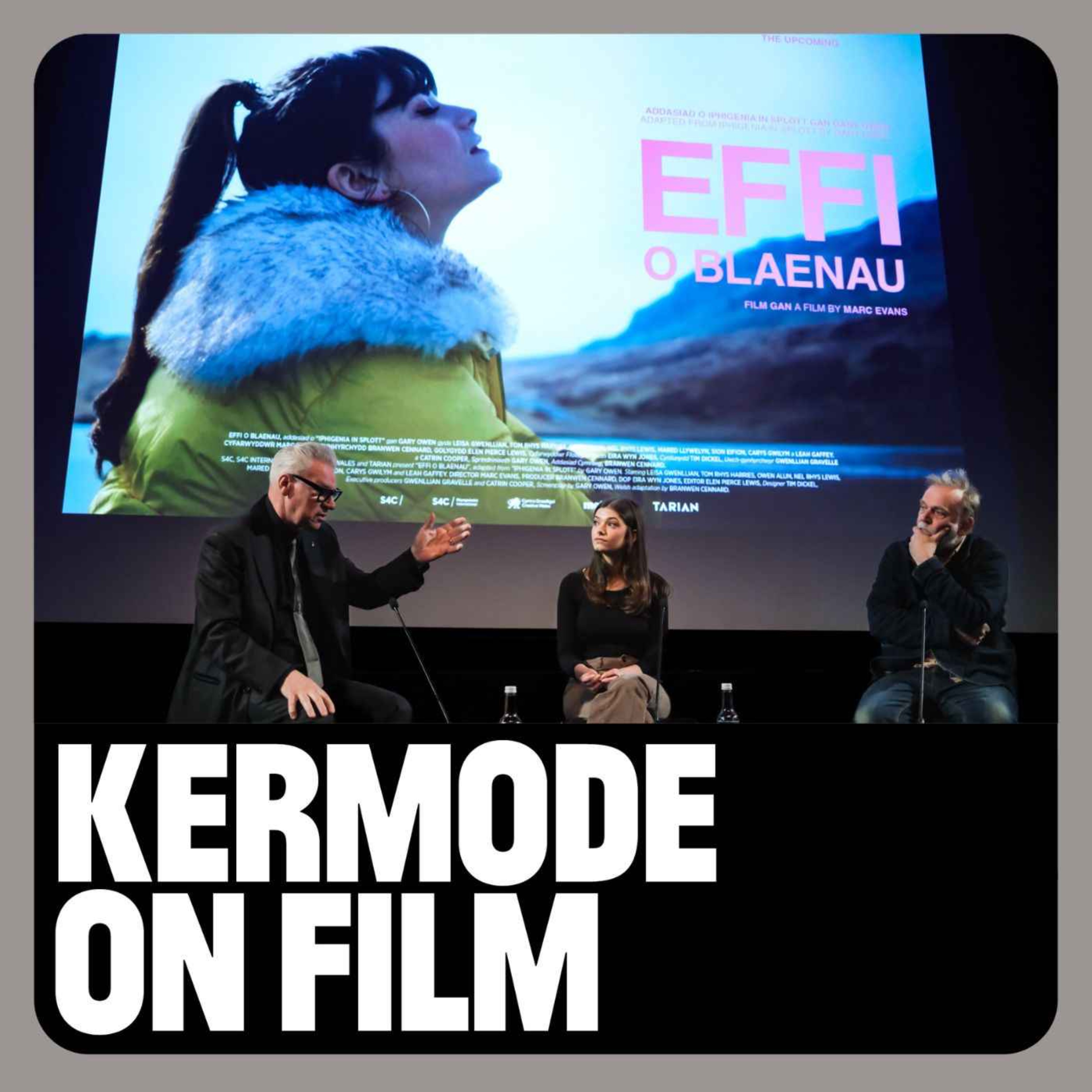
Kermode on Film
Samira Ahmed on A Hard Day's Night, Leisa Gwenllian and Marc Evans on Effi o Blaenau
00:51:54
Mark Kermode Live in 3D at the BFI Southbank, recorded 11 May 2026
Loading summary
Transcript203 lines
- [00:00]
Samira Ahmed
Jake.
- [00:00]
Jake Stauch
I'm Jake Stauch, co founder and CEO of Cervel. We built Cervel to automate the IT work that slows companies down. Onboarding password resets, access to applications. My laptop stopped working. While employees wait for help, their real work is put on hold. IT desperately wants to automate this work and that's why they need Serval. You just tell Serval what you want to automate in plain English and it's built. No drag and drop workflows, no expense of consultants. Employees get unblocked and IT teams go from drowning in tickets to building what actually matters. With Cerval, it becomes the AI engine powering the entire company. This is a new way to run it. We guarantee you'll automate 50% of all tickets and we'll prove it to you in a free four week pilot. Go to servil.comacast that's S E R V A L.com/A cast.
- [01:02]
Samira Ahmed
In every job that must be done, there is an element of fun.
- [01:06]
Lisa Gwendlian
You find the fun and snap. Did you know that the very first assembly of photographs in sequential order to create a motion Picture was a 2 second clip of a black man on horse?
- [01:21]
Mark Kermode
We want the finest wines available to humanity. We want them here and we want them now.
- [01:27]
Lisa Gwendlian
You really don't want me to play, huh?
- [01:29]
Samira Ahmed
No, I do. Captain Hardy said no.
- [01:32]
Lisa Gwendlian
Captain who?
- [01:35]
Mark Kermode
Hi, this is Mark Kermode. Thanks for downloading this Kermode on Film podcast. This episode is the first half of the May 2026 MK3D show recorded live at the BFI South bank in London. I'm joined by prolific writer director Mark Evans, whose new feature Effie obeynae releases on 19 June Dune. Set in the isolated village of Blenheim, Wales, it's a heart wrenching portrait of a young woman stunningly brought to the screen by Leysa Gwendlian. But first I talk to Samira Ahmed about one of her all time favourite films, Richard Lester's A Hard Day's Night. She's just written a BFI film classic about the 1964 musical comedy starring the Beatles, which formed a lasting template for music videos for decades to come. So sit back and relax and take a front row seat at MK3D. BFI South Bank. Enjoy. Just wait. Just waiting at the thing though they went. A lot of your audience are still in the bar. I think that says a lot about the MK3D audience. Isn't it just a very casual approach to. Have we finished drinking? Should we go and see?
- [02:33]
Samira Ahmed
Mark?
- [02:33]
Mark Kermode
Let's just Drink up first. Be fine. So there may be some sort of straight hello, welcome, welcome. Yeah, says 6:30 on the ticket, but don't worry about it. It's absolutely fine. You know, I live in Cornwall directly. We got a fantastic show for you tonight. I want to start with a quick announcement. You probably know about this because you may have seen it and I've been mither ing on about it on social media. But 2004 slightly jumped the gun.
- [03:17]
Progressive Insurance Announcer
Hi.
- [03:18]
Mark Kermode
As I was back there, they said some of the audience is still straggling in. Anyway, so in 2004, on this very stage, Ken Russell introduced the director's cut of the Devils. And it was the kind of climax of a season called A History of Horror that Linda Ruth Williams, the good lady professor, her indoors and I had programmed here. And that director's cut was assembled by Ken Russell and Mike Bradsell, his editor, with Paul Joyce at Lucida Productions. And it had never been seen in all the time since the film came out in 1971. We screened it here in 2004. It got a standing ovation. It was fantastic. Then Ken did a Q and A and he was, you know, he was really excited about it. He was pretty much in tears that the film had finally done that. And then nothing happened. That version didn't get released. That version got sat upon. There were very sort of long winded discussions about why it got sat upon, but essentially there was no enthusiasm for releasing it because it was thought to be still too contentious. Well, all these years later, finally, due to the magnificent bit of shuffling that's happened at Warner Bros. And the new Warners label, Warner Clockwork. You ready? And well done for failing Surprise. That was really. That was really well done. So this is finally happening. This is the Devil's Director's cut, which was the version that we showed here on this stage in 2004 to a standing ovation. And that has then basically been not seen, been hidden away. Finally it's going to be released. They've gone back to the camera negative to restore it. So it's going to look absolutely pristine. They've used the mag track for the sound. So this is happening on Thursday night in Cannes. And so I am ashamed to say.
- [05:14]
Mark Evans
Can do.
- [05:15]
Mark Kermode
Can do. Yes, can do. I am going to can. You know that, don't you? That can in some way. They don't like films. They don't boo. They do what you just did. They moo. It's the weirdest thing. The can mooing thing is a really, really weird thing. And the other thing is when, if they don't like films and they walk out of them because they want these springy seats and as they walk out, the seat goes bang. And then you hear like one person bang and another bang and then a whole bunch of people go bang, bang, bang, bang. It's like anti. APPLAUSE Anyway, I am going back to Cannes. Lisi Tribble, Ken's partner, is going to be there. I think Vicky Russell is going to be there as well, hopefully. Anyway, and we are going to introduce world premiere of the restored Devil's Director's Cut after all this time. And I remember really, really clearly when we found the key missing scene, which I. I had said to Ken, I will find this, I promise you. And he'd said, yeah, well, good luck with that. And we looked for it for five, six, seven years. And then finally I was. I was in Mother Care buying. I was in Mother Care buying nappies and. And I got a phone call from Tim at Warner Brothers. There was a particular reel of film that we'd been looking for and there was this very, very last thing and I said, look, do you think this is it? He said, no, Mark, I know it isn't. It was a piece of a can that had been backwards and forth across the Atlantic. And I said, okay, look, if you call it in and it isn't what we're looking for, I promise I'll never ever bother you about this again. And I think that was a great incentive for him. So he did call it in and I was standing in Mother Care and he called me on the mobile phone and he said, mark, it's Tim. I said, yeah, fine. What? He said, well, he said the can came in and I opened it and he said, the first thing is it smelled of vinegar, so I've sent it to be washed because it hadn't been open for a really long time and the film starts to decompose. He said, but I did look at the first few frames and all I can tell you is there's a bunch of nuns and a bloody massive crucifix. And I rang Ken Russell and said, this is direct quote. I said, ken, it's Mark, I'm in Mother Care. We found the Rape of Christ. So there we go. So that's a thing also worth remembering because this happened. Some of you will have seen this from the cast of the Devils. We just lost Georgina Hale, which is a real sadness, is amazing, amazing actor. She was brilliant in Hell On Earth documentary. Her memory of was so clear and so lucid, so I mean just a fantastic actor and a real shame to have lost Georgina Hale but brilliant that the Devils is going to be back up on screen with I think some of her finest work. Anyway, thank you for indulging me with that. We are going to get on with our very first guest. The BFI do this series of books, film classics and modern classics and I've written three modern classics and they're interesting books to write because they're a certain length, they're longer than a long essay but shorter than a short book and it's a very, very diffic thing to get right. There is a new one coming out which is about Hard Days Night which I think gets the balance exactly right. Have a look at the. This is the trailer for Hard Days. I imagine you've all seen Hard Days Night but let's just enjoy the trailer. I have the suspicion that with good management they may go far. So this is the book Hard Day's Night. It is written by broadcaster, writer and all round legend Samira Ahmed. Please welcome her to the stage. Samira. Oh, you have your own. We can have a jewel. Tell me first about the. As I said, I've written three of these and they are. It's a challenging length. Tell me about the experience of writing that length of book about this movie.
- [09:22]
Samira Ahmed
Well, what helped was I had seen the movie so much over the years because my family taped it off television in 1979. We used to watch it once a week from the age of 11 for quite a long time. So it's possible I may have seen it more often than anyone else on the planet. It's possible. And also when I realized no one had written this book yet, I just thought I have to write this book.
- [09:41]
Unknown Actor (possibly from film clip)
Book.
- [09:41]
Samira Ahmed
Because I had all these ideas about it and in a way it poured out of me and I did a lot of research. So everything in there is fact checked, multiply and there's stuff in it that people think that isn't true about who's in it. So I just wanted it to be a film that whether you loved the Beatles and you knew the film really well or you just love cinema and you weren't really aware of this film, you would get something new out of it. And I wrote it actually quite quickly. I mean I set myself a deadline of six months. I actually wrote it in three.
- [10:08]
Mark Kermode
Wow.
- [10:09]
Samira Ahmed
Because it just felt like given the film was made in about six weeks and then edited in about two, it just seemed the right atmosphere in which to write.
- [10:15]
Mark Kermode
So you wrote it in three months yeah, you know, my last book was 10 years late. So when you were writing about it, there was a review that you were talking about in the green room that said, you know, you may not think that you need to know this, but you really do. The best thing about it is it's really readable. And actually reading it is almost like watching the film because you're very descriptive. So, yeah, as you're going through, you can see the film in your mind. But when you were writing it, what were the key things that you wanted to talk about that you thought people might not have thought about?
- [10:43]
Samira Ahmed
I think one of the first things I wanted to do was talk about the relationship with the film, with television. As you can see, even the poster, which. It's a lovely design that Mark Swan, the artist, did.
- [10:52]
Mark Kermode
Yeah. So that's. That's the book, how you got it up there.
- [10:55]
Samira Ahmed
It's inspired by the film poster, which, of course, is like a contact sheet. But it's them in television sets because the premise film is them going on television. And Richard Lester had made his name in television and used a lot of television techniques making the film. The way he shot the concert sequences was shot with multiple cameras and composed in the edit. And I just thought no one had really looked at the social history aspect of the film. That it captures a moment in popular culture when high and low brow are really mixing. And television is this very powerful force. And I make the case that the Beatles, although their music was amazing and they were musically talented, it's the fact that they were talented on television that really conveys them to the world and makes them a global phenomenon. And by the time they started shooting the film, they'd been on Ed Sullivan. They'd been watched by 70 million Americans in one night. Burglary rates went down in New York that night because everyone was watching them. And I think that the idea that they're. I mean, the COVID conveys the idea of them as a kind of contagion transmitted by television to the world.
- [11:49]
Mark Kermode
That's a very David Cronenberg idea, which I like. I mean, that's good. I like the idea of Beatles as a virus. The.
- [11:55]
Samira Ahmed
Well, those girls screaming girls that chase them everywhere. You know, that sound, you hear it at the beginning of the film. And that's the opening credit sequence we just watched. And that screaming that comes up at the end, you then start to hear it at moments throughout the film and you recognize it. And for all the adults who went to see this film in the cinema, possibly drawn by the fact that Wilfred Bramble was in it. Who knows? Or just to find out what their kids were screaming about. It's sort of. You start to recognize this strange sound that is now part of the landscape of the.
- [12:21]
Mark Kermode
There's a weird thing about Wilfred Bramble being in it is that when they did the premiere in Liverpool, he was quite put out that all the attention was on the Beatles and not him. And there's an archived letter that he wrote to the Liverpool Council saying, I'm Wilfred Bramble, I was there and all the attention was on these four lads. Do you know what I've done? It's like, yeah, you've done some television and a lot of stage stuff, but his nose was slightly out of joints.
- [12:50]
Samira Ahmed
It's really interesting. Well, he got paid a lot. Richard Lester, the director, got paid a 6,000 pound flat fee. He later got a 1% of the profits from Walter Shenstone because the film was so good. Wilfred Bramwell got four and a half thousand pounds, which was pretty high, but
- [13:05]
Mark Kermode
he was an established name.
- [13:07]
Samira Ahmed
Well, it's interesting because you see, I didn't watch Step 2 and Son. So when I saw the film on television and there were all these references to the Clean Old Man, I didn't really get it. And I suspect a lot of people around the world didn't really get that. And that's part of what makes it fascinating because if you know that he was this huge. It was the biggest sitcom in Britain at the time. You had 20 million people watched Steptoe. There's a sense, there's a meta sense of, you know, the sitcom and the Beatles meet, you know, this TV sitcom style crashes into their world. But if you don't, it doesn't matter. And that's one of the reasons the film is timeless. It's both of the moment and it's also completely timeless.
- [13:41]
Mark Kermode
That funny thing about the joke about Dirty Old man becoming very clean Old Man. I mean, I remember watching Hard Days Night, you know, when I was like a teenager or something, and I think I had seen Steptons and I didn't connect the joke. It was actually fairly recently that somebody said, you know, that joke is because of Dirty Old Man.
- [13:57]
Unknown Actor (possibly from film clip)
Oh yeah.
- [13:57]
Mark Kermode
And I mean, I lived with the film for years. It just never occurred to me that that was the joke.
- [14:01]
Samira Ahmed
Well, it's interesting that sort of ducks really going to that sleazy side. Although there are references in the film, you know, when Lennon's told to put them girls down and he's doing a jokey leery old man going up the stairs, looking at the chorus girls. Oh, God. That's what I was going to say about Wilfred Bramble. Oh, yes. The clean old man thing. It just. I mean, if you look at that opening sequence, you can see it on the big screen. He's reading Men Only on the bench. So, you know, they are trying to establish this idea.
- [14:28]
Mark Kermode
Yeah. You also said that it's interesting in terms of the way that. Because obviously, when people think about the beats, they think about, you know, the Fab Four and then the screaming fans. But there are women in the film who are not screaming fans. There are women in the film who have agency and are doing jobs.
- [14:42]
Samira Ahmed
So that's the other thing that I really wanted to do, apart from talking about the sort of popular culture prism of the film, is the women in the film. Because the screaming girls, as you say, the film's working title was Beatlemania. But actually, throughout the film, they're moving through the landscape of television and they're encountering all these professional women. And as someone who spent my whole career in television, the makeup artists, the assistant to Victor Spinetti's director, they're all part of this world where they actually have quite a lot of status. Not official status, but they're important to making television happen. And the secretary in the advertising agency is particularly fascinating to me. And I do a whole analysis of how she makes George look embarrassed, you know, and she's a sophisticated old woman.
- [15:22]
Mark Kermode
Should we have a quick look?
- [15:22]
Samira Ahmed
Let's have a look. There you are.
- [15:25]
Unknown Actor (possibly from film clip)
Oh, sorry. You must have made a mistake.
- [15:26]
Samira Ahmed
No, you haven't. You're just late. Actually, I think he'll be very pleased with you.
- [15:31]
Unknown Actor (possibly from film clip)
Will he?
- [15:32]
Mark Evans
Yes.
- [15:32]
Samira Ahmed
You're quite a feather in the cap. Hello. I've got one. Oh, I think so.
- [15:45]
Unknown Actor (possibly from film clip)
Yes.
- [15:45]
Samira Ahmed
He can talk. No. Well, I think you ought to see him. Yes, all right. Come on.
- [15:58]
Unknown Actor (possibly from film clip)
Sorry. You don't see many of these nowadays, do you?
- [16:07]
Samira Ahmed
Come on, Simon. Will this do?
- [16:12]
Unknown Actor (possibly from film clip)
Well, not bad, Dolly. Not really bad. Turn around. Cheeky baby. Oh, yes, he's a definite boss. He'll look good alongside sudden. All right, Sammy. Jim, this is all going to be quite painless. Don't breathe on me, Adrian. I'm terribly sorry, but there seems to be some sort of misunderstanding. Well, you can come off it with us. You don't have to do all the old animoidal glottal stop and carry on for our benefit. I'm afraid I don't understand. Oh, my God, he's a natural.
- [16:36]
Samira Ahmed
Well, I did tell them not to send us real Ones we ought to know by now.
- [16:39]
Unknown Actor (possibly from film clip)
The phonies are much easier to handle. Still, he's a good type. We'd like you to give us your opinion on some clothes for teenagers. Oh, by all means. I'd be quite prepared for that eventuality. Well, not your real opinion, naturally. It'll be written out and you'll learn it. Can he read? Of course I can. I mean lines, Ducky. Can you handle lines? Well, I'll have a bash. Good. Give him whatever it is they drink. Cocorama a tom. Well, at least he's polite. Show him the shirts, Adrian. Now, you'll like these. You'll really dig them, they're fab and all the other pimply hyperboles. I wouldn't be seeing dead in them. The dead grotty. Grotty, yeah, grotesque. Make a note of that word and give it to Susan.
- [17:33]
Mark Kermode
Okay, so what's interesting, what is it that you're finding interesting about that?
- [17:37]
Samira Ahmed
So for a start, it's recognizing the way that capitalist society, the grown ups, were trying to monetize youth culture. And there's a terrible irony in the fact that if you look at the terrible merchandising the Beatles had in America and those mop top wigs in the underwear and all the rest of it, that is actually what happened to them there because of Brian Epstein's sometimes terrible deal making. But the film is sort of very self aware and it's the idea of them even being asked, can you handle lines in a film where they're having to learn dialogue all the way through? I love the fact that he's the real deal and they're not prepared for that. They just want an actor to play youth culture. And I love the fact that the secretary. So one of the things I write about is she's just a secretary, but she doesn't behave like one. She's got no shoes up on the desk, she's smoking and she's the one that Simon the executive trusts. It's like I told them not to send us real ones. And I just love the fact that you're inside a world. You never get more than this one scene in the film, but it opens up a whole new world of possibility and the self referentialness. I mean, Richard Lester made his name in Britain doing commercials. He did a lot of commercials. So he's mocking his own world. And I love the fact that there's a whole film that arguably spins out of this, which is Peter Watkins Privilege, which is a great movie, an amazing film. First time I Ever saw it was here at the BFI and I wanted to do a double bill, ideally with the Hard Days Night. And I describe privileges like, you know, the Upside down in Stranger Things. It's the upside down of A Hard Day's Night, where a pop star is controlled and they have scenes like that in a boardroom where they're all discussing future fashions and what young people will be wearing in six months. But it's all done in a kind of dystopian, sinister way.
- [19:13]
Mark Kermode
When I did the Exorcist Modern Classics, I had watched that film more times than was healthy and I said, ok, I'll get it out of my system. I'll do this and I'll get it out of my system. And it didn't. It just made it worse. How's it been with you in Hard Days Night? Has it got it out of your sister or do you just want to go back and watch it?
- [19:29]
Samira Ahmed
Every time I see it, and we did a screening here at the BFI about a month ago, it just gets better and better. The only thing I feel gets Wilfred Bramble. I just. Stuart Maconey's made the case that you could take Wilfred Bramble out of that film and it would probably be even more fun. I think there's an interesting case made by Joe Wisby of the Beatles Books podcast, which is if you had a Margaret Rutherford style Irish grandmother character that would have had a lot of potential because he is a sleazy presence. It's funny that he represents sleaze in a way that these young men who are so incredibly sexy and attractive, they are sort of incredibly wholesome. And I think the film straddles a really interesting line where it's the older people who represent sleaze and the young men represent energy and something more palatable.
- [20:13]
Mark Kermode
The amazing thing is that this comes out almost contemporaneously with Viva Las Vegas. So on the one hand you've got Elvis making this really old fashioned Technicolor musical that just looks like an old film. And on the other hand you've got this that looks Nouvelle Vague, you know, black and white, different camera speeds. It's a completely different generation of stuff happening, isn't it? It's like it's a real schism point.
- [20:37]
Samira Ahmed
Yeah, well, there's two interesting things about that. So one of the films that is a more successful attempt to cash in on the idea of it was John Boorman's Catch as if you can. And after seeing it, John Borman told me that Elvis had contacted him and said, I'd like to make a film with you. And if only they'd had someone with the charisma of Elvis rather than the Dave Clark Five in that film, it could have been. You know, I mean, that's the trouble is no one has the charisma of the Beatles, even if you have John Boorman making it. And the other aspect. Oh, God, what was that? My mind is just so overflowing with energy, I lost my train of thought. What were you asking me?
- [21:07]
Mark Kermode
I was just saying it's interesting that this comes out same year as revised Cliff Richards.
- [21:11]
Samira Ahmed
So there's a lot about the Cliff.
- [21:15]
Mark Kermode
Yes. So can I just say, there's no evidence of this butterfly mind. When you're broadcasting on Radio 4, it sounds.
- [21:22]
Samira Ahmed
I know.
- [21:22]
Mark Kermode
So anyway, Cliff Richards, star of Viva Las Vegas.
- [21:25]
Samira Ahmed
No. So there's a whole section in the book about the Cliff Richards films because Wonderful Life came out four days before A Hard Day's Night. And so that's where you really see the sort of changing of the guard, because, you know. And I make the case that the plot of A Hard Day's Night is actually the plot of the Young Ones. You know, there's an older guy who's trying to spoil the fun and there's a concert and all the kids are screaming, will they make it on time? But it seems like it's trying to be a Hollywood musical. And Wonderful Life has the escape of exotic locations even more than summer holiday. And one of the really interesting things is A Hard Day's Night made Britain look like the most exciting place in the world to be. I was thinking, apart from the sequence by the riverside with the young boy, you're not even sure the sun is shining at all. It's completely grey. And yet that film is full of light and energy because of the Beatles. Whereas all the Cliff Richard films were all about escapism.
- [22:13]
Mark Kermode
Yeah. And even in the sequence with the young boy by the river, and the sun may be shining, but they're just having a discussion about everything's rubbish here. I've got two friends. What are they good at? One of them's good at hitting and the other one's good at spitting.
- [22:24]
Samira Ahmed
There's a whole thesis because there's four of them. He's got three friends and people have mapped each of the Beatles onto one of them.
- [22:29]
Mark Kermode
That's really good.
- [22:29]
Samira Ahmed
But, you know, David Jensen had never seen the film on the big screen until he came to the screening here a month ago because he was never invited to the premiere.
- [22:37]
Mark Kermode
Wow. I know, so nowadays, if you think the film will have the same reaction in people as you have towards it because, I mean, like I said, I've spent ages and age saying you can't understand the Exorcist if you didn't, you know, if you weren't there at the time, which obviously I wasn't, I was too young. But, you know, that moment may have passed. There is something that feels terribly modern about hard days now. Even now, all activities, the crash Zoom stuff, all the Dick Lester and Narcic, you know, running, jumping, standing still stuff, it all feels very cutting edge.
- [23:05]
Samira Ahmed
I think a third of the audience on that night had never seen the film before and lots of people who've come up to me at book signings have discovered them through. They've discovered them through Spotify or streaming and then they just dig out the films and they fall in love with them the way that I did through the way that they are on screen. Because they were natural comedians, they had this charisma and they were always themselves. There was nothing fake about them. I mean, someone pointed out that, you know, in the film, Ringo goes off on his own and he puts on the hat and coat. There's a whole meta thing about when they're not the four of them, you're nothing. And when he tries to pick up a girl, she goes, get out of it, Shorty. And you know, actually the idea of pop stars then wanting or willing, being willing to be mocked that way, I mean, that's. We forget how groundbreaking it was. They had no sense of pride about how they were regarded. They were very modest in a way and they were very distant from their fame. Richard Lester said he'd never met people that famous who were so unbothered by fame. We had a really healthy disregard for it.
- [23:56]
Mark Kermode
Who's your favourite Beatle? George is the correct answer. Ladies and gentlemen, Samira Ahmed. Now, just to point out that immediately after the show Samira will be hot footing it to the bookshop in the foyer, the foyer that goes out into the main foyer because they're going to hold the bookshop open so they'll be selling copies of the book which Samira will be signing. Do go along because it's fab book and like I said, it's a. It's a terrific sort of page turning read and reading it is like watching the film. So congratulations. Here is a trailer for a film which is coming out next month and is a really powerful piece of work. Take a look at this.
- [24:48]
Jake Stauch
I'm Jake Stauch, co Founder and CEO of Cerval we built Servl to automate the IT work that slows companies down. Onboarding password resets, access to applications. My laptop stopped working. While employees wait for help, their real work is put on hold. IT desperately wants to automate this work and that's why they need serval. You just tell Servil what you want to automate in plain English and it's built. No drag and drop workflows, no expensive consultants. Employees get unblocked and IT teams go from drowning in tickets to building what actually matters. With Cerbal, it becomes the AI engine powering the entire company. This is a new way to run it. We guarantee you'll automate 50% of all tickets and we'll prove it to you in a free four week pilot. Go to cerval.com acast that's S-R-V-A L.com acast.
- [25:48]
Progressive Insurance Announcer
Insurance isn't one size fits all. That's why drivers have enjoyed Progressive's name your price tool for years. Now, with the name your price tool, you tell them what you want to pay and they'll show you options that fit your budget. So whether you're picking out your first policy or just looking for something that works better for you and your family, they make it easy to see your options. Visit progressive.com find a rate that works for you with the name your price tool. Progressive Casualty Insurance company and affiliates Price and coverage match limited by state law.
- [26:59]
Mark Kermode
Effie It's a really powerful film. It's in cinemas in June. I'm delighted to say. We have on the show Lisa Gwentrion and Mark Evans. Let's address the elephant in the room first. We were all in the green room. We're all going. Right. How do we say each other's names? Okay. Kermode. Like Kermit the frock. Frock. Did I say Gwenhely and right.
- [27:36]
Lisa Gwendlian
Perfectly.
- [27:37]
Mark Kermode
Thank you. Mark Evans, Walk in the park.
- [27:40]
Mark Evans
Yeah, easy.
- [27:41]
Mark Kermode
Mark, Such a pleasure. Mark and I go back a very long way. Mark has made so many movies that I've been a fan of. He made a movie a while back called Resurrection man which is just terrific. He made a wonderful film called Trauma. He made a really nasty little horror film which I know you haven't seen, but you need to. It's called My little likes will make you look at him in a very, very different way. Patagonia. Anyway, Mark, really big fan. Tell me how this movie came about briefly.
- [28:06]
Mark Evans
Branwen Canada the producer during COVID was looking at monologues, theatrical monologues that might make a kind of COVID friendly sort of drama on telly. And we made one of them. And with this one, it seemed that the original play is called Iphigenian Splot, written by Gary Owen. It's based very loosely on the myth of.
- [28:26]
Mark Kermode
It's a one woman play.
- [28:27]
Mark Evans
Yeah, exactly. Brilliant. In English. And we went on a journey to turn that into a Welsh language drama film. And I suppose the thing that makes it quite different from the original play is the fact that it's sort of to do with the politics that no one's in the Welsh language really. In Cardiff, Welsh has become a sort of urban language as it has in Ireland, you know, kneecap and all that. We've got rap bands in Welsh, all that stuff. But people don't speak Welsh in Cardiff the way they do up north, which is like in these isolated communities where Welsh is really in the blood in the slate. So we kidnapped Gary and said, it can't be in splott, it has to be up north. And there's two towns up north where really everybody just lives and breathes Welsh in a way that is sort of, you know, an everyday absolute occurrence. And that would be Carnarvon and Blena Vestinio. And speaking as a director, Blaine Festinio, as you can tell, is an extraordinary place visually, but not just because it's beautiful and it's got all these slate slurries and everything else. Also because you look at it and you say post industrial, you say on it, it says isolated, it says post industrial. And this, this character that Lisa plays is, is connected, as all kids are, through the phone, but isolated in this place. So that's, that's, that's the sort of story that.
- [29:45]
Mark Kermode
And just because I'm not well versed in mythology, explain to me the Evgenia, how the myth story connects with this?
- [29:56]
Mark Evans
I think very loosely, if I'm honest. I'm no classicist either, I have to be honest. But I think the basis of it in the actually killing of sacred Dia was based on that.
- [30:07]
Mark Kermode
Okay, fine. Because the daughter is sacrificed in order that the invasion of Troy can happen, sort of.
- [30:12]
Mark Evans
I think where Gary takes it is that she gives her life to save the state.
- [30:16]
Mark Kermode
Fine.
- [30:16]
Mark Evans
So in the play it's very much, it's very much a confrontational thing with the audience because it's theater, right? And all the middle class people in the audience. And Effie looks back on her experience and says, I took a bullet for you guys. It's always people like me. It takes A bullet for you guys. Which in theatre of course is confrontational and really powerful but in a way a film can't do that. So we go a slightly different film but Effie still takes the bullet for us in a way.
- [30:41]
Mark Kermode
So Lisa, tell me about your. How you came to the role and how you first met Mark.
- [30:48]
Lisa Gwendlian
Well, it was just a self tape really. I mean, same old story as.
- [30:52]
Mark Kermode
Yeah, modern acting for someone who isn't an actor, obviously. So self tape is literally you sit down and you video yourself just talking to.
- [31:00]
Lisa Gwendlian
Yeah, well it was, it was a monologue and I obviously I wasn't sent the same script until later on in the process and I remember thinking, because I'd seen the play, I saw Sophie Melville doing it, she's an incredible actor. And I thought to myself, I was like, is this gonna be like a one woman film? Talking to camera and so I was quite confused and then I. And so I did the tape and I, I was so excited by the concept because I'd seen the play. I was a big fan of Gaddy's work and you know, not only was it Effie on film, but it was Effie in the Welsh language and in my Welsh language, North Welsh, my dialect. And so I was really excited about it and then, and then Brannan and Mark called me in to meet them and it was.
- [31:46]
Mark Evans
Sounds a bit like the headmaster's office, isn't it?
- [31:47]
Lisa Gwendlian
Yeah, I was like. But it was actually a really lovely experience because it wasn't just me, it was straight to a chemistry read really. And I read with Owen and Nell who also ended up in the film. Nell played Leanne and OM plays Kev, my on and off boyfriend in it and we all kind of. And I don't know what I was expecting when I met Mark, but, you know, he's a bit of a Welsh legend, isn't he?
- [32:09]
Mark Kermode
He's a bit of a legend.
- [32:11]
Lisa Gwendlian
He is, he's a legend legend. He really is. But he's so normal about it. Like he's so. I knew Branwen anyway and so, you know, I was more at ease with her but I, I just didn't know what to expect from. With this with Mark and yeah, he was really. I really felt actually as soon as we started reading that like he really wanted us to be in it and there was, there was a real kind of workshop feel to the audition. Like he'd really just talked to us about his vision and he really spoke to me as if I'd already got it. And so I was like, if he doesn't give me this role, I'll be really pissed off. And. And so, yeah, it was. It was quite a fast process though. I remember it all happened quite quickly and I didn't really have loads of time to actually think about what I was about to embark on. Thank God, because it was a lot.
- [33:00]
Mark Kermode
It's an amazing performance and, you know, obviously you won't have seen the reviews, you know how much people have gone crazy about it, but I mean, deservedly so. It's a really extraordinary performance and I think it's a really powerful film. As I said, Mark, you know I'm a big fan of yours. Anyway, let's have a quick look at a scene. This is the scene when you meet Lee, who's not Leon off boyfriend. He's the person that you meet when Kevin is. It'll explain itself.
- [33:21]
Samira Ahmed
Yeah, yeah.
- [33:31]
Mark Evans
Intense.
- [33:38]
Lisa Gwendlian
Get out here.
- [34:11]
Mark Kermode
One of the things I love about the film is I love the way it looks. It's got this kind of slightly dreamy feel because although it's a very, very down to earth and often very hard hitting story about the struggles with the NHS and there's a whole sequence in an ambulance which is really terrifying, but it also has this kind of slightly hyper real sense to it and that's really accentuated by. By the music. You've always had a great ear for music. Your use of tiger feet in Resurrection man is fantastic. The score for this, it sort of throbs through the film and then fades away. Tell me a little bit about that.
- [34:43]
Mark Evans
I think you know what happens a lot when you're making a film. You get Temple of Ellen, the editors here, and we, you know, what we did was we set up a mixtape where lesair would send tracks. She liked it. And my daughter contributed going out tracks which are quite scary. And Ellen's daughter, the editor's daughter, is a DJ and she sent in tracks. So we had this wonderful track. I didn't want to be like the old guy making putting the wrong music on the film. Do you know what I mean? Going out music. There were lots of really interesting artists on there. One really great Bach artist called Kelly Le Owens. You might know electronic stuff. Anyway, you get to the edit and you stick all these beautiful tracks on it and it says thumping soundtrack and all these fantastic Neil drops and you feel pleased with yourself. And then of course, when you make low budget films, you can't really afford any of the music. So luckily, I mean, this is the sort of serendipity that happens with films often. We Met Sean Trevor, who's very. He lives in a tiny little studio in Cardiff and was very, very au fait with electronic and club music. And he just said, don't worry, it's fine. And he made a score that really sometimes, you know, you get in this terrible situation with films, you can't afford music. You get these sound alikey things and you go, oh, my God, that sounds like the track I really wanted. But it hasn't got that kind of breadth or muscularity of the original track. And then Sean went, oh, don't worry, it'll be fine.
- [36:02]
Samira Ahmed
Sure.
- [36:03]
Mark Evans
He said, it's going to be fine. And he made this. So what he did was he made a score which kind of absorbed
- [36:11]
Mark Kermode
the
- [36:11]
Mark Evans
atmosphere and with such great skill of the music that, you know, the first track in there was by bicep, which Alan had found, and it was. Was like this, this sort of beat going. And he just, you know, he got there by other means. And then what happens then, I think in the film as you watch it, is that the music sort of disappears.
- [36:29]
Mark Kermode
Yeah, yeah.
- [36:30]
Mark Evans
And you get left with the sound of the slate and sound of the world. So, you know. You know, I think probably really what I wanted to be was being a band when I was young. So every film for me is an excuse to use interesting musicians. Worked with John Caleb, Mass of Attack. I worked with Broken Social Scene. Remember, you know, David Holmes first film was Resurrection Man. So it's the most exciting bit for me often. And so what started a slight disappointment ended up in being really exciting on this. Thanks to Sean Trevor.
- [36:56]
Mark Kermode
It's fantastic. Effie, I just called you Effie, which I do, incidentally, take that as a compliment. I love that in terms of the sort of the range of the character. I mean, you even see this in the trailer. There's a lot of stuff which is sort of light and there's a lot of stuff which is Bo and then there's a lot of stuff which is really, really tough. And there are some really tough scenes, you know, about half the way through the film when you're in for some. Did you shoot in sequence?
- [37:19]
Lisa Gwendlian
No, no. Don't have the money for that.
- [37:22]
Mark Kermode
So talk to me as somebody who does. I don't really understand acting. I think it's probably magic. I don't really know how it works. But how do you find your way into. Because there are certain scenes in which your character is in really extreme circumstances. Do you find it easy to do that? How do you get into character?
- [37:39]
Lisa Gwendlian
I don't know. I Don't even know. I mean, I don't think.
- [37:43]
Mark Kermode
Are you method. Do you carry it home with you come off?
- [37:46]
Lisa Gwendlian
I think I personally don't have like. There's no particular one thing. There's no like secret recipe.
- [37:53]
Mark Kermode
Not like costume or the way you
- [37:54]
Lisa Gwendlian
stand or a lot listen. It all. It all helps. I think it's all to do with. In this case, I work the. With amazing, amazing people. And it was like a true collaboration. And Mark said since day one, he was like, this is your film. And I really felt that kind of ownership of it and that really helped. And I just think when you've got an amazing script and a story that is so clearly. It's so powerful and moving, like you can't help but not really feel that thing. And I just thought. Thought of her in my brain as a real person because I think she is, you know, in many ways and this thing has happened to loads of people and so. And then you kind of feel the responsibility of that and then there's almost a duty to really put your all into it and do it justice. And so, yeah, that combined with really great collaborators like Eira the as well. She was. She was amazing, wasn't she?
- [38:57]
Mark Kermode
She does look great. I mean it's got a really good and. But a lot of it is very kind of you close and then a lot of it's. I mean, it's got a very intimate feel to it.
- [39:05]
Lisa Gwendlian
I mean, she was. You know, a lot of it is handheld and she literally is there with me for the whole thing. And Mark said a lot on set. He said that we were like dancing partners and so that we would like dance and I. And I really felt that like the more, you know, after the first week I'd really felt like I knew what her next move would be. And she was the same with me. We were so kind of intuitive with each other and so. But I think it's. I couldn't tell you how to kind. How you recreate that. I think it's so to do with that specific thing and those specific people and that specific day. I don't really know what it is.
- [39:47]
Mark Kermode
What kind of reactions have you had to the film from people who would know, like people from your area who would know whether or not it was authentic.
- [39:55]
Lisa Gwendlian
Well, we've not actually screened it in Blainey yet and so that's going to be a really special night.
- [40:01]
Mark Kermode
Because Mark Jenkins always said about his films, it's not until he's played them in Cornwall that he has any idea whether they're really good. So is that nerve wracking?
- [40:09]
Lisa Gwendlian
It definitely is, you know, because I think everyone from anyone from a kind of a tiny country with, you know, we speak a minority language, you feel quite protective over that. And I think the people of Blenheim feel really protective over their patch of land, rightfully so. And they feel like they've been neglected a lot by, you know, Westminster and our own government as well. And so there's a. And it's, you know, of course, very political film. So there's a lot of. Yeah, there's a lot of. We felt a lot of responsibility to kind of do it correctly. And we're not. We're probably not the ones to be able to comment on that.
- [40:49]
Mark Evans
It's quite funny because we had. When Welsh journalists ask us, do you feel it was cultural appropriation? Yeah, because I'm Welsh. But, you know, if you're a city boy of my generation telling a story about a girl who lives in Blena, you know, it is kind of like a. And, you know, I was very, very aware that I really, you know, wasn't from there and it wasn't exactly my story. So it was. I think they're going to like it.
- [41:11]
Mark Kermode
And explain to me, Explain to me as a, you know, as a London tosser. You're both saying the titles differently. You're saying Blaina Aston. Explain to me why.
- [41:22]
Lisa Gwendlian
Well, I'm north Welsh. I'm not from Blena, but I'm from down the road. And so they're two very different accents. Accents and dialects, you know, the same as, you know, Yorkshire is different to London. And so I would say Blena and Mac would say blae nae.
- [41:37]
Mark Kermode
And which one should I say in order to appear like I know what I'm talking about?
- [41:40]
Lisa Gwendlian
Blaine, say the north one.
- [41:43]
Mark Kermode
Blena. Okay, fine. I asked you both to pick an inspirational movie. I'm going to start with you, Mark, because you chose a very particular scene that kind of ties into this. What did you choose and why?
- [41:54]
Mark Evans
I chose a clip from a film called Padre Pudrone, which is. Which is a. I thought it was a Sardinian film, but actually it's made by the Taviani brothers, two brothers who work together. And they. They're actually from Florence, but I didn't realize that until I swatted it up for this. But anyway, it's about a Sardinian shepherd who goes to mainland Italy. And I saw. I think it was made. It's a lot of resonances for me. One was it was made on 16 mil for a start, Ferrari Television and then became a film I. When it can and all that sort of stuff. It's amazing film, totally amazing film. And so it was made in the late 70s and I must have seen it in the early 80s. And I think what it did for me was it alerted me to the fact that modern European cinema existed and that, you know, I was brought up with television and music and Anglo American cinema and all that stuff. And obviously, you know, you swap the classics and you know about the older European tradition, but then there was this vibrant place called European cinema where it was possible to tell stories that were maybe on the edges of the European experience or about minority languages. And there's one thing that really strikes me about this scene. When I saw it, I realize now actually looking back, that it was probably just because of the fact that it's being shown to an English audience. But it is about the context of Sardo, which is the oldest language in Europe, I think maybe apart from Wax, which is. Which is. And the clash between Sardo and Italian. And what I like about this scene is that they only subtitle the Italian. Take a look.
- [43:36]
Jake Stauch
I'm Jake Stauch, co founder and CEO of Cerval. We built Servl to automate the IT work that slows companies down. Onboarding password resets, access to applications. My laptop stopped working. While employees wait for help, their real work is put on hold. IT desperately wants to automate this work and that's why they need Serval. You just tell Serval what you want to automate in plain English and it's built. No drag and drop workflows, no expensive consultants. Employees get unblocked and IT teams go from drowning in tickets to building what actually matters. With Cerval, it becomes the AI engine powering the entire company. This is a new way to run it. We guarantee you'll automate 50% of all tickets. And we'll prove it to you in a free four week pilot. Go to serval.comacast that's S E R V A L.comacast.
- [44:36]
Progressive Insurance Announcer
This episode is brought to you by Progressive Insurance. Do you ever think about switching insurance companies to see if you could save some cash? Progressive makes it easy to see if you could save when you bundle your home and auto policies. Try it@progressive.com Progressive Casualty Insurance Company and affiliates. Potential savings will vary. Not available in all states.
- [45:53]
Mark Kermode
So does that, does that speak to you? Because its language is identity.
- [45:57]
Mark Evans
Yes. And the sort of struggle that. He's a shepherd, that guy. So he's in the situation, he becomes a linguist and he writes the book which this film is based on. So it's a sort of, you know, it's a story that is. That is common to many places, that you have to change something to become something else. And the trading of who you are and who you want to become is extremely powerful. And I think that actor, I don't know who he is, but he's amazing. And he plays this shepherd. There's another scene in it where I almost picked this clip where two traveling guys come through with an accordion. One of the accordions. Two accordions. One of the accordions broken. And he trades two of his lambs for the accordion. And it's this idea that you trade something to get somewhere else. And the accordion on. My very first film, pathetically, was about first Jukebox in West Wales. And it had the same relationship with the jukebox as this moment where you go, that exists. Rock and roll exists. And I was thinking about this in relation to Effie, because Effie is also about this paradox that if you're in an isolated place, your language survives, but if you're in an isolated place, there's also a longer journey towards some sort of mythical middle. And the difference now, of course, which I think plays out very strongly in the film, is you've got the telephone. You've got the. You've got to call it a telephone. You've got the world through that thing in your hand.
- [47:22]
Mark Kermode
Mobile.
- [47:23]
Mark Evans
Yeah, mobile. And so the different. The isolation, in a funny sort of way, seems greater because you're accessing the world through the window of your mobile phone. And that world is accessible to you now in a way that it's not to the citizens saddened in shepherd in that period, but in a funny sort of way, the journey is as difficult in another way. So I just find that stuff really interesting.
- [47:46]
Mark Kermode
I think it's a brilliant clip and I think it really illustrates that point well. Thank you so much for choosing it. I asked you to pick something and you picked something more contemporary, perhaps closer to home. What did you choose?
- [47:57]
Lisa Gwendlian
I chose Submarine. A nice little clip from that.
- [48:01]
Mark Kermode
Tell me what you love about Submarine, other than just everything things. I think it's such a charming film.
- [48:05]
Lisa Gwendlian
It's lovely, isn't it? It's just a really nostalgic film for me. I watched it as a teenager and it's just one of those ones that I always come back to. I think there's something really quite weird about it and I love that. Like, I think it has Such a kind of distinct style about it. And I don't know, I think these two and this clip you're about to watch the leads, I think they. I think the performances are so. There's something so like deadpan about it, which I love and I think the comedy in that is so. It's just exactly my kind of humour and I just love it.
- [48:45]
Mark Kermode
Okay, let's have a look.
- [48:47]
Unknown Actor (possibly from film clip)
Jordana hates any place that could be termed romantic. With this in mind, I took her to one of my favorite industrial estates for some quality one on one time. This is nice, isn't it?
- [49:07]
Lisa Gwendlian
Yeah, it's not bad.
- [49:10]
Unknown Actor (possibly from film clip)
I mean, you know, we get on pretty well.
- [49:13]
Lisa Gwendlian
Yeah, it's fun.
- [49:16]
Unknown Actor (possibly from film clip)
And we're getting more and more intimate.
- [49:19]
Lisa Gwendlian
Intimate?
- [49:20]
Unknown Actor (possibly from film clip)
Yeah, you know, we've done. We've been intimate.
- [49:24]
Lisa Gwendlian
We have been intimate. Yeah.
- [49:29]
Unknown Actor (possibly from film clip)
My parents are going to the cinema on Thursday. It's a tradition they have. You know, they go every Thursday evening. So what I'm saying is it's empty. The house on Thursday. The house is empty. On Thursday evening it's empty. You know, it's an empty house. So. So what do you think?
- [49:44]
Lisa Gwendlian
Are you asking me to come around and have sex with you?
- [49:48]
Unknown Actor (possibly from film clip)
If I say yes, does that lessen the chance of you wanting to?
- [49:51]
Lisa Gwendlian
Before I answer that, I just want to check one thing.
- [49:53]
Unknown Actor (possibly from film clip)
Yeah, sure. What is it?
- [49:55]
Lisa Gwendlian
It's quite serious.
- [49:56]
Unknown Actor (possibly from film clip)
No, of course. Yeah, go ahead. You should be able to ask what you want to ask.
- [50:01]
Lisa Gwendlian
Will the house be empty? Write down the reasons why I.
- [50:24]
Samira Ahmed
Okay.
- [50:32]
Mark Kermode
The thing about the. The deadpan of it, because the whole sort of, you know, the Iwadi thing anyway is that everything is very, very. That everything is funnier because they're not leaning into it. And I think that there is something in the way in which you're doing the performance in Effie, which is again, there are things happening in it that are really, really tough. But what your character always tries to do is to kind of downplay, normalise it, get on. It's not shouting it, is it? The more you downplay something, the stronger it becomes.
- [51:02]
Lisa Gwendlian
Absolutely. I think that's such a lesson in acting and I think it's definitely how Mark approached the film. We didn't ever want to be preachy, did we? We always said that because you can't get away from the fact that it's an inherently political film and that political context is, you know, very much there. But before all that, I think what's so important is you need to really fall in love with Effie and who she Is. And her spirit and her character. And so we try to lean into the kind of humour and the joy. And I think it's so much more interesting to see. I mean, it's classic drama school talk, but it's interesting. Much more interesting to see someone try not to cry than to see them kind of let it all out. And so. And, you know, there's definitely plenty of those moments, but I think it's really fascinating to see someone really trying to kind of hold it all in. And I think, you know, Effie. Effie does that in her daily life. She has so much on her plate and she's always trying to keep it all in. I feel like she's almost like a ticking time bomb. Like she could go at any moment. And so, yeah, so sometimes it felt like I was playing kind of 10 people at once, because you never know how she's gonna react. You know, she could turn around and laugh at you, or she could just, like, absolutely turn and go ballistic. Or she could cry. And that's. That's what's so, like, beautiful about her. She's so complicated and so beautifully flawed. And I think that's all you want as an actor, really.
- [52:29]
Mark Kermode
Have you read the reviews? And do you care about them?
- [52:32]
Lisa Gwendlian
I mean, I'm very new to this, and so I didn't even, like. I didn't even think about this bit where people would be writing reviews about it. And so I remember Mark sending me one. I think it was the Guardian one. And I was like, this. This is mad.
- [52:48]
Mark Kermode
I mean, is that Bradshaw?
- [52:49]
Mark Evans
Yeah.
- [52:50]
Mark Kermode
He loved it, didn't he?
- [52:52]
Lisa Gwendlian
Yeah, and I think I was.
- [52:54]
Mark Kermode
You don't really.
- [52:54]
Lisa Gwendlian
When you're so proud of the piece of work, right. And you really believe in the story, you don't need that as much because I was so proud of it anyway. But, you know, because of that, I obviously want people to see it, and it's in my language. And so I just feel really pleased that people are watching it and enjoying it.
- [53:14]
Mark Kermode
So far, Mark, you've had a lot of experience with this. Critics.
- [53:18]
Mark Evans
Well, you're one of them, aren't you?
- [53:21]
Mark Kermode
You are ice.
- [53:22]
Mark Evans
You've been really great, actually, and I think sometimes.
- [53:25]
Mark Kermode
Nicely saved. Well done. Yes.
- [53:26]
Mark Evans
Oh, no. You've really helped me, actually. You know, we have. My Little Eye being a case in point. You championed that film and that was. You know, I think the only time the critics get to you is when they say something that you. And there's no point going about, you know, which critics or when they say something you sort of know is wrong, but you've got no recourse. Sometimes when they tell you things, you sort of know. I like, sort of. Right. You sort of go, shit. You know, I sort of agree with that criticism. So I'm not somebody who's like, above criticism. It says sometimes it's frustrating if you get, you know, a bit of criticism that you think it's like slightly misjudged. Misjudged or misunderstood, you know.
- [54:03]
Mark Kermode
But you do read the reviews?
- [54:04]
Mark Evans
I do, yeah.
- [54:05]
Mark Kermode
Okay. And do you know what you're doing next, film wise?
- [54:09]
Mark Evans
No, I don't exactly.
- [54:10]
Mark Kermode
So is there something other than film?
- [54:12]
Mark Evans
Yeah, I might do something in television in Ireland in. Towards the end of the beginning of the summer.
- [54:17]
Mark Kermode
Okay. Do you know what you're doing next?
- [54:20]
Lisa Gwendlian
I do. And I'm starting it this week.
- [54:22]
Mark Kermode
Are you allowed to tell us?
- [54:24]
Lisa Gwendlian
My is right there.
- [54:25]
Mark Kermode
And I'm like, is she allowed to
- [54:27]
Lisa Gwendlian
say I've not signed anything that says that I shouldn't?
- [54:29]
Unknown Actor (possibly from film clip)
Right.
- [54:30]
Lisa Gwendlian
Have you? It's. It's a series called Santa Maria and it's going to be on ITV and S4C, so it's in both languages.
- [54:38]
Mark Kermode
Oh, fair.
- [54:39]
Lisa Gwendlian
Yeah. And it's about the have and the have nots is how they describe it. And I'm playing another pregnant working class teenager, so that's like clearly my thing.
- [54:48]
Mark Kermode
Well done. Corner that market. Okay, well, listen, congratulations on the film. It's a really powerful piece of work and since it opens June the 19th.
- [54:59]
Mark Evans
That week.
- [55:00]
Lisa Gwendlian
19th.
- [55:01]
Mark Evans
19th.
- [55:01]
Mark Kermode
June 19th. And do go and see it in the cinema because it needs to be seen on a big screen because it looks really terrific. Thank you so much. I wish you every success. And when your next things come out, come and see us again.
- [55:11]
Samira Ahmed
Thank you.
- [55:18]
Mark Kermode
That's it for this week's edition of Kermode on Film. Thanks to my guests Samira Ahmed, Laisa Gwendlian and Mark Evans. And if you missed it, you can hear the other half of this month's MK3D on last week's Kermiton film, when I talked to Bob Odenkirk about all of his work, including Breaking Bad, Better Call Saul and Normal. And we're also joined by the director of the latter MK3D, regular director Ben Wheatley. The MK3D shows happen live every month at the BFI South bank in London. If you'd like to join us, tickets are available on the BFI website. For more conversations about film from me and Simon Mayo, head over to Kermit and Mayo's take. Wherever you get your podcasts. Thanks for listening. Keep watching the skies.
- [55:57]
Progressive Insurance Announcer
Insurance isn't one size fits all. That's why drivers have enjoyed Progressive's name your price tool for years now. With the name your price tool, you tell them what you want to pay and they'll show you options that fit your budget. So whether you're picking out your first policy or just looking for something that works better for you and your family, they make it easy to see your options. Visit progressive.com find a rate that works for you with the name your price tool. Progressive Casualty Insurance Company and affiliates Price and Coverage Match limited by state law
- [56:28]
Mark Kermode
hello, this is Simon Mayo. And this is Mark kermode. He's the UK's best and most trusted film critic. He's a best selling writer, broadcaster and national treasure. Far too kind. Kermode and Mayo's take has all the reviews you need and star guests such as Sir Ian McKellen.
- [56:44]
Mark Evans
Nice to be with you.
- [56:45]
Mark Kermode
Emma Stone.
- [56:46]
Lisa Gwendlian
That sounds like something I would love
- [56:47]
Mark Kermode
to be a part of. Ewan McGregor. I'm very good.
- [56:49]
Mark Evans
How are you doing?
- [56:50]
Mark Kermode
Kate Planchette. What was that word you used?
- [56:52]
Samira Ahmed
Cattywampus.
- [56:53]
Mark Kermode
Kermita Mayor's take. All the film you need. Available wherever you get your podcasts.