Podcast
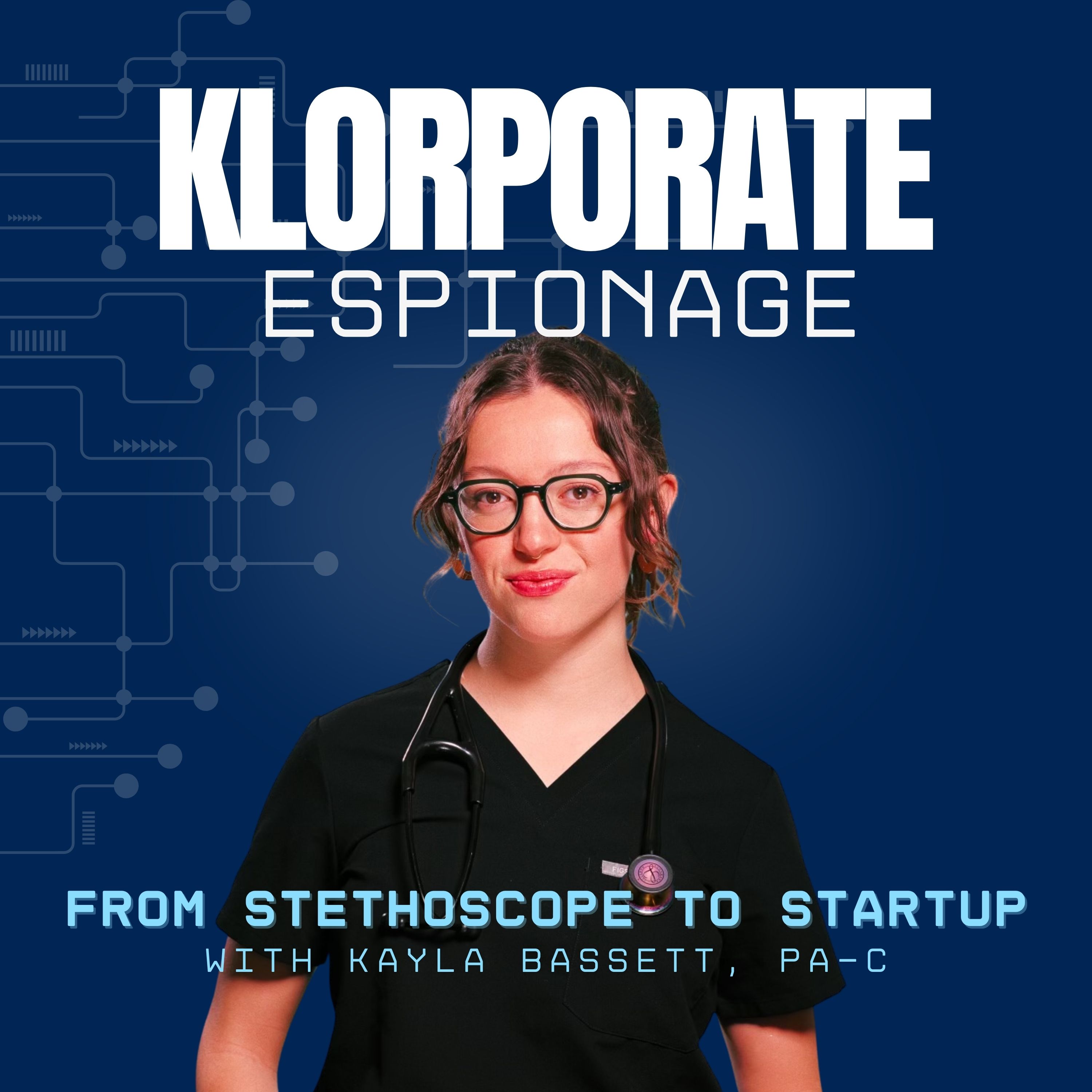
Klorporate Espionage
Hosted by Kayla Bassett · EN
👋 I'm Kayla, a Physician Assistant on a mission to figure out what comes next. When I started researching careers in health tech, I found confusing job titles and zero clarity on how people actually made the transition.
📅 Every other week, we feature real clinicians: doctors, nurses, PAs, therapists, all who pivoted from clinical practice to health tech. They're now product managers, clinical strategists, CEOs, operations executives, and everything in between.
👀 Whether you're planning your exit, passively curious, or already working in health tech—this is your insider's guide.
🥸 Welcome to Klorporate Espionage.
10episodes
Episodes
Newest firstAll episodes
017 | Lauren Curtis, PharmD | Hey Health Tech + Finding Where Your Clinical Skills Can Breathe
Apr 400:51:07Tap to summarizeLauren Curtis sent a cold email to a startup she'd never worked for, while very pregnant, after seeing a Facebook post from an old preceptor. That startup was PillPack. The rest — Amazon Pharmacy, Chewy, 6,000-person newsletter — came from following her curiosity instead of a plan.She calls it redistribution. Taking the skills that made you good at clinical care and pointing them somewhere the system actually lets them breathe. In this episode she breaks down how that transition happened, what she wishes someone had told her about product management before she stumbled into it, and why she started Hey Health Tech. GET CONNECTED: 🔗 Lauren's LinkedIn / Hey Health Tech 🔗 Kayla's LinkedIn 🔔 SUBSCRIBE for biweekly conversations with clinicians building beyond the bedside. Are you a clinician pushing the status quo? Reach out!
Transcribe →016 | Natalie Freels, PA-C | Ugly Babies, Startup Advising, and Why She'll Never Leave the Bedside
Mar 2100:57:00Tap to summarizeNatalie Freels, PA-C works in hospital medicine PA at Mayo Clinic Florida while running InsightHealth Consulting, helping healthtech startups figure out if their product will actually get adopted by clinicians. Her specialty? Telling founders when their "baby is ugly." In this episode, Natalie shares how she went from EMT to Epic superuser to fractional advisor, why founders have blinders on just like new parents, and what gets lost when startups try to pitch physicians. We talk about cold-DMing people on LinkedIn, joining accelerators to meet mentors, and why the portfolio career is the future.GET CONNECTED:🔗 Natalie’s Linkedin / Website🔗 Kayla’s Linkedin🔗 Kayla’s Instagram🔔 SUBSCRIBE for biweekly conversations with clinicians who've transitioned into healthtech, innovation, and entrepreneurship.Are you a clinician pushing the status quo? Reach out!
Transcribe →015 | Laura Demuth MSN NP | Employee #12 to $200M: Building from the Inside
Mar 700:50:17Tap to summarizeLaura Demuth, MSN, NP-BC was employee #12 at a dermatology startup called Pocketderm. Nine years later, she's SVP People & Patients at Curology—a company that's grown from a scrappy team to $200M in revenue serving 4+ million patients, with products now in Target and CVS nationwide.In this episode, Laura shares how she went from bedside nursing to overseeing 100+ clinicians licensed in all 50 states and why she took a huge risk after moving 3,000 miles from the East Coast to California for a startup she'd never heard of.Laura’s journey speaks to how you can stay clinical while building at scale if you're willing to embrace change.GET CONNECTED:🔗 Laura's Linkedin🔗 Laura’s Substack🔗 Kayla’s Linkedin🔗 Kayla’s InstagramResources Recommended by Laura:Preston Alexander's Healthcare Breakdown: The Finance CourseChristina Farr's Second Opinion NewsletterHalle Tecco's Massively Better Healthcare newsletter and book🔔 SUBSCRIBE for conversations with clinicians who've transitioned into healthtech, innovation, and entrepreneurship.Are you a clinician pushing the status quo? Reach out!
Transcribe →014 | Natalie Davis, MD | Running Towards Problems in Healthcare - PreventScripts Cofounder and CMO
Feb 2100:59:10Tap to summarizeNatalie Davis is a Pediatrician who returned home to Western Kentucky after practicing in wealthy St. Louis neighborhoods and barely recognized it. High school friends were dying from preventable diseases. No stranger to running towards problems, she co-founded PreventScripts to tackle the chronic disease epidemic upstream. She’s also advised companies like Doximity and HealthTap and is an LP at Scrub Capital. We're talking about the moment she decided to build a company to revolutionize care, the challenges of serving rural populations, and why she continues to build for proactive care in a reactive system.In this episode, you’ll learn:How she scribbled her first UI/UX designs on paperHer holy grail system for running her businessHow she convinced her co-founder not to go to med schoolWhy a pediatrician built a behavior change platform that gives patients 50 hours of nutrition education in a yearThe "12 Commandments of Digital Health"Her journey as an investorWhat transferred from seeing 40 patients a day to building a digital health companyYou don't need to leave medicine to fix it You just need righteous anger and a willingness to run toward hard problems.GET CONNECTED:🔗 Natalie’s Linkedin / Website🔗 PreventScripts🔗 Kayla’s Linkedin🔗 Kayla’s Instagram🔔 SUBSCRIBE for biweekly conversations with clinicians who've transitioned into healthtech, innovation, and entrepreneurship.Are you a clinician pushing the status quo? Reach out!
Transcribe →013 | Jasmine Bonder, NP | Portfolio Careers, Angel Investing, and The Clinician Founder Journey
Feb 700:57:05Tap to summarizeJasmine Bonder is a Nurse Practitioner who started as an ER nurse at 19 and hasn't stopped adding hats since. From the Cleveland Clinic to NFL sidelines, critical care to ketamine clinics, she built a portfolio career before even knowing what that meant. When COVID burnout hit, she pivoted hard. She taught pharmacology, joined an angel investor group, and learned the hard way which healthtech startups to avoid (think shady biotech without FDA approval). Jasmine is the founder of Clinova.Solutions focusing on evidence based asynchronous care at scale. We're unpacking her journey from bedside to boardroom, the red flags she almost missed, and her brass-tacks advice for anyone wanting to invest in themselves and take the leap.👋 In this episode, you'll learn:The clinician superpowers you’re overlookingHow to trust your clinical conscience in the world of techWhy joining an angel investing group taught her more about business than any MBA couldHow to use SOAP notes to get executive buy-in for your decisionsBrass-tacks advice for anyone wanting to invest in themselves and take the leapGET CONNECTED:🔗 Jasmine’s Linkedin🔗 Clinova.Solutions🔗 Kayla’s Linkedin🔗 Kayla’s Instagram🔔 SUBSCRIBE for biweekly conversations with clinicians who've transitioned into healthtech, innovation, and entrepreneurship.Are you a clinician pushing the status quo? Reach out!
Transcribe →012 | David Eisenberg, MD | The Reverse Pivot: From Deputy CMO to PGY2
Jan 1701:14:24Tap to summarizeDavid Eisenberg left psychiatry residency after his intern year and became Deputy Chief Medical Officer in less than two years, leading value-based care contracts worth over a million dollars. Then he walked away from the C-suite to go back and finish residency as a PGY2.Most people leave medicine and never look back. David left, succeeded in leadership and a venture capital fellowship, and then chose to return. Going back meant a massive pay cut, starting over while his friends graduated, and asking himself: "Did I just waste four years?"👋 In this episode, you'll learn:Why he left after intern year—and why it wasn't really about clinical medicineHow he turned a $250K loss into $1M profit in seven monthsWhat it's really like to leave residency (the emotional weight no one talks about)Why he went back after reaching Deputy CMO—and how he knew it was the right choiceHow being a venture fellow taught him that "no" is the default in non-clinical workWhy he's only taking contract work post-residency to maintain autonomyDavid Eisenberg, MD, is a PGY4 psychiatry resident, graduating in August 2025. He previously served as Deputy CMO at The Wright Center and worked as a venture fellow at Arkitekt Ventures. He's proving that the hardest career move isn't leaving medicine—it's choosing to come back and finish on your own terms.GET CONNECTED:🔗 David’s Linkedin🔗 Kayla’s Linkedin🔗 Kayla’s Instagram🔔 SUBSCRIBE for weekly conversations with clinicians who've transitioned into healthtech, innovation, and entrepreneurship.Are you a clinician pushing the status quo? Reach out!
Transcribe →011 | Joey Ferry RN, BSN | Innovation Begins at the Bedside
Jan 1001:41:37Tap to summarizeJoey Ferry was the first person in his family to graduate high school. An entrepreneur at heart, he became a nurse for job security, but he never stopped building things. Then he met Taofiki Gafar-Schaner, another nurse who'd spent months prototyping a solution to a problem they saw every shift: inadequate seizure padding on beds.Instead of complaining about blankets and tape on bed rails, Taofiki showed up with a Ziploc bag prototype. Joey saw it and knew immediately what he had to do. They spent six years building Safe Seizure while working full-time, then used paternity leave as a trial run for entrepreneurship. Joey’s last day was the worst shift of his career, and he’s never looked back.👋 In this episode, you'll learn:Why Joey chose nursing over business school (and how he never stopped doing both)How being clinical gives you a massive advantage when selling to hospitalsHow they built for six years before going full-time—and why they waitedThe "looking down for quarters" mindset: positioning yourself to get luckyWhy solving problems has to become a way of life, not a one-time thingJoey Ferry, RN, BSN, is co-founder of Frontier Innovations and co-creator of the Safe Seizure Pad, which won the 2020 American Nurses Association Innovation Award. He believes the best way to get lucky is to never stop looking for problems to solve.GET CONNECTED:🔗 Joey’s Linkedin🔗 Safe Seizure🔗 Kayla’s Linkedin🔗 Kayla’s Instagram🔔 SUBSCRIBE for weekly conversations with clinicians who've transitioned into healthtech, innovation, and entrepreneurship.Are you a clinician pushing the status quo? Reach out!
Transcribe →010 | Rami Wehbi DO | Treat Your Pivot Like a Fellowship - MatchDay Health
Jan 501:17:48Tap to summarizeRami Wehbi left family medicine residency. Not because of burnout in the traditional sense—because he realized from day one that clinical practice wasn't right for him. He spent the next two years failing at multiple startups, working urgent care shifts he hated, and finally figuring out what mattered to him: helping other clinicians escape jobs that were killing their integrity.Rami is the co-founder MatchDay Health. He gave himself a three-year deadline, built traction with a paid community, and pitched his mentor like he was pitching Sequoia. Now MatchDay has helped over 100 healthcare professionals land non-clinical roles through personalized coaching fellowships—proving there's a massive market of clinicians looking for the exit door.👋 In this episode, you'll learn:Why Rami left residency (and how urgent care confirmed it was never the right fit)How he failed at two startups before finding what worked—and what those failures taught himThe three-year commitment he made to himself that changed everythingWhy he pitches MatchDay as "mini fellowships" instead of career coaching or coursesHow to ask yourself the hard "why" questions that actually reveal what you wantWhy falling in love with the problem is the key to building a sustainable businessRami Wehbi, DO hosts The Dream Job podcast (formerly Beyond Medicine), where he interviews clinicians and founders reshaping healthcare careers. He believes that when you're unfulfilled at work, it spills into every part of your life—and he's on a mission to help healthcare professionals spend that one-third of their lives doing something that actually matters.Interested In changing your trajectory with MatchDay? Use code KaylaBassett during the questionnaire or mention I sent you during your admissions call to receive an exclusive discount of $250 off of the fellowship.GET CONNECTED:🔗 Rami's Linkedin🔗 MatchDay Health🔗 DreamJob Podcast🔗 Kayla’s Linkedin🔗 Kayla’s Instagram🔔 SUBSCRIBE for weekly conversations with clinicians who've transitioned into healthtech, innovation, and entrepreneurship.Are you a clinician pushing the status quo? Reach out!
Transcribe →009 | Meredith Hickerson RN BSN | Solving For Patients Who Slip Through the Cracks
Dec 2001:07:36Tap to summarizeMeredith didn't seek out health tech—it found her. She started consulting while keeping her bedside job, learned how to curate clinical data for machine learning, and validated that nurses absolutely belong in SaaS companies. Then she built Illuminate's remote navigation department from scratch, grew a team with zero turnover, and now leads AI-driven implementations while juggling sales support, product development, and client management.👋 In this episode, you'll learn:How Meredith landed a health tech role by literally being someone's nurseWhy critical care nurses make excellent health tech hiresWhat "the follow-up problem" actually means; how thousands of incidental findings fall through the cracksHow to translate clinical experience into tech language when talking to engineers and data scientistsThe difference between sales, customer success, implementation, and product management rolesHow to get your foot in the door: consulting gigs, building CDI/utilization review skills, getting publishedWhy FPU (first productive use) matters in SaaSHow nurses influence product development just by being end usersWhy LinkedIn doesn't have to be a toxic comparison trapMeredith Hickerson, RN, BSN, is Lead Clinical Consultant at Illuminate Health. After a career in ICU and PACU nursing, she took a contract role with a health tech startup in 2018, and stayed for seven years. She's built patient navigation workflows, managed remote nursing teams, supported sales, influenced product roadmaps, and proven that clinical experience directly translates to solving tech problems. She believes curiosity and asking tons of questions are the keys to thriving outside the bedside.GET CONNECTED:🔗 Meredith's Linkedin🔗 Kayla’s Linkedin🔗 Kayla’s Instagram🔔 SUBSCRIBE for weekly conversations with clinicians who've transitioned into healthtech, innovation, and entrepreneurship.Are you a clinician pushing the status quo? Reach out!keywords health tech nurse innovator entrepreneur healthtech saas product manager clinical innovation
Transcribe →008 | Jordan Fisher PA-C | The New PA Blueprint and the Path to MSL
Dec 1301:02:46Tap to summarizeWhat happens when a PA does everything right: multiple specialties, side business, financial literacy, and still hits a ceiling? Jordan Fisher PA-C co-founded the PA Blueprint to teach PAs about money and burnout while working clinically. He later left clinical practice to become a Medical Science Liaison in response to that nagging feeling of “what’s next?”.👋 In this episode, you'll learn:Why year 5 as a clinician often triggers an existential "what's next?" crisisWhy financial stability doesn't equal job satisfactionHow Jordan leveraged PA Blueprint, public speaking, and subspecialty experience to land his first MSL roleThe most important skill for an MSLWhat it actually feels like to go from a clinical to non-clinical roleHow commercial-side MSLs differ from medical affairs MSLs (and why it matters)The importance of building traditions and rhythms to prevent burnout in any roleHow to stay focused when you’re not seeing the outcomes you wantWhy he's closing PA Blueprint after years of impactJordan Fisher, PA-C, co-founded the PA Blueprint to teach financial literacy and career strategy to thousands of PAs. After seven years in clinical practice across urgent care, ENT, emergency medicine, and head and neck oncology, he transitioned to Medical Science Liaison work. He believes in change, reflection, and building even when the outcome isn't clear yet.GET CONNECTED:🔗 Jordan’s Linkedin🔗 The PA Blueprint🔗 Kayla’s Linkedin🔗 Kayla’s Instagram🔔 SUBSCRIBE for weekly conversations with clinicians who've transitioned into healthtech, innovation, and entrepreneurship.Are you a clinician pushing the status quo? Reach out!
Transcribe →