
Podcast
Know Your Enemy
Hosted by Matthew Sitman · EN
A leftist's guide to the conservative movement, one podcast episode at a time, with co-hosts Matthew Sitman and Sam Adler-Bell.
49episodes
Episodes
Newest firstAll episodes

Great Books and the AI Apocalypse (w/ Matt Dinan) [Teaser]
Jan 200:05:57Tap to summarizeListen to the rest of this premium episode by subscribing at patreon.com/knowyourenemy.We were excited to record and share this conversation with Matt Dinan, a professor who teaches in a Great Books program at St. Thomas University, a liberal arts college in New Brunswick, Canada. It brings together longtime preoccupations of the show — Saul Bellow's late novel, Ravelstein, Allan Bloom, Straussian political philosophy — with the fraught emergence of LLMs like ChatGPT. This past semester, Dinan took a fairly radical approach to confronting AI in the classroom, and it seemed to work. We consider the art of teaching, the qualities of great teachers, and what it all reveals about an insidious technology's effect on how we live and learn as citizens in, at least for now, a democratic republic.Listen again: "Unraveling Allan Bloom and Saul Bellow," June 21, 2021Sources:Saul Bellow, Ravelstein (2000)Allan Bloom, The Closing of the American Mind (1987)Matt Dinan, "Saul Bellow's Ravelstein," Hedgehog Review, Spring 2025— "Permission Structures," Prefaces, Dec 10, 2025— "It's Not Just a Calculator," Prefaces, Aug 28, 2024Jorge Luis Borges, "The Lottery in Babylon," Collected Fictions (1999)Jonathan Malesic, "ChatGPT Is a Gimmick: AI cannot save us from the effort of learning to live and die," Hedgehog Review, May 21, 2025— "Taming the Demon: How desert monks put work in its place," Commonweal, Feb 2, 2019
Transcribe →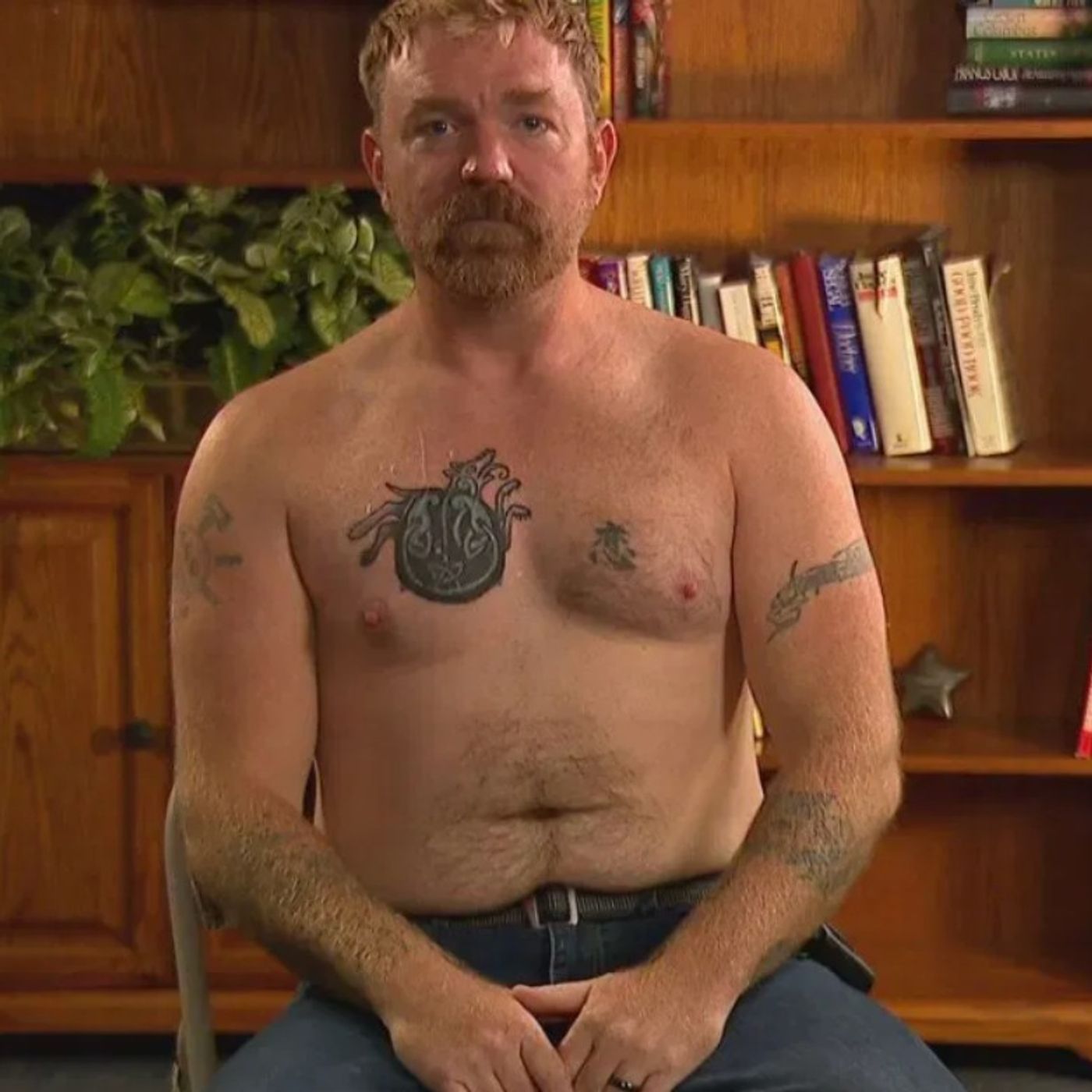
Command + F + Hitler [Teaser]
Oct 24Tap to summarizeListen to the rest of this premium episode by subscribing at patreon.com/knowyourenemy.The theme of this rank punditry episode is Getting in Trouble on the Internet, and we begin with the frankly unsurprising story of the Young Republican Hitler group chats, then move on to a longer discussion about Democratic candidate for the U.S. Senate in Maine, Graham Platner, and the revelations about controversial past posts on Reddit about guns and fighting fascism, rural white voters, his ideological allegiances, and more—all recorded before the news of his tattoo, now covered over, of a Nazi skull-and-bones insignia. Along the way we talk about what makes a change of mind and heart persuasive, how grace comes to us in our struggles, if Platner is Fetterman 2.0, and the class dimension of all these debates, and finally close with a relatively hopeful take on the "No Kings" protests last weekend.Sources:Jason Beeferman and Emily Ngo, "'I Love Hitler': Leaked Messages Expose Young Republicans' Racist Chat," Politico, Oct 14, 2025Julianne McShane, “No One in the GOP Hitler Chat Was a ‘Kid’: We checked. Sorry, JD Vance," Mother Jones, Oct 15, 2025Adam Wren, Erin Doherty & Jessica Piper, "Maine Senate Candidate Promoted Violent Political Action in Since-Deleted Online Posts," Politico, Oct 16, 2025Lauren McCauley, "Unearthed Reddit Comments Present First Stumble in Platner’s Rise," Maine Morning Star, Oct 17, 2025Kimberlee Kruesi & Patrick Whittle, "Maine Senate Candidate Platner Says Tattoo Recognized as Nazi Symbol Has Been Covered," Associated Press, Oct 23, 2025Ben Terris, "The Hidden Struggle of John Fetterman," New York, May 2, 2025Christian Wiman, My Bright Abyss: Meditation of a Modern Believer (2013)
Transcribe →
Did Podcasters Make Trump President? (w/ Andrew Marantz)
May 15, 2025Tap to summarizeAmong the many factors credited for Donald Trump's victory over Kamala Harris in the 2024 presidential race was one that, naturally, the hosts of Know Your Enemy took an interest in: podcasts. More specifically, "bro" podcasts—think Joe Rogan or Theo Von—seemed to be one reason why Trump continued, as he did in 2016 and 2020, to perform so well with male voters, especially gaining ground with younger, Black, and Latino men. An episode of one of these podcasts might stretch to three hours long or more, and typically features meandering, casual conversations that put a premium on apparent authenticity, as well as a knack for hanging with the boys. Trump and other Republican candidates and figures on the right (such as Elon Musk, a regular on Rogan's show) made appearing on these podcasts part of their campaign strategy, which allowed them to reach men who tend not to "follow politics" or even vote in every election. To try to understand what's happening with bros, podcasts, Trump, and beyond, there was no better guest than New Yorker staff writer Andrew Marantz, author of an early—and quite perceptive—piece on KYE and, more importantly for this conversation, a recent investigation into the world of bro podcasts and streamers, and what they might mean for both the left and the right at the start of Trump's second term.Sources:Andrew Marantz, "The Battle for the Bros," The New Yorker, Mar 17, 2025— "Is the U.S. Becoming and Autocracy," The New Yorker, April 28, 2025-- "Why We Can’t Stop Arguing About Whether Trump Is a Fascist," The New Yorker, March 27, 2024— "The Post-Dirtbag Left," The New Yorker, July 26, 2021 Jonathan Allen & Amie Parnes, "The inside story of Harris' lost gamble on Joe Rogan, Beyoncé and a late Texas rally," NBC News, Jan 29, 2025Jack Crosbie, "Hasan Piker: A Progressive Mind in a MAGA Body," New York Times, April 27, 2025...and don't forget to subscribe to Know Your Enemy on Patreon for access to all of our bonus episodes!
Transcribe →
Pay Attention! (w/ Chris Hayes)
Feb 18, 2025Tap to summarizeWe're all anxious, and none of us can pay attention. We don't read long books anymore; our kids don't read at all. When we watch TV, we scroll at the same time. And we absolutely cannot be alone with ourselves. These are the symptoms of a modern malaise that is everywhere diagnosed but rarely treated with the dire seriousness it deserves: an epochal sickness that is fundamentally changing the way we relate to each other and to our own minds. What would it take to reclaim control? Chris Hayes — journalist, author, and host of MSNBC's All In — joins to discuss his new book The Sirens' Call: How Attention Became the World's Most Endangered Resource. Together, Chris and the boys theorize how attention replaced information as the defining commodity of modern life. Along the way, we discuss our own struggles with social media addiction, prayer as an ancient technology for organizing attention, the evolutionary origins of attention-seeking, Donald Trump as the "public figure par excellence" of the attention age, and how to fight back against the corporate takeover of our minds. Toward the end, Chris explains how he's navigating hosting his cable show amid another bewildering Trump era, which seems designed to divide and fragment our attention.Further Reading: Chris Hayes, The Sirens' Call: How Attention Became the World's Most Endangered Resource, (2025)Simone Weil, Gravity and Grace, (1952)Adam Phillips, Attention Seeking, (2022)Karl Marx, Economic and Philosophic Manuscripts of 1844, (1844)Kyle Chayka, FIlterworld: How Algorithms Flattened Culture, (2024)Shoshana Zuboff, The Age of Surveillance Capitalism: The Fight for a Human Future at the New Frontier of Power, (2019)Daniel Immerwahr, "What if the Attention Crisis Is All a Distraction?" The New Yorker, Jan 20, 2025....and don't forget to subscribe to Know Your Enemy on Patreon to listen to all of our premium episodes!
Transcribe →
How Republics End (w/ Mike Duncan) [TEASER]
Jan 28, 202500:02:36Tap to summarizeListen to the rest of this premium episode by subscribing at patreon.com/knowyourenemyA stock rhetorical trope on the right is to invoke ancient Rome when talking about American decline—often making direct comparisons between the Goth invaders and contemporary immigrants, obsessing over homosexuality and Rome's fall, and more. If their understanding of history isn't very serious, what should we make of these appeals? And are there any "lessons" we should learn from Roman history?There's no better time to take up such matters than while Matt is in Rome, and there was no one better for him to talk with about them than Mike Duncan, the prolific and brilliant history podcaster; he currently hosts the Revolutions podcast and, especially relevant for the purposes of this conversation, hosted the History of Rome podcast from 2007-2012, a project that led him to write The Storm Before the Storm: The Beginning of the End of the Roman Republic (2017). Matt and Mike discuss the use and abuse of history, how "norms" do and do not matter, the relationship between imperialist foreign policy and domestic politics, the perils of vast income inequality, then and now, and more.Sources:For quotes from conservatives about Roman decline: Reagan, Nixon, Buchanan, Vance (and Pete Navarro & Michael Anton)Mike Duncan, The Storm Before the Storm(2017)— Hero of Two Worlds: The Marquis de Lafayette in the Age of Revolution (2021)
Transcribe →
The Entrepreneurial Ethic & How We Work Today (w/ Erik Baker)
Jan 21, 202501:36:26Tap to summarizeThis is a fascinating episode that takes up thinkers that the podcast has covered before—the Koch brothers, Austrian economists like Ludwig von Mises and Friedrich Hayek, and others—but from a different angle: that of the entrepreneurial work ethic. Historian Erik Baker's superb book on the topic, Make Your Own Job: How the Entrepreneurial Work Ethic Exhausted America, offers a genuinely absorbing tour of this most American of ideologies, one that has emerged again and again, in various guises and in different circumstances, to reconcile workers to the contradictions of the U.S. economy, especially the shortage of jobs that has come with its many "innovations" and changes. What are the historical and even spiritual sources of the entrepreneurial work ethic, and what ideological needs does it serve for bosses and managers? Why is it so seductive to Americans? How does it relate to deeply American impulses relating to responsibility, guilt, and shame? In what ways did the entrepreneurial work ethic serve U.S. aims during the Cold War? And how has it endured in our age of Silicon Valley tech overlords and Donald Trump, entrepreneur, being re-elected? We take up these questions and many more in this rich conversation.Sources:Erik Baker, Make Your Own Job: How the Entrepreneurial Work Ethic Exhausted America (2025)— "Fairytale in the Supermarket," The Baffler, Jan 14, 2025Dale Carnegie, How to Win Friends and Influence People (1936)Norman Vincent Peale, The Power of Positive Thinking (1952)Sarah Jaffe, Work Won't Love You Back: How Devotion to Our Jobs Keeps Us Exploited, Exhausted, and Alone, (2021)Listen again:"Bomb Power" (w/ Erik Baker), Dec 19, 2023...and don't forget to subscribe to Know Your Enemy on Patreon to listen to all of our premium episodes!
Transcribe →
UNLOCKED: Are Progressives to Blame for Urban Disorder? (w/ Hayes Davenport)
Jan 10, 202500:56:24Tap to summarizeA bunch of you requested that we un-paywall this recent bonus episode, which features some highly practical insights for organizers, volunteers, and public servants. So we have! (All the other bonus episodes are good too; please subscribe.)—Right wing movements thrive by cultivating fears of disorder. Conservatives depict blue cities as sites of rampant crime, chaos, and iniquity. And often enough, it is progressives — with their overdeveloped empathy and concern for the poor and criminalized — who take the blame. Recently, a rising chorus of voices on the center-left, including figures like Ezra Klein, have embraced the thesis that perceptions of disorder in cities like New York, Chicago, Los Angeles, and San Francisco have contributed to America’s rightward turn. But is that accurate? And can anything be done about it?In this episode, Sam is joined by organizer, writer, and podcaster Hayes Davenport to discuss his experiences fighting against this sort of backlash in Los Angeles. As soon as Hayes had helped his friend Nithya Raman get elected to the LA City Council in 2020 and joined her staff, conservative forces in city government mobilized to thwart her pro-tenant agenda and blame the tiny faction of progressives on the council for rising crime and homelessness. How did they respond? What can the past few years in LA politics teach the American left? And can we imagine a leftist politics that short-circuits the right’s effort to use disorder to undermine our efforts to address its underlying causes: government neglect, poverty, and exploitation. We discuss! Further Reading:Hayes Davenport, "Ezra Klein is wrong about this," Big City Heat, Dec 9, 2024.— "Violent crime is down. Why are so many people mad about it?" Big City Heat, Dec 16, 2024.— "Sects on the Beach: The 2024 Santa Monica City Council Race," Big City Heat, Nov 1, 2024.— "The Last LA Election When Crime Was Going Up For Real," Big City Heat, Nov 11, 2024.Emily Badger & Alicia Parlapiano, "Is the Urban Shift Toward Trump Really About Democratic Cities in Disarray?" NY Times, Dec 6, 2024.Jill Cowan, Serge F. Kovaleski, & Leanne Abraham, "How a New City Council Map of L.A. Turned Into a Political Brawl," NY Times, Sept 3, 2023.Koko Nakakjima & Phi Do, "California and Los Angeles County are getting tougher on crime. Here are the maps that show it," LA Times, Dec 30, 2024.Jay Caspian Kang, "Who Really Controls Local Politics?" NY Times, Oct 11, 2021.— "How Homeowners’ Associations Get Their Way in California," NY Times, Oct 14, 2021.— "A Leader They Didn’t Choose," NY Times, Oct 18, 2021.Subscribe to Hayes's podcast: Hollywood Handbook and Friends.
Transcribe →
Are Progressives to Blame for Urban Disorder? (w/ Hayes Davenport) [Teaser]
Jan 5, 202500:03:59Tap to summarizeListen to the rest of this premium episode by subscribing at patreon.com/knowyourenemyRight wing movements thrive by cultivating fears of disorder. Conservatives depict blue cities as sites of rampant crime, chaos, and iniquity. And often enough, it is progressives — with their overdeveloped empathy and concern for the poor and criminalized — who take the blame. Recently, a rising chorus of voices on the center-left, including figures like Ezra Klein, have embraced the thesis that perceptions of disorder in cities like New York, Chicago, Los Angeles, and San Francisco have contributed to America’s rightward turn. But is that accurate? And can anything be done about it?In this episode, Sam is joined by organizer, writer, and podcaster Hayes Davenport to discuss his experiences fighting against this sort of backlash in Los Angeles. As soon as Hayes had helped his friend Nithya Raman get elected to the LA City Council in 2020 and joined her staff, conservative forces in city government mobilized to thwart her pro-tenant agenda and blame the tiny faction of progressives on the council for rising crime and homelessness. How did they respond? What can the past few years in LA politics teach the American left? And can we imagine a leftist politics that short-circuits the right’s effort to use disorder to undermine our efforts to address its underlying causes: government neglect, poverty, and exploitation. We discuss! Further Reading:Hayes Davenport, "Ezra Klein is wrong about this," Big City Heat, Dec 9, 2024.— "Violent crime is down. Why are so many people mad about it?" Big City Heat, Dec 16, 2024.— "Sects on the Beach: The 2024 Santa Monica City Council Race," Big City Heat, Nov 1, 2024.— "The Last LA Election When Crime Was Going Up For Real," Big City Heat, Nov 11, 2024.Emily Badger & Alicia Parlapiano, "Is the Urban Shift Toward Trump Really About Democratic Cities in Disarray?" NY Times, Dec 6, 2024.Jill Cowan, Serge F. Kovaleski, & Leanne Abraham, "How a New City Council Map of L.A. Turned Into a Political Brawl," NY Times, Sept 3, 2023.Koko Nakakjima & Phi Do, "California and Los Angeles County are getting tougher on crime. Here are the maps that show it," LA Times, Dec 30, 2024.Jay Caspian Kang, "Who Really Controls Local Politics?" NY Times, Oct 11, 2021.— "How Homeowners’ Associations Get Their Way in California," NY Times, Oct 14, 2021.— "A Leader They Didn’t Choose," NY Times, Oct 18, 2021.Subscribe to Hayes's podcast: Hollywood Handbook and Friends.
Transcribe →
Women vs. The System (w/ Dorothy Fortenberry)
Dec 27, 202401:07:32Tap to summarizeBack in October, before the 2024 election, we had on our friend—and brilliant screenwriter and playwright—Dorothy Fortenberry to talk about gender and the presidential campaign. Amid all the postmortems and Democratic soul searching, we wanted to have Dorothy back on to revisit some of those questions, starting with the difficulties women face in running as "outsiders" or against "The System"—an especially relevant consideration given the prevailing anti-incumbent, burn-it-down sentiment among voters across Europe and the Americas. Along the way we discuss Sarah Palin, Trump's "bad sex" cabinet and administration, how "having fun" is coded in American culture, and more.Sources:Dorothy Fortenberry, "The J.D. Vance sperm cups were probably a troll. But they got me thinking," Slate, Aug 23, 2024— "Can’t Fight This Feeling Anymore," Commonweal, Nov 5, 2020Martin Pengelly, "RFK Jr sexual assault accuser says she chose to speak out after Super Bowl ad," The Guardian, Nov 21, 2024. Eric Lutz, "Matt Gaetz Accused of Sex With Minor in House Ethics Report," Vanity Fair, Dec 21, 2024. Eric Tucker, "Trump’s Pentagon pick paid woman after sex assault allegation but denies wrongdoing, his lawyer says," AP, Nov 17, 2024.Tony Tulathimutte, "Our Dope Future" in Rejection (Sept 2024)Robert Hanley, "Donor Apologized to Sister for Seduction of Husband," NYTimes, Jan 13, 2005.Damon Linker, "The Bestial Politics of Masculine Self-Assertion," Notes from the Middleground, Nov 22, 2024.Sam Adler-Bell, "MAGA Misfits vs. Nationalists vs. Reaganites vs. Dorks: The battle of the Trump transition," NY Mag, Dec 14, 2024.Listen again:"Suburban Woman," Oct 29, 2019"Living at the End of Our World" (w/ Daniel Sherrell), Sept 2, 2021"'Succession,' 'Extrapolations,' & TV Writing Today" (w/ Will Arbery), May 4, 2023"Boys and Girls in America," Oct 3, 2024...and don't forget to subscribe to Know Your Enemy on Patreon to listen to all of our bonus episodes!...or give the gift of a KYE Patreon subscription to your loved on
Transcribe →
Trump 2.0 and the Courts (w/ the 5-4 podcast)
Dec 17, 202401:05:00Tap to summarizeIt's been a while since we've had our friends from the 5-4 podcast on KYE, and we thought there was no better time to do so than the weeks before Donald Trump is inaugurated, again, as president. As listeners might guess, we wanted to talk to them about what opportunities Trump might have during his second term to reshape the federal judiciary—and if he can secure the confirmations of Kash Patel at the FBI and Pam Bondi as Attorney General, perhaps a lot more than that. Topics include: President Biden's successes, and failures, when it comes to the courts, and what he's handing off to Trump; what kind of judges Trump is likely to appoint; if there's a MAGA wing of the conservative legal movement now, akin to Project 2025 or the America First Policy Institute; whether Justice Alito is a Fox News uncle or an OAN uncle; and more.Further Reading:Myah Ward & Betsy Woodruff Swan, "Trump’s plan to end birthright citizenship could be decided by the Supreme Court," Politico, Dec 14, 2024.Pema Levy, "How Much More Radical Could the Supreme Court Become? Look to the Fifth Circuit." Mother Jones, Oct 8, 2024. Michael Hall, "Is James Ho Too Brash for Even Trump to Make Him a Supreme Court Justice?" Texas Monthly, Aug 15, 2024....and don't forget to subscribe to Know Your Enemy on Patreon for access to all of our bonus episodes!Or give the gift of Know Your Enemy this holiday Season.
Transcribe →