← Last Podcast On The Left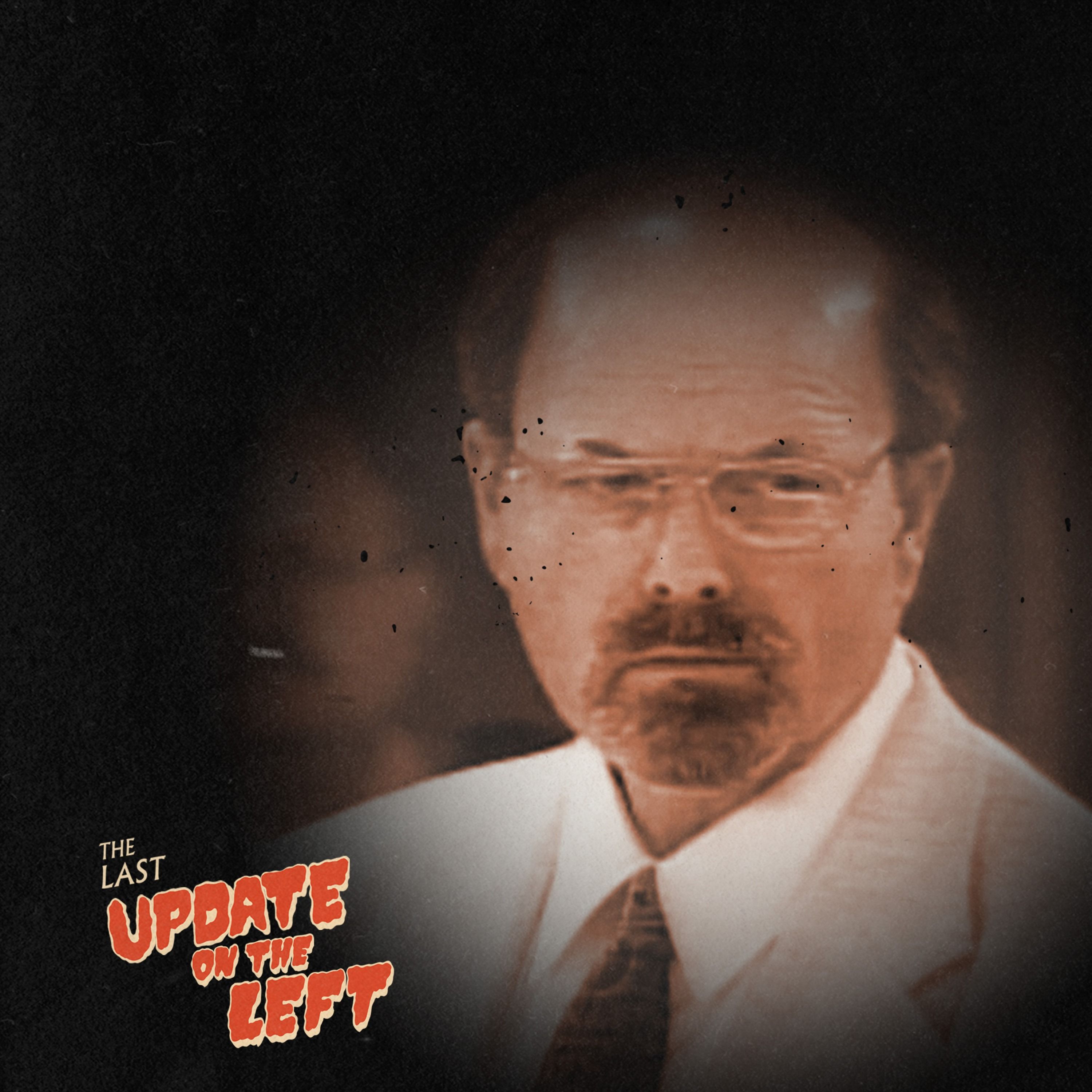
Last Podcast On The Left
Last Update on the Left - Episode 12 - BTK Returns w/ Katherine Ramsland
00:51:12
This week on this very special episode of Last Update on the Left, the boys are joined by one of the most prolific voices in true crime today - author and professor of forensic psychology Katherine Ramsland joins the show to discuss her decade-long correspondence with Dennis Rader and her ultimate analysis of the twisted mind behind the crimes of BTK.
Loading summary
Transcript317 lines
- [00:03]
Marcus Parks
That's when the cannibalism started.
- [00:06]
Henry Zebrowski
Last update on the left.
- [00:15]
Marcus Parks
Welcome to the last update on the left, ladies and gentlemen. We got a real special treat for you today. Big update on a big piece of shit. Big dumper. Yeah.
- [00:28]
Guest or Producer
Big time killer.
- [00:29]
Henry Zebrowski
Big time dumper. He's a dumper. You're Marcus Parks. I'm Henry Zabrowski. We're sitting here with Ed Larson. Hello. We talked with. She's a. She's a pip.
- [00:38]
Marcus Parks
Yeah, she's great. No, no, this. This woman is. Is incredible.
- [00:41]
Henry Zebrowski
And what I like is there's something about a classy, like, lady doctor that just hangs out with serial killers all day. Yeah, that's, like, all she does. It's. It's like. That's very frightening almost.
- [00:53]
Marcus Parks
It's Katherine Ramsland. We talked to her about btk, about Dennis Raider, the new victims that are supposedly Dennis Raiders, the ones that are being tied to Dennis Raider. But Catherine Ramsland has many opinions on whether or not there's any truth to that. So all you Raider heads,
- [01:15]
Henry Zebrowski
and also, I'll just tell you up front. We found out Dennis Raider not getting fillers.
- [01:20]
Marcus Parks
No. Not getting fillers. Not getting dentures.
- [01:23]
Henry Zebrowski
No. I asked.
- [01:24]
Marcus Parks
Rotting away in prison.
- [01:25]
Henry Zebrowski
Yep.
- [01:26]
Guest or Producer
The Witchita Raiders.
- [01:28]
Dr. Catherine Ramsland
Wow.
- [01:30]
Henry Zebrowski
That was the family.
- [01:32]
Marcus Parks
All right, here's our interview with Dr. Ramslin. All right, we are here with Dr. Catherine Ramsland. You've probably seen her on countless serial killer documentaries. She's written one of the best books about a serial killer that I've ever read, Confessions of the BTK Killer. Katherine Ramsland. Doctor, thank you so much for joining us today.
- [01:58]
Dr. Catherine Ramsland
I'm glad to be here. Thank you for having me.
- [02:01]
Marcus Parks
Of course. Well, part of the reason why we're bringing you on is that we're here on our update show, and the big update is that it seems like there are new victims of Dennis Rader being discovered, or at least people are assuming that they're Dennis Raider's victims. I guess our first question is, how much validity are you giving as someone who's spoken personally to Dennis Raider many times, how much validity are you given to these claims?
- [02:28]
Dr. Catherine Ramsland
Well, you know, it's been a progression of stuff for the past year. I think Sheriff Eddie Burden is who you're talking about because he's kind of leading the way. He's an Oklahoma sheriff.
- [02:39]
Henry Zebrowski
Yeah.
- [02:40]
Dr. Catherine Ramsland
He laid out the whole case that he had to me in May, and I didn't think he had evidence for some of the things that he was saying. And certainly everything that he's offered has an alternative Interpretation, Sure. And Raider's interpretation is, no, it's not me. And he's been given immunity to confess, to close the cases. He still says no. And the main question that he asks, which I think somebody has to answer, why wouldn't I confess? Right. He loves fame, and he said, I'd go out like a, you know, fading star. It'd be amazing if I had more victims. And he said, but I'm not going to confess to something I didn't do. And he has told that to, you know, just for example, one of the victims they had linked to him was the Garber case in Missouri.
- [03:42]
Marcus Parks
Yes.
- [03:42]
Dr. Catherine Ramsland
So her body was bound, I mean, heavily bound, with six different ropes and cords and whatnot, and dumped on a band of farm property. So that all sounds very Raider.
- [03:56]
Henry Zebrowski
It does. Like, the multiple different styles of rope, like, the overdoing it, like, almost like an artistic way, the way he viewed his quote, unquote work.
- [04:06]
Dr. Catherine Ramsland
He. He actually said it was sloppy and kind of insulted that people thought it was his work. Wow. The detective team went to interview him. Lori Howard was the one that I've been working with. And the woman was found in 1990 on Halloween weekend. It was unclear how she came to be there. It took them a long time to identify her. Once they did, through genetic genealogy, they found two relatives who were able to give them more of a sense of where she had been working, where she'd been living, which put her in that area. And then their chief suspect was killed in a motorcycle accident. And suddenly people came forward who had been scared of him, and they told the story of what they saw and what they knew, and turns out it was not Dennis Raider.
- [05:07]
Marcus Parks
Yes.
- [05:08]
Dr. Catherine Ramsland
You know, so, you know, that's an important case to show that despite all the things that looked very much like it was Dennis Raider. It wasn't.
- [05:19]
Henry Zebrowski
Can I backtrack a little bit? The reason why I want to just clear this up for myself was like, the reason why they even began to think he might be connected to more cases was because he insinuated something along the lines of there might be some trophies left in the. Yes, no, explain.
- [05:37]
Dr. Catherine Ramsland
I know that they can tell you what happens.
- [05:39]
Henry Zebrowski
Yes, please, please, please.
- [05:40]
Marcus Parks
It's all very confused. It can all be very confusing.
- [05:42]
Henry Zebrowski
When I started reading, and I was just like, how did we even get to this point? Because I know they got to his journals and they got to his letters, but how did we get to there?
- [05:49]
Dr. Catherine Ramsland
It kind of started because in Oklahoma, in Pasco, Oklahoma, this young woman went missing from a laundromat witnesses put her in the company of two people, which is not the way Dennis Raider operates. She's never been found. We don't even have a body. We don't know what happened to her. But Sheriff Burden decided to read through some journals that Raider had written that were in the custody of Wichita police. And he saw a little short entry called Bad wash day.
- [06:23]
Henry Zebrowski
Yes.
- [06:25]
Dr. Catherine Ramsland
And he went to talk to Raider, and Raider even said yes. I used to fantasize about that was a good way to get victims, but it never. It never worked out. So essentially, bad wash day might be bad wash day for him instead of the victim. That's what I mean by the ambiguity.
- [06:42]
Henry Zebrowski
Yeah. It's like how they said in Woodstock, the bad acid wasn't that. It wasn't driving people insane. It was that it was that it was extremely weak assets.
- [06:49]
Guest or Producer
Wasn't. Didn't do its job.
- [06:50]
Henry Zebrowski
Yes.
- [06:51]
Dr. Catherine Ramsland
So Sheriff Verdon went to the former property of where Raider's house had been. It had been torn down. It's just an empty lot now. Been that way since 2000, I guess, six or so. And he found a knotted pantyhose.
- [07:08]
Henry Zebrowski
So just like that, he's like, oh, well, yeah, he would have left his behind. Yeah, this is his favorite thing.
- [07:14]
Dr. Catherine Ramsland
There's a number of things. First of all, maybe not connected to Raider at all because it's been a vacant lot that leads into a park. And who knows? Secondly.
- [07:23]
Henry Zebrowski
Or do you think people go and screw around there at night because it was BTK's old house, maybe?
- [07:29]
Dr. Catherine Ramsland
Or Raider said he used to tie plants to stakes with knotted pantyhose, as many people do, actually.
- [07:37]
Henry Zebrowski
Oh, wow.
- [07:38]
Dr. Catherine Ramsland
So. Or it is one of his pieces from a hit kit, but it's to a victim we already know about. Interesting. So there's a number of things here that don't lead us to think he's got another victim. Now. There was also a letter that he wrote to the woman who had initially gotten me involved in writing this book. And he had said to her he thought there were some trophies from. From known victims. He didn't say, these are new victims, or she would have never. You know, she would turn that over to the police immediately. He said he thought he had moved them. They had been buried under his shed. He had a lot of hidey holes. Really, a lot of them. That's what he called him. Hidey holes. And he. He thought he had moved him. But could she just go see? So Sheriff Burden has that letter. So he decides to dig on the property where the shed had once been. And he claims that he had items of interest.
- [08:43]
Henry Zebrowski
Okay.
- [08:44]
Dr. Catherine Ramsland
And that was back in, I think September of 2023. So he formed task force. Among the people in that task force are criminalists, including top DNA experts. So here we are, May almost June 2024. Why haven't they been tested? So instead of coming out with results of a DNA test, especially on the pantyhose. Well, but he couldn't really do that because he's handling them with his bare hands. But he still kept telling me he was going to get it tested and by now you should have test results. Now they came out with. Now last week they came out with this word puzzle that yes. Raider had sent in 2004. So yeah, what's all about like, okay, so if you had the puzzle, you can see how he writes these lines over the place to. So my name's in there. If you do it that way.
- [09:58]
Henry Zebrowski
Yeah, yeah.
- [10:00]
Dr. Catherine Ramsland
What about me? In 2004 we found a number of people's names in there. If you haven't, you know, if you make enough of those kinds of connections,
- [10:09]
Marcus Parks
it's like the Torah codes where people say they can find damn near anything in the Bible through numerology. You can find anything in Dennis Raider, Cyprus.
- [10:15]
Dr. Catherine Ramsland
Yeah. Except that I will say this Raider had put his own street number in from his at home address. And he had put it in an odd way, 6220. And then another zero was underneath the middle two. So Sheriff Vernon took that to mean. Oh, well, then it isn't just straight lines.
- [10:38]
Henry Zebrowski
Oh yeah.
- [10:39]
Dr. Catherine Ramsland
So I. So I'm free to draw these lines in this variety of ways the way. Because of what Raider did. But I'm going to tell you, if all those victim names are in there, Raider is a master at coding. I don't think that he is actually.
- [10:55]
Guest or Producer
He's got free time.
- [10:57]
Dr. Catherine Ramsland
Yeah. And then the Arkansas team of detectives came to talk to him about a woman named Dana Stidham who had. Around the time of Garber, you know, she also had been bound and killed and her body dumped. And her. If you put Dana. And the A is below Dan, like Raider did with his address.
- [11:28]
Henry Zebrowski
Dana is there because they had shown. Because just for our listeners that don't know, there was an A. This one of the pieces of evidence that came out that said the name. They used it to spell out the name of the missing girl that they were looking for out of the. Out of a. And then it said the words laundromat. Right. Then he did a whole. You could see that and then it said the name of the town she had went missing from. But then now that makes a lot of sense, saying like, oh, it's just a bunch of letters. Anybody can make anything.
- [11:59]
Dr. Catherine Ramsland
In order to get. Yeah. In order to get some of those names and words, everything. One was the name of the street or something. You had to do all this sort of crisscrossing.
- [12:08]
Henry Zebrowski
Yes.
- [12:08]
Dr. Catherine Ramsland
And you can find anything if you try hard enough with that puzzle.
- [12:13]
Guest or Producer
It's Yahtzee.
- [12:14]
Dr. Catherine Ramsland
And if it. And I still say, if that is evidence, bring charges.
- [12:20]
Henry Zebrowski
Yeah.
- [12:20]
Dr. Catherine Ramsland
Don't just play this out in the media. You have a task force full of experts. Bring charges.
- [12:29]
Marcus Parks
So why aren't they, like, why are they going to the media?
- [12:32]
Dr. Catherine Ramsland
No, I don't. He doesn't talk to me anymore.
- [12:36]
Marcus Parks
That's too many uncomfortable questions.
- [12:38]
Dr. Catherine Ramsland
Well, you know, the thing is, I've been put in this weird position of being Dennis Raider's spokesperson, which is not to say I'm his advocate for innocence in this, but I agree with him. He shouldn't confess to something he didn't
- [12:52]
Henry Zebrowski
do, because also, why would he.
- [12:53]
Dr. Catherine Ramsland
And if they. If they're sure that they have evidence against him, bring it.
- [12:58]
Marcus Parks
So is the only reason why they're bringing these charges or at least hinting that or saying that BTK is responsible is just because of the way the bodies were found. The bodies were found bound and. Or that. It's sort of confusing because I know one of the. You said one of the bodies was found and one of them was never found.
- [13:16]
Dr. Catherine Ramsland
Yeah. The original victim that started this all has never been found.
- [13:21]
Marcus Parks
Right. So why do you think they chose Dennis Raider of all people?
- [13:26]
Dr. Catherine Ramsland
Well, because the way the sheriff puts it is it was a revelation he had while watching TV late one night that Raider. Oklahoma borders Kansas, and that area of southeastern Kansas is where he grew up. He. He traveled during early 90s for the census from one state to another. He had a lot of projects and his project list, only 10 of which resulted in murder. But he stalked a lot of victims. He has the bad wash day journal entry. He liked abandoned barns. And apparently, according to the sheriff, some anonymous caller said that Raider had left a body in an abandoned barn on the. On the border of Oklahoma and Kansas. Did he or didn't he? I don't know. You know, he. He never put that on his project list that he gave to me. And when I've talked with him, you know, I've. I've kind of been the recipient of him talking to me about all the different law enforcement people Coming in. The FBI came in. He had Arkansas, I think two teams from Missouri, Oklahoma, and Kansas. And yet no charges brought. One of the things that did kind of bother me was Sheriff Burden was sure. He knew that the reason Dennis wouldn't confess is he didn't want to be moved from the prison he was in
- [15:09]
Henry Zebrowski
because then he'd have to go to Oakland.
- [15:10]
Dr. Catherine Ramsland
He said, that's his. That's his abiding. That is his most. The strongest motivation to say nothing. And I said, no, it isn't his strong. It's in the book. But Sheriff wouldn't read the book. It's in the book. His strongest motivation is to be famous.
- [15:28]
Marcus Parks
Yeah.
- [15:28]
Guest or Producer
Yeah.
- [15:29]
Dr. Catherine Ramsland
So. And he has told them, you want to move me, bring charges.
- [15:33]
Henry Zebrowski
Would you say that's the grand function of his, like, instigating communication with the police and stuff? Like making a word game? Like he has. No, like what you say he's not an expert at making cryptograms. Like, he is not a. He's not a puzzle expert. What drives somebody like Dennis Raider to do something like that? Like something.
- [15:57]
Dr. Catherine Ramsland
Because he liked codes. And during 2004, before he was arrested, he was playing this cat and mouse game.
- [16:05]
Henry Zebrowski
Yeah.
- [16:05]
Dr. Catherine Ramsland
And he enjoyed the media attention to what he was doing. So he was putting things in cereal boxes, like.
- [16:14]
Henry Zebrowski
Yes. Cereal killer. Yeah. He would have been great on TikTok. I think that Dennis Raider honestly would have really appreciated the NPC culture.
- [16:23]
Dr. Catherine Ramsland
I think so. Because he really liked the idea that he had a fan base that he was entertaining. At the same time he was. He was showing the cops that he was superior to them. And, you know, he was ordering them about. Here's what you will do. And. And if you want to get further communications from me. He made up stories about victims. He. Some. You know, he'd mix. Similar to that word puzzle. He'd mix facts about his life with fictions.
- [16:55]
Marcus Parks
Yeah.
- [16:56]
Dr. Catherine Ramsland
So to keep them guessing and to keep them looking, you know, running around looking for leads and whatnot.
- [17:01]
Henry Zebrowski
Does he have a book? Did he write a book? Didn't even book or a journal. Like, are we ever gonna see any.
- [17:06]
Dr. Catherine Ramsland
He had lots of. He. He kept journals of what he was doing. Yeah.
- [17:10]
Henry Zebrowski
Do you think we'll ever see any of that or that's just gonna go.
- [17:12]
Dr. Catherine Ramsland
That's. That. That's what Eddie's putting out there. Oh, that's where the wash day. Bad wash day.
- [17:18]
Henry Zebrowski
No, that I know, but I mean, like. I mean, I'm talking about, like, the compendium. Are we getting the full.
- [17:23]
Dr. Catherine Ramsland
I don't I mean, there, it's hard, it's scribbly. It's not like. And a narrative that's articulate and well put together, just scribbly little notes here and there.
- [17:35]
Marcus Parks
Is it kind of boring?
- [17:37]
Dr. Catherine Ramsland
No, because some of it was when. When he was talking about the murders, he put those in detail and then he used that to create these chapters.
- [17:47]
Guest or Producer
Yeah.
- [17:48]
Dr. Catherine Ramsland
And here's actually what happened, because I was working for Court TV at the time, their Crime Libra website, and we had written a case, written up the BTK cases before Raider was caught. So it was laid out, you know, and then this author, this attorney in Wichita, decided that he was going to write a book about the unsolved BTK killings. And he had seven, and Raider knew there were 10. So he read an interview with the author and did not want his story told by this guy because it would be the wrong story. And he didn't. He wanted to control the narrative.
- [18:25]
Henry Zebrowski
Yeah.
- [18:25]
Dr. Catherine Ramsland
So he then started writing these long chapters. He wrote 13 chapter titles. And then in each of these cereal boxes, he put a chapter in of the murders. And the funny thing is, though, he wanted. And he denies this, but he's wrong because his chapter titles were our chapter title.
- [18:50]
Henry Zebrowski
Yes. Adds a word here or there.
- [18:56]
Dr. Catherine Ramsland
I never saw any of that. I said, oh, yes, you did. Yeah, yeah, so. But, yeah, so he did write a lengthy piece. And he didn't get all of them to the police because he was arrested, but they found more of them. Then he would. He would take the originals and copy them and then copy the copies to erase any track from a copy machine because they had figured out he'd been copying things in Wichita State University. So he was much more careful. And that was his downfall because he didn't have a lot of time to go running around to these copy machines. So he knew how to use a computer. And he asked can. He asked a cyber cop, can you trace an anonymous, like a, you know, disk or anonymous email? And the cyber cop said, no, no, not. Because, no, he accidentally. He did not know the answer to that. And he has written his own article about how his mistake actually led to this. But. So what happened is Raider then put an ad. He then he wrote to the. Wrote a postcard to the task force and said, put an ad in the paper to let me know that I can send you a computer disk. And. And it's safe for me. And they thought this is for real. And so they, you know, he did, but it was a disc that he'd been using as the president of his church council on the church's computer. And had he. Had he used a clean disk at a library computer, he probably would have gotten away with it. But he didn't. He used one with his name in some of the. The data that he erased, and they were able to track it back to that church. And the pastor said, yes, Dennis Raiders, the. The president Emmer congregation. And he's been using the computer. And that's what his downfall was, is that he didn't have time to make these copies of copies.
- [21:05]
Marcus Parks
So you mentioned that you'd written up the BTK story before Dennis Raider was caught. So when Dennis. When it was finally released, that it was a regular family man, a civil servant, you know, somebody like a, you know, Pastor Dennis, when it was released, you know, when his identity was released, like, what were your first thoughts?
- [21:27]
Dr. Catherine Ramsland
Well, I didn't write it. It was one of our. We had a stable of writers who wrote for the core tv. But. But I remember media calling me and, you know, saying, oh, first of all, they were kind of disappointed that he was such a. Like a doughy old family man.
- [21:46]
Henry Zebrowski
Yeah.
- [21:48]
Dr. Catherine Ramsland
They all wanted the next Ted Bundy. Right. It didn't surprise me that much because. Because I studied serial killers. We have a lot of serial killers with families and jobs and whatnot. That. That formula that they're the loners and whatnot. That that's old from the 1990s based on very poor data. And so it didn't. It. It wasn't that big of a surprise to me, the idea that a man lives a double life. Honestly, that's no surprise.
- [22:17]
Marcus Parks
So do you think that there are more or there have been more Dennis Raiders out there than we really know? Like, it's Dennis Raider. Just. He's not a rare case.
- [22:26]
Dr. Catherine Ramsland
He's not a rare case. And look, remember Sam Little.
- [22:29]
Henry Zebrowski
Yes.
- [22:30]
Dr. Catherine Ramsland
Who claimed 93 victims over the course of several decades because he knew how to choose victims that he knew would be well under the radar for police to put any resources into it. He specifically looked for victims who were sex workers, drug addicts, hitchhikers, people that just would not draw resources. And he got away with it for a long time. And so when we discover him. Right. But all that time he was operating, so we don't know how many other people might be like that.
- [23:07]
Henry Zebrowski
How do we reconcile the differences between somebody like Samuel Little who'll say nothing about his crimes. Right. Like he is now. They're trying to sort of attach murders to him. But it does sort of like. Because he Says that he drew pictures of a lot of his victims, but I have no idea, like, what you can cooperate, what's real or what's not. And then there's somebody like Samuel Little who says very little, truly very little. And then Dennis Raider, who says everything, who's also probably one of the most unreliable people because he's a serial killer. Like, how do you. How do you trust a serial killer that what they're saying is true?
- [23:41]
Dr. Catherine Ramsland
Well, because you do. Because you do use corroborating evidence. Yes. Raider also do a lot of pictures, and that's what some. Some of these task force. This task force is trying to use pictures to identify victims. I mean, you can't. You can't identify from a picture.
- [23:58]
Henry Zebrowski
No. How would they know? Like, even Samuel Little, after all.
- [24:02]
Dr. Catherine Ramsland
But the way they know that, the way they. They did with Sam Little was he would say locations, times, use the drawing, and then the officers would be able to see did they find a body there at that time that looked like this drawing? That's how you corroborate it.
- [24:25]
Henry Zebrowski
Yeah.
- [24:25]
Dr. Catherine Ramsland
And Raider, Certainly, with all four of the 10 victims he took credit for, it's all corroborated. Everything he said he did is corroborated by the scenes, by the evidence. Yeah. So he's not a totally unreliable person.
- [24:41]
Marcus Parks
I mean, what I find fascinating about all this is that you say that, you know, Dennis Raider, of course, his big motivation is to be famous. You know, he wanted to be seen on par with the Zodiac Killer and, you know, and Jack the Ripper.
- [24:54]
Dr. Catherine Ramsland
The.
- [24:54]
Marcus Parks
What is it that keeps him from claiming more victims? Like, what is it a sense of pride that he has that keeps him from saying. Because 11 victims, 12 victims, would make him more notorious than 10, what is it that keeps him from claiming more in order to get more fame in order for people to keep talking about
- [25:14]
Guest or Producer
btk, where his morality lies?
- [25:16]
Dr. Catherine Ramsland
They do have some sense of morality, oddly enough. I mean, it's. Each one of them has weird lines they won't cross. Ted Bundy, I was just listening to a bunch of his interviews over the weekend for a documentary, and he had some. John Wayne Gacy had. They do. It's not like they're totally devoid of, you know, any sense of integrity. It's just not as developed as it is for most other people. But I think that's the big question. Why isn't Dennis Raider confessing to and getting more fame? He says to me and to those associates of his who known him for a while, and I've known him for 14. So. 14 years. Yeah. He says, I'm not going to admit to something I didn't do. He even said, I'm going to have the number 10 tattooed on me so that if I die, it'll still be there and nobody can change it.
- [26:20]
Henry Zebrowski
Very interesting because also could see him not wanting to claim something that he wasn't necessarily proud of, but is. He is a, it's weird. This is a massive pride for him. This was his life's work.
- [26:33]
Dr. Catherine Ramsland
Well, and here, and here's why the Missouri detective team, when they went over and talked to him and for hours, I mean he was willing to talk with them, but they said the difference between when he talked about his own murders and then when he discussed the one we were interested in. Difference in his demeanor, his interest level, his excitement told us he was not our guy. Yeah, yeah, yeah.
- [27:00]
Guest or Producer
Do you think like an officer would try to tie a cold case to someone famous like Raider just to get more eyeballs on the investigation in general?
- [27:09]
Dr. Catherine Ramsland
Could be. I'm not going to accuse anybody of that. But it does get eyes on it in a way that it wouldn't in any other, other context.
- [27:20]
Marcus Parks
Well, earlier you said that you, you've known Dennis Raider for 14 years. But like, what does it mean to know Dennis Raider well?
- [27:29]
Dr. Catherine Ramsland
And he, he says that I probably know him better than anybody. It, I've spent many, many, many hours in conversation with him in a lot of contexts and also know the entire police interrogation. I knew the DA before I ever met Dennis Raider. She was a friend of mine, so she gave gave me access to files she had. I know many of his correspondence and I see letters he wrote. He writes to them. So I know him from a lot of different angles. Not just what the face he shows to me. I've seen him in a lot of moods. I don't know what, what do you think it takes to know someone like that?
- [28:13]
Henry Zebrowski
So funny, guys. I guess it's really. You get someone. We talked with Karen Conti, who worked with John Wayne Gacy for years. And I guess with, on, on my
- [28:21]
Dr. Catherine Ramsland
end, what was it that many years?
- [28:23]
Henry Zebrowski
Well, yeah, but like she got to know him in that way.
- [28:26]
Dr. Catherine Ramsland
I, I, I agree. But when in her book she details the time she spent with them. It wasn't years.
- [28:32]
Henry Zebrowski
Yeah, but you know, the idea of like, for us as people on the outside, I view somebody like Dennis Raider as like a Batman villain inside of Arkham Asylum. He's in a glass. He's a Hannibal Lecter. He's in a Gl. But it's like, it really is just asking the general questions of, like, what's it like to just hang out with the guy? Like, what's it like to go at, like. Because you probably ate lunch with him, you know, I mean, like, it's very interesting for us to know that he's walking around still just a shot.
- [29:01]
Dr. Catherine Ramsland
I related to her, but I know her. I related to her book in. In that, like, Raider and I would watch TV shows and discuss them.
- [29:11]
Henry Zebrowski
Yeah.
- [29:12]
Dr. Catherine Ramsland
Like. Like anybody, you know. Oh, did you catch that episode? What did you think? You know, we talk about politics. We. What's going on in the world. We. We talk about things that matter to him. He would count me as a friend.
- [29:27]
Henry Zebrowski
Yeah.
- [29:28]
Dr. Catherine Ramsland
I'm sure he thinks that I've been. He thinks I'm a good friend because I've helped to advise him on some of this. When he thought that it would be fun to play games with these officers, that's initially why he would meet with them for hours, because he thought he always had the opportunity overhand and then found out he really doesn't.
- [29:49]
Marcus Parks
Yeah.
- [29:50]
Dr. Catherine Ramsland
Because he can't walk out of there, and they can make whatever they want with whatever he says. So he. He's, I think, been kind of humbled by what has happened in the media with these cases being linked to him, and doesn't like it. It's not like he's going, whoa, look at. Look at me. I'm in the. I'm in the press. He doesn't like it.
- [30:12]
Marcus Parks
Yeah.
- [30:14]
Dr. Catherine Ramsland
But I don't know. I don't think he's that deep, frankly, that you have to spend. You know, it's not like getting to know a philosopher or something.
- [30:28]
Marcus Parks
Henry needs to know what is his favorite television show.
- [30:31]
Dr. Catherine Ramsland
He loves watching American movie classics.
- [30:34]
Henry Zebrowski
Oh, sure. Yeah.
- [30:35]
Dr. Catherine Ramsland
He. Sure.
- [30:36]
Henry Zebrowski
I could see him be a classics guy. Yeah. I could see westerns.
- [30:40]
Dr. Catherine Ramsland
Yeah. He's always talking about whatever old movie he's seen that reminded him of his childhood.
- [30:46]
Henry Zebrowski
Sure. Meet me in St. Louis.
- [30:48]
Marcus Parks
Yeah.
- [30:48]
Henry Zebrowski
I imagine he was a big Judy Garland guy. I could see him be.
- [30:52]
Dr. Catherine Ramsland
I don't think he was. No, I don't think so. He liked Annette Funicello from the Musketeers. That was a big one for him.
- [30:58]
Marcus Parks
Yes.
- [30:59]
Henry Zebrowski
That's really weird because my mom is like a dead ringer for Annette Funicello.
- [31:04]
Dr. Catherine Ramsland
I think his mother was probably very. Looked very close to her as well.
- [31:08]
Marcus Parks
And that's something that I wanted to ask you about, is that you mentioned, you know, Annette Funicello, and I know that he when he was younger, had a lot of very dark fantasies about Annette Funicello. And one of the things that has always fascinated me about BTK is that, you know, a lot of every serial killer that you read, you know, every biography, starts off with the horrific childhood, starts off with the abuse. With Dennis Raider, there wasn't really any. There hasn't been any evidence. Like all the evidence points towards Dennis Raider having a normal childhood. No abnormalities at all. So, I mean, is there something hidden there, do you think, or is he just like this?
- [31:49]
Dr. Catherine Ramsland
Well, it's one of the reasons I wanted to work with him is he's an outlier to the formulas. But he's not the only one. I mean, I know of others that do not have any kind of horrific childhood. That is a formula. That's an idea that they all have it. Yeah, yeah. To the point where I've been told by some experts in the field, oh, he just lied to you. Well, okay, But I talked to other people who knew him as a kid too, and there wasn't really. His family was like all American, middle class, Kansas religious family, both parents, both sets of grandparents. You know, farm kid, oldest of four brothers, had buddies in high school, had girlfriends. I mean, he didn't have abuse in his background.
- [32:40]
Henry Zebrowski
Do you weirdly think that that's why I hate again, use this term? That was what made him, quote, unquote, successful, what he did for so long, and then sort of like fell apart. Is that this almost because there wasn't a sort of like insane comorbidity in his brain, you know, I mean, like the idea that he wasn't a. A completely, totally crazy person.
- [32:59]
Dr. Catherine Ramsland
Success had a lot to do with luck.
- [33:01]
Marcus Parks
Yeah, yeah.
- [33:03]
Dr. Catherine Ramsland
Because he made mistakes and he knew he did and he was scared, but the police didn't pick up on it. And, you know, it's the 70s. They didn't have all the things we have today for. They didn't have databases, they didn't have forensic instruments, they didn't have DNA. There's all kinds of things they did not have as an aid in investigation and serial murder. 1974, my lord. They hardly knew anything.
- [33:32]
Marcus Parks
So you say you wanted to study him because he was an outlier. What did you find?
- [33:36]
Dr. Catherine Ramsland
Well, he was an outlier in that he studied killers from the 1950s and 60s through two detective magazines to adopt these role models. There aren't many serial killers who have done that. So that was unusual. And that he. He was more of, you know, he wasn't a reactive serial killer. Wasn't anger, it wasn't. Their lust was certainly part of it, but he wasn't. It wasn't the murders that were part of what turned him on. It was the bondage.
- [34:16]
Henry Zebrowski
Yeah.
- [34:16]
Dr. Catherine Ramsland
So once he's done things to people, he's got to kill him because otherwise they'll. They'll identify him and turn him in. But to some serial killers, the murder is the highlight.
- [34:29]
Marcus Parks
Yeah.
- [34:30]
Dr. Catherine Ramsland
That is not true for rape process. Yeah. So he had. He has a number of things that were at least different enough for me to want to, you know, track this, track his. His trajectory to try to figure out how do we get somebody who's an all American kid who becomes this family man, church leader, Boy scout volunteer, holding down jobs, and also has this dark life of serial murder because he wants to be an elite serial killer like Jack the Ripper, Ted Bundy, people like that.
- [35:09]
Henry Zebrowski
I have a question. This is extremely stupid, Dr. Ramslin, so please, I'm gonna ask this question. Just you got. You could. You can answer it or not, But I have a thought in my head. I'm nervous it's gonna come out just like this. Let's say there was a world where you could make these types of, like, live dolls. So you've seen these live dolls, right? They look just like people. They're like silicone and big. What if there was a world where somebody got like, btk, could you give them five of them and you go. Go to town on them? Like, here's a bunch of ropes. Here's all the stuff. Like, go to town almost. We'll send them back after. Do you think that that would actually help somebody like that? I didn't mean to make that. The, The. The thumbs up emoji go. Because it's just. It's inappropriate.
- [35:53]
Dr. Catherine Ramsland
I don't know where that came from.
- [35:55]
Henry Zebrowski
She's like, to me, would that be like, you think I would ever fix any of these guys or help any of these guys? Or is it just like, you know. You know what I mean? Am I crazy? The idea of, like, going to a place where you get it out of your system.
- [36:07]
Dr. Catherine Ramsland
I'm following you. Are you trying to say, how do we use this for intervention? Is that what you're trying to ask?
- [36:13]
Henry Zebrowski
Essentially, like robot mannequins that you can do your BTK thing to, and then you leave them like an escape room.
- [36:19]
Guest or Producer
You. You want a smashing room for serial killers?
- [36:22]
Henry Zebrowski
Yes. Do you think I would get it out of their system?
- [36:26]
Dr. Catherine Ramsland
He thought so. He said that had there been S and M clubs that he could Go to or something like that where he had a way to. To vent and, you know, just let off some of the pressure of the. The kinds of fantasies he had. He thought that would actually have made a difference for him.
- [36:44]
Henry Zebrowski
But there were S and M clubs he could have. No, I guess not.
- [36:47]
Dr. Catherine Ramsland
In Wichita, in Kansas.
- [36:50]
Henry Zebrowski
I actually feel like a lot of it is just, you know, have to ask Farmer John. You'd be surprised who likes getting spanked out on hills.
- [36:57]
Dr. Catherine Ramsland
1970s, 80s in a. A very religious community. He. He can't be. It's going to have to be somewhere else. He can't. He can't be seen going.
- [37:09]
Henry Zebrowski
You got to go to the ozone.
- [37:10]
Dr. Catherine Ramsland
He's a, you know, president or I think he's vice president and president. I mean he's. He's got a family. He's got appearances to keep up. So it's not as if he can just go join some S and M club. But I don't think there were any in Wichita at the time.
- [37:26]
Marcus Parks
Not in Wichita. But I was just reading about David Parker Ray and you know, in his life. And there was some wild shit going down in Albuquerque in the 70s and 80s that he was a part of.
- [37:37]
Dr. Catherine Ramsland
But he was in a very isolated place too. With his toy box.
- [37:41]
Marcus Parks
Yeah.
- [37:41]
Dr. Catherine Ramsland
He also had accomplices who were bringing people to him.
- [37:44]
Marcus Parks
Yeah.
- [37:44]
Henry Zebrowski
Yeah.
- [37:44]
Dr. Catherine Ramsland
So he was in a very different kind of situation.
- [37:47]
Marcus Parks
It's a different situation. But I also found myself seeing some similarities between David Parker Ray and. And Dennis Raider.
- [37:55]
Dr. Catherine Ramsland
But he didn't have that middle class wife and kids and church. And he didn't have. That wasn't him.
- [38:03]
Henry Zebrowski
No. David Parker way technically was living the dream.
- [38:05]
Marcus Parks
Yeah.
- [38:06]
Henry Zebrowski
You know, I mean that did. Dennis Raider wished he could have lived the life that David Parker Ray did. I think so.
- [38:11]
Dr. Catherine Ramsland
I think that's true. I think he. He would have preferred to have been a different. In a different environment than he ended up in.
- [38:18]
Henry Zebrowski
You don't think he still would have ended up killing that It. It would have gone too far for him that if. Let's say he was in San Fran. Like literally like choose a city, a modern city now where you could go and live life in. In any way you want. And you can go live whatever lifestyle you want. Do you think that in the end that would actually have been enough for him?
- [38:36]
Dr. Catherine Ramsland
It depends on the direction his fantasies would have taken him. Yes. Because the first murder, the Tarot family. It was supposed to only be two people.
- [38:47]
Henry Zebrowski
Yeah.
- [38:48]
Dr. Catherine Ramsland
He planned badly that day. But he had just been fired from a job. He really Liked he was feeling like a failure because now his wife was supporting him. The values of middle America in the 1970s. The wife is not supporting the husband. And he felt like a failure. He was angry and he was acting out. Had that not happened and he had a way to discharge his fantasies, I think it's possible that he wouldn't have done something like that.
- [39:23]
Marcus Parks
And after he got the first taste of it, I guess it was just all downhill from there. Yeah, pretty much to that point. I mean, it. You know, of course, the. The big thing about BTK is that, you know, he would pop up every once in a while and then just suddenly stopped and went dormant and didn't do anything else until he finally resurfaced.
- [39:42]
Dr. Catherine Ramsland
That's not true.
- [39:43]
Marcus Parks
It's not.
- [39:44]
Dr. Catherine Ramsland
Those are the other true crime books. He says. He gave me A list of 55 projects of people he stalked whose homes he entered, where he waited. They would have died had they come home or had he had enough time to fully stalk them the way he wanted to. He had a lot of people in his scope, and he has said, I didn't stop. I just didn't succeed.
- [40:09]
Henry Zebrowski
Wow.
- [40:09]
Guest or Producer
Were those people notified?
- [40:12]
Dr. Catherine Ramsland
Like some.
- [40:14]
Guest or Producer
You. You came close.
- [40:15]
Dr. Catherine Ramsland
Yeah.
- [40:15]
Henry Zebrowski
Somewhere I never want to know.
- [40:17]
Dr. Catherine Ramsland
And people to this day ask me, what am I on that list? Did he visit my house at such and such a street? Would you please ask him? I don't know why they want to know.
- [40:27]
Henry Zebrowski
Yeah, yeah, don't tell me. I don't want to know how many times I almost died.
- [40:31]
Dr. Catherine Ramsland
I also hear, you know, along with all this new potential new victims for him, I now have a number of women who claim he picked them up or he, you know, took. There was one on Nancy Grace who claimed he danced with her in a nice suit. And I thought, well, that's not him. But for some reason, she got, you know, enough believers to get on a show. I've had women claim that he sat with them at their kitchen table and they. And then left all of a sudden. Said, if that were him, he would be dead. You would not be telling me this story.
- [41:11]
Henry Zebrowski
And he's not that memorable of a guy. I don't think you. I don't know.
- [41:14]
Dr. Catherine Ramsland
So ordinary that I'm amazed that people think they're so right. They know a car he drove. He never had that kind of car. So it's. But I. There's a whole book on people who think Ted Bundy stopped them or picked them up or did this and that, and it wasn't physically possible for him to have been with them at that time. And yet they persist in their claims that it was Ted Bundy.
- [41:40]
Marcus Parks
Oh, famously, yeah. Debbie Harry, the lead singer of Blondie.
- [41:43]
Dr. Catherine Ramsland
She's one of them.
- [41:43]
Henry Zebrowski
Yeah, she's one of them.
- [41:45]
Dr. Catherine Ramsland
He wasn't anywhere near where she was.
- [41:48]
Guest or Producer
All this BTK talk has made me happy to have a small closet.
- [41:51]
Henry Zebrowski
Yes, it is. No walk ins, you know, and I don't mean this as a criticism, but as a person that's looking from the side, I'm going to say I saw some recent pictures of Dennis and he's not looking good. Have you talked with him about fillers or have you talked with him about any sort of cosmetic fixes or anything? Because he's. Honestly, he's not looking great.
- [42:11]
Dr. Catherine Ramsland
No teeth, none scoliosis. So he's all bent over. He's lost something like six inches from his height.
- [42:20]
Henry Zebrowski
Wow.
- [42:22]
Dr. Catherine Ramsland
He's not in good shape. No, he knows it. He's 78. He's not young. People change when they get old.
- [42:29]
Henry Zebrowski
Yeah, of course.
- [42:30]
Guest or Producer
Yeah.
- [42:31]
Dr. Catherine Ramsland
And he doesn't have great care either, or exercise or great nutrition or any of that.
- [42:37]
Henry Zebrowski
Yeah, right. Because they don't. They just kind of like, watch him essentially, like. Yeah, yeah.
- [42:42]
Marcus Parks
Do you think, like. Because when you say he doesn't have like, great care or anything like that, like, I guess. What do you think Dennis Raider deserves? Is it just like him? Any other human being?
- [42:52]
Dr. Catherine Ramsland
That's not really within my scope of expertise. I don't study prison systems or any of that. I don't really. I don't know. I don't want to even take a stand on that.
- [43:03]
Guest or Producer
Sure, fair enough.
- [43:04]
Henry Zebrowski
Absolutely.
- [43:05]
Dr. Catherine Ramsland
Definitely. And I'm about to go to crime con, so.
- [43:08]
Henry Zebrowski
Yeah, exactly. We stopped going to crime cons because, like, honestly, I get scared of the other true crime podcasters.
- [43:17]
Dr. Catherine Ramsland
Why are you guys going to crime? Are you going to be there?
- [43:19]
Henry Zebrowski
Well, the last time we went, to be honest, the last time we went to crime con was a very, very early crime con. One of the very first ones.
- [43:25]
Dr. Catherine Ramsland
Which one?
- [43:27]
Marcus Parks
Indianapolis.
- [43:27]
Henry Zebrowski
He was in Indianapolis.
- [43:29]
Dr. Catherine Ramsland
Oh, I think that was the first one.
- [43:30]
Henry Zebrowski
I was pretty certain. And we. I just remember it. Lot of Nancy Grace at 8:45 in the morning. Like seeing her live in person in a hotel lobby when you haven't had coffee yet. Like, it's a lot.
- [43:42]
Dr. Catherine Ramsland
Yeah, she's pretty much a star with crime.
- [43:47]
Henry Zebrowski
Yeah. Everywhere she goes. It's the Nancy Gray Show.
- [43:50]
Marcus Parks
No, she walked through with a. A massive entourage, bodyguards wearing her Uggs.
- [43:56]
Dr. Catherine Ramsland
She's on the task force for all this. She's the head of the task force.
- [44:00]
Henry Zebrowski
Oh, she is, yeah.
- [44:01]
Dr. Catherine Ramsland
She. Most of the people on Eddie Burden's task force are people associated with Nancy Grace in a media capacity. Damn.
- [44:10]
Henry Zebrowski
She must lift weights, too. She's strong.
- [44:13]
Guest or Producer
I know you haven't sat. Sat her down and asked her about her exercise routine.
- [44:20]
Henry Zebrowski
This is awesome. Thank you so much for Talking with us, Dr. Ramsey. You're the best. Thank you for putting up.
- [44:25]
Marcus Parks
Thank you so much. And before we go, like, what. What is. What's your latest project? Like, what's. What's your newest book that you have out?
- [44:32]
Dr. Catherine Ramsland
Well, the one I finished today is.
- [44:35]
Henry Zebrowski
Holy shit. You finished a book today?
- [44:37]
Dr. Catherine Ramsland
I did a book for my horse.
- [44:40]
Guest or Producer
For your horse?
- [44:41]
Henry Zebrowski
You wrote a book for a horse?
- [44:42]
Guest or Producer
Who did your horse kill?
- [44:45]
Dr. Catherine Ramsland
Ride a horse. He said. He says, enough of this crime. Write my book.
- [44:51]
Henry Zebrowski
Actually, can I ask that one thing about, like, your personal life in terms of serial killers and all this stuff? Does it affect, like, we've now been in the quote unquote, serial killer business for, like, almost 15 years, and it's hurting me emotionally and. And mentally every day. What do you do, like, what do you do to sort of, like, groom a horse?
- [45:09]
Dr. Catherine Ramsland
Yeah, I groom a horse and ride a horse. I work. I actually volunteer in a horse farm. I drag the field. I drive tractors. I do. Yeah. That's great. I'm about to retire.
- [45:20]
Marcus Parks
Oh.
- [45:22]
Dr. Catherine Ramsland
My current job, which I'm very happy about.
- [45:24]
Henry Zebrowski
Yeah.
- [45:26]
Dr. Catherine Ramsland
I will continue to teach online graduate courses, but I'm about to end my academic career.
- [45:32]
Henry Zebrowski
Well, congratulations.
- [45:34]
Dr. Catherine Ramsland
Which is great. But in terms of the most recent book that's relevant to you all is the Serial Killer's Apprentice, where I spent a year talking to ELMER Wayne Hanley Jr. About his being an accomplice to Dean Corll.
- [45:50]
Henry Zebrowski
We need to have a further conversation.
- [45:52]
Dr. Catherine Ramsland
So much more to the story than what Jack Olson wrote in his Candyman book from 1974. There's so much more to the story that has never been put out there. And it was very interesting. I'll tell you, Wayne Henley is a really smart person, easy to talk to, very articulate, and has a lot to say about what happened.
- [46:16]
Marcus Parks
So can we have you back to talk about that after we've read that book?
- [46:19]
Henry Zebrowski
Because I would absolutely love to. I am fascinated about the possibilities of John Wayne Gacy, Dean Corll, and all of them kind of like, maybe not knowing each other but being, like, one degree.
- [46:31]
Dr. Catherine Ramsland
Well, that's part of the book is because my co author is Tracy ullman, who did 10 years of work on the Gacy case. A lot of the work on the networking that Corll talked about. And we know that Gacy was fascinated with the Corll case, so. But that's Tracey Ullman's part. And I can have her on the show as well. We can both be on the show. But what she brings to the. To it was this. The bigger picture that the police never investigated.
- [47:03]
Henry Zebrowski
That's awesome. I mean, not awesome, but, you know, I'm excited about the book. This is like. That is a fact. That is like, right down my street right now. That and RuPaul's Drag Race.
- [47:14]
Marcus Parks
Yeah.
- [47:14]
Henry Zebrowski
Are really the two things I focus on quite a bit. Thank you so much, Dr. Ramslin.
- [47:20]
Marcus Parks
Thank you so much. We really. We really do appreciate it. And yeah, we'll, you know, get on reading the. But, like, getting the book together, and then we'll. We'll have you back to talk about it, because it's there.
- [47:29]
Dr. Catherine Ramsland
It's right here behind me.
- [47:30]
Henry Zebrowski
Incredible. Oh, that's the new. And that's out now.
- [47:32]
Dr. Catherine Ramsland
Yeah.
- [47:33]
Henry Zebrowski
Oh, so we'll plug the. We should plug your book.
- [47:35]
Marcus Parks
What we just did.
- [47:37]
Dr. Catherine Ramsland
That's why I'm going to CrimeCon is to speak about this book and my experience of talking with. With Wayne.
- [47:42]
Henry Zebrowski
That's fantastic.
- [47:43]
Guest or Producer
Well, I'll see you at Horse Con.
- [47:45]
Dr. Catherine Ramsland
Oh, yeah. Oh, good idea.
- [47:55]
Henry Zebrowski
Thank you so much.
- [47:56]
Dr. Catherine Ramsland
All right, thanks.
- [47:57]
Henry Zebrowski
We'll be released.
- [47:58]
Guest or Producer
Bye.
- [47:59]
Marcus Parks
Thank you.
- [48:02]
Henry Zebrowski
What an amazing interview. That just was. My God.
- [48:06]
Marcus Parks
Because, you know, I guess we always hesitate.
- [48:08]
Dr. Catherine Ramsland
Favor.
- [48:08]
Marcus Parks
That's always.
- [48:09]
Guest or Producer
But, yeah.
- [48:09]
Marcus Parks
Dennis Raider I find. I find fascinating, of course. And it was so great to talk to somebody who. Arguably the person who knows Dennis Raider the best.
- [48:18]
Henry Zebrowski
And Dr. Ramslin has a very interesting approach. It's also kind of reminds me all the time of why we do what we do here at last. Podcast on the left reminding ourselves all the time that serial killers are people. Yeah. And there are humans in there. And it's so weird to just imagining. Just like with Dr. Ramslin just talking TV.
- [48:35]
Marcus Parks
Yeah.
- [48:36]
Dr. Catherine Ramsland
Yeah.
- [48:36]
Henry Zebrowski
With Raider talking about.
- [48:38]
Marcus Parks
Talking about whatever's on tcm.
- [48:40]
Henry Zebrowski
I wanted to ask if he was a Biden voter, but I didn't want to get around the vote in there. Oh, yeah. He can't vote, right?
- [48:46]
Marcus Parks
Yeah.
- [48:48]
Henry Zebrowski
Oh, man. He can't rock the boat.
- [48:50]
Marcus Parks
No, I want him to fuck. I want him to talk about, like, did you see last night? There was sudden fear. It's an underrated Bette Davis film.
- [48:59]
Henry Zebrowski
Absolutely loved Palm Royale. Kristen Wiig is a revelation.
- [49:05]
Guest or Producer
You know what I took away from it was when she said the person that they were trying to pin the murder on on him. One of them there was someone who died in a motorcycle crash and everyone said that was the person who killed him. We were just all scared of him. We should start looking at all these motorcycle crash.
- [49:23]
Henry Zebrowski
You gotta be careful tying murders to him.
- [49:26]
Marcus Parks
But her new book, we mentioned it at the very end. She talked about it at the very end. It just came out last month. It's called the Serial Killer's Apprentice. We are absolutely going to be reading this book and bringing her back on the show to talk about this.
- [49:41]
Henry Zebrowski
Oh yes.
- [49:41]
Marcus Parks
It is about Elmer Wayne Henley. Elmer Wayne Henley, his assistant. I mean. Yeah, because it's the Candyman murders that predated John Wayne Gacy. They were the number one highest body count in American serial killing history until John Wayne Gacy. And there was only one book ever written about this that was written years ago.
- [50:03]
Henry Zebrowski
Yeah, Older than us.
- [50:04]
Marcus Parks
Yeah, it's older than us. I think. Yeah, I think she said it was written in 1978. So this is incredible that there is a new book out about Dean Corll and what actually happened way back in Houston in the 1970s.
- [50:16]
Henry Zebrowski
This is immediately getting on. I can't wait. Because this is a. It's extremely fascinating. Talks about my little pet interest about Dean Corll and the connection to John Wayne Gacy and to the various snuff film. I guess like there was literally a mail order snuff film system that was happening for a long time. We'll talk about this. A legend.
- [50:34]
Marcus Parks
A legend.
- [50:35]
Henry Zebrowski
Well,
- [50:41]
Guest or Producer
Hair. Catherine Ramsel.
- [50:43]
Henry Zebrowski
Yeah, it's a good work, guys.
- [50:44]
Marcus Parks
You just said hair.
- [50:45]
Henry Zebrowski
You just said hair.
- [50:45]
Guest or Producer
Well, hail her too.
- [50:53]
Henry Zebrowski
Thank you for enjoying the last update. On the left you can find other shows that you'll enjoy from the last podcast network on lastpodcastontheleft. Com. See you there.