← Latent Space: The AI Engineer Podcast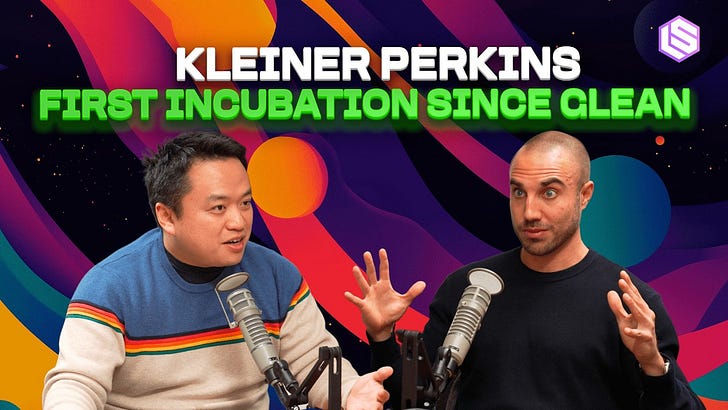
Latent Space: The AI Engineer Podcast
AI to AE's: Grit, Glean, and Kleiner Perkins' next Enterprise AI hit — Joubin Mirzadegan, Roadrunner
01:09:43
Loading summary
Transcript285 lines
- [00:00]
Sam
During my sales career, probably the number one thing that used to break my back was that the underlying software with like Salesforce, CPQ and others just to like create a quote, get it approved, is horrific. Like you think if you think you've seen bad software, you haven't until you've seen a 30 second loading screen. To get from one page to another. When you're trying to close a deal with like two days left in a quarter. This is just like standard across the industry. So I worked at every job that I was ever at. I used to get yelled at because I would like be asking people to turn something within a day or two because I needed to get a quote out the door. I was like, oh my God. I actually think you can abstract away a bunch of the complexity with these LLMs. And it's an unstructured and structured text that you can reason with and do stuff with. Right. Like that's why coding is such a great use case. That's why Harvey is such a great use case because you have like all this case law and then you can point the LLM at it and you can reason with it. Then you build a bunch of enterprise features and functionality and workflows on top of that. This is a very similar problem in nature. And so that was like the light bulb moment of like, okay, I think we can actually build something better. I feel good. I feel comfortable in this seat. How's my levels? What's that?
- [01:22]
Fresno
How's my levels?
- [01:22]
Sam
Yeah, you're good. All right. I gotta ask you, how was the Zuck interview?
- [01:31]
Fresno
Yeah, it's very interesting. I'll be recording.
- [01:33]
Sam
Yeah, I just wrote.
- [01:33]
Fresno
Yeah, yeah, I think they kind of obviously had an agenda coming in which was basically to raise the profile of CZI and Priscilla Chan with Zuck being supporting character. Right. And I think they accomplished their mission. Because my quick hot take in a single sentence is if Priscilla Chan gets half of what she wants to do done, she will have more impact on humanity than Mark Zuckerberg. Facebook will just be a funding mechanism for the greatest bioresearch work done in human history.
- [02:08]
Sam
Wow. Were you nervous? You must be nervous.
- [02:12]
Fresno
I wasn't nervous because of the sheer amount of prep that the CZI people put into us. Honestly, low key to understand what it's like with the executive staff of a hundred billionaire. I've never dealt with someone like that. They are so good. They prepped us so well so that I felt like I knew exactly.
- [02:34]
Sam
You mean Zuck's team isn't randomly letting people walk in off the street and just ask whatever. Without any prevailing knowledge.
- [02:41]
Fresno
I feel I had to interview three times to get even in that room. So yeah, it was very fascinating. We were very honored to be picked by them because we're not a bio focused podcast.
- [02:49]
Sam
No, no.
- [02:50]
Fresno
But the whole point was to reach out to engineers and they're aware on the stronger footing.
- [02:54]
Sam
Yeah, that's awesome, man. I mean it feels like a breakthrough, doesn't it? You've had some studs on.
- [02:59]
Fresno
Yeah, we just had Fei. Fei Li today. Yeah, just release.
- [03:03]
Sam
You came from that well.
- [03:04]
Fresno
Labs. No, and then we just released it. Oh, you did?
- [03:07]
Sam
Oh, nice.
- [03:07]
Fresno
That was a couple weeks ago.
- [03:08]
Sam
Who else have you done?
- [03:09]
Fresno
There's a bunch.
- [03:10]
Sam
Greg Bachman, you've done some amazing people.
- [03:12]
Fresno
Is it surreal? Yeah, it's surreal for me who started out as just like an independent creator. Let's see where this goes to. Now we're legitimately in that tier. A podcast that gets invited to everything. So that is very surreal.
- [03:25]
Sam
Yeah, it's pretty exciting. Who would have thought, you know, I.
- [03:30]
Fresno
Mean, I think like for you, I've been following your progress for a while. I don't think when you were still like a CRO podcast. I don't think I was caught nod yet. But I think like anyone following top founders who really wants to get real stories, they eventually find their way to you and you get really good stuff. So congrats.
- [03:48]
Sam
I appreciate that. I. I think the transition from the CRO to the founder, whatever it happened like what episode 70 or 80 when I was like. Because it was only CROs for a while. The thing that I found refreshing, I'm curious if you've seen this, is that founders and CEOs have an authority to speak in a different way than somebody on the executive team where they can just talk. And so much of what I want to do is have an earnest and honest conversation. And it's harder to do that when you're thinking what is my boss going to think? Whereas if you're the founder, you can just, you can just speak.
- [04:30]
Fresno
I think. Yes. And it's also nice for distribution because obviously that's the more famous or public facing person. So people do want to tune in. So you probably caught my attention for one of those episodes. I don't even remember which, but you've had so many. And Even the non CEOs I think I would highlight for listeners your Emily Choi episode from Coinbase. Yeah, yeah. It's like so raw and so you went there with all the politics questions.
- [04:59]
Sam
Yeah, the first one. Yeah, yeah, yeah, yeah, yeah, I did. I appreciate it, man. As you know, it's a labor of love doing anything every week for six years. Yeah, I mean, I guess it started every other week and then it became every week after this transition from Chief revenue officers to CEOs. Yeah, exactly. Doing anything for that long every week, you better enjoy it.
- [05:24]
Fresno
Yeah.
- [05:24]
Sam
You know, like, I've always told myself, the minute I stop looking forward to sitting down with someone and talking to them is probably the minute the show should be over.
- [05:34]
Fresno
Well, it hasn't happened yet.
- [05:35]
Sam
Hasn't happened yet.
- [05:36]
Fresno
I was talking with Ali, one of your partners, and they said you even had to justify your purchase of a Rodecaster just to support your work. Doesn't Kleiner see the value in this?
- [05:47]
Sam
So in the early days when I joined Kleiner Perkins, I was quite young, and I was definitely figuring out what is going on in ventures.
- [06:00]
Fresno
Can you say a little bit what you did before?
- [06:01]
Sam
Yeah, I grew up in startups and then in sales and then had a great run. Those startups ultimately ended up getting acquired. The last one by Palo Alto Networks, which is like a big cybersecurity company. They asked me to move to the central US and build out their public cloud business in the central U.S. took that business from zero to quite a bit in a short period of time. Kleiner heard about the work that I was doing and then got in touch to see if there was an opportunity for me to kind of work with founders on. Once you've built the product, like, what do you do? Yeah, right. And I remember thinking at the time, like, no way. Like, venture. Like venture sounds amazing, but, like, isn't that the job that I'm supposed to do, like, at the end of my career? You know, like, this sounds incredible, but, like, maybe later on. So anyway, we got to talking and it became very obvious, like, there was a unique opportunity here. Fast forward. One of the things that ended up happening was I was working really closely with Arvind at Glean. It's actually the last incubation that we've done here, and Arvind is maybe the most genius product and technical mind that I've ever worked with. He definitely, I would say go to market is not native to him. And so he and I were doing a lot of work together to figure out, like, all right, we've built this incredible Glean product. At the time, it was called SEO or sio. I still don't know how to. I still don't know how to pronounce it. And we were running all these routes together of, like, I think you should do this. I think you should do this. And then eventually it became very clear to me that we actually need somebody to run the routes, okay? Because, like, I couldn't do it, and he couldn't do it. And so, long story short, I started figuring out, well, like, what leaders do I know. What sales leaders do I know. And for me, I didn't know that many relative to a bunch of other people that were doing the job that I was doing, who've been in the industry for 30 years, who are at the tail end of their career, who do have this, like, coaching tree of leaders. And so I couldn't really help him hire somebody. And I realized then that I needed an excuse to get to know people that I do not know today. And so that was the genesis was like, how do I figure out a creative way to get to know these chief Revenue officers and help them tell their story? You know, like, KP was like, you know, maybe prove it.
- [08:23]
Fresno
They came to you. You came to them. They came to you. Who? Kp?
- [08:26]
Sam
Oh, no. I went to kp and I was like, I think we should start a podcast that interviews CROs. And they were like, I mean, it was. Skepticism would be generous. It was. It was. You know, we don't do a lot of talking as a firm. We generally let our portfolio and our founders speak on our behalf. And so, you know, there's definitely, like, other venture podcasts. Most of them are, like, pretty cringe, if I'm being honest. KP was skeptical, and I kind of realized I also didn't do a very good job articulating what I thought it could be. So I recorded an episode anyway with my old boss at the time, and I sent it to some of my partners here. And I just said, hey, this is what it would sound like. If you're interested and I still have a job here, let me know. This is what it would sound like. And they were like, oh, this is actually better than we thought. They had to feel it. It's like a product that they had to actually feel. To Ali's point, we were like, all right, let's just do 10 and see how it goes. And then after 10, we were like, oh, this is actually kind of working. I'm getting to know these CROs. It's getting easier to get to know them. And then I made a commitment to myself that I was going to get to 100. Like, I just told myself, like, I will not make a judgment on what this is. Or isn't until we get to a hundred.
- [09:34]
Fresno
Yeah, it's the same. It's really weird that this number also appears when Marcus Brownlee talks about how to start being a YouTuber, because you just don't know what you are until you just give yourself the room to experiment.
- [09:46]
Sam
My observation is that I don't know if you feel this way, but, like, it's a very vulnerable feeling. Like, even if you're the one asking the questions, not answering the questions, you're really, like, out there. You feel very exposed.
- [09:59]
Fresno
Yeah.
- [09:59]
Sam
And the comments are a vicious place. And so I don't know, for me, I was like, all right, until you get to a hundred, you don't really know what the quality of the work is. And you kind of are making a pre commitment that you're going to tune out the noise, because otherwise you start overreacting to what any single person thinks about any given episode. And then usually I think that's why most podcasts, you know, don't make it past five episodes, is because people start to be like, oh, maybe it's not good. Like, they start reacting right. Each of these slights feels more real. And so that's why I made the. Yeah, that's why I decided to do it.
- [10:38]
Fresno
Yeah, you started audio only. Right. So you didn't. Well, the beauty of podcast is nobody can talk back in the comments because there are no comments, I guess, with audio. Itunes, reviews, or with audio. Yeah, right. Right.
- [10:49]
Sam
Yeah. Yeah, it was audio only. It was actually easier with. It was audio only.
- [10:53]
Fresno
Yeah.
- [10:54]
Sam
In many ways.
- [10:54]
Fresno
And not everyone has to be video.
- [10:56]
Sam
Actually, I think the core reason why we wanted to do video was it became very obvious. Like, for me, I listened to more podcasts than most. Like, I'm quite voracious about listening to podcasts. And I realized my behavior changed once I got YouTube Premium, where if you turn your phone off, you know, off or whatever, it's just. It's just noise. And then when you turn it back on, you. You flip the home screen up, it's video. And so I kind of wanted the multimodality, where, for example, if I'm cooking, you know, it's the video's open, or take a shower, the video's open. And then, you know, if I want to run or something, I just click it off. And then it's just the audio. It was, I think, more. More and more obvious to us then, I think, quite clear. Now, I suspect you'd agree that. That you need both.
- [11:46]
Fresno
You do need both. I think the question is can you. Can you just transition the video without any change in the format whatsoever? And I think that has difficulties for me. I notice anecdotally that. So, for example, there's a couple things, right? One, well, we are a technical podcast, so we can show code, we can show diagrams, we show demos of the product. And so do we spend the editor effort and money to put that into the video on the off chance that the 5% of our audience watching on YouTube actually sees it? I don't know. It's not like, super clear. The other more relevant thing is when you look at people like all in or Dorkesh, they start video and then they went audio or it's kind of like a video first mentality. And I feel like somehow when you start video first, it translates better to audio than the other way around.
- [12:37]
Sam
My only knock on video is that it's default more produced. And so much of what I want to do is just have a conversation. And the minute that you have cameras everywhere with lights all over the place illuminating something, it feels more noticeable to the guest. Do you know what I mean? Like, it just feels more produced. Therefore, they start to imagine themselves as they're like they're on tv. Here's what I want to sound like when I'm on a podcast, as opposed to here is what I just sound like, you know, And I think as soon as you see cameras and you just start acting differently, it's like, well, this is not how you are in real life. Like, what? You know, it's just a different thing. And so that's my one knock on the. On the video format.
- [13:20]
Fresno
Yeah, I noticed, you know, you also did the thing to me where you just start the conversation, right? You don't have a. Well, here's the intro, here's your birth story, here's your origin story, which I try to do sequentially a little bit, but that's one of your tricks, right?
- [13:33]
Sam
Well, I would say I go through an extreme level of detail to make sure that the guest feels very comfortable when they sit down. So one example of that is, you know, how you're greeted at the door. Water, all those things. The second is recording just starts. There is no like, okay, are you ready? Because the minute that somebody says, like, okay, are you ready? Go. You claim up, you're like, okay, I'm gonna be the guest that I want to be. It's like, you know, when you're sleeping at night before you go onto a podcast, you're like, okay, how am I going to sound? What am I going to say that's going to make me feel smart, you know what I mean? Make me sound smart. And so you start to build this like idealized version of yourself that you want to project to the world, which is like not real. And so start talking as soon as you sit down. The temperature of the room, like I like the temperature to be cold. I don't want people to feel like they're sweating or hot. Feels like kind of cool in here.
- [14:27]
Fresno
Right.
- [14:28]
Sam
The way that the lights are. You'll notice the lights are all up, not down. Like I, I think it bounces off. Yeah. I think it's important to not make it feel spotlighty.
- [14:36]
Fresno
Yeah.
- [14:36]
Sam
If that makes sense.
- [14:37]
Fresno
Yeah.
- [14:38]
Sam
The way that I do prep and then, and then for the guest prep, like for example, I will have read everything about them. Right. And so I'll build basically my own mental model of who I think they are. And then I'll spend the conversation kind of poking at that mental model. And then I never give the guest the questions because if you give the guest the questions, well, all of a sudden it's like a rehearsed set of conversations, which is not how real life goes. And so like I go through, I guess, kind of a lot to make sure that it feels real.
- [15:08]
Fresno
Yeah. It's funny because we get asked a lot for questions up front. For example, the Zuckpod was very, very, very well prepped and screened. Sometimes you just don't get to get the interview if you don't do that.
- [15:18]
Sam
I won't do it.
- [15:19]
Fresno
Yeah.
- [15:20]
Sam
I just won't do the interview.
- [15:21]
Fresno
Yeah, we're more flexible there. Um, okay.
- [15:24]
Sam
I guess if I had Zuck, okay. If I was like, if you told me, juvin, you can have Zuck, but he has to see the questions before I'd probably.
- [15:31]
Fresno
Because, like, look, the secret is the PR team is going to screen the questions. But you can go off script.
- [15:36]
Sam
Yeah.
- [15:36]
Fresno
You can ask follow up questions. Yeah. So it's really not that bad. That's true. It's really not that bad. That was create a corner. I do want to obviously get you on the sort of professional side, but obviously I love to indulge in creator corner. Come back to Glean. Glean is obviously KP's most recent incubation and success. It's done super well. What's something that you realized working Darvind, that made you understand, well, here's what works in applying AI to the enterprise or whatever. Like selling AI to Enterprise.
- [16:05]
Sam
Yeah. I think at the time, in the early days of Glean, when Arvind came to Mamoon, this pitch of doing enterprise search was like the eye roll of the industry. Meaning like if you ask any chief information officer, if you ask any venture capitalist, they've been hearing that same pitch for a couple of decades now where everybody has promised, Google included, like the best companies in the world that they're going to solve enterprise search once and for all. And so, you know, I give Mamoon a bunch of credit because he realized that if this problem is going to be solved once and for all, it's probably going to be somebody like Arvin that can do it. On the technology side like AI, this was whatever, 2019, 2020 18, 2019. This was not like LLMs had not been birthed yet. Right. And so I think in the beginning it was a pretty serious slog with Glean because you're asking these systems to basically crawl through an organization's entire corpus of data. Do it with all of the permissioning, do it with all of the auth, like this multi layered cake of protections to make sure that I never see what I'm never supposed to see. Right. Like I never see Swix's, you know, like comp data for example. And so getting that right is like insanely hard. Then let's just assume, which in Glean's case they did, that you get the technology right. Then you have to figure out how do you get past the like eye roll of all the people that are like just default skeptical.
- [17:51]
Fresno
Yeah. Like the category is just dead to them.
- [17:53]
Sam
The category is completely dead to them. Then you gotta figure out like how do you deploy that? Right. Do you deploy it on their premise? Do you deploy it in the cloud? All the security. Then you gotta go through an insane amount of hoops because this is like pretty sensitive information that you're indexing. So you got to go through all of that. I would say the thing about Glean is now it's become one of the like obviously great AI companies that's like in the heart of the hurricane back then it was like extremely unobvious. Extremely unobvious.
- [18:30]
Fresno
So, so let, let's. I want to double click on that and then because I feel like we just did the, the breath of the problem. But let's talk about getting past the categories dead sort of default rejection.
- [18:43]
Sam
Yeah.
- [18:44]
Fresno
So what do you do there? What do you, what do you learn?
- [18:46]
Sam
Yeah.
- [18:47]
Fresno
What did you try? And didn't work.
- [18:48]
Sam
The advantage that Arvind had was that he was previously the co founder of Rubrik. Yeah. So he noticed this problem at Rubrik, left Rubrik to start Glean and. And he basically built Glean for Rubrik. Right. And the bet that he was going to make was like rough and tumble. What Rubrik wanted is probably what the rest of the world was going to want. So it was like their core design partner. So I think like he had access to all the right people, he knew all of the systems. That was like really important, like having these early, early believers that are willing to basically co develop this solution with you that you have like unfettered access to get things done. It was still an insane effort to do it, but I think it made it a lot easier. And that way at least you can show, hey, this is like working in production for somebody. Yeah, right. I'll pause there. Does that make sense?
- [19:41]
Fresno
Yeah, it's a design partner process.
- [19:43]
Sam
Yeah.
- [19:43]
Fresno
I think it's a pretty common go to market for early stage enterprise, I guess.
- [19:47]
Sam
Right. Like that's your ability to communicate what have you built and then how do you get that through an organization? It's like, it's like passing a bill through Congress. Right. Like you, you have this thing glean and you got to get all of these stakeholders inside, a customer aligned, get them all up to speed on like what's in the bill, like the product. Make sure everybody else like you're helping them manage their own process and organization. Right. It's no joke. It is no joke. I don't think people realize how hard it was back then.
- [20:22]
Fresno
I think it still is very hard. And what's weird is you have a special expertise. I think the engineers that are listening maybe don't have the appreciation of the work that this involves. It is a little bit of almost like a military mapping of the organization that you have to sort of understand who your champions are and where the resistance is and how you want to sort of prosecute a campaign to go to market, I guess in a very, very targeted way.
- [20:53]
Sam
I think if you're an engineer, it's even harder now than it used to be. And the reason for that is this technology is so new for organizations that they both have to figure out how do I use LLMs and AI within my own org and how do I use your product within that ecosystem. Right. So like they're first trying to figure out how do I use the like underlying sand that's changing underneath it and then how do I use your product on top of like quicksand. Right. That's like a really hard problem. Which is why you see so many companies Doing like this forward deployed engineer motion where what they're going in and doing is saying okay, number one, like here's how we think about LLMs and where you can get best use of it. Number two, here is this engineer that we're going to forward deploy into your environment that we're going to like basically like co develop this solution custom fit for this Org so you have to do like a lot of hand holding and the reason is because like we're just so early to AI right now that like of course you have to do a lot of handholding. Like of course you have to like surround these customers with a bunch of technical resources to like make it successful.
- [22:01]
Fresno
Yeah.
- [22:01]
Sam
Are there regrets? Like buckets of regrets that you have?
- [22:04]
Fresno
There's also like the. Did you spend your life working on things that you thought think you care about that you're like yeah. I mean, you know, even if the finances didn't super work out, I'm still happy I worked on it. If I did not like the mission or the job or like the people I worked with, that would be a bigger regret than the pure finance side. Obviously finance does matter. I always think about it as like, well, in terms of ranking, you should probably put people, products and money in.
- [22:34]
Sam
Sort of roughly that order if you're evaluating a company.
- [22:36]
Fresno
Yeah. As an employee obviously if you, if you product money.
- [22:41]
Sam
Okay.
- [22:42]
Fresno
Because product is either the shift in people and then the money. If. If the first two don't really work then basically no amount of money will really make up for it.
- [22:53]
Sam
Yeah. Okay.
- [22:54]
Fresno
Right.
- [22:55]
Sam
I can buy that Stack rank. Yeah, I would maybe re. Swizzle it a little bit, but I could buy that. Yeah. Like maybe I would say like people and then I would double people. Like I would probably add it again and then maybe market product money.
- [23:09]
Fresno
Yeah, market's really good. Well I guess maybe bundle market with product or just assume that market is given. I only work in devtools, but yeah, that's an important distinction coming back to you. Or just this is general learnings from kp. Before we go into Roadrunner, I just wanted to also touch on the other conversation that you had with Varun from Windsurfing, which I really enjoyed. Shout out to him. He's going to listen. Obviously.
- [23:34]
Sam
Love that guy.
- [23:35]
Fresno
Another interesting company that I was finding parallels to Glean in a sense that kind of you have to just get people to hand over their entire code base and a very tough go to market. I've heard from multiple Windsor folks that you went there and did sales training Cheerleader sessions.
- [23:54]
Sam
What is it that you do at Windsurfer in general?
- [23:57]
Fresno
At kp you use Windsurfer example, but use that to tell the story of KP. Of yeah.
- [24:03]
Sam
When I joined six years ago, my charter was kind of twofold at KP. Number one was, hey, we have this group of CIOs and customer networks. Can you help us manage it? Right. Number two was, hey, our founders need a lot of help on sales and distribution where you can, can you help them there? That was like the core charter. Right. Then I realized that in order to help founders with go to market, like we needed to help them hire. So that was the excuse for the podcast. Right. Was like, all right, I need an excuse to get to know these people so I can help these founders hire great CROs. Then that all started to work and we were like, great, let's double down on helping founders with sales. So we hired somebody on my team, Liam. Then we were like, great, let's double down on helping folks like Varun get access to world class customers. So we doubled down on that and hired. Hired somebody else and we're like, great, let's help founders with building their demand gen funnels and a bunch of stuff on the marketing side. Okay, hire Suzanne. So that was kind of the first three years was like how do we like KP generally invests in technical founders. That's like I'd say a majority, not all, but a lot. And those technical founders are generally exceptional at product and eng and usually have never closed a deal before or usually have never created like a pop of funnel, like demand flow. Right. And so we wanted to as a firm really help that muscle for KP founders.
- [25:47]
Fresno
Okay.
- [25:48]
Sam
Like Varun is a great example. He's an amazing engineer, but like he's never had to actually build the machine that is sales and marketing.
- [25:58]
Fresno
I think this is something that people don't appreciate about Windsurf is that they look at the product, they understand it's agentic ide. But actually there's a sales machine that is one of the best I've ever seen.
- [26:09]
Sam
Yeah.
- [26:09]
Fresno
And you helped to build it. So I'm like, well tell me more about it.
- [26:13]
Sam
I think.
- [26:14]
Fresno
And maybe we can quantify as well. Right. I think like something like 0 to 100 million ARR in seven months, something like that. Eight months.
- [26:22]
Sam
It was the most torrential growth I think I've ever seen in a KP company. It was insane. That's a high bar because it was insane.
- [26:31]
Fresno
You have some pretty good companies.
- [26:33]
Sam
It was insane.
- [26:34]
Fresno
Yeah. Tell Me more.
- [26:34]
Sam
We're seeing companies like Harvey and others doing. Following a similar path. But, I mean, you know better than anybody, like, coding is an incredible use case for AI right now. Right.
- [26:47]
Fresno
But I don't expect, like, government Fortune 500 to adopt at this kind of rate. And that's why I was seriously miscalibrated on. Like, I was with them. I did a podcast with them on the day of Windsurf's launch. And even then I was like, I don't know. This seems like a cursor clone.
- [27:02]
Sam
I think what Windsurface got right was probably a couple of things. The first was a commitment from the founders that they want to both build Google Class product and Salesforce Class distribution. Yes. Like, it was a true commitment from the beginning. And most founders. Okay, a lot of founders will say the product will sell itself as long as we build a good enough product. People will come.
- [27:30]
Fresno
They'll come. They pay the $20 a month.
- [27:31]
Sam
Exactly.
- [27:32]
Fresno
And then they'll. They'll just love us so much. We'll do. And magically upgrade.
- [27:34]
Sam
Exactly. Which usually doesn't work that way. So that was like, I think, number one, was like, a real commitment to doing it up front and knowing that if you can marry those two things, like, it's magic. Okay. I think the second was that they were in a great market that was getting pulled. Generally speaking, the coding market still today is just getting dragged by the industry because it's such a good use case. Engineers are expensive. Having a copilot for them is like, makes a lot of sense. The technology is there to be able to take the structured nature of code and reason with it, to then produce outputs that are great for. For engineers. So, like, that was kind of number two. And then I think the third was probably just like, they moved fast. They hired great and they hired fast.
- [28:20]
Fresno
Yeah. Were you involved like Graham Jeff, I.
- [28:24]
Sam
Would give more credit to Liam on my team, who is, like, intricately involved in building out that entire go to market. That team, I guess, is now at Cognition. At Cognition. So you've seen it firsthand.
- [28:36]
Fresno
Yeah, no, like, it's no joke. This is why, like, I mean, I. I put it as. As part of my, like, why Cognition thesis. Core cognition, Devin. Cognition is very good at product and inch, but they didn't really have that much of a sales team. And here's the most cracked sales team I've seen in coding, at least in devtools. And you just bring them together. How hard can this be? This is a really good formula for success.
- [29:02]
Sam
Yeah. I Don't want to understate how serious Windsurf was about distribution, not just product. The lesson that I take away from them is, is like they were as serious about building an incredible product as they were about building incredible sales and go to market.
- [29:22]
Fresno
Yeah.
- [29:22]
Sam
And it's easier said than done.
- [29:25]
Fresno
Yeah. You can't be serious about everything and everything's the number one priority. That's right. That's right. What the hell. But they pulled it off, which is impressive. The one anecdote I guess I will share on the distribution side is they're the first company I've seen with like a real one floor of it is just dedicated to their video production. One for the sort of office down in Redwood City. And I've never seen that. I'm like, you're a pretty young company, you're mostly developer tools. But here's a whole studio set that you can do anything out of and make it interesting on video. And it's because you really care about getting this across even though you're just selling software.
- [30:02]
Sam
Totally.
- [30:03]
Fresno
I'm sure Glean doesn't have it. I don't think I've seen a video from Glean that's not just a screen share.
- [30:08]
Sam
Totally.
- [30:09]
Fresno
Okay, give me one more thing on just how do you hire a sales team like this? We have founders listening. They're building interesting AI products. They don't really know how to go to market. Do you have to offer an arm and a leg to hire your first sales leader? Do you have to only work with Kleiner to do that? What is the actual principle that you advise founders to follow?
- [30:30]
Sam
I'll give you some anti patterns. The first is do not just go on their LinkedIn and look at all the fancy logos that they have gone and worked at and immediately assume that because they were at Snowflake or because they were a databricks, they must be good for your AI company. It just doesn't work that way. In fact, in many cases it's the inverse is true. Where if you had to sell the number three product in a market and and you had to fight tooth and nail and you were still successful there, you're probably like if you go to a great company going to have a much higher proclivity to do well. Right. Whereas if you were, I don't know, if you joined Snowflake at 100 million of ARR and you join like their enterprise team in the Bay Area, it's like yeah, I get it. But like that's not that impressive. No offense to anybody that Joined Snowflake at that time. There are some diamonds in the rough, so I think that's, that's one.
- [31:29]
Fresno
Well, it's like more like they're a fit for exactly that scenario if you're in that scenario.
- [31:33]
Sam
That's right.
- [31:33]
Fresno
But you're not.
- [31:34]
Sam
That's right. That's right. Especially for startups, right. The problem with that is that you have to actually interview them. Like, like you can't just see what they did on their LinkedIn profile and know if they're good or not. Like, you have to like actually dig in. And even more, it's not necessarily all of the things that they have actually done that make them good because you're hiring for potential. It's like all sorts of intangible things that you have to like, feel. Right? Like all the same things that we would, you know, want to feel with a founder, right? Like, do they have a chip on their shoulder? What are they motivated by? Is it money? Is it, you know, living in the shadow of their brother or sister? Is it that they grew up in, you know, a first generation immigrant household? Whatever it is, right.
- [32:21]
Fresno
So, but you go really deep on.
- [32:22]
Sam
The background, really deep on understanding, hey, there's going to be a million things that go wrong here when they do, what is the driving force that's actually going to push you over the hump? And especially in sales, like, you get told no way more than you get told yes. After you get told no enough times, internal, some like flame within needs to continue to burn to continue to push you. Right? And hiring for that, like, this is why like every exec, recruiter and everything is like, they've got it so wrong in most cases because they just go to the fanciest LinkedIn profile, right? And are like, oh yeah, this person has like all of these great logos. This is the person they should hire. I'll give you an anecdote inside the KP portfolio. Okay, our top eight companies. Let's take five exec roles across the top eight companies. Companies like Rippling and Glean, okay? 38 out of 40 of those roles, okay, those executives report to the CEO for the first time in their career. Okay, so what does that tell you? Like, well, generally it's like their experience is not the thing. Like, it's the context that they've built. It's the trust that they have. It's their ability to like learn fast and grow with the company. It is not like, what have you done at your last five companies? Does that make sense?
- [33:45]
Fresno
Yeah, it totally makes sense. It's very first principles thinking is the way that Scott Wu would put it.
- [33:50]
Sam
Yeah. So I'd say that's like probably one, one big failure mode. I think the other, especially in AI today, is that the bar for how technical you are is going up. It's just going up default.
- [34:05]
Fresno
So salespeople gotta be technical.
- [34:06]
Sam
Much more technical.
- [34:08]
Fresno
That's a tough one.
- [34:08]
Sam
Like more technical than they used to be.
- [34:10]
Fresno
Yeah.
- [34:11]
Sam
And what do I mean by technical? Like, you don't have to, in my opinion, understand like every intricacy of the transformer. Like exactly the transformer. But you should be able to go over to an engineer's desk and ask the right questions to get a depth of understanding that you can actually communicate and articulate effectively to a customer. Right. And I think like that matters a lot. That matters a lot. And so that bar has started to raise more and more for me on can you actually describe the product and what you do and how it fits into a broader ecosystem without relying on some sales engineer to do it for you?
- [34:52]
Fresno
Yeah, but in an interview, sometimes you just don't get that because that's what sales training is for. People prep battle cards, they get time with the product, they get time with the founders, then they get it. Right. It's hard to get that in the interview.
- [35:07]
Sam
Yeah. But it's not hard to look at somebody's background and understand were they willing to do that? Did they actually want to do that?
- [35:15]
Fresno
What's really funny is, well, one of my core memories as an engineer learning the ropes in startups was our new head of sales coming in at Netlify, which is a KP company, coming in, saying, I was very stressed. I was like, well, our competitors have these, these, these, these things. We need to match them and exceed them. And, and he's like, nope, that's engineering thinking, give me anything, I'll sell it. And I was like, wow, that's a good sales guy. But I think to some extent, sales guys, salespeople who can sell regardless of the product, that's the old school way kind of where they just know how to do the steak dinners and golf things and whatever else they do to make their number versus now, I think the rise of the more technical sales hire who really has to care actually about the product and explain and get, and get in the weeds with people. I think that's, that's the shift that I'm seeing.
- [36:07]
Sam
I'll add one more thing that really, really matters. Have they worked at a company that is similar in size?
- [36:16]
Fresno
Yeah.
- [36:16]
Sam
So for Example, if you're a seed or series A founder and you're evaluating sales leaders and AES that have only been at companies that have done like 50 million or more of ARR when they joined, it's probably going to be really difficult for them. And the reason for that is because they've had a brand their entire life. They've had inbound leads that just come to them. Right. They, they generally can like lean on the credibility of the company to be able. They've had a playbook that they just have to execute and run. Right. So there's like all these things that make the feeling of being. Call it like first sales leader. First, first ae where you're way more of an artist than you are like a scientist. Like it's not this medic type playbook in the very beginning. And then when you get to like where Windsurf was or is now, it's like very systematized. Right. It is a machine so much.
- [37:13]
Fresno
There's boot camps, there's battle cards, but.
- [37:15]
Sam
In the early days, like it is, it's creative ways of getting something done. It's creative ways of getting something done. And it just looks more like art than it does in science. And so if you've never had to do that before, it's going to feel quite foreign to you.
- [37:31]
Fresno
Yeah, it really is. But this is why, you know, people with more experience can come in and show us the ropes.
- [37:39]
Sam
Like, by the way, I would not probably be a good salesperson at Windsurf today. I just probably like I am not deep enough in the products execute this like perfect playbook that was handed to me where I'm like qualifying criteria per letter of the playbook. You know, this is not my thing.
- [37:58]
Fresno
You know, But I think you kind of made a good fractional sales leader, I would say.
- [38:05]
Sam
Yeah.
- [38:05]
Fresno
Because people still talk about you internally. I don't know what you did. You just did like motivational sessions or something.
- [38:14]
Sam
Honestly, they did most of the heavy lifting. I probably like went in there and did some like random rah rah stuff. Yeah.
- [38:21]
Fresno
And then. Which they need.
- [38:22]
Sam
And then introduced Varun to a bunch of. A bunch of customers. But the KP team, my team did majority of the heavy lifting. And so I give Liam, Lauren, Suzanne a bunch of credit for the work that they did there. Yeah.
- [38:35]
Fresno
Okay, so now we come around to your current thing. Few months ago, I think two months ago, you sat down, you told me, I'm working on a new thing and it's like super stuff in secret, but it's going to be the hottest new KP incubation since Glean and I'm super interested in it. All I know is it leans on basically everything you've done, everything we talked about. But can you introduce Roadrunner and the thesis?
- [39:01]
Sam
I would say you're right. Like during my sales career, probably the number one thing that used to break my back was that the underlying software with like Salesforce, CPQ and others just to like create a quote, get it approved is horrific. Like you think if you think you've seen bad software, you haven't until you've seen a 30 second loading screen to get from one page to another when you're trying to close a deal with like two days left in a quarter. Okay? And this is just, this is just like standard across the industry. This is how it works. It's how it worked at every job that I was ever at. I used to get yelled at because I would like be asking people to like turn something within a day or two because I needed to get a quote out the door. It happened when I was leading teams. They would always be getting yelled at because they were trying to move too fast for these systems to work. Okay. And the reason the underlying systems do not work is basically pricing models went from a world where it's like, all right swix, like you want to get a Netflix account, you have like one seat you that maps to one person, okay? And then it's like 1099amonth, very simple, right? Then you're like, okay, actually I want a family plan. Okay, well now you can add five people, no more than that and it's like 8 99amonth. That's like how pricing models have generally worked in the B2B context. It's like I want to sell a thousand licenses of, you know, pick your product LinkedIn, right? That Maps to a thousand people at an organization.
- [40:32]
Fresno
Okay?
- [40:33]
Sam
What has happened is that we have now done, you know, like companies have like 30 products more 50 and 100. In some cases those products scale by volume and then there's discounts associated with them. Then you have to do renewals, then you want to do early renewals, then you want to do expansions, then you want to do them across like 15 different product lines, right? So the complexity is just starts like increase exponentially. Then you're like, actually I want to just, I want the customer to pay as they go. That may be how you guys are using, how you guys are selling today. It's like, well, I actually just like, like make sure they pay A minimum amount and then anything above that we'll just bill them. Right? It's like how data breaks.
- [41:14]
Fresno
Very custom function.
- [41:15]
Sam
Exactly. Like that's how a lot. Like that's how cursor and others are too. It's like amount of tokens that I consume, just pay, just bill me for that. So like these pricing models have gone bananas. Okay? And by the way, this has barely even started. And the reason it's barely even started is like with AI, all of these pricing models are minimally going to start to look like consumption based pricing. Right? That's like how you.
- [41:35]
Fresno
Because of tokens.
- [41:36]
Sam
Exactly. That's how you consume anthropic and that's how you consume OpenAI.
- [41:40]
Fresno
Yeah.
- [41:41]
Sam
And so the problem is about to get way worse. Okay. And so it was a problem that I kind of like was feeling because I was like, oh, the underlying data model is just breaking. Because 20 years ago Salesforce CPQ was not designed for like all of these permutations.
- [41:57]
Fresno
Right.
- [41:57]
Sam
It was like a static world where one person is a Netflix license. The most you could do is a family account. Right?
- [42:03]
Fresno
Yeah.
- [42:03]
Sam
Okay, so that happened. Then I joined KP and Lauren on my team and I started a group of tech CIOs. 35 tech CIOs, okay. Companies like Uber and Box and others, okay, that meet twice a year. And this was like four years ago. So like pre alarms, pre anything. I. I asked them, what is the number one problem that you have in your company right now? So I was at a dinner with like five CIOs and they were like, CPQ. And I'm like, no way. And they were like, no, I'm not kidding you. They said, we are getting yelled at by our chief revenue officers and salespeople all the time because the underlying software that we're delivering to them doesn't work. Fast forward six months later, we have a second dinner, okay? Different group of CIOs in this. In this network.
- [42:55]
Fresno
Okay.
- [42:57]
Sam
So Now I'm with five other CIOs. I ask them, what's the number one problem you have in your company? All of them said the exact same answer. And I was like, whoa. Like that's pretty rare. Like you just don't. Pain does not grow on trees like that. And so we as a firm got very excited because we were like, it's pretty rare and unique to have this many customers that have this bad of a kind of uniform pain.
- [43:22]
Fresno
Yes.
- [43:23]
Sam
So we did a full market map. We were trying to invest in a company, didn't find Anything compelling, okay? Just like, could not find any great companies. Okay. Then GPT 3.5 comes out and I was like, oh my God. I actually think you can abstract away a bunch of the complexity with these LLMs. And it's, you know, unstructured and structured text that you can reason with and do stuff with, right? Like, that's why coding is such a great use case. That's why Harvey is such a great use case, because you have like all this case law and then you can point the LLM at it and you can reason with it. Then you build a bunch of enterprise features and functionality and workflows on top of that. This is a very similar problem in nature. And so that was like the light bulb moment of like, okay, I think we can actually build something better. Then I started asking myself, well, like, why is nobody, like, why is nobody fixing this?
- [44:18]
Fresno
So in those dinners.
- [44:19]
Sam
Yeah, why is nobody fixing this? Right? Like, that's the question. Like, why has the incumbent salesforce, anybody else, not fixed this? Why is this still an issue? Okay, the reason is because all of these tools were basically built in a pre LLM era. Their data models are broken because they did not see consumption. And a million SKUs and the Sprawl that comes with that coming, in order for them to basically build a product that handles all of the complexity and permutations, they have to rebuild their entire data model and architecture from the ground up, which is the same thing that basically most incumbents have to do today, right? Which is why there's like so much frenzy around early stage startups in vc. Because in order for an incumbent to go do what like a Harvey is doing, you have to literally rebuild that company from the ground up. Like, you have to build the entire architecture differently. Like, it reminds me when I was in the public cloud, like my career was in the public cloud. Before this and the very early days, everybody was moving from on Prem to awb.
- [45:25]
Fresno
Okay?
- [45:26]
Sam
And initially everybody was like, great, we'll just lift and shift our application and just throw it into the public cloud. And all of a sudden you realize like, oh, no, like S3. But S3 buckets can just like disappear, right? So, like, no, well, you actually have to rebuild this stack cloud native from the ground up. That's like the same thing that's happening in AI today. And so that's like the classic innovators dilemma, right? Which is like, what do you do?
- [45:50]
Fresno
Yeah, do you rearchitecture or do you wait?
- [45:53]
Sam
Okay, so that happened. Then I come to find out, okay, in this Case Salesforce, which is like the gorilla in the room. They have like 95% market share, they have end of lifed their CPQ solution and, and they are making everybody move to a new product. Okay, so they are trying to do this. That product does not exist yet. If it does, it's incredibly flimsy. We've talked to some of the people that are trying it right now. And so we basically have a two year window where we have to beat them to the punch. And we love, we love that. And the reason we love that is like, boy, would I rather compete with like whatever a hundred thousand person salesforce that I don't even know what kind of engineers may or may not still be there versus like OpenAI. That's who we want to out Sprint. Then I started asking myself, well like, why hasn't anybody done this yet? And the short answer is one, I don't think the technology was there. And the second, going back to your earlier question, swix is this is a very complicated go to market and distribution question. It is up market. The problem is more upmarket because that's where the complexity is. And, and in order to like do something elegantly upmarket, you need to like know what you're doing in the enterprise. Right? And it just so happens that you need early believers like Glean had with Rubrik that are willing to take a bet with you in a like design partnership to co develop it with you. And it just so happens, going back to our earlier conversations, that episodes one through 80, we're interviewing CROs. Exactly who are the people that have the pain?
- [47:31]
Fresno
You've been preparing this the whole time.
- [47:32]
Sam
The other thing that I was like responsible for the KP was like these CIO networks, who are the ones responsible for delivering software to these people to alleviate their pain. And so it's like I just so happen to know basically all of the key stakeholders in this problem.
- [47:48]
Fresno
So you're the guy.
- [47:49]
Sam
So actually at that point I was like, oh man, like, do I really want to? Like, life's pretty like KP life's, you know, like I have, I know I have seen what a company, what it looks like, the bite out of your life that it takes to like build a company. So anyway, point being, after talking with my partner at home and like understanding like, is this a commitment that we're willing to make? And talking to my partners at Kleiner Perkins, like folks like Mamoon and Ilya, to be like, hey, if we do this, like, I think, I think I have to do it Like I don't think, I don't think it's going to really make sense for us to hire somebody off the street right now. And then I'll build a co founding team that is like technically excellent and world class. So anyway, that was the thing, or I should say that million series of things that tipped us over the edge.
- [48:50]
Fresno
Well, where are you today? What are you ready to share in terms of what the product is, the people you're working with, the problems you solved?
- [49:00]
Sam
Yeah. So I will work backwards from the list that you used of how you would evaluate companies because it's the same thing as me.
- [49:08]
Fresno
Wait, money first. All right.
- [49:10]
Sam
Team first.
- [49:11]
Fresno
Okay.
- [49:12]
Sam
Oh yeah, team was your first, wasn't it?
- [49:13]
Fresno
Yeah, but you say you said backwards.
- [49:14]
Sam
No, no, work. I'll work top down.
- [49:16]
Fresno
Okay.
- [49:17]
Sam
Team first.
- [49:18]
Fresno
Yeah.
- [49:19]
Sam
We're at nine people today. Two co founders, AJ and Eugene. AJ went to Caltech at 15 and finished second in his class. Like I was in diapers when he was in school. It was absurd. Met Eugene his first day of school. They've been working together basically ever since. AJ went to Robin Hood, Eugene went to Meta, they went to NASA together, built a bunch of the software for the rover, the Mars rover. Then they started a company together called Athena, which was an LLM for college students to send their applications. It would grade it, tell them how is it all that. Then they realized like the TAM or end market of Edu is not that compelling.
- [50:03]
Fresno
Depends. Like some. It depends.
- [50:05]
Sam
They were not that inspired by it. They wanted to go build if you're.
- [50:07]
Fresno
Caplan, like you can do a sustainable business. Yeah.
- [50:10]
Sam
They wanted to go build a giant company. They independently found this problem. Independently, Got excited about it.
- [50:18]
Fresno
Salesforce cpq.
- [50:20]
Sam
How do you deliver better software for AES? Yeah, cpq.
- [50:23]
Fresno
Okay.
- [50:24]
Sam
Because they were asking their founder friends like what's the number one problem at your company? And they kept answering this question. So anyway, then we met. It became very obvious that what I had was like unfair distribution. An understanding of the problem coming from sales and what they had was extraordinary technical chops.
- [50:44]
Fresno
So anyway, that's team.
- [50:46]
Sam
That's team plus some killers across the board. By the time this comes out, we'll have soft launched. The only other interview that I'm doing besides you is where Mamun interviews me on grit. Where we'll talk, we'll talk about it. We're co developing the solution with design partners. I was very inspired by what Glean did. So Glean built for Rubrik. We're building for four design partners. Shared Slack channel. Weekly standups like we are taking the same bet that basically Glean made, which is that what these four design partners want is probably going to be what the rest of the world wants.
- [51:22]
Fresno
Do you want diversity in those four? Like, you know what I mean?
- [51:25]
Sam
What you really want is we had to make sure that our data model is infinitely flexible, that we don't run into the next permutation that we haven't seen. And so what you want are the hairiest design partners that have every skew, hardware, software, SaaS, consumption. Like you want the mess to throw that at your data model to make sure that nothing tips it over. And so those are the types of design partners that we wanted. And it's helpful. Like I know the cio, I know the CRO, in most cases, I know the CEO. And so like you don't have to deal with the like normal big company BS of like legal and procurement and all these things. They can like, you know, help shepherd you through the org.
- [52:10]
Fresno
Yeah, let's talk about data model. Did you get it right from the start or what was the biggest changes that you've done since you started?
- [52:19]
Sam
Yeah, the team probably spent only doing data model. That is it like late nights.
- [52:27]
Fresno
And what does do data model mean?
- [52:28]
Sam
Like for example, there are rules that every customer has where it's like if you're a AE in the UK, you can only quote certain SKUs that have certain discounts on them. Like you can only have so many. There's only a max discount that you can present a customer. Right. If you're doing a deal through a channel partner and you're doing it out of Canada, there's all these rules that are connected to it. So imagine like all of these SKUs, all of these rules, all of this thing is like this extraordinarily interconnected system that has to be accounted for. And so making sure that we threw as much of the real life information rules and permutations as possible to like not tip over the data model was incredibly, incredibly important. So like that's where we spent a large, large portion of the time getting right. Does that make sense?
- [53:24]
Fresno
Yep. And I also know that you know, best lay plans run into reality and then they get screwed up with the first contact. Right?
- [53:31]
Sam
For sure. Like you know, even if you get consumption right, for example, where you're like, all right, they can do it, how do you represent that on the ux, right? Or cognition or windsurf, like magic. And if you get that right, which is I think what we're about to get right Then you earn the right to go build a big company.
- [53:53]
Fresno
I like the way that you phrase that. I love earning right to do bigger things. Something that makes me uncomfortable with founders saying, oh, we'll build a compound startup as early as you are is, well, the ambition is very big, but have.
- [54:07]
Sam
You earned it 100%. Can I actually tell you one other thing that kind of annoys me? I think a lot of times in the Valley, founders will pretend like the mission that they have is, like, bigger than it is. For example, if you're doing what we're doing, I think we're solving a really important problem for a certain set of people.
- [54:29]
Fresno
Okay, high value people.
- [54:31]
Sam
Yes, yes. But, like, we're not helping a mental health crisis. We're not, like, feeding people in other countries, you know, like, we're not doing what. What the Chan Zuckerberg initiative is doing. And I think it's really annoying when people pretend like what they are doing is like this revolutionary thing. It's like, no, what you're doing is solving a really hard problem for a specific set of people. If you're able to solve that problem and those people are delighted, then you earn the right to go solve the next problem. If you solve enough problems in perpetuity, then you earn the right to go build the big company. And when you go build a big company, then you get all of the cool things that come with that. People taking on bigger roles and responsibilities than they ever had. Engineers owning new product initiatives, soup to nuts ICs that then become managers that have no business becoming managers. Of course, all the financial stuff that comes with that, in my mind, I'm like, that's a mission that I can get behind. You know, I still think the problem that we're solving is. Is interesting and cool, but I think it's really annoying when you're like, oh, my God, this is like the thing that I've been thinking about since I was 1 years old. And everybody else also has to feel like this, all right, I find that annoying.
- [55:46]
Fresno
Well, sometimes you have to just puff yourself up for the fundraise, but there's always like, sort of two versions of the story. AI Findings. We're an AI engineering podcast. We do care about how it's being utilized to transform, revolutionize things. I think you're going to find it in small little ways. But any surprises?
- [56:06]
Sam
I think if you dream, the dream where LLMs will be a superstar in this company is like, if you're one of our customers and all quotes go through Roadrunner, basically you can imagine a world where it just recommends just do this deal like, oh, you're doing a deal at Costco. Great. We just did a deal with Nordstrom that looks a lot like this deal. Okay. You should adjust these things and then deliver it this way. And so the system like proactively suggests. Exactly. The system will basically have all of the historical information about what have you done. And once it has all of that, it will then tell you this is how you should bundle it up. And by the way, today, that's all human in the loop today. If you're a new rep at Glean or a new rep at Cognition and you want to like put one of these deals together, you're like calling deals desk and finance. You're like calling the top AES at the company and be like, how do you even like put this together? Right? And then if you're using Salesforce cpq, which most people are, you like then go into like loading screen hell. Then you built a bunch of custom software on top of that because the data model doesn't work. So you have to like fitz around with it to like actually make it work. Like, it's a complete nightmare. And so that is where the magic of Roadrunner will come.
- [57:23]
Fresno
So maybe if I can abstract a little bit, you're kind of automating the deal desk and not the ae. You're augmenting the ae. You're improving, ramp up time for the AE or productivity of the ae.
- [57:35]
Sam
How would I describe it? I would say we are like, whose.
- [57:37]
Fresno
Job are you taking away?
- [57:39]
Sam
I would say very specifically, AES are quite expensive and they spend a ridiculous amount of time doing administrative work trying to get these hacky systems to go perfect. And right now, the amount of bouncing around and ping ponging that they have to do inside of an organization just to get a quote created and approved is a nightmare. We should solve that. And by the way, guess what? Deals desk and all these people should not be doing that either. There's way more strategic things that they could be doing.
- [58:09]
Fresno
Yeah, I mean, in Cognition it's just like a really active slack channel where everyone's just throwing stuff at each other all day long. It's a mess.
- [58:16]
Sam
Yeah, it's mayhem. Yeah, it's complete mayhem.
- [58:20]
Fresno
Interesting. Okay, so anything else you wanted to cover on just Roadrunner in general, like your vision? I think we covered a lot of it. Just any part of the story that you want to get on the record?
- [58:34]
Sam
No, I would just say like, we are not demand constrained. Like I know every customer and they're all like banging down my door right now. The only fight that I've ever had or have with my co founders is that I'm like, hey, these 10 customers want to come and join us and work with us. And they're like, we do not have engineering bandwidth. Our roadmap is being dragged out of us. It's very clear what we have to go do. There's no surprises from here on. The things that we need to go actually build. Obviously the strategy is the same, the tactics will bob and weave and so yeah, we're unique product an inch. We are meaningfully bandwidth constrained on amazing talent that wants to go through the grind of building an early stage company.
- [59:25]
Fresno
Yeah, well, we'll get you that. Klein Air is very good at getting that and I don't think there's any doubt there. Okay, so just zooming out a little bit. I was promised a bit earlier. You like running a lot, huh? Just tell me more about like just the general overall philosophy of high performance, right? I guess, kind of. What does that mean to you? I think we had this conversation about this. What does that mean to you? From like your personal life into work?
- [59:50]
Sam
I'll be like, I'll try and be tactical rather than abstract. So physically to your prompt on running, I work out every day no matter what. I first thing sweat every day. As soon as I wake up, it's either. So it's, it's pretty consistent. Mondays I bike up Hawk Hill, which is like over the Golden Gate and up into the headlands. It's like a nice way to start the week. I'll run twice a week. I'll usually lift weights twice a week, usually play a sport or something.
- [60:19]
Fresno
Oh, that's great.
- [60:20]
Sam
Basketball has been the sport of choice recently. Although every time I pick up a ball I'm like pretty convinced I'm gonna like, you know, like tear my ACL or something, you know.
- [60:31]
Fresno
Anyway, depends how hard you push yourself. Yeah, I guess you push pretty hard.
- [60:34]
Sam
Yeah, physically I, I will work out every day. Salad for lunch every day I've been doing, it's just easier. I've just found that if I can just do the same things over and over again, my life is just easier. I don't have to think about it. Like, for example, on the working out thing, it is way easier to know that I am going to work out every day rather than have the cognitive load of like, what days am I going to work out this year or when am I going to do it or like for lunch, I'm Just going to have a salad.
- [61:01]
Fresno
I have salads for lunch. Yes.
- [61:02]
Sam
There's no choice. I don't want to make the choice.
- [61:04]
Fresno
The way I phrase it, I think Tim Urban says this. It's much easier to do something 100% of the time than it is to do it 90% of the time.
- [61:11]
Sam
100%.
- [61:12]
Fresno
Right.
- [61:12]
Sam
Like, think about if you were deciding, I want to work out four days a week, then you have to figure out, like, what are you going to do?
- [61:17]
Fresno
Yeah. You know, did I skip yesterday? Does that mean I can skip today or.
- [61:21]
Sam
Yeah, exactly. And even to your question on, like, the style of workout, like, I'm just doing whatever I feel like besides Mondays, like, I feel like doing that day. And even if I go and, like, lift at the gym, it's just full body. Whatever I feel like is next. I'll compound every exercise and I'll just run through it. I don't have a set because I just want to reduce friction as much as I can. Just get those things done.
- [61:42]
Fresno
On a personal reflection, there's a real reason I'm asking this question, but just a side comment, and you can comment if you want. I feel like this is so important, like your personal health and your fitness and your peak productivity practice, that I find it interesting that VCs don't do that to their founders. Like, hey, I'm going to lock you in a room. Basically, only HF0 does this. Hey, I'm going to lock you in a room, make you eat healthy, make you take care of everything so you can go work on a company. Cognition has an engineering sort of basement, and I've advocated pumping oxygen into there because that is a very valuable thing to have.
- [62:21]
Sam
The problem is that it kind of has to come from within, meaning it kind of has to be a habit that you've had that you can then carry on to founding a company because, like, the amount of demand on your time, it's like a pie eating contest. And the prize is just more pie. And so, like, there is no limit to how much has to be done. And so I think I just got lucky where I had some of these habits before.
- [62:45]
Fresno
Yeah.
- [62:46]
Sam
And then I was able to just, like, carry them on. Otherwise, like, even now, I'm like, I feel very constrained being able to do some of these things.
- [62:53]
Fresno
No, totally. Kind of the real reason I was gonna ask was, you listen to a lot of podcasts while you're doing all this. What are your favorite other podcasts?
- [63:00]
Sam
Oh, man. Do you listen to your own pod?
- [63:02]
Fresno
Shoot us on Rex Yeah, I do. I'm very critical. I send notes to my editor, my co host. Yeah.
- [63:07]
Sam
I used to listen to everyone and then my editor was like. Because it was like before we would release, I would have like a litany of notes and eventually they're like, dude, we've been doing this for whatever, 200 plus episodes. Like, you don't have to listen to everyone and send notes. Like, it just bogs down everything. Just like, trust us. So I've also, I've created some space.
- [63:26]
Fresno
Yeah, right. Anyway, so I wasn't asking about our pod, but just like, just other pods that you enjoy and recommend to others. I'm just giving people reqs.
- [63:34]
Sam
I think some of o' Shaughnessy's invest, like the best are pretty good.
- [63:38]
Fresno
This whole thing with Colossus.
- [63:40]
Sam
Yeah, it's interesting.
- [63:41]
Fresno
Yeah.
- [63:41]
Sam
I think some of Joe Rogan and some of Tim Ferriss is good. Some. Some of Shane Parrish is good.
- [63:49]
Fresno
Yeah.
- [63:50]
Sam
Like, I have guests that I like when they interview them, but I don't follow. I personally don't follow any host religiously. Like, I get interested in guests and then I'll go down the rabbit hole for like, what shows have they been on? And I'll just listen to those. And then if I like the interviewer, then like, oh, this is a new show. Maybe I'll go check out one or two more. But I'll go like. Like, for example, like, I've gone as deep as deep can go on Elon Musk. Like, there's probably. I have probably listened to. And he does a bunch of them. You know, I've probably listened to a bunch of them. And if he's been on, it's not.
- [64:23]
Fresno
The easiest speaker to follow.
- [64:25]
Sam
No, it is a bit jumbled.
- [64:27]
Fresno
Yeah.
- [64:28]
Sam
So I'll go deep on a guest. I'll go deep on a guest.
- [64:32]
Fresno
Have you done speaker training? No, coaching. You know, we're considering that just because, you know, you basically do public speaking as part of your job. Right. And, well, you should probably get coaching for it, just like anything else.
- [64:44]
Sam
You know, my reflection, doing this with you now is that asking the questions is way easier than answering them.
- [64:53]
Fresno
And so how's it feel?
- [64:54]
Sam
I would say, I would say on the. You have way more control over a conversation when you're asking the questions.
- [65:01]
Fresno
Yeah, sure. I'm just loving stuff.
- [65:03]
Sam
Exactly. And you're usually Speaking Whatever, like 20% of the time. And the guest speaks like 80, 80% of the time. And you have a general sense of where you want to go.
- [65:11]
Fresno
I got the plan here?
- [65:12]
Sam
Yeah, maybe if I were to do more on this side of the table versus yours, I think speaker training might make sense.
- [65:20]
Fresno
Well, speaking comes in all shapes and forms, including running a company. So I do view it as a very general use case for me. I run a conference, and so I do the keynote every time, every conference. So it really actually does matter because I set the example for my speakers.
- [65:33]
Sam
My favorite definition of sales is an ability to transfer enthusiasm from one person to another. And I think that when you're recruiting, when you are on stage at your conference, speaking, when you're an interviewer or interviewee, when you go home for the holidays and hang out with your family, like, I think all of that. I really like this definition of, like, how do you transfer enthusiasm? And I think it has to be raw, and I think it has to be organic. I think that's, if I were to train or be trained, I would really try to get to the essence of how do I help transfer my enthusiasm about whatever it is that I'm talking about into those that are listening.
- [66:16]
Fresno
The challenge for you is you're pretty naturally good at it. So it's going to be hard to find someone who is better than you to train you. So appreciate a bit of a compliment. Speaking of definitions, my favorite closing question. What is the definition of grit to you?
- [66:32]
Sam
The namesake of the show came from Angela Duckworth's book Grit, who I had the honor of flying out to Pennsylvania and interviewing, which was amazing.
- [66:41]
Fresno
The same school. So the background also is that Penn invented positive psychology or pioneered positive psychology, and she came from that line of thinking.
- [66:50]
Sam
Yeah. And her definition is. I mean, she wrote a book about it, so it's hard to define it quite narrowly, but passion plus perseverance over a sustained period of time. And I think the natural tendency when you think about grit is, like, literally gritting your teeth, like, how do you just endure? And I think the operative word in her definition is passion. The way that I think about it is like, how can I put myself in positions where the thing that I'm doing, the thing that I'm working on, the job that I'm doing, the company that I'm building, the relationship that I'm in, how can I be in more of those situations where I really care? Because if I really care, then I can transfer my enthusiasm to others. If I really care, then it'll feel like play to me. When it feels like work to everybody else, if I really care, like in the podcast example, I'll just do it for longer than anybody else and just like out sustain you. But I think it's all because I really care. And so I think this idea of passion is probably the thing that I love most about her definition, which is like, I don't know, I just try and do things that I really care about and therefore it's just like it feels light for me and then I don't have to feel like I'm always gritting my teeth to do things that matter.
- [68:11]
Fresno
It's probably a superlative form of grit that really captures that kind of flow state grit or passion grit and whatever adjective you want to add to it. Totally. It'd be nice. But thanks for being on Lean Space. I feel like I've been a little bit experiencing the grid experience myself. And thanks for joining us.
- [68:30]
Sam
It was hard for me not to ask you too many questions. I know, I tried.
- [68:35]
Fresno
You get one, you get one. What's on your mind?
- [68:37]
Sam
Do you have a dream Guest?
- [68:39]
Fresno
Dream Guest, I would say is a supporter of ours that has promised to be on at some point. Andrej Karpathy. Yeah, he's been a mentor for a long time. He's a teacher. He's very authentic and very super knowledgeable and I think an inspiration for a lot of us who are trying to figure out from trusted sources the truth of what's possible with LLMs. And he's very autodidactic as well, which is something I strongly identify with. You don't really know something unless you've really taught it to yourself and built everything a version of it for yourself. And he does represent the simplicity and clarity that I want to see in the world that I try to represent within space.
- [69:25]
Sam
Really cool, man. I appreciate you doing this. First time the tables have been turned on me. Crazy experience.
- [69:32]
Fresno
Fresno mini.
- [69:33]
Sam
Thanks, man. Sam.