← Latent Space: The AI Engineer Podcast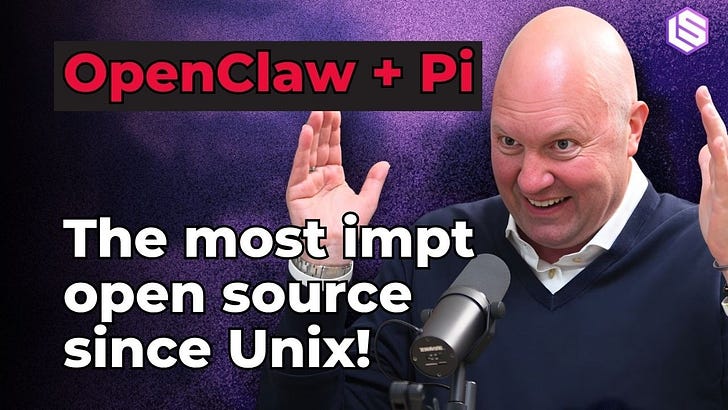
Latent Space: The AI Engineer Podcast
Marc Andreessen introspects on The Death of the Browser, Pi + OpenClaw, and Why "This Time Is Different"
01:16:20
Loading summary
Transcript990 lines
- [00:00]
Marc Andreessen
Something about AI that causes the people in the field, I would say, to become both excessively utopian and excessively apocalyptic. Having said that, I think what's actually happened is an enormous amount of technical
- [00:09]
Ben Horowitz
progress that built up over time.
- [00:10]
Marc Andreessen
And like, for example, we now know
- [00:12]
Ben Horowitz
the neural network is the correct architecture.
- [00:13]
Marc Andreessen
And I will tell you, like, there was a 60 year run where that
- [00:15]
Ben Horowitz
was like a, you know, or even 70 years where that was controversial.
- [00:18]
Marc Andreessen
And so, so the way I think
- [00:19]
Ben Horowitz
about what's happening is basically, I think, I think about basically the period we're in right now is it's, I call it 80 year overnight success, right?
- [00:26]
Marc Andreessen
Which is like, it's an overnight success because it's like bam, you know, chatgpt hits and then 01 hits and then, you know, openclaw hits and like, you know, these are open. These are, these are like overnight, like radical, overnight transformative successes. But they're drawing on an 80 year
- [00:39]
Ben Horowitz
sort of wellspring backlog, you know, of ideas and thinking.
- [00:43]
Marc Andreessen
It's not just that it's all brand
- [00:45]
Ben Horowitz
new, it's that it's an unlock of all of these decades of like, very serious hardcore research. If I were 18, like, this is 100. This is what I would be spending all of my time on. This is like such an incredible conceptual breakthrough.
- [00:54]
Podcast Host (possibly from 16Z or Lydian Space)
Before we get into today's episode, I just have a small message for listeners. Thank you. We will not be able to bring you the AI engineering, science and entertainment content that you so clearly want if you didn't choose to also click in and tune into our content. We've been approached by sponsors on an almost daily basis, but fortunately, enough of you actually subscribe to us to keep all this sustainable without ads, and we want to keep it that way. But I just have one favor to ask all of you. The single most powerful, completely free thing you can do is to click that subscribe button. It's the only thing I'll ever ask of you and it means absolutely everything to me and my team that works so hard to bring the inspace to you each and every week. If you do it, I promise you, we'll never stop working to make the show even better. Now, let's get into it.
- [01:45]
Podcast Host or Interviewer (possibly Alessio from Kernel Labs)
Hey, everyone. Welcome to the Lydian Space Podcast. This is Alessio, founder of Kernel Labs, and I'm. I'm joined by Sprix, editor of Late in Space.
- [01:51]
Podcast Host (possibly from 16Z or Lydian Space)
Hello. And we're in a 16Z with a. Marc and Giesen, welcome.
- [01:55]
Marc Andreessen
Yes, Yes. A and What? Half of 16? Something like that?
- [01:58]
Podcast Host (possibly from 16Z or Lydian Space)
A1.
- [01:58]
Marc Andreessen
Exactly.
- [02:00]
Podcast Host (possibly from 16Z or Lydian Space)
Apparently this is the final few days in your current office. You're moving across the road.
- [02:05]
Ben Horowitz
We have some projects underway.
- [02:06]
Marc Andreessen
But yeah, actually this is the original.
- [02:09]
Ben Horowitz
We're in actually the original office. We're in the whole thing.
- [02:12]
Podcast Host (possibly from 16Z or Lydian Space)
It's beautiful.
- [02:12]
Marc Andreessen
Great. Thank you.
- [02:13]
Podcast Host (possibly from 16Z or Lydian Space)
So I have to come out. This is a. You know, I wanted to pick a spicy start in October 2022. I just made friends with Run and I wanted to give him something to sort of be spicy about. And I said, it'll never not be funny that a 16Z was constantly going, the future is where the smart people choose to spend their time. And then going deep into crypto and not in AI. And that was in October 2022. And Rune says there was an internal meeting at A16Z to reorient around Genai. Obviously you have. But was there a meeting? What was that?
- [02:44]
Marc Andreessen
I mean, I don't. Look, I've been doing AI since the
- [02:46]
Ben Horowitz
late 80s, so I don't know.
- [02:48]
Marc Andreessen
As far as I'm concerned, this stuff
- [02:49]
Ben Horowitz
is all Johnny come lately.
- [02:50]
Marc Andreessen
Yeah, I mean, look, we've been doing
- [02:51]
Ben Horowitz
AI our entire existence. I mean, we've been doing AI machine learning deeply. We've been doing this stuff way from the beginning.
- [02:57]
Marc Andreessen
Obviously, AI is just core to computer science.
- [03:00]
Ben Horowitz
I actually view them as quite continuous. Ben and I both have computer science degrees.
- [03:06]
Marc Andreessen
Ben and I actually both are old
- [03:07]
Ben Horowitz
enough to remember the actual AI boom in the 1980s. There was a big AI boom at the time, and there was one under names like Expert Systems and the era of Lisp and Lisp machines. I coded in Lisp. I was coding in Lisp in 1989 when that was the language of the AI future.
- [03:24]
Marc Andreessen
Yeah.
- [03:24]
Ben Horowitz
So this is something that we're completely comfortable with and been doing the whole time and are very enthusiastic about.
- [03:29]
Podcast Host (possibly from 16Z or Lydian Space)
Is there a strong. Like this time as different? Because my closest analog was 2016. 17 milsors on the AI boom. And it petered out very, very quickly
- [03:39]
Marc Andreessen
just in terms of investment, sort of.
- [03:40]
Ben Horowitz
Sort of investment excitement.
- [03:42]
Marc Andreessen
Although that's really when the Nvidia phenomenon really, I would say it was in that period when it was very clear
- [03:48]
Ben Horowitz
that at the time the vocabulary was more machine learning.
- [03:51]
Marc Andreessen
But it was very clear at that
- [03:52]
Ben Horowitz
time that machine Lear was hitting some sort of takeoff point.
- [03:54]
Marc Andreessen
Well, and as you guys.
- [03:55]
Ben Horowitz
You guys have talked about this at length on your thing, but, you know, if you really track what happened, I think the real story is it was the Alexnet basically breakthrough in like 2013. That was the real knee in the curve. And then it was Obviously the transformer breakthrough in 17 and then everything that followed.
- [04:10]
Marc Andreessen
But you know, look, machine learning, you know, there were, you know, look, I mean, look, I've been working, you know,
- [04:13]
Ben Horowitz
I've been working with one of my, you know, kind of projects, working with Facebook since 2004 and on the board since 2007. And of course, you know, they started using machine learning very early and you know, have used it basically, you know, for like 20 years for content feed optimization and advertising optimization and obviously many financial services, many companies, many different sectors have been doing this.
- [04:34]
Marc Andreessen
And so it's like one of these things.
- [04:36]
Ben Horowitz
It's not a single thing. It's like layers, right? And the layers arrive at different paces, but they kind of build up. They kind of build up over time. And then look, in retrospect, it was 2017 was kind of the key point with the transfer transformer.
- [04:50]
Marc Andreessen
And then, as you guys know, there
- [04:51]
Ben Horowitz
was this really weird four year period where it's like the transformer existed and then it was just like, let's go.
- [04:56]
Marc Andreessen
Yeah, well, but between 2017 and 2021, I mean, that was the era of which, like companies like Google had internal
- [05:03]
Ben Horowitz
chatbots, but they weren't letting anybody use them. And then OpenAI developed chat GPT2 and then they told everybody, this is way too dangerous to deploy. We can't possibly let normal people use this thing.
- [05:15]
Marc Andreessen
And then you guys, I'm sure, remember AI dungeon. So there was like a year where
- [05:20]
Ben Horowitz
the only way for a normal person to use GPT3 was in an AI dungeon.
- [05:23]
Marc Andreessen
Yeah.
- [05:23]
Ben Horowitz
And so we would do this. You'd go in there and you'd pretend to play Dungeons and Dragons. In reality, you're just trying to talk to GPT.
- [05:29]
Marc Andreessen
And so there was this long.
- [05:33]
Ben Horowitz
Big companies are cautious. And the big companies were cautious.
- [05:36]
Marc Andreessen
By the way, it took open AI. They talk about this.
- [05:39]
Ben Horowitz
It took OpenAI time to actually adjust, kind of redirect their research path.
- [05:42]
Podcast Host (possibly from 16Z or Lydian Space)
I think it was at Rosewood. Right. The dinner that founded OpenAI was right there.
- [05:47]
Marc Andreessen
But that dinner would have taken place in 2018. The formation of OpenAI as late as 2018.
- [05:54]
Podcast Host (possibly from 16Z or Lydian Space)
Sorry, no, I'm wrong. They just celebrated a 10 year anniversary. So it is 2025.
- [05:59]
Ben Horowitz
Yeah.
- [06:00]
Podcast Host (possibly from 16Z or Lydian Space)
So 2015.
- [06:00]
Marc Andreessen
Yeah, 2015. Yeah, 2015. But then Alec Radford did GPT1 in
- [06:06]
Ben Horowitz
what, probably 17, 18. 17 18.
- [06:09]
Marc Andreessen
And then they didn't really.
- [06:10]
Ben Horowitz
And then GPT3 was what, 2020.
- [06:12]
Podcast Host (possibly from 16Z or Lydian Space)
20 2020. Because that became copilot immediately.
- [06:16]
Marc Andreessen
Even OpenAI, which has been the leader
- [06:18]
Ben Horowitz
of this thing in the last Decade even, they had to adapt and lean.
- [06:22]
Marc Andreessen
And so, yeah, I think it's just
- [06:24]
Ben Horowitz
this process of basically sort of wave after wave, layer after layer building on itself.
- [06:29]
Marc Andreessen
And then you kind of get these
- [06:29]
Ben Horowitz
catalytic moments where the whole thing pops. And obviously that's what's happening now.
- [06:33]
Podcast Host (possibly from 16Z or Lydian Space)
Is it useful to think about, will there be an AI winter? Because there's always these patterns, like, is this endless summer? It's something I constantly think about because do I just get endlessly hyped and just trust that I will only be early and never wrong, or will there be a winter?
- [06:53]
Marc Andreessen
So there's something about, say the following. There's something about AI that has led
- [06:56]
Ben Horowitz
to this repeated pattern. And you guys know this summer, winter,
- [07:00]
Marc Andreessen
summer, winter, summer, winter, summer, winter. And it goes back 80 years. 80 years.
- [07:04]
Ben Horowitz
So the original neural network paper was 1943, which is amazing that it was far back that long.
- [07:10]
Marc Andreessen
And then there was, if you guys
- [07:11]
Ben Horowitz
have ever talked about this on your show, but There was an AGI conference at Dartmouth University in 1956, 55, and they got an NSF grant for all the AI experts at the time to spend the summer together. And they figured if they had 10 weeks together, they could get AGI out the other end.
- [07:27]
Marc Andreessen
And they got their, by the way, they got the grant, they got the
- [07:28]
Ben Horowitz
10 weeks, and then 1955, no AGI.
- [07:32]
Marc Andreessen
And like I said, I lived through
- [07:33]
Ben Horowitz
the 80s version of this where there was a big boom and a crash.
- [07:35]
Marc Andreessen
And so there is this thing, there is something about AI that causes the people in the field, I would say, to become both excessively utopian and excessively apocalyptic.
- [07:43]
Ben Horowitz
And it's probably on both sides of the boom bust cycle. You kind of see that play out.
- [07:47]
Marc Andreessen
Having said that, I think what's actually
- [07:49]
Ben Horowitz
happened is just we now know in
- [07:52]
Marc Andreessen
retrospect an enormous amount of technical progress
- [07:54]
Ben Horowitz
that built up over time.
- [07:55]
Marc Andreessen
For example, we now know the neural
- [07:56]
Ben Horowitz
network is the correct architecture.
- [07:58]
Marc Andreessen
And I will tell you, there was a 60 year run where that was
- [08:01]
Ben Horowitz
even 70 years where that was controversial.
- [08:03]
Marc Andreessen
And we now know that that's the case. And so everything we're building on today
- [08:06]
Ben Horowitz
derives from the original idea in 1943.
- [08:09]
Marc Andreessen
So in retrospect, we now know that these guys were right. They would get the timing wrong and
- [08:13]
Ben Horowitz
they thought capabilities would arrive faster or it could be turned into businesses sooner or whatever.
- [08:17]
Marc Andreessen
But they were fundamentally, the scientists who
- [08:19]
Ben Horowitz
worked on this over the course of
- [08:20]
Marc Andreessen
decades were fundamentally correct about what they were doing.
- [08:23]
Ben Horowitz
And the payoff from all their work is happening now.
- [08:26]
Marc Andreessen
The way I about what's happening is
- [08:28]
Ben Horowitz
basically, I think about, basically the period we're in right now is it's, I call it 80 year overnight success, which
- [08:34]
Marc Andreessen
is like, it's an overnight success because it's like bam. ChatGPT hits and then 01 hits and then openclaw hits. And these are overnight, radical, overnight transformative successes. But they're drawing on an 80 year
- [08:47]
Ben Horowitz
sort of wellspring backlog of ideas and thinking.
- [08:51]
Marc Andreessen
It's not just that it's all brand
- [08:53]
Ben Horowitz
new, it's that it's an unlock of all of these decades of very serious hardcore research and thinking.
- [08:57]
Marc Andreessen
Look, there were AI researchers who spent their entire lives, they got their PhD, they researched for 40 years, they retired. In a lot of cases, they passed
- [09:06]
Ben Horowitz
away and they never actually saw it work.
- [09:08]
Podcast Host (possibly from 16Z or Lydian Space)
So sad.
- [09:09]
Marc Andreessen
It is sad. It is sad.
- [09:10]
Podcast Host (possibly from 16Z or Lydian Space)
Hinton was like the last guy.
- [09:12]
Marc Andreessen
Yeah, well, there were the guys, Alan Newell, I mean, there's tons of John McCarthy. John McCarthy was one of the inventors of the field. He's one of the guys who organized
- [09:18]
Ben Horowitz
the Dartmouth conference and he taught at Stanford for 40 years and passed away, I don't know, whatever, 10 years ago or something. Never actually got to see it happen.
- [09:26]
Marc Andreessen
But it is amazing in retrospect.
- [09:28]
Ben Horowitz
These guys were incredibly smart and they worked really hard and they were correct.
- [09:32]
Marc Andreessen
So anyway, so then it's like, okay,
- [09:33]
Ben Horowitz
as they say, history doesn't repeat, but it rhymes.
- [09:35]
Marc Andreessen
It's like, okay, does that mean that
- [09:37]
Ben Horowitz
there's going to be another basically, boom, bust cycle?
- [09:39]
Marc Andreessen
And I will tell you, look, in a sense, yes, everything goes through cycles
- [09:43]
Ben Horowitz
and people get overly enthusiastic and overly depressed and there's a timelessness to that.
- [09:48]
Marc Andreessen
Having said that, there's just no question. So the format, the four most dangerous
- [09:53]
Ben Horowitz
words in this time is different.
- [09:55]
Marc Andreessen
Do you know the 12 most dangerous words of investing?
- [09:57]
Podcast Host (possibly from 16Z or Lydian Space)
No.
- [09:58]
Marc Andreessen
The four most dangerous words in investing are this time is different.
- [10:01]
Ben Horowitz
The 12 most dangerous words.
- [10:03]
Marc Andreessen
And so like, I'll tell you what's different. Like now it's working like, like there's just no, I mean, look, there's just no question. And by the way, I'll just give you guys my take, like LLMs, like from, from basically the ChatGPT moment through to spring of 25. I think you could still, I think well intentioned, well informed skeptics could, oh, this is just pattern completion.
- [10:24]
Ben Horowitz
And oh, these things don't really understand what they're doing and the hallucination rates are way too high. And this is going to be great for creative writing and creating. Shakespearean sonnets as rap lyrics or whatever, it's going to be great at all that stuff. But we're not going to be able to harness this, to make this relevant in coding or in medicine or in law or in fields that really matter. And I think basically it was the reasoning breakthrough, it was 01 and then R1 that basically answered that question and basically said, oh no, we're going to be able to actually turn this into something that's going to work in the real world. And then obviously the coding breakthrough over, basically the coding breakthrough that kind of catalyzed over the holiday break was kind of the third step in that. But he was like, all right, if Linus Torvalds is saying that the AI coding is now better than he is,
- [11:05]
Marc Andreessen
that's never happened before. That's the benchmark that's never happened before. And so now we know that it's
- [11:09]
Ben Horowitz
going to sweep through coding and then
- [11:13]
Marc Andreessen
we know that if it's going to
- [11:13]
Ben Horowitz
work in coding, it's going to work in everything else. Right? It's just because that's like the hardest in many ways. That's the hardest example. And now everything else is going to be a derivative of that.
- [11:22]
Marc Andreessen
And then on top of that, we
- [11:23]
Ben Horowitz
just got the agent breakthrough with openclaw, which is fantastic, which is amazing and incredibly powerful. And then we just got the auto research, the self improvement. We're now into the self improvement breakthrough.
- [11:33]
Marc Andreessen
So the way I think about it
- [11:34]
Ben Horowitz
is we've had four fundamental breakthroughs in functionality, LLMs, reasoning agents, and then now RSI and they're all actually working. And so I'm just, as you can
- [11:46]
Marc Andreessen
tell, I'm jumping out of my shoes. This is it.
- [11:49]
Ben Horowitz
This is the culmination of 80 years worth of work. And this is the time it's becoming real. I'm completely convinced.
- [11:55]
Podcast Host or Interviewer (possibly Alessio from Kernel Labs)
I think the anxiety that people feel is like during the transistor era, you had Moore's Law and it's like, all right, we understand why these things are getting better. We understand the physics of it. With AI, it's so jagged in the jumps, like you said, it's like in three months you have this huge jump and people are like, well, this can keep happening, right? But then it keeps happening, it'll keep happening. And so how do you think about also timelines of what we're building? I think we always have this question, we guess, which is like, you know, should you spend time building harness for a model versus like the next model just going to do it one shot in the leading space? And how does that inform how you think about the shape of the technology. You know, you talk about how it's a new computing platform. If you have a computing platform, then like every six months it like drastically changes in what it looks like. It's hard to build companies on top of it.
- [12:40]
Marc Andreessen
Yeah. So a couple of things. So one is like, look, Moore's law was what we now call a scaling law.
- [12:45]
Ben Horowitz
Like Moore's Law was a scaling law. And for your younger viewers, Moore's law was every chip, chips either get twice as powerful or twice as cheap every 18 months.
- [12:53]
Marc Andreessen
And it's gotten more complicated in the last few years.
- [12:55]
Ben Horowitz
But that was the 50 year trajectory of the computer industry.
- [12:59]
Marc Andreessen
And then by the way, and that's
- [13:00]
Ben Horowitz
what took the mainframe computer from a $25 million current dollar thing into the phone in your pocket, being a million times more powerful than that for 500 bucks.
- [13:08]
Marc Andreessen
And so that was a scaling law. And then key to any scaling law, including Moore's law and the AI scaling
- [13:13]
Ben Horowitz
laws, is they're not really laws. Right. They're predictions.
- [13:17]
Marc Andreessen
But when they work, they become self fulfilling predictions because they set a benchmark
- [13:21]
Ben Horowitz
and then the entire industry, all the smart, the industry kind of work to make sure that actually happens.
- [13:26]
Marc Andreessen
And so they kind of motivate the
- [13:28]
Ben Horowitz
breakthroughs that are required to keep that going.
- [13:30]
Marc Andreessen
And in chips that was a 50 year, that was a 50 year run.
- [13:32]
Ben Horowitz
Right. And it was amazing. And it's still happening in some areas of chips.
- [13:36]
Marc Andreessen
I think the same thing is happening
- [13:37]
Ben Horowitz
with the core scaling laws. The core scaling laws in AI, they're
- [13:42]
Marc Andreessen
not really laws, but they are basically, they're predictions.
- [13:45]
Ben Horowitz
And then they're motivating catalysts for the research work that is required to be and by the way, also the investment dollars required to basically keep the curves going.
- [13:54]
Marc Andreessen
And look, it's going to be complic
- [13:56]
Ben Horowitz
and it's going to be variable and there are going to be walls that are going to look like they're fast approaching and then they're going to be, engineers are going to get to work and they're going to figure out a way to punch through the walls. And obviously that's been happening a lot.
- [14:05]
Marc Andreessen
And then look, there's going to be
- [14:06]
Ben Horowitz
times when it looks like the walls have, the laws have petered out and then they're going to pick up again and surge. And then it appears what's happening to the eye is there's now multiple scaling laws, there's multiple areas of improvement, and I think, I don't know how many more there are already yet to be discovered. But there are probably some more that we don't know about yet.
- [14:23]
Marc Andreessen
For example, there's probably some scaling law
- [14:25]
Ben Horowitz
around world models and robotics that we don't fully understand. Kind of acquisition of data at scale in the real world that we don't fully understand yet. So that one will probably kick in at some point here. There's a bunch of really smart people working on that.
- [14:36]
Marc Andreessen
And so, yeah, I think the expectation
- [14:37]
Ben Horowitz
is that the scaling laws generally are going to continue.
- [14:40]
Marc Andreessen
Yeah, the pace of improvement will continue to move really fast to your question on what to build. So I'm a complete believer the scaling
- [14:48]
Ben Horowitz
laws are going to continue. I'm a complete believer the capabilities are going to keep getting amazing leaps and bounds.
- [14:53]
Marc Andreessen
The part where I kind of ways
- [14:54]
Ben Horowitz
a little bit with what I describe as the AI purists, which I would characterize as the people who are in
- [15:00]
Marc Andreessen
many ways the smartest people in the
- [15:01]
Ben Horowitz
field, but also the people who spend their entire life at a lab and I would say have very little experience in the outside world. The nuance I would offer is the outside world of 8 billion people and institutions and governments and companies and economic systems and social systems is really complicated. And 8 billion people making collective decisions on planet Earth is not a simple process of.
- [15:26]
Marc Andreessen
Just like, you see this happening now,
- [15:28]
Ben Horowitz
it's like a bunch of the AI CEOs have this thing which is just
- [15:30]
Marc Andreessen
like, well, there's just this. They just all have this kind of
- [15:32]
Ben Horowitz
thing when they talk in public where they're just like, well, there's these obvious set of things that society needs to do.
- [15:36]
Marc Andreessen
And then they're like, society's not doing any of those things, right? And it's like, how can society not, you know, whatever their theory is, how can society not see XYZ? And the answer is, well, society is number one. There's no single society.
- [15:46]
Ben Horowitz
It's like 8 billion people. And they like all have a voice and they all have a vote, like at the end of the day of how they react to change. And then, you know, it just like, it's just human reality is just really complicated and messy.
- [15:57]
Marc Andreessen
And so the specific answer to your
- [15:58]
Ben Horowitz
question is like, as usual, it depends.
- [16:02]
Marc Andreessen
It depends. Look, there's no question people are going
- [16:04]
Ben Horowitz
to like, there's no question they're going to be companies.
- [16:05]
Marc Andreessen
It's already happening. There are companies that think that they're
- [16:08]
Ben Horowitz
building value on top of the models and they're just going to get blitzed by the next model. There's no question that's happening.
- [16:11]
Marc Andreessen
But I think there's no question also
- [16:13]
Ben Horowitz
that just the process of adaptation of any technology into the real messy world of humanity is just going to be messy and complicated. It's not going to be simple and straightforward. It's going to be messy and complicated.
- [16:24]
Marc Andreessen
And there are going to be a
- [16:25]
Ben Horowitz
lot of companies and a lot of products, in fact entire industries that are going to get built to basically actually help all of this technology actually reach real people.
- [16:34]
Podcast Host or Interviewer (possibly Alessio from Kernel Labs)
The amount of capital going into these companies. I mean, Dario talked about it on the Door Cash podcast and Door Cash was like, why don't you just buy 10x more GPUs? And he's like, because I'm going to go bankrupt if the model doesn't exactly hit the performance level. How do you think about that? Also as a risk on you guys are investors in OpenAI and thinking machines and world apps, it seems like we're leveraging the scaling laws at a pretty high rate. How comfortable, I guess do you feel with the downside scenario? Say things peter out. You think you can kind of restructure these build outs and capital investments.
- [17:08]
Marc Andreessen
Yeah. So I should start by saying so I lived through the dot com crash
- [17:11]
Ben Horowitz
and I can tell you stories for hours about the dot com crash and it was horrible. No, it was awful. It was apocalyptic.
- [17:17]
Marc Andreessen
By the way, a lot of the
- [17:18]
Ben Horowitz
dot com crash was actually, at the time, it was actually a telecom crash. It was a bandwidth crash. The thing that actually crashed that wiped out all the money was the telecom companies. Global crossing.
- [17:27]
Podcast Host (possibly from 16Z or Lydian Space)
Yeah, I'm from Singapore. And they laid so much cable over our oceans.
- [17:32]
Marc Andreessen
Actually there was a scaling law in
- [17:34]
Ben Horowitz
the.com era and it was literally the U.S. commerce Department put out a report in 1996 and they said Internet traffic was doubling every quarter.
- [17:42]
Marc Andreessen
Actually in 1995 and 1996, Internet traffic
- [17:44]
Ben Horowitz
actually did double every quarter. And so that became the scaling law.
- [17:47]
Marc Andreessen
So what all these telecom entrepreneurs did
- [17:48]
Ben Horowitz
was they went out and they raised money to build fiber, anticipating that the demand for bandwidth is going to keep doubling every quarter.
- [17:52]
Marc Andreessen
Quarter doubling every quarter, though, is like
- [17:55]
Ben Horowitz
grains of chess on the chessboard. Like at some point the numbers become extremely large.
- [17:58]
Marc Andreessen
Right. And really what happened was the Internet,
- [18:02]
Ben Horowitz
by the way, continuously kept growing, basically since inception. It's continuously grown, it's never shrunk, and
- [18:07]
Marc Andreessen
it's grown really fast compared to anything
- [18:08]
Ben Horowitz
else in human history. But it wasn't doubling every quarter as of 1998, 1999. And so there was this gap in the expectation of what they thought was a scaling law. Versus reality.
- [18:17]
Marc Andreessen
And that's actually what caused the dot
- [18:18]
Ben Horowitz
com crash, which was companies like Global Crossing way overbuilt fiber, which is sort
- [18:23]
Marc Andreessen
of by the way, fiber, telecom equipment.
- [18:26]
Ben Horowitz
So all the networking gear and then
- [18:29]
Marc Andreessen
by the way, the actual physical data
- [18:30]
Ben Horowitz
centers, that was the beginning of the data center build and then data center overbuild.
- [18:34]
Marc Andreessen
And so you had that. But it was literally, I think it was like $2 trillion got wiped out, right? It was like a big. And by the way, the other subtlety in it was the Internet companies themselves
- [18:46]
Ben Horowitz
never really had any debt because tech companies generally don't run on debt, but
- [18:49]
Marc Andreessen
the telecom companies run on debt, physical
- [18:51]
Ben Horowitz
infrastructure companies run on debt.
- [18:52]
Marc Andreessen
And so the companies like Global Crossing
- [18:54]
Ben Horowitz
not just raised a lot of equ, they also raised a lot of debt.
- [18:56]
Marc Andreessen
So they're highly levered. And so then you just do the thing.
- [18:58]
Ben Horowitz
It's just like, okay, you have a highly levered thing where you're overbuilding capacity,
- [19:02]
Marc Andreessen
demand is growing, but not as fast
- [19:03]
Ben Horowitz
as you hoped, and then boom, bankrupt. And then it's like they say about the hotel industry, which is it's always the third owner of a hotel that
- [19:10]
Marc Andreessen
makes money, it has to go bankrupt twice. You have to wash out all of
- [19:14]
Ben Horowitz
the over optimistic exuberance before it gets to actually a stable state and then it makes money.
- [19:18]
Marc Andreessen
So by the way, all of those data centers and all of those, all the fiber that they're in use, it's all in use today, but 25 years later. But actually the elapsed time was it took 15 years, it took 15 years
- [19:29]
Ben Horowitz
from 2000 to 2015 to actually fill up all the capacity.
- [19:32]
Marc Andreessen
The cautionary warning is the overbuilt can happen.
- [19:36]
Ben Horowitz
And you get into this thing where basically everybody who basically has any sort of institutional capital is like, wow, it's just, I don't know how to invest in these crazy software things. But for sure I can build data centers and for sure I can buy GPUs and I can deploy compute grids and all these things.
- [19:51]
Marc Andreessen
And so if you're a pessimist, you
- [19:53]
Ben Horowitz
could look at this and you could
- [19:54]
Marc Andreessen
say, wow, this is really set up
- [19:55]
Ben Horowitz
to be able to basically replicate, you know, what we went through, what we went through in 2000. Obviously that would be bad.
- [20:00]
Marc Andreessen
The counterargument, which is the one I agree with, which is the counter on
- [20:03]
Ben Horowitz
the other side, is a couple of things.
- [20:05]
Marc Andreessen
One is the companies that are investing, all the companies that are investing the
- [20:08]
Ben Horowitz
money are like the bluest chip of companies.
- [20:10]
Marc Andreessen
And so back in the global Crossing
- [20:13]
Ben Horowitz
it was like an entrepreneur, it was like a new venture. But the money that's being deployed now at scale is Microsoft and Amazon and Google, Facebook and Facebook and Nvidia and these. And now, by the way, OpenAI and Anthropic, which are now at really serious software as companies with very serious revenue. These are very large scale companies with lots of cash, lots of debt, capacity that they've never used. And so this is institutional in a way that that really wasn't at the time.
- [20:40]
Marc Andreessen
And then the other is, at least for now, every dollar that's being put
- [20:43]
Ben Horowitz
into anything that results in a running GPU is being turned into revenue right away. And you guys know this.
- [20:48]
Marc Andreessen
Everybody starved for capacity.
- [20:50]
Ben Horowitz
Everybody starved for compute capacity and then all the associated things, memory and interconnect and everything else, data center space. And so every dollar right now that's being put in turning into revenue.
- [21:00]
Marc Andreessen
And in fact, I actually think there's
- [21:01]
Ben Horowitz
an interesting thing happening which is because
- [21:03]
Marc Andreessen
everybody starved for capacity, the models that
- [21:06]
Ben Horowitz
we actually have that we can use today are inferior versions of what we would have if not for the supply
- [21:10]
Marc Andreessen
Constraints pose a hypothetical universe in which
- [21:13]
Ben Horowitz
GPUs were 10 times cheaper and 10 times more plentiful.
- [21:16]
Marc Andreessen
The models would be much better because
- [21:17]
Ben Horowitz
you would just allocate a lot more money to training and you'd just build better models and they would be better.
- [21:21]
Marc Andreessen
And so we're actually getting the sandbag
- [21:23]
Ben Horowitz
version of the technology.
- [21:24]
Podcast Host (possibly from 16Z or Lydian Space)
No, everything we use is quantized because the labs have to keep the full versions.
- [21:31]
Marc Andreessen
We're not even getting the good stuff, but getting the good stuff, even if technical progress stops once there's a much
- [21:38]
Ben Horowitz
bigger build of GPU manufacturing capacity and memory, all the things that have to happen in the course of the next
- [21:43]
Marc Andreessen
five or ten years, once it happens,
- [21:45]
Ben Horowitz
even the current technology is going to get much better.
- [21:47]
Marc Andreessen
And then, as you know, there's just a million ways to use this stuff.
- [21:50]
Ben Horowitz
There's just a million use cases for this. This isn't just sending packets across a thing, whatever, and hoping that people find something to do with it. This is just like, oh, we apply Intellig in every domain of human activity. And then it works like incredibly well. Here's what I know, here's what I know.
- [22:04]
Marc Andreessen
In the next three or four year,
- [22:06]
Ben Horowitz
it's like somewhere between three or four years out, basically everything is selling out. So like the entire supply chain is sold out or selling out. And so there's no like, we're just going to have like chronic supply shortage for, you know, for Years to come,
- [22:18]
Marc Andreessen
there's going to be a response from
- [22:20]
Ben Horowitz
the market that's going to result in an enormous, you know, it's happening now an enormous flood of investment in a new fab capacity and, you know, everything else to be able to do that at some point the supply chain constraints will unlock, you know, at least to some degree that will be another accelerant to industry growth when that happens, because the products will get better and everything will get cheaper.
- [22:37]
Marc Andreessen
And so I know that's going to happen. I know that, you know, the deployments,
- [22:40]
Ben Horowitz
you know, the actual use cases are like really compelling. And then like I said, you know, with reasoning and agents and so forth. Like, I know they're just going to get like much, much better from here. And so I know the capabilities are like really real and serious. I also know that the technical progress is not going to stop, is accelerating. Like, the breakthroughs are tremendous. I mean, even just month over month, the breakthroughs are really dramatic.
- [22:59]
Marc Andreessen
And so, you know, I think if you were a cynic and there are cynics, you can look at 2000, you can find echoes.
- [23:05]
Ben Horowitz
But I can't even imagine betting that this is going to somehow disappoint, at least for years to come. I think it would be essentially suicidal to make that bet.
- [23:12]
Marc Andreessen
Is it Michael Burry?
- [23:14]
Podcast Host (possibly from 16Z or Lydian Space)
That's an interesting guy.
- [23:15]
Marc Andreessen
We'll pick on a guy. Let's pick on one guy. Well, because he did, he came out with, he doesn't mind. It was the Nvidia short, right? He came out with the Nvidia short. And then you guys probably talked about this. The analysis now that the current models
- [23:27]
Ben Horowitz
are getting better, faster at such a rate that if you're running an Nvidia inference chip today that's three years old, you're making more money on it today than you did three years ago.
- [23:36]
Marc Andreessen
Because the pace of improvement of the
- [23:37]
Ben Horowitz
software is faster than the depreciation cycle of the chip. And then my understanding is Google is running, I don't know exactly what these are rumors that I've heard, or maybe it's public, but I think Google's running very old tpus very profitably and very profitably.
- [23:51]
Marc Andreessen
And so it actually turns out, as far as I can tell, it's actually
- [23:54]
Ben Horowitz
the opposite of the Burry thesis is actually he was actually 180 degrees wrong. It's actually the old Nvidia chips are getting more valuable, which is something that's
- [24:02]
Marc Andreessen
literally never happened before. It's never been the case that you
- [24:05]
Ben Horowitz
have an older model chip that becomes more Valuable, not less valuable.
- [24:08]
Marc Andreessen
And again, that's an expression of that
- [24:10]
Ben Horowitz
just ferocious pace of software progress, ferocious pace of capability payoff that you're getting on the other side of this.
- [24:16]
Marc Andreessen
And so I just, the idea of betting against that, like, yeah, it's like
- [24:21]
Ben Horowitz
an invitation to get your face ripped off.
- [24:23]
Podcast Host (possibly from 16Z or Lydian Space)
One of my early hits was like modeling the lifespan of the H100 and H2 hundreds and going like, you know, usually they advise like four to seven years and it was, you know, maybe you sort of realistically care, cut it down to 2 to 3, but actually it's going to up and not down. I think that's the dream. We are finding utilization and I think utilization solves all problems. You can find use cases for even memory. We're having a shortage, right? And even the shittier versions of memory that we do have, we are finding use cases for it. So that's great.
- [24:54]
Podcast Host or Interviewer (possibly Alessio from Kernel Labs)
How important is open source AI and kind of like edge inference in a world in which you have three years of supply crunch, do you think in the, if you fast forward like five years, like how do you think about inference in the data center versus at the edge?
- [25:07]
Marc Andreessen
Well, so just to start. Yeah, so I think, I think open
- [25:09]
Ben Horowitz
source is very important for a bunch of reasons. I think edge inference is very important for a bunch of reasons. I think just practically speaking, if we're just going to have fundamental construct supply crunches for the next, I mean, you guys know, if you just project forward demand over the next three years relative
- [25:22]
Marc Andreessen
to supply, one of the main predictions
- [25:24]
Ben Horowitz
you can do is what's going to, what's going to happen to the cost of inference in the core over the next three years and like it may rise dramatically, right?
- [25:29]
Marc Andreessen
Like, so what is, and then is,
- [25:31]
Ben Horowitz
you know, like the big model competitors are subsidizing heavily right now, right?
- [25:34]
Marc Andreessen
And so what will be the average
- [25:36]
Ben Horowitz
person's, you know, per day, per month token cost, you know, three years from now to do all the things that they want to do. And I don't know, it's going to be, I mean, you guys probably have friends. I have friends today who are paying $1,000 a day for OpenClaw for claw tokens to run OpenClaw, right? And so, okay, $30,000 a month, right.
- [25:52]
Marc Andreessen
And by the way, those friends have
- [25:53]
Ben Horowitz
like a thousand more ideas of the things that they want their claw to do, right? And so you could imagine there's like latent demand of up to, I don't know, five or 10,000 a day of tokens for a fully Deployed personal agent.
- [26:04]
Marc Andreessen
And obviously consumers can't pay that, but it gives you a sense of the
- [26:09]
Ben Horowitz
future scope of demand.
- [26:10]
Marc Andreessen
And so Even if there's a 10x
- [26:12]
Ben Horowitz
improvement in price performance, that still goes to $100 a day, which is still way beyond what people can pay.
- [26:17]
Marc Andreessen
So there's just going to be ferocious demand. By the way, the agent thing, the other interesting thing is I think the agent thing. So up until now a lot of
- [26:23]
Ben Horowitz
the constraints have been GPU constraints. I think the agent thing now also translates into CPU constraints. Constraints.
- [26:28]
Podcast Host (possibly from 16Z or Lydian Space)
CPU and memory.
- [26:28]
Ben Horowitz
Yes, CPU and memory. Right.
- [26:29]
Marc Andreessen
And so like the entire chip ecosystem
- [26:31]
Podcast Host (possibly from 16Z or Lydian Space)
is just going to get wait for network constraints. That would be the killer.
- [26:34]
Ben Horowitz
It's all bottlenecked potentially for years.
- [26:35]
Marc Andreessen
And so I think that Brad and I think it's actually possible, I mean generally inference costs are going to keep coming down.
- [26:40]
Ben Horowitz
But I think, let's put it this way, the rate of decline I think may level out here for a bit because of these supply constraints.
- [26:45]
Marc Andreessen
And then at some point maybe the
- [26:46]
Ben Horowitz
lab stops subsidizing so much and that again will be an issue.
- [26:50]
Marc Andreessen
And so there's just going to be so much more demand for inference than
- [26:53]
Ben Horowitz
can be satisfied kind of with the centralized model. And then you guys know this, but like all the, just the dramat, I mean just the dramatic innovations that have happened in the Apple silicon to be able to do inference is quite amazing. The level of effort being put, like the open source guys are putting incredible effort into getting, you know, this recurring pattern where the big model will never run on a PC and then six months later, oh, it runs on a PC.
- [27:12]
Marc Andreessen
Right.
- [27:12]
Ben Horowitz
It's like amazing. And there's very smart people working on that.
- [27:15]
Marc Andreessen
So there's all that. And then look, there's also, you know,
- [27:17]
Ben Horowitz
there's also like other, there's other motivators. There's other motivators which is just like, okay, how much trust are the big centralized model providers? You know, how much trust are they building in the market versus, you know, how much are, you know, at least for in certain cases with some people, for certain use cases is people being like, well, I'm not willing to just like turn everything over. So there's all the trust issues by the way. There's also just like straight up price optimization. There's many uses of AI where you don't need Einstein in the cloud, you just need like a smart local model. There's also performance issues where you want to, you know, you want, you know, you're going to want your doorknob to have an AI model in it, you know, to be able to, you know, do you know, to be able to do access control. Obviously, like everything with a chip is going to have an AI model in it, and a lot of those are going to be local.
- [27:58]
Marc Andreessen
And so, yeah, no, like, I think,
- [27:59]
Ben Horowitz
I think you're going to, to have.
- [28:00]
Marc Andreessen
And then you're, by the way, also wearable devices.
- [28:02]
Ben Horowitz
You know, you don't want to do a complete round trip. You want, you know, whatever your smart devices are, you want it to be like super low latency.
- [28:08]
Marc Andreessen
Yeah.
- [28:08]
Podcast Host (possibly from 16Z or Lydian Space)
The question, do we care who makes it? One of the biggest news this week was the collapse of AI2, the Allen Institute, one of the actual American open source model labs. And I'm not that optimistic on American open source. Like, you guys invested in Mistral and Mistral is doing extremely well outside of China. China. That's about it.
- [28:27]
Marc Andreessen
Yeah, we'll see. We'll see. Look, number one, I do think we care. I do think we. I do think we care who makes it. I would say this.
- [28:34]
Ben Horowitz
The previous presidential administration wanted to kill it in the us they wanted to drown in the bathtub. And so they wanted to kill it. So at least we have a government now that actually like, actually wants. It wants it to happen.
- [28:43]
Podcast Host (possibly from 16Z or Lydian Space)
You're in the council. Yes.
- [28:45]
Ben Horowitz
And the new and the PCast. Yeah.
- [28:46]
Marc Andreessen
So for whatever other political issues people
- [28:48]
Ben Horowitz
have, which are many, you know, this administration has, I think, a very enlightened view and in particular an enlightened view on AI and in particular on open source and AI. And so they're very supportive.
- [28:56]
Marc Andreessen
My read is the various Chinese companies
- [29:00]
Ben Horowitz
have a very specific reason to do open source, which is fundamentally they don't think they can sell commercial AI outside of China right now, or at least specifically not in the US for a combination of reasons.
- [29:10]
Marc Andreessen
And so they kind of view, I
- [29:11]
Ben Horowitz
think open source AI as a bit of a loss leader against basically domestic paid services and then kind of ancillary products. They're very excited about it, by the way.
- [29:21]
Marc Andreessen
I think it's great.
- [29:21]
Ben Horowitz
I think it's great that they're doing it. I think Deep Seq was like a gift to the world.
- [29:25]
Marc Andreessen
I think the great thing about open source, Open source, the impact of open
- [29:29]
Ben Horowitz
source is felt two ways. One is you get this software for
- [29:31]
Marc Andreessen
free, but the other is you get
- [29:32]
Ben Horowitz
to learn how it works. Right.
- [29:34]
Marc Andreessen
And so like the paper. The paper. The paper and the code. Right, and the code. And so like, for example, I thought this was amazing. So OpenAI comes out with 01 and it's an amazing technical breakthrough and it's
- [29:44]
Ben Horowitz
just like absolutely fantastic.
- [29:45]
Marc Andreessen
But of course they don't explain how
- [29:46]
Ben Horowitz
it works in detail. And then of course they hide the reasoning traces. Right?
- [29:50]
Marc Andreessen
And then everybody's like, okay, this is
- [29:52]
Ben Horowitz
great, but like, who's going to be able to replicate this? Are other people going to be able to do this? Is there a secret sauce in there? And then R1 comes out and it's just like there's the code and there's
- [29:59]
Marc Andreessen
the paper and now the whole world knows how to do it. And then three months later, every other
- [30:03]
Ben Horowitz
AI model is adding reasoning.
- [30:04]
Marc Andreessen
And so you get this kind of double. Even if the Chinese models themselves are
- [30:08]
Ben Horowitz
not the models that get used, the education that's taken place to the rest of the world, the information diffusion is incredibly powerful.
- [30:14]
Marc Andreessen
So that happens. And then, I don't know, we'll see. There are a bunch of American open
- [30:18]
Ben Horowitz
source AI model companies.
- [30:20]
Marc Andreessen
I mean, look, there's going to be tremendous. There already is.
- [30:23]
Ben Horowitz
There's going to be tremendous competition among the primary model companies. There's, depending on how you count, there's like four or five big co model companies now that are kind of neck and neck in different ways. And then obviously both X and then Meta, where I'm involved, both have huge attempts to kind of leapfrog underway. And then you've got a whole fleet of startups, new companies, including a whole bunch that we're back in that are trying to come out with different approaches. And then you've got whatever it is. I don't know how many mainline foundation model companies are there in China at this point? It's probably six.
- [30:57]
Podcast Host (possibly from 16Z or Lydian Space)
It's five Tigers is what they call it. Quinn is in questionable because there's change in leadership. Right?
- [31:03]
Marc Andreessen
Yeah, but that does that include.
- [31:04]
Ben Horowitz
That includes like Moonshot.
- [31:05]
Marc Andreessen
Yes.
- [31:06]
Podcast Host (possibly from 16Z or Lydian Space)
Deep Seek, Zai Quen 01 is in there.
- [31:12]
Ben Horowitz
Right. And then ByteDance.
- [31:14]
Podcast Host (possibly from 16Z or Lydian Space)
And then ByteDance would be like the next tier. They weren't as prominent.
- [31:17]
Ben Horowitz
They weren't.
- [31:18]
Marc Andreessen
Yeah. But at least, you know, Sea Dance
- [31:20]
Ben Horowitz
is very inspiring and presumably they have more stuff coming and Tencent probably has more stuff coming and so forth.
- [31:24]
Marc Andreessen
And so like, look, here would be
- [31:26]
Ben Horowitz
a thing you could anticipate which is
- [31:27]
Marc Andreessen
there are not these markets, they're not going to be between the US and
- [31:30]
Ben Horowitz
China right now there's like a dozen primary foundation model companies that are at scale, at some level of critical mass.
- [31:35]
Marc Andreessen
It's not going to be a dozen
- [31:36]
Ben Horowitz
in three years just because these industries don't bear a dozen. There's going to be three or four big winners or maybe one or two big winners.
- [31:43]
Marc Andreessen
And so there's going to be a
- [31:44]
Ben Horowitz
whole bunch of those guys that are going to have to figure out alternate strategies. And I think open source is one of those strategies.
- [31:49]
Marc Andreessen
And so I think you could see a whole. I think the questions like who's going to do open source?
- [31:53]
Ben Horowitz
I think that could change really fast. I think that's a very dynamic thing. I think it's very hard to predict what happens.
- [31:59]
Marc Andreessen
And I think it's very, very important.
- [32:00]
Podcast Host (possibly from 16Z or Lydian Space)
Nvidia is doing a lot.
- [32:02]
Marc Andreessen
Well, I was going to say. Well, exactly. And then you got Nvidia. And then just to get this old thing in business strategy, which is called commoditize your compliment. Commoditize the compliment. And it's.
- [32:10]
Ben Horowitz
Right.
- [32:10]
Marc Andreessen
And so if your Jensen is just kind of obvious, of course you want
- [32:12]
Ben Horowitz
to commoditize the software.
- [32:13]
Marc Andreessen
And to his enormous credit, he's putting
- [32:15]
Ben Horowitz
enormous resources behind that. And so maybe it's literally Nvidia. And I think that would be great.
- [32:20]
Podcast Host or Interviewer (possibly Alessio from Kernel Labs)
Yeah. Narrative violation to European projects innovating.
- [32:26]
Marc Andreessen
Bam.
- [32:26]
Podcast Host (possibly from 16Z or Lydian Space)
I'm hosting my Europe conference soon. And I got both of them.
- [32:30]
Podcast Host or Interviewer (possibly Alessio from Kernel Labs)
They got us. They got us.
- [32:32]
Marc Andreessen
Wait a minute. Where was Peter. So where was Steinberger when he did Austria?
- [32:35]
Ben Horowitz
Yeah, yeah, he was in.
- [32:36]
Marc Andreessen
What? Oh, he was in Vienna. And then. Where is he now?
- [32:39]
Podcast Host (possibly from 16Z or Lydian Space)
He's moving to sf.
- [32:40]
Ben Horowitz
Okay. Okay.
- [32:41]
Marc Andreessen
All right.
- [32:41]
Ben Horowitz
Okay, There we go.
- [32:42]
Marc Andreessen
And then.
- [32:42]
Ben Horowitz
Yeah, the pie guy, right? The pie guys are European.
- [32:44]
Podcast Host or Interviewer (possibly Alessio from Kernel Labs)
Yeah, they're also there.
- [32:44]
Podcast Host (possibly from 16Z or Lydian Space)
Buddies in Austria.
- [32:45]
Podcast Host or Interviewer (possibly Alessio from Kernel Labs)
Mario is also there.
- [32:46]
Marc Andreessen
Right.
- [32:47]
Ben Horowitz
And are they. Yeah, they haven't announced yet any sort of change or have they?
- [32:51]
Podcast Host or Interviewer (possibly Alessio from Kernel Labs)
No, they're. They have a company any there?
- [32:52]
Ben Horowitz
Okay, good.
- [32:53]
Marc Andreessen
Okay, good.
- [32:54]
Ben Horowitz
Yeah, good.
- [32:55]
Podcast Host (possibly from 16Z or Lydian Space)
Anyways, I think PY and openclaw are very important software things and I just wanted you to just go off on what you think.
- [33:03]
Marc Andreessen
Yeah, So I think the combination of the two of them, I think is
- [33:06]
Ben Horowitz
one of the 10 most important software.
- [33:08]
Podcast Host (possibly from 16Z or Lydian Space)
OpenCloud got all the attention, but talk
- [33:10]
Marc Andreessen
about PI is kind of the. Yeah, PI is kind of the architectural breakthrough for those of us who are older. There was this whole thing that was
- [33:16]
Ben Horowitz
very important in the world of software basically from like 1970 to. I don't know, it still is very important, but from 1970 through to like basically the creation of Linux, which is basically this thing we used to call the Unix mindset.
- [33:27]
Marc Andreessen
Because there were all these different theories.
- [33:29]
Ben Horowitz
There are all these different operating systems and mainframes and then all these Windows and Mac and all these things.
- [33:33]
Marc Andreessen
And then there was this. But kind of behind it all was
- [33:35]
Ben Horowitz
this idea of the UNIX mindset.
- [33:37]
Marc Andreessen
And the Unix mindset was this thing
- [33:38]
Ben Horowitz
where basically you don't have these.
- [33:41]
Marc Andreessen
In the old days, the operating system
- [33:43]
Ben Horowitz
that made the computer industry really work in the 1960s was this thing called OS360, which was this big operating system that IBM developed that was supposed to basically run everything. And it was this giant monolithic architecture in the sky. It was a giant cat castle of software.
- [33:56]
Marc Andreessen
And by the way, it worked really
- [33:57]
Ben Horowitz
well and they were very successful with it. But it was this huge castle in the sky.
- [34:00]
Marc Andreessen
But it was this thing that was
- [34:01]
Ben Horowitz
almost unapproachable, which is like you had to be kind of inside IBM or very close to IBM, and you had to really understand every aspect, how the system worked.
- [34:07]
Marc Andreessen
And then the UNIX Skies, originally out
- [34:08]
Ben Horowitz
of AT&T and then out of Berkeley
- [34:11]
Marc Andreessen
came out and they said, no, let's
- [34:12]
Ben Horowitz
have a completely different architecture. And the way architecture is going to work is we're going to have a prompt and a shell, and then all the functionality is going to be in the form of these discrete modules. And then you're going to be able to chain the modules together.
- [34:23]
Marc Andreessen
And so it's almost like the operating
- [34:25]
Ben Horowitz
system itself is going to be a programming language. And then that led to the sort of centrality of the shell. And then that led to sort of basically chaining together UNIX tools. And then that led to the emergence of these scripting languages like Perl, where you could basically kind of very easily do this. And then the shells got more sophisticated
- [34:41]
Marc Andreessen
and then looked number one, that worked.
- [34:44]
Ben Horowitz
And that was the world I grew up in. I was a UNIX guy sort of from call it 1988 to kind of all the way through my work.
- [34:51]
Marc Andreessen
And it worked really well. It's in the background.
- [34:54]
Ben Horowitz
Normal people didn't need to necessarily necessarily know about it.
- [34:57]
Marc Andreessen
But like, if you were doing like
- [34:58]
Ben Horowitz
system architecture, application development, you knew all
- [35:01]
Marc Andreessen
about it, and then it's been in the background ever since. And you know, look, your Mac still
- [35:05]
Ben Horowitz
has a UNIX shell, you know, kind of in there, and your iPhone still has a UNIX shell kind of buried in there somewhere. So they're kind of in there. And then, you know, the Windows shell is kind of, you know, sort of a weird derivative of that. But, you know, but look, the Internet runs on Unix and then smartphones, actually, both iOS and Android are UNIX derivatives.
- [35:19]
Marc Andreessen
And so, you know, kind of Unix
- [35:21]
Ben Horowitz
did end up winning, but.
- [35:21]
Marc Andreessen
But anyway, and then we just started taking that for granted and Then, then. So basically the way I think about
- [35:25]
Ben Horowitz
what happened with PI and then with openclaw is basically what those guys figured
- [35:29]
Marc Andreessen
out is I always say the great
- [35:30]
Ben Horowitz
breakthroughs are obvious in retrospect, right?
- [35:32]
Podcast Host (possibly from 16Z or Lydian Space)
Which is the best kind?
- [35:33]
Marc Andreessen
The best kind, they weren't obvious at the time or somebody else would have done them already. And so there is a real conceptual leap. But then you look at it sort
- [35:40]
Ben Horowitz
of the backwards looking and you're just like, oh, of course, to me those are always the best breakthroughs.
- [35:45]
Marc Andreessen
Well, actually language models themselves are like that.
- [35:46]
Ben Horowitz
It's just like, oh, next token completion.
- [35:48]
Podcast Host (possibly from 16Z or Lydian Space)
Oh, of course, what other objective mattered?
- [35:50]
Marc Andreessen
Yeah, exactly, right. But you see what I'm saying, it wasn't obvious until somebody actually did it.
- [35:54]
Ben Horowitz
Right. And so the conceptual breakthrough is real in deep and powerful and very important.
- [35:58]
Marc Andreessen
And so the way I think about PI and openclaw is it's basically marrying
- [36:01]
Ben Horowitz
the language model mindset to the UNIX basically shell prompt mindset.
- [36:05]
Marc Andreessen
And so it's basically this idea that
- [36:08]
Ben Horowitz
what is an agent?
- [36:10]
Marc Andreessen
And as you know, many smart people
- [36:11]
Ben Horowitz
have been trying to figure out what an agent is for decades and they've had many architectures to build agents in the whole thing. And it turns out what is an agent?
- [36:16]
Marc Andreessen
So it turns out what we now
- [36:18]
Ben Horowitz
know is an agent is the following.
- [36:19]
Marc Andreessen
So it's a language model, and then above that it's a bash shell.
- [36:23]
Ben Horowitz
So it's a unit shell.
- [36:24]
Marc Andreessen
And then the agent has access to
- [36:27]
Ben Horowitz
the shell, hopefully in a sandbox, maybe in a sandbox.
- [36:31]
Marc Andreessen
So it's the model, it's the shell,
- [36:33]
Ben Horowitz
and then it's a file system, and then the state is stored in files. And then there's the markdown format for the files themselves. And then there's basically what in UNIX is called a cron job. There's a loop and then there's a heartbeat. There's a heartbeat and the thing basically wakes up.
- [36:47]
Marc Andreessen
So it's basically LLM plus shell plus
- [36:49]
Ben Horowitz
file system plus markdown plus cron.
- [36:52]
Marc Andreessen
And it turns out that's an agent and every part of that other than
- [36:55]
Ben Horowitz
the model already completely know and understand. And in fact it turns out that like the latent power of the UNIX shell is like extraordinary because basically like all, like there's just, like, there's just enormous latent power in the shell. There's enormous numbers of UNIX commands, there's enormous number of command line interfaces into all kinds of things already in the, you know, your entire, I mean your
- [37:12]
Marc Andreessen
entire, just to start with, your computer
- [37:13]
Ben Horowitz
runs on a shell. If you're running a Mac or a phone, your computer, your computer is running on a shell already. And so, like, the full power of your computer is available at the command line level.
- [37:21]
Marc Andreessen
And then it turns out it's really
- [37:23]
Ben Horowitz
easy to expose other functions as a command line interface. And so this whole idea where we need like, MCP and these, like, fancy protocols, whatever, it's like, no, we don't. We just need like a command command line thing.
- [37:32]
Marc Andreessen
So that's the architecture. And then it turns out what is your agent? Your agent is a bunch of files stored in a file system. And then there's the thing that just
- [37:38]
Ben Horowitz
like, completely blew my mind when I wrote my head around it as a result of this, which is like, okay,
- [37:42]
Marc Andreessen
this means your agent is now actually
- [37:43]
Ben Horowitz
independent of the model that it's running
- [37:44]
Marc Andreessen
on, because you can actually swap out
- [37:46]
Ben Horowitz
a different LLM underneath your agent.
- [37:48]
Marc Andreessen
And your agent will change personality somewhat because the model is different.
- [37:51]
Ben Horowitz
Different. But all of the state stored in the files will be retained.
- [37:54]
Podcast Host (possibly from 16Z or Lydian Space)
Different instruction set, but you just compile them.
- [37:56]
Ben Horowitz
Right, exactly. And, sorry, it's like swapping out a
- [37:58]
Marc Andreessen
chip and recompiling, but it's still your
- [38:00]
Ben Horowitz
agent with all of its memories and with all of its capabilities.
- [38:03]
Marc Andreessen
And then, by the way, you can also swap out the shell so you
- [38:05]
Ben Horowitz
can move it to a different execution environment that is also a bash shell, by the way. You can also switch out the file system, right? And you can swap out the heartbeat, the Cron framework, the loop, the agent framework itself.
- [38:17]
Marc Andreessen
And so your agent basically is basically, at the end of the day, it's just its files. And then there's of. Yeah, it's basically. It's just the files. And then, by the way, as a consequence of that, the agent, and then the agent itself, it turns out a couple important things. So one is it can migrate itself, right? And so you can instruct your agent,
- [38:34]
Ben Horowitz
migrate yourself to a different runtime environment, migrate yourself to a different file system, migrate yourself to a different. Swap out the language model. Your agent will do all that stuff for you.
- [38:42]
Marc Andreessen
And then there's the final thing, which
- [38:44]
Ben Horowitz
is just amazing, which is the agent
- [38:46]
Marc Andreessen
actually has full introspection. It actually knows about its own files
- [38:48]
Ben Horowitz
and it could rewrite its own files,
- [38:51]
Marc Andreessen
which, by the way, is basically no
- [38:52]
Ben Horowitz
widely deployed software system in history, where the thing that you're using actually has full introspective knowledge of how it itself works and is able to modify itself like that.
- [39:00]
Marc Andreessen
I mean, there have been toy systems that have had that, but there's never
- [39:03]
Ben Horowitz
been a widely deployed system that has that capability.
- [39:05]
Marc Andreessen
And then that leads you to the
- [39:07]
Ben Horowitz
capability that just like, completely blew my mind when I wrap my head around
- [39:10]
Marc Andreessen
it, which is you can tell the
- [39:11]
Ben Horowitz
agent to add new functions and features to itself, and it can do that. Extend yourself, right?
- [39:16]
Marc Andreessen
Extend yourself.
- [39:17]
Ben Horowitz
Like, extend yourself.
- [39:17]
Marc Andreessen
Give yourself a new capability, right? And so, and so literally, it's just like you run into somebody at a party and they're like, oh, I have my open claw.
- [39:23]
Ben Horowitz
Do whatever. Connect to my eat, sleep, bed. And it gives me better advice and sleep. And you go home at night and you tell your claw, or if they're at the party, by the way, you
- [39:28]
Marc Andreessen
tell your claw, oh, add this capability
- [39:30]
Ben Horowitz
to yourself and your claw will say, oh, okay, no problem.
- [39:32]
Marc Andreessen
And it'll go out on the Internet
- [39:33]
Ben Horowitz
and it'll figure out whatever it needs,
- [39:34]
Marc Andreessen
and then it'll go out to cloud
- [39:35]
Ben Horowitz
code or whatever, it'll write whatever it needs. And then the next thing you know, it has this new capability.
- [39:39]
Marc Andreessen
And so you don't even have to, like, you can have it upgrade itself
- [39:41]
Ben Horowitz
without even having to. Without having to do anything other than tell it that you wanted to do that.
- [39:46]
Marc Andreessen
And so anyway, so the combination of
- [39:47]
Ben Horowitz
all this is just.
- [39:48]
Marc Andreessen
I mean, this is just like a massive, incredible. I mean, it's just incredible. Like, if I were 18, like, this is 100, this is what I would
- [39:55]
Ben Horowitz
be spending all of my time on. This is like such an incredible conceptual breakthrough.
- [39:58]
Marc Andreessen
And again, people are going to look
- [39:59]
Ben Horowitz
at it and they already get this response.
- [40:01]
Marc Andreessen
People are going to look at it,
- [40:01]
Ben Horowitz
they're going to say, oh, well, where's the breakthrough? Because all of these components were already known before.
- [40:05]
Marc Andreessen
But this is the key. The key to the breakthrough was by
- [40:08]
Ben Horowitz
using all these components that were known before, you get all of the underlying capability that's buried in there.
- [40:12]
Marc Andreessen
And so all. And so, for example, computer use all
- [40:14]
Ben Horowitz
of a sudd just kind of falls trivial. Of course it's going to be able to use your computer. It has full access to the shell, right?
- [40:19]
Marc Andreessen
And then you just, you give it
- [40:21]
Ben Horowitz
access to a browser and then you've got the computer and the browser and off and away it goes. And then you've got all the abilities of the browser also. And so the capability unlock here is profound. My friends who are deepest into this are having their claw do literally like a thousand things in their lives. They have new ideas every day. They're just like constantly throwing new challenges at the thing.
- [40:38]
Marc Andreessen
And by the way, it's early.
- [40:40]
Ben Horowitz
And these are prototypes. And there are, as you guys know, there are security issues.
- [40:45]
Marc Andreessen
And so there's a bunch of stuff be ironed out. But the unlock of capability is just incredible. And I have absolutely no doubt that
- [40:52]
Ben Horowitz
everybody in the world is going to have at least an agent like this, if not an entire family of agents. And we're going to be living in
- [40:58]
Marc Andreessen
a world where I think it's almost
- [40:59]
Ben Horowitz
inevitable now that this is the way people are going to use computers.
- [41:02]
Podcast Host (possibly from 16Z or Lydian Space)
I was going to say, for someone who is deeply familiar with social networks, the next step is your claw. Talking to my claw. Posting on claw Facebook, posting their jobs on claw LinkedIn and posting their tweets on claw Xai or whatever. I do think that that is we get into some danger there in terms of alignment and whether or not we want these things to run.
- [41:24]
Ben Horowitz
You guys know about rentahuman.com yeah, Rentahum.
- [41:27]
Podcast Host (possibly from 16Z or Lydian Space)
I mean it's Fiverr, it's TaskRabbit. Sure, of course, Mechanical Turk.
- [41:31]
Marc Andreessen
Yeah.
- [41:32]
Ben Horowitz
But flipped, right? The agent hiring the people. Which of course is going to happen.
- [41:36]
Marc Andreessen
It's obviously going to happen.
- [41:37]
Podcast Host or Interviewer (possibly Alessio from Kernel Labs)
I'm curious if you have any thoughts on the engineering side. So when you build the browser, the Internet, just a bunch of, of mostly plain text file plus some images and today every website and app is like so complex and like somehow, you know, the browser kept evolving to fit that in. Are there any design choices that were made like early in the browser and kind of like the Internet and the protocols that you're seeing agents similar to this, like, hey, this thing is just not going to work for like this type of new compute and we should just rip it out right now there
- [42:09]
Marc Andreessen
were a whole bunch, but I'll give you a couple. So one is. And we didn't.
- [42:12]
Ben Horowitz
And you know, to be clear, like this, this was not, you know, this was totally different. We have the capabilities we have today because we didn't have the language models
- [42:18]
Marc Andreessen
underneath this, but we did have this
- [42:20]
Ben Horowitz
idea of that human readability actually mattered a great deal. And specifically in those days it was not so much English language, but there was a design decision to be made between binary protocols and text protocols.
- [42:30]
Marc Andreessen
And basically every basically old school systems
- [42:34]
Ben Horowitz
architect that had grown up between the 1960s and the 1990s basically said the Internet. What do you know about the Internet? It's star for bandwidth. You have these very narrow straws.
- [42:43]
Marc Andreessen
Look, when we did the work on Mosaic, people who had the Internet at
- [42:46]
Ben Horowitz
home had a 14k kilobit modem, right? So you're trying to like hyper optimize every bit of data that travels over the network.
- [42:52]
Marc Andreessen
And so obviously if you're going to
- [42:53]
Ben Horowitz
design a protocol like HTTP, you're going to want it to be highly compressed binary protocol for maximum efficiency, and you're going to want to have it be like a single connection that persists. And the last thing you're going to want to do is like bring up and tear down new connections. And definitely you're not going to want a text protocol.
- [43:06]
Marc Andreessen
And so of course we said no,
- [43:07]
Ben Horowitz
we actually want to go completely the other direction. It's obviously we only want text protocols, by the way, same thing in HTML itself. We want HTML to be relatively verbose. You know, we want the tags to actually be like human readable.
- [43:18]
Podcast Host (possibly from 16Z or Lydian Space)
We want to use the inefficient things possible.
- [43:20]
Marc Andreessen
Yeah, we want to do the inefficient things.
- [43:22]
Podcast Host (possibly from 16Z or Lydian Space)
You're the original token maxer.
- [43:24]
Marc Andreessen
Yeah, exactly, yeah. Basically it's like. Well, yeah, well, actually this was actually the conscious thing which basically says just assume a future of infinite bandwidth build for that. And then basically what it was is it was a bet that if the system, if the latent capabilities of the
- [43:38]
Ben Horowitz
system were powerful enough, and that was obvious enough to people, that would create the demand for the bandwidth, that would cause the supply of bandwidth to get built, that would actually make the whole thing work.
- [43:46]
Marc Andreessen
And then specifically what we wanted was
- [43:47]
Ben Horowitz
we wanted everything to be human readable, because at the engineering level, we wanted people to be able to read the protocol coming over the wire and be able to understand it with their bare eyes without having to disassemble it or whatever, have it converted out of binary, all the HTTP and everything else, it was always text protocols.
- [44:03]
Marc Andreessen
And the same thing with HTML in many ways. Some people say that the key breakthrough
- [44:06]
Ben Horowitz
in the browser was the View Source option, which is every web page you go to, you could View Source, which means you could see how it worked, which means you could teach yourself how to build new web pages.
- [44:16]
Marc Andreessen
There was that. So human readability. And again, human readability in those days
- [44:20]
Ben Horowitz
still meant technical specs, now it means English language. But there is an incredible latent power in giving everybody who uses the system the option to be able to drop down and actually understand and see how it's working. And that worked really well for the web, and I think it's working really well for AI.
- [44:33]
Marc Andreessen
That was one.
- [44:34]
Ben Horowitz
What was the other?
- [44:35]
Marc Andreessen
A big part of the idea of
- [44:37]
Ben Horowitz
web servers was to actually surface the underlying latent capability of the operating system and to be able to surface also the underlying latent of the database. Because basically what was a web server. What is a web server fundamentally? Architecturally? It's the operating system. So it's the operating system's ability to, you know, it's running on top of an OS, so it's the OS's ability to manage the file system and do everything else that you want to do and process everything. And then of course, a lot of really, you know, a lot of websites are front ends to databases. And so you wanted to unleash the underlying latent power of whether it was an Oracle database or some other postgres or whatever it was.
- [45:07]
Marc Andreessen
And so a lot of the function
- [45:08]
Ben Horowitz
of the web server was to just bridge from that Internet connection coming in to be able to unlock the underlying power of the OS and the database.
- [45:15]
Marc Andreessen
And again, people looked at it at the time and they were like, well,
- [45:18]
Ben Horowitz
does this really matter? Is this important? Because we've had databases forever and we've always had user interfaces for databases. And this is just another user interface for a database.
- [45:25]
Marc Andreessen
It's like, okay, yeah, fair enough.
- [45:27]
Ben Horowitz
But on the other side of that, it's just like this is now a much better interface to databases and one that 8 billion people are going to use and is going to be far easier to use and far more flexible. And you're not just going to have old databases. Now you have a system where people can actually understand why they want to build a million times more database apps than they had in the past. And then the number of databases in the world exploded.
- [45:45]
Marc Andreessen
And so again, this goes to this
- [45:46]
Ben Horowitz
thing of like building, building in layers.
- [45:48]
Marc Andreessen
Some of the smartest people in industry
- [45:50]
Ben Horowitz
look at any new challenge and they're like, okay, I need to build a new kind of application. So the first thing I need to do is build a new programming language, right?
- [45:56]
Marc Andreessen
And then the next thing I need
- [45:57]
Ben Horowitz
to do is build a new operating system, right?
- [45:58]
Marc Andreessen
And the next thing I need to
- [45:59]
Ben Horowitz
do is I need to build a new chip, right?
- [46:00]
Marc Andreessen
And they kind of want to reinvent everything. And I've, I've always had, maybe it's
- [46:04]
Ben Horowitz
just, I don't know, pragmatic mentality or something, or maybe an engineering over science mentality. But it's more like, no, you have just like all of this latent power in the existing systems and you don't want to be held back by that, their constraints. But what you want to do is you want to kind of liberate that power and open it up.
- [46:17]
Marc Andreessen
And so, and I think the web
- [46:19]
Ben Horowitz
did that for those reasons. And I think it's the same thing now that's happening.
- [46:22]
Podcast Host (possibly from 16Z or Lydian Space)
It's a good perspective from the web.
- [46:23]
Podcast Host or Interviewer (possibly Alessio from Kernel Labs)
The programming languages is another good thing. We have Brett Taylor on the podcast and we were talking about Rust. And you know, Rust is memory safe by default. So why are we teaching the model to not write memory unsafe code? Just use Rust and then you get it for free. How much do you think there's like time to be spent, like recreating some of these things instead of taking them for granted? I'll be like, oh, okay, Python is kind of slow. Python, typescript, That's.
- [46:44]
Ben Horowitz
Yeah.
- [46:45]
Podcast Host (possibly from 16Z or Lydian Space)
As imperfect as they are, they are the lingua franca.
- [46:48]
Ben Horowitz
I mean, I think this is going to change a lot because I don't think the models care what language they program in. And I think they're going to be good at programming in every language and I think they're going to be good at translating from any language to any other language. Okay, so this gets into the coding side of things. I think we're going through a really fundamental change. And look, I grew up, I grew up hand coding. I grew up hand coding. Everything I did was actually, everything I did actually was written in C. Back
- [47:09]
Marc Andreessen
in the days, I wasn't even using
- [47:10]
Ben Horowitz
C or like Java or any of this stuff, right? And so everything I ever did, I was like managing my own memory at the level of C. And then I'm still from the generation that I knew assembly language so I could drop down and do things right on the ship.
- [47:26]
Marc Andreessen
And so all of us, we've always
- [47:29]
Ben Horowitz
lived in a world in which software is like this precious thing that you have to think about very carefully and it's really hard to generate good software and there's only a small number of people who can do it. And you have to be very jealous in terms of thinking about how do you allocate, what are your engineers working on on, and how many good engineers do you actually have and how much software can they write and how much software can human beings kind of maintain.
- [47:47]
Marc Andreessen
And I think all those assumptions are
- [47:49]
Ben Horowitz
being shot right out the window right now. I think those days are just over. And I think the new world is actually high quality. Software is just infinitely available. And if you need new software to do xyz, you're just going to wave your hand and you're going to get it. And then if you don't like the language it's written in, you just tell the thing. All right, now I want the rush
- [48:06]
Marc Andreessen
version, or by the way we're about
- [48:10]
Ben Horowitz
to go through computer security is about to go through the Most dramatic change ever, which is, number one, like every single latent security bug is about to be exposed. So we're going to have like the, we're set up here for like the computer security apocalypse for a while. But, but, but on the other side of it now, we have coding agents that can go in and actually fix all the security bugs. And so how, how are you going to secure software in the future? You're going to tell the, tell the bot to secure it and it's going to go through and fix it all.
- [48:31]
Marc Andreessen
And so this thing that was this
- [48:32]
Ben Horowitz
incredibly scarce resource of high quality software is just going to become a completely fungible thing. You're just going to have as much as you want.
- [48:38]
Podcast Host (possibly from 16Z or Lydian Space)
Right.
- [48:39]
Ben Horowitz
And, and that has like, you know, that has like tons and tons of consequences in some sense. The answer to the question that you think is just somewhat, I don't know, simple or something or straightforward, which is just if you want all your software and rust, you just tell the bot you want all your software in rust.
- [48:51]
Marc Andreessen
Things that used to be hard or
- [48:53]
Ben Horowitz
even seem like an insurmountable mountain to get through all of a sudden I think become very easy.
- [48:58]
Podcast Host (possibly from 16Z or Lydian Space)
I think Brett had a theory that there would be a more optimal language for LLMs. And so the contention is there isn't. Like, just don't bother, just whatever humans already use. LLMs are perfectly capable of porting.
- [49:10]
Marc Andreessen
I think we're pretty close to being,
- [49:11]
Ben Horowitz
I don't know if this would work today. I think we're pretty close to being able to ask the AI what would its optimal language be, and let it. And let it design it.
- [49:19]
Marc Andreessen
True. Okay, here's a question.
- [49:21]
Ben Horowitz
Are you even going to have programming languages in the future or the AI is just going to be emitting binaries?
- [49:27]
Marc Andreessen
Let's assume for a moment that humans aren't coding anymore.
- [49:29]
Ben Horowitz
Let's assume it's all bots. What levels of intermediate abstraction do the bots even need? Or are they just coding binary directly?
- [49:35]
Marc Andreessen
Did you see? There's actually an experiment, Somebody just did
- [49:37]
Ben Horowitz
this thing where they have a language model now that actually emits model weights for a new language model.
- [49:43]
Marc Andreessen
Right. And so will the bots be predictable? Yeah. Will the bots literally be emitting not just coding binaries, but will they actually
- [49:50]
Ben Horowitz
be emitting weights for new models?
- [49:52]
Marc Andreessen
Directly and conceptually, there's no reason why they can't do both of those things. Architecturally, both of those things seem completely possible.
- [50:02]
Podcast Host (possibly from 16Z or Lydian Space)
Very inefficient.
- [50:03]
Marc Andreessen
You're basically very inefficient.
- [50:04]
Podcast Host (possibly from 16Z or Lydian Space)
Simulation of A simulation. In a simulation inside of weights.
- [50:07]
Marc Andreessen
Yeah, very inefficient. But look, LLMs are already incredibly inefficient. Ask. Favorite thing, Ask Claude, Ask.
- [50:13]
Ben Horowitz
Two plus two equals four. Right. It's just like whatever, billions and billions of times more inefficient than using your pocket calculator.
- [50:21]
Marc Andreessen
But yet the payoff is so great
- [50:22]
Ben Horowitz
of the general capability.
- [50:23]
Marc Andreessen
So anyway, I kind of think in 10 years I'm not sure there will even be a salient concept of a
- [50:29]
Ben Horowitz
programming language in the way that we understand it today. And in fact what we may be doing more and more as a form of interpretability, which is we're trying to understand why the bots have decided to structure code in the way that they have.
- [50:40]
Podcast Host (possibly from 16Z or Lydian Space)
If you play it through, you don't need browsers, then that's the depth of the browser.
- [50:44]
Marc Andreessen
Well, so I would take it a
- [50:46]
Ben Horowitz
step further, which is you may not need user interfaces.
- [50:49]
Marc Andreessen
So who is going to use software in the future?
- [50:52]
Podcast Host (possibly from 16Z or Lydian Space)
Other bots.
- [50:52]
Marc Andreessen
The other bots. Yeah.
- [50:54]
Podcast Host (possibly from 16Z or Lydian Space)
You still need to, I don't know, pipe information in, do we? And out.
- [50:58]
Ben Horowitz
Really?
- [51:00]
Podcast Host (possibly from 16Z or Lydian Space)
Well, what are you going to do then?
- [51:01]
Ben Horowitz
Are you sure you're just going to
- [51:02]
Podcast Host (possibly from 16Z or Lydian Space)
log off and touch grass?
- [51:03]
Marc Andreessen
Whatever you want. Exactly. Isn't that better?
- [51:06]
Podcast Host (possibly from 16Z or Lydian Space)
I want software to do stuff for
- [51:08]
Marc Andreessen
me, but isn't that better? I mean, look, you know, I don't know, look the arguments here, it was
- [51:14]
Ben Horowitz
not that long ago that 99% of humanity was behind a plow, right? And what are people going to do if they're not plowing fields all day to grow food? And it just turns out there's much better ways for people to spend time than plowing fields.
- [51:24]
Podcast Host (possibly from 16Z or Lydian Space)
Doom scrolling.
- [51:26]
Marc Andreessen
Exactly.
- [51:27]
Ben Horowitz
Talking to their friends.
- [51:28]
Marc Andreessen
And look, and I'm not an absolutist
- [51:30]
Ben Horowitz
and I'm not a utopian and to be clear, I have an 11 year old and he's learning how to code and I think it's still a really good idea to learn how to code and so forth. But if you project forward, you just have to think forward to a world in which it's just like, okay, I'm
- [51:41]
Marc Andreessen
just going to tell the thing what
- [51:42]
Ben Horowitz
I needed do to. It's going to do it and then it's going to do it in whatever way is most optimal for it to do it.
- [51:47]
Marc Andreessen
Unless I tell it to do it.
- [51:48]
Ben Horowitz
Non optimally.
- [51:49]
Marc Andreessen
Like if I tell it to do
- [51:50]
Ben Horowitz
it in Java or in Rust or whatever, it'll do it, I'm sure. But if I'm just going to tell it to do it, it's going to do it in whatever way is the optimal way to do it.
- [51:57]
Marc Andreessen
And then if I need to understand
- [51:58]
Ben Horowitz
how it works, I'm going to ask it to explain to me how it works. And so it's going to be doing its own interpretability.
- [52:03]
Marc Andreessen
It's going to be the engine of
- [52:03]
Ben Horowitz
interpretability to explain itself.
- [52:05]
Marc Andreessen
And I just am not convinced that. I'm not convinced that in that world
- [52:08]
Ben Horowitz
you have these historical.
- [52:10]
Marc Andreessen
The goals of the abstractions will be
- [52:12]
Ben Horowitz
whatever the botany network.
- [52:13]
Podcast Host or Interviewer (possibly Alessio from Kernel Labs)
Yeah, well I'm curious if that's true, then shouldn't the model providers be building some internal language representation that they can do extreme kind of like RL and reward modeling around? Because it's like today they're kind of like tied to TypeScript and Python because the users need to write in that language versus they can have their own thing internally. And they don't need to teach it to anybody, they just need to teach their model. And I think that's how you get maybe diversion between the models, like going back to like the PI open cloud thing. It's like, oh, I built all the software using the OpenAI model and now switch to the anthropic model. But the anthropic model doesn't understand the thing. So it feels like there still needs to be some obstruction, but maybe not. Maybe that's the lock in that the model provider is supposed to have.
- [52:59]
Ben Horowitz
I don't know. I'm not even sure that's lock in though because why can't the second model just learn what the first model has done?
- [53:04]
Marc Andreessen
Exactly. Okay, give you an example. So as you know, models can now reverse engineer software. Binary.
- [53:08]
Ben Horowitz
Isn't it this whole thing now where people are reverse engineering like Nintendo game binaries.
- [53:11]
Podcast Host (possibly from 16Z or Lydian Space)
Yeah.
- [53:12]
Marc Andreessen
So you have like, we've seen a
- [53:14]
Ben Horowitz
bunch of reports like this where somebody has like a favorite game from the 1980s and the source code is like long dead, but they have like a binary burned into a chip or something and now they're reverse engineer to get a version that runs on their Mac. Right.
- [53:22]
Marc Andreessen
And so if you reverse it, this is why I kind of say if
- [53:24]
Ben Horowitz
you're reversing like x86 binaries, then why can't you reverse engineer whatever they create?
- [53:29]
Podcast Host or Interviewer (possibly Alessio from Kernel Labs)
Yeah, and because we're all on UNIX based system, it has to be reversible because it needs to run on the target.
- [53:35]
Marc Andreessen
Yeah, basically. And so I just think it's this
- [53:38]
Ben Horowitz
thing where it's just like.
- [53:39]
Marc Andreessen
And by the way, and everything we're describing is something that Human beings in
- [53:42]
Ben Horowitz
theory could have done before, but just with enormous. But it was just always like cost and labor prohibitive.
- [53:49]
Marc Andreessen
Reverse engineering.
- [53:50]
Ben Horowitz
I learned how to reverse engineer. Human beings can reverse engineer binaries.
- [53:53]
Marc Andreessen
It's just for any complex binary I need like a thousand years to do it.
- [53:57]
Ben Horowitz
But now with the model you don't.
- [53:58]
Marc Andreessen
And so all of a sudden you get these things or another way to think about it is so much of
- [54:02]
Ben Horowitz
human built system system sort of compensate for the human limitations. And if you don't have the human limitations anymore, then all of a sudden you have.
- [54:09]
Marc Andreessen
And it's not that you won't have
- [54:10]
Ben Horowitz
abstractions, but you'll have a different kind of abstraction.
- [54:13]
Podcast Host (possibly from 16Z or Lydian Space)
I have two topics to bring us to a close and you can pick whichever ones. Just talking about protocols. Was it you or someone else? I forget my Internet history who said that the biggest mistake that we didn't figure out in the early days was payments.
- [54:24]
Ben Horowitz
Yes.
- [54:25]
Podcast Host (possibly from 16Z or Lydian Space)
Was that you?
- [54:25]
Marc Andreessen
Yes.
- [54:26]
Ben Horowitz
402. 402 payment required.
- [54:28]
Podcast Host (possibly from 16Z or Lydian Space)
We have a chance now. I don't think we're going to figure it out. I don't know. What's your take?
- [54:32]
Ben Horowitz
Oh, I think we will. Yeah. No, now I think it's going to happen for sure.
- [54:34]
Podcast Host (possibly from 16Z or Lydian Space)
Yeah.
- [54:34]
Marc Andreessen
Yeah. And there's two reasons.
- [54:35]
Ben Horowitz
Example for sure. One is we actually have Internet native money now in the form of crypto, stable coins and crypto. And this is. I think this is the grand unification basically of AI Crypto is what's about to happen now. I think AI is the crypto killer app, I think is where this is really going to come out.
- [54:48]
Marc Andreessen
And then the other is it's just,
- [54:49]
Ben Horowitz
I mean, it's just.
- [54:50]
Marc Andreessen
I think it's now obvious.
- [54:51]
Ben Horowitz
It's like obviously AI agents are going to need money and it's already happening. Right.
- [54:54]
Marc Andreessen
If you've got a claw.
- [54:55]
Ben Horowitz
If you've got a claw and you want it to buy things for you, you have to give it money in some form.
- [54:58]
Podcast Host (possibly from 16Z or Lydian Space)
I would say the adoption is probably like 0.1% if that.
- [55:02]
Podcast Host or Interviewer (possibly Alessio from Kernel Labs)
But.
- [55:02]
Marc Andreessen
Yeah, well, today. Yeah, yeah, yeah. But think forward.
- [55:04]
Ben Horowitz
Like where is it going forward? Thinking the ultimate principle of everything and everything that I think we do is it's the William Gibson quote, which is the future is already here. It just isn't distributed. Isn't distributed yet. My friends who are the most aggressive users of OpenClaw just like have given their clause bank accounts and credit cards
- [55:22]
Marc Andreessen
and not only have they done it, it's obvious that they needed to do it because it's obvious that they needed
- [55:26]
Ben Horowitz
to be able to spend money on their behalf.
- [55:27]
Marc Andreessen
It's just completely obvious. And so. And again, like, so the number of
- [55:30]
Ben Horowitz
people who have done that today to your point is like, I don't know, probably 5,000 or something, but it'll grow.
- [55:34]
Marc Andreessen
That's how these things start, actually.
- [55:35]
Podcast Host (possibly from 16Z or Lydian Space)
I mean, since you keep mentioning.
- [55:37]
Marc Andreessen
And by the way, openclaw, by the way, if you don't give it a
- [55:39]
Ben Horowitz
bank account, it's just going to break into your coin.
- [55:41]
Podcast Host (possibly from 16Z or Lydian Space)
It's going to be high agency.
- [55:42]
Marc Andreessen
It's going to break into your bank account anyway and take your money. So you might as. You might as well do it.
- [55:46]
Ben Horowitz
You might as well do it.
- [55:48]
Marc Andreessen
By the way, I really love. I got to tell you, I really love the phenomenon. I love the yolo. I'm not doing it myself, to be clear, but I love the people that
- [55:55]
Ben Horowitz
are just like, yeah, what is it? Skip.
- [55:56]
Podcast Host (possibly from 16Z or Lydian Space)
Skip dangerously way. It's a Facebook thing.
- [56:00]
Marc Andreessen
Okay.
- [56:01]
Podcast Host (possibly from 16Z or Lydian Space)
Because in Facebook they have this culture to name the thing dangerous so that you are aware when you enable the flag that you are opting into a dangerous thing.
- [56:09]
Ben Horowitz
Okay, good.
- [56:09]
Podcast Host (possibly from 16Z or Lydian Space)
They brought it into OpenAI.
- [56:11]
Marc Andreessen
And of course that makes it enticing.
- [56:12]
Podcast Host (possibly from 16Z or Lydian Space)
Sam runs codecs with skip permissions on his laptop.
- [56:16]
Marc Andreessen
Yes, 100%. And so I think the way to actually see the future is to find
- [56:20]
Ben Horowitz
the people who are doing that.
- [56:21]
Marc Andreessen
There's a madness. Log everything.
- [56:25]
Podcast Host (possibly from 16Z or Lydian Space)
Just watch it. Watch the.
- [56:26]
Marc Andreessen
But, like, let's actually find out what
- [56:28]
Ben Horowitz
the thing can do. And the way to find out what the thing can do is just like,
- [56:31]
Marc Andreessen
yeah, let it try everything.
- [56:32]
Ben Horowitz
Let it unlock everything.
- [56:33]
Marc Andreessen
By the way, that's how you're going to find all the good stuff it
- [56:35]
Ben Horowitz
can do, by the way. That's also how you're going to find all the flaws.
- [56:37]
Marc Andreessen
I think the people who turn that
- [56:38]
Ben Horowitz
on for bots are like, they're like martyrs to the progress of human civilization.
- [56:41]
Marc Andreessen
Like, I feel very bad for their descendants that their bank accounts are going
- [56:44]
Ben Horowitz
to get looted by their bots in
- [56:45]
Marc Andreessen
the first, like, 20 minutes. But I think the contribution that they're
- [56:48]
Ben Horowitz
making to the future of our species is amazing.
- [56:50]
Podcast Host (possibly from 16Z or Lydian Space)
It's like gentleman science.
- [56:51]
Marc Andreessen
Yes, yes, yes. It's Ben Franklin out with. Trying to. Trying to get lightning to strike his.
- [56:57]
Ben Horowitz
His balloon and seeing if he gets electrocuted.
- [56:59]
Marc Andreessen
It's Jonas Salk with the polio vaccine, injecting it. Yes. So, yes, I think we should have flags and we should have monuments to
- [57:09]
Ben Horowitz
the people that just let OpenCloud run their lives.
- [57:11]
Podcast Host (possibly from 16Z or Lydian Space)
More anecdotes. What are the craziest or interesting things that people listening to this should go home and do.
- [57:17]
Marc Andreessen
I mean, the extreme thing is just
- [57:20]
Ben Horowitz
like the straight yolo, just, yeah, turn your light on.
- [57:22]
Podcast Host (possibly from 16Z or Lydian Space)
That's a general capability. Is there, like a specific story that was like, wow. And everyone in the group chat just lit up.
- [57:28]
Marc Andreessen
I mean, like, you know, so there's tons of. There's already tons of health.
- [57:30]
Ben Horowitz
You know, there's. The health dashboard stuff is just. It's just personal health. Absolutely amazing.
- [57:35]
Marc Andreessen
The number of stories on.
- [57:36]
Ben Horowitz
I just don't want to violate people's. You know, obviously personalized.
- [57:40]
Marc Andreessen
But, you know, one of the things
- [57:41]
Ben Horowitz
openclaw is really good at is hacking into all the stuff in your lan. It's really good. So, you know, Internet of things, AKA Internet of shit.
- [57:49]
Podcast Host (possibly from 16Z or Lydian Space)
Like, super insecure, but great. Discoverable.
- [57:52]
Marc Andreessen
It's discoverable. OpenClaw is happy to scan your network. Network, identify all the things. And then my friends who are most
- [57:57]
Ben Horowitz
aggressive at this are having OpenClaw take over everything in their house. It takes over their security cameras. It takes over whatever their access control systems. It takes over their webcams. I have a friend whose claw watches him sleep.
- [58:08]
Marc Andreessen
Put a webcam in your bedroom, put the claw in a loop.
- [58:11]
Ben Horowitz
Have it wake up frequently, and have it watch and just tell it. Watch me sleep.
- [58:14]
Marc Andreessen
And I've seen the transcripts, and it's
- [58:16]
Ben Horowitz
literally like, Joe's asleep.
- [58:17]
Marc Andreessen
This is good. This is good that Joe's asleep because I have his health data and I know that he hasn't been getting enough sleep.
- [58:22]
Ben Horowitz
And so it's really good that he's getting sleep. I really hope he gets his full whatever, you know, five hours of REM sleep.
- [58:28]
Marc Andreessen
Joe's moving.
- [58:30]
Ben Horowitz
Joe's moving.
- [58:31]
Marc Andreessen
Joe might be waking up. This is a real. If Joe wakes up now, he's going to ruin his sleep cycle. Oh, okay. It's okay. Joe just rolled over.
- [58:37]
Ben Horowitz
Okay.
- [58:37]
Marc Andreessen
He's gone back to bed. Okay, good.
- [58:38]
Ben Horowitz
All right. Okay, I can relax.
- [58:40]
Marc Andreessen
This is fine.
- [58:40]
Podcast Host (possibly from 16Z or Lydian Space)
He's monitoring the situation.
- [58:42]
Marc Andreessen
Monitoring the situation. And being a bot, like, you know, is just like, very focused, right? It's just like this is like his reason for existence is to watch Joe sleep. And I was talking to my friend who did this. It's like, on the one hand, it's
- [58:55]
Ben Horowitz
like, all right, this is weird and creepy, and maybe this has taken over my life.
- [58:59]
Marc Andreessen
And then the other thing is, you know, what if I had a heart
- [59:00]
Ben Horowitz
attack in the middle of the night, this thing literally would freak out and call 911.
- [59:04]
Marc Andreessen
There's no question this thing would figure
- [59:05]
Ben Horowitz
out how to alert medical authorities and probably summon SWAT teams and do whatever would be required to save my life.
- [59:11]
Marc Andreessen
And so it's like, yeah, that's happening.
- [59:14]
Ben Horowitz
What else? There's a company, Unitree that makes the robot dogs. I actually have one at home, which. It's actually really fun.
- [59:24]
Marc Andreessen
The Chinese companies, the Chinese companies are
- [59:26]
Ben Horowitz
so aggressive at adopting new technology, but they don't always, like, let's say, take the time to really package it, package it and maybe think it all the way through.
- [59:34]
Marc Andreessen
And so at least the unitary dog I have, so it has a old non.
- [59:38]
Ben Horowitz
LLM just control system, which by the way is not very good. It markets well, but in practice it's not that good. It has trouble with stairs and so forth. And so it's not quite what it should be.
- [59:46]
Marc Andreessen
But then the language model thing comes out in the voice.
- [59:47]
Ben Horowitz
So they add LLM capability and then they add a voice mode to it.
- [59:52]
Marc Andreessen
But that LLM capability is not at
- [59:54]
Ben Horowitz
all connected to the control system.
- [59:57]
Marc Andreessen
So you've got this schizophrenic dog that is a complete idiot when it comes to climbing the stairs, but it will happily teach you quantum mechanics in a plummy English accent. It's just absolutely amazing.
- [60:07]
Podcast Host (possibly from 16Z or Lydian Space)
Jagged intelligence.
- [60:08]
Ben Horowitz
Yeah, talk about jagged.
- [60:10]
Marc Andreessen
And then now, obviously what's going to
- [60:11]
Ben Horowitz
happen in the future is they're going to connect together.
- [60:13]
Marc Andreessen
But, but right now. And so right now it's not that useful.
- [60:15]
Ben Horowitz
And so I have a friend who has one of these who had his claw basically hack in and rewrite the code, write new firmware, write new firmware for the, for the unit robot.
- [60:23]
Marc Andreessen
And now it's. Now it's an actual pet dog for his kids.
- [60:26]
Podcast Host (possibly from 16Z or Lydian Space)
You could do the before, after, like the motion.
- [60:28]
Marc Andreessen
Yeah, it's. He said it's completely different. He said it's a complete transformation. And whenever there's an issue in the
- [60:32]
Ben Horowitz
thing now the claw just like rewrites the code, you know, you know, you. Goes in, does, does the code and so it kind of goes to your thing here.
- [60:38]
Marc Andreessen
So. So like all of a sudden this
- [60:39]
Ben Horowitz
is why we want to think about AI code. AI coding is not just like writing new apps, it's also going in and rewriting, writing all the old stuff that should have worked, that never worked.
- [60:45]
Marc Andreessen
And so like, I think, I think
- [60:47]
Ben Horowitz
basically, I think the Internet, the Internet of shit is basically over.
- [60:49]
Marc Andreessen
Like, I think everything.
- [60:50]
Ben Horowitz
There's a potential here where like all these devices in your house that have been like, basically marginal or, you know, basically dumb all of a sudden. They might all get really smart.
- [60:58]
Marc Andreessen
Now, smart home, you have to decide if. Yes, there are horror movies in which this. Of which this is the premise. And so you have to decide if you want this. But this is the first time I
- [61:08]
Ben Horowitz
can say with confidence, I now know how you could actually have a smart home with 30 different kinds of things with chips and Internet access, where it actually all makes sense, it all works together, and it's all coherent in the whole thing.
- [61:18]
Marc Andreessen
And to have that unlock without a
- [61:19]
Ben Horowitz
human being having to go, do any of that work? Like,
- [61:24]
Podcast Host (possibly from 16Z or Lydian Space)
I'm waiting for a story. Mark, I can't let you open that fridge door, you know, like, exactly, Exactly.
- [61:29]
Marc Andreessen
Yes, yes.
- [61:29]
Podcast Host (possibly from 16Z or Lydian Space)
Because you're not supposed to eat right now.
- [61:31]
Marc Andreessen
I have all of. Yes, I have every shred of health information, you know, and I know you think you're doing, you know, da, da, da, anything, you can do this. But, you know, this is a.
- [61:38]
Ben Horowitz
Are you really sure?
- [61:41]
Marc Andreessen
You told me last night you really
- [61:42]
Ben Horowitz
don't want me to let you do this. So I'm sorry, but the fridge door is locked.
- [61:46]
Podcast Host (possibly from 16Z or Lydian Space)
Open the fridge doors.
- [61:47]
Marc Andreessen
Exactly. And by the way, I know you're supposed to be studying for a test, so why don't you go. When you can pass the test, I
- [61:52]
Ben Horowitz
will open the fridge door for you.
- [61:54]
Podcast Host (possibly from 16Z or Lydian Space)
Final protocol, and then we can wrap up. Proof of human.
- [61:57]
Marc Andreessen
Yes.
- [61:57]
Podcast Host (possibly from 16Z or Lydian Space)
Right. That's the last piece that we got to figure out.
- [62:00]
Marc Andreessen
Yeah. So I would say there's two massive, I would say, sort of asymmetries in the world right now where we've known these asymmetries exist.
- [62:08]
Ben Horowitz
And we. We societally have been unwilling to grapple with them. And I think they're both tipping right
- [62:12]
Marc Andreessen
now, and they're the same thing.
- [62:14]
Ben Horowitz
It's virtual world version. It's a physical world version. So the virtual world version is the bot problem. We're just like, you know, the Internet is just, like, awash in bots. Internet's awash in fake people. It has been forever, by the way.
- [62:24]
Marc Andreessen
A lot of that has to do
- [62:24]
Ben Horowitz
with lack of money.
- [62:25]
Podcast Host (possibly from 16Z or Lydian Space)
And so this is My spicy take was these two are the same thing, and corporations are people, too. Interesting.
- [62:33]
Marc Andreessen
Yeah, yeah, yeah.
- [62:33]
Podcast Host (possibly from 16Z or Lydian Space)
Okay, so a bank account is proof of human.
- [62:35]
Marc Andreessen
Yeah, okay. Yeah. Until you give the bots bank accounts. Yeah, exactly, exactly. So, okay, yeah, so there's that. But, yeah, look, I mean, every social
- [62:43]
Ben Horowitz
media user knows this. The bot problem is a big problem. The bot problem has been a bigger problem forever. It's a huge problem, and it's never really been confronted directly at Any point.
- [62:51]
Marc Andreessen
By the way, the physical world version
- [62:53]
Ben Horowitz
of this is the drone problem, right? And so we've known for 20 years now that the asymmetric threat, both in actual military conflict, but also in just, like, security, like security on the home front. The big threat is the cheap attack drone, right? The cheap suicide drone with a bomb.
- [63:10]
Marc Andreessen
And we've known that forever.
- [63:11]
Ben Horowitz
And by the way, like, you know, it's very disconcerting how, like, every, you know, every office complex in the, you know, in the world is, like, unprotected from drone attacks. Every. Every stadium, every school, every prison. Like, it's like, okay, we've known that.
- [63:24]
Marc Andreessen
We've never done anything.
- [63:25]
Podcast Host (possibly from 16Z or Lydian Space)
What are you going to do about it?
- [63:25]
Marc Andreessen
Yeah, one possibility is just leave them
- [63:27]
Ben Horowitz
unprotected forever and live in a world of, like, asymmetric terrorism forever or. The other is take the problem seriously
- [63:31]
Marc Andreessen
and figure out the set of techniques
- [63:33]
Ben Horowitz
and technologies required to be able to deal with that. Whether those are lasers or jammers or early warning systems. Systems or personal force fields.
- [63:39]
Marc Andreessen
Kinetic, Personal dune. Personal force fields. Exactly. And in both cases, these are economic asymmetries. These are economic asymmetries.
- [63:47]
Ben Horowitz
Right, because it's really cheap to field a bot, but it's very hard to tell something a bot. It's very cheap to field a drone. It's very expensive to defend against a drone.
- [63:55]
Marc Andreessen
But you see, what I'm saying is
- [63:56]
Ben Horowitz
it's the virtual version of the problem, and it's the physical version of the
- [63:58]
Marc Andreessen
problem, the virtual version of the problem.
- [64:00]
Ben Horowitz
What we need, quite literally, is proof of human.
- [64:02]
Marc Andreessen
The reason is because you're not going
- [64:04]
Ben Horowitz
to have proof of bot, especially now that the bots are too good.
- [64:07]
Marc Andreessen
The bots can pass the Turing test. And if the bots can pass the Turing test, then you can't.
- [64:10]
Ben Horowitz
You can't screen for bot.
- [64:11]
Marc Andreessen
You can't have proof of not a bot. But what you can have is you
- [64:14]
Ben Horowitz
can have proof of human. You can have, you know, cryptographically validated. This is definitely a person.
- [64:18]
Marc Andreessen
And this is.
- [64:19]
Ben Horowitz
And then you can have cryptographically validated, this is definitely, like, something that a person said. This video is real. Right?
- [64:25]
Podcast Host (possibly from 16Z or Lydian Space)
Just to double click on. Do you think Alex Blania with World. Do you think he's got it, or is there an alternative?
- [64:30]
Marc Andreessen
Oh, so, I mean, there's going to be. I think there'll be. I think many people will try.
- [64:33]
Ben Horowitz
We're one of the key, you know, participants in the World project, so we're
- [64:37]
Marc Andreessen
part partisans, but yeah, I think so. We think world Is exactly correct. And the reason is it has to be proof of human, because you can't do proof of not bot.
- [64:46]
Ben Horowitz
You have to do proof of human. To do proof of human, you need biological validation. You needed to start with this was actually a person. Because otherwise you have bots signing up as fake people. So you have to have something, you have to have a biometric and then you have to have cryptographic validation and then the ability to do the lookup.
- [65:02]
Marc Andreessen
And then by the way, the other
- [65:03]
Ben Horowitz
thing you need, which you also need selective disclosure. So you need to be able to proof a human without revealing all the underlying information. By the way, another thing you're gonna need, you're proof of age, right? Because there's all these laws in all these different countries now around. You need to be 13 or 16 or 18 or whatever to do different things. And so you're gonna need, you know, sort of validated proof of age, you know, to be able to legally operate. Right? And so that, that's coming. And then you're gonna want like proof of credit score and, you know, proof of like, you know, 100 other things.
- [65:27]
Podcast Host (possibly from 16Z or Lydian Space)
That's a tricky one.
- [65:28]
Marc Andreessen
It is a tricky one. But you're, you're gonna, there's no reason, like if somebody's checking on your credit, somebody shouldn't give you an example.
- [65:34]
Ben Horowitz
Somebody shouldn't need to know your name in order to be able to find out what, whether you're credit worthy, independently
- [65:38]
Podcast Host (possibly from 16Z or Lydian Space)
verifiable pieces of information.
- [65:40]
Marc Andreessen
Pieces of information it's selectively disclosed. And this is the answer to the
- [65:42]
Ben Horowitz
privacy problem writ large, which is I only need to prove what I need to prove at that moment.
- [65:46]
Marc Andreessen
So you're going to need that.
- [65:47]
Ben Horowitz
And I think their architecture makes sense.
- [65:49]
Marc Andreessen
So that needs to get solved. I think language models have tipped. The bots are now too good. And so they're undetectable.
- [65:55]
Ben Horowitz
And so as a consequence, we now need to go confront that problem directly. And then, like I said, and then the other problem is we need to go actually confront the drone problem. The Ukraine conflict has really unlocked a lot of thinking on that. And now the Iran situation, situation is also unlocking that. And so I think there's going to be just like this incredible explosion of both drone and counter drone.
- [66:13]
Podcast Host (possibly from 16Z or Lydian Space)
Our drones are better than their drones. As long as you keep it that way.
- [66:15]
Marc Andreessen
Yeah, encounter drones.
- [66:18]
Podcast Host or Interviewer (possibly Alessio from Kernel Labs)
I think we can sneak in one more question. I'm trying to tie together a lot of things that you said over the years. So at the Milken Institute debate with Thiel, which is Amazing. You talked about the lag between a new technology and kind of like the GDP impact of it. The other idea you talked about is bourgeois capitalism and how, you know, this kind of managerial class was needed because of this complexity. And I think if you bring AI into the fold, you have like much higher leverage of people. So like, if you have, you know, the Musk industries and you give Elon AGI, you can run a lot more things at once.
- [66:51]
Ben Horowitz
That's right.
- [66:52]
Podcast Host or Interviewer (possibly Alessio from Kernel Labs)
And then you have the social contract. And I know you retweeted a clip of Sam Almond saying, we're rethinking the whole thing. And you're like, absolutely not.
- [66:59]
Marc Andreessen
Yes.
- [66:59]
Podcast Host or Interviewer (possibly Alessio from Kernel Labs)
And I was at an event with Sam last night and he actually said in the last couple of weeks, it felt like now people are taking this that seriously. So I'm just curious, like how you're seeing the structure of organization changing, especially when you invest in early stage companies and. Yeah, just like how the impact of work structure and all of that is playing out.
- [67:17]
Marc Andreessen
Yeah. So there's a whole bunch of, there's
- [67:18]
Ben Horowitz
a whole bunch of times. I know.
- [67:19]
Marc Andreessen
Yeah.
- [67:20]
Ben Horowitz
By the way, we'd be happy to spend more time, but we could, we could spend more time on all that. So just for people who haven't followed this.
- [67:25]
Marc Andreessen
So this term managerial comes from this
- [67:27]
Ben Horowitz
thinker in the 20th century, James Burnham, who just one of the great kind of 20th century political thinkers, societal thinkers.
- [67:32]
Marc Andreessen
And he sort of said, and he
- [67:34]
Ben Horowitz
was writing in like the 19th century,
- [67:35]
Marc Andreessen
1940s, 1950s, and he said kind of the whole history of capitalism up until
- [67:38]
Ben Horowitz
that point had been in two phases. Number one had been what he called bourgeois capitalism, which was, think of it as like name on the door, like Ford Motor Company, because Henry Ford runs the company and it's like a dictatorial model. And Henry Ford just tells everybody what to do.
- [67:51]
Marc Andreessen
And he said the problem with bourgeois
- [67:52]
Ben Horowitz
capitalism is it doesn't scale because Henry Ford can only tell so many people to do so many things and then he runs out of time in the day. And so he said the second phase of capitalism was what he called managerial capitalism, which was the creation of a professional class of managers that are trained not to be like car experts or to be whatever experts in any particular field, but are trained to be experts in management. And then that led to, you know, the importance of like Harvard business, you know, business schools and management consulting firms and all these things.
- [68:17]
Marc Andreessen
And then you look at every big company today and like most of the executives at most of the fortune of
- [68:21]
Ben Horowitz
500 companies are not domain experts in whatever the company does. And they're certainly not the founders of those companies, but they're professional managers.
- [68:27]
Marc Andreessen
And in fact, in the course of
- [68:28]
Ben Horowitz
their careers, they'll probably manage many different kinds of businesses. They'll rotate around and they might work in healthcare for a while and then work in financial services and then go work in something else, come work in tech.
- [68:37]
Marc Andreessen
And what Burnham said is, he said that transition is absolutely required because the problem with bourgeois capitalism is it doesn't scale.
- [68:43]
Ben Horowitz
Henry Ford doesn't scale.
- [68:44]
Marc Andreessen
And so if you're going to run
- [68:46]
Ben Horowitz
capitalist enterprises that are going to have millions to billions of customers, they're going to be operating a level of scale and complexity that's going to require this professional management class.
- [68:55]
Marc Andreessen
And he said, look, the professional management class has its downsides.
- [68:58]
Ben Horowitz
They're not necessarily experts at doing the thing. They're not as inventive. They're not going to create the next breakthrough, your thing.
- [69:03]
Marc Andreessen
But he's like, whether you think that's
- [69:04]
Ben Horowitz
good or bad or whatever is what's going to be required.
- [69:06]
Marc Andreessen
And basically that's what happened.
- [69:07]
Ben Horowitz
And so he wrote that book originally in 1940. Over the course of the next 50 years, basically managerialism, I mean today, up till today, managerialism basically took over everything. And what I'm describing is basically how all big companies run and how all governments run and how our large scale nonprofits run and kind of everything runs.
- [69:24]
Marc Andreessen
Basically what venture capital does is we
- [69:27]
Ben Horowitz
basically are a rump sort of protest movement to that to try to find the next Henry Ford or just to say Elon Musk or the next Elon Musk or the next Steve Jobs, the next Bill Gates, the next Mark Zuckerberg. And so we start these companies in the old model, right? We start them out in the Henry Ford model. And so we start them out with a founder or a founder with colleagues, but there's a founder CEO.
- [69:49]
Marc Andreessen
And then we basically bet that the
- [69:52]
Ben Horowitz
startup is going to be able to do things specifically innovate in ways that the big incumbents in that industry are not going to be able to do. And so it's a bet that basically by reason, lighting this sort of name on the door kind of thing, this new innovative thing with a king monarchical
- [70:06]
Marc Andreessen
political structure, that they're going to be
- [70:08]
Ben Horowitz
able to innovate in a way that the incumbent is not going to be
- [70:10]
Marc Andreessen
able to because the incumbent is being
- [70:11]
Ben Horowitz
run by managers, right?
- [70:13]
Marc Andreessen
And by the way, and of course,
- [70:14]
Ben Horowitz
venture being what it is, sometimes that works, sometimes it doesn't. But we're constantly doing that.
- [70:17]
Marc Andreessen
But I've always viewed it my entire
- [70:19]
Ben Horowitz
life as like, we're like raging against the dying of the light. We're sort of constantly trying to fight off managerialism, just basically swamping everything and everything getting basically boring and gray and dumb and old, right? And we're trying to keep, keep some level of energy, vitality in the system. AI is the thing that would lead you to think, wow, maybe there's a third model, right? And way to think about it would be maybe it's a combination of the two. Maybe the new Henry Ford or the new Elon or the new Steve Jobs. Plus AI is the best of both, right?
- [70:48]
Marc Andreessen
Because it's sort of the spark of
- [70:49]
Ben Horowitz
genius of the name on the door model, the Henry Ford model. But then it's give that person, AI superpowers to do all the managerial stuff and let the boss draw the managerial stuff.
- [70:58]
Marc Andreessen
That may be the actual secret formula. And we've never even known that we wanted this because we never even thought it was a possibility. But I mean, you know, this, what is the thing that these bots are
- [71:07]
Ben Horowitz
really good, they're really good at doing paperwork.
- [71:09]
Marc Andreessen
Like they're really good at filling out forms, like, they're really good at writing reports, they're really good at reading, they're really good at doing all the managerial work.
- [71:16]
Ben Horowitz
Like they're amazing at it.
- [71:18]
Marc Andreessen
And so, yeah, so I think the 100%, I think the answer very well
- [71:22]
Ben Horowitz
might be to get the best of both worlds by doing this.
- [71:25]
Marc Andreessen
And then the challenge is going to be twofold. The challenge is going to be for
- [71:28]
Ben Horowitz
the innovators to really figure out how to leverage AI to actually do this. Right?
- [71:32]
Marc Andreessen
And then, and then the other challenge
- [71:33]
Ben Horowitz
is going to be for the, for the incumbents that are managerial to figure out like, okay, what does that mean? Because now they're going to be facing a different kind of insurgent competitor that has a different set of capabilities than they're used to.
- [71:43]
Marc Andreessen
And so this really, I think, is
- [71:45]
Ben Horowitz
going to force a lot of big companies to kind of figure out innovation. Either say figure out innovation or die trying.
- [71:51]
Podcast Host or Interviewer (possibly Alessio from Kernel Labs)
Do you feel like that structure accepts, accelerates the impact on the actual GDP and economy? If you look at SpaceX, it's like the growth is so fast and instead of having these companies kind of peter out in growth and impact, they can kind of keep going, if not accelerating.
- [72:05]
Marc Andreessen
That's for sure the hope, the challenge.
- [72:08]
Ben Horowitz
And look, the AI utopian view is of course, and that's going to be the future of the economy and it's going to grow a 10x and 100x and a thousandx. And we're entering this regime of much higher economic growth forever and consumer cornucopia of everything. And it's going to be great. And I hope that's true. I hope that's, that's like the, you know, that's the current kind of utopian vision. I hope that's true.
- [72:24]
Marc Andreessen
The problem is, goes back again.
- [72:26]
Ben Horowitz
The real world is really messy. And I'll give you an example of how the real world is really Messy. It requires 900 hours of professional certification training to become a hairdresser in the state of California.
- [72:36]
Marc Andreessen
So it's like 35% of the economy, something like that.
- [72:39]
Ben Horowitz
You have to get some sort of professional certification to do the job, which is to say that the professions are all cartels, right?
- [72:46]
Marc Andreessen
And so you have to get licensed
- [72:47]
Ben Horowitz
as a doctor, you have to get licensed as a lawyer, you have to get licensed, licensed as a. You have to get into a union,
- [72:53]
Marc Andreessen
by the way, to, to work for the government.
- [72:55]
Ben Horowitz
You need to be you.
- [72:56]
Marc Andreessen
You have both civil service protections and
- [72:58]
Ben Horowitz
you have public sector unions. You have two layers of insulation against ever getting fired for anything or anything, anything ever changing.
- [73:04]
Marc Andreessen
I'll give you another example.
- [73:05]
Ben Horowitz
The, the dock work. The dock workers went on strike a couple years ago because they're, you know, robotics.
- [73:09]
Marc Andreessen
You know, if you go look at
- [73:10]
Ben Horowitz
a modern doc, like in Asia, it's all robots. If you go to American dock, it's like all still guys, dragon, dragon stuff by hand. The dock workers went on strike.
- [73:18]
Marc Andreessen
It turns out there are 25,000 dock
- [73:20]
Ben Horowitz
workers working on docks in America. It turns out they have incredible political power because it's one of these unified blocks of things. They won their strike and so they got commitments from the DOC owners to not implement more automation.
- [73:31]
Marc Andreessen
We learned a couple of things in that.
- [73:32]
Ben Horowitz
So number one, we learned that even
- [73:33]
Marc Andreessen
a union as small as 25,000 people
- [73:34]
Ben Horowitz
still has like tremendous political stroke.
- [73:36]
Marc Andreessen
We also learned that it actually turns
- [73:38]
Ben Horowitz
out the dock workers union has 50,000
- [73:39]
Marc Andreessen
people in it because they have 25,000 people working at docks. They have 25,000 people during full pay paycheck, sitting at home from prior union agreements. From prior union agreements. I'll give you another great example. There are government agencies, there are federal
- [73:52]
Ben Horowitz
government agencies where the employees have civil service protections and they're in public sector unions. There are entire federal government agencies that struck new collective bargaining agreements during COVID where not only are they have their jobs guaranteed in perpetuity. But they only have to report to work in an office one day per month.
- [74:08]
Marc Andreessen
And so there are entire office buildings
- [74:10]
Ben Horowitz
in Washington D.C. that are empty 29 out of 30 days of the year that are still operating and we're all still paying for.
- [74:16]
Marc Andreessen
And then what they do, it turns
- [74:17]
Ben Horowitz
out what the employees do is they're very smart in this way. And so they figure out they come in on the last day of a month and the first day the next month.
- [74:24]
Marc Andreessen
And so they're in the office two days per 60 days, which means these buildings are empty for 58 days at a time. And you see where I'm heading with this? This is like locked in, right? This is like locked in in a way that has nothing to do with like.
- [74:39]
Ben Horowitz
And people say capitalist. It's like anti capitalistic. It's like, it's, it's basically, it's restrictions on trade, it's restrictions on the ability to change the workforce.
- [74:47]
Marc Andreessen
And so, so much of our economy is, you know, I'm describing the entire
- [74:52]
Ben Horowitz
healthcare system, I'm describing the entire legal profession, I'm describing the entire housing industry, I'm describing the entire education system, right?
- [75:01]
Marc Andreessen
K through 12 schools in the United States, they're a literal government monopoly. How are we going to apply AI in education? The answer is we're not. Because it's a literal government monopoly.
- [75:08]
Ben Horowitz
It is never going to change the end. And there is nothing to do, by
- [75:11]
Marc Andreessen
the way, you can create an entirely new school system. That's the one thing you can do,
- [75:14]
Ben Horowitz
is you can do what Alpha School is doing. You can create an entirely new school system.
- [75:17]
Marc Andreessen
Other than that, you're not going to
- [75:18]
Ben Horowitz
go in and change what's happening in the American classroom, like K12. There's no chance. The teachers are 100% opposed to it. It's 100% not going to happen.
- [75:25]
Marc Andreessen
So you see, what I'm saying is there's this massive slippage that's going to take place. Both the AI utopians and the AI
- [75:31]
Ben Horowitz
doomers are far too optimistic.
- [75:34]
Marc Andreessen
You see what I'm saying? Because they believe that because the technology makes something possible, then 8 billion people
- [75:39]
Ben Horowitz
all of a sudden are going to change how they behave. And it's just like, nope.
- [75:42]
Marc Andreessen
So much of how the existing economy
- [75:43]
Ben Horowitz
works, it's just like wired in.
- [75:46]
Marc Andreessen
And so we're going to be lucky as a society.
- [75:48]
Ben Horowitz
We're going to be lucky if AI adoption happens quickly, right? Because if it doesn't, what, we're just going to have a stagnation.
- [75:53]
Podcast Host or Interviewer (possibly Alessio from Kernel Labs)
Mark, I know you got to run yeah.
- [75:55]
Podcast Host (possibly from 16Z or Lydian Space)
We all know. Or stay. Welcome. But it was such a pleasure talking to you. We're truly living in an age of science fiction. Coming to real life.
- [76:02]
Marc Andreessen
Yes. Yes.
- [76:02]
Ben Horowitz
Could not be more exciting.
- [76:04]
Podcast Host or Interviewer (possibly Alessio from Kernel Labs)
Thank you.
- [76:04]
Ben Horowitz
With you guys. Awesome. Thank you.
- [76:06]
Podcast Host (possibly from 16Z or Lydian Space)
That's it.
- [76:06]
Ben Horowitz
Good. Thank you.
- [76:06]
Marc Andreessen
That's it.