← Law Enforcement Talk: True Crime and Trauma Stories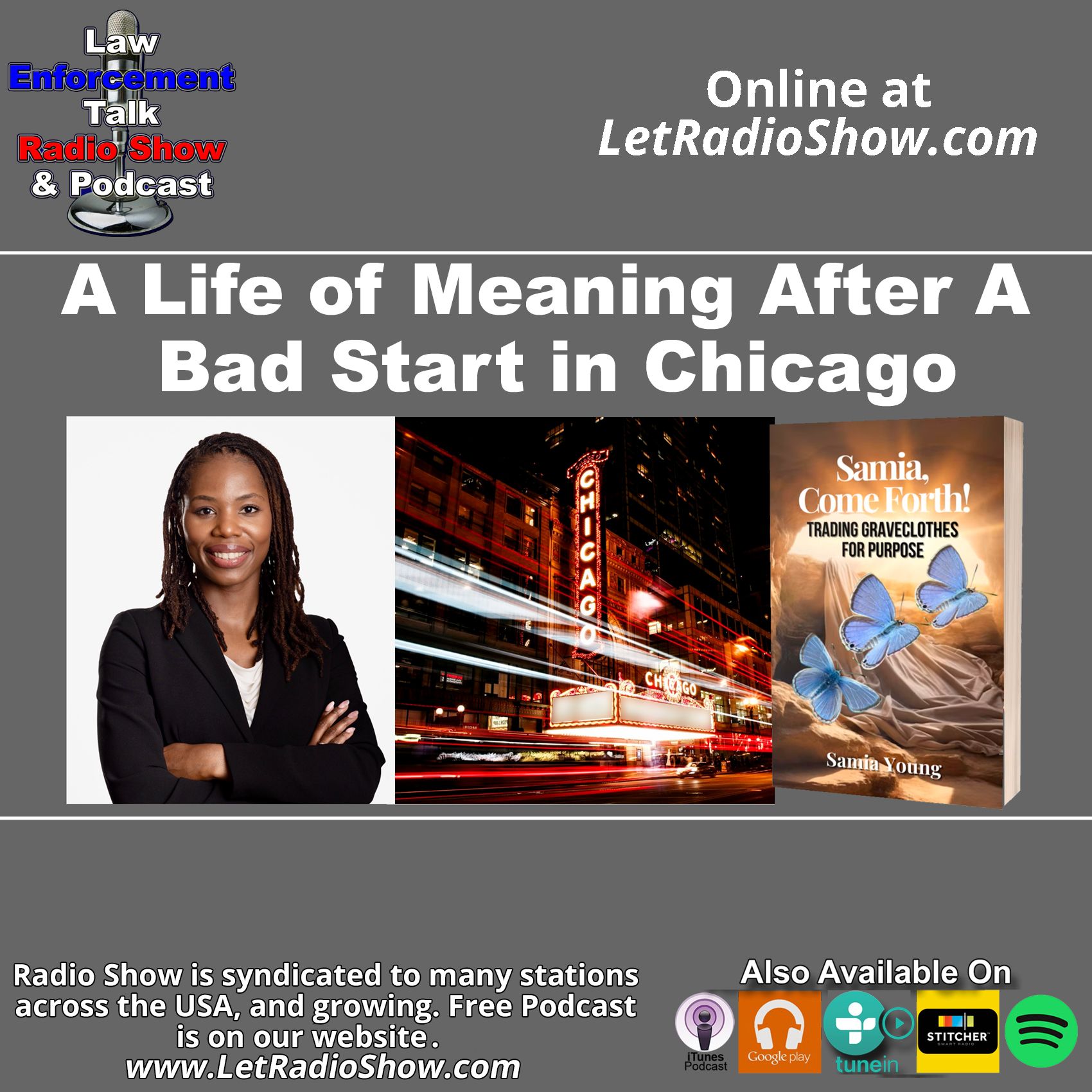
Law Enforcement Talk: True Crime and Trauma Stories
A Life of Meaning After A Bad Start in Chicago
00:40:50
A Life of Meaning After a Bad Start in Chicago. Growing up in the South Side of Chicago is no easy path, and for Samia Young, the early chapters of her life were filled with violence, instability, and heartbreak. Born into a family plagued by substance abuse and domestic violence, she witnessed things no child ever should.
Loading summary
Transcript77 lines
- [00:01]
A
She grew up in the most violent area of Chicago, the South side. She witnessed extreme domestic violence. She didn't get help and got on the wrong side of the law as a teenager. And as a young adult she made some big changes in her life to build a successful life after she's here. Tell us all about it on the Law Enforcement Talk Radio Show. Welcome to the Law Enforcement Talk Radio Show. In the Law Enforcement Talk Radio show we are joined by special guest talking about their experiences, their realities of investigating crimes, plus those who've experienced horrendous trauma. Police, first responders, military and victims of crime share their stories. Hi, I'm John J. Wiley. In addition to being a broadcaster, I'm also a retired police sergeant. Be sure to check out our website, letradio.com and also like us on Facebook, search for the law Enforcement Talk Radio show. Of all the radio stations in the United States, there are no other shows like the law enforcement Talk radio show. And on Facebook there's only one official page. Do a search on Facebook for the law enforcement Talk Radio show and be sure to like the Law enforcement Talk Radio show Facebook page. Joining us from Cleveland, Ohio area, we have Samia Young on the Law Enforcement Talk Radio show. Samia grew up in the south side of Chicago. I know about that because I've been in Chicago twice. Never been to the south side. Don't know it, but I remember hearing about songs about the south side of Chicago and I think Leroy Brown was the baddest band in the whole damn town. That was a long, long time ago. And during her childhood she grew up in a very violent ridden area. Lots of violent crime, lots of domestic violence in her life. We'll let her tell you about that. Samia, thanks for being a guest on the Law Enforcement Talk ratio telling your story. Both very much appreciated.
- [01:50]
B
Yeah, thank you so much for having me, John. I appreciate it. Glad to be here.
- [01:54]
A
And by the way, her website, Samiyayoung.com that's s a m I a young.com she's author of the book Samia Come Forth. Samia, is it fair to say that this is a subject that Hollywood quite often gets wrong? They portray this image that when kids go through really bad stuff in their childhood, their life is just going to be in a tornado and they're never going to moun to anything. Is it fair to say that's not true for you?
- [02:25]
B
Oh yeah, it's more than fair to say that that is not true for me. Even though according to every statistic, John, that's Pretty much out there.
- [02:35]
A
You know what I think you can do with statistics, especially when they generalize about people? You can throw them in trash cans. They really don't belong anywhere.
- [02:42]
B
Right? Oh, I completely agree. And they most certainly, as you were saying, in my case, didn't belong or apply because I was able to come out in spite of. Right. My difficult childhood and the different. The area and the family I was born into, I was able to come out and make something of myself. So I. I would say, yep, it's more than fair to say that that was not the case for me.
- [03:05]
A
I want people to understand this. I had what many people would consider idyllic childhood. Myself, my four younger sisters, we had our troubles, for sure. We were so poor, I always say we couldn't afford the R. So we were po. It was in Norfolk, Virginia. It was just a different world back then. But one of the things that I look at people, Samia, and they. They judge me based off my appearance or based off of how I grew up. And I'm thinking, man, you have no idea, A, who you're talking to or B, what you're talking about.
- [03:40]
B
Yeah, definitely. And I can relate to that as well, because oftentimes when people see me now and they see what I made of myself, now they have no idea the things that I've had to overcome and the process that it took for me to overcome. And there was a journey and there was a story and there was a background. And I agree, we have to be careful when we see people not to assume what their life was.
- [04:05]
A
Right. And really, this goes back to my policing days when I was a rookie and I was trained by a lot of Vietnam combat veterans, and we had a few Korean War veterans or command staff. But one of the things they always said was there's two things they said. Number one, this was a golden rule. Always respect people, especially in their own house. Until they change the tone of the conversation, then there's no backing down. And the other one was, don't judge someone's entire life based off five minutes of bad decisions. So we have to give a little bit of flexibility. And we gave a lot of flexibility. But I want to go into your story. You grew up in the south side of Chicago. How bad was that area of Chicago?
- [04:52]
B
It was terrible. It was terrible. My entire family is from Chicago. Different areas. But I primarily, from what I can remember. And I talk about that a little bit, how because of the childhood I had and the moving and the domestic violence between my parents, sometimes it was difficult to tell where I was, but in the areas where I found myself in from early childhood all the way up to, I'd say the age of five. And then when I went back in my preteen years, it was terrible. Regular shootings, extreme poverty. You know, I. Most times I actually did not get to go outside. And so when people ask me, what is the city like? Unfortunately, I can't always answer that, John, because when I was there, it was so dangerous that just walking around outside or the privileges of just being a child, I didn't have those privileges because of the circumstances.
- [05:53]
A
And one of the things that I recall working in Baltimore and I worked in Northwest history of Baltimore, most of my career, and part of it was we talked with children and say, you know, what have you experienced in the world? And most of them, all they knew is a four block area where they lived. That was it. And on rare occasions, they got to do a school trip down the Inner Harbor Baltimore, but they knew nothing about international travel. They knew nothing about the rest of the United States. And sometimes I have to remember that.
- [06:22]
B
Yeah, oh, no, it's a reality. And I remember even when I grew up as an adult and people would ask me, I would almost feel ashamed or a little bit embarrassed because I felt like I should know more about the city. But then I also had to give myself some grace and say, hey, I mean, you didn't have the luxury of being able to explore the city because when you're in survival mode, to your point, you don't really think about those things.
- [06:50]
A
No. And as being a child, we don't have a lot of decision making. We don't have access to money, we don't rain money. We kind of go along with the flow. Look, Samia, I grew up. We did a lot of camping. We couldn't afford staying at hotels. We didn't go to the. I hated going to the beach. It was always a big deal. But we had lots of picnics, we had lots of cookouts. We jokingly say on New Year's Eve and fourth of July, we beat the kids on the corner with pots and pans and steel wool because we couldn't afford the fancy stuff. And that's just the way that not only I grew up, but a lot of other people that era.
- [07:25]
B
Yes, yes.
- [07:27]
A
I don't think we knew any different. And so I want to go back to say something you said, almost felt shame or ashamed that you didn't know more about the city when really you had no say so in that matter.
- [07:42]
B
Right. Oh, I had no say so at all. And I know, you know, when you mentioned earlier just about the circumstances as a, you know, in my early childhood years, you know, I, I was born into an impoverished family, right. My parents, they had married young, they lived in the projects of Chicago and I had an older brother and I was born two years later. And by then the domestic violence between them was extremely severe, life threatening between my mom and dad. And from the day that I was born, that was my reality. My mom always tells a story of before I was even born how because my dad's drug dealers owed him money, my life was threatened in her womb. And so when you're just born into those kinds of circumstances, you're absolutely right. You don't have any control as a child. But it most certainly shapes your, it can shape how you see the world and you know, as you grow up and just. Yeah. And your perception, even when I think about Chicago, I, I have a little bit different of a procession because of what I experienced there. So that's all real.
- [08:54]
A
I have, I think it's fair to say I have a totally different perspective than a lot of other people, especially when the only information they get is given by someone else. Hence the news media. And I always say this, making a decision whether you like someone or not based off what someone you don't know, you never had experience with, telling you details you should know. Most time you're being misled. And that's the case with a lot of what so called news media does. The more competition, the more biased they are if you ask me. This is law enforcement talk radio show Returning our conversation with Samia Young. She's got so much more to talk about. Growing up impoverished, violent crime, drug addiction, domestic violence, you name it, how it affected her and why she built her life. Today she is author of the book Samia come forth and her website samiayoung.com that's spelled S a M I a young dot com. This is law enforcement talk radio show. Don't go anywhere. We'll be right back.
- [09:55]
B
Remember when free meant free, no charge, no credit card information needed. Well, a place like that still exists on the Internet. The law enforcement talk radio show website letradio.com where everything is free including the podcast. Episodes are available after airing on radio. The website is letradio.com that's letradio.com where free means free.
- [10:29]
A
Returning conversation with Samia Young on the law enforcement talk radio show. She's contacted us from Cleveland, Ohio. She grew up in the south side of Chicago. In her projects in a violent, crime ridden area. Lots of domestic violence in her, in her life with her parents, substance abuse issues. She got into trouble with the law as a teenager, as a young adult and made some big changes in her life. Her website is samiayoung.com that's spelled S A M I A young dot com. And she's authored the book Samia, Come forth. Let's talk about your childhood, Samia. And by the way, there's no right or wrong. This just is one of those stories of this is how I grew up.
- [11:08]
B
Well, yeah, as you mentioned, John, my childhood had, I mean, there's so much that I could say, right? I experienced everything from domestic violence to physical abuse. Abuse in every form, physical, sexual, mental, emotional. Right. So by the time that I was even 13 years old, I was, I tell people I was almost like an empty shell. I had been diagnosed with PTSD when I left Chicago. I had an auntie who I ended up staying with there from 13 to 16 years old because my mom had sent me back to Chicago at 13 after she fled to Minnesota to escape my father. But because of the abuse and the trauma I experienced my behaviors, I had some behavior issues. Right. As a preteen.
- [12:01]
A
And so I was, I think that goes without saying. We learn what we, we experience and we grow up in this environment. And yeah, here, here's what the question I have for you. You said you're kind of empty shell. I get that there were stages in my life where I was empty shell, but there's various stages where I was very angry and it took very little to fire up that anger. Was that the case for you?
- [12:24]
B
I would say yes, but it initially started off as more of depression, which. So I would say yes, but initially my anger was internalized toward myself because I had a poor image of myself. And I blamed myself for everything that had happened because I was always told the narrative of, you're bad, you're not going to be anything. And so I internalized that anger and said, you're no good, you're worthless. Right. And by the time I was 16 years old and back in Minnesota, now it turned into external anger. And so we talk about how I ended up first getting in trouble with the law as a teenager at 16. Well, when I made it back to Minnesota, now on top of my trauma, I have a PTSD diagnosis from everything I went through in Chicago, and I have that, but also a mother who was unaware, I guess, of the depths of that. And I don't feel like I got the Proper level of treatment that I needed. So I would jump at every little thing. Right. My reactions were extreme because I'm still in trauma mode, thinking that I have to protect myself. And so I end up in an incident where I overreact because I think someone's trying to threaten my life, and I end up in some legal trouble on. Really didn't. On an assault charge where I really didn't assault. But I was in the process of doing it. I would have. And so that was enough. As we know, they handcuffed me for the first time at 16. And here's the thing. I was a 4.0 student. I was a brilliant student in high school. I was taking college courses and working 24 hours a week. But emotionally and mentally, I was traumatized. And so that was my first encounter with the criminal justice System was at 16. And I ended up, John, being out of my home for three months because the incident was with my mother's roommate. And so the court ordered a no contact order. Right. And I remember being so upset because I couldn't go back home because, you know, she said, no, he's not leaving. You are. And so, once again, you know, all of the feelings of rejection and, you know, mom not, you know, because I had serious issues with her after she sent me back to Chicago. I never heard from her while I was there for three years.
- [14:46]
A
You think you could have serious issues with that? I would.
- [14:50]
B
Yeah. Come on. Yeah. It was. It was. I mean, it was so traumatizing, John. It really was. Because, you know, in a kid's mind, no matter what I've done, you're. You're my parent, and I don't hear from you. So you kind of. You know, that didn't help with the anger.
- [15:03]
A
Look, I remember being a kid and running away multiple times, making a big show of it. Yeah. I'm never coming back crying, you know, the whole. And then I get about halfway down the street, and I realize, man, what do we do with dinner time? Oh, my God, I better go back. So. But here's the thing. And I had an idyllic childhood, But I got to ask you a question. And it's not so much about what they did. This is about you. When children, quite often when their parents are fighting, they blame themselves. If I had just done this, if I hadn't been this way, then they wouldn't be doing that. And then did you internalize any of that? Say that you were a cause of this domestic violence, or did you just totally blow that off?
- [15:47]
B
Oh, no, I Think I internalized it as I sit here today. And in hindsight, I'm most certain that I did internalize it. And the reason is because I was a daddy's girl and my father was the one inflicting the harm, right? And so I took that as. And so my mother. Let me back up and say this. My mother was always a little cold toward me because my dad seemed to favor me a little more than her and my older brother. So the dynamic. But I'm just a kid. I'm three, I'm four, I'm five, I don't know. But I took that as. I'm the center of it, like, because he is showing me love, like daddy's little girl. And he's doing that like I'm the one to blame. So I did. And that's where I do think it was connected to the depression, right. And the anger because I blamed myself for a lot of different things. And the narrative that always was in my mind is the one I was told, you're bad. Like, you know what I mean? You're bad. Something's wrong with you.
- [16:46]
A
Say bad. Not in a good way.
- [16:48]
B
Not in a good way.
- [16:49]
A
No.
- [16:50]
B
Like you're. Like you're a problem. Like you're the problem child. And then the thing is, I was a middle child too, because I had a. My mother had a little brother in the future. So then it's like you get the middle child, you know what I mean? Stigma attached to you too. And the only girl, I mean. But yeah, I definitely believe I internalize that. And I think a lot of children do that are in domestic violence households, whether they know it or not.
- [17:14]
A
Without being really descriptive, how bad was the domestic violence in your family growing up?
- [17:20]
B
It was. On a scale of 1 through 10, it was a 10. I saw weapons used. I saw people almost thrown out of windows that were several stories high, all before the age of five.
- [17:33]
A
And what reason I asked that is? Because we encountered that quite a bit. And unfortunately, the children usually want to pay the price. But with domestic violence, there's no rhyme or reason or logic to that. And people that so called love each other, and I don't doubt they did, but are capable of committing horrendous acts of violence against each other. And quite often substances, alcohol, particular, other drugs were part of the issue. Finance is part of the issue. Those are all things that would start the fight. Then we go into things like raising children and differences opinion and then religion. We actually had someone stabbed in the neck because they want to lead the family prayer, Thanksgiving and the other spouse said, no, that's my job and stabbed them with a butcher knife. So this is not lost on me. We're talking with Samia Young. She has made tremendous progress in her life. She grew up in the south side of Chicago. Extreme violent crime, extreme domestic violence, substance abuse. She was abused all throughout her life. She got in trouble with the law as a teenager. A young adult, she made some big changes in her life. She's author of the book Samia Come Forth and her website samiayoung.com, that's s a m I a young.com you can find us on Facebook. Look for and like the law enforcement Talk radio show Facebook page. This is Law Enforcement Talk Radio show. We're taking a short break. I promise you you don't want to miss what's coming up. We'll be there's a couple ways you can stay in touch and keep informed of what's going on with the law enforcement talk radio show. Number one, go to our website letradio.com sign up for our email newsletter. It's really easy to find. I promise we don't spam you. I send out about one email every two weeks or so and there's also a feature called Broadcast Channels on our Facebook page where we send messages directly to your inbox, directly to your messenger. Real easy to sign up for. Make sure you like or follow the law enforcement talk radio show Facebook page. And up top you'll see Broadcast channels one for free podcast versions of the radio show. Another one top post of the day so you too can stay informed quickly, easily and best of all like always. Free current conversation with Samia Young. She is content, is from Cleveland, Ohio area. She grew up in the south side of Chicago and let's just say a very heavy, heavy crime ridden area. Domestic violence was a big part of her life between her father and her mother. Lots of physical abuse in her life as well. Substance abuse was an issue with her parents and she got on the wrong side of the law as a teenager. She is in a young adult. She is author of the book Samia Come Forth and her website Samiyang.com is spelled S A M I A young.com Samia, I want to recap really quickly in your own words describe your childhood.
- [20:40]
B
I would describe my childhood as dysfunctional, traumatic, unstable and traumatizing. So as you as you had mentioned, I got in trouble with the law at 16 years old because I had a post traumatic stress disorder from all of the things I had experienced growing up In Chicago, the physical abuse, sexual abuse, so many different things. And so by the time I was 16, I had two things going on. I was highly intelligent and functional in the area of education and extremely destroyed, torn apart and broken in every other way and trying to walk and live while basically bleeding out emotionally every day and not knowing what to do with it as a teenager. So I got into some trouble from not knowing how to regulate my emotions really, I guess is the best way to say it, and made a poor choice.
- [21:44]
A
At 16 years old, you go further, you made great progress in that area because you're talking very comfortably, very calmly about this stuff. I don't know if I could do that.
- [21:53]
B
Yeah, well, I'll tell you, John, there's been a lot of work, a lot of healing and it took, it took some time. But yep, I'm in a place where I can talk about it now. I always tell people, because when you're freeing on the other side, you can tell it, but it's. It. I mean, I'll. I'll tell you, it wasn't always this way. No, it's not always this easy.
- [22:12]
A
Before we get into it, I got to tell you this, and I'm not one for giving a lot of compliments. I want to compliment you for making the positive changes in your life. So many people, and it doesn't matter where that came from or what stage of life, childhood, later adulthood, violence, trauma, you name it, they, they allow that to destroy their lives. You obviously did not. You decided that somewhere along the way I'm going to make some positive changes.
- [22:38]
B
Yes. Oh yeah. No, and, and thank you too. That means a lot, John. I appreciate it. And no, you're absolutely right. I think going into those early adulthood years, I made a few more mistakes. But at some point I came to the realization young that I was the problem. And I remember.
- [22:59]
A
Wait, wait, wait a second. How old were you when you came up with this mind earth shattering thing? Oh, I'm the problem? Because most people don't.
- [23:08]
B
Well, I'll be honest, it took until about 24, by the way, I really had to hit rock bottom.
- [23:14]
A
I didn't come over that till I was like 33. 30. Yeah, I was a lot older guy than you, like. Oh, wait a second. Here's what I want to say this. The best way to describe is I had arterial bleeds as a result of all the trauma I've been through in policing. And instead of focusing on stopping the bleeding, I was bleeding all over my now ex wife, my daughters, people that love Me, I was too busy fixing blame on those who caused the bleeds. Oh, hey, you're the one who slung the knife. I'm not responsible. It became my alibi. You at 24? Like, it doesn't matter. I got to do something about this.
- [23:53]
B
Oh, yeah. I mean, I really got to a point after having a few more run ins as an adult, somewhat minor, if you will, but I was making poor decisions from about 19 to 24. Right. You're drinking, you're clubbing. I was, you know, doing it all. And I got into legal trouble as an adult. And I'm not afraid to share it. I got a DUI as an adult at 24. And I remember. I remember being on a jail cell floor and I got on my knees, John, and I just said, you know what? I'm smarter than this. I have some college done. I dropped out because when you're unstable and you're all over the place, it's kind of hard to study. And I just, I said, I don't. To be honest, I didn't want to be like the people I saw in my family. I know that sounds harsh, but all I had seen was poverty and misery and people with regrets. And I remember I decided that can't be my story. But if I don't want it to be my story, it's going to require some better decision making. And before I could get there, I had to acknowledge that my decision making before that point had been terrible. Absolutely terrible. And it hurt me to acknowledge it because taking accountability can be very painful, especially when you've had a lot of trauma, because the danger is you might fall into trying to justify bad decisions with trauma.
- [25:17]
A
Right. Well, and I remember you made a great point. It said, this poor behavior, and it doesn't really matter what caused it. After a while, there are some people that will continue to commit poor behavior regardless, and they will continue to blame. This is why. And by the way, I grew up, I had a rough childhood. And we hear that from so many people. And like, no, you didn't compare to other people. No, you didn't. But there's other people like you that have decided. I'm. And this is just my feelings when I make poor decisions. I give other people control over my life to do with what they want. State agencies, it doesn't matter who they are. And I don't want to give that kind of control to somebody else. I don't know.
- [26:01]
B
Yes, absolutely. Yep. And I reached that place, you know, at 24, and I decided that I would have to make better decisions. Right. And so. And I did just that. I remember when I got my dui, it was the first time I did not play the victim. I said I deserved it. I was wrong. I learned to take accountability. I deserved it. And I remember, I want to say this, at 19, I had told my mom, I said, I need to forgive you. Because when people see me and my behavior is all messed up, they're not going to ask me why. They're just going to make a quick instant judgment based on me. And that's going to be it.
- [26:46]
A
Based on you and your behavior. Not even how much what you look like or that it's based on how you behave.
- [26:54]
B
How I behave. And I realized that because of that, it was my responsibility to address my decisions, to get help for my trauma, and that I couldn't blame anybody else. It may have not been my fault, the things that happened to me, but it was my responsibility to initiate the process of healing and accountability. So at 24, I mean, John, I filed bankruptcy. I was in debt. I had two evictions by the time I was 24. I had been homeless in my early adult years and I couldn't even get my college transcripts from the schools I had gone to because I had balances. But when I made the decision and I weighed the cost and I said, I said I need to get out of poverty. I have to get out of this cycle of the criminal justice system and poverty. And because it was so extreme, it took an extreme decision. But from that day forward, my life was never the same.
- [27:52]
A
And you did this at 24?
- [27:54]
B
At 24, yes.
- [27:56]
A
And again, my hat's off to you because there's people, I know that they're in their 60s and they still haven't done what you do at 24. And they, they still give up inordinate amounts of control of their life, their, their destiny, their outcome to other people. And we're not just talking about finances. Oh, that's a big part of it. But every part of your life. We're talking with Samia Young. She grew up in south side of Chicago and a very, very violent, crime ridden area. Extreme domestic violence in her family, substance abuse, you name it, which we'll talk about in a few moments. She got in trouble as a young adult. Big time changes. She is author of the book Samia Come Forth and her website, samiayoung.com, spelled S A M I A young dot com. This is law Enforcement Talk. Rate of show. We're going to take a short break I promise you when we come back, you're going to learn two things about Samia and maybe things that may apply to you but may apply to someone you know and love. Nothing is permanent and changes can be made. Huge changes can be made. Just a perfect example. Here's another location online where you can find the law enforcement talk rated show and podcast. That's medium.com it's spelled M E D I U M dot com. Medium has 100 million average monthly total users. Look for and follow the law enforcement talk radio show and podcast on medium.com well, this is law enforcement talk radio show. Don't go anywhere. We will be right back. If you do any business on social media, creating content is one thing. The trick is how do you turn those people that comment on your social media into consumers. It is a great tool and you can get more information@let pops.com that's L E T P O P S.com Best of all, you can start it for free. Let pops.com check it out. Today conversation with Samia Young on the law enforcement talk radio show. Her website samiayoung.com that's spelled S A M I A young.com and she's author book Samia Come forth which we'll talk about in a few moments. She grew up in the south side, Chicago, spent her childhood there. Extreme domestic violence in her family, substance abuse issues, all kinds of abuse for her. And she got in trouble with the law and made big changes starting at the age of 24, which we're going to talk about here. And she built the successful life that she has today as a result of these changes. Is it fair to say, Samia, that you are where you're at because you were forced into that because of all this bad stuff?
- [30:39]
B
You know, I think that is fair to say. I think it is because, because I had so much that I had suffered through. I had reasons to give up. What I needed was a reason to live and what I needed were things to look forward to. So I think that is completely fair.
- [30:56]
A
To say when people tell me all the time they can't, they can't, they can't and they never really. And I don't want to sound judgmental when I say this but I know I'm going to. When they've been through anything really, really bad in their life, I'm saying yeah, you can, you don't know what you've, you don't know what you're capable of until you've been challenged. That's what I'm Getting at.
- [31:17]
B
Yeah, I know. I agree with that. It's. Sometimes they always say you don't know how strong you are until you have to be strong. And I agree. Sometimes you don't know what you're able to do until you're forced to do it, when that's almost your only choice.
- [31:31]
A
Someone asked me my definition of resilience as like. And I was in a group setting, and they were all these really fancy, fancy definitions which I wish I thought of. And they asked me my. I said, resilience is when you've got nothing else to lose. Like that old Janis Jobson song about freedom means nothing else. To live when you are at rock bottom and you got to either die or get Betty, Lizzie, busy living. That's when resilience comes into play.
- [31:57]
B
Yeah. Yes.
- [31:59]
A
So here you are at 24. You've been arrested for DUI. This is not your first grape at a law. And I think before winter break, you said you got on your knees and you're saying, I'm. I'm. I'm a smart kid. I do things. Why is my life in such upheaval? Can you tell us more about that?
- [32:15]
B
Yeah. Oh, yeah. So when I got arrested for my DUI at 24, I got arrested over a weekend. So I ended up, as, you know, staying in jail for the weekend.
- [32:26]
A
You didn't get to see nobody for a while, did you?
- [32:30]
B
No, no, no, I didn't. I didn't. And I. There was a moment where I got on my knees and I. I prayed, which was something that I had gotten far away from since 14, when I first believed. But I just. You know, I really just humbled myself. I realized, John, that if my. If I kept going down the path I was on, I might find myself as smart as I was, in a position where I was doing real time. Because it's surprising how once you encounter the criminal justice system, if you don't make changes, the recidivism rate, you'll just keep going in the same cycle and loop. And so I humbled myself and I said, you know, when I was a kid, I had dreams and my behavior, I didn't understand it, but I said, I need to make better decisions. Yes, I'm in pain, but I need to make better decisions. So when I got out, I did just that. I stopped drinking altogether. I stopped clubbing, and I stopped making excuses for my toxic behavior. You know, I really did. And I remember a few months after that, not only did I rededicate my life to Christ, but I also Registered to go back to school. I filed bankruptcy. There was a beautiful woman that I used to work with. I was an office manager. And for whatever reason, she had advised me and said, you know, you want to go back to school, you can't get your transcripts. Have you ever thought about filing bankruptcy? I did it when I was in a situation like you, and it changed my life. Had never heard of it at 24 before, but I took the wisdom of someone who was more experienced, and I didn't sit there and act like I knew everything at 24 years old. And you want to know what? That one decision allowed me to register for college the following semester and a year and a half after that, because I already had previous credits, I walked down the stage and I, with my bachelor's degree in criminal justice, having graduated at the top of my class.
- [34:32]
A
That's amazing right there.
- [34:35]
B
Yeah.
- [34:36]
A
Do you ever sit there and think to yourself, samia, I've lived before, and here I do this. For me, there's life before, and it almost seems like it's a different person. And there's life today?
- [34:47]
B
Yeah. Oh, yeah. It's like night and day. It's almost like I remember even when I look back now. Because, of course, after that, I went to law school and all the things and things that. I mean, just a few short years ago, I. You know, I would think I was on a jail cell for. And now I'm here. And then when I look back from where I'm at now, it's even more amazing at how. When you make better choices. And of course, you know, I believe my faith played a big part in it as well. But when you combine faith with good decision making, now you have something. And so I was just experiencing the fruitfulness of taking accountability and not making excuses. I could have made every excuse, John. Oh, I grew up rough. Oh, my mom and dad didn't have a college education. I could have made every excuse. But I made a decision to say what would happen if I took accountability and just created the life that I want through effort, through discipline, like everybody.
- [35:52]
A
Else who was your mentor when you're going through all this decision making because you couldn't rely on your parents for the dysfunctional life they had. I imagine you didn't have a good relationship with them.
- [36:04]
B
Yeah. No, you're right. Nope. It took until my late 30s for me to really be able to talk to my mom and truly forgive her. I thought I had, but it took a little longer. I'll be honest. I can't really say That I had a mentor. I mean, I most certainly had, like, a pastor who encouraged me spiritually. But I have to figure a lot of stuff out alone. And it was just honestly, me and the Lord, which is how I know that, you know, no matter where you find yourself sometimes you might not have someone, but a lot of times you will.
- [36:40]
A
What I'm getting at is a lot of times it's just you and whatever your higher power, whatever word you want to use, it's just you and them. That's it. You got no one else. They're not. They're busy. They're doing their life thing.
- [36:53]
B
Oh, yeah. Oh, that's definitely evil. That was definitely what I experienced. Yeah. I mean, it was me. And as you said, it was me and God, and I had to figure it out. But I also felt like I didn't lack anything. You know, I feel like when you make your mind up and you're determined, as they say, where there's a will, there is a way. Now, here's the thing. If you sit here and ask me, was it easy?
- [37:14]
A
No.
- [37:14]
B
No.
- [37:16]
A
I would love the $64,000 question, was it worth it?
- [37:20]
B
Oh, well, absolutely. Oh, it was worth it. I'll tell you, as. I mean, even having to change the way that I thought. Right. And the mentality from how I grew up and then also putting the work in, it was a weight. Yeah. You got. You know, if you started, if you had a lot of trauma. Yeah. You might feel the weight of trying to push past it and do what everyone else is doing, but, boy, is it worth it. I would do it all over again.
- [37:49]
A
Yeah. Here's what I found for I felt trapped in this trap for many years of comparing. Comparing my life to other people's lives they're not doing. And I had to learn to stop that with the good and the bad. I've been through enough bad stuff. This is me. What kind of life do I want? End of story. It doesn't matter what got me at this point. I learned to accept it. Doesn't mean I like it. Doesn't mean I approved it. Doesn't mean I apologize to everybody. Doesn't mean any stuff. It just means I accept it and then I find a way to move on. Is that a good way of describing you?
- [38:22]
B
Oh, yeah, absolutely. That's right. And I share that sentiment, John, and had the similar experience of comparing, which then results in more anger. Because now you feel like, well, it's unfair. But I agree. When you take your mind off of other people and you focus on what is in your control and you focus on yourself, good and bad, right? That's where you have more peace and you're able to execute without that extra weight of comparison. I completely agree.
- [38:50]
A
And unfortunately we don't have enough time to cover. I feel like I could talk to you forever. So you wrote the book. Samia, come forth. Let's talk about your website, samiayoung.com I did preview it for the interview. Can people find what you do? Can they get in touch with you there?
- [39:05]
B
Yeah, they can. They can find my bio on there. They can learn more about what I've done, what I currently do, my ministry, and what I do in the community as well.
- [39:15]
A
And that's Samiyayoung.com and for those who are phonetically challenged, like myself, spelled S A m I a samia young.com Samia, I gotta say this multiple times. I'm thankful we got to talk. I'm thankful that you've made the progress you made in your life today and you wrote the book and all that stuff. Samia, come forth. Check it out. Samia, thanks so much for sharing your story on the Law Enforcement Talk Radio Show. Very much appreciate it.
- [39:45]
B
Yes, thank you so much, Don. I appreciate you having me.
- [39:48]
A
If you're on the Clubhouse Drop in audio chat app, be sure to look for me and follow me. My name's John the Letter J. Wiley W I L E Y. You also search for ET Radio Show. That's John J. Wiley W I L E Y T Radio show on the Clubhouse Drop in audio chat app. I'd like to thank our guests for coming on the Law Enforcement Talk Radio Show. The Law Enforcement Talk Radio show is a nationally syndicated weekly radio show broadcast on Numerous AM&FM radio stations across the country. We're always adding more affiliate stations. If you enjoyed the podcast version of the show, which is always free, please do me a favor and tell a friend or two or three. I'll be back in just a few days with another episode of the Law Enforcement Talk Radio show and Podcast. Until then, this is John J. Wiley. See ya.