← Law Enforcement Talk: True Crime and Trauma Stories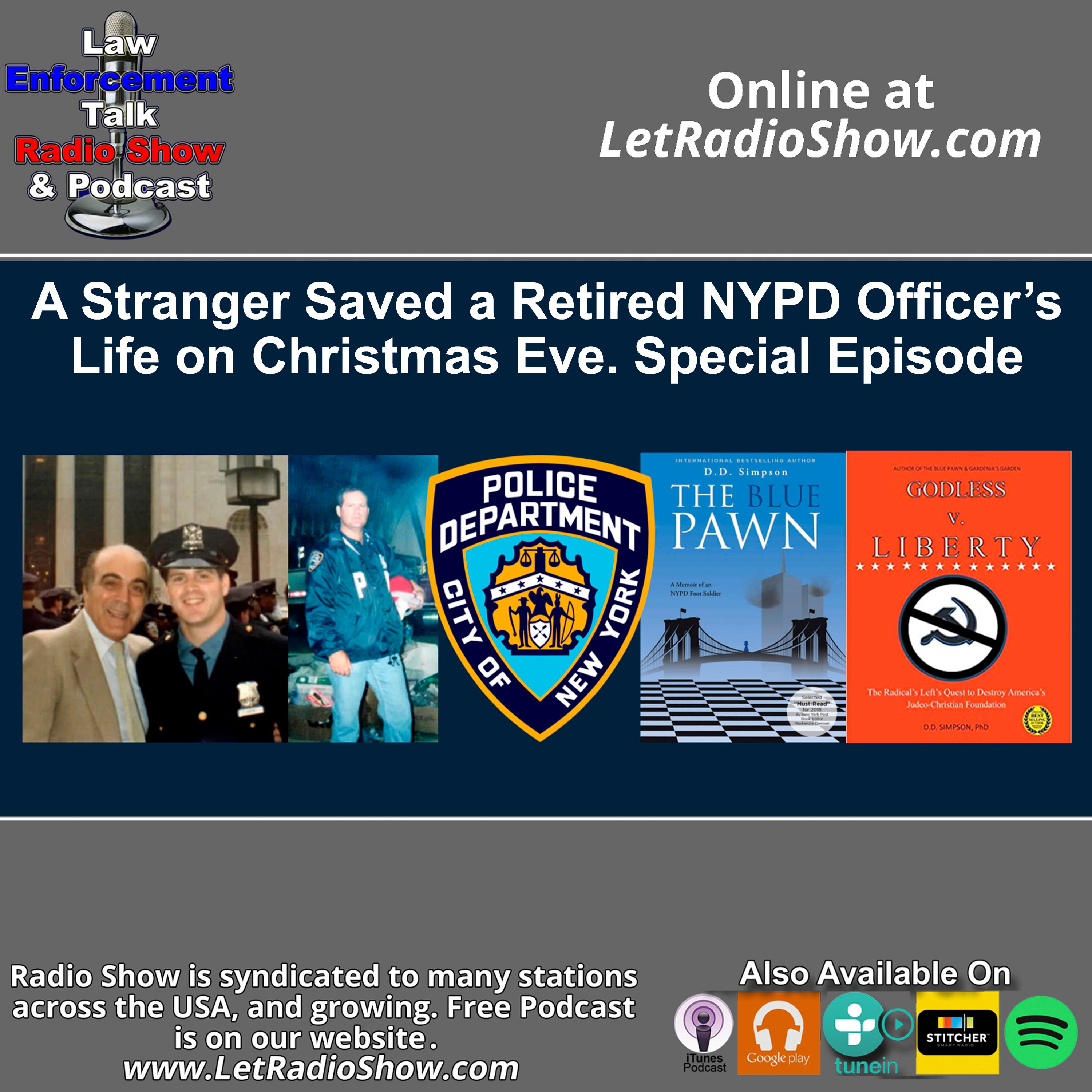
Law Enforcement Talk: True Crime and Trauma Stories
A Stranger Saved a Retired NYPD Officer's Life on Christmas Eve
00:39:49
A Stranger Saved a Retired NYPD Officer’s Life on Christmas Eve, A Special Episode Worth Hearing. This is more than a headline. It is a true story of survival, loss, depression, and an unexpected moment of human connection that changed everything.
Loading summary
Transcript102 lines
- [00:00]
Dean Simpson
VRBO Last minute deals make chasing fresh mountain powder incredibly easy. With thousands of homes close to the slopes, you can easily get epic Pow freshies, first tracks and more. No need for months of planning. In fact, you can't even plan. Pow Pow is on its own schedule. Thankfully somewhere in the world it's always snowing. All you have to do is use the last minute filter on the app to book a last minute deal on a slope side private rental home.
- [00:28]
WSECU Announcer
Book now@vrbo.com WSECU isn't just one of Washington's best credit unions. We're the only credit union to be on the Forbes Best in State list five years running. Why? Because we put you first. Lower fees, early paydays, financial guidance and service second to none. As a member owned cooperative, we love Washington as much as you do. From the Olympic Mountains to the rolling Palouse. Join us and discover how much we care about your financial well being. Because what we really do best is invest in you. Stop by, say hi, we're wsecu let's.
- [01:00]
John J. Wiley
Credit Union As a member of the nypd, he was shot in the line of duty. He's here to talk about the shooting, his injuries, his recovery, and where he's at today. Welcome to the Law Enforcement Talk Radio Show. In the Law Enforcement Talk Radio show, we are joined by special guests talking about their experiences, their realities of investigating crimes, plus those have experienced horrendous trauma. Police, first responders, military and victims of crime share their stories. Hunters hi, I'm John J. Wiley. In addition to being a broadcaster, I'm also a retired police sergeant. Be sure to check out our website letradio.com and also like us on Facebook, Search for the Law Enforcement Talk Radio Show One of the questions I get all the time is how can I show my support for law enforcement? We're all busy. We've got busy lives. But there's something oh so simple you can do with our Facebook page. Search for Law Enforcement Talk Radio Show Facebook page and when you see a post you agree with, that resonates with you. Share it. Especially episodes of the podcast. To do all that, just search for us on Facebook, look for Law Enforcement Talk Radio show and be sure to click like calling us from South Florida Palm beach county area. We have Dean Simpson on the phone. Dean is retired nypd. He is also an author of two books, number one the Blue Pond A Memoir of an NYPD Foot Soldier and second is Godless Versus the Radical Left's Quest to Destroy America's Judeo Christian Foundation. Dean, thanks so Much for being a guest on the show.
- [02:36]
Dean Simpson
Very much appreciated, John Jay, thank you for having me. I really appreciate this opportunity to speak with you today.
- [02:42]
John J. Wiley
Well, I'm glad you are, because we're going to talk about something that is tough to talk about. I know a little bit of Dean's story. I don't know the details, so a lot of what he's going to talk about is as much a surprise to me as it is to you. Listening. You are retired from nypd. How long were you on the job?
- [02:58]
Dean Simpson
I was on the job just a little over seven years.
- [03:00]
John J. Wiley
Okay, gotcha. And I did look at your story a little bit, and our stories are remarkably similar. But I don't want to be a spoiler. I want to go into, you're on the job, you come from a police family. You had all the ideology. I did. I'm going there. I'll make a difference. It's a calling. It's here to help people save lives. I'm not saying that's negative. I'm saying that's how I felt. I came in there to change the world, and it changed me.
- [03:30]
Dean Simpson
Well, for me, growing up in a police family, it is like a calling. You know, seeing my father in uniform, hearing his stories, when I was young, it was something that from an early age, I knew this is where I wanted to go. So once I became a police officer when I was a rookie, I was. I was very fortunate. My father, he was a decorated officer. He was retired at the time when I was on, but he still had a lot of influence on the department. So this I believe I should notice, but I think there's 75 precincts in the NYPD, might be 77 and plus all the details. But the crown jewel is midtown Manhattan. So if you have a phone call, if you have a hook, that's where you want to be. And I wanted to work in Brooklyn for really one reason, because it was closer to me. And that's where my girlfriend was at the time. Right. So my father said, no, you're going to go experience the city. And it was one of the greatest gifts ever given to me. I mean, it really opened up my eyes. The first six months in your rookie time is basically it's a. They're broken into divisions. I was in Division 3, which is all like midtown Manhattan, put it simply. And in that six months, you were the sergeant, other other rookies. And.
- [04:48]
There was a lot of camaraderie. We had a very tight group. And it was probably at the time I spent on the job. It's a time I look back on the most that I had the most fun. We were just. We were young. We were all kids. I mean, I was 20 years old.
- [05:04]
John J. Wiley
Oh, yeah. Actually, you know, I came out of the academy, Dean. I thought I knew everything. I was a 21, 22 year old kid. I really knew nothing. And I thought I knew what I signed up for. The truth is it was far more violent than I could have imagined. And you're right, the early days were the best. And I really enjoyed it. I thoroughly enjoyed it. I want to clarify something I say. When I came in to change the world, it changed me. Not for the better means. There's physical and mental scars. I don't think I'm a bad person. I owe no apologies. I did everything the best I could and. But I bear the brunt of what happened.
- [05:43]
Dean Simpson
Yeah, I mean, after. It was kind of. It was kind of odd because we do six months in for that first six months. I mean, you're a police officer. Nobody knows you're a probationary officer because you're still in uniform. You know, you have your firearm. But once you finish your six months, then you go to your assigned command. And it was the last day of my rookie division together with the guys. And it was as if like God was preparing me for like the next seven years because there was a fire on the east side of Manhattan and there were several fatalities. And our unit was sent there to secure the building. And I really, I mean, I'm trying to think when I was a rookie, if I ever saw any dead bodies. I don't remember. I know when we were in the academy, we had to go and, you know, observe an autopsy. But on that last day, I didn't see. The bodies were already taken away by the time we got there. But what was left behind stays with me to this day. And one of the things was there were nails embedded in the wall by the roof door. And what happened was there was a. They couldn't get out the roof door. It was against code. However, they had it locked. And that's where several people had died.
- [06:58]
John J. Wiley
And then you say nails. It was fingernails. It wasn't nails.
- [07:01]
Dean Simpson
I'm sorry. Yes. I should have been more clear about that. It was fingernail.
- [07:05]
John J. Wiley
No, that's a horrible thing to see.
- [07:07]
Dean Simpson
Yeah, I was just like, this is, this is terrible. And not being done with it. My, my sergeant, I was, I was good friends with my sergeants. They were great guys, great mentors. He. He taps me on the shoulder, he goes Listen, I need you to go down to the medical examiner's office. We're having a family come in to identify one of the bodies. And I'm thinking to myself, if there was ever a time I wish they didn't have confidence in me that today would be the day. The last place you want to be is down there. It's a very depressing, morbid building to be going into. And that part when I, when I had to go in and the family identified the body was something else. I mean, this was all the last day and that was the stepping stone. Now when I go into my command that now I start dealing with death all the time. As a rookie in your main command, you, you get stuck, stuck with the DOAs that die alone. You got to secure the body until the ME comes. And like anytime there's a real bad detail, you don't want to get that, you know, somebody floats up from the water or floater, you're stuck there until they take it away. So like all of a sudden, now death is around you all the time. I thought, wow, so that, that was really a wake up call that I wasn't prepared for. Well, I shouldn't say I wasn't prepared for. It just, it leaves you. And if there were days I would come home very depressed, I'd be like, man, like seeing so many people die alone and see how they died and, you know, everybody has a story like, where's this person's family? Where's their loved one? You start asking questions and that's what sends you down like a bad road.
- [08:35]
John J. Wiley
I think a big part of it, Dean, is the degradation you see people go through. So many people, at least my experience on police work, live a horribly isolated life. They die alone and they suffer tremendously before they do.
- [08:51]
Dean Simpson
Absolutely. And that's what, you know, that's what I was, was witnessing. And here I am in my young 20s and I mean, I was, I am blessed. But back then, I mean, I didn't realize how blessed I was. I just was very fortunate with everything I had in my life. I mean, my father was my best friend. Working in midtown Manhattan, I'm going to nightclubs, I'm rubbing elbows with, know, celebrities and having fun and, you know, just living a life. I like. If I was working in Brooklyn, I wouldn't, I would have to worry about where I was going to take a personal or get a sandwich. So I would come home, I would tell my father, I gotta thank you. I mean, this is, this has been phenomenal. But he goes if you still want to be, you know, assigned to Brooklyn, I can do that for you. And I was like, no, no, no, no, no. I'll stay where I'm at. So it was a great experience. And, you know, and then slowly things start to happen. Like, you know, who's the first officer to get killed that I worked with, Right. And that first funeral.
- [09:47]
You know, who is in the wrong place at the wrong time. Then you just, you start. It'll drive you mad if you try to go down the rabbit hole. But you just like, you know, tragedy. Everything has to go perfectly right to have this thing to go.
- [10:02]
John J. Wiley
Overall, one of the things that you said that really struck me is I was being early on in my career and I was very distraught about something. And a senior officer who'd been on a long time at that point said to me, don't try to make sense out of things that make no sense at all because you will drive yourself insane. This is a law enforcement show. We're talking with Dean Simpson, retired nypd. We return. We're going to talk about the incident where he was shot, how it impacted him, and well, let's just say his journey afterwards. Don't go anywhere. We'll be right back.
- [10:39]
WSECU Announcer
How would you like a free ebook on tips to improve your health? We're talking about tips you can use for free to add years to your life. Best of all, the ebook is free to Download@Let Healthy.com when we say free, we mean free. So you can download the free ebook to improve your physical health, all while preserving your financial health. Get the ebook for free today@Let Healthy.com that's EatHealthy.com again. The website is LetHealthy.com WSECU isn't just one of Washington's best credit unions. Unions. We're the only credit union to be on the Forbes Best in State list five years running. Why? Because we put you first. Lower fees, early paydays, financial guidance and service second to none. As a member owned cooperative, we love Washington as much as you do. From the Olympic mountains to the rolling Palouse. Join us and discover how much we care about your financial well being. Because what we really do best is invest in you. Stop by, say, hi, we're WSECU Lets credit union.
- [11:39]
Grainger Announcer
If you're a maintenance supervisor for a commercial property, you've had to deal with everything from leaky faucets to flickering light bulbs. But nothing's worse than that ancient boiler that's lived in the building since the day it was built. 50 years ago. It's enough to make anyone lose their cool. That's where Grainger comes in. With industrial grade products and dependable, fast delivery, Grainger can help with any challenge, from worn out components to everyday necessities. Call clickranger.com or just stop by Ranger for the ones who get it done.
- [12:13]
John J. Wiley
Return conversation with Dean Simpson, calling us from South Florida. Dean is retired nypd. He's also author of two books. Number One, the Blue Pawn, A Memoir of an NYPD Foot Soldier, and Godless Versus Liberty, the Radical Left's Quest to Destroy America's Judeo Christian Foundation. Before I forget, Dean, let me say this. Thank you for your service. And earlier I alluded to the fact I knew a little bit about your story. I just didn't go into a lot of details. So a lot of this is a surprise to me as much as to the person listening. You were in midtown Manhattan. You had a great assignment. It's the creme de la creme where people want to go in the nypd. One of the things that I had to teach people a long time ago, I had to learn, and I learned the hard way was it doesn't matter where you are. Violence will find a way to get to you. And really bad stuff happens in the best neighborhoods because criminals drive, or in your case, take the subway or the bus or whatever.
- [13:15]
Dean Simpson
Yeah, you know, evil travels, no question about it. You never know. I mean, it could be in the most innocent of places. For me, there was a lot of irony in how everything just came to be on that day. It was a winter day in the 90s, and I had been on the detail that I was in for about two years. I stayed in the command, but I started in my squad. In my opinion, there were a couple of bad apples. And I knew if I stayed working with the cops I was working with that just by association, it was going to cause me problems. So the only detail that was available there was a command level highway patrol open. Matter of fact, the lieutenant that was in charge of it, I played in a basketball league with. So it was pretty easy for me to make that segue. But there was really no other details available because it was a jam up on the job, there was no promotions, Things were kind of frozen. So I came home and I told my father, I said, listen, I said, and you knew about some of the corruption things that I was seeing. And I said I had to do something. So I said, I'm. I decided to take this detail. And my father looked at me and he was like, you know, like probably the three most dangerous things on the job is like, you know, warrants, you know, domestic disputes, and driving the squad car by yourself. And then this highway detail. You were by yourself. And I was kind of like, you know, I'm a pretty good sized guy. I just, you know, I was like, you know, I can handle it, you know, do stupid me. But, but, but I always had good tactics as well. So I said with the cost ops, I wasn't worried. I mean, I knew I. Plus, I use my instincts. I have great instincts for the most part. And so I never had a problem with a car stop. But it was, it was early one morning. I was starting to detail. I took the squad car down. Anybody's familiar with Manhattan is the west side Highway. And this was on 54th and 12th. It's at the back end of what's Clinton Park. The day before, I didn't, I didn't work. I was actually, I was doing something else and I wasn't in the command. And there was a noticeable bulletin put out that there was a triple homicide in the projects that are adjacent to the park.
- [15:23]
John J. Wiley
Right.
- [15:24]
Dean Simpson
And the reason I bring that up is because if I knew that, I probably would have handled the following situation differently. And what happened was, as I get there that morning, it was a bit of a drizzle. I see two guys, they don't, they just don't look right. I knew everybody in the neighborhood who walks the dogs and, and I was like, these guys don't look right. Nobody's out. Because the weather wasn't too good, I backed the car up and they kind of disappeared into the park. And I was like, I'm not having my back to these guys. I said, let me just go up there, you know, see what's going on and either get rid of them or whatever I have to do. So I walk up there, I don't see anything. And now the rain starts coming down pretty good. And I'm all set to go back to the squad car. And I don't know what I was going to do, but I think I probably wouldn't have stayed. I probably would have drove the car back up and went around the park again in the car. And before I could turn, I see somebody, my peripheral vision come at me, and I was just. It was one of those things where you can appreciate this. You have that safety space and whatever that is in every situation, it could be different, you know, okay, you know, somebody gets into that space, you just kind of like, nah, I don't feel Comfortable with this.
- [16:30]
John J. Wiley
Really bad things happen when people get too close to you.
- [16:33]
Dean Simpson
Well, exactly.
- [16:37]
And something I'd like to see some laws be changed about that I see in somebody. I don't want to get off on a tangent, but I've seen some of these protests, some of the protesters get right into the cops face and I think there should be, there should be a buffer for everybody's safety and they're allowed to get away with it, which is a shame. But in my case, it happened so fast that, you know, I wasn't going to be able to get to my service revolver in time. The person, physically, I kind of sizing things up, I was like, you know, I didn't think the person was going to attack me in a sense, but I kind of was like, all right, you know, let me see your hands. He had his hand. He had a hoodie on the hood up one of those zipper type sweat jackets and where the pockets were in the side. And next thing I know, one of his hands are coming out and I see something silver and shiny and it's just like, I know what that is, right. I mean, it wasn't at me yet. And then it's a choice. I mean, can I get cover? I can't get to my gun fast enough. Which, mind you, the gun should have been out. I mean, I would assume I should have probably. Most car stops, I had my firearm down by my side. I say most because sometimes I didn't. It's one of those things I feel, but sometimes I would have it out. But something like that, if I knew what happened the previous weekend, that weekend before that Tuesday, I'm sure my instincts would have been a little sharper. So not being. Being basically in no man's land, I decided I got to charge them. And so I charge him. I go right for the gun. I got both hands on the gun. To my surprise, the other person was pretty strong. We were in a pretty good tussle now over it. And I started really thinking to myself, I'm like, you can't lose this fight.
- [18:14]
You lose the fight, there's a good chance you're gonna lose your life. And so I'm just about to have the gun, you know, I'm just about to get it from him. And the next thing I know he needs me because I'm bent over. He got a position on me and he needs me into my chest. And all I could feel was the air just coming out of me and I just couldn't get it. I couldn't take A breath in and went down to the ground and I'm like, oh no, now I can't breathe. And basically I'm at his mercy. So but for the grace of God, you know, he didn't put a bullet in the back of my head. I tried everything to roll over because I was like, if he's gonna shoot me, I really, I wanna at least be able to, you know, see the evil in this person's eyes before I go. And I couldn't even do that. So I was very helpless. It's a very something that gave me nightmares for a long time afterwards because you just felt that feeling of helplessness. And there's a nightmare that I'm sure a lot of cops can relate to is haven't had it since I was a cop. But the one where you do have your service revolver out and you can't pull the trigger, you just strong enough or it's just not pulling, it's not working, you're not able to pull it, it's just not working.
- [19:23]
John J. Wiley
Or the bullet dribbles out of the end or worse yet, it's like I need it and I have to use it and I want to. Hitting an innocent person, that too.
- [19:33]
Dean Simpson
So all those things go, all those things kind of go through and in those nightmare scenarios, never, never. One of them being that it was gonna get the wind knocked out of me and lay in a puddle of water and you know, basically have my life.
- [19:47]
Being determined by, you know, this assailant.
- [19:52]
John J. Wiley
Before we go to break Dean, I want to say this. What ended my career was a fight for my service weapon while still my hand and fighting and all the rounds being fired off as a revolver. That's how long ago it was. And fortunately he survived. I survived. I couldn't hear for a while. I thought I sprained my wrist. I wound up having multiple surgeries on my right hand and steel plates put in. I was retired at the age of 33. That incident still affects me physically, not so much mentally like it used to, but it was a no joke thing when you know someone is going to try to kill you. It is a life changing incident. We're talking with Dean Simpson. This is the law enforcement show. We return, we talk more about the incident and how it impacts. Don't go anywhere. We'll be right back.
- [20:43]
There's a couple ways you can stay in touch and keep informed of what's going on with the law enforcement. Talk radio show number one. Go to our website letradio.com sign up for our email newsletter it's real easy to find. I promise we don't spam. I send out about one email every two weeks or so. And there's also a feature called Broadcast Channels on our Facebook page where we send messages directly to your inbox, directly to your messenger. Real easy to sign up for. Make sure you like or follow the law enforcement talk radio show Facebook page. And up top you'll see Broadcast channels one for free podcast versions of the radio show, another one top post of the day. So you too can stay informed quickly, easily and best of all, like always, free.
- [21:27]
WSECU Announcer
WSECU isn't just one of Washington's best credit unions. We're the only credit union to be on the Forbes Best in State list five years running.
- [21:35]
Dean Simpson
Why?
- [21:36]
WSECU Announcer
Because we put you first. Lower fees, early paydays, financial guidance and service second to none. As a member owned cooperative, we love Washington as much as you do. From the Olympic mountains to the rolling Palouse. Join us and discover how much we care about your financial well being. Because what we really do best is is invest in you. Stop by, say hi, we're wsecu. Let's Credit Union.
- [21:59]
Grainger Announcer
If you're the purchasing manager at a manufacturing plant, you know having a trusted partner makes all the difference. That's why hands down, you count on Grainger for auto reordering. With on time restocks, your team will have the cut resistant gloves they need at the start of their shift. And you can end your day knowing they've got safety well in hand. Call 1-800-granger. Click granger.com or just stop by Granger for the ones who get it done.
- [22:32]
John J. Wiley
The current conversation with Dean Simpson, retired nypd. Also author the book two books, the Lupin A Memoir of an NYPD Foot Soldier and Godless versus Liberty, the Radical Quest to Destroy America's Judeo Christian foundation before winter break. Dean, we're talking about this incident. You're in a fight for your life. The guy winds up kneeing you, knocks a wind out of his arm with a gun and something kind of important happened that you didn't talk about.
- [23:02]
Dean Simpson
Yeah, the gun went off and you know, convenient me for omitting that into this, just blocking it out, but I hear a gunshot go off, but I don't. I don't think I'm hit. I mean, at this point I'm. I'm filled with adrenaline. So. And then. So the shot goes off first in the sequence events, then I get. I get need and then I go, I go down to the ground. So it's not until.
- [23:32]
I'm Not. At some point. Oh, that's right. The. The. I didn't call on the radio because now I can't talk. It's a security guard. The peers are across the street, and they have a security guard there. He has the gunshot. He calls 911. And I can hear the sirens coming. And what happens is one of the guys show up at the scene.
- [23:54]
A friend of mine, Sergeant Glenn, and he starts checking me, and he goes, are you shot? Are you shot now? I'm starting to get my breath. And I said, no, no, I don't think so. And the next thing I know, I have my gray gloves on, and I see this blood coming out of it, and I'm like, oh. And I was like, yeah, I guess that's where. I guess that's where the round went. And. But still, I don't feel anything. I mean, it's. The adrenaline is just pumping so much, and I'm just trying to get my ear back. And the guy is gone. The guy. I mean, there were cops there really quick from that 911 call, and I think that's what scared the guy off. I couldn't hear too well, so I don't know exactly when I was able to start hearing the sirens because I was getting a ringing sound.
- [24:41]
John J. Wiley
Yeah.
- [24:42]
Dean Simpson
So I have a feeling that the guy heard the sirens before I did. So thank God he took off. And now I'm in the back of a squad car on my way to Bellevue Hospital.
- [24:55]
John J. Wiley
You've been shot in the hand.
- [24:57]
Dean Simpson
Shot in the hand. And still don't know if I'm shot anywhere else because a second round.
- [25:01]
John J. Wiley
How many times did you have to pat yourself down after incidents? We did it all the time. Are you okay? You've been hit? I don't know. Let me check.
- [25:07]
Dean Simpson
Yeah, I don't know. I don't know. At that point, you just kind of like. And.
- [25:13]
The sergeant, he's. You know, he was great. I just was like. At that point, you know, you start getting into shock a bit. You're like, you're. You know, we live every day. You wake up, you get pretty much. We like our anchors, we like our routine. We like doing certain things on certain days. And I liked my routine there. I actually loved. I loved my command. I loved. There's a lot of things I loved about that. Really loved about the job. And, you know, I had a good routine. I knew a lot of the local people, like, I said, would come out in the morning, walk their dogs. I was friends with all of them, and it was like One of these things where nobody was around. Like, there always is somebody around. And here it is, I'm by myself in the park fighting for my life with this guy. So did you realize at time that.
- [25:56]
John J. Wiley
Was life or death or that dawn on you afterwards?
- [25:59]
Dean Simpson
No, I knew. I knew in the struggle, there was a point where I turned around, I said, I can't lose this.
- [26:05]
John J. Wiley
You're making me sweat just talking about it. I remember. And look, there were several instances I was in, but the one I'm talking about was very similar. I remember thinking to myself, this guy's trying to kill me. I'm going to die, but it's not going to be tonight, and it won't be because of him. And I was prepared to do whatever it took at that point to survive.
- [26:23]
Dean Simpson
And I think that's the part where for some time afterwards, I was really mentally beating myself up. I mean, it was a lot of the physical injury wasn't that bad. I mean, the hand was a bit mangled. Had an operation, was supposed to get a second wind up. You know, then you start fighting with the brass. I mean, it was like, you can have so many fronts, and here I am, I'm dealing with a physical injury. Then the mental injury starts coming in. Now, my one doctor, orthopedic, he wanted to have a second procedure done. The department's declining it. I'm just scratching my head. I'm like, I mean, decline. What do you mean declining it? If that's got to get done. So it just became. It just seemed like everywhere after that point, there was a battle and there was just stress and there was frustration and the days just got darker. I mean, it was just one of these things where my dream was. I mean, I was always. I mean, I love learning, I love. I love school. So my whole thing was, you know, to go up the ranks. I mean, this was going to be my career.
- [27:25]
John J. Wiley
Yep.
- [27:25]
Dean Simpson
And in a flash of an eye, now I'm, you know, I'm all going with some police surgeon on what day I should have to be forced to go back to work. And I'm like, you see that my hand is wrapped up and my arm is in a sling, right? I mean, I'm looking at the guy, I'm like, what do you want me to go back and do? Exactly? And, well, you can answer phones with your other hand. I'm like, yeah. I said, or I can let you know when I'm ready to go back. And, you know, because I still got to get from point A to point B and There was just a lack of compassion. There's a lack of. When I talk to other people that went through similar situations, somebody who comes to mind is somebody that I think you're, you're familiar with. My friend Christine.
- [28:03]
John J. Wiley
Yep.
- [28:04]
Dean Simpson
And when I actually had read a story and saw interviews and, and I've said to her, I said, it's exactly what I went through. I said, you know, it was almost a diversion. I don't know if it was good or bad, but there were times I was so off at the brass that I was forgetting that I nearly got killed.
- [28:23]
John J. Wiley
Look, you're preaching to the choir. One of the things that happens, and this is what a lot of people don't understand, you get seriously hurt, you very close to dying, you have potentially career ending injuries. And at that point you are a number to the city or the county or the state, whoever it is, and the bean counters get involved and your life becomes a non issue. It's about getting you off the books, getting you retired or getting you back to light duty, whatever it is. And it's as if whatever human compassion is for the individual is gone because then it's just, you're just a number to them.
- [28:59]
Dean Simpson
Well, I had a little bit of a meltdown. I. And this is part of the dissent.
- [29:07]
You know, now I'm going to rehab and I have to report to the police surgeon every once in a. You know, I think it started with once every two weeks. I mean, the first time I was there, he was looking to push me back. And I'm like, that's going to be a problem. I went to my father and I was like, listen, dad, I said, you know, I don't want to stay home. I don't think it's healthy, but I'm not ready to go back yet either. And then I was, we were having an issue with the, with the second procedure and I actually, I had to have something typed up. It was a two sentence thing to have done. And I called into the police surgeon's office and there was a girl there that I knew and I said, listen, before I come, would you mind? And they had offered, they said, dean, if you need anything, I said, I just need this one thing signed because I got to get that to my doctor, no problem. And I showed up and the sergeant there, I mean, you got to picture this. There's 50 guys and men and women in this room. And he comes out and goes, is this him, this Simpson? And I'm looking like, what the did I do? And then the guy just Starts berating me. Now, I've been in the service and I understand, you know, I'm in basic training and I do something stupid, I'm gonna get yelled at, screamed. I just do push ups. You understand that. But we're all professionals here. If I did something, just pull me inside, tell me what has to. You know what it did. You want to reprimand me, fine, but don't strip me down in front of everybody. And he goes on, you know, this isn't your personal secretary and how dare you. And he goes on for a couple of minutes, and I'm just standing there in shock. By the time I calmed down, I went.
- [30:31]
But for the grace of God. The guy left for, I guess for mealtime or something. He wasn't there. By the time it all sank in, I really think I had a nervous breakdown. I mean, I start going berserk and I'm like, who does this guy think he is? And I just went nuts. And I wound up coming home and, you know, I said to my father, I said, this, this isn't right. And he was away at the time, so we were actually talking on the phone about it. And he goes, stay by your phone. And I hate to say this because I know there's so many cops that have issues and they don't have that phone call. They don't have somebody to reach out to. And this is where I say I know I was fortunate in many ways, and this was one of them. I mean, like five minutes later, I get a phone call from the sergeant apologizing to me. And I'm like I said, who is this?
- [31:19]
John J. Wiley
That doesn't happen very often. Trust me, in our world, that doesn't happen. We're taking a short break. We're talking with Dean Simpson, retired nypd. He was shot, had injuries to his hand, and began the process of, for lack of better words, spiraling out of a downhill spiral, let's put it that way. When we return, we'll talk about the incident changed his life, his books and more. Don't go anywhere. We'll be right back.
- [31:49]
One of your top destinations on the Internet should be letradioshow.com that's our website. You'll find every episode of the show as a free podcast. They're all converted to a podcast after airing on radio. You'll also find great blog articles, op ed articles, and much more, all@letradioshow.com that's letradioshow.com don't forget, it's all free at.
- [32:17]
WSECU Announcer
Letradioshow.Com WSECU isn't just one of Washington's best credit unions. We're the only credit union to be on the Forbes Best in State list five years running.
- [32:27]
Dean Simpson
Why?
- [32:28]
WSECU Announcer
Because we put you first. Lower fees, early paydays, financial guidance and service second to none. As a member owned cooperative, we love Washington as much as you do. From the Olympic mountains to the rock rolling Palouse. Join us and discover how much we care about your financial well being. Because what we really do best is invest in you. Stop by, say hi, we're wsecu. Let's credit union.
- [32:51]
Grainger Announcer
If you're a maintenance supervisor for a commercial property, you've had to deal with everything from leaky faucets to flickering light bulbs. But nothing's worse than that ancient boiler that's lived in the building since the day it was built 50 years ago. It's enough to make anyone lose their cool. That's where Grainger comes in. With industrial grade products and dependable, fast delivery, Grainger can help with any challenge from worn out components to everyday necessities. Call clickgrainger.com or just stop by Grainger for the ones who get it done.
- [33:24]
John J. Wiley
Return to conversation with Dean Simpson, Retired nypd, is also author of two books, a Memoir of NYPD Footage, Soldier and Godless versus the Radical Left's Quest to Destroy America's Judeo Christian foundation for winter break. Dean, long story short, seven years on the job, he was shot in the hand in a battle, a life and death battle with someone who's a very vicious killer. And you began having the impacts, the emotional impacts, not just the physical. By the way, your injuries, how severe were they?
- [34:02]
Dean Simpson
The physical injuries weren't severe at all. They weren't life threatening.
- [34:05]
John J. Wiley
No, but they were life changing. Here's the thing, people think life threatening doesn't mean life changing. There's a lot of things that have profound impacts on your quality of life that may not threaten it.
- [34:16]
Dean Simpson
Well, yeah.
- [34:19]
Being out of my routine. What happens is now for the next couple of years, once I'm off the job and I go through that process which is, you know, self, now I'm kind of left to okay, you know, you don't have an anchor, you don't have your, you know, your life preserver and you're on your own to try to figure things out. And I mean I start drinking a lot. I not really realizing how much I'm spiraling downward. And then 911 happens and I was actually, I mean this is, it breaks my heart to say, but I mean I was up Until I guess about 4 or 5 o' clock in the morning, the night before, the Giants were playing the Broncos on Monday Night Football. And I was drinking all night. And I mean, my, my thing was to sleep all, all day the next day. And when I did wake up, you know, I walked up to the store to get the paper and a coffee, and I see what's going on on the guy's television, the news in the. In the deli. I'm like, what I thought it was. I just, I couldn't believe it. So across the street from where I lived is the church, my, my St. Patrick's Church that I was very close with. And I go in there and talk to my priest and I mean, the church is filled and I. It's, as you can imagine, it's a crazy time in New York. And now for the next couple of weeks after that, I'm preoccupied. I'm going down to the pile. You know, I'm down there and I'm actually not drinking as much. It was kind of weird. It was just. Now this was. I got to be down there.
- [35:52]
But at a certain point that stopped. There were so many volunteers down here, cops, firemen. In my opinion, there was a point where we started to get in the way of the big machines. And the last night I was. There was actually an altercation. And that's when I realized I was like, between the hard hats and us guys. And I said, I don't think there's much more I can do without being in the way. So after that, I was down there for three weeks. Now we're into, I guess, October. The holidays are coming, and I just. There was a particular night, there was one night in particular.
- [36:32]
My lifelong friend Father Joel comes and pays me a visit. I'm doing this bouncing job in a neighborhood bar and just to kill some time and have some drinks with my buddy who owned the place. And, you know, he says, hey, listen, you know, do I need to pray for you? And I was like, hey, I, you know, I. At that point, I don't know what to pray for, for what, you know, I knew I was in trouble, but, you know, I. I don't know what it is I would be. Be praying for. And he said, listen, you know, once you come by the directory was something I had done a lot previously, probably hadn't done in a couple of years. And I promised him I would, knowing I had no intention. And this was December 23rd.
- [37:18]
I don't remember what day of the week it was. I think it was A Sunday night. And I mean, that was the night I like. By the time I got home, I said, I don't want to live. And.
- [37:31]
I decided, I remember there was somebody close to me that took their life and left a mess. And I said, well, I don't want to do that for anybody. And so I made a decision. There was a place when I was on the job somebody had told me about that was really beautiful. It was like heaven on earth. And is when they lost their daughter. And they were just very spiritual people and they were telling me about this place and another promise. I said, oh, you know, yeah, one day I'll go visit. And I never did. And I was like, you know what? Yeah, that's something worth looking for. So I said, all right. So I said, let me, let me, let me go up there. So I go up to upstate New York and I take a train up there to Penn Station. And here it is, Christmas Eve. And I figured, okay, you know, they told me about this mountain. I go hike the mountain. I figured, you know, what better place? It's secluded, nobody around. I, you know, I. I really don't think too many people would have missed me in that sense. And this way, there's, it's, it's over, you know, no more pain, no more, you know, self pity and everything else. And. But something happened in between there on the train ride to the place, I had a lady sitting across from me and you know, just one of these people, she just, she just wanted to talk. And I mean, I was ready to rip my ears off. I mean, she was so annoying. You know, at one point she said something, you know, what do you like best about the city? And I said, well, you know, probably the thing I like most about it is, you know, there's 8 million people and I can go days without speaking with anybody. But the thing I like most is just being left alone. And as soon as the words came out of my mouth, I was like, wow, I mean, you really turned into a jerk. So she was very kind. It didn't discourage her. And I apologized, we got into a conversation and she started telling me about her life. She was a grandmother, lost her husband. She would go into the city to catch a play or lunch and people watch. And she just loved the energy. And, you know, he's like, you know, what are you doing today, Christmas Eve? I said, I'm gonna go hiking, you know, and she's just like, hiking, you know. And then she came out right before the train pulled into the Albany station. She had A note for me and, you know.
- [39:37]
Something that touched me and, you know, just, you know, how life is about hope and not giving up and, you know, and the kindness in heart. Here's a person that probably an hour and a half before, I just would have done anything to be away from her. And now she's probably the closest person I have in my life at that moment.
- [39:57]
John J. Wiley
This almost sounds like a Frank Capra style movie. This woman hands you a note and it begins a process of changing your life.
- [40:06]
Dean Simpson
Yeah, you know, she, you know, she was saying, she was like, life's a gift. And I think that's something we forget. I think it's something that we.
- [40:14]
You know, when you're in the darkness, it's very difficult to turn around and be appreciative. And one thing I had to start doing, I had a moment on the mountain, you know, I made some promises and, you know, I knew the alcohol was an issue. So that was going to have to be, you know, the first battle. And then, you know, the next thing was you got to do something with your life because if you concentrate on yourself.
- [40:40]
You'Re going to be depressed and you're going to be so consumed that you're not going to look at the rest of the world. And that's just not a good way to live. So I said, you got to start basically getting out and helping people. And once I started doing that and that road to recovery and I am where I am now, it's a different person.
- [41:01]
John J. Wiley
Thank God. Thank God for that. And is that when you started writing your first book?
- [41:07]
Dean Simpson
No, I'm 54 now. I started. I was always a writer. I always wrote in school and different things, articles, but I never wrote a book. So when I was blessed, about 11 years ago, I met my wife. She knew about a book I had an outline for. So we were away on vacation. It was the night that the five Dallas police officers were shot and killed. Another, there was 13 injured. And it really had an impact on me. We were way on vacation. It was July 7, 2014, I believe. And she looked at me and she's like, if not now, when? Tell your story.
- [41:47]
John J. Wiley
If not now, when? And if not you, who?
- [41:50]
Dean Simpson
Right?
- [41:51]
John J. Wiley
And that's when the book the Blue A Memoir of an NYPD Foot Soldier is born. And by the way, the word pawn, a lot of people take that as a negative. It isn't.
- [42:01]
Dean Simpson
Well, I mean, in the book, you know, basically means a foot soldier.
- [42:05]
John J. Wiley
Right.
- [42:06]
Dean Simpson
That's what I was getting wise.
- [42:08]
John J. Wiley
Yeah. We think of pawn as the chess piece or being used by someone else. But we can get lost in that conversation. We're almost out of time. I want to make sure people know where they can get information about your first book, The Blue Pawn, a memoir of an NYPD foot soldier, and second book, Godless vs Liberty, the radical left's quest to destroy America's Judeo Christian Foundation.
- [42:28]
Dean Simpson
They can find them both on Amazon. The first one should be at Barnes and Noble also. And there was a book in the middle. It was my wife's book, Gardenia's Garden. And anybody who has kids out there, young daughters, I highly recommend it. It's about her story with her daughter and her migration from Columbia to America. And probably the proudest day of my life being an American citizen. Was being at her nationalization ceremony and her taking the oath of allegiance phenomenal.
- [42:56]
John J. Wiley
And are you online? Is there a place where people can find you?
- [42:59]
Dean Simpson
No, I kind of shy away from social media, but I know if I'm going to at some point I got to start pushing myself in that direction.
- [43:05]
John J. Wiley
Well, you know, we're going to do Dean, you and I will work on you taking that plunge in the social media world together. I want to thank you for being a guest on show and sharing your stories. Very much appreciated.
- [43:15]
Dean Simpson
Hey John Jay, I really appreciate this time. Thank you.
- [43:18]
John J. Wiley
I'd like to thank our guests for coming on the Law Enforcement.
- [43:22]
The Law Enforcement Talk Radio show is a nationally syndicated weekly radio show broadcast on numerous AM&FM radio stations across the country. We're always adding more affiliate stations. If you enjoyed the podcast version of the show, which is always free, please do me a favor and tell a friend or two or three. I'll be back in just a few days with another episode of Law Enforcement Talk Radio show and Podcast. Until then, this is John J. Wiley. See ya.
- [43:54]
WSECU Announcer
WSECU isn't just one of Washington's best credit unions. We're the only credit union to be on the Forbes Best in State list five years running.
- [44:02]
Dean Simpson
Why?
- [44:02]
WSECU Announcer
Because we put you first. Lower fees, early paydays, financial guidance and service second to none. As a member owned cooperative, we love Washington as much as you do. From the Olympic mountains to the rolling Palouse. Join us and discover how much we care about your financial well being. Because what we really do best is invest in you. Stop by, say hi, we're wsecu. Let's Credit Union.
- [44:26]
Grainger Announcer
If you're the purchasing manager at a manufacturing plant, you know having a trusted partner makes all the difference. That's why hands down, you count on grainger for auto reordering with on time restocks. Your team will have the cut resistant gloves they need at the start of their shift and you can end your day knowing they've got safety well in hand. Call 1-800-granger. Click granger.com or just stop by Granger for the ones who get it done.
- [44:56]
Dean Simpson
If you like the show, please take a moment to rate, review and subscribe. It really does help the show to grow. Thank you for listening. Sam.