← Law Enforcement Talk: True Crime and Trauma Stories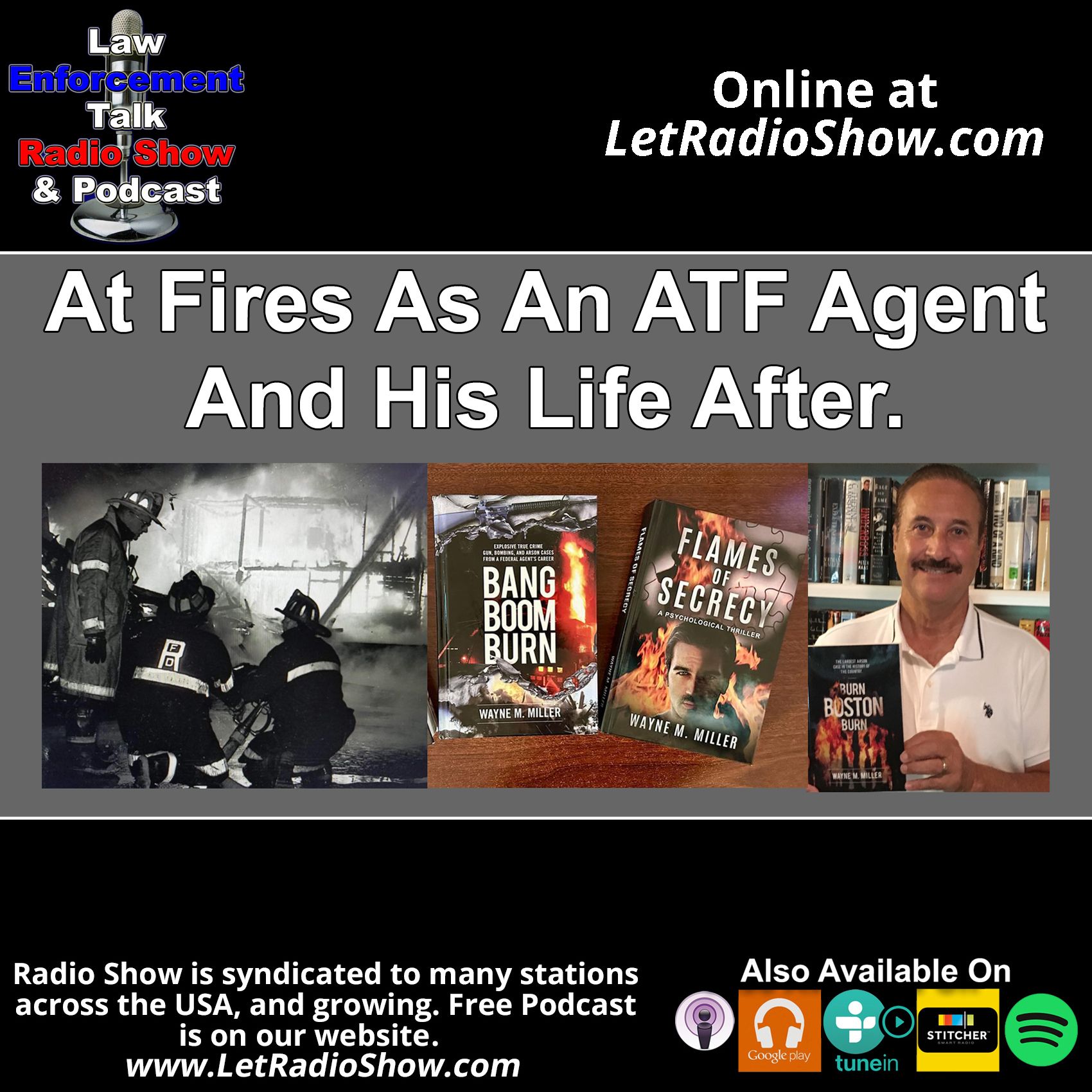
Law Enforcement Talk: True Crime and Trauma Stories
At Fires As An ATF Agent And His Life After.
00:38:30
At Fires As An ATF Agent And His Life After. From Flames to Pages: The Enduring Legacy of Retired ATF Agent Wayne Miller. Wayne Miller, a retired ATF agent and seasoned fire investigator, has dedicated his life to unraveling the mysteries behind some of the most devastating fires in history. His extensive career, spanning 25 years with the Federal Bureau of Alcohol, Tobacco and Firearms in Boston, saw him at the forefront of numerous high-profile illegal firearms, bombing, and arson cases.
Loading summary
Transcript94 lines
- [00:01]
A
If you're an H Vac technician and a call comes in, Grainger knows that you need a partner that helps you find the right product fast and hassle free. And you know that when the first problem of the day is a clanking blower motor, there's no need to break a sweat. With Grainger's easy to use website and product details, you're confident you'll soon have everything humming right along. Call 1-800-GRAINGER Click grainger.com or just stop by Granger for the ones who get it done.
- [00:31]
B
He's retired from the atf. He investigated some of the deadliest hotel fires in American history, plus the loss of six firefighters in Worcester fire, his investigation and the long term effects on him welcome to the Law Enforcement Talk Radio Show. In the Law Enforcement Talk Radio show we are joined by special guests talking about their experiences, the realities of investigating crimes, plus those have experienced horrendous trauma. Police, first responders, military and victims of crime share their stories. Hi, I'm John J. Wiley. In addition to being a broadcaster, I'm also a retired police sergeant. Be sure to check out our website letradio.com and also like us on Facebook Search for the Law Enforcement Talk Radio Show. There's a couple ways you can stay in touch and keep informed of what's going on with the Law Enforcement Talk radio show. Number one, go to our website letradio.com sign up for our email newsletter. It's really easy to find. I promise we don't spam you. I send out about one email every two weeks or so and there's also a feature called Broadcast Channels on our Facebook page where we send messages directly to your inbox directly to your messenger. Real easy to sign up for. Make sure you like or follow the Law Enforcement Talk Radio Show Facebook page. And up top you'll see Broadcast Channels one for free podcast versions of the radio show, another one top post of the day. So you too can stay informed quickly, easily and best of all like always free. Join us on the Law Enforcement Talk Radio Show. We have Wayne Miller. Rain is retired ATF Alcohol Tobacco Firearms and he is also one of the movers and shakers for a website called burnbostonburn.com Wayne thanks for your service. Chris AB thanks for being guest on Law Enforcement Talk Radio Show. Both very much appreciated.
- [02:26]
C
I appreciate you having me by the
- [02:28]
B
way ATF I was a Baltimore police and I was detailed at DEA for a little over I say almost two years and we did a lot of work with ATF and I was deputized as U.S. marshal. And the ATF is one of, I think, one of the least understood organizations out there. But they have a great reputation, especially for street policing.
- [02:48]
C
You know, ATF couldn't exist without state and local police officers and firefighters. They absolutely need each other in order to exist.
- [03:00]
B
And by the way, they hit the street a lot. That was one of the few organizations where they were active. You saw them all the time. Them and the U.S. marshals, they had different jobs. And we're gonna talk about your job a little bit, but they had different jobs, but they were out there all the time.
- [03:16]
C
You know, you see them more than ever on tv. Even the other day with shootings at night, in the middle of the night, you see ATF police jackets out there all the time. Now we try to respond. We make relationships with state and local guys who give us a call and we hit the streets.
- [03:35]
B
How long have you been retired from atf?
- [03:37]
C
Now, I'm afraid to say how long? This is coming up on my 25th year retired.
- [03:43]
B
By the way. You're like me. You're what we called a dinosaur. And I'm a knuckle drum dragon, Neanderthal, five, zero, cop, and I don't care.
- [03:54]
C
You know, it flew by on the job and it flew by even faster off the job.
- [03:59]
B
And here's the thing about. I gotta ask you this as a question. So sometimes, you know, I feel like I'm really damaged goods from policing and I got hurt. Retired an active violence. I retired very young. I was 33. My real problem started when I say things that quiet. But sometimes that feels like a lifetime ago. Sometimes it feels like another guy, and sometimes it feels like yesterday.
- [04:23]
C
You're absolutely right. You know, I do a lot of speaking events now all over the country. And when I talk about certain fires, like the Worcester warehouse, the Worcester Six, when we lost six firefighters when I was out in Wisconsin, 250 fire investigators. I'm going down the aisle just talking in between the tables. And I get to a certain point where they show an engine that is covered with flowers and personal signs and something like. It just breaks me down. In Wisconsin, I had to turn around and go back to the podium and compose myself.
- [05:03]
B
No, I get that. And Right. I'm very. I'm a private guy to begin with. I think a lot of men are. I'm not going to let you see the emotional side of me, but there's stuff going on now. And when I get emotional, I get very. You don't see me at all. Yeah.
- [05:19]
C
I mean, that was unusual for me, but it is one of the fires that hits me straight in the heart. You know, I carried a gun for 25 years, but I worked fire investigations for 19 years with ATF and another 17 on the private side. So I'm very close to firefighters. And I end up my second marriage of 30 years. Now I ended up marrying into a firefighter family where my father in law and brother in law were both captains on a city department. And my wife lived through a fire before I met her.
- [06:01]
B
When it comes to fire, see Alcohol, Tobacco and Firearms, a lot of people focused only on the firearms. They don't look at bombs, they don't look at explosions. And by the way, there was a documentary series on television about the Atlanta Olympic bombing and it was solved by atf, if my memory is correct.
- [06:21]
C
Well, competition between the FBI and atf, it goes on forever. But the ATF agents did not believe that Richard Jewell was the bomber. I was there myself. I was there at the Olympics picking up evidence pieces at 3:30am and I went to my first autopsy. I was on the job for 20 years before I went to an autopsy. And they selected me to stay with the evidence. And yes, so when you watch some of the documentaries and movies, don't believe Richard Jewell did it. Go with some of the gut from the ATF agent who was featured in that film.
- [07:04]
B
And by the way, most films, and I'm no stranger to what Hollywood does, they'll usually take like. I'm retired from the Baltimore Police Department. Oh, my God. Is the Wire really like how it is? I'm like, like, yeah, somewhat. But they'll take like six or seven people and combine them into one. And was that the situation with that?
- [07:25]
C
Not in the documentary portions, but when you watch some movies. Yes, they do that. And they did that. Yes.
- [07:34]
B
And I think that's for dramatic licenses, for a lot of things as time savings and it's also for legal protection. But one of the things I have a lot of police on. And when I say police, that means federal and state and local and sheriffs and state troopers, you name it. They'll write books. And have you thought about writing a book about this?
- [07:57]
C
About which?
- [07:58]
B
About any of the things that you've done?
- [08:00]
C
Oh, absolutely. I've already. I have two true crime books and one fiction, but it's a Serial Arsonist Murderer, which is right up my category anyway.
- [08:11]
B
Well, we'll talk about that a little bit later on. Let's just say this again. A lot of people love to Lump ATF into one category. And quite honestly, I really don't know the first thing about arson or bombing or fire. But that's kind of your specialty. Is that something you chose or fell in your lap?
- [08:34]
C
No. You know, I did some undercover work my first four years and I did gun cases my first four years. And I lucked out through relationships that I got a 46M16 seizure here in Massachusetts. But after that, I just didn't really want to do gun cases anymore. So Boston started ATF Artisan Task Force. And I volunteered for that because I just thought it would be a really nice niche where you go out and interview on any one case. You interview from a cabbie first, eyewitness, firefighters, police, insurance, homeowners, building owners, that type of thing. So I knew that was good. And then I became a certified fire investor where I became an expert on the actual scene work, figuring out where and how the fire started. And it's. It's a puzzle every single time. And I love it.
- [09:34]
B
It's very challenging. I don't know. I said, I'm a street cop. I don't know the first thing about it. But they would have accelerant detection dogs. They would do everything. And I look at these burned out hulks of buildings and say, and quite often they were fatalities and say, good luck. I don't know how you. And they will piece it together. So we're talking with Wayne Miller is retired atf and he specialized in fires, which we'll talk in a few moments. His website is barnbostonburn.com that's burnbostonbird.com you get information about his books right there on the website. This is the law enforcement talk radio show. And we return, we're going to talk about the Dupont Plaza Hotel fire in puerto Rico in 1997. Don't go anywhere. We'll be right back. Of all the radio stations in the United States, there are no other shows like the law enforcement talk radio show. And on Facebook, there's only one official page. Do a search on Facebook for the law enforcement talk radio show and be sure to like the law enforcement talk radio show Facebook page. Return to conversation. Wayne Miller on the law enforcement talk radio show. Wayne is retired ATF and he is also an author. He's got multiple books. You can find them online. His website's burnbostonburn.com that's burnbostonburn.com. way back in your career, first of all, when did you start with ATF? And you said you retired 25 years ago. So I'M not that good at math. When you start. When did you retire?
- [11:15]
C
I started as a baby. Came on at age 23 in 1976.
- [11:20]
B
Holy cow.
- [11:21]
C
And yeah, and I retired in 2001. So it was 25 years and a week. The extra week was because of the pay period ends. You know, I hear you.
- [11:34]
B
In 1976. Guess where I was.
- [11:37]
C
High school.
- [11:38]
B
Graduating from high school. Hey, I'm an old timer, but I'm not that old man. You've seen a lot of changes in your years between 1976 and today. I'm sure things are totally different.
- [11:54]
C
Oh, besides, ATF moved from Treasury Department after 9 11. They were now in the Justice Department. They concentrate on different things like terrorism, still on gun cases, but actually the arson work has fallen a little bit by the wayside. They still have certified fire investigators around the country, but they don't have the arson task force. Cities like we had when America was burning.
- [12:22]
B
And by the way, in the late 70s, early 80s, it was a very violent time for police. It was a very violent time. Lots of explosions, lots of bombings, lots of fires. People think things have gotten bad lately. I'm telling you they were bad back then.
- [12:36]
C
Oh, just in Boston, bombed the courthouse. The Sam Jackson something Melville arsonists and bombers. They were protesting just the way the government runs. Just what they do now.
- [12:54]
B
So you were how long were the job when you got sent to the Dupont closet Hotel fire in Puerto Rico?
- [13:03]
C
Yeah, I mean that is one of those horrific ones that people tend to forget about years later. But you know, it happened on New Year's eve up to 1986 and fire happened in the afternoon and we got phone calls. I was on the national response team and there were four teams in the country, Northeast, Southeast, Midwestern team and Western team back then. And they called us up a little after 5pm and said you got to get to Puerto Rico. I was on an 8am flight on New Year's Day that changed your New Year's Eve plans. And I was on an 8am flight and we had about 18 ATF people there working side by side with Puerto Rico police squad and FBI. 97 people died in that hotel. 87 of them were all stacked right in front of one 36 inch doorway trying to get out of the casino. So it's pretty horrific when you see a pile of 87 people with varying degrees of burn. They weren't super charged. I don't want to get too gross. And so the FBI and Air Force teams recovered the bodies one at a time, making sure they got the personal effects with them while we did the fire origin and cause with the local authorities. And, you know, you're in that hotel and every single step we took, by the way, was in asbestos back then. And asbestos is a cancer causing agent. And, you know, so you don't realize when you're working, don't think of it when you're working until later on. But I was interviewing a employee of the casino. I had an interpreter with me, a police officer, and we recorded his interview. And we're right in the casino area at the time. And he, he's saying we had no training whatsoever. There was no alarm systems, there's no sprinkler systems. And the smoke was starting to come into the casino and nobody knew what to do. They all stayed there because he got money on the tables and they didn't know what to do. So this guy, he tried to make his way to that one doorway where people trying to get out and they ended up closing the doorway because the flames went through the lobby in front of the doorway and you couldn't go that way anymore. And he said it was like every person fighting for themselves. And I was swimming through the people, and I called to my friend, you know, and I'm just going to say, Julio. I called to him, he's about halfway down the casino and I call, and all of a sudden he ignited from the waist up in flames. Because the smoke layer, you know, that's the science behind it, you know, but he ignited from the waist up. And the guy I was talking to was still broken up, completely broken up about it. He lived because he ended up going out the floor to ceiling window. But he didn't know how he got out. He said, I don't know if I got pushed or jumped about 16ft down. And, you know, he lived and he didn't get burned. Whereas like one guy jumped and he turned around to catch his wife and flashover occurred. Flashover is when everything in the room catches on fire. The flames, the smoke layer. And his wife was in that window permanently until she was removed by the recovery team.
- [16:47]
B
And this was in 1986. He said 97 people were killed in this fire.
- [16:52]
C
Yes.
- [16:53]
B
And how many were bodies were there at the doorway trying to get out?
- [17:00]
C
Almost all of 87. Yeah. I mean, there were people, they had employees in the, you know, little locked bank area inside, you know, where you could cash in your chips and stuff like that. And they finally let themselves out of there, but they didn't, they didn't escape the room. And you know that smell of dead bodies. I'm sure you found a couple. But with the burn and everything else it went in your nostrils and just I can smell it today when I think about it.
- [17:34]
B
We were turned that part of the conversation in a few moments. What was the determination for? And you were there for eight days. What was the final determination for the cause?
- [17:44]
C
Yeah, I mean in one sense it was pretty easy. The south ballroom was about 100 yards away from the casino area where the people died. But in that south ballroom they had had an employee meeting and they were going to go on strike and the meeting broke up around 3pm so three employees went down. They took three Sterno cans. You know the cans that you put under your heels, Food to keep it heated up.
- [18:12]
B
Yes.
- [18:13]
C
They threw it, threw them into a pile of brand new furniture that was still in boxes. So you had a large fuel load.
- [18:23]
B
We take a short break on the note. We'll return the conversation a few months. We're talking about Wayne Miller, retired atf. He is also an author. You can find multiple books of his website burnbostonburn.com that's burnbostonburn.com if you want to be a guest on the law enforcement talk radio show, simply contact us. It couldn't be be easier. You can send us a message on Facebook. Look for and like the law enforcement talk radio show page or email j@letradio.com that's j a y l e t radio.com this law enforcement talk radio show. We'll be right back. Are you a fan of true crime Joes? How about true crime with a twist. People that actually investigated crimes, what they did, what they experienced, all for free. Just go to our website letradio.com it's Ellis Lincoln ease and Edward teasentomradio.com. Return conversation with Wayne Miller on the law enforcement talk radio show. Wayne's retired atf. He's also written multiple books. You can find them his website burnbostonburn.com that's burnbostonburn.com before we went to break Wayne, we're talking about the Dupont Plaza hotel fire in Puerto Rico and he said that three employees, they're having a meeting about going on strike. They took lit Sterno cans and threw them into a pile of new furniture with boxes. And that's what started the whole fire.
- [19:59]
C
Oh absolutely. These guys didn't understand the power of fire and there had been a couple nuisance fires that week because of the employee problems. But when they did this, this pile of furniture was almost 8 to 10ft high long. And when they put the lit flames into the fire, into the fuel load, it took off into a raging fire that went through the South Ballroom to the North Ballroom. And it just picked up every combustible along the. And then up the stairway. There were two doors of the casino. One on it was a horseshoe shaped casino and the first door was closest to where the fire came up the stairway. So they closed that door first and then it blew right across, right through the lobby. You know they have open places down there, right. And it just trapped the people in the, in the casino.
- [20:58]
B
So what were the employees that did this? Would they get out alive? Did they get arrested?
- [21:05]
C
Not only did they get out alive, they, they confessed to their crimes and took and confessed to 97 counts of murder and they ended up in prison almost for life. Initially they were very religious people that did not realize what was going to happen with how they set the fire.
- [21:28]
B
I always said this, there are lots of guys in prison, guys that means men and women in my world that 90% of them, I'd say 95% of them, if it wasn't for alcohol or drugs, wouldn't be in prison. The other ones, they make a bad decision, which sounds like these people did. They were good people. And then the small, very small percentage of career criminals that can really ruin your life.
- [21:52]
C
Right. And you know, these guys were so sorry for what they did. I mean they just never imagined that they would kill people like this. They just wanted to hurt the hotel itself and you know, get bargaining chips out of it.
- [22:09]
B
I understand their motivation totally. I don't agree with how they did things, but I understand. I want to shift your attention a little bit to and we'll talk about the long term effects on you. Six firefighters and a Worcester fire. Can you talk about that?
- [22:25]
C
Yes, I can. December 3, 1999, about 5pm or so, a couple homeless people who had been living in a cold storage warehouse. This warehouse was almost 100 years old and they had 18 inch thick walls because then they didn't have refrigeration for the meat and stuff like that. So they put ice in there and they kept meat fresh.
- [22:51]
B
Right.
- [22:52]
C
Two homeless people were living on the second floor of the six story building and they had a little tussle between the male and the female who had been dating but recently broke up and sent it only knocked over the candle that they had in that one bedroom that they had, that one room used to be office. They had trash all over. They didn't pick up after himself. So there was papers and things like that. They caught on fire when they knocked over a candle and they left. Never reported the fire. So there's no windows in this place. It's boarded up. Plus it was cold storage, so they didn't have windows. So it took a little while for the fire to seep out. And by the time the firefighters got there, it was a raging inferno. And they sent firefighters in seat of the fire. You have to fight it somewhere. So two firefighters up, they don't even know what floor they were on. They were buddy breathing. That is when you share your one oxygen tank because one's run out of air. And then radio silence from those guys. They just disappeared. The chief sent in two men to look for them. And again, you got four, five floors that these guys have to look on because the first two floors went on. The bottom floor wasn't on fire yet. And this building was huge. So when they sent the other two guys in, they just disappeared off the face of the earth. And then two other firefighters went in on their own, which really isn't what they're supposed to do at all. And they eventually got lost in the fire too, and perished. So the chief was one of the most courageous people you'd ever meet. He stood at the bottom of the stairway and said, I'm not going to lose anymore. Nobody else. I know you want to recover. I know you want to. You don't want to leave anybody behind. And everybody understands that, especially the firefighters who are there. But he was. He had the biggest to stand there, and it haunted him the rest of his life. But he had to do it because they were gone already.
- [25:09]
B
This is what you call. I'm not trying to belittle this at all. That's really tough decision because my natural instinct is I want to rescue, I want to preserve life. And I know firefighters are the same thing. But to say, that's it, no, you're not going in and is not popular. Took a lot of, you know what,
- [25:28]
C
yeah, he's a hero, really saving more firefighters. This building had so many rooms to it. You know, they had a big room where they stored maybe beef once upon a time, and another smaller room where they had pork or something. You know, it was. Divided it up into a massive, massive place with multiple rooms and it's pitch black and it's full of smoke. And that's another thing that happened. All of a sudden the chief was up there trying to yell for his men and stuff like that, and he said, the smoke layer went from my face. Down to my knees in a matter of seconds because something changed with the fire. More fuel kicked in that wasn't burning rapidly. It was.
- [26:16]
B
So we'll take a short break. On that note, we're talking with Wayne Miller. He's a retired ATF agent and talking about the Worcester fire the six firefighters were killed in. And he is an author of multiple books. You can find them on his website, burnbostonburn.com that's burnbostonburn.com do you want to be a guest on Law Enforcement Talk? Rate his show and podcast. It's really quite simple. And before you get into this notion that I'm not a cop, I wasn't a cop, I don't have something contribute. Well, the show is about investigating crime. That's one aspect of it from the real life perspective of those who did it. And then it's also about trauma, how trauma impacted them, often crime based, but not always. Our guests quite often are law enforcement officers, other first responders, military victims of crime, their spouses or survivors talking about how trauma impacted them, what happened, how it affected their lives and how they rebuilt their lives after. If you want to be a guest, just contact me. It's really simple. Send email to jaytradio.com that's J A Y@radio.com or go to letradio.com and contact us page and you can get me right there as well. Mr. Law enforcement talk Radio show return. We're going to talk about the long term effects on him and more. Don't go anywhere. We'll be right back. How would you like to improve your health? Let's get healthy tips you can use today for free. They don't require any money at all. You can download a free ebook, 15 tips to improve your health at let healthy.com that's LetHealthy.com again it's LetHealthy.com and let's get healthy for free. I turn our conversation on the Law Enforcement Talk Radio show with Wayne Miller. He's a retired atf, that's Alcohol, Tobacco and Firearms, a federal agency and he is an author of multiple books. You can find them his website burnbostonburn.com that's burnbostonbird.com you're one of the investigators in the Worcester fire. Where? Worcester, Massachusetts. I'm proud of myself to say the right way and I'm not from Massachusetts. I took a lot of practice, took a lot of practice waiting to be honest with you. And you're one of the chief investigators on that. And it's bound to have long term effects. Before we go into that, when we took a break, you're talking about the cause of fire. And the chief said, no more losses. And he had to be haunted by that.
- [29:04]
C
Yes, he was. He was interviewed 10 and 20 years after the fact. And you could see it in his, when he watched it on tv, in his voice, in his face, how it affected him forever.
- [29:18]
B
And the truth is, it sounds like it's affected you. And you, earlier in the conversation, you talked about doing a court and you had to recollect yourself because you were getting emotionally moved by this sort of.
- [29:29]
C
You know, I responded that night as soon as I saw a break into TV that they had some lost firefighters. I quickly responded, it's about 40 minutes from where I live. And I was there for the next 10 days and I'm one of three people that ended up writing the report on this fire. But as I looked at these firefighters trying to recover all six bodies and you look at their faces and they were raking and sifting, looking for buttons from the uniforms, you could see the anguish. You could see how tired they were. You could see how despair. And that's what I looked at every day. And when they had a memorial service, they filled an entire 15,000 seat auditorium. And you know, the president came, vice president came, governor, that type of thing. But the firefighters were assisting for eight days looking for these bodies from all over New England. And it just, it's the one that just absolutely hits me. They had these signs on this fire engine that they had as a memorial. And the sign says firefighters saved my baby. You know, some fire in the past. They are true heroes for our children and stuff like that. And I just, it cracks me up. It just, it just makes me. Every time, it just makes me shake.
- [31:01]
B
Yeah, I get that. I understand there's. And by the way, firefighting is one of the most dangerous jobs out there on almost every scene. Every fire. Fire. Every fire, whether it's a fatality or not, someone gets injured. And cancer is a real issue with firefighters and have been since I was a rookie.
- [31:23]
C
Yeah. You know, they're building new firehouses around the country because of the cancer that you mentioned, trying to separate the diesel engines and trying to separate the clothing and boots that they wear from their sleeping specs.
- [31:36]
B
Yeah. I'm not an expert, but it sounds. And one thing I hear quite often from firefighters is head and neck cancer. And it's got a lot to do with the equipment they wear.
- [31:46]
C
Yes. And the foam that was used and what's on the uniform, what's on their turnout gear is what caused a lot of these cancers. It just takes generations to start realizing it and make changes.
- [32:00]
B
So I gotta ask you, and by the way, when I was a rookie police, the average life expectancy for Baltimore police at that time was 52. Now it's like 58 for American police and the average life expectancy for American men is 73. Firefighters, they go through it, they lose their lives.
- [32:18]
C
Very young, my father in law passed away from leukemia, cancer caused by the fires he went to and so didn't my brother in law. Both of them were early 70s and both of them had cancer for several years before they died.
- [32:34]
B
Gotta ask you this question, Wayne. It's impossible to go through a police career and I throw the feds in there as well and not get dinged up. Emotionally, mentally, physically. How would you describe your state of mind? If you're like me, you do your best to put that in the past. But how would you describe your state of mind from everything you've been through?
- [32:57]
C
Overall, I'd say it's pretty good. Except that, you know, you speak to other people and you learn a lot about what you went through and how it affected you. And I'm telling you, writing the books was very cathartic.
- [33:12]
B
I'll bet it was. That was the next question I was going to ask.
- [33:16]
C
It helped me get things out from inside and put it down on paper.
- [33:20]
B
One of the things I found for me is I think a big source of my frustration is trying to get people to understand and they can't understand so I don't explain anymore.
- [33:30]
C
Yeah, you know that type. The life of police and fire is unique. And you hear that, you watch again, you mentioned Hollywood and stuff and what they do with movies, but you always see like the divorces and stuff. And you know, I went through a divorce 30 plus years ago and the alcoholism rates and stuff like that and suicide rates just so high because outside people don't understand what law enforcement, fire people go through.
- [34:02]
B
I had a guy in a show's retired FDNY fire department and his brother was retired FDNY and his brother died by suicide. His mother, when he was a young firefighter, died in a house fire from falling asleep with a lit cigarette, which we don't have anymore. But back in the day that was commonplace.
- [34:23]
C
Oh, very commonplace. And they still blame some fires on careless handling, improper handling of smoking materials. It still happens fairly regularly. Even so cigarettes are supposed to self extinguish these days. Not all of them.
- [34:41]
B
Do not all do. And by the way, there are certain hazards you can look at. And I've become, I want to say paranoid my old age, but Christmas trees, other things, furniture. It's fire retardant, but it's not like, not as combustible as the old days, but still no guarantees.
- [35:01]
C
You don't want to be at one of my training sessions where I put every single household appliance. I have a picture of each one and I explain how each one catches fire when I go away for a few days. I even unplug my microwave and I only have one power strip in the house and that's made of metal, not plastic. Folks, you should have me come and do a demonstration about household.
- [35:26]
B
Great. Now you got me thinking. I need to replace all those power strips. Now I'm gonna get metal ones.
- [35:32]
C
Spends twenty dollars or more. A little bit more than twenty bucks instead of two bucks.
- [35:36]
B
So you've written several books and you said they're cathartic. What are the books you've written? And people can get more information about the books. Your website, burn bostonburn.com.
- [35:46]
C
well, my first book, Burn Boston Burn is the title of the book. It's based on what was called the largest arson case in the history of the country. 264 men, including three firefighters and three cops, burned 264 buildings in a two year period in and around Boston. We had a tax cutting measure that slashed fire department budgets. And they said if we set enough fires, people get rehired. And it was a heck of a case that lasted about three years total. And that particular story has been picked up for a documentary which should be out later this year, and a motion picture. Okay, yeah, cool.
- [36:29]
B
I feel like I'm talking to celebrity here. I'm not talking to one of the Wahlbergs.
- [36:33]
C
I'm gonna be an executive producer. New career.
- [36:37]
B
There's no talking to me from here on out. And what's your next book?
- [36:41]
C
Well, the second one is Bang boom burn because the 46 machine gun case I had in 1980, there's some gun. Couple gun cases, two bombing cases, that's the boom portion. One killed a Boston police office. The other one is absolutely insane. 50 year old guy dating a 30American native Indian woman and her family didn't like the guy so he devised six Christmas packages that he sent. Four of them exploded five people.
- [37:13]
B
And your last book was the name of that one.
- [37:15]
C
Very quickly I switched to fiction. Flames of Secrecy. It's a psychological thriller about a serialized murderer who only targets women. Because of mommy issues.
- [37:27]
B
And by the way Wayne, is that fiction based on your experience?
- [37:32]
C
I didn't have an actual case like that but yes, you get to see the fires set, investigated and you see profiling all from my background and you
- [37:41]
B
can find more information his website burn Boston burn.com Wayne, thanks so much for your service and thanks for being guest on the show. Very much appreciated.
- [37:48]
C
I loved it. Thank you for having me.
- [37:50]
B
Of all the radio stations in the United States, there are no other shows like the Law Enforcement Talk Radio show and on Facebook there's only one official page. Do a search on Facebook for the Law Enforcement Talk Radio show and be sure to like the Law Enforcement Talk Radio Show Facebook page. A huge thank you for listening to this episode of the podcast version of the Law Enforcement Talk Radio show show by the way, which is a nationally syndicated radio show and we broadcast on over 115 radio stations across the United States to more than 44 million combined population. If you like our show, there's two simple things you can do. Go to our website ldtradio.com, add your favorites. Check it often. You can find episodes of the show right there. And the second one involves our Facebook page. It's so easy. Easy to find great content including past episodes of the show. And when you see something that you like that resonates with you, be sure to share it with your friends. We'll be back in just a few days. Another episode of the Law Enforcement Talk Radio show and Podcast. Until then, this is John J. Wiley. See ya.
- [39:01]
A
If you're an H Vac technician and a call comes in, Granger knows that you need a partner that helps you find the right right product fast and hassle free. And you know that when the first problem of the day is a clanking blower motor, there's no need to break a sweat. With Grainger's easy to use website and product details, you're confident you'll soon have everything humming right along. Call 1-800-GRAINGER click granger.com or just stop by Grainger for the ones who get it done.
- [39:31]
C
If you like the show, please take a moment to rate, review and subscribe. It really does help the show to grow. Thank you for listening.