← Law Enforcement Talk: True Crime and Trauma Stories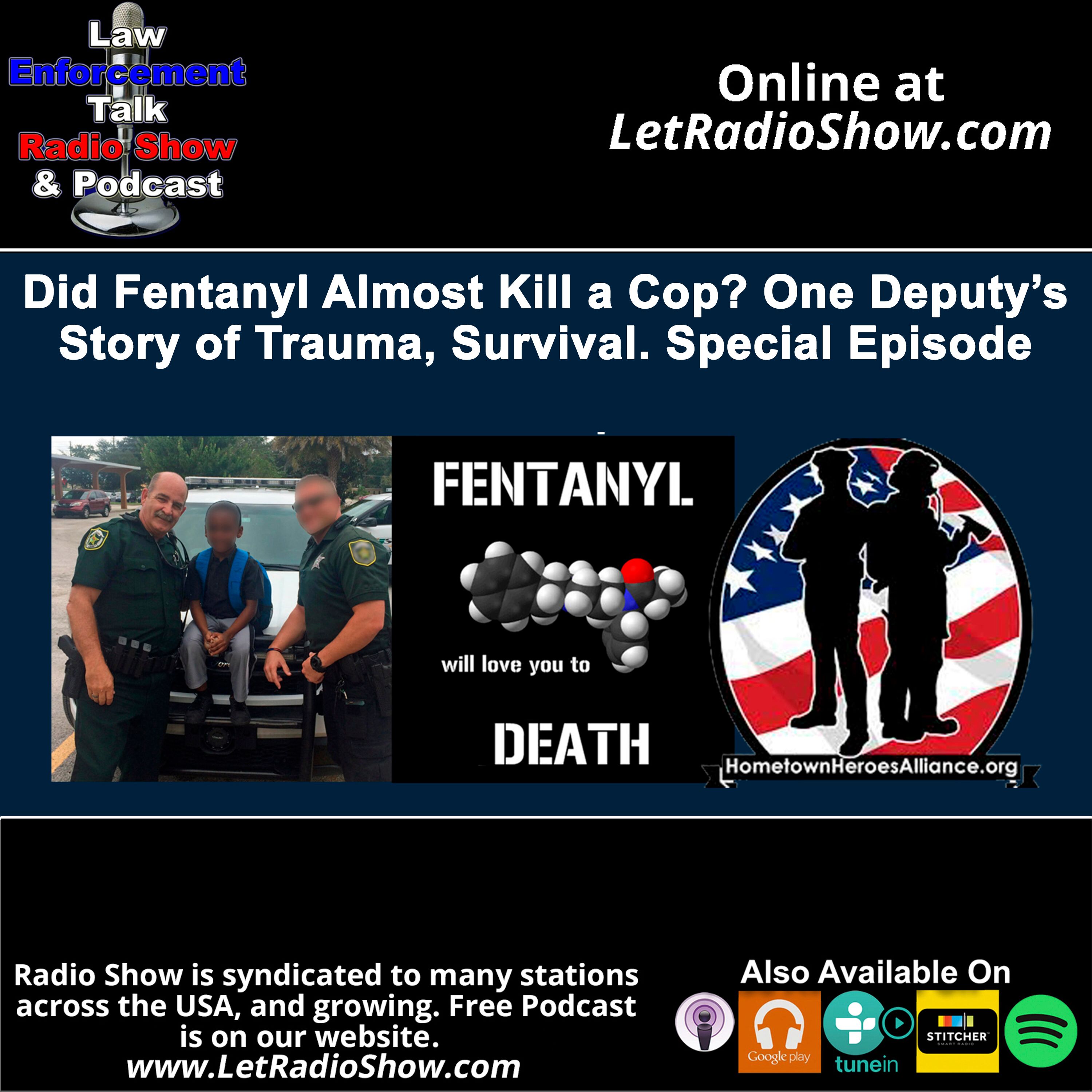
Law Enforcement Talk: True Crime and Trauma Stories
Did Fentanyl Almost Kill a Cop?
00:37:17
Did Fentanyl Almost Kill a Cop? One Deputy’s Story of Trauma, Survival, and a Mission to Help Others. Special Episode. For years, fentanyl has dominated headlines as a driving force behind America’s overdose crisis. What’s discussed far less often is how this drug impacts the first responders who encounter it in the line of duty.
Loading summary
Transcript96 lines
- [00:00]
John J. Wiley
He's a career law enforcement officer with decades of experience and accidental exposure to fentanyl almost cost him his life. He's here to talk about the risk to our first responders and his story. Welcome to the law enforcement Talk Radio Show. In the Law enforcement talk radio show, we are joined by special guests talking about their experiences, their realities of investigating crimes, plus those have experienced horrendous trauma. Police force, first responders, military and victims of crime share their stories. Hi, I'm John J. Wiley. In addition to being a broadcaster, I'm also a retired police sergeant. Be sure to check out our website, letradio.com and also like us on Facebook, search for the law enforcement talk Radio show. Of all the radio stations in the United States, there are no other shows like the law enforcement talk radio show. And on Facebook there is only one official page. Do a search on Facebook for the law enforcement talk radio show and be sure to like the Law enforcement Talk radio show Facebook page. He's a career law enforcement officer with decades of experience and accidental exposure to fentanyl almost cost him his life. He's here to talk about the risks to our first responders and his story. Welcome to the law enforcement talk radio show. In the Law enforcement talk radio show, we are joined by special guests talking about their experiences, the realities of investigating crimes, plus those who have experienced horrendous trauma. Police, first responders, military and victims of crime share their stories. Hi, I'm John J. Wiley. In addition to being a broadcaster, I'm also a retired police sergeant. Be sure to check out our website, letradio.com and also like us on Facebook, search for the law enforcement talk radio show. Of all the radio stations in the United States, there are no other shows like the law enforcement talk radio show. And on Facebook there's only one official page. Do a search on Facebook for the law enforcement talk radio show and be sure to like the law enforcement talk radio show Facebook page. Connecting with us from North Central Florida, we have Jeff Brown on the phone. Jeff has been a guest on this show before. He's got decades of experience as a law enforcement officer. As a matter of fact, 40 years on the job. We'll talk about that in a moment. Jeff is also the founder and one of the main movers and shakers from hometownheroesalliance.org Jeff, thanks again for being guest on the show. Very much. Appreciate it.
- [02:32]
Jeff Brown
I'm excited. Thank you for having me.
- [02:34]
John J. Wiley
It's been a while we've had you on. Was it three, four years ago?
- [02:37]
Jeff Brown
Yeah, it's been quite a while. Maybe even I seem to never go.
- [02:40]
John J. Wiley
Away though, you know, joking, I'll say because we talked. Just been on the job so long. He was on the job when I was a rookie and I've been retired from law enforcement for 30 years.
- [02:52]
Jeff Brown
Yep. So yeah, that's one of my big questions that I always ask the young guys, you know, is anybody in here were born before 1981. You weren't then. I am that guy that was a cop longer than you've been alive.
- [03:04]
John J. Wiley
So you've seen a lot of changes during your career and we talked about some of those before. We will talk about them after. But one of the things, and by the way, hometownheroesalliance.org great organization that he has, doing awesome things. We'll talk about that as well. Now, Jeff, during your career you've seen ups, you've seen downs, you've the highs, the lows you've gotten, the physical scars, the mental scars, all the above. Correct?
- [03:30]
Jeff Brown
Yeah. Been through the wringer with both sides of it and seen many other things going on with a lot of other guys as well.
- [03:37]
John J. Wiley
And yet you're still here, you're still doing this job and what's it going to take for you to finally pull the plug and retire?
- [03:44]
Jeff Brown
About another six to eight months. Realistically, I am about done. The politics and the things that are going on have just changed it so bad that I'm one of the last, probably one of the last dinosaurs that can still tolerate some of the stuff that's going on that, you know, this, this new, new type of law enforcement is just not working for us old guys that have been around for a while.
- [04:09]
John J. Wiley
It isn't. And this is one of the reasons I like Jeff. Jeff, and I say this with all candor, is that he is a knuckle dragging Neanderthal cretin Police like I was.
- [04:19]
Jeff Brown
Exactly.
- [04:20]
John J. Wiley
Yeah.
- [04:20]
Jeff Brown
I'm a, I'm a street cop. You know, I retired once in 2010, stayed part time for a few years while I ran offshore charter fishing business and, and hosted a T. I came back to work full time because I just missed it. And it was always when I left I was a road sergeant and when I came back it was like, don't you want to test again? Nope. I'm, I'm out here to do the job that I always wanted to do and I still enjoy doing it. So I'm, you know, just, I ride my zone with my other deputies and we go out and take names and do what has to be Done.
- [04:53]
John J. Wiley
Here's what I find interesting. When I say street cop, that's the highest compliment I can give someone. And yet when we say I just want to be a street cop and this is what I've done, there is a misconception portrayed. I blame the media, news media, Hollywood television, social media that portrays street cops in a negative way, that we are head bashers and we just want to lock people up. And that's the furthest thing from the truth.
- [05:20]
Jeff Brown
It is, it is. And you know, the, you have to look back and I think a lot of it comes into the individual being able to keep what he's doing in perspective. For me, you know, I can actually look back and tell you there's five or six people who are still on the face of this earth because I happen to be placed in the right place at the right time and we're able to take the right actions to save those lives. Be it jumping in a pond to get a woman out of a car, help a choking baby. Those are the things that I focus on. I don't focus on the negative things like oh, I got in trouble for this or I cussed at somebody and now I'm going to get written up. You know, you have to let the negative stuff go or it will, it will cause you mental issues for a very long time.
- [06:03]
John J. Wiley
And it's almost impossible with what we used to call verbal judo we were trained in, sometimes you used harsh language and it was all designed to get people away from use of force options. And nowadays what I hear from so many people, and I got called on the carpet quite a bit for what was called discourtesy and was really verbal judo, what it was. Can you explain that concept a little bit more?
- [06:31]
Jeff Brown
Well, it really comes down to almost being an actor. You know, we have here in the central Florida area where I work, we have some of the high dollar areas where you have the million dollar homes and you have to go in there, you have to be Mr. Polite and yes sir, yes ma', am, everything. And you know, beyond the top of your game, then we had the lower income areas. You have to deal with those people on a different level. And if you can't change the way you handle that, that's going to create problems for you. So it may be in one of the areas where, you know, they're struggling a little bit. It's a, it's a rough area, a lot of drugs, whatever violence. You've got to go in there with a hard line attitude. Can't go in there and be the high dollar guy that you are in a different neighborhood. That's where it all comes into play of being, being able to change that right attitude you have and stay with it. A lot of guys can't and it results in a lot of problems for them.
- [07:27]
John J. Wiley
And the big thing is a way of comparison. You kind of have to learn to be a chameleon and use the language that's used in the high crime areas where there's a lot of violence and there's a lot of resentment, resistance towards police. And I'll just give you a great example. When I was a young rookie police in a high crime area and I was talking with guys hang in the corner, some of them were hardcore criminals and I was trying to be nice, I was trying to be polite, I was trying to be professional and they ignore me. And an old time cop said, trust me, they're watching you and they're measuring how far they can get away with things. And sometimes you've got to be a little bit coarse in your language in this area because when they see you being suspected verbally, the next thing is a punch. Next thing after that is a knife or gun. This is the law enforce the show. We're going to take a short break, return a conversation with Jeff Brown in a few moments. Don't go anywhere, we'll be right back. You know, we used to have an app and it was very popular app and then guess what, we couldn't hold a candle to our Facebook presence. How many people have the mobile Facebook app already installed on their phone? How many people use it on their computer? Make sure you follow us, make sure you like us like on our Facebook page. Just search for law enforcement talk radio show and podcast and be sure to send us a comment to one of the posts. Best of all as 100% free return conversation with Jeff Brown. Almost 40 years in law enforcement getting ready to retire and not his choice. Well, he'll tell you it's his choice. This is the law enforcement show and you're retiring, Jeff, because of an exposure to fentanyl linked with an on the job heart attack. Am I correct?
- [09:14]
Jeff Brown
Yeah, it's been, you know, In May of 2021 I had a, I came home after shift and ended up having what they called the widowmaker and having a stent put in which is probably due to, you know, the bad eating and all the stuff we do as cops on the street, you know, trying to grab that hamburger from McDonald's so you have something to eat during a busy day. And, you know, not exercising enough and not doing the right thing. So I had the heart attack. Was out for 88 days. I think it was total, and came back. So things were going. Going fine, going smooth, I guess it was probably a year later. Got exposed to fentanyl and got taken out again.
- [09:54]
John J. Wiley
We say exposed to fentanyl. How did that happen?
- [09:57]
Jeff Brown
Was working a case of some suspicious guys sitting in a truck next to a gas station and walked up and opened the door on the truck, you know, because I could. I saw the drugs on their. Their legs and the needles, and they were getting ready to shoot up. Got him out of the car. We all put on our. You know, there were several of us there, put on our mask, all our PPE equipment, and in testing all the drugs, three out of the five of us for however it happened, became. Started having the effects of the dizziness, the weak legs, feeling really nauseous, and knew that we had now been exposed. And actually, each one of us narcanned ourselves so that we could make sure we, you know, got through this thing while we're calling rescue. And what I think it basically was, there was so much of it around their truck and in the air that it probably got us through the pores. And just, you know, being not a person who uses drugs, it affects us much worse than it does the knuckleheads that do these things every day.
- [10:56]
John J. Wiley
Yeah, they develop a tolerance to it. I'm gonna go back in history, you know, when I was a rookie cop, just. When you were a rookie, we didn't have fentanyl. We. Acid was a thing. Marijuana was a thing. Cocaine, of course, and then evolved into crack cocaine. Heroin's always been an issue, and PCP was an issue. And the big thing for me, I remember, was getting severe headaches when exposed to the aromas of liquid pcp. And that was really about it. We didn't have the term you use, ppe. We didn't have that term. We didn't know anything about that. Did you recall ever using that term when you were young?
- [11:33]
Jeff Brown
No. Look at all the fights we got in when we were younger. Blood all over us. The biggest thing was maybe hepatitis and tuberculosis. Those are the two big things that we had to avoid. And we didn't have rubber gloves. You got to fight with somebody, you got to fight with them. You washed the blood off and got back to work. So it's a little bit different nowadays, that's for sure.
- [11:52]
John J. Wiley
How deadly is fen? First of all, before you answer that, I'm visioning In my mind, you and the other deputies Narcanning each other.
- [12:02]
Jeff Brown
Yeah, we actually grab. Because we all carry Narcan simply. The area I work is a heavy drug area. So we all buy policy and for our own good, and a lot of it. I think the main reason we carry it is for this instance for ourselves. I mean, we use it on other people all the time. But immediately upon knowing that we had been exposed and were starting to have symptoms, we just got our Narcan and Narcan ourselves. So to try and fight off some of the effects that were going to happen, which. Which did it will probably could have saved our lives.
- [12:36]
John J. Wiley
Yeah, well, it doesn't take a whole lot for someone who's not. Doesn't have a tolerance of drugs to get exposed and get a deadly dose of fentanyl. As a matter of fact, a very, very small amount. I'm no expert in this.
- [12:46]
Jeff Brown
Yeah. And what. Well, what happens is. And you relate it to this, if you take an alcoholic, he can drive, he can drink a six pack of beer, and he doesn't even get a buzz. So if you take a person who's doing a lot of fentanyl, a little bit is not going to do it for him. Whereas a person like me who doesn't drink beer, one beer, I probably get a pretty good buzz off of it. So that's how we get affected more so than the addicts themselves, is because we're not users and our bodies are not tolerant to any amount of it at all.
- [13:15]
John J. Wiley
So many people have a negative reaction to Narcan. They're like, well, they choose to be a drug addict. They choose this, whatever it might be. And, you know, if they choose to die, that's on. And they seem to lose sight of how many other lives of innocents that are not involved in drug game wind up getting deadly doses of this stuff.
- [13:35]
Jeff Brown
Yeah, that's. That's the sad part is it's not just the addicts. It's their families. It's the people around them, and it's the cops and the paramedics and everybody else that has to deal with them. Narcan has been a lifesaver for years. I mean, I've seen people who were actually dead come back to life just from hitting them with the Narcan.
- [13:55]
John J. Wiley
And those were people that, that, for lack of better words, were drug addicts that you, You. You try to save their lives. You don't want to see them die.
- [14:04]
Jeff Brown
Yeah, and that's, you know, that's, that's our job. Whether you like it or not, or whatever your personal feelings are, you know, that's what happens to an addict. That's what they get. That's not what. That's not how we can operate. We have to be there for that reason. And. And if you don't do that, then. Then you're in the wrong business, that's for sure.
- [14:22]
John J. Wiley
I remember back in the day, junkies, and that's the term we used, dying with needles in their arms and what wound up happening. It's heartbreaking to see. It's heartbreaking to go through. It's heartbreaking and devastating for the families. We don't want that to happen to anybody.
- [14:38]
Jeff Brown
But the word.
- [14:38]
John J. Wiley
The minute the word got out that there were hot loads in this portion of Baltimore, all of a sudden sales increased and everybody came out of the woodwork to buy dope there.
- [14:49]
Jeff Brown
Yeah, we see on a regular basis, we know when a batch of either pure fentanyl or bad fentanyl is in town because our overdoses go through the ceiling. And then it'll stop for a week or two and then it comes back again. So it just, you know, it depends on who's selling it, who's making it. I think they even make it artificially now here locally, so, you know, you can get some bad stuff like anybody else. And I think when that stuff comes around, we know when there's bad batches and you better be ready for it because you're going to get two or three a day.
- [15:20]
John J. Wiley
Here's the funny thing, and I say funny as an ironic. The area where you work is not known as a drug open drug market with huge problems. We think of Baltimore, we think of Philadelphia, we think of parts of New York, we think of all these other areas. You're set your portion of Florida. How big a problem is the drug problem?
- [15:39]
Jeff Brown
It's huge. In the area that I work, it's huge. And here's. Here's the problem that you find for an area like central Florida and some of the other tourist areas. You can't put that on the news. You can't put on the news that we have shootings every single day here. It simply scares the tourists away. So the media and some other people are very good at keeping that down, making it look like it's, you know, me and all the other wonderful places are just a great place to be. And there's nothing going, you know, I don't want to slam. There's nothing going on there. But in some of the other areas, just like I'm sure In Baltimore, you have areas where you have a serious problem going on. It just doesn't get the attention it needs.
- [16:19]
John J. Wiley
You know, when I retired from police work in Baltimore and I thought about this for some odd reason today, I don't know what triggered it and I don't like that term. When I retired from Baltimore, I had already moved to Southern Maryland and that was too close. And then a few years after that, I moved to South Florida and sometimes that's too close. And I get what you're saying about the media. I get what you're saying about putting out a different image for tourism. I get how important that is. But I also get how frustrating it is because people don't know of the threats of violence and or death due to drugs. This is the law Enforcement show. We take a short break. We will be right back.
- [17:04]
Commercial Announcer
Remember when free meant free, no charge, no credit card information needed. Well, a place like that seems still exists on the Internet. The law enforcement talk radio show website letradio.com where everything is free, including the podcast episodes are available after airing on radio. The website is letradio.com that's letradio.com where free means free.
- [17:36]
John J. Wiley
Return to our conversation with Jeff Brown calling us from north central Florida. He's been in law enforcement 40 years. He is in the process of retiring. We'll explain why in a few moments. He's also one of the founders and shakers of hometown heroesalliance.org we will tell you more about that a little bit later on. Jeff, I'm going to encapsulate this very short, very quick, long into your career. You had what could have been a fatal heart attack. You recover from that, you got back to work about a year later, you're exposed to fentanyl and near deadly dose for you and other deputies. Thank God for Narcan. You all survived. However, that's where your problems, where your health really began, didn't they?
- [18:19]
Jeff Brown
Yeah, it's the, even the workman's comp cardiologist, after the fentanyl thing, he lost his mind and said, you can't go back. I can't. I can't allow you to go back. You know, fentanyl causing the heart to race like that, you could have further problems. And so we're in the process now. I actually have an appointment tomorrow to get released to go back to work. But the reality of it is it's, it's time, you know, it's time for me. I'm 65 years old. It's time for me to go, you know, and I don't want to die on the job. And I've done all I can do. And I figure at this point I've accomplished all the goals that I wanted to do. We've got our charity up running really well, and, you know, I owe it to my wife and my family to just say that that's it. I'm done with all this madness. So she's about to retire soon, so six to eight months at the most, and I'll done.
- [19:12]
John J. Wiley
You do owe it to them. And I got to call you out a little bit. You said you got an appointment with a doctor to return to work?
- [19:19]
Jeff Brown
Yeah, tomorrow. Tomorrow. You know, I can't leave under a medical. I'm not going to leave under. Under the medical outage that I'm under workman's comp right now. So I want to get back on my feet, make sure everything's up and that I'm healthy, and then I still can. Can do the things I need to do, and. And then I'll be. I'll be ready to go.
- [19:40]
John J. Wiley
Explain the reason why you've got this medical condition, and I have a sneaking suspicion why. But there's the regular retirement, and then there is the medical retirement. What's the difference? Why would you want to go back to work?
- [19:54]
Jeff Brown
Well, under Florida. Under Florida, we have the heart and lung bill here, so anything concerning the heart is a workman's comp issue. However, in order to get a medical retirement, you have to have probably two different doctors saying you're completely disabled. And I'm not completely disabled, so I'm not going to take that. That rating. I'm still able to do my job. I moved over 2,000 pounds of rocks the other days with a shovel, you know, in the backyard. So I'm still able to work. And I don't want to go out on the medical be it. I'm just stubborn. It's just a family trait that we don't do that. So I want to get back to work and say, yep, I'm back. I'm whole, I'm solid. I'm going to leave on my own two feet.
- [20:35]
John J. Wiley
You know, Jeff, I get wanting to retire on your own terms. I was retired due to injury a little over 11 years, and I did everything I wanted to do except reach all the ranks I wanted to reach. And I guess in a way, looking back, that was a godsend. I didn't realize it. I really understand wanting to retire on your own terms. I understand the stubbornness, the persistence, and I think the term we use nowadays is resilience.
- [21:00]
Jeff Brown
Yeah, that's the best. It's, that's pretty much what it is. And I'm not, you know, I'm not fooling anybody. I'm not fooling myself, but it's, it's time to go. So I have gotten my Medicare stuff in line. I've got everything. I'm slowly getting things in line so I can just pull the plug and give it a good booyah and be gone with it.
- [21:21]
John J. Wiley
One of the things you said is I don't want to die in a job and I owe my wife and my family, you know, time, because how much time is taken away? People think it's an eight hour day. That's it.
- [21:34]
Jeff Brown
Oh, no. Well, we work 12 hour shifts and then most of us, because of the salaries that most cops make, the same as teachers and a lot of other processions. You work in your part time jobs constantly. So, you know, five, six, and sometimes some of these younger guys haven't worked in seven days a week just to feed their families. So it's, it's not a 8 to 5 job Monday through Friday, that's for sure. We all know that.
- [21:56]
John J. Wiley
And so many people struggle with taking home the effects of the trauma and having it adversely affect their families. And we know none of, none of us wants that.
- [22:06]
Jeff Brown
I have been probably the most blessed man in the entire world. My wife and I have been married for 40 years. She's put up with this for all that time, you know, with the ptsd. I've been through the counseling and all the other stuff that, the bad, you know, the bad attitudes and all that stuff. She's just been, she's been my rock and my angel. So it's time to, you know, spend some time with her and do a little traveling and, and for us to just, you know, enjoy the rest of our lives.
- [22:35]
John J. Wiley
So is it safe to say you're no longer the angry Jeff?
- [22:40]
Jeff Brown
I went through some stuff and, you know, I had the one workplace shooting where I was one of the first ones in the door and had to deal with all the dead bodies and all that stuff. And it was, it was horrendous. And that, you know, we think of it this way, is that you're carrying a backpack every day you go to work and every time you deal with one of these incidents, another little pebble goes in that backpack. Well, sooner or later that pack is going to get too hard, too heavy to carry. And then you hit the big incidents and it's like Putting a brick in there. So at some point and long into my 35 years that my backpack finally was too heavy. And fortunately, I, you know, with the charity, I've seen so many PTSD problems that I knew what was happening when I was having the night terrors, and I was able to get some very good help. And as a result of that, you know, get me out of the bad things that I was going through.
- [23:34]
John J. Wiley
You know, that's a great point. And by the way, that analogy, the backpack I've been using, I think I got it from you many, many years ago. I've been using that in this show ever since because it's a perfect example.
- [23:47]
Jeff Brown
It is, it is. And guys don't realize it because each one of those little pebbles doesn't really weigh much. But you put, you know, 100 pounds of pebbles in that pack, and now it's become a problem. And for some guys, like I said, if you deal with a lot of these traumatic incidents, those pebbles turn into bricks, and you could put five bricks in there. Weighs as much as a hundreds of little pebbles. So, you know, it really. It isn't about the person, is about what the person has to deal with throughout their career.
- [24:15]
John J. Wiley
I said angry, Jeff, because there was a period of time where I was. The best explanation was very, very angry. And people don't. Don't define me that way anymore. And it took a lot of effort to get to the point and a lot of help from a lot of people to get to the point where I'm okay, even with my scars.
- [24:32]
Jeff Brown
Yeah. And, you know, and when you find yourself driving down the road on your day off in your own vehicle and you're just going to the grocery store or something and you get cut off, you start pounding on that dashboard and screaming and cussing, and that's a clue that there's something going on here. And we often don't pay attention to that. And we owe it to each other more so than anything, is to watch your partners. And when you see this stuff happen, their eating habits change, they come to work tired, they're sick a lot. You know, you need to start talking to your partners and going, hey, it's okay to not be okay. Let's talk about this. Let me refer you somewhere. Let's do something with it. And if they don't accept to help, then maybe it's time you step up and get them to help. We have to do that for each other.
- [25:18]
John J. Wiley
I love the way you talk about this. One of the things that we need to be able to do is be okay with the concept of stepping on other people's toes to save their lives and, and have conversations that we don't want to have that are not comfortable and say, hey, are you okay? Because there was times when I wasn't okay and this was going on. And unfortunately the people who catch it the most are our loved ones, our family members and they see the isolation they see the mood swings they experience, the anger, the irritability, the hyper vigilance, all that stuff. This is the law Enforcement show. We're going to turn to our conversation with Jeff Brown. Forty plus years in law enforcement getting ready to retire. We return we'll talk about his transition and what he's doing with Hometown Heroes alliance and more. Don't go anywhere. We'll be right back.
- [26:08]
Health Promo Announcer
Get your free e ebook on tips to improve your health. They are tips you can start using today and most will cost you nothing. Plus the ebook is 100% free. Download the free ebook at Let Healthy.com when we say free we mean free. Get the ebook for free today at let healthy.com that's at let healthy.com again the website is let healthy.com.
- [26:40]
John J. Wiley
Return. Conversation on law enforcement show with Jeff Brown. 40 plus years in law enforcement in north central Florida getting ready retire. He is also the founder, one of the movers and shakers of Hometown Heroes alliance and we will talk more about that in a few moments. Matter of fact, he was on the show I'd say probably five years ago talking about what he does. And here's the thing, I got to call you out on this, Jeff. Five years, it's a blink in an eye when you get 40 year law enforcement career. The reality is you, you probably should have been retired five years ago.
- [27:18]
Jeff Brown
Yeah, I should have probably retired more like 25 years.
- [27:21]
John J. Wiley
Yeah. But here you are and now you've been it's it kind of the decisions kind of enforced on you. Is that a correct way of describing it?
- [27:29]
Jeff Brown
Yeah, it's to that point where medically it's, it's time to, to do something. It's also going to give me a whole lot more time to work the charity end of the stuff that my wife and I do.
- [27:40]
John J. Wiley
Yes. The charity is not just you and this is something that you're all in on and your wife is too.
- [27:47]
Jeff Brown
We do, we, we have a great board of directors. My wife and I founded this thing and we run with it. It's been growing, we're growing slowly. We're very proud of the fact we don't have any paid staff at all. We live off of donations and all of our donations go to go to our guys. And we do so much in the background with helping people with, you know, family illnesses, guys that have been hurt on the line of duty and can't work their part time jobs. We're able to financially. We just helped build a wheelchair, wheelchair ramp up in West Virginia. We've built one here in Orlando recently. So we do a lot of things in the background all while we take some of the heroes out on outdoor adventures, fishing trips, hunting trips and stuff like that all throughout the year to highlight what we're doing for those guys.
- [28:34]
John J. Wiley
By the way, your website's hometown heroes alliance.org can people make donations right there?
- [28:41]
Jeff Brown
Yes, they can. There's a donation button on there. We really encourage everybody to go on there and look at the donations. You can do one time, you can do monthly. Our monthlies are growing. Even if you went on there and did $5 a month, can you imagine what it does for us if we get hundreds of people doing $5 a month? It really helps us to aid those guys who have been medically retired, the ones that are still working, the old guys like me that need a little bit of help, have family members with cancer problems. We're very open to being able to do a lot of stuff for all first responders, not just law enforcement, but firefighters as well.
- [29:18]
John J. Wiley
One of the things, our radio show is broadcast on a minimum of 82 stations crossing our states. And we estimate our audience at about a million listeners. And we're broadcast weekly to more than 28 million combined population. So let's do the math. If 1 million people donated $1 a month, that would be a million dollars a month or $12 million a year. How much could you do with that kind of income?
- [29:41]
Jeff Brown
You would be absolutely amazed. I mean, we, we help these guys with their medical deductibles when their family members have cancer. And their, our deductibles are like $4,000 a year. We're able to help them with that. With that kind of money, we can continue to grow nationwide. We already do things in Oklahoma, Arizona, Connecticut, Georgia, South Carolina. We're already nationwide. But it would help us help more people throughout this country. We all know last year I think the figure was 254 guys, men and women, were shot in the line of duty. Not all of those were fatally shot, but a lot of those are now medically retired. They're struggling. Their income has been dropped in half in a lot of cases. So we're able to help them with car payments, mortgage, mortgage payments. It's just an amazing adventure that we can do for these guys and do so much to let them know they are not going to be. We are not leaving them behind. Five years down the road, we may show up and go, hey, let's take you on a hunting trip to let you know you're still in our family. So it will help us tremendously.
- [30:45]
John J. Wiley
That almost brings me to tears when you just say that right there, Jeff. The magnitude.
- [30:50]
Jeff Brown
We'd encourage you to come and join us on one of our outdoor adventures. To really get the feeling you cannot experience it until you see the smile on one of these guys, faces that knows he has not been forgotten. That five years down the road when no one calls him anymore, no one wants to come around and see him, that we just show up out of the blue and go, hey, you're going to go on an all expense paid fishing trip down to Florida Keys and with your family. We always bring the families because that's a big part of what, what we do.
- [31:22]
John J. Wiley
That's so phenomenal. You said two things that really resonate with me. Number one, you know, when you retire, it's a matter of moments. Once the door slams, you're pretty much off the island and you don't exist anymore. And it can become a very lonely feeling because a big part of what I missed, I don't miss the circus so much as I miss the clowns I worked with. And I say that with the utmost respect. The camaraderie, when that's gone, it's gone.
- [31:48]
Jeff Brown
You know, what we found with, with a lot of the guys is that in going back and looking at all the things, about a year after you've been medically retired, or you retired for good reasons, your phone doesn't ring anymore. No one comes and sees you, especially in a medical end, because we believe that that reminds other guys. I could end up like that. I don't want to continue to see this because that could be me one day.
- [32:14]
John J. Wiley
You're absolutely right.
- [32:14]
Jeff Brown
And life goes on for a lot of others. So we don't. We cannot. There's no way in this world we could leave those kind of guys behind. They have given their life, their legs, their arms, their mobilities, their mental issues. They've left it on the field. And very commonly agencies and the people they work with leave them behind. And we can't do that. We cannot afford to do that.
- [32:37]
John J. Wiley
We can. And it's Admiral, that you are doing that. With hometownheroesalliance.org the other thing that you really, really resonated with, so many people that were, you said were shot, so many law enforcement officers shot that, that did not die. And that's a great thing. But they're medically retired with their maimed. They've got lifelong injuries. And most of them, many of them I talked to were like, my family have been better off if I've been killed financially.
- [33:03]
Jeff Brown
Yes. And you and I have dealt with some of the same people over and over again. There's one particular one, and I won't use her name, but she was shot in the eye as a K9 officer just recently. Three years down the road was finally given her Social Security total disability. Three years she'd been fighting for that and she hasn't been able to work. There's, there's, we can't let that gap that has to go in there. Somebody has to fill that gap and has to help them financially, emotionally, and keep that stuff going. And we have been there for her and her family the entire time. And it is such a blessing to see that that wounded officer now get what she truly deserves for the rest of her life.
- [33:44]
John J. Wiley
And I want to clarify, it's. It's usually at the departments they really do their best to try to help people out. It's once workers comp. Gets involved, once the bean counters, the county government, the accountants get involved, you are going to be a casualty and it's going to be rough ride.
- [33:59]
Jeff Brown
Yeah, I've been. And that's the other thing about me is that, you know, through the heart attack, I've been dealing with workman's comp through the fentanyl, I've been dealing. I'm still out of work. I'm hoping to go back very soon. But I know the battles. I personally know how these battles get fought and I know what it does to the morale and the emotions and the mental issues that people go through with this. So for us to run this charity and help them, I can go in there and go, I really do understand and we're going to fix this.
- [34:26]
John J. Wiley
So many people hear what you do and it's like, I think it's great. You take people out on fishing trips, you take them out on hunting trips. I want to go fishing the keys with you. I really do. But you're so much more than that. You do so much more than that.
- [34:40]
Jeff Brown
Yeah, that's the. See, and that's, you know, the side of it where you have to, you have to advertise Some to let people know what you're doing. And we get those guys to talk about their stories because there's a couple of reasons. One is it is amazingly healing process for them to talk about it, to let people know what they went through. The other side of it is it lets the other guys know who feel like we see this all the time, feel like, I don't deserve that. Give that to somebody else. That's, you know, that's cornmeal, man. You do deserve it. Anybody who's injured in the line of duty does deserve to be recognized. So it helps us get help for the other people.
- [35:19]
John J. Wiley
It does.
- [35:20]
Jeff Brown
And realistically, most of these trips that we go on, like the hunts in South Carolina, trophy hunts we go on, those are all donated. We don't pay for any of those. So we don't use donations for those. For the majority of it is all donated. Those are $2,000, you know, per person hunts that are just donated by those organizations. So we're always looking for that as well.
- [35:39]
John J. Wiley
How can people. What do you tell them to do?
- [35:43]
Jeff Brown
Well, we. We would just encourage them to go to our website, hometownheroesalliance.org, look at our Facebook page, see the things we do, look at the smiles on the faces of the injured guys, and go to our YouTube channel, which is simply Hometown Heroes Alliance. Look at the videos on there and watch what these people say and how they react from the beginning of their trips to the end and watch the smiles. You can't buy those smiles. You just can't do it.
- [36:09]
John J. Wiley
And when it comes to your social media, your website, people can contact you right through those means, can't they?
- [36:15]
Jeff Brown
Yes, they can. Our phone, my phone number, my cell phone number is on the websites and all the, all the social media stuff. You can call us at any time. If you or an organization or want to donate a trip or sponsor a guy on a trip, by all means, just call us. We're always looking for the help in those areas.
- [36:31]
John J. Wiley
Jeff, thanks so much being guest on the show. The next time we talk, you better be retired. I will be.
- [36:37]
Jeff Brown
That I can promise.
- [36:38]
John J. Wiley
We'll talk to you soon, man.
- [36:40]
Jeff Brown
Yes, thank you very much.
- [36:41]
John J. Wiley
I'd like to thank our guests for coming on the Law enforcement Talk Radio Show. The Law Enforcement Talk Radio show is a nationally syndicated weekly radio show broadcast on numerous AM&FM radio stations across the country. We're always adding more affiliate stations. If you enjoyed the podcast version of the show, which is also always free, please do me a favor and tell a friend or two or three. I'll be back in just a few days with another episode of the Law Enforcement Talk Radio show and Podcast. Until then, this is John J. Wiley.
- [37:13]
Jeff Brown
See ya. If you like the show, please take.
- [37:20]
John J. Wiley
A moment to rate, review and subscribe.
- [37:23]
Jeff Brown
It really does help the show to grow. Thank you for listening. It.