← Law Enforcement Talk: True Crime and Trauma Stories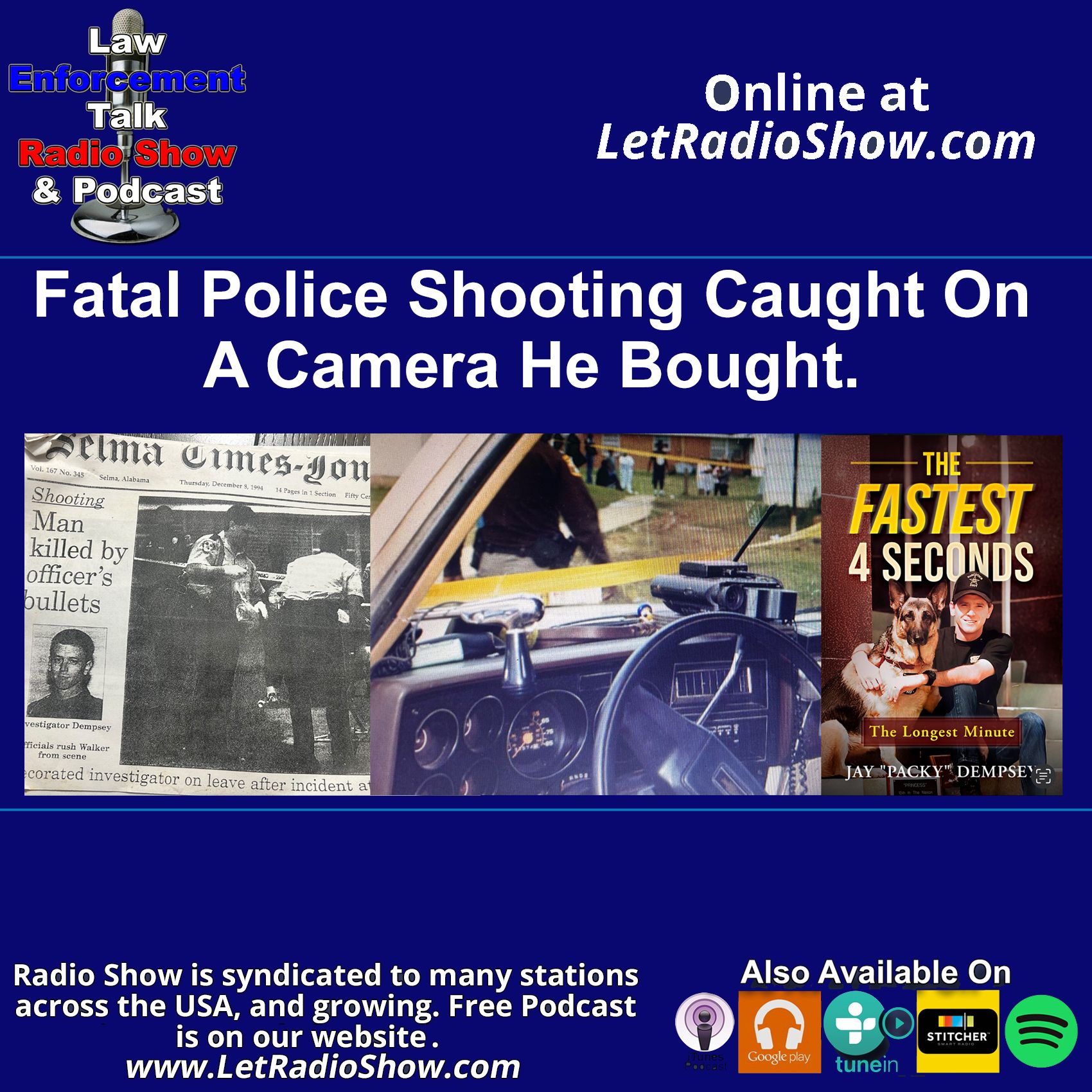
Law Enforcement Talk: True Crime and Trauma Stories
Fatal Police Shooting Caught On A Camera He Bought
00:39:34
Fatal Police Shooting Caught On A Camera He Bought. He had responded to a complaint in a high crime area and got into an altercation with a suspect. During the altercation the suspect was able to take his pistol. The suspect then stood over him and pointed the pistol at him. He was able to utilize his bail out device. And his K-9 Princes then exited the unit and engaged the suspect.
Loading summary
Transcript191 lines
- [00:00]
WSECU Announcer
WSECU isn't just one of Washington's best credit unions. We're the only credit union to be on the Forbes Best in State list five years running.
- [00:08]
John J. Wiley
Why?
- [00:08]
WSECU Announcer
Because we put you first. Lower fees, early paydays, financial guidance and service second to none. As a member owned cooperative, we love Washington as much as you do. From the Olympic Mountains to the rolling Palouse. Join us and discover how much we care about your financial well being. Because what we really do best is invest in you. Stop by, say hi, we're wsecu. Let's Credit Union.
- [00:31]
Grainger Announcer
This is the story of the one as head of maintenance at a concert hall, he knows the show must always go on. That's why he works behind the scenes, ensuring every light is working, the H Vac is humming, and his facility shines with Grainger's supplies and solutions for every challenge he faces. Plus 24. 7 customer support. His venue never misses a beat. Call quickgranger.com or just stop by Granger for the ones who get it done.
- [01:01]
John J. Wiley
He's a retired police officer from Alabama. During his police career he was involved in a fatal shooting. He developed ptsd. He got a lot of blowback, lots of threats from the community. Had to change agencies as a result of that. He's here to talk about the incident, how it impacted him and what he does about it today. Welcome to the Law Enforcement Talk Radio Show. In the Law Enforcement Talk Radio show, we are joined by special guests talking about their experiences, their realities of investigating crimes, plus those who have experienced horrendous trauma. Police, first responders, military and victims of crime share their stories. Hi, I'm John J. Wiley. In addition to being a broadcaster, I'm also a retired police sergeant. Be sure to check out our website letradio.com and also like us on Facebook search for the Law Enforcement Talk Radio Show. One of the questions I get all the time is how can I show my support for law enforcement? We're all busy. We've got busy lives. But there's something oh so simple you can do with our Facebook page. Search for Law Enforcement Talk Radio show Facebook page and when you see a post you agree with that resonates with you. Share it. Especially episodes of the podcast we to do all that. Just search for us on Facebook, look for Law Enforcement Talk Radio show and be sure to click like contadians. From the great state of Alabama we have J. Packey Dempsey. He likes to go by Packy. He is a retired police officer from the state of Alabama. He was involved in a fatal shooting Developed ptsd, had to change agencies. He will tell us all about that. He's author of the book Fastest 4 Seconds and his website is fastfast4seconds.com. Jay or Packy, thanks for your service and thanks for being a guest on the show and tell us all about it. Very much appreciated.
- [02:54]
J. Packey Dempsey
Thank you.
- [02:55]
John J. Wiley
It's a pleasure to have you here. And we have gone through the, you know what to trying to get this interview to happen and we're finally making it happen. So one of the things that doesn't get talked about in the media at all is when officers are involved in shootings and what happens afterwards. And you're going to share a lot of that from your own personal experience, aren't you?
- [03:17]
J. Packey Dempsey
Yes, sir.
- [03:18]
John J. Wiley
And here's what I say. I was involved in four shootings in a little more than 10 years. The first two I never fired a shot back. The last two were different affairs. Fortunately, everybody lived. There's no fatalities, but none of them were like the media says they are. And what we don't get in society in general is I always say this as a platform for police officers in particular to tell their stories. We've relied on the news industry for too long to tell their stories and now they're so biased they're not even close to truth.
- [03:48]
J. Packey Dempsey
That's correct.
- [03:49]
John J. Wiley
So tell us about yours. And by the way, I was thoroughly shot out after my career is over, physically, mentally, emotionally and a biggest part of the problem for me, I always say this, it's not the big things, it's the ants on the kitchen counter that get to me. It's a daily grind that got to me. The daily police work thing that got to me. It wasn't the big so called critical incidents. Is that fair for you?
- [04:19]
J. Packey Dempsey
That's correct.
- [04:21]
John J. Wiley
It just never ended and it never. And the biggest source of stress for me was my department. It wasn't the bad guys on the street and the bad guys on the street, by the way, I always say this. We didn't arrest everybody we dealt with and even those we did arrest, the vast majority, the overwhelming majority were not bad guys. They wouldn't hurt you. There was no danger. It was a very small percentage.
- [04:43]
J. Packey Dempsey
Yes, sir.
- [04:44]
John J. Wiley
How's that for you? Was the department the biggest source of your problem or was it the street or was it a combination?
- [04:52]
J. Packey Dempsey
It was a combination, of course. The chief deputy was awesome. He carried me through it to this day. The grand jury voted 9 to 9 even though they saw the incident on video camera.
- [05:12]
John J. Wiley
When you say they vote, grand jury voted nine to nine. Was that to not in, not pass, what they call it. Indict, not to indict. So that's what they voted for, that you were. You were justified?
- [05:25]
J. Packey Dempsey
Yes, sir. They. It takes 12 to indict or not indict in the state of Alabama. And they voted strictly off who I was. They didn't care that the suspect tried to kill me.
- [05:41]
John J. Wiley
Right. Even though the whole incident was captured on body camera, which is before my time.
- [05:45]
J. Packey Dempsey
Yes, sir.
- [05:47]
John J. Wiley
So take us to that. Without saying the agency tell us what happened beginning from the start. You get the call for service and you showed up. But what was it about?
- [05:57]
J. Packey Dempsey
I got a call to a project area that used to be Air Force Base. We had received somewhere around 200 calls that year at this project. I got a call for gambling, drinking, drug dealing, drug usage. I responded. It took me about 15 minutes, which is a normal response time. I responded, went through the cul de sac. Eight males exited the area. I made the block again. They did not leave. I stopped, activated my camera I just bought from Sears, exited the vehicle and saw one of the subjects had a piece of crack cocaine in his fingers. As I told him to leave, he put his. Put the crack in his pocket and I asked to pat him down. When I did, the first mistake I made was I patted him down facing me. I went for the straight for the drugs. There was a hole in the pocket. I shook the legs. The crack fell out the bottom. He attacked me immediately. A struggle ensued that lasted one minute. My K9 was deployed from a bailout system. During the struggle. I reached for my radio. He got my gun. He swiped it, hit the dog in the head and the ground, put the trigger to my head or the weapon to my head and pulled the trigger. It didn't go off. It was stovepiped. I did not know that.
- [07:28]
John J. Wiley
Stovepipe is a form of a jam, it's called.
- [07:33]
J. Packey Dempsey
Yeah, well, the FBI called it a stovepipe, where the shell.
- [07:37]
John J. Wiley
Actually, the vast majority of people listening to show do not work for the FBI. They don't know what that means.
- [07:43]
J. Packey Dempsey
Yes, sir. So just jammed? Yes, sir.
- [07:46]
John J. Wiley
Okay, so the gun didn't go off because it was jammed. And usually the cause of that is because they're not handling it correctly. They're not putting enough grip or enough support. Usually what causes jam like that with semiautomatics.
- [07:58]
J. Packey Dempsey
That's correct.
- [07:59]
John J. Wiley
And I'm not a ballistics expert. People say this all the time. I carry gun every day primarily for self defense, but I'm not into muzzle velocity. I really don't care about any of that stuff.
- [08:14]
J. Packey Dempsey
Yes, sir.
- [08:15]
John J. Wiley
So tell us more about what happened.
- [08:17]
J. Packey Dempsey
All right. I was able to regain my footing. The dog went back in, distracted him. I reached for my weapon. It wasn't there. It took me four seconds to realize I have to apply deadly force. I reached for my backup weapon that I carried in a handcuff case on my back. I fired what I thought to be two rounds but ended up being five rounds center mass, just like we had trained on the range. Subject turned and ran unaffected.
- [08:51]
John J. Wiley
And there was a period of time where I carried a backup gun. And then I stopped and I used to carry this way before your time. We'll visit something you said I think is very crucial. We used to carry slapjacks and when I first started in the department, I did. And then I stopped carrying him because there was something else I had to defend against in a fight. Fights were that often.
- [09:10]
J. Packey Dempsey
That's correct.
- [09:11]
John J. Wiley
And those things can get can be used against you. And that's. Here's what number one. I want to visit something before we go to break. We got a break coming up very soon. You bought a camera from this that wasn't provided by the department?
- [09:29]
J. Packey Dempsey
That's correct. That was pre camera days.
- [09:32]
John J. Wiley
So about what year was that?
- [09:34]
J. Packey Dempsey
It was in 1994. I purchased a camera from Sears for $800 that would be somewhere around $3,000 in today's market.
- [09:45]
John J. Wiley
And did that provide the evidence that kept you from being IND by the grand jury?
- [09:49]
J. Packey Dempsey
Yes, sir, it did. That and a really good investigative team.
- [09:54]
John J. Wiley
We're talking with Jay Packy Dempsey, he goes by Packy. He's a retired police officer in Alabama. He's involved in a fatal shooting, developed ptsd. He wrote a book about the entire incident called the fastest 4 seconds and his website is fastest 4 seconds. Com ever missed an episode of the law enforcement radio show Never fear. You can sign up for our free email newsletter and get access to past podcast episodes. Plus all subscribers are automatically entered in all future contests. Sign up at letradioshow.com scroll down to the sign up area. That's letradioshow.com we promise we will never spam you. Sign up at letradioshow dot com this is law enforcement talk radio show. We're going to take a short break. When we return we're going to go into the details of what happened, what life was like afterwards, why he changed to other agencies and and more. Don't quite aware. We will be right back.
- [10:55]
WSECU Announcer
Remember when free meant free, no charge, no credit card Information needed. Well, a place like that still exists on the Internet. The law enforcement talk radio show website letradio.com where everything is free including the podcast. Episodes are available after airing on radio. The website is letradio.com that's letradio.com where free means free. WSECU isn't just one of Washington's best credit unions. We're the only credit union to be on the Forbes Best in state list five years running. Why? Because we put you first. Lower fees, early paydays, financial guidance and service second to none. As a member owned cooperative, we love Washington as much as you do. From the Olympic mountains to the rolling Palouse. Join us and discover how much we care about your financial well being. Because what we really do best is invest in you. Stop by, say hi, we're wsecu. Let's credit union.
- [11:53]
Grainger Announcer
This is the story of the one. As head of maintenance at a concert hall, he knows the show must always go on. That's why he works behind the scenes, ensuring every light is working, the H Vac is humming and his facilities shines with Granger's supplies and solutions for every challenge he faces. Plus 24. 7 customer support. His venue never misses a beat. Call quickgranger.com or just stop by Granger for the ones who get it done.
- [12:29]
John J. Wiley
Return to conversation with J. Packey Dempsey. He goes by Packy's retired police officer and Alabama, he's involved in a fatal shooting. Which will return to our discussing developed ptsd. Had to change agencies as a result of that and some threats to him and his family. What he does about it Today he's author of the book Fastest 4 Seconds. His website is fastest4seconds.com. Packy, returning your conversation about this shooting, was there anything in this lead up to this event that made you think today's gonna be the day where bad stuff's gonna happen?
- [13:06]
J. Packey Dempsey
No, sir. Absolutely not. It was a beautiful December day. It was extra warm. I was having a wonderful day.
- [13:15]
John J. Wiley
And when things go bad for me, there's usually something that makes the radar bells go off. And you said earlier in the conversation, and I'm not criticizing you because I wasn't there, but you said you, you patted him down for drugs with him facing you and that was the first mistake you made. Did you realize then or when did you realize that things were going to get really bad?
- [13:38]
J. Packey Dempsey
When he went for my weapon. Seconds later, he crossed my body because he was facing me. A huge mistake. It just started the tumbling blocks of mistakes that I made.
- [13:50]
John J. Wiley
And one of the things And I'm not here to second guess you. Please believe me when I say that. But one of the things that we were taught early on, and there were many times in my career that I'm like, I don't know how I survived. I really don't. We had a saying in the Baltimore Police Department, and particularly in the academy, was the complacency kills, and it kills all the time. Did you feel like you were being complacent about the call or the handling of this guy?
- [14:18]
J. Packey Dempsey
Complacent. Something I dealt with day in, day out, and I got too comfortable.
- [14:23]
John J. Wiley
Yeah, that. And that's where. And the second guess was. The second question is you. You mentioned you were canine officer, and we have backup with the canine dog. Did that play a role in your complacency?
- [14:36]
J. Packey Dempsey
Yes, sir. It made me feel bolder and more braver and was not aware that they had already made plans to do this to me.
- [14:49]
John J. Wiley
That's the thing. So a lot of this stuff is not spur of the moment. A lot of it is planned out. And we had a saying, maybe personal, maybe department wise, but death threats were common nature, and people would always talk a lot of smack as they were walking away. It was when they really planned it out and they put a course to action and they stepped through with the next phase of it that really got our attention. For example, in my career, we had death threats that were written by a city jail inmate that was sent to the homicide, or they. They interdicted it, and my name was mentioned and they said they knew where I lived. And that was a big problem because this guy took the time to write it. When you say it was planned out. When did you become aware that this plan was put into play?
- [15:39]
J. Packey Dempsey
After the investigation and all the evidence was released to me after the second grand jury cleared me in the shooting.
- [15:47]
John J. Wiley
So the second grand jury cleared yet the first one was what they failed to indict. And then there was a second one.
- [15:54]
J. Packey Dempsey
Called failed indictment or not indict. So I was on administrative leave for almost a year.
- [16:04]
John J. Wiley
That's a long time.
- [16:05]
J. Packey Dempsey
Yes, sir.
- [16:06]
John J. Wiley
How old were you or how recent were you policing in your career when this occurred?
- [16:13]
J. Packey Dempsey
I've been policing about five years. I was 25 years old, in really good shape.
- [16:18]
John J. Wiley
Yeah, don't even get me started on that, because I'm an old geezer now. And here's what the truth is. I'm down almost 61 pounds. But what? Used to work in my 20s and 30s, hitting the gym, cutting back on food, certain things worked great that didn't work in my 40s and 50s and it certainly doesn't work in my 60s. It's a lot harder now to get in shape.
- [16:40]
J. Packey Dempsey
I agree.
- [16:42]
John J. Wiley
You got to be really dedicated to it. But back in my prime, I was about 210 pounds fighting weight, and I was benching 300 pounds. And I was super strong. I had good cardio. But there were certain. Certain calls where if the help didn't get there, it was going to get ugly. And it's going to get ugly. Seriously. Did that feel like the situation for you or it happened so quick that you didn't get a chance to even think about it?
- [17:08]
J. Packey Dempsey
No, sir. After one minute, I was spent. I felt like I had jogged in the cold uphill. My arms ached. I almost gave up.
- [17:20]
John J. Wiley
And what was the old saying that you learned in the police academy? Never quit.
- [17:24]
J. Packey Dempsey
That's right. My instructor from the trooper academy told me, get up. I saw a picture of my family and said, somebody else is gonna walk her down the aisle. And I said, no, he's not. And I got up and continued the fight.
- [17:37]
John J. Wiley
Here's one of the things that I. And I say this. When you said earlier with your backup gun, you didn't know. You thought you fired two rounds, you fired five, which is not uncommon. But I remember clearly thinking, one of the last shootings, the last shooting I was in, that a thought entered my mind that this guy's trying to kill me and I'm going to die. But it won't be tonight. It won't. Because of you, meaning him. And I would do whatever it took to survive. Did that train of thought enter your mind at all?
- [18:08]
J. Packey Dempsey
Once I regained my footing and realized that it was time to fight back, I was like, I may be going down, but I'm taking him with me.
- [18:18]
John J. Wiley
That's the best way to be. And there's an old saying, I'm probably going to butcher it. But fight like you're the third monkey on the ramp. The Noah's Ark. And it's starting to rain.
- [18:27]
J. Packey Dempsey
It's starting to rain. That's correct.
- [18:29]
John J. Wiley
That's the way things got. Before we get into what happened with this shooting, what would the final outcome in court be for a guy who had a little bit of crack and did some gambling?
- [18:41]
J. Packey Dempsey
Probation.
- [18:42]
John J. Wiley
Probation. Hardly worth a life in death situation, isn't it?
- [18:48]
J. Packey Dempsey
Unbeknownst to me, the suspect had two grand jury indictments and they had been trying to find him and they suspected him in other murders. So he had all that on his mind. He didn't he wasn't worried about the crack as it was me finding out actually who he was.
- [19:06]
John J. Wiley
So he was a murderer, A murder suspect.
- [19:08]
J. Packey Dempsey
Murder suspect. Yes sir.
- [19:11]
John J. Wiley
And here's the one thing I had different mindsets with different people. For example we had did a recent interview with a guy who was involved in a near deadly fight where he got shot with 30 odd 30 out 308 rifle by a pedophile. And one of the things I said was pedophiles were not normally violent. But you didn't know who this guy was and what kind of violence he was capable of before you encountered him, did you?
- [19:39]
J. Packey Dempsey
That's correct.
- [19:40]
John J. Wiley
A lot of people seem to think that the police have some sort of X ray vision. We can tell who people are, who the bad guys are, all that stuff and know what they're about before we even talk to them. That's just not true. We're humans.
- [19:54]
J. Packey Dempsey
That's correct. All the other suspects, the other five guys, there are seven guys there. They all knew me. I just didn't. I had never seen this kid before.
- [20:06]
John J. Wiley
So he was not part of the normal crew. For that call we're talking with J. Packy Dempsey, he goes by Pack. He's a retired police officer in Alabama. He was involved in a fatal shooting which we'll continue to talk about in a few moments. Developed ptsd, had to change agencies and as a result of his experience he wrote the book fastest 4 seconds his website. You can get more details about him. The book is fastest 4seconds.com that's fastest 4seconds.com you can find us on Facebook. Look for and like the law enforcement talk radio show Facebook page. This is law enforcement talk radio show. We're going to take a short break. We'll be right back. If you do any business on social media, creating content is one thing. The trick is how do you turn those people that comment on your social media into consumers. It's a great tool and you can get more information@let pops.com that's L E T P O P S.com Best of all, you can start it for free. Let pops.com check it out today.
- [21:14]
WSECU Announcer
WSECU isn't just one of Washington's best credit unions. We're the only credit union to be on the Forbes best in state list five years running.
- [21:22]
John J. Wiley
Why?
- [21:22]
WSECU Announcer
Because we put you first. Lower fees, early paydays, financial guidance and service second to none. As a member owned cooperative, we love Washington as much as you do. From the Olympic mountains to the rolling Palouse. Join us and discover how much we care about your financial well being because what we really do best is invest in you. Stop by, say hi, we're wsecu. Let's credit union.
- [21:45]
John J. Wiley
This is the story of the one. As a maintenance supervisor at a manufacturing facility, he knows keeping the line up and running is a top priority. That's why he chooses Grainger. Because when a drive belt gets damaged, Grainger makes it easy to find the exact specs for the replacement product he needs. And next day delivery helps ensure he'll have everything in place and running like clockwork. Call 1-800-granger. Click granger.com or just stop by Granger for the ones who get it done. Return to conversation with J. Packy Dempsey, goes by Pack. He's a retired police officer in this great state of Alabama. He's involved in a fatal shooting, which we'll return to our conversation about. He developed PTSD as a result of that and other incidents. He had to change agencies, which we'll talk about as well. And he wrote a book called the fastest four seconds. His website get more details about the book. Him is fastest4seconds.com. Jay, return to our conversation about the shooting. When did you find out the status of this guy that you wound up shooting?
- [22:56]
J. Packey Dempsey
About a year later, the Abi and the FBI did a post interview or post investigation and explain to me with photographs and reports and witnesses what it actually unfolded in the guy's mind.
- [23:13]
John J. Wiley
And did you find out right away that this guy was dead on arrival?
- [23:18]
J. Packey Dempsey
Yes, sir. Something interesting. I fired five rounds. He turned and run, ineffective. I gave chase. He fell down, turned and tried to fire my weapon again. I approached him with an empty gun. I didn't know. I thought I had fired two rounds. I knew it had five, but I had fired all my rounds. The dog engaged. I was able to break the gun away, clear the weapon and had a few choice words of the gang members. I don't remember what I said, but it kept them off of me. The dog downed and started barking until I could get back to my radio and go double zero.
- [23:59]
John J. Wiley
So you. You were aware at this point? I guess I'm gonna go back to the question. Wouldn't you become aware that he did not survive?
- [24:08]
J. Packey Dempsey
Right there, right there. When I took the gun away, reached under his head to try to hold him and he died right there in my arms.
- [24:18]
John J. Wiley
And did that have an impact on you? Because I already know the answer to this question. But did it have an impact on you?
- [24:26]
J. Packey Dempsey
Yes, sir, it does.
- [24:28]
John J. Wiley
What was that about?
- [24:29]
J. Packey Dempsey
I feel that I took a life and he made those bad. He made me make that decision, which angered me that he put me in that situation. I knew his dad there was. I was. He took his last breath as I was waiting on backup, which took from the time I radioed to the first trooper arrived. It was three minutes, which seems like.
- [24:57]
John J. Wiley
An eternity by the way. Three minutes can be a lifetime.
- [25:01]
J. Packey Dempsey
I could hear the sirens coming from miles away and it was in a cul de sac so they couldn't drive straight to me. They had to circle through the subdivisions and it was pretty. It was a long. It felt like a long time.
- [25:16]
John J. Wiley
I found myself in my career as I look back in some of the deadly use of force situations. And I said earlier that everybody survived, thank God. But I would get mad, really. And I can't really describe in a way, but primordial is almost a primitive thing where I'd be forced to do things that I did not want to do because of their actions. And I would yell at them. Did you find yourself losing your control at all?
- [25:43]
J. Packey Dempsey
No, sir. I lost my hearing, my vision was very blurred. I could see my pulse in my eyes. I never lost control, but I never said another word until even when they arrived, I couldn't really talk. It's hard to describe that all the event and what had happened and what I thought was going to happen to me just overwhelmed me.
- [26:11]
John J. Wiley
So here's the really ugly stuff. You spent a year on death duty for a lack of better words while this is being investigated by a grand jury, am I correct?
- [26:23]
J. Packey Dempsey
No, sir. I sat at home.
- [26:24]
John J. Wiley
You were at home, you weren't even on the job.
- [26:27]
J. Packey Dempsey
That's correct.
- [26:29]
John J. Wiley
Did you feel like that you were Persona non grata, that you were not welcome at that agency anymore?
- [26:36]
J. Packey Dempsey
Because of that I was not allowed at the sheriff's office or to wear uniform on part time duties. Christmas time, you know, you make extra money. I wasn't allowed any of that. They were trying to protect me at the time. I felt paranoid that they were out to get me.
- [26:54]
John J. Wiley
Look, I understand that. And here's one thing a lot of people say when a lot of police, and I use that term include, say troopers, sheriff's deputies, constables, you name it. When they are hurt in a line of duty and they are, they get their pay cut to about 66. Well, if you're still active duty, you're going to get your base pay, but all overtime ceases. So if you're relying on that overtime to make ends meet, you're in trouble. And then like me, when you're hurt and retired. Then all of a sudden, my pay went from, say, a certain amount to 66 and 2/3 of that and all overtime ceased and my health insurance tripled. So it created a really bad financial situation. You had the stress of what happened and the financial impact on you. Is there anything I'm missing?
- [27:47]
J. Packey Dempsey
No, sir. You're hitting the nail on the head.
- [27:49]
John J. Wiley
It's awfully easy to get into the woe is me, the poor me. And to be angry at other people, especially agency. And you hinted that you were kind of a little resentful at them.
- [28:04]
J. Packey Dempsey
Yes, sir. And now I see where they were coming from. They just didn't know what to say because they didn't know how it was going to go.
- [28:12]
John J. Wiley
Right, I get that. Let's fast forward your second grand jury. They didn't indict you. Is found to be justified. And I'm sure that you returned to work and tried to continue on. When did you realize that things needed to change, that you're an unsafe situation?
- [28:33]
J. Packey Dempsey
I couldn't do anything, Jay, because we were. Because of the color of my skin. I was getting complaints. I was getting sued because of this and the newspapers and threats on my family. And I was just blessed to take a call to come to Orange Beach.
- [28:53]
John J. Wiley
And when you say the media, that this is something that I harp on all the time, and it's gotten remarkably much worse. This is from my own experience. They can say whatever you want about a police officer in a line of duty because you are a public figure and there's not a whole lot of recourse that you can do about it. But they can spread accusations in a form of questions that people. They remember and they treat you differently. Did you feel that at all?
- [29:24]
J. Packey Dempsey
Oh, yes, sir. But I had a circle of trusted officers, friends, pastors, and they. They carried me through it.
- [29:34]
John J. Wiley
And then you said you wound up getting called to Orange Beach. You want to tell us about that?
- [29:39]
J. Packey Dempsey
Yes, sir. Received a call, they needed a firearm instructor. And I took the call and drove straight through, took the job. Come back pre cell phone. Hey, baby. We're moving to the beach, huh?
- [29:51]
John J. Wiley
Well, it's not all bad. You're going to the beach. So there's an upside to it. But I'm sure you didn't see at the time, if you're like me, I thought I was going to start my career there and finish my career there, and that was it. I was going to get promoted and I was gonna make a difference, and that was not in the cards for me. And apparently Was not in the cards for you?
- [30:12]
J. Packey Dempsey
No, sir, it wasn't. I had aspirations of being the sheriff. I stayed in the media with my dog, went to all the school functions. I had a really good rapport with the general public.
- [30:24]
John J. Wiley
What was your dog's name?
- [30:26]
J. Packey Dempsey
Princess.
- [30:27]
John J. Wiley
Princess, a female?
- [30:29]
J. Packey Dempsey
Yes, sir.
- [30:30]
John J. Wiley
That's uncommon back then. What year Was this again?
- [30:34]
J. Packey Dempsey
1994.
- [30:36]
John J. Wiley
It was very uncommon for police dogs to not be male when they talk about patrol dogs. And Princess sounded like she was patrol dog.
- [30:44]
J. Packey Dempsey
She was, yes, sir.
- [30:46]
John J. Wiley
Man, I love dogs. My wife and I, we love dogs. We have a Rottweiler at home now. His name is Enoch. And nobody gets me like he does. And he's our 13th rider?
- [30:56]
J. Packey Dempsey
That's correct.
- [30:57]
John J. Wiley
One of the things I tell people about him is I'm old, retired cop, and I have a neighbor who said to me, I was walking my dogwind. He goes, are you retired first responder? I'm like, yeah, retired Baltimore police. He goes. I said, why? He goes, because you don't talk to nobody. You keep yourselves. We're talking with Jay Packy Dempsey. He's retired police officer from Alabama. Developed PTSD from police work and a fatal shooting. We'll return to our conversation a few moments. He wrote the book Fastest 4 Seconds. His website is Fastest 4 Seconds Calm. Of all the radio stations in the United States, there are no other shows like the law enforcement talk radio show. And on Facebook, there's only one official page. Do a search on Facebook for the law enforcement talk radio show and be sure to like the Law enforcement talk radio show Facebook page. This is Law Enforcement Talk Radio show. We'll take a short break. I promise you we'll be right back.
- [31:53]
WSECU Announcer
How would you like a free ebook on tips to improve your health? We're talking about tips you can use for free to add years to your life. Best of all, the ebook is free to Download@Let Healthy.com when we say free, we mean free. So you can download the free ebook to improve your physical health, all while preserving your financial health. Get the ebook for free today@Let Healthy.com. that's@Let Healthy.com Again, the website is Let Healthy.com. wsecu isn't just one of Washington's best credit unions. We're the only credit union to be on the Forbes Best in state list five years running.
- [32:30]
John J. Wiley
Why?
- [32:30]
WSECU Announcer
Because we put you first. Lower fees, early paydays, financial guidance and service second to none. As a member owned cooperative, we love Washington as much as you do. From the Olympic mountains to the rolling Palouse. Join us and discover how much we care about your financial well being. Because what we really do best is invest in you. Stop by, say hi, we're wsecu. Let's credit union.
- [32:53]
Grainger Announcer
This is the story of the one. As head of maintenance at a concert hall, he knows the show must always go on. That's why he works behind the scenes, ensuring every light is working, the H Vac is humming, and his facility shines with Granger's supplies and solutions for every challenge he faces. Plus 24. 7 customer support. His venue never misses a beat. Call quickgranger.com or just stop by Granger for the ones who get it done.
- [33:31]
John J. Wiley
Return A conversation with Jay Packy Dempsey, retired police officer in Alabama. He was involved in a fatal shooting, which we've talked about, we'll continue to talk about in a few moments. Developed ptsd, had to change agencies, which we'll discuss again in a few moments. And he wrote the book called the fastest four seconds about his experience. And his website is fastest4seconds.com as fastest4seconds.com. Packy, when you say fastest4seconds, is that how much time elapsed with the shooting?
- [34:00]
J. Packey Dempsey
Yes, sir. That's when I made the determination. I had it under control till I'm fixing to die. I need to do something. It took me about four seconds to make the transition and apply deadly force.
- [34:12]
John J. Wiley
And the thing I'm getting as is the entire incident lasts about a minute and your decision making was about four seconds. And people think it TV has a lot to do with this. They think it goes on forever and ever and ever. And it doesn't.
- [34:25]
J. Packey Dempsey
That's right.
- [34:26]
John J. Wiley
Most shootings are over and done with within like five seconds.
- [34:31]
J. Packey Dempsey
I believe the national average is four seconds. Yes, sir.
- [34:35]
John J. Wiley
That's pretty quick. So when we left, you were in the last segment talking about going to Orange Beach, Alabama. You were married. Did you have children at the time?
- [34:45]
J. Packey Dempsey
I had a daughter, Megan and Jaylee, yes.
- [34:50]
John J. Wiley
So not only you, your spouse, but your children had to pick up, move and start a whole new life in a different part of that state of Alabama. Am I wrong?
- [35:00]
J. Packey Dempsey
That's correct. He had to move away from all our family.
- [35:03]
John J. Wiley
So there's a price they paid. And I'm sure if your daughters are like mine, they're gonna remind you that.
- [35:08]
J. Packey Dempsey
Periodically they actually thank me now.
- [35:11]
John J. Wiley
Well, Orange beach compared. I don't know where you were in Alabama before and I don't know Alabama, but I've heard of Orange Beach. I don't know a whole lot about other parts of the state.
- [35:20]
J. Packey Dempsey
Yes, sir, I Was from Selma, Alabama, home in 1965. Racial marches with Martin Luther King.
- [35:28]
John J. Wiley
And there's a lot of history that goes on. And by the way, we're still paying the price for a lot of actions that people did. I think that was 1964. 65. I was a youngster.
- [35:37]
J. Packey Dempsey
Yes, sir, 65.
- [35:39]
John J. Wiley
But we're still paying the price for. People think that it's okay to treat someone badly that wasn't even alive or policing during the time frame because of what occurred. So you changed agencies and eventually PTSD started to raise its ugly head in your life. How was the impact?
- [36:00]
J. Packey Dempsey
Couldn't take the blood on my hands in the last breath. I couldn't take that. This guy that I knew, his dad had taken him away from all the holiday outings. And I would do anything to get it off my mind. Jay. Drink pornography. I would take out credit cards and shop till I maxed them out. Inappropriate texting, anything to make it stop.
- [36:28]
John J. Wiley
And I'm not surprised by any of that. For me personally, it was alcohol. And I got sober 30 some odd years ago. And I to this day don't understand the correlation. But for me, the combination of trauma and alcohol is like pouring gasoline on a fire.
- [36:43]
J. Packey Dempsey
Yes, sir.
- [36:44]
John J. Wiley
And someone said, some experts, they say, because if you don't deal with it now, that stuff works great until it stops working. And that's what I found myself, is the alcohol in particular became another source of a problem where it used to be my crutch.
- [37:02]
J. Packey Dempsey
That's correct.
- [37:05]
John J. Wiley
So when did you decide you needed to do something about.
- [37:07]
J. Packey Dempsey
This all came to a head in 2020. I was given the ultimatum, you will quit drinking. You will see this counselor, and you will take this medication or we're gone.
- [37:22]
John J. Wiley
You tell your spouse, I'm sure that's the one who said that. Thank you for doing that. Because they saved your life.
- [37:29]
J. Packey Dempsey
They did.
- [37:30]
John J. Wiley
And a lot of times we don't realize it. I didn't realize at the time that I was given a similar ultimatum, but it was. You just don't understand. Did you find yourself in a situation where you're like, you don't understand and lashing out at her?
- [37:45]
J. Packey Dempsey
Oh, yeah, absolutely. I totally regret those days. I'm just. I feel like all I got to do is make up for being that.
- [37:54]
John J. Wiley
Terrible person and the next question and then we'll go into your book. For me, it's. I spend a lot of time in prayer and meditation to try. And I say this to get back to my center. I'll never be like I was when I was 18, it's like orthopedic surgery. I don't expect to be, but there are certain things I do, like go to bed around the same time every night, wake up same time every day, eat around the same time every day, and pray and meditate. Do you pray and meditate or do you have a routine?
- [38:26]
J. Packey Dempsey
Yes, sir. I put pennies in the jar every day, get up, do my Bible lesson. I contact five of my closest friends going through the same struggle. I get out, I walk a mile in the parking lot, pick up trash. And this is before 5:00am that's exactly.
- [38:42]
John J. Wiley
What I'm talking about. I walk my dog every day. In the morning, we have long walks. And in the evening before bedtime, we have long walks. And I pray, I meditate, I unplug. I get away from all outside stimulus and it seems to have a profound effect. And you know what? I don't get as far away from my center as I used to be. Is that fair for you?
- [39:03]
J. Packey Dempsey
I feel the spirit of God and he just draws me back. Hey, what you're thinking is wrong. JI got so bad I had to put Covenant eyes on my phone and let my pastor and my wife look at my Internet usage and look at my text messaging. And I got all those roadblocks in there now and I can't let them down.
- [39:24]
John J. Wiley
Right, right. I get it. So let's talk about writing the book. What prompted you to write this book? Fastest 4 seconds.
- [39:32]
J. Packey Dempsey
Trooper King from Selma, Alabama. State troopers asked me to come back and teach the class. He called three times. I finally gave in. I gave my lesson. I was able to minister to these guys, talk about how fast things go down. And I realized that that was what God had planned all along. People don't want to hear in a classroom something that they don't want to hear. You talk about something that hasn't been done to you. They want to hear the real deal.
- [40:06]
John J. Wiley
No, I get it. I always say this. And one of the pieces of advice I give to people when they say, oh, meet so and so, my son or my nephew or my niece, they want to be police officers and what would you suggest? And the first thing I tell them is get yourself a trauma informed therapist. Be proactive. Don't wait until the bad stuff happens. And it's book smarts are great. There's nothing wrong with that. But get yourself someone who really knows.
- [40:31]
J. Packey Dempsey
That's right. Listen to them old dogs. They've already made the mistake. They're trying to keep you from making.
- [40:37]
John J. Wiley
The same thing so the book's called Fastest 4 Seconds. When you started writing it, how long did it take?
- [40:43]
J. Packey Dempsey
I'm still in writing it. It finishes end of this month and goes to publishing in January.
- [40:50]
John J. Wiley
So let me ask you this. When did you start? Because it's a whole lot longer than four seconds, actually.
- [40:56]
J. Packey Dempsey
I started 15 years ago with all collecting pallets of data and video and statements and photographs. And it's taken about 15 years and it's finally, the Lord put the right guy, Christian writer in my path and it just took off.
- [41:16]
John J. Wiley
So, last question before we go to your website. Do you ever look back and say, that was a different guy or that was a different time of my life? Does it seem like there's a before and after to you?
- [41:27]
J. Packey Dempsey
I look back and I say, that guy's dead. You're this guy now.
- [41:34]
John J. Wiley
See, I look back and I go, that's all part of the reason why I am today. However, I don't want to be that guy. And I accept that's part of my past. But there's times, honestly, where it feels like it's a different person. Let's go to your website. Fastest 4seconds.com. That's Fastest 4seconds.com. Can people reach out to you? Can they get more information about you? The book, when it's available.
- [41:58]
J. Packey Dempsey
That's correct. The book. My speaking engagements, my training department and academies that I do, they're starting to get wind of it through the academy media, social media and the speaking engagements are increasing. But I had to put God first in this j to get it where it's at. Before, it was all about me. Woe is me. Well, I'm not that guy anymore.
- [42:26]
John J. Wiley
Right. And I think it's a great way of putting it that if it's all about you, you're in bad company. That's really what it's about. And God is the center of my life. That's fine. My wife is extremely important to me. My daughters are very. As a matter of fact, there's some people that really matter what they think of me. My wife, my daughters, my mother, everybody else doesn't really matter. And the type of person I am, how I live my life is what predicts how I do today. I want to thank you for your service, Paki. And I want to thank you for telling your story. Both very much appreciated.
- [43:03]
J. Packey Dempsey
Thank you.
- [43:04]
John J. Wiley
I'd like to thank our guests for coming on the Law Enforcement Talk Radio Show. The Law Enforcement Talk Radio show is a nationally syndicated weekly radio show broadcast on numerous AM&FM radio stations across the country. We're always adding more affiliate stations. If you enjoyed the podcast version of the show, which is always free, please do me a favor and tell a friend or two or three. I'll be back in just a few days with another episode of Law Enforcement Talk Radio show and Podcast. Until then, this is John J. Wiley. See ya.
- [43:39]
WSECU Announcer
WSECU isn't just one of Washington's best credit unions. We're the only credit union to be on the Forbes Best in State list five years running. Why? Because we put you first. Lower fees, early paydays, financial guidance and service second to none. As a member owned cooperative, we love Washington as much as you do, from the Olympic mountains to the rolling Palouse. Join us and discover how much we care about your financial well being because what we really do best is invest in you. Stop by, say hi, we're wsecu. Let's Credit Union. This is the story of the One As a custodial supervisor at a high school, he knows that during cold and flu season, germs spread fast. It's why he partners with Grainger to stay fully stocked on the products and supplies he needs, from tissues to disinfectants to floor scrubbers, all so that he can help students, staff and teachers stay healthy and focused. Call 1-800-GRAINGER Click grainger.com or just stop by Grainger for the ones who get it done. With stays under $250 a night, VRBO makes it easy to celebrate sweater weather.
- [44:46]
John J. Wiley
You could book a cabin, stay with.
- [44:48]
WSECU Announcer
Leaf views for days, or a brownstone in a city where festivals are just a walk away.
- [44:53]
John J. Wiley
Or a lakeside home with a fire pit for cozy nights with friends. Or if you're not a sweater person, we can call it Corduroy weather.
- [45:01]
WSECU Announcer
More flexible, and with stays under $250 a night, you can book a home that suits your exact needs.
- [45:08]
John J. Wiley
Book now@vrbo.com Step into the shadows of.
- [45:11]
J. Packey Dempsey
History with the youe Town podcast.
- [45:13]
John J. Wiley
Each week we uncover the chilling, bizarre.
- [45:15]
J. Packey Dempsey
And often forgotten true stories that shape town big and small, from notorious crimes.
- [45:20]
John J. Wiley
To legends that refuse to die. If you love gripping storytelling, dark mysteries.
- [45:25]
J. Packey Dempsey
And a journey into the past that.
- [45:26]
John J. Wiley
Feels way too real, this is the show for you.
- [45:29]
J. Packey Dempsey
New episodes drop every Monday, so subscribe now and start exploring the story's history. Tried to bury the your Town Podcast.
- [45:36]
John J. Wiley
Available wherever you get your podcasts.