← Law Enforcement Talk: True Crime and Trauma Stories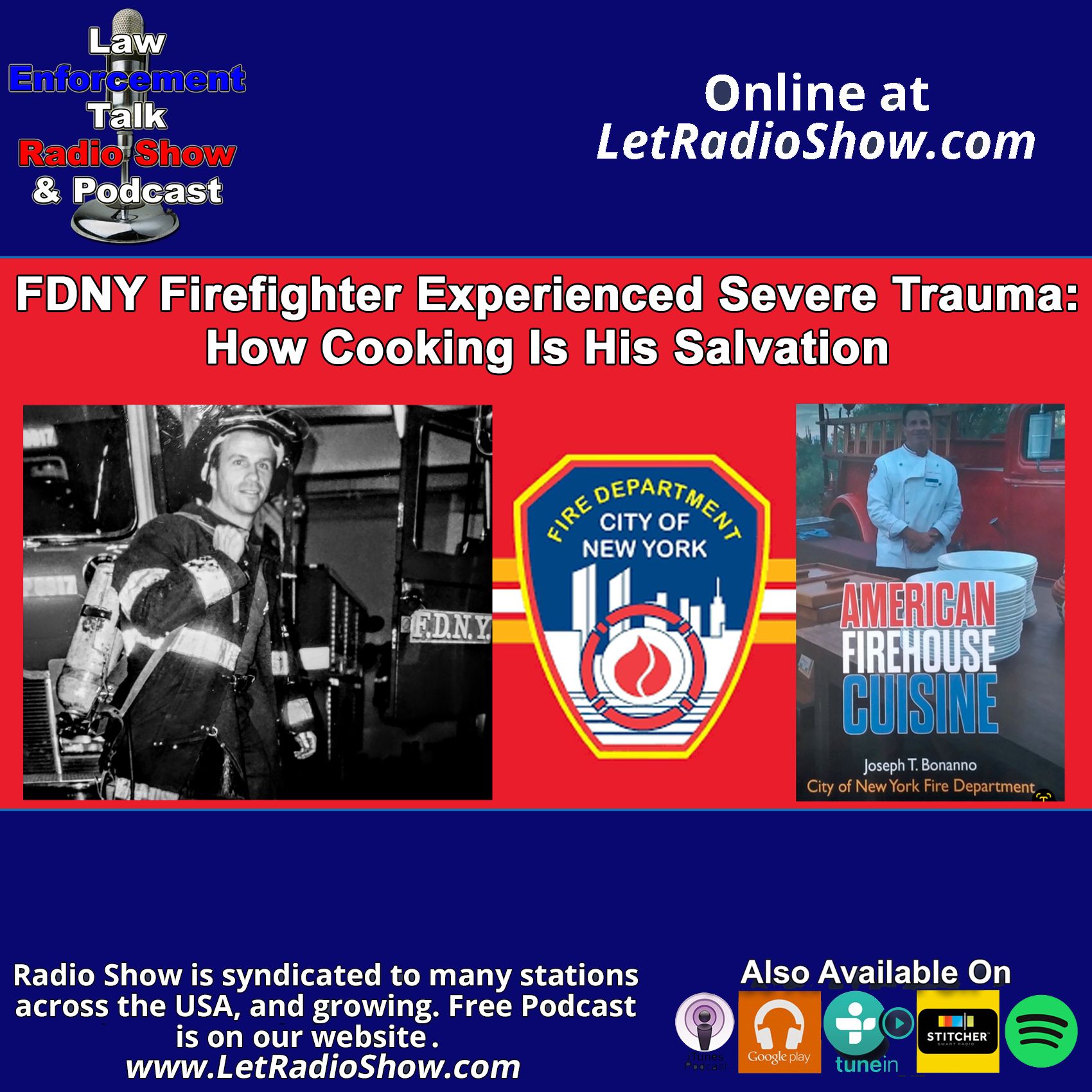
Law Enforcement Talk: True Crime and Trauma Stories
FDNY Firefighter Experienced Severe Trauma
00:40:41
FDNY Firefighter Experienced Severe Trauma: How Cooking Is His Salvation. For many first responders, the uniform becomes both a source of pride and a shield, one that often hides pain, grief, and trauma the public never sees. For this veteran FDNY firefighter and U.S. Air Force veteran, a lifetime of service came with losses so profound that few could endure them without lasting scars.
Loading summary
Transcript102 lines
- [00:01]
A
If you're an H VAC technician and a call comes in, Grainger knows that you need a partner that helps you find the right product fast and hassle free. And you know that when the first problem of the day is a clanking blower motor, there's no need to break a sweat. With Grainger's easy to use website and product details, you're confident you'll soon have everything humming right along. Call 1-800-GRAINGER Click grainger.com or just stop by Granger for the ones who get it done.
- [00:31]
B
He is a veteran FDNY firefighter. He lost a brother to suicide. Also an FDNY firefighter, his mother due to a fire he worked in 9 11. He's here to talk about trauma, overcoming that and what he does with his life today. Welcome to the Law Enforcement Talk Radio Show. In the Law Enforcement Talk Radio show, we are joined by special guests talking about their experiences, their realities of investigating crimes, plus those who have experienced horrendous trauma. Police, first responders, military and victims of crime share their stories. Hi, I'm John J. Wiley. In addition to being a broadcaster, I'm also a retired police sergeant. Be sure to check out our website letradio.com and also like us on Facebook, search for the Law Enforcement Talk Radio Show. Of all the radio stations in the United States, there are no other shows like the Law Enforcement Talk Radio show. And on Facebook there's only one official page. Do a search on Facebook for the Law Enforcement Talk Radio show and be sure to like the Law Enforcement Talk Radio show Facebook page Contest From Florida we have Joseph Bonanno on the Law Enforcement Talk Radio. Joseph is a a veteran FDNY firefighter and FDNY is Fire Department of New York. His brother Michael is also a firefighter for fdny. He died by suicide which we'll talk about a few moments. We'll talk about working the pile of 911 with the firefighters and what the law enforcement and other first responders went through, how it impacted him and his mother died in a house fire. A Joseph, thank you for your service. Very much appreciate it and B for talking about this stuff on the Law Enforcement Talk Radio Show. Both very much appreciated.
- [02:17]
C
No thank you John. It's considered a privilege and an honor to be on your show.
- [02:21]
B
By the way, he's also an avid cooker. He's got a book called American Firehouse Cuisine and his website is americanfirehousecuisine.com oh and if that's not enough, he's a podcaster. His Podcast is called American Firehouse Cuisine. Check it out wherever you find podcasts. By the way, I'm not. I promise you, I'm not going to throw any shade about the firefighters and police officers, although you guys had a whole lot better food than we did.
- [02:52]
C
Well, we. We quite often had the firefighters. The area that I worked in Flushing, there wasn't really too many good places to eat, especially later at night. So most of the time, we actually had the mounted police and the highway cops come in for dinner all the time.
- [03:05]
B
To my firehouse, man, I've never in my entire career been invited in the firehouse to eat. Never. Probably because reputation. They knew I ate a lot.
- [03:15]
C
No, that was a standard thing in New York for the police, especially in some of the areas that were a sketchy. There wasn't any really nice place for them to eat while they're out on patrol. So they would pull in the local firehouse and more than happy to come on in. And the other, you know, the other thing was usually an inexpensive meal. I mean, I put together a chicken cutlet parmesan dinner with dessert for like 350.
- [03:36]
B
Isn't that something?
- [03:39]
C
I'm sure prices have changed, but back in the then, it was $3.50 for a big chicken cutlet palm dinner.
- [03:45]
B
By the way, you walk into this career expecting to learn about firefighting, and you probably learned quite a bit that. But you also learned a lot about feeding a lot of people. And that's something that a lot of people can't do.
- [04:01]
C
No, actually, you know, my father was a firefighter for 34 years, but he really kept a lot of it to himself. That's one of the reasons I went on to the fire service, because of him. But to be honest with you, he never really spoke about the meals and sitting down together. So it was kind of new to me. I actually. The first tour that I worked, I actually brought a bag of lunch with me. I didn't know that they feed you and they have a kitchen. You know, he never really filled me in on all of that. Or maybe he did and I wasn't listening.
- [04:29]
B
Probably. Probably that latter. If you're like me. My teenage years, I didn't listen to a whole lot.
- [04:35]
C
No, No. I mean, with parents, it goes one of two ways. Either you idealize your parents and you become like them, or you can't stand them and you do everything to be the opposite.
- [04:45]
B
Well, and truth be told, which one are you? Are you a little bit of both?
- [04:49]
C
No, I was a little bit of an arrogant and, you know, I'm going to be better than you. I'm going to be better than being a fireman and all that kind of. Stu was going to college, but it was the best, honestly, God rest his soul. Thankfully, he led me in the right direction, but it was the best decision I ever made.
- [05:04]
B
Some of the best people I know I have met in my entire life are police and firefighters. And also some of them are someone I would not hang out with. But the overwhelming majority were really, really great guys. And I say guys, it's men and women as well.
- [05:19]
C
Oh, I have to 100% agree. I still have plenty of my friends who are actually moving to this area that are police officers, ex nypd. You know, we had quite a bond between. Between the FDNY and the nypd. We worked together quite often, had the same complaints, the same administration bureaucracy nonsense, different. Different job altogether. But we definitely appreciated each other, that's for sure.
- [05:41]
B
So how long have you been retired now from firefighting?
- [05:44]
C
It's about 24 years. I retired right after 9 11, so.
- [05:49]
B
And by the way, I'll tell a very quick 911 story. I was living in Florida at the time. I still can't believe that occurred. But years later I wound up going to the P. They were doing reconstruction and there was a couple of NYPD guys there and I just wanted to say to them, hey, I'm retired police sergeant and I can't imagine losing that many people in one day. And I got about three feet from them and I just burst into tears. And they knew immediately and didn't have to say a word. And that I can't describe. I can't tell people. And I guess the way I'll pose a question, I can't imagine having to go through that and having a job to do.
- [06:32]
C
Well, I gave a class for my nephew's school once and they asked me, in my career, the best and worst day of the whole career. And I had to say both of them were 911 because it was the worst day in the history of our country. It's the worst day in the biggest tragedy. But I wouldn't have not wanted to be part of it. I was very glad to be part of it, be part of it, be on the pile, working, looking for people, rescue, recovery, and the endearing feeling from the police, police officers, the citizens of New York, the outpouring of love and support. So it was just. It was outright amazing and outright horrible at the same time. So it was the best. And you know, and I think any firefighter police officer will agree with you. It was the best and worst day. Worst because of everything we saw and everything we did and everything we lost. But it was also the best day for bringing people together. I mean, you know, look at the political situation in the world now and past bunch of years. And that tragic event worldwide brought an entire planet together. Never mind your political beliefs, your race, your color, your religion, your sex, whatever, it brought everybody together. So that was the amazing part of it. Yes, tragic on a colossal scale, but also very touching on a grand scale.
- [07:54]
B
And by the way, there are those of us who were not there and those of us who were there and those who were there. And I don't have the figures in front of me, but so many more people have died from 911 related cancers and illnesses since that incident. And you sound pretty good.
- [08:15]
C
I've been very, very, very, very lucky. I'm one of the few people that haven't had any kind of ramification from it. But we, the FDNY just passed a milestone where now we've lost more. There was 343 firefighters killed in the line of duty that day. We just passed that number by a few of post illnesses where people have gotten sick and died. So We've now passed 343 firefighters have passed because of World Trade center related illnesses.
- [08:48]
B
Do you ever sit there and pinch yourself and say look, there are times I have to fetch myself up sharply and realize I'm fortunate to be alive and I'm fortunate to be an old man. I'm really, really bless but there are times I get stuck in the woe is me, poor me. Do you ever have to pinch yourself and say I'm lucky I survived.
- [09:09]
C
Well you know, you were a police officer too and I'm sure in the course of your career you lost somebody in the line of duty and stuff. And it's tragic but you know, that's what they call survivor guilt. Yes, we nobody. I don't, I didn't want to get killed on 9 11. I'm very glad that I wasn't one of the, you know, I missed responding by only a few minutes and I'm certainly glad that I was survived but I don't want my survival to be at the cost of somebody else's life. So you know, when you lose a police officer in line of duty, you say oh my God. Part of you says oh my God, thank God it wasn't me that got shot and killed. But you certainly don't want to see somebody else get shot and killed. And what that has to do. So in other words, it's like, you know, if you win the lottery, you win the lottery, nobody else suffers. But if you are the lucky one to survive, other people suffered that didn't survive. And that's what, you know, that's what they call survivor guilt. And a lot of PTSD comes from why me? Why was I lucky? So you say when I pinch myself, more of it is like, you know, why the good Lord of oath chose me to live. So. And that's where I believe you start to give back. I'm working with Tunnel to Taylor.
- [10:12]
B
Take a little break. On that note, we're talking about Joseph Bonanno, retired fdny. He lost his brother Michael Bonanno to suicide and he's also FDNY and his mother due to a fire. To return our conversation about 911 and the impacts on him. Don't go anywhere. We're gonna be right back. Be sure to check out our website, letradio.com that's L E T radio.com there you'll find episodes of the show available as a podcast after airing on radio. And they're always free. There's 700 plus episodes on there right now. There's blogs. Get information about our sponsors. All that and much more@letradio.com again the website is letradio.com if you're the purchasing.
- [11:05]
D
Manager at a manufacturing plant, you know having a trusted partner makes all the difference. That's why hands down, you count on Grainger for auto reordering with on time restocks, your team will have the cut resistant gloves they need at the start of their shift and you can end your day knowing they've got safety well in hand. Call 1-800-granger. Click granger.com or just stop by Granger for the ones who get it done.
- [11:40]
B
Return conversation with Joseph Bonanno on the law enforcement talk radio show. By the way, I love saying his name. I'll tell you why in a moment. And he is a retired FDNY fire department in New York firefighter. He's also a podcaster. The name of his podcast and name, his book and his website are all the same. They are americanfirehousecuisine.com check it out. This is americanfirehousecuisine.Com and I may bring my notes up here. I'm clicking the wrong thing. AmericanFireHouseCuisine.com you can find information there. The reason why I like saying Joseph Bonanno so much is because back in the day when I was A little kid. The bananas were one of the five families, the mafia in New York City, am I correct? You still got a blowback about that?
- [12:29]
C
Do I get yes, I've caught a little bit of flack because of that. But whenever I've done interviews and stuff like that, the answer that my textbook answer, were you part of the Bonanno crime family? Is no. I made my living with a hose, not a gun.
- [12:44]
B
That's my textbook, by the way. And I'm not gonn make this a long speech. They were not admirable people and we portray them in the media as being admirable and doing honorable things. They're not. They're hardcore knuckle dragging criminals and it's all they were and there's nothing about them to put on a pedestal. But you were retired. Fdny. We talked a little bit about the pile, which we'll return to in a few moments. Before that, your mother, she died in a house fire. Was that before you were firefighter or during?
- [13:22]
C
No, that was in 1981. I had already been on the fire department about a year and a half and she had some emotional problems, some alcohol problems and unfortunately I believe what we believe, she fell asleep in the afternoon. I was actually working in the city at the time and apparently she fell asleep with a cigarette and had a robe on the robe and the robe and the couch caught fire. And you know, she actually was burned over 55% third degree burns. She lived for a week when she died right in front of me and my brother Michael at the Nassau County Burn Center. And that was, you know, that's how I started my career. A year into my career I had, I lost my mother to a house fire. And at the end of my career I had 9, 11.
- [14:06]
B
So not burning admirable bookends or ones we aspire to. And by the way, fortunately that was not a common occurrence anymore because people don't smoke like they used to. But back in the 80s and 90s it was practically everyday occurrence. We had people dying unexpectedly. And I'm sure you had more than one house fire call from people falling asleep and lit cigarettes.
- [14:33]
C
Yeah, and it's funny, the national statistic of cancer and who dies from cigarettes and everything, they never include that figure of house fires that have been caused by cigarettes and that have killed people. That's not considered a smoking related death. You know, cancer from cigarette smoke is, but not death from. They should include that statistic. The statistic from cigarettes would be even higher. You're right. Three years ago Cigarettes were matter of fact the movie Backdraft, Kurt Russell, I remember watching that movie and people in the audience were laughing because they put out this gigantic factory fire. And then when they were overhauling the fire was out. The first thing the fireman did was light up a cigarette.
- [15:13]
B
That's right. That was back when I'm a reformed smoker. I gave up smoking 25 plus years ago and I'm shocked that I don't smoke anymore. I don't drink, I don't do drugs, I try not to curse. About the only pleasure I have left in this old man's life is food.
- [15:29]
C
Food. Yep.
- [15:31]
B
But they laughed. And by the way, cancers in firefighters and police is a common, common occurrence.
- [15:38]
C
Yeah, absolutely. It's very. The mortality rate, be it cigarettes, health related, suicide. It's same with the military, police and fire. It's something about that job, the uniform, the self esteem that you get from it. You know, I don't know what reasoning is behind it. I mean, I think some of it has to do with, you know, with a gun and a badge and a ladder and an axe, you feel like you're invincible. So cigarettes can't hurt me. Bad lifestyle can't hurt me. Drinking can't hurt me. So I think we get a, a sense of invincibility with the uniform. And we're not invincible.
- [16:18]
B
No, far from it. As a matter of fact, I'd say far from it. Very vulnerable. The older I get, the more vulnerable I feel sometimes that's a discussion for a different day. How did, how did you pick up and deal with firefighting and firefighting deaths and all the stuff that you encountered after the horrible incident with your mother?
- [16:41]
C
Well, yes, it was a little difficult after that, figuring I'm a firefighter and listen, I couldn't save my own mother, which I don't think I could have. And I just went after that happened. You know, they gave me death leave and you know, they said, when you're ready to come back, come back. And I came back. Thankfully they transferred me to a busier double firehouse in Forest Hills. So there was twice as many people working. So it was a little easier that way. But no, I mean, it's not like you put your head down and you ignore it. It's something that stays with you the rest of your life. And then I always felt, even with 9 11, I mean, you can ruin your life by drinking and drugs and depression and everything else like that, but is that truly the way you want to honor the people that you lost? No, I Mean, I certainly understand it when you're grief stricken and you're depressed and you don't know where to turn and next thing you know it's drugs or alcohol or too much of anything. But I don't know, it's, it's so self destructive. And I don't think you're honoring the person that you lost by being self destructive.
- [17:46]
B
So I agree with, I agree with you. And sometimes this is another thing that we have to watch out for. That and we'll get into your brother's story in a moment. But suicide is a permanent solution to temporary problems. And a lot of times I have fleeting thoughts and that's all they are, is thoughts and they will change in seven to 10 seconds. I don't have to focus on immediately solving the way I feel and doing something about it.
- [18:14]
C
Well, I think all of us have had, by the time you get to be 40 or 50 years old, you've lost somebody that you care about. You've seen one or two tragedies. If you're in our particular professions, you've seen many tragedies. And I guess it starts to add up after a while and what's the point of this life and, and that stuff like that. So you can get. Yeah, and certainly I've had those thoughts myself.
- [18:36]
B
Yeah.
- [18:36]
C
Especially after losing my mother. Nine, 11, then I lost, you know, and then you start saying, you know what the graveyard spiral they call it, you start spinning around the toilet bowl, it goes round around, starts picking up speed. So I think what you're alluding to is, and I just got certified by the International association of Firefighters for suicide prevention and behavioral Health. And the way I've come to look at it, and I witnessed it with my brother and other people that I know is, listen, stuff happens, financial issues, relationship issues, stuff like that, you know, we all have them. And then it starts to be had. You know, nine, 11, on a grand scale, you know, it starts to be, how do you process it? So now if you all of a sudden put this thought in your mind, like you said, it's gone in seven to 10 seconds. But the other people, it starts to rent space in their brain. And now it starts to be, and this is when, you know, people say awareness, what are you looking for? You know, people say, oh, if you get rid of all your stuff or you start making plans, you know, I don't really look at it. I look at it like if life has dealt you a few blows and then you say to yourself, geez, is this life even, Even worth it. Okay, so that's like a fleeting type of thought. Then it starts to be is this life really worth it? I don't really think it is. You know, my divorce is going to be go through, I'm going to lose my house. I just lost a bunch of money on an investment. You know what, maybe I'm better off out of here dead.
- [19:57]
B
Right? And that's a trap we could fall into. We'll return to the conversation a few moments. We're talking with Joseph Bonanno. He's retired fdny. He is also United States Air Force veteran, a podcaster, author of a book about firefighting, cooking. His website you can find the podcast. The book is americanfirehousecuisine.com this is law Enforcement Talk Radio show. Don't go anywhere. We'll be right back. One of the questions I get all the time is how can I show my support for law enforcement. We're all busy. We've got busy lives. But there's something oh so simple you can do with our Facebook page. Search for law enforcement talk radio show Facebook page and when you see a post you agree with that resonates with you, share it. Especially episodes of the podcast. To do all that, just search for us on Facebook, look for law enforcement talk radio show and be sure to click like if you're the purchasing manager.
- [20:58]
D
At a manufacturing plant. You know, having a trusted partner makes all the difference. That's why hands down, you count on Grainger for auto reordering. With on time restocks, your team will have the cut resistant gloves they need at the start of their shift and you can end your day knowing they've got safety well in hand. Call 1-800-GRAINGER clickgrainger.com or just stop by Grainger for the ones who get it done.
- [21:33]
B
Return to conversation with Joseph Bonanno on the law enforcement talk radio show. He is retired fdny. That's a fire department of New York. His mother died in a house fire. His brother died. Michael Bonanno died from suicide in 2012, which we'll talk about in a few moments. He is also a survivor of 911 working the pile. He has United States Air Force veteran under his belt. He is a firefighter, retired. He's author, a podcaster. His book, his website and podcast can all be found at americanfirehousecuisine.com it's americanfirehousecuisine.Com this is the really tough thing and we kind of started talking a little bit about suicide and some people fetch me up rather sharply I'm of the old school mindset and I used to say, but they say the correct way of saying is died by suicide. And, and that was. By the way, this was a problem when I was policing. It was a problem in the 70s and 60s. Joseph Wambaugh wrote about it. It's a problem with their firefighters. It's a problem with our EMTs. It's a problem with paramedics, military. It is not a new problem. We have all these other things that we're dealing with, critical incidents. We've gotten much better that. But for me, I think it's the daily grind that wears people down. Let's talk about your brother. He was in the FDNY as well, wasn't he? Yes, he died by suicide. Michael was his name.
- [23:03]
C
Yes, Michael Bonanno in July of 2012.
- [23:07]
B
That's towards the end of your career or were you retired already at that point?
- [23:13]
C
No, I was retired already. He was retired with back injury. He had a disability pension and he was retired with a back injury prior to 9, 11. And then he was married, he lived in Cleveland, he had a daughter. He was, we were having some, you know, we lost our mother years ago. Earlier in his life he with the partying on the fire department, he struggled with alcoholism a little bit. But he got clean and sober and was live a straighter life. You know, retirement starts to get to you too, you know, especially if you got retired young because of an injury and your identity is all the uniform, the gun, the badge, the hose, the ax, the trucks, you know, and all of a sudden you're just got a great pension and you're getting your bills paid. But now what do I do? I was a high profile individual. Now I'm just sitting home watching, you know, reruns. So he struggled with that a little bit and then had some family issues with my father and stuff like that. But it's, you know, I guess it just started to pile up and which is what happens to most people. And what I was alluding to before, I certainly have a little bit of a background now in it and doing I want to do, you know, seminars for suicide prevention for police and fire. But you know, part of it is, first of all you say, is this life even worth it? Maybe I'm better off dead. Then the next phase starts to be I'm better off dead. And if I was going to end my life, how would I do it? That's when they're in serious trouble because now they've thought about the method, whether it's Taking pills, jumping, hanging themselves, you know, shooting themselves, whatever it is. Now they already thought two steps forward, so now it went. And then it's like, it can never be an option when the world goes bad. Relationship, divorce, money, financial, never an option is. But when it starts to become an option, now it's an option. Might be option 20. Now all of a sudden the marriage goes south and now I'm going to lose my house. Now all of a sudden it moves up the chain. Now it's option 10. And when it gets to be option 10 and 9 and 8, it starts to be, okay, yeah, I'm going to shoot myself. Then it's like, well, I have. What was I thinking? I can't do that. And then something else goes wrong, or you start to get into this depression, even worse, you don't even look for help. And now you say, well, you know, now I'm going to go through with it, you know, and now, now they've, they're, they're. When they have the, the thought and the method, they're in big trouble.
- [25:36]
B
Yeah.
- [25:36]
C
Because now all they need is one. The literal straw that broke the camel's back. They come home one night and, and I don't know, their daughter, they're getting divorced and the daughter says, I don't want to have you as a father anymore because you're divorcing my mother. And he goes out in the car and shoots himself.
- [25:51]
B
Right.
- [25:52]
C
So he had the method, he had the thing. And one, all you need is this rodent broke the camel's back. So that's when they're in trouble and that's when you really have to actively starting to intervene a little bit, you know, and you know, little. What they say is, you know, police officers at firefighter, they should ask somebody, oh, are you thinking of harming yourself? Have you thought about killing yourself?
- [26:09]
B
I'm not going to tell you that. I'm not going to answer that question.
- [26:13]
C
It is. But you and I both know that if, if you had a fellow police officer, firefighter, that was thinking, he's not even gonna say, why, are you crazy, John? I don't have to do that.
- [26:20]
B
No, they're not gonna answer. They're gonna not be on. Look, I got more benefit. And by the way, something you said really resonated me. It wasn't when the chaos and the job and I knew my job, I knew my. I just say it was when things got quiet when I retired and I got hurt and retired young and all of a sudden I had a lot of Time to think. That's when the really bad stuff raised its ugly head.
- [26:46]
C
Well, yeah. What's the expression? Idle hands are the devil's work.
- [26:49]
B
Right? Right.
- [26:50]
C
So when you're out and you're bored and then you start saying, is this life really worth it? You know, my wife does not get along with my wife, my daughter, my kids. I have issues with my family. And then especially if you add drugs and alcohol to it.
- [27:01]
B
Oh yeah, they're depressants to begin with, especially alcohol. And so many people have been, I went through that, trust me. And it's, it works great until it doesn't work anymore and it creates another problem in and of itself.
- [27:14]
C
And not only that, you, we both know liquid courage. You're not thinking clearly when you're under the influence. So maybe if it was in your head that I'm thinking of taking my life and I was, I would, whatever it is, shoot myself or hang, whatever the method is. Now you get drunk and you're like, ah, screw it, you know what, I was right over, maybe I'm better off just ending this. And then they can act on it. And that's, you know, and one of my biggest disappointments with the police advice service now is that and even military we're losing. Yes, God forbid you could get shot and killed in the line of duty. God forbid you get caught in a fire, you get killed in the military, yes, there's that line of duty death. But the chances of that happening are minimal. It's not that it's minimal. It's minimal. But we're losing more people to suicide and mental health than we are to line of duty death.
- [28:06]
B
Oh yeah. I used to always say this. It's not the bad things, they happen, they really do. But it's the more harm that from our lifestyle. Heart disease, traffic accidents. For police, I say wear your sunscreen, wear your soft body armor and wear your seatbelts. Those things will save your life when you become an old man, if you're lucky enough to be an old man. It's not, it's not the, the bad guy in the corner you need to worry about is you.
- [28:36]
C
Yeah. Human beings are one of the most self destructive animals on the whole planet. So my point is, I go to these national conventions and they're having extrication classes and ventilation classes and forcible entry classes and they're packed. And then they have a mental health class and there's nobody in it. And I'm like, well, we're losing more firefighters, police and military to suicide than we are to tactical information for the job.
- [29:07]
B
Right.
- [29:07]
C
So why aren't those classes packed? Because, you know, it's not that there's a stigma attached to it, but you know, if you and I were at a police fire convention and I asked you, John, what class you want to take today? Oh, there's a shooting range class. There's a forcible entry quest. Oh, John, you want to take the suicide prevention class? I said, well, I'm not taking a suicide. Why would I take a class like that? Plus, what if the chief sees me or what if another fireman sees me taking a suicide class? He's going to go back and tell the chief and maybe I'll get hooked up.
- [29:35]
B
Another thing is we have to like erase that. Yeah, we could talk to the cows come home about this and I don't know, and maybe this is a good question to ask you. There comes a point where I have to be willing to save people's lives. And that means if I step on their feet and say things they are not comfortable hearing, they need to hear that. And it's my obligation to do that. We got about one minute left. What's your response to that when it to comes comes to suicide prevention?
- [30:04]
C
110%. And if I get a chance to give a class again in that ptsd, mental health and suicide, that's what I'm going to say. This is a twofold thing. One, I'm a victim of it. I experienced it. It's the worst grief that you could possibly ever get. Had I lost my brother at 9 11, it would have been horrible. But I could spend the rest of my life honoring him at different events. Suicide's a different animal, different grief. Why? Why did he do it? Why didn't he call me? How could he. Horrible. What? He did it. He jumped 300ft from a bridge. Well, how could he possibly do that? The other side of that is the firefighter or police officer himself. If you're contemplating this, taking your life because of job issue, family issue, is this the legacy that you. Do you want to cause this wave of pain and kind of a bad legacy to leave? Do you want people, do you want to be remembered as the police officer, firefighter that killed himself? Or do you want to be all right? You get killed in a line of duty, we can accept that.
- [30:59]
B
We're short break. On that note, we're talking with Joseph Bonanno. He's a retired fdny. He's also a podcaster, author of a cooking book. You can get More details about the podcast the book@AmericanFirehouseCuisine.com don't go anywhere. We'll be right back.
- [31:19]
A
How would you like a free ebook on tips to improve your health? We're talking about tips you can use for free to add years to your life. Best of all, the ebook is free to Download@Let Healthy.com when we say free, we mean free. So you can download the free ebook to improve your physical health, all while preserving your financial health. Get the ebook for free today@Let Healthy.com that's@LetHealthy.com Again the website is LetHealthy.com if you're an H Vac technician and a call comes in, Grainger knows that you need a partner that helps you find the right product fast and hassle free. And you know that when the first problem of the day is a clanking blower motor, there's no need to break a sweat. With Grainger's easy to use website and product details, you're confident you'll soon have everything humming right along. Call 1-800-GRAINGER, click grainger.com or just stop by Grainger. For the ones who get it done.
- [32:25]
B
Return to conversation with Joseph Bonanno on the Law Enforcement Talk Radio Show. Joseph is a retired FDNY Fire Department of New York. His brother Michael Bonanno was also retired fdny. He died by suicide. His mother died early in his career from a house fire and he was one of the firefighters on scene. There were many that worked at 911 and Rescue afterwards. He's a veteran of the United States Air Force. He's also a firefighter, veteran, pilot, podcaster, author. The book the podcast Everything can be found at AmericanFirehouseCuisine.com, it's AmericanFirehouseCuisine.com and by the way, this whole conversation is making me hungry, Joseph. I don't know why.
- [33:10]
C
So you want to know what I'm doing now?
- [33:12]
B
No. If it involves food, I don't want to know. I've been dieting. I'm down 60 plus pounds. So hopefully you're not cooking something awesome.
- [33:23]
C
No. Yeah. If you want to, we'll talk a little bit about the book in a and how that will happen and what I'm doing now to put a positive spin on the terrible events of 911 and losses that I've had and trying to make a pay it forward type of thing. So I started on the 20th anniversary of 9 11. I did two other cookbooks. One's called the Healthy Firehouse Cookbook I did in the 90s and also followed that up with the Firehouse Grilling Cookbook. And then for the 20th anniversary of 9 11, I wanted to to do a vacation book. So I did a book called American Firehouse Cuisine. And it's a bunch of recipes for myself and from firefighters around the country. I dedicated the book to my father and my brother and all the firefighters and civilians that were lost on 9 11. And then I eventually led to. I had been approached over the years to do a firehouse cooking show. And for some reason, nobody was able to put it together or get the financing or the sponsorship to do it. So now with podcasting and stuff like that, it's kind of easy to do it, do it on your own. So I built a little studio here. I actually had the props. I had a brass fire pole, had a bunch of props, old coats, helmets, boots and stuff like that. So I built a little studio and I do a firehouse cooking show.
- [34:35]
B
And a lot of people would say, you're doing that for fame. I don't get that impression why you're doing it. I believe you're doing that for. You have a mission in life.
- [34:47]
C
No, it's not for fame. I had my 15 minutes of fame back in the 90s with. I was on Good Morning America Today show, Regis, Martha Stewart. I did all the big shows.
- [34:55]
B
I didn't know we're talking to a big here. You're dropping these huge names.
- [35:01]
C
They're not that huge. So, you know, I'm actually doing it to continue the camaraderie of the firehouse cooking, to keep that alive. Have guests on all the guests get to slide down the pole and do a little cooking segment. And, you know, part of the money's going to an organization that prevents firefighter and for law enforcement, suicide. Ffbha.org I hope you don't mind. I mentioned that. Please do they assist. They assisted me through the losses. They also counsel the families who've lost people to suicide. Great organization. So I talk about them. Tunnel to Towers. I'm doing stuff with Tunnel to Towers and it's the show, you know, like I said, it's kind of easy to do a podcast nowadays. So, you know, I just want to get the word out there and share my experiences with cooking, teach people how to help people cook, talk firehouse talk, stuff like that. So about fame.
- [35:56]
B
We talk about American firehouse cuisine. We all got to eat. And this goes back to a different topic, but people who are overeaters and they have 12 step programs and you gotta eat. I can put the other substance down and eventually be fine and learn coping skills so that I can become the guy I want. But we gotta eat. And I don't think of American firehouses, and I don't think the term cuisine. I think of fancy French restaurants when I hear the word cuisine.
- [36:24]
C
Well, it's funny that you say that, because the first book was called Healthy Fires Cookbook, and I did a bunch of regional and national cooking contests, and there were other firemen there, and they were on par with. And I went to culinary school, too. They were on par with any of the top chefs in the country. So that's why. And because a lot of people would think, oh, firehouse cooking. Why is it meat, meatloaf and mashed potatoes? I worked with firemen who were like Michelin star quality chefs.
- [36:55]
B
I'm not surprised. I'm not shocked. Some of them can make. What's the old saying? They can make the most basic ingredients, they can make the finest food, and they know how to serve a lot of people, and a lot of people don't have that skill. They can cook for one person or two or three, but 30 or 40, they can't.
- [37:15]
C
Right. So that's why I wanted to call it cuisine, not just Cooking Cookbook. So it was not meatloaf and mashed potatoes. And yes, there is meatloaf and mashed potatoes in there, and we certainly had to make that. And that was kind of a standard fare most of the time. But every once in a while, you know, if you were in the right mood, you would get some kind of specialty, and I would make some specialty dishes that would, like I said, with five star Michelin meal. And they were like, oh, my God, Joe, this is just like, you know. But most of the time, I have to agree, most of the time it was. But when we had to rise to the occasion, and that's why I called it cuisine, not just coffee.
- [37:49]
B
You said something earlier when we talked about this that in a way, is this your way of giving back? You said it helps replace them in camaraderie. It helps build the legacy you want for other firefighters and the civilians that were killed in 9 11. So is this more of a mission for you than a practical exercise?
- [38:09]
C
Both, actually, because I always felt, you know, when somebody passes away, what's the first thing they do? They bring over trays of lasagna and food and. And everybody sit down and eat. Because you, like said, whether you lose somebody or not or whether you're busy, you still gotta Eat.
- [38:22]
B
Right.
- [38:23]
C
So to have a bunch of. And to prepare and share a meal with somebody. Yeah, you could take somebody a restaurant, give them a gift card for some famous restaurant or something like that. But when you bring something that you personally made to somebody, I mean, it's. To me, it's one of the most endearing, touching things that somebody can do. And, and I remember working at the ground zero and doing, you know, recovering and taking showers at Ladder 5. And when I would go there because of what was happening in 9 11, all that neighborhood, that was like an old fashioned Italian neighborhood, people were bringing in trays of lasagna, food, garlic bread, anything to make us feel better and cared and shared and cared about and stuff like that. And I thought it was one of the most, you know, to prepare and share a meal is one of the most touching things you can. I think that you can define.
- [39:10]
B
We talk about the, the technical. A lot of people love to get lost in the conversation about the technical aspects of podcasting and all that stuff. I think that the magic of podcasting, or writing a book or doing a video show, whatever it is, is about capturing the human element. And I think from a lot of your story, you're pretty much on top of that.
- [39:32]
C
Well, I'd like to think so. I've only done three episodes so far. I'm kind of reimagining how I want to present it and everything like that, so. And like, you know, it's easy to do, but you know, I'm not a professional camera person or anything like that. So the. And I wasn't brought up in the social media world, so I'm not all that familiar with it. But the studio came out great. The concept is great. I get the best signature entrance of any of the TV chefs. I get to slide down a pole, which makes the show kind of unique.
- [40:05]
B
I'm laughing, I'm laughing at you sliding down the floor.
- [40:07]
C
But it's filmed in a replica of New York City firehouse that I built and you know, like I said, having guests on. And it's. Hopefully it'll be great. That's all I can do.
- [40:19]
B
The website is americanfirehousecuisine.com Did I get that right?
- [40:23]
C
Yes.
- [40:24]
B
And your book is on the website or all of your books are on the website? The podcast as well?
- [40:29]
C
Yeah, it's on the website. You can get it at Amazon if you want. It's also on Amazon.
- [40:35]
B
In closing, what will be. What would be the advice you would give to people who either want to become a police officer a firefighter, if.
- [40:43]
C
It'S something that you're considering, first thing I would do is if this is something you consider is go to a local firehouse and talk to the firefighters, go to a local police station, ask them what it's about, find out before you get your feet into it and you know, find out what, what if this is what you really want to do, what's going to be involved at the 5 year mark, 10 year mark, 20 year mark. But as you said, most of the policemen and firemen you talk to, very few say I hate it. Most of them just loved it, wouldn't have it any different. So if they're thinking of doing it, don't think about it. Because I had many friends that have regrets now later in life because they were sheetrockers and spacklers and framers and trades and you know, they were making a lot of money money at that time and they had to take a little bit of a pay cut to get on the fire department but they never considered that they were going to be 50 and 60 years old. So you know, you're a 60 year old spackler, you don't get a pension, you don't get medical benefits.
- [41:37]
B
Right? That's right.
- [41:38]
C
You don't get paid.
- [41:40]
B
That's exactly right. We're talking with Joseph Bonanno. Joseph is retired veteran fdny. He's also United States Air Force veteran. He's a podcaster. He's author of multiple books but about firefighting cooking. His website is americanfirehousecuisine.com, americanfirehousecuisine.Com you can contact him there. Joseph, thanks for your story and thanks for being guest on the Law Enforcement Talk Radio Show. Both very much appreciated.
- [42:04]
C
No, thank you and thank all your listeners.
- [42:06]
B
I'd like to thank our guests for coming on the Law Enforcement Talk Radio Show. The Law Enforcement Talk Radio show is a nationally syndicated weekly radio show broadcast on Numerous AM&FM radio station stations across the country. We're always adding more affiliate stations. If you enjoyed the podcast version of the show, which is always free, please do me a favor and tell a friend or two or three, I'll be back in just a few days with another episode of Law Enforcement Talk Radio show and podcast. Until then, this is John J. Wiley. See ya.
- [42:43]
D
If you're the purchasing manager at a manufacturing plant, you know having a trusted partner makes all the difference. That's why hands down you count on Grainger for auto reordering. With on time restocks, your team will have the cut resistant gloves they need at the start of their shift, and you can end your day knowing they've got safety well in hand. Call 1-800-GRAINGER clickgrainger.com or just stop by Grainger for the ones who get it done.
- [43:13]
C
If you like the show, please take a moment to rate, review and subscribe. It really does helped the show to grow. Thank you for listening.