← Law Enforcement Talk: True Crime and Trauma Stories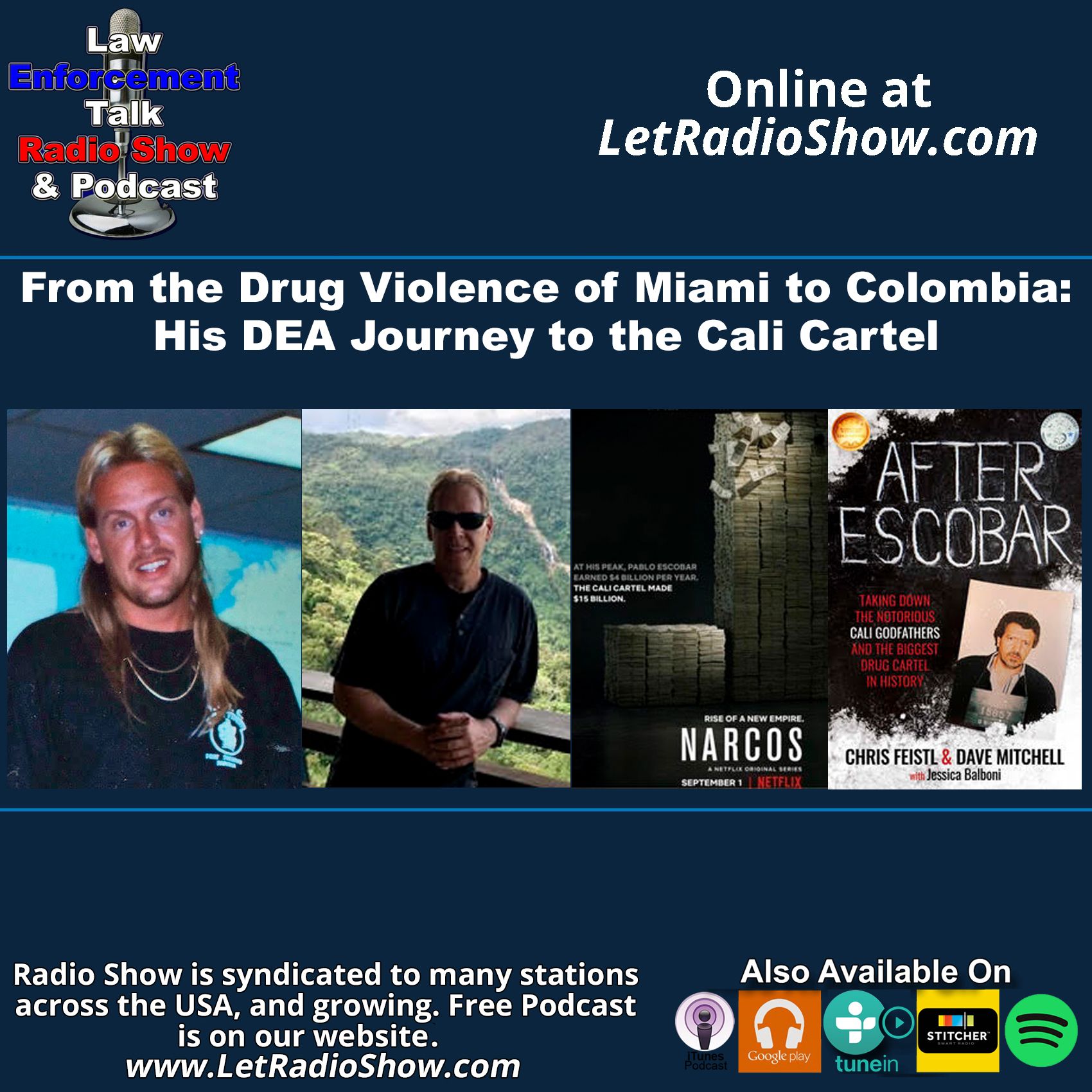
Law Enforcement Talk: True Crime and Trauma Stories
From the Drug Violence of Miami to Colombia
00:40:18
From the Drug Violence of Miami to Colombia: His DEA Journey to the Cali Cartel. His early start in Law Enforcement was as a part-time police officer on the Jersey Shore, which eventually led to his role in one of the most dangerous assignments in law enforcement history, Chris Feistl’s career is a story of grit, perseverance, and determination. His journey took him from the drug violence of Miami to Colombia, where he helped dismantle the infamous Cali Cartel, a saga now immortalized in books, podcasts, and Netflix series like Narcos.
Loading summary
Transcript96 lines
- [00:01]
Chris Feistel
This is the story of the One As a custodial supervisor at a high school, he knows that during cold and flu season, germs spread fast.
- [00:09]
John J. Wiley
It's why he partners with Grainger to stay fully stocked on the products and supplies he needs, from tissues to disinfectants.
- [00:15]
Chris Feistel
To floor scrubbers, all so that he can help students, staff and teachers stay healthy and focused. Call 1-800-GRAINGER Click grainger.com or just stop.
- [00:25]
John J. Wiley
By Granger for the ones who get it done. He is retired from the dea. He's part of the team that took down Pablo Escobar. He's also deployed to South Florida during the Cocaine Cowboy days and he was featured in season three of the Netflix series Narcos. He's here to tell us all about it on the Law Enforcement Talk Radio Show. Welcome to the Law Enforcement Talk Radio Show. It's in the Law Enforcement Talk Radio show we are joined by special guests talking about their experiences, their realities of investigating crimes, plus those who have experienced horrendous trauma. Police, first responders, military and victims of crimes share their stories hi, I'm John J. Wiley. In addition to being a broadcaster, I'm also a retired police sergeant. Be sure to check out our website letradio.com and also like us on Facebook. Search for the Law Enforcement Talk Radio Show. If you're on the Clubhouse Drop in audio chat app, be sure to look for me and follow me. My name's John the letter J Wiley W I L E Y. You can also search for ET Radio show. That's John J. Wiley W I L E Y T radio show on the Clubhouse Drop in audio chat app. Content is From Arizona we have Chris Faisal on the Law Enforcement Talk Radio show. Chris has retired from dea. Spent some time in Columbia investigating the Cali Cartel which talk about he was deployed in South Florida during a Cocaine Cowboy days which we'll talk about. He's also author of the book or co author book After Escobar taking down notorious Cali godfather's the biggest drug cartel in history. His website's after Escobar.com and if that's not enough for you, he was portrayed in season three of the Netflix series Narcos. Chris A thanks for your service. B thanks for being guest on the show very much appreciate it.
- [02:27]
Chris Feistel
Thank you John. It's great to be with you.
- [02:28]
John J. Wiley
It is a pleasure to have you here and DEA is one of these things. This is just a commentary I got and I was detailed the DEA in Baltimore for about two years investigating Jamaican drug gangs and it was a great experience. But. And I go back days to Miami Vice, other Hollywood things they portray. The DEA is somehow crooked, inept, stupid, and that's the furthest thing from the truth. I didn't experience that at all.
- [02:56]
Chris Feistel
Yeah, I think that's a common theme throughout television and movies to portray DEA agents in that light. But you're right, it's the furthest thing from the truth. DEA is the lead drug law enforcement agency in the world. And in my opinion, they have some of the best investigators in law enforcement.
- [03:15]
John J. Wiley
And they really, they go worldwide. It's not just. I worked with guys who went to Columbia and during that time, late 80s, somewhere around there, and they were deployed in Europe. They're deployed. We had Jack McFarland on the show recently. He talked about the Caribbean area. We talked about a lot of things. I never even considered even being a city cop in Baltimore. I just never considered it.
- [03:39]
Chris Feistel
Yeah. And that was one of the things, John, that really drew me to DEA is because at this point in time we have offices in over 80 countries throughout the world. So you can have a great experience, you can work in different countries, learn different languages, and be able to experience different cultures all the time while working in conjunction with our host nation counterparts, our law enforcement counterparts in each of those countries. So it's really a great experience. And I think that's one of the things that draws people to DEA is that ability to work in the foreign arena.
- [04:08]
John J. Wiley
How long did you serve in the DEA? How many years?
- [04:13]
Chris Feistel
26 years.
- [04:14]
John J. Wiley
It's a long time. That's a really long time. And I gotta ask, how old were you when you first started?
- [04:21]
Chris Feistel
Well, I was the second youngest in my class, so I turned 23 in February and I was hired in March, so I just turned 24. So I was 24 years old when I started the academy. And by that time I had almost two and a half, three years of law enforcement experience working as a police officer or a special police officer in Wildwood, New Jersey on the shore, as well as a full time police officer in Virginia Beach, Virginia.
- [04:50]
John J. Wiley
Oh, see, I grew up in Norfolk, Virginia Beach. My dad's career, Navy. And I have nothing but fond memories of that area. And I was going to ask you this question because there was two types of agents I dealt with. They had ones that just graduated from college and they were recruited by the dea and we had other ones that were street cops. And I say that with the utmost respect because it's a term of endearment from where I come from, that did their time and went federal for many different reasons. And you fell in that category of policing before you went in DEA?
- [05:21]
Chris Feistel
That's correct. And during that mid-1980s timeframe, you know, South Florida, they had established the South Florida Vice President's Task Force. And there was really a big push to hire a lot of agents at that time. So there were a lot of people that were hired that had prior law enforcement experience as well as prior military experience. So they had a lot of people to choose from. They had a lot of positions to fill at that time. And I thought that that was really very good experience for me, having that law enforcement background prior to joining dea.
- [05:57]
John J. Wiley
Why did you leave policing in Virginia beach to go to dea? What was your motivation?
- [06:01]
Chris Feistel
So, so the reason that I really wanted to join DEA was because while I was working as a seasonal police officer in New Jersey, I had the opportunity to work undercover. I met a female in a bar who offered to sell me methamphetamine. And we set up this undercover deal. And that was something that really interested me. So at that time, I started looking into dea and I figured, you know what, I really need some full time police experience before I get into the dea. So I applied to Virginia Beach Police Department pretty much at the same time as dea. But dea, it takes so long for them to hire. I had to wait about a year and a half, almost two years to get hired. But in the meantime, I got by Virginia beach as a full time police officer. So I just used that as a springboard to get into the dea.
- [06:50]
John J. Wiley
Gotcha. And by the way, you. Did you seek out undercover work or is that something that was thrown in your direction and you kind of excelled at it?
- [06:58]
Chris Feistel
Well, that was a chance encounter that I had in a bar, but it was something that I enjoyed. And when I got hired by dea, I kind of went into that Persona. You know, I had really long hair down to the middle of my back. I had earrings. And I thought that that was something that I was pretty decent at, and I wanted to do as much of it as I could. So that was something that caught my interest very early on.
- [07:22]
John J. Wiley
Well, one of the things, I went to your website after escobar.com. that's after escobar.com. i looked at a picture of you, Chris, and you don't look like that guy that's got long hair now, do you?
- [07:32]
Chris Feistel
No, no, not at all. That was. That was just for the job and the. And, you know, but when you work in police officer, you know, John, you know, you're always neat and you're, you're clean cut and everything. And when you get hired by a federal agency like that, like the, it gives you that opportunity to kind of grow your hair out and do things a little bit differently than you could with the, with the police department.
- [07:54]
John J. Wiley
I'm going to show my independent streak and I'm going to grow my hair now. I'm at the point now where, and by the way, I have very curly hair. All I did was grow out in a bush. It just, it didn't succeed. But I keep my hair short. And the reason why, Chris, is because something I learned a long time ago in the police academy is the reason why uniformed officers have their hair short, wear clip on ties and don't have loop earrings is because that's the first thing someone will grab in a fight.
- [08:21]
Chris Feistel
That's exactly right. And we had the same thing in Virginia beach where the clip on ties and that was always brought out to us in the academy. So we were very cognizant of that. So 100% agree.
- [08:32]
John J. Wiley
And to this day, my wife laughs at me and I call her the boss, but she laughs at me because I'm due for a haircut and you can't grab it now, but it's getting long and I live in South Florida, so the heat is one thing. But to this day, look, I shave like once a week because I don't have to. But to this day, I refuse to wear a tie because a tie, a necktie to me is nothing but a noose.
- [08:57]
Chris Feistel
John. I am exactly the same way. I shave maybe once every week or every two weeks. I never wear a tie. And I always tell my friends and stuff that the next time I wear a suit and a tie, it'll be in a pine box.
- [09:12]
John J. Wiley
Chris. And you'll never catch me wearing loop earrings. As a matter of fact, those earring days are long gone. That was part of my narcotics work. We're talking about Chris Feistel. He's retired dea. He's part of the team that is featured in the Netflix series Narcos. He's part of the team that investigated the Cali cartel. He's also assigned to South Florida during the cocaine cowboy days. And he's co authored the book After Escobar taking down notorious Cali godfathers and the biggest drug cartel in history. One of the questions I get all the time is how can I show my support for law enforcement? We're all busy. We've got busy lives. But there's something oh so simple you can do with our Facebook page. Search for Law Enforcement Talk Radio Show Facebook page and when you see a post you agree with that resonates with you, share it especially episodes of the podcast. To do all that, just search for us on Facebook. Look for Law Enforcement Talk Radio show and be sure to sure to click like we got so much more to talk about. Don't go anywhere. We'll be right back. There are more than 700 free podcast.
- [10:18]
Chris Feistel
Episodes of the law Enforcement Talk Radio show.
- [10:22]
John J. Wiley
Episodes are converted to a free podcast.
- [10:24]
Chris Feistel
After airing on radio. You're bound to find a podcast episode.
- [10:28]
John J. Wiley
That suits you@letradio.com letradio.com that's letradio.com this.
- [10:37]
Chris Feistel
Is the story of the one as head of maintenance at a concert hall, he knows the show must always go on. That's why he works behind the scenes, ensuring every light is working, the H Vac is humming, and his facility shines.
- [10:51]
John J. Wiley
With Grainger's supplies and solutions for every challenge he faces.
- [10:55]
Chris Feistel
Plus 24. 7 customer support.
- [10:57]
John J. Wiley
His venue never misses a beat call.
- [11:00]
Chris Feistel
Quit grainger.com or just stop by Granger for the ones who get it done.
- [11:12]
John J. Wiley
Return our conversation with Chris Faisal. Retired dea. He is content from Arizona. He's part of the team that took down the Cali cartel in Columbia. He was also assigned to South Florida Miami during the cocaine cowboy days. He was featured in season three of the hit Netflix series Narcos, which is no small achievement. But there's more. He's co author of a book After Escobar taking down the notorious Cali godfathers and the biggest drug cartel in history. And hold on, their website is@escobar.com is/escobar.com Chris, before we get into your story, did you ever think you'd be in a position talking on a radio show, having a website, being co author of a book, being on a television series? Any of that stuff? Did that come in your mind?
- [11:57]
Chris Feistel
Absolutely not. I mean, anybody who knows me knows that I'm a pretty low key kind of guy, pretty humble. I don't seek out stuff like that. And you know, we always say in law enforcement, you know, you're in the right place at the right time and if you turn over enough stones, good things happen. So I was fortunate enough to be in the right location at the right time.
- [12:18]
John J. Wiley
And here's the other thing before we get to your story is I tell this to my wife all the time. It's the loud ones. You need to just disregard the ones who tell you they accomplish this they accomplish that. They're. They're tough guys. They're usually not. It's. It's the quiet ones that can. You need to pay attention to. So, Chris, you were in Walworth, New Jersey. You were in Virginia Beach Police Department. You got hired by the dea. What was your first assignment out of their academy?
- [12:43]
Chris Feistel
So my first assignment out of the academy, John, was Miami, Florida.
- [12:47]
John J. Wiley
That's a heck of an assignment.
- [12:49]
Chris Feistel
That was the place to be, and that was the only place that I wanted to work when I was in the academy. And I got to Miami in the summer of 1988, and like I said, cocaine was literally falling out of the sky. And when I say that, it really was because of all the air activity that was going on there with the smuggling coming in from South America. So that was a great place for me to get on the ground and really learn the job as quickly as possible.
- [13:15]
John J. Wiley
The thing about Miami in those days, and when I was detailed dea, we did go to Miami to find the source, myself and other Baltimore City Police, and I think it was 1986, and it was. I was fascinated by. They had go fast boats, they had all kinds of stuff, but basically we were on our own. We had a rental car. They said, hey, good luck. If you need this, call us. Otherwise we're busy. And they weren't mean about it. It's just the way things were, right?
- [13:42]
Chris Feistel
And boy, have. How times have changed, right, since the 80s till now, and in drug law enforcement and law enforcement in general. But that's. That's probably the way it was there. And everybody in South Florida, in Miami and the Keys, was working, you know, seven days a week, you were working weekends, because there was just so much cocaine coming into the United States at that time from the cartels. The Medellin and the Cali cartel was just inundating South Florida with cocaine. So it was a very busy place to work, but it was also a really good place to work, John, because like I said, you got exposed to so many different kinds of cases. You were thrown right into the fire. And it was either that sink or swim mentality. So you learned the job very quickly or you kind of got discarded.
- [14:26]
John J. Wiley
And the other thing about it is, before going to Columbia, your deployment in Colombia, you mentioned something about there was so much cocaine back in those days, there was so much violence went along with it. And by the way, it still does. Where there's lots of. Lots of guns, lots of drugs, lots of money, there's usually lots of violence. And South Florida was no exception. But you mentioned the Cali cartel. How did you become aware of them and their involvement? And how did you get deployed to South Columbia?
- [14:53]
Chris Feistel
Well, while I was in Miami, I had worked on a lot of transportation cases, meaning that we were posing as smugglers, and we had access to coastal freighters, we had access to go fast vessels, we had access to safe houses in the Keys. And one of the things that the cartels always lacked was transportation. So we were able to infiltrate a lot of these organizations in Colombia, that is the Cali and Medellin cartel, and provide transportation services. So in doing that, I became aware of who the Cali cartel was, how they operated, who the leaders were. And that was something that really interested me. And that was kind of my springboard to go down to Columbia to further get into and work against these cartels. Because in Miami, you know, that's where you needed to go if you wanted to be a DEA agent in the 80s, you had to go to Miami, Florida. But if you wanted to be a real DEA agent, you had to go to the mecca of drug trafficking, which was Columbia.
- [15:50]
John J. Wiley
And to this day, I'm kind of fascinated because it must have been a bit of a culture shock for you, going from, let's just say, Virginia, New Jersey, to South Florida. That's a bit of a culture shock. Then come from South Florida to Columbia. How. How big of an adjustment was that for you?
- [16:04]
Chris Feistel
It wasn't much at all, John, And I'll tell you why. Because when we were in Florida, we did a lot of investigations throughout the Caribbean and Central and South America. And when you were working those cases, a lot of times you had to follow up on leads in those different countries. So we did a lot of travel throughout the Central America region, the Caribbean and into South America. So I was pretty well versed on travel and culture and the international experience. So it wasn't much of a culture shock for me just because of all the travel that we did while we were in Miami.
- [16:35]
John J. Wiley
So Pablo Escobar, I believe he died, and he died in a shootout. And I had a couple guests on Pena Murphy, retired dea. They were involved in that as well. They were also in the series Narcos. And before we talk about Narcos, you got in at the tail end of that. You. Once you started investigating the Cali cartel, and that was really in season three of Narcos, when he started talking about that.
- [17:00]
Chris Feistel
That's correct, yeah. Steven. Javier, good friends of mine, I worked with Javier in Colombia for some time afterwards after the Pablo Escobar case. And yeah, it was. Pablo died in 1993. And of course, the cartel that surfaced after the Medellin cartel was the Cali cartel. So that was the perfect segue. And that's what allowed me to go into. Into Colombia. And I was actually selected prior to Pablo being killed. So I thought, man, what a great time to be in Colombia. I can work not only on the Medellin cartel, but on the Cali cartel as well. But by the time I had reported to Colombia, Pablo had been killed.
- [17:41]
John J. Wiley
So you're there. And how old were you when you were in Colombia? Because the reason I'm asking this is I really thought I knew what was going on. I was 22, out of the academy and, and doing death notifications, homicides, other things. I really, I had no idea what was in store for me, and I really just relied on my training. How old were you when you went to Columbia? And okay, this is your task and good luck. How old were you?
- [18:06]
Chris Feistel
So I was 30 years old when I reported to Columbia. My partner Dave was about the same, 30 or 31. And, you know, that was pretty young for two agents to be in Columbia working against the Cali cartel. So it was definitely a challenge. And, you know, it's funny that you bring that up because a lot of times when we would meet some of these assets, these high level assets that we were working with or trying to cultivate that work for the cartels, you can tell immediately they would look at us with the, you know, the kind of tilted head, like, hey, you guys are just kids, man. You know, why are you here? And how much can you really know about what's going on in Colombia? So we did have to deal with that.
- [18:47]
John J. Wiley
One of the things. And my wife and I, we're going to break in a second. My wife and I laugh. We see pictures of police nowadays and we look at it. Were they 12? I mean, pro football players, they can't even be old enough to be out of school. The older I get, the younger the young people look. So I can imagine you and your partner at 30. In Columbia, we're talking with Chris Feistel. He's retired DEA. He is co author of the book After Escobar Taking Down Notorious Cali Godfathers in the Biggest Drug Cartel in history, which we'll talk about in a few moments. He's portrayed in season three of the hit Netflix series Narcos. His website is after Escobar.com. that's after Escobar.com of all the radio stations in the United States. There are no other shows like the law enforcement talk radio show and on Facebook there's only one official page. Do a search on Facebook for the law enforcement talk radio show and be sure to like the law enforcement talk radio show Facebook page. Don't go anywhere this law enforcement talk radio show. We'll be right back.
- [19:51]
Chris Feistel
How would you like a free ebook.
- [19:53]
John J. Wiley
On tips to improve your health?
- [19:55]
Chris Feistel
We're talking about tips you can use.
- [19:56]
John J. Wiley
For free to add years to your life.
- [19:58]
Chris Feistel
Best of all, the ebook is free.
- [20:00]
John J. Wiley
To Download@Let Healthy.com when we say free, we mean free. So you can download the free ebook to improve your physical health, all while preserving your financial health. Get the ebook for free today@Let Healthy.com that's at Let Healthy.com again the website is Let Healthy.com return to conversation with Chris Faisal, retired DEA. He is was investigating the Cali cartel in Colombia, which he'll talk about in a few moments. He is co author of the book After Escobar taking down notorious Cali godfathers and the biggest drug cartel in history, which is no small achievement. He was portrayed in season three of the hit Netflix series Narcos, which I've not been portrayed in anything in television at all. And his website is after Escrow. Return our conversation, Chris, about being 30 years old, which you know, now look back and go, man, at 30 I really didn't know what's going on. I thought I had it all figured out, but I didn't. The other thing was being a young guy in another country, I can only imagine if this was a case with you in Baltimore, we had to be always on guard, especially in areas like the block where all the gentlemen's clubs were strip clubs for enticement, where the so called and I'm using sources would try to get you to become corrupted. Was that an influence with you or is that something to be aware of?
- [21:31]
Chris Feistel
Oh, absolutely, John. Because you know, when we were in Columbia, first of all, in Cali, there is zero American presence, right? So when myself and my partner Dave Mitchell, we went into Cali, we were the only Americans that were there. So we stood out like sore thumbs. And plus, you know, I'm six two, my partner's six three, you know, there was no camouflaging us there, there was no hiding us. So the minute that we did anything, everybody knew or immediately associated us with the EA or CIA, which was why we had to do a lot of our covert work at nighttime under the COVID of darkness so that we could hide and blend in. And one of the things that the Cali cartel would always try to do to people that posed a threat to them was to discredit them. They had lured commanding officers and the military and police into compromising situations. We were always weary of that. Anybody that we met, especially women, we were always concerned about that, that this was just an attempt by the Cali cartel to try to discredit us, blackmail us, or get us removed from the country. So it was always on our mind.
- [22:34]
John J. Wiley
I'm glad you brought that because. And that's something I had to be crucially aware of, and I watch television shows nowadays and I see cops. I'm air quoting that. And they'll get involved with female informants. That was never an issue with us. Day one, we're told in the academy, don't even take a free cup of coff. Because you never know, number one, when they're trying to get you to say, oh, if he'll take a free coffee, he'll do this. If he'll do that, he'll do this. And then we got him. So you're tasked with investigating one of the biggest drug cartels in history. When I say in history, they're not just drug cartels. They were ultra violent too, weren't they?
- [23:11]
Chris Feistel
They were violent, but Cali and Medellin operated completely differently. Medellin was very overt. They used violence, threats, murder, kidnapping, intimidation as their weapons. Colleague of the cartel, they worked a little differently. Their weapon of choice was to bribe. So they tried to bribe everybody in a position of power or anybody that was able to provide them with services to protect them. So it was extremely difficult to penetrate them. At their height, they were responsible for 80 to 85% of the cocaine that reached U.S. oil and 90% worldwide. They dominated the cocaine trade on six continents. And if Antarctica had a cocaine problem, it would have been seven. And all the time that they were making billions and billions and billions of dollars, John. And they were using that money to corrupt officials, police, military, judges, as well as people in the government. So it made our job trying to investigate them extremely difficult.
- [24:06]
John J. Wiley
If I remember correctly, watching narcos, they portrayed the Cali cartel people as being businesslike. Was that your experience?
- [24:14]
Chris Feistel
Absolutely. And that was kind of how they flew under the radar for so long. They portrayed themselves as these business tycoons, these entrepreneurs. They had bought banks. They owned a chain of drugstores, 430 drug stores throughout the country. They owned radio stations. They owned a soccer team, America de Cali. So they portrayed themselves as these affluent, wealthy businessmen and they were also responsible for about 40% of the economic development in cows during the late 80s and the early 90s. So they had this kind of facade as people who were helping the economy and helping the infrastructure in Cali and creating jobs and stuff, which made it even more difficult for us to go after.
- [24:58]
John J. Wiley
One of the things that is rather obvious, of course, the weakest links, the drugs. And some of them get through, some of them get interdicted, some get arrested. You just know about that. But believe it or not, from my experience, the weakest link is the cash. Was that true with you guys?
- [25:17]
Chris Feistel
It was, but they were highly sophisticated on how they laundered their money. But there were a couple instances, as I outline in the book, that they would fly a lot of bulk cash back from Mexico into Colombia. And we're talking about 40, 50, $60 million at a shot. You know, the bulk cash.
- [25:35]
John J. Wiley
I can't even begin to imagine that kind of cash. Forget about it.
- [25:40]
Chris Feistel
Exactly. And they were using these old 727s and converted caravel aircraft, jet aircraft, to fly the money in because there was so much. And plus, as I said before, they own two banks. So imagine how easy is it for you to launder millions and millions of dollars when you're 67% owner of a bank and you own the other one almost outright with. With some of the many cartel members. So it was pretty easy for them to launder their money as well as through the legitimate businesses, like I said, the drugstores and stuff. So they had great outlets, not only in. In Colombia, the US as well as Europe, too, to launder their money.
- [26:19]
John J. Wiley
When you have that much money, and I can't begin to imagine, because I don't have that kind of cash, nowhere even close to that. As a matter of fact, $4 million I couldn't put my hands on right now. If it gave me a month and a half, I couldn't do it. The thing is, how do drug organizations or anyone deal with that kind of cash? How do they handle. It's got to be an entire business entity of itself.
- [26:45]
Chris Feistel
It's exactly right. They had the way the Cali cartel was set up, they were broken down into five divisions, or almost like five corporate sections, and one of the ones was the financial section. So imagine you just have a team of people that do nothing but launder money. You know, count the money, layer it, wire transfer it, move it all around to try to clean it up. So that was one of their main divisions, and that's how they were so successful, is they had billions and billions and billions of dollars. And just a quick story, just to tell you how much money these guys had. Miguel Rodriguez, one of the leaders of the Cali cartel, he was driving out to Buenaventura, which is a city on the coast, and he noticed this piece of property, this kind of ranch on a large acreage. And he goes, hey, you know, that's a very, very nice place. You should look in to see if we can buy it, find out who owns it, find out how much it is. So his assistant goes out, he does this research, and he comes back and he says, senor, I have good news and bad news. He said, well, what is it? He goes, I found out who owns the. Owns that piece of property that you were interested in. He's like, okay, the bad news is that you can't. We can't buy it. He's like, what do you mean we can't buy it? Why not? He goes, because you already own it. So these guys owned so much property and so many assets that they didn't even realize what they own. And you know, one of the leaders of the Cali cartel, Jose Santa Cruz, who was the number three guy in the cartel, he was rumored to have almost 2,000 pieces of property, real estate that he owned. So you can imagine that these guys would just go from place to place to place, and they had places that sometimes they didn't even know that they owned.
- [28:26]
John J. Wiley
It's amazing to me that, that there's so much, like I said, I can't even compare it. We're talking with Chris Feis. Chris retired dea. Before we go to break, Chris, very quickly, how did you wind up taking down the Cali cartel?
- [28:43]
Chris Feistel
It's a long story, but basically three keys were to taking down the Cali cartel was one, that the enormous rewards that were offered by the Colombian government There was in 1994, $1.5 million for the leaders of the two main leaders of the Cali cartel. Two, we started to use specialized polygraph Colombian units that came from Bogota that were assigned to the intelligence community. And we had to use them to kind of circumvent the systemic corruption that was in Cali. We couldn't use any of the security forces that were in Cali because of the corruption. And third, we were able to recruit several high level assets that worked for the cartel that were able to provide us with real time, actionable intelligence about the leaders of the Cali cartel.
- [29:31]
John J. Wiley
And on that note, we're going to take a short break. We're talking to Chris Feistel Chris has retired from the dea. He was part of the team that took down the Cali cartel in Colombia, which we'll turn our conversation about in a moment. He was deployed to South Florida during the cocaine cowboy days. He's co authored book After Escobar Taking down the Notorious Cali Godfathers and biggest Drug Cartel in history and he's portrayed in season three of the Netflix series Narcos. His website is After Escobar. This is the Law Enforcement Talk Radio Show. We will be right back. Here's a couple ways you can stay in touch and keep informed of what's going on with the law enforcement talk radio show number one, go to our website letradio.com sign up for our email newsletter. It's real easy to find. I promise we don't spam you. I sent out about one email every two weeks or so and there's also a feature called Broadcast Channels on our Facebook page where we send messages directly to your inbox, directly to your messenger. Real easy to sign up for. Make sure you like or follow the Law Enforcement Talk Radio Show Facebook page. And up top you'll see Broadcast Channels one for free podcast versions of the radio show, another one top post of the day. So you too can stay informed quickly, easily and best of all, like always free.
- [30:48]
Chris Feistel
This is the story of the One As a maintenance supervisor at a manufacturing facility, he knows keeping the line up and running is a top priority. That's why he chooses Grainger, because when a drive belt gets damaged, Grainger makes it easy to find the exact specs for the replacement product he needs and next day delivery helps ensure he'll have everything in place and running like clockwork. Call 1-800-GRAINGER click granger.com or just stop by Grainger for the ones who get it done.
- [31:25]
John J. Wiley
Conversation with Chris Feistel, retired DEA and he is contact from Arizona. He's co authored the book After Escobar taking down the Notorious Kelly Godfathers and the biggest drug cartel in history, which we will talk about in a few moments. He's portrayed in season three of the hit Netflix series Narcos. His website is after Escobar.com Chris one of the things that Hollywood does kind of get a little bit right, a little bit it is that the downfall of so many of these major players usually comes from informants and usually there are people from inside your organization. Was that a key for you?
- [32:02]
Chris Feistel
That was one of the main keys as to how we were able to take down the Cali cartel. Because in this day and age, John. And even back then, these guys, they're not sitting there talking on the phone, they're not telling you this specific information that I am sitting in a house right now here at this location. So. So it was very difficult to do any kind of SIGINT or electronic communications to try to find these guys. And the only way, and you can see that through history on how these guys all fell was through the use of human sources infiltrating the organization and providing you with that very actionable intelligence as to where they are at now.
- [32:42]
John J. Wiley
Refresh my memory. Were they arrested and extradited back to the United States? What happened?
- [32:47]
Chris Feistel
So during this time in 1995, there was no extradition of Colombian nationals from Colombia to the United States. Colombia had changed their constitution and their rules several times. And if you go back in history and remember, Pablo Escobar surrendered in 1991 after they banned extradition and assured him that he would not be extradited to the United States. So from that point up until late 1997, there was no extradition of Colombian nationals to the US only Vietnam Colombians. So if there was an American or a Canadian, they would extradite them, but not Colombian nationals.
- [33:26]
John J. Wiley
So what did they wind up doing with them? Were they handled locally or were they killed? I can't remember. Be honest. I'm drawing a big blank.
- [33:34]
Chris Feistel
So they would be arrested and they would be confined to prisons in Colombia. But as we all know, the security in a lot of those prisons is not, you know, up to par or on US Standards. So that was one of the things that the US Government was always, you know, prodding and getting to the, to the Colombians was, look, you need to re. Implement extradition because your prisons are not safe. They're. They're not secure. And it just allowed these kingpins to run their business from the, from prison. And that's exactly what happened with Cali. They went to prison, they ran the organizations from the jail, and Jeffy Santa Cruz, the number three guy in the cartel, actually escaped from their high maximum security prison. So that was one of the reasons why the US Kept putting pressure on Colombia to re. Implement extradition, which they did for crimes committed after December 17, 1997.
- [34:30]
John J. Wiley
A lot of the decisions from their politicians, I'm sure, were heavily influenced by the power of the cartels and money.
- [34:39]
Chris Feistel
Absolutely correct. And if you go back in history and you look, and I outline this in the book pretty well, is that the Cali cartel donated or contributed over $6 million to the 1994 presidential campaign of Ernesto San Peer. And that money was very well documented, it was received by the campaign and it was utilized to help get President San Peer elected. And on some of the raids that we did, in one specific raid, we found evidence of documents that included 2,800 corrupt officials. This was one raid in one location where we recovered that cache of documents with 2,800 corrupt officials. So the corruption that the Cali cartel was able to utilize and infiltrate in the government was vast. It was extremely extensive.
- [35:30]
John J. Wiley
So you and your partners and the DEA team take down the Cali cartel, they get arrested and then did you expect some sort of dicker tape parade from the dea? Did you get that?
- [35:42]
Chris Feistel
No, no, not at all. I mean, you know, I think DEA and a lot of law enforcement agencies, they look like, look, that's your job. That's what you were sent for to do. This is your job. And you know, it's time to move on. What have you done for me lately? Right, that's always the attitude in, in the government. And we kind of just moved on and started working on other cases. You know, we, we were recognized, we did get awards and stuff. But it wasn't the, probably the big fanfare that would think because that's one.
- [36:08]
John J. Wiley
Of the things that Hollywood tends to get wrong when they make a big case. All of a sudden they're elevated their careers, they've got the cushy job. And what I try to get through to people all the time, they don't seem to get is very much in all aspects of law enforcement. What have you done lately?
- [36:22]
Chris Feistel
It's exactly right. And especially in Colombia, it's like, okay, they're down, so what's next? Let's move on to the next cartel. Let's move on to the next designated foreign terrorist organization, which is in Colombia. You had the farc, you had the auc, you had the North Valley Cartel. So there was a lot of other to do.
- [36:40]
John J. Wiley
So you, your time in Columbia eventually came to an end. Where did you get transferred to with the DEA after that?
- [36:46]
Chris Feistel
So after Cali, a lot of our team was reassigned to the States or promoted. I went up to Washington D.C. i worked there for about two years and then I returned to Columbia again for another three year stint as a supervisor to go after the North Valley Cartel, which was the up and coming cartel at that point in time. After that I had rotated back into the states and I did another six year tour in Columbia. So I did a total of 12 years, a little over 12 years in Columbia working against the cartels and some of the organizations there. From what I understand, my career in.
- [37:23]
John J. Wiley
Phoenix, Arizona, from what I understand, by the way, I had Cheryl Oz on from the DEA in Phoenix, Arizona. Great, great conversation as well. One of the things that I've got to ask the book after Escobar taking down notorious Cali, Godfather is the biggest drug cartel in history. Well, you didn't write this alone. And how did you get involved in writing his book? I'm sure that was. If you're like me, I'd love to tell you, but I got other things to do.
- [37:50]
Chris Feistel
Yeah, well, it's exactly right. And my partner, Dave Mitchell, didn't retire from the DEA until late 20, 21. And after he retired, he was like, look, you know, why don't. Why don't we write a book about everything that happened and get the full story out there? And I wasn't really interested in doing that at the time. I had other things that I was working on and doing. And so he basically convinced me to write the book. So we wrote the book together along with one of our collaborators, Jessica Balboni, and we put a proposal together. We ended up getting a literary agent and a publisher pretty quick. So we decided to go ahead and document everything that we did while we were in Columbia, as well as provide a historical account of things that were going on on the political side as well as the narcotic side in Colombia. So that's how that book came about was basically through Dave wanting to write.
- [38:42]
John J. Wiley
The book, and we gotta have him on the show in the future as well. One of the things that. Did you see yourself being co author of a book at all and doing all this stuff when. Let's just say when I was 30 in Baltimore, and I couldn't imagine my life in my 60s. Could you imagine being in that situation where, hey, you got a story to tell and I'm gonna. You tell it?
- [39:04]
Chris Feistel
Well, it's funny you mentioned that, John, but, you know, when we were on surveillance a lot of times, and some of the crazy stuff that was happening in Colombia, and, you know, the way the cartel was following us all the time and monitoring our movements and some of the things, if you read the book, you'll see, they're pretty, pretty crazy. We would always sit around and just, you know, when you're sitting there on surveillance, you're just, you know, shooting the shooting back and forth. We said, you know what, man, this would make like a great movie. There's just a lot of cool stuff or a good book. But we Never really thought that we would get around to doing that. That was just talk at the time. But you know, it's funny how things would work out later on down the road. But no, we never, never anticipated that.
- [39:43]
John J. Wiley
What do they say? Hindsight is 2020 and I could do it all over again. I would have taken pen to paper a long time ago. Before we wrap things up, I got to say this. Your website is after escobar.com what can people find there? Can they contact you?
- [39:57]
Chris Feistel
They sure. So the website is. It provides you a little bit of background about the book and what it's about. It gives you kind of a history of me and Dave while we were working in South Florida and through Columbia. There's a lot of photos. You can order the book through the website. And I think anybody who's interested, if they know, you know, I don't know if that book is really for me. I would recommend go to the website, check it out, read a little bit about it, look at the photographs and see if that's for you. And we have our contact information there. You know, our emails are after escobar2025mail.com anybody can email us. We always say we get questions all the time or emails on on there on Instagram and stuff about narcos and the book. So feel free to contact us anybody who's out there. If you want to know more about the Cali cartel.
- [40:51]
John J. Wiley
And by the way, Netflix, Netflix producers I'm available for television show. Not everything you see on Netflix is true or accurate. So Chris, thanks for your service and thanks for being guest on show. Both very much appreciated.
- [41:04]
Chris Feistel
Thank you John. I appreciate it. Thank you for having me on.
- [41:06]
John J. Wiley
This was the podcast version of the nationally syndicated law enforcement talk radio show and we are so glad that you decided to join us. Big thanks to our guests for telling her story on the show. Two simple things you can do. Be sure to check out our website letradio.com that's letradio.com and be sure to follow us or like us on Facebook. Do a search on Facebook for law enforcement talk radio show and be sure when you see a post that we put up that you like that you resonate with that gets your attention. Be sure to share it with your friends. We'll be back in just a few days. Another great episode of the show. See you then.