← Law Enforcement Talk: True Crime and Trauma Stories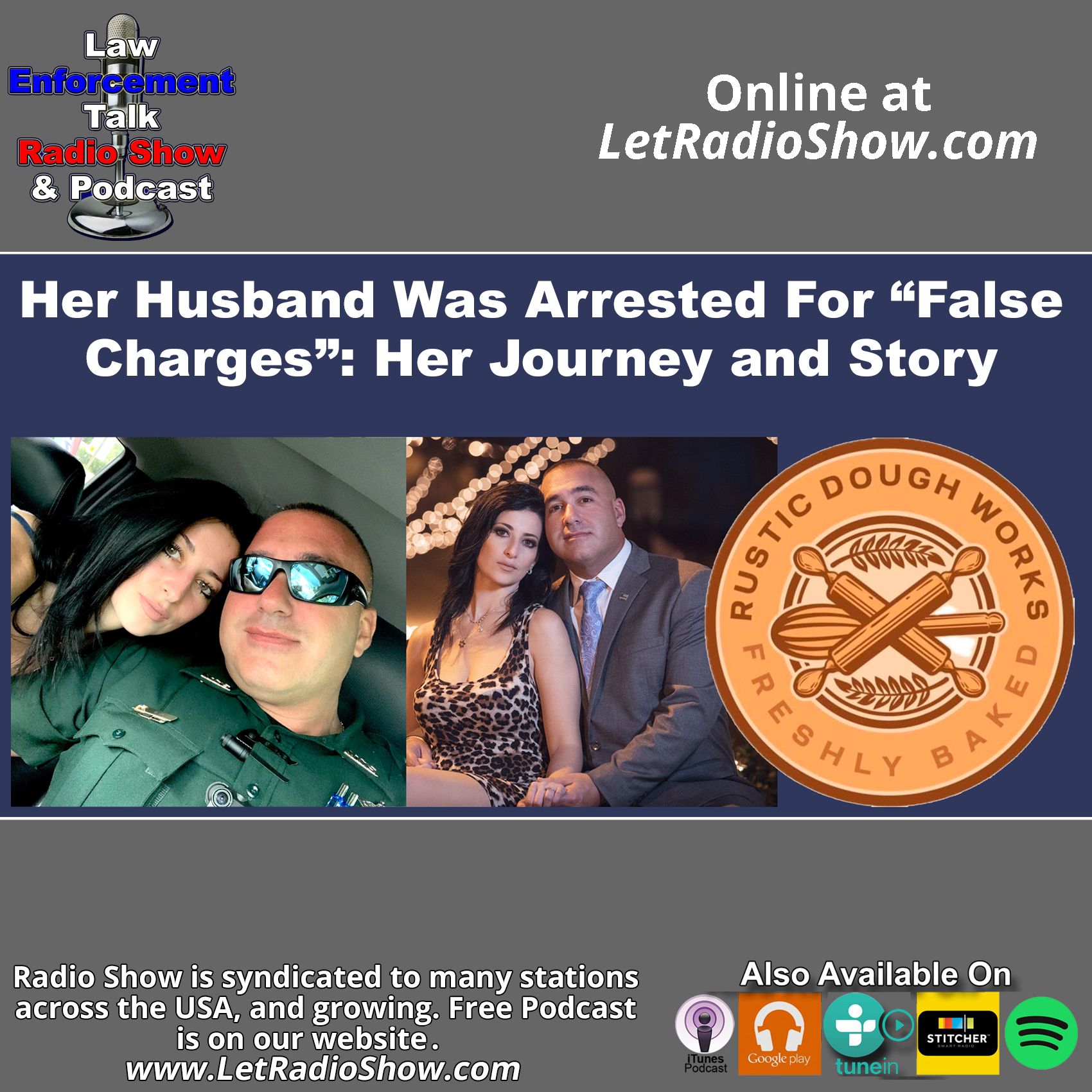
Law Enforcement Talk: True Crime and Trauma Stories
Her Husband Was Arrested For "False Charges"
00:40:36
Her Husband Was Arrested For "False Charges". In the quiet coastal city of Palm Coast, Florida, Dr. Svetlana “Lana” Kirchevshy-Ur is known for her compassion and dedication. A highly trained Hospice and Palliative Medicine Physician, with an Internal Medicine background and years of experience in nursing, homecare, and hemodialysis, Lana’s life seemed firmly rooted in the world of medicine. But behind the white coat is a woman who has been navigating a storm few could imagine.
Loading summary
Transcript149 lines
- [00:01]
A
This is the story of the Watt. As a maintenance engineer, he hears things differently. To the untrained ear, everything on his shop floor might sound fine, but he can hear gears grinding or a belt slipping. So he steps in to fix the problem at hand before it gets out of hand. And he knows Grainger's got the right product he needs to get the job done, which is music to his ears. Call clickgranger.com or just stop by Granger for the ones who get it done.
- [00:30]
B
She's a doctor in Florida. Her husband, now an ex Florida county sheriff's deputy, was fired, arrested, she says, wrongfully accused. And she's here to tell her story how they're fighting back on the Law Enforcement Talk Radio Show. Welcome to the Law Enforcement Talk Radio Show. In the Law Enforcement Talk Radio show, we are joined by special guests talking about their experiences, their realities of investigating crimes, plus those who have experienced horrendous trauma. Police, first responders, military and victims of crime share their stories. Hi, I'm John J. Wiley. In addition to being a broadcaster, I'm also a retired police sergeant. Be sure to check out our website letradio.com and also like us on Facebook, search for the law enforcement Talk radio show. You know we used to have an app and it was very popular app and then guess what? We couldn't hold a candle through our Facebook presence. How many people have the mobile Facebook app already installed on their phone? How many people use it on their computer? Make sure you follow us, make sure you like us on our Facebook page. Just search for law enforcement talk radio show and podcast and be sure to send us a comment to one of the posts. Best of all as 100% free. Join us on the phone. We have Dr. Lana Kurchevsky Ernest contacting us from Florida. Her husband David er was a and this is tricky. Know my stance on ex former and retired. He is an ex Marion County, Florida sheriff's deputy. A lot of people say former will let you decide the difference between the three. And by the way, just so people know, there's very few things I'll correct people on. One of them is they'll say if I'm ex police, I'll say no, I'm retired. I got to hurt retired young you can retire with a pension without you can be former. It means you leave on good terms or you can be X meaning you're fired or you quit under pressure. So you get the decision based on what Dr. Atlantic Kurchevsky or is going to talk about with her husband of whether he's Former ex. I'm leaning towards former. That's just my feeling on the matter. Dr. Krichevsky, Earth, thank you so much for being guest on the law enforcement talk radio show. Very much appreciate it.
- [02:50]
C
Thank you so much for inviting me.
- [02:52]
B
It's a pleasure to have you here. You're a doctor in the Gainesville, Florida area, aren't you?
- [02:56]
C
I was in Gainesville, Florida. I'm in Palm coast now.
- [03:00]
B
Okay, gotcha. So that's for those who don't know geographically, Palm Coast, Florida, is that on the east coast of Florida and Gainesville is more central?
- [03:09]
C
Yes, that's correct. It's right in between Daytona and St. Augustine.
- [03:13]
B
And by the way, I live in South Florida. I'm doing the show from West Palm Beach, Florida. And I call this area of United States South York. Adelphia people here are from New York, New Jersey, Boston, Philly, Baltimore. And by the way, I was born in northern New Jersey, not far from you. I believe you're in the Hackensack areas where you came from. I was born Passaic, New Jersey.
- [03:35]
C
That's correct. Oh, very nice.
- [03:38]
B
Didn't live there very long.
- [03:40]
C
I lived in Carolina.
- [03:42]
B
My dad was in the United States Navy and we, we transferred out there when I was about six months old. And I used to love going up there to visit family members. And my, my grandparents were all Irish immigrants and they settled in Rutherford, Long Island, Westchester county, you name it. And so when I go to visit those areas, it's like old home week.
- [04:02]
C
Yep. And the pizza's good?
- [04:04]
B
The pizza is really good. By the way, her husband, David, er, now has a pizza truck, I should say. And the name of it is Rustic Pizza Works, I believe. Rustic Pizza. No, Rustic Dough Works. Check out their Facebook page. Look for Rustic Dough Works. So let's start with from the beginning, you were happy in Northern Jersey. You made the transition union husband to North Florida. Why?
- [04:34]
C
Well, I started my career as a nurse. And from my first, from my first nursing job, I wanted to go into medicine. So I ended up picking up my prerequisite courses, worked part time, actually worked full time, and then took classes at night, finished up my prerequisites and went into medical school, graduated medical school and worked as a hospice nurse while I was working on matching into residency. So when in 2019, I matched into internal medicine residency in Gainesville, Florida, and that's how we made the move to Florida.
- [05:16]
B
And by the way, thank you for what you've done. The nursing aspect is not lost on me. My first wife was an emergency Room nurse at Johns Hopkins in Baltimore. But my father, he passed away about 30 some odd years ago from lung cancer. And we had some hospice people. They're just phenomenal. And that is a thankless job that I. I don't even know where to begin. So thank you for doing that.
- [05:38]
C
Oh, thank you. It's a. It's a special part of medicine. It really is.
- [05:41]
B
It's really tough because it's not just the patient you're dealing with, although that's your primary focus. You've got the family members, too, that they're. They're rough. We were in rough shape.
- [05:53]
C
Mm. Yeah. And it's a place in medicine where you look at somebody as a whole and look at their family as a whole. It's a little bit different than just coming in, reviewing lab results and leaving. This is where humanity comes into play and you get to hold their hand.
- [06:12]
B
And as far as.
- [06:14]
C
It's really my favorite place to work, it's phenomenal.
- [06:17]
B
By the way, what you've accomplished, Becoming a doctor is not lost. I mean, we'll talk about that in a moment. But nurses, by the way, in the United States, in Florida, they are not slouches. They are some tough, smart people. You got to be smart nowadays to get an RN and then go from doing that and working and going to night school and then going to medical school. What were you thinking?
- [06:46]
C
I had a goal and I was working on it. That that's what I wanted to do. It was really. I think it was more of a calling for me. It's something that I wanted to dedicate my life to. And I. I know it took a lot of years of my life and I could have been doing other things, but I don't regret it for one little bit now.
- [07:05]
B
For some people, heading to the Jersey shore is a calling. Becoming a police officer is a calling. Becoming a nurse is a calling. Becoming a nurse and then going to medical school sometimes, and I say this tongue in cheek, you got to have your head examined. You're driven, for sure. But that's no easy accomplishment.
- [07:25]
C
It wasn't easy. It wasn't easy, but it was. It was a good journey.
- [07:30]
B
And plus, at the time, I think.
- [07:31]
C
It'S something I learned a lot from at the time.
- [07:33]
B
You're married, you got the relationship, you got all those things going on. So it's not like you're a single person, too.
- [07:39]
C
Yep. I met my husband shortly before we moved down to Gainesville. We took a leap of faith together, and we decided to move down here for my Residency and he always wanted to pursue law enforcement full time. So this was our chance to go into a brand new beginning, pursue our dream careers. It just seemed like it was going to be a great time going forward.
- [08:09]
B
And how old of a guy was he when he started pursuing a career in law enforcement?
- [08:15]
C
45.
- [08:15]
B
I say he was no youngster. It's not like an 18 year old or 20. I was 21 in the academy and I thought I knew it all and trust me, I knew nothing. I was totally dense and I'm still not that far from that now. Having said that, it was a lot to learn, but, and I don't go into details, there was a lot of violence on the street and a lot of that left permanent scars. But my biggest battles by far, not even close. And the number one stressor was my own department, not the street. I think you can relate to that.
- [08:52]
C
Very unfortunate. Yep. Very unfortunate. And we, we had no idea.
- [08:58]
B
And it's not, that's, that's not uncommon that I hear that all the time from people all over the United States that are in law enforcement or law enforcement families and they'll say, man, you know, I thought it was, I missed the job, but I don't miss the politics. I don't miss all this other stuff that goes along with it. And I had a guest on the other day and he talked about the internal politics, the power struggles with inside police departments, sheriff's departments, sheriff's offices, whatever you want to call them, that people want to go to school, people want to get promoted, people want to get assigned to the task force. And it's so competitive. And yet there is no, how do I say this nicely? There is no way of compensating someone more for better performance. You get paid the same amount as people who do nothing.
- [09:43]
C
Exactly, exactly.
- [09:45]
B
And the people who do all the work take all the risk. And we find out from Dr. Leonard Kachevsky. Herb, we're going to talk about what she went through as a law enforcement spouse. Her husband was fired from the sheriff's office, Marion County, Florida. He was arrested. We'll talk about that. They're fighting back with lawsuits and they currently. He currently has a pizza truck called Rustic Dough Works. Look for the Facebook page. This is law enforcement talk radio show. Trust me, we got so much more to talk about. Don't go anywhere. We'll be right back. Be sure to check out our website, letradio.com that's L E T R. There you'll find episodes of the show available as a podcast after airing on radio and they're always free. There's 700 plus episodes on there right now. There's blogs. Get information about our sponsors. All that and much more@letradio.com again the website is letradio.com what do you think.
- [10:50]
C
Makes the perfect snack?
- [10:52]
D
Hmm, it's gotta be when I'm really craving it and it's convenient.
- [10:55]
C
Could you be more specific?
- [10:57]
D
When it's cray venient.
- [10:58]
C
Okay.
- [10:58]
D
Like a freshly baked cookie made with real butter, available right down the street at am, pm Or a savory breakfast sandwich I can grab in just a.
- [11:05]
B
Second at am, pm.
- [11:06]
C
I'm seeing a pattern here.
- [11:07]
D
Well yeah, we're talking about what I.
- [11:09]
C
Crave which is anything from am, pm.
- [11:11]
D
What more could you want?
- [11:12]
E
Stop by AMPM where the snacks and drinks are perfectly craveable and convenient. That's cravenience. Am, Pm too much. Good stuff.
- [11:28]
B
Return conversation with Dr. Lana Krichevsky or I feel kind of empowered saying Dr. Lana Kristevsky er. By the way, I'm old school. If someone earns a medical degree, they become a medical doctor. I will always refer to them as doctor or doc. I don't. And it's not disrespect thing. I won't call you by your first name. It does. It's not age thing. It's just how I was raised. And when people, they're former law enforcement, I try to acknowledge their last rank. So someone's commander, lieutenant, sergeant. I'll call them Serge because it means a lot to me when people call me Sarge. And even though I retired a long time ago. So you started as a nurse in Northern Jersey and you decided you want to go to medical school and then you and your soon to be husband transferred and set up a whole new life in the Gainesville, Florida area. Am I fast forwarding too much?
- [12:24]
C
It's. Yeah, that. That's correct. We moved down to Gainesville, Florida. He wanted to pursue law enforcement full time. I was starting my medical residency. We were, we were active. We were physically active. Getting, exercising the whole time. Getting ready for his police academy fitness test. I was starting my residency, getting a hang of things, you know, as a new, as a new physician on the floors, you know, you're just a whole lot of expectation on you when you're just really out of med school, you know. So it was a big adjustment for us, but it was a good time.
- [13:03]
B
And I love, I love the Gainesville area. But let's just to be honest, I was a morning DJ just north of there in Lake City for I'd say about five years. My wife and I love that area. But it gets really hot in the summer and really cold in the winter. It's not like the east or west coast of Florida where you get the buffer, the Atlantic Ocean or the Gulf, keeping your temperatures more closely, the highs and the lows. But it's a different, it's a different environment. Gainesville is totally different than, let's just say South Florida or where you are now, isn't it?
- [13:40]
C
Oh, yeah, it's. It's not what you expect Florida to be. It's. It's a college town. University of Florida is everywhere over there. Lots of college kids. It, it's busy, it's busy.
- [13:55]
B
Some of the worst traffic I've encountered, it was brutal, especially on game day, football. And by the way, University of Florida, I love their campus, but they've got all kinds of schools. They got engineering school, they've got medical school, they've got law school, they've got teachers you name and they're associated with, I think Shands Hospital. And they've got something there that they do do a lot of stuff. So there, it's not a slouch place. I might have a reputation being a party school, but it's, man, you got to have something going on to get there.
- [14:25]
C
Oh, yeah, there's a lot going on there. Lots of businesses, lots of people. There's tourists, people come in for games. It's busy, it's. It's a fun place.
- [14:35]
B
And I would imagine, and this is a question for your experience. You lived in Northern Jersey prior to that point. Did you see a close correlation with where you were in Northern Jersey and Gainesville? Was it similar?
- [14:48]
C
You know, it was a little bit of a culture shock for us In Jersey is very high paced. People are generally not as friendly. You know, nobody really stops and asks you, hey, how your day is going. And when we moved down here, it was people. You get that Southern hospitality, I think that's what they call it. And people are super nice to you and they hold the door for you. When it was a little bit of a culture shock, but it was nice.
- [15:18]
B
Well, I'll just say this. When I made the move from South Florida to North Florida, the Gainesville area, I realized I made a huge jump from the Deep south to the really Deep South. So this is South York, Adelphi up there. The first time I met someone, he's like, hey, you want to go hog hunting? I'm like, what is that? I have no Idea what that means. He goes, oh, we get pit bulld dogs, we go out in the woods, we chase hogs, and we have. No, no, I don't want no parts of that. What made you think I would be interested in that?
- [15:49]
C
Yeah, well, we saw gator tail on the menu at the restaurant. We're definitely in Florida.
- [15:53]
B
Yeah, gator tail, wild turkey hogs. By the way, there are more wild hogs in Florida than there are people that, that'll tell you quite a bit. There's a lot of, a lot of hogs here in Florida. So how old were you when you and your husband made the move to Gainesville?
- [16:10]
C
I was 35, 36.
- [16:13]
B
Okay. And then he decided he wanted to go into law enforcement. Was this a calling for him that he had you said for years before that?
- [16:23]
C
It was, it was. He comes, he comes from a long line of police officers. His father, his grandfather, his grandmother, his siblings, they were all police officers. And, you know, law enforcement doesn't really pay that much. And he had a very well paying job up in New Jersey as a crane operator. So with the cost of living in New Jersey, it was pretty impossible for him to go and pursue law enforcement full time. But we moved to Florida and this was, he saw it as an opportunity.
- [16:55]
B
And what year Was this?
- [16:56]
C
Approximately 2019.
- [17:00]
B
So I did a little research and that area where you all were in North Jersey, an NYPD officer makes about 85 to $100,000 a year. And you think, man, that's a lot more than I made in Baltimore. I started 13,000 and change is a long, long time ago. What was the starting pay for law enforcement in this part of Florida?
- [17:22]
C
In Florida? Oh my God. It was, they started them off. I believe it was, if I'm correct, I believe it was about like 40, 45,000, something like that a year.
- [17:30]
B
So that seems like a lot, but in the grand scheme of things, it's, it's not. Especially when we talk about what happened before we do that there's something unique. Where I got hired in Baltimore, they had their own academy. Where a lot of people do here in Florida is they go to a police academy. And I'm air quoting a police academy, the local community colleges. And if they're, they're hired by an agency, they pay it. Otherwise they pay. Is that what your husband David did?
- [17:56]
C
Yep, yep. During hit, during his academy, he got picked up by Marion County Sheriff's office and they picked up, they picked up the cost for the academy.
- [18:04]
B
Was he one of those gung ho guys? And I Turned out to be that gung ho guy in the academy. I never thought I would be, but the truth is I was. Was. He was one of those guys.
- [18:14]
C
He was pretty, was proactive. He was proactive. He, he's, he's a person that when he puts his mind to something, he puts his heart and soul into it. So it, he was living and breathing police work, academy, looking for ways to improve himself. And so he was, he was excited about it.
- [18:35]
B
And were you excited about him going into law enforcement?
- [18:39]
C
I was a little worried because I know, I know the risks associated with it, but I also know how much of a difficult journey it was for me to get into medicine as a career changer. So I understood that when you have a dream and you're trying to pursue it, it's the same thing for him going into law enforcement. And if this is a lifelong dream and a calling for him, I was there to support him.
- [19:09]
B
And I want people to understand something. This area, the Gainesville, Florida area, Lake City, which is Columbia county, you've got Alachua county, which is where? Gainesville, you've got Lake county, you got Marion County, Gilchrist County, Dixie county, all those other ones. We've. The last murder by Ted Bundy was in Lake City in the Gainesville area, not far from there. We've had officers shot in the face and other areas. It is a no joke area. We've had officers killed in that area. And I can only begin to imagine the stress, worry and fear. And I'll be honest, Doc, I didn't really appreciate the fear that my mother went through until I retired and she shared with me how many sleepless nights she had. This is the law enforcement talk radio show. We're talking with Dr. Lana Krichevsky, ER and her husband was a Marion County, Florida sheriff's deputy. He was fired, wrongfully accused. She says they fighting back with lawsuit. He has a piece of truck now called Rustic Dough Works. Check out the Facebook page. They live in Palm Coast, Florida. We return, we'll talk about what happened and more. Don't go anywhere. We'll be right back. Of all the radio stations in the United States, there are no other shows like the law enforcement talk radio show. And on Facebook there's only one official page. Do a search on Facebook for the law enforcement talk radio show and be sure to like the law enforcement talk radio show Facebook page.
- [20:37]
C
Mmm.
- [20:38]
B
Mmm. Ooh.
- [20:39]
C
Whatcha eating?
- [20:40]
D
The new banana split cookie from AM pm. All freshly baked with real butter with banana, chocolate and strawberry flavors.
- [20:46]
C
Ah, that sounds amazing. Can I have a bite.
- [20:48]
D
I'm sorry but no. But you can't split the banana. Split.
- [20:52]
C
Not even a little?
- [20:52]
D
Not even a crumb.
- [20:54]
C
What if.
- [20:54]
B
No, please. Mine.
- [20:57]
E
When it's too legit to split. That's cravenience. Get a 3 pack for 99 cents with our app ampm. Too much good stuff plus tax where applicable. Prices and participation may vary. Terms and conditions apply.
- [21:14]
B
Return conversation with Dr. Atlanta Kurchevsky er in Palm Coast, Florida, one of my favorite areas. Her husband David er was a Marion County, Florida sheriff's deputy. He was arrested, fired. They are fighting back, which we'll talk about in a few moments. She says wrongfully accused. You get to be the judge. He now has a pieces truck called Rustic Dough Works. Check out their Facebook page. Rustic Dough Works. By the way, I did check it out. I'm a big fan of pizza. If you. You take one look at me and you would know by the way, I'll just say this. I've lost £55 and it's not easy at my age, but one of my things cheat meal. Every six weeks my wife and I go to have pizza and then ice cream and we have a full flour pizza, the full fat, a full sugar ice cream, you name it and I'm back on track. Afterwards it's just Readers Digest A Bridge Virginia version Dr. Leonard Kristi, ER was in the Hackensack, New Jersey area, North Central Jersey. Migrated to Gainesville, Florida for medical school, for her medical career. Got married to her husband. He went to community college, became a police officer or deputy sheriff for Marion County Sheriff's Office. Where did he was academy at?
- [22:33]
C
It was in Santa Fe. Santa Fe Police Academy in Gainesville.
- [22:36]
B
Gotcha. Gotcha. That's a great school, believe it or not. It's not an easy school. And if you want, if you live in Florida and you want to get into University of Florida and you can't make it, one of the best secrets is go to Santa Fe Community College, get your, your basic, take your grades and then it's a lot easier to get in. That's for Florida residents. But he was, you said in his mid-40s when he started the academy.
- [23:00]
C
Correct.
- [23:00]
B
Was he called the grandpa? Was he called names because of that?
- [23:05]
C
No. You know, he was everybody's friend. He was everybody's friend. He was, he was there to support, encourage everybody if, if the class left somebody behind for some reason. He was there to help out and to help, you know, encourage them to all stick together. He was, he was everybody's friend.
- [23:26]
B
It seems to me And I'm going to ask you an informal question. He, it seems to me he's not a high maintenance guy. He's kind of driven like you, because driven people don't. They don't select other people. They're not driven. It's not the kind of person you have to babysit all the time, say, oh, you're, you do your own thing, I'll do mine. Am I correct there?
- [23:44]
C
No. He's, he's, he's very, very proactive. Very. He, he doesn't like to be bored.
- [23:51]
B
So he graduated.
- [23:52]
C
He doesn't like to be bored.
- [23:54]
B
He graduated from academy.
- [23:55]
C
He's a, he's a genuinely good person.
- [23:57]
B
Good. And by the way, that's, that's really important. He graduated from academy and he started with Marion County Sheriff's Office. Am I correct?
- [24:07]
C
Correct.
- [24:08]
B
How long did he do with them?
- [24:10]
C
He did his FTO program and he did great in the FTO program. There was really no complaints about him. And then he was led to be on his own. He had a large area to patrol. He patrolled the Ocala Forest. And, and that's when, and that's when all the sleepless nights began. He was on night shift. I was literally didn't know every time he would go on shift, I didn't know if he was going to come back to me.
- [24:42]
B
Did that cause any friction for you two as a couple?
- [24:46]
C
No, no. I, it was, it was some. I knew that that's. He did what he loved and he enjoyed it. And I was doing my medical residency. My hours were long. Most of my residency was six days off. Six days on, one day off. It was busy. Eight to 12 hour shifts. They would alternate you between days and nights. And it was all about learning and learning to be an independent physician and studying for boards. And he was working full time and I just. Every, every day, every night he left to work. I used to just pray that he comes home safe.
- [25:30]
B
And was there any sign of any friction other than the normal, the, what I call the normal learning curve stuff?
- [25:38]
C
In terms, in terms of my residency?
- [25:41]
B
No. With, with him in his job in the sheriff's office.
- [25:45]
C
Oh, his job in the sheriff's office. No, he, he, he did great. He picked everything up pretty well. He was always prepared, always on time. It was really, he had really had no struggles in his FTO program. And when he was on his own, that's when things started getting difficult.
- [26:07]
B
You say he was on his own. How long was he on the streets as a deputy before and air quitting? He Was terminated.
- [26:16]
C
He spent about, I want to say about two years on the job, maybe a little less than two years.
- [26:21]
B
Okay, so he got through the. He was still the rookies, what we would call a rookie, but he wasn't brand new. And the reason I say that I had brand new people that were still probationary, that they would do something stupid and wound up getting fired. And once they got through the probation stage, it was not, not that easy to get rid of someone. You had to do something really, really blatantly bad. Usually it was covering up crimes, other things, crimes, and I'm quoting moral turpitude that will wind up getting people fired or terminated. And we'll return to that in a few moments. But one thing, when I was going through police work, granted it was different stuff, but I almost. I didn't do it purposely, but I didn't talk to my wife about what's going on because they didn't want her to worry. And I wanted to keep that aspect of our lives away. I didn't want her to be more aware than she already was as an emergency room nurse at Johns Hopkins about the violence and trauma, especially the violence and trauma I endured and the stuff, the bogus stuff in the department as well. But I didn't always succeed. Was that the case with David?
- [27:31]
C
Yeah. He usually didn't talk about the stressful stuff at work. But, you know, you see him coming home sometimes, those scoffs on him and, you know, he just says that, you know, things are okay, you know, I got home safe. He tried not to worry. He tried to put every effort to let me finish my residency.
- [27:52]
B
And what about the departmental stuff? Because I know there was significant amounts.
- [27:55]
C
Of that, the departmental stuff that was stressful. And I noticed he was coming home from work really worried. He really didn't understand why he was getting this kind of treatment. He was kept in the sally port for hours for missing punctuation. There was a sergeant that was giving him a hard time, and he really. He was worried with. You know, as a resident physician, my salary was only about 50,000 a year. And between my salary and his starting salary with Marion County Sheriff's office, we were doing okay. So he was worried about his job security and talked to a couple of people in the agency and we talked together as a family, and we thought maybe, maybe we need to figure out how to diffuse this situation and maybe talk to human resources.
- [28:51]
B
One of the things you said in November that really resonated me was that the amount of pressure and people say this all the time. They're like, finance is not a big deal. Yeah, it is. It's a really big deal. When you've got a family that you're supporting and you've got your share, you need to kick in. And other ones, it's a big worry. It's a big fear. In addition to all the other stress that goes on that, that had to be huge for you to.
- [29:17]
C
Absolutely, absolutely. And you know, and he, it, we just didn't understand why, you know, he was going in there with every good intention and trying to do his job. And he took great pride in his badge. Didn't understand why this was happening. So we decided to maybe, maybe we should talk to human resources and see if there's a way to address this and maybe make it stop.
- [29:44]
B
And I can sit there and say to you this point that that was the number one mistake that a lot of people. And I'm not picking on you. When I had sergeants when I was a new patrolman in Baltimore, they'd look at a report and they'd tear it up and throw it back in my face and say, rewrite it because you got it wrong. And you wouldn't tell me what I got wrong. And it was if you had a mistake on a traffic ticket, some of the old timers were just as harsh and you learned, but they called you names in the meantime. We got called all kinds of names. The busting, you know, what's. It never, never ended. But one thing that we had to learn how to do was how to handle it. And I'm not going to say you all handle wrong. What I'm going to say is you can explain more in a few moments. This is law enforcement talk radio show. Return to our conversation in a few moments with Dr. Lana Kurchevsky er. Her husband, David er, was a Marion County, Florida sheriff's deputy. He now operates a pizza truck called Rustic Dough Works there in Palm Coast, Florida. She says he was wrongfully accused, arrested and fired. We'll talk about that in a few moments. Don't go anywhere. We'll be right back. There's another location online where you can find the law enforcement talk, rate of show and podcast. That's medium.com. it's spelled M E D I U M dot com. Medium has 100 million average monthly total users. Look for and follow the law enforcement talk radio show and podcast on medium.com.
- [31:18]
F
Stop by Sherwin Williams and get 30% off select paints and stains August 15th through the 18th. It's the perfect time to transform your space with Color Refresh your home inside and out with colors that make every space feel brand new. From cozy interiors to stunning exteriors. We've got the perfect shade for your next project. Visit your neighborhood Sherwin Williams store or shop the sale online. Delivery available on qualifying order. Click the banner to learn more. Retail sales only some exclusions apply. See store for details.
- [31:56]
B
Turn in conversation with Dr. Lena Kurchevsky ER on the law enforcement talk with this show. She's a doctor in Florida. She's calling us from Palm Coast, Florida area. She and her husband David, er, he was a Marion County, Florida sheriff's deputy. He was arrested, fired and she says wrongfully accused, which we'll talk about a few moments. They are fighting back and let's just say that the fairytale story did not come true for them for lots of different reasons. First of all, Dr. Kurchevsky or how is he doing today? And hopefully I'll talk to him in the future.
- [32:34]
C
Today he's doing much better. Much better. We're trying to piece all the our life back together after going through the last four years.
- [32:44]
B
I'll just say this and you can tell them I said this. It's taken me a long time to get to a point where I can talk civilly about certain things that occurred and in my department career. And by the way, we're referring to the department, we're not referring to the bad guys in the street. They were bad enough. The department many times was much, much worse. To cut to the chase, David was arrested and fired. What happened?
- [33:13]
C
Well, we did that complaint with human resources. They launched an internal investigation, found that the sergeant did nothing wrong. And then David was suspended for improper activation of his body worn cameras. And then ever since then it was just all his reports were rejected and it just, it was retaliation. He was coming home stressed. I was worried about him. The suspensions. And the worst of it was was when he had to hand in his badge on his gun. I don't think I've ever seen him this crushed.
- [33:53]
B
No, that would, that would be very upsetting.
- [33:58]
C
Yeah.
- [33:58]
B
He had options for other agencies at that time. And for those who don't know, Marion county, you got Lake county not too far away. You've got the Ocala Police Department. You have Gainesville Police Department, you have Latchua County Sheriff's Office. He had other options but he took, he stuck it out there. Is there a reason why he did?
- [34:19]
C
He did. He loved the job. We lived in the area. We had to move into Marion county from Gainesville because he wasn't allowed to take his patrol car outside of the agency. It was their rule. So we, we found a place that was north Marion county, as close to Gainesville as possible. So I would drive back and forth between Gainesville and Citra. I used to live in. We used to live in Citra.
- [34:48]
B
It's a beautiful area, but you guys had lots of options. That's the thing that gets me. I'm wondering, number one, why was he. He was. He was arrested, he was fired, he was forced to turn his badge, his gun, all that. What was the reason why they came up with.
- [35:08]
C
Well, the sheriff's office reported to the state attorney's office that he was lying on his police reports.
- [35:20]
B
And by the way, that's that crime of moral turpitude. Once you have any kind of, for lack of better words, lying reports of lying, you put it on what's called a Brady list nowadays and it makes it almost impossible to get hired anywhere even if found that it was not true.
- [35:39]
C
Yep. It was all unfounded. There was. The state couldn't provide us with statement or particulars. He was initially. He was initially charged with misdemeanors. The state attorney came and said if he doesn't take the plea deal of giving up his license, going on probation, admitting guilt, paying fines, and it was a slew of things that she requested. And she said if he doesn't take the deal, she's going to charge him with felonies.
- [36:12]
B
And what was the disposition? What happened in court with the charges against David?
- [36:19]
C
Say that again.
- [36:20]
B
What happened in court were the charges against David?
- [36:24]
C
Well, he got booked out of the jail, he got charged. We went to. We had a court appearance requested statement of particulars. The state did not provide it to us. He hit the local newspapers. And we found that Marion county was no longer a safe place for us to live.
- [36:44]
B
Right.
- [36:45]
C
And our attorney advised us that you should be. You guys should move out of Marion county as soon as possible.
- [36:49]
B
And I here's a true confession on my part back when. And I don't. I'm not that this way today for the most part. But back then when a department said one of their officers did something or hit the newspaper, I believed it. There was something. If there's smoke, there's fire. There's some truth to it and it turns around later on in life. I realize a lot of what is said. And if you're not one of the air quotes golden boys in the agency or department you work for, you can easily wind up in trouble. And it's not always what you do that caused the problems. It's what you say that you did quite often. There's nothing to it. Was there anything to this? Because I believe if my marriage correct, all the charges were dropped.
- [37:34]
C
They were, yeah. Yep. They, they tried to say that his body worn cameras were in. His reports didn't resemble each other. But at the bottom of all of his theses he writes, please refer to my body worn camera for facts and circumstances. There was nothing to hide. But they didn't even allow him the opportunity. If they were not clear about anything on his report. He wasn't even allowed the opportunity to clarify anything. So they made the complaint to the state. Our attorney got notified that they're pressing charges and he had to go through the process of getting booked through the jail. I was on a mandatory rotation and I remember having messages from the attorney telling me that things are going to, you know, he's watching over David getting booked through the jail. And it was hard, you know, when your husband has to give up his badge and has gone and getting booked through the jail for not even understanding what the state thought was a lie. We just could not wrap our minds around what was happening.
- [38:46]
B
No. And I still have a lot of difficulty with this and I don't, my mind doesn't want to even picture this when you're telling your story of what you went through. I don't even want to look at that. And there's a far cry difference between state laws, criminal laws and departmental policies. And that's what a lot of people get confused. Well, if you did something wrong, by the way, it's not against the law to not turn on your body, your body worn camera in most areas in the United States that I know by the way I police before that. So if you make a mistake in report, it's not that big a deal. It's an administrative thing. It is not a criminal charge. He was arrested and charged. He was charged with how many, how many charges they have?
- [39:29]
C
It was four or four counts of false statements. And then, and then when he didn't take the deal that the state attorney came out with, she booked him through the jail again and charged him with two counts of official misconduct.
- [39:46]
B
I want to fast forward really quick as we're out of time. We're running short on time. You guys are fighting back with lawsuits, am I correct?
- [39:55]
C
Correct.
- [39:56]
B
And how long has that been going on? Four years so far. And both things are not quick, they're not easy and they're still hanging over his head. In your head too. I'm sure.
- [40:06]
C
So the chart. The charges were dropped in January. The charges were dropped in January. The process was dragged on for four years, ran past the statute of limitations and a lot of things that we could have sued for. And at the, in January, state attorney had a conversation with our attorney and, and said that, you know, if, if he just voluntarily gives up his license, I'm going to not press the, the official misconduct.
- [40:38]
B
By the way, there's, there's no happy ending to this. I, I, you, you were referred to me, we talked earlier, but you referred to me by Randy Sutton from the Wounded Blue. You're, you're telling your story with them or, and, and are they helping you?
- [40:51]
C
Yes, yes, yes. Randy has been wonderful. He heard our story and he invited us to his Wounded Flu Summit in September, which we're really excited and attending.
- [41:04]
B
Good. And he's doing well now?
- [41:07]
C
Yes, yes. So after, after the charges were dropped, it was, it was like a breath of fresh air. I mean, we, he couldn't, he couldn't get a job with, with felony charges hanging over his head, and it took such a financial toll on us. I was, my residency was three years long and this was happening over the three years of my residency. When I was on my last year of residency, our hospital got approved for a fellowship in hospice and palliative medicine, which is my favorite place to work.
- [41:42]
B
Remind me never to call you for professional services. All right. I hope I'll never do it. Dr. Lena Krichevsky, er. Please tell David I'd love to have him on the show. Check out his Facebook page. It's Rustic Dough Works. Thanks for being guest on the show and Tony Story, both very much appreciated.
- [42:01]
C
Thank you.
- [42:02]
B
I'd like to thank our guests for coming on the Law Enforcement Talk Radio Show. The Law Enforcement Talk Radio show is a nationally syndicated weekly radio show broadcast on numerous AM&FM radio stations across the country. We're always adding more affiliate stations. If you enjoyed the podcast version of the show, which is always free, please do me a favor and tell a friend or two or three. I'll be back in just a few days with another episode of the Law Enforcement Talk Raider show and podcast. Until then, this is John J. Wiley. See ya.