← Law Enforcement Talk: True Crime and Trauma Stories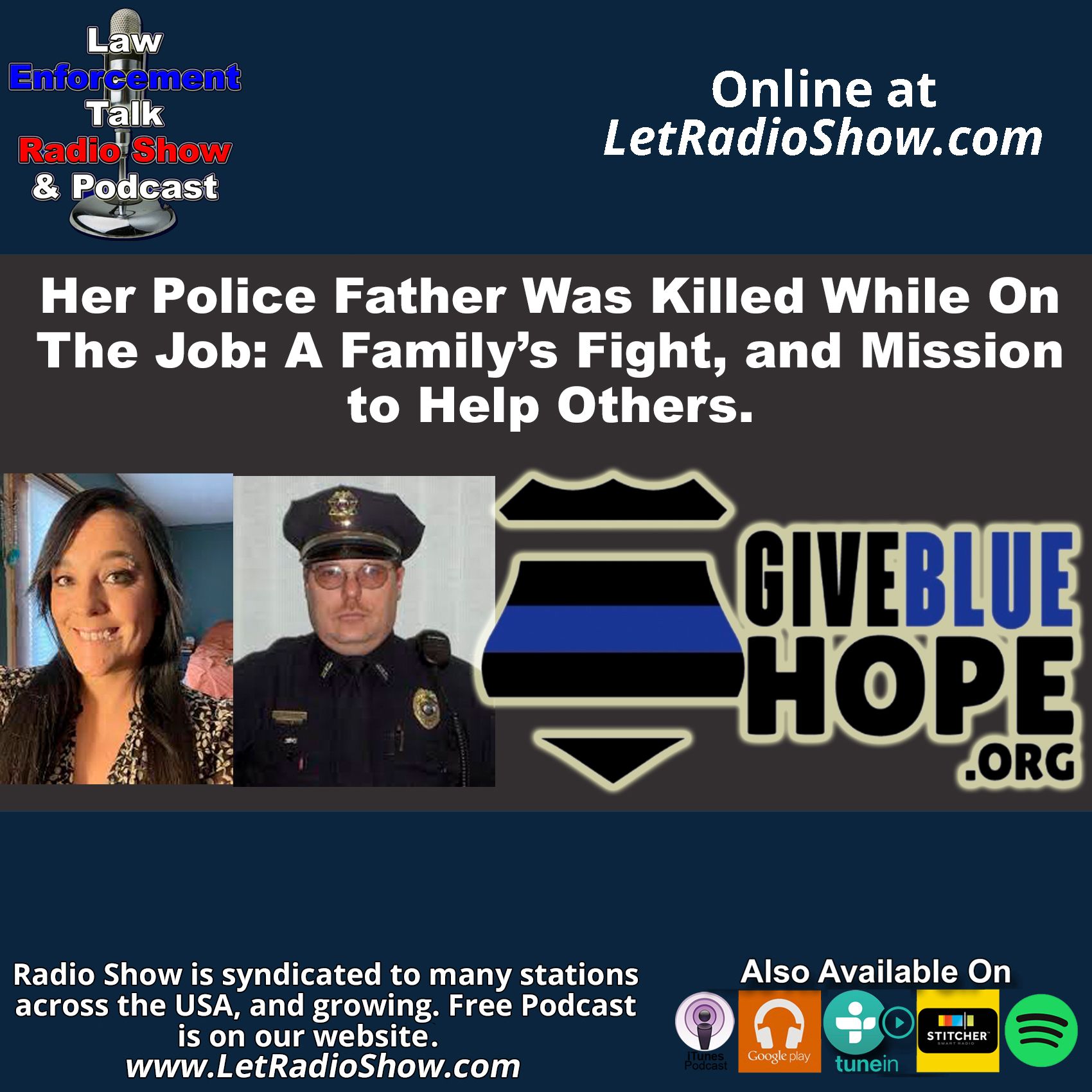
Law Enforcement Talk: True Crime and Trauma Stories
Her Police Father Was Killed While On The Job
00:39:02
Her Police Father Was Killed While On The Job: A Daughter’s Voice, A Family’s Fight, and a Mission to Help Others. Those words are not a headline to Tiffany Yant, they are the defining moment that reshaped her life. Tiffany is the daughter of Police Officer Ross Bartlett of the Ceresco Police Department in Nebraska, a veteran law enforcement officer who was killed in the line of duty during a traffic stop.
Loading summary
Transcript106 lines
- [00:01]
Grainger Announcer
If you're the purchasing manager at a manufacturing plant, you know having a trusted partner makes all the difference. That's why hands down, you count on Grainger for auto reordering. With on time restocks, your team will have the cut resistant gloves they need at the start of their shift and you can end your day knowing they've got safety well in hand. Call 1-800-GRAINGER Click grainger.com or just stop by Grainger for the ones who get it done.
- [00:31]
John J. Wiley
Hers is a story that is rarely told. We rarely ever hear from people like her. Her father was a police officer was killed in line of duty. She's here to tell her story about the incident and her life after on the Law Enforcement Talk Radio Show. Welcome to the Law Enforcement Talk Radio Show. In the Law Enforcement Talk Radio show, we are joined by special guests talking about their experiences, their realities and veterans investigating crimes. Plus those who have experienced horrendous trauma. Police, first responders, military and victims of crimes share their stories. Hi, I'm John J. Wiley. In addition to being a broadcaster, I'm also a retired police sergeant. Be sure to check out our website, letradio.com and also like us on Facebook. Search for the Law Enforcement Talk Radio Show One of the questions I get all the time why are you always promoting the Law Enforcement Talk radio show Facebook page? Well, because there's no better place on Facebook. That's it. It's simple. Everything about the Law Enforcement Talk radio show and podcast is right there, including great photos, stories you'll want to see, you'll want to share, memorials to law enforcement officers who are killed in line of duty. All that and more. Plus old episodes of the show can be found on our Facebook page. Just do a search for law Enforcement Talk rated show on Facebook and be sure to click like and or follow. We'll see you there. Calling us from Nebraska, we have Tiffany Yant on the Law Enforcement Talk radio show. Tiffany's father was Police Officer Ross Bartlett from the Soresco Police Department in Nebraska who was killed in line of duty. She's here to talk about that. She's the Chief Operating officer for Give Blue hope website is givebluehope.org that's givebluehope.org Tiffany, thanks so much for telling us about this. Sharing this difficult story with us is both very much appreciated.
- [02:23]
Tiffany Yant
Yeah, thanks for having me.
- [02:24]
John J. Wiley
And I'm sorry this went through and I always feel like I'm compelled to say something, but I know I can't bring back the past. If someone could, they would have A long time ago. And a friend of mine, who. His husband was a police officer in my department. He worked for me for quite a while, and then I transferred another district. He was shot and killed in line of duty a few months later. And I told her, her name is Kim, that my big problem was I was afraid to say anything. And she said, the worst already happened. You can't make it worse. If I don't want to talk about it, I'll tell you. Just don't stop being a friend. So you're here to talk about a really, really tragic situation.
- [03:05]
Tiffany Yant
Yeah, it has been the most traumatic experience of my life.
- [03:10]
John J. Wiley
And by the way, I went to your website. I saw some pictures of you. You're relatively young, so it's not like you're an old geezer like me.
- [03:20]
Tiffany Yant
I'm in my late 30s, but yeah, that's.
- [03:22]
John J. Wiley
That's what we call young. That's what we call. By the way, before we get in and talk about your dad, what kind of guy he was, tell us about what happened.
- [03:33]
Tiffany Yant
Sure. So my dad was known as a triple threat. So he was a criminal investigator for the Nebraska Department of Correctional Services. He was a part time police officer, and he was a volunteer firefighter and EMT for his local community. And he was serving as a part time police officer for the Ceresco Police Department. So he did that two Fridays a month for about six hours each shift just to keep up his law enforcement certification because he worked for Nebraska Department of Corrections as a criminal investigator full time. So on April 12, 2024, while serving as a Fresco police officer, he went on a routine traffic stop on Highway 77, and because of a distracted driver, he didn't come home.
- [04:30]
John J. Wiley
Right. He was. He was hit on a vehicle stop.
- [04:33]
Tiffany Yant
Hit. He was. He was on a traffic stop and he was hit at 70 miles per hour. The vehicle that hit him, that rear ended him, was doing 70 miles per hour because that driver was on his phone and wasn't paying attention. The visibility for being able to see my dad on the side of the road conducting this traffic stop was over a mile.
- [04:58]
John J. Wiley
And here's the thing, and this is no solace to you, is everybody thinks I'm as guilty as this, as everybody else, that the real bugaboos, the real things we need to be aware of are the crimes of violence, the stabbings, the shootings, the armed robbery. Shot and armed robbery, please. A lot of police are seriously injured. When I say police, that means sheriff's, deputy, state troopers, whatever terminology you want to use across The United States on car stops with vehicle collisions. And unfortunately, your dad and you and your family paid the price.
- [05:30]
Tiffany Yant
We did. And it has been the most traumatic experience of my life because nobody talks about the trauma that the family goes through because he wasn't shot or stabbed. And so there's this kind of like, I don't know, we are separated, right? Oh, well, he wasn't shot. There was no violence. Well, to us there was. He's still gone. He was still at work and did not come home. And people refer to it as an accident. It wasn't an accident. It was a choice. That other driver, both of the drivers, the driver he had pulled over that was breaking the law by speeding and the driver that was distracted and on his phone, they both made a choice, a temporary choice for their life, for their convenience, but it was permanent for our family.
- [06:25]
John J. Wiley
And here's the thing, and I'm not here to let me, I will stand on my step stool a little bit on my soapbox. Dui, people complain. That's a revenue generating thing. Listen, it's so easy to prevent driving while intoxicated. Just don't, if you're drinking, don't drive. I mean, we've been hearing it since I was a kid and it still continues. The big thing nowadays and it has been for the last, I don't know how many years has been people on their cell phones, the texts can wait, your social media can wait, lives depending on it. And it's not just the life of the person you take, it's the lives of family dependent on them.
- [07:09]
Tiffany Yant
Yeah, I mean, it truly is. You know, my dad Forsco has maybe, oh, I don't even know, less than 500 people. My dad was a road deputy for almost 25, 30 years of his career. So the majority of his career he was a deputy. And so as a kid growing up, I always worried about something happening to him at work, you know, being shot or stabbed or assaulted or whatever. And I used to have night terrors as a kid and he would have to come home in the middle of shifts so that I could feel that he had his vest on. So when he took this job as part time for Ceresco, a community that has less than 500 people, you just, you never think it's going to happen to you. You never think that it's actually going to happen. And then it does.
- [08:03]
John J. Wiley
And these sorts of traumas happen everywhere. No one's immune, it doesn't matter how. And Soresco, I've never even heard of, I don't even know where it is. I couldn't point it out on a map, to be honest with you.
- [08:13]
Tiffany Yant
But my first thought, 15 minutes from Lincoln.
- [08:16]
John J. Wiley
Okay. My first thought with, oh, that's a peaceful area. God. Nothing to worry about.
- [08:20]
Tiffany Yant
Mm. Ceresco doesn't even have a bar.
- [08:23]
John J. Wiley
You would think that you be safe and he's just going to go hand out what. What? You said routine. And a lot of people take exception to that word. But routine, routine calls for service, routine traff stops, not a big deal. You can be. And we had a saying, and I'm not saying it's a case where you're dead, but we had a saying in police work. They taught us this in a Baltimore police academy. And all through in service in roll call. Complacency kills and it kills all the time. And it doesn't matter what agency you work for or how small the department is.
- [08:53]
Tiffany Yant
Yep. Yeah. You know, and I will never forget my mom calling me the night that it happened. And she actually responded to. Because they were both volunteer firefighters and EMTs, she actually responded to the call. And so she called me and all she could tell me was, your dad was in an accident. And I could hear in the background, because she was on the call, I could hear in the background that they are saying that life flight is en route and that they were doing CPR and I was two hours away, so I had to. I immediately left where I was and I went by myself. I left my husband and my kids camping. And because even in my head on the drive there, I'm like, he's going to be fine by the time I get there. By the time I get there, he's going to be fine. I will go back camping tomorrow with my husband and the kids. By the time I get to the hospital, he's going to be fine. They'll probably keep him overnight. He's probably banged up.
- [09:54]
John J. Wiley
And that's we hope. And sometimes in this case, we're talking about Tiffany Yant. Her father was police officer Ross Bartlett from the Churrasco Police Department of Nebraska who's killed in the line of duty. Will return to our conversation about that in a few moments. She's the chief operating officer for Give Blue Hope. Website isgiveblue hope.org this is law enforcement talk radio show. Don't go anywhere. We will be right back.
- [10:20]
Grainger Announcer
Someone asked, what's the catch? What's the cost? There is no cost for anything on the law enforcement talk radio show and podcast website letradio.com letradio.com Again, that's letradio.com if you're an H vac technician and a call comes in, Grainger knows that you need a partner that helps you find the right product fast and hassle free. And you know that when the first problem of the day is a clanking blower motor, there's no need to break a sweat. With Grainger's easy to use website and product details, you're confident you'll soon have everything humming right along. Call 1-800-granger. Click granger.com or just stop by Granger for the ones who get it done.
- [11:12]
John J. Wiley
Return conversation with Tiffany Yant on the Law Enforcement Talk rated show. Tiffany's father was police officer Ross Bartlett from the the Tresco Police Department in Nebraska. He was killed in line of duty. She's the chief operating officer for Give Blue Hope. The website is giveblue hope.org that's giveblue hope.org Tiffany, when we left you, you were talking about driving to the hospital and your mind's telling you, oh, it's going to be okay. It's going to be, he's going to be injured, he's going to be banged up and we'll be sipping on tea and laughing and being old folks on the porch and all that stuff. But that wasn't in the cars for you?
- [11:48]
Tiffany Yant
No, it wasn't. And so because my mom was on scene with the fire department, she wasn't answering her phone. So the only information I had was that your dad was in an accident. And then I heard in the background that they were doing CPR and that life flight was en route. So I actually had to drive through the accident scene because from where I was to get to the hospital that they were taking him to, I actually had to drive on that road. And I remember, I'll never forget seeing all the lights and the, the police cars and, and everything. And they're detouring you off of the highway. You know, you have to detour around about a mile. And at this point my mom's still not answering the phone. And so I have no idea what's going on. I don't have an update. It's been almost two hours. I don't know anything. And so I drive up to this, the scene, this accident scene right outside of Ceresco and I'm just like. The realization at that point hit me because I'm like, this is really bad. There's no way he survived this. And so in that I had been.
- [13:01]
John J. Wiley
The police, I didn't know that you were driving by and you were the child.
- [13:05]
Tiffany Yant
No. And so in hindsight's always 20 20. At that point, I should have pulled over and let them know who I was, and they would have given me an escort. They would have drove in me, they would have. They would have done all the things. But I didn't. I didn't. It didn't click with me that that was even an option, because to me, this wasn't a police officer that was injured. It was my dad.
- [13:24]
John J. Wiley
Right.
- [13:25]
Tiffany Yant
And so I just drove myself to the hospital. I remember I was about five minutes away from the hospital. My grandmother called me because my mom had went home and got her and, you know, was. Went to the hospital. My grandmother called me and she said, hey, are you by yourself? And I remember telling her, you know, I am. I've already told you that I'm by myself. And she said, okay, we'll see you when you get here. And I knew at that moment he had died.
- [13:52]
John J. Wiley
Right.
- [13:53]
Tiffany Yant
Because she didn't want to tell me that because I was by myself in the car. And so I get to the hospital, I park, I go in, and there's just all of these police officers and EMTs and firefighters and ambulances and. And I walk in and I go through security, and as soon as I tell them, you know, his name, they look at me and they're like, we'll take you right there. And so they had my mom and my grandmother in a little room and like a consultation room. And so I go in and I look at my mom, and I'm like, where's dad? Can I see him? And she looks at me and she says, he died. And that was that. She had just been informed within five minutes or so that he didn't make it. And I will never forget standing in that room and just screaming and falling to my knees and. And the amount of sadness that just washes over your body, it's just unreal.
- [15:02]
John J. Wiley
Just having you tell the story, and it's bringing back memories of really bad stuff.
- [15:08]
Tiffany Yant
Yep. And, you know, I remember standing, like, outside of the room. We were able to go over to, like, where he was, and outside of that room, it was lined with firefighters and police officers and state patrol and deputies. And they were just standing there, right? They were just standing there. And I remember thinking, why are you people here? Can't we just have, like, a moment like, I'm here now. My mom doesn't need you. Like, you can go? And it took days, days for me to realize what, in the line of duty, death meant. And that they were there to show respect. They were there for me. Yeah, they were there for my mom. And I didn't. I didn't know that. I didn't put that together. And they stayed there until we left. Until his body left. And so I think that the most traumatic thing for me that night at the hospital was I was moments after finding out that dad had died. And I was asking my mom, like rhetorical questions, right? Like, why? Why did this happen? And I was bawling and just devastated. And I asked my mom, I said, well, what was he even doing on the highway? He is a city police officer. He's not supposed to leave Ceresco. And a police officer, I won't name names, but a police officer who worked with my dad looked me in the eye and said, because that's the job, he knew what he signed up for. And I have never in my life felt so small that he was basically telling me that it's okay that he died because that's what he signed up for. That was his job.
- [16:59]
John J. Wiley
First of all, I would say this.
- [17:01]
Tiffany Yant
Something that you want to hear.
- [17:02]
John J. Wiley
One of the things I tell people, Tom, is that I may have signed up for the job. And I did. I signed up for that. And I thought I knew the violence and the trauma and everything that was heading my way. I did not. I had no clue. But I'll tell you who didn't sign up for this is my wife and children. They didn't sign up for this at all.
- [17:21]
Tiffany Yant
Right. And that is something that I have said multiple times throughout this almost two year process is this decision, his decision to serve was made long before I existed. I didn't have a choice. He did, but I didn't have a choice. And I'm the one that has to live with the consequences of it. I'm the one that has to live in a world where he doesn't exist and it is honorable. And I am not taking away from that. And he did make the ultimate sacrifice, and I'm not taking away from that either. But in that moment, just finding out within, you know, moments of finding out, being told that that's the job and that's what he signed up for, was probably the most insensitive thing that has ever been said to me.
- [18:07]
John J. Wiley
Yeah. And this is neither here nor there because I don't know the officer. Thank you for not name him. But one of the things that this is my. One of my pet peeves about police, and I love police, because I was one too, is the biggest mouths in the world. Are usually the ones who've done nothing. And they're the ones. If I was there, I'd have done that. Well, you weren't there, so shut it.
- [18:31]
Tiffany Yant
Yep.
- [18:31]
John J. Wiley
You know, and that I'm not defending or attacking this person's actions. All I'm saying is you as a daughter of the slain officer, that should never ever be said.
- [18:44]
Tiffany Yant
Right. And I'm sure that that was how he was comforting him and his fellow officers is this is the job. This is what we signed up for. We knew the risk and I'm sure to law enforcement that was very comforting, I'm sure.
- [18:59]
John J. Wiley
No, it's not. I just say for myself, it's not for me, it's not right.
- [19:03]
Tiffany Yant
It was not comforting for me in that moment. It was not comforting. And that is something that I will never forget. I will never forget how I felt in that moment.
- [19:13]
John J. Wiley
And the other thing that used to get to me and I hear this a lot was, you know, it was God's will. And I'm a very religious person, don't get me wrong. I'm not knocking that. But my response to that is, well, no, because God didn't kill him. It was someone else. And this guy or this man, this woman was as good a police as I was, sometimes even better. And they still lost their lives. So don't tell me about that because that's obviously not true. We're talking with Tiffany Yant. Her father was police officer Ross Bartlett from the Churresco Police Department of Nebraska is killed in line of duty. She's a chief operating officer of Give Blue Hope. Their website is givebluehope.org that's givebluehope.org return. We'll talk more about the incident that cost the life of her father and how it's affected her. Don't go anywhere. We'll be right back. Of all the radio stations in the United States, there are no other shows like the law enforcement talk radio show on Facebook. There's only one official page. Do a search on Facebook for the law enforcement talk radio show and be sure to like the law enforcement talk radio show Facebook page.
- [20:19]
Grainger Announcer
If you're the purchasing manager at a manufacturing plant, you know having a trusted partner makes all the difference. That's why hands down, you count on Grainger for auto reordering with on time restocks. Your team will have the cut resistant gloves they need at the start of their shift and you can end your day knowing they've got safety well in hand. Call 1-800-granger. Click granger.com or just stop by Granger for the ones who get it done.
- [20:56]
John J. Wiley
Return to conversation with Tiffany Ant on the law enforcement talk radio show. Tiffany's father was Police officer Ross Bartlett from the Churrasco Police Department, Nebraska's kind of line of duty. She's a chief operating officer for Give Blue Hope. The website is givebluehope.org that's givebluehope.org and it pains me to say your father was, I don't know, a right or wrong way of saying it. And we shouldn't be having this conversation. And I just recently lost an aunt, my, my father's sister, who passed away from old age and complications. And I don't know how to address that either. But I don't know how to talk to you about this.
- [21:33]
Tiffany Yant
It's, you know, sharing his story is how we continue his legacy. So it, it's really important for me, but it is, it's kind of like a taboo subject because officers don't want to think about that. It could be them, you know, but that's the reality. If you put that badge on every single day and you leave your house, it could be you. And my dad never thought it would be. And it was.
- [21:58]
John J. Wiley
And here's the one thing I would say it's like if we, we all knew the dangers of the job, if we really thought it could happen to us, and I'm not talking about the bad feeling, all this stuff, but we would never leave the patrol car, never leave station. And there are people that do that, trust me, there are. We call them station cats, but they never go to hot calls. But the truth is, and I, before we get back to the story, I remember having a conversation with two co workers. And this is when I was a young patrolman before I got promoted. And I told them, I said, if I get shot and I'm dying, do not let me die. Let me die in the back of a squad car or a paddy wagon. Do not let me die in the middle of the street. And they promised me that, but I never once thought of. And I have a saying, the four S's for police work, Sunscreen, soft body armor and seat belts. Don't forget self care. But those three soft body armor, seat belts and sunscreen can save your life as you get older.
- [23:00]
Tiffany Yant
Yep.
- [23:01]
John J. Wiley
And what's the thing I didn't wear? I didn't wear seatbelts for a long time. Whether your dad wore seatbelts or not, probably wouldn't have saved them.
- [23:09]
Tiffany Yant
No. And so he was actually in his patrol car unbuckled because he was talking to dispatch, you know, running the driver's license of the vehicle. He had pulled over. And he was actually seated in his patrol car at the time of impact.
- [23:25]
John J. Wiley
And I hate to say this, he did.
- [23:27]
Tiffany Yant
And we heard that. We heard. Well, he wasn't buckled up. Well, he wasn't supposed to be buckled up. He was on the side of the road.
- [23:33]
John J. Wiley
He didn't have to be there.
- [23:35]
Tiffany Yant
No, no. You know, and. And, you know, I talk about the traumas of it for our family. It is very traumatic when you lose somebody in the line of duty. Nobody talks about the fact that you. You don't have a say in the funeral. No, you don't have a say in what is going to transpire at the funeral. You. That's not for you. We refer to it as being monkeys in a circus. We were there. It was a show. It was a show put on that we were expected and obligated to participate in.
- [24:12]
John J. Wiley
And I was.
- [24:13]
Tiffany Yant
Family is very small. And the first funeral home that I called the morning after my dad died told me that they could only seat 100 people. And I actually told that guy, oh, my goodness, there's going to be so many empty chairs because there's only like 20 of us. It wasn't until later on that day that I was informed that we had to find a venue that would accommodate 2,000 people.
- [24:37]
John J. Wiley
Yeah.
- [24:37]
Tiffany Yant
Because there would be 2,000 people at his funeral. And the. The funeral will be live streamed. The media will be there. You will be expected to be stoic, and you will be expected to stand in front of all of these people and. And grief.
- [25:00]
John J. Wiley
There's no privacy. That's the feeling I get from this.
- [25:03]
Tiffany Yant
Nope. And everything that I had to do over the next three or four days was to try to protect our being able to grieve in private. Everything that I put in place was so that my children and my mother and myself could be at that funeral and grieve and cry and be sad and say goodbye and not have a million people watching us. And it was so hard because we were expected to just stand up and grieve so publicly because he died in the line of duty. And that, to me, is so traumatic because we were trying to say goodbye and we were trying to reconcile what had happened and we were being basically thrown out in front of everybody and saying, you are expected to do this, this, this, and this. That is your duty. That is your duty as the family.
- [26:02]
John J. Wiley
And I don't know, in your case, it's different. I'm not here to argue with you. I don't know that there is a proper compromise so that the family can grieve in private and then the officers in the police department can do what they got to do. And it's quite the production.
- [26:18]
Tiffany Yant
Yeah, it is. It is 100% of production. We, like I said, we refer to it as we were just puppets in a show. And we just had to. It was not for us. It was not for us to. It was not, you know, like a funeral for, you know, my grandmother would be my grandfather. It's. It's. It was not like that. We were. We were on display. Our grief was on display.
- [26:45]
John J. Wiley
One of the things that comes from working a small agency is they don't go through this a lot. Did they have obvious bumbles that you could look back and say they didn't know what they're doing?
- [27:00]
Tiffany Yant
Honestly, the Ceresco Police Department does not even reach out to us. They did not help plan the funeral. They did not help plan the professional getting my dad's body from point A to point B. They. They did not do any of that. They did not celebrate his anniversary, the end of watch. They did not put up a memorial. They did not attend the hearings, the sentencing, the Nothing. They. They have not done anything.
- [27:30]
John J. Wiley
Even today. They're not doing any alone.
- [27:33]
Tiffany Yant
No. The state of Nebraska State Patrol has been amazing, but that department that dad served for, they. And I don't know if it's because they were small and they didn't know what they were doing, and so they just did nothing.
- [27:48]
John J. Wiley
Well, that kind of goes to what I was talking about. I'm almost like the rat who'd rather chew a hole in the wall than talk with people about this. Unfortunately, line of duty. That's what we started this conversation with. And granted, agencies that don't go through this, God bless them, they're fortunate. But no matter how big or small your agency, it could happen, and it happened to a small Churrasco Police Department in Nebraska, an area where you said, there's 500 people. This is not supposed to happen.
- [28:19]
Tiffany Yant
No, it's not. And I understand that the Soresco Police Department didn't know, right, what they were supposed to do, how they were supposed to act, what they. And so, luckily for us, Nebraska Department of Correctional Services stepped in and they helped us plan the funeral. The Soresco Volunteer Fire Department, because my mom and dad were both on the department, have been absolutely amazing. They have been with us every step of the way, every possible time we have needed something. They have been there and we couldn't have done that. We could not have gotten through all of this without them. But as far as the department that he served for, I think they could have done better.
- [29:00]
John J. Wiley
Can you do something now that would help alleviate something, make them feel like it's important to them?
- [29:06]
Tiffany Yant
I think at this point we're so far out that you can't undo what they didn't do. You know, Washington, D.C. we had to go to Washington D.C. last year for Police Week because Dad's name went on the memorial. Cerezo Police Department didn't even send an officer. Nobody from their department was there.
- [29:24]
John J. Wiley
We're talking with Tiffany Yant. Tiffany's father was police Officer Ross Bartlett from the Tresco Police Department, Nebraska. He was killed in line of duty. We'll return that conversation for you moments. She's the chief operating officer for Give Blue Hope. Their website is givebluehope.org that's givebluehope.org when we return, we're going to talk about life after and more. Don't go anywhere. We'll be right back. Get your free ebook on tips to improve your health. They are tips you can start using today and most will cost you nothing. Plus the ebook is 100% free. Download the free ebook@LetHealthy.com when we say free we mean free. Get the E book for free today@LetHealthy.com that's@LetHealthy.com Again the website is LetHealthy.com if.
- [30:24]
Grainger Announcer
You'Re the purchasing manager at a manufacturing plant, you know having a trusted partner makes all the difference. That's why hands down, you count on Grainger for auto reordering with on time restocks. Your team will have the cut resistant gloves they need at the start of their shift and you can end your day knowing they've got safety well in hand. Call 1-800-GRAINGER Click grainger.com or just stop by Grainger for the ones who get it done.
- [31:02]
John J. Wiley
This is Law Enforcement Talk Radish Show. Returning to our conversation with Tiffany Yant. Her father was Police Officer Ross Bartlett from the Churrasco Police Department in Nebraska who is kid on line of duty. We'll talk about that again in a few moments. He was struck by a vehicle. She's also chief operating officer. Give Blue Hope is the name of their company and her website is givebluehope.org that's givebluehope.org so recap. Your dad was a part time officer for the city of Ceresco Police Department, Nebraska. He was on a traffic stop. And a guy, I'm presuming male. Doesn't really matter, male or female, was speeding, not paying attention, and struck the vehicle, and he died from his injuries. There's really no way of sugarcoating this.
- [31:47]
Tiffany Yant
No. So just to be clear, dad had had a vehicle pulled over that was speeding. The vehicle that was distracted and on his phone that rear ended. Dad was not speeding. He was just on his phone.
- [31:59]
John J. Wiley
Could they determine whether they were texting or they were surfing social media, downloading.
- [32:04]
Tiffany Yant
Data and had been on his phone for over a minute? Yep, they did determine that.
- [32:12]
John J. Wiley
I will say this, the person driving a car, I'm not defending their actions, but they didn't set out to do that. I'm just going to say this. If you're driving.
- [32:21]
Tiffany Yant
He did not.
- [32:21]
John J. Wiley
If you're driving your car, put down the ding dang phone and just pay attention to the road. A lot more people survive and a lot more people would go home healthy. That's another thing. Your dad, he didn't survive after the funeral. And it's clear cut the shortcomings from the agency. One of the things that happens from survivors that I talked to quite often is they don't want the name of their deceased to be forgotten, but they were quickly forgotten by their agency. Was that the case for you?
- [32:55]
Tiffany Yant
Yes. You know, I'm not here to call out the Suarezco Police Department. I am here to tell them to do better. To do better because they could have offered us so much more. You know, we had the anniversary of dad's death. The anniversary of his end of watch was last April, and nobody even contacted us from the department. Nobody checked in, nobody said, I know today is going to be really hard for you. They didn't put up a memorial. They. They didn't do anything. So bringing awareness to that is, this is so traumatic for the families. And everybody talks about this brother, brothers and sisters in blue and the blue family, and we're here for you. And he's never going to be forgotten. You're out, officer. Is never going to be forgotten. But that's not true. I mean, in our case, that is not true. We were forgotten. My dad was forgotten. And do better. Just do better.
- [33:51]
John J. Wiley
Yeah. I can't defend them. And I have to look at my own actions. And so one of the things I do is every October 10th, that's when William Billy Martin was shot and killed. I do a little memorial on social media. And. And it's been. I think it was 1989, when he was Killed. That's how long ago it was. And this for you, is still fairly recent.
- [34:13]
Tiffany Yant
Yeah. And we're not asking for the big April.
- [34:17]
John J. Wiley
It's not the big things that seem to matter, in my humble opinion. It's the little things.
- [34:22]
Tiffany Yant
Right. You know, just checking in on my. On us checking in on my mom. You know, we've had four or five different hearings with the driver accused. That was accused. He was actually just sentenced last Thursday, and nobody from the department was there. Nobody from the department was at his sentencing. We went to that without brothers in blue, without brothers and sisters in blue. There was no law enforcement presence from the Ceresco Police Department at that sentencing.
- [34:55]
John J. Wiley
That's unforgivable. And for those command staff at that agency, you need to understand that is unforgivable. It is your job to make sure.
- [35:05]
Tiffany Yant
Yep. We went to every one of those hearings in the last 21 months without support from law enforcement. We sat in that courtroom, just me, my mom, and my husband.
- [35:19]
John J. Wiley
I wish I had something to say. I really don't. This is horrifying. The. The factory that was killed is horrifying. The lack of response from the agency is horrifying as well. But that even if they. They decide to do the right thing today, which they can, and because it's the right thing to do, it's not going to bring your dad back.
- [35:42]
Tiffany Yant
No.
- [35:42]
John J. Wiley
And so that had a profound impact on you, your entire family. And is it fair to say that's kind of motivating what you do today?
- [35:50]
Tiffany Yant
It is. It absolutely motivates me for what I am doing today to continue my dad's legacy, my legacy, our family's legacy. I joined Give Blue Hope because I don't want any other family to sit there and feel like they are alone and that their officer or first responder has been forgotten. I want them to know that we are here. I am here. My team is here.
- [36:16]
John J. Wiley
We are.
- [36:16]
Tiffany Yant
We are here. Whether you need somebody to talk to, whether you need somebody to cry with, whether you need somebody to remember that your daughter is starting kindergarten and their dad isn't going to be there. We are here to make sure for the rest of your life, you do not feel alone. Let's get how I continue my dad's legacy. That is how I honor his sacrifice, so that I can make sure that no other family ever feels like they didn't matter. Like they were small and their loss was irrelevant.
- [36:51]
John J. Wiley
Here's the question I have for you, Tiffany, is part of what reason why I do what I do is putting A purpose to my pain and my past. Your pain. There's sadness, there's grief. And is there also anger that motivates you?
- [37:08]
Tiffany Yant
There is, there is some anger there, you know, towards the driver responsible that rear ended him, the distracted driver. There's some anger towards the driver that was speeding, that dad had, had pulled over that put them all on the side of the road to begin with. And there's anger there on the lack of resources that was available, the lack of involvement that was available to our family. You know, after the funeral we were basically on our own. Yeah, that was, everybody went away, the show was over, the production was over and we were just left to figure it out ourselves.
- [37:48]
John J. Wiley
One of the things that we were taught early on in the police academy is that if something happens to you, your family will be taken care of. And we're talking about is when you're killed on line of duty, your family's taken care of financially, they're not always taken care of emotionally. Where that doesn't hold true is if you are injured and survive the assault, attack, whatever it might be, quite often your family suffers right along with you financially, emotionally as well. Is there anything the agency can do at this point to lessen a blow?
- [38:20]
Tiffany Yant
You know, I think if they would just apologize for not being there for us to just, just say we messed up, we should have been there, we just didn't. And I truly believe they just didn't know how to be there for us. But they never asked either. They never asked, you know, what do you need? They never did that. So you know, if they can advocate with other agencies to let the, you know, to let other agencies know we dropped the ball when we had a death in our department. Don't do that. Learn from our mistakes, learn from our lack of involvement with the family. Learn from it so that they can ensure that other departments make sure that they are there for the family.
- [39:08]
John J. Wiley
And by the way, police brass for that agency, you can pick up the phone, you can make the phone call. It's not that it may seem like an 800 pound phone, but you can do this. So trust me. I want to run out of time. I want to go to your website, givebluehope.org that's givebluehope.org can people find you find other services, contact you there?
- [39:30]
Tiffany Yant
Yes, absolutely they can. Absolutely.
- [39:32]
John J. Wiley
Another website that people ought to check out is Officer Down Memorial Page. And just look for Robert Bart. Ross Bartlett who's a dad from Tresco Police department is killing Line of Duty. And Tiffany, I, I don't know what to say. I'm just gonna say this. Thank you so much for, for telling your story. It's a horrible story to talk about and I really appreciate you doing because quite honestly, we rarely, we rarely hear from survivors of officers, officers getting on duty. Ever.
- [40:03]
Tiffany Yant
Yeah. I'm happy to share our story. I hope that it helps other families, I hope it helps other departments to learn what the families truly actually need after that funeral is over.
- [40:15]
John J. Wiley
So be sure to reach out to Tiffany. Just go to givebluehope.org that's give this is Law Enforcement Talk Radio Show. Tiffany, thanks so much for being a guest. Appreciate it.
- [40:27]
Tiffany Yant
Thank you so much.
- [40:29]
John J. Wiley
I'd like to thank our guests for coming on the Law Enforcement Talk Radio Show. The Law Enforcement Talk Radio show is a nationally syndicated weekly radio show broadcast on Numerous AM&FM radio stations across the country. We're always adding more affiliate stations. If you enjoyed the podcast version of show, which is always free, please do me a favor and tell a friend or two or three. I'll be back in just a few days with another episode of Law Enforcement Talk Radio show and Podcast. Until then, this is John J. Wiley. See ya.
- [41:04]
Grainger Announcer
If you're an H Vac technician and a call comes in, Grainger knows that you need a partner that helps you find the right product fast and hassle free. And you know that when the first problem of the day is a clanking blower motor, there's no need to break a sweat. With Grainger's easy to use website and product details, you're confident you'll soon have everything humming right along. Call 1-800-GRAINGER clickgrainger.com or just stop by Grainger for the ones who get it done.
- [41:34]
John J. Wiley
If you like the show, please take a moment to rate, review and subscribe. It really does help the show to grow. Thank you for listening.