← Law Enforcement Talk: True Crime and Trauma Stories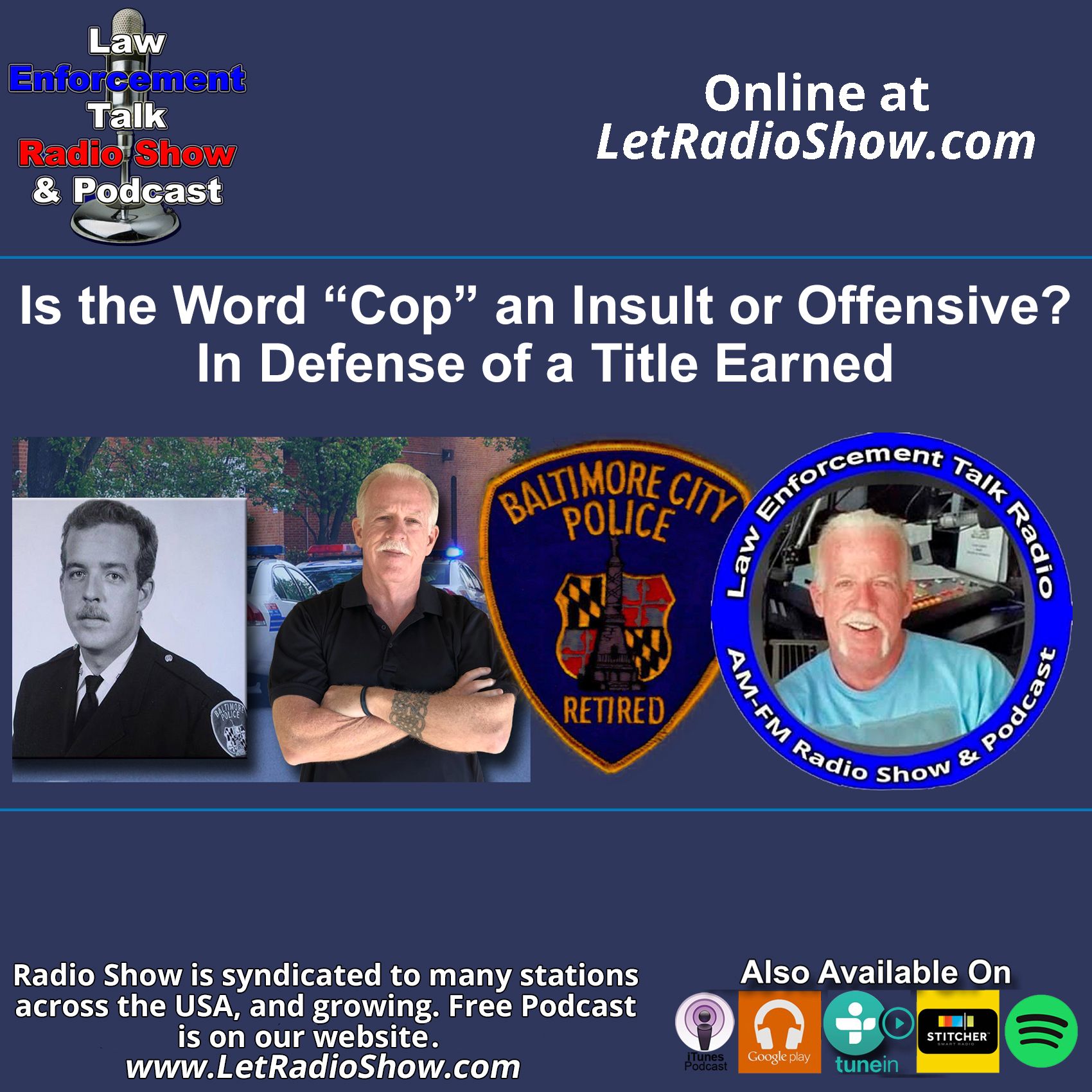
Law Enforcement Talk: True Crime and Trauma Stories
Is the Word Cop an Insult or Offensive?
00:11:16
Is the Word Cop an Insult or Offensive? In Defense of a Title Earned. Few words tied to law enforcement spark online arguments as quickly, or as emotionally, as the word cop. For some, it’s an instant trigger. For others, it’s harmless shorthand. But for many who have worn the badge, worked the streets, and answered the calls, cop is neither an insult nor a slur.
Loading summary
Transcript25 lines
- [00:00]
WSECU Announcer
WSECU isn't just one of Washington's best credit unions. We're the only credit union to be on the Forbes Best in State list five years running.
- [00:08]
Grainger Announcer
Why?
- [00:08]
WSECU Announcer
Because we put you first. Lower fees, early paydays, financial guidance and service second to none. As a member owned cooperative, we love Washington as much as you do. From the Olympic Mountains to the rolling Palouse. Join us and discover how much we care about your financial well being. Because what we really do best is invest in you. Stop by, say hi, we're wsecu. Let's Credit Union.
- [00:32]
Grainger Announcer
If you're an H Vac technician and a call comes in, Grainger knows that you need a partner that helps you find the right product fast and hassle free. And you know that when the first problem of the day is a clanking blower motor, there's no need to break a sweat. With Grainger's easy to use website and product details, you're confident you'll soon have everything humming right along. Call 1-800-GRAINGER, click grainger.com or just stop by Granger for the ones who get it done.
- [01:01]
John J. Wiley
In Defense of the Word Cop what comes to mind when you see the word cop?
- [01:07]
Welcome to the Law Enforcement Talk Radio Show. In the Law Enforcement Talk Radio show, we are joined by special guests talking about their experiences, their realities, investigating crimes, plus those have experienced horrendous trauma. Police, first responders, military and victims of crime share their stories how hi, I'm John J. Wiley. In addition to being a broadcaster, I'm also a retired police sergeant. Be sure to check out our website, letradio.com and also like us on Facebook Search for the Law Enforcement Talk Radio show of all the radio stations in the United States, there are no other shows like the Law Enforcement Talk Radio Show. And on Facebook there's only one official page. Do a search on Facebook for the Law Enforcement Talk Radio show and be sure to like the Law Enforcement Talk Radio Show Facebook page.
- [01:58]
This is a special episode of the Law Enforcement Talk Radio show and Podcast and we will be talking about a word that causes quite a stir online. That word is cop. In defense of the word cop, what comes to mind when you see or hear the word cop? That single word can ignite arguments online faster than almost any topic related to law enforcement. For some people, it sparks immediate debate. For others, it's nothing more than casual shorthand. But for many who have actually worn the badge, put on the uniform and answered the calls, cop is not a slur, not a shortcut, and not an insult. It is a title of respect earned through action, sacrifice and accountability. This is why the word deserves defending and why this special episode of the Law Enforcement Talk Radio show and Podcast exists. We're talking about a word that causes an outsized reaction from people who often have no real connection to the profession itself. The word is cop. I use the word frequently on social media, and I do so intentionally. I'm a retired Baltimore police sergeant. In my world, growing up in the job and living the job, cop was always a compliment. It was something you were called by other cops when they knew you could be counted on. It was never whispered as an insult, never thrown around as something dirty. It was a term of respect between people who understood exactly what the job demanded. Yet over time, especially online, some have insisted that the word carries a negative or derogatory meaning. That belief didn't come from the street, the squad car or the midnight shift. It came from people on the outside trying to redefine something they never lived. That disconnect is exactly why this conversation matters. This is a special episode of the Law Enforcement Talk Radio show and Podcast. We will return to our discussion of the word cop a few moments.
- [04:20]
Grainger Announcer
Remember when free meant free, no charge, no credit card information needed? Well, a place like that still exists on the Internet. The law enforcement talk radio show website letradio.com where everything is free including the podcast. Episodes are available after airing on radio. The website is let's radio.com that's letradio.com where free means free.
- [04:48]
WSECU Announcer
WSECU isn't just one of Washington's best credit unions. We're the only credit union to be on the Forbes Best in State list five years running.
- [04:56]
Grainger Announcer
Why?
- [04:57]
WSECU Announcer
Because we put you first. Lower fees, early paydays, financial guidance and service second to none. As a member owned cooperative, we love Washington as much as you do. From the Olympic mountains to the rolling Palouse. Join us and discover how much we care about your financial well being. Because what we really do best is invest in you. Stop by Sayhi. We're wsecu let's Credit Union if you're.
- [05:20]
Grainger Announcer
The purchasing manager at a manufacturing plant, you know having a trusted partner makes all the difference. That's why hands down, you count on Grainger for auto reordering. With on time restocks, your team will have the cut resistant gloves they need at end the the start of their shift and you can end your day knowing they've got safety well in hand. Call 1-800-granger. Click granger.com or just stop by granger for the ones who get it done.
- [05:56]
John J. Wiley
Welcome back to this special episode of the Law Enforcement Talk radio show and podcast where we are discussing the word cop, a word that covers an entire profession. One of the biggest misunderstandings about policing is the idea that law enforcement is one single job with one single title. In reality, it's a massive profession made up of countless roles and responsibilities. In the United States alone, we have police officers, deputy sheriffs, state troopers, state officers, game wardens, wildlife officers, park rangers, corrections officers, probation officers, parole officers, federal agents, and more. Each agency has its own mission, culture, chain of command and rank structure. Officer, agent, Corporal, Sergeant, Lieutenant, Captain, Major, Chief. Technically speaking, the correct way to address someone would be by their full title. Police sergeant, State police Lieutenant, highway patrol trooper. Calling a highway patrol sergeant simply a police officer isn't accurate and doesn't reflect the rank or experience they earn. Titles or ranks to be more specific matter in this profession. That's where the word cop fills an important space. It's universal. It cuts across agencies, titles and patches. It doesn't erase rank or role. It acknowledges the shared commitment underneath it all. Whether you work city streets, rural highways, a jail tier, or a federal task force, COP recognizes the brotherhood and sisterhood of stepping into a job most people wouldn't last a week doing what the word cop really means. For those of us who lived it, being called a cop meant something very specific. You actually did the job. The uncomfortable truth is that not everyone who wears a badge fits that definition. Every agency has them officers, deputies and troopers who technically show up for work but avoid the real work whenever possible. They shy away from hot calls. They arrive late to dangerous scenes. By choice, they keep their uniforms clean, their hands clean, and their internal affairs file spotless by doing the bare minimum. Ironically, those are often the people who climb the promotional ladder the fastest. Staying invisible keeps you safe from scrutiny, complaints and discipline. But it also leaves partners hanging and communities underserved. In the Baltimore Police Department, we had a name for those officers Humps. They mastered the art of stretching routine calls into hour long events, spending as much time as possible inside the station and letting other officers absorb the risk on their posts. That behavior didn't just burden fellow cops, it directly harmed the community by reducing proactive policing and response coverage. A cop, or what the old timers called real police, was different. A cop showed up, a cop backed up their partners without hesitation. A cop stepped into chaos, took responsibility, and handled business when it mattered. They understood that the job wasn't about comfort, popularity or promotions. It was about service and accountability. That is the Standard behind the Word this is a special episode of the Law Enforcement Talk Radio show and podcast. We will return to our discussion of the word cop in a few moments.
- [09:52]
LetHealthy.com Announcer
Get your free ebook on tips to improve your health. They are tips you can start using today and most will cost you nothing. Plus the ebook is 100% free. Download the free ebook at let healthy.com when we say free we mean free. Get the e book for free today at let healthy.com that's at LetHealthy.com Again the website is LetHealthy.com WSECU isn't just.
- [10:24]
WSECU Announcer
One of Washington's best credit unions. We're the only credit union to be on the Forbes Best in State list five years running.
- [10:30]
Grainger Announcer
Why?
- [10:30]
WSECU Announcer
Because we put you first. Lower fees, early paydays, financial guidance and service second to none. As a member owned cooperative, we love Washington as much as you do. From the Olympic Mountains to the rolling Palouse. Join us and discover how much we care about your financial well being. Because what we really do best is invest in you. Stop by, say hi, we're wsecu. Let's Credit Union.
- [10:54]
Grainger Announcer
If you're the purchasing manager at a manufacturing plant, you know having a trusted partner makes all the difference. That's why hands down, you count on Grainger for auto reordering. With on time restocks, your team will have the cut resistant gloves they need at the start of their shift and you can end your day knowing they've got safety well in hand. Call 1-800-GRAINGER Click grainger.com or just stop by Granger for the ones who get it done.
- [11:29]
John J. Wiley
Welcome back to this special episode of the Law Enforcement Talk Radio show and podcast where we are discussing the word cop. The fake outrage over a word. Every so often, usually on social media, someone erupts in outrageous when I use the word cop. What's revealing is not just the outrage, but its focus. It's never about the crime being discussed, never about the victim, never about the officer injured or killed. It's about the word. And that tells you everything you need to know. Here's where I stand, clearly and without When I call someone a cop, it is a compliment. If someone chooses to be offended, that's their issue, not mine. When a post reads a cop was shot and someone ignores the violence to lecture about terminology, their priorities are completely backward. Fixating on vocabulary while glossing over criminal violence raises serious questions about motive and intent. Outrage over language is easy. Standing up for truth, accountability and human life is harder. I'm proud of the title I'm a retired Baltimore police sergeant. I don't casually refer to myself as a cop out of respect for what the word represents. Others can call me that, and I'll accept it with gratitude. I'm honored to have served. Honored to have stood with men and women who ran toward danger while others ran away. Honored to be part of a profession that demands courage, resilience, sacrifice and integrity. And I'm honored to defend a word that represents the best of that profession. So yes, I will keep using the word cop because it's not just a name. It's a standard. It's a legacy. It's a badge of honor. To me, COP is a sign of respect, a quiet salute from one who lived the life to those who did the job the right way. So I'll leave you with this question. When you hear the word cop, do you hear respect or disrespect? If you believe it's an insult, that belief belongs to you alone. It does not reflect the mindset of those who earned the title, lived the work, and still stand proudly behind the word. This has been a special episode of the Law Enforcement Talk Radio show and Podcast. The radio show version is a nationally syndicated weekly talk radio show that is then converted to a free podcast. Be sure to share this episode with a friend or two, and I will return with a new episode in just a few days.
- [14:20]
WSECU Announcer
WSECU isn't just one of Washington's best credit unions. We're the only credit union to be on the Forbes Best in State list five years running.
- [14:28]
Grainger Announcer
Why?
- [14:28]
WSECU Announcer
Because we put you first. Lower fees, early paydays, financial guidance and service second to none. As a member owned cooperative, we love Washington as much as you do. From the Olympic Mountains to the rolling Palouse. Join us and discover how much we care about your financial well being. Because what we really do best is invest in you. Stop by, say hi, we're wsecu. Let's Credit Union.
- [14:52]
Grainger Announcer
If you're the purchasing manager at a manufacturing plant, you know having a trusted partner makes all the difference. That's why, hands down, you count on Grainger for auto reordering. With on time restocks, your team will have the cut resistant gloves they need at the start of their shift and you can end your day knowing they've got safety well in hand. Call 1-800-GRAINGER click granger.com or just stop by Granger for the ones who get it done.
- [15:22]
Podcast Host
Happy Holidays. Want to give your host a gift? Consider subscribing, rating and reviewing the show this holiday season. It really helps the show grow from all of us at Believe. Have a Merry Christmas everyone and a happy holiday.
- [15:41]
If you like the show, please take a moment to rate, review and subscribe. It really does help the show to grow. Thank you for listening.