← Law Enforcement Talk: True Crime and Trauma Stories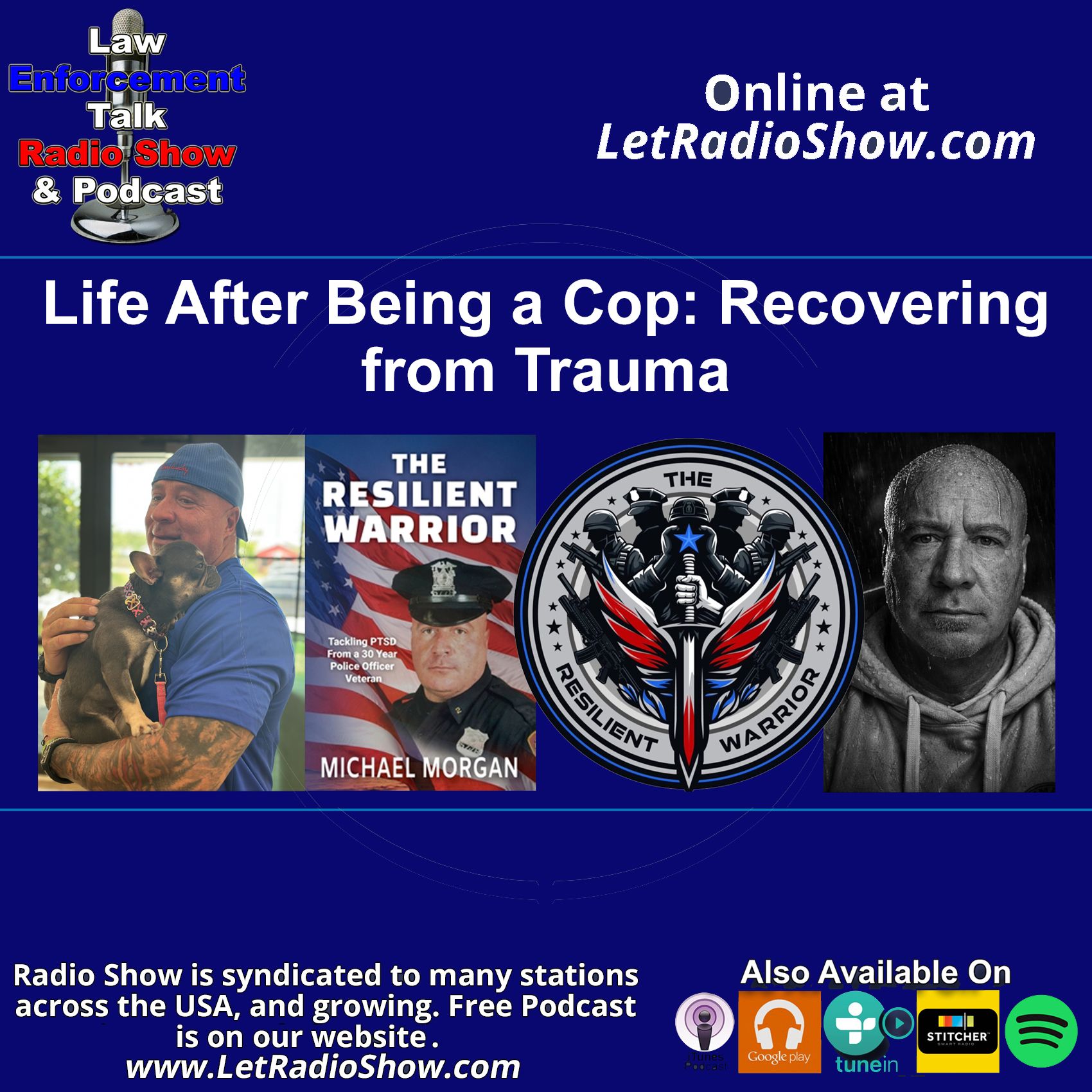
Law Enforcement Talk: True Crime and Trauma Stories
Life After Being a Cop: Recovering from Trauma
00:40:59
Life After Being a Cop: Recovering from Trauma. After 30 years of law enforcement, he thought he had retired unscathed. A veteran of the Suffolk County Police Department and the Atlanta Police Department, he spent decades responding to emergencies, witnessing trauma, and putting his life on the line. Yet even after leaving the force, the weight of his experiences lingered.
Loading summary
Transcript87 lines
- [00:00]
A
He's a retired police officer, did 30 years in policing between Atlanta Police Department and Suffolk County Police Department. He thought he got out relatively unscathed. Turns out that's when the problems really started. He's talking about his problems and his recovery. Welcome to the Law Enforcement Talk Radio Show. In the Law Enforcement Talk Radio show, we are joined by special guests talking about their experiences, their realities of investigating crimes, plus those have experienced horrendous trauma. Police force, first responders, military and victims of crime share their stories. Hi, I'm John J. Wiley. In addition to being a broadcaster, I'm also a retired police sergeant. Be sure to check out our website letradio.com and also like us on Facebook Search for the Law Enforcement Talk Radio Show. There's a couple ways you can stay in touch and keep informed of what's going on with the Law Enforcement Talk radio show. Number one, go to our website letradio.com, sign up for our email newsletter. It's real easy to find. I promise we don't spam you. I send out about one email every two weeks or so and there's also a feature called Broadcast Channels on our Facebook page where we send messages directly to your inbox, directly to your messenger. Real easy to sign up for. Make sure you like or follow the Law Enforcement Talk Radio Show Facebook page. And up top you'll see broadcast channels one for free podcast versions of the radio show. Another one top post of the day so YouTube can stay informed quickly, easily and best of all, like always, free content Is the Law Enforcement Talk Radio show from South Florida, a neighbor we have Mike Morgan on the Law Enforcement Talk Radio show. Mike is 30 years as a cop. He's retired from Suffolk County Police Department in Long Island, New York. He was also Atlanta City Police officer for a while before that and he says his problems started after he retired. We'll talk about that in a few moments. His website you want to get more information about him is story, his brand, his products. Theresiliantwarriornation.com that's theresiliantwarriornation dot com Mike A thanks for your service and b thanks for being guest on the Law Enforcement Talk Radio show. Both very much appreciated.
- [02:14]
B
Thank you very much for having me. It's truly an honor.
- [02:16]
A
It is good to have you here. I got to say this, I have a lot of relatives, extended relatives. My dad was career Navy. I was born in Passaic, New Jersey. We didn't live there very long but want to visit relatives. Suffolk County, New York Nassau County, New York, that whole area. There was a few policemen, but in my direct family, not many. It's a different world, isn't it?
- [02:40]
B
Yeah, I mean, it's. It's its own world. I, you know, grew up relatively. Relatively good. He was in the suburbs. My dad was a firefighter with the fdny. My mom, local secretary. So, you know, I had a middle class upbringing. Crime was not too bad. I won't say I was sheltered because I think I grew up fairly street smart. But we're going to speak about when I went down to Atlanta and began policing there. That was an entirely different neighborhood, different world, so to speak.
- [03:09]
A
Well, and by the way, I'm glad you brought that up. Your first entry into policing was in the city of Atlanta. Was that because they were hiring and your area was not?
- [03:18]
B
Yes. So what happened was I have an accounting degree from Hofstra University. So my first day of work, commuted into Manhattan. Realized by lunchtime there was no way I was doing that for the rest of my life. Went deep, realized that law enforcement was my calling. I initially wanted to apply with the FBI. This is late 91. They were on a federal hiring freeze until about 97, 98. So had a re. Pivot. Excuse me. NYPD at the time is about two years from application to getting into the academy. And I really didn't want to stay in New York anyway. I had a big hookup. My dad actually drove the chief of the fire department in the fdny. So I could have gone anywhere else wanted if I had become nft, excuse me, an NYPD member. But I just wanted to get out, see something new. Buddy's brother had moved to Atlanta. Loved it, told me all about it. I said, you know what? Once the FBI starts hiring again, I'll fly with them, but I want to get some police experience. And that was it. Went down there. Was hired in August of 93, and it was the craziest show on earth.
- [04:16]
A
Yeah, I hear. And by the way, Atlanta's got a great reputation. I hear a lot of good things, and I hear some not so good things. And my experience in Baltimore was that there's a lot more violence than I realized, a lot more trauma than I realized. I thought I knew what I signed up for. It turns out I really didn't have a clue. But the biggest problem for me, Mike, was not the streets, it was the command staff.
- [04:41]
B
Yeah, Jay, it's amazing. I just wrote a book, and in that book I wrote how much internal stress we deal with externally. You kind of Expect it on the streets internally between the nepotism, the infighting, and, you know, I called the department of spite because you say something wrong to someone and you wouldn't even know it. Sometimes they just have it in the back of their head when they get to a position of power. They're going to get you back somehow. And it's amazing how many great cops just, you know, lose their zest for the job because of the internal strife and politics that it played. It's disgusting sometimes.
- [05:16]
A
Now, was that relevant? Was that happening in both Atlanta and Suffolk County?
- [05:22]
B
Atlanta was very strange because I went down there. You can hear this accent. I have a straight up New York accent, can't hide it. So for the first time in my life, I was hearing the word Yankee thrown around. So, you know, it kind of struck me as odd, like civil war was over quite a while ago. But, you know, I could definitely see some inherent prejudice against some of us from the north. And, you know, to be honest, it was about a 50, 50 split between blacks and whites in the police department. And it was racial strife both ways. Black guys towards white guys, white guys towards black guys. I always try to go along. If you were cool with me, you were cool. And that's the motto I've always subscribed to. But, yeah, there was definitely a lot of internal strife, much less so in Suffolk County. I just found out that the bosses tried to help you there more than discipline you. Helping us in Suffolk was we have a super strong union. In Atlanta, we didn't have a union per se. It was a bargaining agency. So we really had no rights, so to speak. It was a right to watch State. You could be fired for anything.
- [06:21]
A
And that's similar to what Baltimore was. We had the FOP did a great job. And I'm not going to knock them. They were collective bargaining unit. But you didn't have a lot of power. They said, why did you have a blue flu? Why don't you strike? And why don't you call out? Well, guys who struck before I came on the job, they got fired.
- [06:38]
B
Yep, exactly. Yeah. It was the same thing in Atlanta and Suffolk County. Had we deemed it necessary, it would have been a totally different story. But be honest with you, we were very well taken care of in Suffolk County. I very much appreciated the fact that I was in Atlanta first because I always lived a life of gratitude in Suffolk county. Pd, listen, there's going to be things that go wrong. There's going to be policies you don't agree with, but overall, the way we were treated. I cannot complain, to be honest with you.
- [07:05]
A
And police wing policing is kind of universal anywhere in the United States. It's pretty much the same thing, varying degrees. And one of the things that I, I can relate with you was ought to say this when you talked about race when we came on the job and I came out in 1980, so I'm a little bit older than you and I'm old. Revolver cop. We had blacks, whites, gays, lesbians, Jews, Muslims. And no one cared. No one cared. There was a few that cared. They want to make an issue. And rest of us, people like me just didn't care if I got into a fight and I needed help, just grab a hand is all I cared about.
- [07:46]
B
Yep, absolutely. You know, like I said, I subscribe to the fact that if you're cool with me, I am cool with you. I could not care less what you look like, who you sleep with, whatever the case may be. But I can see from both sides, you know, I saw white guys who were racist. I saw black guys who were racist. I just stayed away from them. You know, we're supposed to be this brotherhood. And you know, in my book, I had a particular story where my partner and I got shot at. And I don't want to say we were rescued by, by two other guys. I mean, they were black. I, you know, I never looked at my guys like that. Like they were my boys. Didn't matter what you look like.
- [08:19]
A
That's right. And I use the term guys a lot, and I think most police do. When I, and I say this as a disclaimer. When I use the term guys, that means men and women. And it does. I didn't differentiate. You are my guys or you weren't. You were good police or you weren't. You were cops or you weren't.
- [08:36]
B
Yeah, it goes for females too, you know, when I say guys, I mean both men and female. Listen, I've worked with two or three females in my career that I would put above 75% of the men I work with. They were hardcore. Thinking about one girl, Lisa Bloom in particular. She comes to work one day after battling with a guy. I mean, they were fighting with the black eye. The next day I walked up to her. I'm like, you are hard. I'm like, I have your back any day. Like, every guy in that roll call looked at her with the utmost respect that she, she wrote, she showed up at that black eye. It was unbelievable to me. It was inspiring.
- [09:11]
A
And we met plenty of people like that. As well. We're talking with Mike Morgan. He's retired police, 30 years on the job. And he retired from the Suffolk County Police Department in New York. Before that, he was an Atlanta city police officer. And he started noticing problems with his mental health after he retired. As I always say, when things got quiet, that's when the problems really started. His website get more information about what he does, his products, his services. His book is the resilient warrior nation.com that's resilientwarriornation.com this is the law enforcement talk radio show. We're going to take a short break return. We're going to talk about an incident that exemplifies his police career. Don't go anywhere. We'll be right back. Of all the radio stations in the United States, there are no other shows like the law enforcement talk radio show. And on Facebook, there's only one official page. Do a search on Facebook for the law enforcement talk radio show and be sure to like the law enforcement talk radio show Facebook page. Calling us from south Florida, neighbor of mine, Mike Morgan, retired police officer from Suffolk County, New York. And by the way, my thoughts to people up north, we I've never once since I moved to south Florida ever had to shovel snow. Ever. And they don't shovel sunshine. And it's a little colder than we like, but thank goodness we're not going through blizzard conditions. Mike is retired from the Suffolk County Police Department in New York. Before that, he did time with the Atlanta police department in Georgia. 30 years all together. And his website, get More information is resilientwarriornation.com that's the Resilient Warrior Nation.com One of the things, Mike, that we'll talk about a little bit later on is, and I always say this, when I was doing my job, it didn't matter how dramatic it was, how much chaos there was, all that stuff. I knew what to do. It's when things got quiet, that's when the problems really started for me. And we'll, we'll talk about that in a few moments for you. But part of a big part of my job in policing, people think it's like Hollywood.
- [11:19]
B
It's not far from, you know, they say it's about 90%, you know, sitting around doing nothing. I don't want to say doing nothing, but, you know, nothing of substance going on. Adrenaline rushes and maybe 5 to 10% of sheer terror.
- [11:35]
A
Right.
- [11:35]
B
Which be honest with you, I loved it. I love the adrenaline.
- [11:37]
A
I did. I loved it, too. And I think I was an adrenaline junkie, an addict when it came to that as well. And. But that's delving into a story I really don't want to get into. One of the things I did say, and by the way, I think the quote was, it's 90% boredom, sheer boredom. And then 5 to 10%, you're in terror for your life. And those moments I loved. I recall this. I had an arrest. It was from a fast food restaurant. And I was working what he called operations in Baltimore. And my sergeant Tom, who's since passed away, he said to me, go back, you're missing this information. Get that information and come back. Whatever you do, don't get into anything between now there and the police station. Well, guess what happened, Mike. When I'm leaving, three stolen cars go by me. And guess what? I could not help myself,
- [12:28]
B
Jay. Trust me, I'm the stand on the chase. My two big things were run a dope and stolen cars. I got in pursuits constantly.
- [12:36]
A
And by the way, I hated regular traffic work. If you didn't, if I didn't think you had guns, I didn't think you had drugs or it wasn't stolen car, I was not interested because it was not worth the aggravation.
- [12:48]
B
Yeah, for the most part, I mean, we had to have a certain amount of paper every month. But in Atlanta, for the most part, literally, there was so many pursuits that you could write a package of 15 tickets along with them. So a lot of times you didn't have to make any V&T's the rest of the month. I mean, it was. Here's a funny story for you. I leave the precinct. My sergeant, we were pretty good friends. He gives me the finger, I give him the finger back. I make a left turn. About 300ft later, I go up to a two way stop. So I'm on a one way going west. There's a car to my right is going southbound on one way. So I wait for him to go first. As he's passing me, I see he's got a punch vent window, which as you and I both know, is highly indicative of a stolen car. So with that, I start pulling out slowly. I cut him off, kind of drove him into the brick wall there. I jump out of the car, have my gun, of course. And as I come around, I see his hands are all bloody. I see the steering columns punched. Get him out, cuff them up. It was probably about a minute after I saw the sergeant, so I came over the radio like 302 have one of custody called 19. He gets on the radio. He tells me to make a 12, which is a phone call to the precinct. He's like, how did you just do it? At that pass, I'm like, I am the man. That's why Sergeant never.
- [13:53]
A
It never failed. And by the way, I met my current wife years after retiring from please work. And every now and then, it's very rare, but every now and then I'll tell her some stories. And the reason why it's rare is I don't quite often think about these things, but when I do tell these stories, she's, like, shocked.
- [14:10]
B
Yeah. People have no idea, Jay. It's the funniest thing. Like, I'm sure you've been. Been there. You were at a party, and you're telling a story, and people start kind of reeling back.
- [14:17]
A
Oh, yeah.
- [14:18]
B
And you're like, whoa, let me stop this one right now. Because they probably think I'm out of my mind. But for you and I, it's just a normality.
- [14:22]
A
Well, I was told I was not the guy to talk to. Then eventually I became real quiet. Let's end off my story. One of the things that in policing that, and I always say this, most of the people that we encounter, we didn't arrest. It was civil calls. It was, here's a report number, whatever it might be. And we had domestic calls, family disputes, all that stuff. Most of them you didn't arrest either. And the people we did arrest, the vast majority of them was not a big deal, was not confrontational. It wasn't adversarial. It was maybe 1%, they could ruin your life. And those were the people you really had to watch for.
- [14:58]
B
Yeah, I mean, I used to be an fto, and I would tell my rookies, for the most part, and like you said, 90% of the calls you go on, you're never walking out of there, taking a body with you. But I would tell them, listen, treat people with respect. Because 90% of the people that you arrest did something stupid. They fell on hard times, they did something desperate. But they're good people.
- [15:16]
A
Right?
- [15:16]
B
There are 10% of those out there that are true evil, and they will kill you for that patch you wear. It's got nothing to do with you. It's what you represent. So, yeah, it's. In actuality, there are a certain percentage of people that will drop you as soon as look at you.
- [15:29]
A
Right. And it's inevitable. And they do that. And I could talk about that until cows come home. One of the things that a lot of people don't get is and I always say this and rhyme. In Palm Beach County, Florida, if I call 911 it's usually for a medical situation. It's not because I need the police and they're usually the first ones to respond. And because they're mobile they're usually closer and it's a lot easier to get a hold of them than is the fire department. So they usually come out and always say this. Do you want the A team or B team showing up or do you want the bench warmers? Because I don't want. I want the A team showing up when I've got a bad health situation. You had a situation and this is rather common in Florida. It can be common in parts of New York where you have children drowned. And quite often police get called to that as well. You had a situation, you had to handle that, didn't you?
- [16:20]
B
I did. It was July of 2018. Received an 80 case. She updated me. Two year old was found floating in a pool. I cranked over there. I was doing about 120. I was probably there in about three minutes. We have a volunteer service there. So thank God. There was a guy about 10 seconds ahead of me. He was the chief of the fire department. He had just gone from his house. We both ran into the backyard resuscitate. We were able to resuscitate the baby. We handed her off to the paramedics and they threw her and the parents into the ambulance. She had suffered a hypoxic brain injury. But I had to stay at the house was in my sector so I had to stay for the next three hours while detectives came out. Crime scene processor scene just in case it was going to be a death. We had no idea at that point it wasn't looking good. And the grandparents who were in charge of watching the kids for this family party were there for those three hours. And you know this. I had to listen to the most visceral cries probably in my life. And it's not like I've heard them before but these did something to me. I actually started to cry. And this is literally the one call in my 30 year career that had happened. I was crawling out of my skin. I just wish to God to get me anywhere but this place. And I went to go behind that pool and do it. And then I said some not too nice things to myself. Immediately stopped. Meanwhile would have been the best cathartic release I could have had. But listen, men don't show emotion man. That's what we're told.
- [17:37]
A
Especially police don't do. You just don't do it.
- [17:40]
B
No, you don't. And at the time I was going through, I was separated from my ex wife. So I went home to this lonely apartment. I pushed to compartmentalize it as deeply as I could. I did not want to think about it. I was told to see the department, provided the chaplain to talk to me the next day, which I appreciated. They really and hopefully now they provide trauma informed counselors that do that instead of. I'm not saying anything bad about the clergy, but I just don't think he was, I think he was ill. Look,
- [18:08]
A
they're not, they're not equipped for that. And by the way, I police, back in the day before we had peer counseling, we didn't have any of that stuff. We had a case of beer in a parking lot.
- [18:17]
B
Yeah, exactly. This was my first case that I had occasion to speak to someone. And of course I gave him the ubiquitous I'm fine. You know, I kind of told him that I don't understand why God would let this poor baby live because it wasn't looking good at this point. And it was essentially told to us that she would probably be bedridden for the rest of her life if she survived. So I said I don't understand how God would let us bring her back to only have her survive and be bedridden for the rest of her life. And you know, he explained to me, listen, if it's God's desire or whatever mission to have her pass away, then you provided time for the family to grieve. If not, you know, this is God's decision. And to be honest with you, I was kind of, I told him I'm kind of to God if that's.
- [18:59]
A
Oh yeah, I was spending years doing that. And for what it's worth, I was taught that's a relationship. You're allowed to be angry with each other.
- [19:08]
B
True.
- [19:08]
A
My problems really started when I stopped talking altogether. And without getting into a deeply religious bent, here's what I found out. I found out that I needed to be right sized. I needed to get myself straight and not worry about other people and not to worry about God. God didn't change. I changed. We're talking about Mike Morgan. He's retired police officer, 30 years as a cop, retired from Suffolk County, New York Police Department. And he did some time before that, Atlanta Police Department and his website if you want to get more information about what he does, his book, all that, the Resilient Warrior Nation.com, that's the Resilient Warrior Nation.com we return. We talk about the after effects on the law enforcement talk radio show. Don't quit it. Where we'll be right back. How would you like to improve your health? Let's get healthy tips you can use today for free. They don't require any money at all. You can download a free ebook, 15 tips to improve your health at let healthy.com that's LetHealthy.com again it's LetHealthy.com and let's get healthy for free. Is from south Florida. A neighbor of mine, Mike Morgan, retired from the Suffolk County Police Department in New York. That's in Long island, don't you know. And before that he was in Atlanta, police officer, did 30 years on the job, retired. And you can get more information about what he does, his book and whatnot at the resilient warriornation.com Again the website is resilient the resilient warriornation.Com first of all, Mike, thanks for your service. I can relate to a lot the thing that I get quite honest and it's kind of weird because I don't want to go blow for blow and tell people my police career, but it was far more violent than I realized. Far more violence towards me, far more violence towards other people, especially so called loved ones inflicting extreme violence on each other. I never understood that one. I still don't. But for me and I got hurt and retired. I was 33 when I was retired. I got retired in 92 and it was a guy, a stolen vehicle, a Toyota van. He had a bunch of crack cocaine and revolver cop. I went to reholster my revolver. He got a hold of it and tried to shoot me in my head with it. And we're fighting over the gun and fired off all six rounds. Fortunately, he lived, I lived. But I thought I sprained my wrist and I had multiple surgeries, multiple steel plates put in and retired at the age of 33. And that's when my real problems started because I don't know about you, I could, I could manage everything else going on. But when I didn't have that going on, that adrenaline, everything else, it was just me and my memories and it was not good.
- [22:00]
B
Yeah, I mean I totally echo your sentiments. I had suffered a back injury in September of 2020 requiring two surgeries, kind of back to back a year apart. And I was then medically retired two years later almost to the day. And then I had to go one more year for my workers comp case. So for three years I basically had no purpose no job, couldn't volunteer, wasn't allowed to go to the gym because they have a unit that follows guys who are long term. Line of duty, they call it. So I essentially built one in my house. I was able to at least train, thank God, but I had no purpose. And idle hands are the devil's work, right, Jay? So now I start thinking, and now I'm kind of no longer part of this brotherhood. And I never really gave it as much credence as I should have because it was a big part of my life. I'm not seeing the boys on a daily basis now. You know, I had a lot of anger in me from traumatic childhood and my police career. And now I don't have anywhere to channel this anger. I mean, I've always trained, fighting, lifting, everything, but there's nowhere to put it anymore. Now I felt like no one needed me anymore. And I want to say that I had set myself up for retirement. I have a master's degree from Boston University in criminal justice. I was planning on teaching at at least a community college. Was actually thinking about a possible PhD. I got certified as a firearms instructor. Post career plan on doing teaching firearms and tactics. So I thought I was pretty good. It wasn't like I was floundering. I had a path and I still felt like I had no purpose in life. And now the depression is kind of setting in and I'm pretty self aware. But I could not figure out the origination of these feelings. I mean, his anger, this rage. I remember this kid said a crossword to me in the gym and I literally said to myself, is it a straight fist or a chop to break his nose? And I almost did it. And I'm like, whoa, this is, this is not you, brother. Like, I've never gotten into a fight off duty in my entire adult life. And finally it happened was spring of 2023. Sit down and watch Ryan podcast episode. He's interviewing Eddie Petty, former Navy Seal Team 6 guy. He's recounting the extortion 17 incident. Chinook got shot down in Afghanistan. Killed all 38, 17 seals, Jason Workman being one of them. That's his best friend. Eddie's telling the story about escorting his body back to his hometown, then Arlington National Cemetery. And he's crying as he's doing it. So as he does that, I simultaneously began thinking about that call involving that beautiful little two year old that I buried five years before. And I just lost it. I started crying like a baby. I had no idea what was going on. Actually asked Myself, like, what the is happening to me? I had no idea. And kind of put two and two together rather quickly. Figured I suffered some sort of ptsd. PTSD in my career. And I'm like, I need help. I'm not living with this the rest of my life. I've seen so many guys do it. They hate life, they hate everyone. They're ornery. It's just. I don't want. Life is too short. I wanted to be happy again. And that started my quest for healing.
- [24:51]
A
And by the way, some great points you brought up, and it's very similar, but when I was in the academy, there's two things they taught us in the academy from day one. Number one was, if something bad happens, we'll take care of you. And by the way, what that really means, if you're killed in line of duty, they'll take care of your family. There's insurance. If you are retired, you get hurt. Retired, you're on your own, pal. I'm just not saying that the co workers are bad. We did everything together. But the minute the bean counters, the city hall gets involved, you are expendable and you're yesterday's news. But the other one was, and I remember this clearly, Mike being in the academy. And they said the average life expectancy for a Baltimore police officer that that year was 52. And usually because of poor eating habits, stress, shift work, drinking themselves to death, they usually live two years after retiring. And I was like, that's not going to be me. Now, the average life expectancy for American men is 78. And the life expectancy for American police officers is 58, still way low.
- [25:52]
B
That's incredible. Yeah, absolutely. And you see, you know, unfortunately, these habits that we adopt. Listen, I was fortunate enough that I always trained, I ate right. I can't say I dealt with the stress as well as I could have.
- [26:05]
A
You're still here. You're talking to me, right? You did something okay.
- [26:09]
B
Yeah, I did. I guess I did okay to get out, you know what I mean? And I used to hear the same stories that you heard. And again, in my mind, I always consciously said never going to be me. And I always did things like lifting, like eating well, you know, spiritual stuff to is kind of stay on the right path. Sometimes you don't even. Jay. I literally post retirement, could not even figure out, and I'm pretty self aware what was going on with me. And I. Me and my wife have a great relationship. She's a life coach. She encourages communication. I told her once or twice, I Don't feel myself. But I really didn't tell her exactly how deeply I was hurting.
- [26:47]
A
How can you tell? How can you tell someone you so called love that you can't even tell what's wrong with you?
- [26:54]
B
Yeah, yeah. It was inexplicable. As funny as it sounds, and as many times as I've seen trauma and I've seen what it does to people, I didn't know that it was doing it to myself. And it sound, you know, it may sound naive. Looking back now, I'm like, how could you not have diagnosed this like immediately? I just couldn't. You know, sometimes you're in the middle of a storm, you're the last one to see these things for me.
- [27:15]
A
And I'm just saying, number one, I get the reason why they use the term ptsd. Post Traumatic Stress Disorder. I think of it more like ptsi. Post Traumatic Stress Injury. Meaning that I'm not the same as I was when I was 18. But for me it was. The first problem was unnatural anger and hypervigilance. I could not relax. And following that was depression. All the things that came along with that incredible sadness. But I couldn't even eat. I would get really hungry and then I'd start showing, shoving stuff down my throat and I very quickly. And I get nauseous. I could not eat. I was £184 and wanted to check out.
- [27:57]
B
Wow. Yeah, it's amazing what the body does. I mean, your mental is so tied into all of your physical. Like everything is connected. We don't realize this and that incredible stress that we suffer. I mean, there's so many catabolic things that happen to your body with the cortisol jumps and the adrenaline dumps and you know, the allostatic load you take on now because you're not processing this trauma that you see. And we all have a saturation point. I don't care how fierce you are. I've had this conversation with DJ Shipley. Team six healed. We all are human beings first. I don't care what uniform you put on. I don't care how fierce you become. We are just men and women and we're infallible. And we need to realize that because, you know, we put on this armor to block his pain, but then this armor blocks everything. And then we end up feeling nothing. We become robots who are just existing and there's no way to live a life.
- [28:49]
A
And you brought up books. And there's two good books. One was, and I've not read this one, but I'M going to someday. It's called the Body Keeps Score and it's about dealing with trauma. And a lot of what you said is a core principle of that book. But the other one, and I haven't read this in decades now, John, I mean Mike was called Iron John. And basically the premise of that book was you develop this armor suit of armor to protect yourself from all these bad things and that winds up becoming your own prison. And that really described me. We're talking with Mike Morgan. He's retired from the Suffolk County Police Department. Did 30 years as a cop for that he was Atlantic Police Department in Georgia. And he started developing problems after retiring, which we'll talk about in a few moments. And his website, if you want to get more information, book and all that stuff is resilientwarriornation.com that's theresiliantwarriornation.com this is law enforcement talk radio show. Don't go anywhere. We will be right back. If you want to be a guest on the law enforcement talk radio show, simply contact us. It couldn't be easier. You can send us a message on Facebook, look for and like the law enforcement talk radio show page or email jetradio.com that's J A Y@L etradio.com. Current conversation with Mike Morgan on the Law enforcement Talk radio show. Mike is retired from the Suffolk County Long Island Police Department in New York. He did some time before the Atlanta Police department in Georgia. 30 years total as a cop and he started developing severe problems, mental health issues. That's a buzzword people love to to use. Resilient was another one which we'll talk a few moments after retired. His website. You want to get more information about what he does. His book all that is resilient. Warrior Nation.com that's resilientwarriornation.com Mike, first of all, I like you in many ways did fine until I didn't have that outlet of police work anymore and when I was retired. Now what do you do now? What are you going to be? Who are you going to be? And then all these things would pop up and, and here's the thing. Earlier in the conversation you talked about I couldn't tell my wife at the time that things were messed up. Part of it was because logically it doesn't make sense and I know that that what I'm thinking and how I'm feeling does not jive with the person I am. I, I got the point where I didn't want to walk out of the house. Unless I had two guns on me.
- [31:23]
B
Yeah, I mean, definitely. You're a changed man. Anyone who does these professions that gets out without any type of damage to me is either a sociopath or a psychopath. So the changes happen very incrementally.
- [31:35]
A
They work where I wanted to work. That's the other thing. Like, they want to work at that Bob Newhart show place where nothing bad ever happens. I don't know where that was, Mike, but I wanted to go there really bad when I was a kid.
- [31:47]
B
Bob Newhart. That's awesome. What a reference. Most people wouldn't even get that one.
- [31:51]
A
That's Brother Darrell. Darrell. Larry, Whatever it was. That. That's the place I'm talking Daryl.
- [31:55]
B
Darrell. Darrell.
- [31:56]
A
Right, that's right.
- [31:58]
B
That's hysterical. Yeah, but just to get back to your point, like, eventually you look in the mirror and I'm like, who is this guy looking back at me? You don't even recognize him. And in post retirement, it's like, again, who am I? Like, what do I have to offer now? There's, you know, what. What's going to happen? Like, I literally. Day was waking up some days happy, and I just get this negative thought and put me in a vicious cycle. And I just didn't think I'd experience happiness again, to be honest with you. I'm like, is this all that I'm gonna have for the rest of my life? I can't say I've had any suicidal ideology, thank God. But I don't want to say that I'm arrogant enough to think that it never would happen if things had kept on that track, because, yeah, I mean, I literally was, I don't know, maybe disillusion. I thought that I had lived my greatest life already. Everything was downhill from here, and I was just going to exist for the remainder.
- [32:53]
A
And by the way, there's nothing wrong with being retired. I'm retired. This is all I do. The talk Raider show, the podcast, social media. I'm busier now than when I was a young guy. However, that was a big transition. And when that part of my life was gone, it was gone.
- [33:12]
B
Yes, it's. Yeah, it's gone. I mean, I'm at peace with it now, but I definitely. So what happened was when I got retired, I gotten. It's called a laminectomy or disectomy, which is my first surgery in April 21, followed by in April 22, a spinal fusion. And at that point, department doctor essentially said, at 54 years old with a fusion, we're not going to be on the street. So I thought I was good. I thought I was in peace with it, you know, 30 years, I'm good. And that was it. Now, again, who are you? What are you going to do? And I had no answers. And again, like I said, I set myself up. So it's not like I was going into this line. I had a plan. And I still went through all that turmoil and stress and emotionally, my iq, my intelligence IQ was high. My emotional IQ was low.
- [34:02]
A
Right.
- [34:03]
B
I was never taught to express myself as a kid. You know, everything was kind of kept internally and I began isolating as well. So that was another big problem. Post retirement, I didn't really want to see anyone. I didn't want to see me.
- [34:15]
A
I still isolate. I still don't want to be around a lot of people. I'd rather spend time with my dog.
- [34:20]
B
Yeah, I love dogs more than anything in life. I have two of them and I volunteer at a big. It's called Big Dog Ranch.
- [34:25]
A
I know Big Dog Ranch Rescue. They're phenomenal.
- [34:28]
B
They're unbelievable. Actually did my first podcast on location yesterday. It was incredible with the Laura Lori Simmons, who's the founder, my buddy Wiz Buckley, former F18 pilot, and a guy named Jeff Gunn for a former Navy seal. It was unbelievable. I love. Well, every time I pull through those gates is just beautiful. So again, I had no, no purpose. And it's funny because my wife had asked me one day, I said, baby, I just. I feel like I have no purpose. She's like, what do you love to do? And I sat there and, Jay, it's a hard question.
- [35:01]
A
Nothing.
- [35:01]
B
What do I have to do? That's great question. I never thought about it. And I'm like, dogs. I love dogs. She's like, so why don't you go volunteer at a shelter? I said, you know what? You're right. And immediately found Big Dog Ranch. They have a veterans section where they train up shelter dogs and become service dogs for first responders and veterans. And I love it. I do it twice a week. May increase it. But listen, I found my purpose now, and that's taking my thoughts. And sometimes it's selfish. When you're in that cycle, all you're doing is thinking about yourself. Now I'm putting the onus on something else. I have something else to think about, something beautiful, something I can care for.
- [35:36]
A
Another thing is it occupies one of
- [35:38]
B
the things you have to do. Yeah, exactly.
- [35:40]
A
You always said earlier that the idle hands or idle mind is the devil's Playground. And I believe that. And here's. Before we get into what you're doing today, one of the things that happens is. And I love to walk my dog. His name is Enoch. And I walk him for a short walk because he can't do long walks anymore. He's a Rottweiler. He's phenomenal. I sleep great at night.
- [36:01]
B
I had a rottie.
- [36:02]
A
They're the best dogs we ever had. And he's our 13th Rottweiler. Kissed along great with our cats. Really, really good.
- [36:10]
B
I love him.
- [36:11]
A
I want to ask you this question. I look at people and sometimes I get this funny feeling inside, like if they really knew what type of person I can be, they wouldn't be so nice to me.
- [36:24]
B
Really? Why is that? Can I ask you what happens?
- [36:26]
A
I don't know what it is. It's something about me. Just. And I know you can relate to this. A lot of times my guests on the show would talk about we're damaged goods, we're dinged up or beat up, but that's okay. It doesn't mean we're worthless. It just means, like, for example, my neighbor, he looked at me one day and I was wearing a shirt. I didn't realize it. He goes, you're retired police. I said, yeah, how'd you know? He goes, the shirt you're wearing. I said, oh, okay. He goes, plus, you don't talk to nobody. I'm like, oh, dead giveaway.
- [36:51]
B
And part of it is, yeah, we have certain characteristics. Yeah, absolutely. Certain characteristics.
- [36:56]
A
So what do you do today besides working with the dogs? I know your website, resilientwarriornation.com, you're big into recovery.
- [37:04]
B
Yeah, absolutely. So I essentially started. I was thinking about things that I wanted to do once I started my healing journey. And I wanted to start a podcast and do for others what Sean Ryan did for me. So essentially, I bring on first responders, veterans, for the most part. I'll bring on clinicians. I'll bring on people with incredibly inspiring stories. I had a 15 year old kid that was paralyzed at 15. He's 30 something now. You know, just stories like that because I want the men and women to see. You had spoken about ptsd. I don't like using the D, but everyone understands it, right? So I use it as a reference point. Post traumatic stress is your body's normal reactions to the abnormal stimuli that you see year after year after year. There's nothing wrong with you. You just have to raise your hand and get help to be able to process these Things out. So with my podcast, my aim is to bring on men and women who have been through the ringer, show them at their lowest of lows how they healed in order to give hope and inspiration to those men and women who are sitting there watching them somewhat substance abuse disorders, so they'll see men and women who've gone through the same thing. I myself was in rehab 2012. I had an addiction.
- [38:13]
A
Join the club. I've been sober 34 years now.
- [38:16]
B
Oh, nice. Congratulations. I never did a drug in my life. I smoked weed in high school. I was fervently anti drug my whole life. And then I noticed that these pills that I was being prescribed for my back dulled the pain of a bad first marriage. Made me feel happy, although I wasn't. And eventually I was taking over 55 tramadol a day, eight seizures in three years. And finally after the last one, I'd looked at my ex wife and said, I need help. I don't want to live like this anymore. So I got the help I needed. So that's another thing. Like I, I now realize through a very spiritual journey that I've been put through everything I have by the universe for a reason. And that is so when I speak to these men and women or enter a room, I have instant credibility because as you know, guys like us, girls, like us veterans, they smell BS a mile away and they know if you're disingenuous or not. And I am many things, but one thing I am not is just I am the most genuine man you ever met in your life.
- [39:10]
A
Is some of this cathartic for you? Is it healing?
- [39:13]
B
100%. I just got a. This was mind boggling. So I had a couple of clips of a podcast episode with a guy named Wiz Buckley, my co host on this podcast. And we were talking about male sexual abuse he had suffered, unfortunately as a kid. And I was talking about how, thank God I didn't do it, but the amount of men that have suffered sexual abuse now through, you know, me working with guys, is they say statistically 20% of men have suffered poison men. I say double that figure. And I was just talking about how you men should not have shame. It's the perpetrators who, you know, perpetrate these crimes on you that should be six feet under. You guys raise your hand and get the help. I promise you, you could be happy again. You probably have any realize this has entered every facet of your life. And bam. A few days later, I got a DM from a gentleman in Texas and he said, I listened to you and I never realized how much the sexual abuse I suffered as a boy had invaded every facet of my life.
- [40:10]
A
We're gonna stop by there. Check out theresiliantwarriornation.com that's the resilientwarriornation.com and you and I have to get together soon. Mike, thanks so much for being a guest on Law Enforcement Talk Radio Show. Very much appreciate it.
- [40:22]
B
Absolutely. Jay, thank you so much for having me. Had a blast talking to you.
- [40:25]
A
I'd like to thank our guests for coming on the Law Enforcement Talk Radio Show. The Law Enforcement Talk Radio show is a nationally syndicated weekly radio show broadcast on numerous AM&FM radio stations across the country. We're always adding more affiliate stations. If you enjoyed the podcast version of the show, which is always free, please do me a favor and tell a friend or two or three. I'll be back in just a few days with another episode episode of Law Enforcement Talk Radio show and Podcast. Until then, this is John J. Wiley. See ya.