← Law Enforcement Talk: True Crime and Trauma Stories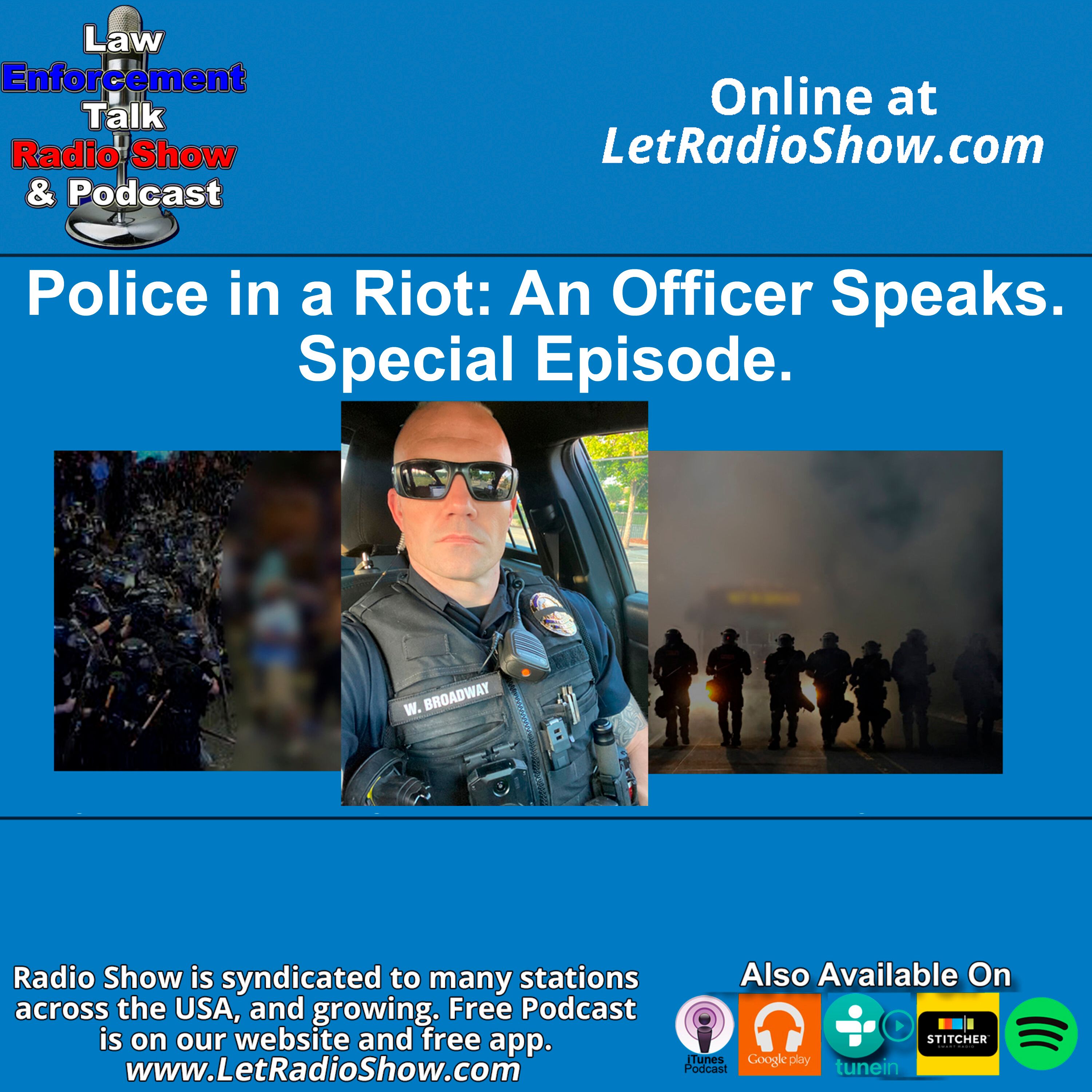
Law Enforcement Talk: True Crime and Trauma Stories
Police in a Riot: An Officer Speaks. Special Episode.
00:36:54
Riots are something most people only see through the lens of a television screen or a viral clip on social media. Flames in the background. Police lines in riot gear. Shouting crowds. What rarely makes it into the headlines is what it feels like to stand in the middle of that chaos, especially when you’re a young police officer with only weeks of experience on the street.
Loading summary
Transcript107 lines
- [00:00]
Commercial Announcer
Did you know? Microsoft has officially ended Support for Windows 10? Upgrade to Windows 11 with an LG Gram laptop. Voted PCMag's Reader's Choice top laptop brand for 2025. Thin and ultra lightweight, the LG Gram keeps you productive anywhere, and Windows 11 gives you access to free security updates and ongoing feature upgrades. Visit LGUSA.com iHeart for great seasonal savings on LG Gram laptops with Windows 11 PC Mag Reader's Choice used with permission. All rights reserved.
- [00:31]
Bill Broadway
Happy Holidays. Want to give your host a gift? Consider subscribing, rating and reviewing the show this holiday season. It really helps the show grow. From all of us at Believe have a Merry Christmas, everyone, and a happy holiday.
- [00:49]
John J. Wiley
He's a police officer. About 10 weeks after leaving field training as a rookie, he was assigned to extremely violent riots where many people were injured. He's here to tell his story of being in the riots, the reality they faced, and life after. Welcome to the Law Enforcement Talk Radio Show. In the Law Enforcement Talk Radio show, we are joined by special guests talking about their experiences, their realities of investigating crimes, plus those who have experienced horrendous trauma. Police, first responders, military and victims of crime share their stories. Hi, I'm John J. Wiley. In addition to being a broadcaster, I I'm also a retired police sergeant. Be sure to check out our website letradio.com and also like us on Facebook, search for the Law Enforcement Talk Radio Show. Get access to free podcast versions of the show and more on Facebook. Do a search for the Law Enforcement Talk Radio show and be sure to click like Context of North Carolina. We have Bill Broadway on the phone. Bill is a police officer in North Carolina, former police police officer for Charlotte Mecklenburg. And Bill, first of all, thank you for your service. And secondly, thanks for being guest on the Law Enforcement Show. Very much appreciated.
- [02:02]
Bill Broadway
Yeah, thanks for having me, Jay. I appreciate it.
- [02:04]
John J. Wiley
You got a perspective we don't get to hear very often about. We're going to talk about your experience in riots, but before we do that, let's just give a brief overview of how long you've been in law enforcement.
- [02:15]
Bill Broadway
I've been a sworn police officer since 2016. I started the academy in the fall of 2015. So sworn in 2016.
- [02:22]
John J. Wiley
Gotcha. And the first several years were in Charlotte Mecklenburg, correct?
- [02:27]
Bill Broadway
Correct. About the first six years were in Charlotte with the Charlotte Mecklenburg Police Department. My last half years with my current agency.
- [02:33]
John J. Wiley
Charlotte Mecklenburg is one of those agencies. I'll be honest with you, I don't think of it as a big city it is a big city and it has all the big city crime and problems that all other big cities across the United States have. But for some reason it just seems to fly under the radar. As far as my awareness, I think of Baltimore, Philadelphia, Boston, New York, Miami, things I don't think about Charlotte, I think about Atlanta. I think about those agencies. How big is Charlotte Mecklenburg? And also how bad is the crime problem there?
- [03:05]
Bill Broadway
So I think Charlotte, fortunately, I guess, gets lost with a lot of the other stuff going on on the east coast. The city of Charlotte or the area that's covered by the Charlotte Mecklenburg Police Department covers almost, almost a million people. The department itself is anywhere between 1800 and 2000 sworn. I'm not sure the most current data, but it's, I mean, it's a fairly large agency in a fairly large city. Top 20 in the United States last time I looked.
- [03:33]
John J. Wiley
Yeah, and it's, it's got a great reputation. I'm not here to slander them. I'm not here to knock them. All agencies have good points and bad points. In your career, we're going to focus on in particular your experience during the riots. And we say the riots. I was involved in Jamaican riots in Baltimore. And we as police put names on so we can differentiate between one or the other. I don't want people to misconstrue that as saying, oh, it's specific about a certain group. It's not that at all. It's just so we can differentiate one from the other. How long have you been a police officer before you got assigned to handle these riots?
- [04:08]
Bill Broadway
I was about 10 weeks out of field training, so not very long. Still trying to figure everything out.
- [04:13]
John J. Wiley
You were a stone cold rookie?
- [04:14]
Bill Broadway
Oh, yeah, absolutely, 100%.
- [04:17]
John J. Wiley
When you're 10 weeks out of the academy and field training, I'll tell you.
- [04:20]
Bill Broadway
Well, 10 weeks out of field training, I've been out of the academy. We had, I believe it was about a 16 week field training, but yeah, 10 weeks out of the field training, 10 weeks in the car by myself.
- [04:30]
John J. Wiley
That was right around the time period where other officers, senior officers, would start talking to me. Before that it was like, hey, you're a stone cold rookie. We don't know about you.
- [04:39]
Bill Broadway
Yeah, we were all pretty young on night shifts, so we didn't have a lot of like older senior officers. I think we had a couple guys that had been on for 10 plus years, but most of us were right around a lot of the quote unquote veteran guys were like in the three to five year range.
- [04:53]
John J. Wiley
@ that time, and what riots were occurring when you were 10 weeks out of field.
- [04:58]
Bill Broadway
Training. It was 2016. It was right on the heels of the Ferguson thing going on in Missouri. A lot of. A lot of the public trust and everything was just, just kind of, it was, it was, it was kind of, you know, the public was starting to not trust law enforcement officers. So 2016, there had been an officer involved shooting in Charlotte. One of our. And I won't go too much into details. I'm not sure where the litigation and everything is for the criminal and the civil end of that, but one of our specialized units was out. They were going to serve a warrant. They were plain clothes unit, unmarked vehicles at the time conducting surveillance when they were going to make the apprehension. They had the tax mask that said police and everything to throw on. But for the most part they were plainclothes units. They're out surveillance, trying to set up. Set up to serve an unrelated warrant. They observed the subject in a vehicle unrelated to their warrant. I don't know the full details, but I know they determined he was smoking marijuana and there was probably other stuff. But at that point they determined that he. That he had to be addressed. So they regrouped, threw on their vest with police and everything and approached him. He exited the vehicle, displayed a firearm. At some point, an officer perceived deadly, a deadly force threat and shot and killed him. All that's been played out through the internal investigation, the state investigation, and no criminal charges were filed. So those are the facts of the case. Unfortunately, the era we were in then and now, the misinformation came out and the public got the narrative within hours that he was sitting in his car reading his book. Reading a book, and he was executed by.
- [06:45]
John J. Wiley
Police. Right. Rob, we used to get that in the 80s. They were minding their own business when they got accosted by the police. That's what the headlines would say all the.
- [06:54]
Bill Broadway
Time. Yeah, so, yeah, that's. And that's 100% what was happening. He was mine, his own business, and the police executed him. So that went out on social media and it just caught fire. Like I said, it's on the heels of Ferguson and the whole hands up, don't shoot garbage.
- [07:08]
John J. Wiley
So disproven. That was not fact. That was an absolute lie. And right. We was in the media. They use a term nowadays, misinformation. I use a couple times that when you're explaining this, that's a term we use quite a bit for lies that are not actually true. And what they're Done is they're done to inflame opinion and create controversy so that people will buy the newspaper, buy the magazine, listen, tune in to the radio news, which I do also watch the news on television and clickbaits on social media. But people still fall for.
- [07:50]
Bill Broadway
It. Oh, yeah, 100% they fell for it. And you and I both know, Jay, that when there's an officer involved shooting, there's gonna be a thorough.
- [07:58]
John J. Wiley
Investigation.
- [07:58]
Bill Broadway
Yeah. But we need that crime scene, and we need time so that we can conduct it, conduct the investigation, collect every single shred of evidence. And no one wants to. Wants to discover if it was a good or a bad shoot more than the police, more than especially the good cops. But all the cops want to know, was it a good shoot, was it a bad.
- [08:18]
John J. Wiley
Shoot? What.
- [08:20]
Bill Broadway
Was. Because of the lies, we also.
- [08:23]
John J. Wiley
Can'T go out there and put a lot of information out because it can discredit the investigation and a lot of the initial information. And I'll go back to the beltway snipers thing, when they're putting out information about that, it turned out to be wrong, and it shaped and influenced the direction of the investigation. And more people probably got hurt and killed. That was wrong information. That happens all the time. Another one is you got prosecution. So there's a thing where you can't put out a lot of information beforehand because it can discredit the prosecution, especially if it's wrong information to begin.
- [08:56]
Bill Broadway
With. Correct. Correct. And the important thing is to get the truth out, not get information out first. Unfortunately, where we're at is if it's first, get the information out first and then worry about if it's true later.
- [09:06]
John J. Wiley
On. Absolutely. We're talking with Bill Broadway. Bill is a police officer in North Carolina, former officer with Charlotte Mecklenburg. When we return, we're going to talk about his experience in the riots. This is law enforcement. Don't go anywhere. We will be right back. There's a couple ways you can stay in touch and keep informed of what's going on with the law enforcement talk radio show number one. Go to our website, letradio.com sign up for our email newsletter. It's real easy to find. I promise we don't spam you. I send out about one email every two weeks or so. And there's also a feature called broadcast channels on our Facebook page where we send messages directly to your inbox, directly to your messenger. Real easy to sign up for. Make sure you like or follow the law enforcement talk radio show Facebook page. And up top, you'll see broadcast channels, one for free podcast versions of the radio show, another one top post of the day. So you too can stay informed quickly, easily and best of all, like always.
- [10:09]
Commercial Announcer
Free. Did you know Microsoft has officially ended Support for Windows 10 upgrade to Windows 11 with an LG Gram laptop? Voted PCMag's Reader's Choice top laptop brand for 2025. Thin and ultra lightweight, the LG Gram keeps you productive anywhere, and Windows 11 gives you access to free security updates and ongoing feature upgrades. Visit lgusa.com iheart for great seasonal savings on LG Gram laptops with Windows 11 PC Mag Reader's Choice. Used with permission. All rights.
- [10:40]
John J. Wiley
Reserved. This is Law Enforcement Show Returning to our conversation with Bill Broadway, who is a police officer in North Carolina. A former officer with Charlotte Mecklenburg, North Carolina Police Department and he's been on the job about six plus years. About ten weeks after field training riots broke out, officer involved shooting which we talked about the Ferguson, Missouri was going on at that time. Which by the way, how far away is Ferguson, Missouri from Charlotte, North Carolina.
- [11:11]
Bill Broadway
Approximately? You know, climate wise we probably get similar climate, but we're relatively far away. We're not that.
- [11:17]
John J. Wiley
Close. Right. So the point I'm getting at is people get upset about something that happened in Los Angeles and take it out in Baltimore police or stuff that happens in Missouri which is based off not factual truth, otherwise known as lies, and they take it out on police in Charlotte that have nothing to do with this. We're different cities, different jurisdictions, different laws, different policies and procedures. And in many ways, Bill, this is just my opinion. We are still paying the price for the atrocities committed by so called police in Alabama and Birmingham in the civil rights movement. And how many years ago was.
- [11:51]
Bill Broadway
That?
- [11:52]
John J. Wiley
Right? We made tremendous progress as society away from that. But the thing is here you are, you're a Police officer, you're 10 weeks out of field training and the ride start happening. How did you get notified and what happened.
- [12:06]
Bill Broadway
Next? Yeah, so I reported to roll call that night and we're sitting in roll call. The sergeant's like just going over the stuff and he says anybody's part of the civil emergency unit or ceu. And that's something we had all had been trained on for a day in the academy. Anybody as part of the ceu make sure you have your equipment with you on duty tonight. And I was aware that there had been an officer involved shooting just because I clicked on the news when I woke up that afternoon. Some work in night shifts. So but I'm like, what? Why? Because you know, Charlotte's a big city. You know, there's. There's big city problems and big city crime. We had an officer involved shootings earlier that year. This is September. I mean, I'm like, why, why, why do we need a ride here? And the sergeant said, well, they're starting to get ugly on scene. They're thinking about we're gonna have to pull the detectives out of there and clear out. I'm like, okay, so load up my gear, head to my first call, because there's a call holding in my zone. So I head over to that call. About halfway through talking to this victim, we just get radio traffic. All officers who are part of the civil emergency unit, we need you to respond to headquarters, emergency traffic. And I work downtown. So headquarters was like four blocks away. I'm like, well, that's pretty serious. What's going on? So get in my car. Which, by the way, whoever had driven it before me left me with about a quarter tank of gas that.
- [13:29]
John J. Wiley
Night. Isn't that the way we jokingly used to say we had broken seats, held up by two by fours, boxes of food, debris, no gas. And you got 13 calls stacked up. And that's just the way it was when you got your car.
- [13:43]
Bill Broadway
Right?
- [13:44]
John J. Wiley
100%. But here wasn't just.
- [13:46]
Bill Broadway
Me. No. Apparently that's a common thing nationwide, nationwide gas epidemic for police. But so I got quartz and gas. I just hit the blue. I'm like, wrap up my call, hit the blue lights, go to police headquarters. There's a command captain and barely like a foot. I have a. Barely have a foot out of my car door. And she's like, grabs another officer, says, you and you get in the car, go to the staging location. So we hop in my car and we're driving just blue lights to this staging location. And like I said, Charlotte's a big city. So I didn't know exactly where the staging location was, but I'd been on long enough to know that when I got close, I'd just tuck in and follow the rest of the blue lights that were heading to that location. We tuck in, we get there, it says church. And it's dark and it's probably about a mile, mile and a half from the actual scene of officer involved shooting and where the unrest was starting to unfold. They're like, okay, put on your riot gear. So we throw on all our riot gear, the shin guards, the chest protector, the elbow pads, you know, the typical riot cop stuff. And we're like, okay, we're ready to go. Now with like, no, get in your cars. We're driving here. So I'm like, full riot gear, getting a. Getting a police vehicle with another officer, and I'm trying to drive with the full riot gear on, which is not easy to do and I'd never done before or haven't done since. But we drive there, we get to the location, we get out of our cars and they're like, line up. Oh, and give your keys to this guy. And then they took our keys and drove our cars away as we're lining up in our line formation to go address the.
- [15:12]
John J. Wiley
Threat. Now, why did they take your cars away? I think I know the reason why. What do you.
- [15:17]
Bill Broadway
Speculate? I speculate because they didn't want me to get.
- [15:20]
John J. Wiley
Destroyed. That's exactly what I was gonna say. And here's the reason why I bring this up. First of all, in my experience, we had ride helmets and nightsticks. That's all we had. And we used to call it hats and bats. That's what we call it. We didn't have all the right gear that you guys have. I said, guys, that means men and women, when they take the police cars away, it's so they don't get firebombed and destroyed because, and I hate to say it like this, sometimes their actions show they care more about their equipment than their.
- [15:51]
Bill Broadway
People. Yeah, I don't know if that was the case or, or if it was just an emotional decision or what, but the reason we had been called to that scene, I found out as we were getting lined up, was that they had already taken two police cars. So investigators were on scene investigating an officer involved shooting and an angry Bob just overtook the scene. They had to clear everybody out, including officers. And a couple of cars got left behind and those were just getting destroyed already. So they took the cars away. Like I said, we got out of the cars, they took them away. We're getting lined up. So at this point in time, there's probably 50 to 60 of us. We're marching down the road in a line formation and we just see this angry crowd. And it's late September, probably about 10 o' clock at night. So it's, it's getting dark and getting darker, and we are just marching. Angry crowd. And as you get closer and you can start to make out shapes, you're like, there are a lot of people out here. There's probably 50 to 60 officers. And you're looking, there's probably two to 300 people out there just yelling and just all the usual stuff too. Just the police and 12 that you, you typically hear at the time. I'm like, well, this is pretty scary right now. And it's just dark. And we set up in a line formation. I think at this point the goal was to try to still preserve the scene and restore order so that we could finish up the investigation. But we're in a line formation and all of a sudden the crowd just starts throwing stuff at us. Water bottles. And this scene happened to be near a railroad track. So you know those rocks that are at the bedding of railroad tracks that are about softball.
- [17:31]
John J. Wiley
Size?
- [17:32]
Bill Broadway
Yep. We're taking those. They're throwing those at us. We're taking them off the helmet, off the arms, and all we have are the riot batons. They hadn't gotten us our shields yet, so we got riot batons. We're taking those in the legs. And I think someone got hit in the groin. I mean, it's brutal. We're surrounded. We're getting stuff thrown at us. It's dark. I'm 10 weeks out of the academy. It's the most scared I've ever been in my.
- [17:56]
John J. Wiley
Life. I was going to ask. When we return, we're going to talk about your mental state, what you're going through, your reactions before, during, well, during and after. In particular, this is law enforcement. So we'll return to our conversation with Bill Broadway, who is a police officer in North Carolina and for many years he was in Charlotte Mecklenburg Police Department. And we're talking about the riots he was assigned to. Don't go anywhere. We will be right back. If you want to be a guest on the law enforcement talk radio show, simply contact us. It couldn't be easier. You can send us a message on Facebook, look for and like the Law enforcement talk radio show page or email. Email jetradio.com that's J A Y.
- [18:39]
Commercial Announcer
Etradio.Com did you know Microsoft has officially ended Support for Windows 10? Upgrade to Windows 11 with an LG Gram laptop. Voted PCMag's Reader's Choice top laptop brand for 2025. Thin and ultra lightweight, the LG Gram keeps you productive anywhere. And Windows 11 gives you access to free security updates and ongoing feature upgrades. Visit lgusa.com iheart for great seasonal savings on LG Gram laptops with Windows 11. PCMag reader's choice used with permission. All rights.
- [19:11]
John J. Wiley
Reserved. This is the Law Enforcement show returning a conversation with Bill Broadway. He was a police officer in Charlotte, North Carolina for many years. Now a police officer in another jurisdiction in North Carolina, we're talking about the riots you were assigned to. This was shortly after Ferguson, Missouri. And it was a reaction to lies and mistrusts or falsifications about an officer involved shooting in Charlotte for winter break. Bill, you're talking about. You arrived at a scene, you're in full gear. You don't have your shields yet and your line formation. And by the way, we had, I think, less than a day's training in crowd control and riot control, those sorts of things. And usually what involved was putting your helmet on a longer nightstick or a riot stick, as somebody will call it. We call them bats. And we line up sometimes in a V formation, and you take a step forward. And every time you took a step forward, you'd jab with a stick and say. And that's really what involved. That was all the training we had. Did you have more training than.
- [20:20]
Bill Broadway
That? It was a day, maybe two. So it was either eight to 16 hours of training in the.
- [20:27]
John J. Wiley
Academy. Do you feel like you had enough training to deal with this? This fresh out of the academy and field.
- [20:32]
Bill Broadway
Training? I don't think you ever have enough training to deal with that. If I'm being 100% honest, that was more chaos than I was ready.
- [20:38]
John J. Wiley
For. Before we go into your situation, what your experience was, the ride scenes I'd been on, and one of the things I tell people is, I'm a praying person. I have been my whole life. But I would pray profusely, dear God, do not let me be the one who overreacts and loses it. Because one of the things you're taught is don't become part of the problem. We're here to settle things down. We're here to calm things down. And you don't want to have. Even though people are yelling at you, they're spitting at you, they're throwing stuff at you, you don't want to be the one that goes off on someone. Was that a fair assessment for.
- [21:15]
Bill Broadway
You? Oh, for sure. I hate to use cliches, but, I mean, everyone's heard the phrase, it was a powder. You were sitting on a powder keg, or the tension was so thick you could cut with a knife. It was definitely like we were being provoked and provoked. And it was like watching two. Like two high school kids or two junior high kids circling each other, getting ready to fight. No one wants to throw the first punch, but when that first punch is thrown, it's going to be chaos. So, yeah, my first thought was, I don't want to be the one to start this.
- [21:46]
John J. Wiley
Thing. And also the crowds want to try to separate you and divide your line. It may not be.
- [21:52]
Bill Broadway
Conscious. They want.
- [21:53]
John J. Wiley
To. That's the thing. You are in so much danger and your hands are tied, aren't.
- [21:59]
Bill Broadway
They? Oh yeah. Oh yeah. We were, we were out there in our line formation. They started to work their way around and surround us. So we switched to a box formation just so we had full coverage, 360 degree coverage. And I mean we're still so outnumbered that there's nothing we could do. I mean we're in this box formation but we're outnumbered and we're surrounded and we're under equipped at the time for what felt like three or four hours. But it was probably really legitimately 45 minutes to an hour before we got munitions out there. But so we're getting surrounded. People are just doing things that if it's, if you're out in a non riot situation, they're going to jail. I mean people are spitting at us in our faces, wiping blood on our face masks, throwing rocks at us, blowing marijuana smoke right in our faces. I mean it's crazy. It was.
- [22:46]
John J. Wiley
Crazy. All of which is designed to get you off your game and your mission. I want to backtrack the significance of taking the police cars away from you. One of the things is a psychological thing is if you needed to retreat and to escape, you've got it, it's there. Did you feel like you were kind of stuck without a way of.
- [23:06]
Bill Broadway
Leaving? Yes, 100%. Just because in that time communication becomes need to know. And being a person standing there with a riot baton and full ride gear, I wasn't in the need to know. So I didn't know the game plan, I didn't know the end game. We're standing out there. Once they took my car away, I'm like, I don't know when we're going. Like all I can think about is I'm supposed to get off at 6am but doesn't look like that's happening tonight. So I don't know when I'm going home. So there's a lot going on.
- [23:37]
John J. Wiley
There. How big of adrenaline dump was this for you personally? How long did it continue? Because your body can't maintain that adrenaline dump forever. But it has a profound effect on me.
- [23:48]
Bill Broadway
Anyway. Sure. Yeah. So it was probably a good hour, hour and a half from the time we got the call to the time we're standing out there of just full on. My body's pumping adrenaline, I'm in fight or flight mode. I'm Just strictly my body has put itself into survival mode. I'm not thinking, I'm just. Fortunately I was being told what to do because I don't know if I could have thought for myself, honestly, just the way the adrenaline was.
- [24:15]
John J. Wiley
Going. So you had a supervising supervisor there with you, Sergeant or above?
- [24:20]
Bill Broadway
Correct? Yes. So they had the. Within our formation we had one or two sergeants and I believe a lieutenant, but don't quote me on that. Someone may have more accurate information. I'm just guessing at this point.
- [24:33]
John J. Wiley
And generally for the way it works when you have. And we've never been in a box situation where we had to do that. You usually have, at least in my experience. We had a captain. In our case it was a major giving orders. And then when the major had to vacate the scene for whatever reason, the captain took over the lieutenant. And I was a retired of the rank of sergeant. Sergeants is the one who makes the agency go around. They're the first line of management. And as a patrol officer, you're doing what you're told to do. That's the simplest way I can break it down. Is that a good.
- [25:08]
Bill Broadway
Representation? Yep, that is a very accurate assessment. And everything had spun up so quickly. I don't know if they had time to establish a command and structure or an incident commander just because it spun up so fast with again out of control and getting groups up there. So. But there were, there were definitely sergeants out there trying to run the show and maintain.
- [25:32]
John J. Wiley
Order. How bad was the physical violence for you all? I say you all, that's the officers on the scene, the commanding officers and also riders. And people love using term protest. In my opinion. This is my opinion only. Protesting is like you carry signs, you walk around, you yell lots of other things, but many you're throwing stuff and you're assaulting people. It's a.
- [25:54]
Bill Broadway
Riot. Yeah. So this was, this was not a protest. And I definitely can distinguish between the two, between a riot and a protest because I work the George Floyd stuff. And we saw protests transition to riots and stuff like that. So we can identify that. And this on Old Concord Road in 2016 was definitely a riot. They were throwing softball sized rocks at us, full water bottles. They were trying to get cars up through the riot line. I mean it was full on, it was violent. Police were definitely the target of the violence, but the rioters were definitely indiscriminate and throwing rocks and throwing stuff in cars. They didn't care. They were targeting the police. But there was certainly a danger to Other rioters as.
- [26:37]
John J. Wiley
Well. Were people injured including.
- [26:39]
Bill Broadway
Police? Several police got injured. I remember at one point there was a captain that got hit in the face with I think it was either a rock or a 40. Just bleeding all over the.
- [26:51]
John J. Wiley
Place. You say 40, that's a 40 ounce bottle of beer, correct? Yeah. And they're not light, they're.
- [26:57]
Bill Broadway
Heavy. They are, they're there. It's a pretty heavy projectile to do some damage. Even if I'm wearing my helmet, I get hit in the head with a full 40 ounce beer bottle, that's gonna, it's gonna jar me a little.
- [27:08]
John J. Wiley
Bit. Yeah, I wouldn't want to get hit by one that in a brick. I don't want to get hit by. I've been hit by rocks. I've been hit by two by fours. Thank goodness they were waterlogged in and not solid anymore. But I've been hit by all those things. You know, I'll be honest with you Bill. I got, I lost track of how many times I've been hit and struck and all this other stuff. Is that kind of a blur for you during that whole riot when you're like, did you lose track of how many times you were assaulted and you were.
- [27:35]
Bill Broadway
Hit? Oh yeah, definitely. I mean you can't keep track because really in the initial situation we were in, we didn't have enough officers to make arrests or really do anything but play defense. So you're just kind of like, well that rock hit me in the arm. Moving on to the next one to try not get hit by the next one. So yeah, we're just, we're just playing defense at that.
- [27:55]
John J. Wiley
Point. Sounds like it's a very intense situation. We will return to our conversation with Bill Broadway in just a few moments. This is a law enforcement show. When we return we're going to talk about the end stage riots for him and how it impacted his life after. This is the law enforcement show. Don't go anywhere. We'll be right back. Are you a fan of true crime shows? How about true crime with a twist? People that actually investigated crimes, what they did, what they experienced or trauma survivors often crime based but not always impact on them and what they did to build their lives afterwards. All for free. Just go to our website letradio.com. it's Ellis Lincoln E's and Edward T's and tomradio.com L E T radio dot com. You'll find it all there for.
- [28:45]
Commercial Announcer
Free. Did you know Microsoft has officially ended Support for Windows 10? Upgrade to Windows 11 with an LG Gram laptop voted PCMag's Reader's Choice Top Laptop Brand for 2025. Thin and ultra lightweight, the LG Gram keeps you productive anywhere. And Windows 11 gives you access to free security updates and ongoing feature upgrades. Visit lgusa.com iheart for great seasonal savings on LG Gram laptops with Windows 11. PCMag reader's choice used with permission. All rights.
- [29:15]
John J. Wiley
Reserved. This is the Law Enforcement show returning a conversation with Bill Broadway, a police officer in North Carolina. He was with Charlotte Mecklenburg Police Department for many years. We're talking about the riots that they were dispatched to. And it got out of control before we had to break Bill. We're talking about. You were in a boxed in formation, totally defensive mood. You had people getting hurt, including police. And earlier I asked you about the adrenaline dump because your body can't really sustain that. And I think you said it was about an hour and a half of fight or flight for.
- [29:50]
Bill Broadway
You. Correct? It was about an hour and a half of fight or flight. Just pure survival. Looking around and we're face to face with people just yelling and screaming at us. And the first time, I'll tell you, the first time I actually felt relief from that situation. It's crazy what a little bit of light will do for you, but our helicopter flew overhead and put the big spotlight down on the situation. And once you can start seeing, I started feeling a little bit better. Didn't feel great about the situation because it was obviously a lot more visible. But that little bit of light was the first time it started feeling like, all right, all right, let's breathe, let's get through this. And then shortly after that, some chemical munitions and riot shields started arriving on scene. So they handed out the shields. We're starting to feel a little bit better. We're still outnumbered. They tell us to mask up. So we put on our gas mask and they start deploying. They start deploying tear gas, which we got gassed in the academy. And it was. I remember thinking, this is.
- [30:48]
John J. Wiley
Awful. It was awful. It was awful. The worst of my.
- [30:53]
Bill Broadway
Life. Yeah, I'm like, I don't ever want to get gassed again. But in this case, once they started deploying the tear gas and I just started feeling it on my skin burning, it was like the best awful feeling ever because I knew at that point we were going to be safe, we were going to survive the night. And it started to disperse the crowd. Unfortunately, the crowd dispersed onto an interstate and shut down the interstate. It was full on riot and loot. They started Pulling stuff out of trucks, lighting it on fire. Truckers are abandoning the loads on the interstate. There was a big chain grocery store nearby that got broken into and got looted. But eventually we got more riot officers spun up and got everything under control for that.
- [31:40]
John J. Wiley
Night. So it sounds like you all handled yourselves well. You did the best under certainly extremely adverse circumstances. This is one of the big myths that a lot of people have. Our police don't have control. We can't control anybody's state of mind. We can't control anybody's actions. And riots, when you got a mob mentality going on, people who would never do something on their own when they're in a mob, all of a sudden everything.
- [32:09]
Bill Broadway
Changes. Yeah, that mob mentality is real, for.
- [32:11]
John J. Wiley
Sure. And I could also relate very strongly to the sense of relief from the helicopter and the light to be able to see potential threats. And there's something very reassuring. I've heard this from many of my people who trained me, were Vietnam combat veterans, and they talked about when they were in firefights and really bad situations, the reassurance they would get when they heard the sounds of helicopter coming, the cavalry that helps on the way. And for police, it's no different. But a big thing I was not lost on me was being able to.
- [32:41]
Bill Broadway
See. Yeah, that was huge. And I don't have that military experience. I don't have that background to make that comparison. But yeah, in that moment, the helicopter definitely, and the ability to see was.
- [32:53]
John J. Wiley
Huge. How long was this event? How long were you exposed to this kind of extreme. I mean, it's a word. It's over. Overused at my show and other place, extreme trauma. Because this is very traumatic to go.
- [33:04]
Bill Broadway
Through. Well, and it wasn't like. I mean, the prolonged exposure was probably six or seven hours that night. And then it wound down. We went home the next night, the riots moved downtown. So it was probably another seven or eight hours that night. I mean, and then we're just talking like seven or eight hours of just moving people and deploying munitions and running after people, getting loaded up on a bus, getting driven somewhere else to do. Same thing. I mean, it was just. It was like something I've never experienced and never thought I would experience in my career in law enforcement. And here I am, 10 weeks in dealing with.
- [33:38]
John J. Wiley
Us. Right. Very early in your career. So you really didn't have much of a chance to wind down and relax afterwards, did you.
- [33:46]
Bill Broadway
Know? So they scheduled us for shifts and we were relieved and got home on time, which blew my mind because fortunately, we had enough resources to be able to swap out people. But I would just. After the first, probably two or three nights, I would just go home and just crash hard. I'd shower to rinse the tear gas off, go to bed, and just out like a light. And I don't remember anything from those sleeves except my alarm would go off. I'd wake up and do it again. Then about the third night, third or fourth night, we actually had some downtime, so my body started winding down during the third or fourth night of the riots. And the third or fourth night, I distinctly remember I went home and went to bed. And that's when, if you read anything about critical incident stress and PTSD and all that stuff, my brain started trying to process everything and sort it and put it into a. Put it into a category where it can make sense of everything. And that's when, like, I remember distinctly having a dream about a police situation. It wasn't. Didn't. Wasn't a riot situation, but it was a police situation. I'm yelling, drop the gun. Drop the gun in my dream. And next thing I know, my wife is waking me up and she's like, is everything okay? I'm like, oh, yeah, it's just having a weird.
- [34:55]
John J. Wiley
Dream. Just another.
- [34:56]
Bill Broadway
Day. You were.
- [34:57]
John J. Wiley
Yelling. Yeah. And I don't have them as frequently as I used to, but I still have them periodically. And my wife, yeah, she's gotten used to them. And I met her years after retiring. I don't believe they ever totally go away. And in my case, Bill, they're not exactly the situation that was. That were triggered this or traumatic situations. They have nothing to do with.
- [35:19]
Bill Broadway
It. Right. And mine was the same thing. My dream had nothing to do with riots. It was just. But it was police work, and it was. I was just trying to get someone to drop a gun or something. But. And I'm not a doctor, I don't have clinical training, but I think that was my brain just trying to find a spot to put the trauma stuff to make it make sense. And that was the closest thing it could.
- [35:37]
John J. Wiley
Find. Did you find after this that you started doing things differently to compensate or to try to get back to your.
- [35:45]
Bill Broadway
Center? Not a whole lot. I don't think my trauma. My trauma was bad for me, and trauma is in compensating and recovery and stuff. That's obviously very individualistic. At that point in my career, I had not experienced a lot of police stuff, so that was a bad situation for me. But as I worked through it and just made Sure. I got proper sleep. I think my brain kind of put everything where it needed to go, started healing and I started to get back to a spot where I was.
- [36:16]
John J. Wiley
Good. I'm glad to hear that because unfortunately, in situations like that, we lose a lot of people. A lot of people quit, say, this isn't for me. And they were great. They were great.
- [36:26]
Bill Broadway
Officers. Yeah. So in 2020, I was a member of one of our public order bike squads and a guy in my bike squad during the George Floyd protest, he just. After, as soon as they were done, he quit. He was done because he just couldn't deal with the trauma. And I get it, it was, it was bad, it was violent. And like I said, everyone's got a different threshold. So no judgment. But he was, he was like right beside me. We both went through the exact same stuff. And it was. He had been a cop longer than, than I was. So it might have been a cumulative of everything. So he quit right after.
- [37:00]
John J. Wiley
That. It really bothers me because we have people that, you know, let's just say very quickly you have rookies, then you have about five years in. You start feeling your oath and get really good at what you do at the 10 year mark. That's when people become really good police. And that's where a lot of them, the cumulative trauma takes its toll and they wind up leaving law enforcement. And nothing against rookies, we can't have departments that are run by all young people because it comes dysfunctional. How can people get ahold of you? You're on social media.
- [37:31]
Bill Broadway
Correct? Correct. I'm on Instagram. It's Broadway 4:1 right now. Working on getting into a lot of nutrition and fitness stuff. I'm working through some certificate. I'm going to start working through some certification stuff and I want to work with police officers on fitness and nutrition or first responders in general. Just because I think that a good fitness and nutrition regimen are key to both physical and mental.
- [37:57]
John J. Wiley
Wellness. Agree 100%. The working out for me and I got to get back in the gym, but working out for me, it's mentally therapeutic as much as it is physical. By the way, Bill Broadway is such a great name. If there's not a better name for building a brand with, I don't know that one exists. And it almost sounds like you're making that name up. But that is your given.
- [38:18]
Bill Broadway
Name. That. That is my given name. But yeah, just I. When people question it, people question it on calls all the time. Like that's not your real name. Well, yeah, I'm in the Witness Protection program. That's what they gave.
- [38:28]
John J. Wiley
Me. Bill, thanks so much for being a guest on a law enforcement show. If anybody wants to reach out to Bill, just contact me. Thanks again. Appreciate it very.
- [38:35]
Bill Broadway
Much. Thanks Jay for having.
- [38:37]
John J. Wiley
Me. I'd like to thank our guests for coming on the Law Enforcement Talk Radio show. The Law Enforcement Talk Radio show is a nationally syndicated weekly radio show broadcast on numerous AM&FM radio stations across the country. We're always adding more affiliate stations. If you enjoyed the podcast version of the show, which is always free, please do me a favor and tell a friend or two or three. I'll be back in just a few days with another episode of Law Enforcement Talk Radio show and Podcast. Until then, this is John J. Wiley. See.
- [39:09]
Commercial Announcer
Ya. Did you know Microsoft has officially ended Support for Windows 10? Upgrade to Windows 11 with an LG Gram laptop? Voted PCMag's Reader's Choice top laptop brand for 2025. Thin and ultra lightweight, the LG Gram keeps you productive anywhere and Windows 11 gives you access to free security updates and ongoing feature upgrades. Visit lgusa.com iheart for great seasonal savings on LG Gram laptops with Windows 11. PCMag reader's choice used with permission. All rights.
- [39:43]
Bill Broadway
Reserved. If you like the show, please take a moment to rate, review and subscribe. It really does help the show to grow. Thank you for listening. Foreign. To give your host a gift, consider subscribing, rating and reviewing the show this holiday season. It really helps the show grow from all of us at Believe. Have a Merry Christmas, everyone, and a happy.