← Law Enforcement Talk: True Crime and Trauma Stories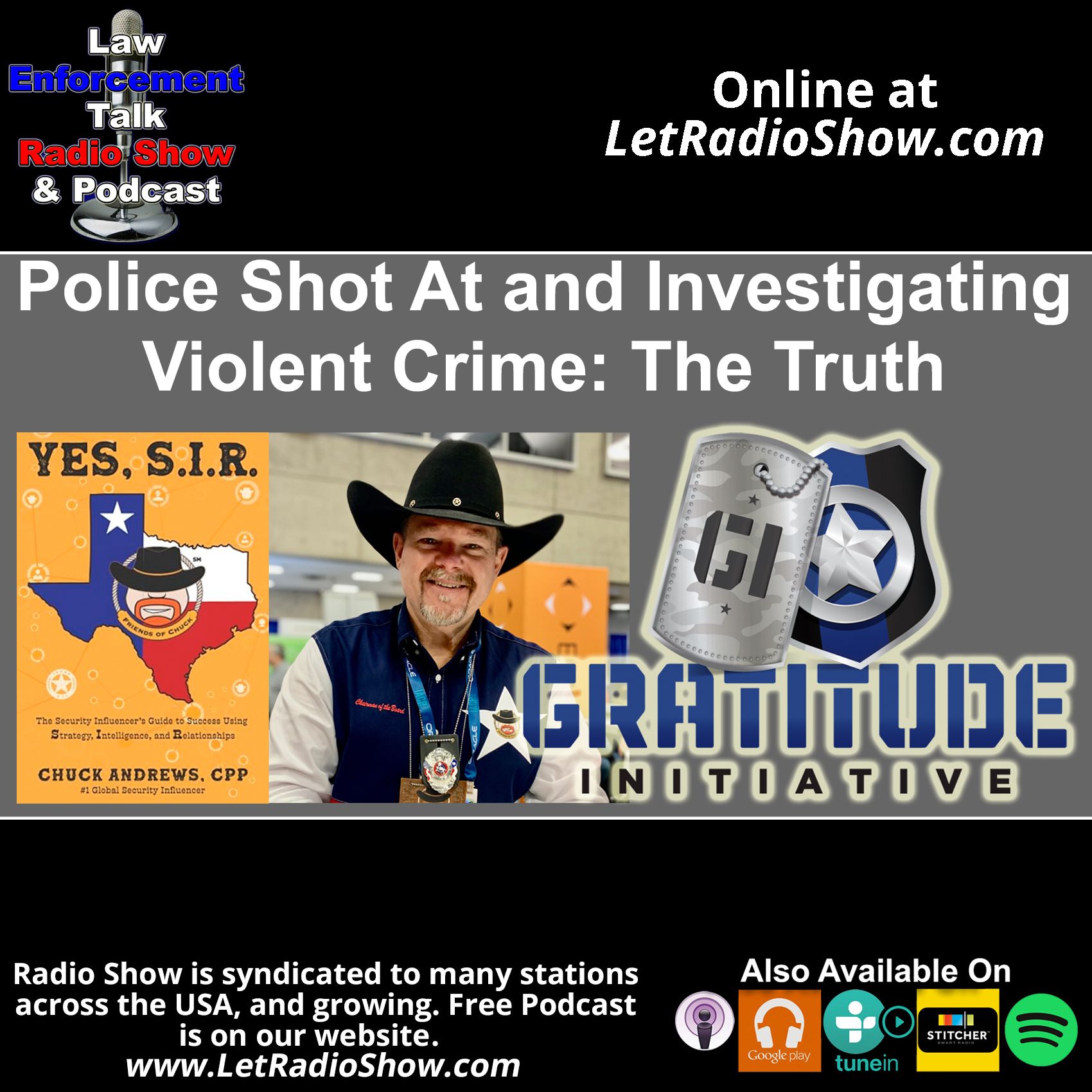
Law Enforcement Talk: True Crime and Trauma Stories
Police Shot At and Investigating Violent Crime
00:39:58
Police Shot At and Investigating Violent Crime: The Truth. In today’s nonstop Social Media environment, from Facebook, Instagram, and LinkedIn to YouTube, Apple, and Spotify podcasts, conversations about policing often focus on headlines rather than reality. Viral clips and breaking News stories frequently highlight moments when officers fire their weapons or when suspects are shot. Far less discussed, however, is a critical perspective: what happens psychologically and physically when police are shot at.
Loading summary
Transcript133 lines
- [00:01]
Grainger Announcer
If you're the purchasing manager at a manufacturing plant, you know having a trusted partner makes all the difference. That's why hands down, you count on Grainger for auto reordering. With on time restocks, your team will have the cut resistant gloves they need at the start of their shift and you can end your day knowing they've got safety well in hand. Call 1-800-GRAINGER, click grainger.com or just stop by Grainger for the ones who get it done.
- [00:32]
Lisa (Licensed Psychotherapist)
Hi, my name is Lisa and I'm a licensed psychotherapist, which means my work doesn't magically end when the session does. There are notes to write, appointments to manage, billing, insurance, follow ups, and somehow all that admin used to creep into my nights and weekends. That's why I switched to Simple Practice. Simple Practice is an all in one electronic health record built specifically for therapists with HIPAA compliant tools and high trust certification. So I don't have to worry about juggling systems or cutting corners just to keep things running. Scheduling, documentation, billing, insurance, client communications, even automated appointment reminders. It all lives in one place. And if you're starting or growing a practice, Simple Practice also offers a credentialing service that helps simplify insurance enrollment, which can be a huge lift when you're starting to scale. Start with a seven day free trial, then get 50% off your first three months. Just go to simplepractice.com again that's simplepractice.com
- [01:35]
John J. Wiley
he's retired police from Texas. He's here to talk about the realities of investigating violent crime and the realities of deadly force being shot at. Welcome to the Law Enforcement Talk Radio Show. In the Law Enforcement Talk Radio show we are joined by special guests talking about their experiences, their realities of investigating crimes, plus those who have experienced horrendous trauma. Police, first responders, military and victims of crime share their stories. Hi, I'm John J. Wiley. In addition to being a broadcaster, I'm also a retired police sergeant. Be sure to check out our website letradio.com and also like us on Facebook search for the Law Enforcement Talk Radio show. Be sure to check out our website letradio.com that's l etradio.com there you'll find episodes of the show available as a podcast after airing on radio. And they're always free. There's 700 plus episodes on there right now. There's blogs. Get information about our sponsors, all that and much more@letradio.com again the website is L E T radio.com contest from Texas we have Charles Chuck Andrews on the law enforcement talk radio show. Charles is a retired police officer in Texas and he's also written the book yes sir, the Security Influences Guide to Success Using Strategy, Intelligence and Relationships. He's chairman of the advisory board to support kids of law enforcement officers and military SO5103. The website is gratitudeinitiative.com Charles, thanks for your service number one. Number two, thanks for being guest on the law enforcement talk radio show and talk about it. It's very much appreciated.
- [03:22]
Charles 'Chuck' Andrews
John, great to be here. Look forward to talking today. Great show. Always listen all the time. Always great topics and real insight into the law enforcement world. Let's get started.
- [03:33]
John J. Wiley
Appreciate it Charles. And here's part of the reason why I do it, number one. And you've been in the law enforcement game for a very long time which we're talking about a few moments. But in Baltimore, the news media never got it right and we relied on them to tell our stories. They never got it right and now they're so biased in their reporting and it's even remotely close to truth. So we wanted to provide a platform for people to tell their stories. The realities of policing, the realities of investigating crime, the realities of overcoming trauma, impacts of trauma. It's often crime based but not always and what they did to better lives afterwards. So your input is extremely important. How long did you do in law enforcement?
- [04:13]
Charles 'Chuck' Andrews
Well, I actually started in 1976 as a law enforcement police Explorer. That's where it all started. And put about 4,000 hours inside a police car driving around with police officers in South Texas in the Houston area before I became commissioned at the age of I think I was 19 or 20, so 1976.
- [04:35]
John J. Wiley
I started in 1980. So we overlapped. And by the way Houston was hiring like crazy in the 80s and from last time I checked they still are.
- [04:44]
Charles 'Chuck' Andrews
Yeah, yeah. No, so bright, big hiring push out of the east Coast. Right. Still have friends today from NYPD who left and now that's happening again as a result of the politics unfolding. You can see huge articles and videos from the Houston Police officers union directly telling New York cops to come to Texas to work.
- [05:07]
John J. Wiley
And by the way, Houston is a no joke area. There's a lot of violent crime there and a lot of people think that South Texas in particular the Gulf coast of Texas is laid back there portions of it are, but there's portions where you've got hardcore criminals and we've had people on that went through all kinds of deadly shootings and use of force situations. How would you describe your law enforcement career?
- [05:34]
Charles 'Chuck' Andrews
You know, I had a great career in law enforcement. It made a lot of sense to me to really focus a big part of my career around the actual and true prevention of crime before the crime occurred, where you have victims and a lifetime of mental or physical damage or loss. So a big chunk of my career was in crime prevention. And to this day that definition has never left me. And even in my own, in my own work today. Right. So crime prevention is the anticipation of a crime risk and the initiation of some type of action to remove or reduce said risk. That's always been my focus. I had an incredible career as a police officer, a crime prevention officer, a training officer, and got to work with communities in the heyday. John, you remember cops, right? Community oriented policing.
- [06:35]
John J. Wiley
Yeah.
- [06:36]
Charles 'Chuck' Andrews
So I got to work in all, all of that. It was a great career and I got to experience as I ended my full time part of that as a chief of police for a year of my life I dedicated to see what that was like. And then I still hold my commission today in service of my community because in Texas we do it a little bit different than the other 49 states.
- [07:00]
John J. Wiley
One of the things I've got to add, and by the way, I'm not going to hold the being a police chief against you. And I say that tongue in cheek very much. I've had some great guests on that have been police chiefs, but I've had. And when I got promoted from patrolman or police officer to sergeant, it was an eye opening experience. And I've never gone beyond the rank of sergeant because I got hurt and retired young. But with each other thing, there was different levels. And I used to say this all the time, they forgot was like to be a cop and, and sometimes I have no idea what they got to do with their job.
- [07:38]
Charles 'Chuck' Andrews
True. And I can speak to that because I was also a sergeant as part of my career. And you don't spend the time on the streets. Now if you're a good sergeant, a good lieutenant or captain or chief, I am of the opinion that you remember the days of what it's like to work on the street, the dynam, the challenges, the risk and be able to support them from that perspective. But if you spend time off of the streets and you go into a bunch of paperwork, you lose that. And that's not the kind of leadership that we need. We need it from out in the field up, if that makes sense.
- [08:15]
John J. Wiley
And by the way, a lot of people, and I'm old school and I take it from you starting your old school too. So I like the term cops. And a cop is someone who did the job. They're real police. And then in police officers we had an, and I hate to say this, we had mobile report takers that never ever, ever showed up on a HUD call. They're always the last one there. They never got IID complaints, they never got blood on their uniform. They never had any of that bad stuff happen. And they're first ones to get promoted. And they usually wanted becoming police chiefs.
- [08:46]
Charles 'Chuck' Andrews
You know what, that is so ironic that you say that because I saw it exactly what you said, word for word. I saw that happen time and time. So you're right, it's a, you know, cops, cop in leadership was a rare, was a rare thing. But I can testify to exactly the scenario unfolded. And I know those people still today, right. And everybody has a certain role. And it just seems like those particular officers who didn't want to be on the hot calls or showed up last or didn't want to get in the mix, they ended up being promoted. I saw that pattern. I agree with you.
- [09:31]
John J. Wiley
And they usually are passed judgment on the ones do. I'm not saying this with everybody, but that's part of the reason why that's what I encountered. And to be totally fair, those who came up were street cops. They were good police, they're real police that made rank. They sometimes chose their battles very carefully and let's just say sometimes they did not fill their promise. They forgot where they came from. When we talk about your career, what is the number one thing in your opinion that most people don't get?
- [10:09]
Charles 'Chuck' Andrews
The things that look, cops are human and we come preloaded with imperfections and when we go out and deal with people and that's what this job is all about. If you're going to be a law enforcement official, a peace officer, a police officer, a constable or a sheriff's deputy or a federal agent, 1811, whatever it is that you're doing. The common denominator is people and how to engage people and work with people. And so for me it was a life lesson in dealing with human beings of every shape, variety and scenario. Life, death, injury, mental health, good times, bad times.
- [10:54]
John J. Wiley
That sounds like a song title. We're taking a short break. We're talking with Charles Chuck Andrews, retired police officer. He's the author of the book yes sir, the Security Influences Guide to Success Using Strategy, Intelligence and Relationships. He's also chairman of the advisory to Support Kids of law enforcement officers and military. It's a 501C3. The website is gratitudeinitiative.com this is law Enforcement Talk Radio Show. We got so much more to talk about. Don't go anywhere. We'll be right back. You can find us on Facebook. Just search for the Law Enforcement Talk Radio show and be sure to click
- [11:28]
Weight Watchers Announcer
like Weight Watchers now offers access to affordable GLP ones. It works for members like I'm Hailey
- [11:35]
Hailey (Weight Watchers Member)
and I've lost 100 pounds. Weight Watchers has everything I need from weight loss medications to nutrition support and help with my side effects. It's all in one place.
- [11:44]
Weight Watchers Announcer
Weight Watchers handles the insurance for you and offers affordable cash pay options. With our program, our members are losing more weight with expert nutrition and side effects support.
- [11:54]
Mike (Weight Watchers Member)
I'm Mike and I've lost 135 pounds. Weight Watchers prescribing GLP1 medications. It's been life changing.
- [12:00]
Sharia (Weight Watchers Member)
I'm Sharia and I lost 80 pounds on Weight Watchers. I realized that it would take more than a prescription to lose weight and feel good on a GLP1.
- [12:09]
Weight Watchers Announcer
Better results, expert support, Lose more weight, make it last.
- [12:13]
Mike (Weight Watchers Member)
I can't imagine doing a GLP1 without Weight Watchers.
- [12:17]
Weight Watchers Announcer
Get started for as low as $25@weightwatchers.com GLP1 for over 60 years, we've helped millions of members find what works for them. Now it's your turn. Weight Watchers Watch it work.
- [12:30]
Grainger Announcer
The following ZipRecruiter radio spot you are about to hear is going to be filled with F words when you're hiring.
- [12:36]
ZipRecruiter Announcer
We at ZipRecruiter know you can feel frustrated, forlorn even, like your efforts are futile and you can spend a fortune trying to find fabulous people only to get flooded with candidates who are just fine. Fortunately, ZipRecruiter figured out how to fix all that and right now you can try ZipRecruiter for free at ZipRecruiter.com Zip with ZipRecruiter you can forget your frustrations because we find the right people for your roles fast, which is our absolute favorite F word. In fact, four out of five employers who post on ZipRecruiter get a quality candidate within the first day.
- [13:12]
Mike (Weight Watchers Member)
Fantastic.
- [13:14]
ZipRecruiter Announcer
So whether you need to hire four, 40 or 400 people, get ready to meet first rate talent. Just go to ZipRecruiter.com Zip to try ZipRecruiter for free. Don't forget that's ZipRecruiter.com Zip finally, that's ZipRecruiter.Com Zip.
- [13:37]
John J. Wiley
Current conversation with Charles Chuck Andrews on the law enforcement talk radio show. He's a retired police officer in Texas, did a stint as police chief. He's authored the book yes sir. The Security Influencer's Guide to Success using Strategy, Intelligence and relationships. He's chairman of the of the advisory board to support kids of law enforcement officers and military. Is a 501c3 nonprofit organization or website. Is gratitudeinitiative.com that's gratitudeinitiative.com One of the things that was, and I hear this all the time, Chuck call you Chuck? Is that people would say, well, you know, what you signed up for. And I thought I did. I really thought I knew what was heading my way. I read a lot of Joseph Wambaugh novels at the time. I thought I was prepared. It turns out I had no idea the amount of violence and that was heading my way. Being a Baltimore police, is that fair for you?
- [14:30]
Charles 'Chuck' Andrews
Yeah, very much so. But I had an interesting segue in that I was so young at 13 years old, wearing every, you know, donning a uniform and a bianchi belt and handcuffs, everything but a handgun. Riding patrol. I got six years, I call it, John, the world's longest FTO program. So my indoctrination allowed me to kind of better manage some of that stuff when I became commissioned. So I had a little bit of a different journey, but it allowed me the time. But it didn't come without nightmares. Let me tell you one of them
- [15:05]
John J. Wiley
being that we talked beforehand. Some of the shootings you're involved in, and there's one particular you want to talk about where a victim was shot. And you were one of the first officers on the scene.
- [15:17]
Charles 'Chuck' Andrews
Yeah, I was the first officer on the scene on the shooting. And this. We rolled up on the scene and the call had dropped. And lots of ironic situations, high stress. First on the scene, you don't know where your suspect is. You don't have a description. All you have is someone shot multiple times curled up against the front door of a house. And as I rolled up on the scene, as you well know, your head has to be on a swivel.
- [15:47]
John J. Wiley
Absolutely.
- [15:48]
Charles 'Chuck' Andrews
And having been on many scenarios of drawing your weapon out just in case scenarios, that's exactly what's going on. But watching and hearing, hearing the victim moaning and yelling because she had been shot several times, not knowing where the suspect is, trying to coordinate units, trying to coordinate fire and ems, creating an out ring, concentric boundary. So if there is a suspect, we have some choke points. Where we can actually stop vehicles and people and investigate. All this is happening at the same time. So I'm trying to treat the victim at the same time. There's a car, a station wagon driving down the street with nobody in it. So again, more confusion. What's going on? Another unit is arriving. We learned after the fact that the shooter was actually had gone inside another household, took some people hostage and then was able to get their keys started. This vehicle heard me or I guess saw me coming down and jumped out of the vehicle, but the vehicle just slowly creeped its way down the street. As part of this now I'm trying to treat the victim, trying to ensure that they're not going to bleed to death at the same time, make sure that I'm not going to get shot myself.
- [17:17]
John J. Wiley
Right.
- [17:17]
Charles 'Chuck' Andrews
And then we have to.
- [17:18]
John J. Wiley
By the way, that's really important.
- [17:19]
Charles 'Chuck' Andrews
You can't come in because it's a hot scene. Right, right.
- [17:23]
John J. Wiley
And by the way, I'd say that's really important, not getting shot yourself. But one of the first things that I had to learn to do was, yeah, you want to jump in immediately and start applying first aid to the victim. But you got to make sure you're safe.
- [17:37]
Charles 'Chuck' Andrews
Yeah. So, so basically you have one hand holding down and to stop profuse bleeding by pressure and that would be your non gun hand while you have your weapon in your gun hand, making sure 360 degrees around you.
- [17:54]
Lisa (Licensed Psychotherapist)
Look,
- [17:56]
Charles 'Chuck' Andrews
cops are human beings. I'm going back to this, you know, basic common denominator. Right. So these are the things that we have to, we are put in, you know, these extraneous conditions and environments where we're expected to survive, thrive and then help everyone else. It's not an easy task.
- [18:17]
John J. Wiley
And it's easy and don't make any mistakes. And here's the thing, don't do anything wrong.
- [18:22]
Charles 'Chuck' Andrews
Right. The level of accountability is unfathomable to me. Right. It's the scrutiny of what you have to decide. And literally 2 milliseconds could take 15 years by the US Supreme Court to say what you did was right or wrong.
- [18:39]
John J. Wiley
Right. And you're going to be second guessed by everybody. And I'm not saying it's a negative. You'll be second guessed by other officers, you'll be second guessed by sergeant lieutenants and command staff.
- [18:51]
Charles 'Chuck' Andrews
Yeah. Let's not forget about social media now. Oh, the media didn't have that when
- [18:55]
John J. Wiley
I was policing, thank goodness.
- [18:58]
Charles 'Chuck' Andrews
Yeah, I know. It would be, it would be a different world for, you know, we're old School, John. So it would be. It would be a completely different world. I say, you know, in a lot of cases, I tried to work with the media because as a crime prevention officer of, you know, trying to. For every one, you know, 50 negative things that were happened, these are. These are based on perceptions, not reality, not truths. So we're trying to counter that narrative constantly by what is law enforcement doing good? How did they help somebody? Right? We do. And so it only takes one bad apple, right, to taint it unfairly.
- [19:39]
John J. Wiley
Let's go back to this shooting situation you handled. Was it a female victim?
- [19:43]
Charles 'Chuck' Andrews
Yeah, it was a female victim. And she survived.
- [19:46]
John J. Wiley
Thank God she survived. How many times was she shot?
- [19:49]
Charles 'Chuck' Andrews
As I recall, somewhere four to six rounds in the stomach.
- [19:54]
John J. Wiley
That's quite a bit. And look, I don't want to get shot, period, at all. As a matter of fact, I've turned in such a wuss that anytime they show anything like that on television or surgical procedures, I'm covering my eyes. I don't want to see any part of that stuff.
- [20:08]
Charles 'Chuck' Andrews
Yeah, it was fairly cool that day. Clothing was heavy, as, you know, depending on the clothing and the amount of bleeding, you really don't know. You have to actually touch the clothing to find out where entry was because the bullet hole is so small.
- [20:27]
John J. Wiley
And by the way, this is something Holloway gets wrong all the time. There were shooting calls I was on that. The victim did not survive where I thought they were stabbed. But look at the exit wound. It's a different story. The entrance is very, very small. Sometimes it looks like it's an incision. It doesn't always look like a gunshot. It doesn't look like what Hollywood comes across. There's no. There's no
- [20:51]
Charles 'Chuck' Andrews
right.
- [20:52]
John J. Wiley
And you're expected to make the right call all the time. And this is something that I get into with people all the time. And there's a proper conception, and we're almost out of time, that police are stupid. And I'm sitting there thinking, well, they weren't dumb when I was policing. And nowadays most are college educated, most have. Speak different languages, most have choices for occupations they can do, and they're choosing to do this line of work, and they're not dumb at all. How would you describe them?
- [21:22]
Charles 'Chuck' Andrews
Yeah, no, they're not dumb at all, right? I mean, listen, you need a PhD, you need an MD, right? You need a counseling license. And look, the requirements have gone up and. And it's just tough finding people now and keeping people. And I'll give you a great example, John. So like if you're one of your loved ones is murdered today and you know as well as I know homicide, they rotate, right? Who's on call, right. You have no idea who that homicide investigator is that's going to work the case of your family member. I just see all the talent leaving law enforcement, all that.
- [22:06]
John J. Wiley
They're leaving early. We're talking with Charles Chuck Andrews, retired police officer. He's a police chief. He's written in the book yes Sir. The security employees influence his guide to success using strategy, intelligence and relationships. He's chairman of the advisory board to support kids of law enforcement officers and military which is a 501C3. The website is gratitudeinitiative.com it's gratitudeinitiative.com this is law enforcement talk radio show. We have so much more to talk about. Don't go anywhere. We'll be right back. There are more than 700 free podcast
- [22:37]
Charles 'Chuck' Andrews
episodes of the law enforcement talk radio show.
- [22:40]
John J. Wiley
Show episodes are converted to a free
- [22:43]
Charles 'Chuck' Andrews
podcast after airing on radio.
- [22:45]
John J. Wiley
You're bound to find a podcast episode that suits you@letradio.com letradio.com that's L ET
- [22:54]
Grainger HVAC Announcer
radio.com if you're an H Vac technician and a call comes in, Grainger knows that you need a partner that helps you find the right product fast and hassle free. And you know that when the first problem of the day is a clanking blower motor, there's no need to break a sweat. With Grainger's easy to use website and product details, you're confident you'll soon have everything humming right along. Call 1-800-GRAINGER Click grainger.com or just stop by Grainger for the ones who get it done.
- [23:26]
Weight Watchers Announcer
The new Wegovy pill is now available through Weight Watchers. Powerful GLP1 results in a simple pill at the lowest price available. And with Weight Watchers you can get doctor support and personalized nutrition programs. See if you qualify@weightwatchers.com ad not reviewed or approved by Novo Nordisk.
- [23:48]
John J. Wiley
Return conversation with Charles Chuck Andrews. He's contacting Texas. He's retired police officer in Texas. He's author of the book yes sir. The Security Influencers Guide to Success using Strategy, Intelligence and Relationships. He's chairman of the advisory board to support kids of law enforcement officers and military which is a 501c3 website is gratitudeinitiative.com it's gratitudeinitiative.com, we'll talk about that a little bit later. One of the things that I take exception to there's many things about police I do, but my first encounters with dead bodies were way before policing. As a cab driver in North Virginia, there was a suicide I saw and I had to call the police on. There was a dead body. I saw him in the senior year, trip to New York City. Before that floating outside the Statue of Liberty. And that was a homicide. But nothing prepared me for the violence that came from police work. Is that fair for you?
- [24:48]
Charles 'Chuck' Andrews
Yeah. And listen, John, your time at Baltimore, I can't even imagine. I have a couple of colleagues back from the 80s that work there and some of the stories. Like you said, Houston has nothing on Baltimore per capita. Right. I mean, I can't imagine all the things, but yeah, you're spot on.
- [25:08]
John J. Wiley
It was, oh, I policed. And by the way, we always had a heroin problem, but the heroin addicts were not a threat to you. But when Krakow came in, it changed everything. And we had literally. I went to Ireland on vacation and they have 4.75 million people. They had 66 homicides in a year. And they thought that was crazy. Baltimore was averaging 330 with 660 people at the time. And it's like, what is going wrong here?
- [25:36]
Charles 'Chuck' Andrews
Yeah, like I said, per capita. I'm very familiar with the crime rate in Baltimore and had a friend, she wrote a book there explaining. Right. The kind of crimes and what law enforcement had to deal with. It was really horrific.
- [25:56]
John J. Wiley
I have a friend who's now Palm Beach County Sheriff's Office. He started his career in Baltimore, he's from New York City and he wasn't out of the academy like three months and he wound up shooting a guy in domestic hall. And it was unheard of, these kind of things that happened. But there's the perception and I gotta confess, I read a lot of Joseph Womba novels. We talked about that beforehand. I watched a lot of tv, watched the Dirty Harry. I'm thinking, oh, this is what it's gonna be like. The first time I got shot at, it was not like that at all, at all. I didn't have funny comebacks, I didn't have one liners, there wasn't drinking. There's a lot of paperwork. And I was shocked afterwards.
- [26:38]
Charles 'Chuck' Andrews
You're absolutely. It's nothing like Dirty Harry. That's that. That was my experience as well.
- [26:45]
John J. Wiley
But you had an experience where we talked earlier about. I don't know, it was the first time you got shot at, but it was not like you would imagine to be really.
- [26:57]
Charles 'Chuck' Andrews
No, I wasn't at all. It was so here's the reality of being shot at. And people in combat or in gunfights know this all too well. When you hear the bang, it's already too late, Right. Well, it's already gone past you, right. You get the whiz and then the bang follows because the bullet travels far faster than the sound. So if you're worried about ducking, it's too late if you're acting on anything audible. So the first time it was a bunch of gang members and they were in a ruckus down the street and some shots were fired and one of the bullets said whiz by me. And that was my first indoctrination that I can actually attest to that. I remember of a few in my career where a shooting took place. And I learned your lesson, right. There's these things we call cover and we call concealment.
- [27:53]
John J. Wiley
Yeah.
- [27:53]
Charles 'Chuck' Andrews
And I'm going to always fall for cover over concealment.
- [27:58]
John J. Wiley
And by the way, when we talk about the difference in covering cover and we see people get behind a police car, that is not good cover unless it's an engine block or tire. The doors are not good cover. And a lot of people don't realize is not ballistic glass and not ballistic shields in the doors. Most police departments don't have them. A good example between cover and concealment. Concealment is a bush. You hide behind a bush, you can't see, they can still shoot through the bush. Cover is like a fire hydrant. It can't shoot through the fire hydrant. And if you make yourself really small, you can be not seen as well.
- [28:33]
Charles 'Chuck' Andrews
Yeah. And our qualifications, right, we go out and shoot every quarter, every six months. And we use those objects, mailbox, fire hydrant, brick corner, you know, so we actually utilize those in practice as a reminder to fire from behind. Cover, not concealment.
- [28:51]
John J. Wiley
One of the things that amazed me was one of the last shootings I was in, and I'm not going to bore you with the details, but I was in a two man car. I was a sergeant and another sergeant with me and his lieutenant's brand new car. He's like, what if you do? Don't wreck the car. And a guy wanted for murder, where he stole the car's car, hit his head on and he's armed with a.45. We got in a gunfight, but the guy next to me, the other sergeant, was yelling at the top of his lungs, don't get out of the car. And all I could hear was like the TV in another room. I was aware it was on, but I couldn't tell you what he was saying because I had his audio exclusion. Did you experience that at all?
- [29:30]
Charles 'Chuck' Andrews
Yeah, yeah, exactly. Is a tunnel effect maybe?
- [29:34]
John J. Wiley
Yep.
- [29:35]
Charles 'Chuck' Andrews
Yeah, that's exactly right. It's very strange. One of my former police explorers in my program and who's now a lieutenant it with almost 28, 29 years of service, mind you, came to me at 14 when I was the advisor of our police Explorer program. He was in a shooting last year, his first shooting after a high speed pursuit with something like 50 police cars. And he was the last car in the pursuit. And then the suspect did a flip and he became the lead vehicle. And the suspect, it all went tunnel vision for him and he broke it down for me. And sure enough, not unlike what you just described, he experienced and he actually thought, as I understand it, that when he discharged his weapon as the vehicles collided, but the suspect I think shot himself in the head thinking that it was his round that did that. But I don't think it was.
- [30:37]
John J. Wiley
The truth is rounds being discharged and going back to the shooting situation where you were shot at, I just hear pops. I don't. It's not loud and pronounced like obvious gunshots that I hear nowadays. It's a different, different experience. Was that fair for you too?
- [30:55]
Charles 'Chuck' Andrews
Yeah, that's. That, that, that's exactly, that's exactly right. And, and you know as well as I do John, that crime was double what it was back in the 70s and 80s. People forget that people forget.
- [31:07]
John J. Wiley
And by the way, I put officers being killed or shot all the time on social media and they're like, this is a horrible occurrence. We had many, many more. I think the most violent time was the 20s and 30s in America. 1920s and 1930s. But in the 70s and 80s we had 3, 400 cops a year being shot and killed.
- [31:29]
Charles 'Chuck' Andrews
Yeah. And those numbers are way I think we've reached since the last 40. Is it just the stats came out from the Department of Justice or the FBI? This is the lowest number we've experienced. Is that right?
- [31:42]
John J. Wiley
Yeah. And. But we're still losing a lot to suicide.
- [31:45]
Charles 'Chuck' Andrews
Even more still too many.
- [31:47]
John J. Wiley
And that's, that's been an age old problem since before I was a rookie. Yeah, we could talk about that till the days that the cows come home. One thing that I gotta say this, and I would love to hear your feedback on this, I don't think Hollywood does policing any favors when it comes to use of deadly force situations.
- [32:07]
Charles 'Chuck' Andrews
No, it's. As a, as a student of crime prevention and practice. Practice, you're like how many CSI shows do we have today? Yeah, right. It's like we 48 hours, right? This is entertainment. This has turned into entertainment. The death of an individual, right. Crime scene shows, the investigation, the chase, the pursuit. Right. Our focus should be on that homicide never happening in the first place.
- [32:38]
John J. Wiley
And by the way, we'll talk about that.
- [32:40]
Charles 'Chuck' Andrews
No favors.
- [32:41]
John J. Wiley
We'll talk about it in a few few moments. We're talking with Charles Chuck Andrews, retired police officer in Texas. He's authored the book yes sir. The Security Influencers guided success using strategy, intelligence and relationships. He's chairman of the advisory board to support kids of law enforcement officers and military. He's a 501C3. The website is gratitude initiative.com it's gratitude initiative.com this law enforcement talk radio show. We'll take a short break. We will be right back. How would you like to improve your health? Let's get healthy tips you can use today for free. They don't require any money at all. You can download a free ebook, 15 tips to improve your health at let healthy.com that's LetHealthy.com again it's LetHealthy.com and let's get healthy for free.
- [33:31]
Grainger Announcer
If you're the purchasing manager at a manufacturing plant, you know having a trusted partner makes all the difference. That's why hands down, you count on Grainger for auto reordering. With on time restocks, your team will have the cut resistant gloves they need at the start of their shift and you can end your day knowing they've got safety well in hand. Call 1-800-GRAINGER clickgrainger.com or just stop by Grainger for the ones who get it done.
- [34:00]
Weight Watchers Announcer
This is the new Weight Watchers built for real life and real results no matter what mode you're in. Maddie went all in for her day and lost 33 pounds. Emily lost 85 pounds and hit her goal while still living her life.
- [34:15]
John J. Wiley
Weight Watchers gave me the tools and I feel amazing.
- [34:18]
Weight Watchers Announcer
Join the millions of members and lose weight with the number one doctor recommended weight loss program.
- [34:23]
John J. Wiley
I'm able to live my life and
- [34:25]
ZipRecruiter Announcer
still hit my goals.
- [34:27]
Weight Watchers Announcer
Lose more@weight watchers.com.
- [34:37]
John J. Wiley
During our conversation with Charles Chuck Andrews on the law enforcement talk radio show. He's a retired police officer in Texas. He's author of the book yes Sir. His security influences guide to success using strategy, intelligence and relationships. He's chairman of the advisory board to support kids of law enforcement officers and military which is a 501C3. Their website is gratitude initiative.com is gratitudeinitiative.com we will learn about that in a few moments. I remember. And by the way, you're talking to a guy who was interviewed by Oprah Winfrey. And that was back in the day when she was a News anchor for TV 13 in Baltimore for the Oprah Winfrey, you know, today. Well, one of the things, I was watching a show where we talked about crime prevention and she was interviewing a woman that had been shot multiple times. And the woman said, when I was driving into my driveway to pull in the garage, I noticed the trash can was out of place and I didn't pay attention to it. These were God's anonymous miracles, letting her know that something was not right. There was a bad guy behind the car, a hitman coming to shoot her. So crime prevention is, if you ask me, it's paramount. It takes a whole lot less time to recuperate if you plan and prevent the crime from beginning in the first place.
- [35:53]
Charles 'Chuck' Andrews
Yes, yeah, very. That's, you know, look, it just makes sense if you can prevent sexual assault, if you can prevent a homicide, if you can prevent the loss. That makes sense to me. Right. So let's go back to where it all started in England. Sir Robert Peel, Peelian reform, you know, the father of crime prevention. And once I worked in crime prevention for over a decade, I got involved in it in every capacity. And to me, if you ran law enforcement like a business, where don't you want to prevent these things from happening? Because it's in this case, costly to society, right?
- [36:35]
John J. Wiley
It's very costly. It's costly victims, police. By the way, you were a police chief and I was shocked. This goes back to the conversation we had earlier. I was shocked at the recruiting costs for the training. To get one cop on the street, a lot of people don't make it. I mean, last I heard is like $160,000 to get one cop on a
- [36:58]
Charles 'Chuck' Andrews
street, very expensive, very time consuming the community through taxes makes an right. And this is why losing 20, 30, 40 year tenured law enforcement officers is, you know, not a good thing for the community. Because they knew the community, right? And they could solve a crime in five hours as opposed to five months by virtue of the relationships, their experience, the criminal informants that they developed thousands of hours of training and specialization. I mean, when you lose somebody, the community loses in a big way. And I've been preaching this for a long time, that we need to keep this talent here. But that's not happening right now.
- [37:46]
John J. Wiley
It's not and by the way, we're a similar era. I was trained by a lot of Vietnam combat veterans that were police and we had a few command staff that were Korean War veterans. And they had a totally different outlook on policing than a lot of people do nowadays. And they were great police. The number one thing we were about talking, taught always was show respect no matter where you are, no matter what. But if they change the tone of the conversation, then there's no backing down.
- [38:14]
Charles 'Chuck' Andrews
Yeah, yeah. No, you're, you're absolutely, you're absolutely right. And we are have a lot of work ahead of us. Policing has changed from the time we started to today. And I think this is where crime prevention should even be, have a bigger play as their first objective. Because look, I'm going to say it again. All these crime scene investigations, you know, CSI 48 hours, all these different shows were really, really good in law enforcement at ex post facto investigations after the fact. Right. It's, that's, that's great. But the damage is done.
- [38:57]
John J. Wiley
Yeah. And there's so much that we could talk about with this. And I'm going to go back. We had a lot of career old timers, old time police, real police that would gum chew policing. They would solve crimes within hours because they would talk to people. These are guys that were post offices, worked the Same post for 20 years. Everybody knew them. They got invited to their houses when there's christenings and there wasn't the animosity nowadays. And I remember Chuck being a new officer and the first thing guy yelling me was roll down your window so you can hear and people can talk to you. You can't run around with the air conditioning on and no one can. You can't be unapproachable and be successful police.
- [39:42]
Charles 'Chuck' Andrews
I was taught the exact same thing, and it's true. Right. You cannot deploy all your senses with the window rolled up.
- [39:50]
John J. Wiley
No.
- [39:50]
Charles 'Chuck' Andrews
No way.
- [39:52]
John J. Wiley
No. And you can't. You lose so much. We could talk. The cows come home. One of the things is you are, and I know things are different in Texas, but you are retired policing and now you've written this book. Yes, sir. Security Influences Guided Success Using Strategy, Intelligence and Relationships. Has that got something to do with what you've learned in your police career?
- [40:14]
Charles 'Chuck' Andrews
Yeah, it's all about the people. That's where we all kind of started this conversation. Working in law enforcement means you become professionally that special talent of dealing with human beings, beings of all shapes and varieties. So as a result of that working in law enforcement, I found myself also in the security business as a crime prevention officer, who did I work with? Local businesses. Well, businesses don't call it crime, they call it risk. And it's a completely different interpretation. They have a business to run, right? There's shrinkage. Back then it was loss prevention and hot checks and crimes on the property. These are the things important to them. So I needed to understand and do the best job I could as a law enforcement public servant to understand the quote, unquote, security world. So I joined this group called ASIS International as a police officer, which is kind of unprecedented and engulfed myself so I could do a better job as a crime prevention officer for both the community and the business community. So that's kind of what ran parallel to me in the security industry. So after being my time as a chief, I went into the security industry full time, became a chief security officer. And I realized that everything I learned in law enforcement about working with people involved the title of my book. And it's a play off of, you know, law enforcement and being respectful. Yes, sir. Sir is an acronym for strategy, intelligence and relationships. And that all has to do with the core human being in our society. Good strategy, good intel, good relationships. All of those things are interoperable. So I recognized that over the last 20 years and said, I need to be able to share this with a younger generation. So I wrote the book yes sir, which was a pre and post Amazon best seller with an emphasis on the security and law enforcement industry. But these tools could be used by anyone in any business, so they can be their own influencer. I was really, really good at taking confessions because I built rapport with people. I adhered to a philosophy of you get more bees with honey.
- [42:42]
John J. Wiley
Right.
- [42:43]
Charles 'Chuck' Andrews
And that's exactly. I was always, by the way, the good cop, not the bad guy. Right. It was easy enough to take that delta and work it. And so, like, literally, I would get calls to come in and talk to suspects because they wouldn't talk to Officer Jones or Officer Nancy or whatever the case happens to be. Because I built rapport with the community. I never rolled up my window. John, does that make sense?
- [43:07]
John J. Wiley
Oh, yeah. You got. You've got to be approachable. And by the way, a lot of people love to criticize police. Well, so and so the shooter, this mass shooter, they. They bought him lunch. Listen, that's how you get confessions. You don't get them by. By being a hardliner. I want to shift gears to your chairman of the advisory board for support kids of law Enforcement Officers and military is a 501C3 what is the name of that? Is it gratitudeinitiative.com is a website gratitude initiative.
- [43:36]
Charles 'Chuck' Andrews
That's a. Yeah, that's exactly right. So this was developed by a couple of gentlemen who founded it and supporting thousands of students and parents in every state and around the world. It's a one of a kind college and career prep program with educational workshops, scholarships and these are free to the families through the donations we receive. Been around since 2013. We just celebrated our 10 year anniversary not too long ago. And this is, you know, for law enforcement. You know, basically we're talking about veteran or law enforcement officer, wounded, injured or disabled in the line of duty.
- [44:26]
John J. Wiley
And that's gratitudeinitiative.com and we have more details there. Chuck, thanks so much for your service and for being a guest on the show. Very much appreciate, appreciated.
- [44:34]
Charles 'Chuck' Andrews
Absolutely glad to be here. I love the show.
- [44:37]
John J. Wiley
John, you can find us on Facebook, look for and like the Law Enforcement Talk Radio Show Facebook page. I'd like to thank our guests for coming on the Law Enforcement Talk Radio Show. The Law Enforcement Talk Radio show is a nationally syndicated weekly radio show broadcast on Numerous AM&FM radio stations across the country. We're always adding more failure stations. If you enjoyed the podcast version of the show, which is always free, please do me a favor and tell a friend or two or three. I'll be back in just a few days with another episode of Law Enforcement Talk Radio show and Podcast. Until then, this is John J. Wiley. See ya.
- [45:19]
Grainger Announcer
If you're the purchasing manager at a manufacturing plant, you know having a trusted partner makes all the the difference. That's why hands down, you count on Grainger for auto reordering with on time restocks, your team will have the cut resistant gloves they need at the start of their shift and you can end your day knowing they've got safety well in hand. Call 1-800-GRAINGER click granger.com or just stop by Grainger for the ones who get it done.
- [45:49]
Weight Watchers Announcer
Weight Watchers now offers access to affordable GLP1s. It works for members like I'm Haley
- [45:55]
Hailey (Weight Watchers Member)
and I've lost 100 pounds. Weight Watchers has everything I need from weight loss medications to nutrition support and help with my side effects. It's all in one place.
- [46:04]
Weight Watchers Announcer
Weight Watchers handles the insurance for you and offers affordable cash pay options. With our program, our members are losing more weight with expert nutrition and side effects support.
- [46:13]
Mike (Weight Watchers Member)
I'm Mike and I've lost 135 pounds. Weight Watchers prescribing GLP1 medications. It's been life changing.
- [46:20]
Sharia (Weight Watchers Member)
I'm Sharia and I lost 80 pounds
- [46:22]
John J. Wiley
on on weight Watchers.
- [46:23]
Sharia (Weight Watchers Member)
I realized that it would take more than a prescription to lose weight and feel good on a GLP1.
- [46:29]
Weight Watchers Announcer
Better results, expert support, Lose more weight, make it last.
- [46:33]
Mike (Weight Watchers Member)
I can't imagine doing a GLP1 without Weight Watchers.
- [46:36]
Weight Watchers Announcer
Get started for as low as $25@weightwatchers.com GLP1 for over 60 years, we've helped millions of members find what works for them. Now it's your turn. Weight Watchers Watch. Watch it Work.
- [46:50]
Charles 'Chuck' Andrews
If you like the show, please take a moment to rate, review and subscribe. It really does help the show to grow. Thank you for listening.