← Law Enforcement Talk: True Crime and Trauma Stories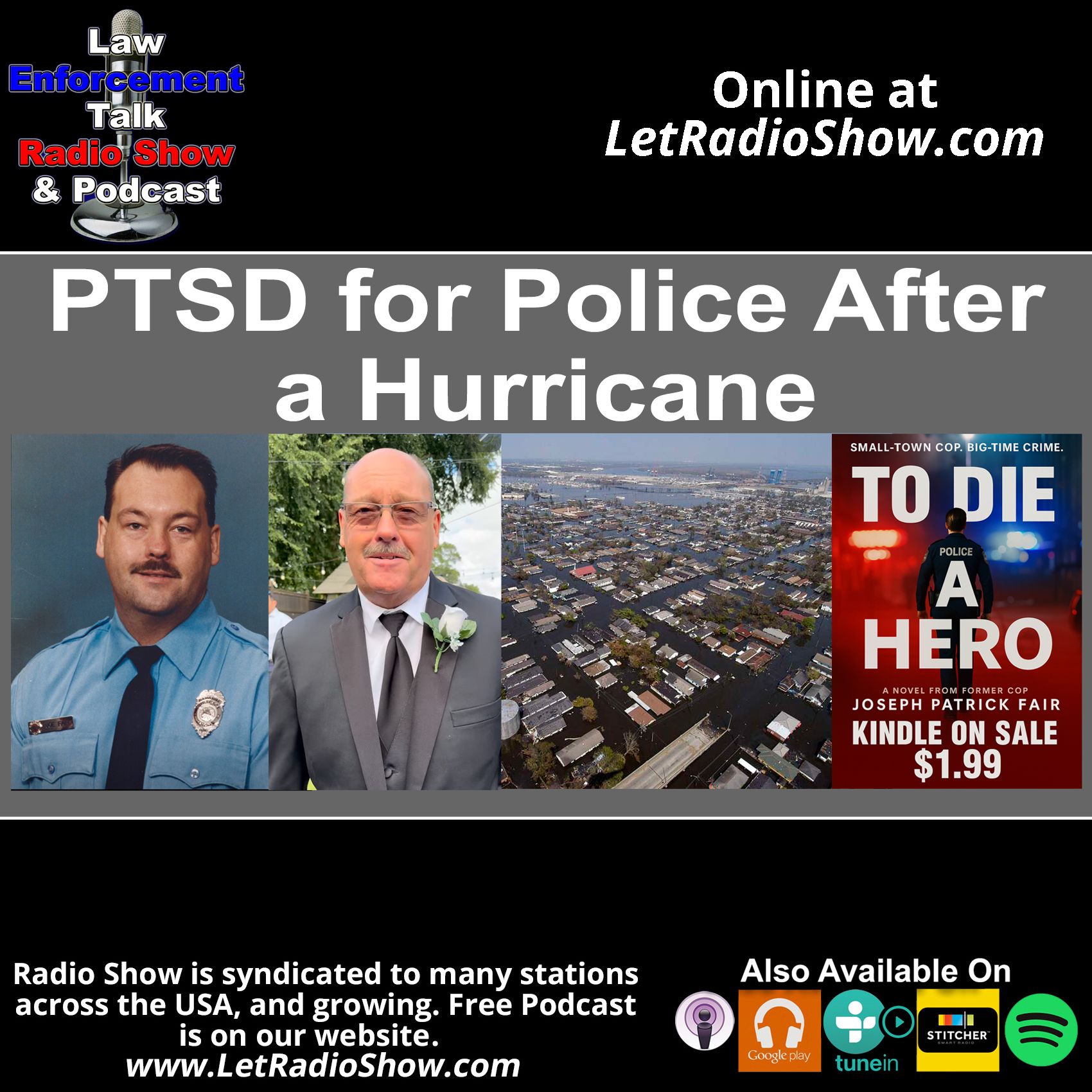
Loading summary
Transcript89 lines
- [00:00]
Walden University Ad
Imagine being on a vacation for a very long time. Now imagine saving money nightly while you do it. Sounds pretty great, right? With vrbo's long stay discounts, you can stay longer and save more. Our customers save an average of 10% when they book select properties for a week or longer. Just in case you needed another reason to extend that vacation book the Perfect Summer Getaway Today with VRBO Private Vacation Rentals, your future self will thank you later. At Walden University, we get the W. We come here for more than just a degree. We come here to make an impact. We step up when everything is on the line and we create opportunities. At Walden University, we learn the skills to get us to the next level. Plus, with flexible online learning, we can do it on our time. Now it's your time. Get the W. Walden University Set a course for change. Visit waldenu.edu to learn more. Certified to operate by Chevrolet He's a.
- [01:02]
John J. Wiley
Retired police officer and firefighter. He wound up working the hurricane relief from Hurricane Katrina in the New Orleans area. Developed ptsd, became addicted to adrenaline. He's also an author here to talk about all that and more. Welcome to the Law Enforcement Talk Radio Show. In the Law Enforcement Talk Radio show we are joined by special guest and talking about their experiences, their realities of investigating crimes plus those have experienced horrendous trauma. Police, first responders, military and victims of crime share their stories. Hi, I'm John J. Wiley. In addition to being a broadcaster, I'm also retired police sergeant. Be sure to check out our website letradio.com and also like us on Facebook Search for the Law Enforcement Talk Radio Show. Of all the radio stations in the United States, there are no other shows like the Law Enforcement Talk Radio show. And on Facebook there's only one official page. Do a search on Facebook for the Law Enforcement Talk Radio show and be sure to like the Law Enforcement Talk Radio Show Facebook page. Joining us from the great state of Michigan we have Joseph Patrick Fair on the Law Enforcement Talk Radio Show. Joseph's retired police and firefighter in Michigan went to hurricane disaster relief at Hurricane Katrina. Remember that devastation? He developed ptsd. He was addicted to adrenaline, which I can relate to. And he's written multiple books. One of the most recent is To Die a Hero and his website is josephpatrickfair.com Joseph first of all thanks for being guest on the show and secondly thanks for your service. Both very much appreciated.
- [02:41]
Joseph Patrick Fair
Yeah yeah, thank you John. It is my honor to be on your show. Love your show and listened to it many times and it's actually helped me a few times when I've struggled in the past to find some resilience. And I would like to give your listeners a good story today and add value.
- [03:01]
John J. Wiley
Well, when it comes to resilience. And by the way, I actively do segments in this free social audio app called Clubhouse. You should check it out. And Breakfast with Champions on Mondays. And someone asked me about resilience and I said, resilience means, for me, it means getting out when you hit rock bottom and just find a way to lift yourself up and go, keep on going in spite of the bad stuff that happened.
- [03:26]
Joseph Patrick Fair
Yes. The ability to accept some loss, grieve it, and then decide to get up the next morning and focus your mind on doing something constructive. I've had the same experience and one.
- [03:40]
John J. Wiley
Of the things that I do, and my wife, I call her the boss. We were laughing the other night. We've had Rottweilers for probably 30 years. And we have our 13th Rottweiler now. His name is Enoch. And I'm walking him the other day and this woman comes up to me. She's a real Karen. And the joke was, don't worry about the dog, worry about the owner. Because I seem to have no chill with certain people and certain things they say. And I've gotten to be okay with that.
- [04:07]
Joseph Patrick Fair
Yeah, sometimes in situations like that, you just. You got to adjust to whatever your circumstances are and make the best of it.
- [04:18]
John J. Wiley
Yeah. And I. I guess what. And before we get into your story, Joseph, one of the things that. That I can relate to just a little bit from a conversation we had and at the beginning of the interview was for me, I had to learn to accept these things happen. And I also had to learn to accept. Doesn't mean I liked it, that I'm changed and that I can no longer use it as an alibi. I can't use as an excuse for poor behavior. I have to find a way to be better in spite of all that stuff. Is that true for you?
- [04:48]
Joseph Patrick Fair
That is true. I am a changed person. And I believe PTSD does kind of break you, but I think you can rebuild yourself stronger afterwards if you do some introspection and spiritual work and whatnot. You can come back as a better version of yourself. A little more dynamic, I think is the key word. I don't know that I have the strength I used to, but I have much, much more dynamic ability to help other people. And yeah, my experience down in New Orleans got PTSD and I think it was the 12 hour shifts being down in disaster zone for six weeks straight. And when I got back, yes, I was to the doctor, in and out of the hospital for about two months.
- [05:43]
John J. Wiley
When you say you develop PTSD was in your estimation? Because quite often I always wanted. And I'm as guilty as this. Everybody else I know it's not the case with me. It's more of a cumulative thing from police work. It wasn't just one incident. That one incident was the straw that broke the camel's back. Was that the situation for you?
- [06:05]
Joseph Patrick Fair
Yes, very similar. What I noticed when I got back is that occasionally I would be trying to sit down to do something, maybe even responding to a call or something, and my mind would wind back to the water being high and the boats and people being out of food, and I'd have to just try really hard to pull my mind out of that little memory, kind of like it was running on a tape in the back of my head, and pulled myself into the moment. And then I had an on off period where I could pull myself out of that. But when I was super tired occasionally, you know, I would go to my sergeant to say, hey, I'm not making it through my shift. You got to come in and I got to go home. And that was my experience with post traumatic stress.
- [06:58]
John J. Wiley
That's. And for me, and this is just me, this is not everybody else. And by the way, a word you use earlier really used to freak me out. Spirituality. I used to like, oh, I would object to everything. How can that be part of the solution? And it's a big part of my solution. I pray, I meditate every day. And it's part of what I call getting back to my center. Now, that may be the right terms. I also avoid a lot of things, and I also try to really watch my sleep go around. Sleep around the same time every night, wake up around the same time every day, eat around the same time every day. All those things can have a tremendous impact on my mood. And I ultimately am responsible for my behavior. Am I missing something?
- [07:43]
Joseph Patrick Fair
Yeah, I have the same thing as you, and I have to hold myself accountable for my behavior, and I have to live a good, clean life. And the spirituality thing, I guess I was born into a Irish Catholic family. Join the club.
- [08:01]
John J. Wiley
Join the club, brother.
- [08:03]
Joseph Patrick Fair
I've. Yeah, I've got really guilt side of that, but I have found the spiritual connection and the grounding thing and the forgiveness side of spirituality, and it's helped me stay grounded and start my day over. Occasionally I'd start my day over, and I've got To pray and I've got to meditate. And then I personally am a little overdriven. So I have to set boundaries. Like for me, I'm not laughing at.
- [08:33]
John J. Wiley
You, I'm relating because my wife says you need to relax.
- [08:38]
Joseph Patrick Fair
Yeah, yeah. Three o'. Clock. Sometimes people call me when we start project and I will tell them, no, I'm going to the couch and I'm going to listen to law enforcement talk radio show today and I'm no other responsibilities and I got to know what my limit is and I got to set that boundary and I got to hope people just accept up that and the next day maybe I'll wake up fresh and be up for a new project or maybe I won't. And maybe that day we'll be walking or going to the gym or something and praying. And that's kept my life much better and I think it's helped me not have more episodes of ptsd. Is this setting boundaries?
- [09:26]
John J. Wiley
Oh yeah, and I'm glad you brought that up. And one of the things that happens quite often in the show. We started the show in March of 2017 and it quickly got recruited by radio. Now we Last count was 144 affiliate stations we broadcast weekly, about 48 million combined U.S. population. And I'm always posting on social media so one of the things I do is I, by the way, check out our Facebook page, just do a search for law enforcement talk radio show on Facebook and you'll find it right there. And what I've had to learn to do was. And I've, I've gotten used to this and I'm going to phrase this in a form of question. When I was policing in Baltimore, I got called every name in the book by people and you kind of get immune to it. I had to learn to develop thick skin and not respond to idiots online.
- [10:14]
Joseph Patrick Fair
Yes, I do know exactly what you're talking about and I've noticed that I can have similar trouble like that and I have to spiritually look at what the outcome is going to be if I engage in something.
- [10:30]
John J. Wiley
Right. We're talking with Joseph Patrick Fair on the law enforcement talk radio show. He's retired police officer, author of multiple books with the latest that he's promoting right now is To Die a Hero. And his website is josephpatrick Fair. F A I r dot com. This is law enforcement talk for this show. Don't go anywhere. We'll be right back.
- [10:51]
Joseph Patrick Fair
Remember when free meant free, no charge, no credit card information needed.
- [10:56]
Walden University Ad
Well, a place like that still exists on the Internet.
- [10:59]
John J. Wiley
The law enforcement talk radio show website.
- [11:02]
Joseph Patrick Fair
Letradio.Com where everything is free, including the podcast.
- [11:07]
John J. Wiley
Episodes are available after airing on radio.
- [11:10]
Joseph Patrick Fair
The website is letradio.com that's letradio.com where free means free.
- [11:19]
Walden University Ad
At Walden University, we get the W. We come here for more than just a degree. We come here to make an impact. We step up when everything is on the line and we create opportunities. At Walden University, we learn the skills to get us to the next level. Plus, with flexible online learning, we can do it on our time. Now it's your time. Get the W. Walden University set a course for change. Visit waldenu. Edu to learn more. Certified to operate by Chev it's the.
- [11:49]
John J. Wiley
Summer sales event with The Ford Groom. Sam 30 seconds on the clock. The Ford summer sales event.
- [11:55]
Walden University Ad
Great time to buy.
- [11:56]
John J. Wiley
Correct. What do we have amazing deals on this summer?
- [11:58]
Walden University Ad
Ford trucks and SUVs.
- [11:59]
John J. Wiley
Is Ford America's all time best selling auto brand?
- [12:03]
Joseph Patrick Fair
Let me think.
- [12:04]
John J. Wiley
Yeah, it is three for three.
- [12:06]
Walden University Ad
What do I win?
- [12:07]
John J. Wiley
You get to work at the Ford summer sales event.
- [12:09]
Joseph Patrick Fair
Amazing. I think I was gonna do that anyway.
- [12:12]
John J. Wiley
You betcha. Based on Automotive News Almanac historical data and industry reported Sales data from 1909 through 2024 cy return a conversation with Joseph Patrick Fair on the Law Enforcement Talk radio show. He's a retired police officer, firefighter in Michigan. And he responded to Hurricane Katrina and we're going to talk about that in great length. He developed ptsd. He was addicted to adrenaline. I can relate to that so much. His website is josephpatrickfair.com spelled F A I DAR F A I R.com and he's written multiple books. One is To Die a Hero. Joseph, first of all, you retired from police work. Is there something about police work that I know? My answer is that that in your opinion, people just don't get. They don't understand.
- [13:09]
Joseph Patrick Fair
Yeah, I think the thing that people don't get about law enforcement is this thing that you respond to a call and then possibly you're with a good group of guys and you step out to the cruiser and you try to decide what is the best possible outcome for a situation. Maybe somebody has a warrant, maybe there's an assault. Maybe in this case you should throw the book at them because they've been in trouble all their life. Or maybe you should give them one misdemeanor and waive the second misdemeanor. And I think that people don't realize how much weight is on your shoulders when you go to a call and you have to kind of be not realistic. You have to be realistic, and you have to have some idealistic thing. And you got to think about, you know, what really serves my community. If this guy, is this guy going to go to jail for 30 days, or does he really have to go to prison for two years? And will I write a report? Will the prosecutor agree with my perception of the thing? And I think people think law enforcement's easy. There's a lot of moral conundrums of what are we going to do? We're going to go easy on this guy or hard on this guy. And I found occasionally getting stressed out about that and having differences of opinion with my sergeant and whatnot. And that was my experience in law enforcement. Just trying to do the right thing and not overstep boundaries and still hold people accountable.
- [14:55]
John J. Wiley
One of the things that from I look back at my career and I went in the Academy, I was 21 and turned 22 when I hit the streets. And one of the most treacherous calls for me and police in general were domestic disputes, family disputes, whatever you want to call it. And I remember trying. The first thing was you're trying to settle things down. What can you do to make things calmer? Try to get resolved. There's no physical violence, just a lot of yelling, all that stuff, and protect yourself at the same time. And then we had an incident happen in Torrington, Connecticut, and it changed the rules totally and immediately. There was no more giving Joe a break. It was if there was any kind of bodily injury or you thought there might be, when you left, you had to take someone to jail that was going to be that guy.
- [15:41]
Joseph Patrick Fair
Yeah. We have a similar thing here in Michigan. If you show up and it meets all the elements of the crime of domestic violence and somebody's bruised at that point, some of these, the other party's, the responsible party, is going to go to jail. And we would occasionally look at this. This other one that got me really is okay. Now what are we going to do with the kids? Are we going to get the kids to the grandparents, are going to the cousins? Do we need to get social workers over? That one was the one that actually tore the most into my stomach. I think a couple of those calls actually, you know, you go to call and you call social workers, and then you get the feeling afterwards that maybe we shouldn't have called the grandparents and let the parent, you know, let them have a chance. Or the grandparents talked to the social worker before remove the kids and those type of things was probably the Toughest part of law enforcement for me, by the way.
- [16:45]
John J. Wiley
For me, I feel like it was the best training ground for the really bad stuff. And what I'm getting at was I don't know that there is anything prepare someone for the devastation you experienced when you went to Hurricane Katrina. Did anything, the domestics, all the bad stuff, did any of that prepare you for what you witnessed and endured?
- [17:07]
Joseph Patrick Fair
Now, the, the, the uniform doesn't protect you from, from injuries, moral injuries. I mean, it does kind of protect you. If you got your vest on, somebody tries to shoot you, it does that. But the emotional side of it, the uniform doesn't protect you. And I had a lot of training and I had got down there and I, I thought I was prepared. I thought I had seen enough trauma to get over it. And then there was the acc, the fact that I didn't process some of these big things that I went to. And then I just. We worked 12 hour shifts, so I eat something, I would lay in a cot and get back up and go out to something else. And then by the time I got done down there, I just felt like I was carrying a lot on my back, just exhausted and couldn't think clearly and was super relieved to get out. To be honest with you. The minute, the minute my supervisor said, you're going home was like 40 pound weight off my shoulders. Just, my duty's done, I've done my tour, I'm out of here. And then when I got home, I was, I was a wreck for about two months.
- [18:21]
John J. Wiley
Yeah. And I gotta ask this, there's things I still carry and if I'm not on my toes and I don't take care of things. We talked about eating, sleeping, watching my intake of violent stuff, all that stuff. And if I don't pray, I mean, I'm not meditating, all that stuff, they pop up. And is this one of the things, does it still pop up for you?
- [18:43]
Joseph Patrick Fair
Yeah, I was, it was a very normal conversation in a coffee shop with a guy that I bonded down there with Carl, and he talked about being on the causeway there and he was kind of a wild guy. And he said, I watched that hurricane come in through the, through the causeway. And he said, it looks something like out of the. Just a wall of water 15, 16ft high, could rush it in. And he told the story about just seeing a lot of people swiped away. And that story just kept going round and round in my mind of that hurricane coming in. And he was up on a high bridge, he saw it coming and just utter Devastation, he said after the tornado came through and it took a lot of time before that, I processed that whole thing and moved on.
- [19:41]
John J. Wiley
One of the things that I stumbled with and I've gotten much better with Joseph. And maybe it's Katrina for you, maybe it's a lot of other things, but I had to. And maybe it's part of the Irish Catholic thing, I don't know. But I had to get rid of the coulda, shoulda, woulda. I'm not God, I'm not Superman. I was just doing the best I could with what I had at the time. And that survivor's guilt or whatever people want to call it, did you struggle with that at all?
- [20:05]
Joseph Patrick Fair
Yeah, coulda, woulda, sure. I will be the first one to say that my mind does occasionally do that. Then I have to objectively look at it and talk to somebody. And then good friend of mine, Matt, we've talked out. Occasionally he would call me. When he would get that, I would call him. We'd talk through. And you're right, we're out there trying to do the best we can. We don't always make the best call. Occasionally we would sit in the cruiser and talk and he'd say, next time we go to a shots fire call, you know, we're getting the rifle out.
- [20:45]
John J. Wiley
That's by the way, how we got better our job. And we had people, old timers that would teach us and we learned to do ourselves. We're talking with Joseph Patrick Fair. He's retired police officer and firefighter. He responded to Hurricane Katrina for the cleanup, the disaster relief. He developed ptsd. He was addicted to adrenaline, which we'll talk about in a few moments. He's author of multiple books. One is To Die a Hero and his website is josephpatrickfair.com this is Law Enforcement talk radio show. Don't go anywhere. We will be right back. You know, we used to have an app and it was a very popular app. And then guess what? We couldn't hold a candle through our Facebook presence. How many people have the mobile Facebook app already installed on their phone? How many people use it on their computer? Make sure you follow us. Make sure you like us on our Facebook page. Just search for law enforcement talk radio show and podcast and be sure to send us a comment to one of the posts. Best of all, it's 100% free at Walden University.
- [21:46]
Walden University Ad
We get the W. We come here for more than just a degree. We come here to make an impact. We step up when everything is on the line and we Create opportunities at Walden University. We learn the skills to get us to the next level. Plus, with flexible online learning, we can do it on our time. Now it's your time. Get the W Walden University Set a course for change. Visit waldenu. Edu to learn more. Certified to operate by Shev.
- [22:22]
John J. Wiley
Enter a conversation with Joe Joseph Patrick Fair. Joseph is retired police officer and firefighter. He responded to Hurricane Katrina. The aftermath developed ptsd. Ding, ding, ding. Me too. He was addicted to adrenaline. Ding, ding, ding. Me too. He's author of multiple books. I cannot say I've done that one is to die a hero. His website is josephpatrickfair.com we want to talk a little bit about being addicted to adrenaline. There was a time in my life when people would say, yo, I'm an adrenaline junkie. And I'm like, oh, shut up. I don't want to hear that. And it's nonsense. It's horse hockey, whatever you call it nowadays. I realize that not even nowadays, but multiple years ago, I realized that I too am addicted to adrenaline. And here's just my story, and I want to find out about you. When I didn't have that constant rush of adrenaline, what wound up happening was depression. You combine that with ptsd. I used to call it the Sunday afternoon blues. I was retired from police work. Things got quiet. I had no idea what to do. No adrenaline, nothing. And I felt empty. I didn't feel like I had a purpose. And the only emotion I seemed to have at the time was either I'm okay or I'm angry. I didn't have an in between. Is that fair for you?
- [23:45]
Joseph Patrick Fair
Yeah, very, very similar board angry or just super low energy, low enthusiasm. And yes, addicted to adrenaline. And when people realize that it's the problem isn't the adrenaline, it's that when it shuts off, life appears to start seeming boring. Boring compared to the thrill of the adrenaline and the excitement of that. And I will admit that I did something really foolish. And I got back from Hurricane Katrina and I was not thoroughly healed, but I was in the hospital with multiple intestinal issues and health issues. And I got better, but I wasn't right. But my buddies would call and say, hey, you know, there was a high speed chase last night. You missed it. And there's a shootout in the next county and you missed that. And I went to my sergeant and told him that I was healthy and ready to come back to work and. And I wasn't, to be completely honest with you. And it was to get back in the car and have the adventure and the adrenaline. And in my case, my health just kept having reoccurring problems. Back to the doctor, back to the er IV and then bleeding ulcer, and then headaches, migraine headaches, and chronic fatigue. Really, in a nutshell, just the doctor put me on blood pressure medicine and whatnot. But I didn't realize at the time when I went back to work that I was still fatigued and probably broken from the previous month or two, and I didn't give myself rest time. And when you're addicted to adrenaline, the last thing you want to do is kind of sit at home and read a book or something. You want to get back out and resist.
- [25:53]
John J. Wiley
I struggle with that, Joseph. I'm not busy. If my mind's not occupied with something, I. I go to really bad places.
- [26:00]
Joseph Patrick Fair
Yeah, no, me too. I have to get to the park and walk, and I have to have a list of things when I get up in the morning and get rolling. And yes, in my case, I had probably two or three episodes of ptsd, because I would get over it. I wouldn't take the proper rest and the doctor's instructions, and then I would have a reoccurrence, and then I would try to recover again and have a third occurrence and whatnot. And that's been a repeating pattern in my life.
- [26:36]
John J. Wiley
When you said earlier about digestive issues, and I don't want to go into a lot of morbid details, but when I was at my worst, I was down to £184, and I was not eating, and I couldn't eat. And what I would say is I would get hungry. And then when I start eating, I become nauseous. And the first thing that goes on me is my digestion when I get too stressed out, the mental stuff, that comes second. But the physical is almost immediate. Is that still problematic for you?
- [27:09]
Joseph Patrick Fair
Still a problem. I do have a workaround now where my wife talked me into eating a lot of salad. And that can actually mitigate that if I just eat protein and salad and I have no carbs.
- [27:26]
John J. Wiley
Join the club. I'm down £50, and I've never felt better.
- [27:31]
Joseph Patrick Fair
Yeah, my. My. My stomach. But yes, I. I struggle with figuring out the right diet, but I'm thankful I've got the right one now.
- [27:41]
John J. Wiley
I'm the same way. And I. One thing I hate when people start preaching, so I'm going to just say this. I found for me that when I eliminated the starchy carbs, the sugars from my diet, my mood stabilized, my energy Level stabilized, I slept better at night, all those things. I started shedding weight. And it's not because of any. I don't know the science behind it, but people say just exercise. Willpower. I don't have willpower when it comes to sugar. I don't have willpower. Comes to pasta and stuff. It calls my name, and I'm like a stone cold junkie. And I swing my moods terribly.
- [28:22]
Joseph Patrick Fair
Yeah, no, I have a similar thing. And I love eating that food, but I can't do it all the time. And I have to pay attention to how many carbs I have. And if I do get in a bad place, you're right immediately, I'm right to. And I'm on that until I feel better and my blood pressure's right and all that.
- [28:44]
John J. Wiley
I would just say this.
- [28:45]
Joseph Patrick Fair
Probably the last four years, I've been like that.
- [28:47]
John J. Wiley
When you said earlier, spirituality, prayer, meditation, I poo pooed that. You talk about diet. I poo pooed that. All the things I do now, and I swear by that worked for decades. I was the biggest anti. This not gonna work. That's nonsense. And I. Because I had stereotypes on my mind of what meditation was. When you said earlier, your wife did this. Did this play for me? Did this play a negative role in your relationship with your spouse?
- [29:18]
Joseph Patrick Fair
No, I've just got such a dynamic woman that she just cares so much about my health that she would just spend time in the kitchen and just chop up all those vegetables and make an extra run to the store and all that. And it's been actually a good thing for both of us to eat. Right. And I'm very fortunate that I don't really have any intestinal issues right now. And I don't love this diet, but I'm sticking to it.
- [29:49]
John J. Wiley
How about when the PTSD was at its highest and the adrenaline addiction, how was your relationship then?
- [29:56]
Joseph Patrick Fair
Oh, it was weak. Weak and occasionally stormy. And I think there were periods where I would have to just leave the house. I could see things were brewing, and I said, well, maybe I'm going to explode today. I better go to the park and walk. And then maybe an explosion would be more like smoke in flares instead of explosion. And I'm lucky that I kind of see. I. I can hear the whistle pot blowing, you know, coffee and tea and that. So I've been lucky to just. And she's been very forgiving about. I've got to get. I've got to leave today. I've got to go walk. And then I'm. Would talk to her. But yes, these things, when you're in a relationship with somebody, you're very fortunate if they understand that you're having a bad day and they cut your space.
- [30:53]
John J. Wiley
And that was my, my situation. My wife Stephanie, I call her the boss. She is really good at diffusing me. She knows all the things sometimes I forget. And she's very supportive without giving me the excuse and alibi that I'm allowed to self destruct. We're talking with Joseph Patrick Fair. Joseph is a retired police officer firefighter. He responded to Hurricane Katrina. The aftermath the devastation developed PTSD the result of his police career. And Katrina became addicted to adrenaline. And he's authored multiple books, one of which is To Die a Hero. His website is Joseph Patrick Fair. You can find us on Facebook look for and like the law enforcement talk radio show Facebook page when we return. We're going to talk about how he built the life he has today. This is Law Enforcement Talk Radio Show. Don't go anywhere. We'll be right back. I know we've all got lots of apps on our phone, but there's one you should check out the medium apple medium.com and be sure to follow the law enforcement talk radio show and podcast where you find great articles, blog posts from me on Medium. That's the law enforcement talk radio show and podcast on the Medium app. Or you can go directlydevmedium.com@walden university we.
- [32:21]
Walden University Ad
Get the W. We come here for more than just a degree. We come here to make an impact. We step up when everything is on the line and we create opportunities. At Walden University we learn the skills to get us to the next level. Plus with flexible online learning we can do it on our time. Now it's your time. Get the W Walden University set a course for change. Visit waldenu.edu to learn more. Certified to operate by Chevy.
- [32:56]
John J. Wiley
Return A conversation with Joseph Patrick Fair Last thing spelled F A I R. Why is that important? Because the website is josephpatrickfair.com f a I r.com he's author of multiple books. One is To Die a Hero. He's a retired police officer and firefighter developed PTSD partly due to his response to Hurricane Katrina. The disaster afterwards results the efforts they did became addicted adrenaline. We talked about all that. One of the things Joseph that that really I think for me your story I can relate to the most is I I got really trapped in the details and comparing well what they go through is worse and one of the things you said earlier in the conversation it really Struck home with me. And the best comparison I came up with is when things got quiet. That's when a real problem for me started. And I remember watching a lot of combat veterans, they said they were fine when they're in the thick of it. They knew what to do, they knew their role. And then when they came home and that like that switch was turned off, they didn't know what to do. And that's where the real problem started. And I didn't see that for police work for a long time until it became a real issue for me. Is that fair for you? You?
- [34:14]
Joseph Patrick Fair
Yeah, that. That is fair. I think that when we're out in the mix of things, running nine on calls, we can kind of distract ourselves from something that's in the back of our mind that's irritating us. We're kind of using that as a distraction. And then when we get quiet or we get day off work, then maybe that problem pops back up in our head and starts gnawing at us. And yeah, I did. I have that experience. And on my days off, occasionally have to find some activity, keep me busy, go to the gym, go for a walk and call somebody and try to process any old emotion that's popping up.
- [35:03]
John J. Wiley
The other thing is I really had to learn to. Again, this goes back to our prior conversation. I learned how to learn to accept that I changed. I'm not the same guy as I was when I was 18. That's obvious. I'm late 60s now. But my brain, this is where I got really hung up for a long time. Joseph is I stopped looking at my brain as an organ. It's really an organ like your heart as an organ or your liver is an organ. When you start having symptoms that this organ is having problems, it's not fulfilling its function the way it should. You seek medical help. Well, when your brain, when your thoughts go through bad. I always say this and I didn't think of this. My mind is like a bad neighborhood. It's best not to go there by myself. When I start thinking that I have control over my thoughts, that's part of the problem. I'm not looking at my brain as an organ. How does that can you relate to that?
- [35:57]
Joseph Patrick Fair
I can. I can relate to the mind and the brain like that. And it also. On top of that, maybe throw another layer on that is for me, when I'm tired and I'm burned out, my mind seems to go more to negative stuff. When I'm. I'm fresh and I'm rested and then in my Case I'm very, very fortunate to I guess, have family members and people that are supportive that just said, hey, you know, it's, it's time to call up counselor, make an appointment. Don't look at this as a big deal. If you had a toothache, you'd go to the dentist. If you got a broken leg, you'd go to a doctor. You know, if you're, if your brain can't positivity and love, then you got to get to somebody and get that treated. So in my case, yes, went to cognitive behavioral therapy. It was probably one of the best decisions I've ever made. I think this thing that people want to classify somebody as broken, I would, I would see somebody in therapy more as like somebody going to the gym. You know, if your muscles aren't where they're at, you know, you go to the gym, you work out, and if your mood's not where it's at, you ought to get to a counselor and you ought to talk through. And the, the upside of this whole thing is if you go to a counselor and talk and open up and are honest, it's going to get you the same results as if you go to the gym and lift weights. You're going to feel better, look better, and your life will get better. So, yeah, I'm a firm supporter of going, letting a professional make an assessment and take treatment.
- [37:50]
John J. Wiley
Is that when you started writing your books or is that why you started writing your books?
- [37:55]
Joseph Patrick Fair
That's one of the reasons I started writing the books. I knew that I wanted to tell a story and I knew that it would be very good for therapy to get down on Google Doc and write that out. And then I knew that by reading that over and over again, and maybe some of the things that were traumatic in there when I actually typed them out and then reread them, there's a little bit of abstraction that takes place where you're kind of reading for third, third person. And it did actually help me process it. And the therapist told me a few times, writing it will definitely make it more logical and less emotional.
- [38:40]
John J. Wiley
Yeah. And because I was always taught that the, the same, the two sides of brain can't fire the same time. It's using one side or the other, and writing is a different plus. It's. For me, this is just. For me, it's a lot harder for me to lie, justify, minimize, explain away behavior when I write about it.
- [39:02]
Joseph Patrick Fair
Yeah, it's completely true. There's two sides of brain. One is definitely into the creative side. And One is into the logic side and you are exactly right when you write down like that, it's using that part of your brain that try to reference this truth and all that stuff. And it is true that you're using one side of your brain or the other most of the time.
- [39:31]
John J. Wiley
Joseph, did this writing lead to your first book?
- [39:34]
Joseph Patrick Fair
The writing led to my first book and then in my case went on it's a second book, but really it's kind of a second version of the first book. And then the third book I hired a writing coach and I had figured out that what I wanted to do on the third book I was incapable of doing. I did an assessment and then the third book really really did click. Like many things when you get an expert in on it. And they took marketing coach and writing coach and beta readers and all that. So I call the first two books warmups. And the third book is. It's incredible.
- [40:18]
John J. Wiley
Well, it's funny how we realize when we reach out to someone that really knows what they're doing, we find out. I'm speaking for May. We find out that we really didn't know we were based off doing something made it much more difficult. Was that your experience?
- [40:34]
Joseph Patrick Fair
Completely true. And I stumbled and I kept doubting myself and kept rewriting re editing and all that stuff. And there is something about the human condition where we, we do a creative project and we don't know, we just. We're biased of our own work. So we need that that neutral person. And Susan lady helped me with what. She was very kind, but she was very honest. And she said no, this has got to come out. This never work. And then it's got three acts and you gotta have cliffhanger here. And she, she understood exactly what made a good book. And, and when we were done working on it, it was three to five times better than what I thought I would produce.
- [41:26]
John J. Wiley
Is that what led to the birth of your website?
- [41:29]
Joseph Patrick Fair
JosephPatrickFair.com yeah, that led to the birth. And then I've been coaching people, writing and then pivoting to going on to radio shows, podcasts and just recently, December of last year got a little TV show that I created on public broadcasting. The local public broadcasting, cable stationary.
- [41:57]
John J. Wiley
You had to throw in there that little thing that. That negative self talk of. It's a little show. Man, you're not doing bad for an old retired cop, are you.
- [42:07]
Joseph Patrick Fair
John? You are exactly right. I minimize it.
- [42:10]
John J. Wiley
Oh, I still do that too.
- [42:12]
Joseph Patrick Fair
Humble. Yes, I'm trying to be humble. Humble. I've been very fortunate to have a lot of creative ideas and I think it is actually connected to drive and it's connected to some level of spirituality and then the courage to make mistakes and adjust and correct and all that is where these things come from. If everybody's listening they would like to stack their figures, be world famous overnight. No, it is is it's hard work, dedication and courage and there is no overnight.
- [42:49]
John J. Wiley
Joseph, thank you so much for telling your story and being guest on Law Enforcement Talk Radio Show. Both very much appreciate it.
- [42:57]
Joseph Patrick Fair
It's been my pleasure. John. I love your show and thank you.
- [43:01]
John J. Wiley
I'd like to thank our guests for coming on the Law Enforcement Talk Radio Show. The Law Enforcement Talk Radio show is a nationally syndicated weekly radio show show broadcast on Numerous AM&FM radio stations across the country. We're always adding more affiliate stations. If you enjoyed the podcast version of the show, which is always free, please do me a favor and tell a friend or two or three. I'll be back in just a few days with another episode of Law Enforcement Talk Radio show and Podcast. Until then, this is John J. Wiley. See ya.
- [43:37]
Walden University Ad
At Walden University, we get the W. We come here for more than just a degree. We come here to make an impact. We step up when everything is on the line and we create opportunities. At Walden University, we learn the skills to get us to the next level. Plus, with flexible online learning, we can do it on our time. Now it's your time. Get the W. Walden University Set a course for change. Visit waldenu.edu to learn more. Certified to operate by Chev.