← Law Enforcement Talk: True Crime and Trauma Stories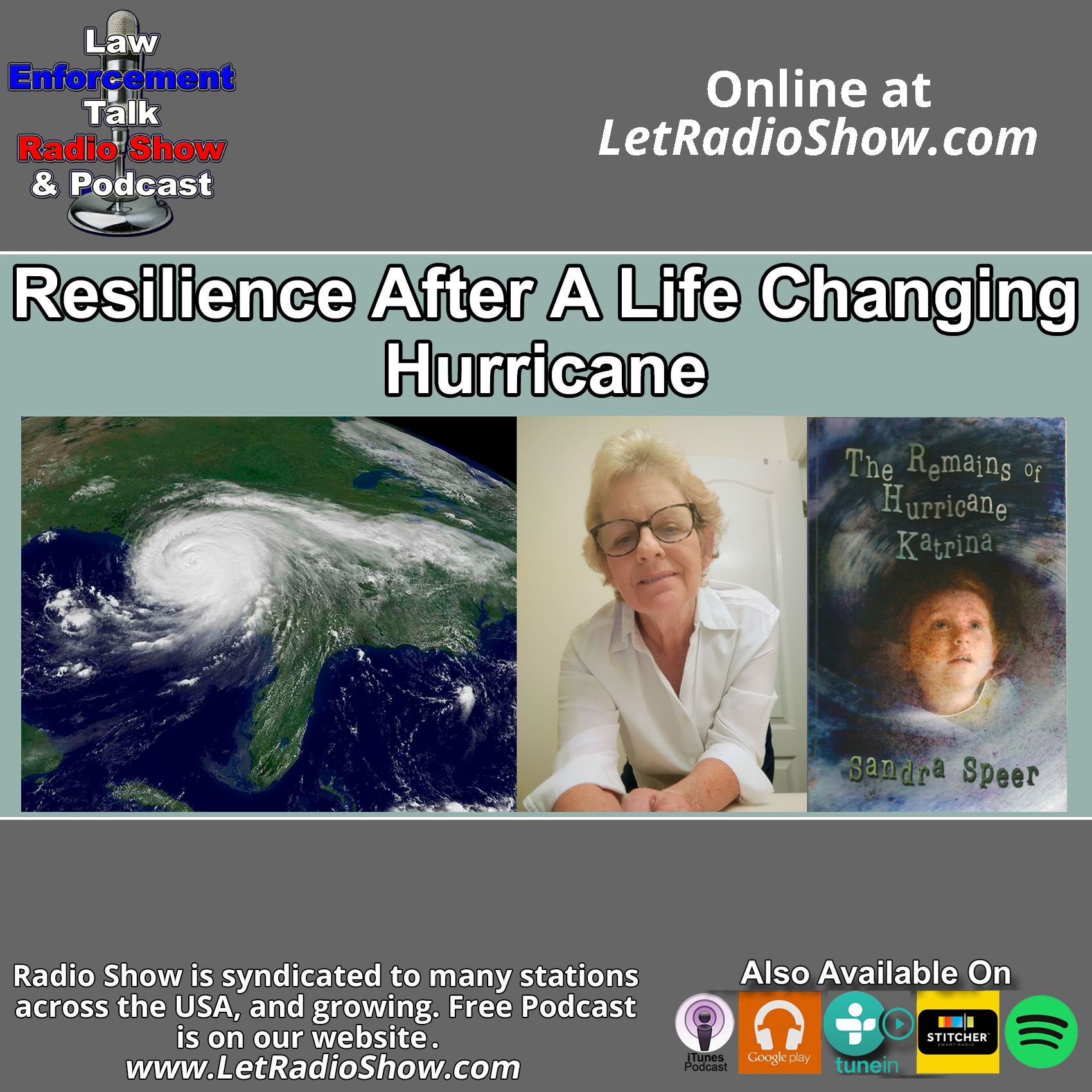
Law Enforcement Talk: True Crime and Trauma Stories
Resilience After A Life Changing Hurricane
00:39:54
Resilience After A Life Changing Hurricane. When Hurricane Katrina struck the Gulf Coast in August 2005, the world watched in disbelief as one of the most destructive storms in American history swallowed communities whole. Among those whose lives were upended was a woman named Dr. Sandra Speer. The storm not only destroyed her home, it unearthed emotional wreckage that had been buried for decades.
Loading summary
Transcript122 lines
- [00:00]
Grainger Advertisement
If your job at a healthcare facility includes disinfecting against viruses, you know prevention is the best medicine. And maintaining healthy spaces starts with a healthy cleaning routine. Grainger's world class supply chain helps ensure you have the quality products you need when you need them. From disinfectants and cleaning supplies to personal protective equipment so you can help deliver a clean bill of health. Call 1-800-GRAINGER clickgranger.com or just stop by Granger for the ones who get it done.
- [00:31]
Remarkable Advertisement
When we started writing our thoughts down on paper, it opened up endless possibilities. Ideas could grow beyond the borders of the mind and it changed the world. Somewhere along the way, we lost touch with paper, distracted by devices made for every purpose except for thinking and focus on edge. Waiting for the next notification. But what if new technology didn't pull us away from paper but brought us closer to it? Listen. That's not paper. It's the sound of the new remarkable Paper Pro rewriting the future. A paper tablet with a true color ink display, gentle reading light and unheard of tactility. With digital features for taking notes, thinking and organizing without any distractions. Paper is about to change the world again. Get your paper tablet@remarkable.com today.
- [01:33]
John J. Wiley
She was abused as a child starting at the age of nine until she was about 18. It included verbal, psychological and sexual abuse. Most of her childhood had a huge impact on her adult life. As a matter of fact, it motivates in part what she does today. She's here to tell her story on the Law Enforcement Talk Radio Show. Welcome to the Law Enforcement Talk Radio Show. In the Law Enforcement Talk Radio show, we are joined by special guests talking about their experiences, their realities of investigating crimes, plus those who have experienced horrendous trauma. Police, first responders, military and victims of crime share their stories. Hi, I'm John J. Wiley. In addition to being a broadcaster, I I'm also a retired police sergeant. Be sure to check out our website letradio.com and also like us on Facebook, search for the Law Enforcement Talk Radio show do you want to be a guest on Law Enforcement Talk Radio show and podcast? It's really quite simple and before you get into this notion that I'm not a cop, I wasn't a cop, I don't have something contribute well, the show is about investigating crime. That's one aspect of it from the real life perspective of those who did it. And then it's also about trauma, how trauma impacted them. Often crime based, but not always. Our guests quite often are law enforcement officers. Other first responders military, victims of crime, their spouses or survivors talking about how trauma impacted them, what happened, how it affected their lives, and how they rebuilt their lives after. If you want to be a guest, just contact me. It's really simple. Send an email to jayetradio.com that's jayetradio.com or go to letradio.com and the contact us page and you can get me right there as well. Joining us from Mississippi, we have Sandra Spear on the law enforcement Talk radio show, Dr. Sandra Spear. And she is an amazing person doing amazing things, but she went through what a lot of people went through, especially back in the old days. She was sexually abused starting at age nine until she's about 18, went through and endured verbal, psychological abuse, all which had a profound impact on her adult life. And she survived Hurricane Katrina, which and everything she'd been through really became a motivating factor for what she does today. Her website is LifeSanswers Care. That's LifeSanswers Care. Dr. Spear, thanks for being a guest on law enforcement talk radio show. Very much appreciate it.
- [04:12]
Dr. Sandra Spear
And thank you for having me.
- [04:13]
John J. Wiley
It's a pleasure to have you here. What really is inspiring about your story is, and I don't want to give away a whole lot I'm not is, yeah, we went through some bad things. We're going to have some tough conversations. We're not afraid of having tough conversations here in this show. We've had plenty of them since 2017. But what really is amazing is so many people use this as an alibi, an excuse for not getting better. Not you. You use that as a motivating factor to change your life, haven't you?
- [04:43]
Dr. Sandra Spear
Yes, as a matter of fact, I have. I decided when I was 18 years old, not knowing that I continue to be abused, I decided that one day I would use everything that I learned and everything that I went through to help others who are going through the same thing.
- [04:58]
John J. Wiley
That's the amazing part. And what I would say is have you by helping for me, helping other people, using my pain, what I went through in the past as a template, for lack of better words, to help other people, people is part of my solution for building a life I want. Have you found that that's beneficial for you?
- [05:17]
Dr. Sandra Spear
Oh, absolutely. I have grown enormously. I don't feel like I found myself until I was able to say, yes, I am actually helping other people.
- [05:29]
John J. Wiley
Let's go into your story a little bit. You, without going into terrific details, this started when you're about nine years of Age. I'll be honest with you, Sandra. I don't really remember being nine.
- [05:40]
Dr. Sandra Spear
I know I was, but I remember my ninth birthday. That was when he decided to rape me the first time on my ninth birthday.
- [05:48]
John J. Wiley
You say he. Who was, who was he?
- [05:51]
Dr. Sandra Spear
He was a man. Well, he was an older child of 10 children that my father knew. My father was a psychologist and he liked to experiment with other people and he moved adrenaline in. That was the oldest of 10 children. And apparently he was raping his sisters. And when he moved into my house, he was raped. He started raping me.
- [06:17]
John J. Wiley
Isn't that kind of like the old saying and I didn't grow up countryside? But isn't it like bringing the fox into the hen house? We know what they're going to do. Did he know what this guy was capable of, what he did beforehand?
- [06:30]
Dr. Sandra Spear
No, my father did not know. As a matter of fact, years later, when my father passed away, I found his file, the file on this gentleman. And no, my father did not know about the raping even until he passed away, which was in 2004. And this gentleman had left our house, I think in the late 90s. And no, my father never did pick it up. I was very upset about that. So my mother began to blame me for the raping. Yeah, when she found out about it.
- [07:01]
John J. Wiley
I think that there was a stage when I was younger. It's not so much today. Some people still carry this, but there is the old mindset. Well, if you haven't done this, you wouldn't, they wouldn't have gone through that if you hadn't worn this outfit. If he hadn't sat on his lap, all those things, especially with nine year olds. And my mindset and my experience in law enforcement is out the window. It doesn't hold true at all.
- [07:27]
Dr. Sandra Spear
Well, I mean, actually the problem was I disassociated. My mother was actually beating me and everything else at the same time. I disassociated. I didn't even realize all that was going on. It was amazing. But the actual raping, nobody believes that somebody else could do that to somebody who's innocent. They think that you're asking for it. My mother always said, oh, you were asking for it. Oh, you were asking for it.
- [07:52]
John J. Wiley
How can a 9 year old ask for it? That's what I'm getting at.
- [07:57]
Dr. Sandra Spear
Yeah, what is asking for it? I mean, that's what. I had to live with this until I was in my late 40s, until I finally came to terms with it. And that's what, almost 50 years of living in the horror of thinking that you were the bad one in this situation. You caused the rape, you caused other people to beat you. I mean, my mother blamed. When I finally realized my mother had been beating me, it was my fault. I used to run away from her. I was afraid of her. I wonder why.
- [08:30]
John J. Wiley
Yeah.
- [08:30]
Dr. Sandra Spear
You know, and the gentleman went very far. He emotionally abused me as well. He convinced me that I wasn't my mother's child. That's why my mother didn't like me. He did all of mind maneuverings to control me and keep me as so called his until he got tired of it.
- [08:50]
John J. Wiley
I hate to say it, and I'm no expert when it comes to child abuse, sexual child abuse, but that kind of, that goes into the category grooming and controlling behavior. But I want to go back to something that, that people need to understand. And one of the things that we were taught early on that really made a lot of sense to me, this started in the academy, was that nine year olds in particular had no concept in their mind of sex and sexual behavior. And I go back to when I was nine, which I told you earlier, I can't remember, but it wasn't until maybe 13 or 14 I even started thinking about this stuff. It didn't even enter my mind. I was so busy with Tonka trucks that I didn't have time for this and my mind didn't go there.
- [09:35]
Dr. Sandra Spear
You hit on a very interesting subject because a lot of people will not believe a child when a child says that they've been raped. And that was one of my problems. I tried to tell a couple of people and nobody believed me. They didn't think that I knew what I was talking about when in reality, and I've done a lot of research on this through the years, children can tell these stories clearer and with, with better, you know, emphasis and knowledge of what happened than an adult because they don't have anything else cluttering their minds. And they really don't know that they're talking about something that's bad.
- [10:12]
John J. Wiley
Right. And the other thing is it's just.
- [10:14]
Dr. Sandra Spear
Not hearing children is wrong.
- [10:16]
John J. Wiley
We used to say this. If a 5 year old, a 9 year old in your case told you certain things happen and it's a sexual nature, believe them because their mind didn't operate that way. It was introduced to them somehow or another. It's not something that this goes back to. You said earlier, something you did justify the behavior. You asked for it. It's just not true. We're talking with Dr. Sandra Spear. She was sexually abused starting the age of nine until around 18. We'll talk more about that in a few moments. She was verbally and psychologically abused most of her childhood, which had a huge impact on her adult life. As you can imagine. And her 40s, she survived Hurricane Katrina and that was part of the catalyst for her change, which we'll talk about at length. Her website is LifeSanswers Care. That's LifeSanswers Care. This is law enforcement talk radio show. Don't go anywhere. We'll be right back. Of all the radio stations in the United States, there are no other shows like the law enforcement talk radio show. And on Facebook, there's only one official page. Do a search on Facebook for the law enforcement talk radio show and be sure to like the law enforcement talk radio show Facebook page.
- [11:32]
Remarkable Advertisement
If you work in quality control at a candy factory, you know strict safety regulations come with the job. It's why you partner with Grainger. Grainger helps you find the high quality and compliant products your business needs to inspect, detect and help correct issues. And the sweetest part is everyone gets a product that's as safe to eat as it is delicious. Call 1-800-GRAINGER Click grainger.com or just stop by Granger for the ones who get it done.
- [12:08]
John J. Wiley
Returning conversation with Dr. Sandra Spear on a law enforcement talk radio show. She was sexually abused starting the age of 9 until 18. Endured verbal, psychological, physical abuse most of her childhood, which by the way, had a huge impact on her adult life, which we will talk about. And that's a no brainer. It'd be surprised if it didn't. In her 40s, she survived Hurricane Katrina. That and her past was a huge catalyst for what she does today. Her website is LifeSanswers Care. That's LifeSanswers Care. Dr. Spear. I sometimes, and I said this, that I had a good childhood. I didn't have any of this kind of stuff happen to me. But I sometimes look at me and I'm in my 60s now and I go, Ma', am, in my 20s and 30s, I went through some stuff and it's a wonder I can even function at all. And I'm not saying as an excuse, I'm saying that sometimes I'm just amazed at progress I've made. Do you ever find yourself with that sense of amazement?
- [13:06]
Dr. Sandra Spear
Yes, as a matter of fact, you know what I say to myself now? I say to myself, well, Sandra, you're in your 60s now. You can get through anything. No matter anything, whatever comes up, don't even worry about it because you've been through so many wars and now you're still alive.
- [13:22]
John J. Wiley
That's the other thing we get. Look, what are you going to do that's going to hurt me more than what I've been through? And by the way, you're not going to hurt me more than I hurt myself, so bring it on.
- [13:32]
Dr. Sandra Spear
Well, I don't know. I think somebody else can hurt you more than. I mean, my mother. My mother's favorite thing to tell people was after she got through telling people I was the fault of the sex, she would tell people that it's just the one thing that she's right for in her life, that she didn't get to murder me. She wanted to murder me.
- [13:51]
John J. Wiley
Yeah, that's pretty severe.
- [13:53]
Dr. Sandra Spear
And yeah, she. And she never got away with it. And my father never did anything at all to. He enabled everything, so. And yes, it did affect me. And that's why I blocked out most of my life, too. Honestly. I still have parts of my life that I don't remember, even in my adult years.
- [14:13]
John J. Wiley
And I think that's what they say. Not to be religious, but it's God's anonymous miracles. It's his way of protecting us from stuff we don't need to revisit.
- [14:24]
Dr. Sandra Spear
My brain protected me and did a lot of other things to help me get through it. I think honestly, if I had known that I was so emotionally abused by both parents, by everyone in my family, I don't know if I could have lived through it if I had actually seen everything, including the beatings.
- [14:45]
John J. Wiley
Let's talk a little bit about your childhood. This person that began sexually abusing you, raping you at the age of nine, was moved into your family and he had a history that no one knew about of doing this with other children before. Am I wrong?
- [15:00]
Dr. Sandra Spear
You are correct, yes.
- [15:02]
John J. Wiley
And how old was he when this first started? You were nine. How old was he? About.
- [15:06]
Dr. Sandra Spear
He was nine years older than I am.
- [15:08]
John J. Wiley
So he was 18. He was an adult.
- [15:11]
Dr. Sandra Spear
Exactly. As a matter of fact, Stockholm theory was very important in this. I actually fell in love with him, or I thought I did, which is normal. And he broke my heart on the night of my high school graduation by announcing that he was going to get married to somebody else.
- [15:30]
John J. Wiley
I'm not surprised.
- [15:31]
Dr. Sandra Spear
They don't care about you. That's what I'm saying.
- [15:34]
John J. Wiley
Yeah, people. Here's the other thing. I say this all the time and it's a mind shifting, but a lot of us think of rape as a Sex crime. And it's labeled as a sex crime, but it's actually a crime of violence. It's a crime of control. It's a crime of extreme violation. And it's even worse when you talk about young children that are defenseless and they're groomed and they're tricked into this.
- [16:02]
Dr. Sandra Spear
And you think it's normal. If it goes on enough in your life and you have nothing else to look at, you grow up thinking it's normal. And that's why I had two bad marriages as an adult.
- [16:13]
John J. Wiley
Before we go, before we talk about that, did you. At what point in your life did you begin to realize that this was not normal?
- [16:21]
Dr. Sandra Spear
I think Hurricane Katrina shocked me. I lost everything in Hurricane Katrina within a couple hours.
- [16:28]
John J. Wiley
How old were you? Katrina occurred.
- [16:31]
Dr. Sandra Spear
I was 45.
- [16:32]
John J. Wiley
So you went from nine years of age to 40, 45 and not knew that this was abnormal?
- [16:40]
Dr. Sandra Spear
Exactly.
- [16:41]
John J. Wiley
That's a huge portion of people's lives.
- [16:44]
Dr. Sandra Spear
Well, it's awesome. You've got to understand that I lost most of that life.
- [16:48]
John J. Wiley
Yeah.
- [16:49]
Dr. Sandra Spear
Because of disassociating and being abused. And because I had no confidence in myself. Couldn't do anything. Right. I couldn't keep a job. I couldn't do anything. My whole life was basically stolen from me.
- [17:03]
John J. Wiley
Before we get into adult life, the childhood. There's so many great memories I have of my childhood. Getting my first bicycle Christmas wish list. Getting this year's Roebuck catalog, and my sisters and I and what we wanted for Christmas. All that stuff we. We didn't think about. All these. Making our Halloween costumes, all that. Such good parts of our childhood. Did you get to experience that at all?
- [17:31]
Dr. Sandra Spear
No, not really. I don't remember very much at all. The only thing I really enjoy remember enjoying are my dogs. They were my friends. They were who I turned to.
- [17:42]
John J. Wiley
Well, that's. That's the way I am nowadays with my dog, Enoch the rottweiler. He's my closest buddy because he doesn't talk back and he's very predictable.
- [17:52]
Dr. Sandra Spear
Well, they give you love when nobody else is giving you love.
- [17:55]
John J. Wiley
That's exactly right. And here's the thing. He accepts me the way I am, which is cool.
- [17:59]
Dr. Sandra Spear
Exactly. I have a black lab today and I'm in my 60s. Everybody thinks I'm crazy.
- [18:05]
John J. Wiley
Well, but I have her because I'm definitely crazy. That's okay, Sandra. You're in good company.
- [18:12]
Dr. Sandra Spear
Right. But, you know, they're your comfort. But I'm trying to say is, I had no one else as a child. No one.
- [18:20]
John J. Wiley
This may sound Ridiculous. But as someone in her 60s now, do you look back and feel like I missed out on a portion of my life?
- [18:28]
Dr. Sandra Spear
Yes. But I'm also very happy with myself today.
- [18:32]
John J. Wiley
And by the way, it's a very important effort to get there. I'm sure that didn't happen overnight and it didn't happen willy nilly. There's things you had to do.
- [18:40]
Dr. Sandra Spear
Oh, no. I mean, learning as a survivor, surviving abuse and trying to get through it and getting over it is absolutely one of the hardest things anyone could ever go through because it usually involves giving up family.
- [18:58]
John J. Wiley
Yeah.
- [18:58]
Dr. Sandra Spear
Or a loved one or a husband or a wife.
- [19:02]
John J. Wiley
For me, and this is just for me, part of it is for me. And again, I will say this again, I did not endure what Sandra did in my childhood. I had a great childhood. All my trauma occurred as adult, as a police officer and some as a late teenager being a taxi driver and all kinds of other weird stuff that occurred. But for me, a big part of it was learning to accept that this was part of my past. Not saying I liked it, not saying it's okay, but accept it. And this is what I've got to work with. Is that the case for you?
- [19:35]
Dr. Sandra Spear
That's one of the first steps of recovery, is accepting it. Because what you try to do is you try to say, no way, I couldn't have gone through all that. No way, no way, no way. Until finally it just clicks and you begin to accept it. And from there you're able to find happiness. And I tell people, congratulate yourself for even the slightest little movement, even if you wake up one morning when it was hard to wake up the day before. Congratulate yourself.
- [20:05]
John J. Wiley
And here you are.
- [20:06]
Dr. Sandra Spear
That's how you're going to get from A to B.
- [20:08]
John J. Wiley
We're talking with Dr. Sandra Spear on the law enforcement talk radio show. She was sexually abused starting the age of 9 until 18. Went through verbal, psychological, physical abuse had a huge impact on her adult life, which we'll talk about in a few moments. In the 40s, she survived Hurricane Katrina. That enter past was a big catalyst for change. We'll talk about that in a few moments. Her website is LifeSanswers Care. LifeSanswers Care. You can find us on LinkedIn. Yeah, we have a profile for the show, but my personal profile is the one that is chock full of content. Just do a search on LinkedIn for John J. Wiley. S J O H N J A Y W I L E Y Or just go to LinkedIn.com forward/n/john the Letter J Wiley and be sure to connect. Don't go anywhere. We'll be right back. I know we've all got lots of apps on our phone, but there's one you should check out the medium apple medium.com and be sure to follow the law enforcement talk radio show and podcast where you find great articles, blog posts from me on Medium. That's the law enforcement talk radio show and podcast on the Medium app. Or you can go directly to medium.com.
- [21:27]
Grainger Advertisement
For the ones who get it done. The most important part is the one you need now and the best partner is the one who can deliver. That's why millions of maintenance and repair pros trust Grainger because we have professional grade supplies for every industry, even hard to find products. And we have same day pickup and next day delivery on most orders. But most importantly, we have an unwavering commitment to help keep you up and running. Call clickranger.com or just stop by Grainger for the ones who get it done.
- [22:05]
John J. Wiley
Return conversation with Dr. Sandra Spears she was sexually abused starting the age of nine until she was 18. Also endured verbal, psychological, physical abuse most of her childhood, which had a huge impact on her life, on her adult life, which we'll talk about in a few moments. In her 40s, she survived Hurricane Katrina and that in her past was a catalyst for her change of what she does today. Her website is LifeSanswers Care LifeSanswers. Dr. Spear, part of me wants to say I wish I could make this better. I know I'm not God, I know I'm not Superman. I can't undo the past, all that stuff. And I'm sorry that you went through this, but I'm kind of fast forwarding your adult life. You mentioned earlier you went through two really bad marriages. And I wonder, relationships are difficult to begin with, but I wonder how bad can bad be? And I don't think a lot of people really understand what that means.
- [23:03]
Dr. Sandra Spear
Well, what I, what happened to me is I thought that you should. I thought being beaten, I thought, I didn't realize it at the time, but I thought, you know, fighting and being beaten and, and having harshness in life was normal because that was how I grew up and my first marriage. He began to drink, he began to beat me. And after I had the first, he beat me while I was pregnant. And even then I didn't leave him. And then I finally left him when something, I don't even remember what the catalyst was. I think it was, oh, he wanted to move in a child into our home. He wanted to kind of follow the footsteps of my father and I. And that caused much of the reason I left because I couldn't live through that again. Then my second marriage, he ended up being quite a criminal, did a lot of things in my name and he was worse than the first one. And when I left him, it actually he did a lot of the narcissistic type things afterwards. So I had a year and a half long fight after that. And then Katrina hit. And I've really stayed away from relationships since then because I don't know if I'm afraid or I'm trying to protect myself or what that is still with me. There are things that come from childhood abuse that stay with you your entire life.
- [24:31]
John J. Wiley
There certainly are. And I would just say this. There's an old saying that circles are running. It said water seeks its own level. So what I wound up doing is I wound up finding relationships that were harmful to me. And because that was normal, at least what I thought was normal, and people that had it together, A, subconsciously I would think what they see in me and B, it held no appeal to me.
- [25:00]
Dr. Sandra Spear
I mean, that's the trouble with growing up with an abnormal situation. There were often times when two story home, there was a fight going on one floor and a fight going on in the other floor and I was in the middle, hiding in a bathroom somewhere trying to, you know, not get hurt. That's how I grew up and that's what I thought was normal life. And that is catastrophic. And what's interesting though is since then I've realized that I stopped the cycle because my. I have two children that I ended up bringing up by myself and they are doing very, very well. So I'm happy about that. But breaking the cycle is very difficult.
- [25:44]
John J. Wiley
It's difficult.
- [25:45]
Dr. Sandra Spear
I look back and I wonder how could I have done that without know that I lived through it.
- [25:50]
John J. Wiley
And here's the thing. I said this multiple times in this interview. I didn't go through this kind of stuff as a child. I had a great childhood, yet I had a lot of the demons that we talk about and a lot of doubts and poor relationships and all this stuff because of negative self talk. Earlier I said there's nothing you could do to me that could harm me more than me. And that negative self talk is the one that I'm talking about. Is that something you still deal with today?
- [26:16]
Dr. Sandra Spear
Not as much. When I got my PhD, I came out of it quite a bit. It was what told me that I could really amount to something. So it taught me and it implanted in my brain that I was a failure. No matter what I did, I was a failure. When I went to take tests, I failed tests, I failed this, I failed that. I got very. I was so self conscious, I couldn't go to job interviews and do very well. As a matter of fact, one job interview I was so upset, I went to with two different shoes on and I didn't even notice. And then I would get a job and I would start doing one thing after the other wrong. It's almost like I was my own sabotage saboteur.
- [26:59]
John J. Wiley
Right.
- [26:59]
Dr. Sandra Spear
Because that's what I thought was right about me. And it wasn't until I woke up after Katrina, which shocked me. And I went back to school, got my master's and then my. Then I got my PhD after that.
- [27:13]
John J. Wiley
Let's talk a little bit about Katrina.
- [27:14]
Dr. Sandra Spear
I couldn't do it.
- [27:16]
John J. Wiley
That was a life altering event. I remember I was working at a radio station when Hurricane Katrina came through. I was an overnight board op on the weekends. And I've been through multiple hurricanes in North Virginia. Growing up as a kid in Florida, living there, I've been through many of them. That's the first time I saw that from that bird's eye view. And it was devastating. How big of a deal was it for you?
- [27:38]
Dr. Sandra Spear
Well, I. I don't know how. Well, it's hard to describe without actually part of Padre Train Lake ended up in my apartment and then there was a canal that ended up in the other part. But the point that I'm making is it completely shocked me. And my whole life, I mean, I had nothing. I had the clothes on my back and that's it. And a child to worry about and a car to drive. Thank goodness I had the car. But the point is it made me. It just shocked me. It made me look at the world completely differently. And then my mother happened to have been with us and she decided to spill out all kinds of bad things about my father during, you know, during Katrina and through it all. And then it was, it was when my mother started, you know, basically abusing, emotionally abusing me. On our travels to Florida, we went from New Orleans to Florida that I realized, wait a minute, what else did she do to me? And I had to think about that. And I started. And then she came after me when we got into, finally got into an apartment and I said, wait a minute, she ever done this before? And just a little bit, like, little bit. And then I wrote a book named the Remains of Hurricane Katrina which I will have the second edition coming out in a few months. And it turned out to be the story of an abused child, which was interesting and I didn't write it that way. I just meant to write it as a story of what happened during Katrina. So even my mind was telling the story, but I didn't know I was telling the story. So Katrina was the catalyst that shocked me into realizing that my life was not what I thought it was.
- [29:28]
John J. Wiley
Was Katrina responsible for bringing up the repressed memories a term a lot of people use?
- [29:34]
Dr. Sandra Spear
I don't know if it was the repressed memories or it was that. It just shocked me. I mean I didn't have any. I had. I had all kinds of things that I had had from my career prior to this. Nothing. I had nothing. I would go around. I mean I went into. It was just. It's hard to explain because it just shocks you, you know when you lose everything, everything. No sign of your life at all. I mean it's done and it's so quick. It's within a few hours and you're in this situation, you're vulnerable, you don't have any money, you can't get to your money. People don't realize how catastrophic it is to be in a natural disaster.
- [30:22]
John J. Wiley
And I've been through totally have nothing to several of those. And we'll return our convers conversation with Dr. Sandra Spear in a few moments. We're talking about Hurricane Katrina and the impact on her. She was sexually abused starting the age 9, about 18. Endured horrendous psychological physical abuse throughout her childhood. Had a tremendous impact on her adult life. And her website is lifesanswers Care. That's lifesanswers C A R E of all the radio stations in the United States. There are no other shows like the law enforcement talk radio show and on Facebook there's only one official page. Do a search on Facebook for the law enforcement talk radio show and be sure to like the law enforcement talk radio show Facebook page. This is law enforcement talk radio show. Don't go anywhere. We will be right back. Are you a fan of true crime shows? How about true crime with a twist? People that actually investigated crime, what they did, what they experienced or trauma survivors often crime based but not always impact on them and what they did to build their lives afterwards. All for free. Just go to our website letradio.com it's L as in Lincoln E's and Edward T's and Tom radio.com L E T radio.com you'll find it all there for free.
- [31:44]
Remarkable Advertisement
If you work in quality control at a candy factory, you know strictly strict safety regulations come with the job. It's why you partner with Grainger. Grainger helps you find the high quality and compliant products your business needs to inspect, detect and help correct issues. And the sweetest part is everyone gets a product that's as safe to eat as it is delicious. Call 1-800-GRAINGER Click grainger.com or just stop by Grainger for the ones who get it done.
- [32:21]
John J. Wiley
During conversation on the law enforcement talk radio show with Dr. Sandra Spears, she was sexually abused starting the age of 9 until about 18. Endured verbal, psychological, physical abuse throughout most of her childhood, which had a huge impact on adult life. We talked about. And in her 40s, she survived Hurricane Katrina, which we were turned to. And that in her past was a huge catalyst for what she does today. Her website is LifeSanswers Care. LifeSanswers care for winter break. Sandra, you're talking about Hurricane Katrina. And here's my take on. I've been through multiple hurricanes and I remember going through, I think it was Andrew in 92. And I was thinking to myself, this is, it's not going to kill me, but I'm wondering how bad it's going to hurt, what kind of damage it's going to do when people wake up or everything you've relied on is gone. Your housing, you can't get access to money, you can't get access to food, you can't get access to the things you need to live your life. It can have a tremendous impact on you. And this became a huge part of what you do today. Am I wrong there?
- [33:28]
Dr. Sandra Spear
You're correct. It became a very huge thing because when I went to get my Ph.D. at first I was going to do emergency management, but I changed into public safety because I wanted to help survivors and do the activism work. But as I said, you catch me with a loss of words about Katrina because it is very hard to explain to people how difficult it is to wake up one morning, have everything that you own, have all your access, eat breakfast, and then by that evening you have nothing.
- [34:06]
John J. Wiley
No, I could understand that. I could understand it perfectly. And it's not the annoyance factor. It's everything I relied on in my life. And when that's all gone, it's just you, it really can challenge everything about your survival.
- [34:21]
Dr. Sandra Spear
If it does. I mean, you know, you keep bringing it up. You want to. I kept, when I was in Florida, I kept thinking to myself, oh, I'm, you know, I kept thinking, couldn't get myself out of New Orleans for some reason. And one morning, I was taking my child to school, and I knocked a man's mirror off of his truck, and the mirror broke. And I. And that caused me. I had held it together. It was about a week after the storm. I had held it together. I had not cried, nothing. And then all of a sudden, when that mirror hit the ground and I saw those pieces, it just struck me. I fell apart. I cried for two days and kept looking for everything that I own, and I didn't have anything. And in a way, I tried to start blaming myself. There was that trauma inside of me that said, oh, you're the fault for everything that goes wrong. I actually blamed myself for losing everything in Katrina.
- [35:22]
John J. Wiley
By the way, the old saying is, you're not that powerful. You can't cause that.
- [35:26]
Dr. Sandra Spear
Right? I tried to say that, but my mind kept going back to, you're the cause for everything that's going wrong. Everything that's going wrong in your life. You're the reason it happened.
- [35:38]
John J. Wiley
And was that why you decided to go back to school and you got your PhD, which, by the way, is no. No small accomplishment.
- [35:45]
Dr. Sandra Spear
No, it's not. I wanted a PhD. I wanted to do a PhD from the time I graduated from high school, but my father only wanted my brother to do it because my brother was supposed to be the great brain, and I was the. I was the dummy of the family. I was a black sheep. Well, he wouldn't send me to the college I wanted to go to, so I flunked out of college. I got a 0.01 semester.
- [36:11]
John J. Wiley
I always tell people I majored in drinking, had a minor in sociology. I got a 4.0, my major, and a DNF in my minor. I was out within a year.
- [36:20]
Dr. Sandra Spear
Yeah, I had a major in failure.
- [36:22]
John J. Wiley
I was so bad, Sandra. I was so bad as a student.
- [36:26]
Dr. Sandra Spear
Yes, I was, too. But I straightened up. But Katrina actually said, wait a minute. Well, what happened was I couldn't go back to the work that I had before because nobody wanted to hire New Orleans people for some reason. So I had a very difficult time. So I couldn't get a job. I had to do little things on my own. So that's when I went back to school. I said, I've got to improve my life. So I did have my bachelor's degree. I got it from Loyola University in New Orleans, which was an accomplishment for me. That's a private school I always wanted to go to. My father didn't think I could graduate. I'll never forget. I came out with my diploma. My father said, I can't believe you.
- [37:10]
John J. Wiley
Did it, and you did it. That's all that really matters, right?
- [37:15]
Dr. Sandra Spear
And that gave me confidence. And then when I got my master's degree, I thought, wow, if I can get a master's degree, what else can I do? And that's when I went back and got the PhD. And I didn't even announce that I had the PhD to my family until about a couple weeks after because I didn't want anybody to make fun of me. I just felt like people were going to make fun of me. I don't know. I just felt paranoid, so it didn't sink in. And then when it sunk in, I began to grow within myself.
- [37:48]
John J. Wiley
So there had to come a point when you're doing this, and I could only draw on my experience. And my experience in college was brutal. And. But when I always thought I was a bad student, then I went into later in life, and I really applied myself. I was a very good student, but somewhere along the lines, I changed. I slowly developed that confidence, but it's not always there. Did you struggle with that?
- [38:13]
Dr. Sandra Spear
I struggled with it until I realized, well, actually, what happened to me, I was. I was going online, and I was. When you go to school online, you have to do everything. Is writing, everything. Well, I did all this writing, and I did all these papers and everything. A couple of my teachers. One of my teachers came to me and they said, I know you're an older student. Are you a professional writer? I said, well, I've had something published. You know, I didn't want to tell them, and. And she says, you are a fabulous writer. And that's when I started having confidence. And then another one of my teachers sent me to do some journalism work for Homeland Security on the campus. And that also helped enormously. And along the way, I began to become more and more confident with myself. I think the real catalyst for telling me that I could actually accomplish something was when I became the first published doctor in the family.
- [39:15]
John J. Wiley
You guys just replaying your story, but the sexual abuse is one thing, the verbal abuse is another. The. The physical violence, all that stuff, the. The accomplishment in your life sometimes has to be staggering, but sometimes. And I would only imagine that it feels like it's a different person.
- [39:35]
Dr. Sandra Spear
Yeah, it is. It's. It's like a different person. And. But you have to let yourself do these things, and you have to push yourself when you're a survivor and you've been your self confidence has been mutilated all your life. The hardest thing in the world is to stick your neck out and try and do something. When I realized I had to go in for therapy that was the hardest thing I've ever done in my life.
- [40:00]
John J. Wiley
I agree by the way. For me changing my whole life and just getting to where I want to be. And it's an ongoing thing. It's not something is one and done. It's an ongoing thing. The question I have for you, and if you can answer this is you made tremendous strides in your life but if I'm misreading this, I apologize. But not so much relationships. Do you think you can accomplish the same thing, relationships that you've done in areas of other areas of your life?
- [40:28]
Dr. Sandra Spear
Yes, I'm ready because I had to take care of me first before I could truly have a good relationship. And I know it's late in life but it's never too late.
- [40:40]
John J. Wiley
It's never too late. Look, I have a good friend feel.
- [40:44]
Dr. Sandra Spear
Ready to have a relationship.
- [40:45]
John J. Wiley
Yes, we have a good friend who just passed away at the age of 59 due to cancer and other people in their 80s and 90s. And it's never too late to start building life you want. And I think your story really exemplifies that that you can build the life you want very quickly. What is it you do today?
- [41:04]
Dr. Sandra Spear
Today I act as what I call a legal advocate. But most of all I am an abuse corruption analyst and what I do is I assess cases for abuse and corruption in the system to help bring children home from child protection services cases and alienation cases or high conflict divorce cases. And I'm quite successful. I'm able to bring children home when other people are.
- [41:32]
John J. Wiley
And where can people get more information about you? Your website, LifeSanswers Care and Legal advocate for you.
- [41:38]
Dr. Sandra Spear
Knox Family Court on Facebook as well.
- [41:42]
John J. Wiley
And Sandra, Dr. Sandra Spear. I want to thank you for your story, for being a guest on law enforcement talk radio show and for all you're doing today. All very much appreciate it.
- [41:52]
Dr. Sandra Spear
Thank you very much and thank you for having me.
- [41:55]
John J. Wiley
If you're on the Clubhouse drop in audio chat apple be sure to look for me and follow me. My name's John the letter J Wiley W I L E y. You can also search for E T radio show. That's John J Wiley W I l e y T radio show on the Clubhouse drop in audio chat app. I'd like to thank our guests. We're coming on the law enforcement talk radio show the law Enforcement Talk Radio show is a nationally syndicated weekly radio show broadcast on numerous AM&FM radio stations across the country. We're always adding more affiliate stations. If you enjoyed the podcast version of the show, which is always free, please do me a favor and tell a friend or two or three. I'll be back in just a few days with another episode of Law Enforcement Talk Radio show and Podcast. Until then, this is John J. Wiley. See ya.
- [42:57]
Grainger Advertisement
If your job at a healthcare facility includes disinfecting against viruses, you know prevention is the best medicine. And maintaining healthy spaces starts with a healthy cleaning routine. Grainger's World Class supply chain helps ensure you have the quality products you need when you need them, from disinfectants and cleaning supplies to personal protective equipment so you can help deliver a clean bill of health. Call 1-800-granger. Click granger.com or just stop by Granger for the ones who get it done.