← Law Enforcement Talk: True Crime and Trauma Stories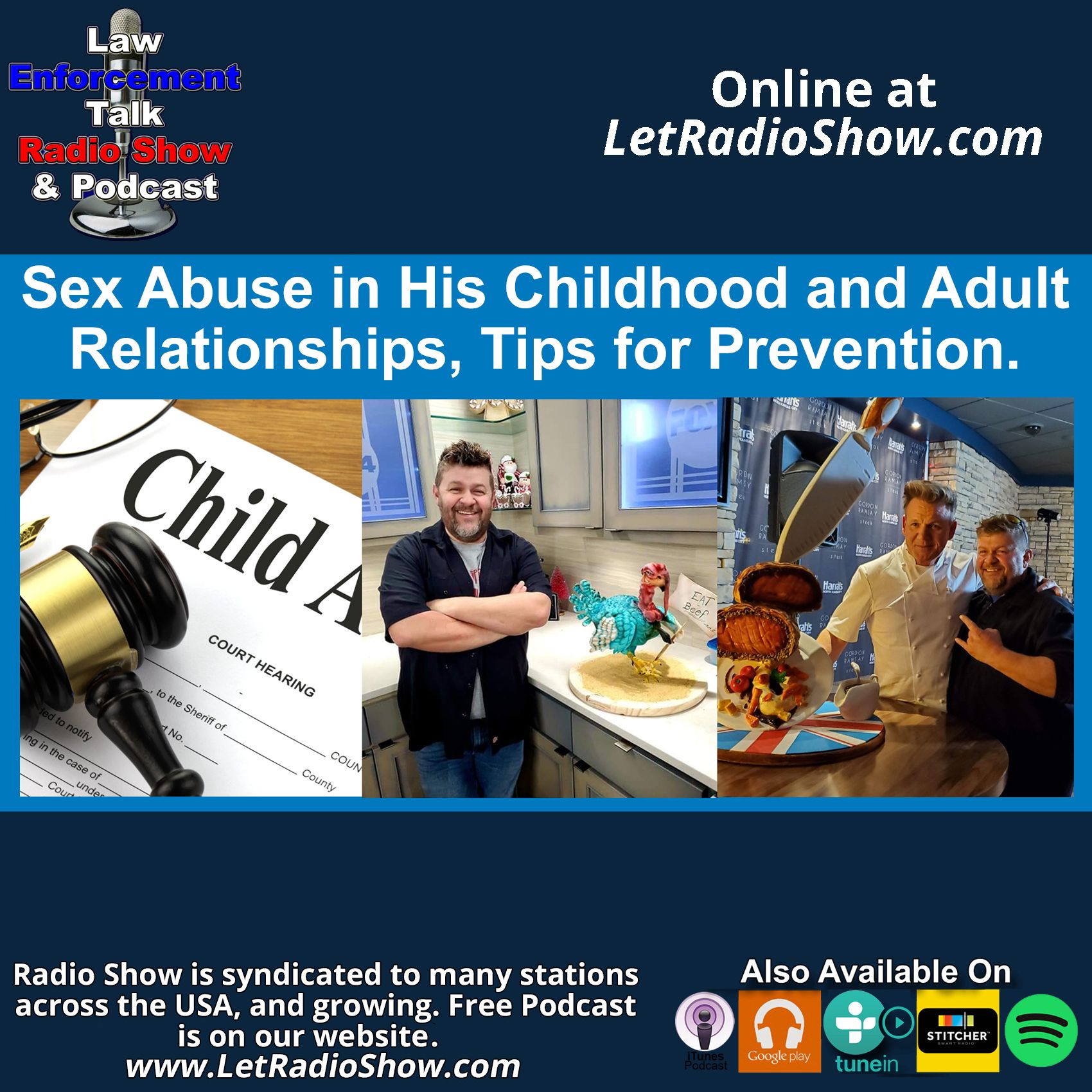
Law Enforcement Talk: True Crime and Trauma Stories
Sex Abuse in His Childhood and Adult Relationships, Tips for Prevention
00:40:09
Sex Abuse in His Childhood and Adult Relationships, Tips for Prevention. Childhood should be a time of safety, growth, and innocence. For Mike Elder, it was anything but. Between the ages of 10 and 11, he endured sexual abuse at the hands of multiple individuals, people who were not strangers, but trusted figures within his world.
Loading summary
Transcript121 lines
- [00:01]
A
He grew up with lots of abuse, physical and sexual child abuse. He's here to tell his story and to give warning signs every parent, grandparent, aunt and uncle should know about to protect children. Welcome to the Law Enforcement Talk Radio Show. In the Law enforcement Talk radio show, we are joined by special guests talking about their experiences, their realities, investigating crimes, plus those who have experienced horrendous trauma. Police, first responders, military and victims of crime share their stories. Hi, I'm John J. Wiley. In addition to being a broadcaster, I'm also a retired police sergeant. Be sure to check out our website, letradio.com and also like us on Facebook, search for the law enforcement Talk Radio Show. Of all the radio stations in the United States, there are no other shows like the law enforcement Talk Radio show. And on Facebook there is only one official page. Do a search on Facebook for the law enforcement Talk radio show and be sure to like the Law Enforcement Talk Radio show Facebook page. Conte is from Missouri, outside of Kansas City. We have Mike Elder on the law enforcement Talk radio show. Mike was abused as a child, sexually, physically. It had a tremendous impact on him. He also is an artist and art, you could say has become some of his outlet. He does sculptures, he does murals, he does cakes. He's a world famous cake artist. And you can go on Facebook. A great place, Black Sheep Arts on Facebook. Mike, thanks for being a guest on law Enforcement Talk Radio show and talking about this.
- [01:36]
B
Yeah, man, I really appreciate it. I really do.
- [01:39]
A
It's not an easy topic to talk about because quite honestly, it happens far more frequently than we realize.
- [01:46]
B
Well, you know, that's for sure. And I think honestly it's harder. You know, there's a stigma attached to men, especially talking about it. You know, it took me near 50 years to finally actually be willing to talk about what happened, happened to me as a kid. And you know, man, that affected every aspect of my life for that entire period of time.
- [02:08]
A
It does. And I was thinking about this and it has nothing to do with the interview, but I was thinking about how growing up and I didn't have anything like this happen to me. So I don't want anyone to misconstrue this, but I have my own baggage to deal with and it had a tremendous impact on my relationships, my dating, all that stuff. I can't imagine how you can go through this and not have it impact you.
- [02:29]
B
Oh, you know, it's really looking back on it, you really, you know, it's, I love to say you try to live life without regrets. But, man, looking back on it, had I been able or willing, I guess, to unpack any of this? You know, I was with my kids mom since the time we were 16, up until we were probably 40 something. And, you know, she had no idea I had never told her. I was so afraid of people finding out, you know, like I, you know, I just carried such shame. And man, it affected every single thing that I did, every decision, being a father, everything.
- [03:07]
A
Well, first of all, before we get into. We're not going to go into graphic details, but later on the conversation, Mike is going to give you some warning signs that people can be aware, whether it be parents, grandparents, aunts, uncles, to protect children from sexual abuse. How old were you when this started?
- [03:25]
B
Oh, gosh. I mean, the silly thing is there's a photo of mine. My parents used to love it. This photo of me in a doctor diaper laying on a couch, looking at Playboy magazine. And, you know, I don't know when the actual physical abuse started, but that's, you know, nowadays they'd call that grooming. You know, I don't think my parents were deliberately trying to do that at the time. I think they thought it was cute. It does sound pretty funny to really
- [03:52]
A
objectify, to be honest with you. It does sound kind of funny.
- [03:56]
B
Yeah. Oh, yeah, it was a cute photo. And for most of my life it was cute. And you know, you think, oh, that's fine. But that type of stuff was really, you know, especially driven into me that, oh, you know, a man is a sexual thing and a man should conquer women. And you know, man, that's not a very, very healthy way to grow up.
- [04:18]
A
It's also not very accurate. Look, we have basic instincts and we can talk about testosterone, we can talk about all that stuff and their pros and cons. But look, I was, and I tell people this all the time, that I would gladly willingly chase a guy into an alley that just murdered people is armed with a submachine gun. I had no problem doing that. But asking a girl I didn't know to dance in a nightclub was paralyzing.
- [04:44]
B
Right? Yeah, I think, you know, my, my father especially was just, you know, wanted to make sure I liked girls. Maybe, I don't know. You know, I'm not sure what the real motivation was, but. But, you know, that kind of stuff was available. And, you know, we're talking late 70s, early 80s. It's not like the Internet was around, but there was definitely, you know, media like that available to me from one
- [05:09]
A
of the things that as a Police officer, a retired police officer or police sergeant that I became aware of was that. And there was a big, big shift when I was a kid. There's a difference nowadays than when kids. The big threat when I was a kid was the creepy guy in the van giving out candy. Look out for this guy. And we have since become more aware as a society that the familiar and people you know, and the people closest to you are the greatest risk.
- [05:39]
B
Right. For sure. And honestly, everything that happened to me as a kid wasn't from the guy in the van. It was friends of family, it was neighbors, you know, it was. You know, I don't think they were all related, like in, like knowing that they were all doing it, but, man, it was just commonplace. And it's crazy what, especially when you're a kid can become normal to you, you know, and back in the day, that was normal for me.
- [06:04]
A
How old a guy are you now?
- [06:07]
B
52.
- [06:08]
A
So you're still relatively young. You're a pup. You're a youngster, man.
- [06:11]
B
I hope so.
- [06:13]
A
So you said earlier in the conversation it took well into your 40s before you admitted this to people, right?
- [06:20]
B
Yeah, I mean, I don't even remember the moment, but I literally was driving one day and I had had a conversation with a friend about stuff, like just past stuff. And for some reason I just turned my phone on. I'm one of those guys that all I need to do, really, is to say something like, if you have a problem, I just gotta call you or go to you and tell you, hey, man, you did this. I'm mad at you. Or, you know, I misunderstood this, and then everything's fine.
- [06:47]
A
Right. I'm the same way.
- [06:48]
B
I recorded myself driving and just talking about basically my youth and my life. And, man, it was. It was like opening a floodgate. I just all of a sudden was able to let go of so much of it.
- [07:00]
A
The question I've got to ask is there. We're talking something about the incidents occurred, but most of it is. And I'm not saying it's the case with you, but we get stuck in the wall and the poor me. And then people that go through really bad things, they seem to have this, let's tough it out and not show anybody face.
- [07:19]
B
Right? I mean, one of the things that I was raised to believe is men are tough. Men don't talk about things, you know, And. And also while the abuse was happening, it was always, don't tell anybody. It was always, you're really lucky this is happening. We're teaching You, We're. We're showing you, but don't you dare tell anybody because you know then you'll be in trouble. And I think maybe that was ingrained in me for so long that I just, you know, even though my logical adult brain said that's bs, you know, it still was nearly impossible for me to actually speak about it.
- [07:53]
A
I'm glad you brought up the logical brain and not to be confused with the emotional brain or the memories. Look, there are things in my life that logically I knew, this is not rational. This is not happening. However, I couldn't stop the emotional side of me and I couldn't stop the response side of me to things that are coming.
- [08:15]
B
Right? Yeah. And that was the thing that I think for the longest time was hardest for me was even as a little kid, I knew this stuff wasn't right. I knew an adult doing what they were doing, saying what they were doing wasn't right. I had so many adults telling me the same thing. So it was kind of hard. But I needed attention so bad that I went back. It's not like it happened one time and I fled and never went back. It was such a. It fulfilled a need for me at the time, an emotional need. And, man, I mean, I would go back and go back and go back. And looking back now, it's just so hard to believe that I look at
- [08:54]
A
my notes and it says in the notes, you were 10 to 11 years old when this was going on.
- [09:00]
B
Well, that's. It definitely was going on then. That's. I really put an end to it right around my 12th birthday. I don't even remember. There was a little girl moved into school that I just adored. And she was very pure, very innocent girl. And she was the nicest thing to me. And I was walking home one day and this family who was part of the abuse cycle in my youth anyway, had her talking to her in the driveway and I lost my absolute mind.
- [09:29]
A
Let's take a short break. Break. On that note, we're talking with Mike Elder. Mike grew up with lots of abuse and it carried through his adult life. He is now an artist. Does sculpture, murals and cakes. He's well known for his cakes and you can find him on Facebook. Black Sheep Arts on Facebook. This is law enforcement talk radio show. Don't go anywhere. We'll be right back.
- [09:55]
B
Someone asked, what's the catch? What's the cost? There is no cost for anything on the law enforcement talk radio show and podcast website. Letradio.com letradio.com Again, that's letradio.com.
- [10:18]
A
During conversation with Mike Elder on the law enforcement talk radio. Mike was. There's no really easy way of putting this. And there's no really sanitized way of putting this. He was the victim of child abuse, sexual child abuse. Growing up had a profound impact on him as an adult. He is now an artist and has been for quite a while. And you can say art is part of his escape. He does sculptures, murals, and he's a world famous cake artist. Look for him on Facebook. Black Sheep Arts on Facebook. That's Black Sheep Arts on Facebook. I get the black sheep thing because sometimes I feel like I have four younger sisters and sometimes I think I'm the black sheep of the family.
- [10:57]
B
Well, I had two older sisters and they were both kind of the golden children of my family. So I definitely.
- [11:02]
A
And then came you. Then came you. It's not such a bad thing either. But where did you grow up?
- [11:12]
B
So I grew up south side of Kansas City, Missouri. It was kind of the edge of town, honestly, at the time, or kind of in a weird area where we, you know, I always kind of joke that it was kind of Huckleberry Finn. Like, you know, it was wilderness. There was a big, huge horse pasture. We had creeks, we had caves. We had everything you could think of. And then we had the hardcore city too.
- [11:32]
A
Right. And how would you describe. Other than this stuff happening, how would you describe your childhood, man?
- [11:38]
B
I mean, it's funny because I always think my childhood was pretty good. I had lots of friends, I loved art, always had a hard time in school. If they had ADHD back then, I'm sure that was the poster child.
- [11:52]
A
I would have been drugged up and I'd been slurring my words and drooling on the desk.
- [11:57]
B
Man, I tell you, the punishment for talking and being rowdy in class was they made you stand on the line at recess. And I looking back, that makes no sense. A kid with all the energy and all that stuff, the one opportunity has to go outside, you're gonna make him stand there.
- [12:11]
A
I remember getting report cards and say, man, he has so much potential, but all he does is talk in class. And if I can get him to shut up, he could learn.
- [12:19]
B
Right?
- [12:21]
A
And I was telling, Telling jokes, magic tricks, you name it. And I was a good kid up until fourth grade. After that, I don't know what happened.
- [12:28]
B
Yep. Yeah, I think I was kind of similar. I mean, I was always performing. You know, I think maybe I still have that. You know, I felt guilty about that at times, but nowadays I just really embrace it.
- [12:40]
A
So how did this. And there's. I apologize in advance because I'm gonna seem abrupt, but how did this abuse, this sexual abuse get started?
- [12:51]
B
You know, pretty slow, man. I was raised really hyper, focused on sex. My father especially, but for some reason, my mother as well. And I don't. It wasn't sexual. It was just about me being a boy and me being somewhat different, supposedly. And I don't know what her fascination was with it, but, you know, it just. Anytime anybody was nice to me about being a boy, being who I was, you know, man, it just. It just invigorated me so much. But it made it really easy for people to prey on me. You know, all they had to do was tell me I was special and that they were doing something nice for me. And I, you know, I was all in.
- [13:33]
A
And here's the thing. And I'm looking at my notes again. 10, 11 years old at that time, all I thought about was. And I didn't think about sex at all. I thought about models going to car races, you name it. I was all into cars and stuff. I had no interest in that.
- [13:49]
B
Oh, yeah, me too. I mean, my dad owned a Corvette restoration shop, so cars and bicycles and mechanical things still, and, you know, it's what I love. But, yeah, there was that weird side, and it was just kind of everywhere when I was a kid. Like, any. Any place you went, they. They had dirty magazines and, you know, that kind of stuff just by the piles.
- [14:10]
A
And I hate to ask this. Do you think that people. Well, there's a term that's used quite often, and it's called grooming. And I think there's an intentional act by pedophiles trying to get the attention and shape the behavior of their intended victims. There's unintentional grooming from people, like parents. Let's talk about your parents. Do you think that was unintentional on their part?
- [14:34]
B
100%. I know that they'd be horribly upset with me for saying so. And honestly, I haven't talked to him in probably 15 years. But, you know, it was always, there's something wrong with you, Michael. You know, we don't know why, but it's probably because you're a boy, and here's what you need to do to fix it. And what you needed to do to fix it was be sexually attractive, was to be outgoing, was to be better than everybody else, and, you know, draw attention. You know, I remember I used to wink at women when I was really little and it was, you know, it's cute because I was a little blond headed boy and I'd wink at cute girls at the grocery store or whatever and you know, man, that was so reinforced and that's super kind of innocent. But when you add all the other things to it, boy, it was kind of a recipe for a lifelong obsession really.
- [15:27]
A
I think the approach this way with people like parents. And again, I'll reiterate, nothing like this ever happened to me. I had an idyllic childhood, but I believe that parents, and I'm a parent, my daughters are in their 30s now. They're great people, but you do the best you can with what you have. And as you know better, you do better. As you earn more, you do better, all those things occur. Is that the case with you? Is that the mindset you take?
- [15:56]
B
Yeah, I mean, I have two daughters and a son. My youngest is 19. But yeah, it definitely makes you kind of open your eyes to what your actions do. And that's not to say I haven't made a bajillion mistakes in my lifetime, but boy, you know, you do try to do better.
- [16:14]
A
So let's go into very quickly before we take a break. You were how old when this first started?
- [16:22]
B
I'm going to say probably nine, ten, somewhere in there. It's really. I don't remember even to be honest with you. I just know it was pretty young and it was really gentle at the beginning and then be became pretty intense later.
- [16:36]
A
And was this someone your family knew?
- [16:38]
B
Oh, yeah, yeah. It was actually several different people my family knew, but primarily one, one pair of people in particular that, that really kind of pushed me over the edge.
- [16:50]
A
Anyways, and I hate to say this because I know right now people are thinking there's, there's an. I'll call what is, there's victim blaming and there's a lot of that going on, but they'll, they'll say nine year old somehow. Another. They asked for it, they didn't ask for it because they didn't know about this.
- [17:08]
B
Right, right. Yeah. And again, like I said, it was all framed to me as education. It's like you're gonna be so great when you're older because you're gonna know all these things that women want you to know. And you know, you're gonna just be such a ladies man because you're so well educated and you're welcome.
- [17:26]
A
Right. I get that mindset. I understand. I'm not saying I approve of it. I understand it. One of the things that I remember having a conversation with one of my daughters, and I was like, the thing about sex is this. And this is my conversation with her. It's an adult thing. The minute you start engaging in that, you can never go back to being a child.
- [17:50]
B
Right.
- [17:51]
A
It changes everything.
- [17:53]
B
Oh, it for sure does.
- [17:56]
A
Was that the case with you?
- [17:58]
B
Oh, for sure. I mean, I, you know, I. The only time I can remember, like, really feeling good about myself as a really young kid was when that stuff was going on. And, you know, that's just amazing for. To look back and think. And then the shame that came with that. So it's this weird mixture of I was proud of myself because I had this secret identity, but at the same time, you know, ashamed of myself because I knew deep down that this was wrong.
- [18:26]
A
We're talking with Mike Elder. Mike grew up with lots of abuse as a child, lots of trauma, lots of sexual abuse as a child. He's an artist, and you could say art has been his escape, even though it's been a lifelong passion. He does sculpture murals, and he's a world famous cake artist. Check out his Facebook page. Black Sheep Arts on Facebook. That's Black Sheep Arts on Facebook. When you turn to the law enforcement talk Raiders, we'll talk about what happened and the impacts on him. Don't go anywhere. We'll be right back. You can find us on Facebook. Just search for the law enforcement talk radio show and be sure to click like. Return a conversation with Mike Elder on the law enforcement talk radio show. Mike was a victim of child abuse, sexual child abuse throughout his childhood, which he'll talk about in a few moments, had a tremendous impact on him in his formative years, his teenage years, his adult years. He is a world famous cake artist. He does sculptures, murals as well. Check him out. Look for him on Facebook under Black Sheep Arts. That's Black Sheep Arts on Facebook, Mike. And without getting overly graphic, you said this was more than one person and they were people your family knew. One of the things that I always say is you got to be really careful with aunts, uncles, boyfriends, and certain neighbors. And then there's also people that seek access to children, scout leaders of the clergy, you name it. It's been everywhere.
- [20:08]
B
Yep. Well, I mean, you know, these people were friends of my family, and, you know, they were people that I was told to respect. And, you know, any. Any adult you. You listened to and you did what you were told and, you know, I remember went bad and I, you know, I, like I said, they were talking to my young female friend. And I lost my mind on these people. And I finally broke down and told my mother what was going on. And I think she was afraid to, you know, admit that it was happening or whatever, but she, you know, threw me in the car and we drove over to their house and made me apologize to these people for, you know, for saying what I had said about them. There was no discussion of. Is any of this real? Did he make this up? It was just literally, he's making this up. You know, you need to apologize to these people. And she took me to the worst place to make me do it. And, boy, did I pay the price.
- [21:03]
A
How old were you when this occurred?
- [21:05]
B
I think I was 11 when it happened. It was right around my birthday because, you know, of course, they played innocent. Oh, my gosh, you know, we're so sorry that he said that and that he feels this way and. And, you know, next thing I know, I'm in a field digging my own grave while this guy's standing there laughing with a. You know, with a gun, pointing it at me. That's a pretty. Pretty intense punishment.
- [21:30]
A
That's very intense.
- [21:32]
B
Yeah, I'm kind of laughing, but that's, you know, that's not a funny thing for me. It's a definite thing. I will never forget that feeling.
- [21:42]
A
I think it's a natural reaction to. What's the old saying? We laugh instead of cry.
- [21:47]
B
Right, Right.
- [21:49]
A
And there's certain things. And by the way, I do cry periodically. Not very often, but when I do, I can guarantee it's by myself. It's in private. I don't do it where everybody can see it.
- [21:59]
B
Right. No. And, you know, and that was the same thing. I mean, you know, be tough, you know, don't share your emotions. And, you know, I'm right there with you, man. I cry more often than I. I care to admit these days. And so much of it is just, I think, just a release, you know? Man, I feel like I cry over everything anymore.
- [22:17]
A
I'm such a softy when it comes to watching the sunset, the television and commercials, and don't even. I can't watch the Hallmark Channel because I. I know it's going to happen, but I'm gonna get a sobbing mess.
- [22:27]
B
Oh, yeah. Puppy videos. Forget it.
- [22:30]
A
Forget it. I'm right there with you. And sometimes, and I guess this is a question or opposes as a question, sometimes I feel like the. The only person I can talk to is not human is my dog.
- [22:43]
B
Yeah. Oh, yeah. Yeah. And I think that's why like for me it was just recording myself talking and I ended up sharing it a day or so later just because for some reason that, you know, you say wind kind of thing. You know, it's one thing to think about it and to talk about it in silence, but you know, to me, letting the balloon loose and watching it fly away is kind of, kind of how I look at it.
- [23:07]
A
The other thing, and this, this is a question. So when you told your parents about this, it didn't go the way you thought it would go?
- [23:16]
B
No, I expected that. Oh my God, I'm so sorry. The huge hug, the whole. And instead it was rage, it was anger and, you know, and it probably was real anger. And maybe she thought that that's what was happening. You know, maybe she actually did believe me and that by going there, that was her way of testing it. But I genuinely, I don't know.
- [23:38]
A
The other thing is, you mentioned earlier in the conversation you haven't talked to your parents about 15 years.
- [23:44]
B
Yeah, I mean, my mother was very passive aggressive and things just kind of continued to spiral most of my life. You know, I've been a people pleaser and I think a lot of times people that grow up with the background that I do, that's what you become. And I know it. And I'm still that way. And I'm not, I'm not ashamed of that at all. I'm happy to be that person. But there has to be balance in it. You know, you have to. All this sounds selfish, but you always have to come first. You know, if it damages me in the long run, I can't do it.
- [24:16]
A
One of the things I learned, this started in the police academy. We're talking about investigating sex crimes against children. And for example, I'm used 5 year olds as an example. If a 5 year old tells you they've been sexually abused and they point to parts of body and they use adult language, they got taught that, believe them.
- [24:35]
B
Right? Yeah. This isn't something that, you know, a kid that age makes up, you know, and we didn't have the Internet then, you know, I didn't have access to news very often. It was on TV if I did. And you know, it was definitely something that, you know, I, and me nowadays, I sure would have taken a lot more seriously.
- [24:55]
A
That's the other thing. So you were about 11 years old or 12 years old when you put an end to this. And it was involving, I would say I had a crush on a neighbor girl when I was about that age. She never didn't know I existed, but that's neither here nor there. But you didn't get the reaction you wanted and you got a really bad reaction from the abusers, right?
- [25:22]
B
Oh, yeah. And I mean, it ended up me, literally. I mean, I don't know if I should talk about it or not, but literally, they shoved me down into a basement at one point, or he did, and I landed on a pipe I think was part of a barbell. And man, all I know is he put his hand on me, I turned around and started swinging that thing until, you know, his wife yelled my full name. Which always kind of. Of puts me at a pause. Nobody calls me Michael, right? It's always Mike. And she yelled that name. And I stopped and I literally thought I had killed this guy. Turns out I didn't really do much damage at all, but, you know, I sure thought I did at the time.
- [26:01]
A
Look, that's. I would think that's a normal reaction. Enough. Enough, right?
- [26:06]
B
I think that was it. I mean, I don't remember anything until she yelled my name. And, you know, then it dawned on me, holy cow. What I had done. And so, of course, I. You. I know. I fled and hid out and we had, like I said, a cave near our house. Well, kind of a cave. And hid out. And when I finally came home, you know, after being gone for a very long time, you know, my. My mother, I walked in the door and not, oh my gosh, where have you been? Or anything like that. You know, I literally thought the cops were coming to arrest me. And I walk in the door and she tells me we're having fish sticks. You know, that was. That was the comment. And I'll. I'll never forget that I was traumatized
- [26:47]
A
by fish sticks growing up as a kid.
- [26:49]
B
Right. Yeah.
- [26:50]
A
They were never the Gordons of Gloucester fishermen fish sticks. They were always the Navy exchange cheapies.
- [26:55]
B
Oh, yeah, yeah, yeah. The ones with the weird bird or whatever on the box.
- [27:00]
A
And they were horrible. They were just flat out. But enough of that. We're going to talk in a few moments about the impact on you. As a matter of fact, let's fast forward because I. I'm in a way fascinated with your transition from childhood to teenage years, knowing this is going on and you're probably. If you got the reaction you did, you're not going to tell the soul.
- [27:27]
B
Oh, no, no. And funny enough, I met my kids mom, I think, my sophomore year of high school, and she and I started dating immediately. But I was very protective of her. I felt like that was something that I was my whole life, man, I had such a twisted idea of what a relationship should be for so long and ultimately that's what ended that relationship. You know, it really didn't have much to do with her, just my crazy idea of what being a man was and you know, what she should do in response to it. And man, yeah, it definitely affected.
- [28:05]
A
Well, that's to go to the territory of learning and becoming educated, number one. That's without going through what you went through in your childhood. When we return on Law Enforcement talk Radio show, our conversation with Mike Elder. He's going to talk a little bit about his transition into art, what he does today and how it could be his salvation. And he's also going to share some of the warning signs that parents, grandparents, aunts and uncles need to be aware of to protect their children from similar. This is Law Enforcement Talk radio show. Don't go anywhere. We will be right back. How would you like to improve your health? Let's get healthy tips you can use today for free. They don't require any money at all. You you can download a free ebook, 15 tips to improve your health at let healthy.com that's LetHealthy.com again it's LetHealthy.com and let's get healthy for free. During conversation with Mike Elder on the Law Enforcement Talk Race show. Mike is Conte is from Missouri, outside of California, Kansas City. He grew up with lots of trauma as a child, lots of sexual abuse and it affected, impacted his teenage years, his relationships, his adult years, all of that. He'll talk about that in a few moments. Plus he's going to give some of the warning signs parents, grandparents, aunts, uncles need to be aware of to protect their children from similar. He is a world famous cake artist. He does sculpture murals as well. And look them up on Facebook. Look for Black Sheep Arts. That's Black Sheep Arts online on Facebook. Now. Mike, when I talk to you, it sounds like you're talking about something that, oh, by the way, this occurred to a guy. I know it doesn't sound like it happened to you. You're handling very well.
- [29:52]
B
Yeah. And honestly, man, sometimes it feels like that I feel like I've lived five different lives. I think the main thing is just trying to figure out because like I said, for the longest part of my life, for what, 90% of my life, I wouldn't have ever admitted it. I wouldn't have talked to you about it. I definitely wouldn't have shared specifics. But man, that's A terrible thing to eat away at a guy for a really long time.
- [30:19]
A
I remember my first real girlfriend that I had, and I wound up making amends to her probably 20 years ago. And what I basically said to her was, look, a lot of stuff that we went through when we were youngsters was because of me. I didn't know how to handle things, and I didn't have the obstacles you had. It had nothing to do with you. Even though I blamed you for the time, it had nothing to do with all me.
- [30:43]
B
Oh, 100%. So my kids, mom, you know, I have three kids with her. She knows me better than any human being in the world. And, you know, I'll probably never be as close to anyone as her, but, you know, same thing. She had her own stuff. And, you know, my parents, being as they were, didn't help during our relationship. You know, they really tore things apart. But I feel like I've had that moment with every woman I've ever been with. It's like, hey, look, you know, there was issues with me. I mean, they may have had issues, too, but, you know, there was definitely things with me that, you know, I couldn't share with you, didn't share with you. And, you know, it. It's. It's. That hurts. That hurts a lot knowing that you were responsible for that. But, you know, my kids, Mom, I blamed her at one point for everything that was wrong in my life. And part of it was because my parents were telling me that's the reason, you know, and, man, that's. That's. That's a bad, bad thing. You know, you got to take responsibility for yourself, no matter in that boat.
- [31:42]
A
Well, the old saying was, if I'm pointing my finger at everybody else, their fault is their. The reason why the world is wrong with me. Eventually, the problem is not them. It's me.
- [31:52]
B
Oh, there's a common denominator in everything, and you're the common denominator in everything. I've sought out, like, damaged people most of my life. You know, it's because that's what. My mother was one of the most damaged people I've ever known. And she relied on me to communicate with my dad, and she would tell me things she wouldn't tell anyone else. So, you know, as a little bitty kid, I'm dealing with all her stuff and packing it away and trying to figure out how to make her happy. And I just really thought, this is what you do. And when people aren't happy, well, then it must be my fault. And then you start getting resentful. And yeah, it's. It's a. It's a spiral that's gone over and over in my life.
- [32:33]
A
How did you get. I'm sure it's a long journey. You're not there yet. You're like most people. But how did you get happier?
- [32:40]
B
Man, I tell you, I cut out a lot of negative people in my life. I realized that, man, I have you around because you feed that need in me. You know, if someone was in my life because I felt like I needed to fix them and I was always doing things for them that cost me emotionally and often financially and physically, you know, I just kind of started backing away. And those people don't like it when you do that. They get pretty mad.
- [33:09]
A
No, I said. And part of it is. And it sounds really selfish, but. And there's nothing wrong being selfish. I personally believe there's a big difference between self centered, which can be very negative, and being selfish.
- [33:21]
B
Yes. Right. Well. And, you know, I try to share it, like all the time with friends and people that I care about. It's like the thing that I try to do for myself. Like if. If a friend of mine came to me and said, mike and I really screwed up and I did this or that or I caused this to somebody, I would forget them, you know, I mean, you know, that sucks, dude, don't do that again. But it's gonna be all right. And I never allowed that for myself. And so these days, I think the thing that helps me the most is just being ridiculously over the top forgiving of Mike. Like, just, dude, you know, whatever you did today, I didn't do anything. I laid in bed and did nothing because I just didn't feel like getting up. You know what? Who cares, man? It's fine. Cool. Make use of tomorrow. If not, then make use of the day after. And. But that goes a long way.
- [34:10]
A
I had to learn, and I'm still learning that to be kind to myself and to give myself credit for accomplishing good things. And I tend to focus on the negative more so than the positive.
- [34:23]
B
Right? Yeah. I mean, the human brain is horribly flawed. It's meant to protect you from damage and from things that will hurt you. So you always focus on that. That's just what your brain does. And, man, being able to get up in the morning, go, man, whatever happens today, you're good. You've done good. You're to do good. I forgive you for everything in your entire life that you feel guilty for. You know, that unapologetically forgiving goes so far. It really does.
- [34:52]
A
Before we go into your art journeys, what are some of the things in your experience that people need to be aware of to protect their children or their grandchildren, nieces and nephews from sexual abuse?
- [35:05]
B
Yeah, I would say. I mean, especially nowadays, it's so easy to prey on a kid. But, you know, I have a friend who's going through it right now with a granddaughter, and the granddaughter's telling them this happened. Like, you should probably believe them. You know, you mentioned it earlier, too. You know, if a little kid is telling you something that doesn't match their maturity level, that this is happening to me, you know, chances are that's a good reason to at least be really concerned and maybe limit contact with somebody or whatever. But I think that was the biggest thing, is I never felt like I was heard. I never felt like I was paid attention to. And, you know, that can. That can go a long way.
- [35:43]
A
One of the things that a prior guest, and he's a retired state trooper that investigated child pornography and predators and all that stuff, he said the number one thing he would recommend as parents is learning to have good communication with your children.
- [35:58]
B
Oh, yeah, yeah, for sure. It's like I said, my communication between my family as a kid was horrific. Like, nobody wanted to talk to each other. Anything that hurt you or was difficult, you just didn't talk about. You got mad and you did, you know, bad to each other, but you never physically spoke of it. And just being able to let a kid know that it's okay to talk to me, that, you know, I'm not going to lose my mind because you have an opinion or because you have something to tell me. That's. That's huge.
- [36:28]
A
Let's talk about your art career. And you're kind of. You didn't mention this once. You're kind of a big deal, especially when it comes to cake sculptures, aren't you?
- [36:38]
B
Yeah. I mean, I've been on, I think, over 19 different TV episodes now.
- [36:43]
A
That's kind of a big deal. Deal.
- [36:46]
B
Well, I mean, the biggest claim to fame that people always get the most excited about is, like, I do, like, Gordon Ramsay's birthday cake. I do cakes for festivals, for all kinds of stuff. I've got Guinness World Records. You know, I made a cake car one time and shoved Michael Andretti down a hill, and basically a cake soapbox derby car. So it's. It's definitely been an interesting ride, man.
- [37:11]
A
And by the way, my wife and I watched this documentary about being Gordon Ramsay and We thought it was phenomenal. I had no idea about this guy and his background. None.
- [37:22]
B
Oh, yeah, Yeah. I mean, the first time I ever met him, you know, we. We were in Springfield, Missouri, having dinner with a big group of people for a big food show, and he was eating chicken wings. And, you know, here we are in this little restaurant, and that whole time, I'm like, waiting for the Gordon Ramsay experience. And finally, you know, I'm like, hey, man, what do you. What'd think at dinner? And he's like, you know what? He called me by my name. He says, you know what, Mike? He's like, it's really good. He's like, the waiters are doing a good job. The food is hot. The food is good. He's like, I can complain. I'm like, one of the things that
- [37:55]
A
I can take from him and I think applies to you and me as well, is that he's incredibly hard on himself, but he's not as hard as. He's not as hard on other people.
- [38:06]
B
Well, you know, and, like, the first time I did his birthday cake was at a big casino opening at a restaurant of his, and his birthday was the next day. And I set the cake up, and long story short, I go to sit down, and his manager comes over. He's like, mike, Mike, we need you. And I'm like, holy. Gordon hates the cake. You know? And you expect to see Gordon Ramsay kicking the table. This cake is kicking it over. And I walk into the room, and he's got a hold of it, carrying it across the room. This is a big, tall cake that I had made. You know, I wouldn't want to do that. And he's very carefully carrying it, and he sits it down real gentle on another table. And I walk up, he's like, oh, that other table was. He's like, the light was terrible for your cake. I wanted it over here, so it felt.
- [38:47]
A
There we go, by the way.
- [38:48]
B
Come on, man. I mean, he cared enough about my cake.
- [38:51]
A
That's okay. We see the public Persona of what someone's supposed to be like, and it's not the entirety of the person. Mike, I want to thank you for your time. If you want to get more information about Mike or what he does, go to look up Black Sheep Arts on Facebook. That's Black Sheep Arts on Facebook. Again, thanks for being a guest on law enforcement talk radio show. Very much appreciate it.
- [39:11]
B
Yeah, man, I appreciate it. I've had a good time being here. Thank you.
- [39:14]
A
If you want to be a guest on the law enforcement Talk Radio show, simply contact us. It couldn't be easier. You can send us a message on Facebook, look for and like the Law Enforcement Talk Radio show page, or email jayetradio.com that's J A Y etradio.com I'd like to thank our guests for coming on the Law Enforcement Talk Radio Show. The Law Enforcement Talk Radio show is a nationally syndicated weekly radio show broadcast on numerous AM&FM radio stations across the country. We're always adding more affiliate stations. If you enjoyed the podcast version of the show, which is always free, please do me a favor and tell a friend or two or three. I'll be back in just a few days with another episode of the Law Enforcement Talk Radio show and Podcast. Until then, this is John J. Wiley. See ya.