← Law Enforcement Talk: True Crime and Trauma Stories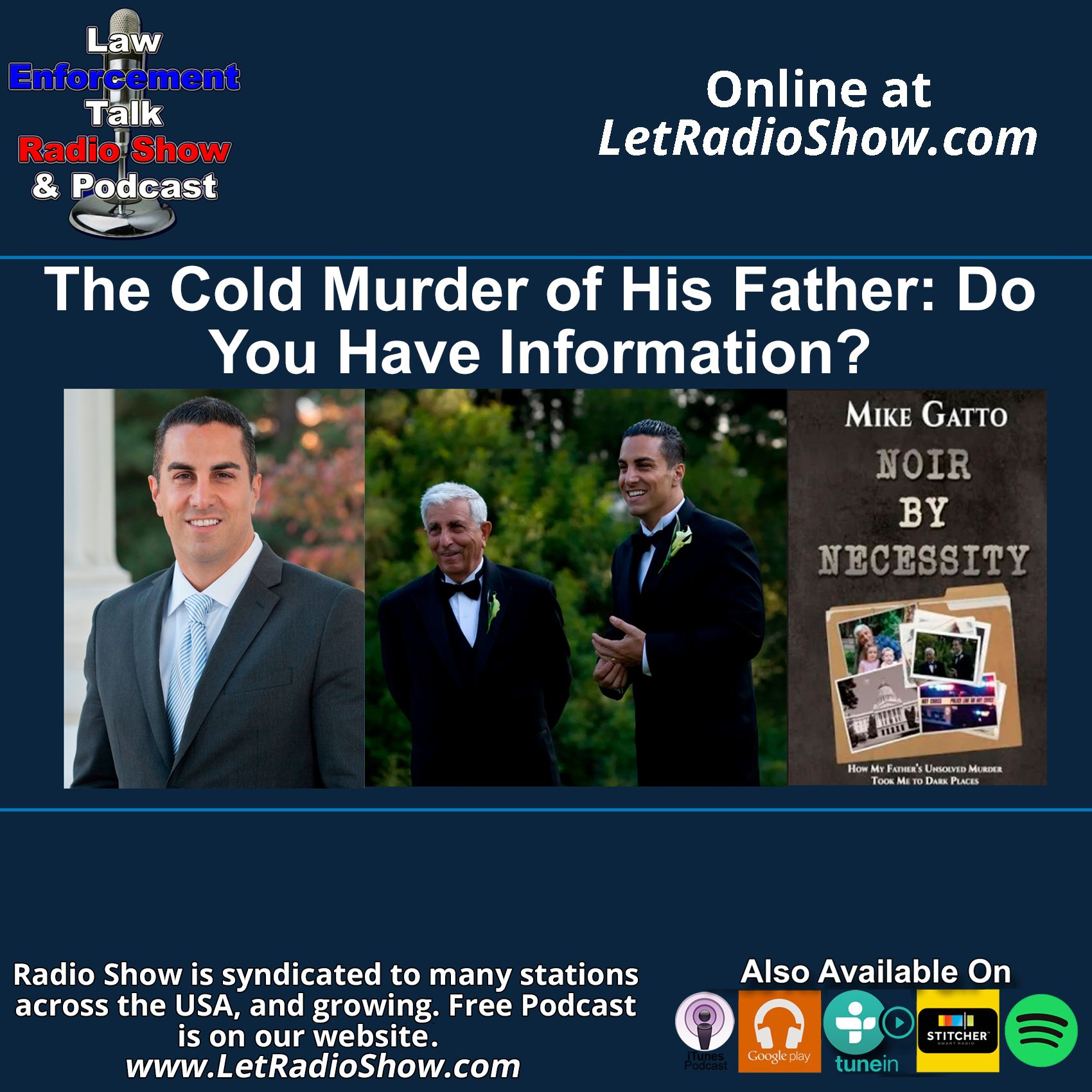
Law Enforcement Talk: True Crime and Trauma Stories
The Cold Murder of His Father
00:40:10
The Cold Murder of His Father: Do You Have Information? A Case That Still Haunts Los Angeles, California. More than a decade later, the killing of Joseph Gatto remains one of Los Angeles’ most haunting unsolved crimes. The Home Invasion that took his life did not just devastate a Family, it reshaped the inner world of his son, former California lawmaker Mike Gatto, and pulled him into a dark, unresolved mystery that continues to demand answers.
Loading summary
Transcript70 lines
- [00:01]
Mike Gatto
Hey, Sal. Hank, what's going on? We haven't worked a case in years. I just bought my car at Carvana and it was so easy. Too easy. Think something's up? You tell me.
- [00:11]
John J. Wiley
They got thousands of options, found a great car at a great price and.
- [00:16]
Mike Gatto
It got delivered the next day. It sounds like Carvana just makes it easy to buy your car, Hank. Yeah, you're right. Case closed.
- [00:25]
Carvana Announcer
Buy your car today on Carvana.
- [00:29]
Grainger Announcer
Delivery fees may apply.
- [00:31]
Grainger Announcer 2
This is the story of the 1. As the purchasing manager at a manufacturing plant, she knows the only thing more important than having the right safety gear is having it there when you need it. That's why she partners with Grainger for auto reordering. So her team members can count on her to have cut resistant gloves on hand and each shift can run safely and efficiently. Call 1-800-GRAINGER Click grainger.com or just stop by Ranger for the ones who get it done.
- [01:00]
John J. Wiley
His father was murdered in a home invasion. The case remains unsolved. He was just in his 30s when this happened. He's a former four term member of the California legislator. The case, its impact on him and what he does about it today. Welcome to the law enforcement Talk Radio Show. In the Law Enforcement talk radio show, we are joined by special guests talking about their experiences, their realities of investigating crimes, plus those who have experienced horrendous trauma. Police, first responders, military and victims of crime share their stories. Hi, I'm John J. Wiley. In addition to being a broadcaster, I'm also a retired police sergeant. Be sure to check out our website, letradio.com and also like us on Facebook, search for the Law Enforcement Talk Radio Show. Of all the radio stations in the United States, there are no other shows like the law enforcement Talk Radio show. And on Facebook there's only one official page. Do a search on Facebook for the law Enforcement talk radio show and be sure to like the Law Enforcement Talk Radio show Facebook page. Joining us from Los Angeles, we have Mike Gatto on the Law enforcement Talk radio show. Mike is a former footballer, four term California legislature. His website is mike gatto.com that's g a t t o dot com. He's written a book called Nor by How My Father's Unsolved Murder Took Me to Dark Places. And he's here to talk about the murder of his father during a home invasion. How it's still unsolved and maybe you might have the information that can help close this case. Mike, thanks for agreeing to tell your story. As painful as it is on the law enforcement talk radio show. Very much appreciate it.
- [02:45]
Mike Gatto
Thank you for having me. And thank you for all you do.
- [02:47]
John J. Wiley
It's a pleasure to have you on here. And I wish it was under different circumstances I want to talk about. You were in your. It says in my notes you were in your 30s when your father was killed. Let's just go right into the meat and potatoes and rip the bandit off. What were you doing? How did you find out?
- [03:05]
Mike Gatto
My father was killed on 11, 12, 13. So November 12, 2013, and I was in my home in the Capitol with my wife and two daughters. We got a call from a younger sister who had gone over to my father's house and had found him slumped at his desk with a gunshot wound to his abdomen. She had gone over there because she hadn't heard about him or heard from him in a little bit. And, you know, my initial reaction was disbelief. You gotta understand, my father was in his late 70s when he was killed, but he was in the peak of health. This was a guy who sprinted upstairs who, you know, deadlifted trees and, you know, small refrigerators and a guy who was, you know, very big boned and very healthy and had relatives who had lived till over 100. So, you know, when my sister called me and said, you know, I went over to dad's house and I found him and I think he's dead, I mean, my reaction was, come on, get out of here. You know, like maybe he fainted or, you know, whatever. But apparently, you know, the gunshot wound was not that visible and there wasn't much blood and it was dark when she went over there. So it was kind of hard to tell. But, you know, of course, after she called the paramedics and the police came and everything like that, we got the conclusive news that my father was indeed dead.
- [04:23]
John J. Wiley
And it's. Look, there's. I remember handling the, you know, investigate the trouble. The person hasn't been seen in a while and it's usually 98% of time. It's usually because the person died unexpectedly. It's tragic. It's there alone, but it's usually of natural causes. It's not of some crime of violence. But yours was.
- [04:46]
Mike Gatto
Correct. Correct. The police were able to piece together, I mean, obviously I'm giving everybody, all the listeners, 12 years of knowledge, but the police were eventually able to piece together that somebody had gotten into my father's house. They had walked up to the third store story. He lived, you know, his master suite was on the third floor of his house and they had Found him and they had shot him. There were no signs of forced entry, however, and that's what has made the case so difficult to comprehend.
- [05:17]
John J. Wiley
And this was in Los Angeles?
- [05:20]
Mike Gatto
Yeah, this was in the Silver Lake neighborhood of Los Angeles. And for those who are not familiar with the neighborhood, there actually is a little lake. There's a two and a half mile diameter lake, that reservoir in the middle of Los Angeles. It's a safe neighborhood. You know, there's. Los Angeles has had some challenges over the years, but my father's murder was the only murder in the Silver Lake neighborhood for the entire year of 2013.
- [05:42]
John J. Wiley
Right. And here's the thing, and usually I hate to say this because I don't know the circumstances, your dad's case, I don't know who killed him. And maybe someone listening does have information and that even the tiniest bit of information can be the difference maker. And quite often police have a really good idea who did it, but they don't have what's called evidence, they don't have a probable cause to arrest them. So you might have that little bit of information which makes the whole case come together. But the thing is, I worked in areas of Baltimore where violence, murders were a daily thing. In a neighborhood like yours, and I can imagine in a family like yours, you never think this is a possibility.
- [06:27]
Mike Gatto
That's right. You know, this is something that, you know, for the first month after my dad's killing, I actually had to keep a copy of the newspaper on my nightstand. I had seen these things in movies where like, you know, you wake up in the middle of the night and you think it's all a bad dream, but that was actually happening to me. I would wake up in the middle of the night, be like, oh, yeah, come on, this isn't real. It was just a bad dream. And then I'd see that LA Times front page story that my dad had been killed and I would know that it was in fact reality. This is something that my father was not somebody who had enemies and he was not somebody who poked his nose in other people's business to do high risk behavior or anything like that. He was a retired teacher who had founded an arts high school in Los Angeles that was very much beloved. You know, his, his high school had been an outlet for lots of kids who weren't doing too good in conventional high school. So he had a bunch of people who went on to become music rock stars, you know, people who went on to become famous actors and actresses, people who went on to, you know, become famous Painters and sculptors who all went to the high school that he founded. There were over 1200 people who poured into his funeral in a church that was maybe fit for 300. Many of them were former students. My father was a veteran. He was somebody who was very much a beloved part of his community. There was no logical reason why somebody like that should have been killed.
- [07:52]
John J. Wiley
And here's the thing. And by the way, I take two things out of this, and we're going to break it in a few moments. Number one, my mother is down visiting, and she's 89. And one thing, when I was a younger man, Mike, I didn't really have a big concept of time. I couldn't imagine being as old as I am. But my parents just think, oh, they'll be around forever. I don't. Now when I have an opportunity to spend time with her, I need to appreciate it. I need to make myself available. Sometimes you feel like, oh, man, I missed an opportunity.
- [08:26]
Mike Gatto
Oh, yeah, that. That is something that has been, you know, just a tremendous source of guilt and a tremendous source of what shoulda, woulda, coulda for me. Yeah, you know, same thing. I thought my father was gonna be around forever. I mean, like I said, peak of health, lots of relatives lived a very, very old age. And so, you know, I mean, my last call to my dad was like, hey, dad, my plumber really stinks. I need a recommendation for a plumber right now. Of course, with retrospect, if you had any sense that a loved one was going to go, you would have had all those conversations that, you know you want to have. Tell me about your childhood. Give me these details. Give me some wisdom. Tell me what I need to know. You know, all those conversations that you can have if, you know, for example, a loved one gets cancer and it's a slow, you know, two or three year death. When it's a murder, it's just one day your. Your loved one was there, and the next day they're gone.
- [09:18]
John J. Wiley
Another part for me. And I look there. Shoulda, coulda, woulda. I still, I still get trapped in that periodically. What I tell myself, Mike, is I'm not God. I wasn't Superman. I just did the best I could. And had I known, hindsight's 20 20. Had I known, I would have done things differently. I'm sure you'd have done things differently had you known, but you didn't know. There's no way you would know.
- [09:42]
Mike Gatto
Yeah, I mean, look, some of my friends who are into home security and things like that, I mean, We've very sort of tragically looked at each other a number of conversations and just said, you know, my father would probably still be alive if he had simply owned a dog, right? It's little things like that that you know they'll kill you. Those shoulda would have or you know, if I know now, you know what I know then or know now what I should have known then, those things will definitely make you second guess things. But when all is said and done, obviously we all do our best.
- [10:15]
John J. Wiley
That's all you can do.
- [10:16]
Mike Gatto
This should never happen.
- [10:17]
John J. Wiley
And here's the thing, there's a line in a prayer that I say all the time, forgive us our trespasses. We forgive those who trespass against us and realize that people do the best they can with what they have. When you learn more, when you can earn more, do better. That's all there is to it. We're talking about Mike Gatto. We're talking about the unsolved murder of his father which we'll return to in a conversation his wife website is mikegatto.com G A T T O.com he's written a book called Noir by How My Father's Unsolved Murder Took Me to Dark places. This is law enforcement talk rated show. Don't go anywhere. We'll be right back.
- [10:56]
Carvana Announcer
How would you like a free ebook on tips to improve your health? We're talking about tips you can use for free to add years to your life. Best of all, the ebook is free to Download@Let Healthy.com when we say free we mean free. So you can download the ebook to improve your physical health all while preserving your financial health. Get the ebook for free today@Let Healthy.com that's@Let Healthy.com again the website is Let healthy Calm.
- [11:33]
John J. Wiley
Return to conversation with Mike Gatto on the law enforcement talk radio show. Mike is a former California legislator, four years in a California House of Representatives I guess you called it. And he is from Los Angeles area. He's written a book about the unsolved murder a home invasion of his father called Nor by necessity how my Father's unsolved murder Took me to Dark places. And website is mike gado.com that's spelled G A T T O dot com. Yes, he is a former legislator. He's also a lawyer. But we're not gonna be talking about politics. That's one thing we don't talk about in the show. Mike, this is. I don't know how to say it. I worry about a lot of things with my Loved ones that are older and they're older than me and I should be paying more attention to me. But I worry about them falling. I worry about them old as they. I don't worry about a home invasion with a murder. That's just something doesn't cross my mind. And I'm sure didn't cross yours either.
- [12:30]
Mike Gatto
No, not at all. This came like a bolt out of nowhere. You know, you're always, you know, a little bit living in a big city, you're always a little bit aware of, like, well, gee, you know, I shouldn't be driving in certain neighborhoods with a gold chain around my neck, stopping to get gas at 2 in the morning on a Saturday night. I mean, you're aware of certain things like that. But no, this type of thing never crossed my mind before until it did.
- [12:53]
John J. Wiley
And if my memory's correct, you were serving in the state legislature, you were in Sacramento. You got the phone call from one of your sisters. Your dad had not been seen for a while, and police discovered that he had been murdered. He was shot in the abdomen. And you said earlier as a home invasion, but there was no forced entry.
- [13:13]
Mike Gatto
Yeah, and the theories in my father's case have really been pretty crazy. They've been really, you know, sort of all over the map. And that's part of the frustration when you have an unsolved murder. So the first theory that came out was that the Russian mafia did it. And I know that sounds so strange, but there was a neighbor who knew my father really well, and she talked to the media. My father's case, you have to understand, was instantly one of those Los Angeles cases like the Night Stalker, the Manson case, you know, the Grim Sleeper, O.J. where it captured the LA and the California press. So there was a lot of media attention. And this neighbor told the media accurately that my father was scheduled to give a talk about a very rare type of Russian painting that he owned. And he owned several of these rare Russian religious paintings. And the advertisements for my father's talk had said something like, you know, Joe Gatto is going to appear on this date with his rare examples of these paintings and he's going to display them. And she speculated, because, you know, there are Russian organized criminals who collect these, that somehow somebody had figured that my dad had these paintings in storage. He was going to have them at his house in preparation for his talk, and that's why he was killed. Now, the police immediately, when I asked them about that, they immediately dismissed it because whoever had killed my dad had walked past several of These on his wall. And I should also stress that these paintings were not like Van Gogh's. I mean, they were not worth like $50 million. They were worth more like $5,000.
- [14:41]
John J. Wiley
Right.
- [14:41]
Mike Gatto
So that was quickly dismissed. My next question was, you know, because I'm in politics and my father had helped me, my question was, was this somehow political? You can't, you can't rise in any party, you can't rise in any office without making some enemies, breaking some eggs along the way. And so, you know, I immediately asked, well, gee, is this something political? The police dismissed that as well. They said, mike, you know, you're a known figure. You know, your addresses are public. Anybody knows where you live, where you work, if they wanted to get you, they would have just gotten you. And so that was quickly dismissed. The third theory that came out that dominated most of the, you know, media attention, and I'd love your thoughts and interjections as, you know, someone who knows law enforcement really well was that this was a car burglar who had been cited in the neighborhood who, for whatever reason, had graduated to murder. The theory behind this was also spread by somebody in the neighborhood. She had been coming home that day with her son from karate, and she had found a guy on her street right at the time where people come home from work and come home from extracurricular school activities, who was just, you know, breaking into cars on this little narrow street. And she and a neighbor had given chase and he had ran generally in the general direction of my dad's street. Her son, who was, you know, I want to say, six, seven or eight years old at the time, had later told police he thought he saw that the guy had a gun. And that became the basis of the theory in my dad's case for about eight years. All right, And I want to tell you what is so extraordinary about it and why it's never really sat well with me, the police's theory. I said, I said, guys, you got to give me your profile. You have to tell me why you think this theory has merit. They said, well, first of all, Occam's Razor, you know, somebody was running through the neighborhood with a gun at, you know, around the time of your dad's killing. You know, it probably was related. And they said, all right, well, here's our theory. Well, he ran down towards your dad's street and, you know, he's probably right handed, right handed. People, when they're being chased, they turn right. So that moved him towards your dad's street. And then, you know, Your dad's street was really small, so he thought it was an alley, so he ran down it to hide. And then there was a tour helicopter that was taking tourists to see the Hollywood sign. My dad lived pretty close to the Hollywood sign, and he thought, this guy thought it was a police helicopter. So he said, oh my gosh, I gotta get inside. And at that exact moment in time, your dad had bought a printer and he realized he could not get the printer out of his side door of his car, so he had to get it out of his, his hatchback. And so he opened the garage door to do that, got the printer, got it inside. And at that exact moment in time where he closed the garage door, this guy said, I got to get out of view of the helicopter. And he ducked in your dad's garage without being seen. And then he sat in your dad's garage and he sat there for about an hour. And then he decided to go in and kill your dad. Now, of course, I'm going through this and I'm thinking, why is a car burglar walking around with a gun? That turns a misdemeanor into a felony.
- [18:01]
John J. Wiley
Yeah, but that's why A lot of windows, I'll cut you off there. A lot of so called people that very minor offenses are quite often armed and they're quite off of criminals. And that, that creates a real problem.
- [18:16]
Mike Gatto
Okay, well, that's fair. But then, but then I'm thinking, like, Gus, why, why would he not hold somebody up? And next I'm thinking, are we sure that the boy actually saw a weapon? Are we sure about that? Then I'm thinking, why would this guy. Well, first of all, how would my dad not notice him? And secondly, why would this guy go into an inhabited dwelling with three cars in the driveway? My dad had three cars in the driveway. If this kid didn't know my dad, he doesn't know if the, you know, if my dad's got, you know, 10 sons who are all members of the LACD, he doesn't know any of this stuff.
- [18:50]
John J. Wiley
Right.
- [18:51]
Mike Gatto
Very rarely do criminals go into inhabited dwellings. Why would this guy sit in my dad's garage for about an hour and a half, you know, why would he not just take valuables on floor one, floor two, or the garage and just casually walk out?
- [19:04]
John J. Wiley
And by the way, what was taken in the home invasion?
- [19:09]
Mike Gatto
Very little. There were some items in my father's bedroom that were ransacked. The police are not sure if the crime scene was staged or if this was actually, actually what the criminal tried to do. There were a few items of my father's jewelry. My dad made jewelry as a hobby and I'm not talking diamond engagement rings. I mean he made craft jewelry as a hobby. There were some of those that were, that were taken as far as we can tell. There was a file cabinet, a wooden file cabinet that was hacked into. There was attempts made to get into my dad's safe that are safes that made. Made no sense. Like whoever was there tried to break into my dad's safe with a pair of garden scissors. And yeah, it was just the crime scene didn't make too much sense because then there were some other things like some valuable gold rings and some other items worth a lot of money that whoever was there just walked right past and didn't take. The other two stories of the house were not that.
- [20:06]
John J. Wiley
Note, we're going to return our conversation. Mike Gatto is a guest on law enforcement talk radio show. His father was killed in a home invasion still unsolved and he was in his 30s. He's an attorney. He's a former member of the California legislature. His website is mikegatto.com that's spelled G A T T O dot com. He's written a book about it called Nor by How My Father's Unsolved Murder Took Me to Dark places. We're turning our conversation to law enforcement talk radio show. I'm open on my amateur sleuth hat and see what happens. Don't go anywhere. We'll be right back. You know, we used to have an app and it was very popular app and then guess what? We couldn't hold a candle through our Facebook presence. How many people have the mobile Facebook app already installed on their phone? How many people use it on their computer? Make sure you follow us. Make sure you like us on our Facebook page. Just search for law enforcement talk radio show and podcast and be sure to send us a comment to one of the posts. Best of all, it's 100% free.
- [21:07]
Grainger Announcer
This is the story of the One. As an H Vac technician, he and his digital multimeter are in high demand. So when a noisy office H vac turns out to be a failing blower motor, he doesn't break a sweat With Grainger's easy to use website and product information. He selects the product he needs to keep everything humming right along. Call 1-800-GRAINGER clickranger.com or just stop by Granger for the ones who get it done.
- [21:44]
John J. Wiley
Return to conversation with Mike Gatto on the law enforcement talk radio show. Mike is Calling us from Los Angeles. He is a lawyer. He is a former four term member of the California legislature. His father was killed in a home invasion still unsolved. And we're going to talk about that in a few moments. He's written a book called Nor by How My Father's Unsolved Murder Took Me to Dark Places. And the website is mike gado.com. mike, very quickly, I'm going to put on my sleuth hat. And I was never a homicide detective. We encountered a lot of them, a lot where I worked and quite often we wound up arresting people. Here's my take on this. Number one, and I can't speak for your dad's case because I don't know your dad's case. I can just go by what you tell me. Number one, most murders are crimes of passion and it's usually a family member or loved one or someone the victim knows. That's 90% of it. When you said, look, the concern that might be staged, that's the other thing that really made radar bells ring on my head. The other one, and I don't know how accurate that is in your case, the other one is most murders usually are not complicated. It's usually some weird circumstance, someone being interrupted, all those other things. It is not something that's planned out. Especially when a stranger on a stranger victim. The last thing I'll say is this. When it is a stranger on a stranger victim, it is very hard to solve, very hard for police to solve because you don't have a living witness to give the information, you don't have all that stuff. But if they cover up evidence, then you are left with nothing. So this is the reason why most police investigations involving murder start with a family member, a loved one, and then work their way out until they disprove it. The one I believe the least is the mafia. So because I just can't, I just can't see them making that a priority. And if they did, why didn't they take them? So the one thing is this, Mike, what would you want people to do that are listening, that maybe were in the area, maybe saw something, they may not think it's a big deal, but might be the linchpin that helps police solve this case. What would you want them to do?
- [24:02]
Mike Gatto
Well, two things. So first, first I will say that I agree with you 100%. I got contacted by a retired investigator during the course of my dad's case and he went even further than what you said. He said when a senior citizen is killed inside their own home. And, you know, they've got data going back, you know, 50 years now when a senior citizen is killed inside their own home. So it's not like, you know, was wrong place, wrong time, drive by shooting at a gas station at. They know their perpetrator, they know their murderer. Like, 99% of the time, it is somebody they know.
- [24:35]
John J. Wiley
Right?
- [24:36]
Mike Gatto
And so, you know, I've never thought that any of the theories that. That have been put forth publicly had any merit to them. They all had so many holes in them for me, that I do believe that this was someone my father knew. The police told me recently, the detectives on the case, that my father fought back, that he had gunshot residue on his, you know, hands and wrists. And that also makes me think this was somebody that he knew, somebody that, you know, he was like, why are you doing this? Or, you know, or that it was set in, or that it was something, somebody he had let in the house. And that's why there was no footage. Forced entry, right? What do I want people listening to do? Well, two things. You know, there still is this primary theory that the. This car burglar could have had to have something to do with it, maybe even just as a decoy, right? Or who knows what, right? Or maybe this was somebody that the killer of my dad had brought to the house. And if you. If you screw with the timeline a little bit, maybe he was breaking into cars after the fact, right? This could have been the hired muscle or a friend or somebody that had been brought over to my dad's house as well. There was a woman who saw this guy when the karate lady was chasing him. There was another woman going the other way on the street who walked right past him, saw his face clear as day, and she has not stepped forward despite massive pleas, despite lots of media attention, she has not come forward. The second thing is, right, like, look, if it really was this car burglar or if he had something to do with it, I'm curious, you know, like, is there anybody in the area where somebody came home that night drenched in sweat, you know, and then moved out of town, or, you know, something kind of anomalous that would, you know, perhaps be a clue to my dad's case? So that's the thing with respect to the car burger, but with respect to, you know, something else, right? If there are people out there who have a theory or they believe that they know something about somebody my dad knew, it could have been an old friend of his who got dementia and had some, you know, Argument with my dad. In his mind, it could have been, you know, a relative. It could have been, you know, a neighbor who knows. But I do believe it was somebody my father knew.
- [26:49]
John J. Wiley
Yeah.
- [26:50]
Mike Gatto
And I also believe there are people out there who suspects somebody. And we welcome all tips. At this point, I'll investigate anything so folks can contact me. They can contact the LAPD Anonymous We Tip hotline. But we value all tips. In my book, I talk about some of the crazier tips we've gotten. You know, if you're going to tell me it was space aliens from Mars, I probably won't value that.
- [27:12]
John J. Wiley
Right. I agree. The problem with tips is when you put a call for tips, you usually get them, and quite often they are from, let's just say, people. The term that's been used quite a bit is emotionally disturbed and they're giving information is not accurate. But you got to investigate it, because what if that turns out to be true?
- [27:32]
Mike Gatto
Yeah. So I talk about that in the book, and people will kind of laugh. You know, I tell you, there's no laughing matter for me. For example, I got a call from one of my father's former students. You know, she's a gorgeous soap star, and she had made it in television and everything like that. And she called me and she said, hey, I have some information on your dad's murder. And I said, okay, well, tell me. And she said, look, I'll only tell you in person. And I said, okay, I understand. And at this point, everything was totally normal. We, you know, the two weeks leading up to us getting our schedules coordinated, going to lunch, like, I'm nervous, and I'm thinking, oh, my God, this is going to break my dad's case. And I can't sleep at night, and I'm. I've got all sorts of anxiety and everything like that. We go to lunch and, you know, it turns out that she seems like she was perhaps a little bit emotionally challenged. And she told me this very elaborate theory that involved, you know, like, Hillary Clinton and like the CIA. And, you know, it's painful, right, because you get your hopes up and then your hopes are dashed. And so I hear you. I hear you. We definitely don't want junk tips. But at the same time, you know, if anybody knows anything, and we'd love for them to step forward, here's what.
- [28:44]
John J. Wiley
Troubles me, and it was your dad, not my dad. And we'll get into a little bit of conversation about the effects on you, because I'm sure they're tremendous. But number one, when you Said that there was no signs of forced entry. That tells me one, that a person was usually let in. And it's not a crime of opportunity. It's something that's planned out. Number two, it's usually someone that the victim knows. It is not necessarily a loved one. It's not necessarily a family member. It's not, not necessarily a spouse. It could be a neighbor. It could be a lot of different things. Could be a former student, we don't know. But people think in their minds that someone's wealthy and they're like, oh, it'll be easy. Be a piece of cake. They'll let me in and boom. And it never goes as planned. And what winds up happening, Mike is the victim, of course is deceased. But the suspect was like it was an accident. I didn't mean to do that. And that's the thing. When we said that was earlier some sort of big plot. Usually is an old saying, three people can keep a secret as long as two are dead. Usually. Usually someone knows about it. That's the problem with the criminal aspect of the whole thing. The ones that keep it undercover are the ones where the victim knows is known to this to the. The suspect is known to the victim. We're talking about Mike Gatto. His father was killed in a home invasion still unsolved in Los Angele. He's a former four term member of the California legislature. His website is mikegatto.com that's spelled G-A-T-T-O.com and he's written a book about it called Nor by How My Father's Unsolved Murder Took Me to Dark places, which we'll talk about in a few moments. Don't go anywhere. We'll be right back.
- [30:33]
Grainger Announcer
Remember when free meant free, no charge, no credit card information needed. Well, a place like that still exists on the Internet. The law enforcement talk radio show website letradio.com where everything is free, including the podcast episodes are available after airing on radio. The website is letradio.com that's letradio.com where free means free. This is the story of the One. As an H vac technician, he and his digital multimeter are in high demand. So when a noisy office H Vac turns out to be a failing blower motor, he doesn't break a sweat. With Grainger's easy to use website and product information. He selects the product he needs to keep everything humming right along. Call 1-800-GRAINGER clickranger.com or just stop by Grainger for the ones who get it done.
- [31:40]
John J. Wiley
Return A conversation with Mike Gado on the law enforcement talk radio show. Mike's father was killed in a home invasion. He was murdered. The murder is still open, still unsolved. He's a former four term member of the California legislature. He's an attorney, which I won't hold up against him. His website is Mike Gatto dot com, that's spelled G A T T o dot com. And he wrote a book about it called Nor by How My Father's Unsolved Murder Took Me to Dark Places, which you can find on his website. Just do a Google search, you'll find it. Mike, look, there's no way you can. I can imagine here. So police work ruined me, ruined me emotionally, mentally. I, I don't tell my wife this often, but like last night I took the dog for a long walk. And sometimes I just feel like I'm damaged goods. And most of my guests would say we're damaged goods and we laugh about it and we're okay because that's part of living. But there's no, and I'm informed this in the form of a question. People say, at least justice was served. A, I don't believe there's any justice, but B, your case is still open, the case of your father.
- [32:49]
Mike Gatto
Yeah, and I hear you about the damaged goods thing. You know, it's really bizarre because, you know, I can tell you that with my father's case, I have never ever sought to exploit it politically. I didn't even really start talking about it until I was out of office number two. I've never tried to exploit it for sympathy. And yet I, you know, you keep having these really tough conversations where like, you know, you go to a doctor's office, right? And, and they'll just be like, oh, so give me your family history. You know, your mom, Any history of cancer? No. Okay. Your dad. Oh, he's dead. Well, what did he die of? Gunshot wound. Right. And people, like, kind of shy away from you. Like, ah, you know, like I've had, you know, mothers, you know, if I'm like at the park and I'm playing with my kids and like, they'll say, oh, you know, like, you know, they'll ask me questions or something and it's like, and you tell them the truth, right? And you don't say it in any way that's seeking sympathy or that's like aggressive. Anyway, you just, just, you're honest with them and they kind of shy away from you, like, oh, damaged goods. And then there's the damaged goods inside. Right. There's the part of what does it do to you internally. And I can tell you that it really does change you. Like, I feel like I felt like for the longest time, I was obsessed with the case. Not in a healthy way. I felt like I was a bad friend, a bad husband, a bad son to my mother because I was so obsessed with. With the case. I was just. It was eating me up inside. And it also changed the way that I lived my life, you know, for the first couple years afterwards, you know, I went through my YOLO phase. Oh. You know, you got to live life to the fullest, you know, and it's hard for this type of thing not to change you.
- [34:25]
John J. Wiley
Yeah.
- [34:25]
Mike Gatto
And so look, my, my. I wrote this book because of all the families of murder victims out there who feel like nobody knows what they're going through and they don't have a platform. I'm so lucky. I've got a Twitter following. I've got, you know, shows like yours that I can be on. But the reality is, you know, roughly 50% of murders go unsolved. And most families and murder victims do not have a way to share what they're going through.
- [34:50]
John J. Wiley
No. And they don't have the platform. That's part of the reason why I started this show, was to provide a platform for people to tell the stories and because there's a lot to be gained from that. And one thing you said that. Look, I don't know, and I don't presume to know, my father died of cancer. That was horrible. That was 30 some odd years ago. My mother's still with us, and seeing her progress into old age is not fun. There's nothing about this, but I don't know the impact I can imagine. But I'm very cautious not to say, oh, I know how you feel, because I don't.
- [35:25]
Mike Gatto
Yeah, I mean, well, I appreciate that, but I think you've got a lot of insights because you were, you know, a police beat for so long and, you know, you've seen the pain in people's faces and the horror and all those things. I mean, I just think that this is one of those things where, you know, it's grief happens and we all know that our loved ones are going to pass away. And there's been many times that I've kind of, you know, scolded myself. And today, you know, like, you know, get over it. And I have gotten over the grief. There's no longer, like, the really bad grief that I had the first couple Years. But the fact that this crime is unsolved and the fact that my dad was taken away early, those are things that still eat at me. They eat at me because I want answers. And, you know, I mean, I agree with you that justice is often elusive. But I'd really love whoever did this to be taken off the streets because somebody who does something like this, they're not a good person.
- [36:21]
John J. Wiley
They're not. And the other term that gets this to me is this term closure, that the victim's family will get closure. And by the way, you said something very important. One of the easiest crimes to get away with is murder because, well, it's all evidence driven. So we look at it, we're trained to look at it from the crime scene, from the body, work your way out. And it's okay to have lots of theories, but when the evidence points away from that theory, you've got to abandon that. But if you don't know the victim, I said stranger on stranger crime. When it's a murder, it's all evidence driven. If the evidence is not there, you're not going to make a case, and it's just not. You could have an idea who it is, but you never prove it. And that is kind of what leads me to believe that the police have an idea who did this.
- [37:11]
Mike Gatto
I hope so. I. I've talked with all the detectives working my father's case. We've gone through several sets of them now. And, you know, I. I like to think that they know in their heart of hearts, they have a. They have a good hunch. At the same time, you know, big city departments, you know, I sometimes I question, is there more that they could do? You know, they didn't have the resources or time to talk to all of my dad's friends. So I did all that. I did a lot of these interviews and I talked to the neighbors and everything like that. I hired a private detective. You know, it's interesting, a lot of times stuff comes out when you just get people talking. And I feel like I understand that day better because I talked with people that were close to him.
- [37:51]
John J. Wiley
And there's something you said that's very, very true. And someone said the biggest difference between dea, FBI, the federal government agencies, the Alphabet agencies, and city police departments, the city police departments, you don't have a choice. You got to continue on to the next call. You got to handle what's put in front of you. The other ones, they choose what they get involved with, and they can dedicate how much time they want to it. So with murders in particular, it makes it very difficult because there's usually another one right behind it.
- [38:22]
Mike Gatto
Yeah. And I mean, that's the tragedy, right, is that when I. When my dad was killed, because I was in office at the time, and, you know, they assigned it to the LAPD's elite robbery homicide division, which is a citywide division that super elite. But then, you know, it also had some drawbacks because, you know, sometimes I'd call the detectives and I'd be like, hey, I got it, and I can't talk. You know, this celebrity is getting stalked. And we got told on that case, and, you know, and I called another day, they'd say, we can't talk. You know, we got a bomb threat for the. You know, the World Series, you know, and it was like, okay, like, I get it. But, yeah, it's tough when you are the victim's family.
- [38:59]
John J. Wiley
And here's the reality, and I'm sure you've crossed this bridge by this time, and it's been many years. The chances of being solved are almost slim to none.
- [39:11]
Mike Gatto
That's hard for me to swallow that once a case goes cold that, you know, the odds diminish over time. But I still hope that something will happen that'll break my dad's case. I don't know if that'll be dad's name, by the way, or, you know, some degree of physical evidence or something like that. But I hold out hope that the case is. Will be solved.
- [39:36]
John J. Wiley
What was your dad's name?
- [39:38]
Mike Gatto
My dad's name was Joseph Gatto. He went by Joe.
- [39:41]
John J. Wiley
Joe. And I hope for you and your family that they find out who did this and whether they're alive or not, they're able to name them. There have been many cases, especially in California, where. Nothing against you. My dad used to call it the cereal bowl state because it's full of flakes and nuts. It's weird, but a lot of serial killers get caught later in life, and they get caught by family DNA where they have an idea who it was, especially serial killers. And this was not the case that we know of with your dad, but they find it, so hopefully they will get this. You wrote this book called Noir by necessity or Noir by Necessity how your father's unsolved murder took you dark places. Was this cathartic when you wrote?
- [40:30]
Mike Gatto
Was it was. It was. It was very difficult for me to write because, you know, in politics, you're used to not telling the story, used to keeping a lot of details inside and not being very careful with what you share. When I wrote it, it was like I'm out of office and I can finally let go of all this stuff. And I didn't hold much back. And people who read it were like, wow. I mean, you really, really, you know, opened up and talked about a lot of things. And yeah, I mean, it felt really good to do that. It also felt really good to lay out in an organized fashion every single clue that I know and when I learned about them. Because that's also something that I don't think too many members of the public go through is being able to understand. Like this is exactly how a murder investigation unfolds.
- [41:15]
John J. Wiley
Well, I'm glad you wrote it. I'm glad you get details about him. His book@mike gatto.com that's M I K-E G A T T O.com and Mike, I hope that there is some resolution for and your family. Thanks so much for telling the story in the Law Enforcement Talk Radio Show.
- [41:34]
Mike Gatto
Thanks for having me.
- [41:35]
John J. Wiley
I'd like to thank our guests for coming on the Law Enforcement Talk Radio Show. The Law Enforcement Talk Radio show is a nationally syndicated weekly radio show broadcast on numerous AM&FM radio stations across the country. We're always adding more affiliate stations. If you enjoyed the podcast version of the show, which is always free, please do me a favor and tell a friend, friend or two or three. I'll be back in just a few days with another episode of the Law Enforcement Talk Radio show and Podcast. Until then, this is John J. Wiley. See ya.
- [42:12]
Grainger Announcer 2
This is the story of the One as the purchasing manager at a manufacturing plant, she knows the only thing more important than having the right safety gear is having it there when you need it. That's why she partners with Grainger for auto reordering, so her team members can count on her to have cut resistant gloves on hand and each shift can run safely and efficiently. Call 1-800-GRAINGER clickgrainger.com or just stop by Grainger for the ones who get it done.
- [42:42]
Mike Gatto
If you like the show, please take a moment to rate, review and subscribe. It really does help the show to grow. Thank you for listening.
- [42:50]
John J. Wiley
Sam.