← Law Enforcement Talk: True Crime and Trauma Stories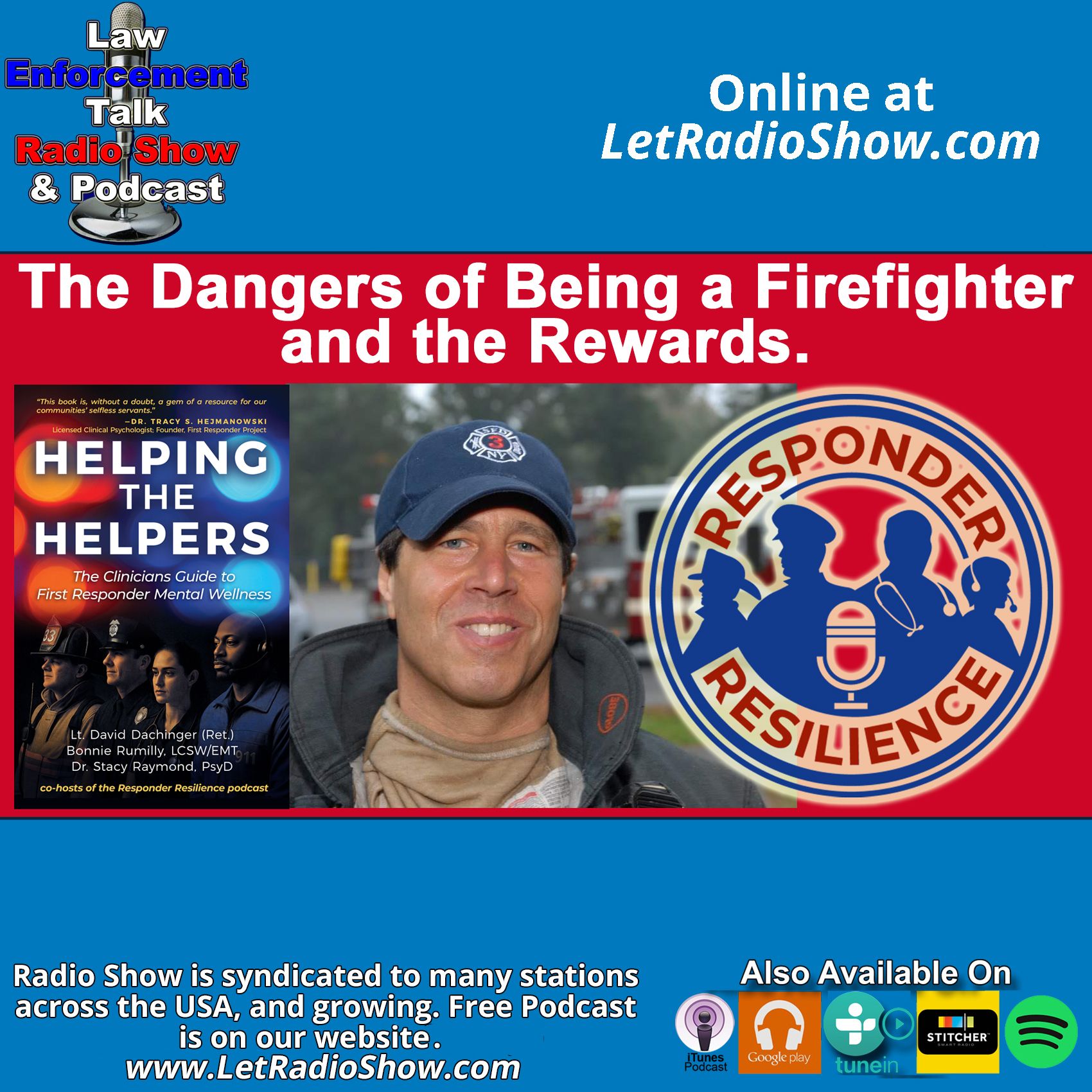
Law Enforcement Talk: True Crime and Trauma Stories
The Dangers of Being a Firefighter and the Rewards
00:39:52
The Dangers of Being a Firefighter and the Rewards. Few professions demand the level of courage, sacrifice, and resilience required of firefighters. Every call could mean walking into danger while others are running out. The risks are real, the stress is constant, and the long-term health consequences can be severe. Yet despite those dangers, many firefighters say the rewards of helping others make the job one of the most meaningful careers imaginable.
Loading summary
Transcript85 lines
- [00:00]
A
He's a retired firefighter from Connecticut. He was dispatched and worked at 9 11, the World Trade Center. He experienced a lot of things that firefighters do, including flashover fires which I do not understand, but he'll tell you all about it. He was diagnosed with stage four cancer, head and neck, which is very common in firefighters, possibly job related. He's here to talk about all that and more on the Law Enforcement Talk Radio Show. Welcome to the Law Enforcement Talk Radio Show. It's welcome to Law Enforcement Talk Radio Show. We are joined by special guests talking about their experiences, their realities of investigating crimes, plus those have experienced horrendous trauma. Police, first responders, military and victims of crimes share their stories. Hi, I'm John J. Wiley. In addition to being a broadcaster, I'm also a retired police sergeant. Be sure to check out our website, letradio.com and also like us on Facebook, search for the Law Enforcement Talk Radio Show. If you want to be a guest on the Law Enforcement Talk Radio show, simply contact us. It couldn't be easier. You can send us a message on Facebook, look for and like the Law Enforcement Talk Radio show page or email jetradio.com that's J A Y@radio.com calling us from Florida. We have retired firefighter David Dashinger on the Law Enforcement Talk Radio Show. David is retired from a fire department in Connecticut. He worked at 911 the World Trade center for one day, which to me is a lot longer than I did. He's going to talk about his firefighting career. He's going to talk about developing and being diagnosed with stage four cancer, the head and neck which is very common in firefighters. He's a podcaster. He's an author or co author of a book called Helping the Helpers. He's got a responder resilience podcast and his website is respondertv.com that's respondertv.com David, thanks so much for your service and thanks for being a guest on a law enforcement talk radio show. Very much appreciate it.
- [01:58]
B
John, It's a pleasure to be here. I'm looking forward to our conversation.
- [02:01]
A
It's good to talk to someone that and I will say this right off the bat, we tease each other mercilessly. Firefighters, police officers. It never ended. However, they had our back. We're like brothers or cousins. It was never animosity between the two. Although we did play pranks about them sleeping at night. We didn't get that luxury right.
- [02:24]
B
Yeah, there's no end to those. And there's some great dad jokes out There circulating with the police chief versus the fire chief, telling, telling these jokes. Oh yeah, alluding to, I'll bet.
- [02:36]
A
And you've been retired now how long from being a firefighter?
- [02:40]
B
Yeah, I left in June of 2021. So it's just been a short amount of time.
- [02:46]
A
And when did you start?
- [02:48]
B
So interesting story. This journey really started in New York City, but wound up moving to the suburbs of New York and bought a house next to the firehouse in 1999. So that launched me on my firefighting career.
- [03:06]
A
And when you say suburbs of New York, was that like Yonkers, what part of New York was it?
- [03:11]
B
Right, it's Westchester county, which Yonkers is part of. And so, yeah, you know, your kids get to the age where you want them to have a backyard and have some good schools to go to. So it was really a matter of, you know, looking out for the kids best interest. And so the firehouse was like part of the deal. Although I didn't know it at the time, it was going to completely change the trajectory of my life.
- [03:33]
A
One of the things I ask people, and they ask me quite often if they want to be a police officer, a firefighter, I tell them, first and foremost, if you want to be loved and respected by everybody all the time, become a firefighter. And secondly, if you want better hours and you have a part time job or a business, be a firefighter. Because they don't work as many consecutive hours as police do, correct?
- [03:58]
B
Yeah. Some of the schedules that firefighters have, particularly not so much in the south, some of the schedules here are not as optimal for doing other things outside the fire service. But where we worked, you're essentially working one 24 hour shift and then having three 24 hour shifts off if you're not doing overtime or doing a swap with somebody. And that's where you're able to do something else on the side, as they say. Some people, it could be landscaping, some people could be carpentry. In my case it was writing music for TV network sports.
- [04:33]
A
That's a big, that's a big jump. So you're like one of those highbrow kind of guys.
- [04:37]
B
Well, I just started out, you know, as a musician and spent my majority of my career in New York City. And that's going to kind of take us to 9 11. I, you know, worked in recording studios. I played in a band called the Suits. And the Suits played a couple of gigs at Windows on the World, which was the bar and restaurant at the top of the World Trade Center. And so you know, you're talking 106, 107 story, looking out over New York Harbor. Phenomenal views. You're seeing Ellis island, you're seeing Statue of Liberty, you're seeing Governor's Island. Just an incredible view. And so you're playing a gig up there. And, you know, literally, these are the windows on the world. And so little did I know that a few years later, I would be responding to that same location in completely different capacity. And so, yeah, that's where buying the house next to the firehouse took me to basically have the opportunity to respond to 9 11.
- [05:38]
A
Now, did you come from a firefighter family, or was it something you just kind of fell into?
- [05:43]
B
Yeah, absolutely no connection to firefighting in my family. And it really was just buying that house next to station three that started to kicked it all off. You know, it was like the guys at the firehouse invited me over to a barbecue, and they seemed like cool guys. And then they were like, hey, Dave, come to a fire drill. And I'm like, okay, I'll try. You know, I'm up for trying anything. And once I started going to the drills, I was hooked. I loved everything about it. The training, the skills, the people, the culture, the mission. And so that kind of drew me in to start as a volunteer for several years.
- [06:23]
A
A lot of people go to FDNY right away, but I'm no expert. And by the way, my grandparents, they immigrated from Ireland. They settled in Northern Jersey, New York, and we go there quite often to visit family. So Northern Jersey, Long Island, New York City, Westchester county, all familiar and bring back great memories of my childhood. But from what I do know is, and I'm not saying this is a knock, but the FDNY in particular is not that easy to get into if you don't have a rabbi or someone that's on the department.
- [06:55]
B
Yeah. And these things can change, you know, depending on what their needs are for staffing. There's also a route of getting into the fireside of FDNY by starting out on the ems. And so some people do that route. They'll go to the academy as a paramedic or an EMT and take whatever time is necessary before they can promote and transfer over. So in my case, I didn't even think about fdny. I mean, they were not on my radar. I was thinking more, where could I go? First of all, I was a little bit older, and so I was looking for a department I could get hired by that would where age wasn't necessarily going to be an issue. And so in the state of Connecticut, for the most part, they don't really have to ask you how old you are. And as long as you can pass the physicals and the world boards the interviews, you can probably get hired. So that's what I chose to do.
- [07:52]
A
Now, funny thing is, you sound a little bit like you're from Connecticut, although you're from New York originally, correct?
- [07:59]
B
Yep.
- [08:00]
A
What part of Connecticut did you settle in?
- [08:02]
B
Well, I actually never lived in Connecticut. We, we lived in Westchester. So just, it's not that far from work. It was about a 40 minute drive. So just, you know, I may have lost some of my New York accent working in Connecticut, but, yeah, my wife
- [08:18]
A
is Connecticut originally, and I always give her a hard time. She has a Connecticut accent. She goes, I have no accent. What I said, that's exactly why it's a Connecticut accent, because you got none.
- [08:29]
B
Right, right.
- [08:30]
A
And she comes from a totally different world than I do. Totally different background.
- [08:34]
B
Okay. Yeah. So it's, it's always interesting to be married to someone. Right. When you're a firefighter, police officer, and, and you come home and they're in. Your spouse is, you know, has. No, they're kind of not in that. Immersed in that world like we are. Right. They, it's almost a good thing because you can shift gears to a certain extent to, all right, this is the real world. It's not that world of rescue warriors where we're out there doing stuff that most people never see in their lifetime.
- [09:03]
A
We're talking with David Dasinger. He's a retired firefighter and he is also a podcaster. He co authored a book called Helping the Helpers. His podcast, the Responder Resilience podcast is the name of Responder Resilience Podcast. And his website is respondertv.com that's respondertv.com this is law enforcement talk radio show. We return. We talk about injuries on the job, how frequent they are. Don't go anywhere. We'll be right back. Of all the radio stations in the United States, there are no other shows like the law enforcement talk radio show on Facebook. There's only one official page. Do a search on Facebook for the law enforcement talk radio show and be sure to like the law enforcement talk radio show Facebook page. Turn conversation with David Dasinger on the law enforcement talk radio show. David is a retired firefighter from Connecticut and he is calling us from Florida. He's also a podcaster, co author of a book called Helping the Helpers. His podcast is called Responder Resilience podcast. And his website is respondertv.com, this respondertv. One of the things that I have the utmost respect for with our firefighters, and a lot of people don't understand this, is that almost on every call, almost, there is some sort of injury. We didn't have that happen all the time with us. The injuries with us could be more catastrophic. But with firefighters, it's extremely dangerous.
- [10:39]
B
It can be, especially when you're operating in the Northeast, where you have snow and ice on a regular basis. And sometimes you're operating on a roof or you're carrying a patient down a set of steps that are icy or haven't been shoveled. So you really have to, you know, watch your back and everybody else's back to try to keep everybody safe. But it's inevitable. You know, back injuries are common, neck injuries. Unfortunately, we see guys whose careers are ended prematurely because of injury.
- [11:09]
A
And by the way, I'm retired from the Baltimore Police Department. And one of the things that happened in wintertime, particularly in Baltimore, there was a lot of fires. And usually people that have struggling financially would turn their ovens on and open the doors to heat the house, and that could cause a fire. And inevitably, what happened when the firefighters would. We'd direct traffic, and that was the most brutal job in the world. But when the firefighters would throw lots of water on it, it would create mist. That mist would freeze, and everything becomes super slick.
- [11:40]
B
Yeah. Operating in the wintertime creates a whole new set of circumstances. Even just keeping the pump that's inside the fire engine from not freezing up is a whole routine that you have to do in this kind of weather. Chaining up the trucks so that you're able to drive down roads. There was a whole, whole lot of extra work that went into it. And. But I think your point is well taken, that it becomes more of a challenge to operate safely when. When you have extreme weather conditions, it does.
- [12:11]
A
And. And by the way, I was treated for smoke inhalation twice, and I went into burning houses to rescue people. This is before the firefighters in Baltimore got there. They did a great job, but I swear that is a horrible, horrible feeling. And that smoke can get to you very quickly. And I met firefighters that were. We called them smoke eaters. They would, like, brag that they could handle that smoke.
- [12:36]
B
Yeah, John, this is a critical piece. So part of it is that fires have changed over the last couple of decades, that back in the day, most of the stuff within a structure and the structure itself were more, you know, for lack Of a better word, organic wood. You know, materials that were found in nature in today's world. Most of the materials inside the house and, you know, things like siding and other coverings are made from petrochemicals and synthetics. So when that burns, not only does it create, like, a much more toxic smoke debris, but it also can be much more dangerous in terms of some of the conditions like flashover, which we're probably going to talk about in a minute.
- [13:16]
A
Yeah, let's go ahead and talk about that, because you handle that. I don't know that they're seeing a back. Black. Backsplash. Flashover. I don't know what that is.
- [13:26]
B
Yeah, so there's two things that you're. You're mentioning that are.
- [13:32]
A
Was it backdrop? What was that movie that was famous for back in the day?
- [13:35]
B
That's backdraft, backdraft, and then there's flashover. So backdraft is when there's a cocktail, if you will, of smoke, and it's in a more or less sealed structure, and it's really just waiting for that air to get to it. So it reaches the optimal mix of fuel and air, and that's when it can ignite explosively and literally just blow people in the doors and the windows off the building. That's fairly rare. But the one that I was directly involved with is called a flashover. That's where the gases that we're talking about, again, synthetics, like this kind of rocket fuel that can explosively ignite, it's more or less accumulating at the upper areas of the structure, so, like near the ceiling. And again, it takes the right mixture of fuel and air and heat. And when that mixture is achieved, you'll have an explosive event happen. Tends to happen higher up, but that's kind of what I experienced.
- [14:37]
A
Is it? And this is. I'm a novice when it comes to firefighting, but is. I don't hear a lot about firefighters dying in or being severely injured in flashover events. Is it a big thing they see coming?
- [14:52]
B
Well, we're trained on it, right? Like, we actually have flashover simulators. A lot of times they're converted shipping containers, and they'll create the conditions that lead to backdrop. So you can see it yourself. You're literally sitting in the container watching these flames go over your head, which is all great, but it can be catastrophic. It can be fatal depending on different conditions. In the case of this fire that I was dispatched to, I was basically operating on the second floor searching for a fire, and an officer who arrived? Captain arrived after I did, saw flames from a closed window and decided he wanted to vent the window, which means break the window. Essentially, he didn't quite understand the ramifications of that. So essentially he was introducing oxygen into this structure with this fuel load going on that it was right over our heads. And at that point, honestly, I didn't even know the extent of the flashover. I just knew that I couldn't see. I was instantly in blackness. And it really wasn't until I walked out of the building and saw the condition of my mask and my helmet, which were pretty much incinerated, that I realized it had been an extreme, you know, explosive event.
- [16:09]
A
And I know this is a question you probably get quite a bit when I had life threatening situations, you know, I had a job to do and I knew my job, I knew it well, and I didn't really respond to that, the emotional part of it until afterwards. Did you respond to that at all? Did you know how close you came?
- [16:28]
B
No, I really didn't know. And I think the same was true when I had my cancer diagnosis. I literally didn't understand the depth of it at the time. This was how it was, John. I'm standing there on the hose line behind my two guys who are further up the hall. I go from partial hazy smoke condition to instantly being plunged into blackness. I did not understand the ramifications of it. It really wasn't until I went back in about an hour later where the fire investigators were in there looking for, you know, the point of origin. And they said, hey, man, that was, you know, that was a flashover. And they showed me the smoke on the kind of smoke marks on the wall. And there had been a couple of pictures on the wall in the master bedroom behind me. When the pictures were removed, this was the crazy part, the smoke pattern created would look to me like the wings of an angel or like a heart. And I had this sense that, hey, maybe, you know, this is a sign that I was. Had some, you know, protection or divine protection that kept me from, you know, being hurt or killed in that flashover.
- [17:42]
A
We're talking with David Dashinger. He's a retired firefighter from Connecticut, and he was assigned the World Training center, which we'll talk about in a few moments. He talked about some flashover events and being a firefighter. We're going to talk about being diagnosed with stage four head and neck cancer, which is very common in firefighters. He's a podcaster. He's co authored a book called Helping the Helpers. His podcast is called Responder Resilience Podcast. The Responder Resilience podcast and his website is respondertv.com this is law enforcement talk radio show. Don't go anywhere. We will be right back.
- [18:18]
C
Remember when free meant free, no charge, no credit card information needed. Well, a place like that still exists on the Internet. The law enforcement talk radio show website letradio.com where everything is free including the podcast episodes are available after airing on radio. The website is letradio.com that's letradio.com where free means free.
- [18:54]
A
Return to conversation with David Dasinger on the law enforcement talk radio show. David is a retired firefighter from Connecticut and he responded to the World Trade center which we'll talk about a few moments. He did talk about some flashover events he was involved in. His firefighting career had a huge impact on him. He is a podcaster, he's co author of a book. The book is called Helping the Helpers. His podcast is called Responder Resilience podcast. His website respondertv.com that's respondertville. First of all, David, the fact I'm having conversation with you about your firefighting career is not lost on me. Not just what you went through as a firefighter, but the cancer diagnosis, which we'll talk about in a few moments. But during your career, you were dispatched to the World Trade center after 911 attack. How surreal was that for you?
- [19:45]
B
Well, surreal is the word that I've used many times, John. It's kind of one that it's hard to describe because I spent a lot large chunk of my life in New York City as a kid and living there for about 20 years. And so that's place where, you know, there's sort of like a normal vibe there. Everything has its sort of, you know, look, the streets, the sidewalks, the vehicles. So to go down there in the day after 911 and to see what was to me like walking into a Hollywood disaster movie, right? Like things you just never associate with New York City military walking down the street, first responders all over everything covered with a thick coat of dust, papers, you know, like from the, from the offices in the World Trade center just strewn all over the sidewalk. To me that is surreal and it's one that, you know, it's really hard for your mind to kind of reconcile.
- [20:39]
A
I still have problems and growing up we went to New York quite a bit and I remember that when that was built and I remember that being part of the landscape and the emotional impact of that is not lost on me. One thing that from my own experience, I went there years at the World Trade center and they were doing construction and they had some NYPD officers there and I wanted to say to them was, you know, thanks. I couldn't imagine losing that many co workers in one day. I'm retired police, blah, blah. And I made about three steps from them and I started crying because I can't to this day imagine the loss of the firefighters, the police, and even more so afterwards from the cancers. I can't wrap my head around that.
- [21:26]
B
Yeah, there's been an epic loss of life, not only from that fateful day, but also afterwards from, like you were saying, from exposure to toxins that have led to all kinds of issues like respiratory issues and cancer. And so, you know, we have to recognize the sacrifice, right? We have to recognize the sacrifice that all these first responders made. Not only the ones that perished that day, but the ones that also stayed there and tried to make a difference by spending time on the pile, by being down there and doing, you know, what we all do as first responders and we want to make a difference. And so there's a certain emotional pain that comes with not being able to make a difference, right? Responding, there's, that was what I experienced. Respond there to try to do something to help and there's nothing that you can do to help. And that's something that, that's what I
- [22:21]
A
was going to ask you when you get there is you want to save lives. Look, that's what I'm all about. I aimed at his day and that you were beyond that. There's, there's. They went into recovery, trying to recover pieces of bodies. I don't understand that.
- [22:36]
B
Yeah, this is, that's, that's where we need to go next. Right. But not only is there a sense of powerlessness because you can't do anything for the people that you hope you could save, but also there's a complete lack of, complete breakdown of structure and communication. Now, as a first responder, you know, John, that, you know, we work under kind of a very important structure, rank. We have protocols, we have training, we do things according to policy and procedure and we communicate. Right. We have a whole very specific way we communicate. Well, going to 9 11, to the world Trade center, ground zero, there was none of that. Everybody was essentially freelancing with no chain of command, no command structure, no communications. And that's, that's really weird when you, when you've grown up in that kind of structure.
- [23:27]
A
Well, the other thing too is, and I don't know about firefighting, but I imagine it's similar. A lot of our policies are directed by horrible tragedies that occurred in other parts of the country. Nothing. There was no training that anybody got. They prepared them adequately for 9, 11, the terror attacks, Correct?
- [23:43]
B
Yeah. A lot of things emerged from that incident command system and some interoperability with communications, but that was really the catalyst because none of this stuff was working. None of this was in place at the time. So as you said. Yeah. Sometimes born out of tragedy come innovations or improvements in how we do our job.
- [24:02]
A
And then one of the things that I remember watching this, and I won't belabor the point, but there were people jumping out of the buildings. And to this day, I'm repeating myself over again. I can't imagine the terror and the lack of choices they had.
- [24:17]
B
Yeah, I mean, this is, you know, bordering on something that we've never witnessed before on our soil. And this is, you know, I think all Americans had a psychic, you know, bloated their psyche from understanding that this actually happened here. Right. In a place that you would just. We never thought it would happen. And so we all collectively have experienced this trauma that we had to witness this, whether it's on TV or social media or actually being there. I think we all collectively have had pain, suffering, and grief over what took place there.
- [24:52]
A
Did you ever in your firefighting career, either before or after, think you'd be dispatched or something like that?
- [24:58]
B
No, I don't think that's something we can ever prepare for. Right. We basically are, you know, I mean, we look, we. This is what we do. Right. We run into the unknown on a regular basis. But there's things that are kind of beyond what we could ever expect to happen. So, no, there's no way to prepare for it. There's no way to even, you know, reconcile it. And I think that's where a lot of people have struggled in the aftermath. Fortunately, FDNY has put together a really strong counseling services unit to help their members and still to this day, helps their members through peer support and other counseling services. Because, you know, whether it's 9, 11, or Covid, these first responders are there doing the job, you know, every day in, day out, and sometimes without taking care of themselves, they'll take care of everybody else first, and they're not. So it's not something we do naturally is ask for help.
- [25:56]
A
And you found yourself in asking for help medically because you were diagnosed with stage four head and neck cancer. How old of a guy were you? When that occurred.
- [26:06]
B
Yeah. So it was a bit of a crazy story. I was 53, and I went to get my hair cut fast. Freddy was my barber at the time, and he's a volunteer firefighter. So he's snipping away, doing his thing, and he says, hey, Dave, what's that thing on your neck? I'm like, what are you talking about? Turns out there was a lump on the side of my neck that I had no idea was there. And Freddie pointed it out, and that took me on a diagnostic journey that led to a doctor telling me, you have stage four cancer. Now, the trauma there was. I didn't even hear the stage four. I just heard cancer. That's, like, when I shut down.
- [26:42]
A
You don't need to hear anything else after that. I mean, what the heck?
- [26:45]
B
Yeah, right? So more bad news. So, yeah, my wife said, hey. He said, stage four cancer. I'm like, you got to be kidding me. And so that took me out of the game for firefighting, for. For the moment, and put me into a whole, you know, journey into, like, switch of identity. Right. As. As a first responder. We are the ones that are the helpers. We're the ones, you know, providing care, medical care, showing up to help other people. Now, I became the patient. I became the guy who's, you know, basically couldn't do the job, couldn't, you know, do my normal routine, but just had to show up and do chemotherapy and radiation. So that was one of the most difficult parts of the whole cancer journey.
- [27:29]
A
And by the way, I'm not familiar with cancer. I'm knocking on wood right now. My dad died from lung cancer, and that's about the extent of it. Did you hear. When you hear the word cancer, first thing I think of is death sentence.
- [27:45]
B
Yeah. I think that is the association we all have with the word cancer.
- [27:49]
A
Right.
- [27:50]
B
It's a mortality thing. However, in this day and age, cancer does not equate certain death. Like, every cancer is different. For one thing, some have a higher survivability rates than others, and fortunately, the one that I had had a higher survivability rate. The treatment can take you out, but I was able to, you know, stay resilient through that treatment through the help of my wife and just being, you know, sticking to, all right, I can't go to the gym, but I will walk. You know, I can't. I can't eat the foods I want to eat. But she would make me nutritious shakes, so I didn't lose a ton of weight.
- [28:28]
A
Good. We're talking with David Dashinger. He's a retired firefighter and we're talking about his diagnosis with stage four head and neck cancer. He's also a podcaster. He co authored a book called Helping the Helpers. His podcast is called Responder Resilience Podcast. And his the website is respondertv.com that's respondertv.com we got more coming your way on a law enforcement talk radio show. Don't go anywhere. We'll be right back. You can find us on Facebook. Just search for the law enforcement talk radio show and be sure to click like. Return to conversation with David Dasinger on the law enforcement talk radio show. David is a retired firefighter. He was dispatched to the World Trade center in New York after a 911 terror attack. He also experienced flashover fires in addition to all the other things that are hazardous in firefighting. And he developed and beat stage four head and neck cancer, which we'll talk about in a few moments. He's a podcaster. He co authored a book called Helping the Helpers. His website is respondertv.com that's respondertv.com the name of his podcast is Responder Resilience Podcast. By the way, you make me sound like a slacker. I think I do a lot. You do a ton.
- [29:49]
B
I get bored easily, John, but you know how it is. Like we always need to keep busy, right?
- [29:53]
A
I got to stay busy. Otherwise my wife will find something for me to do it. It's usually not what I want to do, so.
- [29:59]
B
Exactly.
- [30:00]
A
One of the things that. And I'm not an expert when it comes to cancer of firefighters, but when you said the head and neck cancer. And by the way, there was a guy I worked with years ago, came from New York, went to Baltimore. He ruptured his Achilles tendon and was recuperating from that. He's 28 years old. And the doctor said, okay, you're free to go back to work and you can put your shirt on. And he bent over, the doctor said, what is that lump in your back? And turns out he had testicular cancer and went through his body. He was dead within six months. And he was a young man. But with cancers, in particular firefighters, head and neck, the first thing I think of is a lot of firefighters, they get this liquid from the fires, are fighting all the toxic chemicals we talked about, and it cruise around the neck. Am I shortcutting that somehow?
- [30:49]
B
Well, you're on the right track, John, because, yeah, we do breathe in a lot, but there's a Lot of dermal absorption, which is where your skin is basically, you know, getting contact with the toxins. And some of the things we found out in the last few years is that like we have hoods that we wear that are supposed to protect your, you know, your head under the helmet, your neck and your chin and all that from heat. But these hoods were able to kind of breathe, right? They had a. They could pass smoke through them. So now what would happen is firefighters are getting toxic accumulations of these chemicals on their neck, on this really sensitive skin under the chin. And so we weren't doing anything about it. We didn't know any better to clean that up especially, you know, clean it up as soon as possible. Now the culture has shifted. Where we have wipes on scene, we're wiping these areas where we have this exposure. We're taking a shower within an hour, we're cleaning our gear. We're not reusing the same gear that's been exposed. There's been a huge shift away from the, you know, what used to be normal practices. So we're not re exposing ourselves. But the dermal exposure can be just as devastating as breathing in some of these toxic smokes.
- [32:06]
A
A lot of this stuff can be certainly classified as job related. Was yours job related?
- [32:12]
B
Yeah, I was able to partially prove that and through workers comp, you know, get a settlement. But there's so much to it. Right. Cancer is really complex and we're learning all the time, right. So there is the, you know, the toxic exposure, but firefighters also have a couple other things going on and, you know, law enforcement, EMS as well. Some of that is sleep. Right. We don't have good sleep, and that can diagnose our emotions.
- [32:38]
A
Bad sleep, stress, work shift, work, you name it, right?
- [32:43]
B
And so factor that in, right? That really can have an effect. Then we tend to get stressed out. But also we kind of bottle up toxic or really, you know, distressing emotions. We might, you know, might see things out there. We might have interactions within our agency that really affect us emotionally, but we don't express it right. We kind of push it down, push it down, push it down. And so I think that can also affect our, you know, how resilient our bodies are. Especially now, you add in smoke, toxic exposure, poor sleep, and then the toxic emotions, then that could be a real recipe for something like cancer.
- [33:22]
A
When you, you sound like you're. You still sound like a relatively young guy, but obviously you've been around a block. Do you find that a time or two? Do you find that Trying to tell the young bucks about this. And Warren is falling on deaf ears. Not at all.
- [33:39]
B
It's almost like the new generation is. First of all, they're coming up with these new, you know, policies about cancer prevention. It's become much more in the culture. So, no, I think it's the old guard that really was much more resistant to it. You know, they were the salty dogs who. It was like a badge of honor to have really dirty gear, you know, have soot on your face and to, you know, to breathe in some smoke. The new guys, not so much. They're much more health conscious and aware of how we can do a better job to prevent cancer.
- [34:09]
A
So we're learning something. Younger people are more adept at learning the lessons from the older people.
- [34:15]
B
Yeah, I think they have definitely benefited from our experience and they've seen some of our brothers and sisters pass away from some really nasty cancers like pancreatic cancer and glioblastoma, which is cancer of the brain. I mean, that would be a wake up call for any young firefighter to witness somebody who's revered in the department who just goes down based on this horrible diagnosis.
- [34:43]
A
One of the more subtle things that a lot of people don't realize is that. And I was at the gym the other day and this guy said to me, you're either retired firefighter or you're retired police. Which one is it? And I had to tell him, and I didn't ask him how he knew, but, you know, you can tell. But getting into mental health, and it's a term that is used quite a bit nowadays. Back in my day, we had a saying, and there's different slang, different lingo, but it's a suck it up, buttercup. Your Baltimore police. You got a job to do. You can look your wounds later. And I think we're. We're. We see people in their 50s and they're dying very young and go, that's not the kind of life I want to live 100%.
- [35:26]
B
I mean, there's a bunch of this to unpack on this. But first is, you know, we. We signed up to do this job, but we don't have to take on and suffer the consequences of this job. That is an option. Right. But we typically have never had to. The training or the conversations on how to ask for help. We are not good at that. We are good at, like, carrying the weight and being showing up for everyone else. So the mental health thing has really exploded in the first responder world. That's kind of how our podcast Got started when I was still on the job at the fire department after I had, you know, after the 9, 11, after the cancer and after the flashover, I had no tools to cope with that. In terms of mental health. A group called the Fairfield County Trauma Response Team comes around to departments and does a presentation on stuff like PTSD and how you can cope with that. And they would bring clinicians who are culturally competent, meaning they understand what it's like to do the first responder job. And they'd bring another first responder. So you now have someone you can relate to who's also, you know, put their hand up and said, I need help. And so that opened my eyes. Like, I had no idea that there was a thing called EMDR to help you with your post traumatic stress. And that really led to the creation of the podcast indirectly. I wound up partnering with a couple of the clinicians on that Fairfield County Trauma Response team to be co hosts. And so when we talk to anybody in our profession, they bring that whole mental health clinician piece to it, which I think is huge, by the way.
- [37:02]
A
You mentioned something earlier on in my career. I remember going to see, and I'm using the term shrink and I'm air quoting, and they had no idea what I was talking about, and I didn't want to talk to them anyway. And it's different when you get someone that really knows and they not. Not just because they've read about in a book, they know, because they either had experience either dealing with a lot of people or they did themselves.
- [37:26]
B
Yeah, John, that cannot be understated. So I've heard it said, you only have one shot. It helping somebody who raises their hand like a first responder that wants to go get help, you can blow that trust in instant. And I've seen it happen a lot
- [37:41]
A
quicker than you can develop it.
- [37:42]
B
Yep, yep. So that's. That's so critical. You want to. First of all, it's a 911 call from a first responder when they need help. Right. Usually they're at the. The low point. Right. They're ready to do whatever that's, you know, it's extreme. So you want to, like, you want to answer that call as soon as possible with the best possible, you know, solution. Now, part of the reason we wrote the book Helping the Helpers is to help educate people that want to support first responders, whether they're clinicians, chaplains, peer support, eap, agency leaders. And yes, the book's not going to be the be all, end all, but we have stories in there that are the human behind the badge. What do you need to know if you're going to work with an animal control officer? Like, I had no idea some of the stuff that these guys go through until we started the podcast, right. They were in a world that is and you probably know, John, because you've interacted with them, they're doing stuff that takes such courage and fortitude and can really just destroy you emotionally, what you see out there in terms of cruelty to animals. And so, you know, we just did a deep dive into every one of the niches for the profession. So if somebody wants to help us read the book, learn a little bit about the human behind the badge, and that way you can show up and gain trust.
- [39:00]
A
And the book is called Helping the Helpers. His podcast is Responder Resilience Podcast and his website, respondertv.com, that's respondertv.com David, thanks for your service and thanks for talking about it on the Law Enforcement Talk Radio Show. Both very much appreciated.
- [39:14]
B
John, it was an absolute pleasure. It's always good to talk to you and I wish you all the best with the show.
- [39:19]
A
I'd like to thank our guests for coming on the Law Enforcement Talk Radio Show. The Law Enforcement Talk Radio show is a nationally syndicated weekly radio show broadcast on numerous AM&FM radio stations across the country. We're always adding more affiliate stations. If you enjoyed the podcast version of the show, which is always free, please do me a favor and tell a friend or two or three. I'll be back in just a few days with another episode of Law Enforcement Talk Radio show and Podcast. Until then, this is John J. Wiley. See ya.