← Law Enforcement Talk: True Crime and Trauma Stories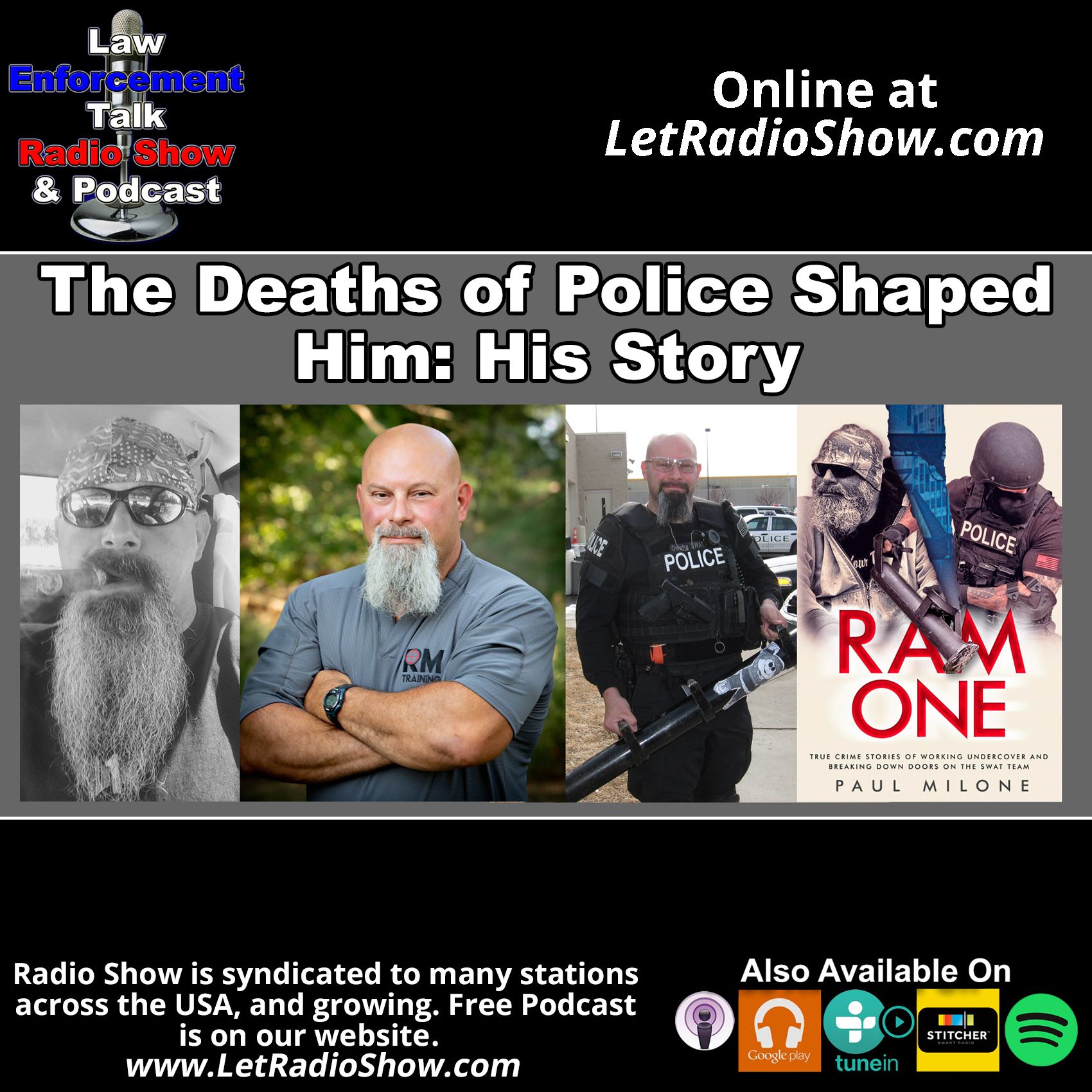
Law Enforcement Talk: True Crime and Trauma Stories
The Deaths of Police Shaped Him
00:40:42
His career in law enforcement wasn’t just about chasing criminals, it was about living on the edge of two worlds. He spent decades kicking in doors, infiltrating drug rings, and selling weapons to cartel figures under the guise of a hardened criminal. “I didn’t just study crime,” Paul Milone says. “I lived in it, walked in it, and came out the other side.”
Loading summary
Transcript81 lines
- [00:01]
A
He retired as an Omaha Police Department police officer. He still works there as a contract worker. During his career, he was in three shootings and two of his partners were killed in the line of duty. He's here to talk about that and how it has impacted him on the Law Enforcement Talk Radio Show. Welcome to the Law Enforcement Talk Radio Show. In the Law Enforcement Talk Radio show, we are joined by special guests talking about their experiences, their realities investigating crimes, plus those have experienced horrendous trauma. Police, first responders, military and victims of crime share their stories. Hi, I'm John J. Wiley. In addition to being a broadcaster, I'm also a retired police sergeant. Be sure to check out our website, letradio.com and also like us on Facebook Search for the law Enforcement Talk Radio Show. Of all the radio stations in the United States, there are no other shows like the law enforcement Talk radio show. And on Facebook there's only one official page. Do a search on Facebook for the law enforcement talk radio show and be sure to like the law enforcement Talk radio show Facebook page. Content is from the great state of Iowa just across the river I think it is. No pun, do grandma's house we go. We have Paul Maloney. He is in Iowa and he's a retired Omaha Police Department police officer. He's written a book called ram1 and his website is ram1productions.com Paul, thanks for being guests on a law enforcement talk radio show. Number one. Number two, thanks for your service. Both very much appreciated.
- [01:36]
B
Well, thank you John. Thanks for having me on and thank you for your service.
- [01:39]
A
It's a pleasure to have you on. And first of all, I gotta ask this, how long have you been retired from police work?
- [01:46]
B
I've been retired just over three years but I've been back part time as an instructor for two years.
- [01:52]
A
I've never quite understood that part time thing with the police department used to work at. I don't and I love Baltimore but when I left, when I retired, I got hurt and retired young. I didn't have a lot of good feelings about my agency.
- [02:07]
B
A little different boat for me. We I had a great run and I, I had a good run on my department and you know, when I left I had no intentions of coming back. But the position I came back at didn't exist when I left and I came back as a firearms and tactics instructor on a part time basis and after doing what I did for so the feeling was now what do I do with all this knowledge? So I thought, well, they want me to come back. I'LL go back and teach.
- [02:36]
A
Well, a big part of the problem I had and I tell it doesn't make sense that people are not working in law enforcement or military or other first responders is I knew my job didn't matter how chaotic it was, didn't how much drama there was, how much violence. I knew my job. I knew what to do. It's when things got quiet that the real problem started for me because all of a sudden I was a total fish out of water. What do I do?
- [03:01]
B
Yeah, it's a. It's a hard thing to leave. You know, I think it's best been summed up when people say that you lose your tribe. And I definitely went through that. That mode as well. When I first left. It was very difficult for me.
- [03:15]
A
Are you doing well now, you think?
- [03:18]
B
Oh, yeah. I gotta tell you, John, it's. I'm truly blessed. You know, I know a lot of guys have a different ride through their guys and gals have different careers, but I was blessed in my right, even though there were some really bad days. And I'm blessed how I came out on the other end. Those guys that I worked with that were involved in shootings as well, and they, they retired, they just couldn't do anymore. And for me, it hasn't been a problem.
- [03:44]
A
And you were in several. I was in four. In 10 years. A little more than 10 years. And none of them were like what the media portrays? Absolutely none of them. The first two, I never fired a shot back. And by the way, I was policing back in the day. Probably like you, we didn't call them officer involved shootings. They were just shootings. There was no differentiation about that. It's like, yeah, so and so was involved in shooting last night. They didn't say, oh, he was an officer involved shooting. And under hushed tones, oh, maybe he did something wrong. Maybe he has a propensity towards violence.
- [04:14]
B
Yeah, you know, you're right. I came on a little later than you, but I've been around for a while. So. Yeah, some of the terms have changed and how they're discussed have changed. What I think has really changed, at least in Omaha, is the number of them. You know, we would talk about, you know, so and so was involved in a shooting and everybody knew it. And now when I, when I teach these guys, the young guys talk about. And they're all confused, well, which one? Because there's like nine this year in Omaha.
- [04:42]
A
Right.
- [04:42]
B
Whatever. The numbers have gone up exponentially.
- [04:45]
A
The numbers have gone up tremendously. And maybe this Is something I'm a form in a question my own experience. It's amazing. We didn't. We lost a lot of people and a lot of people got shot and survived, but we had a lot of people killed during my time in the Baltimore Police Department. But it's a wonder, especially nowadays, the propensity of violence. And there's so much of it against police that more are not harmed and damaged and it just seems like it's non stop.
- [05:15]
B
Yeah, it's definitely a different environment, you know, and you know, being an older guy and you know, you're older than me, but, you know, it was always the mentality of, well, you know, you don't know how tough it was when we did it. Well, I got to side with the young guys. It's. It is a dangerous game right now. Luckily, the numbers, the numbers of officers killed is not climbed as much as I think the level of violence is out there. So that's a good thing, obviously.
- [05:41]
A
Well, one of the things that I don't really understand, and this is dating me, but back in the day, we didn't have peer support groups, we didn't have critical incident stress debriefing. We didn't have all that stuff. We had a parking lot and a 12 pack or a case of beer, and that's what you did. And we had a saying in the Baltimore Police Department. They had different slang that they use and they would say, suck it up, you're Baltimore police, you got a job to do, you can always lick your wounds later. And that's what we did.
- [06:13]
B
Yeah, you know, early in my career, that was more the mentality. And obviously we now there's support groups and there's group debriefs and everything else. And you know, but I gotta be honest, I lean towards more what's going on currently. And I'm glad that one of the things that's come out of the global war on terror is that it's a little bit more acceptable when someone says, listen man, I'm not doing well. And their support therefore, versus, hey, I'm going to crack into this 12 pack and deal with it that way. I come from a background prior to being a cop, of a counselor, and I can see where we're in a better position now, I believe, than back in the day. It may not be viewed as guys are as quote unquote, a tough guy as we used to be, but I think people are getting healthier, in my opinion.
- [07:12]
A
I agree, and I think I'm almost saying this with Kings of Envy. I wish we had some of the things that we have. And by the way, I was a big part of a lot of the change in our agency, what I went through. So the critical incident stress, debriefing the peer support groups, all that stuff I'm a big proponent of. What I'm not a big proponent of and this seems to be something is that a lot of agencies I can't speak for Omaha, I don't know much about Omaha is they are so anti negative optics that they won't support their officers when they stand tall in a gunfight. Even though the officer did everything they're supposed to do the right way, they're somehow ostracized and that adds to the psychological pressure and demise if you ask me.
- [07:57]
B
Oh no, I agree. And two points on that. Number one, again, I was blessed where I got to work. And over the course of my career, other than one or two occasions of an officer involved shooting, the department in the city has done great by the officers involved. A couple were terrible circumstances. But I've also been a trainer around the country, especially in the Chicagoland area. And those guys and gals out there, man, it's brutal.
- [08:31]
A
They get their hands on them and.
- [08:32]
B
They feel exactly what you're talking about. And I just don't understand how a department or a city can do that to the people that are out there putting their lives on the line for people who don't even know.
- [08:45]
A
We're done with Paul Maloney's retired Omaha Police Department officer. He was involved in three shootings during his career. Two times two partners were killed in line duty. We'll return the conversation about that a few moments. He's authored the book Ram One. His website is ramone productions.com that's ram1productions.com. Don't you hate when they do the bait and switch on you when they tell you check out a website and it's free to go there and then there's hidden charges. You won't find any of that nonsense at our website, letradio.com it's free. It's always been free and it costs you absolutely nothing. There's no hidden tricks. Letradio.com check it out today you can find episodes of the show as available as a podcast after airing on radio. They're always free, always have been and always will be. Again, that's L ET radio.com where it's always free. Don't go anywhere. I promise you. We'll be right back.
- [09:47]
C
Be sure to check out and follow the pet Rescue Life Facebook Page Everyone is welcome at the Pet Rescue Life Facebook page where you will find fun, enjoyable and informative posts daily, all for free. Be sure to check out and follow the Pet Rescue Life Facebook page. That is the Pet Rescue Life Facebook page where it's always free.
- [10:11]
A
The current conversation with Paul Maloney is retired from the Omaha Police Department. He works there as a contract worker doing a lot of training. And during his police career he was involved in three shootings and twice two partners were killed in line of duty, which he's going to talk about in a few moments. He's written a book called RAM One. That's RAM One. His website is Ram One Productions. Now we are not immune to talking about really tough things on a law enforcement talk radio show and podcast. We're not immune to posting on our Facebook page. Just do a search on Facebook for law enforcement talk radio show and podcast and you'll find them. And it seems like there's no let up. But one of the big problems I had, Paul, was I didn't feel like there was an outlet to tell the stories of partners that were killed in line of duty. And what happens is, and I'm not blaming the news cycle, I'm not blaming the Media, it's a 24 hour news cycle and their stories get brushed under the rug. What we talk about the most is the suspects. And I'm sick and tired of that. Have you noticed that be the case with you?
- [11:16]
B
Oh, absolutely. You know, the stories of the cops being killed or dying seems to be a flash in the pan. And maybe you get one year memorial rerun of the story and that's about it.
- [11:28]
A
And the other thing we get a lot of, and I agree to some extent, but they say that's part the houses of jobs. They knew what they signed up for. Yeah, I thought I knew. I didn't know it was me, as violent and traumatic as it was. But you know who didn't sign up for it? My now ex wife, my daughters and family members, they did not sign up for this.
- [11:50]
B
Yeah. Now for me, a little different. My wife was a 30 year cop, so she, she knew. But you're right, the family on the ride along, they, they don't know what's coming and that sometimes that's to the detriment.
- [12:05]
A
During your career you had two partners get on line of duty. You want to talk about which one came first? You want to tell their story?
- [12:12]
B
Yeah. My first partner, he was shot and killed. His name was Jason Ty Pratt. Just an amazing cop. John. He's one of those cops that the entire department loved, whether it was street cops or command officers or the chief of police. He was also a guy that even people that we arrested, they liked him. They might look at me cross, and I hadn't even said a word. But they'd look at him after he got in cuffs and say, pratt, man, you're all right. You're a good dude. He was just loved by everyone, you know. Moving through your career. I took a phone call one day from the lieutenant of the gang unit, which at the time was kind of one of the most prized units on our department. And he asked me if I wanted a job. And so instead of calling my wife first, I called my partner. Jason said, hey, what should I do? He's like, you'd be stupid not to take this job in the gang unit. So I did, and, man, you couldn't have been more busy in that unit. So I happened to be walking into our northeast precinct one night, which is our dane most dangerous precinct, and I bumped into Jason. He said, hey, don't be a stranger, bud. Well, unfortunately, that's the last thing he ever told me because it was only a few nights later he was shot and killed on the traffic stop. Convicted felon, rapid as long as everybody's arm. And the foot pursuit guy, you know, hides in some bushes and they're looking for him, shoots Jason and kills him basically instantly, right in the head. And he gets up and runs, and Jason's the guy he was riding with that night, shot and killed him, you know, so during that process, like you talked about, you know, they don't let you know in the academy what reality is, per se. And, man, I was hit by a ton of bricks. I was depressed for months. I was actually going to leave the job. I had another job lined up doing something completely different. And I'm so glad I didn't leave the job, you know, because of him and because of his honor. But it was really difficult for me. I struggled for a long time. I've come to grips with it, and luckily for me, I've maintained a great relationship with his widow and. And their two daughters. And I'm still involved in their lives. And that was 2003. We're still very close, but it was really tough. Like I said, I was at a breaking point of I'm just going to do something different, you know, this job. And because I hadn't prepared myself. Sure. You know, they told us in the academy our cops can get killed. And right before we got in the Academy. We had a cop in Omaha killed. And, you know, so it was there. It was. It was evident. But, you know, my mentality was, well, it's not gonna happen to me.
- [14:58]
A
That's exactly what we did. Otherwise, I'd never leave the car. I'd never leave a station. I'd be like one of the station house cats that you just never, ever see in the streets.
- [15:06]
B
Yeah. You know, part of my struggle, to be honest, John, was that I felt guilty.
- [15:11]
A
I was gonna ask you that.
- [15:13]
B
Taking that gang unit job.
- [15:14]
A
Right. I was going to ask you that because I had a guy. I was promoted sergeant, and I was in Central District. He was in my squad, and he's a great guy. His name is William Billy Martin. And a couple months after I transferred to the Northwest district, he was shot and killed in line of duty. And I was overwhelmed. And I still can be periodically with guilt. And I know that the term that a lot of psychiatrists use is survivor's guilt. I know I couldn't have done anything about it. Logical, that stuff knows I couldn't have done anything about it. But that didn't take away the emotional part.
- [15:47]
B
Yeah, 100%. And I'm like, there's nothing could have changed. You got to tear down that rear view mirror. But that doesn't change the fact that you feel that guilt. And it was hard. I refused to go to the scene where it happened for over a year. And then I actually. I didn't even want to hear the full story from the cops that were there when it happened. I just blocked it out. And finally I ended up moving on from the gang unit to the narcotics unit. And one of my narcotics partners was there that night. I said, you know what, Bobby? You got to take me there and walk me through this, because I want to know exactly what happened, because I've got a story in my mind that was built up by other people. And so we went to the scene. It was pretty cathartic. An interesting point. The first time I went back to the scene, I was going there. It happened right under a light post in this line of bushes. And I went back there with my truck and a ladder, and I was going to climb the pole and paint Jason's badge and serial number up on the post as a memorial. And there was a little old guy who came walking out of his house right next to the scene, and he saw what I was doing, and he says, you're a cop? I said, yep. He said, was that your friend? I said, yes, sir. He says, well, that's my fault. I'm like, so I stopped painting. I said, what do you mean it's your fault? He says, if I hadn't, if I would have trimmed my bushes here. That guy couldn't hit in the bushes. So it's my fault that your buddy's dead. So I got down off the ladder and went and sat in his garage for about a half hour and we talked. And it was interesting, you know, that this guy felt guilt that his overgrown bushes were why my partner was shot and killed, which was a strange, strange thing to hear from him. But it helped me to think, you know what? It's not your fault and it's not my fault. That's just the way it happens sometimes.
- [17:46]
A
One of the most powerful things you said. And when we return to our conversation with Paul Maloney, a few moments, we're going to talk about second officer Partner was killed in line of duty. Paul, one of the things you said was it's teared down the rear view mirror and stopped looking in the past. And I have, I've gotten better at that at my advanced age, which you've made reference to several times. I'll give you a pass on that. But I was telling friends of mine the other night I walked my dog in Palm Beach County, Florida, in the morning and night for long walks. And part of the area where I walk them is it's very quiet, it's very desolate and it's very few people. It's like they rolled the carpet and everybody goes home at 8 o' clock at night. But I get overwhelmed by all of a sudden this sadness and it comes out of nowhere. And I think only other people that have been through this understand this is law enforcement talk radio show. We're talking with Paul Baloney. He's retired from the Omaha Police Department. He had two partners killed in line of duty. He's written a book called Ram One and his website is ramoneproductions.com we return, we'll talk more about the second officer. Don't go anywhere. We'll be right back. Don't you hate when they do the bait and switch on you when they tell you, check out a website and it's free to go there. And then there's hidden charges. You won't find any of that nonsense at our website, letradio.com it's free. It's always been free and it costs you absolutely nothing. There's no hidden tricks. Letradio.com check it out today. You can find episodes of the show as available as a Podcast after airing on radio. They're always free, always have been and always will be. Again, that's l e t radio.com where it's always free. Return conversation with Paul Maloney on the law enforcement talk radio show. Paul is retired from the Omaha Police Department. I think it's Omaha, Nebraska. This shows a little about the so called center of the United States. And he is in Iowa now, across the river. He's returned as a contract worker. During his career as a police officer, he's in three officer involved shootings and he had two incidents where partners were killed. We talked about the first one, Jason and the second one we're going to talk about in a moment. He's written a book called Ram 1 and his website is Ramone Productions. Com. First of all, return the conversation about Jason and the other guy in a few moments. What was the other guy's name? And tell us what happened in that situation.
- [20:26]
B
Name was Greg Hamill. And Greg and I were working in narcotics together at the time, both working undercover. Greg was killed in a much different manner than the way Jason was killed. We had served a search warrant on a guy who was selling heroin and in the process of serving a warrant arresting him, getting hands on him. The suspect was extremely sick, but not dope sick like he was withdrawing. He was ill. You know, we take him to county, they say no, take him to hospital. So we drop them off and that's it, we're done. Nobody's worse for the wear. Three days later, maybe two days later, three of the officers on that search warrant became deathly ill themselves. Two of them went to the hospital and. And one of them just went to a minor medical. Well, long story short, they all had contracted the disease that the guy had, which was H1N1, the swine flu. Oh yeah, which, which was our pandemic. Our pandemic prior to the coronavirus. Right. The other two pulled out of it, but it ended up killing Greg within like four or five days of becoming sick. You know, he had an immune system that was a little compromised. Anyways, he grew up in Houston and wasn't used to the winters and up here in Omah. And he got bronchitis every year, so his immune system was a little bit down, but. And he was a big, strong, muscular, Just a. Just a man of a man. And this little virus killed him. And thankfully my sergeant was astute enough that he ordered the medical records from all three involved plus the suspect and with blood test proved that, yeah, this was contracted on the job from the Search warrant. And so he was awarded an on duty death benefit, which obviously was a huge benefit to his now widow. So I'm so appreciative that my boss took it the extra step as opposed to saying, well, you know, things happen, people get sick.
- [22:38]
A
And by the way, that does happen.
- [22:41]
B
Yeah, it does.
- [22:43]
A
And I'm not, you know, I was retired as a sergeant. And some of them, they get allergic to writing and they don't want to write the good, the bad, or the ugly. And I'm just saying, not all of them, some of them. And they, they will deliberately look the other way when it comes to line of duty deaths. And what should be classified as a line of duty deaths, that is not.
- [23:04]
B
Yeah. And I tell you, he was just like Jason. This guy was larger than life, you know, he was just an awesome guy and he had such a huge impact on my life. And again, just like Jason, I've been completely blessed maintain contact with his widow and his kids. Matter of fact, next Saturday, his daughter is getting married and I was invited to the wedding. So I'm just blessed in that sense that just because those two guys are no longer with us, their families have disappeared into oblivion and I get to be part of them. And I couldn't be more thankful that that's how it's turned out. Lucky man.
- [23:46]
A
There was a guy in my career, in the early days of my career, he was a serge, and I'm not going to give his name right now, but he wound up getting stabbed by a dirty needle, and he wound up developing hepatitis, and it damaged his liver. And they were prepping him for surgery for a liver transplant, and he threw a blood clot and died. And to this day, to this day, unless they've changed things, they have not recognized his death as a line of duty death.
- [24:16]
B
Yeah, that's. That's so unfortunate. But I know, like you said, it happens across the country.
- [24:21]
A
It does. And it's not. Not done for malice reasons or malicious reasons. It's. It's usually done because of laziness. There's no other way to put it. Just laziness. Hey, someone else will do it. I don't need to do it. Someone else will do it.
- [24:33]
B
Yeah. Hey, John, can I add something quick that is?
- [24:35]
A
Sure.
- [24:35]
B
You talked about, like in the first break, how the citizenry of our country just doesn't understand sometimes. Listen to this dilemma because of the two different partners that I've had that have died and that I stayed with their families the year that Greg's oldest daughter or Greg's daughter and Jason's youngest daughter graduated high school. It was the same year, and their high school graduation ceremony was on the same day at the same time. And they both invited me to come to their high school graduation ceremony. I had to make the decision, which daughter of my former dead partner's high school graduation ceremony do I go to? And so I just called both them up, said, hey, here's where we're at. You know, what do you want me to do? And Jason's daughter was very gracious. She said, you know what? There's going to be a bunch of cops at my high school graduation. You should go to Taryn's. I called Terran. She said, yeah, I'm not inviting a bunch of cops, so if you could come, that'd be great. So. But what a dilemma, you know, that most people don't even have to think about.
- [25:45]
A
And one of the things you said earlier in the conversation was having the conversation with the guy who felt like was his fault because he didn't trim the bushes. And you had a long conversation. I had so many great people that I worked for or with in the Baltimore Police Department. Some of the officers I worked with, phenomenal. The vast majority were phenomenal. There's a few that weren't. The overwhelming majority were great, but so many of the citizens were awesome people. They would invite you to their house, they'd invite you to cookout. There wasn't this animosity we hear about all the time. And we were totally different races, and no one seemed to care.
- [26:25]
B
Yeah, 100%. So when I was in patrol, I was only in patrol for four years before I moved on. I worked in our. Our hard precinct. But there's so many great people up there. And just like you're saying, you know, they would. They were thankful. It's just a small fraction of knuckleheads that cause all the problems that, you know, is the beef between the criminals and the cops. And that's why I chose to work at precinct, because there's. There's great people up there that need our assistance.
- [26:55]
A
Another thing was too. There's a big misconception with the media. And. And this is going to be a question for you. The vast majority of people we even arrested, there was not animosity. It was a small percentage. And they were usually career criminals. And they would mess up not just your day, your weekend, but sometimes take your life. You had to be careful with them. And the media seems to present them as being the majority when they're not.
- [27:21]
B
No, you're 100% right. And that's the thing, you know, again, citizens just don't, they don't get the true story. So again, thankful that you are doing a program such as what you're doing as opposed to just telling war stories or just putting out stats or something. You know, it's the human side of the cops that people don't hardly ever get to see. So thank you.
- [27:46]
A
Well, you're welcome. And big part of my thing is, and I got to the point where I have become allergic to giving bad guys names. I was saying there was a woman here in Florida named Sister Hazel. She fed literally hundreds of thousands of people and no one knows who she was. No one knows what she did. But everybody knows Ted Bundy. Everybody knows the Unabomber, their story. I'm sick and tired. I won't give any publicity to bad guys whatsoever. The cops, the victims of crime. Absolutely. Let's tell their stories.
- [28:19]
B
Well, good on you and thank you for that.
- [28:22]
A
We're talking with Paul Maloney. Paul is retired from the Omaha Police Department. He has returned to work there as a contract worker doing training. He was in three shootings during his career and had two partners killed. We talked about them. We'll return to the conversation a moment and how that has impacted Paul. He's written the book ram1 and his website is ramone productions.com this is law enforcement talk radio show. Don't go anywhere. I promise you. There's so much more heading away. We'll be right back. If you do any business on social media, creating content is one thing. The trick is how do you turn those people that comment on your social media into consumers? It's a great tool. And you can get more information@let pops.com that's L E T P O. Best of all, you can start it for free. Let pops.com check it out today. Return to conversation with Paul Maloney on the law enforcement talk radio show. He's retired from the Omaha Police Department in Nebraska. He's contacts from Iowa. He's returned to the agency as a contract worker does training. He was in three shootings during his career and two partners killed a line of duty. Totally different scenarios, but both equally as difficult. He's written the book RAM one, which talk about a few moments and his website's ramone productions.com that's ramone productions dot com. You kind of alluded to this, Paul, and a big part of who I am today, like it, the positive, the negative, all that is as a result of what I went through in policing and the deaths of co workers that were friends has a big part. And I would tell people this all the time. I've never. You never seen me cry in public ever. But I cried in patrol cars a lot. And some of these funerals, like, I can't even listen to taps. I can't listen to Amazing Grace on bagpipes without bawling. And so they've had impacts on my life. How would you describe your life since those two were killed in line of duty?
- [30:30]
B
Wow, that's a big. That's a big deal. Originally, when Jason died, like I mentioned earlier, it was a ton of bricks when I was wiped out, ready to quit between Jason and Greg dying. And it was a much easier. As hard as it is to say, it was a much easier time when Greg passed. Mainly because Greg and I had discussed our faith and knew where we stood. And so his passing was much more. It was easier to deal with, I guess I'll say, because I personally was a little more squared away in life still both tragic, but I understood kind of where things were at. And so. But it's. I still. It's been 2003 since Jason died. In a couple weeks, I'll be hosting a memorial benefit tactical shooting competition in Jason's name and now and also Greg's name. I haven't let their memories go, and I will never let their memories go because I want the young cops from the department who never met them to know everything they can about those guys because they were great dudes. I was honored to be their partners.
- [31:45]
A
And unfortunately, a lot of times with the new people, they're trained to do things a certain way because of horrible things that happen, and they're doing things a certain way on the job to protect themselves due to the death of both these guys.
- [32:02]
B
Absolutely. That's training changes after tragedy.
- [32:05]
A
Well, and I'll give a couple examples. And I'm not. I'm gonna get my soapbox a little bit. So people talk about the militarization police. And I say, well, let's look at the North Hollywood bank shootout. How about that one? And they forget about that. Oh, how about the Austin, Texas, bell tower shooting? Let's talk about that one. Oh, let's talk about the Miami FBI shooting where FBI agents were actually shot putting brass in her hand, because that's what they did. The range. So let's talk about those. Those unfortunate things that happen that are just hellish to understand and to comprehend have a direct impact on our training. And a lot of times the safety of our officers today. And sometimes they would say, why is a cop so aggressive? That's the reason why.
- [32:52]
B
Yeah, and you're right. And as a trainer, I mean, the militarization of law enforcement is in response to what they're seeing.
- [32:59]
A
Right.
- [32:59]
B
You know, do you, do you want cops to be stuck with six shooters and, and just get out firepower now, murdered? You know, come on, that's crazy. You're. It's a response to what they're seeing completely. And so the training should be in that manner and you know, the clothing or whatnot, it's. That's, you know, neither here nor there. In my opinion, the training should mirror what they're going up against. And in most places it is.
- [33:31]
A
And for me. And then we'll move on to your story. So when I had one of my last shootings, the thought that went through my mind and there's not a whole lot of thinking going on, but I was like, something came to my mind is that this, this guy is trying to kill me and I'm not going to die tonight and it won't be because of anything he does. And at that point I was prepared to do whatever it took. I relied on my training and I didn't really think about it until afterwards. Would that be a fair assessment for everything you've been through?
- [34:01]
B
You know, actually no. And my one shooting where I was pulling the trigger was a completely different type of scenario. And luckily for me, I had been highly trained on the SWAT team for many, many years. And you know, it was very methodical and it was very surgical. I ended up killing a guy on a hostage rescue, a man who was a paranoid schizophrenic off of his meds and he was hallucinating and he was in the process of trying to kill his nine day old baby with a four foot sword. And we made hostage rescue entry and I got the distance of four feet from him, look him in the eyes and I shot him in the face with my rifle to save the baby. And it was successful. But I had trained scenarios like that thousands of times. And so there wasn't thought process, but at least in my estimation and the other guy's estimation, it was, it was super fast and it was super surgical. And I just say that's what we were, that's what we were trained to do. The other shootings that I was involved into, where I didn't pull the trigger, you know, they weren't necessarily as surgical and as fluid. It was more chaotic. Again, different levels of training for different people on different departments. And that's not bragging, that's just reality of it, you know, and when I see and review shootings that happen now in our department, you can see different levels. When there's SWAT guys who are on the street, they get involved, or highly trained officers, it's a different little bit different response than some of the spontaneous things. And again, that's not deriding anybody, but you're going to rise to your level of training, and that's it. And so I'm a huge advocate of train, train, train, train, train, train like you fight.
- [36:04]
A
And what Joel is saying, I'd rather have the training and not need it than need it and not have the training. We're talking with Paul Maloney. Paul, you wrote this book. Ram 1. When did you write that book in your career?
- [36:20]
B
I wrote it in my mind throughout my career. But I was going off the department for. Right at one year, and I said, you know what? I've talked about this for years. I'm just going to sit down and do it. And. And I knocked it out and made it happen, actually, in pretty short order.
- [36:37]
A
Did you write this for storytelling effect for other people to carry the legacy, or was it for mental health therapy for you, or a combination of both?
- [36:47]
B
Well, to be brutally honest, I was never going to publish it. I wrote it so I could have a manuscript to hand to my daughter and my immediate family so they could understand what I did in my career. And I reached out to another cop that I had worked with who wrote a successful book, and I told him, hey, I'm going to write this manuscript. You know, how do I get it printed? And he said, you're a complete moron if you write it and don't publish it because you've done all the work.
- [37:15]
A
I've been called worse, by the way. I've been called moron many times, and sometimes a shoe fits.
- [37:23]
B
You know, and the book is about. It's just about my career. I. You and I had different careers. I spent the lion's share of my career on the SWAT team, and simultaneously I worked undercover for 14 years straight, you know, buying dope and selling guns and everything else. So the book is simply a look into what I got to do for my career and some of the fantastic cops that I got to work with, as opposed to like an overall general. Here's what cops go through. This is what I went through.
- [37:54]
A
Right.
- [37:55]
B
I think that has more than others.
- [37:57]
A
When you. We focus on our stories, we tend to have more credibility and no offense to people. They're experts, God love them, but when they give their opinions, that's exactly what it is, opinion. It doesn't apply to everybody or everything.
- [38:11]
B
Correct.
- [38:12]
A
And it comes off. I don't know about you, Paul, but for me it comes off kind of luxury where they talking at me and I'm still old school. I start digging in my heels like, oh yeah, well let me show you exactly how it's done.
- [38:27]
B
Yeah. You know, when I wrote it, I really, I wanted to sound like you're sitting around a campfire, maybe drinking a beer, do whatever you want. And that was it. I just, I didn't want it to be, you know, hoity toity. It's just here's, here's some stories that, you know, like my family didn't know about what I did and I wanted to share that with whoever wanted to.
- [38:47]
A
The title of the book is ram1 and your website is ramone productions.com ramone productions.com and I assume people get more information about the book and contact you there as well.
- [38:59]
B
Absolutely.
- [39:01]
A
Paul, thank you for your service. Thanks for being guest on law enforcement talk radio show. Both very much appreciated.
- [39:07]
B
John, thank you for your time and again I thank you for what you're putting out there because it's needed and I hope more and more people listen.
- [39:15]
A
There's a couple ways you can stay in touch and keep informed of what's going on with the law enforcement talk radio show. Number one, go to our website letradio.com sign up for our email newsletter. It's real easy to find. I promise we don't spam you. I send out about one email every two weeks or so and there's also a feature called broadcast channels on our Facebook page where we send messages directly to to your inbox directly to your messenger. Real easy to sign up for. Make sure you like or follow the law enforcement talk radio show Facebook page. And up top you'll see broadcast channels one for free podcast versions of the radio show, another one top post of the day. So you too can stay informed quickly, easily and best of all, like always free. This was the podcast version of the nationally syndicated law enforcement talk radio show and we are so glad that you decided to join us. Big thanks to our guests for telling her story on the show. Two simple things you can do. Be sure to check out our website letradio.com that's letradio.com and be sure to follow us or like us on Facebook. Do a search on Facebook for law enforcement talk radio show and be sure. When you see a post that we put up that you like, like that you resonate with, that gets your attention, be sure to share it with your friends. We'll be back in just a few days. Another great episode of the show. See you then.