← Law Enforcement Talk: True Crime and Trauma Stories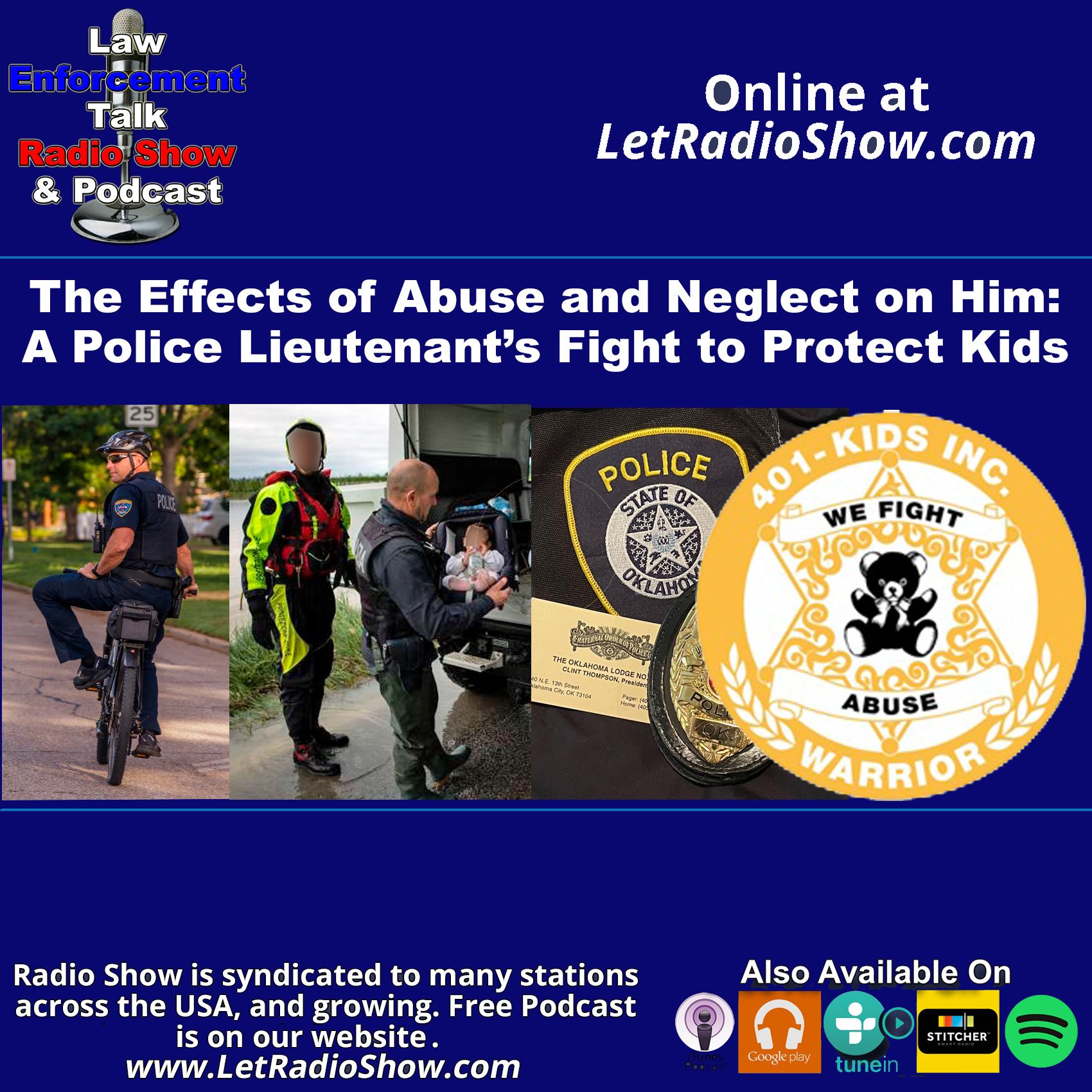
Law Enforcement Talk: True Crime and Trauma Stories
The Effects of Abuse and Neglect on Him
00:39:56
The Effects of Abuse and Neglect on Him: A Police Lieutenant’s Fight to Protect Kids. When retired Police Lieutenant Clint Thompson looks back on his career, two stories of child abuse stand out more than any others. They are cases that not only shaped his professional journey but also left a permanent imprint on his personal life. “These kids didn’t just survive abuse, they carried those scars forever,” Thompson says. “And I carried their stories with me.”
Loading summary
Transcript89 lines
- [00:01]
A
He's a retired police lieutenant from University Hospital in Oklahoma. Many cases of child abuse, horrible physical abuse against children were presented to him to investigate. He's here to talk about those cases and how it motivates what he does today. Welcome to the Law Enforcement Talk Radio Show. In the Law Enforcement Talk Radio show, we are joined by special guests talking about their experiences, their realities of investigating crimes. Police plus those who have experienced horrendous trauma. Police, first responders, military and victims of crime share their stories. Hi, I'm John J. Wiley. In addition to being a broadcaster, I'm also a retired police sergeant. Be sure to check out our website, letradio.com and also like us on Facebook, search for the law enforcement talk radio show. You know, we used to have an app and it was a very popular app. And then guess what? We couldn't hold a candle through our Facebook presence. How many people have the mobile Facebook app already installed on their phone? How many people use it on their computer? Make sure you follow us, make sure you like us on our Facebook page. Just search for law enforcement talk radio show and podcast and be sure to send us a comment to one of the posts. Best of all as 100% free. Joining us from Oklahoma, we have Clinton Thompson on the Law Enforcement Talk radio. Clint is retired police lieutenant from a hospital and police department in Oklahoma. I'll have him tell you about that. Back in my day, I used to think they had it pretty soft and I didn't realize, for example, every case of rape we took to hospital, every child abuse case, we took the hospital. And these gentlemen, these men and women, they had to deal with the aftermath. Clint, first of all, thanks for your service. Secondly, thanks for being guest on law enforcement talk radio show talking about this. Both very much appreciated.
- [01:53]
B
So thank you. Thank you for having me.
- [01:54]
A
It is a pleasure to have you here. And this is an aspect of policing, I'll be honest with you, Clinton, I don't know much about and I'm not saying I know everything or I should, but I mistakenly thought when I was in a Baltimore police department, the cops that worked in the hospitals had it easy. They had a cushy job. They were like mall cops. I didn't think of what they did. I didn't think of the extraneous things that happened, the violent crime they get exposed to. And I didn't think of all the evidentiary value of what they had to do.
- [02:24]
B
Yeah, that's kind of really common. I think Oklahoma City and Oklahoma County Sheriff's office and the Capitol Police were nearby. They didn't really realize a lot what we did. However, we did back them on calls and stuff because we had patrol division and so they knew we did that, but they just didn't really understand what went on inside the walls of those medical complexes.
- [02:47]
A
And by the way, Oklahoma City, that was the site of the Edward J. Murrow Building federal building bombing. And there's a lot of violence that occurs there. And we don't think of that. We think of Oklahoma's. I tend to think of Oklahoma as being a sleepy area where nothing bad happens.
- [03:04]
B
Well, that's true. I was involved in that on midnight. So I was transporting U.S. marshals back and forth from the bomb site and it's pretty tough. I've only been to Memorial once and I don't go back.
- [03:19]
A
Look, I don't blame you brother. I, it took forever for me to go to the police officers memorial in D.C. and it was cathartic. I cried a lot with my wife and we went in off cage and bought police week on stuff I don't do for a lot of reasons, but that is one of them. I'm afraid I'm going to break down in public and lose it for a long period of time.
- [03:41]
B
I understand.
- [03:42]
A
And this is the off note. So in New York City, World Trade Center, I went there several years after 911 occurred and they were rebuilding, they were building Memorial, they had some New York NYPD officers there and I just wanted to walk up to them and say hey, and I'm retired Baltimore police sergeant and I couldn't imagine losing that many people in that day and the things that they saw, they witnessed and I made it like two feet from them and I started crying and that was it. I never got a word out. And they were really good about it. They was like, yeah, we understand, we know what you talk about.
- [04:17]
B
Yep, that is true. That's very true. And they're all good, a bunch of officers up there.
- [04:24]
A
They do a great job. I want to refer back to your career. So where did you retire from? Because I know the department changed names a couple different times, didn't it?
- [04:33]
B
Yeah, we were Department Human Services police and they called it DHS police and we were Oklahoma Medical center and then they went to University Hospital Authority Police to. They did that because of ways they can issue bonds to expand the hospital complex.
- [04:56]
A
But part of your obligation was also patrol and backing up local officers?
- [05:02]
B
Yeah, we had patrol division and we had an officer in each hospital on foot patrol. But we, it was a very security challenged neighborhood and so we had patrol to protect all the staff coming in and out of the garages and patients, employees, etc.
- [05:24]
A
That reminds me of my days back in Baltimore with Johns Hopkins Hospital, a few other ones, and they had. They were always in the middle of really, really tough neighborhoods.
- [05:35]
B
I don't know why, but that's. That's true. This was pretty tough. I mean, I sent children's garage and listen to gunfire all night. And it's like 13 blocks from downtown Oklahoma City. So it's just crazy.
- [05:47]
A
Another thing, Clint, that doesn't come to mind readily is we had some Baltimore police in other areas across the country where you have suspects that go, whether they're incarcerated or jail, and they wind up in deadly physical force encounters, police officers being killed. You have suspects in crimes, they get a hold of the officer's gun, they fight them. And that's something you all kind of got stuck with, didn't you?
- [06:15]
B
Yes, we did.
- [06:16]
A
And I think it happens far more often than people realize.
- [06:21]
B
Yeah, it does. It doesn't get publicized all. I mean, unless someone gets shot, they don't size it. You know, there was a struggle for your weapon and, you know, all what officers had to do to stay alive and go home the next night or the next day or that evening.
- [06:38]
A
And sadly, we had some that didn't make it that they died. And that's just in Baltimore. That's all across the United States, so. And here's another thing that I never really considered. For example, when we had any kind of assault case where domestic violence didn't matter what it was, you took the victim to the hospital. If you had accident cases, you took the victim to the hospital. If you had homicides, you took the victim to the hospital. I'd have to be there as a police officer, try to get the dying declaration if they made one. My wife and I talked about it. I do not like watching videos of cracking chests and emergency rooms and all that stuff, because I was the guy 10ft away in case they muttered something and.
- [07:20]
B
Right.
- [07:21]
A
Child abuse calls, rape calls. All those people wound up going to the hospital. And did you guys get involved in the investigations? Those.
- [07:31]
B
We. We did a preliminary investigations on gunshot wounds. We would stand by and for evidentiary purposes, recovered, you know, recovered projectiles out of the victims. We would get those and, you know, secure the chain of custody for the jurisdiction that incident happened at. You know, and with. Far as. We didn't. The local agencies recovered the rape kits on rape victims and stuff. We were there with them just to give them comfort that you know, this is going to happen to them or protecting them as well as the staff. In child abuse cases. We in Oklahoma, only a judge or a law enforcement officer can seize a child from who has legal custody of them. And in fact in Native Americans you have to have beyond a shadow of doubt whether they were abused and then non Native Americans. It could be clear and convincing. So we did investigate those. We were called into the children's er. They were very professional, really trained people there to recognize because you had to watch out for the Mongolian blue spot, which is a bruise on Native Americans and Asians looking thing on their bottom on their backside. The disappears were about seven so we had to be careful those. And so we did get called in on that. And we witnessed the call and took, you know, notes from the nurses and doctors. And if the custodial people were there, we interviewed them as well. And if the children were old enough, we would talk to them and then we'd probably most always seize the kid by filling out forms and DHS would come and pick them and they were taken from their custodial people, parents, whoever that they go to court.
- [09:26]
A
Then we're taking a short break on then they'll return a conversation. By the way, Clint Thompson has a website and he's one of the movers and shakers of 401kids.org that's 401kids.org this is law enforcement talk radio show. Got a lot more heading away. Don't go anywhere. We'll be right back. Remember when free meant free, no charge.
- [09:50]
B
No credit card information needed.
- [09:53]
A
Well, a place like that still exists on the Internet. The law enforcement talk radio show website letradio.com where everything is free, including the podcast episodes are available after airing on radio. The website is letradio.com that's letradio.com where free means free. Return to conversation with Clinton Thompson on the law enforcement talk radio show is a retired police lieutenant from a university hospital in Oklahoma and he is also one of the movers and shakers for an organization called 401KIDS. That's 401KIDS.org 401KIDS one of the most challenging things for me in my police career was investigating child abuse. And quite often, usually it wasn't a type of call you would get Clint. That was a bogus call. There was usually something to it. And I remember having a youngster, I would say he was probably three at the time and he was severely burned but lit cigarettes and all this stuff by his mother and he developed the bomb with me and I was a young man and the crime lab tech took a picture of it, gave it to me and he didn't want to leave my lap. But we knew at some point we had to separate him. The physical evidence. One part was part of the investigation, but the other part was making sure he was safe and away from the abuser, which is a family member, which can be very, very difficult. Was that the case for you, Jay?
- [11:33]
B
We never had any problem with removing them. I don't remember even of an incident where any parent, you know, was going to show, you know, some kind of physical violence to stop us from doing that. Because normally if it was that bad, we just put them under arrest anyway and held them for the jurisdiction this happened in because our hospital was so good at and, and used to testify that many jurisdictions came to Oklahoma City Children's Hospital to get this child looked at. So we held him and then if we had to, we'd take him to Oklahoma County Jail. But anyway, it's, we didn't have a problem with that. I mean I never felt bad about that when I looked at what happened, you know. So we had some pretty horrendous cases as well which still haunt most of us today.
- [12:28]
A
I was going to ask you that. I sit there and it's the, the cases that it doesn't matter whether they're solved or not. Some of them, when I'm least want them to, they, they pop back in my mind. And can you talk about. There's one like a family of four children were brutalized. Can you talk about that?
- [12:48]
B
Yeah, that was as I can recollect in the spring of 1997 is around 2am and I was called in off the street for that by the nurses at the children's ER. And I came into the ER and there were four children there, three boys and one girl. The boys were 5, 7 or 4, 5 and 7 in age. The girl was about a year and a half old but looked no bigger than a six month old baby and still wrapped in, you know, not walking, not talking. And so I proceeded to investigate this. A lot of times one child is one they pick on a lot, right. So the five year old was the one that was burned, beaten with hangers, burned the cigarettes like you talked about genitals everywhere. And that the 4, 5 and 7 and the little girl, well, the boys hadn't been given a bath in probably a year and a half. The nurses had to burn their clothes, they were so bad and we had to fit fine nurses smallest greens we had to put them in clothing. And that was one thing that started me thinking. They didn't have underwear, they didn't have anything. So they put little booty socks on them like they do at the hospitals. And then they gave them sandwiches and apples. And these boys were just like, it was Christmas. They were crazy. They were jumping up and down and laughing and screaming and giggling because they got food, you know, an apple and a sandwich out of a cafeteria and a carton of milk. He thought we'd given him a million dollars. It was just heartbreaking. And so for the little girl, she had been living, staying in this baby bed for. Well, we don't know for sure, but over a year without ever having her diaper changed. And how she did dive med, I don't know, but they just popped a ball in her mouth and left. Never held her, never did anything with her. So after nurses got all these children cleaned up, including this little girl, she was suffering from failure to thrive. And that means they don't grow, they don't mature in their brain. It's actually. It'll haunt them for years. So they put her up in a blanket and stuff. And so I was holding her and. And she would look at me in my eyes like, what are you. And she just was curious look on her face because she'd never been held before. She'd never been. I held her up on my shoulder. She'd never had that happen before. She had already been fed by the nurses, but she was in total shock, you know, not crying or anything, but she was just like, I don't know what's going on, and I don't know what you're saying. I don't understand anything here. So. And she was a year and a half old, headed on to two years old old, had never been out of that baby bed. So that was some of the things like that that pops back in and haunts me at night, especially children. That's why we started that foundation. We started getting our ideas.
- [16:08]
A
We'll talk about that in a moment. I got to ask you a question. So when you reply back, when we start talking about this case in particular, I noticed you got a little emotional. And still, certain cases I do, but almost always involved children. And part of the problem is, and I'll give you an example, I met my wife many, many years after retiring from police work. And I will tell her stories very rarely, but I'll tell her stories about things. And she is in a state of shock that people actually live like this. They do this to their children. And sometimes it seems so unnatural to me, even as a police officer that I knew occurred and I dealt with it many times. But every time I did, it was kind of shocking.
- [16:54]
B
Right? It is. It is shocking. I mean, each time you see one, you've seen them before. It's still a shock that you, somebody would do this to a small, helpless child who trusted them and looked up to them and they, and then they abused them like they did in horrific ways. So, yeah, I was pretty much this was one of the worst ones that I saw where they hadn't been cared for for maybe a couple years that been bathed, hadn't been fed right like they should have been. So, yeah, it's pretty tough.
- [17:33]
A
And we're not talking about, you know, filet mignon every night. We're talking about, by the way I grew up, I jokingly tell people our family and my dad's career Navy, they didn't make a lot of money. We had a lot of kids. We were poor. We were poor. We didn't couldn't afford the R. We were so poor. But we were fed three meals a day. We were well taken care of. We had good childhoods. Some people that, that really abuse and neglect their children, they can afford otherwise they just choose not to.
- [18:02]
B
That's right. I grew up on macaroni and cheese and occasional hamburger as well.
- [18:06]
A
I couldn't wait. Look, I understand could not wait until I was what I called and I'm air quoting rich and I could afford the macaroni and cheese that came in the foil packages. And that's like the powder stuff, the real stuff. We're talking with Clint Thompson. Clint is retired, a police lieutenant from University Hospital in Oklahoma. He'll tell you more about that. He's one of the founders and shakers I call it for a group called 401kids.org is a foundation 401kids.org we return we'll talk more about horrific child abuse that he investigated and how it affects him and what he does about it. Today, one of the questions I get all the time, why are you always promoting the law enforcement talk radio show Facebook page? Well, because there's no better place on Facebook. That's it. It's simple. Everything about the law enforcement talk radio shown podcast is right there including great photos, stories you'll want to see, you want to share. Just do a search for law enforcement talk radio show on Facebook and be sure to click like and or follow. So we'll see you there. Don't go anywhere. We'll be right back. Of all the radio stations in the United States, there are no other shows like the law enforcement talk radio show. And on Facebook there's only one official page. Do a search on Facebook for the law enforcement talk radio show and be sure to like the law enforcement talk radio show Facebook page. Return conversation with Clint Thompson on the law enforcement talk radio show. Clint's a retired police lieutenant from University Hospital in Oklahoma and he's one of the founders and shakers, movers and shakers. I say for foundation is 401kids.org that's 401kids.org during your police career. And just to recap a little bit, every pretty much every violent crime from child abuse, rape, sex assault, any kind of assault, homicides, potential homicide, shooting, stabbings. We took them to hospital hospitals and I didn't give a really thought to what you guys when I say guys that means men and women did there. You talked about a family of four children. They're brutalized and unfortunately that does happen. And those cases stay with us. There are imagine more during your career.
- [20:26]
B
Yes, we had many of them but the ones that really that stuck to me the worst is one they abused little children sexually.
- [20:40]
A
Yeah.
- [20:41]
B
And we had boys and girls that were brought there for treatment as well as report the abuse. And we had one little girl, I remember that was 8 years old at the time and she had been repeatedly raped by her stepdad to the point we had they took her into emergency surgery to repair all the damage and of course he was not there. And they I made my report and everything out for dhs but they there was warrants out for his arrest, no doubt but that kind of stuff was more common than anything. We dealt with probably over 800 abuses a year in that hospital. And but the sexual raping and assaults on children is just absolutely horrifying to me as a father and a grandfather. So those cases one would wanted to tend to be maybe a little rougher, but you couldn't. You had to be professional about everything when you dealt with the suspects in those cases.
- [21:51]
A
Right.
- [21:52]
B
And so anyway she was one of several that that happened to many had been trafficked and they found them out on the street, you know, laying out on the sidewalk and the PD bring him in. And so that's kind of got us lined up on that working towards that area. We never really ever got used to any of that stuff. Nobody that I worked with ever was got so hardened about it that they weren't affected emotionally.
- [22:27]
A
I don't know of anybody that that can walk away from those sorts of crimes and not be affected one way negatively or another.
- [22:34]
B
Yeah. You run through a gamut of feelings of horror and remorse and feeling so sorry for these children and anger and rage that you want to reach out and touch someone in a bad way. And you just have to deal with those, you know, as, you know, as a copycat. We little. These little compartments, we put things in.
- [22:54]
A
Yeah.
- [22:55]
B
And sometimes they break out, but, well, they don't stay.
- [22:58]
A
There's a book that someone keeps telling me I should read, and I haven't read it yet. It's called the Body Keeps Score. And all the trauma you go through, no matter how we compartmentalize it. And we'll turn to your story in a moment. Eventually it's going to come up. It's going to break through those compartments and your body's going to keep score. And what for many of us happens is it affects our present day so badly. It affects our relationships, it affects our mental health, it affects substance abuse issues, marriages, you name it. And people wind up dead at a very young age.
- [23:33]
B
We do. We do. After that. You mentioned the bombing. After that, we had many ambulance drivers and firemen committed suicide. So it does. It affects everybody. And police officers, maybe they get it on a really more constant fad of this kind of thing going on. They have to witness and deal with. It's. I don't see how we don't have more suicides than we do, but it's just, Just terrible. Many, many have quit because they couldn't deal with that well.
- [24:02]
A
And I want to turn to something you said earlier. There's a range of emotions I would get, but one was I wanted to reach out, and anger was a real issue. And I wanted to reach out and lash out at the people that did this, because that's a human. But you can't. You don't want to be the guy that ruins the case. You don't want to be that guy. And it's just not the right thing to do. However, that anger, there's got to be an outlet for. Because again, I'm gonna quote that book title, the Body Keeps Score. And eventually the anger is going to come out somewhere and it's going to come out sideways. Have you struggled with that?
- [24:37]
B
You know, I. I have. I had struggled with that. I would get on my motorcycle and ride, you know, 2, 300 miles. It was. That helped quite a bit. And I also turned my life over to Jesus. And that helps quite a bit, too.
- [24:55]
A
You join the club. And here I Say that. And I always say this. Prayer or meditation, what is it going to do for me? And riding a motorcycle, which I finally sold mine about six years ago, and that's another story for another day. But I pray and I meditate every day, multiple times a day, because that's where I get my relief from. And I believe personally that's a big part of helping me get back to my. What I call my center. How about you?
- [25:21]
B
Same. Same. After our piece we're doing here, I'll be in prayer as well, to do the best I can to bring things back from the edge and from, you know, haunting me all day. I have a wife for 55 years, and so she knows that. And I've never told her about any of these things. I always have shelter from those, so.
- [25:46]
A
Well, I didn't tell my first wife what I went through either, because, first of all, and I believe it's for admirable purposes, at least the reason why I didn't want her to worry more and I didn't want her to know that. And she was an emergency room nurse at Johns Hopkins, so she knew, but I didn't want her to be exposed to violence. And the incredible things that. Here's the thing that bothered me, Clint. The so called loved ones would do to their so called loved ones. I don't understand that to this day.
- [26:15]
B
Yeah, it's. It's just unimaginable why anybody would do anything to these children, such as we've talked about and more, you know, them selling, having babies to sell out for whoever wants to buy them is going on. So how. How can they do this? You know, I don't know. Maybe I'm no angel, but I'm thinking good people don't do that and bad people do. That's about all I can think about is that. So, you know, I just pray to my father and ask for guidance and, and, and help me explain what's going on. But. Yep, that's. Nobody could. I mean, and I never tell anybody what's going on. I never told them about cases because they don't want to talk to you. You're like the guy with the bad story. So I just, I just. And I didn't want to, you know, make my wife feel uncomfortable being out in the public, but if anybody really knew, would be keeping our eyes open.
- [27:16]
A
Sometimes I walk down the street and I get this. I see. I usually walk on my dog and I see these people with normal lives, from normal backgrounds, and I look at them and I wonder if they only knew what I've been through, would they treat me differently?
- [27:31]
B
Right. Yeah. Yeah. I mean, so I don't. I haven't told anybody. I got a life group, Bible study group. I haven't told them about any of this stuff either. This incident here is the first I spoke another since 1996. So. Well, I had to testify in court. But other than that, I appreciate you.
- [27:50]
A
Sharing that with us. I got to ask you a question, and I think I know the answer. Of all the cases that you were involved in of child abuse, did you see anything that was a common denominator with the abuser?
- [28:03]
B
They were abused. They were abused as children. Kind of a vicious circle. Some of them are just plain evil, but the majority of them, they're abusers. And it's no. They can make any difference where you live or how much money you make. If they were abused, there's a good chance they're going to be abusers as well.
- [28:24]
A
So, yeah, we're not talking, we're not talking about yelling at your kids. We're not talking about discipline. We're not talking about all these standard things that a lot of people get confused about. Absolutely. Violent behavior against children. Which will return to a conversation with Clint Thompson on the law enforcement talk radio show for a few moments. He's one of the movers and shakers for an organization. Their foundation is called 401KIDS.org. That's 401KIDS.org, this is law enforcement talk radio show. We're gonna take a short break. I promise you we'll be right back. If you want to be a guest on the law enforcement talk radio show, simply contact us. It couldn't be easier. You can send us a message on Facebook, look for and like the law enforcement talk radio show page or email jaytradio.com that's J A Y E T radio.com return our conversation with Clint Thompson. He's retired police lieutenant from the University of Oklahoma. He's a hospital. I can't. They've changed names so many times. There's a reason why I'm not saying it. It's not like Baltimore Police Department, where it's always been Baltimore or Baltimore City. It's a different deal. And they've changed names many times. But during his career, during his police career, every act of violence, every violent crime, especially crimes against children, were taken to their hospital and they got involved. And we talk about a family of four children being brutalized and the bewilderment from failure to thrive for the youngest who had been left in a Bed for a year and a half, almost two years, never even given the slightest inkling of human compassion. One of the things that I noticed a lot of in my career, and it started stinging, actually, when you mentioned was cigarette burns with kids and coat hangers or wire coat hangers. Those seem to be the two things that happen more often with children. And we're Talking about children 2 years old, 3 years old. Shaken baby syndrome was not a big deal back then like it is today. But these kids, they bore physical scars from what they went through.
- [30:41]
B
That's true, they did. Then we had the shaken baby thing really doesn't show up until they're really bad shape, maybe pass away.
- [30:52]
A
Right.
- [30:53]
B
We've had. We had those as well. They were shaking real bad, and they had traumatic brain injuries and neck injuries. And. And if they did, a lot of them, they did survive. They were not, you know, 100% like they should have been if somebody would have treated and loved him like they should have been. So, yeah, it's. It's some tough stuff. Tough things to go through, talk about it is tough.
- [31:19]
A
And also it's difficult for me to be compassionate. People that say, you know, I had a traumatic childhood and I was abused a lot. I'm like, yeah, I don't know. Compared to what other kids have been through, maybe yours wasn't so bad.
- [31:34]
B
That's true. It's all relevant. But like we talked about, the common denominator was they'd been abused as well and. And maybe had a different type of life. Who knows? But that still doesn't give me any license to go around and do what they do to children.
- [31:55]
A
And here's. I wish there was the. The white picket fence story afterwards. A lot of these children, they grow up to be monsters themselves, and they wind up living horrible lives. And it's a wonder when you hear stories about people that have been through really, the really bad stuff and they find a way to make something themselves. I'm amazed by them. I'm inspired by them.
- [32:17]
B
Yeah, I've seen a few of those, too. They. They came out real well, and they made something out of themselves. And they had families and treated them lovingly most of the time because they had accepted Jesus Christ, their personal savior, and that has helped him a lot.
- [32:36]
A
Yeah, I would say this, Clint. I met many people in my career, and I've gotten to know people that were cult leaders, that were very religious and they were ultra violent. So some people are really good. I always say this. Your religious beliefs are great. It's really how you carry yourself that matters the most.
- [32:56]
B
Yeah, I agree. I agree. Well, it's to say one thing and then to do the other thing. So, yeah, you would follow through with all your. All of Jesus teachings of helping and people, people and being courteous and looking out for other people watching, helping. So.
- [33:12]
A
Well, one of the.
- [33:12]
B
Before we go into what we did.
- [33:14]
A
What you're doing today, there's a plaque on a place I go to quite often. It says very simply, you live a better sermon with your life than with your lips. And that applies to so much of what I do, and I'm sure it applies to you as well. And so the number one rule I've had to learn and I've gotten much better at, but I'm still not perfect at, is developing this pause button where I just don't say nothing at all because my first response is usually the wrong one.
- [33:44]
B
Right. Me too. Same as me. You know, we're in charge on the street and people listen to what we say and. And then later on you have to do that. You have to stand back and just not say anything and listen and. Because sometimes you might get them more aggressive about it if it's something like this we're talking about.
- [34:05]
A
And by the way, it really helps with being married a long time learning that I'd say this ton cheek. Learning to not say nothing really will help further your relationship. Let's forward, fast forward to what you're doing today. You've got this organization, this foundation called 401kids.org before we talk about what you do, that there's a transition that involved your local fop, fraternal or police. Tell us about that.
- [34:29]
B
Yeah, we started. I was the president of that Lodge 157, and we started giving her out. Buying teddy bears and giving them out to abused children. Out of a family of three or four come in and one's abused. We gave teddy bears to all of them, but. So we bought about 800 teddy bears a year. Plus we had some ladies that were fans of a TV show that started sending us teddy bears and things too, as giveaway. But we gave around over 800 teddy bears a year. And that's not everybody showed up because the nurses were so busy, since they didn't need us to. To come in there and, you know, make reports on what they found. They forgot to call us down there to get that kid a teddy bear. So. So yeah, that's what we did. We started out with that and then we doing that, we bankrupt our fop.
- [35:19]
A
And so I Was getting, by the way, bankrupting the fop. Your lodge is not a small achievement. That, that takes something.
- [35:32]
B
Yeah, so we were a small department. We had like 60 guys and gals. We decided to form a corporation and that's when we came up with 401 kids in September of 1999. What is based. Your area code is.
- [35:54]
A
Your area code is 405. I thought 401 would be the area code. What is 401k stand for?
- [35:59]
B
401K. An investment in your children.
- [36:02]
A
Oh, gotcha now it makes perfect sense. So it's a 401k, 401 kids. It's an investment in your children, investment in your future. Now that makes perfect sense.
- [36:14]
B
Yeah, it's law enforcement based. Everybody on our board of directors are retired or current law enforcement officers because we're taking, we're taking this, Save these children. They're brought in for child abuse and raising funds and stuff like that to accomplish what we're looking to do.
- [36:35]
A
I spoke with many nonprofits, many charities that they say that fundraising is the other F word. How difficult is that for you?
- [36:45]
B
That's very difficult. We've been at it for maybe seven years. We get funding, people give us smaller amounts and we help abuse children still. Clothing, beds, one thing, another what they need. But we're looking to build a 6,500 square foot home for six girls and raise them like our own daughters.
- [37:06]
A
And that's not cheap.
- [37:07]
B
First in the nation.
- [37:09]
A
And how much you need to build that house?
- [37:11]
B
That and fund all the help and everything that goes with it? $3.2 million.
- [37:16]
A
See, look where I come from, that's a ton of money. That's a lot of money. People don't blink an eye. Millions of dollars here in Palm Beach County, Florida. But, but for me, $3 million is a lot more than I got. So I got a question. Can people go to 401kids.org and can they make a donation? Can companies get involved, become sponsors, you name it.
- [37:39]
B
Yes to all of that. And we have places on you can donate through. I think we got a Venmo on there and you can use your credit card and you can also write a check and send it to us as well. But yeah, it's. I don't know if any cop can afford that. And so, or a group of cops even, or even any fops that could do that. So yeah, it's going to take somebody with a big heart and there's a lot of people out there that have that and they just got to know that we're going to raise these girls like our own daughters and send them to college and trade school and they age out at 18. DHS stop supporting us. But we don't care about that. We're spending all the money that they send us to support these girls, put in investment accounts for these girls so when they do go to college, they'll have money in the bank to buy their first car and all what it takes to get through college or a trade school. So that's what we're doing.
- [38:33]
A
Clint, I appreciate all you do. 401kids.org is the website address for their foundation. As 401kids.org appreciate your service and I really appreciate you coming on the show telling us all about it and and really really appreciate what everything you do today. Thanks brother. Very much appreciated.
- [38:52]
B
Thank you for having us and helping us get the word out.
- [38:55]
A
If you're on the Clubhouse Drop in audio chat app, be sure to look for me and follow me. My name's John the letter J Wiley W I L E Y. You can also search for ET Radio show. That's John J. Wiley W I L E Y Let Radio show on the Clubhouse Drop in audio chat app. I'd like to thank our guests for coming on the Law Enforcement Talk Radio Show. The Law Enforcement Talk Radio show is a nationally syndicated weekly radio show broadcast on Numerous AM&FM radio stations across the country. We're always adding more affiliate stations. If you enjoyed the podcast version of the show, which is always free, please do me a favor and and tell a friend or two or three. I'll be back in just a few days with another episode of Law Enforcement Talk rated show and podcast. Until then, this is John J. Wiley. See ya this Labor Day at Lowe's Shop member only Doorbuster deals for a limited time. Save $50 on an ego string trimmer now $169 plus get 50% off select Holland Pavers Not a rewards member. Sign up for free today but hurry Labor Day doorbuster deals won't last long Lowe's we help you save valid through 91 while supplies last program subject to terms and conditions Details at Lowe's com terms subject to change.