← Law Enforcement Talk: True Crime and Trauma Stories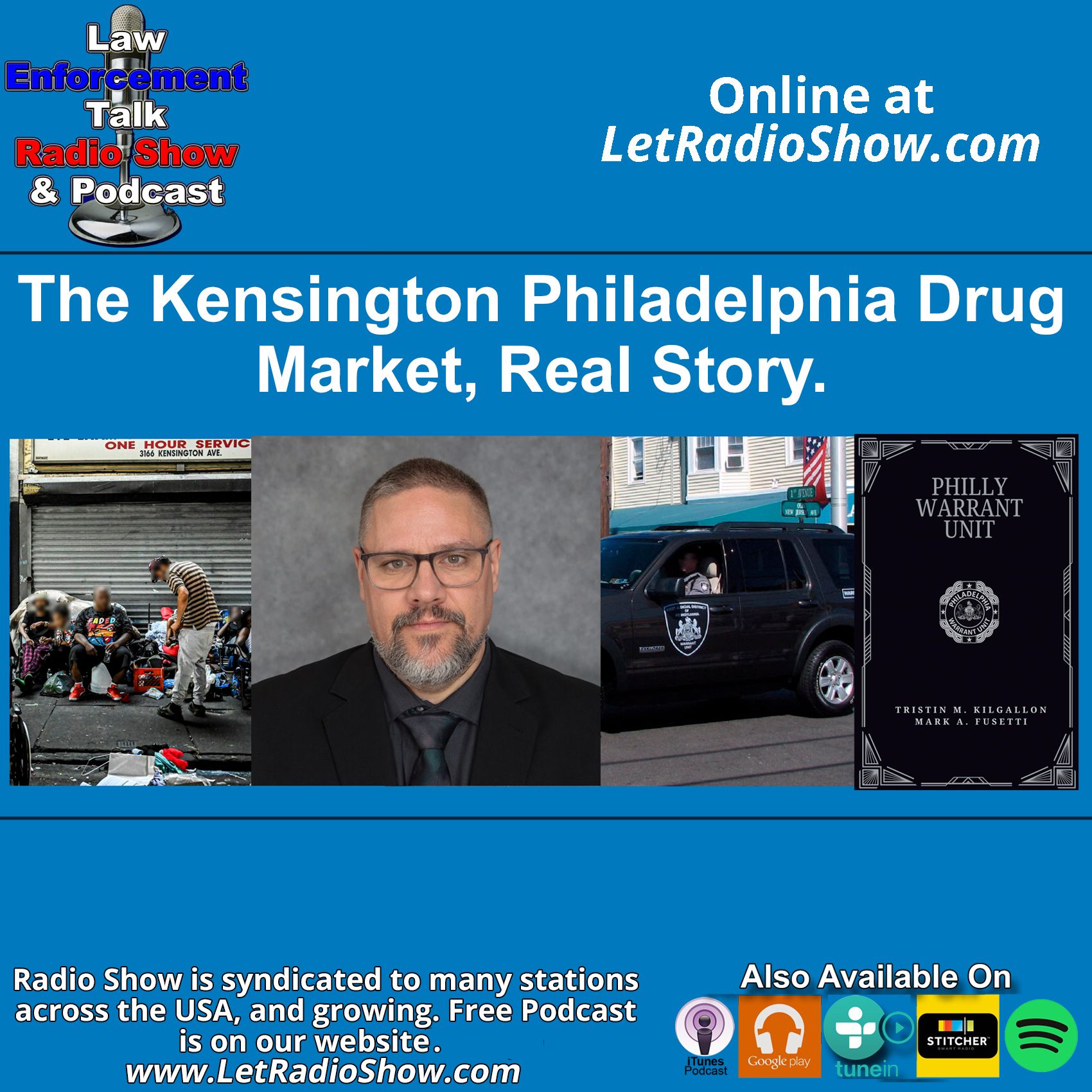
Law Enforcement Talk: True Crime and Trauma Stories
The Kensington Philadelphia Drug Market, Real Story
00:40:52
The Kensington Philadelphia Drug Market, Real Story. If there is any place that captures the raw, unfiltered reality of America’s drug crisis, it is The Kensington Philadelphia Drug Market. For decades, this neighborhood has been the epicenter of open-air dealing, addiction, and human suffering, an area where people lie on sidewalks, stumble through streets, and inject or smoke drugs in plain view. Sidewalks, parks, and alleys are littered with used needles. Crowds of people slump over, “nodded out,” as if frozen in time.
Loading summary
Transcript88 lines
- [00:00]
WSECU Announcer
WSECU isn't just one of Washington's best credit unions. We're the only credit union to be on the Forbes Best in State list five years running. Why? Because we put you first. Lower fees, early paydays, financial guidance and service second to none. As a member owned cooperative, we love Washington as much as you do. From the Olympic Mountains to the rolling Palouse. Join us and discover how much we care about your financial well being. Because what we really do best is invest in you. Stop by, say hi, we're wsecu. Let's credit Union.
- [00:32]
Pluralsight Announcer
My place in tech changes every day, but I don't fear the future because I'm with the leader, pluralsight, Their online learning platform has the hands on expert led courses I need to master new tech skills and create bigger impacts so I can learn quickly and stay ahead. With pluralsight, I don't fear what's next. I embrace it. Tap in@pluralsight.com and see for yourself.
- [01:02]
John J. Wiley
He's a former Philadelphia Warrant Investigator. He was part of the now famous Philly Warrant Unit. He left to become a lawyer, went to law school, and then became a professor of criminal justice. He's here to talk about the drug problem in Kensington, how they dealt with it, and much more. Welcome to the Law Enforcement Talk Radio Show. In the Law Enforcement Talk Radio show, we are joined by special guests talking about their experiences, their realities of investigating crimes, plus those who have experienced horrendous trauma. Police, first responders, military and victims of crime share their stories. Hi, I'm John J. Wiley. In addition to being a broadcaster, I'm also a retired police sergeant. Be sure to check out our website letradio.com and also like us on Facebook, search for the Law Enforcement Talk Radio show. You know, we used to have an app and it was a very popular app. And then guess what? We couldn't hold a candle through our Facebook presence. How many people have the mobile Facebook app already installed on their phone? How many people use it on their computer? Make sure you follow us, make sure you like us on our Facebook page. Just search for Law Enforcement Talk radio show and podcast and be sure to send us a comment to one of the posts. Best of all as 100% free. Joining us from Ohio, we have Tristan Kilgallen on the Law Enforcement Talk Radio show. Chris Tristan is a former Philadelphia Warrant investigator. I don't know what that is. I really don't, but we'll talk about that in a moment. We'll both learn. He left the Warren Squad, became a lawyer, went to law school Became a lawyer and was a professor of criminal justice. He's author of the book Philly Warrant Unit and his Facebook page you can get more information is Philly Warrant Unit book. That's Philly Warrant Unit book. Tristan. A, thanks for your service. B, thank you for being a guest on the show. It's very much appreciated.
- [02:58]
Tristan Kilgallen
Hey, thanks. It's great to be here.
- [02:59]
John J. Wiley
It's good to have you here. And as we said beforehand, I don't know too many Tristans. The only Tristan I know is on that television show and I don't know him personally. The character, it's All Creatures Great and Small and I can't remember who it was, but that's not a name we come across very often.
- [03:15]
Tristan Kilgallen
Yeah, it's a rare name. My father actually. My father's from England. He actually named me after the island of Tristan da Cunha. When I was a kid, I mean, I'm almost 50 years old, was not a very popular name. And then Brad Pitt had the name in Legends of the Fall, if you remember that.
- [03:29]
John J. Wiley
Oh yeah.
- [03:29]
Tristan Kilgallen
And then it became immensely popular. But unfortunately I don't look like Brad Pitt.
- [03:33]
John J. Wiley
But look, I don't look like Brad Pitt either. We'll just. You're in good company. I tell people, I jokingly tell people I have a face or radio and a figure to match. And this is a city I've only been to a couple times. Philadelphia, it's not far from Baltimore where I did my policing and many things about it are very similar, but I really don't know much about Philadelphia. You started your career in Philly in the. As a part of the warrant unit, am I correct?
- [04:02]
Tristan Kilgallen
Yep. Warren unit. So basically I'm not one of those guys who kind of always thought that he was going to be in law enforcement. You know, like a lot of guys I worked with that families are in law enforcement or were former military. I was actually in grad school when I was working part time as a bail interviewer and happened to be in the same building. And you know, after enough time I thought it sounded like a good deal and wound up being a warrant investigator in Philly, which was, you know, really kind of cool. It's a unique unit and you know, I mean you're familiar, you worked in law enforcement. Most officers, if you make an arrest your tied up for hours, kind of limits your night. One of the beautiful things about our unit was we worked off of basically bench warrants and or detainers or things like that. So if we caught you on the street, we Just take you to the county jail with the. With the warrant or the detainer. So we could lock up 20 people in a night sometimes, which sounds, you know, unheard of to the average officer because we just really didn't have that much paperwork. And the areas we worked in there was literally tens of thousands of wanted people. So it was to some extent like shooting fish in a barrel.
- [05:08]
John J. Wiley
In a way, I'm jealous because so much of our work was paperwork, and it wasn't very often you arrested people. The vast majority of calls were not arrestable offenses. But when you did that tied up six, seven hours of your night.
- [05:23]
Tristan Kilgallen
Yeah, I mean, that's the beautiful thing. Like, we would run in teams, so usually we would have three person teams. You'd have kind of two people, one driver, one what we used to call the recorder, which was the person would usually knock on the door and do all the talking. And then you'd have a third person that was your runner. So if you got no foot chase, they'd jump out the back seat and run. Or they'd go out to the back of the property when we hit it. And we would have, you know, depending what shift you work, maybe four or five different teams spread out throughout the city. You know, some shifts have more, some have less. I worked last out, so 11 to 7 most of my career. And then at the end, before I left to go to law school, it was strictly a weekend gig. So we knocked out 40 hours and kind of like, you know, two and a half days essentially. But, you know, we got to run teams all over the city, different neighborhoods. I predominantly stayed in Kensington, but then we would have like a 12 person passenger van just shuttling back and forth between us, fill it up, and then run it up to Curran from Hold Correctional. So it was, you know, I mean, it's. It's beautiful in that regards, if you're in law enforcement. Very streamlined and designed to let us kind of, you know, do what we do best Assignments. Fugitives.
- [06:28]
John J. Wiley
Well, you remind me of my days early in my police career in Baltimore. I worked in what we called operations, which was like attack unit, Crime Suppression unit. And my partner, his name was Joe, he was an ultra marathoner, and so he always wound up in the passenger seat. And I was more the fighter. So when people took off running, he's the one who chased him, and I'd fall him in the car. And when they caught him, if they had any fight left in them, I would take care of business. It was, you know, it felt fit. His skill Set perfectly and mine perfectly as well. One thing I am jealous about is we didn't have, for example, when we wrote warrants, which is not that often, you quite often wouldn't know what happened. It was someone else served your sheriff's department, fugitive unit, whatever it might be, would serve it and you wouldn't even be aware.
- [07:22]
Tristan Kilgallen
I will say with us was very similar. Like a lot of times we lock people up. Now, I will say this, you get a lot of repeat customers because the areas we worked in was a lot of drug users, prostitution, kind of low level offenders, right? So I mean, you could lock them up and they'll be back out three days later. I mean, you know that's gonna happen. More serious cases, I mean, we'd be in a similar boat if you got called in to testify. So like, you know, if we just locked you up on the warrant, that's usually the end of the road. We have no idea what happens. Unless I proactively go back and look through the records, the court records, to figure it out, you know. Now if we had an incident, say you fought us, or we found a gun or drugs on you when we picked you up, and we'd have to testify in court later, you know, obviously you kind of know what happens. But other, you know, we were in the same boat. You kind of pick them up, turn them in, and then, you know, who knows what happens? Maybe you see him a few days later, maybe you don't. But if you wanted to find out, it was largely up to you to go and do the legwork, look through the court records and find out what happened to the person.
- [08:15]
John J. Wiley
Quite often what happened with us is we'd wind up writing a rest warrant and we wouldn't know about it until they're apprehended and we got something in a subpoena to show up in court.
- [08:23]
Tristan Kilgallen
Yeah, we'd have fun with those. They'd usually give those to us the morning of, which I used to hate because we would work last out. So, you know, I come rolling into my desk at seven in the morning and I'm filthy because I. I've been going through crack houses all night and have, you know, human feces on my shoe, covered in fleas and sweat. And then you come in and there's a subpoena sitting on your keyboard. You have court in an hour and a half, you know, so they kind of used to do us dirty in the Warren unit when it came to showing up for the subpoenas instead of giving you a few days. So you could schedule day shift and then come in dressed appropriately. You just show up and it will be sitting there. And unless it was like a really big case like that, you didn't even, you'd never even meet with the DA's, you just kind of showed up. Now if it was a big case like I had a couple, you know, pretty big drug ones where they wouldn't meet when you had of time and prep you. But other than that, you know, it was kind of shootless. You just show up and it's sitting there.
- [09:10]
John J. Wiley
How long did you do this with the Philly Warrant unit?
- [09:13]
Tristan Kilgallen
Only about three years. I went in when I was probably about 27 or something. And then by the time I was 30, it was a great job. I thoroughly enjoyed it. But you know, as you can imagine, it's a lot of danger. You're working in a city like Philly, very similar to Baltimore. You know, there's danger around every corner. We're working in the worst places imaginable and you're hitting eight houses a night. And if I'm doing the weekend shift, more than that. So eight times a night I'm knocking at your door at three in the morning and hoping someone doesn't have a gun on the other side. And I think that kind of started to wear on my wife pretty quickly. And one of the other problems is we weren't paid very well. So if you're making, I don't know, 35 grand or something, it's just, you know, you start doing that mental calculus. Do I want to get shot in the face for 35 grand? And eventually my wife's like, hey man, try law school. And you know, I eventually did.
- [10:05]
John J. Wiley
Well, here's the thing and we're going to go break it in a moment. When I started started policing in Baltimore, our starting pay was $13,280 a year. We were so poor we couldn't afford the R and you couldn't have an apartment by yourself. And by the way, Tristan was a part of the Philly Warrant Unit which he's going to talk about a little bit more. He left that, went to law school, which is going to talk about and then became a professor of criminal justice, which you'll talk about. He's also co author of the book or author of the book Philly Warren Unit. And the best place to find him is on Facebook. Look for the Philly Warran Unit book. That's Philly Warrant Unit book on Facebook. This is Law Enforcement Talk rated show. We take a short break I promise you. We'll be right back.
- [10:52]
WSECU Announcer
How would you like a free ebook on tips to improve your health? We're talking about tips you can use for free to add years to your life. Best of all, the ebook is free to Download@Let Healthy.com when we say free, we mean free. So you can download the free ebook to improve your physical health all while preserving your financial health. Get the ebook for free today@Let Healthy.com that's EatHealthy.com again. The website is LetHealthy.com@PluralLight we don't just.
- [11:23]
Pluralsight Announcer
Teach skills, we are building the tech workforce who deliver results fast accelerated by top tier content. Lead with confidence, Lead with expertise. Visit us@pluralsight.com to tap in and learn more.
- [11:38]
Lowe's Announcer
It's never too early for Lowe's Black Friday deals. Snag some of our biggest savings of the season right now like 25 off select pre lit artificial Christmas trees and get yourself free. Select Dewalt cobalt or Craftsman tools when you buy a select battery or combo kit before the Black Friday rush. Because everyone loves free stuff, right? Lowe's we help you save valid through 123 while supplies last Selection varies by location.
- [12:13]
John J. Wiley
The current conversation with Tristan Kilgallen on the Law Enforcement Talk Rate show He is a former Philadelphia warrant investigator. He is part of the famous Philly Warrant Unit. He left to become a lawyer, went to law school, then became a professor of criminal justice. I don't know why he thought that would be a great idea which we'll talk about a little bit later on. He's authored the book Philly Warrant Unit and best place to get more information about him and the book is Facebook page Philly Warrant Unit Book. That's Philly Warrant Unit book on Facebook. Forward the break. Tristan, we talked about briefly, you were signed primarily to Kensington. Now that's an area that has, I don't know how long it's been, but that's become synonymous with drug use and walking zombies and just addicts galore. Is that was it that way with you?
- [13:05]
Tristan Kilgallen
Well, it was there when I worked in the Warrant. I mean when I worked in the Warrant unit. I mean I will tell you this. It initially if you look at the history of Kensington, probably like most, you know, lot of industrial cities in America was once a thriving place where lots of people came, lots of work, lots of factories. And then when all those jobs kind of, you know, left the major cities like Buffalo, Pittsburgh, Philly, everybody else got, you know, kind of decimated. It started to fall into disrepair. The neighborhood So I went to high school from 90 to 94, and my high school was North Catholic. High school doesn't exist anymore, but it was in Kensington. And you know, a lot of my friends lived in Kensington. So I spent, you know, a good amount of my life down there. And I will say this, it was always kind of a rough working class neighborhood, like you always had to kind of watch your back. But it wasn't what it is today. So if you see it today, most people see it from YouTube where it literally looks like the Walking dead. No matter what time you go there. It could be noon or it could be three in the morning. There's 8 million people nodding out, bent over, you know, open trash can fires like you'd see in some third world movie or something, right? And it's just open, open air drug markets. I mean, these are million dollar drug corners and there's people everywhere you look. And you know, I would talk to students about this stuff and they're like, why don't you lock them up? And the answer is you simply can't. There's too many of them. I'd always joke, if you went to Kensington, Allegheny or Somerset or one of these corners and just threw a big fishing net and caught 30 people, 27 of them would have warrants and all of them would have drugs on them. And you just simply can't do that. We don't have the manpower. And in a place like Philly, probably very similar to Baltimore, you know, you have to prioritize those spaces in the county jail. And quite frankly, you know, if I pick you up a prostitute with $50 or $30 worth of crack on you, you know, the. And the DAs can't be bothered. They don't want to deal with that. They'd rather deal with murderers, rapists, more serious offenders. So, you know, it's kind of a tough situation to be in. And it seems like it's just getting worse and worse and worse. So the guy I wrote the book with, my co author, goes down to Kensington and shoots videos and puts them on YouTube. And you know, you can kind of see what it's like. People with open sores. It's just, you know, it's terrible. I mean, defecating in the streets and the parks. I mean, you know, one chapter in the book I kind of talk about there's a place called Needle Park. And it was a park, it was literally right across from my best friends from high school's house. It's that on the very corner I kissed a girl for the first time. You know, this place has some sentimental value to me. And it's just kind of now just, you know, heroin users, you go over there, they're asleep on the sidewalk. There's needles everywhere you look. And this is a place where you used to play stickball and hang out, and you can't even go there now because it's just needles everywhere you look and od, you know, drug addicts. It's terrible.
- [15:46]
John J. Wiley
One of the things that the biggest place that has a reputation for Philadelphia is South Philly. In your estimation, which is tougher, South Philly or Kensington?
- [15:56]
Tristan Kilgallen
Well, Philly, here's the thing about Philadelphia. The whole place is a zoo, to be fair. Right. Everything is a mess. It's just a matter of what are you looking for? Pick your poison. So if you go into Kensington, Kensington is overwhelmingly drug users who are. I don't want to say they're not dangerous. I mean, to be fair, if they had a gun, they would have sold it for drugs. So they're not going to shoot you. But with million droughts, million dollar drug corners, comes drug gangs, right? So the people that are running the drugs are really dangerous. And most of the time when you're dealing with that neighborhood, you're dealing with a lot of guys from overseas. So a lot of guys from Dominican Republic, Puerto Rico, places like that, and they're running it there. Now, if you go to other neighborhoods, usually it's just different ethnicities or different types of drugs. So Kensington's big for like heroin and crack. If you head out to West Philly, it's probably more African American, obviously. And you're going to have different drugs and different types of groups of individuals working in these. Hard to say one area is more dangerous or less dangerous than any other. It's just different types of violence, different types of criminals, different types of drugs and problems that present. So South Philly, as most people are probably familiar with from Rocky and all that stuff, traditionally has been heavily identified with the Italian American community. Now that's changed over the years, too. You have people from all different areas coming in and moving in. So the makeup of the neighborhoods has changed a lot over the last 25 years or so. So it's kind of hard to say you what's better or worse. It's kind of degrees of bad, honestly.
- [17:27]
John J. Wiley
So before we get into the conversation, change because you made some major changes in your career. When I started policing in Baltimore, we had a huge heroin problem, and we still do. We had, what do you call, boxing gloves, Their hands Would be all swollen up. We had tester ladies. They'd inject in their neck. They'd all wore scarves. And then a little thing called crack cocaine came through, and it changed the complexion of Baltimore tremendously. For the negative, did you encounter that at all, or was that beyond that timeframe? You were there.
- [18:01]
Tristan Kilgallen
Well, I mean, I'll tell you this. Like I was saying earlier, it really depended what neighborhood you're in. So, like, if I'm in Kensington, it's overwhelmingly heroin. You get a bit of crack as well, kind of to counter the heroin, and maybe a little bit of marijuana. But if you go to other neighborhoods, it's different drugs. I will say this heroin is hit big in Philly, and I don't know when it started. Maybe maybe early 2000s or so. I mean, I've done some research on this on the back end, like, when I was a professor on opioid abuse and stuff, when you have these different waves. But I think probably early, early 2000s, you start seeing a heck of a lot more heroin than you did before, you know, So I think that that's changed and now, you know, because I still have guys that are working down in these areas that are friends of mine. Heroin is then jumped up to fentanyl and shrank and all these other kind of weird drug cocktails and synthetics that are getting added in. So it's always kind of changing, and you always got to be aware of, all right, what's on the streets now. You know, I got to be careful if I'm touching this stuff accidentally, you know, absorb it or ingest it or inhale it. So I think you do see a bit of a change. But it's still heavy heroin. But now heroin, plus, you know, the other things the additives are throwing in.
- [19:10]
John J. Wiley
Right now as we speak, there's someone that's trying heroin for the first time, and they think they're gonna be the one that's gonna be okay. And I'm letting you know right now you're not. And I get it. Where people became addicted to opioids through medication, and then when they lost their supply of that, they went to street heroin. I understand that, but here's what I always say. I don't have a problem with people who are drug addicts. I don't have a legal problem, and most police don't. However, their behavior is another matter. If you do crimes to feed your drug habit, which most do, then that's where the problem lies. Is that fair for you?
- [19:49]
Tristan Kilgallen
Yeah. I mean. I mean, I went to law school. And let's just, I'll just say this. A lot of people I went to law school with smoke marijuana and use coke. And I will say this, I know lots of lawyers that still do both. I've never met a functioning heroin addict. You know, it's not something that you can dabble with on the weekends. And I think people need to be aware of that. I mean, I'll tell you, most of the people that I saw that were heroin addicted down in Kensington, a lot of them are prostitutes and a lot of them had the same story. Most of them are kind of normal girls. Maybe you met some guy and I'm not going like the gateway thing where you smoke some weed and then it led to the next. But most of the time what you'd find is the boyfriend got them into drugs, then they start doing heroin recreationally. You start selling off everything you own. You then start stealing, right? You lose your job because you're not reliable anymore. You start stealing from your family and friends and eventually you've got nothing left.
- [20:41]
John J. Wiley
We'll take a short break on that.
- [20:42]
Tristan Kilgallen
Winds up out on the Avenue.
- [20:43]
John J. Wiley
We're talking with Tristan Kilgallen. He's a former Philadelphia warrant investigator, part of the Philly Warrant Unit. He co authored the book Philly Warrant Unit and his Facebook page where you can get more information about him. The book phillywarrant unitbook.com this is law enforcement talk radio station show. Don't go anywhere. We got so much more headway. We'll be right back. One of the questions I get all the time is how can I show my support for law enforcement? We're all busy. We've got busy lives. But there's something oh so simple you can do with our Facebook page. Search for law enforcement talk radio show Facebook page and when you see a post you agree agree with that resonates with you. Share it. Especially episodes of the podcast. To do all that, just search for us on Facebook. Look for a law enforcement talk radio show and be sure to Click like.
- [21:37]
Pluralsight Announcer
@ pluralsight we don't just teach skills. We are building the tech workforce who deliver results fast accelerated by top tier content. Lead with confidence. Lead with expertise. Visit us@pluralsight.com to tap in and learn more.
- [21:51]
John J. Wiley
More.
- [21:54]
Lowe's Announcer
Lowe's early Black Friday deals are going fast. Don't miss. Up to 50% off. Select major appliances. Plus up to an extra 25% off when you bundle. Select major appliances. And with Christmas around the corner, you're going to need more string lights, right? Save $4 on GE LED 100 Count string lights now just $5.98 LOWES we help you save valid through 123 Selection varies by location. Select locations only while supply. See lowe's.com for more details.
- [22:22]
Ryan Reynolds
Hey, Ryan Reynolds here wishing you a very happy half off holiday because right now Mint Mobile is offering you the gift of 50% off unlimited. To be clear, that's half price, not half the service. Mint is still premium unlimited wireless for a great price. So that means a half day. Yeah, give it a try. @mintmobile.com Switch upfront payment of $45 for.
- [22:47]
WSECU Announcer
3 month plan equivalent to $15 per month Required new customer offer for first 3 months only Speed slower 35 gigabytes of networks Busy taxes and fees extra c mint mobile.com.
- [23:00]
John J. Wiley
Return conversation with Tristan Kilgallen on the Law Enforcement talk radio show. Tristan is a former Philadelphia warrant investigator, Philadelphia, Pennsylvania and he has co authored the book Philly Warrant Unit Unit and the Best Place to Find Him Find more information about the books Facebook. Look for Philly Warrant Unit book. That's Philly Warrant Unit book. He left a warrant investigator job to go to law school, which talked about a few moments, then became a professor of criminal justice. I don't know why he did that. We'll talk about in a few moments. Tristan, I get you're not the first, and I'm using this term loosely, police person I met that I knew of several that left law, most finished their career and they went to law school while they're in their career, became lawyers. So you're actually, I'd say, not an anomaly at all.
- [23:49]
Tristan Kilgallen
Yeah, I mean, honestly, it's kind of a natural path if you think about it. I mean, if you do have an interest in the law and enforcing the law and keeping your community safe, there are a number of ways you can do that. Obviously one is to put on the badge and a gun and go out and patrol the streets. But the other one is by serving as an attorney, especially if you're going to do criminal work. You know, I had honestly just I enjoyed the Warrant Unit, absolutely loved it. But my life started giving me a little bit of pressure, you know, because what we do is very dangerous. And said, why don't you try this out? You're a smart guy. And I thought to myself, why not? I'll give it a shot. And I applied to law school. I think I applied to 30 of them and just thought, hey, let's see what happens. Because I knew nothing about it, didn't prepare, didn't do any, you know, groundwork, and then got lucky and got scholarships to a bunch of schools. And I thought, let's give it a shot.
- [24:32]
John J. Wiley
And you were like what, 30 when you went to law school?
- [24:34]
Tristan Kilgallen
Yeah, Yep, I was 30 when I went to law school and I got out at 33.
- [24:38]
John J. Wiley
So you were the old timer in law school because a lot of them.
- [24:41]
Tristan Kilgallen
Are just out of then. Yes. Now you had a lot of older people back then?
- [24:44]
John J. Wiley
Yes. Were you also one of the few that came from a law enforcement background that went to law school?
- [24:51]
Tristan Kilgallen
Yeah, I mean, it's not unheard of. I mean, just from being around universities for last 15 years is not unheard of to have cops go to law school. I mean, I had a couple, a number of students of mine that did it. But I think more common, especially if you're a little bit older, was to have former military folks. So we had a number of guys that were, you know, Army, Marines, Air Force, and then once they were done their careers, you know, 30 years old or so, they all came out and went to law school. So that's kind of common.
- [25:17]
John J. Wiley
So when you went to law school, did you ever sit there and think to yourself, this is drawing, or your law enforcement background, did you ever think, yeah, that sounds good in theory, but in reality doesn't work, doesn't work like.
- [25:29]
Tristan Kilgallen
That all the time. And as a professor as well, I mean, I remember the first time I taught a criminal investigation case. I bought this giant textbook from, you know, the big publishing companies and I read it and I thought, my Lord, this sounds great. But none of this actually works. Like whoever did this has never actually done an investigation in their life. Law school is similar. I mean, you have. And you know, not to knock academia, but one of the problems with academia is a lot of the folks in it have never actually done the things they claim to be great at, right? So you'd have these discussions and professors like, what about this? And I'm like, yeah, that's not how it works. I mean, I understand that might be what the law says or whatever your book says, but like in reality that's not how these present, you know, so it's a night and day from, I guess theoretical to the practical.
- [26:12]
John J. Wiley
And there comes a stage in every police cross career where you turn into a bit of that salty guy. I did. And when I say guy, that means men and women. It's not just gender specific to males only. So did you find that when you went to law school that you were becoming a little salty?
- [26:31]
Tristan Kilgallen
I don't know if I was salty. To be honest, I quite enjoyed it. I mean, law school is really weird. It's like going back to middle school. It's very clicky and very. I don't know, it wasn't like regular college. I mean, by time I went to law school, I'd done undergrad. I had two master's degrees and they were kind of normal, like saved by the bell. So weird situations.
- [26:49]
John J. Wiley
Wait a second, you had two master's degrees before you went to law school?
- [26:54]
Tristan Kilgallen
Yeah, yeah. I mean, I earned a bachelor's degree and then got into law enforcement. I wanted to work for the State Department initially, and one of the alums from my high school said, go get a master's degree in international relations. So I did, and it just never got me what I wanted. So then I worked with the Warren unit and they had a deal with St. Joe's University in Philly that you got basically tuition remission. So I figured, why not? If I get another master's degree for half price, why not? Knock it out?
- [27:18]
John J. Wiley
You know, the reason I bring that up, Justin, is because there is a common misconception that, and I use the term police, but the police are ignorant. They're stupid. They're not well educated. Obviously you and I know that's not true, but you had two master's degree and a bachelor and a bachelor's.
- [27:37]
Tristan Kilgallen
Yeah, I mean, what I found was most of the older guys, like our lieutenants and sergeants and, you know, higher up guys didn't. A lot of them had gone to schools to play football and dropped out or didn't finish, you know, but with the guys that came in, in my wave would have been like 0304 around there, a lot of them did have at least bachelor's degrees, like a number of the people in my training class did. And then once they offered you the tuition remission, a bunch of us went and got master's degrees, which is kind of funny because I think it spawned some of the older guys to go back and complete their degrees because they were afraid we were going to jump over. Over them.
- [28:08]
John J. Wiley
Yeah. And by the way, the modern day police, the ones we see and we encounter on a daily basis, and we love to. I don't say we, but people love to make judgments about them based off appearance. A lot of these people are military veterans. A lot of them have college degrees. They have multiple college degrees. They speak multiple languages, they are not slouches, they could work anywhere, anywhere. And for some reason they choose to do this. And I Don't understand why.
- [28:38]
Tristan Kilgallen
I mean, honestly, I think it's just commitment to serve. I mean, you know, as a professor, I've served on organizations where we hosted like career fairs. And you see the agencies come out. And to be honest, agencies are dying for good personnel now. I mean, when I was at Owen U. I would get letters from Milwaukee, Wisconsin, I get stuff from San Diego, you know, all over the country, just desperate to try to get good quality candidates. So I mean, it's, it's, I guess it's a good environment if you're a job seeker, but if you're the employer, it's tough. Now a lot of people are just, you know, afraid to go into law enforcement.
- [29:07]
John J. Wiley
So when I started in job in 1980, we had a lot of guys in Baltimore that. I say guys, that's men and women. I'm not going to explain again, but we had a lot of guys from Ohio, we had a lot of people from New York because their agencies weren't hiring, but Baltimore was. And then places like Houston, other ones were hiring. They had national drives on to try to get people. And they were back in the days before on lateral transfers. That's what they're looking for. They're looking for people experience. College degrees was not a requirement requirement to go into law enforcement in most major cities. Somewhere along the way it became a requirement. And then a lot of associates degrees, some bachelor's degrees. And now it seems to be going the other way. So have you seen in your experience a difference in the level of candidates with a college degree compared to not?
- [29:56]
Tristan Kilgallen
I don't see. I don't think that the degree is the determining factor. I think it's the candidates. You know, I mean, I was a professor for 15 years and I can tell you. Or 14 years, and I can tell you when I came in, the quality of student was much higher than it is now. You know, now it's one of the reasons I left higher ed, quite frankly. You know, now if a kid gets anything other than an A, you get in trouble and you have to explain why this kid didn't do well. Right. And it's just kind of. It's mind numbing. So you're turning out kids that aren't prepared for the streets because they're not prepared for anything, quite frankly. Not all of them, of course, but I mean, you know, if I'm looking at them in big monoliths, big groups, the students are less prepared now than they were 15 years ago. Now I think a college degree can help you. It's not going to make you a good cop. But I think there are definitely some things that you can learn that can help you, you know, when you're doing the job. But, but reality is, you know, the best teacher of law enforcement is just being on the job is experience. But I think if you have all those things, sometimes it can help you out. But I don't think the degree makes the man, as it were, you know.
- [30:53]
John J. Wiley
So you left law enforcement and you went to law school. You said both were good experiences working in law enforcement and law school. Which did you prefer?
- [31:03]
Tristan Kilgallen
It depends. I mean, law school was great because I was 30 and it was like I was 18 again because I got to hang out at parties and drink beer. You know, it was fun, but like career wise and stuff like that, I mean, I think law enforcement was awesome. I mean, I was fortunate. I got to work with my best friend from when we were children were partners. The guys I worked with, I still to this day, you know, talk to them regularly. They're like brothers and sisters to me. And you can never, you can never kind of replace it. I've talked to my wife. I think maybe if you're in the military or police or you served in some kind of unit where, you know, you're relying on each other for your life, there's a bomb that forms. And law school was awesome. You know, hanging out was great. Learning about the law was great. But nothing compares to working a warrant unit.
- [31:43]
John J. Wiley
We're talking with Tristan Kilgallen. He is a former Philadelphia warrant investigator. He left law enforcement to go to law school, became a lawyer, then became a college professor, which we'll talk about in a few moments. He's co authored the book Philly Warrant Unit. That's Philly as in Pennsylvania Warren unit. And best place to find him, get information about the book is on Facebook. Facebook. Their Facebook page is Philly Warrant Unit book. This is law enforcement talk radio show. We take a short break. I promise you we'll be right back.
- [32:15]
WSECU Announcer
Remember when free meant free, no charge, no credit card information needed. Well, a place like that still exists on the Internet. The law enforcement talk radio show website letradio.com where everything is free including the podcast episodes are available after airing on radio radio. The website is letradio.com that's letradio.com where free means free.
- [32:43]
Pluralsight Announcer
At Pluralsight we don't just teach skills. We are building the tech workforce who deliver results fast accelerated by top tier content. Lead with confidence, lead with expertise. Visit us@pluralsight.com to tap in and learn more.
- [32:59]
Lowe's Announcer
It's never too early for Lowe's Black Friday deal. Snag some of our biggest savings of the season right now like 25% off select pre lit artificial Christmas trees and get yourself free select dewalt Cobalt or Craftsman tools when you buy a select battery or combo kit before the Black Friday rush. Because everyone loves free stuff, right? Lowe's we help you save valid through 123 while supplies last selection varies by location.
- [33:28]
Ryan Reynolds
Hey Ryan Reynolds here wishing you a very happy half off holiday because right now Mint Mobile is offering you the gift of 50% off unlimited. To be clear, that's half price, not half the service. Mint is still premium unlimited wireless for a great price. So that means half day. Yeah, give it a try@mintmobile.com Switch upfront.
- [33:51]
WSECU Announcer
Payment of $45 for three month plan equivalent to $15 per month required new customer offer for first three months only. Speed slow 135 gigabytes of networks busy taxes and fees extra. See mint mobile.com.
- [34:04]
John J. Wiley
Return Conversation with Tristan Kilgallen on the Law Enforcement Talk radio. Tristan is a former Philadelphia warrant investigator. He co authored the book Philly Warrant Unit and the Facebook page. Best place to find more information about the book and him is Facebook page Philly Warrant Unit book. That's Philly Warrant Unit book on Facebook. So he left law enforcement, went into law school, became a lawyer. We talked about that. And then somewhere along the way, this I'm saying this in tongue in cheek, he got the bright idea, hey, let's become a cop college professor, and jumped right into the fire. For someone who worked in law enforcement, what possessed you to become a criminal justice professor?
- [34:45]
Tristan Kilgallen
To be honest, serendipity. Same way I became a law enforcement officer. Like I'd never planned to work in law enforcement. I kind of fell into it. Professor was the same thing. So essentially I finished my JD I guess May of 2010. My law school had an LLM program which is kind of a master's in law. And I'd already done like half of it. So I decided I'll come back and I'll do the other half of just had to do an internship in Kosovo. So I said okay, I'll do that while I was there.
- [35:13]
John J. Wiley
In Kosovo, in Europe?
- [35:16]
Tristan Kilgallen
Yep, Kosovo. I worked with the Ministry of Justice over there for like three months, the spring semester essentially of one of the years. And then when I came back, the guy who was teaching criminal justice, if you guys know the school year usually starts in kind of mid August, the guy up and abruptly quit like July 30th or something. So they were like, we're basically in a tough position. We need someone to pinch hit for a year. You know, would you mind teaching some criminal justice classes? Just because I knew some of the other professors and I was like, why not? My kids are in school. You know, if I just push this off another year, it's okay. We're in safe Ohio. Better than being in Philly. Right. And then one year just became 14. I did it, kind of liked it. The students took to me, I took to them, and I thought, I'll do this now. That changes over time. As you know, a lot of my work started to become, I guess, vitriolic after the first Trump election. As you know, higher ed is kind of crazy politically. And everybody started turning on me. I wasn't some great MAGA dude, Trump this and that. I just refused to partake in their ridiculous strikes over the election. And wearing the hats, you're probably familiar with the hats they wear, right? I just wasn't having it. I'm not playing that game. And then everybody kind of turned on me, and it just became, you know, getting attacked for politics for years afterwards and then finally just said, I had enough of this amount.
- [36:37]
John J. Wiley
The funny thing is, Tristan and someone, if they. If they pin me down, by the way, I don't do any partisan political content on the show. And most people, one of the biggest compliments I can get working radio is that they don't know where I stand politically. And that's done for a reason. So I am by nature more conservative. It depends on the issue issue. Certain things I'm very liberal about or progressive about, but by nature, I'm very conservative. However, when it comes to the whole Republican and Democrat thing, I shut people down. I don't want to talk about it. I don't want any part of it. And I'm like you. I'm not going to engage.
- [37:14]
Tristan Kilgallen
Yep. I mean, that's one of the biggest problems. I mean, you know, when I came up, universities were supposed to be, you know, the marketplace of ideas where you can come in with conservative or liberal ideas, you debate them, and you kind of figure out what's best for you. The problem is now at universities, I mean, there are studies that show you're more likely to find an openly socialist professor than just a simple old Republican, which should be kind of half the countries, half Dems, half Republicans. But, you know, they've become. I mean, they're just what are called echo chambers, essentially, where they're all saying, the same stuff, and they're all pushing the same ideas. And I'd say to myself, like, look, man, you teach chemistry. What are you doing out here propagandizing to these students about politics? Like, just teach chemistry, do your job. If the political science professors want to talk about it or CJ issues come up, no problem. But you don't need to be indoctrinating kids. And that's not a popular opinion to have in higher ed, surprisingly.
- [38:04]
John J. Wiley
Did you notice a change? And you said earlier this is part of the reason why you left, the change in the caliber of the students. And part of that, I think, is that we condition our students to be that way from high school onwards. And it becomes more indoctrination than education and free thinking. But that's just my point. When did you start to see change?
- [38:25]
Tristan Kilgallen
I'll tell you, even my son graduated from high school probably five years ago out here in Ada, Ohio, middle of nowhere. I mean, it's most known for ONU law and the football, the NFL, football factories there, the Wilson Football Factory. My son wrote a paper, great paper. I read it, it was really good. And a teacher gave him a B and sat on it because she didn't like his political view. And I was just like, this is insane. Tell her I'm gonna sew her. You can't give my son a lower grade because you're a rampant leftist and you disagree with his opinion. That was insane to me. I should be fired for that. Like, how dare you interpret someone's political opinion as right or wrong as far as test points go? So, you know, it's crazy. And I think these kids have been conditioned. It's like Pavlov's dog. They know when the professor says something, what they're supposed to say, what they're supposed to say. And I've talked with students about this. They've come to me about student groups getting shut down. So, for example, my last university, they were trying to sell back the blue shirts, and they refused to let them sell it. And it turned into like a big national incident. And it just. It really upset me that, you know, they would try to silence the students when they're doing exactly what they should be doing, exploring their interests and pushing for things they support.
- [39:33]
John J. Wiley
Right, right. No, I agree with you. And one of the things my dad, may he rest in peace, used to always say is that. And this is going way back because he died 30 some odd years ago, he said you could tell the people who went to college because they could not write at all. And this is something he would say in the 1980s. How true is that today?
- [39:55]
Tristan Kilgallen
Well, they can't write at all now. I mean, it's bad. Not all of them. I mean, there's always good students. Don't get me wrong, not everybody. But as a. Again, as a monolith, as a group, their critical thinking skills are terrible. Their writing skills, reading skills are terrible. I had kids. I mean, I've had students that were in my classes that were Division 1 football players. I had a kid who played multiple years at a big D1 school, blew out his knee and came to our small school. The kid couldn't not read. Like, he did a presentation and he didn't show up for it. So I was like, where the heck is this kid at? So class lets out and then he comes in like, oh, I got my presentation. I was like, dude, that was 20 minutes ago. But I thought, like, let's see if he really did it. And he put it on screen and the kid couldn't read his own work, which obviously means someone else did it for him, but he couldn't read. And I just thought like, my God, this is. This is bad. I think they also write in, like, tech speak or, you know, however you type online, and that's how they do academic papers, which is terrible. But I think the biggest problem we run into now is going to be AI because you have these kids who couldn't write or read two weeks ago. Now all of a sudden, AI wrote their paper and it looks better than something the professor would write. Right? And it's just going to push them back further because they're not actually learning.
- [41:00]
John J. Wiley
Here's the big drawback before we go back to you. I use AI extensively because writing is not my strong suit. But I always create the content first. And then I'll ask, like, ChatGPT or Meta AI or whatever, rewrite this in a form of blog article, whatever it might be, and then I do some basic editing on that. I went to a college preparatory seminary in Richmond, Virginia, and we had three years of Latin. We had to learn that. I remember translating Latins, Iliad, Homer's Iliad, and the Odyssey from English to Latin as a summer assignment. Things have certainly changed. I gotta ask you this, Tristan. Knowing what you came from, a law enforcement background, being a lawyer, did you find it really challenging and tough to go into becoming a college professional professor?
- [41:49]
Tristan Kilgallen
Initially, no. And maybe this is just the most simplistic thing in the world. Like, if I mess up at the warrant unit, I might not go home Today, right now. Or someone else might not go home if I got to shoot them or something bad happens. The way I always looked at teaching is if I don't do something wrong, who cares, right? If I do something wrong, rather, who cares? No one's going to die. No one. Nothing major is going to happen. You know, if there's some disagreement or you don't explain something right, or someone doesn't get it, no one's going to die. So I think that took a lot of the pressure right off the bat. You know, if I can walk into crack houses in Kensington, I can look at the department chair, some loser who's never had a real job in his life, right? So, I mean, I think that took a little pressure off. First years was great, honestly. People were real cordial, real cool. And then, like I said, everything just got political and it just didn't need to. And that's, I think, when it started to change and I hit this bad kind of crux where it's like, what do I do? They want me to leave because I don't espouse their viewpoint. But at the same time, I almost think, like, I owe it to these kids to stay here and let them have another viewpoint other than the majority, you know? But it gets to a point where it just gets so overwhelming. Eventually you're like, look, I see everyone's against me. I'm just done with this. I can go do something else. You got to get to a point where professors don't make any money either. I think people think they make tons of money. They make garbage money. So I could be abused elsewhere for money, right? Why would I stay?
- [43:09]
John J. Wiley
And there comes a point where I begin to feel like Don Quixote and tilting a windmills, and it's just like, let's someone else face that battle very quickly. We're almost out of time. You co wrote the book Philly Warrant Unit. What is it about?
- [43:21]
Tristan Kilgallen
Well, it's basically the experience of me and my former partner, Mark Fusetti. It's written like a series of short stories. So it's not just one narrative kind of book. It's broken down into short chapters. Some of them are a page or too long, some of them are multiple pages. But they're just like a whole bunch of different incidents and stories of cases that we encountered in real life. Some of them are crazy. So there's some shootouts, rooftop chases, fights, you know, the stuff you'd expect. But there's some funny stories too, because a lot of the job, I mean, there's some serious. A lot of it is fun. It's camaraderie, you and your buddies kind of making fun of each other and messing around. So there's some of that in there and there's some redemption stories because some.
- [44:00]
John J. Wiley
Of the girls and we're almost out of time. Get more information about the book and Tristan at the Facebook page. Philly Warren Unit Book that's Philly Warren Unit Unit Book. Tristan, thanks so much for your service and being a guest on the show. Very much appreciate it.
- [44:16]
Tristan Kilgallen
Thank you.
- [44:18]
John J. Wiley
Of all the radio stations in the United States, there are no other shows like the Law Enforcement Talk Radio show and on Facebook there's only one official page. Do a search on Facebook for the Law Enforcement Talk Radio show and be sure to like the Law Enforcement Talk Radio Show Facebook page. I'd like to thank our guests for coming on the Law Enforcement Talk Radio Show Radio show the Law Enforcement Talk Radio show is a nationally syndicated weekly radio show broadcast on numerous AM&FM radio stations across the country. We're always adding more affiliate stations. If you enjoyed the podcast version of the show, which is always free, please do me a favor and tell a friend or two or three. I'll be back in just a few days with another episode of Law Enforcement Talk Radio show and Podcast. Until until then, this is John J. Wiley. See ya.
- [45:10]
Pluralsight Announcer
Worried about your future in tech? Master new skills, accelerate your team's impact and redefine what's possible. With pluralsight, we're more than just another online learning platform. We're shattering the skills gap and shaping future generations of technologists. Transformers. Transform your work, Transform your team. Ready to tap in? Visit us@pluralsight.com to learn more.
- [45:41]
Lowe's Announcer
Lowe's Early Black Friday deals are going fast. Don't miss up to 50% off select major appliances plus up to an extra 25% off when you bundle. Select major appliances and with Christmas around the corner, you're going to need more string lights, right? Save $4 on GE LED 100 count string lights. Now just 5.98 Lowe's we help you save valid through 12 3. Selection varies by location. Select locations only while supplies last. See lowe's.com for more details.
- [46:09]
Ryan Reynolds
Hey, Ryan Reynolds here wishing you a very happy half off holiday because right now Mint Mobile is offering you the gift of 50% off unlimited. To be clear, that's half price, not half the service. Mint is still premium unlimited wireless for a great price. So that means a half day. Yeah, give it a try@mintmobile.com Switch upfront.
- [46:33]
WSECU Announcer
Payment of $45 for three month plan equivalent to $15 per month required new customer offer for first three months only. Speed slow after 35 gigabytes of networks busy taxes and fees extra. See mint mobile.com Step into the shadows.
- [46:41]
Tristan Kilgallen
Of history with the youe Town Podcast. Each week we uncover the chilling, bizarre, and often forgotten true stories that shape towns big and small, from notorious crimes to legends that refuse to to die. If you love gripping storytelling, dark mysteries, and a journey into the past that feels way too real, this is the show for you. New episodes drop every Monday, so subscribe now and start exploring the story's history. Tried to bury the Yorktown Podcast Available wherever you get your podcasts.