Podcast
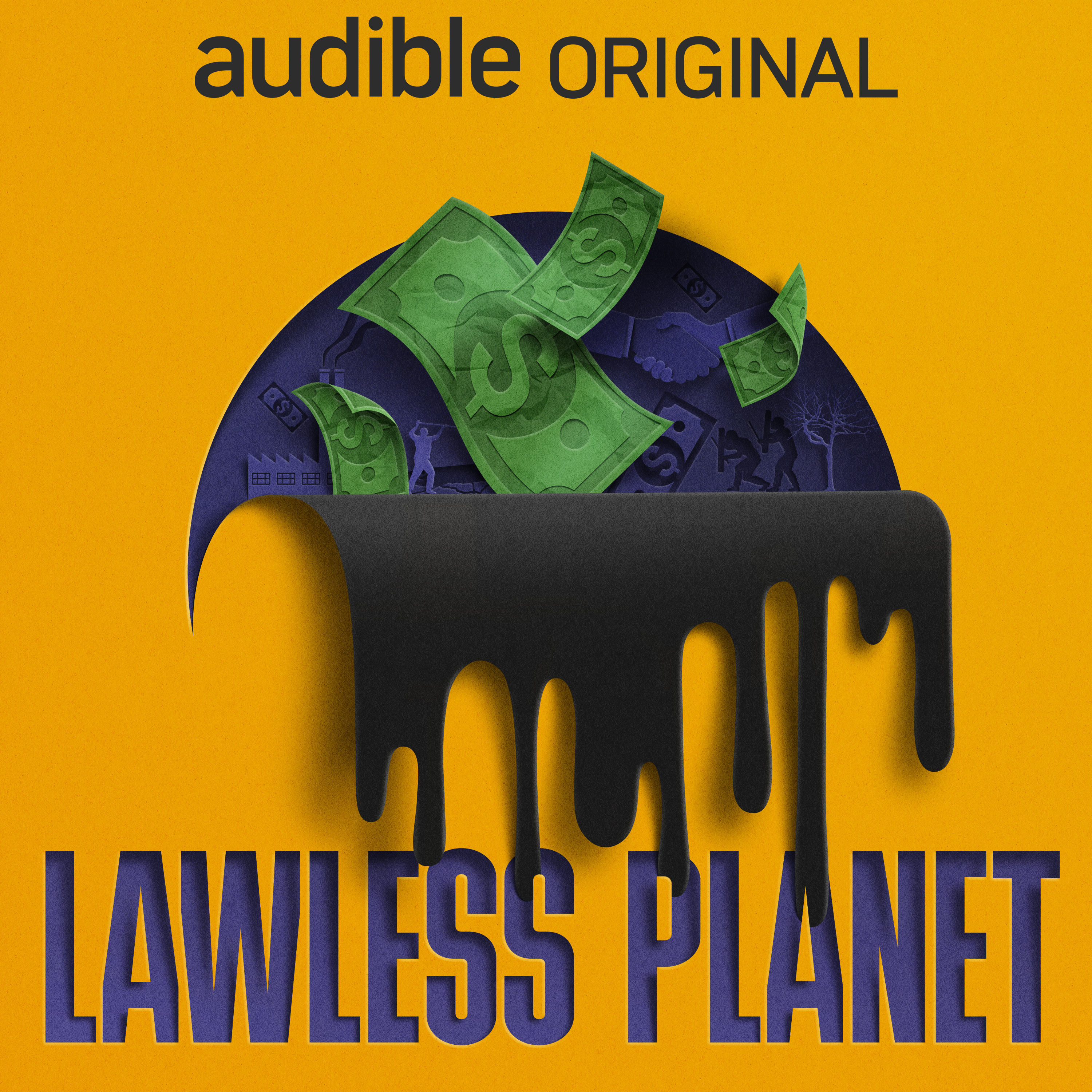
Lawless Planet
Hosted by Audible · EN
It’s not that hard to kill a planet. All it takes is a little drilling, some mining, a generous helping of pollution and voila! Earth over. When you take stock of what’s left, it starts to look like a crime scene: Decapitated mountains, poisoned rivers, oil-soaked pelicans, maybe a sun-bleached cow skull in a dried-up lake bed. The only thing missing is yellow caution tape. On each episode of Lawless Planet, host Zach Goldbaum reveals the scams, murders and cover-ups on the frontline of the climate crisis, and the life and death choices people are making to either protect our world – or destroy it.
Audible subscribers can listen to all episodes of Lawless Planet ad-free right now. Join Audible today by downloading the Audible app.
48episodes
Episodes
Newest firstAll episodes
Disaster Capitalism Makes Landfall in Puerto Rico
Mar 3000:41:27Summary readyIn 2017, Hurricane Maria, one of the most powerful storms ever recorded, battered the island of Puerto Rico. In the aftermath, big banks, crypto bros and other ‘disaster capitalists’ swooped in to take advantage of the crisis. No one realized the full scope of death and destruction until a scrappy team of journalists started to investigate. They exposed a corrupt system that continues to threaten Puerto Rico’s power grid, its people and the environment.Featured in this episode:Carla MinetSources:The investigative journalism of Carla Minet and her team at the Centro de Periodismo Investigativohttps://periodismoinvestigativo.com/ Naomi Klein’s book The Battle for Paradise: Puerto Rico Takes on the Disaster Capitalists and her Intercept article “There’s Nothing Natural About Puerto Rico’s Disaster”https://theintercept.com/2018/09/21/puerto-rico-hurricane-maria-disaster-capitalism/ Yalixa Rivera and Jonathan Levin’s Bloomberg article “Can Crypto, Cannabis, and Nicolas Cage Boost Puerto Rico’s Economy?”https://www.bloomberg.com/news/articles/2018-09-10/can-crypto-cannabis-and-nicolas-cage-boost-puerto-rico-s-economy David Yaffe-Bellany and Laura N. Pérez Sánchez’s New York Times article “The Unraveling of a Crypto Dream”https://www.nytimes.com/2024/08/13/technology/brock-pierce-crypto-puerto-rico.html Fernando Tormos-Aponte’s In These Times “How an Investigative Journalism Center Helped Oust Puerto Rican Gov. Rosselló”https://inthesetimes.com/article/investigative-journalism-rossello-puerto-rico-protestsSee Privacy Policy at https://art19.com/privacy and California Privacy Notice at https://art19.com/privacy#do-not-sell-my-info.
SummaryThe People vs. Big Oil, Part 2: Chevron Strikes Back
Mar 2300:39:30Summary readyIn 2011, the people of Ecuador shocked the world by winning a multibillion judgment against Chevron for failing to clean up its oil operations in the Amazon. But back in the U.S., Chevron responded by suing their most prominent legal adversary, Steven Donziger. And as the oil giant challenged the Ecuadorian verdict, Donziger found himself trapped in his own Kafkaesque legal nightmare, one that threatened to overshadow the plight of the people he was trying to help.Featured in this episode:Steven DonzigerPablo FajardoSources:William Langewiesche’s Vanity Fair profile “Jungle Law” https://archive.vanityfair.com/article/2007/5/jungle-lawPatrick Radden Keefe’s New Yorker article “Reversal of Fortune” https://www.newyorker.com/magazine/2012/01/09/reversal-of-fortune-patrick-radden-keefeJoe Berlinger’s documentary “Crude”Paul M. Barrett’s book Law of the JungleSee Privacy Policy at https://art19.com/privacy and California Privacy Notice at https://art19.com/privacy#do-not-sell-my-info.
SummaryThe People vs. Big Oil, Part 1: 'Amazon Chernobyl'
Mar 1600:47:03Summary readyAfter Texaco (now Chevron) discovered oil in Ecuador, they left behind an ecological and public health disaster so severe that experts have dubbed it the "Amazon Chernobyl.” The local population then sued the company sparking an epic courtroom drama spanning multiple decades and costing billions of dollars. Leading that fight are two outspoken attorneys: an American outsider not afraid to make enemies, and an Ecuadorian lawyer who risked his life to stand up for his people.Featured in this episode:Pablo FajardoSteven DonzigerSources:William Langewiesche’s Vanity Fair profile “Jungle Law” https://archive.vanityfair.com/article/2007/5/jungle-law Patrick Radden Keefe’s New Yorker article “Reversal of Fortune” https://www.newyorker.com/magazine/2012/01/09/reversal-of-fortune-patrick-radden-keefe Joe Berlinger’s documentary “Crude” Paul M. Barrett’s book Law of the JungleSee Privacy Policy at https://art19.com/privacy and California Privacy Notice at https://art19.com/privacy#do-not-sell-my-info.
SummaryWhen Elon Musk’s Data Center Came to Town
Mar 900:43:24Summary readyWhen Elon Musk’s xAI opened a data center called Colossus in South Memphis for its chatbot, Grok, local politicians and business leaders hailed it as the first step towards turning Greater Memphis into “America’s Digital Delta.” But residents soon noticed they were getting sick – and blamed the data center’s methane gas turbines, installed without permits to support the center’s massive electricity needs. Now South Memphis has become a flashpoint in the growing debate over the human and environmental costs of powering AI.Audible subscribers can listen to all episodes ad-free right now. Join Audible today by downloading the Audible app.Featured in this episode:KeShaun PearsonSources:Reporting by the Memphis Commercial AppealTime’s “We Are the Last of the Forgotten: Inside the Memphis Community Battling Elon Musk’s xAI” https://time.com/7308925/elon-musk-memphis-ai-data-center/ The Wall Street Journal’s “Elon Musk Gambles Billions in Memphis to Catch Up on AI”https://www.wsj.com/tech/elon-musk-xai-memphis-tennessee-power-dec4c70d The Natural Resources Defense Council’s “The AI Boom Is Stressing the Grid—But It Doesn’t Have to Be This Way”https://www.nrdc.org/stories/ai-boom-stressing-grid-it-doesnt-have-be-waySee Privacy Policy at https://art19.com/privacy and California Privacy Notice at https://art19.com/privacy#do-not-sell-my-info.
Summary'Field of Schemes': Organic Farming’s Epic Fraud
Mar 200:43:45Summary readyWhen it comes to organic food, can we really trust what’s on our plate? Do we understand how it was grown or raised? The organic food industry is largely built on the honor system. More than a decade ago, a mild-mannered Missouri farmer exploited that system, raking in millions of dollars and leading a double life in Las Vegas. As it turns out, that wasn’t the only secret he was hiding.Featured in this episode: Glen BorgerdingJacob SchunkTony Morfitt Sources:Ian Parker’s reporting in The New Yorker https://www.newyorker.com/magazine/2021/11/15/the-great-organic-food-fraudMike Hendricks’ reporting in The Kansas City Star https://www.kansascity.com/news/local/crime/article239079858.htmlTrial documents from the Department of Justice’s case U.S. v. Randy Constanthttps://www.justice.gov/usao-ndia/pr/field-schemes-fraud-results-over-decade-federal-prison-leader-largest-organic-fraudSee Privacy Policy at https://art19.com/privacy and California Privacy Notice at https://art19.com/privacy#do-not-sell-my-info.
SummaryThe Battle Over Burn Pits, a Military Practice That’s Making Veterans Sick
Feb 2300:46:13Summary readyWhen Jessey Baca returned from Balad Air Base in Iraq, he began experiencing strange health symptoms: fevers, chills, headaches, difficulty breathing. The VA tried to write off his condition as PTSD, but Jessey and his wife Maria would eventually learn that the likely cause was exposure to burn pits, where the military was incinerating trash with jet fuel. And they weren’t alone. Thousands of veterans were sick and dying from burn pit exposure. Featured in this episode:Kelly KennedyJessey and Maria BacaSources:Kelly Kennedy’s reporting for The Military Times (https://www.militarytimes.com/) and The War Horse (https://thewarhorse.org/)The New Republic’s “The Things They Burned”: https://newrepublic.com/article/138058/things-burned The New York Times’ “The Soldiers Came Home Sick. The Government Denied It Was Responsible”: https://www.nytimes.com/2022/01/11/magazine/military-burn-pits.htmlSee Privacy Policy at https://art19.com/privacy and California Privacy Notice at https://art19.com/privacy#do-not-sell-my-info.
SummaryThe Bundy Family’s Bloody War over Federal Land
Feb 1600:43:38Summary readyThe tug-of-war over undeveloped land in the U.S. is nothing new, but in 2014 Cliven and Ammon Bundy escalated their dispute over cattle grazing permits in Nevada to another level. Their clash against the federal Bureau of Land Management would galvanize a movement – and set the stage for one of the largest armed uprisings against the government in American history, with lasting consequences for the environment.Featured in this episode: Betsy Gaines QuammenSources:Betsy Gaines Quammen's book American Zion: Cliven Bundy, God and Public Lands in the WestPBS’s Frontline’s documentary American Patriot.See Privacy Policy at https://art19.com/privacy and California Privacy Notice at https://art19.com/privacy#do-not-sell-my-info.
SummaryWho Hired Hackers to Target Climate Activists?
Feb 900:41:45Summary readyIn 2015, news broke that Exxon’s own scientists had known for decades that burning fossil fuels was causing global warming. To raise awareness, climate activists launched a campaign called “Exxon Knew.” But almost immediately, they noticed something strange: their private emails seemed to be getting leaked to the press. They were getting hacked – but by who? Featured in this episode:Kert Davies, Center for Climate IntegrityJohn Scott Railton, The Citizen LabSources:The Citzen Lab’s “Dark Basin: Uncovering a Massive Hack-for-Hire Operation”: https://citizenlab.ca/research/dark-basin-uncovering-a-massive-hack-for-hire-operation/ Inside Climate News’s “Exxon: The Road Not Taken”: https://insideclimatenews.org/project/exxon-the-road-not-taken/See Privacy Policy at https://art19.com/privacy and California Privacy Notice at https://art19.com/privacy#do-not-sell-my-info.
SummaryHow America’s Deadliest Industrial Disaster Was Almost Erased
Feb 200:42:12Summary readyOne of the worst industrial disasters in our nation’s history occurred in West Virginia in the 1930s. Not in a coal mine – but in a tunnel chiseled out of a mountain for a hydroelectric power plant. Hundreds of workers, most of them poor and Black, quietly died from breathing in silica dust. For decades, the true scale of the devastation was buried by the companies behind the project.Featured in this episode:Catherine Venable MooreDr. Martin CherniackSources:Dr. Martin Cherniack’s book The Hawk’s Nest Incident: America’s Worst Industrial Disaster Catherine Venable Moore’s “The Book of the Dead” in Oxford American:https://oxfordamerican.org/magazine/issue-94-fall-2016/the-book-of-the-deadMuriel Rukeyser's Book of the DeadGeorge Robinson’s Congressional TestimonyNPR’s reporting on the Hawk’s Nest Tunnel: https://www.npr.org/2019/01/20/685821214/before-black-lung-the-hawks-nest-tunnel-disaster-killed-hundredsSee Privacy Policy at https://art19.com/privacy and California Privacy Notice at https://art19.com/privacy#do-not-sell-my-info.
SummaryClean Energy, Dirty Mines: The Dark Story of Congo Cobalt
Jan 2600:39:21Summary readyThe device you’re using to listen to this podcast almost certainly contains cobalt. It’s a vital component of rechargeable batteries, which are essential to electric vehicles, laptops, and smartphones. But most of the world’s known cobalt reserves are in the Democratic Republic of the Congo, where mines are plagued by child labor, human trafficking, and deadly working conditions.Featured in this episode:Siddharth KaraSources:Siddharth Kara’s book Cobalt Red: How the Blood of the Congo Powers Our Lives and his report “Blood Batteries” https://www.nottingham.ac.uk/research/beacons-of-excellence/rights-lab/resources/reports-and-briefings/2025/august/blood-batteries.pdf Nicolas Niarchos’ reporting in The New Yorker: https://www.newyorker.com/magazine/2021/05/31/the-dark-side-of-congos-cobalt-rush Amnesty International’s report “This is What We Die For” https://www.amnestyusa.org/wp-content/uploads/2017/04/this_what_we_die_for_-_report.pdfSee Privacy Policy at https://art19.com/privacy and California Privacy Notice at https://art19.com/privacy#do-not-sell-my-info.
Summary