Loading summary
Transcript46 lines
- [00:00]
A
This is a Monday.com ad. The same Monday.com helping people worldwide getting work done faster and better. The same Monday.com designed for every team and every industry. The same Monday.com with built in AI scaling your work from day one. The same Monday.com that your team will actually love using the samemonday.com with an easy and intuitive setup. Go to Monday.com and try it for free. Yes, the same Monday.com
- [00:32]
B
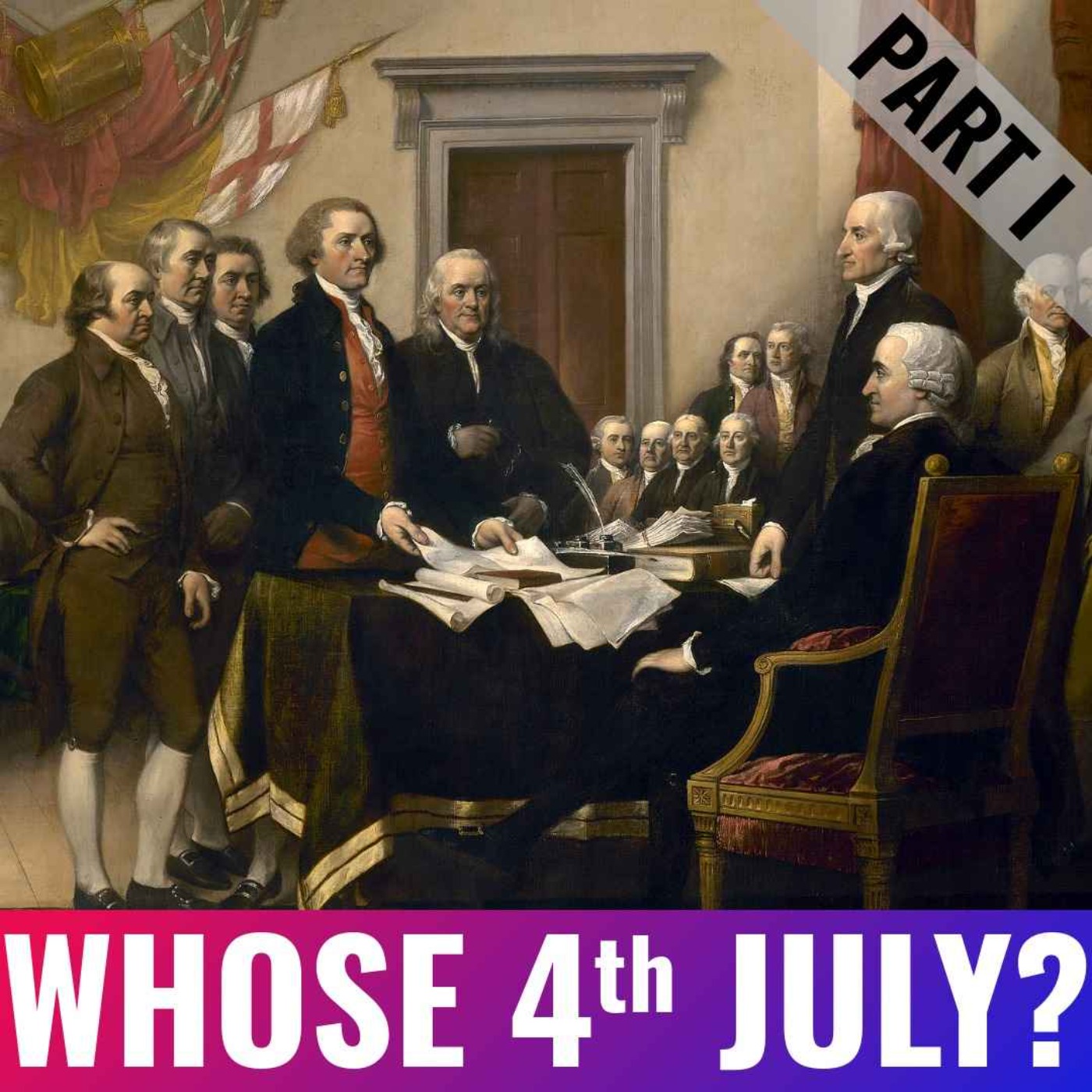
America is about to turn two hundred and fifty. And one of the things that is undeniable as we approach this anniversary is the fact that what the Declaration of Independence actually meant, how much we should respect, admire, even accept it for what it claims to be, is still being litigated in real time.
- [00:53]
C
It's remarkable that a document that's 250 years old this year isn't just alive in culture, but it's constantly being contested. And that's what we're going to talk about today in this last episode on the legacy of the Declaration of Independence.
- [01:05]
B
From musical theatre to violent insurrections to a presidential intervention over a newspaper series, why is 1776 still so contentious? And what does it mean for us all?
- [01:20]
C
Hello and welcome to a new episode of Legacy. I'm Peter Frankopan.
- [01:24]
B
I'm AFWA Hersh.
- [01:25]
C
And this is Legacy, the show that explores the lives, events and ideas that have shaped our world and asks whether they have the reputations that they truly deserve.
- [01:34]
B
This is 1776, the legacy for our culture.
- [01:44]
C
Thanks for joining us on Legacy today. To support the show, please sign up to Legacy Plus.
- [01:49]
B
You can enjoy early access, fewer ads, Q&As, and bonus content. Like when we spoke with Professor Helen Thompson about the conflict in Iran or or when we explored the legacy of the humble fish finger.
- [02:01]
C
Sign up at Legacy Supportingcast FM. In the summer of 1776, 56 men signed a document in Philadelphia. And if you've been listening to our series so far, you'll have heard about seven of the most famous Founding Fathers. But these are by all accounts rebels, property owners, and crucially, afwa, they are also slave owners.
- [02:21]
B
They wrote, all men are created equal. Those words, though, would have consequences way beyond not just what they imagined, but what they actually intended. And one of the things that I think is easy to forget about those words in the world before even the telegraph, let alone the phone or the Internet, was how quickly they spread. They did not stay in Philadelphia. They didn't even stay in the 18th century. They kind of became a geopolitical virus transcending space and time I mean, that in the best sense, a virus in the sense of revolutionary ideas. And they travel. And, you know, so much about how ideas spread, PETER along trade routes, across oceans, fueling movements all over the world.
- [03:08]
C
Well, the American Declaration of Independence, as we spoke about in the live show we're going to speak about today, are crucial in shaping ideas about freedom, about law, about rights. Not just in the United States, where it's, you know, seminal, but in Haiti or Saint Domingue, Haiti, in France in the revolution and in the and in the formation of the Soviet Union, too. Lenin's views about what had been achieved in America and how that should be understood and put in the context of a rising of a proletariat shaking off imperialist tendencies. This has a really important legacy, too. But first of all, are we really talking about something that is truly revolutionary?
- [03:48]
B
AFWA I think that's a really important question because it's baked into the language that we assume that this was a revolution, especially the American language. Like, I think it's so interesting that Americans call it the Revolutionary War and Brits call it the War of Independence. Americans are elevating the revolutionary status of this movement, whereas Brits kind of downplay that, because it was a if it was a revolution, it was one on which they were on the wrong side. But whether the Founding Fathers saw themselves as revolutionaries in the wider sense, and by that I mean beyond the revolutionary act of breaking away from the British Empire, but revolutionary in a way that we would understand it as transforming rights, ideas of citizenship, idea of freedom, ideas of the meaning of life. I mean, that's how aspirational this document sounds. Talking about the pursuit of happiness, for example, I think there's a real case to be made that it it wasn't as revolutionary as it sounds. And I think one of the best examples about that is actually the French Revolution. PETER so it's not like a totally straight line from the American Revolution to the French Revolution. It's more like a mushrooming effect of influences, isn't it? Because the ideas of the French Revolution are not new. When the French Revolution happens and they've been influencing people like Montesquieu and Rousseau, who have already been influencing the American revolutionary. So there's really this symbiotic relationship. But it's undeniable that the Declaration of Independence adds fuel to revolutionary fervor in France, and the fact that France invests so heavily in helping the revolutionary side in America has very direct consequences for the state of austerity in France. That actually helps bring about the collapse of the French monarchy. So they're interlinked in many ways. But you would think if you were to take a simplistic revolutionary stance, that the American Founding Fathers would have been thrilled by the French Revolution. They're revolutionaries. They broke away from the monarchy. Here's another revolution. They're trying to abolish their monarchy. And that is far from how people like Jefferson and Washington viewed the French Revolution.
- [05:58]
C
Peter well, people like de Tocqueville, a great historian, we love teaching young undergraduates about de Tocqueville, about how to be a good writer, good thinker, and how to use critical analysis. One of the things that was, that struck commentators in the, in the 1800s was that the American War of Independence or Revolution, whichever, if you're British or American, is not Scot free. It's not blood free. There is a, there is a war that lasts for seven years, but it doesn't end in a spiral of violence like the French Revolution does. And that becomes a challenge and a question for Americans, particularly in the, in the 1790s, terror takes over in France. So around the time of the French Revolution, one of the things that, one of the most important things that gets drafted in France is the Declaration of the Rights of Man and the Citizen, and that's drafted primarily by the Marquis de Lafayette, who's closely involved in the American Revolution, but also with help from Thomas Jefferson. So this really important document in French, in France, its first article says men are born and remain equal in rights and a social distinction may be founded only upon the general good. That that's the kind of language of sentiment that is taken from Jefferson's formulation of the Declaration of independence from 1776 too. So those legacies are really significant and they're really important. But as France goes from getting rid of the king to cutting the king and the queen's heads off towards the murder of all the elites in France, it starts across the mind of Americans that, that looks rather uncomfortably like the poor taking control, and looks rather uncomfortably at what would happen if there was emancipation of all the enslaved peoples, because those are the ones who haven't got any rights, who are not, don't have any possessions and don't have any money.
- [07:40]
B
Even though the French Revolution, like the American Revolution, does not intended to emancipate enslaved people in French territories, they've also created a kind of caveat.
- [07:48]
C
Absolutely right. But tell me about how that, how that story of France and of the United States, how that plays out in Saint Domingue and Haiti, because I Know, you know, you know a lot about that, too, Afra.
- [07:58]
B
Yeah, well, first of all, I mean, just because you mentioned Jefferson, by 1797, he's proposing a divorce from the French Revolution, even though that was a revolution whose language he helped to craft. And it was mutual because Lafayette, who played such an important role in the American Revolution, later said he regretted supporting American independence because he recognized that it wasn't independence for everyone, because it did nothing to emancipate enslaved people. Or as we've been discussing in our series, it didn't do nothing. But only through the kind of blood, sweat, tears, and litigation of enslaved people were they able to make it something that also freed them.
- [08:37]
C
There's a great Lafayette quote, Afra. What do you tell us what that is?
- [08:39]
B
He said, I. I would never have drawn my sword in the cause of America if I could have conceived that thereby I was founding a land of slavery.
- [08:49]
C
I mean, do your homework, Marquis.
- [08:51]
B
It's not. It wasn't that surprising. But also, the French Revolution helps give the Haitian Revolution this language of independence. And Haiti scares everyone. Haiti scares every nation that is run by white elites or white revolutionaries who are still dependent on enslaved black labor, because Haiti is the kind of revolutionary zeal of America, the violence of trying to overturn the class system of France in one of the most economically important slave colonies. And I think there's a real case made that actually Haiti, for all the imperfections of its revolution, is the first revolution that's actually trying to create some kind of meaningful freedom that includes the inhabitants, the black inhabitants, where freedom means what it says. And, and. And the story of Haiti, which is a story for another day, is really one of the vindictiveness of France and of white nations around the world who refuse to tolerate a free black republic thriving in a world that is so dependent on colonialism and enslavement and exploitation of black people. And Haiti will be systematically broken by France and by others for centuries, right up until today. You can trace the devastation of. Of contemporary hait, the ways that. That its own revolution triggered a backlash from France in particular. Again, it's a reminder that, you know, when these founding fathers in America or in France talk about independence and revolution, they really don't mean for everyone. They don't only feel skeptical about independence and freedom in places like Haiti, but they're actively terrified of it because it jeopardizes their. Their income, their whole economic model.
- [10:48]
C
And, but. But it's the legacy of this declaration of the language of rights and freedoms that are heard and interpreted in ways that weren't understood or meant that way by the Founding Fathers. As we talked about all of our episodes so far, the. The idea of talking about everyone being created equal, what they mean is, is white, rich men rather than women and certainly not enslaved people. But the legacies I definitely want. We're going to do some, some series on, on Bolivar because we're. We're at the 200th anniversary too. That's very important in 2020, 26. But I wanted to know too, about what this meant in Latin American context. Safwan and how Jefferson's words, just in a nutshell, were heard differently there to how they were heard, how they were meant by, by the Founding Fathers.
- [11:30]
B
It's another of the fascinating unintended consequences that the language of the Declaration of Independence in America and the spirit of revolutionary upheaval that the Founding Fathers played such a role in Israel is taken as inspiration all over South America, where you get these revolutionary leaders like Simon Bolivar. And it's a completely different context because there is a much less strict racial segregation in many of these Latin American countries. So you have leaders who have black ancestry. It's this kind of regarded in places like England and America as this slightly scary prospect of a kind of racially, a racial melting pot where, you know, even white people seem a little tainted by the prospect of having black blood. And so the Americans are very ambivalent about, as John Randolph, the Virginia senator, calls it, accepting invitations from these revolutionary leaders in Latin America who look up to the Founding Fathers as an inspiration. And Randolph says he can't imagine sitting beside the native African, their American descendants, the mixed breeds, the Indians and the half breeds. And so much as important figures from America do go to these conferences in Latin America, as these independence movements are gaining ground, they're very uncomfortable with it. And it's a. It's a very unwelcome reflection on the extent to which they are maintaining a rigid system of racial apartheid, segregation and slavery in North America. Because the ways in which independence is now manifesting in South America looks very different.
- [13:02]
C
Well, we've talked about the Declaration of Independence and how its language is. Is very convenient, but it means it can be adopted by everybody. So the kind of. We looked at the way in which the Founding Fathers threw the kitchen sink. It's quite a wily document complaining about all the wrongs that the King of England has done. And, you know, it's exhaustive, the things that they claim that he's done. But it also means that it's quite malleable, so it could be used for everybody. So Declaration of Independence is used to justify the desire for freedom, for the ability to make your own choices. It was cited by lots of people during Brexit. This was a moment of independence where you have control of your sovereignty. But you know, even, even during the Civil war in the 1860s, the Union and the Confederacy are claiming the Declaration as being foundational to their very different views of what they think the past, present and future of the United States is. So one of the things I want to talk about with you Afro, when we come back from the break is about what the real meaning of the Declaration is today, why it's seen as an unfinished project, and how people living in America, particularly black people, indigenous people and others, constantly being told that it doesn't really apply to them, and what those contemporary legacies are today.
- [14:12]
A
If you're listening to this, you're ready, ready to join the Industrial Intelligence generation. A generation defined not by age, but by a shared mindset to connect teams, accelerate efficiency and drive innovation, using the power of a VIVA software to reshape industries, turning real time insights into real world growth. Discover our stories@industrialintelligence.com join Generation I disordered
- [14:43]
D
Eating messaging is all around us. You can hardly leave your house or check your phone without seeing something about dieting, weight loss or exercise. With all that pressure, it can be hard to recognize habits have become harmful or even an eating disorder. If you're concerned you or a loved one might have an eating disorder, I want to introduce you to Equip. Equip is a fully virtual evidence based eating disorder treatment program that helps patients achieve lasting recovery at home. Every Equip patient is matched with a multidisciplinary care team that includes a therapist, dietitian, medical provider and mentors. And you get a personalized treatment plan that's tailored to your unique goals and challenges. Equip treats patients of all ages and all eating disorder diagnoses. It's covered by insurance and there's no wait list. If you think that you or a loved one could be struggling with an eating disorder, don't wait to get help. Visit Equip Health to learn more. That's Equip Health.
- [15:48]
C
So Afra, how Black Americans celebrated or thought about or not celebrated the Fourth of July and the Declaration of Independence.
- [15:57]
B
I think the answer to that question is complicated because when the US Declaration of Independence was signed, so many African Americans were still enslaved. So it didn't mean what it said it meant for them. And over time Obviously, the Civil War was fought, slavery was eventually abolished. Then there were different forms of segregation and racial penalties in America. And it led to a situation that W.E.B. du Bois in the early 20th century would describe as this two ness, that African Americans didn't have the luxury of unequivocally embracing Americanness, that they had this double consciousness that to be American and black at the same time was to like, have two selves in conflict. Because American ness had been constructed as something that exceeds excluded black people in the rights, the privileges, the freedoms, the dreams of America. And I think as a result of that, it's still quite a complicated day for many African Americans. So if you go to America on the 4th of July, and I know we both have been in America many times on the fourth of July, on one level, it basically feels like everyone's celebrating. You know, it's. It's a holiday. People have the day off work, there are fireworks. People in, you know, where I live, you know, will bring out their deck chairs on like a highest point on a hill and watch the firework over the cities. And they have barbecues and beers, beers and hot dogs and super American. And you'll see black people doing that just like everyone else. But if you look closely over the history of the fourth of July, there's a much more complicated story about how black people have experienced it. So, for example, in the 1820s, throughout the 19th century, there are lots of stories of African Americans celebrating on the 5th of July. And the reason for that was partly because it recognized that they weren't fully included in the Fourth of July project. But also that in the 19th century, it wasn't safe for African Americans to gather and celebrate and demonstrate joy and a expression of freedom publicly in the way that white Americans were. And so they couldn't participate on the 4th of July safely. So they would wait until the 5th of July, when no one was watching, and quietly have their own celebration. And for me, that is such a metaphor for the gap between the ideals of independence and the reality of independence. Imagine having to hide and celebrate freedom quietly, because if you're seen doing it, your life might be in danger. That's not freedom. Right. And that was a reality for many African Americans for a long time. And then on top of that, African Americans found other days that were just as, or maybe more meaningful. So initially, in the mid 19th century, many African Americans started celebrating Emancipation Day, that's actually a British Empire day that celebrates the date that slavery was abolished in British colonies. And African Americans joined that celebration because it was a celebration of emancipation, and that was still aspirational for many African Americans in 1838, when Britain finally abolished slavery in its colonies. So that also became a day of celebrating the real idea of independence and the aspiration that many African Americans had for it. And then Memorial Day is also really important for many African Americans because it commemorates how many African Americans fought and died in the Civil War, a war that they were fighting over freedom from slavery and the abolition of slavery in the United States. So there's been this kind of continuous questioning of the Fourth of July, what it means for African Americans. And, you know, no one put this better than the famous abolitionist Frederick Douglass, who gave a very memorable speech where he said, what to the slave is the 4th of July? And that, I think, captures it all. What does it mean to celebrate freedom when you are enslaved? And he was asking that question at a time when African Americans were still enslaved. But the symbolism and the emotion and the sense of injustice behind the American Project, I think, is still very much alive today and still being questioned.
- [20:00]
C
These are complex things. You know, enough where you know that not just in the American context, but here in the United Kingdom, you know, when we posted a clip about what it means to be English or British if you're a black person, you know, we've had more than a million views on social media and lots of comments, lots of people with very strong opinions, not, not many of them particularly generous about other people's having different ones. But, you know, these ideas of having I having sort of things that are inclusive, that can be considered very subversive because you're being demanded that you, you have to agree with everybody else. And if you don't, if you have a different opinion, then, then you'll somehow represent a threat. So when we come back up, I want to talk to you about the 1690 project that I know you spent a lot of time thinking about, working on and about explaining to our listeners what that is, why it's become so politicized under the Trump administration and over the, over the last few years. But to also to. To explain how important it is about a different perspective to history, to perhaps the mainstream. So we'll do that when we come back from the the break.
- [20:57]
D
Disordered eating messaging is all around us. You can hardly leave your house or check your phone without seeing something about dieting, weight loss or exercise. With all that pressure, it can be hard to recognize habits have become harmful or even an eating disorder. If you're concerned you or a loved one might have an eating disorder. I want to introduce you to Equip. Equip is a fully virtual evidence based eating disorder treatment program that helps patients achieve lasting recovery. At every Equip patient is matched with a multidisciplinary care team that includes a therapist, dietitian, medical provider and mentors. And you get a personalized treatment plan that's tailored to your unique goals and challenges. Equip treats patients of all ages and all eating disorder diagnoses. It's covered by insurance and there's no wait list. If you think that you or a loved one could be struggling with an eating disorder, don't wait to get help. Visit Equip Health to learn more. That's Equip Health.
- [22:02]
C
So Afra, tell us a bit about the 1619 project and what it is, where it started, who's behind it, and so on.
- [22:10]
B
I actually had the pleasure of speaking to Nicole Hannah Jones, who is the incredible Pulitzer Prize winning journalist behind the 1619 Project, when she came to my university, the University of Southern California. And the 1619 Project is a project that was published in the New York Times that posits quite a simple idea. It posits that the real moment of the founding of the United States is not the Declaration of Independence in 1776, that the true origin story of the United States is 1619 because that is the year that the first enslaved Africans were brought to America. And so while that sounds quite simple and maybe sounds quite harmless, what it's advocating is a a different lens through looking at American history, which recognizes that the American story is founded on the institution of slavery, that that wasn't a sidebar or an incidental fact, that that was the moment that America became America. Because enslavement is existential to the American story, to the history of America, to the American economy, and that that is the root of everything that America has become. And so through doing that, the 1619 project is re centering the whole story away from these kind of white founding fathers who was many of them slave owners, and locating it on the bodies of African Americans who created America through the exploitation of their their work and their labor. And Nikole Hannah Jones is African American and it starts with a series in the New York Times in 2019. So this is the if you accept the premise of 1619 as the birth of the United States, that's the 400 year anniversary, which is a significantly longer anniversary than the 250 years we're talking about. And as an African American, she's descended from this history of enslavement and one thing I love about this as a journalist is that she blends so masterfully. Her personal experience, her family's relationship with their Americanness, their history of enslavement, the ways in which that still plays out in real time in their experiences of crime policing, health care, serving in the military, and with really impressive journalism and history, telling a story that offers a different perspective on what America is. And it was so successful. So the day that the 1619 Project began being published in the New York Times, there were queues in some cities where people lined up to buy this special edition of the newspaper. And then it also became a podcast series. And then she eventually also wrote a book. So you would think, as I've just described it, that's kind of really good journalism. A different approach to telling a story about America, like what's the big deal?
- [24:57]
C
But for a lot of people, it is a big deal. So for the support of the project, the Legacy of Independence is flawed and incomplete. As we've talked about in so many of our episodes. There are lots of different perspectives and tensions about who gets to choose freedom and for whom. And that obviously there's self serving, there's people who are becoming rich off the back of this. The equalities are not equally shared and not equally intended. And so correcting that by giving a different perspective, this is what supported the 1690 project. It not just is important, but it's crucial right to understand the proper foundation and the existence the DNA of the United States of America. You can't understand not just the history of the us you can't understand modern American capitalism. You can't understand inequality of the past or the present. You can't understand political polarization without acknowledging that the Republic was built by and largely forward slavers. And you can't understand the present day without understanding that those are still legacies that haven't been settled. The challenge is that there's been a big school of criticism too. Rafael, I want to hear what your views are about that. But this has been cynical and destructive. That 1619. It just so happens it's the year before the arrival of the Mayflower, filled with white pilgrims from England who do things like create the first Thanksgiving. That's the kind of key moment that happens in every calendar year in the United States too. And that this is very undermining to say we're prioritizing black people who came in boats at the expense of white people who came in boats. And they admit, the critics of the 6919 project, that although the founding Fathers were flawed. Still, the ideals that they were trying to create in the Declaration of 1776 and in the Constitution were the exact tools that abolitionists later used to make the United States a better, more inclusive place. It's the same tools that civil rights leaders use used to dismantle slavery, and that they should get the credit for having been part of that pathway rather than criticized for not having done it all in one go. And one of the things that this got sharpened up in political debate that became somewhere between toxic and poisonous were about control over what actual facts were. Right? It wasn't just about interpretation. It was about historical accuracy. How did you see that at the time? You followed it closely at the time, and I know you follow it now. How did that all spiral out of control?
- [27:16]
B
And I just want to clarify that I wasn't being dismissive of, I think, the incredible contribution of the 1619 Project and the really impressive work of Nicole Hannah Jones. When I said it's not a big deal, I meant it's not a big deal because it's so obviously important and it's statements and investigations of facts that have been told and constructed in a way that makes it really accessible. And as a historian and as a journalist, I think we both know that one thing is doing the work with integrity and rigor and another thing is making it accessible so that people can read and learn from it. Otherwise, what's the point if it's only you and kind of five people in the room with you that ever read this? You're not able to shape the conversation or move us forward as a culture. And that's something I really admire, that the 1619 project absolutely became a cultural moment in the whole United States and even globally, because it was a big deal here too. So I say this not as an exaggeration. Some Americans went absolutely ballistic and they're still raging now. So this seamlessly, like, I think quite harmless, good idea of telling the truth about history has sent some right wing Americans into a spiral of rage. And you can judge for yourself what you think about that. But I would say there are kind of four main battlegrounds in the ferocious backlash. Ferocious backlash. And I've witnessed some of this myself. So the first one is from some historians who frankly just don't like this reframing of the story. So as you said, Peter, it kind of predates the Mayflower, who they want to celebrate as the kind of white origin story of people coming to America and, and really mainstreams the experience of enslavement as something without which you can't understand the American story. They don't like that. And what they did was that they kind of poured all their anger about the spirit of that into a contested statement. One sentence essentially in the 1619 project. And that sentence was when Nicole Hannah Jones, in her opening essay writes, one of the primary reasons the colonists decided to declare their independence from Britain was because they wanted to protect the institution of slavery. And so their critique, these historians, is that this ignored the rising antiquity slavery movements in the colonies and oversimplified the actual complex motives for the revolution. So they accused the 1619 Project of displacing historical nuance with political ideology, as in trying to make it a kind of battle over enslavement, whereas it was more complicated. I think there's the potential for that to be a valid critique, but I don't think it's a valid critique. And the reason I say that is because if you take that one sentence, yes, it does sound like it's simplifying the complex causes of independence into that one battle. But if you read the greater work, the whole essay and all of the journalism and scholarship in the 1619 project, it's quite clear that this was a nuanced period in history and a movement and that you absolutely cannot understand any of it without enslavement, the experience of African Americans. So it feels to me like they were kind of just using that one sentence to project all of their frustration at the bigger project. And I don't personally think that's valid.
- [30:33]
C
And it was a key part of the culture wars too. I mean, that's another area that's all got weaponized not only by politicians and by the election and Republicans and Democrats, Trump in particular, also through George Floyd. But what about how did it get dragged into the challenges about the worlds of today as well? Tell us about how that worked, where journalistic and historical debate spills over into a kind of into the mainstream.
- [31:00]
B
So as when I was saying that, you know, these right wing historians projected all their rage onto this one sentence and tried to use it to discredit the project. I think evidence for that is in what happened next. Because the 1619 project was so successful, many Americans found it a really useful reframing of the very kind of one dimensional way they'd been taught this history, that it started to be used in schools, for example, to teach children about history. And that really triggered conservatives, especially in legislators. So you started to see these bans. And I'm sure many people who might not know this specific history Remember how in states like Florida, there were these new laws that were banning, kind of woke history, as it's often called. And what that often was was the 1619 project or new materials that were being created around it. The Pulitzer center, for example, developed lesson plans based on, on the 1619 project that was incredibly provocative for these like radical right wing legislatures and executives who specifically started banning 1619 project. And this, you know, to me, there's no greater compliment to a journalist than President Trump personally weighing in to try and get you canceled. But that's exactly what happened. The Trump administration specifically became fixated on Nikole Hannah Jones's work. And they start, actually started a Commission, the 1776 Commission, to promote what it called patriotic education, an oxymoron if ever I heard it, talk about the lack of nuance and deliberately trying to counter Nikol Hannah Jones's work. So they were that threatened by the idea of people learning this more nuanced history that they started trying to ban it. And Trump has often over the years kind of railed against Nikole Hannah Jones. He railed against the 1619 project. I am quite confident he has never read any of it. It's. And again, this is how the culture war works. It's like you take a meme, a headline, they're trying to teach Americans to hate their country, and then it kind of gets this new life. Whereas actually, Nicole Hannah Jones's essay is so nuanced in showing that as an African American, your patriotism is so bound up with the pain and trauma of your history of enslavement. And it's actually a very, I think it's a very nuanced, meaningful analysis of what it means to be American and to feel American and to care about America, but to understand that you've always been excluded. And it's ironic, actually, this attempt to ban her and ban her story is only another example of how that has been done to African Americans and is still done to them. And then I just want to mention one more thing, because I am a professor who has tenure in the US and you know, I, I'm very proud of my work, but I don't think I have impacted the American conversation about American identity and race something so foundational in any way, like the way Nicole Hannah Jones has, like, she's American, she's been doing this work. She, she reached Americans on their own story in a way that I think is so admirable. And I have tenure in the US she was denied tenure. She, even though she'd won a Pulitzer. Even though she'd shaped a conversation, her university, the University of North Carolina at Chapel Hill, put her forward for tenure, which is kind of a very prestigious academic appointment. And the board of trustees, influenced by conservative political appointees, deviated from precedent, refused to grant her tenure. And that, I think is just, it speaks to the vindictiveness and the personal risk you face as a black person simply doing your job of reporting, investigating, telling stories, writing about history, that it, it's dangerous. You know, there's a real backlash. You have the president kind of making you a target, you have your board denying you tenure, all because you're doing what, as a journalist and a writer, you should be doing. And so I think, to me, there is no better example of the fragility of many people in America about their own founding story, about the story of 1776, what independence means, what it meant then, what it means now, than the backlash against one woman and her team at the New York Times doing an incredible job of telling, I think, a more sophisticated version of that story that that was regarded as completely beyond the pale, unacceptable, unpatriotic, anti American, where actually it was the complete reverse. It was actually making America's story a whole more. Whole, more inclusive, more honest. And so 250 years after those beautiful words about freedom, you are still, as a journalist or writer in America, not free to do that without consequence.
- [35:55]
C
It's sort of amazing. I mean, here as an academic here in the uk, you know, we, we, we don't struggle the same way about different, different inter interpretations around our academic topics. By and large, lots of people got different opinions. It's generally debate is quite civil and reasonably respectful. I think that that is starting to change, probably because we get heavily influenced by what happens for our, our cousins across the Atlantic, that we think that that's how we should do things too. But I'm slightly, you know, baffled about the fact that, that different opinions, the different interpretations are seen to be threatening, that it's possible that two things could be both right at the same time. And that however you want to think about the 250th anniversary and you want to focus on the qualities of the Founding Fathers, or the importance of freedoms, rights that are expressed in the Declaration of Independence, or you want to focus on what was left out, how unfair that all was, it doesn't seem to me that has to descend into a slaggy match and a rush for power over confrontation, but it has spilled over, as you said, Afro into mainstream politics. And it is sort of things that people are arguing about in bars, and it becomes a sort of badge of your identity that you have to take a position on it. And if somebody sitting opposite you takes a different one, you can't agree with it. There's no middle ground. That polarization is something that we don't just see with 1619, but we see it across a whole bunch of other things, including things like climate change or energy usage or AI or sovereignty or et cetera. And I think that those are not helpful because ultimately, people within a country don't have to have the same view, but there does have to be a common sense that the state exists to solve problems and that it brings people along with it. So I think it probably masks lots of other things that are going underneath the bonnet of structured polities, lack of social ability, lack of opportunities based on merit, and life becoming a little bit harder. So it's been very interesting to me, I think, to watch over the last 10 years or so, that the story in the US with Trump's tagline is not make America great, but make America great again. You know, that Trump talks a lot about wanting to be carved onto the side of Mount Rushmore or to have the things that were given to other great American presidents, like his face on a banknote. You know, those kinds of things are saying that there is unfinished business, which everybody, if you're a 1619 er, or you're a 1620 er, those don't necessarily need to be contentious. There is unfinished business, which is, how do you make a wonderful country better? But it's become something that's been chaos. And so as we head towards 4th of July, 2026, the 250th anniversary, there are a lot of minefields to walk across and a lot of things that. That can cause controversy, often, often by mistake and by. But not by design. But it feels like a deeply fractured legacy rather than a moment of hope and aspiration.
- [39:05]
B
But I. I just want to add. I mean, I agree with everything you said, but I do think that this. This argument about race and identity is different from the other areas of the culture war because it speaks to the lived experience and identity of a journalist like Nicole Hannah Jones or a journalist like me. So, you know, I said that I wouldn't compare my impact on America to hers because she's. She's so shaped this conversation about what America is and what it means. But, you know, I have done a lot of that work here where I have been writing about what Britishness means and British history and identity and and it's so interesting that I feel like the backlash I've experienced is kind of like a cut and paste from the backlash she's experienced. And we have the British right copying the American right in exactly the same language. This is woke history telling people to hate Britain. I've had people stand up in Parliament and say I should be punished for divisiveness simply for writing a book with which nobody's found any errors of fact, fact at all. There's no contestation about the historically agreed facts or the stories that I've described or the journalism that I've shared. It's simply outrage that I am allowed to tell my story and take up space in this country, in our institutions, academic institutions, in spaces, in the culture. And that fragility is so interesting how much it's been imported from the American experience. Experience. And there's so many ironies that, I mean, the whole story of American independence is one of breaking away from British imperialism, not wanting to be controlled by Britain anymore. Now, so much of our culture war is controlled by America, mainly because people on the right here are just copying what the American right are doing and trying to cancel voices like mine who do a similar job about Britishness and our identity. So I really recognize that. And I think, you know, we. You can't understand what's happening here without understanding that culture war there. And so for me, that is a legacy of 1776 that America has given us, ultimately a superpower, one that has, you know, we both love going to America. There are so many things about America that I really admire and enjoy and respect. But it's also, I think that everything we've been talking about in the series, the founding flaws, the hypocrisy, the oversight, the oppression that was baked into 1776 has given birth to a global system of inequity that is also still affecting all of us in some way. It's an important part of the legacy. It's quite a complex one, and I think it's one that we have to keep doing more to understand. So I'm really happy, Peter, that we've been able to put that back in its rightful place right at the center of what 1776 is, what American independence is, what it means for America. But also, you know, we're both sitting here in the uk, what it means for all of us, because that meaning is real.
- [41:59]
C
I don't normally bring my day job when we. When we do these podcasts, but we had a seminar here in Oxford this week about persecutions of heretics, people whose views are considered dangerous and how they need to be punished. One of the one of the documents we're looking at happens to be in an exhibition that we're going to talk about separately that I've, I've curated in Belgium. And in a way, the thickness of the document is the single most important thing. It's thousand pages long, effectively.
- [42:29]
D
Wow.
- [42:29]
C
And it doesn't matter whether people are guilty. It's the fact that you can find people who you could accuse of being guilty. And that's a very powerful political tool years ago, but it's something similar today. If you can identify people who are letting the ideals of of independence or freedom or revolution down, then it can be extremely politically highly charged and quite effective tool of concentrating, focusing minds both of your supporters and also of your enemy. So look great. There's so much to talk about. Sarah, let's do another episode on this one too, on the legacies of of independence. But that's so interesting after hearing about your own work and your experience with this. But on this one, thank you again for listening to Legacy.
- [43:14]
B
To dive deeper and to support the show, sign up to Legacy plus, you'll get to enjoy bonus episodes, early access ad, free listening, and so much more. Go to Legacy supportingcast fm.
- [43:26]
C
And don't forget, you can watch all our episodes on Spotify and YouTube too. And for everything else, including our substacks and updates on TikTok and Instagram, just check out the show notes or search Legacy Podcast I'm Peter Frankopan.
- [43:38]
B
I'm Afoha and we'll see you on the next episode of Legacy.
- [43:58]
D
Some rituals start with a candle, others with a deep breath. This one starts when the air shifts. The Sense of Calm collection from the Pura Calm Partnership is three fragrances designed with sensory science to ground your space and quiet your mind. Sleep Story A lavender drift into deep rest. Breathe Bubble A mindful reset wrapped in white tea and cashmere Soundscape a fresh clearing rush that restores your energy. Ground your space, quiet your mind. Explore the Sense of calm collection@pura.com calm.