Loading summary
Transcript47 lines
- [00:01]
Ben Green
Hi, this is Ben Green from the Athletic fc. The podcast you're about to listen to is brought to you by Hotels.com as a Hotels.com member, you save up to 20% on hundreds of thousands of hotels and earn rewards on every single stay. Which means the trips you're taking now help pay for the ones you're already dreaming about. And unlike some other places, there are no blackout dates. So when you want to travel, your rewards are ready to go. So the next time you're planning a work trip or a getaway, make sure to book it at hotels.com and start earning rewards. Hotels.com it's all in the name.
- [00:37]
Peter Frankenberg
When we think of the founding of the United States, we tend to picture men in powdered wigs writing grand declarations about a noble fight for liberty and their inalienable rights.
- [00:48]
Afua Haysh
But for the men who were writing those famous words, liberty had a massive, glaring blind spot. The enslaved people whose unpaid labor and exploitation built and continued to sustain the very colonies they were fighting for.
- [01:04]
Peter Frankenberg
So today, we're looking at the real architects of American liberation. The women who didn't just ask for abstract political freedom, but fought for their right to own their own bodies and the wealth that they created.
- [01:16]
Afua Haysh
Women like Belinda Sutton, who in 1783, submitted one of the earliest demands for for reparations, successfully suing her enslavers estate for a half century of back wages.
- [01:29]
Peter Frankenberg
We're also going to look at Oda Judge, a young woman who walked out of the President's house in Philadelphia and outsmarted the most powerful man in the country, George Washington, who used the power of the federal government to then hunt her down.
- [01:42]
Afua Haysh
It turns out that the true story of the founding wasn't just a group of men signing a piece of paper. It was a fierce, unapologetic punishment, brave fight for actual freedom, led in large part by the women that history is still trying to erase.
- [01:59]
Peter Frankenberg
Hello and welcome to a new episode of Legacy. I'm Peter Frankenpern.
- [02:03]
Afua Haysh
I'm Afua Haysh.
- [02:04]
Peter Frankenberg
And this is Legacy, the show that explores the lives, events and ideas that have shaped our world and asks whether they have the reputations that they truly deserve.
- [02:12]
Afua Haysh
This is Founding Mothers, Part 2.
- [02:22]
Peter Frankenberg
Thanks for joining us on Legacy today. To support the show, please sign up
- [02:26]
Afua Haysh
to Legacy plus you can enjoy early access, fewer ads, Q&As and bonus content. Like when we spoke with Professor Helen Thompson about the conflict in Iran, or when we explored the legacies of the remote control and the fish finger. You cannot hear that anywhere else.
- [02:45]
Peter Frankenberg
So Sign up at Legacy supportingcast fm.
- [02:48]
Afua Haysh
So, Peter, before we started working on this episode, had you ever heard of Belinda Sutton?
- [02:53]
Peter Frankenberg
Do you know what? It's a terrible thing because if I pretend that I had that, I'm going to get busted. But I'm embarrassed that I hadn't.
- [02:59]
Afua Haysh
No, but I hadn't either. And I actually read a lot, specifically in the field of black history. Erased women from history, reparations, all of the areas that should make me quite fluent in the details of her life. She still is someone that you have to look that much harder to learn about. And I think that speaks to how far we are from these histories really being centered in the American founding story. Even though the things that someone like Belinda Sutton fought for are still, and maybe now more than ever, part of debates that are very visible in the culture. So let's talk about what she actually did, Peter. And she was enslaved, like many African Americans at a young age. And she comes from the country myheritage, the country we now would call present day Ghana, I think the Ewe kingdom, which is to the east of Ghana, near the Volta River.
- [03:54]
Peter Frankenberg
So Belinda was born around 1713 and she was kidnapped at the age of 12 and survived the Middle Passage and is then sold into slavery. And for 50 years, she's enslaved by the royal family in Medford, Massachusetts. And Isaac Royal was the largest slaveholder in the country. Now, I know you spent a lot of time in Ghana. How do people think and talk about the legacies of slavery today? I mean, is it something that is part of the day to day, or is it a historian's debate? How do people think about that?
- [04:27]
Afua Haysh
I'm really happy that it's changing now, but for most of my life and certainly my mother's life, the reality is that countries like Ghana, which were also part of the British Empire, people received a colonial education. So they were receiving, I would say, even a more extreme version of the kind of erasure that we learn about in Britain. It was a kind of outdated Edwardian British education. So they learned absolutely nothing about transatlantic slavery. They learned nothing about colonialism. They learned about the kings and queens of England, the rivers and the battles and the castles. They learned about European history because that was what British colonial education regarded as important and civilized. And it's actually really recent that there's been this. This new push to kind of re Africanize the education system, make it relevant to the history, identity, cultural needs of Ghanaians. And, and one of the big problems, and I've got friends who work in this Space is the lack of archive. The colonial system destroyed or failed to protect or make accessible the archive. And it's actually now this painstaking work. I mean, all of the documents of the colonial and enslavement era were kind of dumped in the dungeons of these castles and these cellars, no climate protection. And I think because of the mindset of colonialism, there was this idea that protecting old things wasn't part of how you move forward. So I think a new generation have become much more activated in doing that work. But it does mean that for many average Ghanaians, they actually know so much less about this history than even, say, a white British person would, even though it's affected their lineage, their country, their society so directly. And you see that if you go to slave forts in Ghana where you can go and visit and see how people were held before they were literally kind of pushed out onto the Middle Passage. And if you ever go to one of those slave forts in Ghana and there's a school trip of local Ghanaian school children visiting, and you overhear their conversations, it can be really difficult to comprehend how little they knew or understood about this story. So that's Belinda. She was born in what's now Ghana. She was a really young child when she was kidnapped and found herself in this completely different setting in Massachusetts. And it's royal, not the royal family. Even though the British royal family did have a very large role in the transatlantic slave trade. This is the royal family. R O Y a double L. And there's actually quite a lot that's still being researched or that historians are trying to piece back together about Belinda's life. But she seems to have had some kind of status in this family. And when the royal son, Isaac Royal, who had enormous wealth, prestige, and political power, fled during the Revolutionary War in 1776, his estate was abandoned. And that had pros and cons because it meant for the enslaved people like Belinda, who lived on the estate, she was essentially emancipated because her slave master has just disappeared. But it doesn't do anything to improve her economic system status, because she has been doing this unpaid labor, enriching this man who's fled with his assets. And she, like the other enslaved people on the estate, are just abandoned there with no education, no resources, no assets, and no fruits of a lifetime's labor. And that's really where this story gets interesting, Peter.
- [07:44]
Peter Frankenberg
But like when we talked about Elizabeth Freeman last time, you know, Belinda is unusual because she's vocal. She's able to articulate what it is she wants and needs in a way that I think probably comes as a surprise to some listeners, because, you know, just because you're enslaved doesn't mean you don't have views, opinions, and don't have the ability to express yourself. In fact, in the case of Belinda, when the royal family flee when the fighting starts, you know, Isaac Royal is a loyalist who believes in the British rule of the American colonies. Belinda is, well, of course, she's left destitute and looking after her infirm daughter, but she petitions the Massachusetts general court, which is the state legislature, in 1783, requesting a pension for the proceeds of her enslavers estate. And Royal has gone. She couldn't read or write, so she signs these documents, just marking an x. But she dictates her story, probably collaborating with another prominent black abolitionist like Prince Hall. But this text, it's vividly written, and it's crafted to describe how she was kidnapped in Africa, explain the hardships, what her life had actually evolved, and to condemn the practice of slavery. And lots of scholars point to the wider black community and the collective knowledge of cases like this and of Elizabeth Freeman saying, look, if there are going to be rights that we're all created equal in front of the eyes of God, then those should extend to everybody, regardless of gender or race, too. But I mean, it's interesting. I mean, Belinda's case is quite unusual because she's a woman, and also she's old. But that means she has respect within her community, too.
- [09:20]
Afua Haysh
Absolutely. There are a lot of things that are really interesting, both as a matter of understanding the kind of attitudes towards slavery, but also the experiences. Because, remember, during this period, even people who are emancipated are living in a society that has stacked all of the odds against them being able to record their story or testimony. You know, enslaved people are deliberately prevented from reading and writing because enslavers fear that an educated population would not be enslaveable. And they don't want them to be able to communicate the conditions, the abuses that they're suffering. So it's very difficult for them to record their story. And of course, you know, America, like Europe, is a society where oral history is not regarded as the official text. Only written history is really regarded as authoritative. And so if you're not able to read and write, you're not able to document your story. Fast forward 250 years. We're living today in a society where people still don't know the stories of enslaved people, because only the stories of enslavers Were written down. And so it's quite rare that enslaved people. And there are a number of incredible testimonials that were, against the odds written. But it's quite rare that we get to hear from the horse's mouth what it was like to be kidnapped into slavery, to spend a lifetime working on a plantation. And so one of the things about Belinda Sutton's petition to the court Is that it includes her voice. You know, much as she, as someone who couldn't read and write, Collaborated with others to write it down, she is documenting her narrative, her experience, and it's very vivid. Describing kidnapping and the hardships that she's endured and her demand. She demands that she and her daughter be paid a pension out of the estate of Isaac Royal, who, of course, as a loyalist, has been penalized by the fact that Britain has lost the war of independence. So the pro independence leaders, the founding fathers and the people who are now starting a new society Away from British colonialism, Are seizing any remaining land or assets of people who supported the wrong side or who have fled. So this is the language of her petition that she prays that such allowance be made her out of the estate of colonel Royal. And as will prevent her and her more infirm daughter from misery in the greatest extreme. And scatter comfort over the short and downward path of their lives. It's dignified language. It's so evocative. You know, there's something so sad about that. This kind of the short and downward path of their lives, it somehow captures that there isn't any bright horizon for these people who have had their whole experience of life and their destiny shaped by enslavement, but that they still are demanding dignity and restitution for what they have left. And I just think that that's really powerful language. And what's even more powerful, Peter, and actually fascinating, Is that the Massachusetts legislature agreed with Belinda.
- [12:22]
Peter Frankenberg
Yeah. And as a result of the petition, Belinda's awarded an annual pension of £15 and 12 shillings. And that's approved by our old friend John Hancock, the smuggler and slaver himself. But this pension has been cited as one of the first cases of reparations for slavery and the slave trade. And that is key, isn't it, Afro? I mean, in today's age, when we're thinking still about the legacies and the financial costs and reparations, it shows that there is a long history of people recognizing not just of the wrongs that have been done, but of the importance of paying for people to have a dignified life which Is, which is why the Massachusetts court agrees with her.
- [13:01]
Afua Haysh
I think it's so important as this narrative now. You know, there's a contemporary debate about reparations that suggests this is an outrageous demand. You know, it's unprecedented in history, it's impractical, it's impossible to enforce. These stories remind us how untrue that is. There have been so many instances of reparations over the years, not just for people who are enslaved, not just for black people who enslaved, but for France, received reparations from Haiti, for Haiti having had the audacity to overthrow French colonialism. The EU received reparations from Germany after the Second World War. You know, there are many instances where the international community or individual legislatures or courts saw fit to apply reparatory justice. And that makes it all the more stark that it's still such a polarizing, contentious debate. And so many African American scholars today look back to Belinda Sutton as an example of the fact that reparations are common sense and that, that you know, white majority colonial era enslavement era legal bodies have recognized it like the Massachusetts legislature.
- [14:11]
Peter Frankenberg
And of course it becomes, it becomes famous. Belinda becomes famous not not just because she's successfully sues to, to get a payment, but also because she doesn't give up, because the estate administrator drags his feet, stops paying her. And so over the next decade, so she's in her 70s and 80s now, she has to file like war petitions to force the government to honor their ruling and to give her the money. And so her petition starts to be reprinted and read by other people crediting her authorship, which is important by the publisher Matthew Carey, accompanied by an anti slavery essay that's called Address to the Heart on the subject of American slavery in the publication the American Museum. And so Belinda becomes a sort of totemic of not just that her, she should be paid, but even then she gets treated badly and poorly. But the fact that she keeps on going, keeps on fighting, gives a lot of inspiration too. So I mean her name becomes, has become very famous AFWA over the, over the centuries that followed.
- [15:09]
Afua Haysh
Well, that's another unfortunate reality about reparations that it often feels like one step forward, five steps back. And there are so many instances in global regime, especially in American history where you get these victories, these limited victories and I think victory is even a strong word. It's just justice. You know, this woman has worked without pay her whole life. Now she wants a pension. It would be a hundred years after the Declaration of Independence, during the, after the American Civil War when there was this brief period of reconstruction during which there was this procedure promise that African Americans, after slavery was finally abolished throughout the United States, would be compensated with 40 acres and a mule, that each formerly enslaved person would receive a small plot of land and the ability to farm it. That this was crucial because you can't emancipate people who've been enslaved and just leave them. You know, they're living on the former plantations in the same conditions they lived as enslaved people. They were brought to America in shackles. The only way to meaningfully give people freedom is to set them up to begin a new free life. And every time that has been attempted or promised in the American story, it's quickly been retracted. There's been this backlash. And, you know, I think, unfortunately, Belinda is one example of that, because even when she's. She achieves this incredibly unlikely victory, it's not enforced. She still has to keep fighting to actually receive what she's now legally entitled to. And I think it just shows how difficult it is for. For powers that have once benefited from this kind of exploitation to not only acknowledge that it was wrong, but also cough up, cough up. And that's, I think, why people continue to demand reparations. It's not because reparations can heal the wrong or can actually atone for taking away someone's entire life of freedom. But, you know, we live in a capitalist society. Money is the language that we speak when we recognize value in this society. It's not ideal. The resistance to paying that really shows how real that is, that that is almost a step too far. It's one thing to acknowledge that she's entitled to a pension, but to pay it is beyond the pale. And that's what she experiences. But she does eventually receive it, Peter. And you're right that, you know, her sacrifice and having to continue fighting for her pension has the positive side effect that it helps her story be more widely publicized. And that's why I think we're speaking about her today, because much as it's still not prominent in the way I think it does deserves to be. There are many people who've been inspired by Belinda Sutton's story. Ta Nehisi Coates is one of my favorite writers. Incredible African American scholar, has written about her, poets have written about her, and Harvard actually created a Belinda Sutton lecture series acknowledging her contribution. So there are all of these references in the culture. And I think that now, as the interest in what resistance, reparations, food, fully acknowledging this history increase, we will see more references and attempts to commemorate her legacy.
- [18:05]
Peter Frankenberg
And it's great that her legacy has become more prominent over the last few years, particularly as a result of Black Lives Matters, but also of the idea about America reflecting on its past with a bit more honesty, I think, or a bit more openness than it has done, although that obviously is under pressure at the moment too. But for example, in 2023, so three years ago, Black History Month with the theme of Black Resistance, celebrated Belinda Sutton's legacy with a performance of Remembering Belinda Sutton Resistance Activism and Reparations at the Royal House and Slave Quarters, with a discussion of the 1783 petition, a musical performance, and a discussion about what black women's Radical activism in 18th century Massachusetts looked like. So I think she's become such an important exemplar of the iniquity, but also of the persistence of carrying or needing to fight. As you said, Afra, just because you win one battle takes a long time to win. Win some of those wars. But these things, they don't need to be contentious or difficult. The idea that people should be paid for their labor, the fact that they should have their own freedoms with their own bodies, their own lives, the fact that people find that problematic is a slight mystery to me. But then tell us Afro about what we're going to do when we come back for the break.
- [19:16]
Afua Haysh
Well, it's interesting that you mentioned Royal House because that's where the Royal Plantation was. It's where Belinda was enslaved. And now, as you said, they are using that premises, the museum at the Royal Quarters to recenter their story of Belinda Sutton. And you know, I think about that, Peter, because if we go all the way back to the beginning of the series, we were talking about George Washington and how it's still so disputed to what extent we should center the fact that he enslaved people while also fighting for liberty and, and independence. And so in a way, we're going to go full circle when we come back after the break because we're going to return to George Washington, but not through his own eyes, as we did before. This is the story about an enslaved woman in his life. And it's a very important correction to the way we talk about George Washington.
- [20:07]
ActiveCampaign Announcer
ActiveCampaign is the marketing automation platform built for big swings and big dreams with intelligent suggestions, powered by AI and your data, generate ideas in seconds, import your brand and create full campaigns with simple prompts set, personalized messages backed by real time feedback, smart segmentation and effortless reporting that tracks every win. Let's redefine what's possible together. Get started for free@activecampaign.com hey everybody.
- [20:38]
Taylor from the Total Soccer Show
This is Taylor from the Total Soccer show. And this episode is brought to you by Hotels.com the summer of soccer is right around the corner. And if you aren't using hotels.com to book the experience of a lifetime, it's worth asking why? As a member, you save up to 20% on hundreds of thousands of hotels around the world and earn rewards on every single stay. Which means the trips you're taking now help pay for the ones you're already dreaming about. So whether you're following your team across North America this summer or planning a well earned escape after being glued to football for weeks on end, make sure you book on hotels.com and start earning rewards. Because when it comes to hotels, it's all in the name. Hotels.com.
- [21:24]
Peter Frankenberg
Okay, so Afra, we've covered George Washington a few times. We talked about him as one of the great founding fathers, as a leading general, as a man who as a surveyor had worked out that his fortunes didn't just rest on, on slavery, but also on the expansion westwards. We talked about how important he was in leading American forces and kind of emerging as key statesman, but also in the sort of the story of Elizabeth Freeman, but owner judge I want to hear about Owner Judge Afraid. Tell us about her and her story and her connection with Washington.
- [21:56]
Afua Haysh
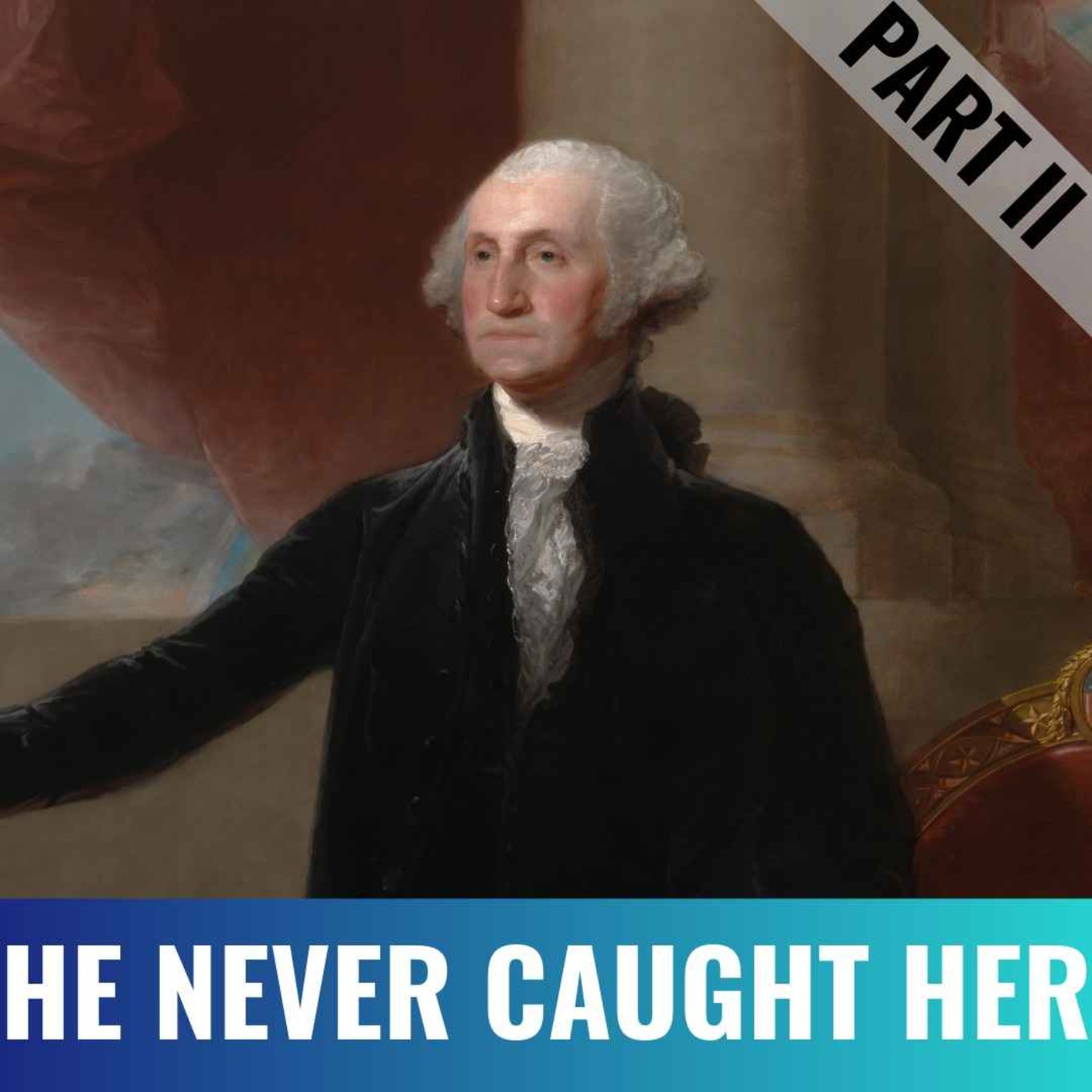
So it's 1790 and the war of Independence is won, or the Revolutionary War, as Americans call it. And George Washington has emerged as this great dignified figure of the Revolution, as the face of military victory. And by 1790, he is the president of this new nation, the United States. And he lives in the city that at that time was the capital. This is before they built a new capital in his name. At that time, the capital of the new country of these 13 colonies was Philadelphia, Pennsylvania. And Pennsylvania had already abolished enslavement in 1780. So the law in Pennsylvania said that if an enslaved person lived in Pennsylvania for six continuous months, they were legally free. This created a problem for Washington. He had to live in Pennsylvania because he's the president and that's the capital. But he has enslaved people in his household. He's brought them with him from his estate in Mount Vernon in Virginia to work at the President's house in Philadelphia. And he does not want to liberate his enslaved people. So he and his wife do something that I think shows how deeply he was not committed to actual liberty. Every time his enslaved workers get to the six month mark, which means they would now be recognized as free in Pennsylvania. He sends them back to Virginia so that they take a short trip to reset the clock so that when they return, they are still enslaved and they have another six months before they're free again. It's this rotating system. And I think it's important because, you know, sometimes we talk about the Declaration of Independence, the founding fathers, the hypocrisy. You know, they said all these nice things about liberty, but they had enslaved people. It sounds like a bit of an oversight. It sounds as if, you know, they really loved the idea of liberty, but unfortunately they have these estates and it's not really their fault and they inherited them, or it's just the culture at the time. This is a different level. Washington is actively working a system. He's gaming the system actually, to make sure the people who are enslaved in his household remain enslaved. So he's almost kind of evangelically committed to enslavement. And one of the people in this rotating system of remaining enslaved is called owner Judge. She's in her early 20s. She's actually the personal maid of Washington's wife, Martha Washington. And she's a light skinned woman. Quite often light skinned women who are enslaved are the products of rape between slave masters and and other enslaved women. And she is highly skilled at domestic work. She sews, she looks after the first lady. She's the household. So she's an important figure. I mean, she is kind of like the maid in waiting for the first lady of the United States. And she is very much part of that household until in 1796, she receives the devastating news from Martha Washington, her mistress, that she's going to be not even sold, but given as a wedding gift to Martha's granddaughter, Eliza Custis. And it's just one of so many indignities of enslavement that a person is a gift that can just be kind of handed around with no agency, not consulted often, not even warned. And that's horrific. But it's not the worst thing because Onan actually knows this granddaughter she's going to be given to, and she is not a fan.
- [25:26]
Peter Frankenberg
Well, they'd grown up together at Mount Vernon, and Ona had a very low opinion of Eliza and she knew that if she went back to Virginia, she would live in an isolated plantation with no hope of freedom whatsoever. So on the 21st of May, 1796, as the Washingtons are packing for a trip to Virginia, owner serves them dinner and then just walks out of the side door into the streets of Philadelphia. And Washington's reaction is extraordinary. This great hero, the commander in chief, becomes absolutely obsessed with hunting down this young woman. So to tell us about why, it's about his authority, it's about this woman in particular. It's about what is it that makes him go completely bananas.
- [26:09]
Afua Haysh
It actually feels a little Trumpian. Washington is so angry at the audacity of this woman that he regards as his property that she, she doesn't even stage an elaborate escape. She just walks out. She knows that she's in a city where there are free black people in abundance and where there is the kind of law leans towards the emancipation. You know, she's just there long enough, she will be free. And it's the kind of slight that Washington cannot tolerate. And I think it's on one level economic. I mean, she's a valuable enslaved person because she's, you know, a house slave. She has all these domestic skills, she's light skinned. These were enslaved people who were prized to do those roles in, in kind of high society households. But I think it's more than the economic value. I think it's that this is a man who wins. He's a winner. And that's why I say it's Trumpy. And you know, we all know that President Trump does not like to be, he doesn't like losers, he doesn't like to be a loser. He's obsessed with the idea that he wins. And you know, Washington in, in his defense has actually been winning. He helped Britain win the seven years war against France and other powers. He is the, the, the emerges as the military victor of the war of Independence. And, and here's this young black woman who is causing him to lose. And that triggers him. And when I say it triggers him, I'm really not exaggerating because what he does next is he actually weaponizes the machinery of the United States. As the president, you can imagine what he has access to. He's the commander in chief, he's the president. He starts to hijack the machinery of state to try and track her down and force her back into enslavement. And the first way he does that is through his nephew Peter.
- [27:57]
Peter Frankenberg
First of all, he finds out that she's fled on a ship to Portsmouth in New Hampshire. So he writes to Joseph Whipple, who's the collector of customs, essentially asking her to kidnap her and put her on a boat back south. And Ona is brave enough and sassy enough to negotiate. She says, look, she'll return to Mount Vernon, but only if the Washingtons promise to free her. But not. Not free her now, but promise when they die. Right. So they're not. Washington's not a young man, but, you know, she's not asking for anything beyond manumission at the point of their death. I mean, it's not. It's not the most bold thing to ask for, but. But Washington doesn't like to negotiate with anybody. Trumpian is quite similar, as you say, Afwa. He's a winner. He doesn't want to negotiate with anybody, and he thinks it's just incredibly audacious of her to be a fugitive trying to negotiate with the President, United States. And he's furious. So he writes back refusing to do that, saying it would reward insubordination. So, I mean, it's just beggars belief, really. But. But he wants to make. He doesn't want a single person, certainly not a single young black woman, to take advantage of him or to be seen to take advantage, because that would threaten his authority, his manliness, and his view of himself. But it's vengeful.
- [29:13]
Ben Green
Hi, this is Ben Green from the Athletic fc. The podcast you're about to listen to is brought to you by Hotels.com as a Hotels.com member, you save up to 20% on hundreds of thousands of hotels and earn rewards on every single stay. Which means the trips you're taking now help pay for the ones you're already dreaming about. And unlike some other places, there are no blackout dates. So when you want to travel, your rewards are ready to go. So the next time you're planning a work trip or a getaway, make sure to book it at hotels.com and start earning rewards. Hotels.com, it's all in the name.
- [29:54]
Afua Haysh
It's interesting, the owner's courage. I mean, courage is an understatement, you know, for this young, black enslaved woman. She has literally no rights to go up against the President. The collector of customs in Portsmouth, who has been ordered to kidnap her and put her back on by the President, refuses to comply. He's on his side. And so there are these other characters who believe actually in the principles of the Declaration of Independence more than Washington does, who are willing to put their own safety on the line, because it's not a small thing to defy the order of the president in 1796. And that's why Washington, in a way, has to resort to a family member, his nephew, Burwell Bassett, who is much more likely to comply with his uncle's orders. And Ona, by now has had a baby. So the nephew has the explicit Instructions to find Ona and kidnap her with her baby to send her back into enslavement. And this time, it's actually someone else who tips Ona off. So there are all these allies around. A local senator finds out about this plan and actually wants to help Ona. So he tips her off that this new attempt to capture her is. Is coming, and she has to flee into the woods with her baby until Bassett eventually gives up and returns south. So she manages to outwit, outrun, and outmaneuver the President of the United States with the help of other people who, like her, believe in her right to freedom. And to me, the story has a happy ending, Peter, because George Washington dies in 1799. He never caught her. He never, ever was able, with all of the might and the resources and the networks at his disposal, he was never able to force Ona back into enslavement.
- [31:41]
Peter Frankenberg
He never catches her. But because of the Fugitive slave Act of 1793, which Washington himself had signed, in fact, Ona lives the rest of her life as a legal fugitive. We know that she lives for another 50 years. She marries a black sailor named Jack Staines, has children, and lives in poverty. But decades later, in 1845, she gives an interview to an abolitionist newspaper called the Granite Freeman. And the reporter asks her if she had ever regretted escaping and running away from Washington, given how hard her life had been in New Hampshire. And her response, Aphra, is simple, but it's pretty telling.
- [32:19]
Afua Haysh
She says, no, as in, no, I do not regret escaping. And then she says, I. I am free. And that, I think, for me, captures the spirit of what American independence is supposed to be. That is the spirit of liberty. Somebody who understands that the value of freedom can't be quantified, and it trumps everything else, that you can't enjoy any other rights or any other benefits if you're not free. And she had to fight that with her body, with her family's future, with all the. Everything at her disposal, especially with her nerve. I mean, I've seen. We've all seen people go up against this President of the United States, and it's a scary thing to do. It's a scary thing to do, and it doesn't end well for a lot of people. You know, people get deported, people get prosecuted, People get removed from their jobs and made kind of unhirable in the profession they've spent their whole life working in. And this young, enslaved woman risks everything because that's how much she values freedom. And I just think the irony that when we think about American independence, we remember in a flattering light the legacy of George Washington. And we don't for the most part know, remember or talk about the legacy of owner Judge. And if you were to ask me who better embodies the spirit of independence, it's a complete no brainer as far as I'm concerned.
- [33:44]
Peter Frankenberg
So these four women we've looked at, Afro, you know, Phillis Wheatley, Elizabeth Freeman, Belinda Sutton, owner Judge give us a completely different story of the foundation of modern America.
- [33:53]
Afua Haysh
I see them as the architects of actual liberation. They each in their own way turned the very beautiful words of the Declaration of Independence into something meaningful that was capable of offering a better future for people who are at the bottom of that system. And I think that it's so important that we remember them. And I, I don't know how you could talk about American independence without them, actually. And I think the fact that that's regarded as a provocative act speaks to how unfinished the project of American independence and freedom in America really is. Because there are many people in America today who resent the mentioning of these names, who don't believe it's appropriate to put someone like Ona Judge in the same sentence as George Washington. And that speaks to me to a deep fragility with the relationship with what the project of American independence was supposed to be and what it has become.
- [34:53]
Peter Frankenberg
And just a sort of final question then. Afro, you know, how, you know, the United States has got so many wonderful things about it, right? The openness, the freedom, the dynamism, obviously all the imperfections that, you know, we don't need any particular reminding. But why are those conversations so difficult 250 years? Or why are people threatened about how, how the interpretation of the past looks? These, these events 250 years ago, they're really a very, very long time ago. They don't have, people don't have personal stakes involved in it. They don't have skin in the game. Why is it that there's such sensitivities and that people could politicize for things that, you know, talk about the role that women played, the way that, that black people played, the way that enslavement played a role. Why is that such a trigger point?
- [35:38]
Afua Haysh
I think because they do have skin in the game and it's still very real. You know, if you look at the experience of African Americans, the reason that there is a concentration of African Americans in low income neighborhoods, in cities in the north, is because after enslavement, there was Jim Crow and the great Migration from forced African Americans out of the south where they still faced dangers and threats to their lives and their abilities to be free and were were settled under punitive conditions in the North. So the pattern of American cities, the income levels of African Americans, the surnames African Americans have, which still in many cases come from people who formerly enslaved them, the fact that they don't know where in Africa they came from because they were trafficked in slavery, slavery and were not allowed to keep their heritage and culture, and the complete and repeated failures to pay reparations have meant that this is still very much a live conversation and it still plays out in the day to day economic reality. And so I think this sense that if you acknowledge the extent of the wrongdoing against people who were not included in the American dream at the founding moment, then you open up the conversation with how you make that right. What does restitution look like? What do reparations look like? What does fairness look like? And that would be objectively a disruptive conversation. It would disrupt the status quo. I think it would disrupt the status quo in a just way and a way to which there's no alternative. But obviously there are many in America who don't want to disrupt the status quo because they're benefiting from it in some way. So I think it's not just ideological. It has practical consequences. That if you acknowledge how shallow in many ways the idea of independence was at founding, then you start to open up what it would look like to make it whole. And it seems like, and I'm really, you know, with a very heavy heart, it seems like America is very far from ready to have that conversation. I think many of us saw the election of Barack Obama as a sign that America was moving towards a more healthy relationship with its history, with its willingness to ask questions about what inclusion and restitution would look like. And again, that's why I say, you know, America often feels like one step forward, five steps back, because after Obama, you got Trump.
- [37:52]
Peter Frankenberg
Well, I don't know whether it'd be fair to say that either Belinda Sutton or owner judge would be amused or even proud or pleased that we're talking about them 250 years on. But I think that they would think that it was fair that we are. So it's been great to showcase through their stories so many deep issues, not just to their own, their own own lives, but also what those legacies look like today. So thank you for joining us again for an episode on the 250th anniversary of the United States. Please listen to some of other episodes in this mega series that we're doing. But thank you for listening to Legacy.
- [38:26]
Afua Haysh
To dive deeper and to support the show, sign up to Legacy plus, you'll get bonus episodes, Early Access Q and as and much more. Go to Legacy supportingcast fm.
- [38:38]
Peter Frankenberg
And don't forget, you can watch all our episodes on Spotify and YouTube as well. And for everything else, including our substacks and updates on TikTok and Instagram, just check out the show notes or search Legacy Podcast I'm Peter Frankenberg, I'm Afor
- [38:51]
Afua Haysh
Hash and we'll see you on the next episode of Legacy.
- [39:10]
Taylor from the Total Soccer Show
Hey everybody, this is Taylor from the Total Soccer show and this episode is brought to you by Hotels.com the summer of soccer is right around the corner, and if you aren't using hotels.com to book the experience of a lifetime, it's worth asking why? As a member, you save up to 20% on hundreds of thousands of hotels around the world and earn rewards on every single stay with. Which means the trips you're taking now help pay for the ones you're already dreaming about. So whether you're following your team across North America this summer or planning a well earned escape after being glued to football for weeks on end, make sure you book on hotels.com and start earning rewards. Because when it comes to hotels, it's all in the name. Hotels dot com.