Loading summary
Transcript105 lines
- [00:01]
A
This episode is brought to you by Nordstrom. Ready to refresh your wardrobe? Nordstrom has all the latest styles for spring, from elevated dresses and denim to standout tops and accessories. Discover the trends and essentials you'll reach for again and again. We've got brands you love like Waif, Princess Polly, Mango, Adidas, and Favorite Daughter. Plus free shipping, free returns, and quick order pickup. Make updating your closet effortless. Shop in stores@nordstrom.com or download our app.
- [00:41]
B
Hello and welcome to a new episode of Legacy. I'm Peter Frankenpen.
- [00:45]
C
I'm Afua Haysh.
- [00:46]
B
And this is Legacy, the show that explores the lives, events and ideas that have shaped our world and asks if they have the reputations that they truly deserve.
- [01:03]
C
This is ernest hemingway, episode two, one true sentence. I love that quote, Peter. And even though I've got my critique of Hemingway, I have to say there are some real gems. Not just in the books that he wrote, obviously, but the ethos he left behind as a writer. There are things I really do hold close to my heart. I've got to give him that.
- [01:29]
B
Do you know, one of the things I struggled with Hemingway is that he doesn't die an old man. And I'm sort of closing in on Hemingway's age. And I can't help thinking that maybe I should have, you know, tried to manage a few more things in my career, in life. Because, I mean, I think he's one of these figures. A bit like. A bit like when we talk about Gertrude Stein, where the connections with the people who are changing things and doing things at that time, you know, it's sort of. It all feels like it's somehow unreal. It feels like it's kind of made for. Made for screen. I mean, Hemingway is so, so, so larger than life. And like you said, there are plenty of things in the negative column. He's a complicated, difficult man in so many different ways. But, you know, he's a. He's a giant of the 20th century.
- [02:08]
C
You're definitely a massive underachiever. Theta. I've just got to say, you know, I. I can see why this makes you feel insecure.
- [02:15]
B
Now.
- [02:15]
C
Don't.
- [02:15]
B
Don't start me, Afra. I've got to do. I'm going to be presenting some of my most recently read books and one of them I can. I'm going to do a special trail here. I got sent this one saying, I hope you're going to enjoy this. Look at that.
- [02:28]
C
No way. I know that book. That's the new paperback. In fact, this is probably the first time anyone's going to actually see it.
- [02:35]
B
So afro, Hershel and Ms. Hemingway, the two authors that we're going to talk about in today's episode. So that's going to be popping up on my recommended reading with a couple of other books that were both.
- [02:45]
C
I'm just going to say I don't think Hemingway would have been a natural audience for that book, my book.
- [02:51]
B
I have a hunch that you might be right. I was gonna say you're being modest, but I think, as we're gonna find out, there are a few reasons why that might be the case. But let's pick back up from where we left it at the last episode. Hemingway is a serial marrier, if that's the right word, a serial husband.
- [03:07]
C
It's weird because I said he was a serial monogamist. And you quite rightly corrected me because,
- [03:12]
B
well, I just wanted to check.
- [03:13]
C
Well, yeah, he was not faithful to any of his wives, which definitely is not the definition of a monogamist. But he was, as you said, a serial marrier. He always had a serious relationship on the go, but he also always had affairs and mistresses. And he tended to line the next Mrs. Hemingway up before the last one was done. In fact, he always lined the next one up before the last one was done.
- [03:36]
B
But we had Hemingway starting his career as a war reporter and then picking that back up in the Spanish Civil War. Then when the Second World War gets going, Hemingway finds his role for himself again, partly as a journalist, partly as a writer, partly as someone who, from his very earliest part of his career, in fact, his first editor at the Kansas City Star, saying that Hemingway's just got a very good eye for a story, and he translates that into getting quite involved in the Second World War II.
- [04:01]
C
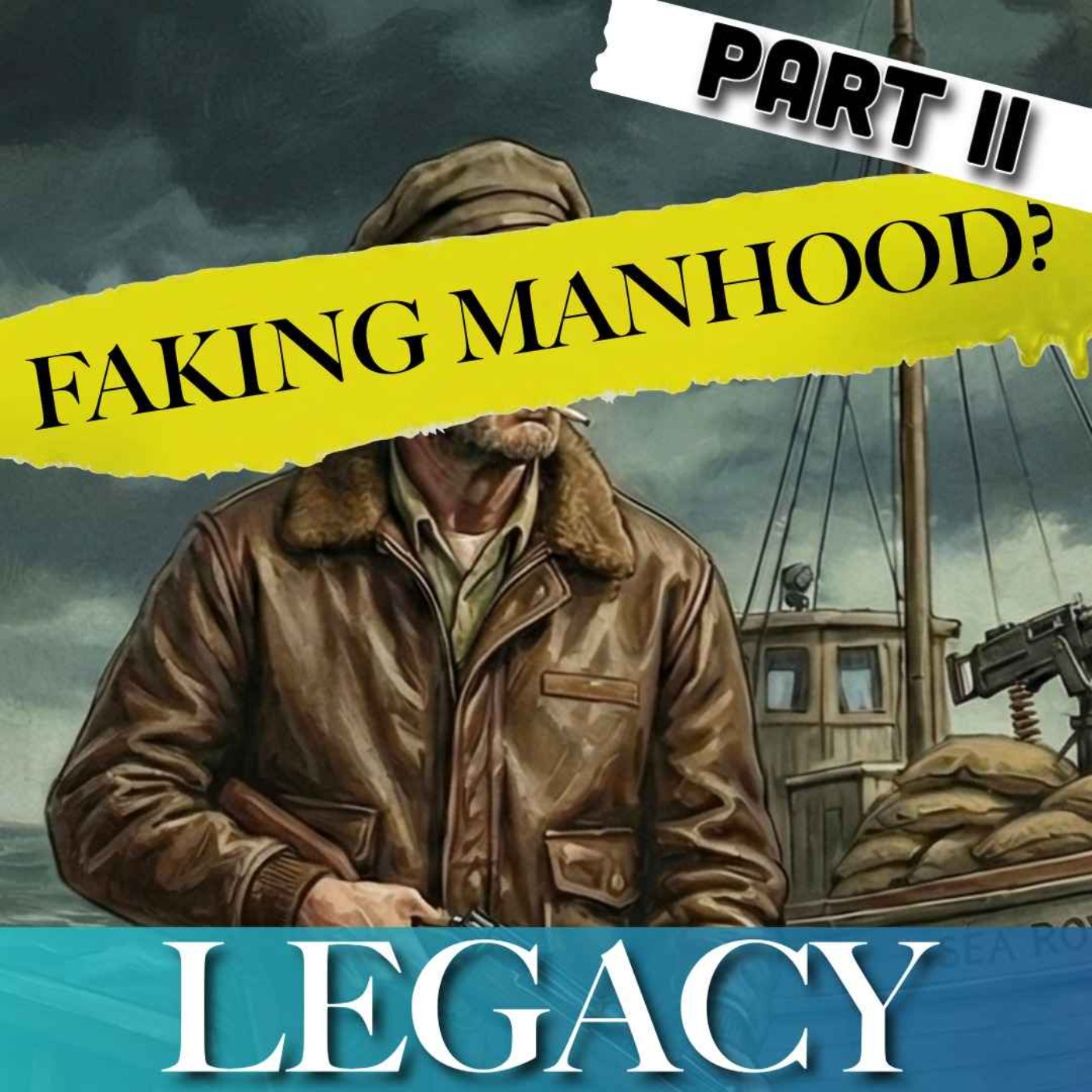
This is, I think, one of the reasons that this kind of modern masculinity movement looks up to Hemingway. You know, I think it's difficult to be romantic about war after the first and Second World wars, but there is still this kind of glamour in the way Hemingway approached war. So he's a man of action, at least in his head, and he convinces the US Government to arm his fishing boat, the Pillar, with machine guns and grenades so that he can hunt German U boats in the Caribbean Sea. It's classic Hemingway because he sees himself as this guy. The reality is he doesn't actually catch or sink a single enemy U boat. What he does do.
- [04:40]
B
I wonder why that might be. I mean, if you're going to go hunt for U boats, the Caribbean, I mean, it's not the most famous arena in the Second World War. I mean, you could see why if you were a U boat commander, you might tell the crew, look, we're going to go and see how much damage we can do off Barbados and the Bahamas. But the fact that he's able to convince the government to give him what he wants while he goes fishing and drinking, you know, speaks to the fact that he thinks he's a player.
- [05:04]
C
He does do a lot of fishing and drink a lot of rum. That's the main accomplishment of his Second World War adventure. And it's so interesting, the dissonance between how seriously he takes this mission and how farcical it is to everyone else. And it actually emerged later, Peter, that he was recruited by Soviet and US intelligence, which. This isn't the Cold War, this is the Second World War. And those two powers are allies, so they're not incompatible. But again, it wasn't really a particularly fruitful recruitment for either intelligence service, as far as I can work out.
- [05:37]
B
No, he's classed as a failed agent who's inactive. And, you know, I think it's partly to do with the fact that the NKVD or the precursor of the kgb, it's a numbers game. So you try and you try and recruit anybody. And finding someone who swans around talking about how he's got machine guns on the front of his boat and drinks a lot is probably. And as a womanizer, it's probably quite a good recruit because you've got enough dirt on them to be able to blackmail you. But my guess is for, I don't know what you think Hemingway wouldn't have been the sort of blackmailable guy. I don't think anything he was doing was he kept particularly hidden or was ashamed of.
- [06:08]
C
Yeah, you need somebody who kind of presents some kind of front in order to blackmail then a Hemingway to, you know, you can say, I guess in his favor, wears his dysfunction quite transparently. You know, he is a womanizer. He drinks too much. He's always on his fishing boat. And by the way, he has a lot of accidents on the pillar. I mean, he's kind of in the rough and tumble on the sea and the fish. And if you've read the Old man and the Sea, it's so much inspired by his experience, experiences on that boat. He actually has a lot of head injuries as a result of knocks he takes. I mean, just imagine being on a small boat in the Caribbean Sea, drinking a lot of rum. It's a bit of a. It's a bit of a recipe for disaster. I have actually tried it and it's delightful.
- [06:48]
B
I'm thinking, I'm thinking live podcast. Surely, surely we have listeners and rum in the Caribbean.
- [06:55]
C
We could do a wedding in the Bahamas with a friend who grew up in the Bahamas and one of her childhood friends just took us out on his fishing boat with a lot of rum. And it was literally one of the best days of my life. We had a little speaker, we were playing like Biggie and Tupac and drinking rum. It was very glorious. So I got it. That's fine.
- [07:17]
B
If the sea, if the sea is flat, that's fine. Right. But if it's bumpy, maybe it's slightly different. But I'm interested afwa about, you know, we've alluded to Hemingway sort of character and I guess character flaws, but it's deeper just on the fact that he's egotistical. Right.
- [07:30]
C
He's got some real trauma and unresolved mental health problems, Kath. And I think, as is often the case, and actually, you know, I'm in my mid-40s, I can relate to this. I think it's an age where if you've got unresolved issues from your teens, from your 20s, they start catching up with you. And now I see it in people around me who kind of in your 20s and 30s, you can kind of get away with it with masking your problems or self medicating, but by the time you get to your 40s, it starts to show. And in his case, it emerges that he's really using alcohol as a way of self medicating from the PTSD he experienced in the First World War. And as long as along with these other issues he has from his family, it's quite a dysfunctional, weird childhood he had. And, you know, he's somebody who has kind of staked his identity against effeminate, indulgent, spoiled men. He sees himself as that kind of rugged, you know, grassroots, real man. But now at this age, he's starting to actually behave like the people he's been so quick to despise.
- [08:32]
B
And I think that that's a sense of entitlement. You know, the heirs and graces that he adopts and he, he, he does that. I mean, that's, that's not great anyway. But he's extremely unkind. You know, he turns against people who've been friends of his and treats them really badly. So, I mean, Dorothy Parker, who had criticized Spain, which is, you know, not something that Hemingway should have got over excited about even the fact he went to go and live there for a while. And he obviously adored it in quite a friendly way, quite a friendly letter. He retaliates by writing an incredibly vicious poem which doesn't get published, I guess luckily, but reveals her confidence is about recent abortion, which it's not his to share, and a suicide attempt, and then mocks as he quotes the Jewish cheeks of your plump ass. So that kind of way of treating people who have been friends of yours, you know, no matter what they've said and done, is unforgivable. He humiliates his old friend F. Scott Fitzgerald, who'd done so much to promote him, as we talked about in the first episode, by explaining how after Zelda Fitzgerald had complained or perhaps just joked about the size of her husband's manhood, he'd insisted on examining it in a restaurant. So he's kind of crude and gruff and just difficult to be, I would add, cruel.
- [09:44]
C
I mean, you know, we all know what it's like to have friends that you can make fun of and it's kind of good humored banter. This is something different, quite vicious, and it seems calculated to hurt. There's a correlation between his literary success and his cruelty to his peers. When his book the Sun Also Rises is published with great success, his most successful work so far at that point, it's as if he's reached the point where he's now formally outgrown his mentors. And that's the point at which he turns on Gertrude Stein, who'd been also instrumental to his early success, had really kind of taken him under her wing. She's a complex character herself, as we saw in the series on her and Sherwood Anderson, who had given him his letter of introduction to Gertrude's side, thereby opening his access to this scene in Paris that was also critical. And he turns on both of these figures at this point with his writing. He's burning bridges, he's falling out with them. And it's as if he now feels that anyone who could be considered an equal threatens his dominance. And it's a very unpleasant characteristic, Peter.
- [10:48]
B
And he's extremely ungenerous about all other writers. You know, he. He has a real be in his bonnet about, about James Joyce and, and about Ulysses, I guess, sparked by the fact that it's become so successful, so popular and, and worse, it's the sort of person who talks about why it's a great novel that annoys Hemingway. So he's kind of rude about Joyce's, rude about Ulysses, rude About all other literature. He reviews a book by a young, newly discovered writer called James Jones called From Here to Eternity, which has becomes very famous, of course, also as a film. And he writes an incredibly cruel response. And after a series of vicious comments and back and forth, he then says about the author, I hope he kills himself. So that sense that the spotlight has always got to be on him, it's always the Ernest Hemingway show. It's kind of hard to see how you have any functional relationships with anybody at all, because it all just becomes about him.
- [11:40]
C
I think the James Joyce thing's really interesting because he is so critical, as you said, basically all writers considers himself basically superior to everyone except Shakespeare. And James Joyce is actually one of the writers he does look up to and kind of acknowledges that Ulysses is a great work of fiction, but even that he can't help himself but criticize. And that's where you see it's kind of pathological, like he's incapable of just giving praise, even when deep down he looks up to a work. And that, I think is a. Is a trait that reveals something deeper than just being a critical person.
- [12:14]
B
I know how you've described it when you're talking about this is that you see that Hemingway's greatest story he ever told was about himself. Tell us about the kind of later years of Hemingway's life and about the kinds of works that he was writing and the audiences that responded to those.
- [12:28]
C
So my favorite Hemingway book is the Old man and the Sea. Have you read it, Peter? Of course. Yeah, I'm sure you have. I think it's such a beautiful book, not without its kind of trickiness. And I think it's. It feels quite reflective of who Hemingway is and his worldview and what he looks up to. And also, as we've talked about before, the kind of sorrow, really. It's a book with great warmth and humanity, but there's a real like, melancholy at the heart of it. And I think that kind of sums the man himself up. And I think it's just interesting to me as a writer. I'm so fascinated by how other writers write, their routine, their style tricks and how they keep going. Because you. It's so hard. And writing fiction, you have to dig so deep, challenges your. Your self belief in a way that I don't think other forms of writing do. And Hemingway, you know, at this time, he's an alcoholic. His life is, you know, all over the place. And still he gets up 5:30 or 6 every morning, sits at his desk and writes. And that's the discipline that allows him to keep producing this work even as his health and his mental health are deteriorating. You can just imagine kind of what's going on in the afternoons and evenings, how rough he must feel at 5:30 in the morning.
- [13:44]
B
You're not going to get much done otherwise, right?
- [13:46]
C
He gets up and does the work. And the Old man in the Sea is a breakthrough for me. He's already hugely successful and celebrated, but this is the book that Time magazine writes. For a long time, Ernest Hemingway has wanted to write a story that he did not think he could. Now he has written it. It's a very short 27,000 word novel called the Old man in the Sea. And it may be what he thinks it is the best work he has ever done, says Hemingway. I have had to read it now over 200 times and every time it does something to me, it's as though I had gotten finally what I had been working for all my life. Not modest, but it's an incredible book and it's for me symbolic of his whole style. It's a very restrained, pared back book. You know, we talked in the last episode about the iceberg theory. There's so much that's left out. And as a reader that does fuel your imagination, your visual imagination, your empathy in a way that I do find really powerful.
- [14:47]
B
I think that's right. And particularly with fiction, not just what you leave out, what you leave unsaid, as we talked about before. But he doesn't overwrite, you know, and I think that that's, that's. That restraint is kind of odd in one way because it shows control and discipline, which is not what you see, I guess, in the other parts of Hemingway's life where he's sort of overindulgent and self indulgent. You'd think he'd be the sort of person who'd produce a 500,000 word novel that's almost unreadable because it's way too ambitious rather than something that is quite centered, quite modest and very, very well executed. And you know, it's not surprising, I think, that that book does so well. He wins the Pulitzer Prize in 1952 and in the same year he wins the Nobel Prize. And I mean that's quite a achievement for, for a man whose literary output is not. It's not enormous, but it shows that he has made himself into a worldwide name and a worldwide figure despite all of the problems, all the ways he's treated people. And you know, it's a pretty stellar career to look back on particularly because. Because he's such a complicated figure. Well, let me ask you, I mean again, is the complication of somebody's life part of their making? Is one of the reasons people read Hemingway because he's such a tricky character, because he's difficult, because there's the squaring up of the private and the public? Is that also part of why people are fascinated by him?
- [16:05]
C
I wrestle with this all the time. A slightly different question, but related, which is do you have to be a bit of a car crash to be a great writer, to be a great novelist? So many of the writers whose work I look up to to have very unenviable personal lives to me, of course there are loads of writers who are lovely people and have healthy lives, thank God. But I do. I mean, this is a conversation another day. But I do think that non fiction writers in my experience tend to be a little more functional. I feel like great novelists often kind of exist in a slightly different realm where things can be a little more extreme and not all of them are at all. But it's a question I ask myself. Lots of my favorite novelists are. It's kind of painful to look at the circumstances of their personal life. But there's no question that Hemingway is infusing his writing with his own issues, his own pain, his own melancholy, his own trauma, his own insecurities. It's all in there and it makes the work such a unique voice. And I, you know, I think that we have to acknowledge that. And it's tragic because if you remember at the beginning as a young man kind of getting to Paris and a journalist who dreamed of being a respected novelist, he's now made it. He's, you know, he's won the pulets of the Nobel, he's written. The book he acknowledges is kind of his masterpiece. You'd think that would be a moment of happiness and success and feeling peace in one's accomplishments. But as is so often the case
- [17:25]
B
with great artists, doesn't work out that way.
- [17:27]
C
It doesn't work out like that.
- [17:29]
B
So when we come back, we'll hear about Hemingway's death, his demise, but also about some of those legacies, both of his literature, but also his character and why he sort of apposite to be talking about in the 21st century.
- [17:50]
D
Knock knock.
- [17:51]
B
Ooh, who's there?
- [17:52]
D
A Boost mobile expert here to deliver and set up Your all new iPhone 17 Pro. Designed to be the most powerful iPhone ever.
- [17:58]
E
You call that a knock knock joke?
- [18:00]
D
This isn't a Joke. Boost mobile really sends experts to deliver and set up up your phone at home or work.
- [18:04]
B
Okay.
- [18:05]
E
It's just that when people say knock knock, there's usually a joke to go with it.
- [18:08]
D
Like I said, this isn't a joke.
- [18:10]
E
So the knock knock was just you knocking?
- [18:12]
D
Yeah, that's how doors work.
- [18:13]
E
Get the new iPhone 17 Pro delivered and set up by an expert wherever you are. Delivery available for select devices purchased@boostmobile.com terms apply.
- [18:21]
F
You know that wellness goal you set at the start of the year? It's not too late to stick with it and make your future self proud. Especially with the all in One Nutrition Shake from Cachava with 25 grams of protein, 6 grams of fiber, greens, adaptogens and more. No fillers, no nonsense, just the highest quality ingredients. Stick with your wellness goals. Go to kachava.com and use code smoothie for 15% off. That's K-H-A-V-A.com code smoothie.
- [19:02]
C
So we have Hemingway, who on one level is at the peak of his success, but sadly in his personal life is in quite swift decline. At this point in his life, he is ravaged by alcoholism. He's experienced multiple concussions, I mean, real physical trauma, head injuries. He's never fully recovered, at least psychologically, from the very serious wounding he experienced in the second world War. And he's also plagued by what I think we would now recognize as depression, and in his case, hereditary depression is clearly something that other family members have suffered from. And remember, his father died by suicide. And I'm not trying to be offensive, Peter, but I'm just gonna say it.
- [19:43]
B
I know what you're gonna say, and I'm smiling and I'm glad that we agree that you're gonna say this rather than me, but go on.
- [19:51]
C
He did what, in my opinion, a lot of privileged white people do when they feel like they need a reboot. And he went to Africa.
- [20:02]
B
I mean, I can't argue with that. Right?
- [20:03]
C
You can't. It's the thing. It's the thing. You go to Africa to find yourself and to reconnect with the elements and the earth and the primitive forces. I mean, this is an era where those ideas were a lot more unreconstructed. And it's actually not just that. It's not really a woo, like, let's go and do a yoga retreat on Savannah. This is like, let's go and hunt big game and like, get big back to, like, the masculine truth.
- [20:26]
B
That's the reality. It's not Africa, it's the, the natural world in particular. And so when I, when I wrote the Earth Transformers, I did quite a bit on, on Europeans and their conceptualization of Africa in this sort of so called scramble for Africa at the end of the 19th, 20th centuries. And people like Winston Churchill or Theodore Roosevelt, who is U.S. president, and what they're actually trying to do is to say, well, obviously all the racial stuff, I suppose we don't really need to talk about it in huge detail, but it's obvious the kind of racial characterization that people living in Africa, indigenous populations, native populations, don't deserve to live in such a beautiful continent that's built into it. But also there's nothing better if you are a hyper insecure masculine man, than to go and shoot big animals, particularly ones that could kill you, like rhinos or elephants or lions. So hunting, that's part of it. The idea that you can spread civilization, you can spread religion, the fact that you can improve the lives of, of people who are there just by your very presence is something that runs incredibly deep, particularly through elite, rich, privileged Europeans. I don't want to give benefit of a doubt for any of that, but it isn't all within a context, I guess, of how people are seeing the world around them. And it's almost impossible to understand it, I think 100 years on, because it's so obviously bonkers, racist. And the way that you see that nature is a place where you can have fun and kill things rather than engage with it. I mean, it's the whole, it's whole of human society back to front.
- [21:53]
C
All of those things are true. I completely agree. I think there's a simpler narrative here, and I think this is still very much alive. When people talk about holidays, safari trips and so on, it's that they're not really even that interested in civilizing Africans. That colonial idea, which obviously was still very current at the time in the Hemingway's case, I think it was more the absence of humans being relevant. Africa is a blank canvas where one goes to project one's masculinity. You know, this empty savannah, the Great Plains with the majestic giraffe and lion. Humans don't really figure into it. You know, Africans don't figure, except maybe the white gloved servants who, you know, prepare your food at the end of a big day of game hunting. And I think that's the connection with Africa that Hemingway is experiencing. And in the tradition of the Roosevelts, they're not particularly interested in Africans. They're kind of irrelevant. It's the savannah, it's the game. And you know, Africans, if anything, are just an accessory to this kind of state of nature. So I'm obviously quite sensitive to that because as someone of African heritage growing up, that was kind of the dominant way people I knew talked about Africa. It's like, have you been to Africa? The lions are incredible, you know, and like there are no lions in Ghana. It's not that Africa I know, but I think there's this especially. It's a class thing, but for people with money and privilege, you know, you go to Kenya or South Africa or Tanzania and you hunt big game. And that's exactly what Hemingway does. But in Hemingway's case, I have to say it is an unusual experience. Peter, he travels to Uganda and it's actually quite surreal. What happens next?
- [23:35]
B
Well, I'm now going to go back. That's the worst thing is interrupting you now and cutting the chain. But I was just going to say some of that is all alive and well. When you're Talking now organizations, NGOs like Survival International have been very careful to try to highlight that creating game reserves that you protect animals often means displacement of indigenous peoples, like the Baca in West Africa. Or for example, you can look at what's happening in Kenya and Tanzania where Maasai are being pushed out of their homelands. I was going to say ancestral lands. That somehow sounds much too fancy, but that where they live to create big game reserves where the animals can live freely. And there's a conceptualization that people who humans must be dangerous. Particularly African populations must be dangerous too. So some of those things, We've moved forward 100 years, but we're still in the same position.
- [24:20]
C
In lots of ways it's really extreme as well because safari is a really exclusive elite pursuit. It's not something that most people can afford. The average cost of a safari trip can be 10, 20,000 pounds, something that rich people do. So the disconnect between the people who go on safari and the reality for Africans who live on the land, have ancestral connections to the land is really great. And there was a big controversy recently with a high end resort trying to build its latest development, like in the middle of the great migration route for wildlife. You know, this kind of disregard for nature, this disregard for indigenous people. And it's all about offering this luxury service. And one of my bugbears is if you go on the websites of many of these societies, safari experience companies, you won't actually see any black people. It's all like attractive rich white people and game. And it's just so weird to me that you would market something that is of the African continent in a way that completely erases Africans. And that I think is weird. How little that's changed, Peter, in the last hundred years. Certainly since Hemingway's day.
- [25:29]
B
There's a whole other episode. You know, I think luxury tourism, I think one has to do.
- [25:32]
C
Maybe we should do the legacy of safari. Actually, that would be great.
- [25:35]
B
But I think there's. There's something different about. About luxury tourism and, you know, who gets to decide what's elite and what isn't. I mean, I think funnily enough, here in the UK we're starting to learn what that feels like the other way around. We're so dependent on international tourists coming here from the Gulf States or from the Middle east or from China or whatever it is. And of course, that means. Because they are. People are spending money. The ways in which they want, you know, the colors of the lifts, the music that gets played, what's on the restaurant menu starts to get shaped by. By visitors. So the boot comes onto the other foot, too. I think it's not the problem about how much people are willing or able to spend. It's how that integrates with the experience of seeing local life and seeing how people live, who live there all the time. And I think that exclusion, that promotion
- [26:17]
C
of animals, yeah, there's a connection, because the kind of person that can spend, you know, two or three thousand pounds a night is not the kind of person on the whole who's probably got a deep interest in social justice and equality. And of course, there are exceptions, but, like, these are the super rich who kind of live lives of luxury, and they're not, on the whole, particularly connected.
- [26:38]
B
This is all my fault. You. You left it at Uganda ready to go on. And I thought, we're gonna be. We're gonna be bang on time. That's just. We can.
- [26:45]
C
You thought. Let's just have a really quick discussion about race and privilege in African tourism.
- [26:50]
B
Let's just cut.
- [26:51]
C
That's the sidebar. No, we're not cutting that, Dan. Keep it in anyway.
- [26:56]
B
Okay. All right, so. Okay, so let's go back. Let's go back to Uganda. So Hemingway has been blown up in Italy. He's been in car crashes. He's banged his head. I mean, in fact, you know, the. Andy Farah. I wish I didn't know that you found this. Who's been studied. Who studied Hemingway's brain makes the argument that Hemingway might have had cte, which is the Concussion that, you know, people have high impact head traumas in American football, rugby, and so on boxers suffer from. And that has important impacts on your physiognomy and also on your neurology, too. But that's before he goes to Africa. He travels to Uganda, as you said, where he survives not one, but two consecutive plane crashes. And it's miraculous he survives either, let alone both. But he is badly injured, isn't he?
- [27:39]
C
It's insane. I mean, to be in a plane crash, survive it, then get in another plane and that plane to also crash is. I don't know what the odds are. And also, if I was in a plane crash, I'm not getting in another plane. And, you know, if anyone ever studies plane crash data, like the planes that crash are these small domestic flight planes in former Soviet Union, in African countries, you know, that on the whole, it's much less likely to be some big international airline. But these, you know, I've flown in planes in West Africa that in hindsight, I don't know why I was so relaxed about it. You know, these really ancient ex Soviet planes that were kind of like rattle when they took off, and then, you know, you'd land at every border while the pilot would kind of like exchange, like vodka for some.
- [28:25]
B
There's a legacy episode there. Soviet planes all over the world. Yeah, that'd be fun to do.
- [28:29]
C
Yeah, yeah, that would be fun to do from a safe distance. I mean, I was too young to really know what I know now, but in hindsight, that was not that safe. So anyway, Hemingway discovers how unsafe it is when he has two plane crashes. And it's amazing that he survives, but it's really. I mean, bruising is such an understatement. Peter. He ruptures his kidneys, the liver, the spleen, and this is how he describes it. He had brain fluid ooze out to soak the pillow every night, burned the top of the scalp, had to take two breaths in the fire, which is something that never really helped anybody, except, of course, Joan of Arc, and talks about his sprained arm and leg, crushed vertebrae, paralyzed sphincter, and temporary loss of hearing and eyesight. And if you read that letter, he is kind of making light of it. You know the joke about Joan of Arc, but it sounds really excruciating. He's not physically in a good way, and he's not mentally in a great way either. Peter.
- [29:31]
B
No, he said by 1960, he's attempted suicide, and his wife Mary sends him to a clinic in Minnesota. He's there for a few months and it's under the guise of high blood pressure because I guess people want to keep things like that secret, I suppose. And. But actually he's there getting mental health treatments including electro shock therapy, which he calls frying the bacon, which is, you know, he's, he hasn't lost his sense of humor, but he's, like you said, he's, he's extremely unhappy. I guess it's in a lot of pain. So he threatens suicide multiple times. And Mary unfortunately never locked up the guns in the house, saying that a man should never be deprived of his own possessions. That kind of, you know, maybe think that one through too. But he eventually does succeed in taking his own life in 1961. And tragically, he fulfills that prediction that he made early in his life, as we saw in the first episode, that he would die the same way that his father had.
- [30:23]
C
There's such a weird relationship with guns and suicide in this family. If you remember in the last episode, when Hemingway's father took his own life, his mother sent him the gun he'd used to do it as a memento. Now this man who's really mentally unwell and threatening suicide and has even attempted suicide, his wife is like, it's totally fine to leave the guns around because you should never take guns away from a man.
- [30:47]
B
Yes.
- [30:48]
C
I mean, I get the dignity of not treating, not infantilizing someone and taking away their things. But it seems, I don't think it's with the benefit of hindsight, it's that it seems inevitable that he might try and use the gun to take his life. And that's. Not only has he been saying he would do that his whole life, but he has tried to do it before. And now tragically, he succeeds.
- [31:10]
B
I presume it's not only the risk he might use it in himself. Right. I mean, if you're absolutely rat arsed every night on rum and drinking heavily and you're neurologically disturbed, it's also about your own personal safety. So Mary's not just taking a chance with Hemingway in his life, but also with her own and anybody else too. But look what I think when we come back from the break, it would be really interesting to think about Hemingway's literary legacy. And definitely I want to talk about the manosphere. Is that a good word? Manosphere? Are you signed up to the Manosphere? I should probably rephrase.
- [31:41]
C
I'm not signed up to sign up to the manosphere. Yes, Peter, I have a loyalty card.
- [31:48]
B
You get one free one after you have 12 Manosphere episodes. Okay, so let's talk about the Manosphere when we come up.
- [31:55]
C
I'm not a card carrying Manosphere member, but we'll discuss that more after the break.
- [32:10]
D
This winter, know what your vehicle needs before it needs it. Visit your Buick certified service center and ask for a multi point vehicle inspection. And take advantage of stackable rebates. See dealer for complete details. Multipoint vehicle inspections vary by participating dealer.
- [32:37]
B
So we know probably more about Hemingway's life. We're more interested in Hemingway's personal life, I guess, than almost any other writer, I guess because it's so colorful, partly because he writes about it himself. But does that explain why he became. Become so famous? I mean, he, he wins the Nobel Prize in Pulitzers not because people are judging him, but on the weight of his work.
- [32:58]
C
I think if you think now about celebrity culture and how, you know, people can fall out of the news media until they have some huge tiff, whether it's like a family rift. I mean, we're recording this not long after the Beckhams had this hugely public fallout. And I've noticed since then, every single minutiae detail of what Victoria Beckham does is now the subject of huge interest, where it really wouldn't have been a few months ago. And I think, you know, Hemingway is constantly generating interest and gossip and headlines because he, he's quite transparent about his grievances. He would be the person now denouncing fellow writers on Instagram, you know, tearing down his friends on social media or making speeches where he kind of lays into the literary establishment. He, he's got that kind of energy about him. And I think in his defense, you could see, say he does it quite openly. He's not like pretending to be a nice guy and then behind the scenes backstabbing everyone. He's kind of like front stabbing them all the time. And as a result, he has this reputation of not being a nice person. And it's a little bit of a difficult comparison because we know so much about him, much more probably than other equivalent writers. So it's much easier to pass judgment on the fact that he was selfish and egomaniacal and a treacherous friend and an alcoholic and a thankless son and a negligent father. But at the same time, he was a great writer. And some people would say the greatest writer of the 20th century. I wouldn't say that, but some people
- [34:24]
B
say that I didn't have Victoria Beckham on my Hemingway bingo cards, but I love it. I mean, okay, so let's let's do. I mean, I think Salva some of it. Also, the legacy of his letters, the fact that he was in such a racy and well known set means that there's just more material so you can tell Hemingway's story because all these people like Zelda and F. Scott Fitzgerald pop up and, you know, so because there are other people then that that helps generate it. And I guess that's also the world of celebrities too. You know, that they want to be friends with each other and therefore that whole nexus becomes more interesting because you're connecting. Is she called Nicola Peltz? Is that what, Brooklyn? Beckham's wife? Anyway, you're connecting multiple different people and therefore you get those stories. Let's start quickly though, with Hemingway's strengths. I mean, look, he is brilliant at putting places on the map. So you could think about Spain, for example, the Spanish Civil War. Hemingway comes quickly and that the Dolomites in the First World War. So his presence is still most palpable in Key west, you know, where there are endless photos of him and holding up the fish that he caught in Cuba, which, depending when you're listening to this, you might be going to visit under a new, different regime that's been changed since the 1960s. He's still a hero. He kept his beloved boat in the harbor at Coquimaru in the fishing village east of Havana. And you know, like I said, with Hemingway, there's so much that he wrote that wasn't published. So 6,000 letters also to go through that. That's one of the projects that's currently undergoing, to publish them so people can read them. So there's a lot that you can pick up about Hemingway. And, you know, there are qualities in there too.
- [35:53]
C
There's such a romanticism, you know, about Key west in that era, Cuba in that era, the love affairs. Martha Gellhorn, incredibly kind of glamorous, pioneering women war correspondent. He was hanging out with Gertrude Stein, Picasso and F. Scott Fitzgerald in the Belle Epope Paris. Like, it's the subject of much fantasizing and nostalgia for many people who kind of dream of a time of the literary salon and, you know, these renegade writers just doing something very avant garde. He's not so avant garde as really pursuing this quite unique voice, Peter. And I think that's one of the things I'm keen to talk about is that I think the type of masculinity he's quite intentionally channeling has come back into fashion now. And that's why, okay, we kind of raised the Idea of the manosphere. Because it's almost as if a new generation is now looking up to Hemingway as a kind of unapologetically masculine voice that means something different in the mid-2020s.
- [36:55]
B
So start me on that one. Okay, so violence and killing, you know, the. The celebration of seeing or being involved in. In killing, particularly big animals, the relationship with guns, bull fighting. How does that all fit in? Is that the kind of epitome of a. Of a real man being able to tame nature? Is that the kind of the brute, rugged force? Because that's not what most writers are famous for. They got this ink on their hands and busy wondering what word to put in a sentence. How does that fit in?
- [37:23]
C
Yeah, so, you know, we're living in an era where, if I were to kind of summarize the manosphere, there's this perception, real or imagined, that men have been stripped of their essential essence. You know, that's now frowned upon for a man to be his true masculine self. And that true masculine self is the kind of hunter gatherer archetype, somebody who thrives on physical action, you know, who's designed to kill not necessarily for gratuitous violence, but, you know, to hunt and feed his family through physical pursuit, that he should be wielding weapons and taking part in athletic contests. He should be allowed to be fiercely competitive and physically domineering. There's this sense that, you know, throughout the 20th century, we frowned upon those ideas and tried to, through feminism and gender equality, make men more like women. And now men are rebelling and going back to their true selves and wearing their masculinity proudly.
- [38:13]
B
You can see why Hemingway, you got that Tarzan image of, you know, of the kind of man who's released back into the wild and, you know, as it happens, generally the male, the man before any form of liberation of women, you know, are busy reciting poems and playing the Hearts Accord. The idea that you need to be in nature and using your bare hands and not having your shirt on, like Hemingway is often photographed. It's a kind of funny idea whether. Whether it's provoked by, you know, the idea that gender equality is going too far, which is obviously, I guess, part of the story today. It's that the ideal state of man, you've got to be crazy to think you want to live rough in the world with a bow and arrow, trying to shoot things that might kill you. I mean, it doesn't show too much about you. I mean, it's surely the civilized life, and I mean, civilized people living in cities you know, the creature comforts are what most people crave because most people want an easy life rather than to prove themselves. So Hemingway's also trying to be different, isn't he?
- [39:06]
C
It's not a coincidence that these movements exist more in societies where people have the luxury of not having to hunt for food, not having to kind of carry water over long distances or, you know, struggle with treatable illnesses. You know, it's people who are kind of sitting in this urban lifestyle where everything's at their immediate disposal, fantasizing about a life where they were more connected with their ancient past. And I think we can all relate on some level. Everybody who has that urban lifestyle probably wishes they spent more time outdoors, wishes they felt more connected with nature, you know, wishes they had more of a sense of community. You know, modern life has affected many of us in ways that make us hark back to this romanticized past. And I'm probably guilty of romanticizing elements of the ancestral way of life as well. Although, I have to say, not the ones that Hemingway is romanticizing. I've got no desire to shoot and kill things. And I think as well, we don't understand masculine and feminine energy, you know, which is a whole separate conversation. But I think, like, it's very natural. Like, you need masculine and feminine energy in the world, and masculine energy is associated with physical force and competition. It's just that it's not something that men necessarily have a monopoly over. And it's also, like, not who all men are. And also it needs to exist in harmony with feminine energy, which also isn't the unique preserve of women. You know, it's energies rather than strict gender. And I think that's a big misunderstanding. And I think a lot of this is really people just feeling frustrated that they don't know their place in the world, whether that's because of feminism, whether that's because of AI. The gender boundaries that were once clear are now more complex. And instead of, like, really engaging with the complexity, people just look for an easy solution. And here you have Hemingway saying, this is what it is to be a man. Bullfights, hunting, fishing boats, guns, serial philandering. You know, this is what a real man is. And I can see why to some men, that might sound attractive. They're like, yeah, I want to sit on a fishing boat in Key west with a. You know, with some live ammo and some ram, kind of catching hot women along with my fish. Is that a good way to live? Does that make the world better? That's like a whole Separate question, why do you think it is that he was so comfortable with violence?
- [41:19]
B
Well, you know, he is criticized for exploiting violence, for glorifying it. But I can't help wondering whether, you know, it's easy to forget about the context of Hemingway's life and that the horrors of the First World War and the Second World War, where human life becomes cheap, the glamorization of weapons. The idea that Hemingway is going fishing, you know, is very different to going out killing people, you know. So he writes about some of this in For Whom the Bell Tolls, and he describes the. The experience of a soldier killing an enemy as a duty overriding personal feelings. But I think that that first half of the 20th century with the dislocations, the weaponization, the mechanization, the fact that people's dads get reported, you know, knock on the doorstep and that's it, you're done. The compensation is not just about wanting to connect with the wild and some of the things that we talked about already, but it's also about a reaction to men do these things to go and kill things because they kill each other. And you've got to be ready to have the skills to be able to do that to survive. And I think that's. It's quite a dark reading of Hemingway that is a kind of cipher for a generation or two, I guess from 1900, 1914 until. Until the 1950s, where what it means to be a man is not just about salons and writing, it's about willing to put your life at risk. And I guess living the way the Hemingway does is saying, I'm watching bullfights. I can see men putting their lives at risk. Me, you know, wrestling with an enormous marlin who could kill me and drag me over the. Over the edge, spear me to death. You know, there's a way in which he's saying is that I am equal to those who've given up their lives. And of course, of course, it's a completely different story too. So I think that that impact of having seen witnessed generations devastated by war is part of the compensation, in fact, to show that you're worthy to stand amongst their ranks.
- [43:12]
C
This is why Gertrude Stein called them the lost generation, because in so many diverse ways they are coping with the catastrophic loss of. To existential wars. So much death and suffering. And it prevents you doing what maybe men in the 19th century would have done of like, really glamorizing war as this victorious experience. But at the same time, they have to forge this new sense of purpose. And masculinity and identity out of what they've seen. And I think that's what Hemingway is struggling with when it comes to his relationship with women.
- [43:44]
B
Yeah.
- [43:44]
C
Again, you know, we sometimes have these conversations about, can you separate the art from the artist? No, because the way Hemingway struggles with women shows up in his writing so much. And many scholars, for Hemingway, especially female scholars of Hemingway, have really dissected how uncomfortable he is writing about women, that he kind of comes into his own when he's writing about men, but he struggles with female characters and that his women characters so often seem to be abstractions rather than fully rounded characters in. In the way that the male characters are. And our reviewers have kind of divided them into two archetypes, is they're the bitches, such as Brett and Margot Macomber, who emasculate the men in their lives. And then there are the sweet, submissive women, like Catherine and Maria, in Whom the Bell Tolls, which is a kind of like projection of the ideal woman, which is really problematic. And neither of those are real people. They are caricatures. Memes. Yeah. For a kind of male idea. And then there is the sex scene, Peter, in For Whom the Bell Tolls, which, not a great one, in my opinion and in the opinion of many reviewers, is the most absurd sex scene in the history of the American novel. So that's a gong that I don't think Hemingway was intentionally going for, but he absolutely wins.
- [44:59]
B
They're having sex in a meadow. Yeah. We'll leave that to the. To listeners to find for themselves. But I mean, I'm also interested. I mean, one of your favorite Hemingway lines, Alfred. Tell me about that, because it's a great one, because it sort of shows Hemingway's integrity of who he thinks he is in quite sharp relief.
- [45:16]
C
So my favourite Hemingway quote, Peter. And this is actually something that fuels me sometimes when I'm struggling with my writing, is all you have to do is write one true sentence, write the truest sentence that you know. And I think that's it. It's like you write one word, one sentence, one idea at a time, you know, sometimes. And you will know this because you've written many books, it's very daunting to write a book, but you can't really wrap your head around sitting down to write a book. What you do is you sit down to write a sentence, to write a paragraph, to write a story, to write an idea, to make an argument, and it becomes a book. And for me, that's really true. And I also Love, because he's obviously a journalist and a non fiction writer, but he's also a great novelist. And you know, there's this saying that there's no such thing as fiction, that all stories are true stories. And I think Hemingway actually for me exemplifies that, that even his fiction has a real truth to it and maybe is more true when it comes to who he is and his experience of life than his nonfiction. So I just think that's really interesting and a quite profound quote that I keep close to heart.
- [46:22]
B
So look, I think Hemingway stands as a titan of the 20th century. There's so many different parts of his life and career that are interesting, particularly resonant today. I mean, I had a little dig around to see how many copies of Hemingway get sold every year. And it's three quarters of a million, roughly.
- [46:41]
C
Which shows almost on par with your books, Peter.
- [46:44]
B
Well, I don't want to show off. Christmas is coming, probably. Please buy a copy of one of my books. And now for us, your new edition of Decolonizing My Body, available in good bookshops. Look, I think that Hemingway is such an interesting character, a tricky person to think about. I'm really interested about the connections through Paris and through war and that how he sits at the heart of that lost generation. But how would you, just to close up, how would you summarize your view of Hemingway now? We've had a chance to really think about him and talk about his life and career as well as his work.
- [47:20]
C
I would really describe Hemingway as the beating heart of the lost generation. For me, he really captures and embodies the genius, the creative innovation of that era, but also its struggles and its deeply fractured psyche, you know, these great traumas that were manifesting in huge ruptures. And he is that contradiction. And he wrote in a movable feast that being lost is part of the human condition, that all generations are lost generations. And that is. Those are words that really ring true.
- [47:55]
B
Yeah, I agree. Listen, thank you all for listening to our two part series on Legacy.
- [48:00]
C
Don't forget to hit subscribe on your favourite podcast player and you can watch all our episodes on YouTube so make sure you're subscribed there too.
- [48:07]
B
And of course we're on all the socials, so all the links are in the show notes for this episode or just search for us on the Legacy podcast. I'm Peter Frankerpan.
- [48:16]
C
I'm Afwa Hersh. And we'll see you on the next episode of Legacy.
- [48:38]
G
The longer you stay alive, the longer you can enjoy Boost Mobile's unlimited plan with a price that never goes up. So here are some tips. Do not parallel park on a cliff if you want to enjoy an unlimited plan with a price that never goes up. Do not mistake a wasp nest for a pinata if you want to enjoy an unlimited plan with a price that never goes up. Do not microwave a hard boiled egg if you want to enjoy an unlimited plan with the price that never goes up. Stay alive and Enjoy Unlimited Wireless for 25amonth forever with Boost Mobile. After 30 gigs, customers may experience slower speeds. Customers will pay $25 a month as long as they remain active on the Boost Mobile Unlimited plan.