Loading summary
Transcript41 lines
- [00:00]
Boost Mobile Advertiser
You're locked into a lot of things. You can't change weather, traffic. Hey, stay in your lane. Your wireless carrier's latest price hike. But you can unlock a better way. Unlock the savings at Boost Mobile and save up to $600 a year. Switch to the $25 a month unlimited wireless plan. No contracts, no price hikes, and you keep your phone. Stop being locked into their games. Unlock the savings@boostmobile.com unlock based on average annual single line of payment of AT&T Verizon and T Mobile customers, compared to 12 months on the Boost Mobile Unlimited Wireless plan as of January 2026. For full offer details, visit boostmobile.com
- [00:33]
Afua Hirsch
Peter, here's a question I've never asked you before. Are you a Kardashian fan?
- [00:38]
Peter Frankopan
It's a tricky question. I'd say that I've met superfans in my life, so I'm aware of the Kardashians.
- [00:44]
Afua Hirsch
Well done.
- [00:45]
Peter Frankopan
I've never watched more than about 10 minutes of a Kardashians episode, but I'm gonna guess that there's gonna be a lot to say about the Kardashians. But where's this gonna go? Alfred, tell me, are you a Kardashian?
- [00:55]
Afua Hirsch
First, I feel like I should reassure our listeners. Now, by the way, we're not doing doing a legacy of the Kardashians, although
- [01:00]
Peter Frankopan
if you enjoy now you say it,
- [01:01]
Afua Hirsch
the legacy of the Kardashians. Let us know. Peter, you've watched 10 minutes more of Keeping up with the Kardashians than I ever have. But I've probably watched more than 10 minutes worth of clips on socials of Kardashian shenanigans, and I am kind of fascinated by why they are a thing, because I still don't really get what the thing is. It's a bit like Gertrude Stein said about San Francisco, there's no there there. Like, what is the there there? Anyway, one thing I do think is interesting about them is the way they've pioneered a new aesthetic, and when I say pioneered, it makes it sound positive. I'm not sure at all it's a positive thing, but they certainly have a huge influence over global culture, especially when it comes to not just what you wear, how fashion used to be in the old wholesome days. This is about how you surgically intervene in your body and use other techniques as well to change your physical appearance to conform to a look. And they have kind of embodied that look. And that is one of the reasons we might find them popping up today. Because today, Peter well, we're gonna do facelifts.
- [02:14]
Peter Frankopan
And, you know, I'm in your hands, Afra. I thought that you were gonna say that you could name all of the Kardashians, from Kourtney and Kim to Kylie to Kris.
- [02:25]
Afua Hirsch
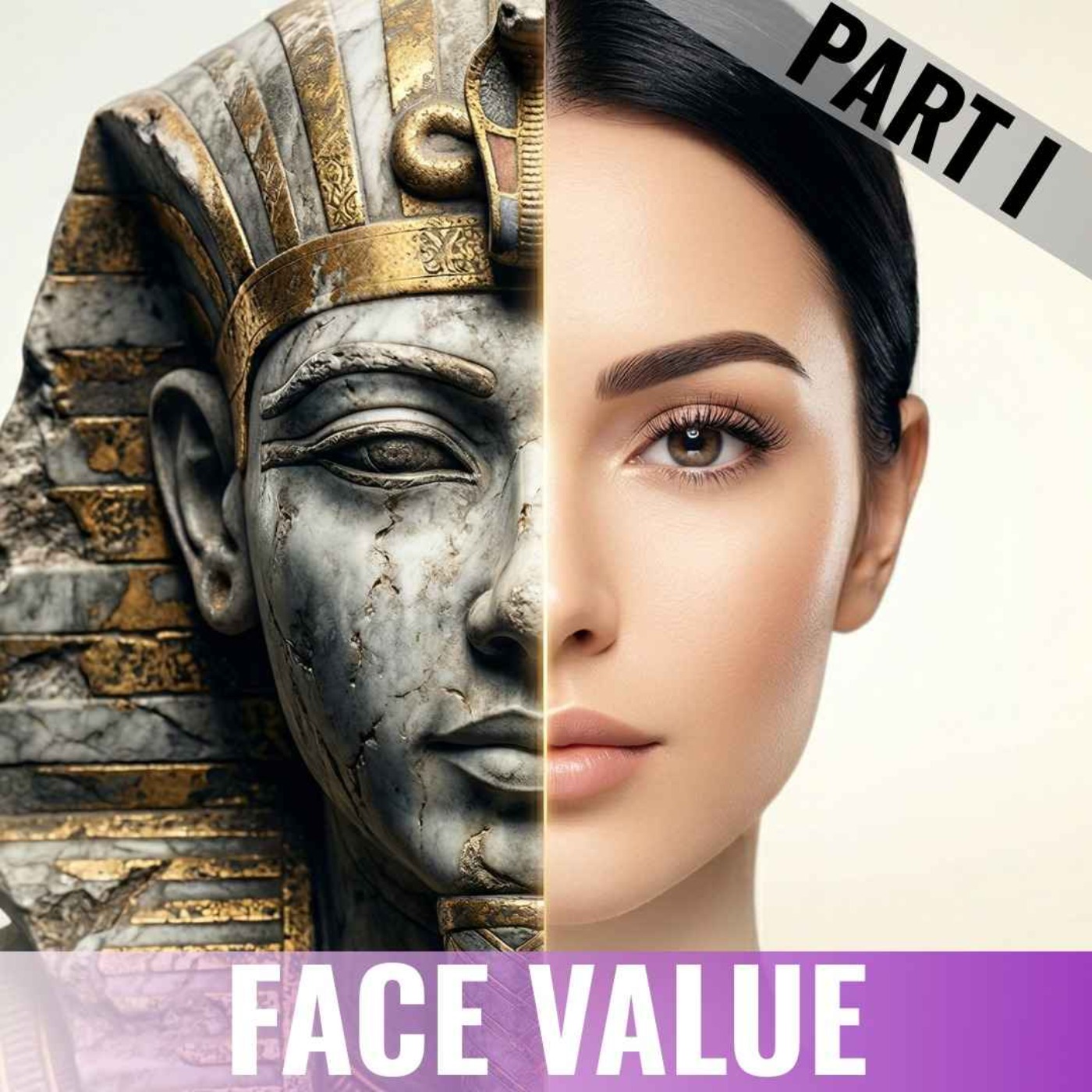
Look at you showing off how you do know all the Kardashian names, Peter. So one Kardashian whose name I do know is Kris Jenner, and she's the mother. And my sister sent me an Instagram post about a month ago saying, have you seen Kris Jenner? And she sent me this image and I was like, what's the big deal? And she was like, can't you see how young she looks? And then I realized that she was not one of the daughters, which I'd assumed when I saw the image, she was the mother. And the reason that image went viral is because she'd had something done to her face which made her look the same age as her daughter's. Not in that old school, windswept, skin pulled back, facelift way, but something totally new that was eerily impressive because it looked kind of natural. So that it turned out, was the new phenomenon in Faceless. And today we are going to be talking about facelift facelifts. What is the legacy of the facelift, Peter?
- [03:33]
Peter Frankopan
Hello and welcome to a new episode of Legacy. I'm Peter Frankoper.
- [03:37]
Afua Hirsch
I'm Afua Haj.
- [03:38]
Peter Frankopan
And this is Legacy, the show that explores the lives, events and ideas that have shaped our world and asked if they have the reputations that they truly deserve.
- [03:55]
Afua Hirsch
The facelift or to give it its official name, the right adepti.
- [04:05]
Peter Frankopan
Okay, Afwa. I didn't realize that the facelift is not something new. To tell us about your research and how people have been altering what they look like since the beginning of time, and particularly using techniques to change their faces.
- [04:21]
Afua Hirsch
The pursuit of eternal youth is an age old obsession, Peter. And anyone who's explored ancient folklore mythology will see these themes recurring time and time again. But the ancients weren't only creating stories about the pursuit of eternal youth. They were experimenting. And there is an incredible history of secrecy, medical evolution, and intense public scrutiny going back not decades, not even centuries, but millennia, which I have to say floored me when I first started to learn about it.
- [04:55]
Peter Frankopan
So we find evidence going back almost 10,000 years. So 9,000 years ago, from skulls found near Jericho, where you can see evidence of trephining. Trefining is a surgical intervention in the skull, either to relieve pressure or for ritual purposes to try to release evil spirits and things like that. People are experimenting with the human body a long time ago. And some of these interventions are about changing how people look intentionally. So, I mean, it goes back a very, very long way. So the idea of surgical interventions or facial rejuvenation has a really long legacy, far older than I'd have thought, which is perhaps some point in the 20th century. But even in ancient Egypt, Afwa, 5,000 years ago, we start to find people modifying what they look like.
- [05:44]
Afua Hirsch
The ancient Egyptians are endlessly fascinating in this area. Peter, There are these papyri discovered in the 19th century, which date back to around 1600 BC, but are probably copies of even older documents that document, and this is one of the most important medical archaeological discoveries ever made, documents surgical techniques that were used by the ancient Egyptians to treat facial trauma. And fascinatingly, some Egyptian mummies have been found with gold thread beneath the skin, which suggests an attempt, an ancient attempt at skin tightening.
- [06:22]
Peter Frankopan
Also quite bling afro. I mean, if you're going to tighten the skin, why not use gold? I mean, forget about cosmetics and makeup. This is deliberate interventions and trying to find ways. I mean, this document you mentioned, the Edwin Smith Papyrus, lists a whole load of different ways to treat different kinds of trauma of the head and the neck and the spine. But the ideas of what you look like and how you can use medical interventions to change how you present to people is kind of amazing. Some of the other excavations from ancient Egypt also have documents about things like dislocations and fractured jaws and fractured noses and how to put those right. Because you don't want to look unusual unless you're super elite. And then you want to look unusual, maybe for different reasons, but I know that there's cranial modeling in Ghana. Afwa, tell us a bit about that.
- [07:10]
Afua Hirsch
Well, one of the things we find when we look at the ancient history of cosmetic interventions is that there's not a neat binary between procedures that are trying to fix a problem like a broken jaw or fractured nose trying to treat spiritual issues. So, you know, we saw these skull, these holes drilled in the skull to try and help get rid of demons or other kind of possessions and beauty and aesthetics. You know, many ancient cultures, these things were all interwoven. And an example of this that does have ancient origins that is quite close to home for me, as you said, Peter, is this cranial molding in Ghana. So many ethnic groups in Africa and the ones that I know most about are the Akan, which my mother's from from, and the Yoruba, who have this practice of basically shaping an infant's head when the infant is newborn. And, you know, newborn baby has a soft head, the skull hasn't hardened yet. And so what these groups do is they use their hands or like light tools to carefully mold the head over time. So it's almost like kind of cranial massaging over a long period of time when a baby is very small. And the idea is to basically shape the head in a way that they find aesthetically beautiful. But it's not just superficial, because the aesthetics of the head shape is tied to the identity and the ancestry and the mythology of the group. So it's really interesting. There are people in my life who've had cranial molding, and it's something that I noticed before I knew what it was. Because if you go to the part of Ghana I'm from, there is a very distinctive head shape. And I think it's partly just genetic and, you know, the traits that people inherit, but it is also partly this intervention. So, you know, there are some medics who are worried about this practice, and obviously, if it's done wrong, it can be dangerous. But it's been being practiced for thousands of years in a very gentle way that is kind of in harmony with the culture. And I think, again, it shows that these ancient ideas about aesthetic interventions are about attractiveness, but also they denote status, they denote membership and belonging of the group. That's all part of this history that now I think we forget, because now it's all associated with a much more individualistic, medicalized pursuit of a certain look.
- [09:25]
Peter Frankopan
You have something very similar, Afuwa in nomadic societies in Eurasia, the most famous of which were the Huns. The Huns almost certainly are the Xiongnu tribal grouping who spread out from the steppe lands of eastern Asia. Eventually they become famous for that. The most famous leader is a guy called Attila. I'm sure we're going to do an episode on him. But young babies that are part of the Hun confederation have their heads bound up in exactly the same way as you mentioned in Ghana, Afwan. And it can be very dangerous, but it's designed to deliberately shape the cranium to be more pointy. And it's a sort of slight struggle, I guess, to work out why that look was considered elite or special. But. But I suppose the bottom line of it is that it made you look distinctive and it made you look visibly that you were part of a ruling grouping. And that becomes important because differences, as well as our similarities, are what can help define societies against each other. So that idea of how you make interventions and who to, as you said, afraid the young head casing and skull is very soft. But there was obviously an idea that Huns needed to look different to other peoples that they might come into contact with. And I think that was important too. But there are other places too where there are different kinds of interventions towards what we today call plastic surgery on there.
- [10:46]
Afua Hirsch
So a lot of the evolutions and innovations in this area have come about through accidents, injuries and war. So if you go back to ancient India, there's a long tradition of these cosmetic operations. The Ayurveda, the famous ancient Indian texts, states that members of some specific cast constructed their noses with the skin of the face or forehead. And this was something that was done on thieves who'd been punished by having their nose cut off. So people who've lost their nose are then having this nose reconstruction surgery. And even older indications have been found in Tibetan monasteries that documents and transcripts that contain descriptions of reconstructions of the nose from the skin of the forehead. Specific surgeons. In India, a surgeon known as Sashruta is often known as the father of plastic surgery. He used primitive skin grafts, utilizing again, skin from the forehead to tighten the skin around the jaw and neck. So even thousands of years ago, the idea of skin grafting, of taking skin from one place, using it to reconstruct skin that was damaged in another place, was already being experimented and actually developed to quite an advanced level.
- [12:00]
Peter Frankopan
And as you said, Afwa, it's not just about body beautiful, it's not just about presenting yourself to look different for hierarchical or caste or socioeconomic reasons. It's also reconstructions because of war. And war is one of the key drivers of all sorts of changes, to do with gender, to do with medicine, but also above all to do with recovery from injuries. And as you were saying about warfare, we see that in Gaza, today's horrific injuries require attempts by doctors to try to let people live as normal a life as possible. So reconfigurations is a hugely significant part of that. I'm sure we'll talk about that when we think about the 20th century too. But one of the most common forms of injuries and for reconstructive surgeries is to do with the nose. I wonder if you could tell us a bit about why the nose is the part of the body that gets disfigured so eaterally.
- [12:49]
Afua Hirsch
Well, the nose sticks out, to put it bluntly. And so prehistoric man who was trying to defend himself basically with only his hands and teeth. So this is very close range Combat in the absence of weapons, especially anything that can fire or attack over a long distance. You imagine that if you're just fighting with your teeth in your hands, you are extremely close up. And it was the nose that often got in the way. I mean, some noses stick out more than others. I have definitely got a prominent nose. I feel quite squeamish even talking about imagining having to fight some of my teeth, what might happen to my nose. And you've also got cultures, which I suppose because of this already, this sentiment that the nose is vulnerable. The nose is something that kind of projects you forward into the world. The nose was often the target of judicial punishments in ancient times. So prisoners of war in ancient times had their noses cut off frequently. So you had a lot of people over the millennia going around with damaged noses or missing noses. And so, not surprisingly, plastic surgeons who wanted to try new things or who wanted to solve problems found that that was a problem that it made sense to try solving.
- [13:58]
Peter Frankopan
It's interesting. I mean, the idea of. Of cutting people's noses off who are thieves or prisoners of war is a way of deliberate humiliation. It's disfigurement that is highly visible. You know, if you brand people, you could wear clothes that cover it up, depending which part of the body you go for. But I wonder, why do you think the nose is so special? Do you think it's because we as humans look to each other's eyes and mouths and noses when we talk to each other, and that therefore, the engagement with someone who's had their nose cut off and removed is a way that you can't ever escape from?
- [14:27]
Afua Hirsch
I'm a bit biased because I do feel like I carry a lot of identity in my nose. You know, my grandfather was Jewish. Some people have told me I have a Jewish nose. When I go to East Africa. People think I'm from East Ethiopia or Eritrea because there's the kind of head shape and contour to people's features that in some ways resemble mine. So I think the way that you carry your nose does actually affect your experience of life and identity, you know, and even though I have no Ethiopian heritage, I feel, you know, this connection because everywhere I go, people ask me, are you Habisha? Or they speak to me and Amharic. So your nose is a denoter of identity. Even if it's a misperceived identity, it affects how you interact with people. People. And it's so prominently central on your face that if there is a disfigurement with someone's nose, you really notice it, right? I mean, if you, you know, even if you have a spot on your nose, I challenge you to have a spot or a blemish on your nose and talk to a small child. They will just open mouthed, keep staring at the spot on your nose because it's, it's just so prominent. So you can imagine why people were drawn to that as something they wanted to improve or they wanted to fix. And as we get into later eras, these ideas about what the shape of your nose means were so linked to beauty norms, to the ideals. You know, I mean, people still talk about the, the Roman nose and the aquiline nose. It's something that you notice in ancient sculptures, isn't it, Peter?
- [15:50]
Peter Frankopan
I remember my first sort of realization that the nose was a kind of an important body part, apart from the obvious, was reading asterisks where Cleopatra pops up from time to time. She's a very important figure in the Roman world as we, as we talked about in one of our series that we did on her. And Cleopatra in asterisks keeps being mentioned as having a very famously pretty nose. And I never quite understood why that was when I grew up and I started to look at pictures. It doesn't look particularly prominent or unusual, but it's basically because a French philosopher called Pascal in the 17th century wrote that if Cleopatra's nose had been shorter, the whole face of the world was, would have changed because the way he saw it was that Cleopatra was so beautiful that she entranced Mark Anthony and helped change the world because her their love affair brought about the Roman Empire, etc. Etc. Etc. Now that tells you a lot about how men at the time, in the 17th century thought about the nose as a sort of piece of the body that was particularly soft and particularly beautiful. I don't think there's any particular evidence from Cleopatra's life that her nose was anything unusual. But the idea that the nose could be something that was particularly sexy or particularly beautiful or entrancing was something I learned from comic books and I've subsequently found, I think, to be untrue. Except for people do love having their noses reset and redone and reshaped.
- [17:12]
Afua Hirsch
Well, this is one of the things that makes this area quite fraught because if you look back over time and even if you take our time and look at different cultures, there is no beauty norm. It's so subjective, it's so culturally specific. And you know, what the ancients regarded as a beautiful nose might be the kind of nose that now Someone would think needs to be fixed by a nose job. And, you know, a lot of my work, as you know, Peter, in my last book, Decolonizing My Body, was about kind of unpicking our beauty norms and where they come from. Because it's very natural for different cultures and societies to have different norms and ideals around beauty. What I worry about is that these norms have become homogenized so that everybody is trying to pursue the same beauty ideal, whether it's one pushed by the Kardashians or by a famous surgeon in Hollywood. And the problem with that is that, you know, if you have a nose that is very different to that, and everybody in your community has a nose that's very different to that, that kind of mono ideal, then you're going to feel like you deviate from what is beautiful. And it can't be healthy for everybody in the world to feel a self loathing about their appearance. Except. Except for the people who naturally conform to the specific look that has, by whatever series of events, become dominant. And that series of events will include colonialism, racism, what the fashion industry likes. It's completely random. It's not based on any deeper connection to an objective standard of beauty. So I think it's important to understand that these things are always shifting. And, you know, we'll get back to this later. But it's so interesting to me that now so many celebrities are having their, all their fillers dissolved because, you know, five, 10 years ago, the look was plumped up, voluptuous, and now it's paired back and skinny. So people got, you know, they got butt injections, they got cheek and lip injections. And now the fashion's changed. They're having to change their bodies again. It's kind of ludicrous. You know, there are some things that you have a body, you're born with that body, you die with that body. The idea that you should radically change your body every few years that a different trend comes along seems to me inherently unhealthy.
- [19:17]
Peter Frankopan
When I was an undergraduate, I was very lucky to be taught by Mary Beard, the wonderful classic scholar. And I remember the first lecture that we had. She showed us a picture of Augustus at the Prima Porta, one of the entry points to Rome, looking like he was ripped. You know, a proper butch man who kind of looked good in his military uniform. And then she read us a description from one of the Roman sources that says Augustus was below average height. He had a very waxy head, terrible breath, bad teeth, nothing special to look at. And she went, which One of these is true is the source, written by someone who's tried to body shame Augustus and to say, look, therefore, don't take him too seriously. And he did actually look like that. Or in fact, was it Augustus going, don't make the statue look anything like me. Make it look like I've been in the gym, like, all days, all night. And the question was, why does it matter what you look like? And the answer is, it always matters how you present yourself. And of course, therefore, things like fashion, body modifications, trying to be fit, healthy, and so on have been preoccupations forever and ever. But we're particularly interested today in surgical interventions to try to change the laws of gravity. And the first, the father of the facelift is usually seen as a German doctor called Eugen von Hollander, who did the first, I guess, plastic surgical intervention of facelift in 1901 when a Polish aristocrat who, like all of us was aging, decided that she wanted the corners of her mouth and cheeks tightened up. And so he worked out a way of doing that. And these early procedures are pretty rudimentary. They focus on skin tightening, making elliptical skin excisions near the hairline. I'm doing it like anyone watch your video, as though I know how to do this. But lifting the skin, cutting out the excess, and that starts a new chapter in the way in which modifications go away from trying to make yourself look good, just trying to use cosmetics to actual interventions.
- [21:14]
Afua Hirsch
Yeah. When we're talking about the modern surgical facelift, we're very much in the era of which we are the descendants, which is youth as the standard of beauty. This idea that you could use these advancements in medical science to conform to a specific look that made you look younger and the surgeries that were pioneered to achieve that. And the initial results were for anyone who's seen movie stars in the early 20th century who'd done these procedures, they were quite jarring. It was literally pulling back the skin until it was taut. The result was sometimes described as the wind tunnel look. And I know you know a mother of a friend who is older and did these procedures in, I think, the 60s, maybe 70s. And it's a specific look. It looks like you've had an old school facelift. And I believe in her case, she had to have hair implanted around her hairline because her skin had been pulled back so far. It pulled back her hairline both at the top and the side. So then you're having to kind of try and make it look natural by having hair implanted closer to the face. So that is how the modern era of face lifting started. And actually it didn't change that much for a long time. So from the late 19th century when we have Von Hollander pioneering that approach, it continued really until about 30 years ago. And that's when we started to get into the era of the ultra modern facelift meter.
- [22:41]
Peter Frankopan
I mean, I should say we mentioned already about warfare and there's a wonderful book by Lindsay Fitzharris called the Facemaker about how British doctors had to deal with thousands, tens of thousands of men who'd been disfigured during the first World War by combat and improving the techniques of how to rehabilitate and how to help men integrate back into society having been wounded. And some of those techniques were pioneered, as you mentioned before, Afro as the kind of, as the product of the legacy. But one of the things that's most interesting is how plastic surgery goes from helping people who've been wounded or injured in whether in warfare or in accidents, to helping already good looking people look ever so slightly better for their self esteem. So in the 1970s, a Swedish surgeon figures out how to dissect the face. He focused on the thin muscle layer underneath the skin, which is called the superficial musculo apneurotic system or smas. Or smas, which is basically a layer of fat and muscle and fascia.
- [23:41]
Afua Hirsch
Yeah. So just to be really clear, the problem with the old school approach, again I'm doing as well, like where you just put pull the skin back is that eventually the skin restretches. If you've got skin, you know, it's basically stretchy and if you've ever been pregnant, you know, it's infinitely stretchy. And so the old type of facelift didn't do anything for the underlying architecture. It was just stretching the skin. And it would last a little while until the skin would, you know, stretch back and start to droop again. So the SMAs approach was working out how you could manipulate both the muscle underneath and the skin. So now you are starting to manipulate the architecture of the face and you're either cutting or elevating the muscles underneath. So you are actually now reshaping the face using the deeper tissues. That looks more natural and it also lasts longer. Although Peter, and this is something I found out doing this research which I didn't appreciate, it doesn't last forever. None of these techniques last forever. And if you think about how invasive the facelift is, you kind of think you would hope it would be a one and done. But I think Their shelf life is usually about 15, maximum 30 years. So you know, if you're getting a facelift in your 50s, now that people have a life expectancy often well into their 80s, you might have to go back for around two.
- [24:57]
Peter Frankopan
It's a whole other story about why people want to look younger than they really are. But now, when most plastic surgeons do a facelift, they do a combination of skin removal, muscle tightening, and usually some type of fat remodeling or removal. But even the SMAS approach had limitations, particularly when it comes to rejuvenating the mid face and malar fat pad. And this leads to the next major and often very controversial development, the deep plane facelift.
- [25:34]
Boost Mobile Advertiser
You're locked into a lot of things you can't change. Weather, traffic. Hey, stay in your lane. Your wireless carrier's latest price hike. But you can unlock a better way. Unlock the savings at Boost Mobile and save up to $600 a year. Switch to the $25 a month unlimited wireless plan. No contracts, no price hikes, and you keep your phone. Stop being locked into their games. Unlock the savings@boostmobile.com unlock based on average annual single line of payment of AT&T Verizon and T Mobile customers compared to 12 months on the Boost Mobile unlimited wireless plan as of January 2026. For full offer details, visit boostmobile.com. YOU do it all. So why not get all the electrolytes hydrate better than water with new Gatorade lower sugar now with no artificial flavors, sweeteners or colors. And 75% less sugar than regular Gatorade New to the fridge, all the Gatorade electrolytes you love. Gatorade lowers sugar.
- [26:30]
Afua Hirsch
Is it in you?
- [26:31]
Boost Mobile Advertiser
Now available nationwide.
- [26:45]
Afua Hirsch
So we're going to talk more about the deep plane facelift in the next episode. PETER but it's an interesting evolution and it shows how the facelift has come from this ancient idea to something that was a very symbiotic relationship between war and beauty. Because throughout the history we've discussed rich people experimented to look desirable and that created techniques that helped soldiers or people injured in war. Similarly, techniques designed to help people injured in war contributed to the techniques that rich people were using to try and improve their appearance. And actually that still has a really interesting legacy. I mean, when I was writing Decolonizing my Body, I discovered that the world capital for plastic surgery in the world right now. Mosul closely followed. No, I'm not joking. Mosul closely followed by Damascus. And the reason for that is twofold war. A lot of really serious Injuries, people needing facial reconstruction, which led to more medics and doctors specializing in cosmetic surgery. But also, and this. I hope we'll get into more in the next episode. People in that part of the world have Arab features. Many women in particular who have resources felt unhappy with their appearance because they, like all of us, are being pushed an idea of beauty that comes more from whiteness, from European and specifically, I would say northern Western European type looks that have maybe smaller noses, less visible bone structure. And so, you know, it's a really mixed picture because on the one hand it's very natural, I guess in a place where there's war, that people would be working out how to do cosmetic reconstructions. But the idea that many Arab women have been using nose jobs in particular and also other facial surgeries to try and attain a look that kind of de Arabises their features, I think is really concerning. And it's actually part of a global picture where, because everyone's been pushed this Eurocentric beauty norm all over the world, where people's natural appearance deviates from that, they have been trying, if they have the money to do so, to fix it. And I think that's really problematic.
- [28:58]
Peter Frankopan
Well, I think next episode I'd like to think about whether the new age of digital technology and globalization means that we're all more familiar with what we all look like, whether the cost plays a role and the fact that availability of, of a reconstructive surgery for non medical reasons has become cheap enough that it's like, you know, buying an expensive coat, you can get yourself redone. But also why it is that we all get older, we all want to stay younger and younger. So there's still a lot to talk about and we'll do that next time on Legacy.
- [29:29]
Afua Hirsch
You've been listening to Legacy with me,
- [29:31]
Peter Frankopan
AF and me, Peter Frank.
- [29:53]
Fin AI Advertiser
AI is transforming customer service. It's real and it works. And with fin, we've built the number one AI agent for customer service. We're seeing lots of cases where it's solving up to 90% of real queries for real businesses. This includes the real world, complex stuff like issuing a refund or canceling an order. And we also see it when FIN goes up against competitors. It's top of all the performance benchmarks, top of the G2 leaderboard. And if you're not happy, we'll refund you up to a million dollars, which I think says it all. Check it out for yourself at Fin AI.